
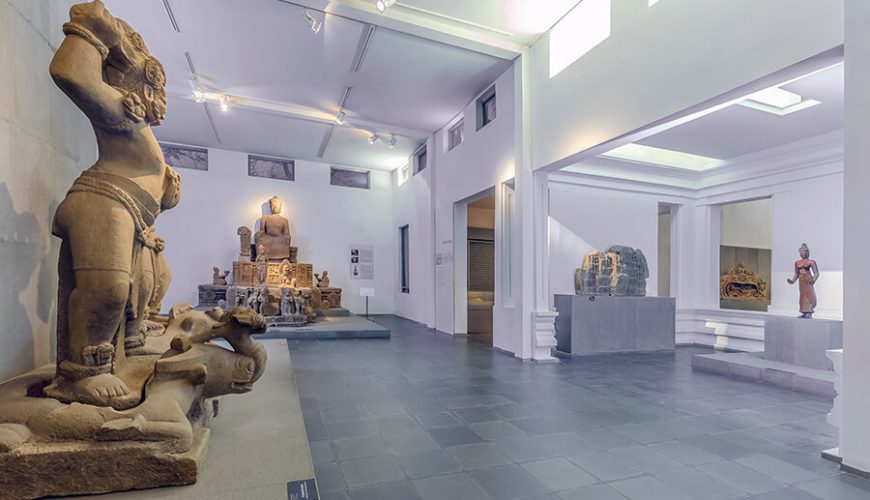
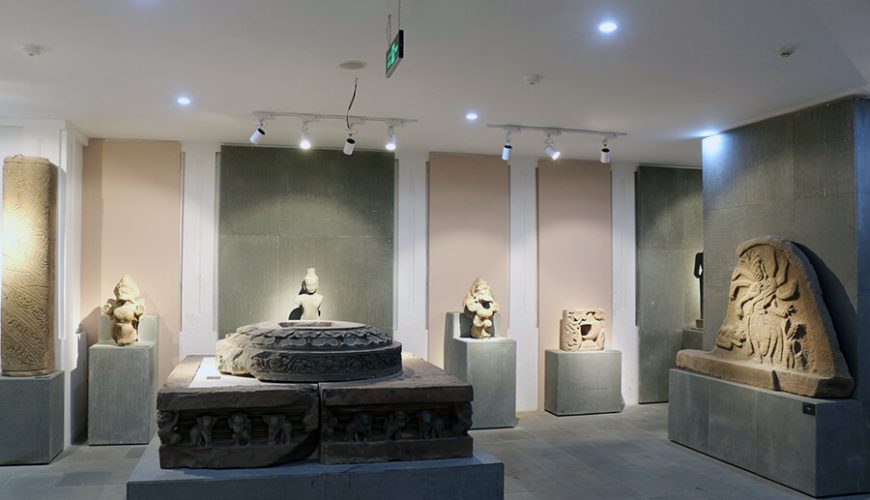
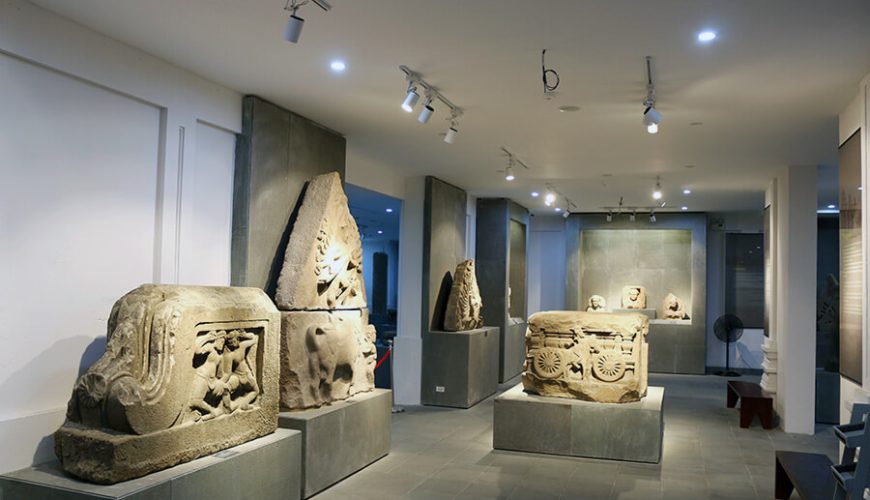
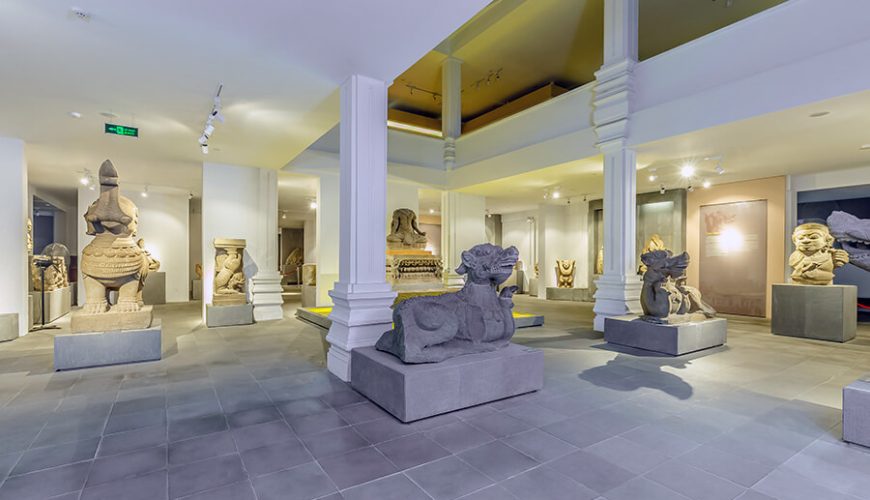
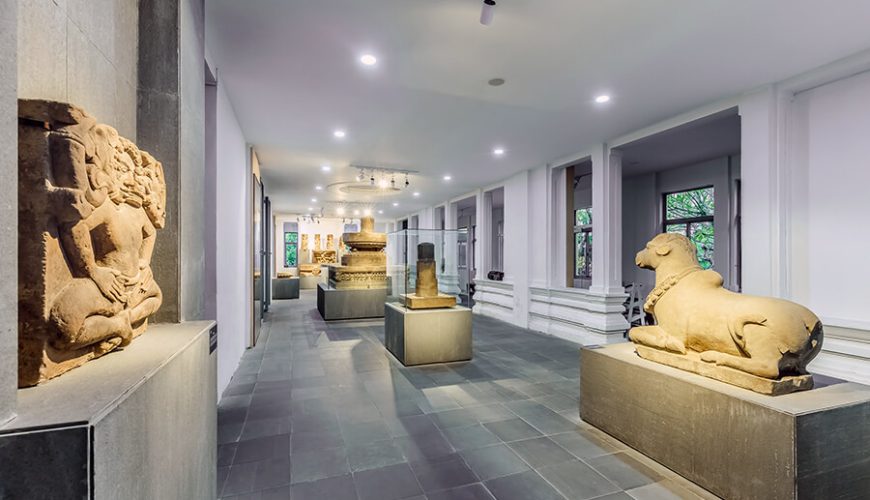
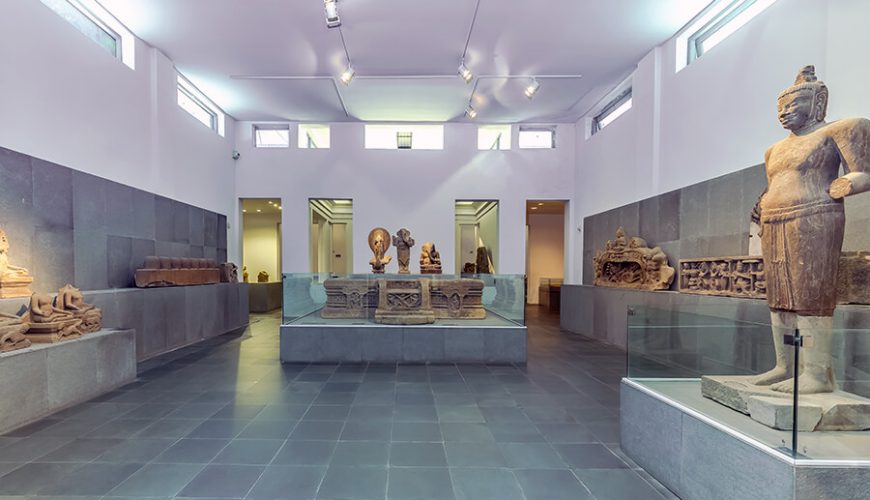
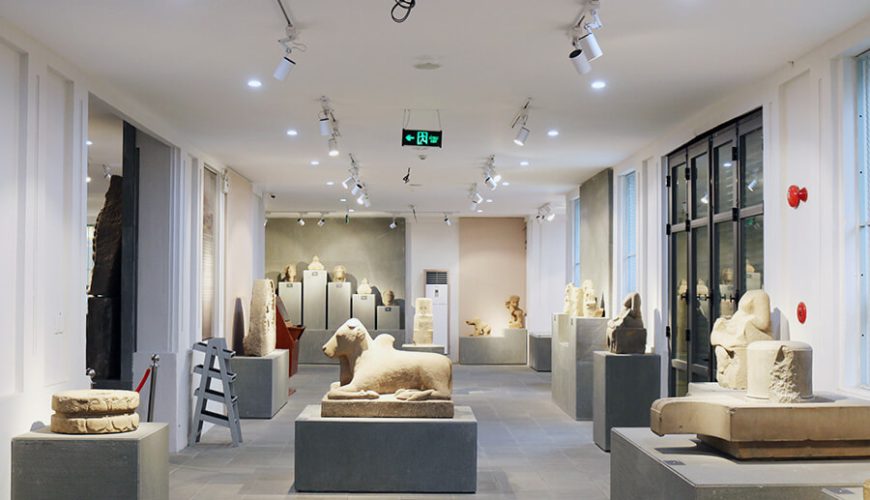
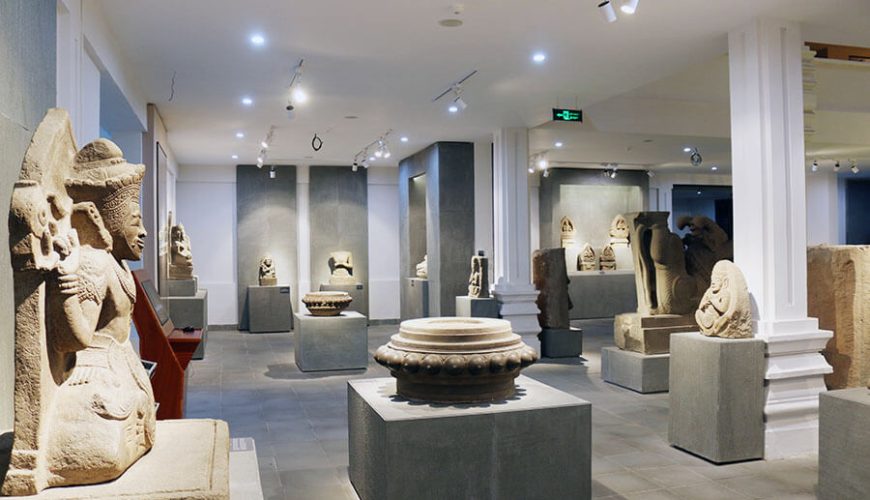
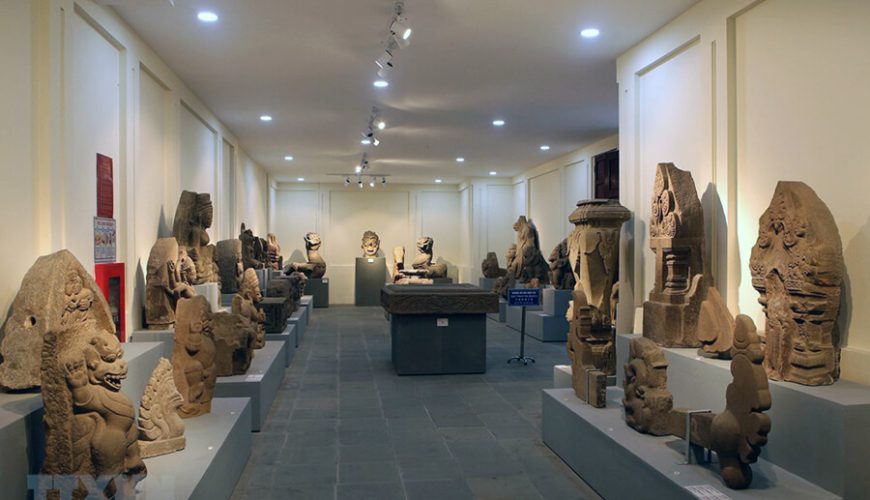
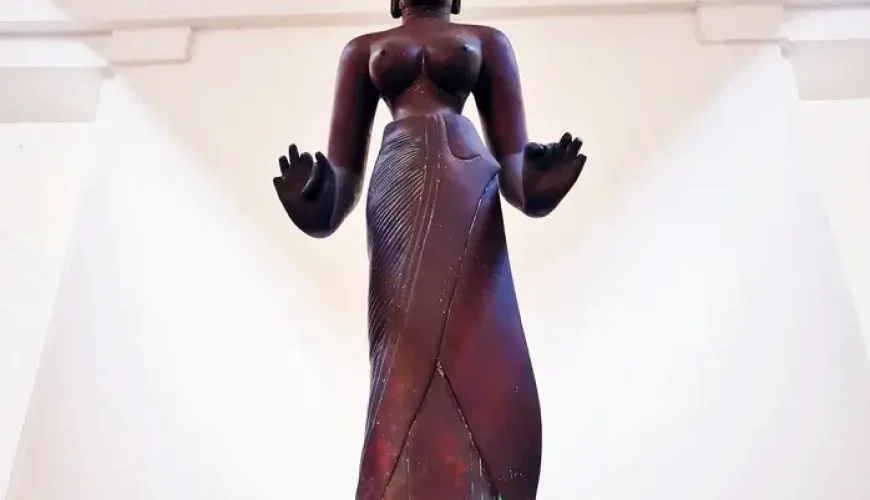
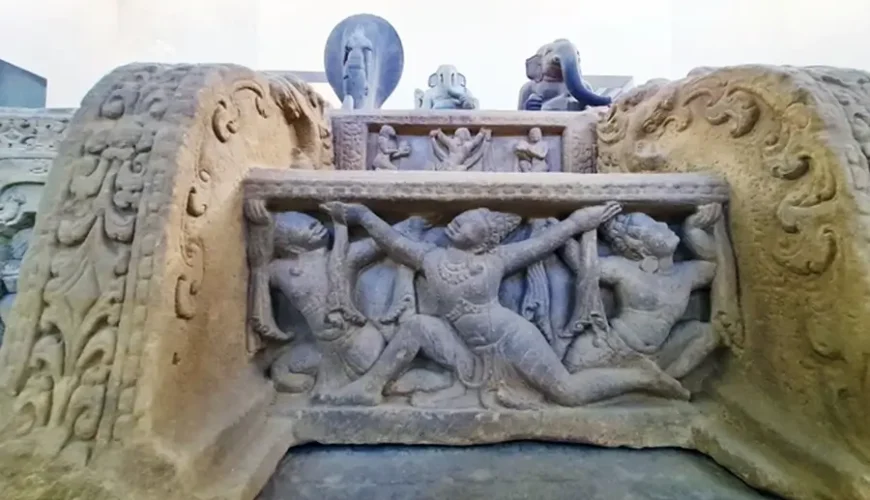
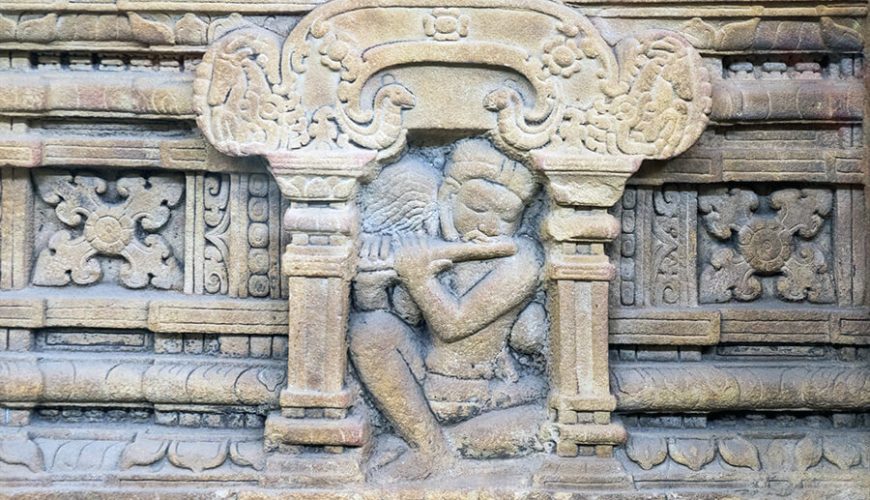
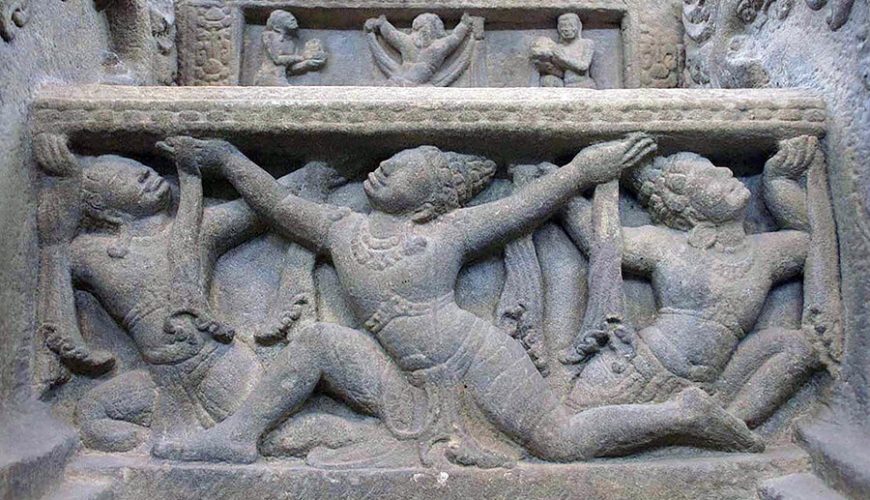
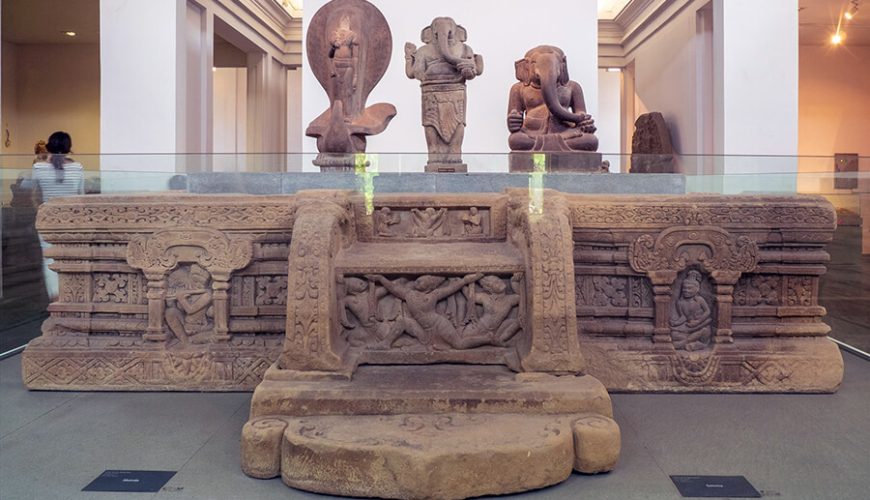
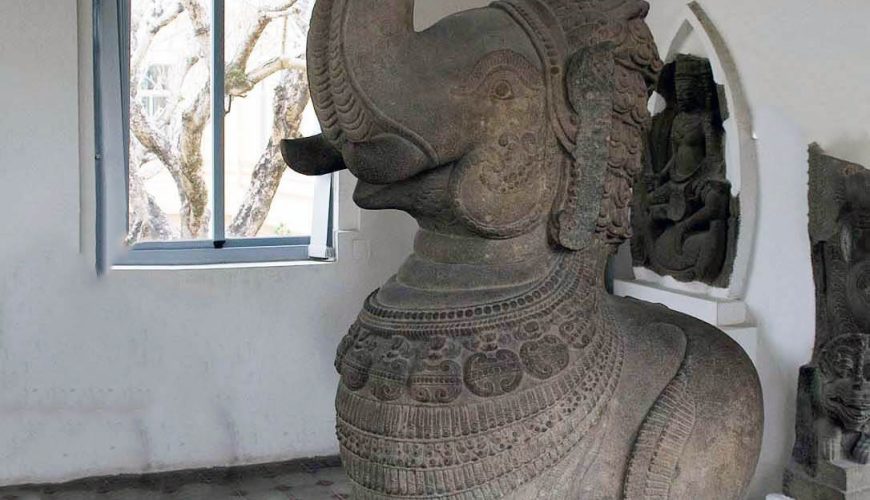
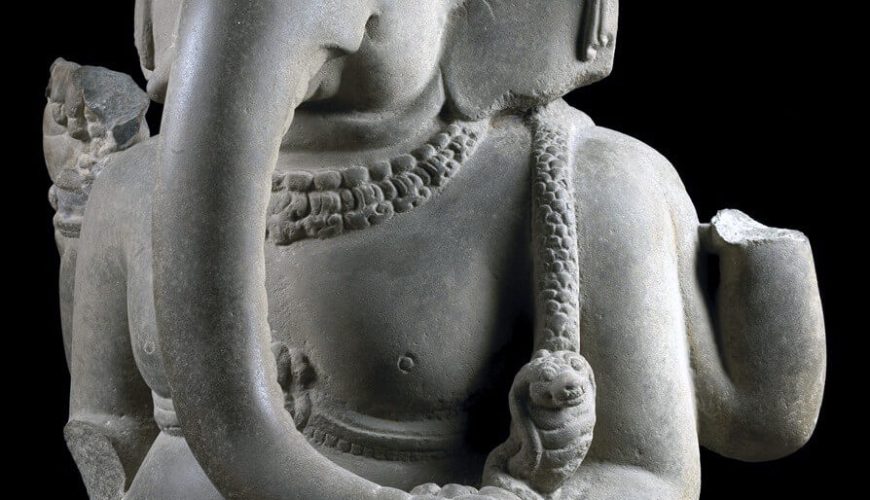
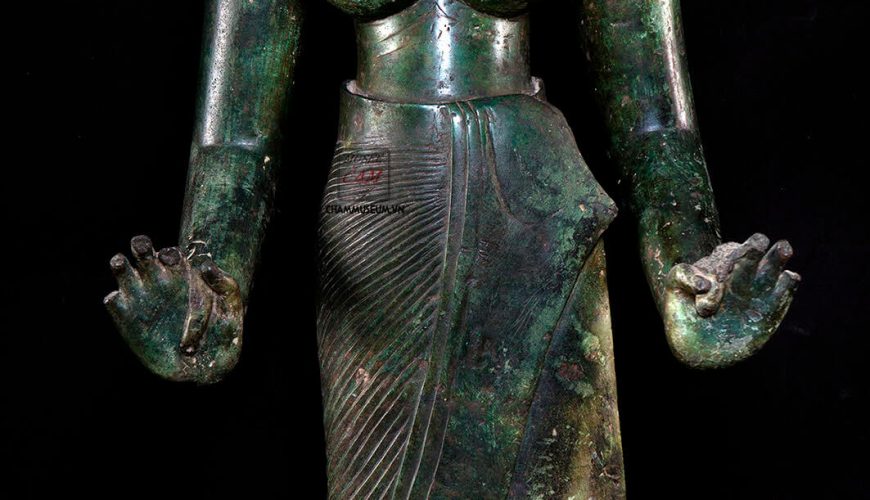
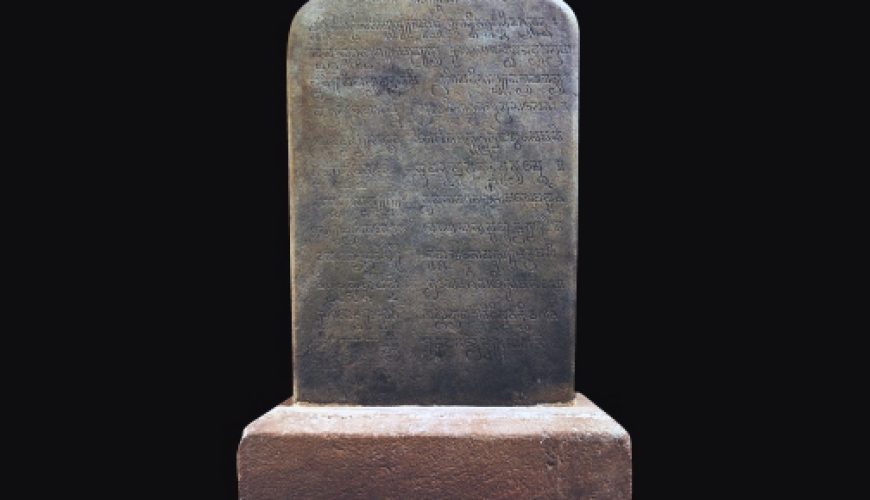
The Museum of Cham Sculpture in Da Nang is one of the largest and most important museums in Vietnam, which preserves and displays a rich collection of Cham sculpture artifacts. If you are planning to travel to Da Nang, stop by this museum to reminisce about the golden age of the Cham people.
General information about Museum of Cham Sculpture
The museum is currently the largest repository of Champa cultural artifacts in the country, with a total area of up to 6,673 square meters. Of which, 2,000m² is used to display ancient relics, the remaining is the most rare collection of pictures and documents about Cham culture.
The Da Nang Museum of Cham Sculpture has officially opened to the public since 1919. Tens of thousands of tourists come here every year to rediscover the imprint of the once prosperous Cham kingdom, with its cultural and historical value and quintessence of unique sculptural art.
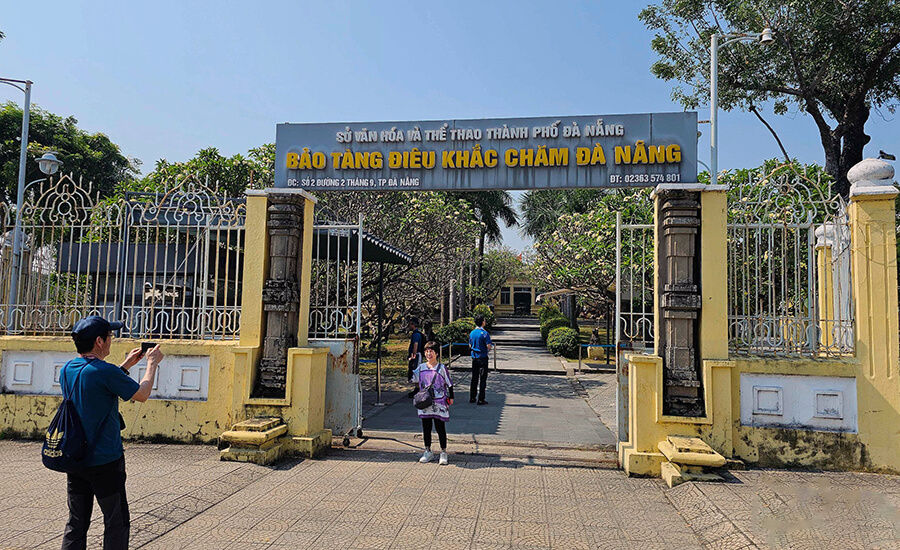
The Da Nang Museum of Cham Sculpture is an attractive tourist destination in Da Nang, drawing large numbers of domestic and foreign visitors. The museum is not only a place to preserve the cultural values of the Champa people, but also a beautiful and unique architectural work.
Address: No 02, Duong 2 thang 9, Hai Chau Ward.
Guide to visiting the museum
Ticket price to visit the Da Nang Museum of Cham Sculpture:
- Adults: 60,000 VND/person
- Students: 10,000 VND/person.
- Opening hours are from 7:30 a.m. to 17:00 p.m. daily (including holidays and New Year).
How to use electronic captions
Electronic voiceover service using headphones (Audio guide)
Step 1: Access the wifi system at the Museum.
Step 2: Open a web browser and visit the address: https://chamaudio.com
Step 3: Select the language (Vietnamese, English, or French) and the object you want to hear information about. Visitors can scan the codes posted next to the artifacts or follow the tour sequence introduced in the app.
Interpretation service for groups
Serving groups of 5 people or more, in languages: Vietnamese, English, and French.
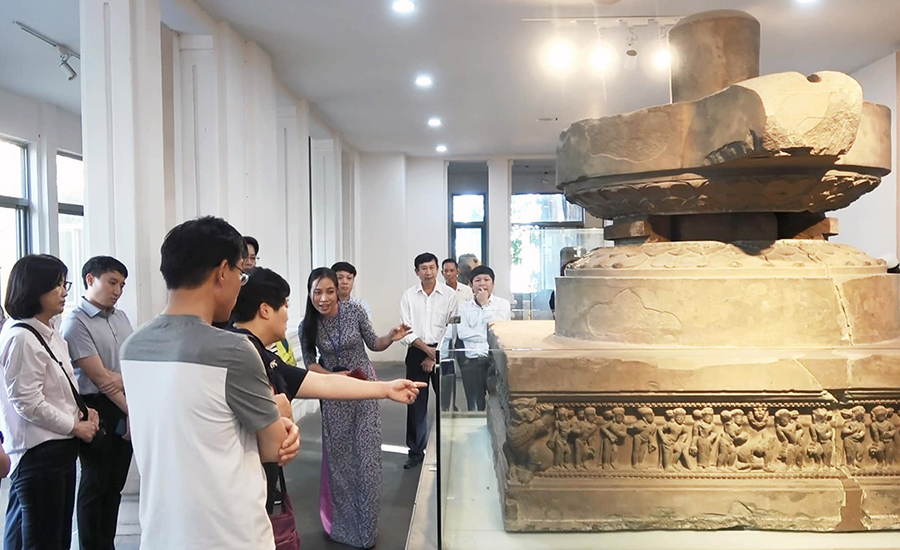
Service hours: From 7:30 a.m. to 11:00 a.m. and 14:00 p.m. to 17:00 p.m every day.
(Note: The department will stop accepting group registrations at the counter before 10:00 a.m. in the morning and before 16:00 p.m. in the afternoon to ensure minimum time for explanation according to the itinerary.
For groups that have a tour guide accompanying them or require guidance in English and French, please contact the museum at least 3 days in advance via:
Phone number: (84-236) 3572935
Email: [email protected] or [email protected].
Notable exhibits at the Museum of Cham Sculpture
At the Cham Museum in Da Nang, you will see antiques arranged according to different excavation areas, such as: Tra Kieu, Thap Man, My Son… Thanks to this arrangement, visitors can easily see and discover treasures.
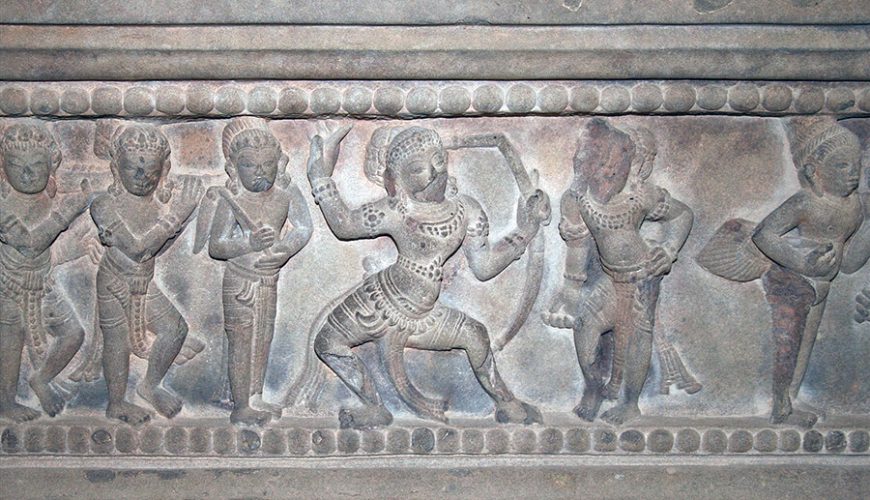
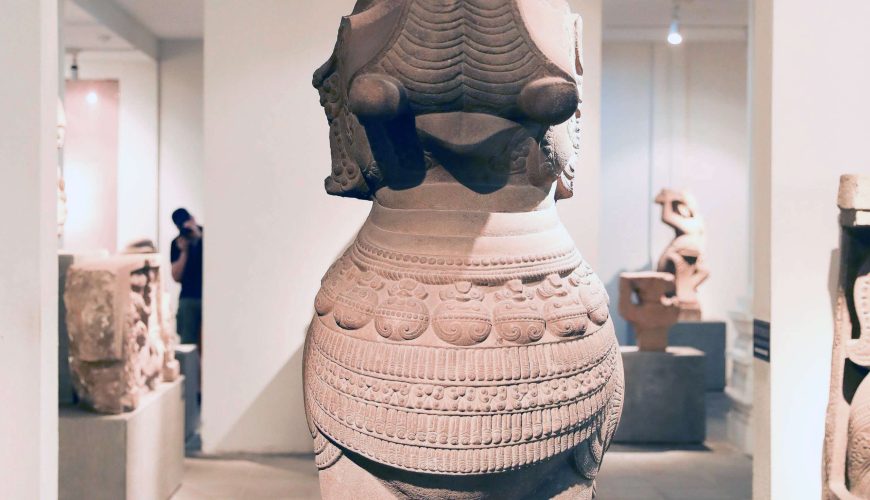
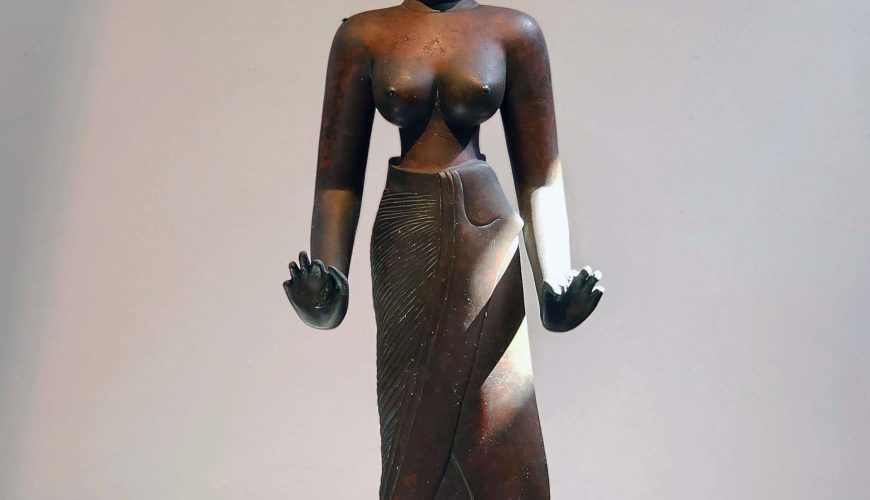
This museum currently preserves many antiques from the Champa dynasty. Most of the artifacts are made from fired clay, bronze, and sandstone. In addition, when you come to the museum, you can also find a room that stores documents and pictures that recreate the architecture of the Champa period and of Southeast Asia. Thanks to these antiques and documents, visitors will have the opportunity to better understand the ancient culture of the Champa people.
Tra Kieu Gallery
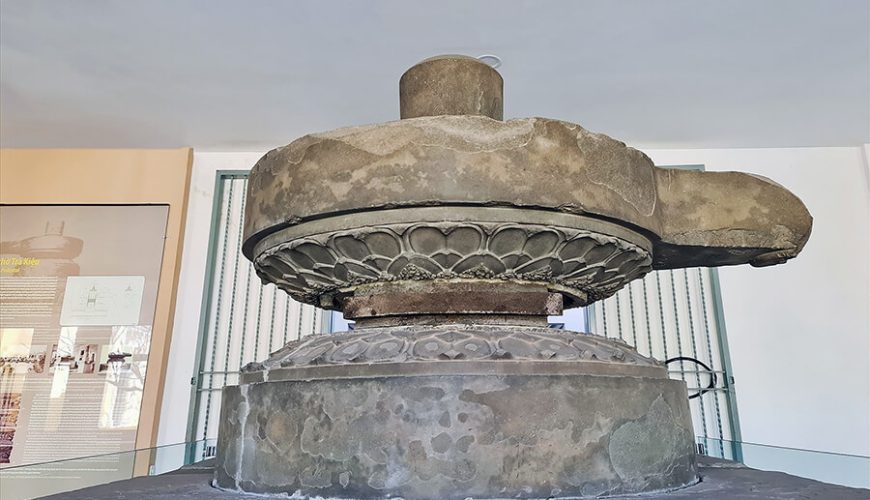
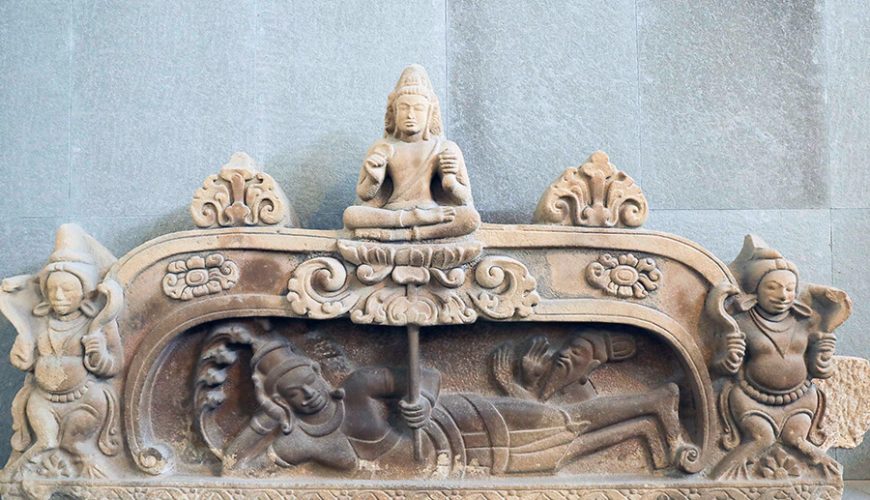
The Tra Kieu Room is a place to store antiques from the first capital of the Champa people, corresponding to the name Simhapura mentioned in some Cham inscriptions.
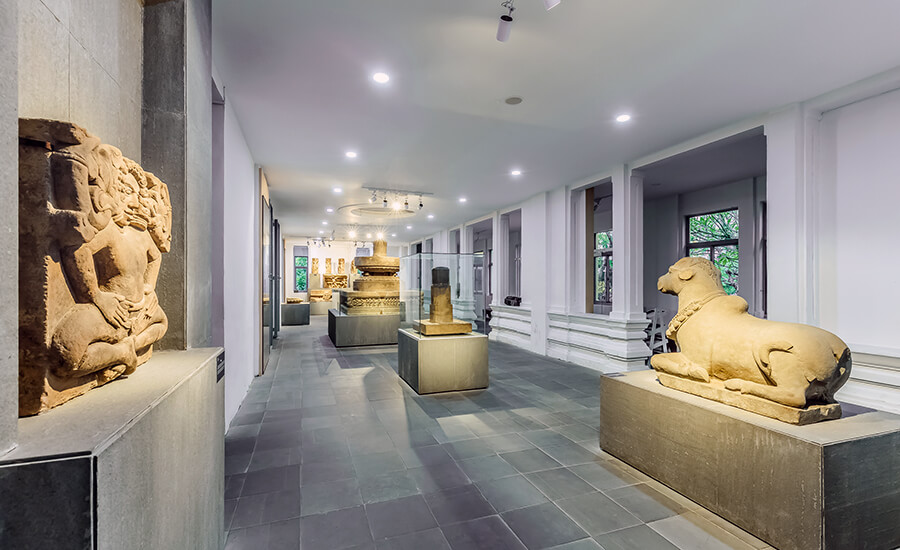
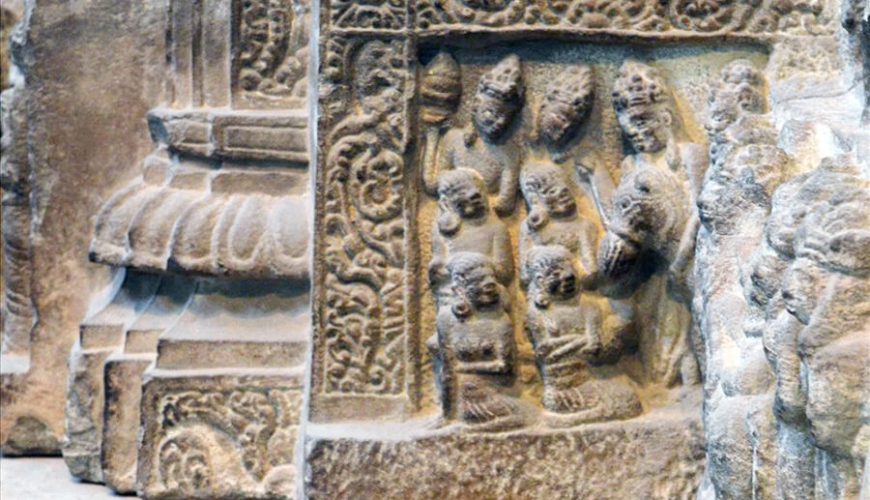
In this gallery, you will see more than 40 precious works and artifacts, including fragments of an altar, a linga, and decorative reliefs, that mark the glory of the VII – VIII and XI – XII centuries.
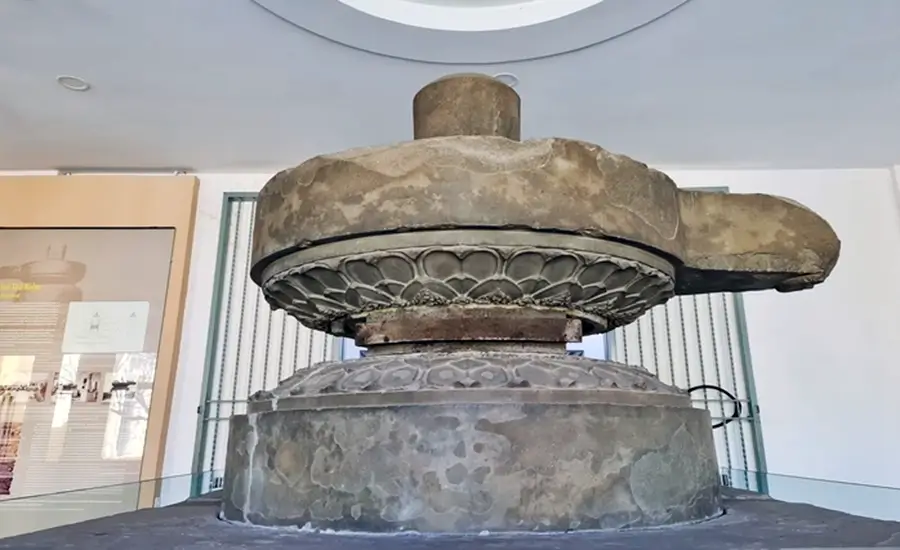
The Museum of Cham Sculpture has created a precious space to preserve and honor both the material and spiritual aspects of the prosperous period of the ancient Kingdom of Champa. Coming here, you can immerse yourself in unique ancient masterpieces, to reminisce about emotional historical periods.
My Son Gallery
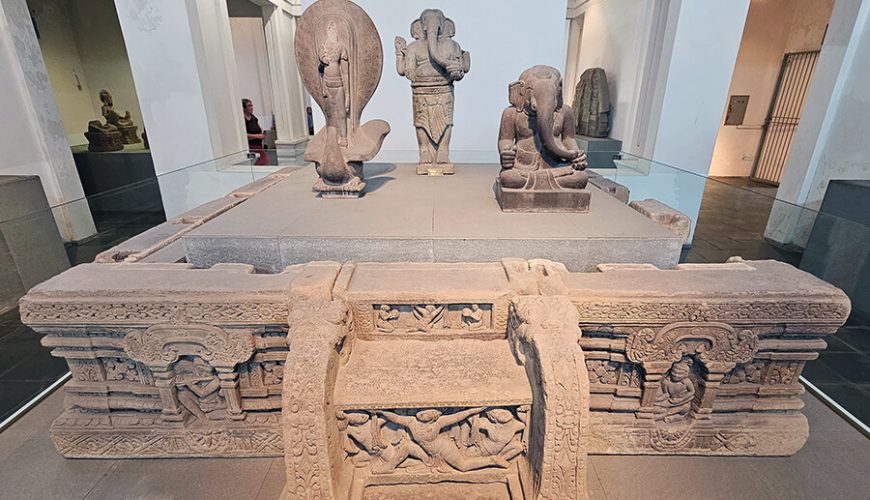
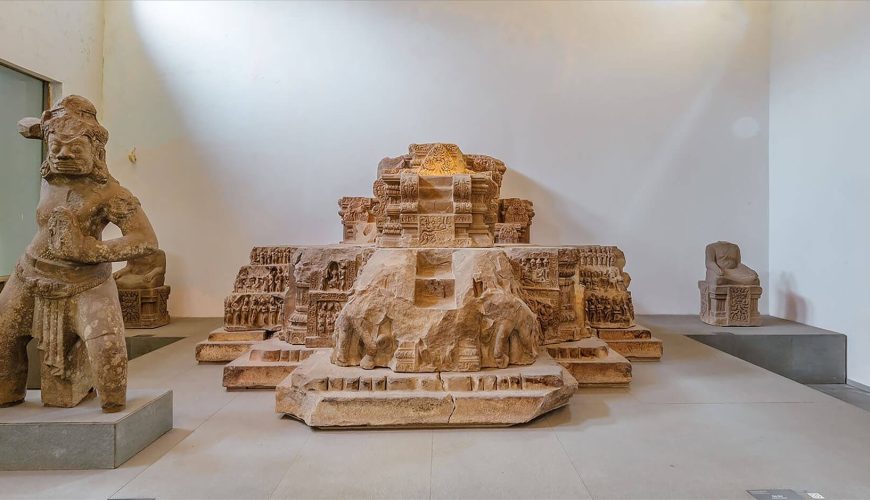
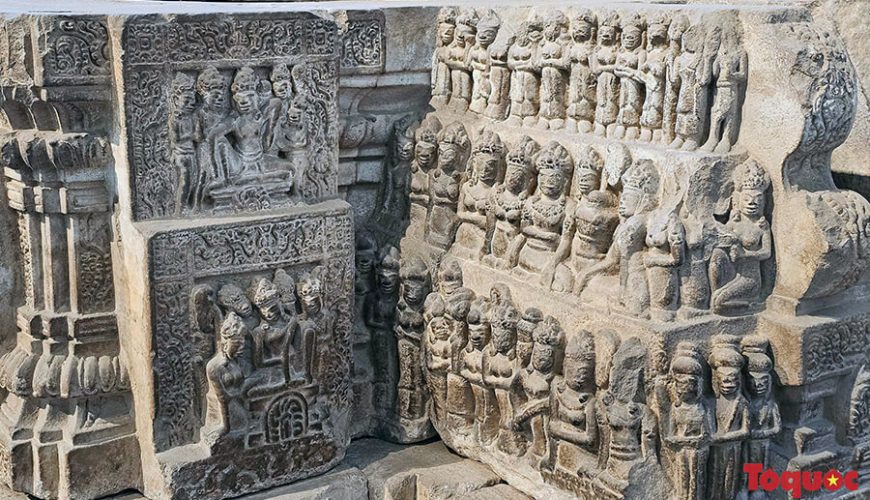
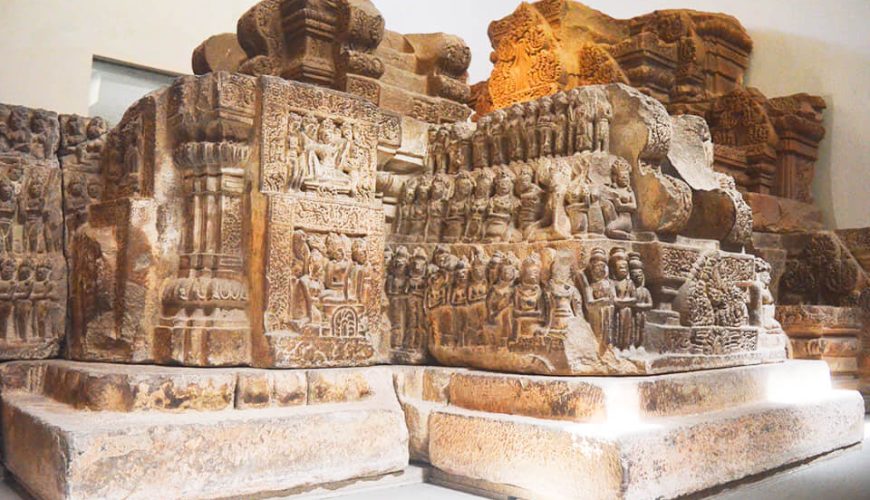
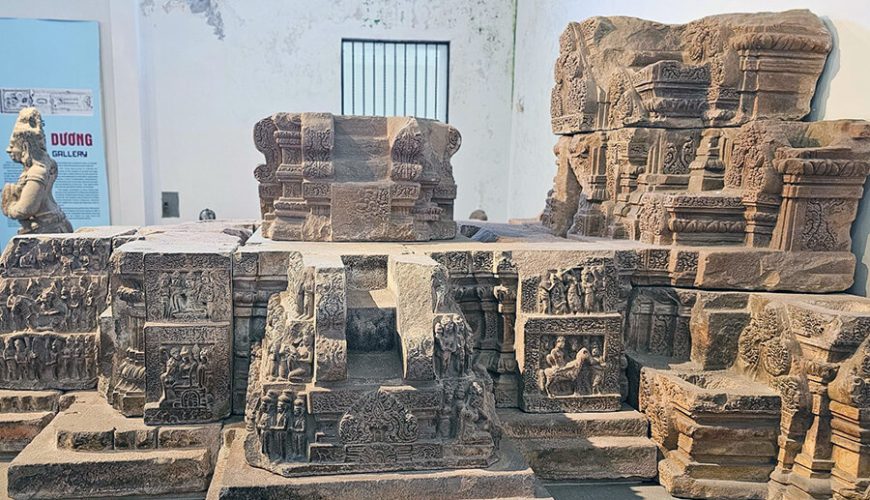
The Da Nang Museum of Cham Sculpture has a special area called “My Son Gallery”. This is an important religious center of the Champa kingdom, about 30km west. In this room, you will discover precious antiques from the My Son Holy Land in Quang Nam.
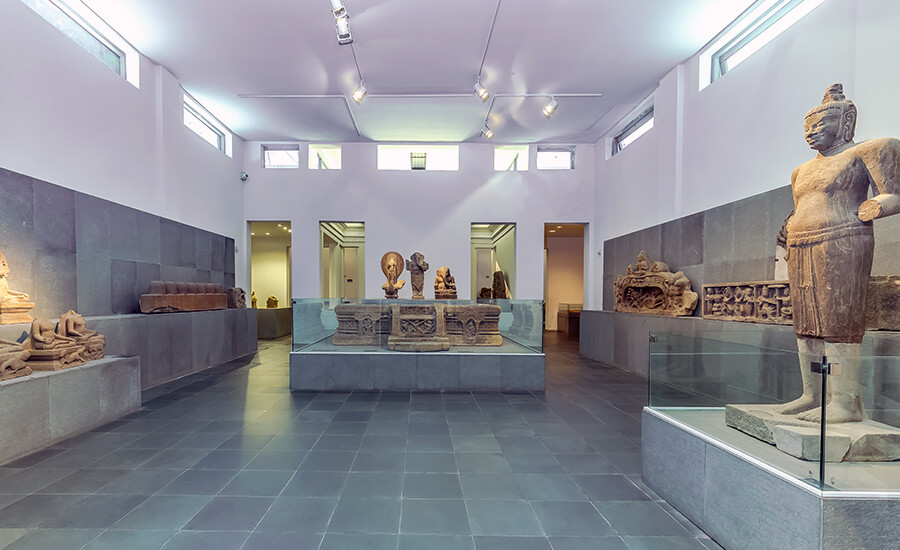
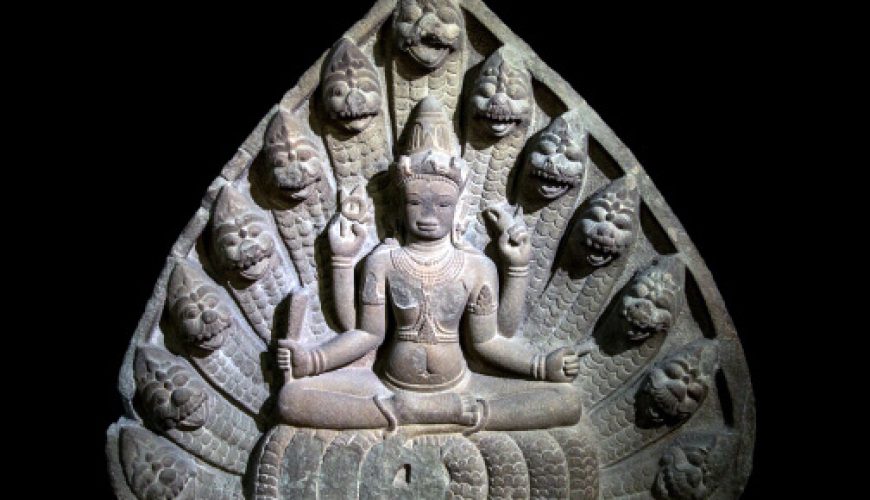
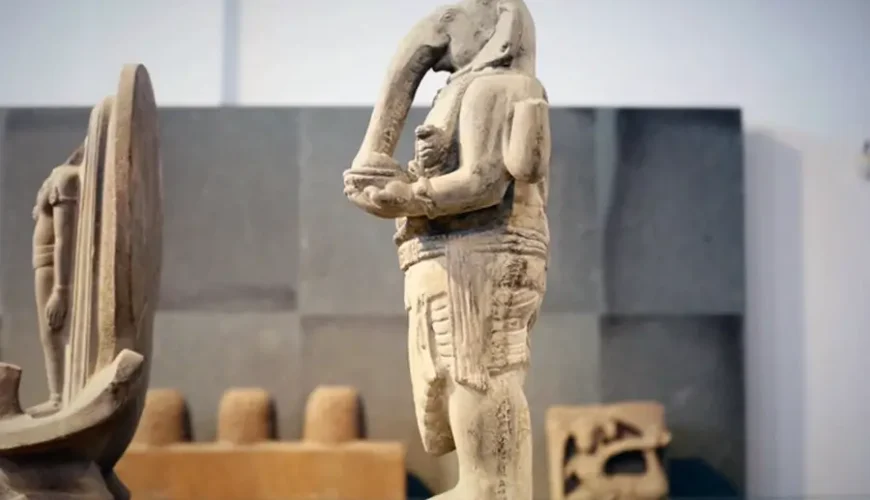
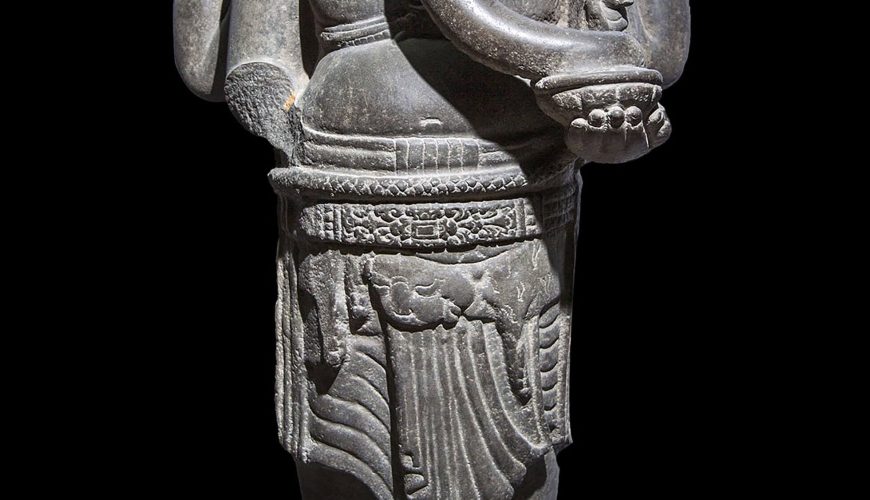
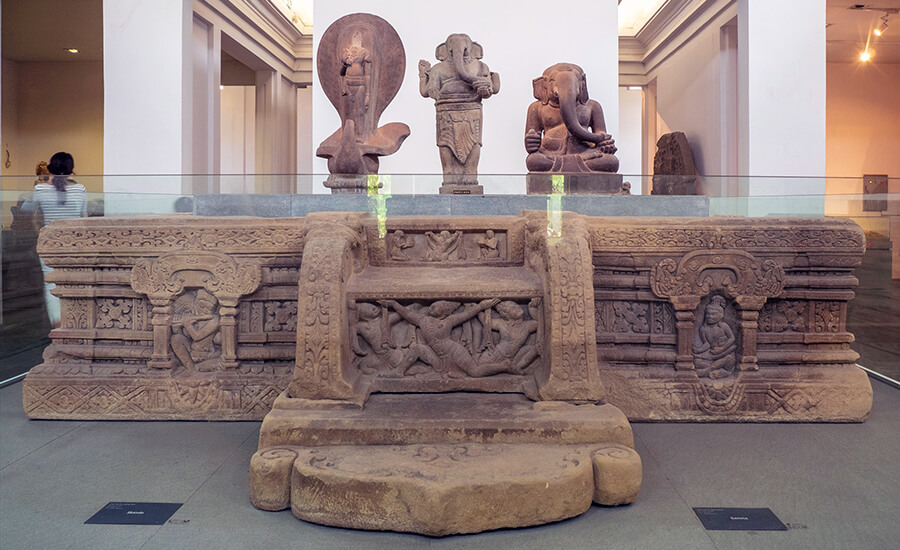
The artifacts displayed in the My Son room represent many styles during the development of Cham sculpture. The gallery has a total of 18 antiques on display, divided into three groups: The main tower, the auxiliary tower, and the decorative artifacts. Besides, the room also displays many famous artifacts and antiques such as: a Shiva statue, a Ganesha statue, and a Brahma birth statue.
Dong Duong Gallery
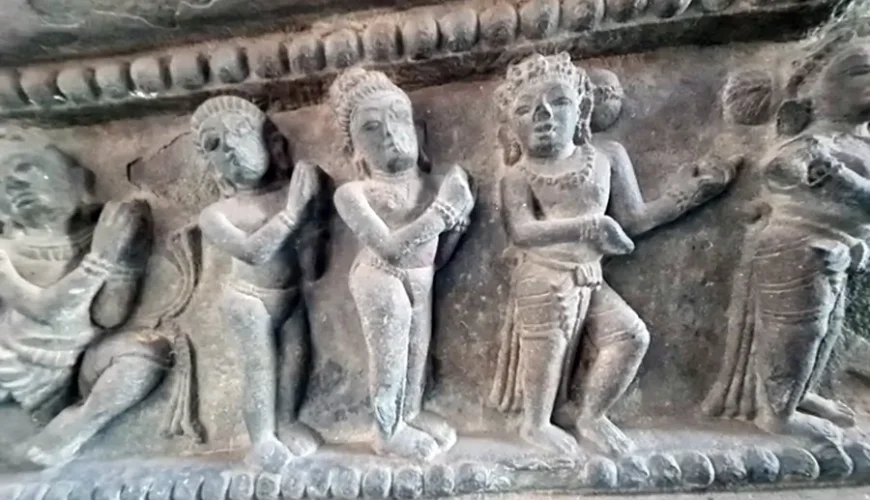
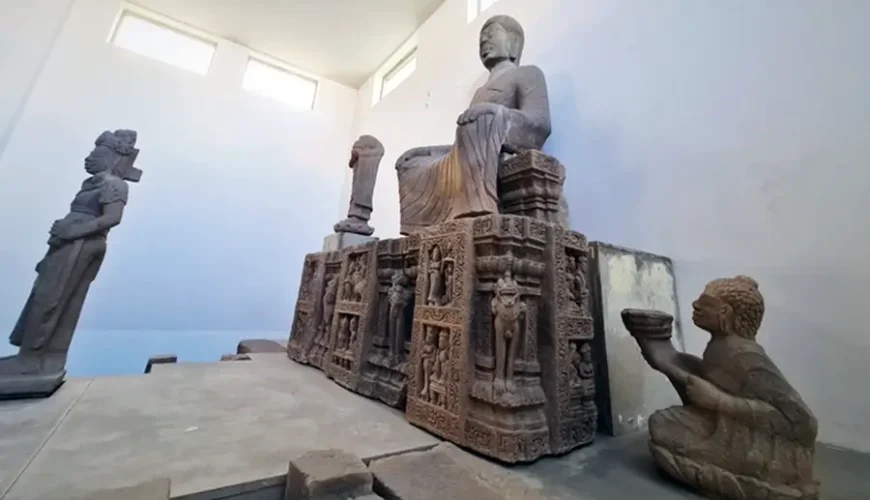
Dong Duong is famous as the center of Buddhism in the Kingdom of Champa, located in the delta, about 20km south of My Son valley. When coming to Dong Duong, you will have the opportunity to explore sculptures. engraved with the quintessence of Buddhist culture. Here, you will encounter exquisite sculptures with a unique combination of Chinese, Indian, and Champa elements.
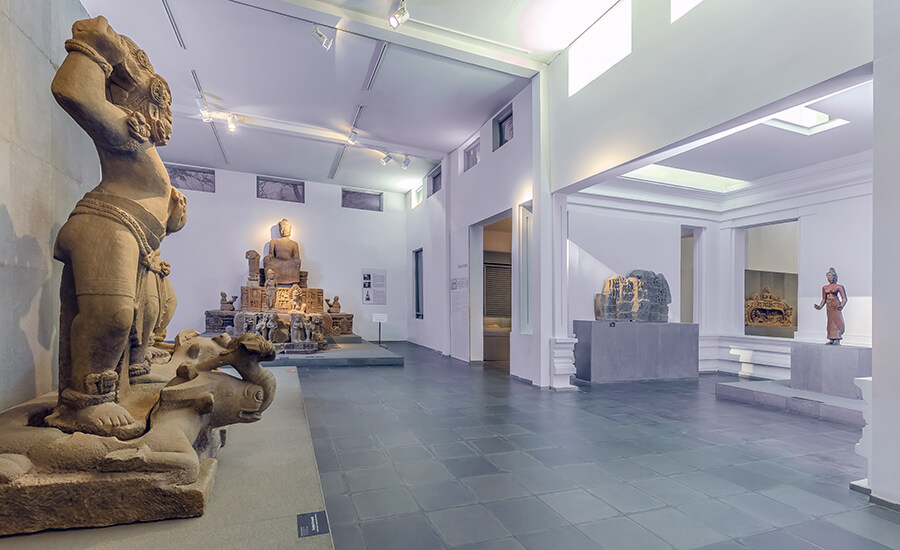
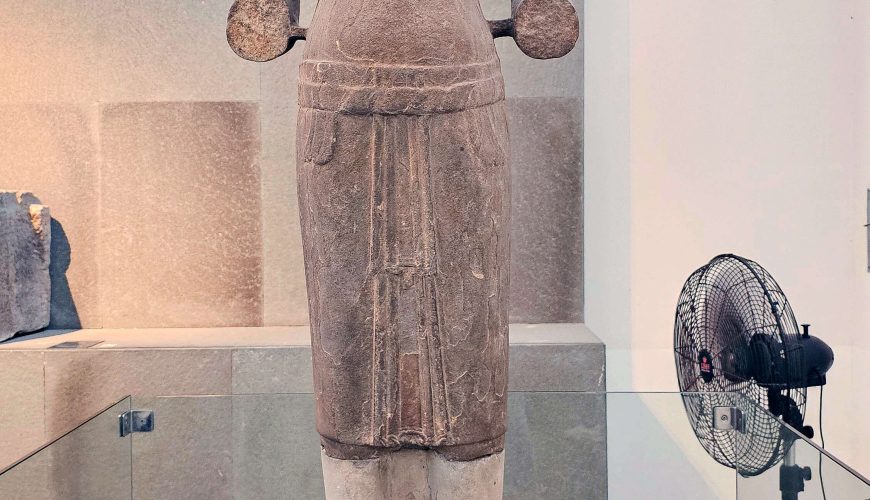
Dong Duong Gallery displays Dong Duong tower artworks, including 21 works. Among them, there are three prominent statues: the Deva Statue, the Bodhisattva Statue, and the Indochina Altar. Although it is only a small part of the Dong Duong tower, from here you will easily feel the solemnity and beauty of this Buddhist monastery and temple.
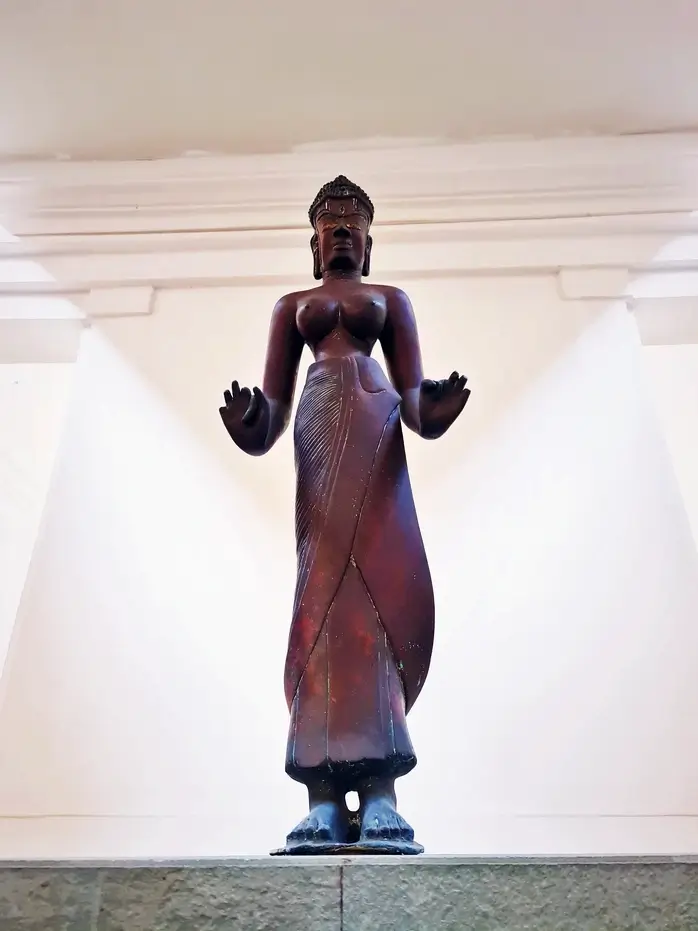
Buddhist sculptures at Dong Duong show the development of Mahayana Buddhism in Champa. Although there are influences from China, India, and neighboring countries, Dong Duong architecture and sculpture are rich in indigenous elements, creating a unique and impressive style within Cham art.
Thap Mam Gallery
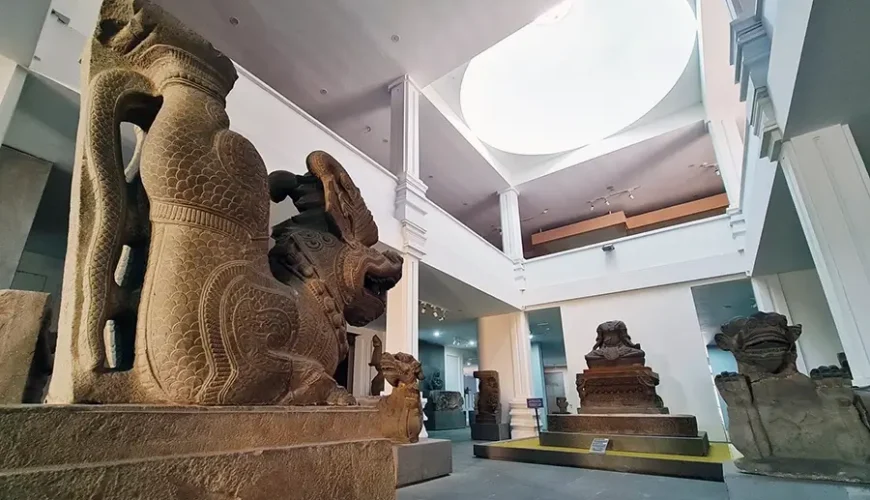
Thap Mam is the name of a ruined Cham relic, located in An Nhon Bac Ward, Gia Lai province. A large-scale excavation was conducted at this location in 1934, revealing the foundations of a complex of towers within a walled area. The age of the Thap Mam relic is estimated to be around the 12th-13th centuries.
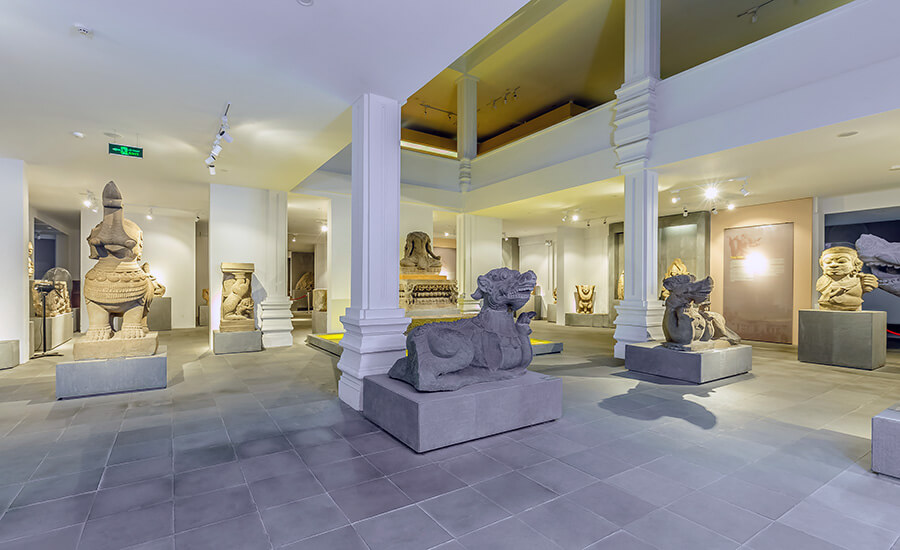
The volume of artifacts collected during the 1934 excavation was up to 58 tons, including large statues and many stone architectural decorations. Another excavation was conducted here in 2011, and a number of similar artifacts were discovered.
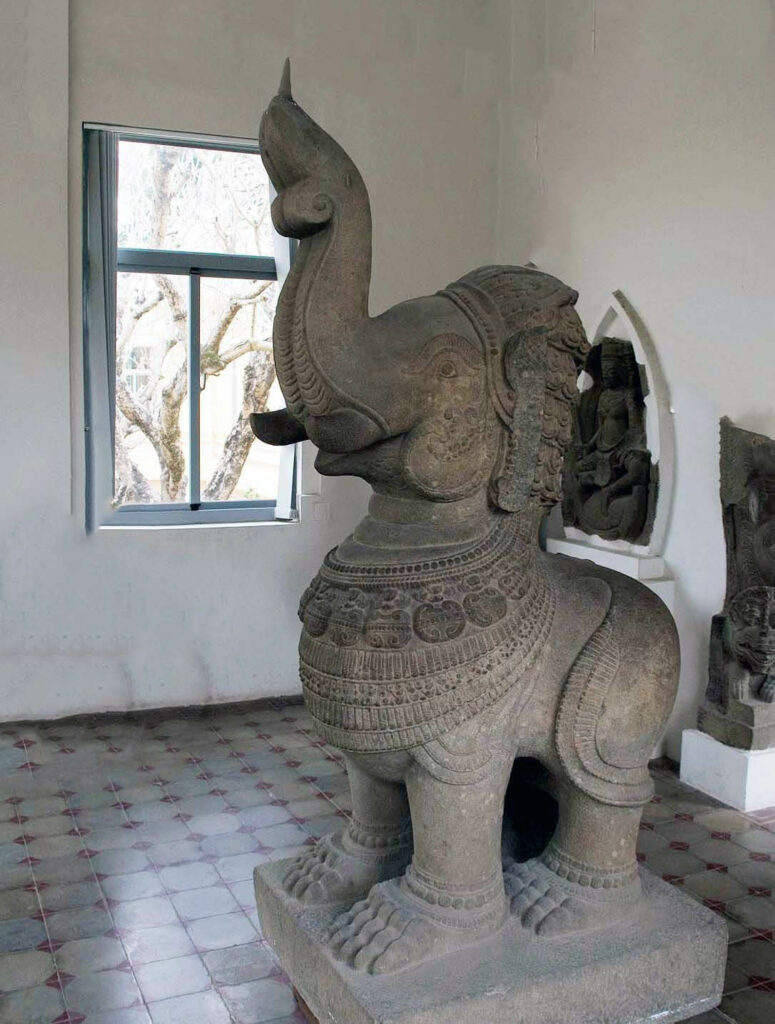
The artistic style of artifacts collected from the Thap Mam relics shares common features of complexity and meticulousness, but falls into stereotypes and lacks softness and flexibility. The name “Thap Mam” was later used to name a style of Cham art that shares the same characteristics as this group of artifacts. After the Thap Mam period, Cham sculpture art gradually declined.
Quang Tri Gallery, Quang Tri, Thua Thien – Hue
The provinces of Quang Tri and Hue lie north of Hai Van Pass, in the northernmost region of the ancient Champa kingdom. In this area, there is still a small Cham tower, discovered in 2001 in My Khanh village, Phu Vinh commune, Hue City.
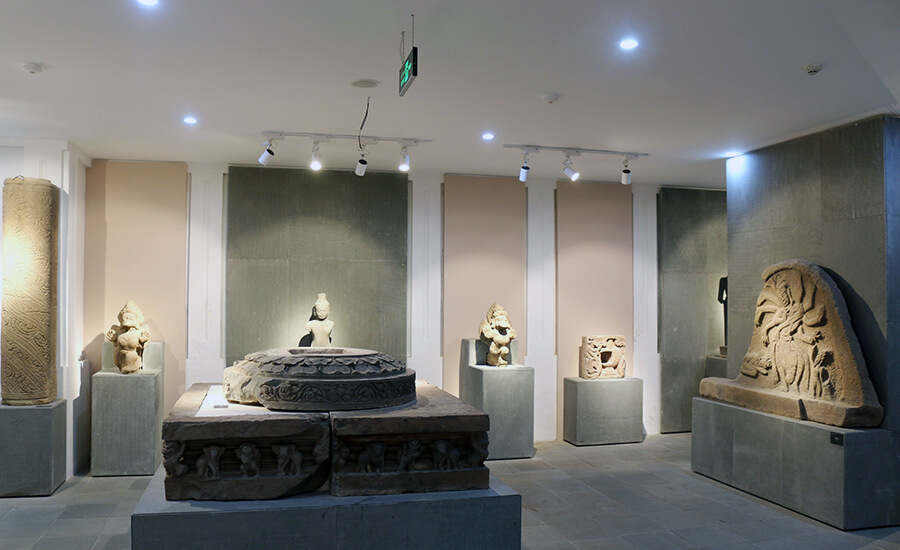
Although there are not many temples and towers still standing on the ground, many traces of foundations, sculptural artifacts and some epitaphs can still be found in the northern Champa area. Inscriptions dating from the 6th to the 10th centuries refer to the construction of temples and towers worshiping the god Siva as well as Buddhist works. The artistic style of the sculpture shows the unity of this area with its southern neighbors, Da Nang, in the 9th – 10th centuries.
Quang Nam Gallery
The old Quang Nam province (currently merged to Da Nang City) was once a strategic location for the Champa kingdom in the past, with locations such as: Tra Kieu Citadel, Dong Duong Buddhist Monastery, My Son Holy Land were found in Quang Nam. At these locations, archaeologists have found many valuable artifacts, which are displayed in the Tra Kieu Room, My Son Room and Dong Duong Room.
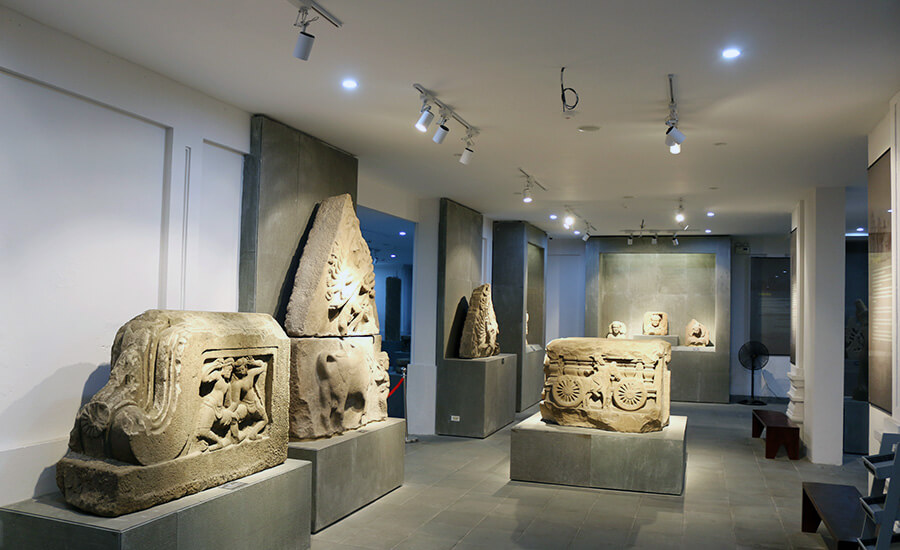
In addition to these famous places, Quang Nam also contains many other relics. A number of relics were discovered in the early twentieth century and put on display after 1975. Collections of these relics present a diverse picture of Cham sculpture, with many well-developed artistic styles. concentrated in one area over many periods of the Champa kingdom.
Da Nang Gallery
The Da Nang collection includes many artifacts collected before 1975 from Phong Le, Qua Giang, and Xuan Duong relics. Surveys since 1975 have uncovered many more artifacts and architectural traces of the Champa period in other localities of Da Nang city, such as the relics of An Son, Khue Trung, and Go Femoral. In particular, archaeological excavations in the years 2012-2014 at the Phong Le and Cam Mit relics discovered artifacts of religious significance deep underground in the Cham towers.
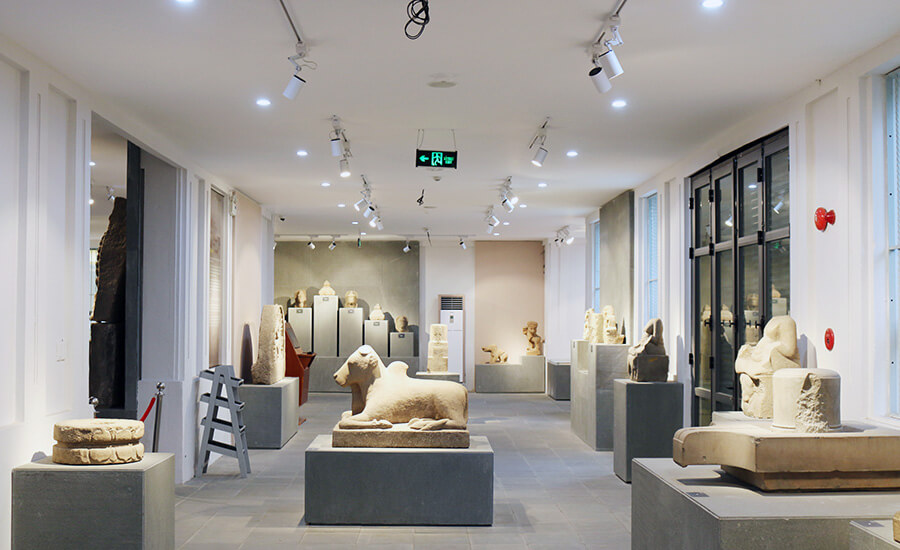
Sculptures, epitaphs, and architectural traces show that the Da Nang area was a center of economic and trade development within the Champa kingdom in the 9th to 13th centuries.
Binh Dinh Gallery – Kon Tum
Binh Dinh province (currently merged into Gia Lai Province) is about 300 km south of Da Nang city. Many researchers believe that today’s Binh Dinh province was once an important center of the Champa kingdom, mentioned in some inscriptions as Vijaya. In Binh Dinh, there are Cham towers still standing today, including groups of Canh Tien, Thu Thien, Duong Long, Binh Lam, and Hung Thanh towers. In addition, Binh Dinh has many Cham ruins, including Thap Mam, which were excavated in 1934 and 2011, revealing numerous large statues of gods and animists.
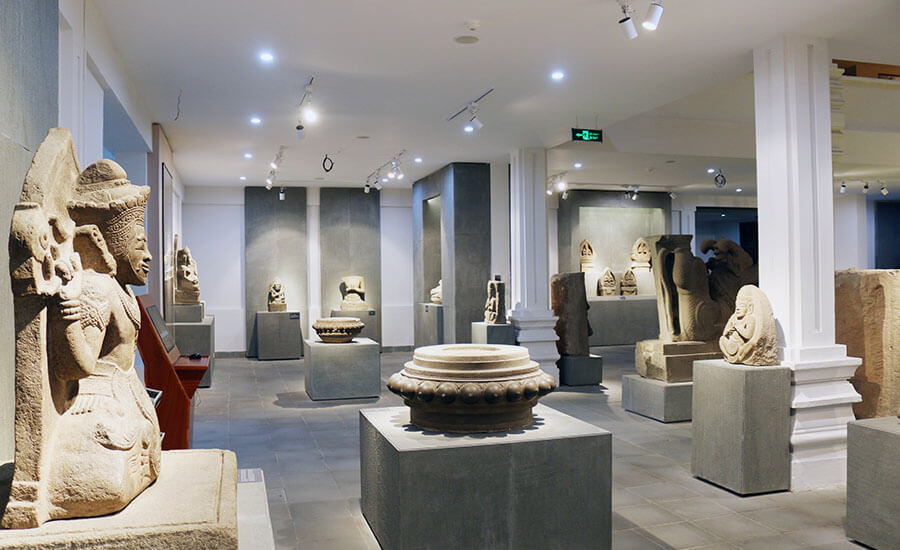
In addition to the exhibition space dedicated to the Thap Mam collection, artifacts from other sites in Binh Dinh province are displayed together in the Binh Dinh – Kon Tum exhibition space. Most of the artifacts collected from Binh Dinh date from the 12th century onwards. Artifacts from the Kon Tum area (BTC 167 – 3.16) are the latest in the Cham Museum’s stone sculpture collection (14th – 15th centuries).
Gallery of Inscriptions
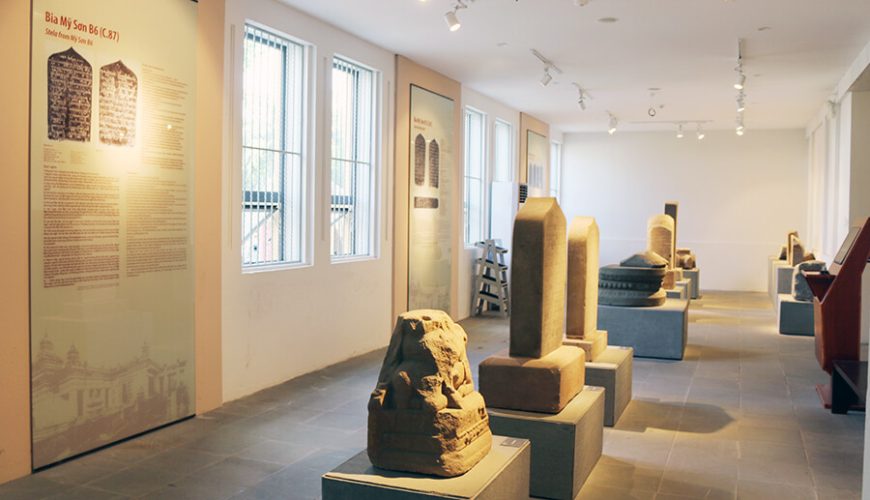
Champa inscriptions have been found on some cliffs, on architectural decorations, on pedestals of god statues, and on metal or terracotta objects. However, important and detailed texts are mainly engraved on stone steles. Stone steles are often erected in front of towers to worship Hindu or Buddhist gods, recording the construction and restoration of temples and towers, as well as the offering of land or the assignment of people to take care of them.
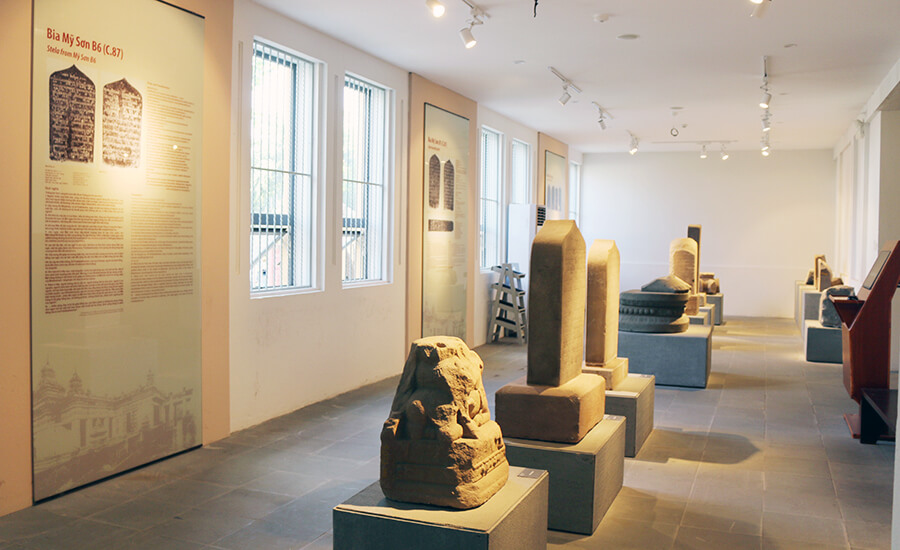
Texts engraved on steles are often the names of kings, members of the royal family, or high-ranking mandarins. The content of the epitaph provides information about the social life and beliefs of the Champa kingdom, as well as its relationship with neighboring countries. The dates recorded on the stele are an important basis for determining the period of construction of the towers and for speculating on the dates of sculptural artifacts associated with the architectural works.
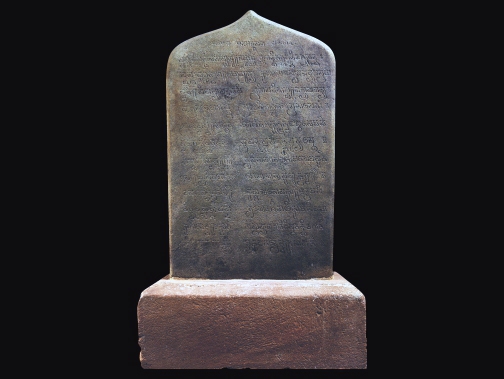
Inscriptions before the 10th century used the Brahmi writing system (Sanskrit). From the 10th century onwards, the ancient Cham language gradually replaced Sanskrit in inscriptions.
Requirement while visit the museum
- Visitors must present a ticket to visit the museum. Dress neatly and politely.
- Do not bring weapons, explosives, flammable or toxic substances (such as acids), corrosive substances, oversized furniture, or other dangerous items into the museum.
- Do not bring large luggage into the museum. Carry-on luggage weighing more than 3 kg must be stored at the baggage counter (money and high-value items must be brought with you).
- Do not smoke, wear raincoats, eat, or drink in the galleries. Maintain general hygiene and dispose of trash in the right place. No street vending within the museum premises.
- Do not bring banners or pets into the museum. Do not make noise when visiting the museum.
- Do not touch artifacts, climb, or sit on the pedestal displaying artifacts in the museum.
- Do not use a tripod or flash to take photos. Special filming and photography programs must be approved by museum leadership.
- Do not arbitrarily organize entertainment, cultural, and artistic activities on the Museum campus without permission from the museum’s leadership.
- Do not climb trees, break branches, pick flowers, or pick fruit… on the museum grounds.
- Visitors are responsible for any damage caused to the museum.
Source: collected by An
Follow us for the best deals on Vietnam package tours and visa services!

Comment (0)