
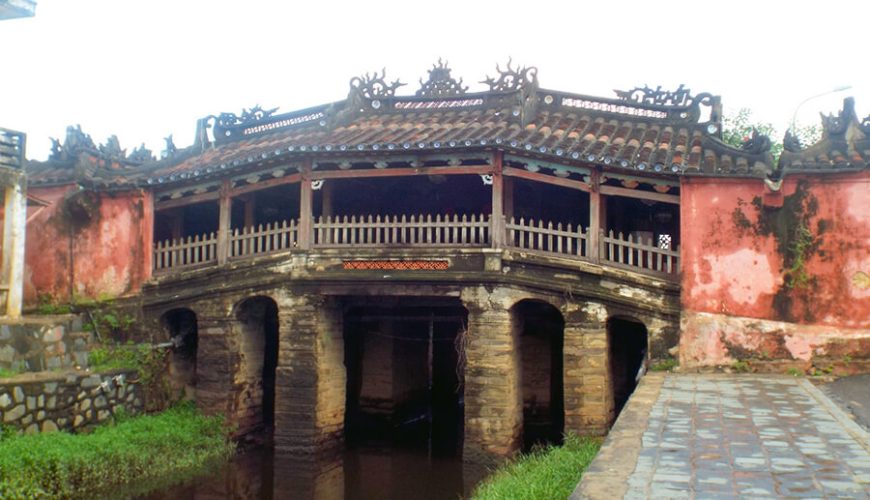
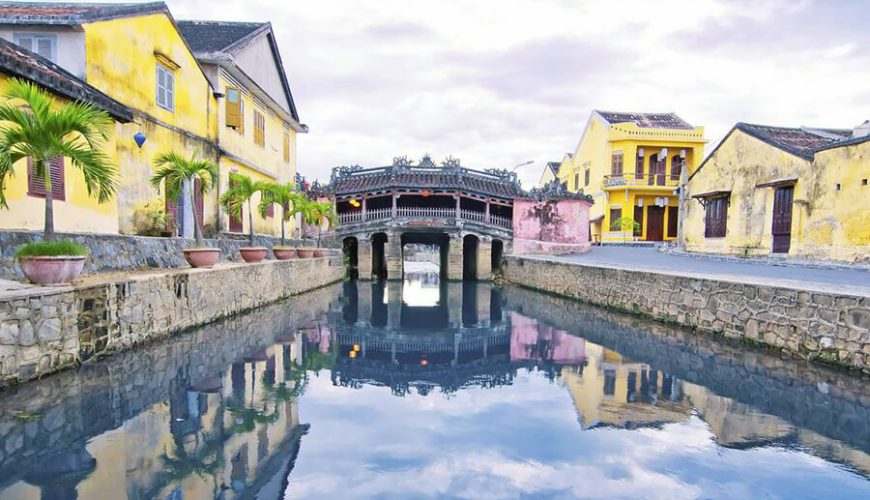
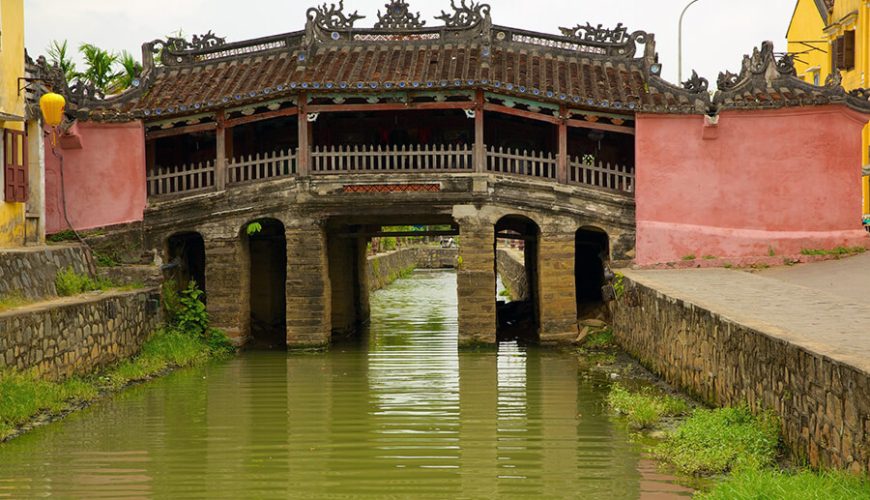
The Japanese Bridge, or Japanese Covered Bridge (Vietnamese: chùa Cầu), has a history of more than 400 years and is considered a symbol of the prosperity of the ancient land of Hoi An. This place has architecture that blends influences from Vietnam, China, and Japan, with extremely expensive details. To learn more, let’s explore this priceless historical place with Vietdreamtravel!
Overview of the Japanese Bridge
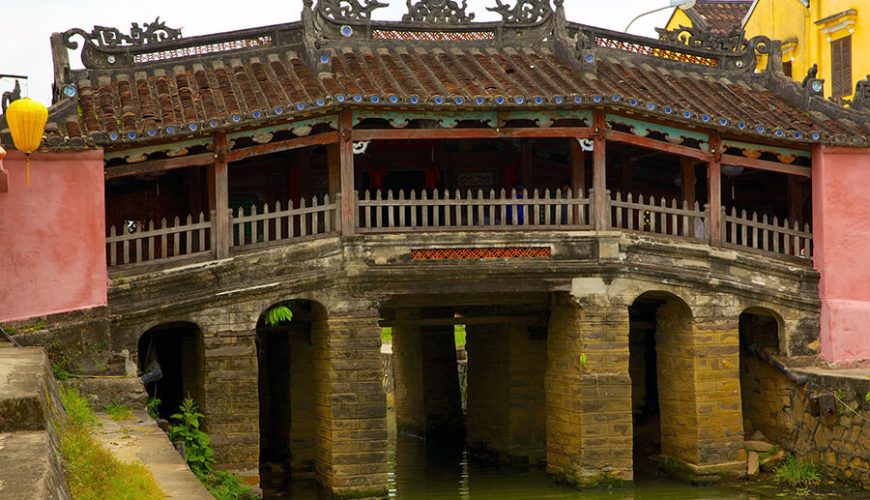
The Japanese Bridge is an ancient bridge connecting Tran Phu and Nguyen Thi Minh Khai streets, the main roads in the southwest of Hoi An ancient town. The bridge spans a small creek connecting to the Hoai River.
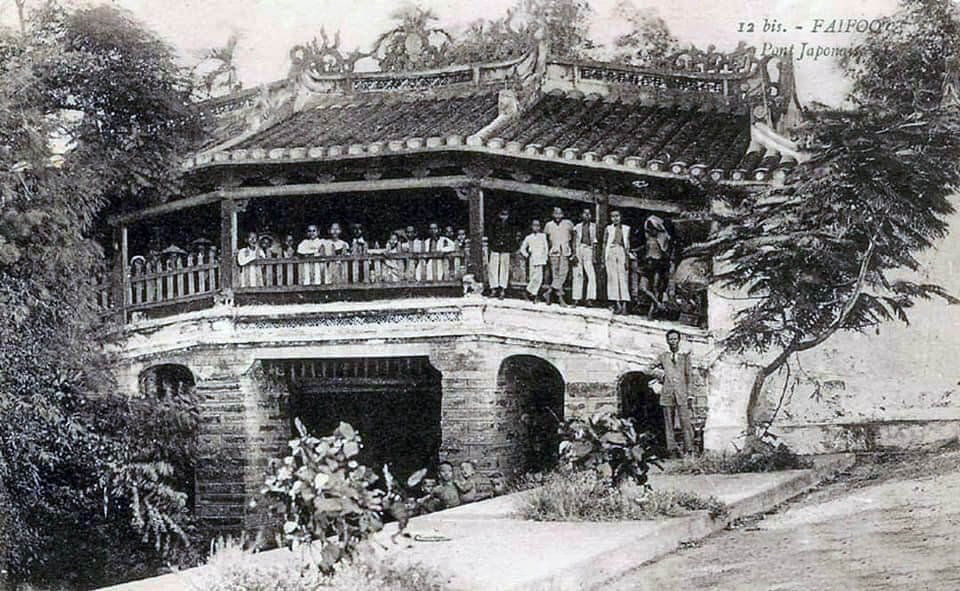
The bridge was originally built by Japanese merchants around the mid-16th century, so it is also called the Japanese bridge. According to the legend, the structure was a reassurance for the Namazu, a sea monster with a head in India, a body in Vietnam, and a tail in Japan; every time Namazu moved, it caused floods and earthquakes in these areas.
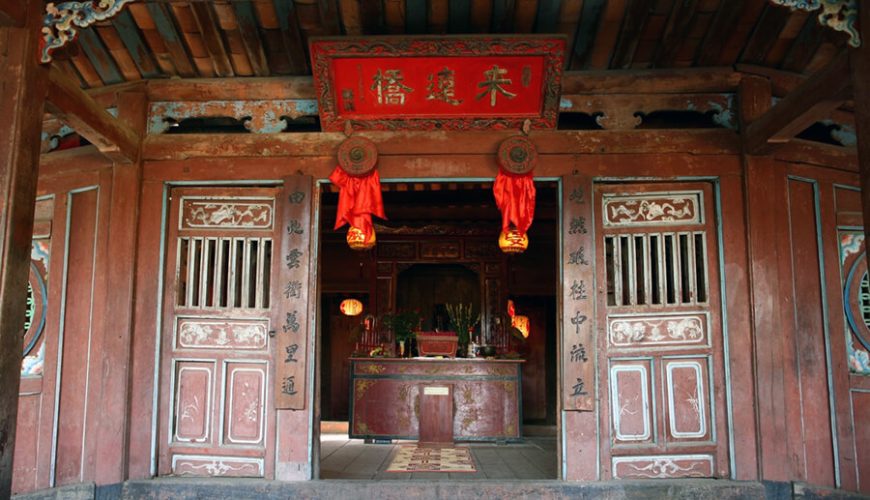
In 1653, a temple was built on the northern slope of the bridge, so the bridge was called Chùa Cầu (meaning Pagoda & Bridge), however, it has not worshiped any Buddha. In 1719, Lord Nguyen Phuc Chu visited Hoi An and named the bridge “Lai Vien Kieu”, meaning “Bridge to welcome guests from afar”.
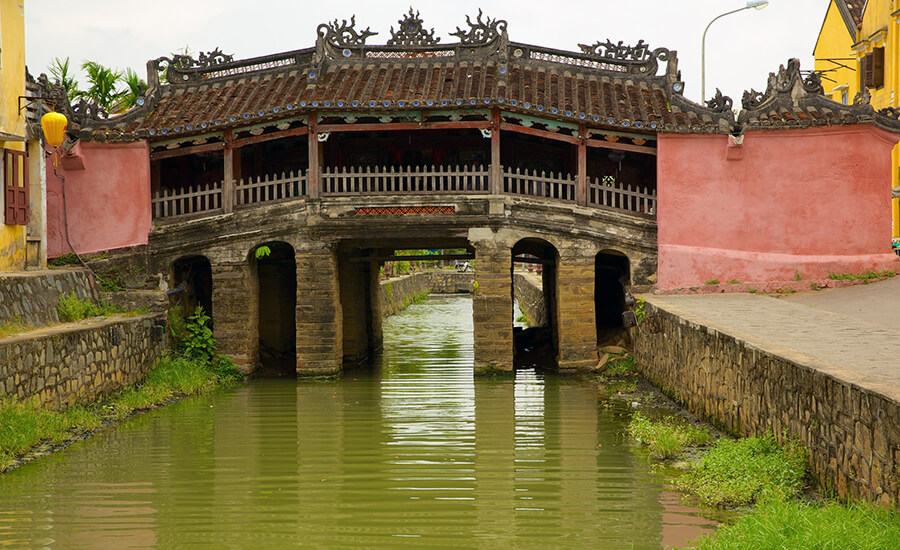
In 1817, 1865, 1915, and 1986, the temple was restored, and Japanese architecture was replaced with bold Vietnamese-Chinese designs. On February 17, 1990, the Japanese Bridge in Hoi An was recognized as a national historical and cultural relic.
- Address: 186 Tran Phu, Hoi An Ward, Da Nang City
- Opening hours: Morning: 9:00 a.m. – 11:00 a.m. – Afternoon: 3:00 p.m. – 10:00 p.m.
- Entrance ticket: 100,000 VND/person/adult.
Explore the uniqueness of the Japanese Bridge
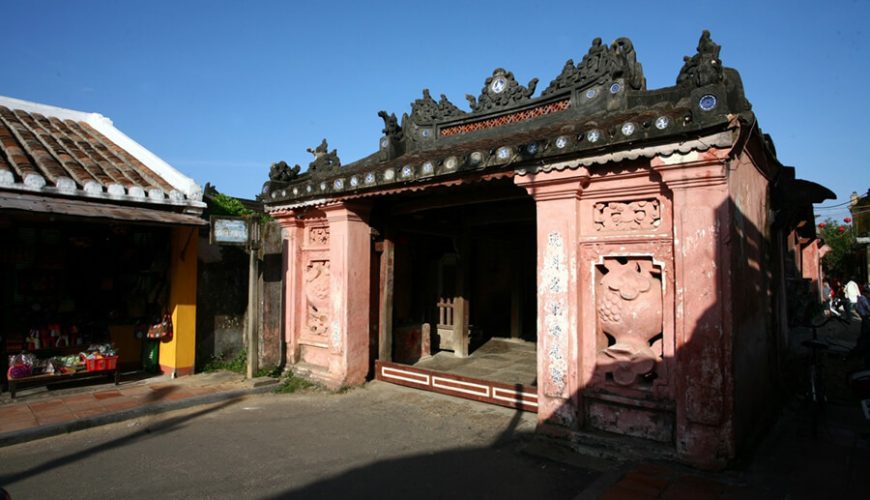
The Japanese Bridge is about 18 m long, about 3 m wide, and a mixture of Japanese, Chinese, and Vietnamese architecture. According to the plan, the bridge structure consists of 3 main parts: the two ends and the middle section of the bridge body.
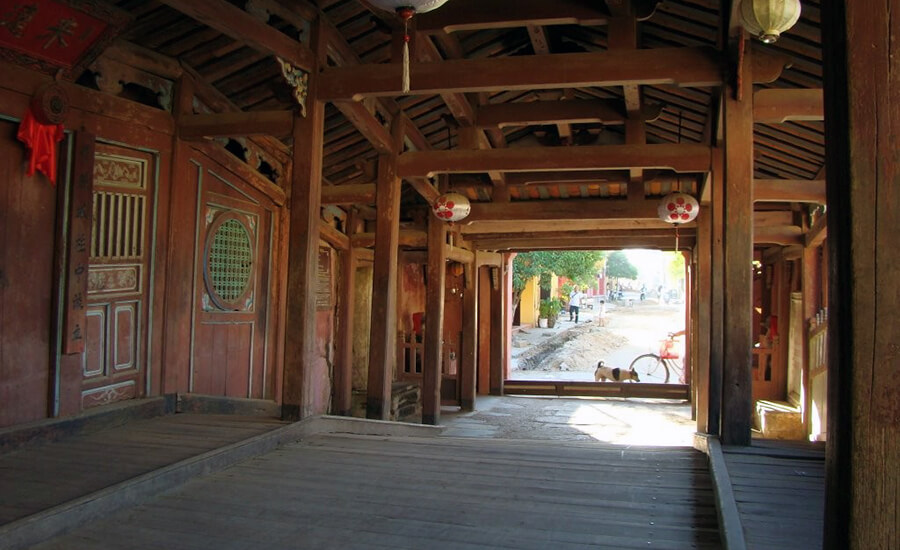
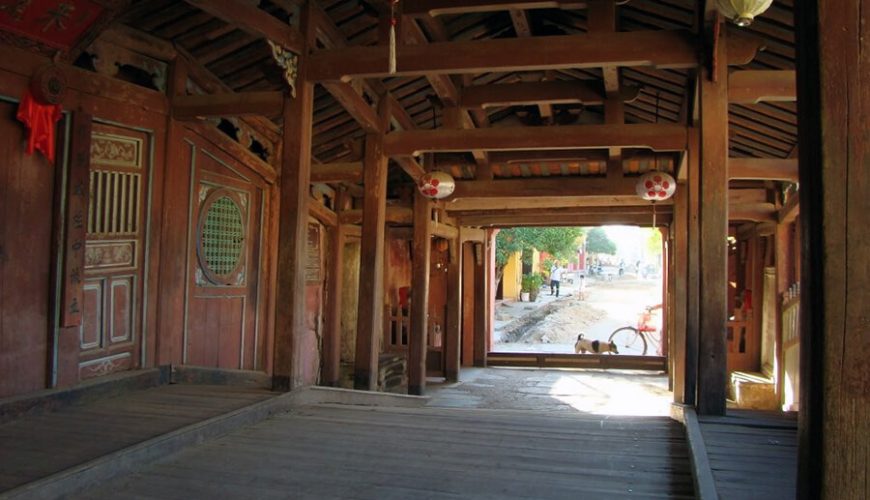
Each end of the bridge on both sides is built of brick and has 3 spans, and the middle bridge has 5 spans supported by brick pillars set into the water. All of the building’s frame systems are made of wood, and there are 3 roof systems corresponding to the 3 bridge parts.
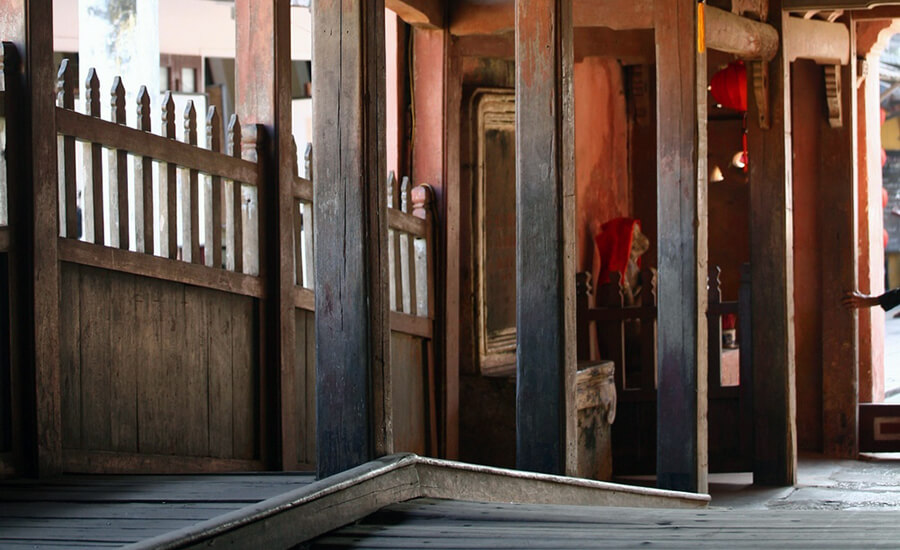
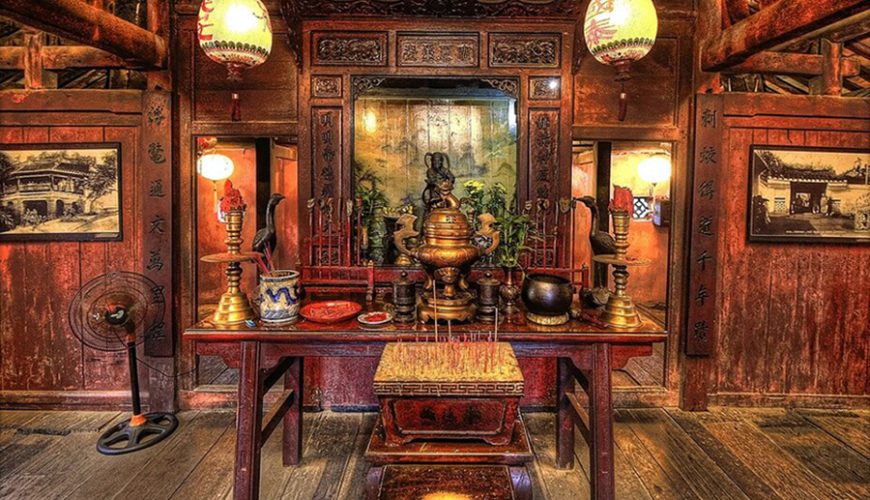
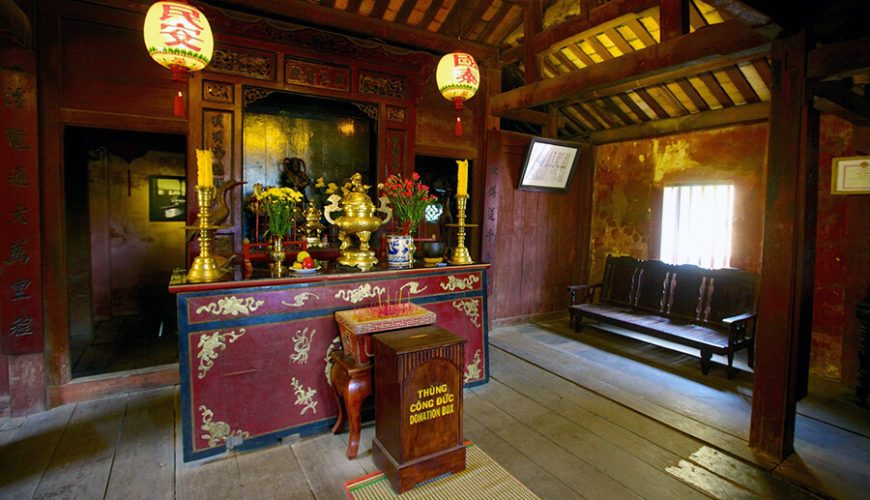
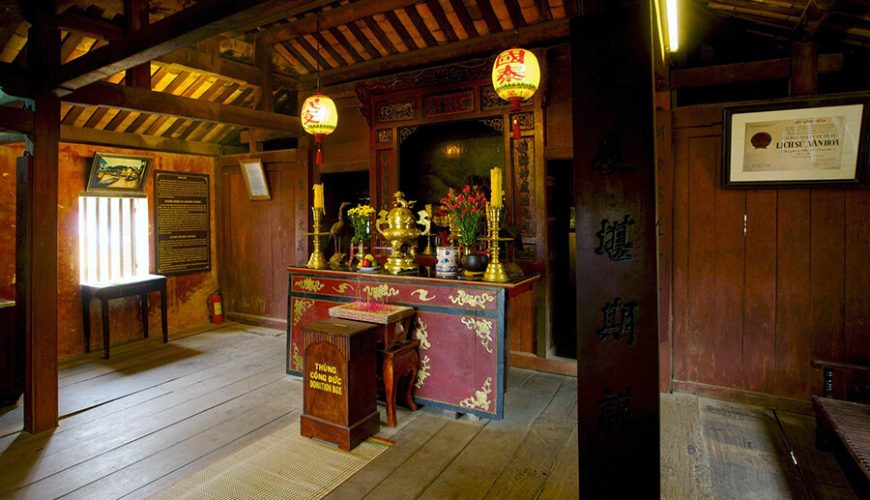
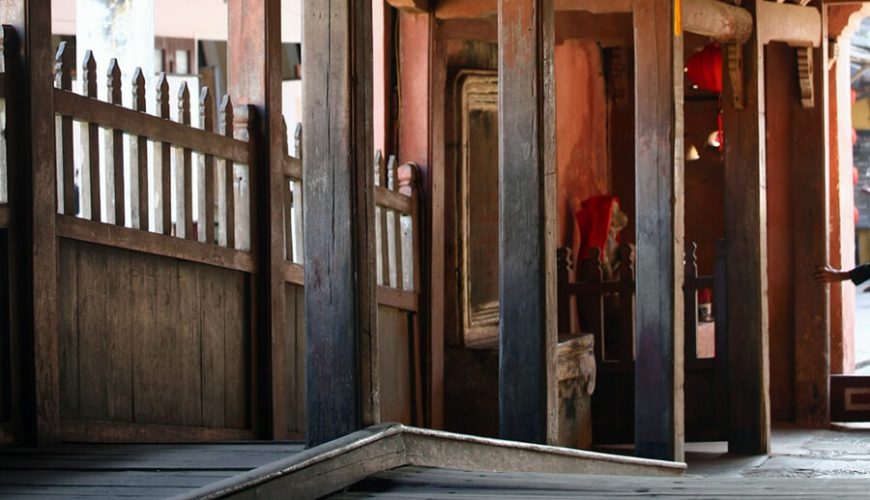
In the middle of the bridge is the entrance to the “Pagoda”. It’s called a “Pagoda”, but in fact, it doesn’t worship Buddha but worships Xuanwu, a revered deity in Chinese religion, also one of the higher-ranking deities in Taoism who specializes in controlling storms and floods, protecting the country, and bringing joy and happiness to people according to Chinese beliefs.
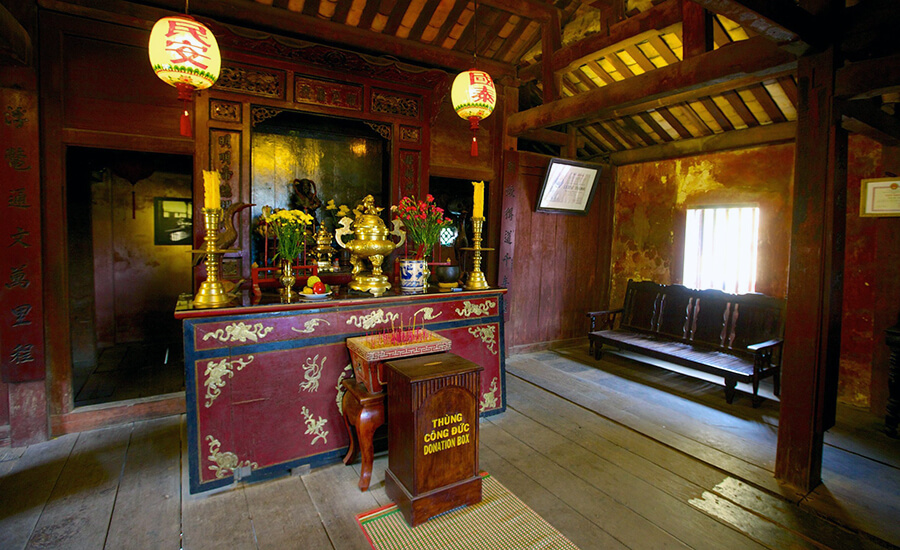
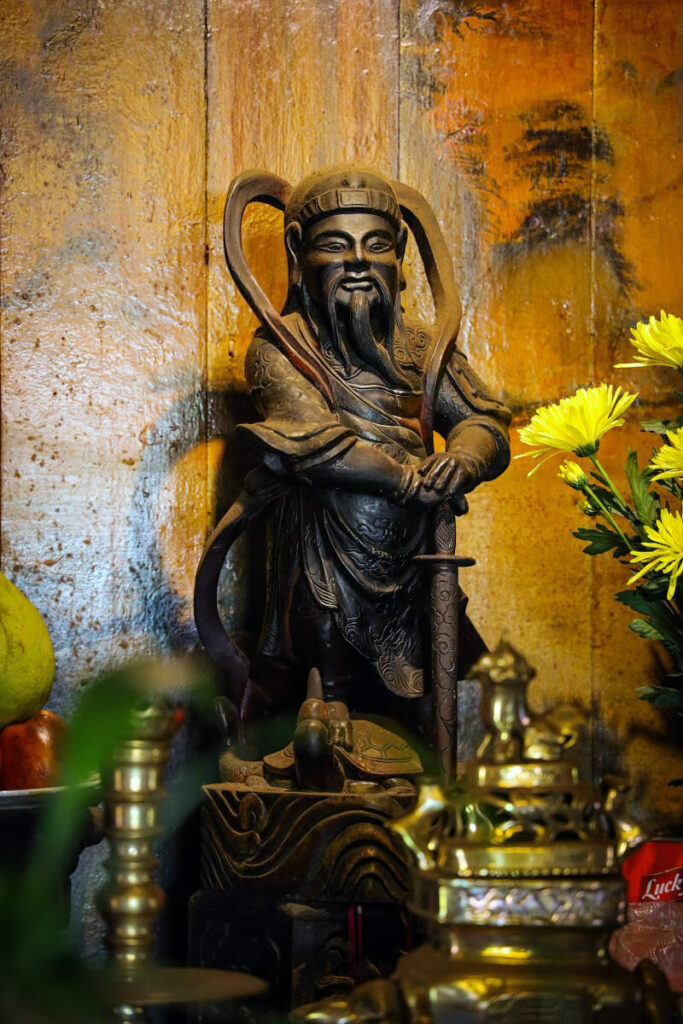
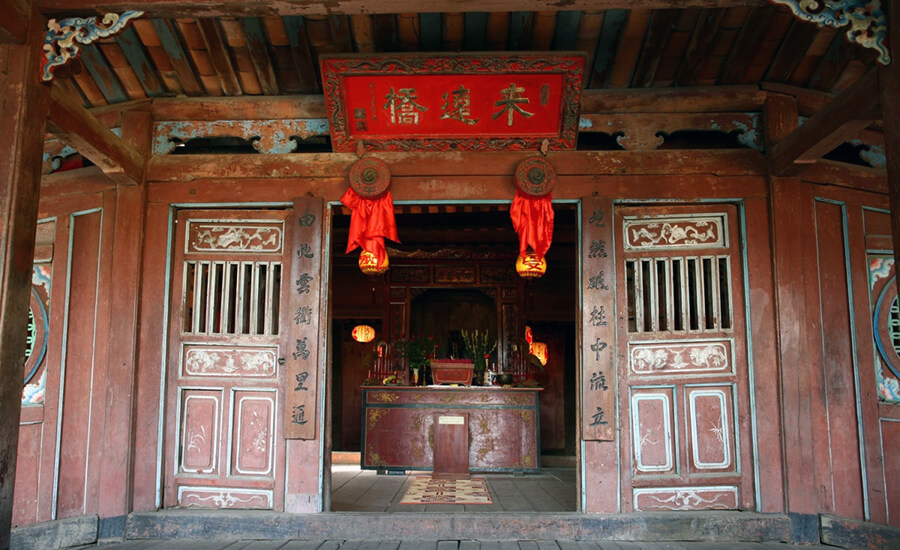
Above the entrance to the altar room is a sign with the three words “Lai Vien Kieu”. Under the sign, there are two door eyes, a bold architectural detail of Hoi An.
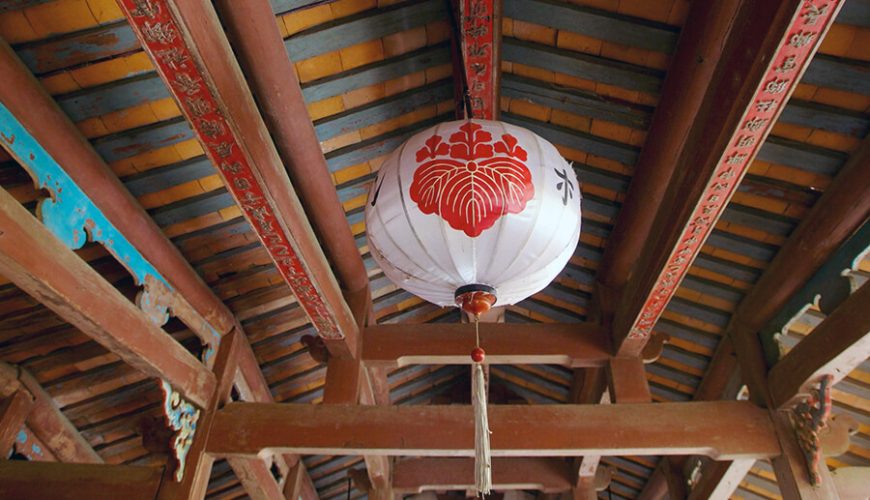
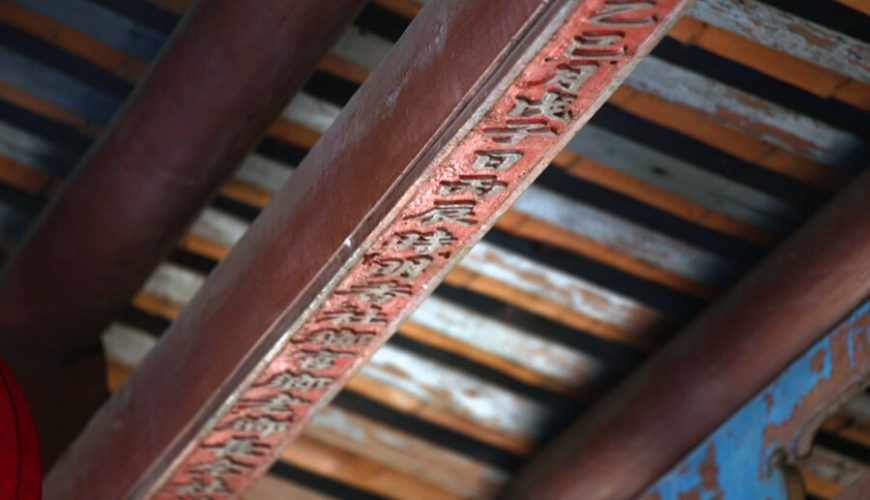
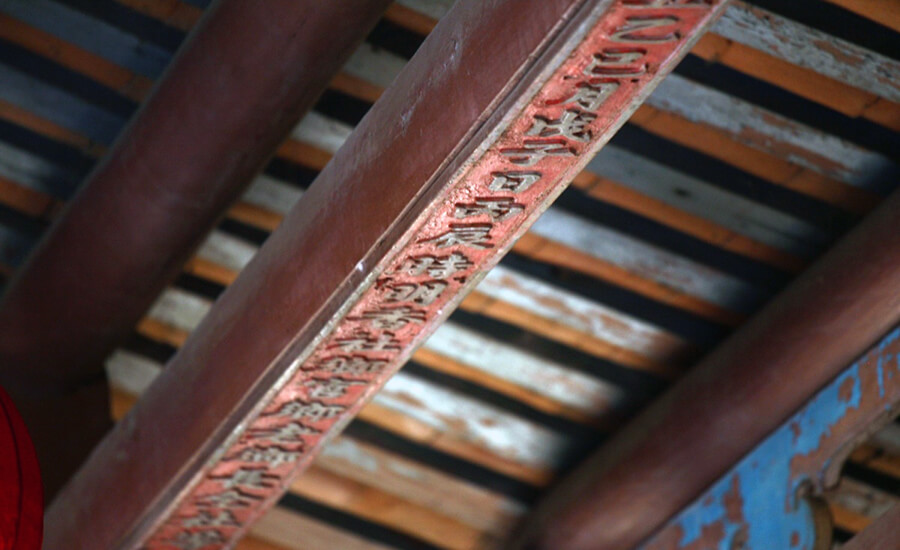
The wooden frame systems adapt to the bridge’s curved shape. On some trusses and roof rafters, embossed Chinese characters are present. In addition, many stone steles recording the history of the project and Hoi An are preserved in the Japanese Bridge.
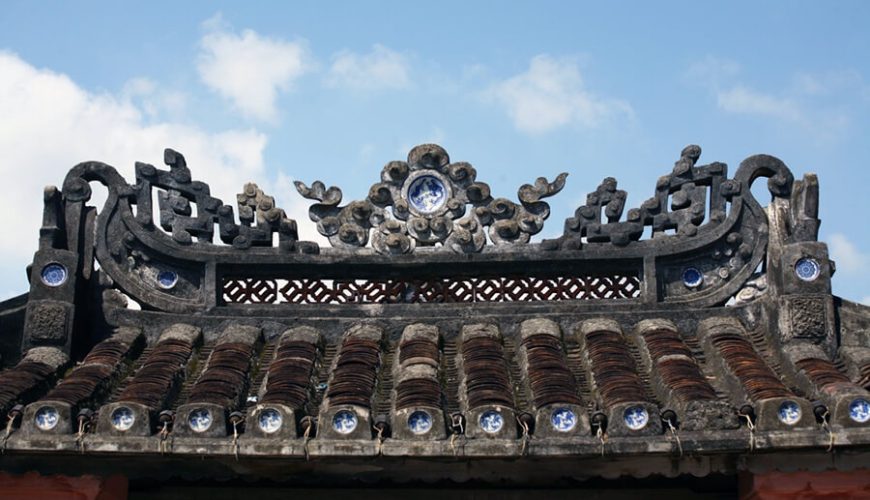
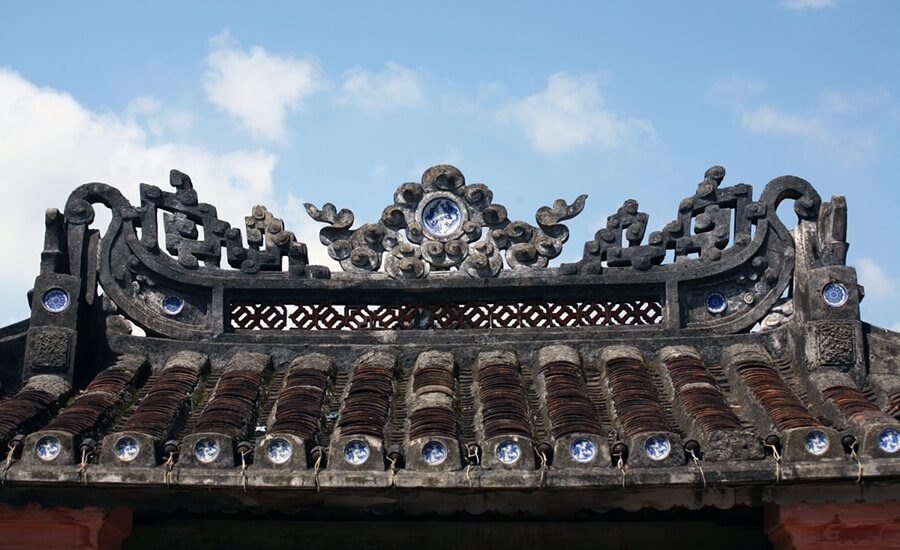
The building’s roof is covered with yin and yang tiles, with sophisticated decorative details on the ridge and flowing banks. In particular, there are blue glazed ceramics inlaid on the roof.
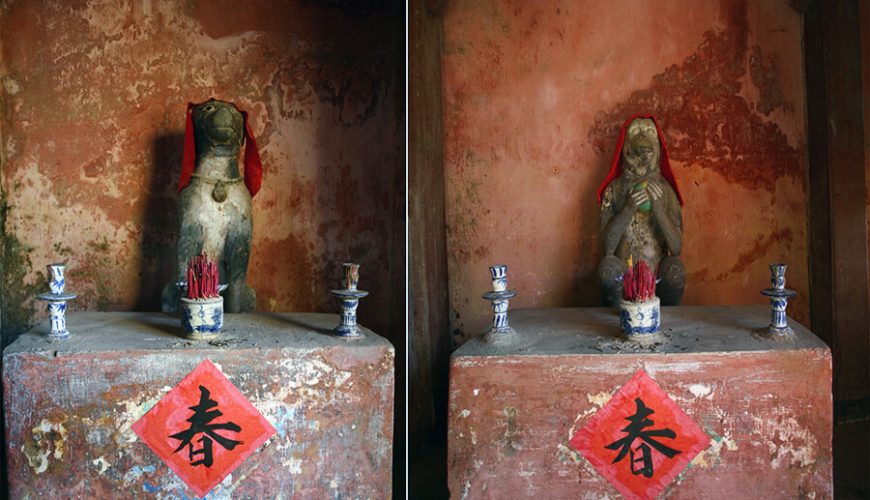
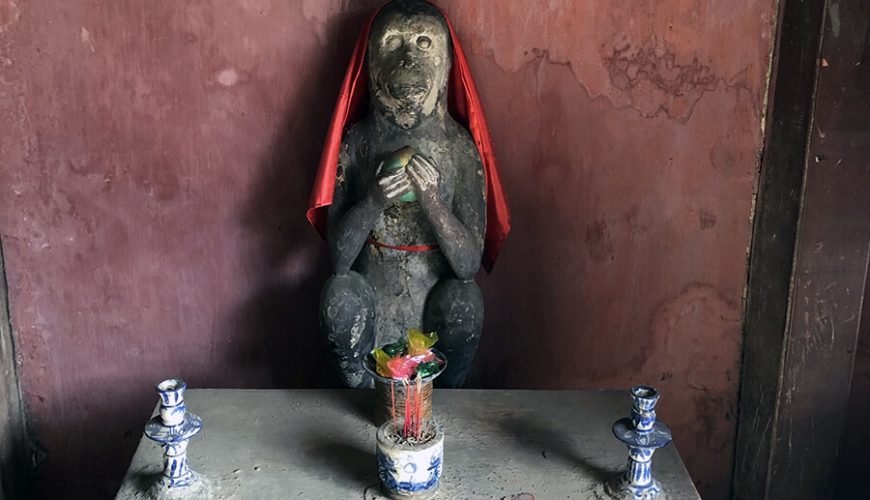
At both ends of the bridge, there are statues of a spirit monkey (right) and a dog (left). These are considered the pair of mascots that guard and protect the Japanese Bridge and are solemnly worshiped.
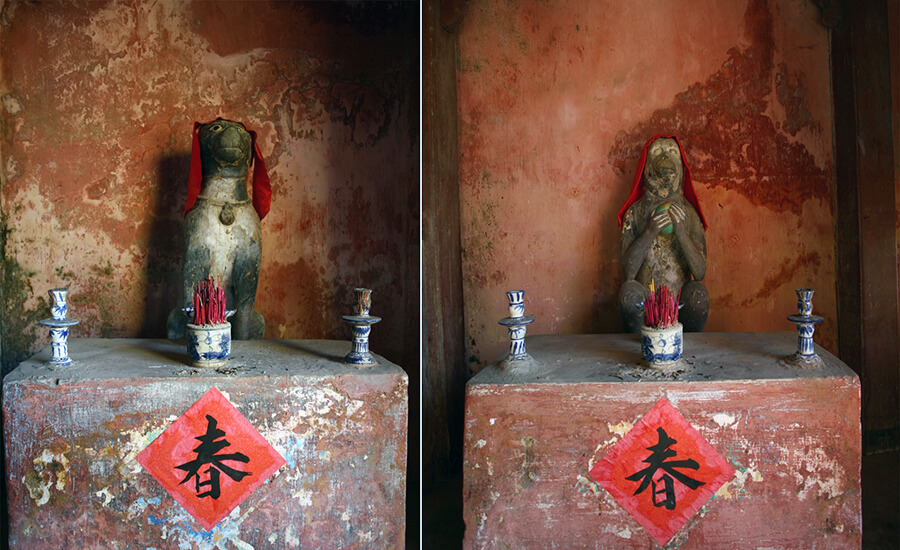
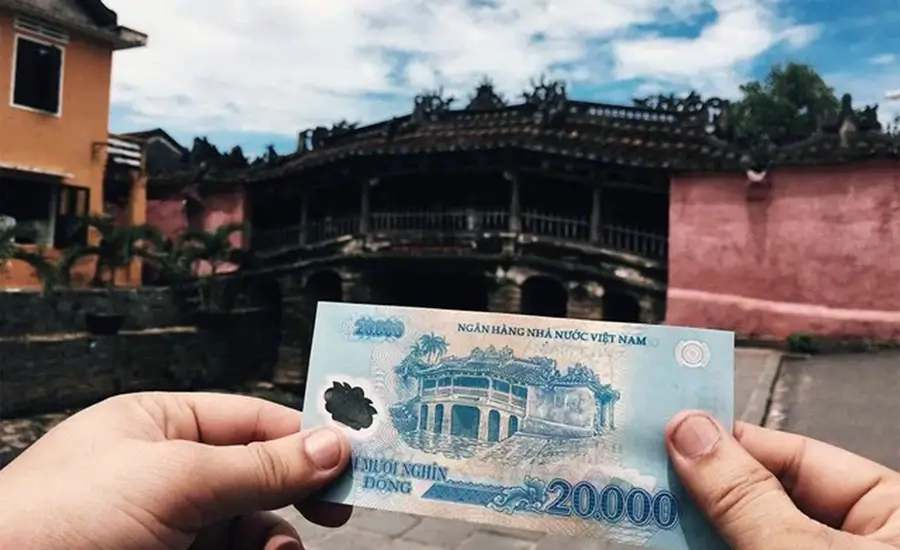
The origin of these mascots is unknown. There is a theory that monkeys and dogs represent the time of bridge construction. In particular, in 1990, the Japanese Bridge was recognized by the state as a national historical and cultural relic, and its image appears on the 20,000 VND banknote.
Source: collected by An
Follow us for the best deals on Vietnam package tours and visa services!

Comment (0)