
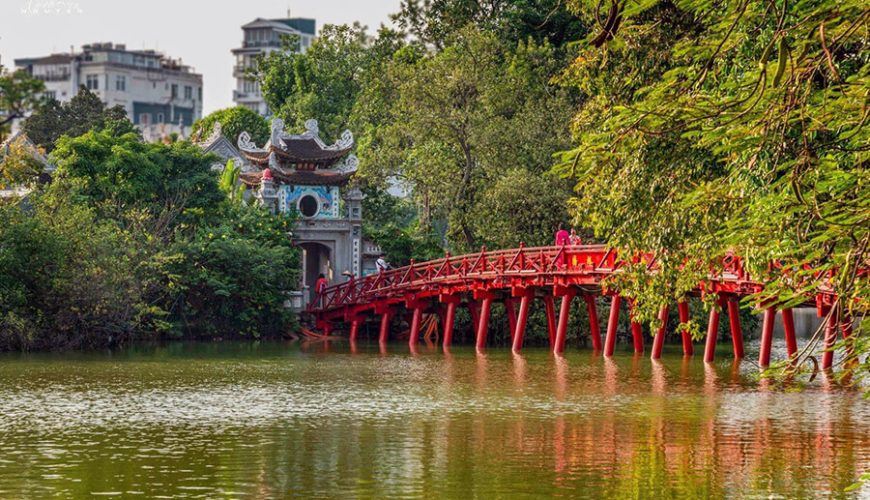
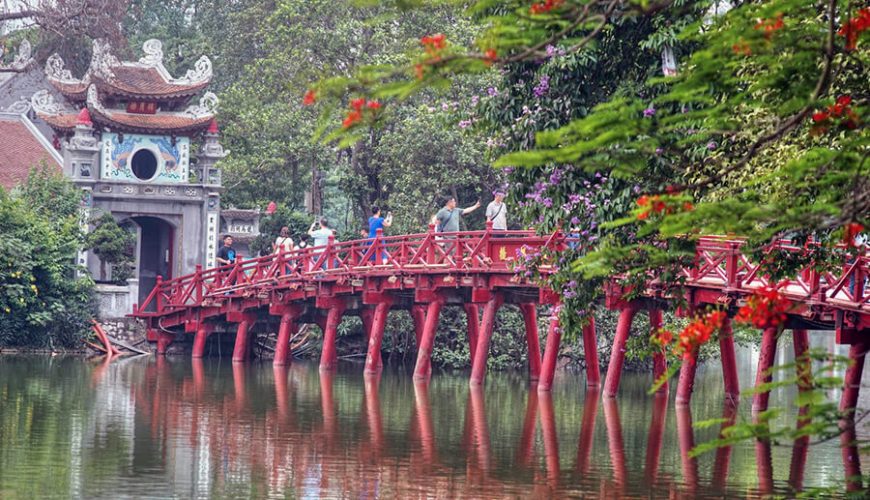
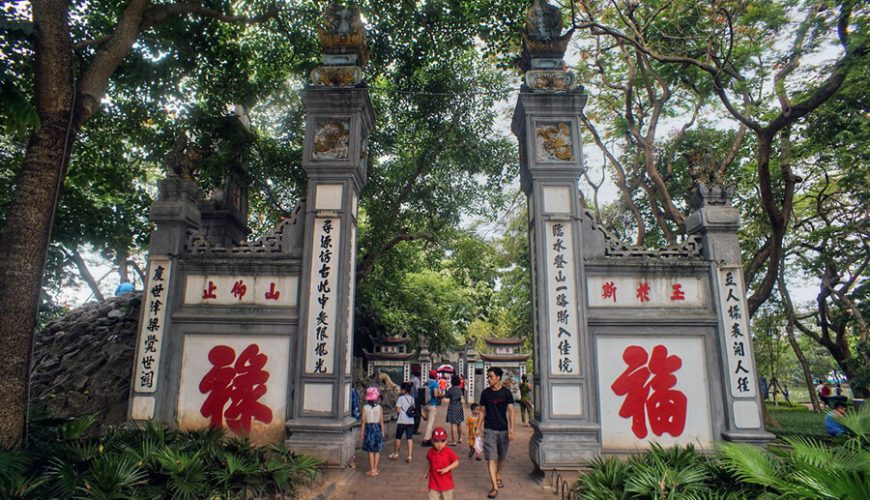
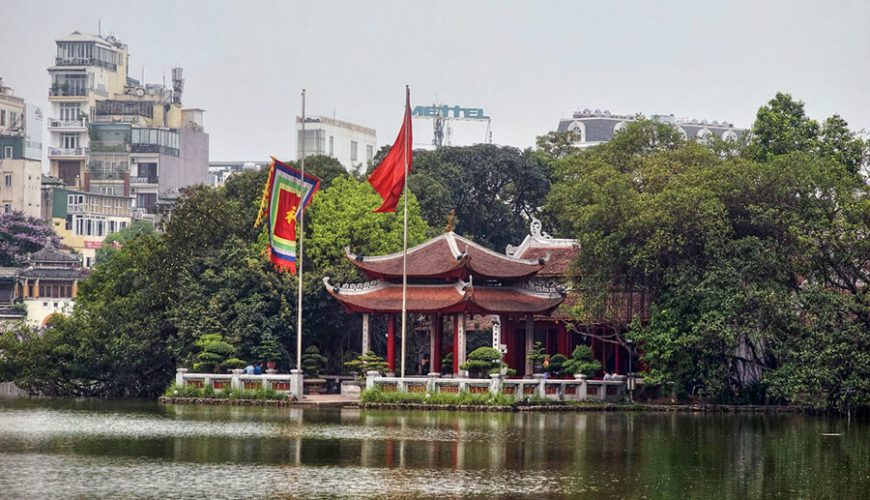
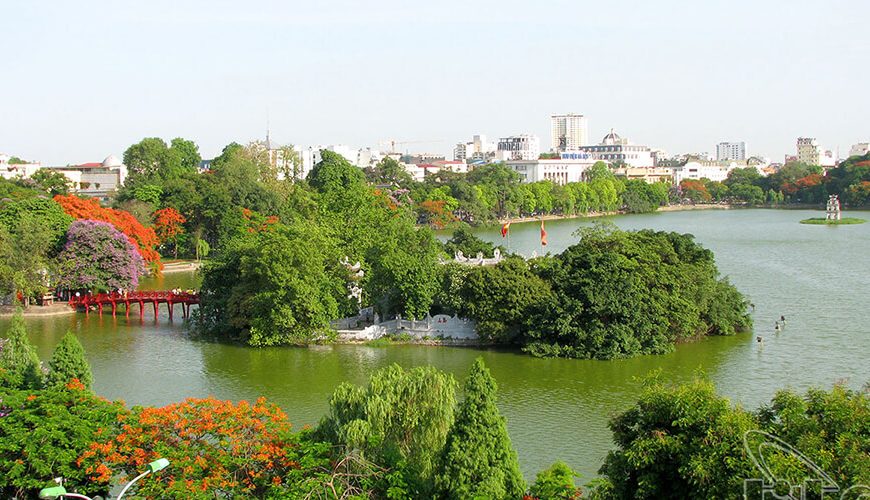
Located on Jade Island in the heart of Hoan Kiem Lake, Ngoc Son Temple is famous for its unique architecture and impressive quiet beauty. This article will introduce this relic complex in greater depth and share some useful tips to help you have the most complete and perfect trip.
Construction history of Ngoc Son Temple
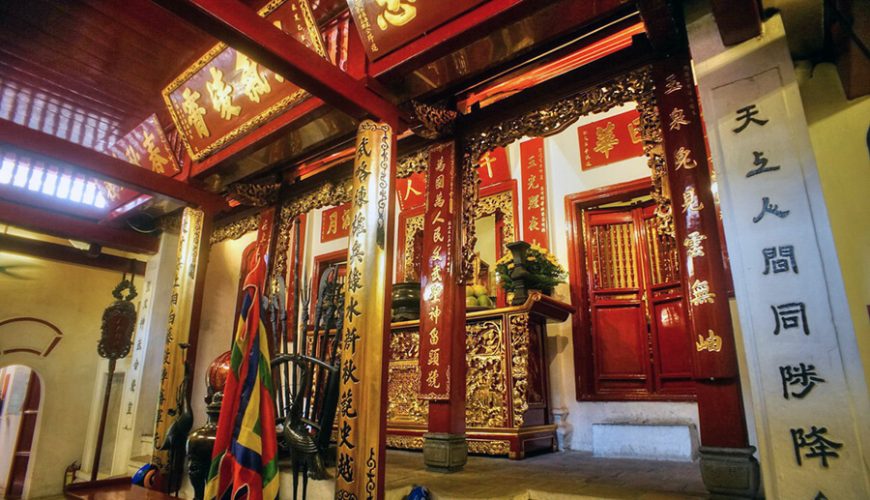
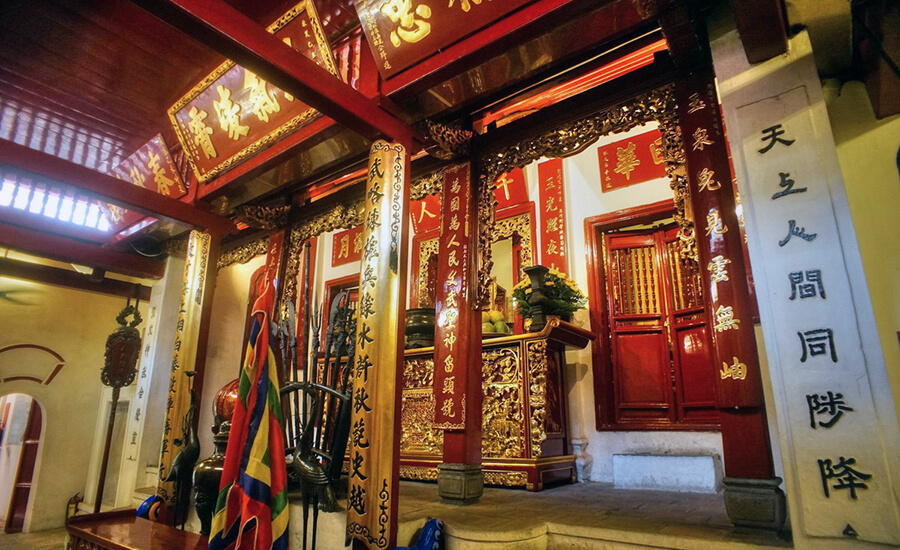
Ngoc Son Temple was built to honor the national hero Tran Hung Dao, who commanded the Vietnamese armies that repelled two of the three major Mongol invasions in the late 13th century, and Wenchang Wang, a Taoist deity in Chinese mythology known as the God of Culture and Literature. Besides, in the temple, there are also Buddhist altars, Council boards… This project was built in an architectural style that clearly reflects the ancient Vietnamese concept of the Three Religions, an integration of Buddhism, Taoism, and Confucianism. Familiar images such as parallel sentences, horizontal panels, and decorations all clearly demonstrate this.
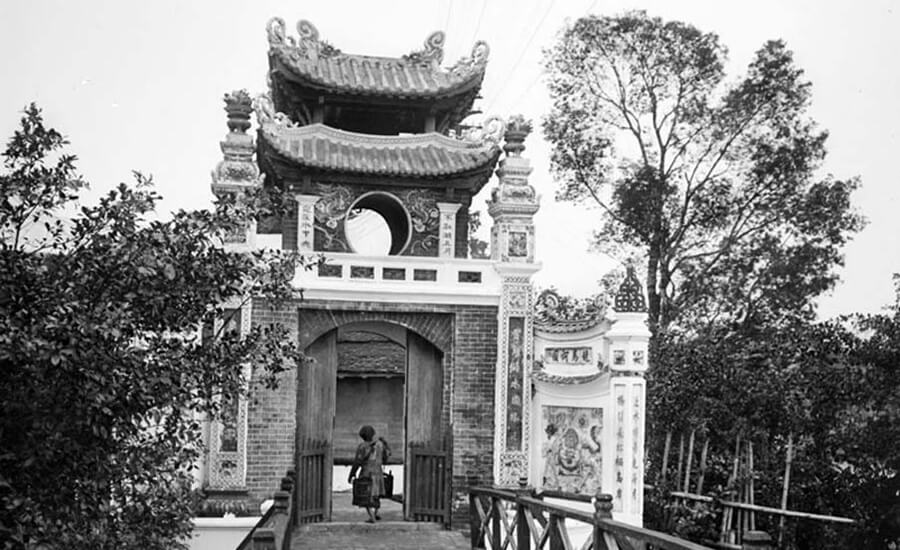
Ngoc Son Temple was built at the beginning of the 19th century, initially to worship the God who helps suppress evil and brings about goodness, according to ancient beliefs. When Emperor Ly Cong Uan moved the capital to Thang Long, he named this temple Ngoc Tuong. Then, during the Tran dynasty, the temple was renamed again to Ngoc Son. At this time, the temple is a place to worship heroic martyrs who fought and died in the war against the Mongol army. Not long after, the temple collapsed due to unstable foundations.
During the reign of King Vinh Huu of the Le Dynasty, Lord Trinh Giang built Khanh Thuy Palace and two more earthen mountains on the eastern shore of Hoan Kiem Lake, opposite the old site of Ngoc Son Temple. At the end of the Le Dynasty, Khanh Thuy Palace was partially destroyed, so the people of Ta Khanh village worked together to rebuild it, calling it Khanh Thuy Temple.
Some time later, a philanthropist named Tin Trai invested in building Ngoc Son Pagoda at the site of the former Khanh Thuy Palace. Then the temple was transferred to another charity association, renamed Tam Thanh Temple. The Association decided to remove the bell tower, rebuild the main halls and rooms, and place the statue of Wenchang Wang at Ngoc Son Temple.
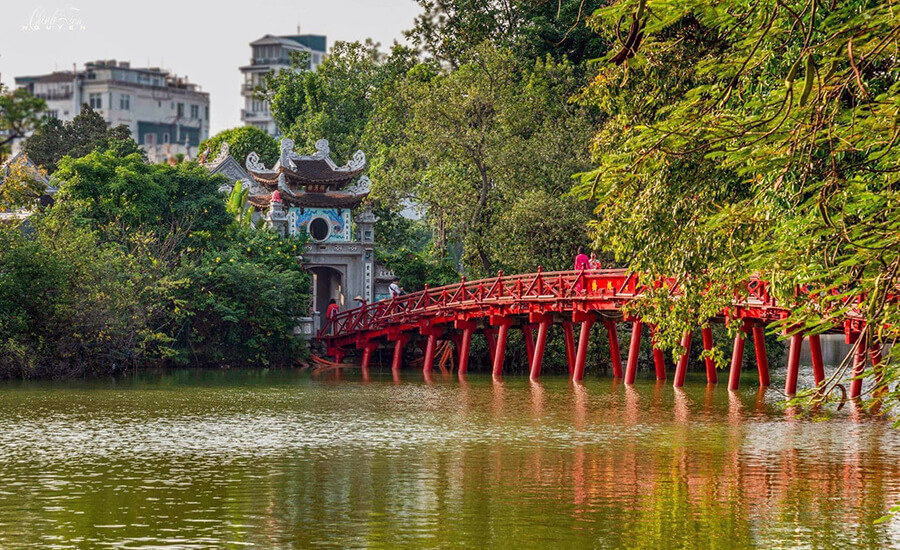
In 1865, a Confucianist named Nguyen Van Sieu overhauled Ngoc Son Temple, built more land around it, built a solid stone embankment, built Thap But (The Pen Tower), Dai Nghien (ink-slab), built Tran Ba communal house in the south and The Huc bridge connecting the shore to the temple.
Unique architecture of Ngoc Son Temple
Through many times of construction, repair, name change, and major restoration along with many historical upheavals, Ngoc Son Temple still retains its ancient architecture.
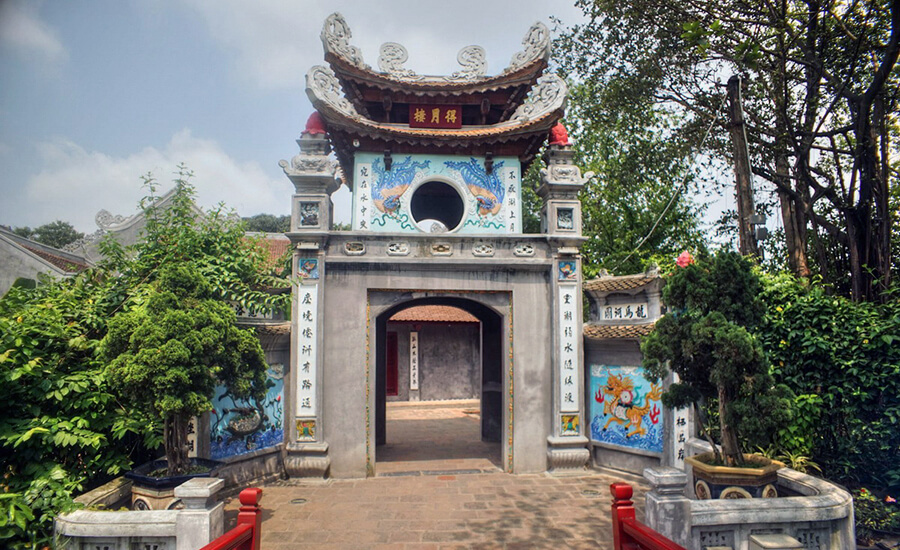
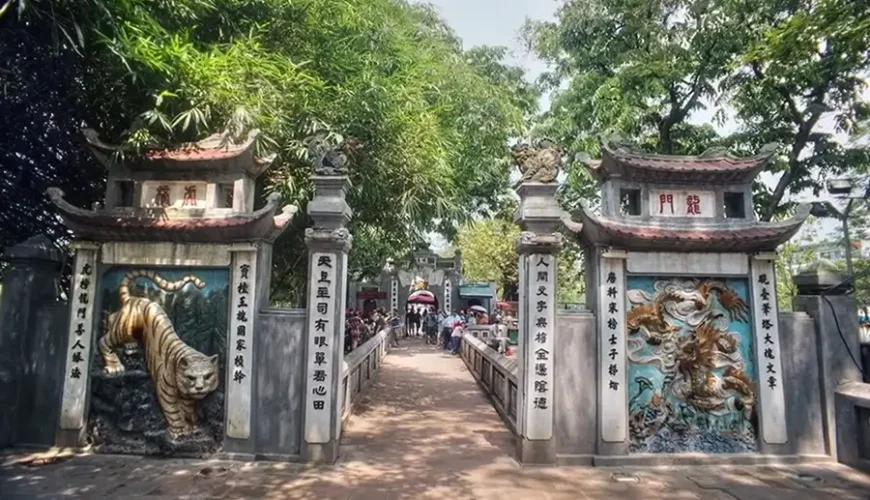
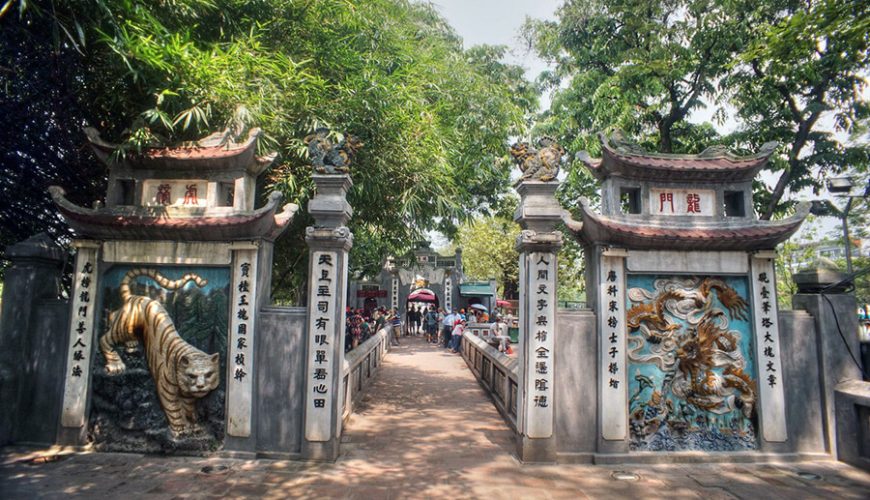
From the outside gate, visitors will see a wall with a dragon board and a tiger board, each with 2 parallel sentences about studying and taking exams in the past.
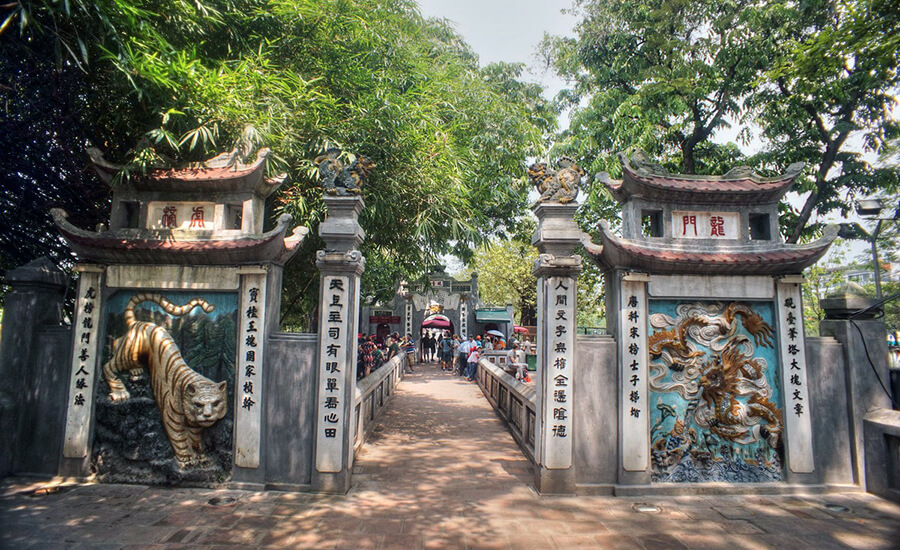
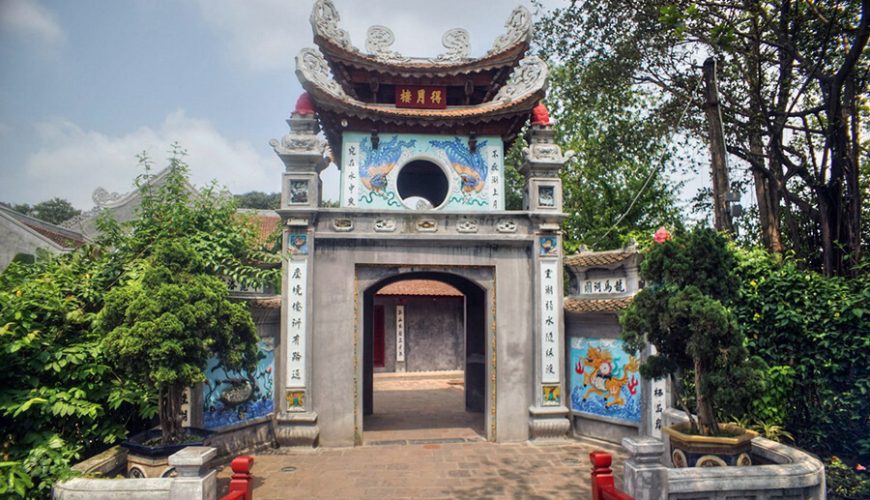
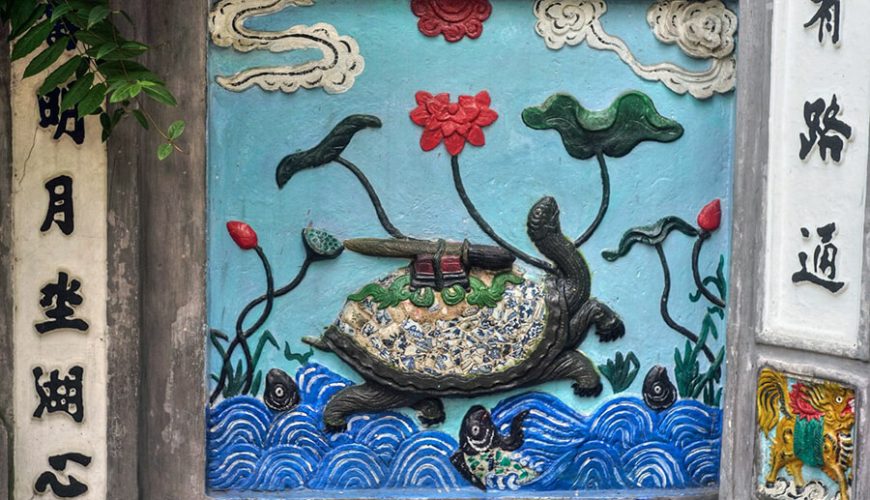
Passing The Huc bridge, visitors will enter Dac Nguyet Lau (moon contemplation pavilion). The floor is designed with a 2-story dome with reliefs at 4 corners. On Dac Nguyet Lau, there are two embossed paintings.
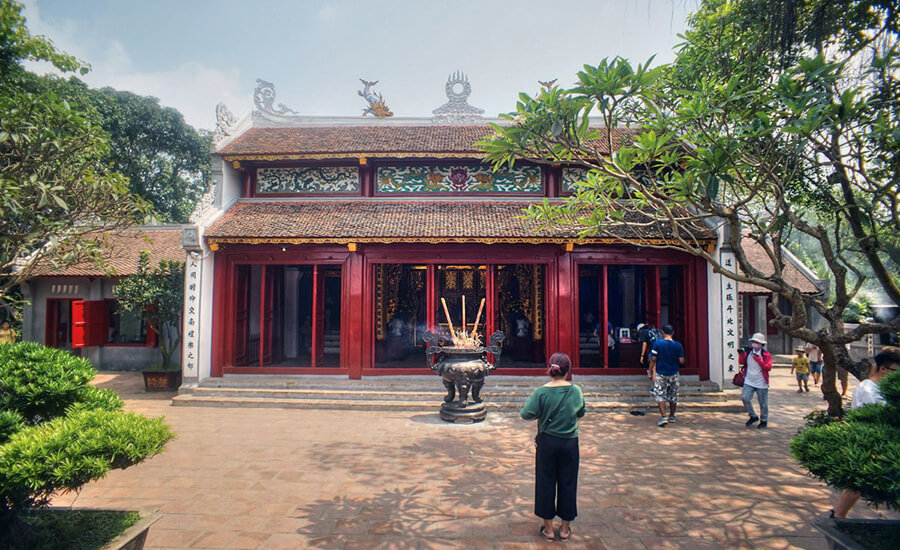
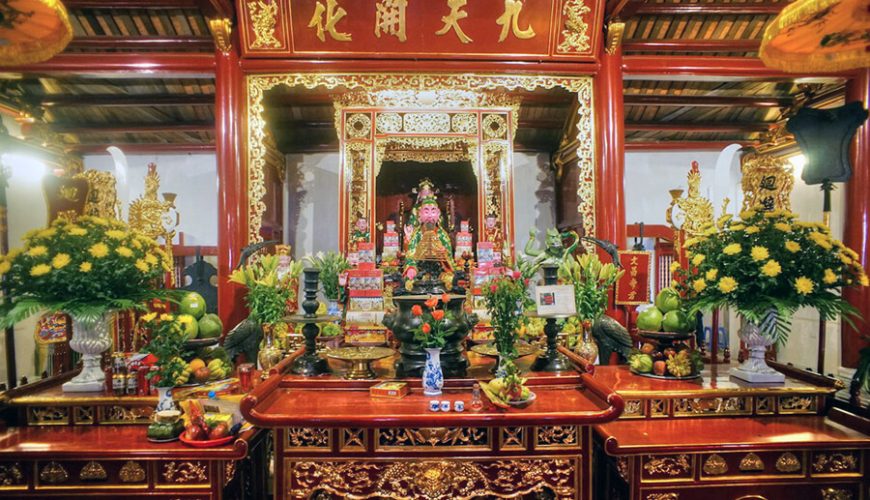
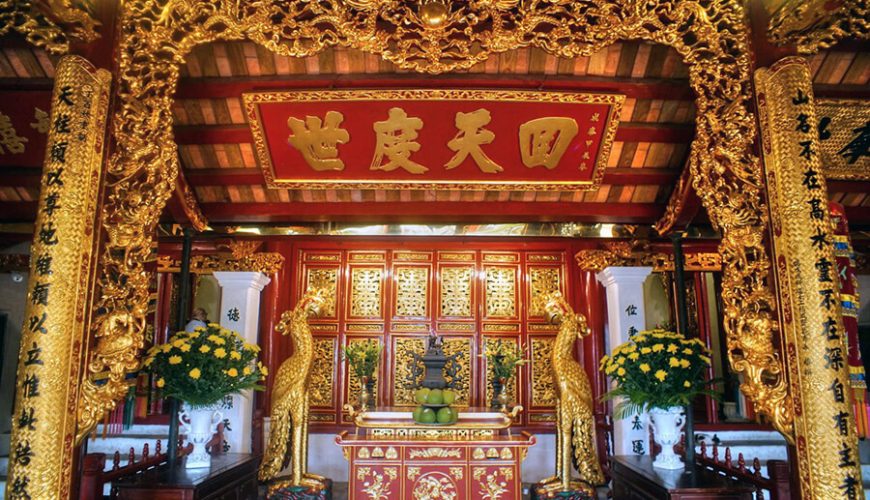
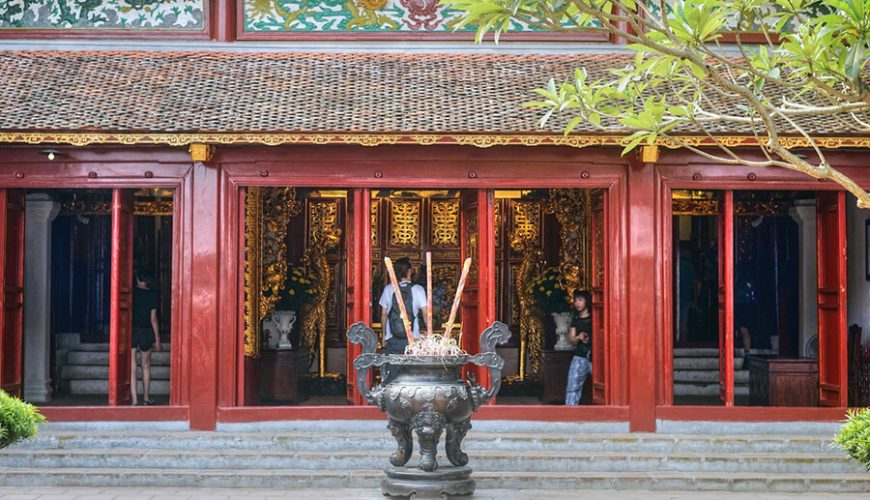
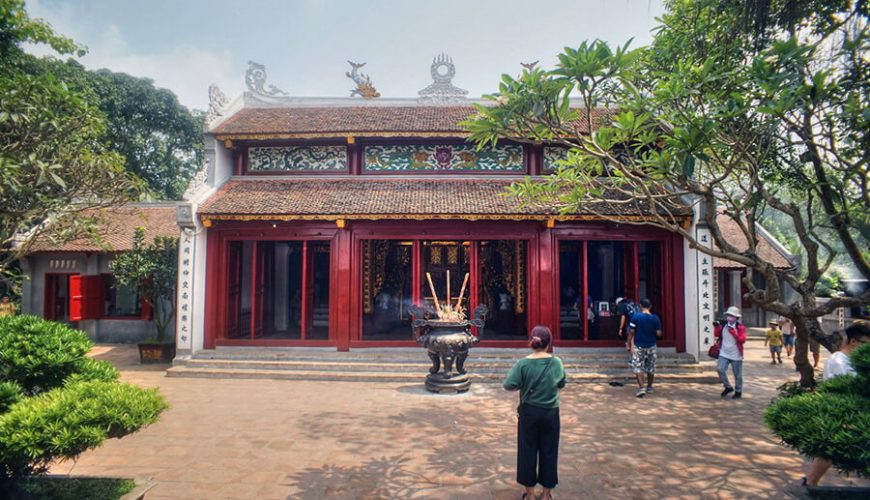
Ngoc Son Temple is divided into three sections from outside to inside: the worship hall, the middle hall, and the harem. The worship hall is the first place of ceremony. In the middle of the altar is a large incense burner; on both sides of the incense burner are a pair of parrots, originating from the anecdote of the parrot helping Lam Son insurgents (led by Emperor Le Loi) find ripe fruit to use as food when surrounded by the Chinese Ming Dynasty army in the forest.
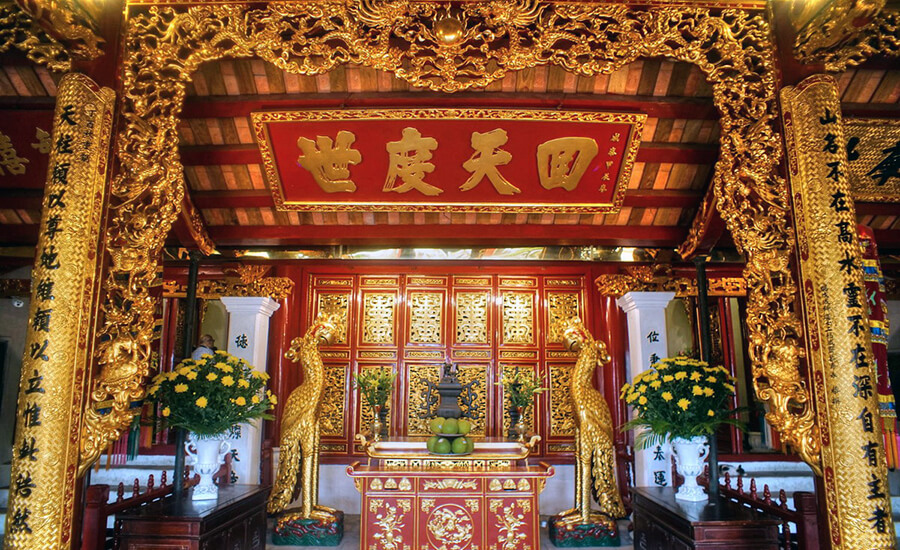
The middle hall is a place to worship Wenchang Wang, Guan Yu, and Lu Dongbin, gods revered by writers, mandarins, and scholars in Confucian tradition. The harem is built higher than the altar and the middle hall, and is a place to worship Tran Hung Dao, the Vietnamese hero. On both sides of the statue of Tran Hung Dao are statues of Tran Lieu, his father, and the Earth God.
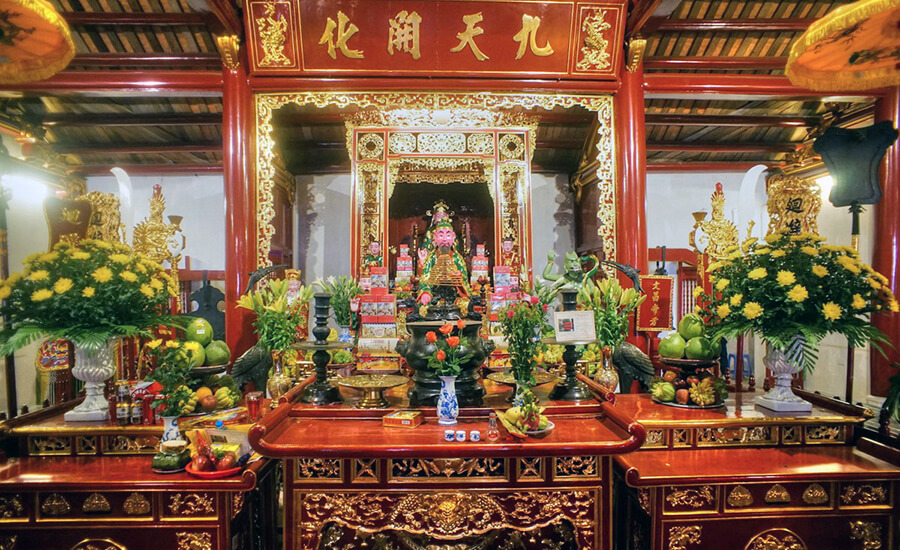
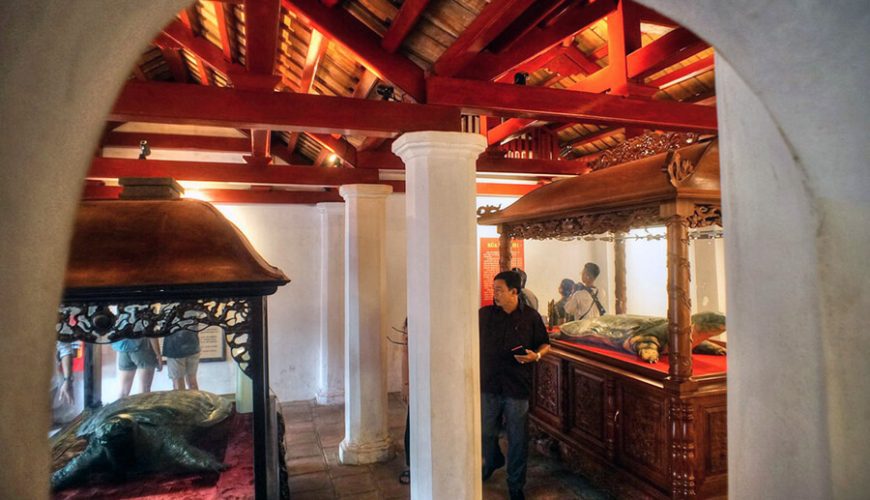
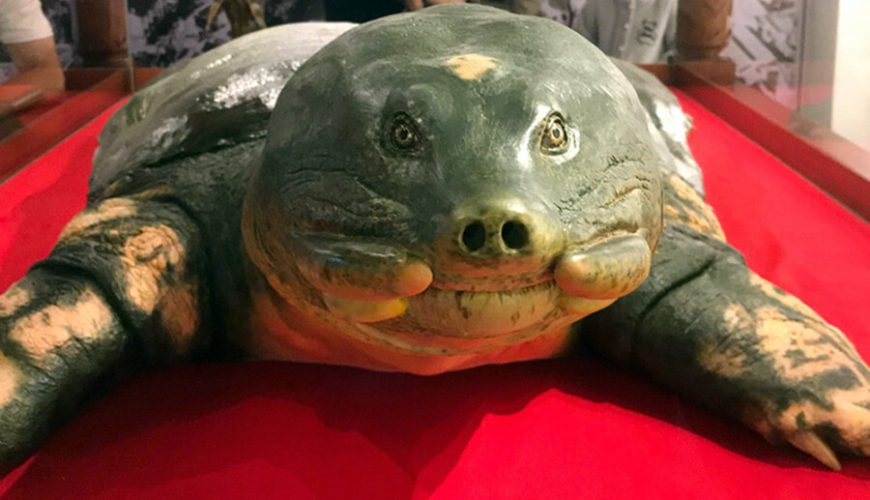
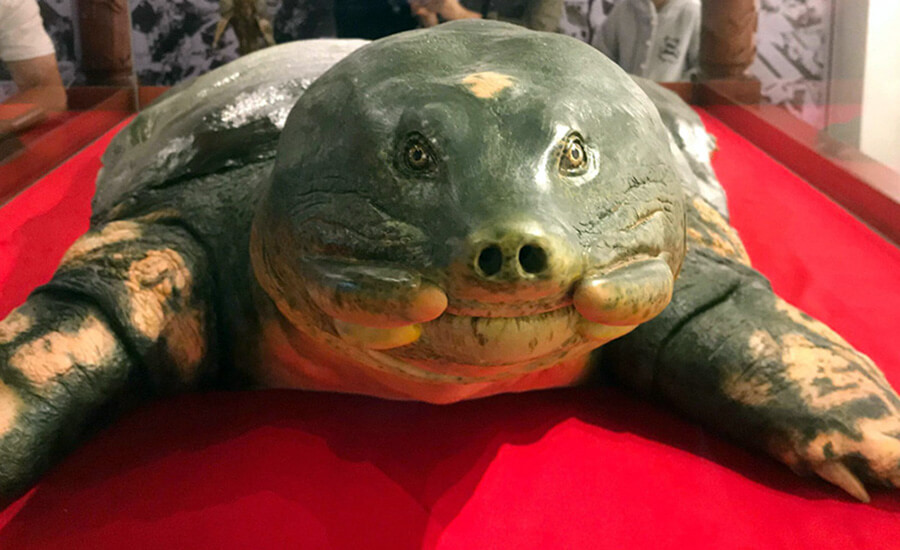
On both sides of the main temple area, there are two wings, of which the right wing displays two specimens of the Hoan Kiem turtle, a particularly rare creature associated with the mysterious anecdotes surrounding Emperor Le Loi’s return of the Heavenly Will sword to the Golden Turtle God.
The specimen on the outside is of an “old” turtle who died in 1967. This “old” turtle, when he first died, weighed 250 kg, was 2.1 meters long, and 1.2 meters wide.
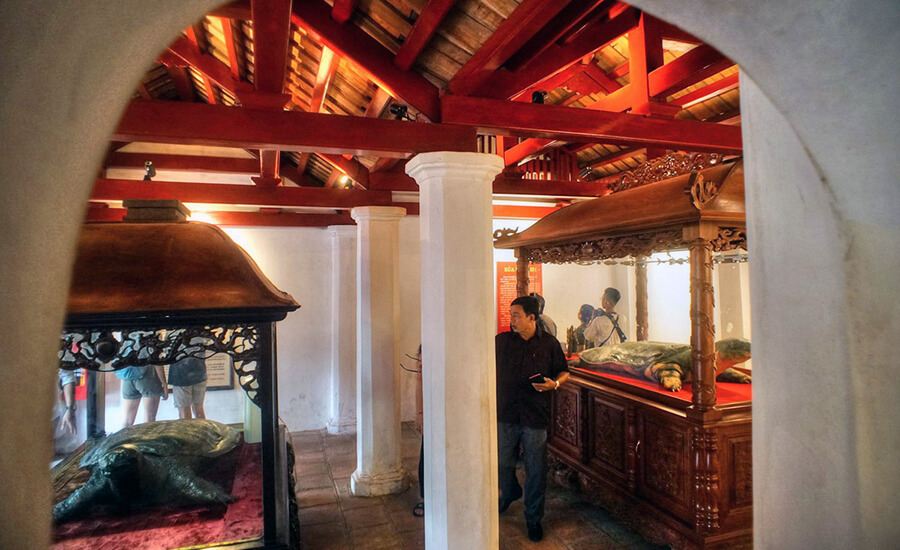
The specimen inside the “old” turtle that died in 2016 is 2.08 meters long, 1.08 meters wide, and weighs 169 kg. Treated by the plastination method, the specimen retains its natural appearance, as it did when the turtle was alive.
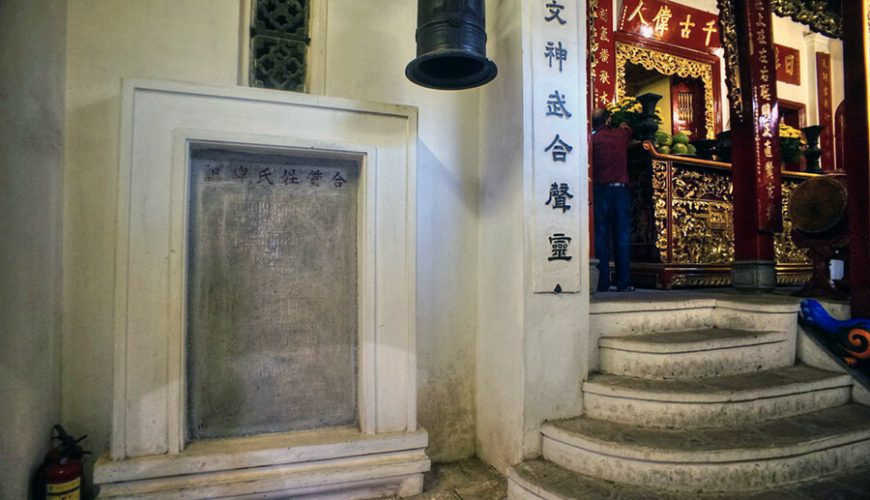
In the temple, there is a rich collection of ancient artifacts, including many stone steles, bells, altars, and couplets, dating back to the Nguyen Dynasty.
Surrounded by special architectural works
Ngoc Son Temple is surrounded by 3 special architectural works, including Thap But (The Pen Tower), Dai Nghien (ink-slab), and the Huc Bridge.
But Tower and Dai Nghien
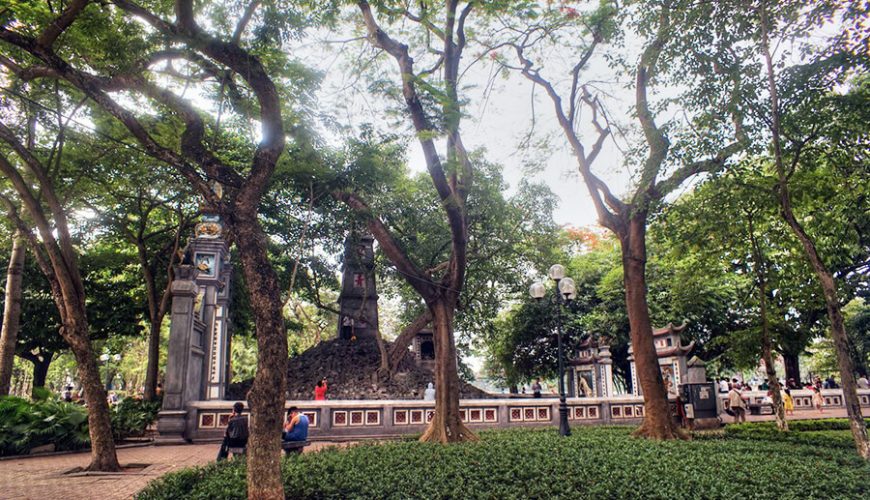
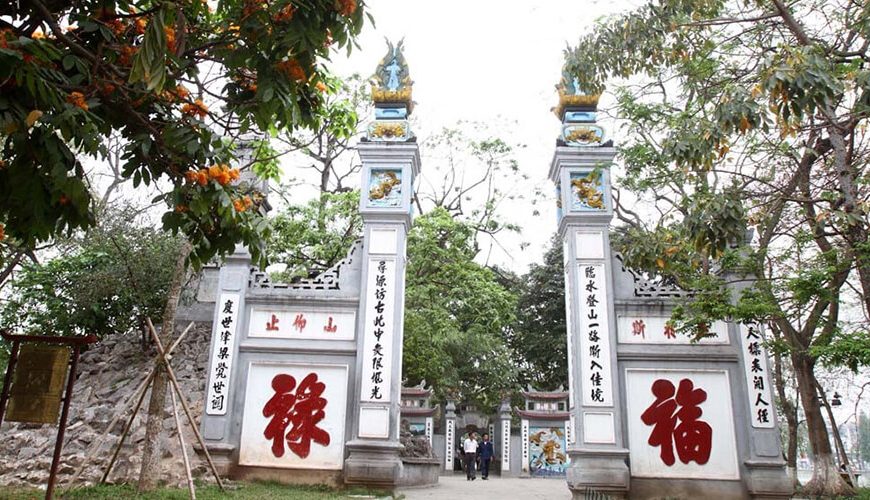
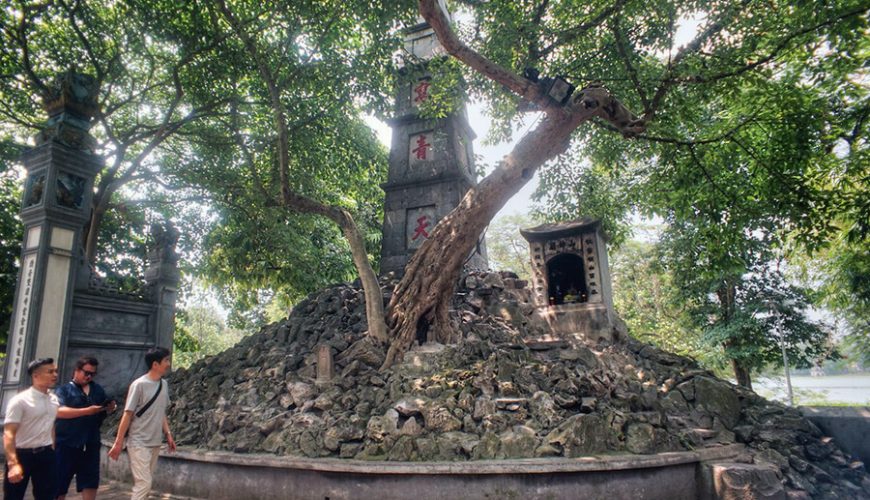
The But Tower is located right at the temple gate, built of stone, 9m high, built on a rocky mound symbolizing a mountain. On the tower are engraved three words, “Ta Thanh Thien”, which means “Write to the Blue Sky”. This tower is now more than 150 years old.
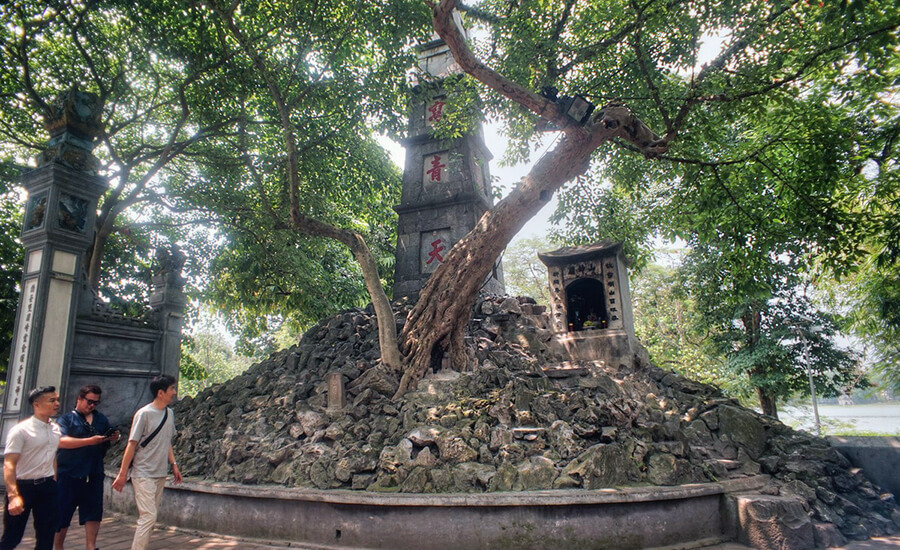
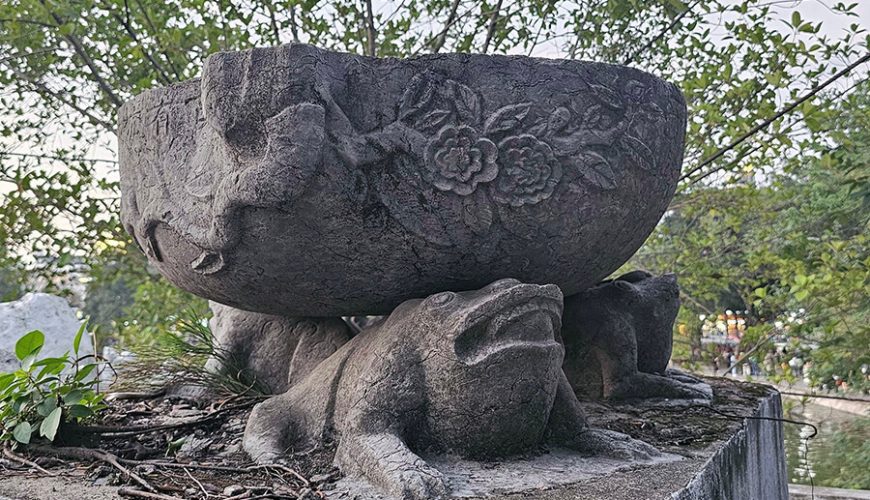
At the foot of the But Tower is the blue stone Dai Nghien carried on the backs of three Jin Chans (the Money Toad). Engraved on the stone is a poem by the Confucian scholar Nguyen Van Sieu. When the sun is directly overhead, the image of the But Tower, silhouetted against the heart of Dai Nghien, creates a moment of unreal beauty that not everyone has the opportunity to admire.
The Huc Bridge
The Huc Bridge impresses with its vermilion-red color; it is made of wood and shaped like a shrimp. The Huc means “where the early morning sun rays converge”. This bridge is also the only path leading from the shore of Hoan Kiem Lake to Ngoc Son Temple. The Huc means “where the early morning sun rays converge”.
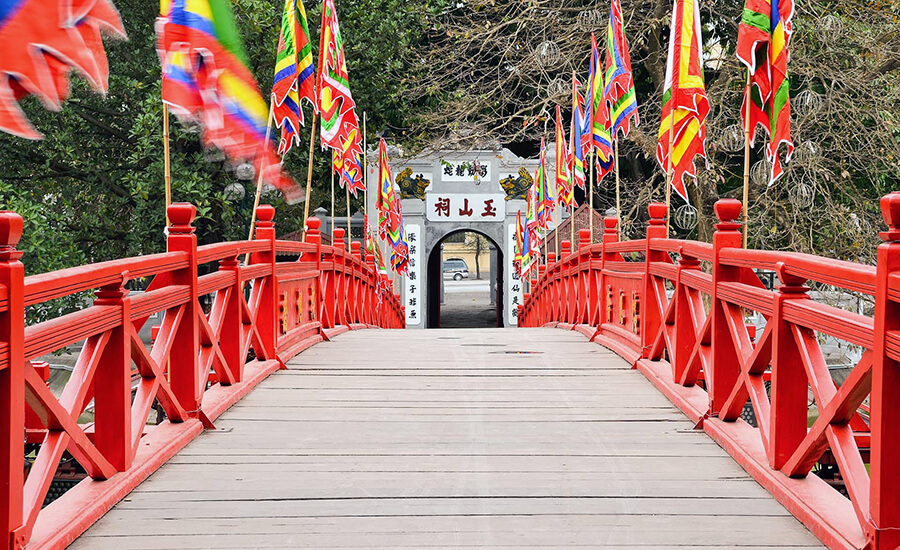
With that special design, you can easily take “lifetime” photos when checking in at the bridge. Don’t forget to take the time to fully admire the sparkling beauty of The Huc Bridge at night; it certainly won’t disappoint you.
Tran Ba Pavilion
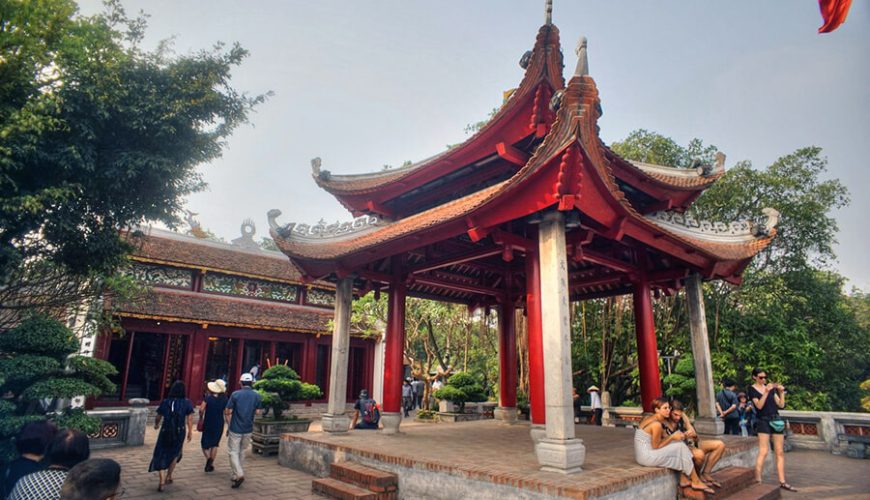
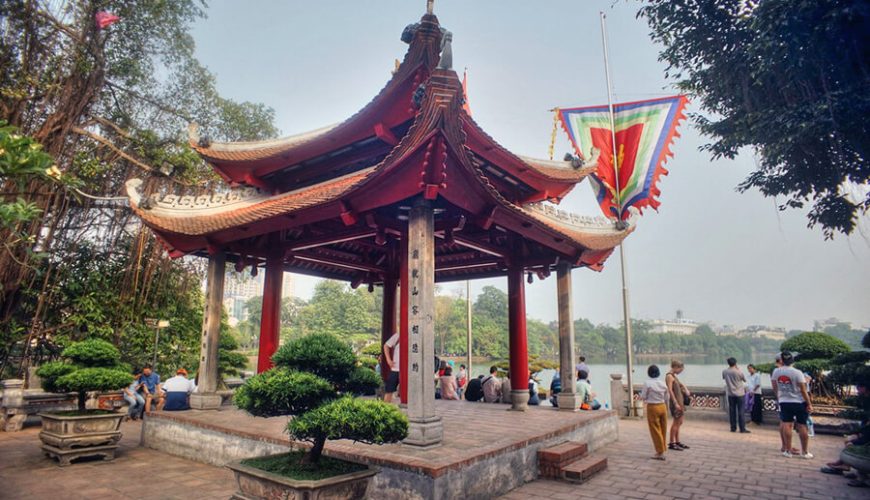
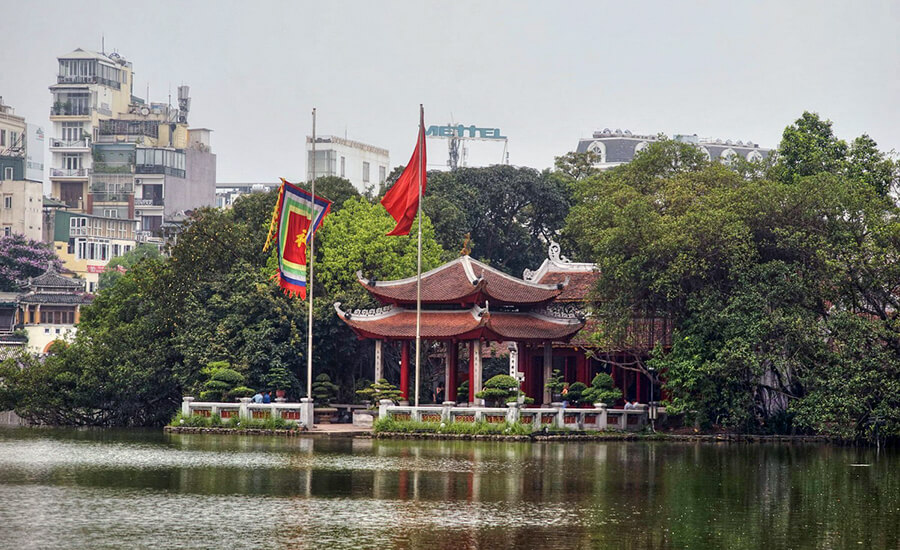
The name of the project means “pavilion against waves,” implying a pillar standing firmly amid the unhealthy waves of contemporary culture.
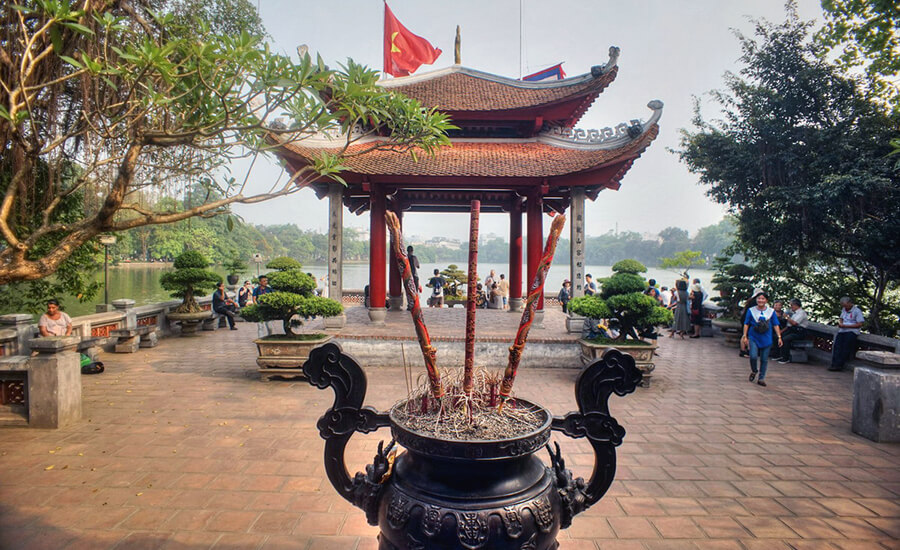
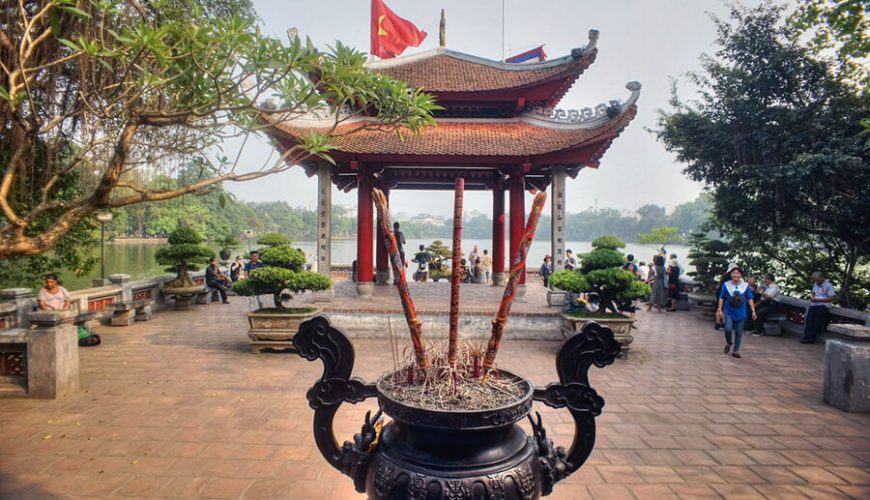
The square communal house has eight roofs, a two-story roof with 8 supporting columns, four outer columns made of stone, four inner columns made of wood. The outside columns have parallel sentences in Chinese characters.
From the Tran Ba Pavilion, you can capture a wide-angle view of many beautiful scenes of Hoan Kiem Lake, such as the Turtle Tower and the Post Office on the lake shore.
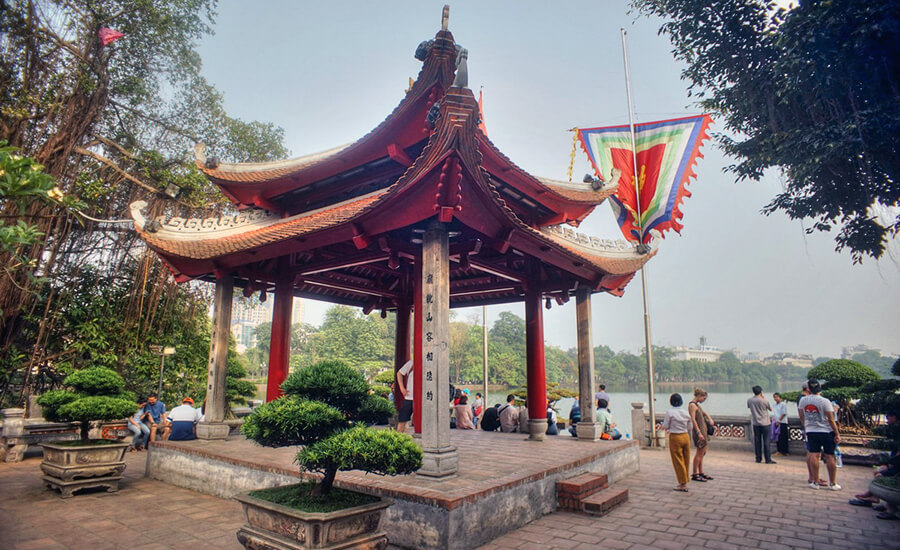
Ngoc Son Temple is quiet in the middle of a noisy city, and is the most famous ancient architectural work in the capital. Therefore, Vietdreamtravel travel guide hopes you will soon have the opportunity to come here to explore and experience.
Source: collected by An
Follow us for the best deals on Vietnam package tours and visa services!

Comment (0)