
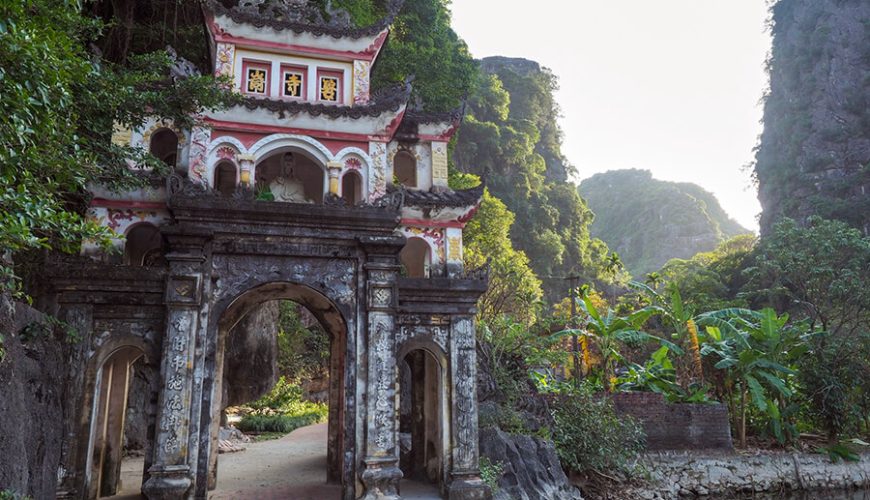
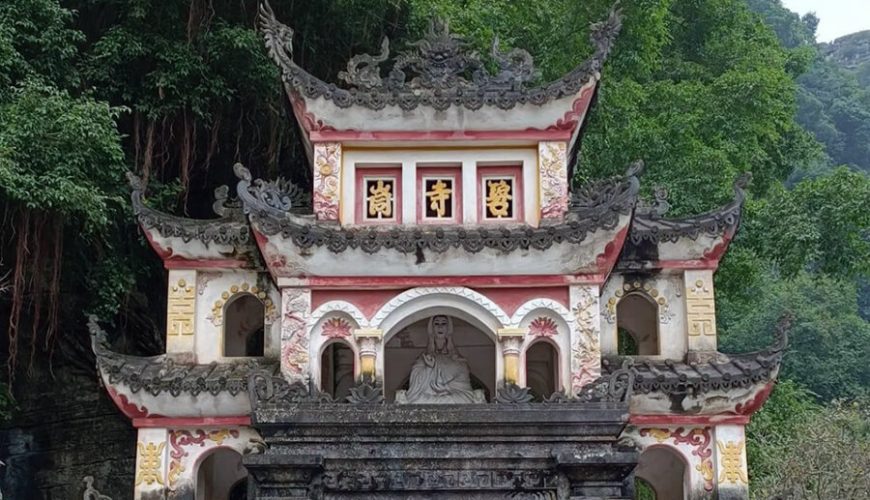
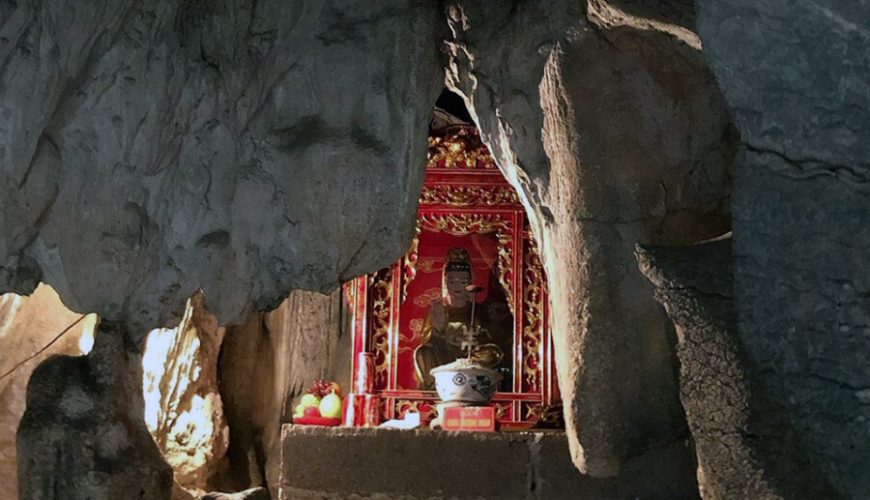
Bich Dong Pagoda is an ancient pagoda within the Trang An scenic complex, which was designated a special national monument and recognized by UNESCO as a World Heritage site in 2014. Along with Tam Coc, Bich Dong Pagoda has created a beautiful miracle, combining nature and human elements to form a unique architectural complex imbued with traditional Vietnamese culture.
The second most beautiful cave in Vietnam
Bich Dong Pagoda is located at the foot of Thai Vien Mountain, Nam Hoa Lu Ward, Ninh Binh Province. The original name was “Bạch Ngọc Thạch Sơn Đồng”, meaning a beautiful and pure stone pagoda like jade in a remote mountain.
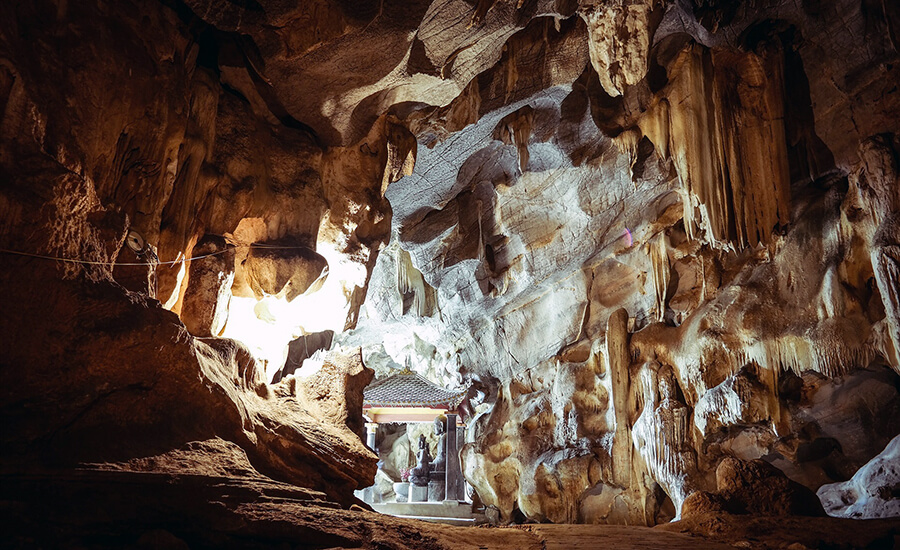
Bich Dong Pagoda has become an attractive destination for domestic and foreign tourists. Standing out with its unique architecture and prime location, this place has no other place with the same terrain and mountains. This is a very common type of cave pagoda in Ninh Binh, other typical pagodas include Bai Dinh Pagoda, Dich Long Pagoda, Canh Dieu Pagoda, Ky Lan Pagoda, Hoa Son Pagoda, Hang Pagoda, etc.
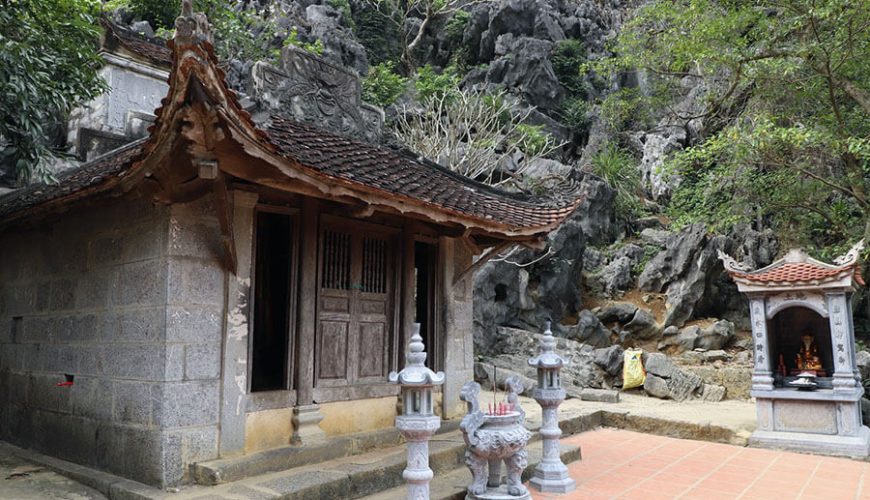
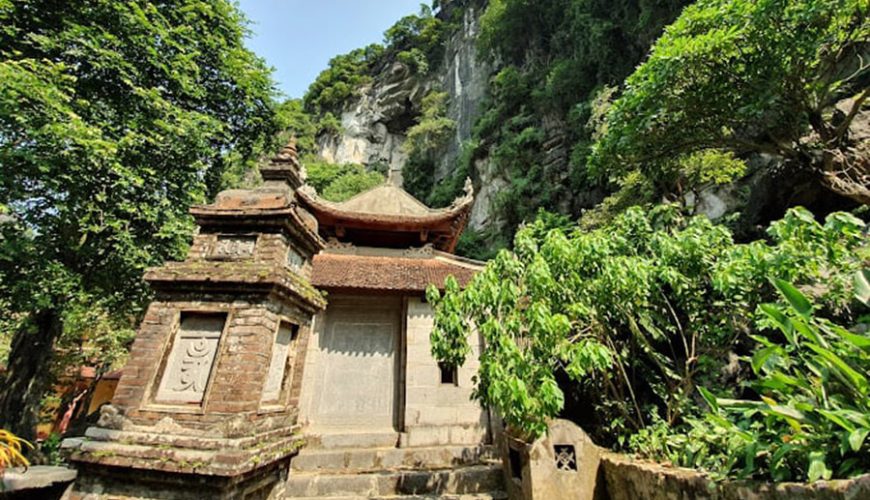
Bich Dong (Vietnamese: Bích Động, meaning Green Pearl) is one of the famous scenic spots known as “Nam Thiên Đệ Nhị Động,” meaning the second most beautiful cave in Vietnam, ranked second after Huong Tich Cave – the Bodhisattva Avalokitesvara’s dojo in Vietnam. This pagoda was built on a mountain with lush greenery, and its mossy tiled roofs are faintly visible.
According to historical records, Bich Dong Pagoda was established in 1428 and was initially just a small pagoda atop the mountain. However, in 1705, two monks, Tri Kien and Tri The, met and became sworn brothers. Both monks were devout and vowed to travel to many places together to spread Buddhism and build pagodas. Seeing that Bich Dong had a beautiful location and already had a pagoda, the two monks decided to stop and renovate it.
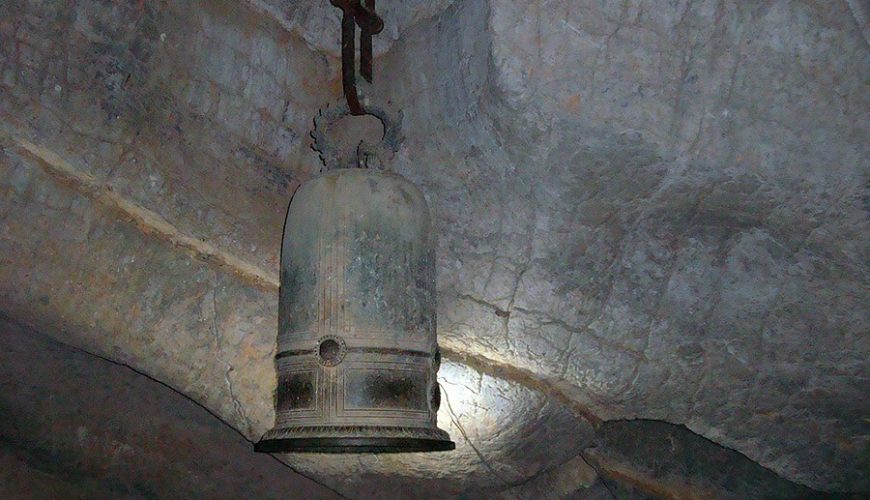
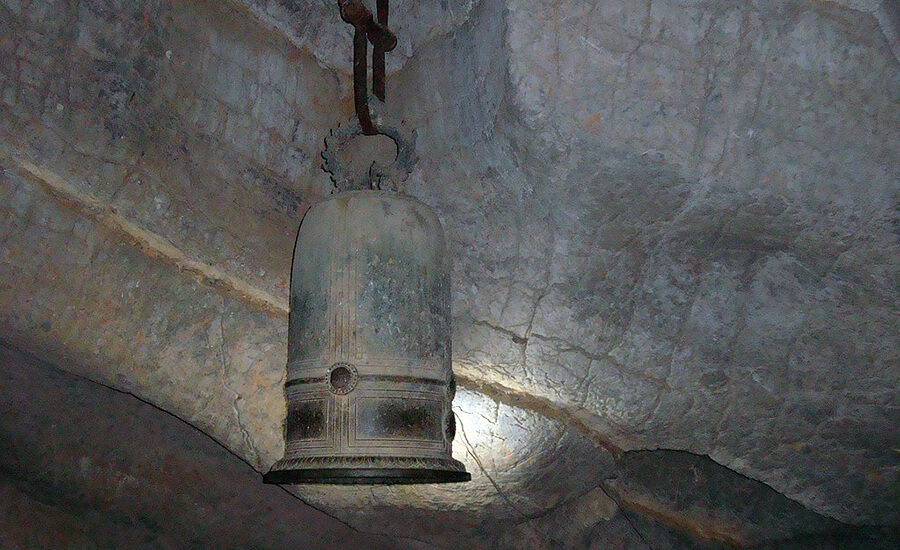
In 1707, the two monks cast a large bell, which still hangs in Dong Toi today. Two years later, in August, the two monks wrote a stele inscription for Bich Dong Pagoda in Chinese characters.
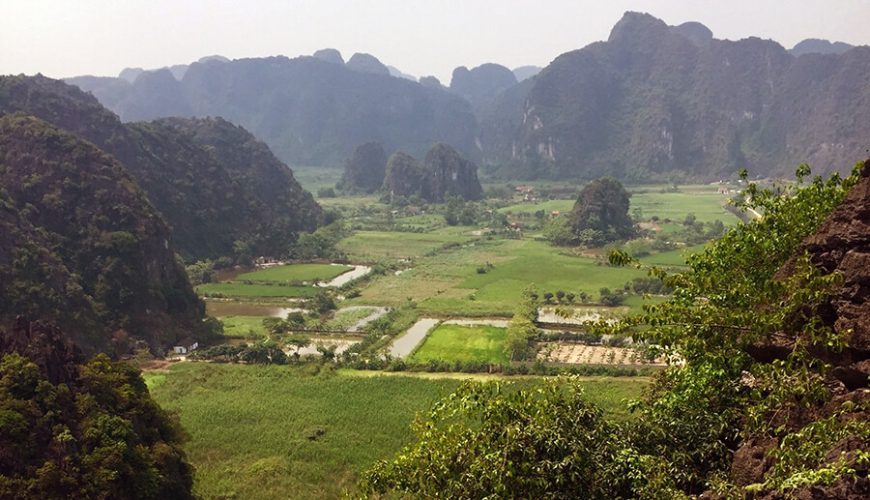
In 1774, Lord Trinh Sam came here to visit. Impressed by the panoramic view of the mountains, caves, rivers, fields, and greenery, the pagoda seems to converge against a cool green background. Lord Trinh Sam named this pagoda Bich Dong Pagoda.
Bich Dong Pagoda – Architecture bearing the sacred soul of the nation
Bich Dong Pagoda was built in the early Le Dynasty on a large scale. The pagoda still preserves a large bell cast during the reign of Emperor Le Thai To (1428 – 1433) and has towers that enshrine the relics of monks who contributed to its construction.
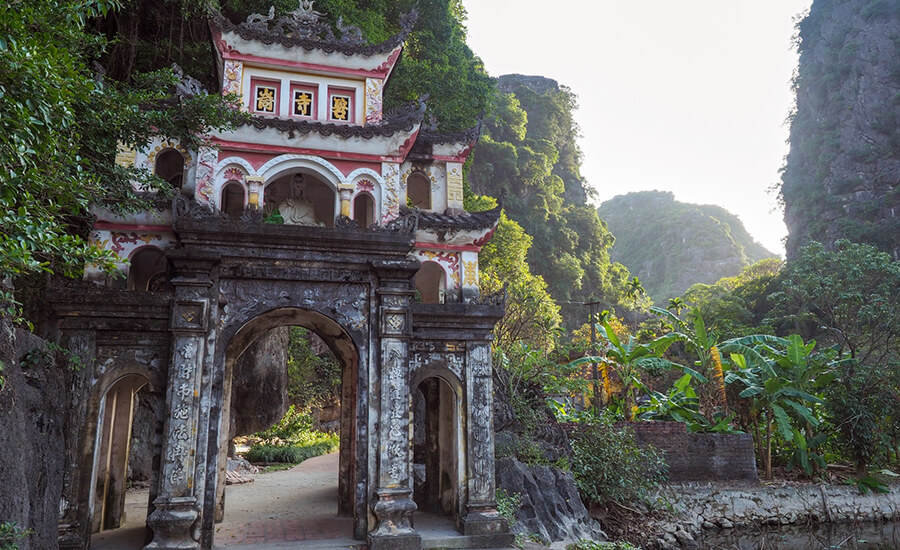
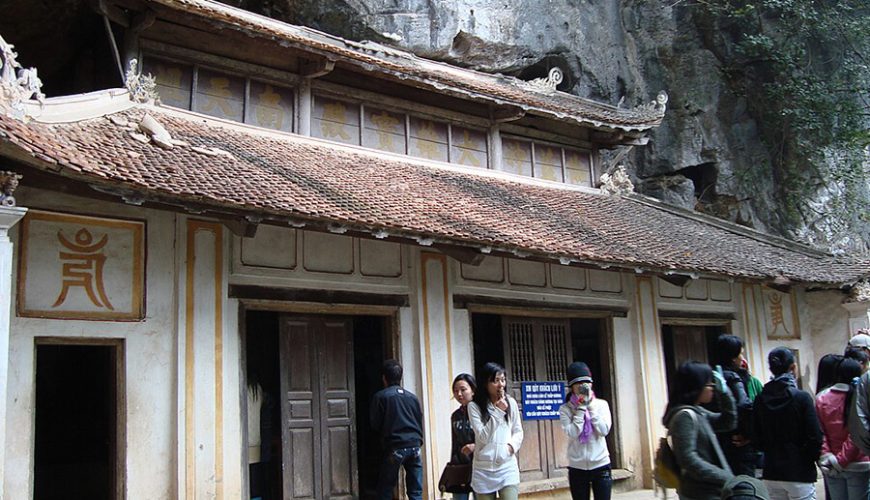
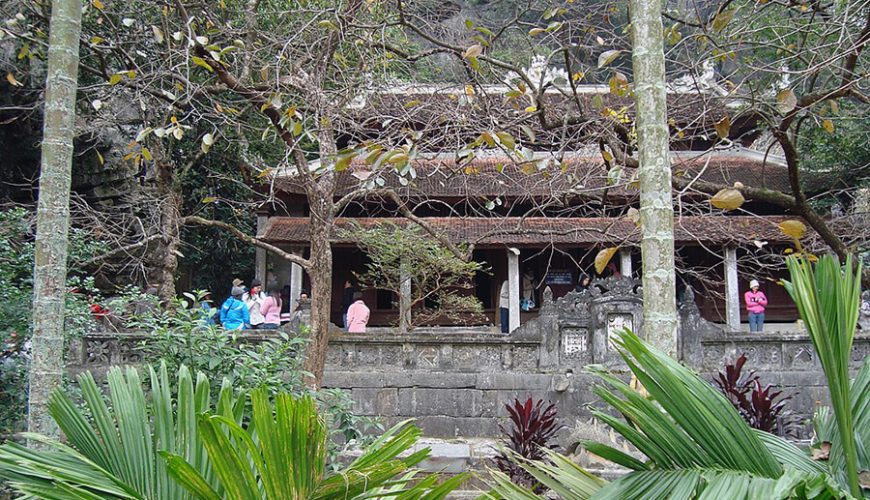
During the Canh Hung Dynasty (1740 – 1786), the pagoda was renovated and expanded to include the Ha, Trung, and Thuong shrines, which form three separate shrines leaning against the mountainside.
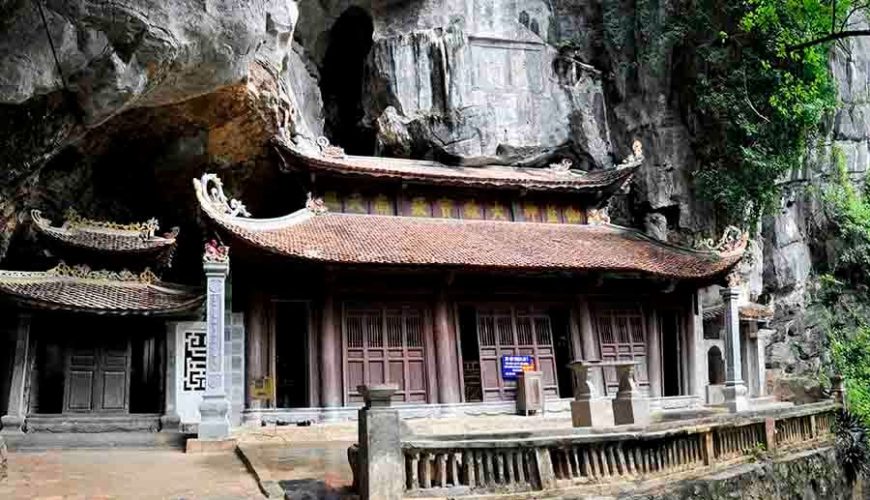
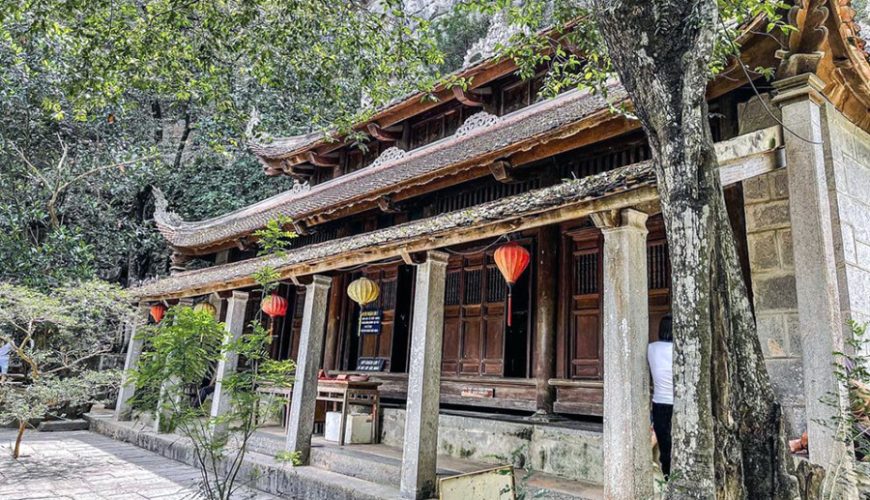
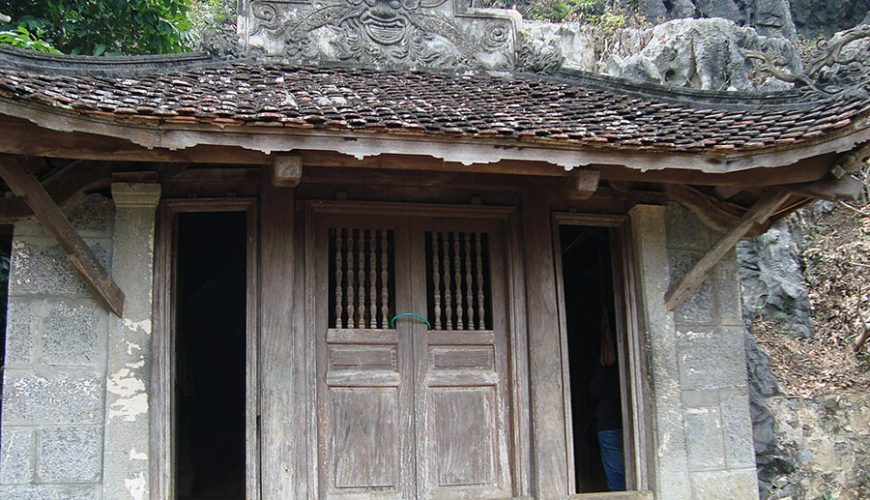
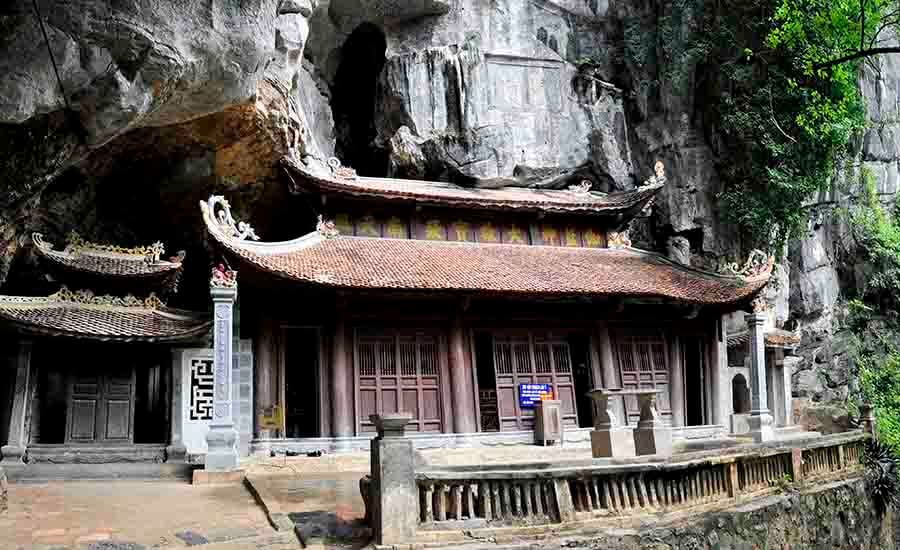
They pagoda were built of ironwood, the roofs were covered with tiles without joints, and the corners of the roofs all had curved edges, like the shape of a phoenix’s tail, winding and graceful like tidal waves.
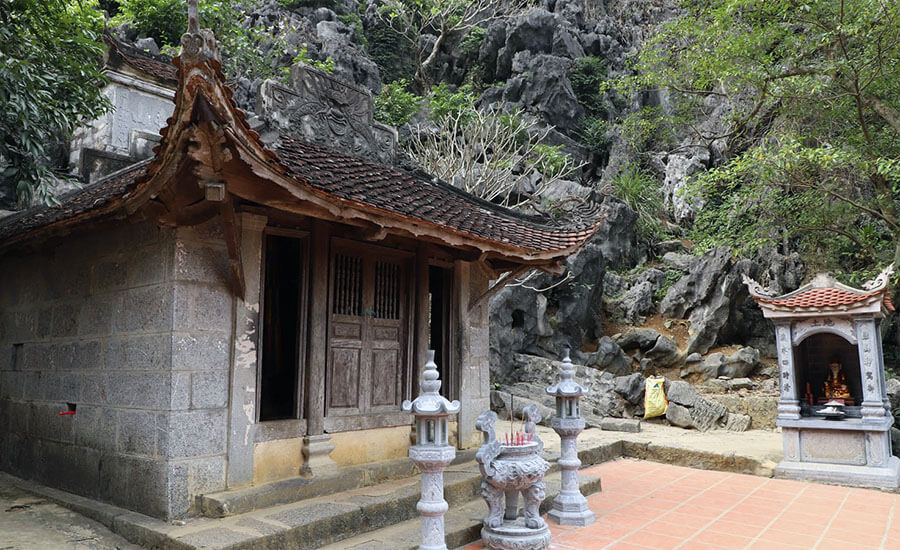
The Ha shrine has 5 compartments built on a high foundation, showcasing the sophistication and creativity of its architects. The rafters, crossbeams, and longitudinal beams are also made of ironwood. The roof is 2 floors with 8 curved roofs. The stone pillars in the Ha shrine are all solid, unjoined, and more than 4m high.
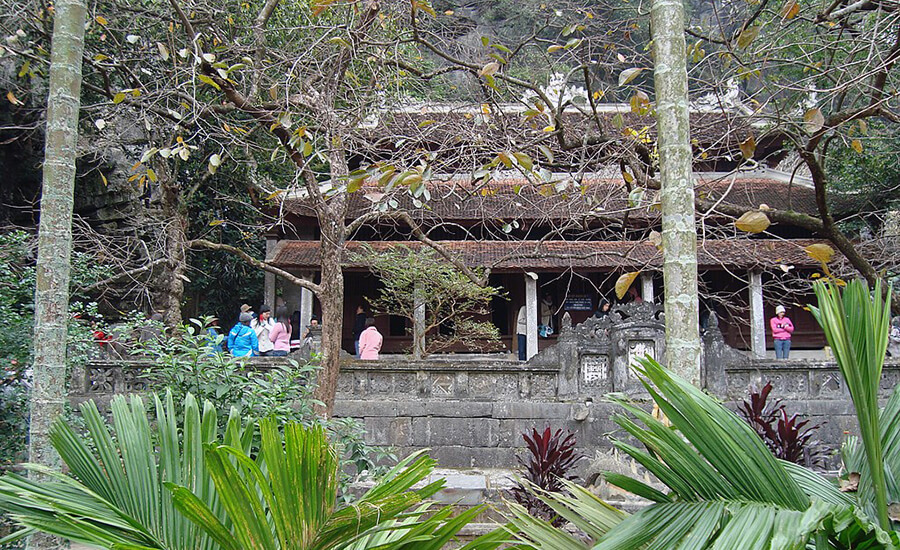
From Ha shrine, climb 120 steps along the S-shaped path to the middle of Ngu Nhac Mountain Range to Trung shrine. Right in front are the two words Bich Dong carved into the cliff. This is a unique pagoda, rarely found anywhere, half-attached to a cave, half-open-air. The pagoda has 3 Buddha worshiping rooms.
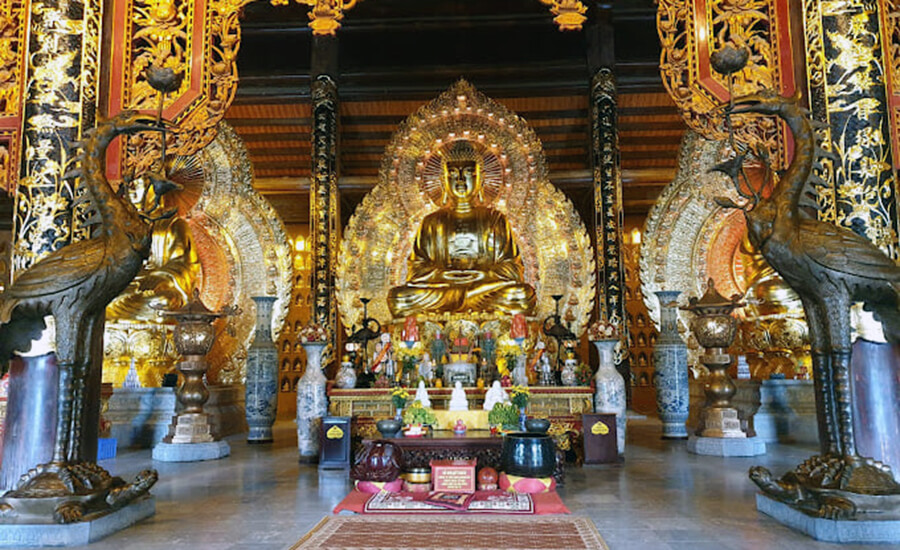
After worshiping Buddha at the Upper Room, climb 21 stone steps to reach the Dark Cave. Right in front of the cave entrance, there is an ancient bronze bell with very delicate carvings. This is the main cave, solemn, quiet, nature has painstakingly polished for generations, extremely delicate and sharp down to every small detail, creating fairies, young boys, gliding dragons, swimming turtles, elephants, lying tigers…
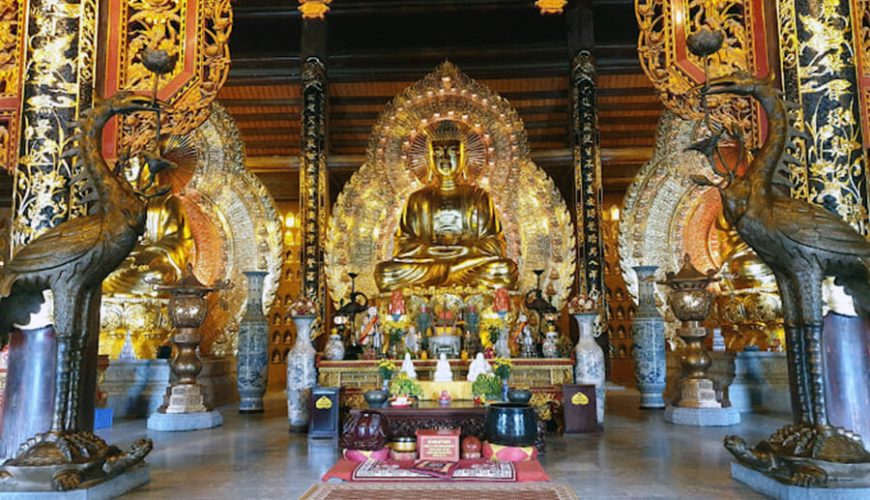
The statue of Buddha Sakyamuni in the Trung shrine has nine dragons floating on the roof. The two statues outside are Manjushri Bodhisattva and Samantabhadra Bodhisattva, with Manjushri on the left, and inside the main hall is the statue of Venerable Ananda.
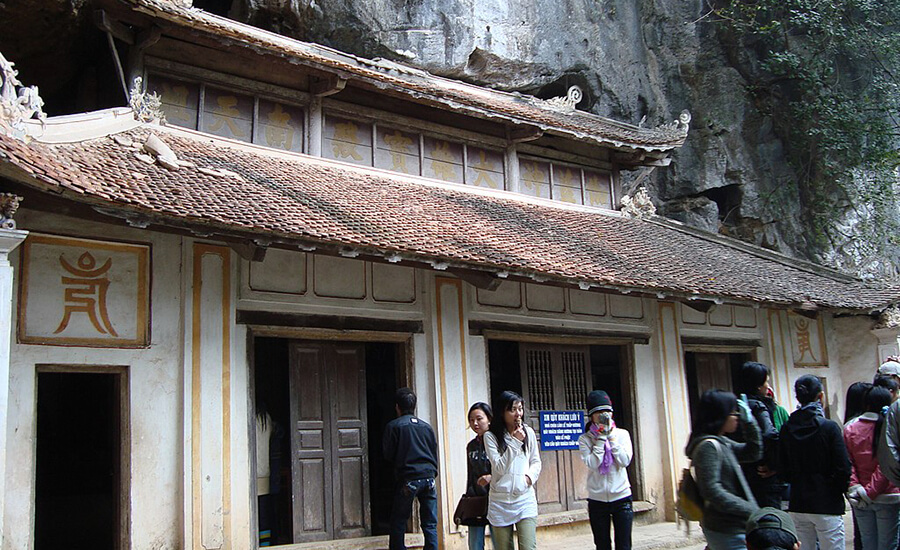
To go up to the Thuong shrine, visitors have to climb 40 more stone steps along the mountainside. The Thuong Shrine is also called the Dong Pagoda; the pagoda worships Avalokiteśvara.
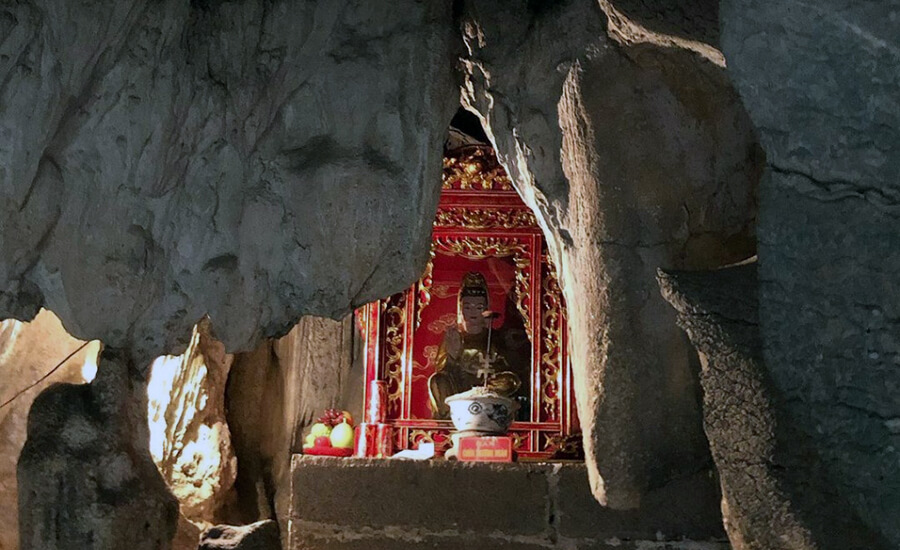
Standing at the Thuong shrine, you can see the whole beautiful scenery of Bich Dong, as well as the mountains and rivers of Ninh Binh. From the pagoda, far away, there are 5 mountains that look like 5 lotus petals: Ngu Nhac Son, Tam Sang, Gia Dinh, Con Lon, Dau Cau, and Hang Dua.
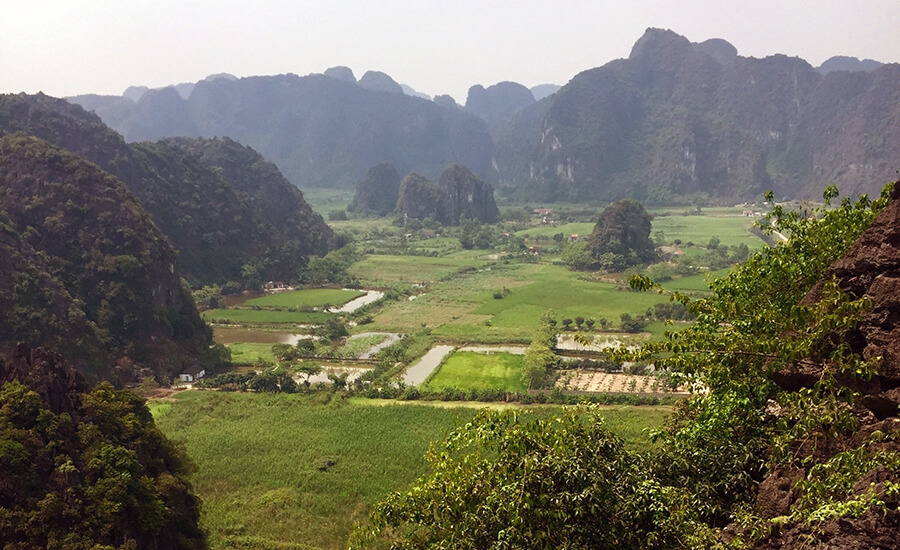
Admiring the wild and peaceful beauty of this pagoda, it is not difficult to understand why many visitors want to visit to find peace in modern life. If you have the opportunity to visit Ninh Binh, do not forget to stop by Bich Dong Pagoda to feel the serenity and peace of this pagoda. You will surely have a wonderful experience exploring the beauty of this unique pagoda.
Source: collected by An
Follow us for the best deals on Vietnam package tours and visa services!

Comment (0)