
Famous for its title of “the inland Ha Long Bay’, Tam Coc – Bich Dong possesses a peaceful countryside landscape and an impressive system of limestone caves. As part of the Trang An Scenic Landscape Complex, Tam Coc – Bich Dong is the perfect destination for those who want to fully explore the country’s beauty. Today, let’s follow Vietdreamtravel to explore this popular tourist destination in northern Vietnam.
General information about Tam Coc – Bich Dong
The Tam Coc-Bich Dong is a complex of caves covering 350.3 hectares, located in Nam Hoa Lu ward, Ninh Binh province, 2 km from National Highway 1, 7 km from Ninh Binh Ward, and 9 km from Tam Diep Ward. It consists of two distinct attractions: Tam Coc and Bich Dong.
Tam Coc (Vietnamese: Tam Cốc), literally “Three caves”, includes Ca, Hai, and Ba Cave. All three caves were formed as the Ngo Dong River cut through the mountains.
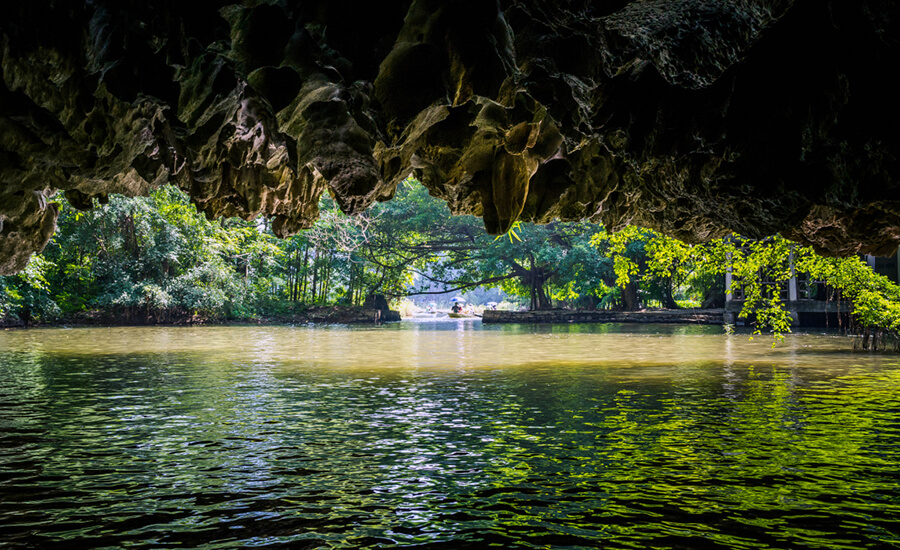
Bich Dong (Vietnamese: Bích Động), literally “Green Pearl cave”, is located 2 km from Tam Coc wharf. Bich Dong is known as “the second most beautiful cave in Vietnam” after Huong Tich Cave in Hanoi and before Dich Long Cave in Ninh Binh. Bich Dong consists of a dry cave located halfway up the mountain (used as Bich Dong Pagoda) and a water cave piercing through the mountain (called Xuyen Thuy Dong). In front of the cave, a branch of the Ngo Dong River winds along the mountainside; on the other side of the river is a rice field.
Tam Coc – Bich Dong tourist area offers many sightseeing routes by boat, bicycle, and on foot that connect about 20 tourist spots. The main routes of the tourist area:
The cruise routes include: Van Lam wharf – Ngo Dong River – Tam Coc route; Xuyen Thuy Dong route (under Bich Dong); Thach Bich – Thung Nang route.
The walking, cycling, and mountain climbing routes include: Bich Dong Mountain and Pagoda; Tien Cave; Mua Cave; Co Vien Lau Ancient House; Thai Vi Temple – Thien Huong Cave…
What is the best time to visit Tam Coc Bich Dong?
Each season here has its own distinct color; however, since you can enjoy it by boat, you should limit your trips during the rainy season to make the most of the experience. According to Vietdreamtravel’s experience of independent travel to Ninh Binh, the best time to visit Tam Coc Bich Dong is from January to March of the lunar calendar. At this time, the climate in Ninh Binh is relatively pleasant and cool, with little rain, making it ideal for you to fully enjoy your journey exploring Tam Coc – Bich Dong.

In addition, in the first days of the new year, the Trang An Scenic Landscape Complex in general, and Tam Coc Bich Dong in particular, also host extremely interesting spring festivals, such as the Bai Dinh Pagoda Festival. If you explore Ninh Binh during this time, you will be able to immerse yourself in the bustling festival atmosphere while still maintaining the inherent solemnity.
More specifically, if you have the opportunity to visit Tam Coc Bich Dong in late May and early June, you will definitely be overwhelmed by the brilliant scenery of the rice fields blooming throughout the journey. At this time, the rice fields on both sides of the river are a harmonious combination of the green of young rice and the bright yellow of ripe rice. This is a perfect picture of the landscape that excites and moves everyone.

June and July are also the time when the lotus fields bloom, which is also the right time to visit and capture beautiful photos with the “lotus girls” in full bloom.
Choosing the right time will make your trip more complete. So if you want to travel to Tam Coc Bich Dong or anywhere else, don’t forget to check the weather and the best time to visit your destination.
Interesting attractions in Tam Coc Bich Dong should not be missed
Tam Coc with the three caves scenic complex
Tam Coc is a scenic complex featuring three natural caves: Ca, Hai, and Ba. All three caves were built along the Ngo Dong River and run straight through the mountain. Ca Cave is 127m long, with an entrance over 20m wide, so it is quite easy to get in. At the top of a large mountain, the air is extremely cool, and the eye-catching stalactites are a special highlight that attracts visitors.
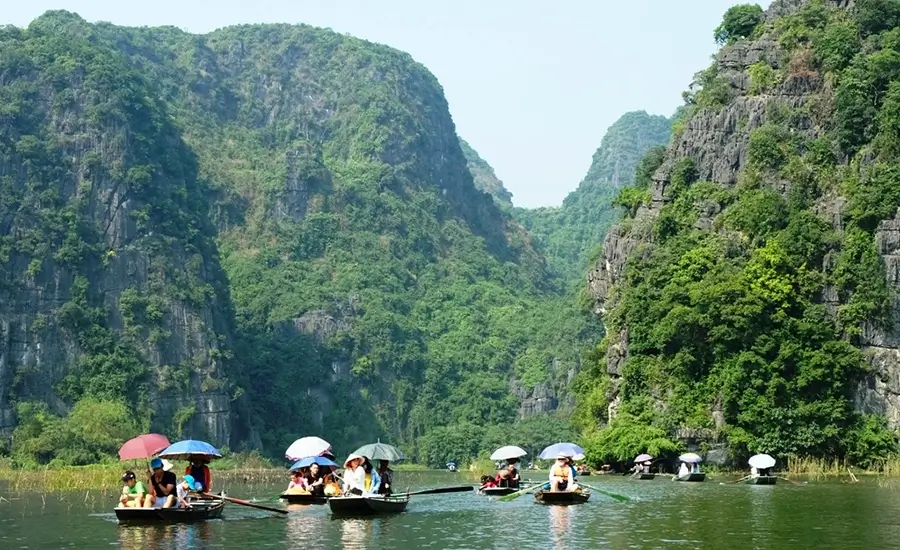
Hai Cave is nearly 60m long, about 1km from Ca Cave. This cave has many stalactites with strange shapes. When going inside, people will easily be hit by water drops falling from above. Ba Cave is only about 50m long, but it is the lowest of the three caves. When entering here, people will have to bow their heads close to the boat’s edge.
The total visit time will be about 2 hours, enough time for everyone to enjoy the scenery on the poetic banks of the Ngo Dong River.
Thai Vi Temple – A place to worship emperors and generals of the Tran Dynasty
In the past, the Trang An – Tam Coc mountain area was where the kings of the Tran Dynasty and mandarins chose to build the Vu Lam Palace to consolidate their forces during the second resistance war against the Mongol army. Today, Thai Vi Temple has become a place to worship the Emperors Tran Thai Tong, Tran Thanh Tong; generals Tran Hung Dao, Tran Quang Khai, and Queen Tran Thi Dung.
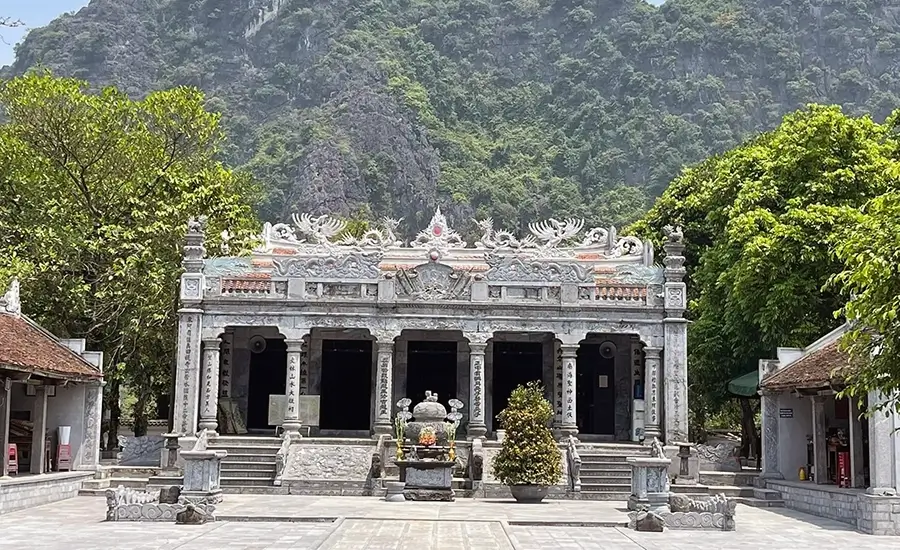
The temple is in a prime location on the right bank of the Ngo Giang River, with Coi Linh Mountain on the left. The harmony of the mountain, forest, and river landscapes creates a legend of the Tam Coc – Bich Dong area. Upon arriving here, visitors can not only experience the poetic beauty of the harmonious interplay between mountains and rivers but also admire the architectural works imbued with national identity.
Thien Huong Cave
Located peacefully on the Dong Vo mountainside, Thien Huong Cave is one of the most popular tourist attractions in Ninh Binh. With a height of nearly 60m, the cave is 40m long and 20m wide, with a dome shaped like a large bell.
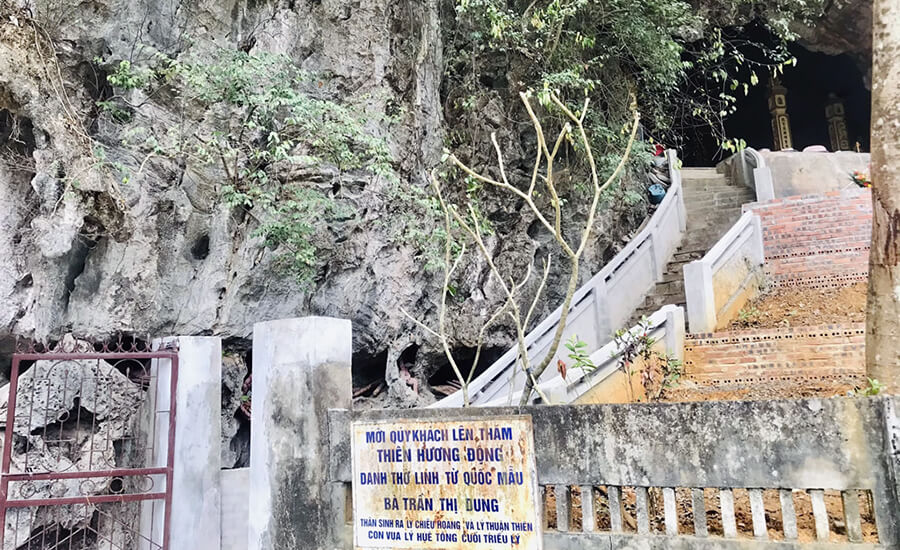
Thien Huong Cave has a wide top, so people often call it Dong Troi. Today, if you have the opportunity to visit Thien Huong Cave, you will see a temple inside the cave dedicated to Mrs. Tran Thi Dung, the wife of King Ly Hue Tong in the past. She was the one who passed on the embroidery craft to the people of Ninh Hai commune, so they built a temple to worship her and burn incense year-round to express their gratitude.
Bich Dong – Bich Dong Pagoda
Located about 2km from Tam Coc wharf, Bich Dong is a dry cave located on the mountainside, in front of which is Xuyen Thuy Cave – a water cave that runs through the mountain. In 1773, Mr. Nguyen Khiem (the father of the great writer Nguyen Du) visited this cave. After viewing the whole scenery of the mountains, waterways, fields, and sky covered in green mist, he gave the cave a very beautiful and romantic name, Bich Dong (which literally means “Green Pearl Cave”). Bich Dong Cave is said to be “the second most beautiful cave in Vietnam” after Huong Tich Cave in Hanoi.
Part of the Tam Coc Bich Dong complex, Bich Dong Pagoda is an ancient pagoda built on the Truong Yen limestone mountain range in 1428, at the beginning of the Later Le Dynasty. Today, in the pagoda, there is still a large bell cast during the reign of Emperor Le Thai To, as well as the tombs of the monks who contributed to the pagoda’s construction.
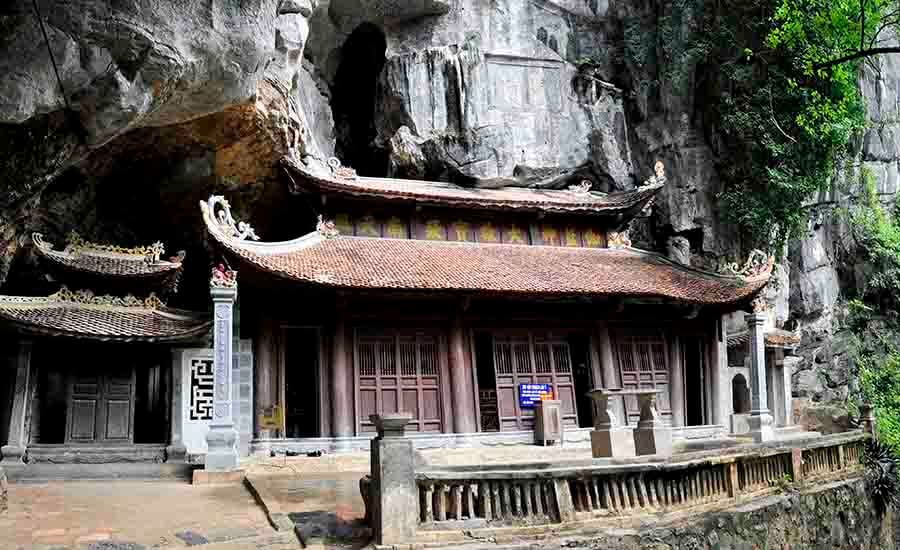
During the reign of Emperor Le Hien Tong, the pagoda was renovated and expanded with three separate pagodas, including Ha Pagoda, Trung Pagoda, and Thuong Pagoda, spread across three mountain levels.
Tien Cave – Linh Coc Pagoda
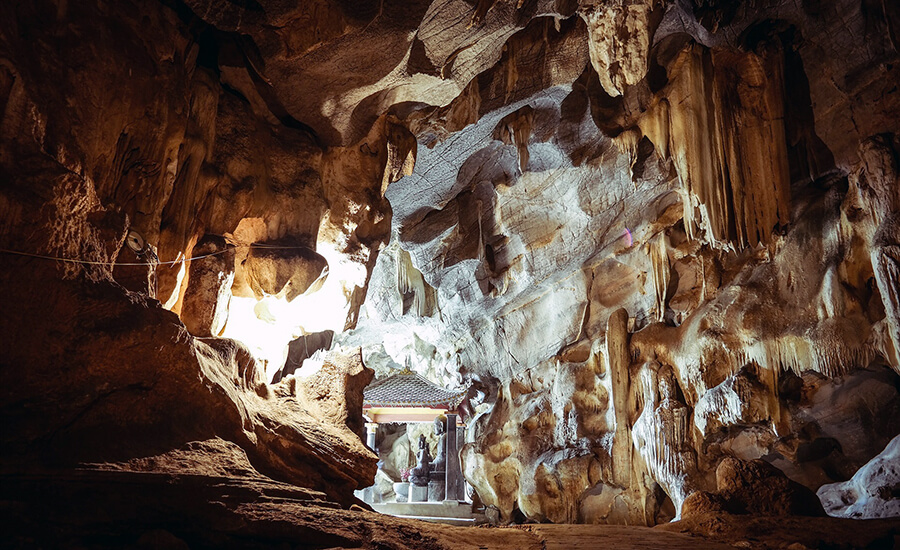
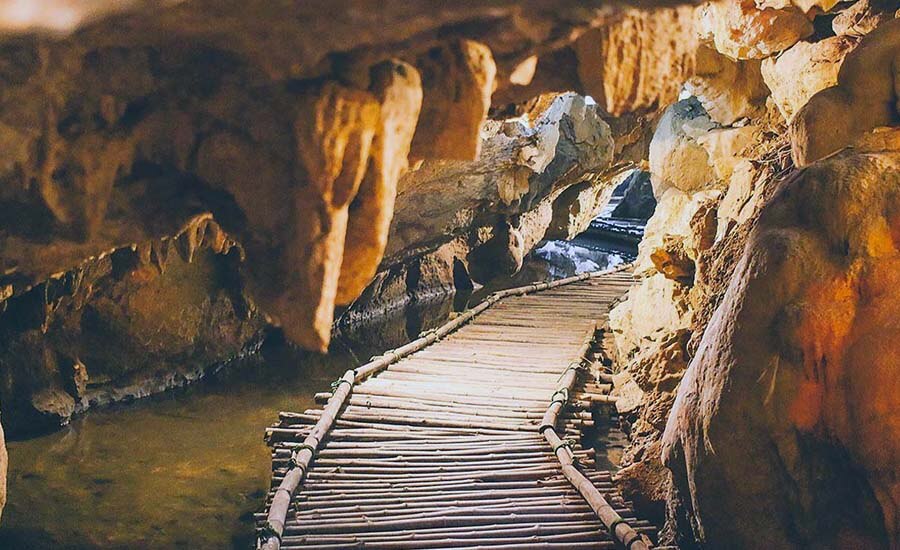
Tien Cave is a beautiful dry cave in the Tam Coc-Bich Dong tourist area. The cave is located nearly 1 km from Bich Dong Pagoda. The cave’s scope includes three large, wide, and high caves. The cave ceiling has many stone veins, with stalactites hanging down, sparkling in many colors, resembling large tree roots. On the ceiling, there are many bats and birds living.
Standing from the outside, the cave looks like a magnificent castle. The changes in nature create interesting stalactite shapes in the cave, resembling money trees, rice plants, fairies, elephants, lions, tigers, monitor lizards, dragons, eagles, and even colorful clouds. When knocked on, the rocks in the cave will create many strange sounds.
Linh Coc Pagoda is located on Moc Pagoda Mountain. The pagoda faces west, in front of which is a water field. According to the stele placed in the pagoda, Linh Coc dates back to the reign of Emperor Tran Thanh Tong. The large pagoda yard is at the foot of the mountain, with ancestral shrines on both sides.
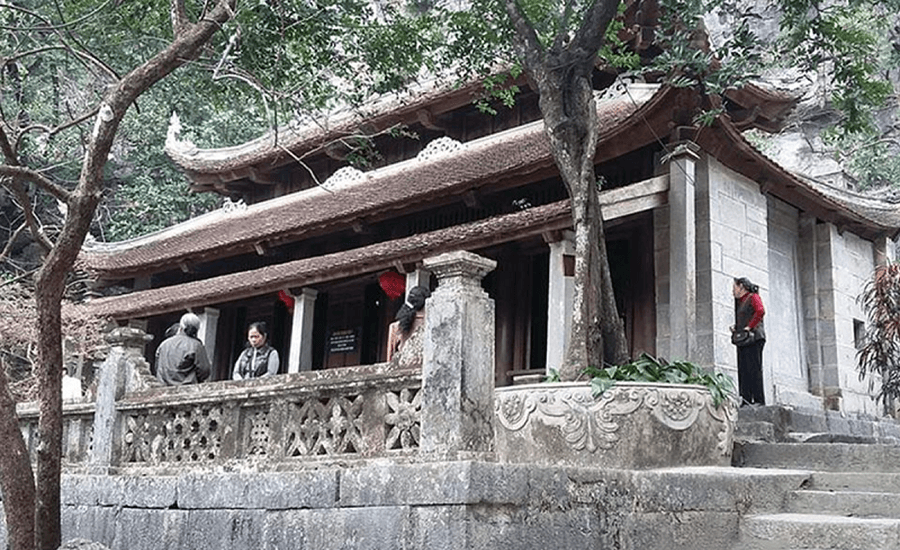
The pagoda worships Ananda, the Buddha’s primary attendant and one of his ten principal disciples, as well as a mother goddess.
Co Vien Lau – Ancient Vietnamese Village
Co Vien Lau is an ancient house complex consisting of many houses, mainly located in Ninh Binh, the Northern Delta region. In 2008, the ancient house complex Co Vien Lau was added to the Tam Coc – Bich Dong tourist area by the Ninh Binh Department of Culture – Tourism. Co Vien Lau is located right next to the Tam Coc boat dock and on the way to the Thai Vi temple.
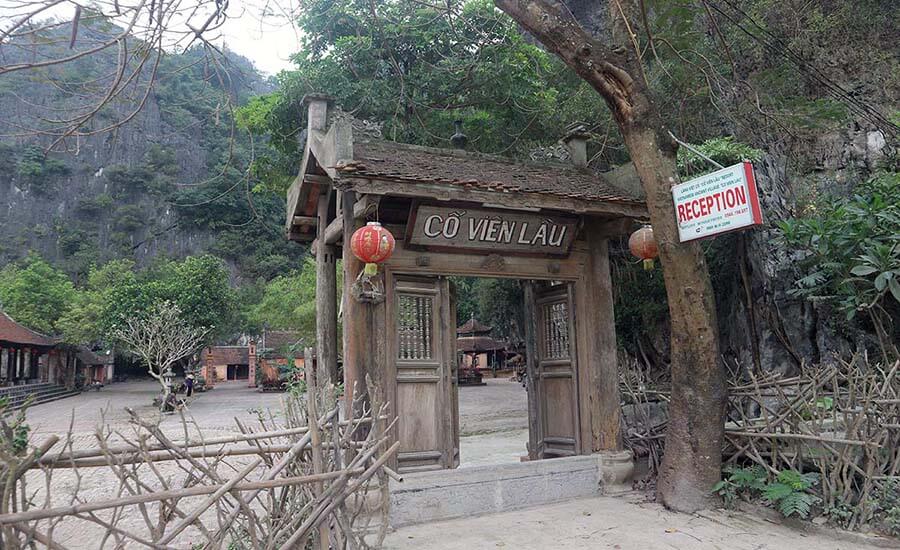
The ancient houses in Co Vien Lau were mainly built from the Nguyen Dynasty onwards, but they also exhibit the distinctive cultural features of traditional Vietnamese architecture.
Enjoy Ninh Binh specialties
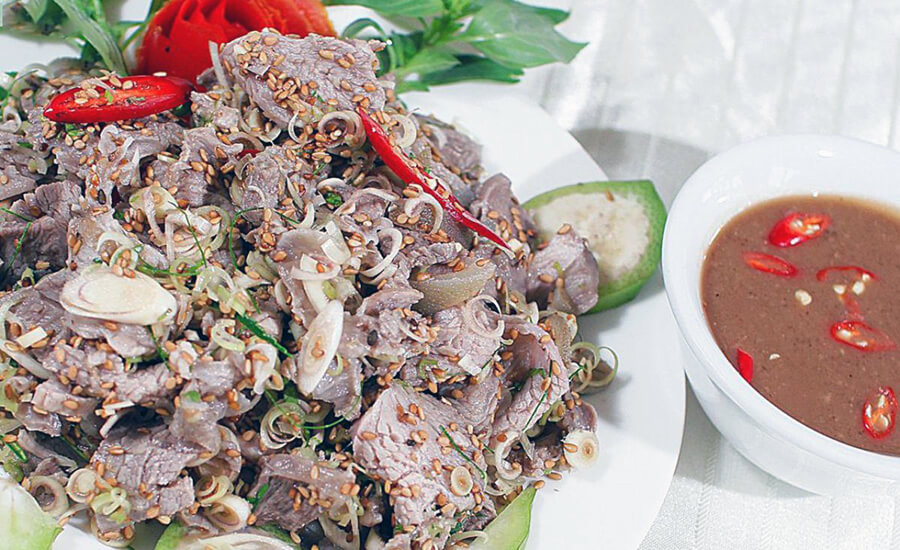
Ninh Binh, a land famous for its majestic natural scenery and rich cultural heritage, is also home to many attractive specialties. Visitors cannot miss the crispy rice dish, made from delicious sticky rice and often served with chicken or shrimp paste. In addition, Ninh Binh mountain goat meat is also a typical dish, often prepared in many ways such as steamed, grilled, or stir-fried. Yen Mac sour sausage is famous for its sweet-and-sour taste, a snack loved by many. When coming to Ninh Binh, enjoying these specialties will be an unforgettable culinary experience.
Tam Coc-Bich Dong, with its limestone cave system and worship structures, has long been a favorite destination for many people. On your journey to explore Ninh Binh, do you want to immerse yourself in the charming natural scenery here?
Source: collected by An
Follow us for the best deals on Vietnam package tours and visa services!
Comment (0)