
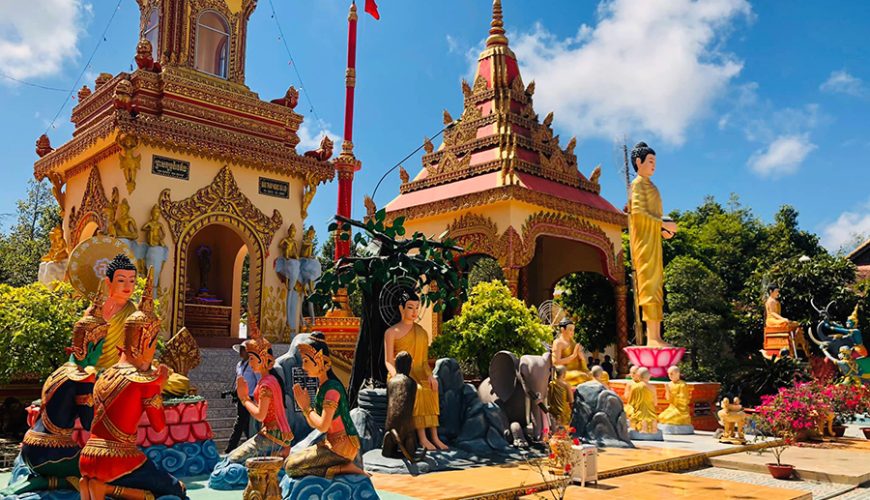
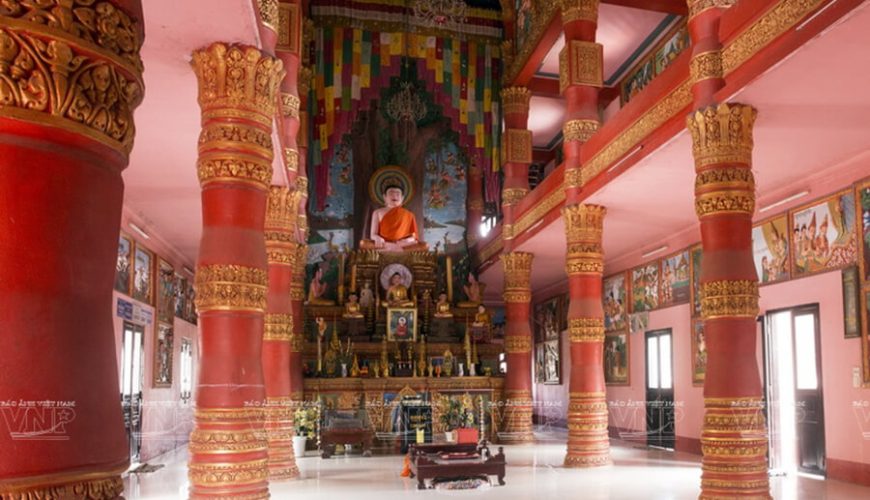
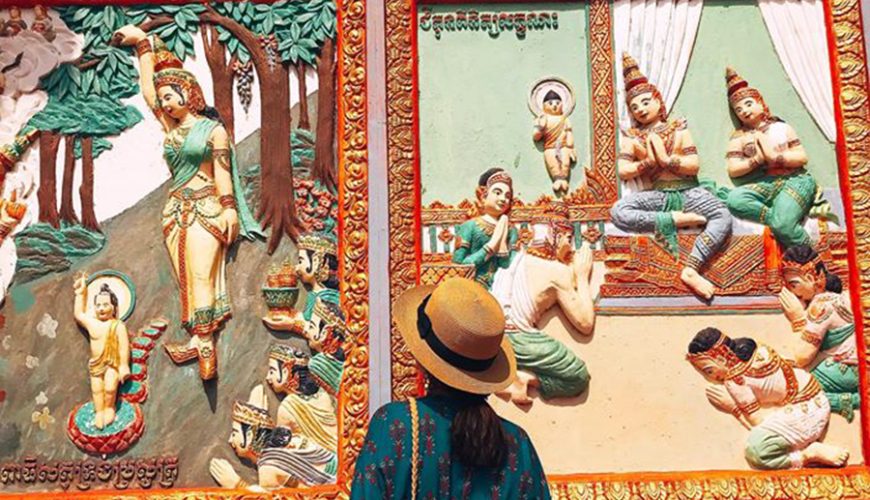
Ghositaram Pagoda is one of the unique tourist destinations in Ca Mau that clearly reflects the Buddhist cultural beliefs of the Khmer people in southern Vietnam. This is one of the Khmer pagodas with the most beautiful space and architecture in the Mekong Delta region.
Overview of Ghositaram Pagoda
Ghositaram Pagoda is located in Cu Lao Hamlet, Hung Hoi Commune, Ca Mau Province, and serves as a “museum of fine arts” showcasing the talent of Khmer artisans. Ghositaram Pagoda, also known as Cu Lao Pagoda, was built in 1860 on a 4-hectare site. In front of the pagoda gate, a row of towering palm trees stands, a familiar image of the Western landscape.
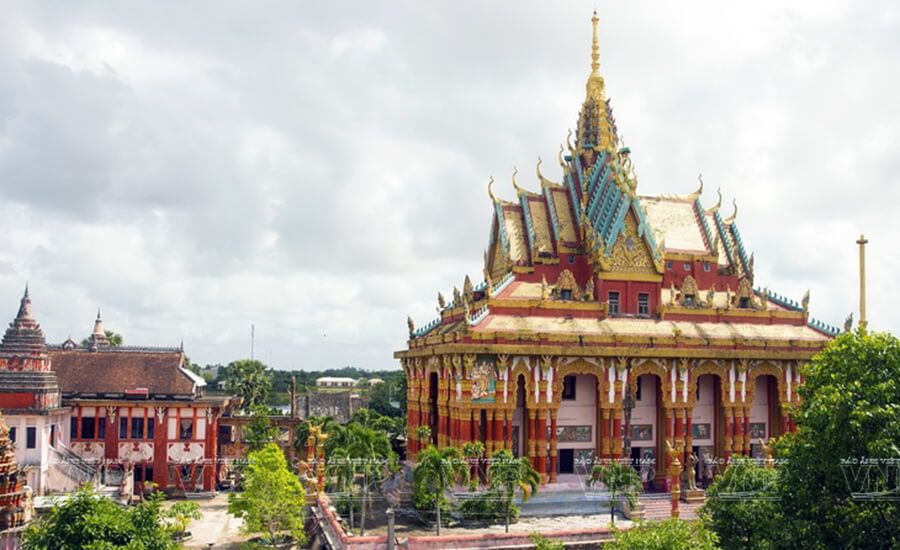
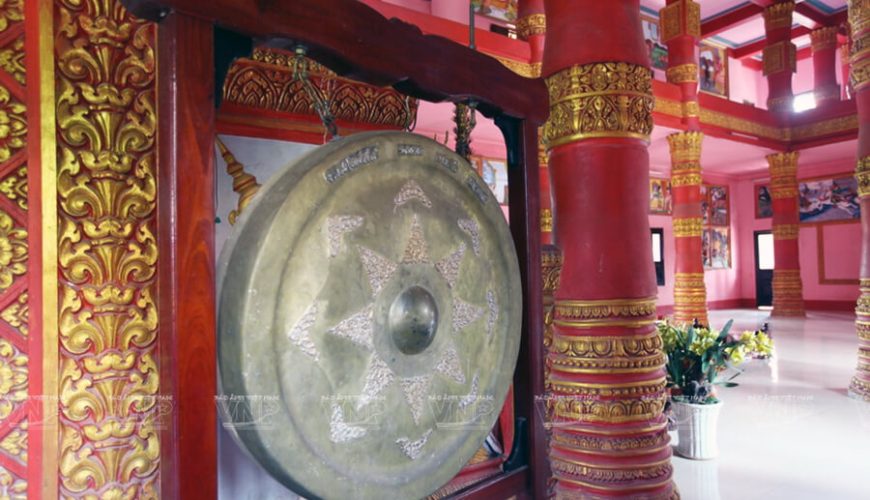
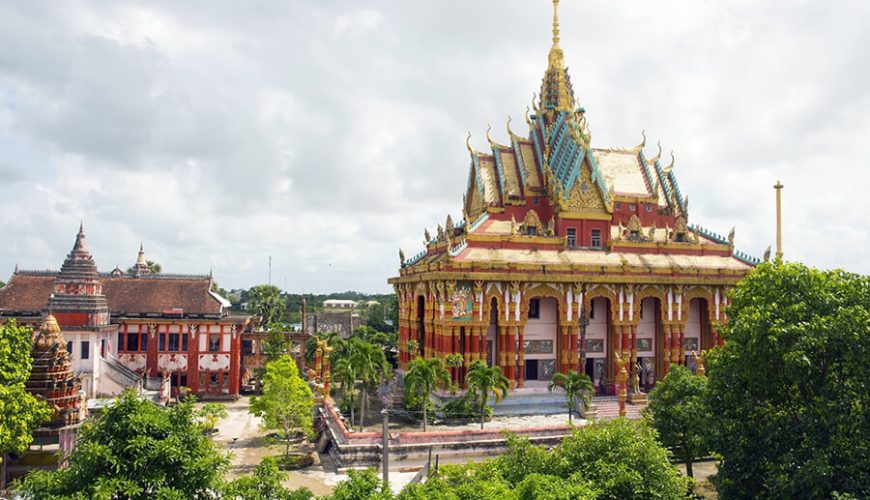
Ghositaram Pagoda includes many typical areas of a Khmer pagoda, such as: main hall, monks’ quarters, lecture hall, stupa, school, an annex… Over time, the pagoda fell into disrepair, so the main hall was rebuilt and completed in 2010. This is considered the largest main hall among pagodas in Vietnam, with an area of over 427 m² and a height of over 36 m.
Ghositaram Pagoda is not only famous for its brilliant red and yellow colors but is also known as the largest Khmer pagoda in Vietnam, attracting many visitors from near and far.
- Opening hours: 6:00-19:00
- Ticket price: Free
Unique architecture of Ghositaram Pagoda in Ca Mau
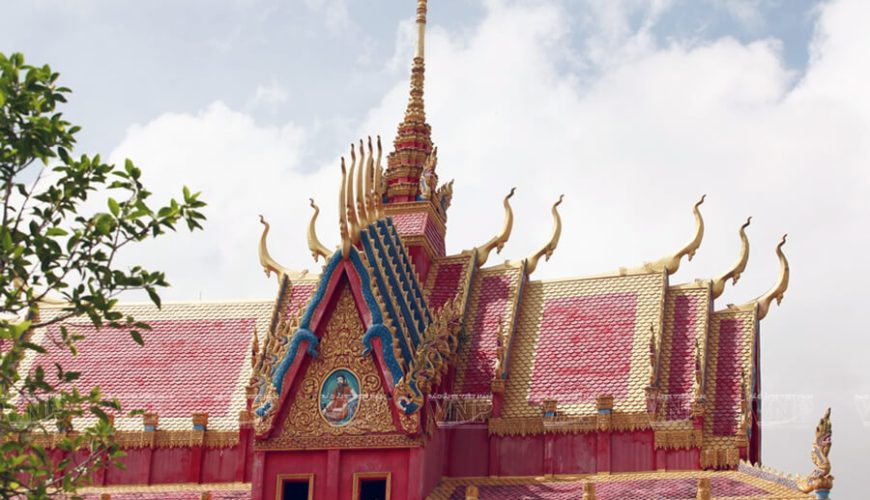
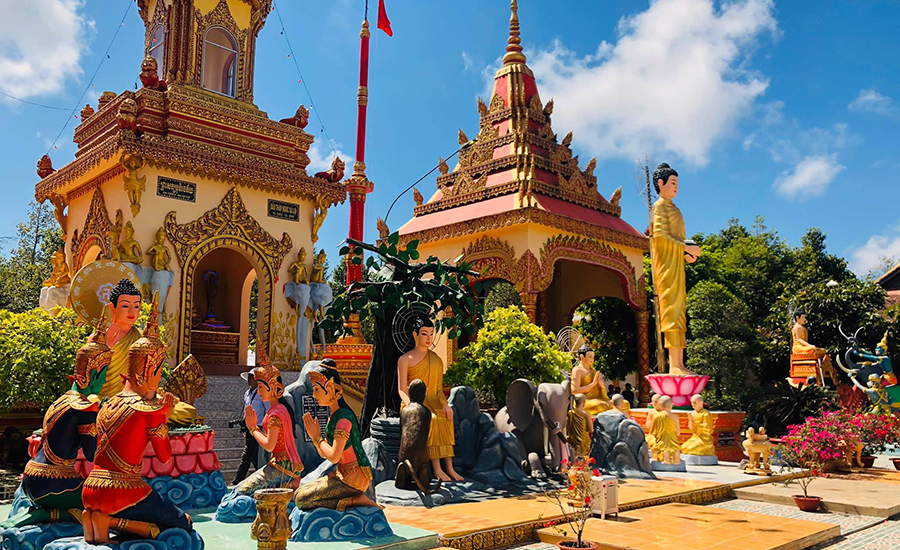
The entire structure was built in accordance with the traditional architecture of ancient Khmer Theravada Buddhism, harmoniously combined with modern architecture. The splendid, magnificent Ghositaram Pagoda will impress you at first sight.
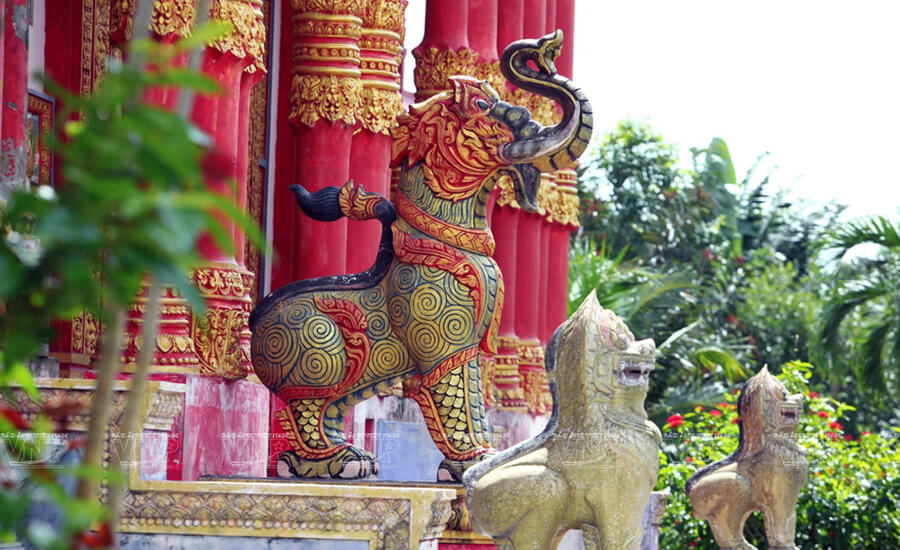
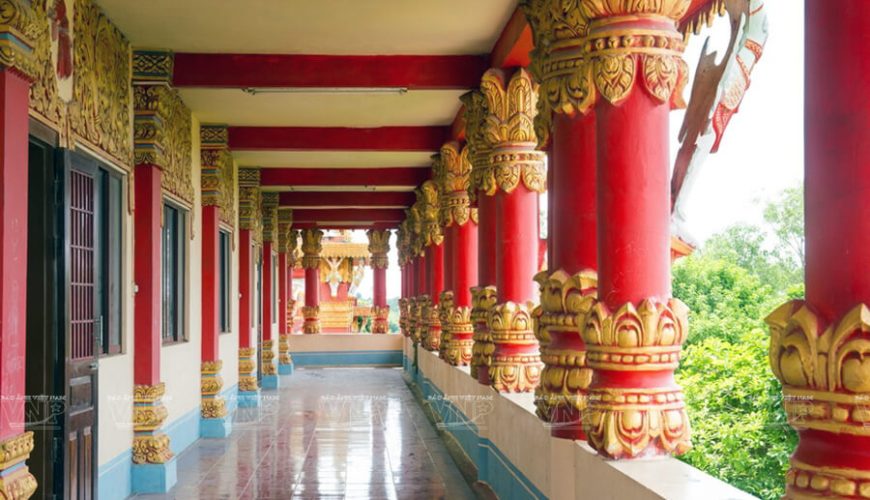
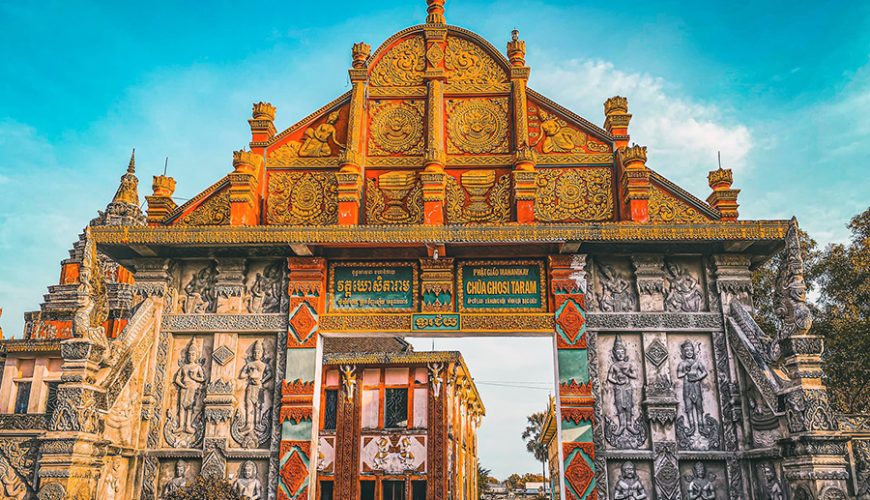
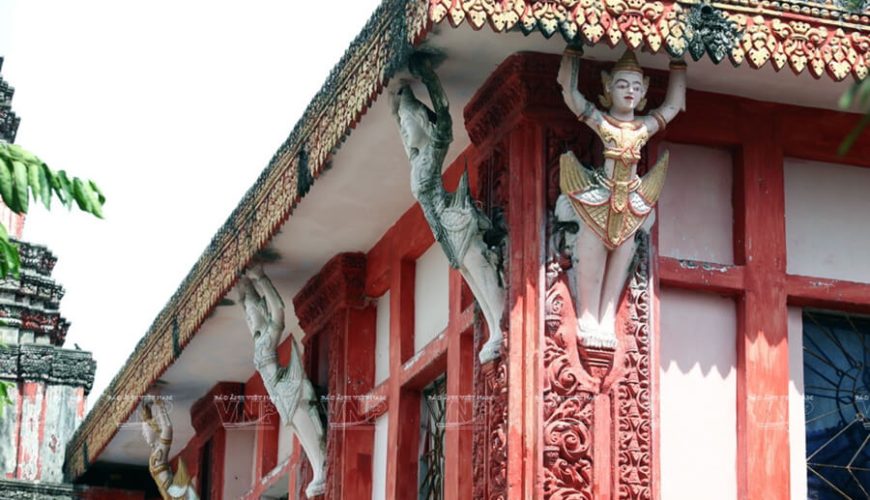
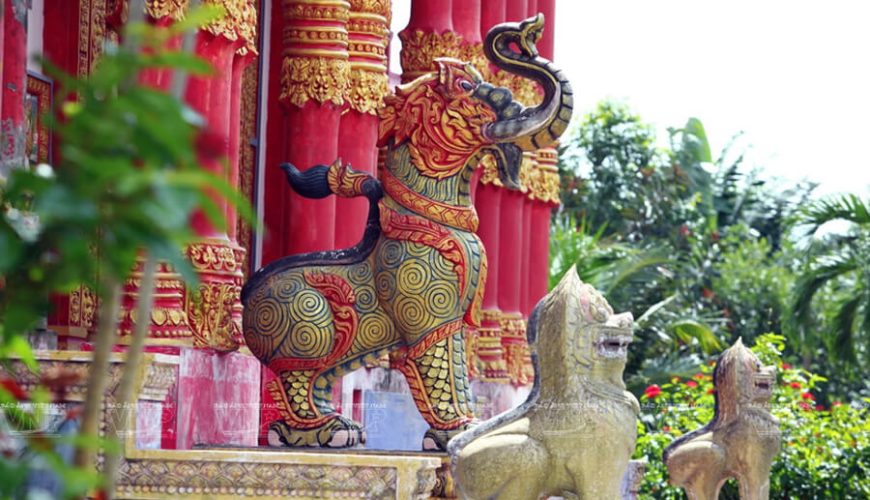
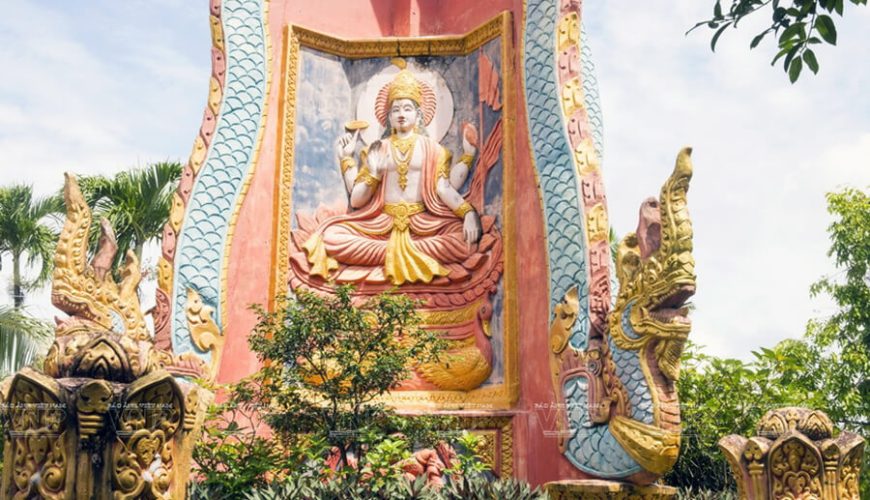
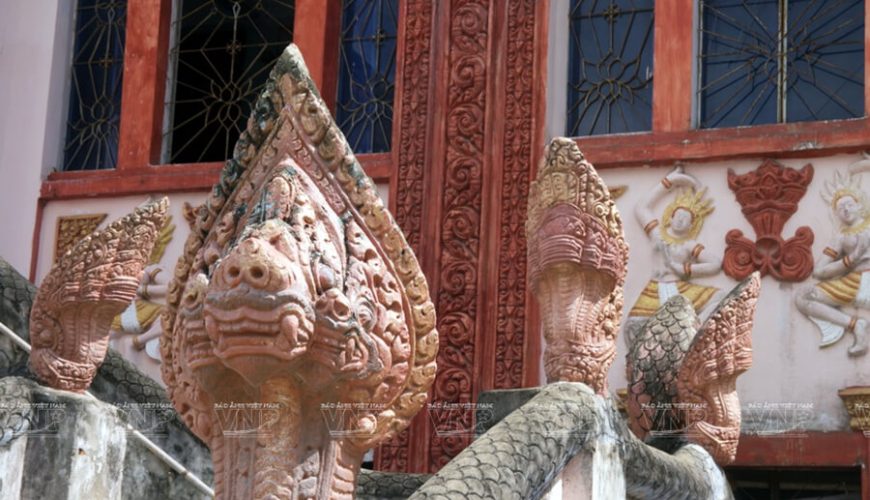
The decorative patterns and reliefs bearing the mark of Angkor, from lotus petal motifs with gentle, graceful curves to strong, balanced asterisks, are always present on every window and porch.
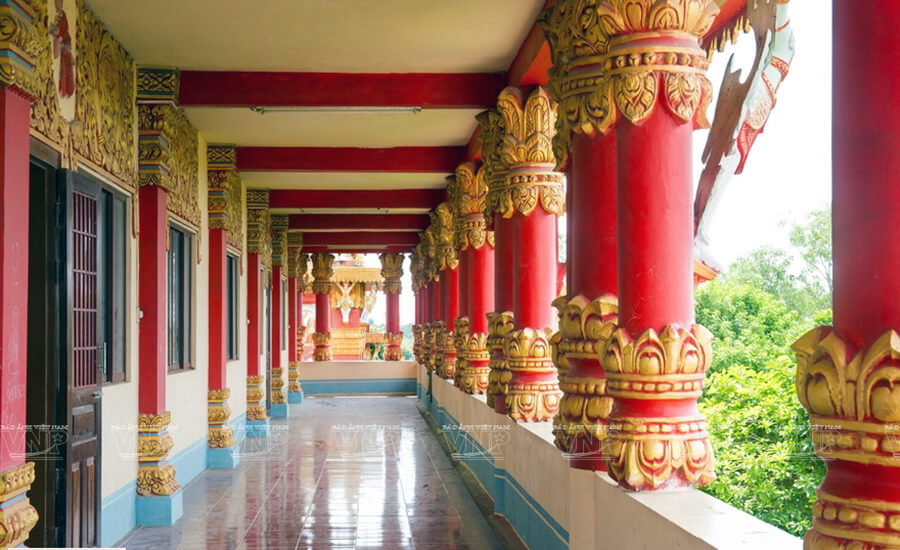
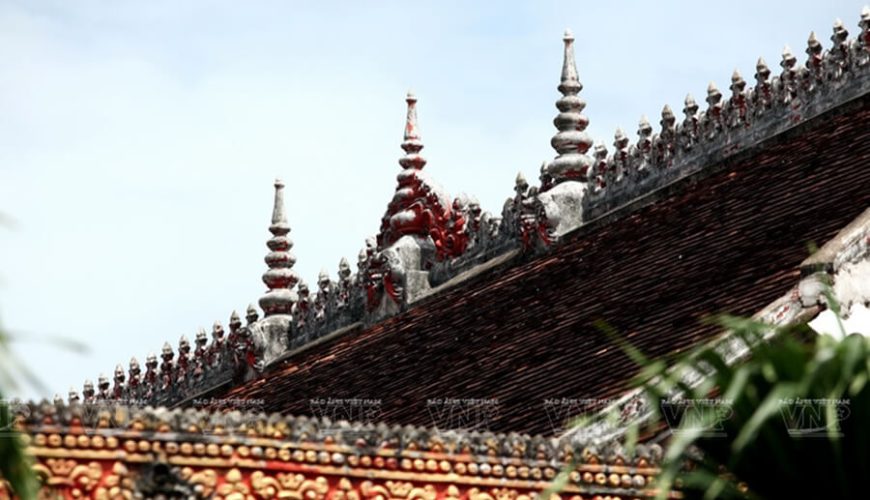
From afar, the large main hall appears radiant with the red-yellow tones typical of Khmer pagodas. The roof is composed of many layers, overlapping one another, creating a soaring space against the blue sky.
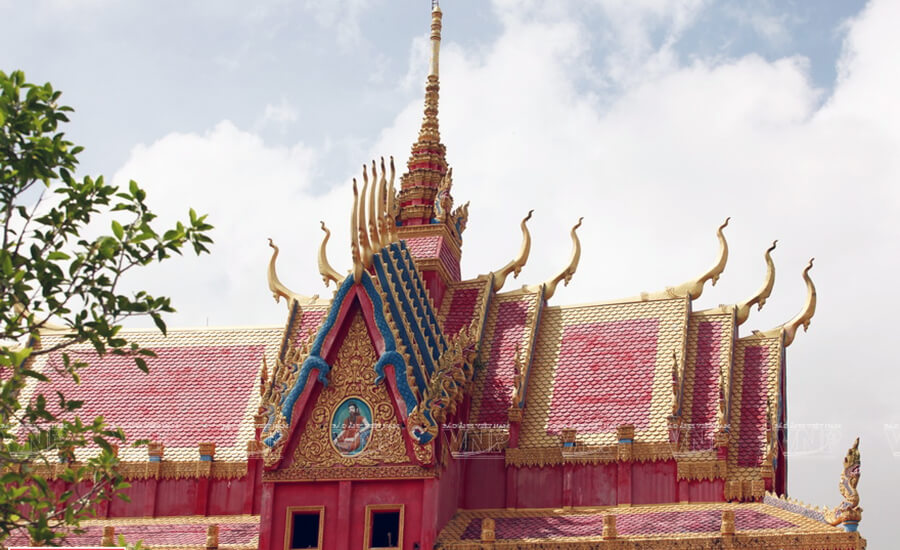
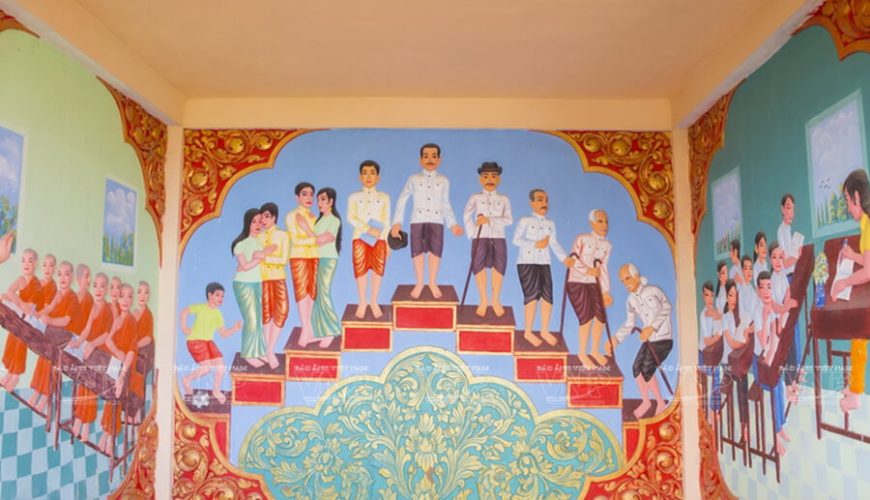
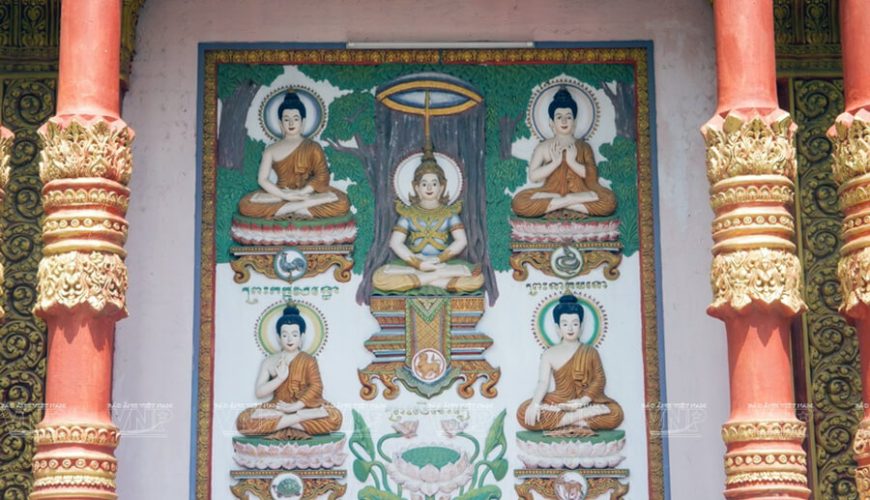
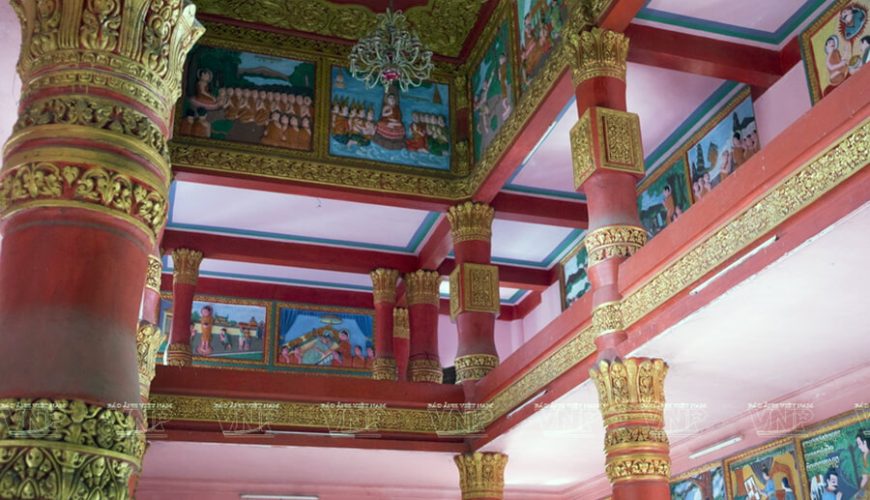
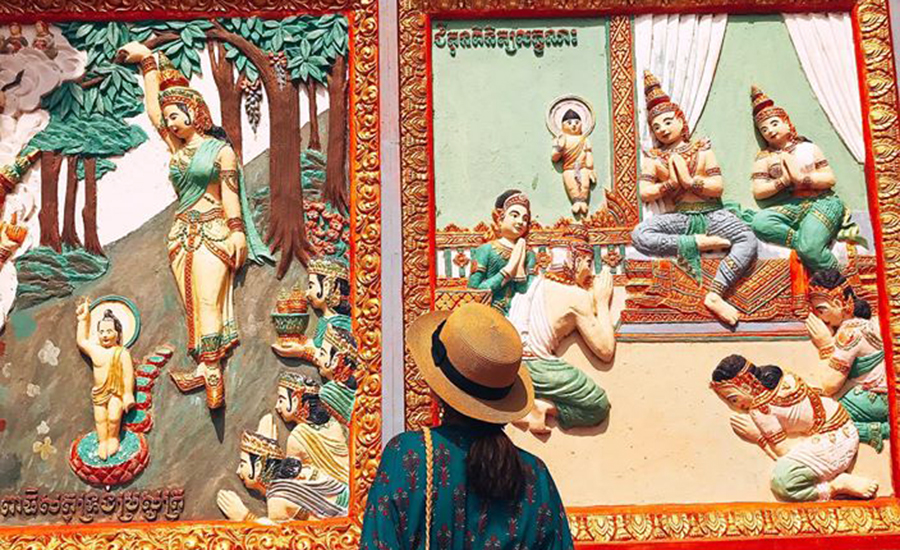
The inside and outside are decorated with hundreds of images based on the Buddhist Tripitaka legend. Everywhere in the main hall are carved and molded patterns of high artistic value, creating a cultural work imbued with national identity.
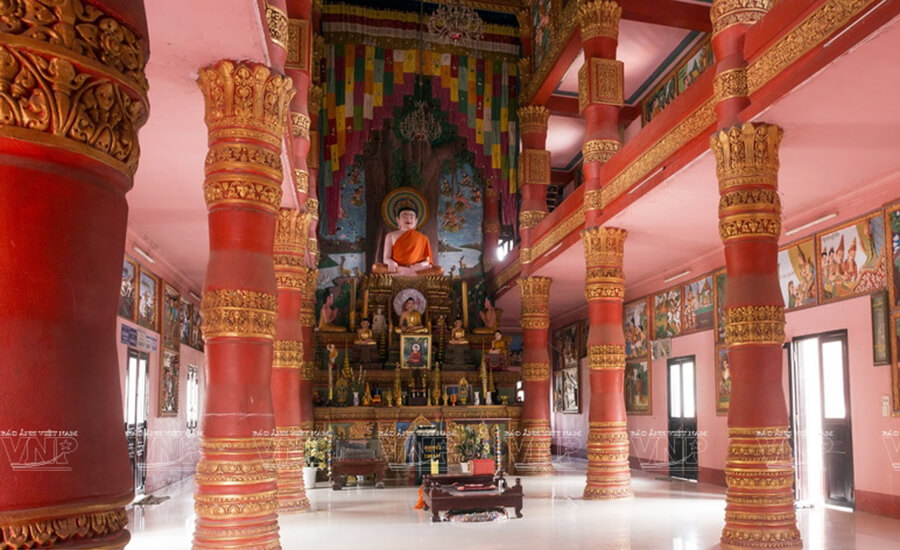
Between the rows of pillars are carved many reliefs that vividly depict stories and anecdotes about the life of the Buddha and Buddhist teachings, attracting viewers. It is known that it took the artisans up to 4 years to complete the motifs and decorative patterns of the entire pagoda.
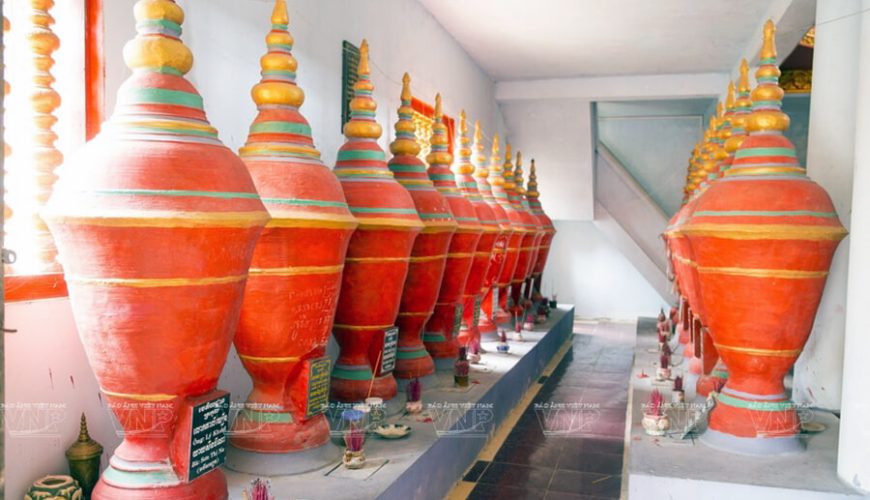
In the pagoda grounds, there are also two flagpoles over 40m high, two towers preserving the remains of Buddhist followers through the generations, a crematorium, and many other auxiliary works. All of them glorify the majestic and splendid beauty, but also the closeness and warmth of the pagoda.
The pagoda’s connection to the Khmer people
Ghositaram Pagoda is a place of study for Khmer children. According to Khmer custom, grown-up boys (around 14-15 years old) must enter the pagoda to show filial piety to their parents and to learn Buddhist scriptures and the knowledge necessary for life. It is a school that teaches general knowledge, teaches Vietnamese, Khmer, and five-tone music… After completing their monastic duties, they return to secular life, using their knowledge to help their families, repay their parents for their upbringing, and serve society.
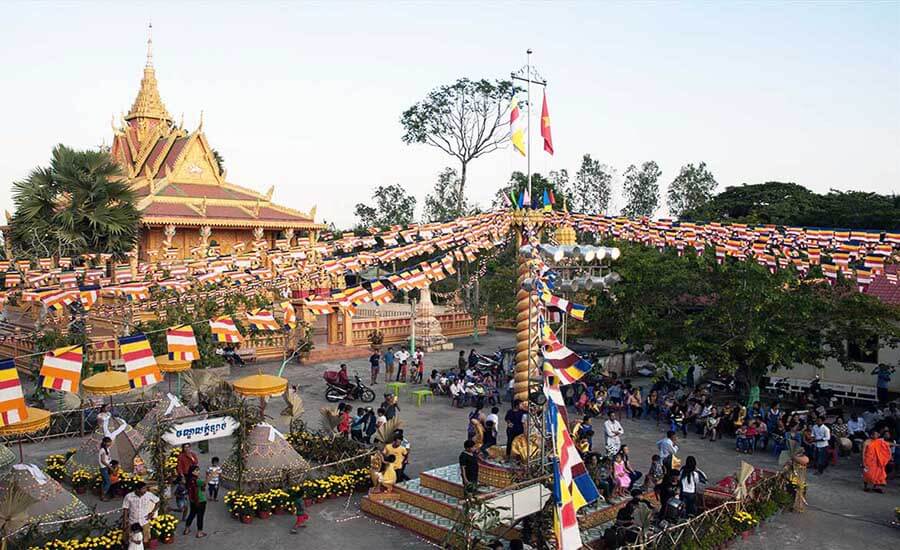
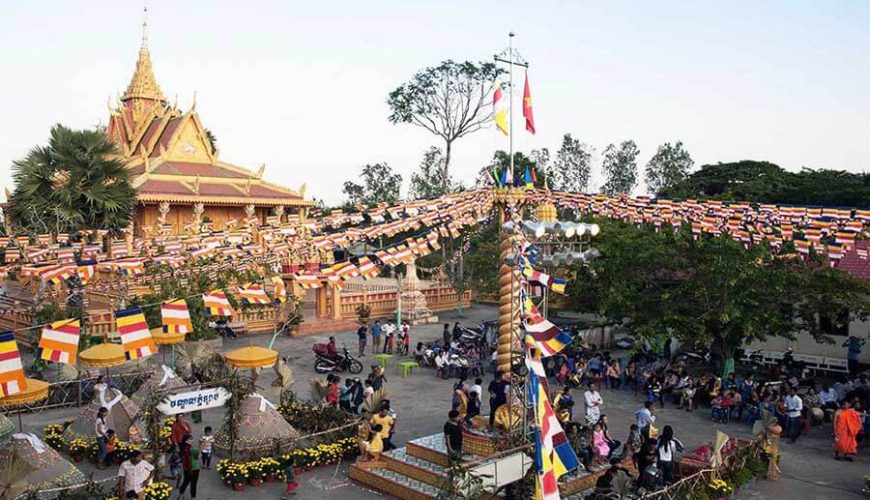
During important Khmer festivals, such as Dolta, Offering Robes, and Chol Chnam Thmay, Ghositaram Pagoda attracts a large number of followers and tourists.
The pagoda is not only a place for sightseeing and pilgrimage, but also a popular photo spot for young people. The colors and Khmer-style architecture of Ghositaram Pagoda help you take impressive, outstanding photos that are on par with those from the famous temple lands of Thailand or Cambodia.
Source: collected by An
Follow us for the best deals on Vietnam package tours and visa services!

Comment (0)