
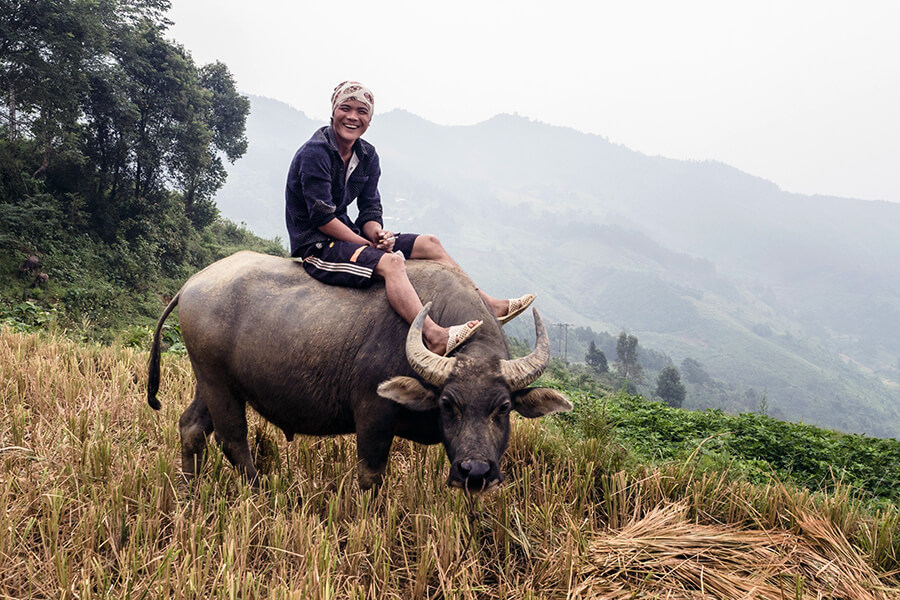
Located on a mountainside 1,500 – 1,600 meters above sea level, Sapa is a small town in Lao Cai province, 40 km from the provincial center and 5 – 6 hours from Hanoi by highway. With such a favorable location, Sapa has a tropical climate with four distinct seasons and is one of the few places in Vietnam where it snows in winter.
What’s the best time to explore Sapa?
Sapa has a cool climate, so it is suitable for year-round travel. Although the town is still divided into four distinct seasons, the average temperature in Sapa rarely exceeds 25 degrees Celsius, even in summer. You just need to avoid the rainy season from June to early August, as extreme weather can cause flash floods, landslides, and other hazards.
From February to May, Sapa’s spring is brilliant, with hundreds of flowers blooming, including cherry, peach, and plum blossoms. In addition, from April to May is the rice planting season, also known as the water pouring season. This is when people start the new crop. Sapa is immersed in the green of young rice fields. But the most beautiful moment is the dawn or sunset, when the orange-yellow sunlight overflows the fields, reflecting sparklingly on the water’s surface.
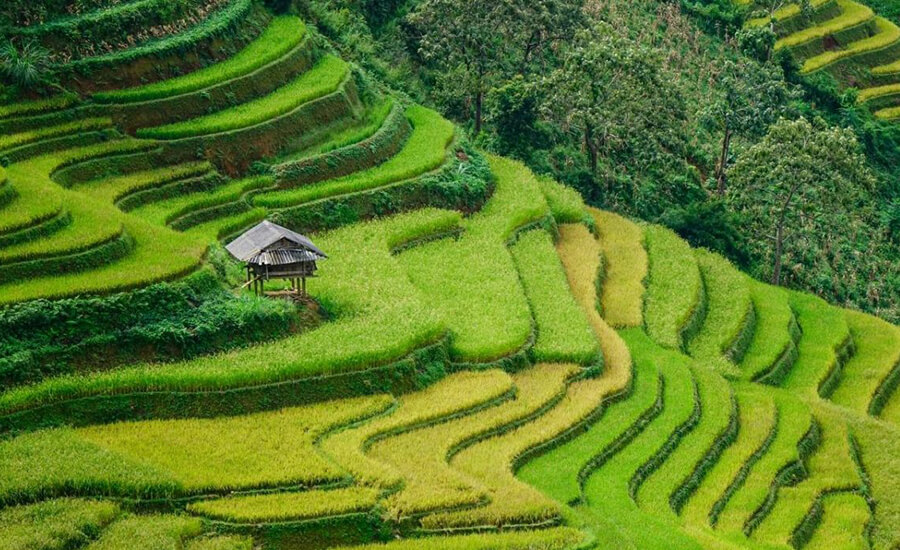
The end of August to September is the rice-ripening season. Coming to explore Sapa at this time, you will have the opportunity to admire the golden ripe rice season on the winding terraced fields in the cool air of late summer, early autumn.
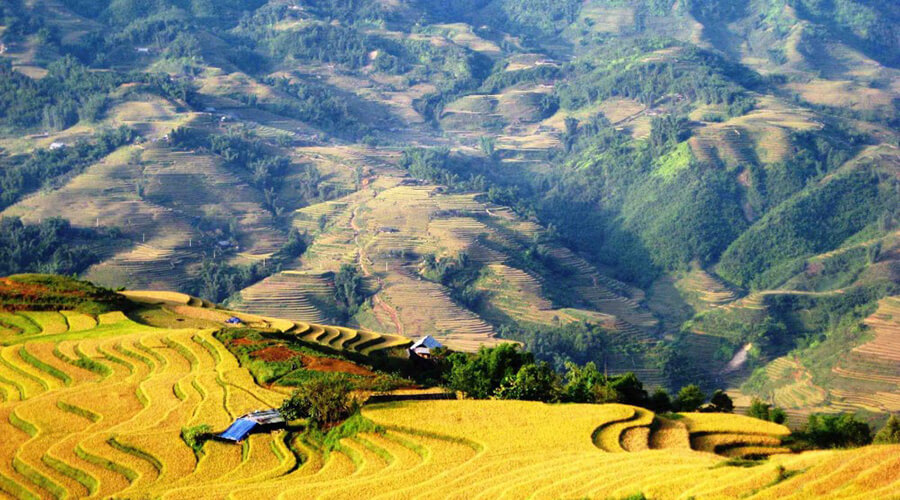
Winter comes from December to February of the following year. If you are lucky, you can “hunt” for snow and ice on the mountain tops.
Transportation to and in Sapa
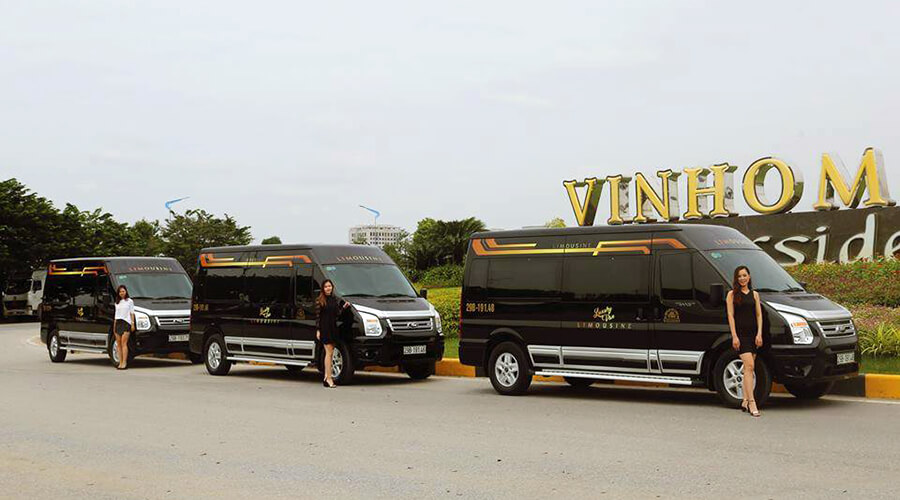
You can book a limousine from Hanoi to Sapa or a bus from My Dinh station for 230,000-350,000 VND per person, depending on seat class. Travel time is about 5-6 hours.
If you take the train, choose the Hanoi-Lao Cai route. After about 7 – 9 hours of travel, you must take a bus or taxi to the Sapa center. Train tickets cost between 160,000 and 800,000 VND, depending on seat class and train type.
If you drive yourself, take the Noi Bai – Lao Cai expressway, then turn onto Highway 4D to Sapa. The road is easy to travel, but you need to pay attention to the signs and drive at the right speed. On cold, rainy, foggy, and slippery days, you should carefully check the tires, brake system, lights, etc., before departing. Travel time is about 5-6 hours. Depart from Hanoi at the latest around 12:30, so that when you reach the pass to Sapa, it is not too dark.
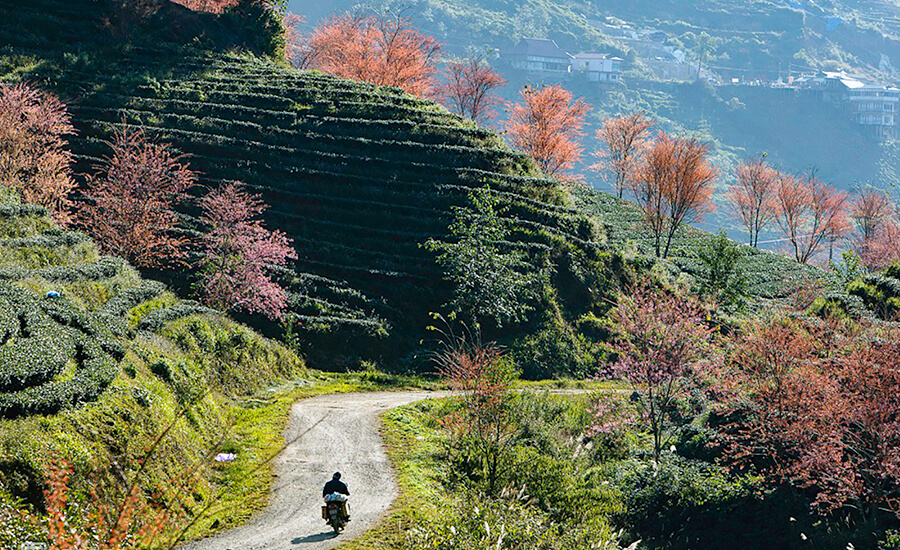
In Sapa, you can rent a motorbike to move more freely. However, Sapa has many steep passes. Remember to check the vehicle carefully and limit renting scooters. The rental price is 100,000-200,000 VND per day.
Tourist attractions in Sapa
You can spend about 3 days and 2 nights exploring Sapa’s famous destinations.
Ham Rong Mountain
With its magical and mysterious scenery, Ham Rong Mountain is crowded with tourists. The lowest point of the mountain is 1,450m, and the highest peak is over 1,800m. From the top of the mountain, you can see most of the famous tourist attractions of Sapa town, such as Muong Hoa valley, Ta Van village, Cat Cat village…
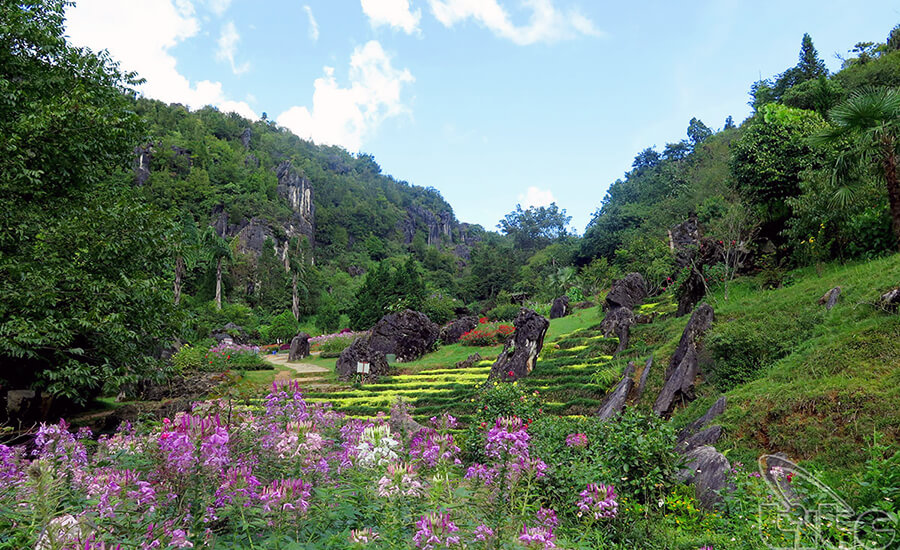
Ham Rong Mountain is well-suited for a picnic that combines eating, shopping, and sightseeing, with countless shops and beautiful flower gardens along the way up the mountain. The entrance fee to the Ham Rong Mountain tourist area is 70,000 VND for adults and 30,000 VND for children.
Sapa Stone Church
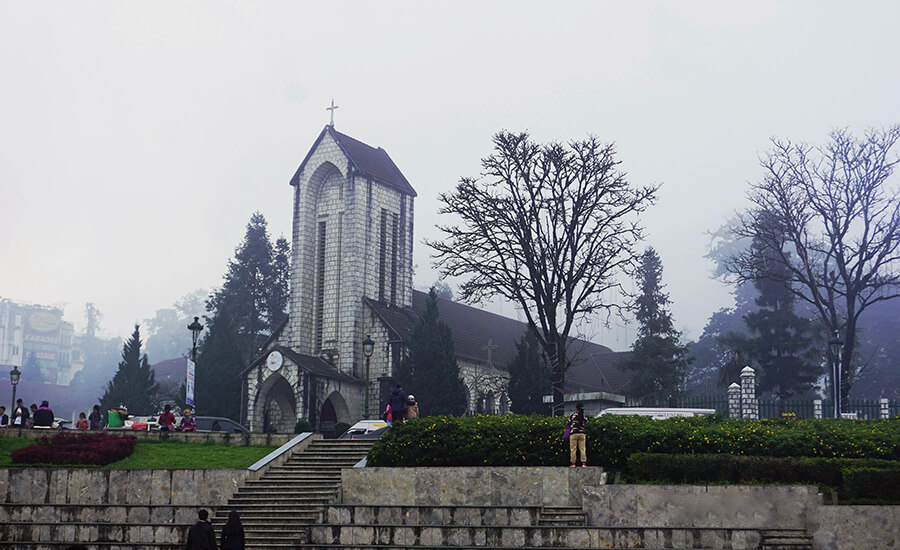
Located in the center, this is a symbolic work of the mountain town, started in 1895. The church was built in the shape of a cross in the Gothic style, expressed in the roof, bell tower, arches… all of which are pyramidal, creating a graceful and airy look for the work.
Cat Cat Village
Cat Cat Village is located 2 km from the center of Sa Pa, so you can choose to trek or ride a motorbike. This is a peaceful Mong village, still preserving many customs and traditional crafts such as weaving, silver carving, jewelry making…
The road to the village is quite beautiful; you will pass through winding hairpin bends, and on both sides are terraced fields with ethnic roofs peeking out.
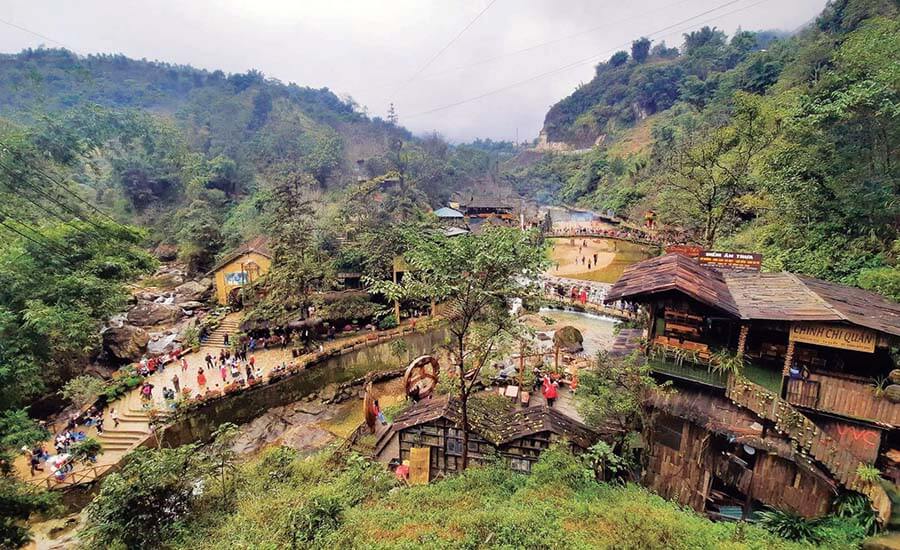
Crossing the Si Bridge is the center of Cat Cat Village, where three streams converge: Tien Sa Stream, Vang Stream, and Bac Stream. Visiting the village, you can learn about the Mong people’s way of life, buy handmade gifts, and enjoy local products. The entrance fee to Cat Cat village is 50,000 VND per person.
Lao Chai – Ta Van
From the town, you follow the 10 km-long road to Ta Van by motorbike, taxi, or on foot. The road to Lao Chai – Ta Van is narrow, lined on both sides with cool green terraced rice and corn fields. Although no longer wild and remote, Lao Chai – Ta Van is still a peaceful village with many ethnic groups living there, such as Mong, Dao, Giay…
The most impressive thing here, besides the local ethnic life, is the terraced fields spread across the hillsides.
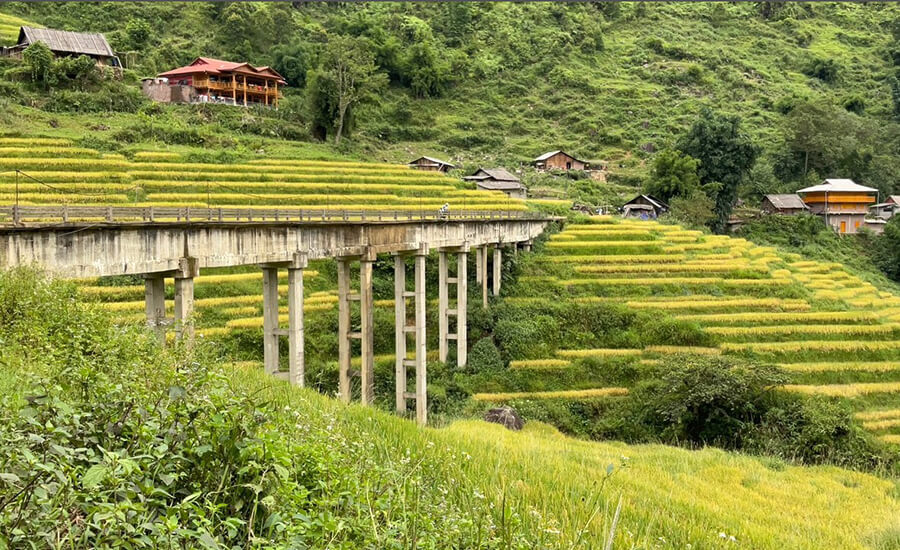
Late summer is when ripe rice turns the entire mountainous area golden. So if you have a lot of time, spend a day here to experience the indigenous lifestyle. The entrance fee to the village is 70,000 VND per person.
Fansipan Peak
To reach Fansipan Peak without spending too much energy, take the cable car and the mountain train. In the morning, you line up to buy tickets at the mountain train station opposite Sapa town square. Cable car ticket prices are 715,000 VND per adult and 525,000 VND per child; mountain train ticket is 99,000 VND per person.
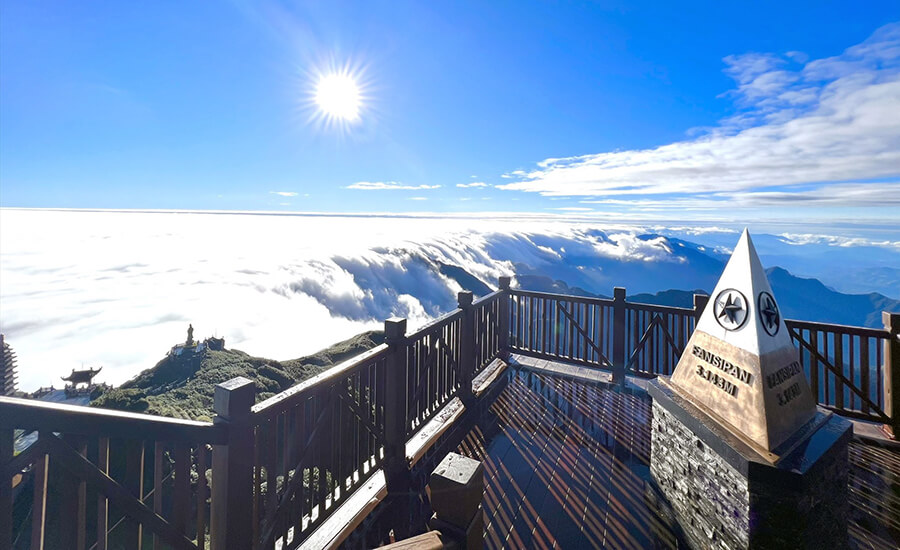
To reach the top of Fansipan, you take the mountain train route, then the cable car, then another train ride or walk up 600 steps. Each train ride lasts about 6-7 minutes, and each cable car ride is about 30 minutes. Those who like to walk can leisurely climb the stairs and visit the spiritual complex on Fansipan, including Kim Son Bao Thang Pagoda, home to the largest bronze statue of Amitabha Buddha in Vietnam…
In addition, at the cable car and mountain train stops, there are souvenir shops and restaurants to meet tourists’ shopping and dining needs. Note: you should wear low-heeled shoes and bring a jacket, a raincoat, or an umbrella in case the weather on the mountaintop suddenly turns cold and foggy.
Swing Sapa
This check-in complex is located at 87 Nguyen Chi Thanh, near the town center, about 2 km from the Stone Church towards the cable car.
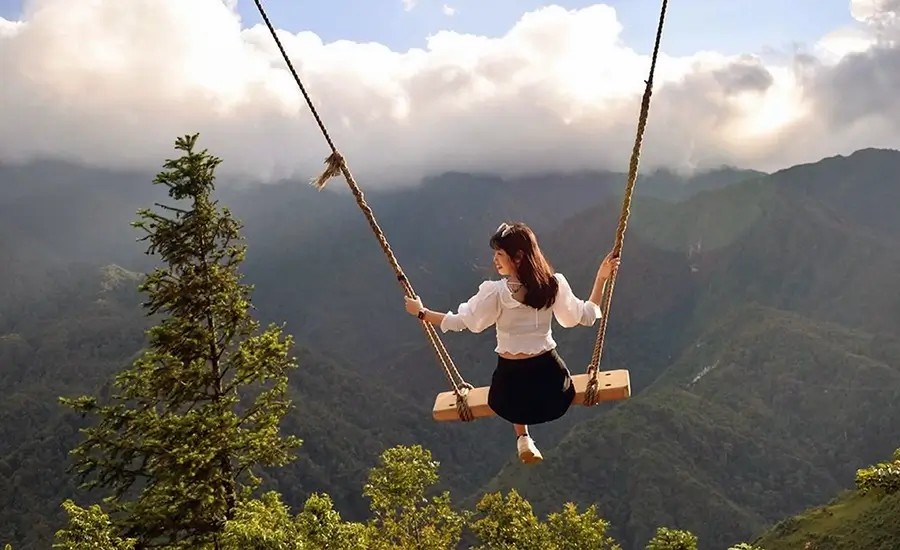
With many structures such as the statues of a man and a woman, a giant stone hand, a Buddha statue, a “stairway to heaven”, a swing… this place has become a location with countless shooting angles for unique photos. If you travel in a group, you can organize a camping or a small picnic right here. The entrance fee is 80,000 VND per person.
Seo My Ty Lake
To get to Seo My Ty Lake in Ta Van commune, you have to cross a 20 km-long road with many large and small rocks, which is quite challenging for inexperienced drivers. The lake was created by the dam to build the Seo My Ty hydroelectric plant and is also the highest artificial lake in Vietnam. Seen from above, the lake looks like a silk strip on the Hoang Lien Son mountain range.
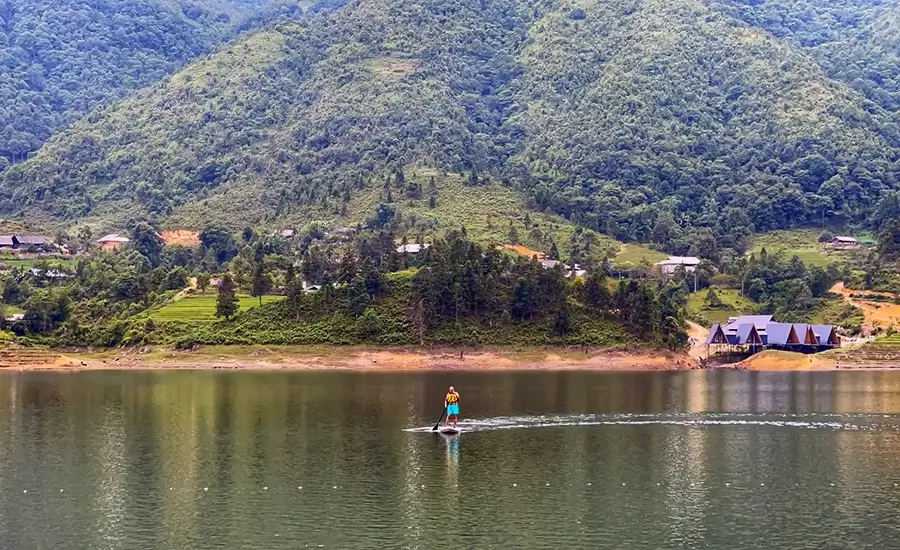
Upon arrival, you can ask permission from fishermen to sit on a boat or raft to admire the lake and learn about local salmon farming.
O Quy Ho Pass and Heaven’s Gate
O Quy Ho is known as the “King of the passes” with a deep valley on one side and a steep cliff on the other. O Quy Ho is about 50 km long, connecting the two provinces of Lao Cai and Lai Chau. A suggestion for those who want to take beautiful photos on this pass is to come at sunset, around 17 – 17:30 pm.
When the sun gradually sinks behind the mountains, the entire pass is bathed in a beautiful, dreamy yellow. However, the weather in Sapa changes very quickly; maybe only 10 minutes after the sun comes out, the clouds have covered the area.
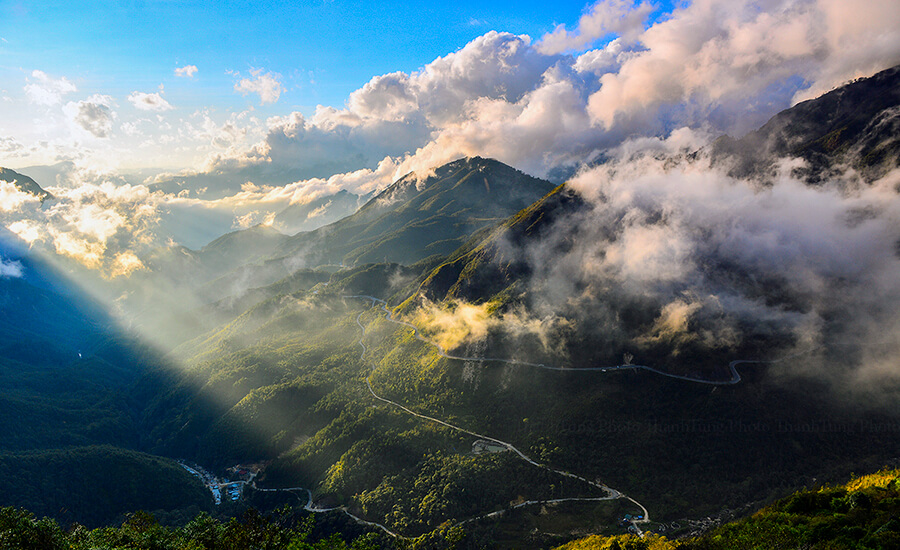
Along the way to the Silver Waterfalls and Love Waterfalls, there are many stalls selling local specialties and food and drink, as well as places for visitors to rest. When going to O Quy Ho Pass, you should bring a raincoat and a thick jacket, ride a motorbike, remember to wear a helmet, and pay attention to each curve.
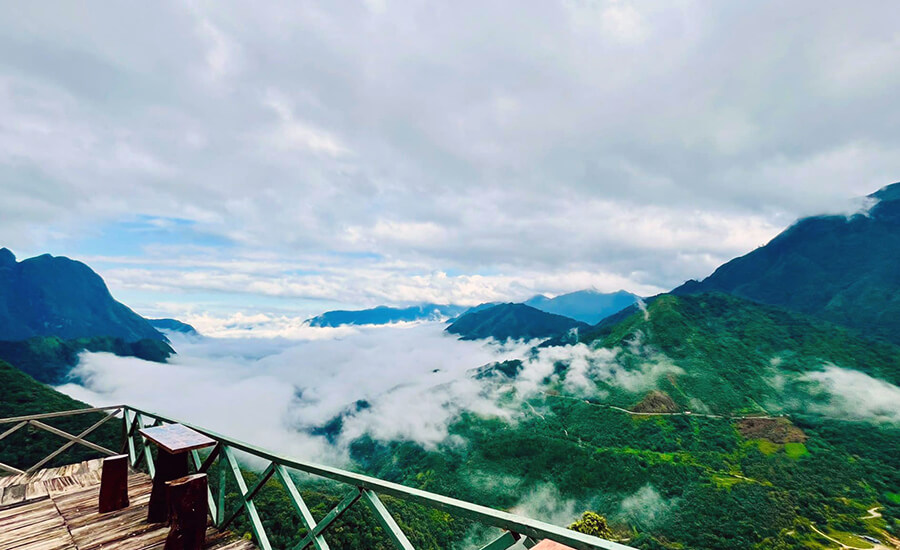
At the highest point of O Quy Ho Pass, you will reach Heaven’s Gate. Standing here, you can see the panoramic view of the vast valley below, the terraced fields interspersed with winding roads. Currently, there are many new constructions, such as restaurants, cafes, and hotels. Heaven’s Gate charges 80,000 VND per person, including a drink.
Bac Waterfall – Tinh Yeu (Love) Waterfall
Located on the O Quy Ho Pass, 3 km from the top of the pass, Bac Waterfall and Love Waterfall are also must-see stops for many young people. Bac Waterfall has stairs up to the top, but the higher you go, the colder it gets and the water flows strongly, so be careful to avoid slipping.
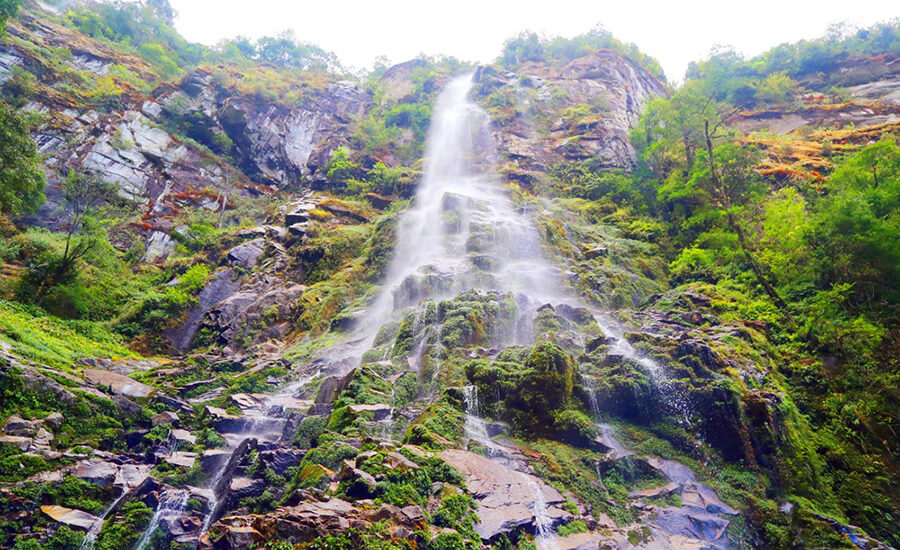
Love Waterfall, although the road from the entrance to the waterfall is 1.5 km, and you have to walk, the road to the forest is poetic. The ticket to Bac Waterfall is 20,000 VND per person, and the ticket to Love Waterfall is 75,000 VND per person.
Hoang Yen Tchao Castle
Hoang Yen Tchao Castle, also known as Hoang A Tuong Palace, is an ancient architectural work located in the center of Bac Ha Commune, Lao Cai Province, and is associated with the history of the White Plateau. Built in 1914 and completed in 1921, the mansion was once the residence and workplace of the father and son of the local governor Hoang Yen Tchao and Hoang A Tuong, who held great power during the French colonial period.
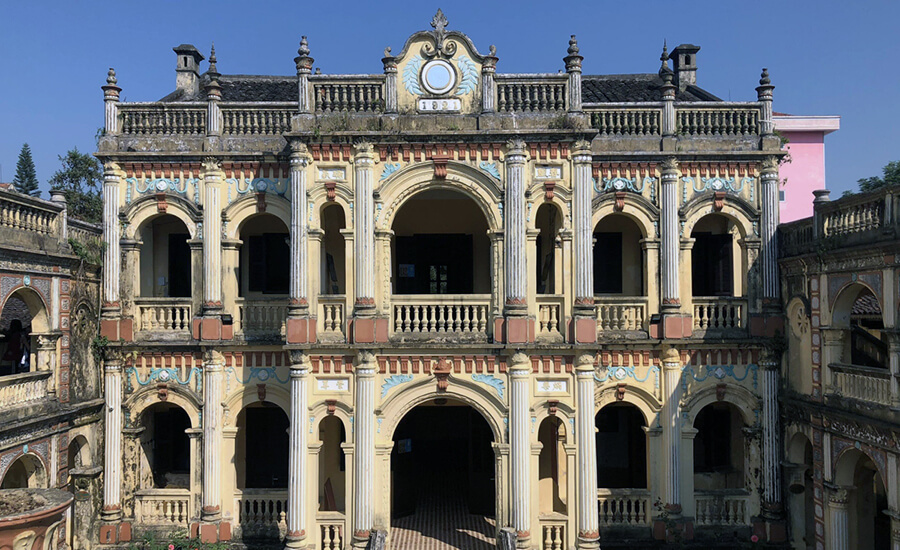
With an area of over 4,000 square meters, the work includes 36 rooms, a large tiled yard, and a closed corridor system, with an architectural style that combines Asian and European elements.
Ancient rock field
The ancient rock field of Sapa stretches across the Muong Hoa valley in the communes of Hau Thao, Su Pan, and Ta Van, around the Muong Hoa stream (Hoa stream), about 7 km southeast of Sapa town.
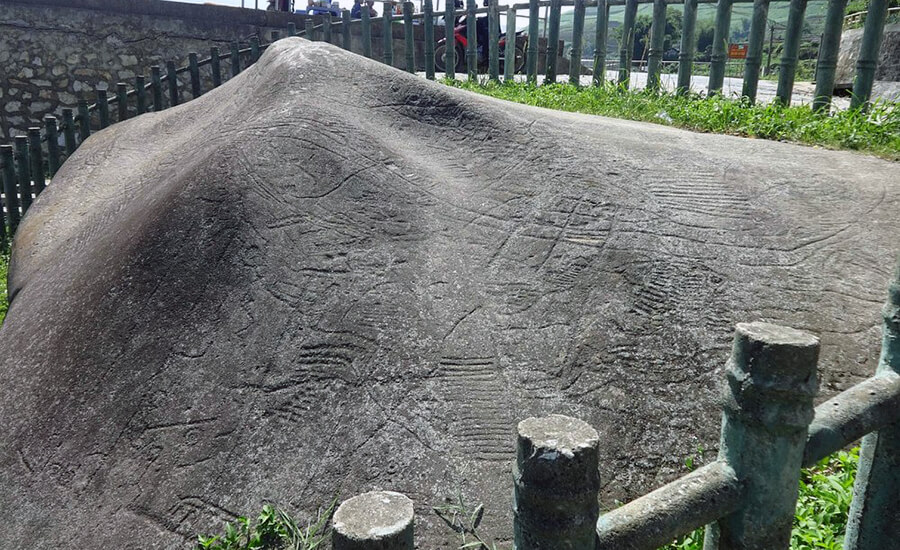
The ancient stone field has been part of the lives of the Lao Cai people for many generations. However, people only recognized this relic from a scientific perspective when V. Goloubew, a French archaeologist, discovered ancient characters in 1925.
This 8 km² area of the remains consists of large, multi-grade rocks engraved with ancient images. It’s located in the Muong Hoa valley, between the terraced rice paddies of ethnic minority groups.
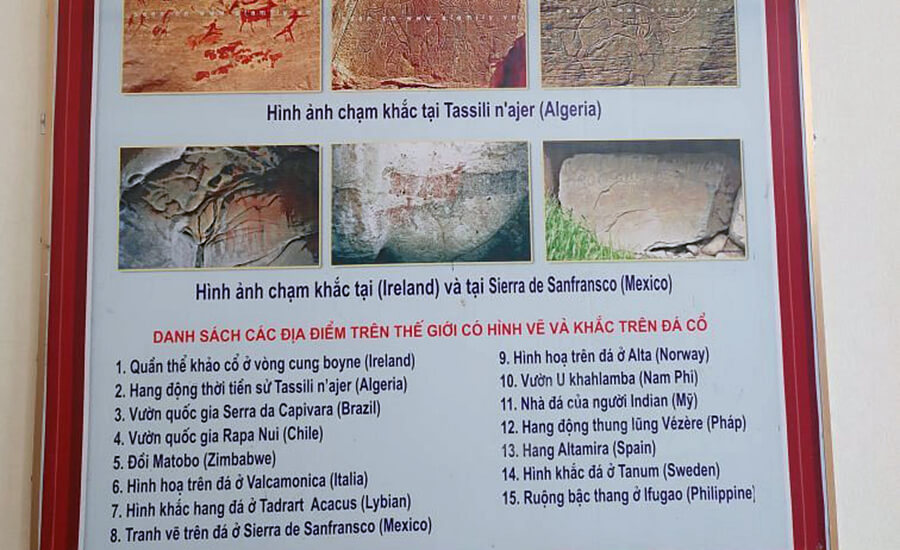
The first exploration research, in 1925, recorded that there were 200 stones of various dimensions concentrated in the area. Remarkably, among the engravings are drawings of humans, stilt houses of the ethnic minorities, and symbols believed to be a primitive form of writing. But their meaning has not yet been deciphered.
Sapa specialties
Sapa in particular and the Northwestern mountainous provinces in general possess extremely unique specialties. Let’s take a look at the list of dishes you cannot miss when coming to explore Sapa.
Thang Co
Thang Co is a soup made from beef, buffalo meat, horse organs, stewed bones, raw vegetables, and many special spices – similar to beef and pork hotpots in Southern Vietnam. This is a traditional H’Mong delicacy that has existed for nearly 200 years.
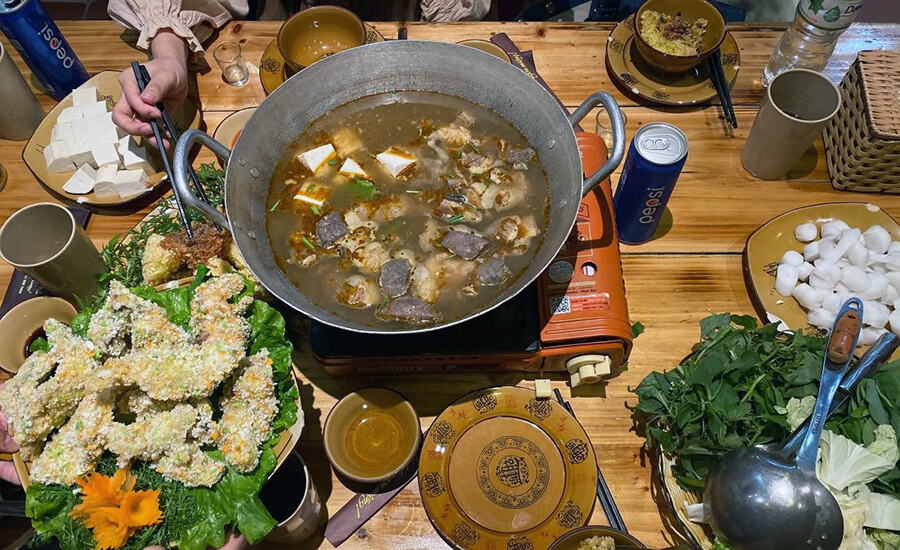
Thang Co is usually cooked in a large, dark, fatty pan. It has a bitter taste of horse intestines – extremely suitable for the cold weather in Sapa.
Smoked buffalo meat
The smoked buffalo meat is one of Sapa’s famous specialties. This is always considered a gift for relatives and friends after each trip to Sapa. Fresh buffalo meat, after being marinated with spices, will be smoked over wood smoke until the outer layer is completely dry and turns a dark reddish-brown.
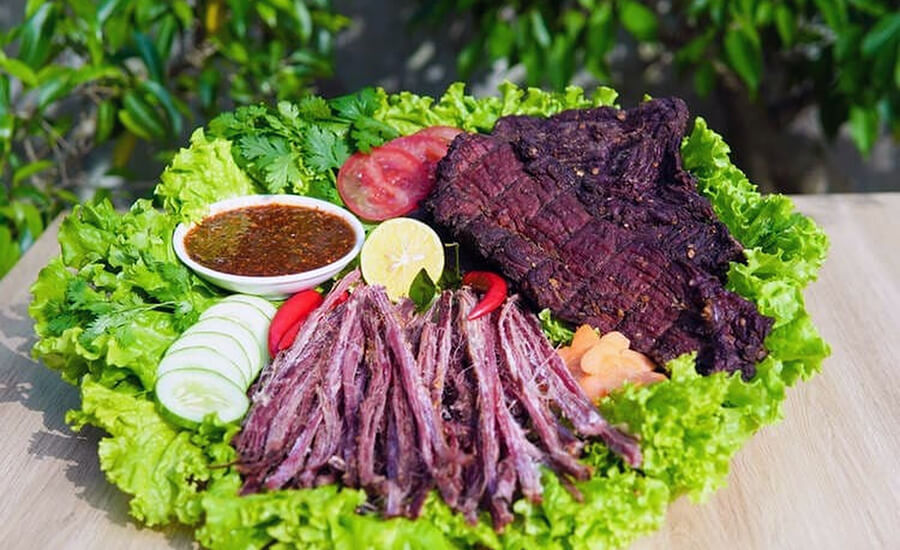
This is a specialty of the Black Thai ethnic group. It has a salty taste and a characteristic pungent aroma from many spices, which makes it very popular among culinary enthusiasts.
Carried under the arm pig
The dish is made from free-range pigs raised by the Mong ethnic group. It is modest in size, only about 5-6kg each. When going to the market, people often “carry” pigs under their arms to sell, so they are always known by this impressive name – Carried-under-arm pig.
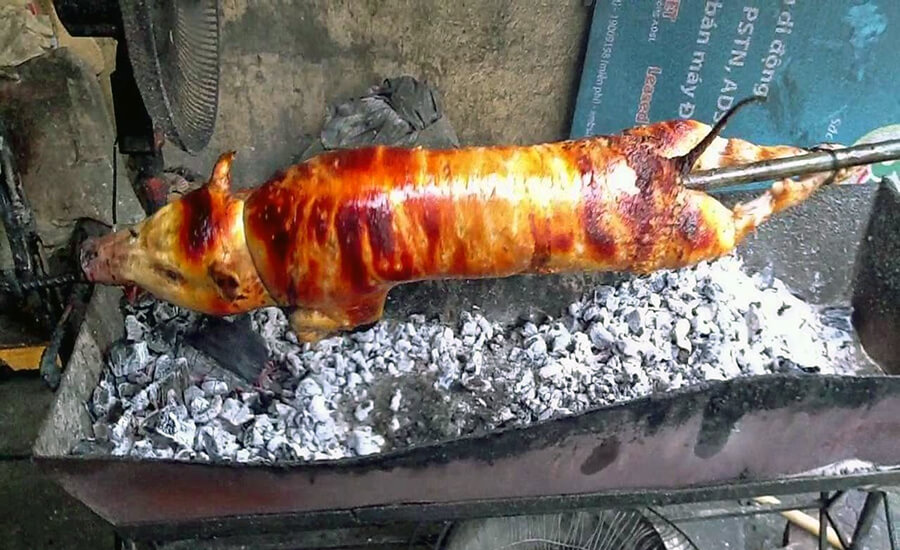
Because they are often run and exercised, the pork is chewy, soft, and firm, with alternating bands of meat and fat. It is most delicious when grilled over hot coals until the skin is golden brown and crispy. Gathering around the fire, enjoying grilled pork and drinking apple wine is a refreshing pleasure for the locals.
Rainbow trout
Sapa rainbow trout often live in stagnant water with low temperatures. The eye-catching orange-red meat of rainbow trout has firm, evenly arranged fibers, soft and fatty but not greasy. You can eat rainbow trout as sashimi (raw fish with wasabi), mixed in salad, cooked with pepper, grilled… all delicious.
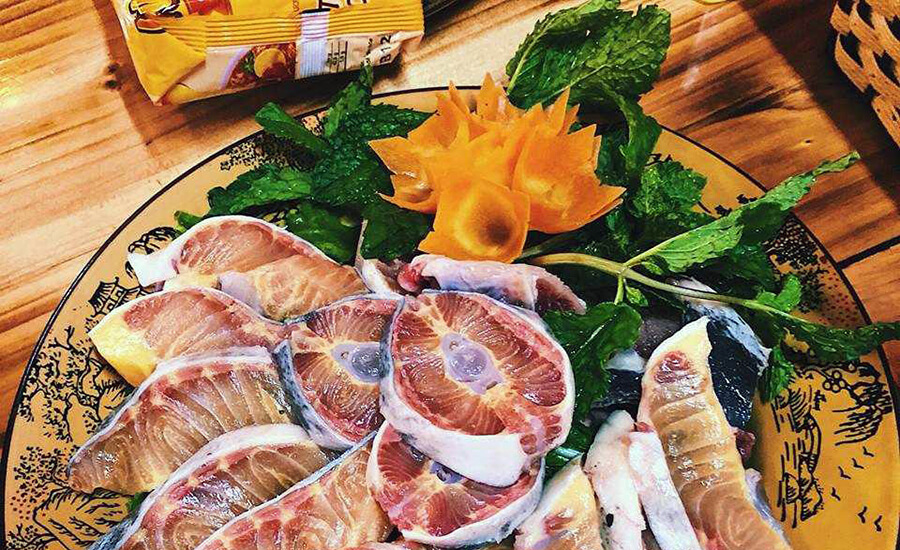
One of the most popular Sapa delicacies with tourists is rainbow trout hotpot. Fresh rainbow trout mixed with sweet-and-sour broth, dipped into a hotpot with all kinds of fresh Northwest vegetables.
Seven-color sticky rice (Nung Din sticky rice)
When mentioning delicious Sapa dishes, we must immediately mention seven-color sticky rice. This is a traditional Sapa delicacy that often appears during Tet holidays or the first day of the seventh lunar month every year. Seven colors of sticky rice: bright red, dark red, brown, purple, yellow, blue, and green represent the seven months of the Nung Din ethnic group’s long-term resistance war. To honor the glorious achievements and show gratitude to the heroes who fell in the war against the invaders.
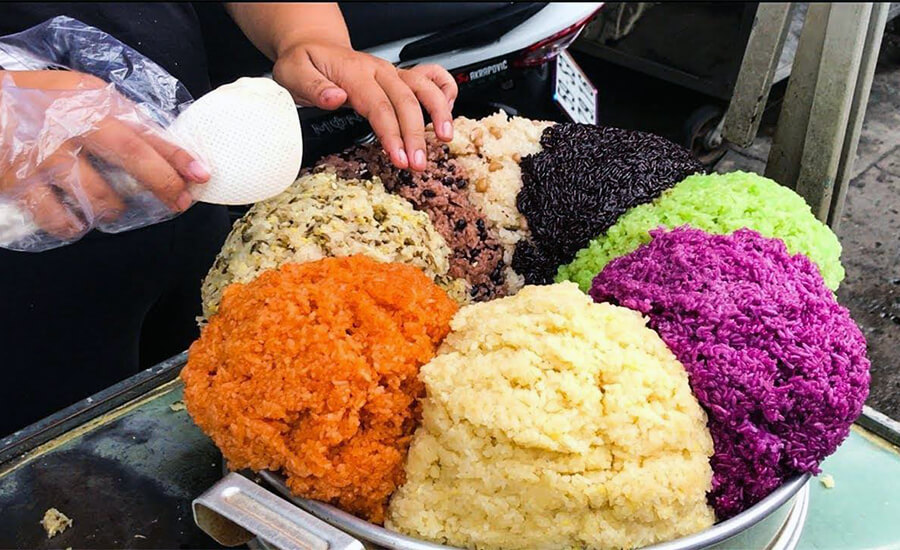
The rice used to make seven-color sticky rice must be delicious sticky rice with round, long, and plump grains. Although it looks colorful, the sticky rice’s color comes entirely from natural ingredients. Thanks to that, each color of sticky rice will have a unique aroma and natural sweetness, simple yet not overshadowed by the colorful Sapa cuisine.
Grilled stream fish
It would be a pity to come to Sapa without having enjoyed grilled stream fish. Sapa stream fish usually small in size, only the size of a hand or a knife handle. In return, the fish meat is naturally delicious, firm, and not fishy. Breathe in the cool, fresh air, listen to the sound of flowing water, eat a piece of grilled fish, and warm up with some San Lung Tay Bac wine.
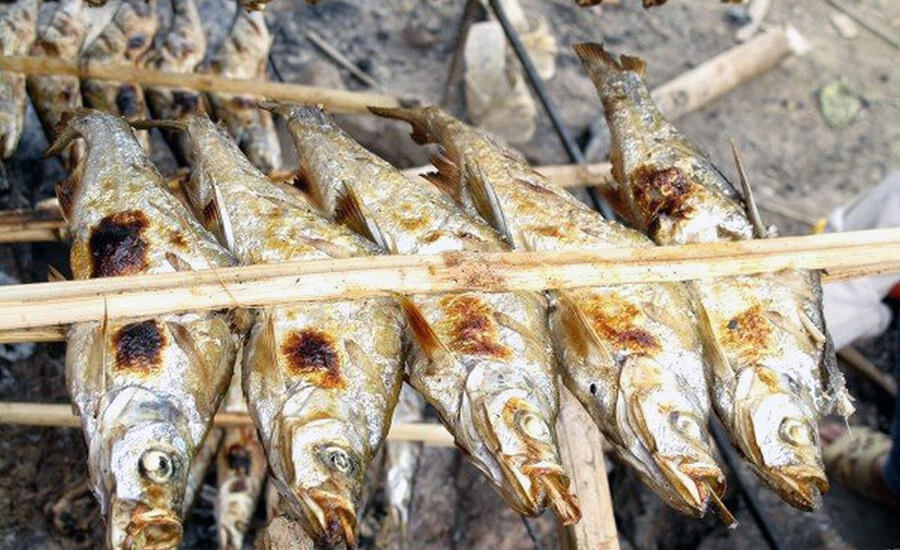
It is truly a rare experience of freedom in the world. Besides grilled stream fish, crispy fried stream fish is also very popular with foodies.
Tao Meo wine
The main ingredient in this local wine is the eponymous wild apple (Docynia indica) growing in the northern mountains. Embracing the spirit of the mountains and forests, the eponymous wild apples have a unique, bitter, sweet, and sour taste. When soaked in wine, it will develop a distinctive aroma and a yellow color.
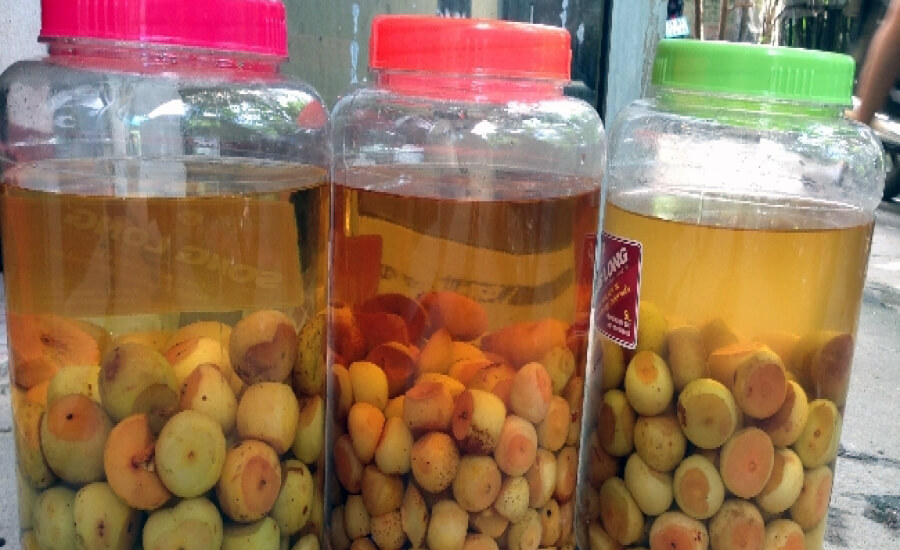
The wine has a spicy and pungent aroma, followed by a lingering sweetness on the tip of the tongue. The wine also has the effect of treating headaches and dizziness, calming the mind, and aiding sleep, so tourists often buy it to give to relatives and friends.
Hotels, homestays in Sapa
Sapa has all kinds of accommodation for you to choose from, including motels, homestays in villages, hostels, budget hotels, 4-5-star hotels, and luxury resorts, each with its own location. Notable resorts in Sapa are Topas Ecolodge, Sapa Jade Hill, Hôtel de la Coupole – MGallery, Silk Path Grand…
If you choose a homestay or hostel, look for villages such as Cat Cat, Lao Chai, and Ta Van to enjoy the peaceful setting of the Northwest mountains and forests. Dorm room prices start at 100,000 VND per person, and double-bungalow room prices start at 500,000 VND.
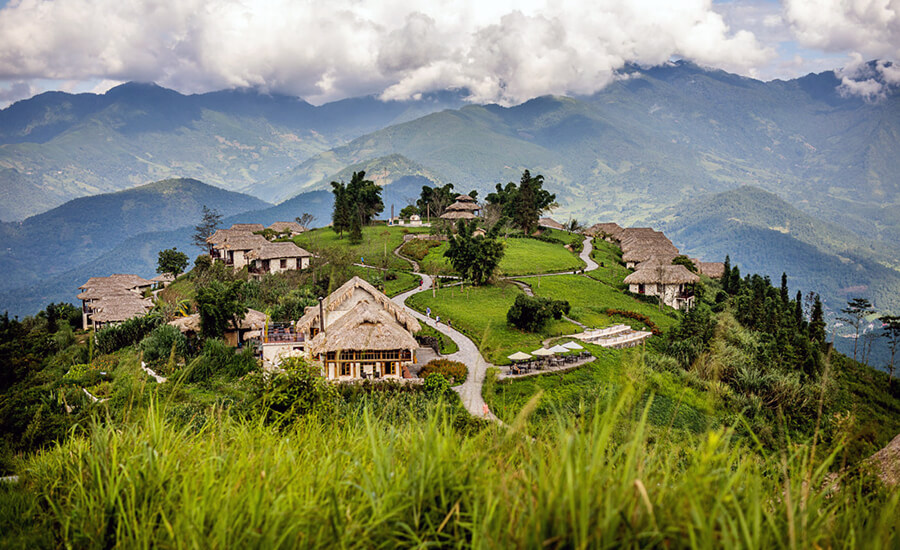
Some popular homestays are Eco Palms House, Heaven Sapa, Viettrekking, Phơri’s House, Sapa Heavenly, Rock Garden, Coong, Vuon May, Mong…
Hopefully with the above self-guided travel experiences, you are ready to explore Sapa foggy town and experience the “unique” things that only this place has!
Source: collected by An
Follow us for the best deals on Vietnam package tours and visa services!
Comment (0)