
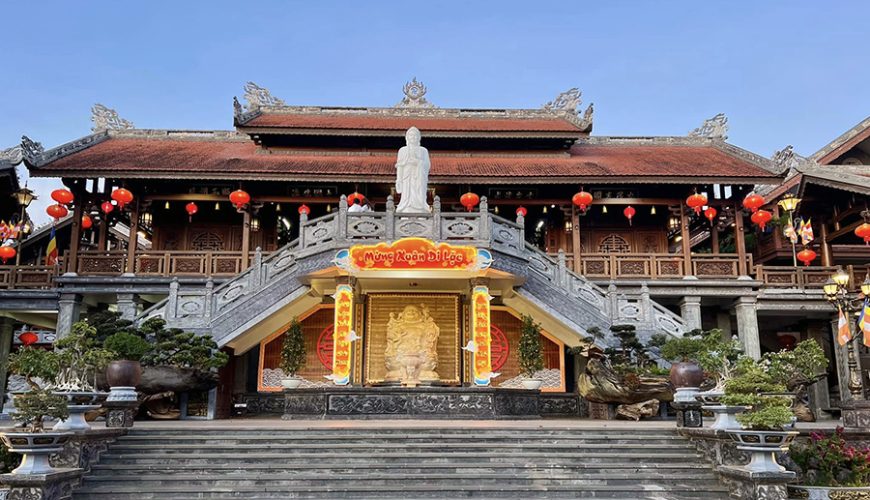
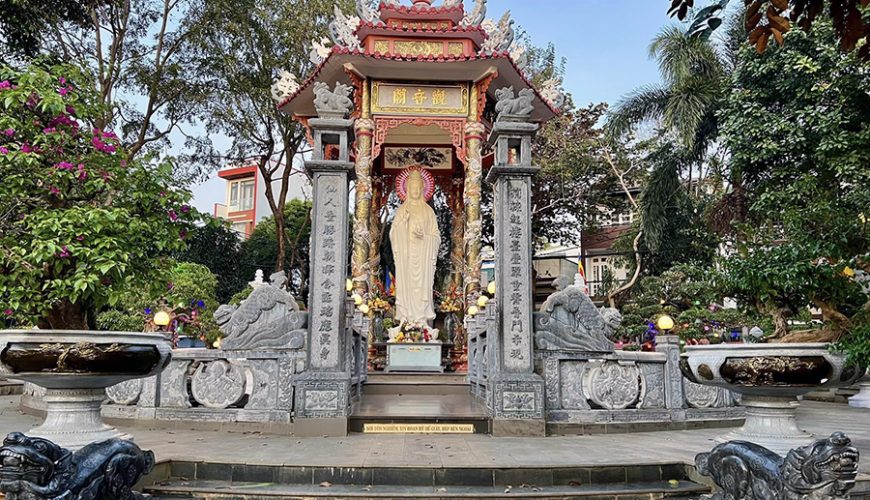
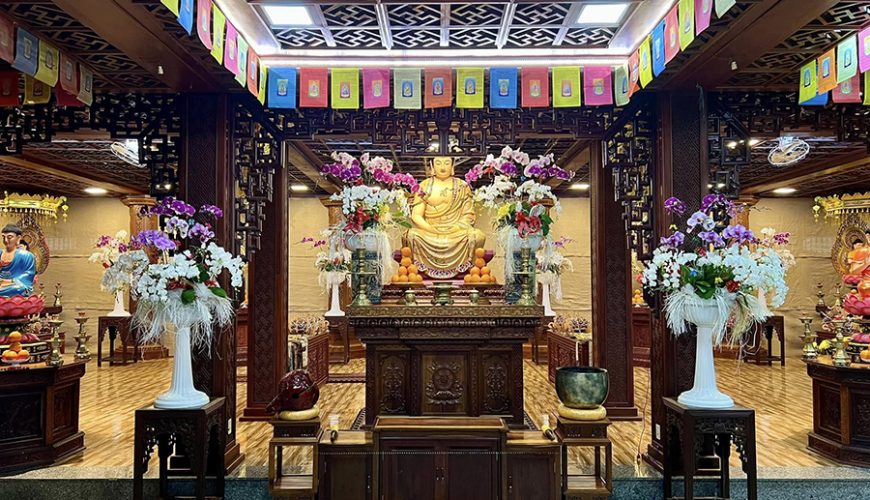
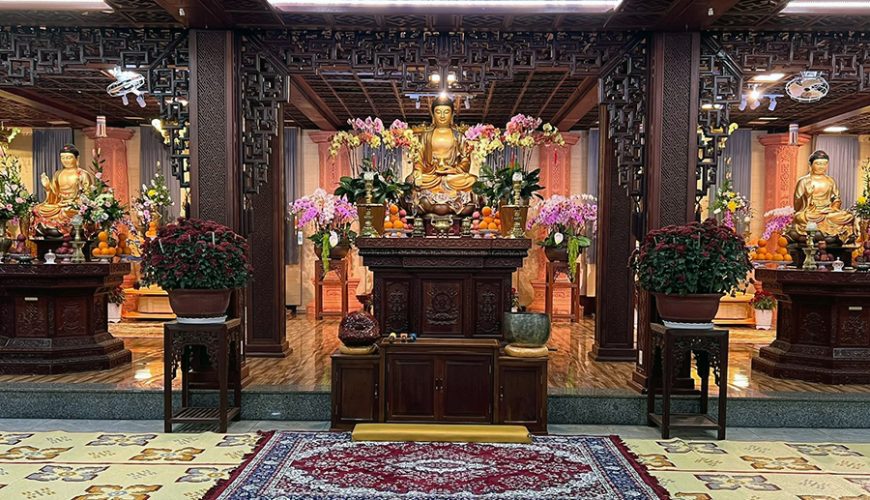
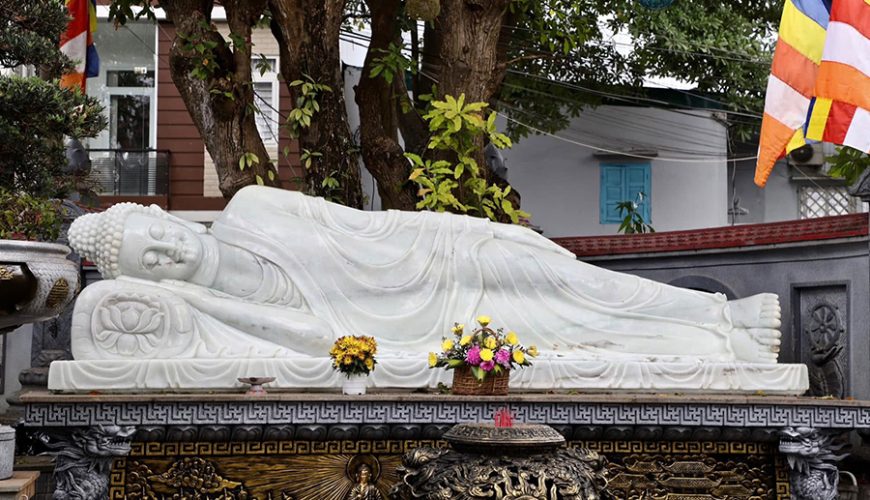
Khai Doan Pagoda is a prominent spiritual destination in the heart of Buon Ma Thuot, attracting visitors with its ancient, serene beauty and a unique blend of Hue imperial-style architecture and Central Highlands culture. More than just a sacred place of worship, the pagoda offers a peaceful space for visitors to stop, admire the scenery, and find inner peace. Exploring Khai Doan Pagoda will be a memorable experience for those who love culture, history, and spiritual tourism.
Overview of Khai Doan Pagoda
Khai Doan Pagoda, located on Phan Boi Chau Street in Buon Ma Thuot Ward, Dak Lak Province, is the first pagoda of a Buddhist organization to be built in the Highlands. From here, many pagodas in the province were formed, so people often call them “Lớn” pagodas or “Tỉnh” pagodas.
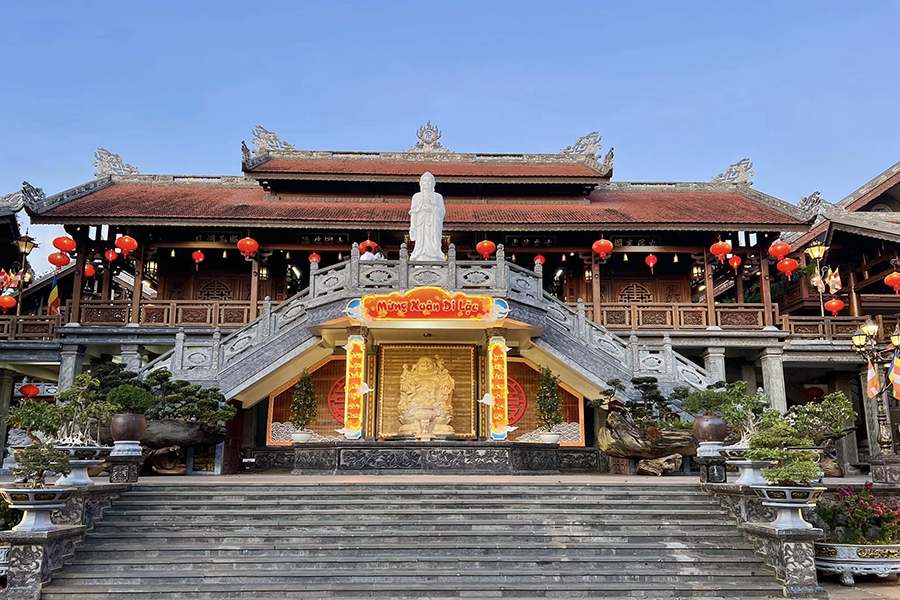
Khai Doan (Vietnamese: Khải Đoan) are the first two words of Emperor Khải Định and Empress Đoan Huy, signifying recognition of the merits of the founder of this pagoda. It was built in 1951 on land Empress Đoan Huy donated. In 1953, the pagoda was granted the title “Sắc Tứ Khải Đoan” (Khai Doan Imperially Bestowed Pagoda) during the reign of Emperor Bảo Đại. During the feudal dynasty, a “Sắc Tứ” (Imperially Bestowed) was a pagoda officially granted an imperial decree by a Vietnamese emperor, recognizing its religious significance and status. During the Nguyen Dynasty, “Sắc Tứ” pagodas were often famous, large-scale, ornately decorated, and magnificent landscapes.
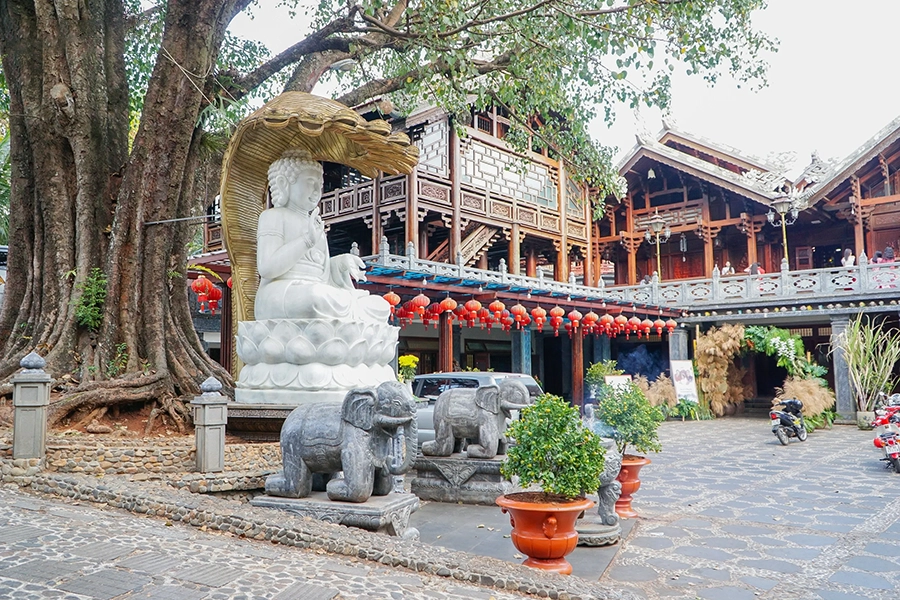
Although it has been renovated many times, in 2012 and 2015, as well as newly built additional items, Khai Doan Pagoda still retains the soul of an ancient temple. Currently, the pagoda is not only a major religious center but also a tourist destination that attracts many visitors when coming to the Central Highlands.
Unique architecture of Khai Doan Pagoda
The ancient beauty of Khai Doan Pagoda is a combination of architectural beauty, harmony of nature, and most importantly, the traditional beauty of history and culture on the windy plateau.
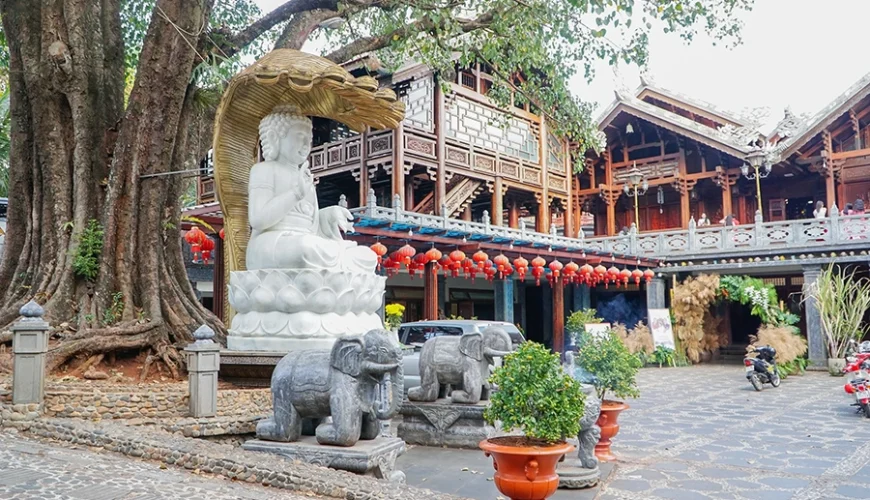
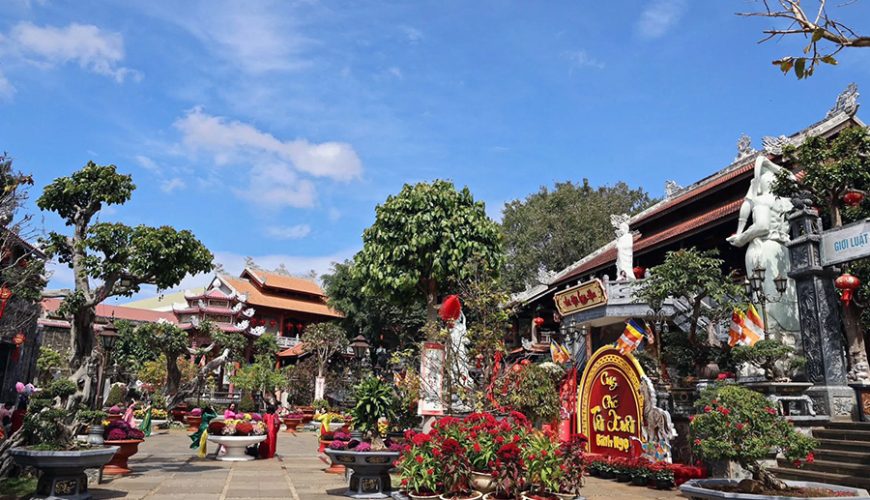
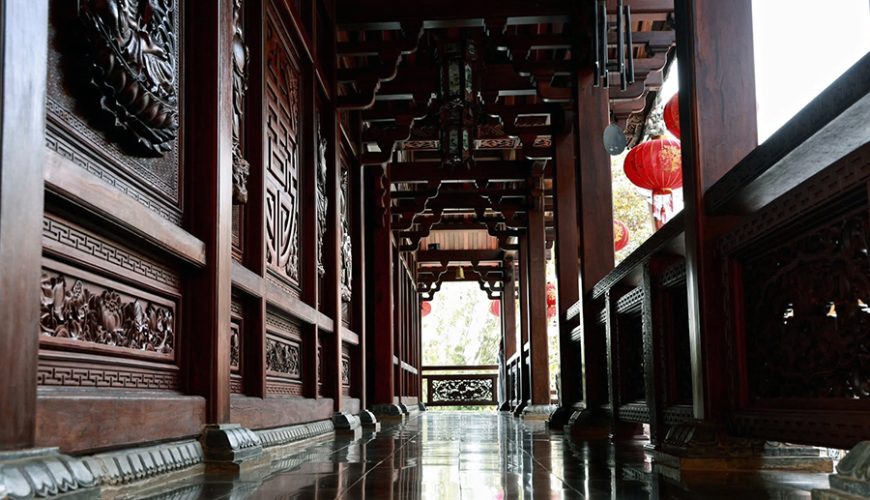
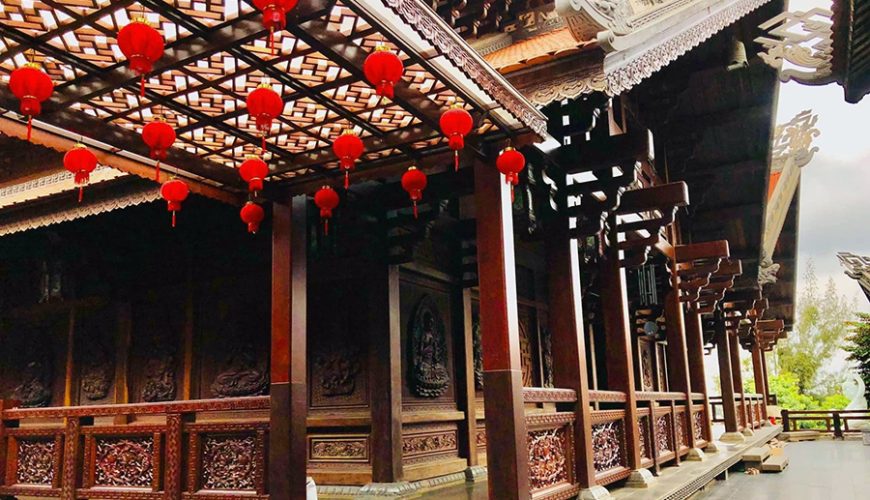
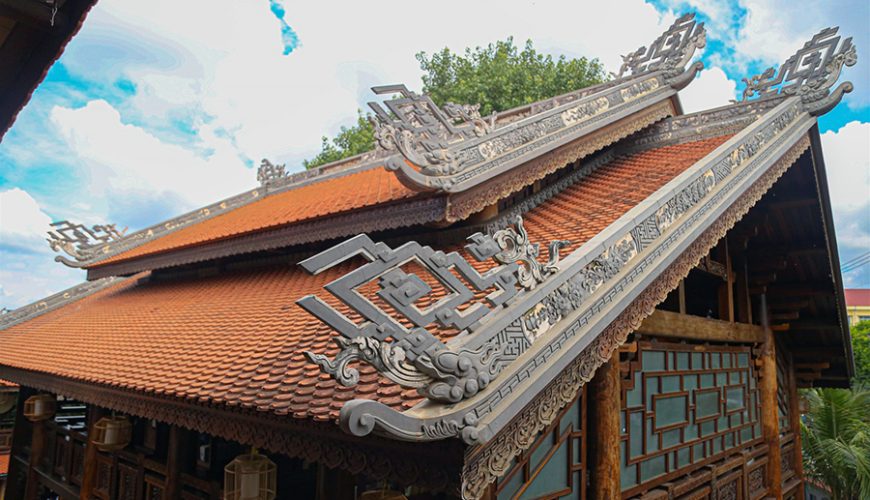
The Khai Doan Pagoda was designed and built in the style of Hue royal architecture, combining delicately and harmoniously with the typical stilt house style of the Central Highlands and the long house of the Ede people. The pagoda’s compartments are built one after another, not too high but very wide and large, creating a sturdy position.
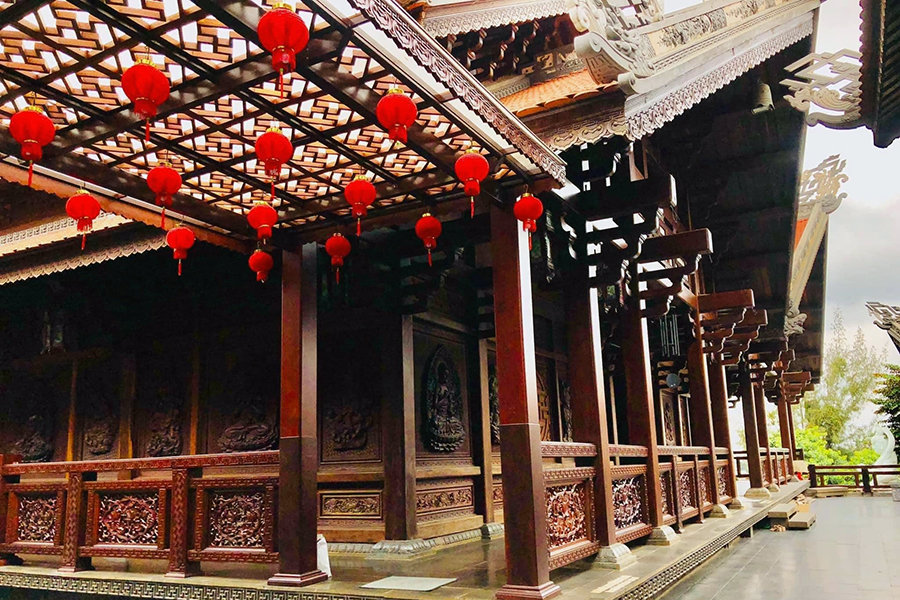
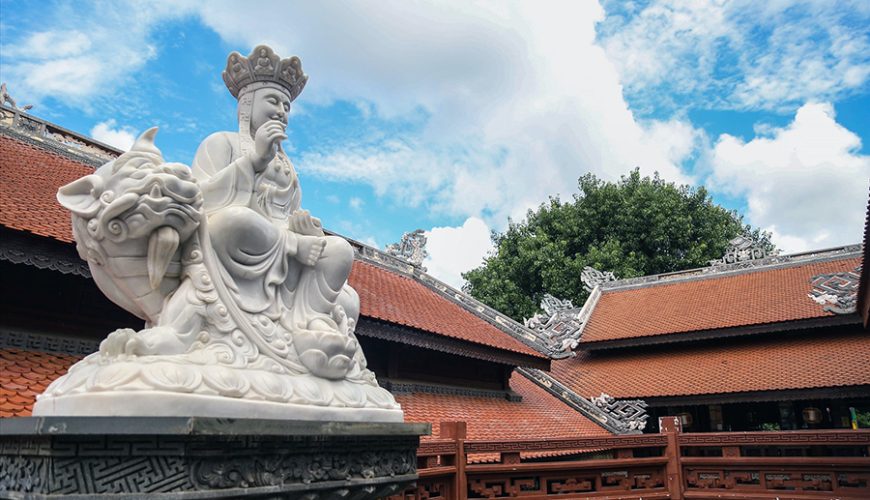
The pagoda’s roof is curved, shaped like a Rong house, but very flexible and soft, with pairs of dragons blending with clouds and surfing the wind, making it unique and ancient. The pagodas are large and set in a row, creating a massive architectural whole that is not at all heavy but exudes a quiet, majestic look amid the highland sky and land.
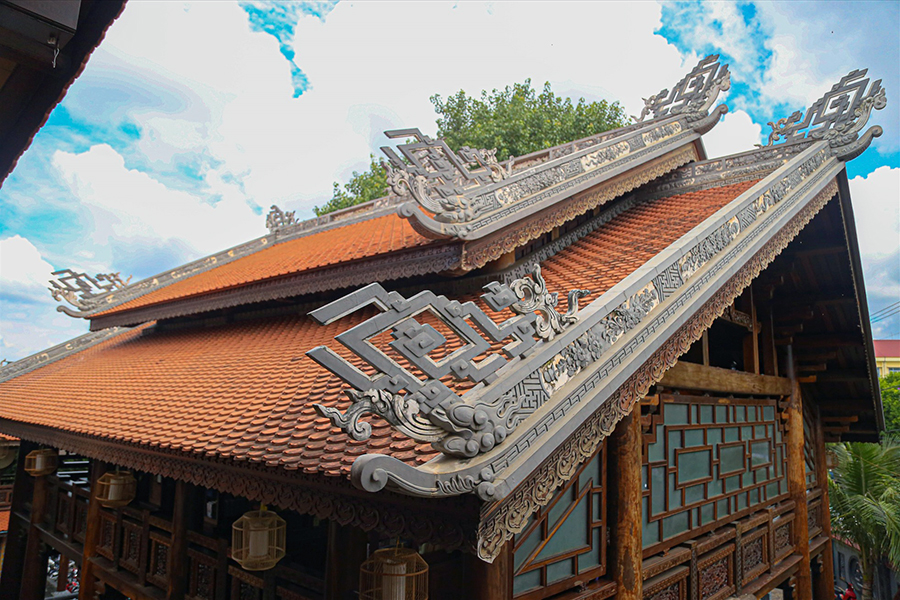
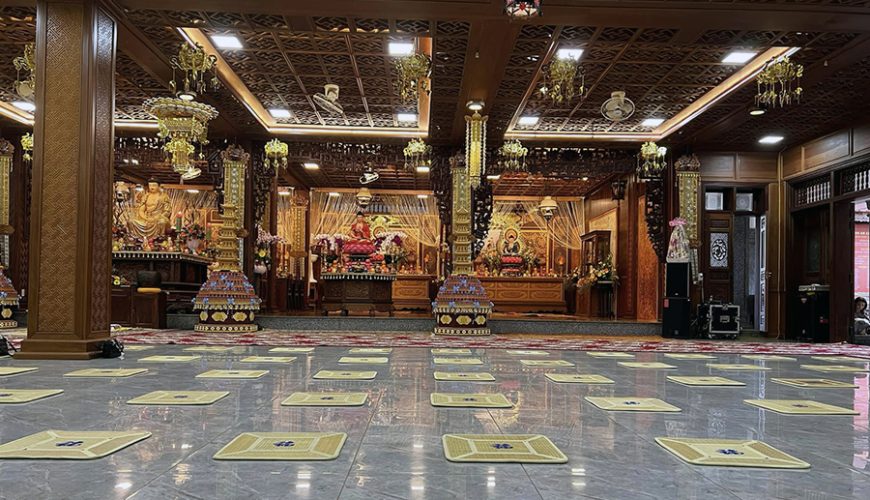
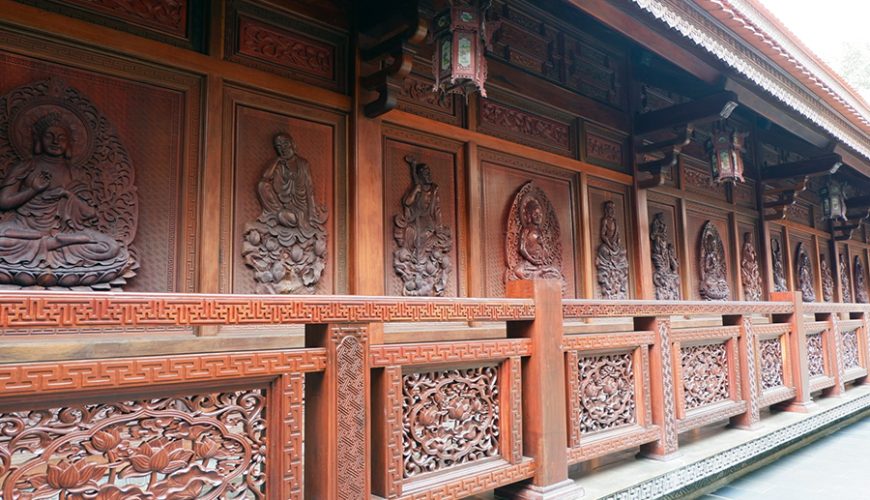
Although the pagoda is not very tall, the large pagoda rooms create a solid position between heaven and earth. The material used to build the pagoda is mainly wood. The deep brown tone of the wood makes the temple even quieter and more ancient. Each sculpted line on the temple’s walls and columns is sophisticated and meticulous. The main hall is a unique architectural space, consisting of 5 airy compartments, a place to worship Buddha and Bodhisattvas.
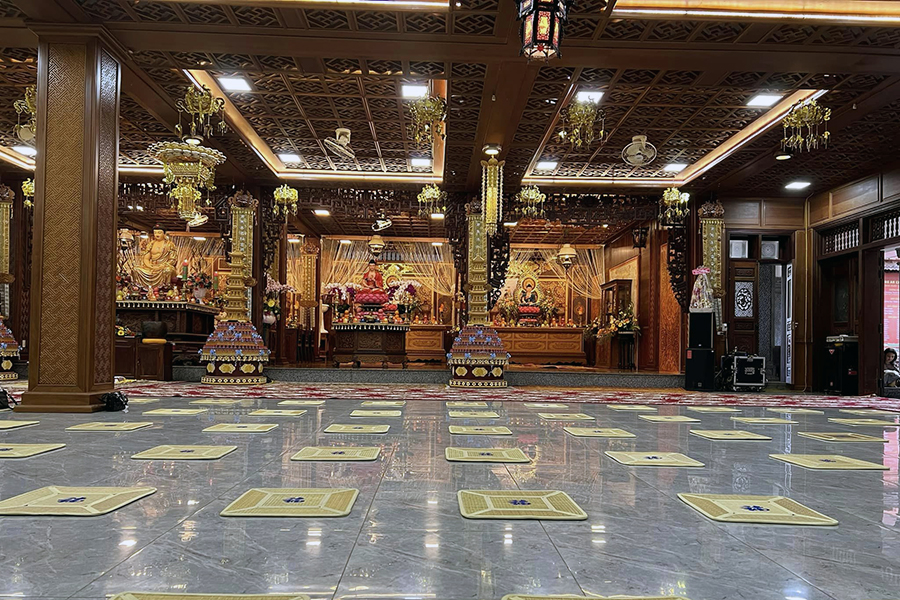
The main hall is the main building of the pagoda, with an area of 320 m², divided into two parts: the front part resembles a Central Highlands long house but features a column-rafter structure in the style of a Hue house; the rear part is built in a modern style.
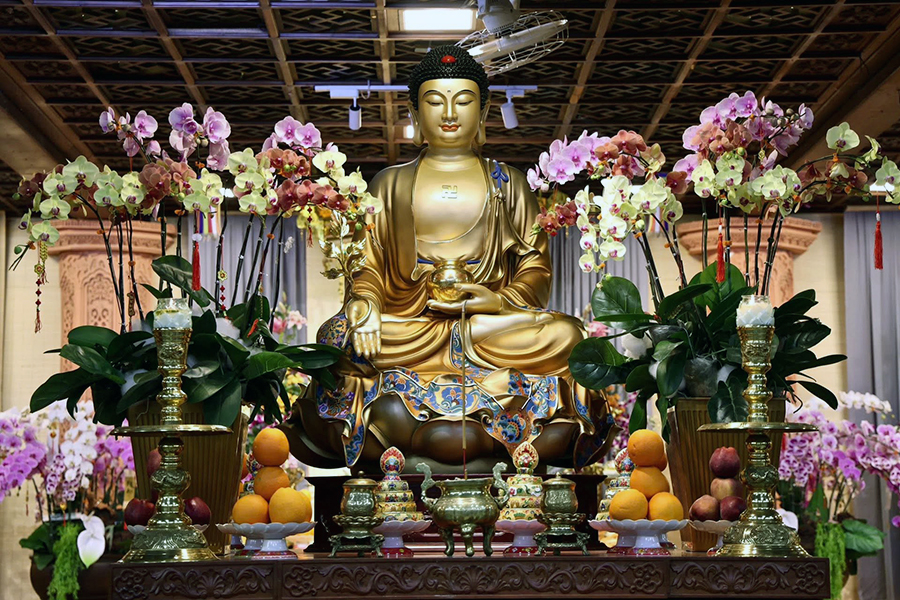
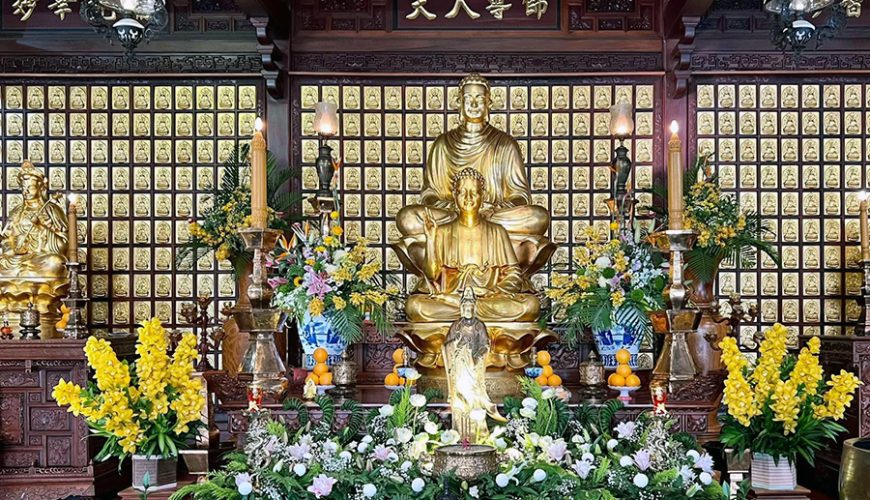
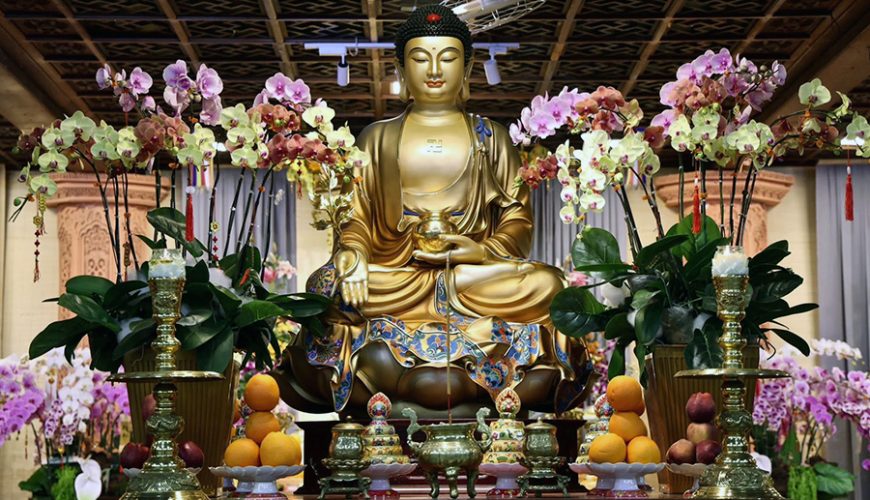
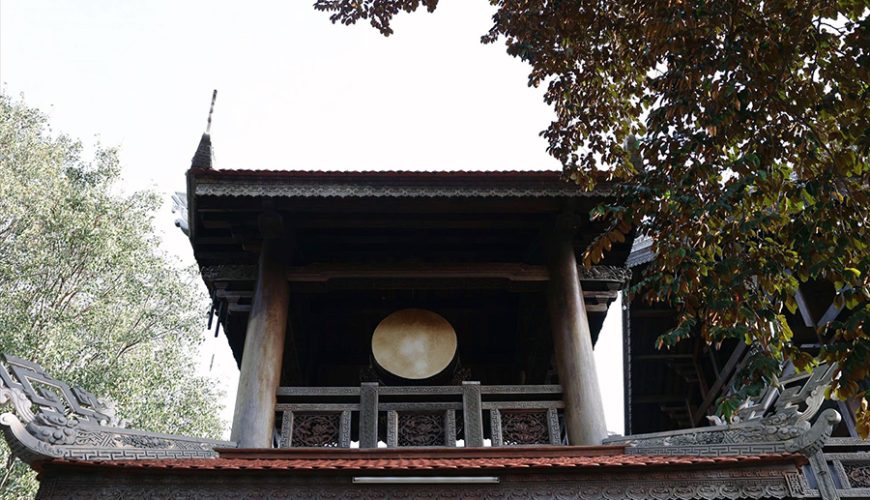
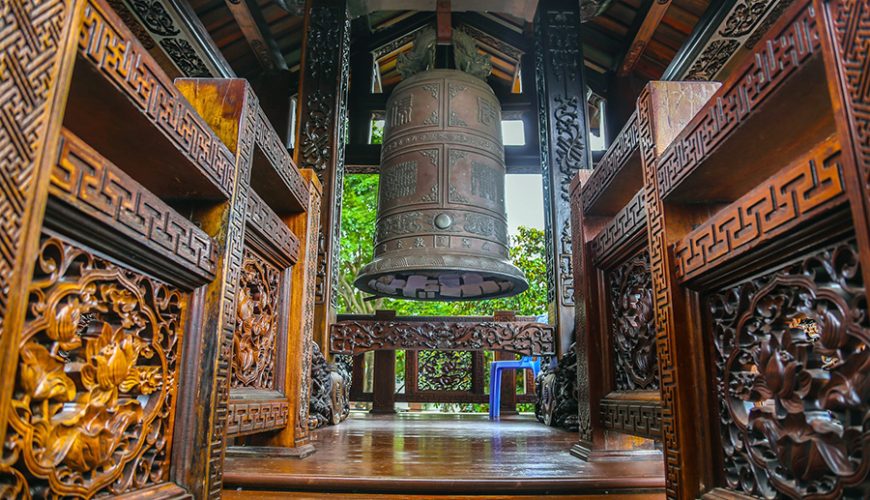
The most notable items in the main hall are the statue of Shakyamuni Buddha in the middle and the bronze bell placed in the room on the right. The bronze statue of Sakyamuni Buddha is 1.1m high, with a 0.35m high precious wooden lotus base that is elaborately decorated. The bronze bell is 1.15m high, has a base circumference of 2.7 m, and weighs 380kg, made by artisans from the bronze casting guild in the west of Hue citadel in January 1954.
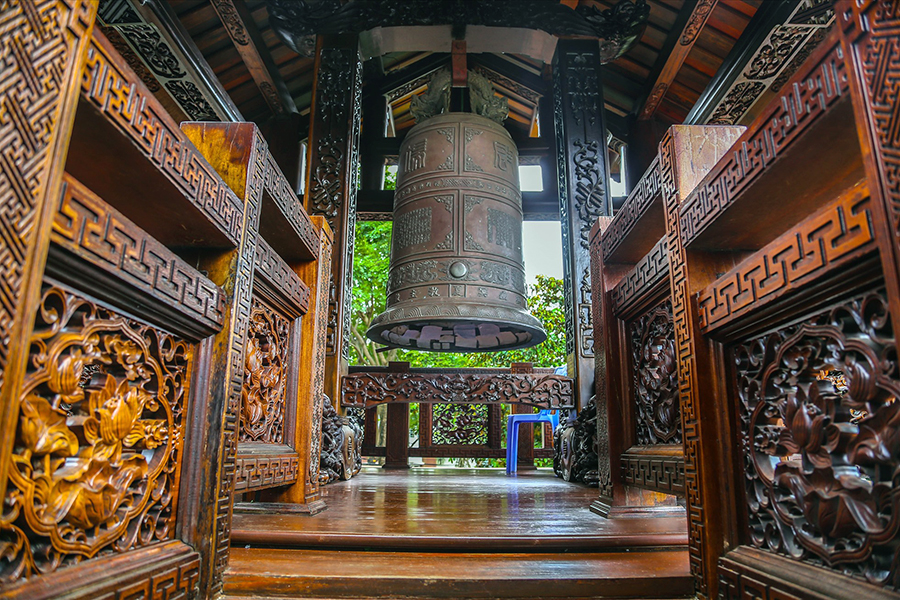
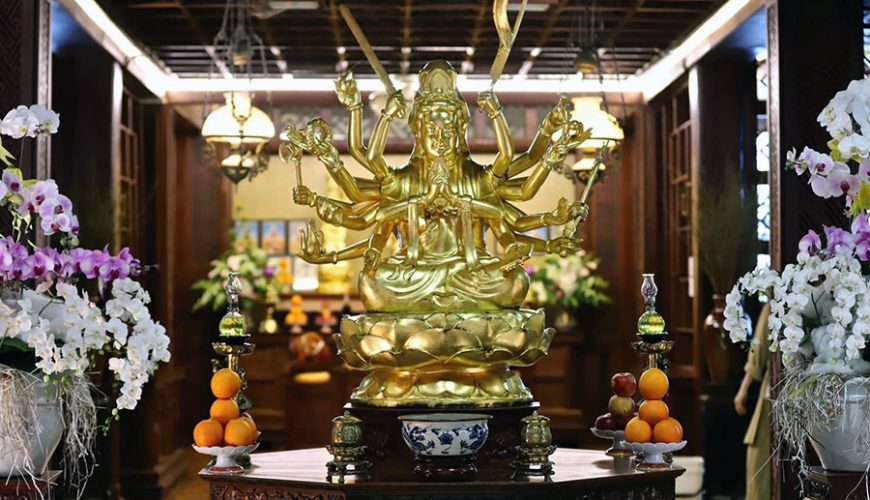
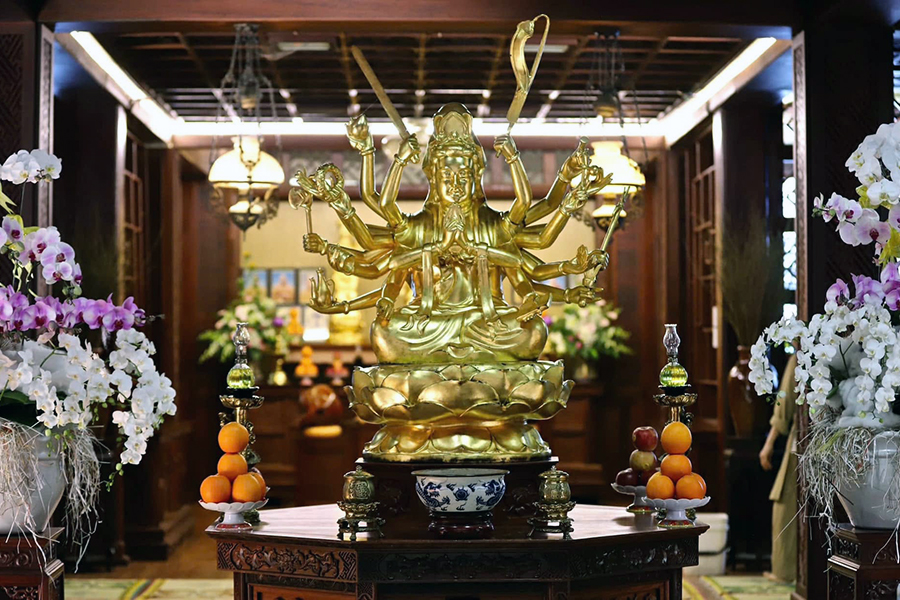
After many restorations, besides a few new constructions, the main hall is basically the same as before. On the left side of the pagoda is a hexagonal court worshiping Bodhisattva Avalokiteśvara.
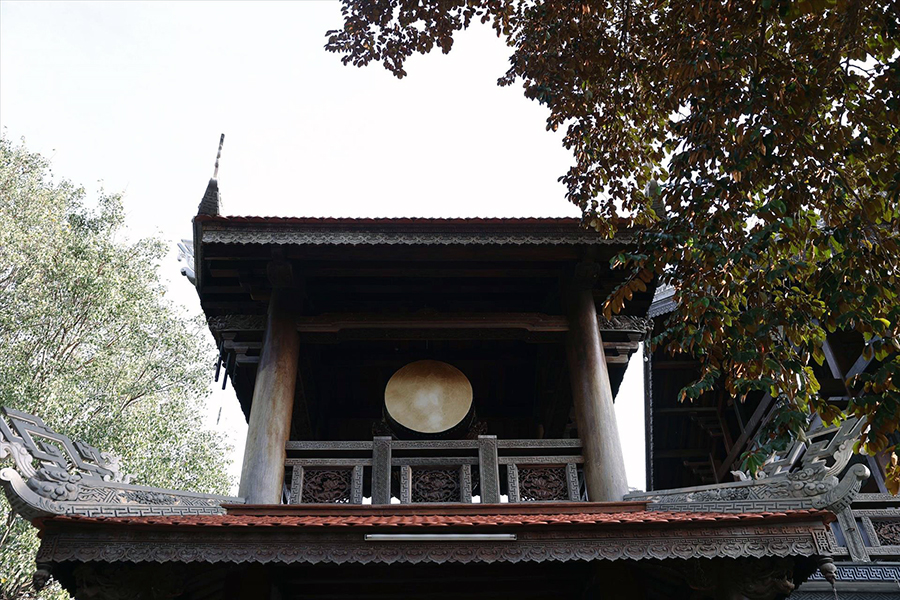
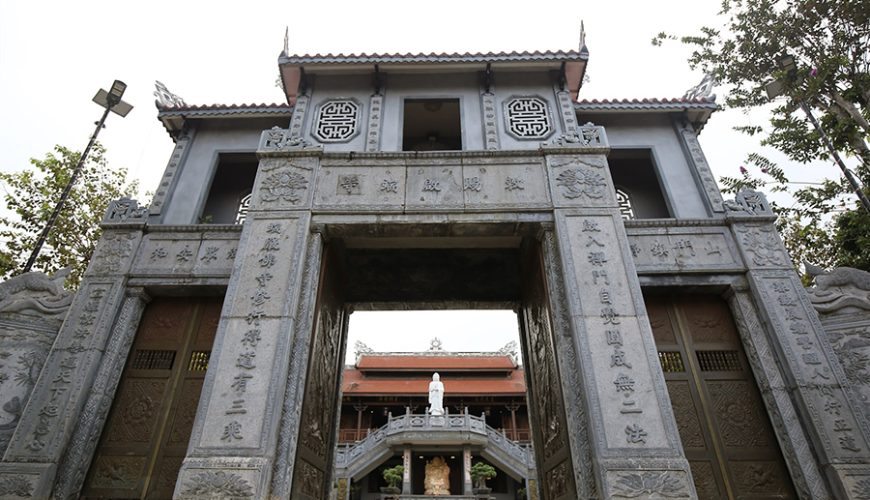
The pagoda also preserves treasures such as the Bodhi tree of Venerable Narada. The grand general ceremony for Crown Prince Bao Long, the last crown prince of the Nguyen dynasty, and Bao Thang was held in 1954, and the architectural works of art included the Tam Quan gate and the Monk Merit Tower.
Khai Doan Pagoda is not only one of the attractive historical and architectural artistic relics of Buon Ma Thuot and Dak Lak province, but also a place to express the flow of national Dharma in the Central Highlands. The pagoda is a spiritual refuge, bringing peace and tranquility to people amid the demands of modern life. This is also where moral values and compassion are cultivated and spread, contributing to preserving the traditional cultural beauty of the community.
Useful information about Khai Doan Pagoda
- Location: 117 Phan Boi Chau, Buon Ma Thuot Ward, Dak Lak Province.
- Best for: pilgrims, solo travelers,
- Tourist spots nearby: Dak Lak Museum, Ako Dhong Village, World Coffee Museum, Buon Ma Thuot Prison…
Source: collected by An
Follow us for the best deals on Vietnam package tours and visa services!
Comment (0)