
Honored as the three most beautiful caves in Vietnam, Huong Tich, Bich Dong, and Dich Long also impress visitors with the ancient and quiet beauty of the pagodas inside and outside the caves.
Huong Tich – The most beautiful cave in Vietnam
Speaking of the famous Huong Pagoda in My Duc, Hanoi, everyone knows about Huong Tich Cave, considered the most beautiful, located 70 km southwest of Hanoi. Visitors coming here cannot help but be overwhelmed when the vast, deep landscape of a large dragon’s jaw opens before their eyes. That is the entrance to Huong Tich cave.
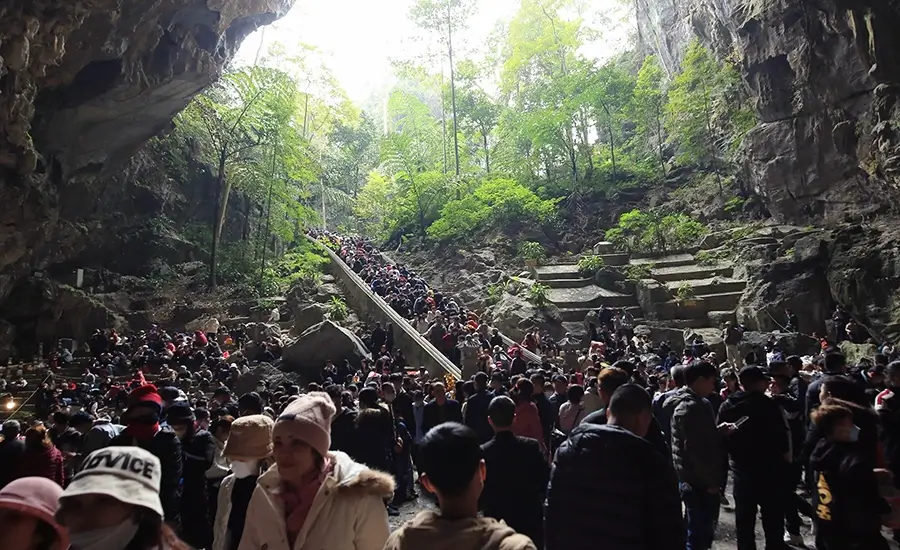
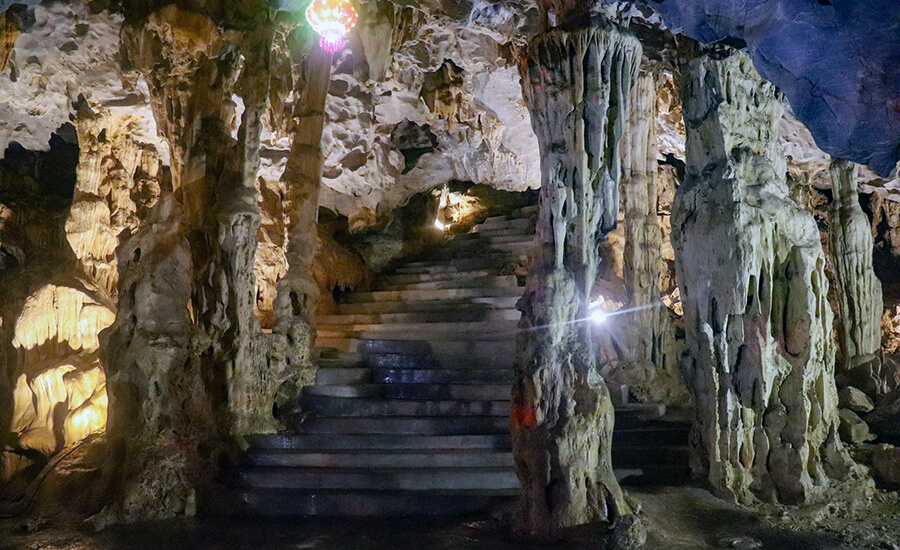
From here, visitors enter Huong Tich cave by walking down more than 100 stone steps. You will see, to the left of the entrance, a high cliff engraved with 5 words: “The most beautiful cave in Vietnam,” written by Lord Trinh Sam in 1770 while he was touring.
Going deeper into the cave, countless stalactites hang from the ceiling and rise from the ground in all sorts of strange shapes, such as pigs, straw piles, rice piles, grapefruit, silver trees, gold trees, mountains, stone bells…
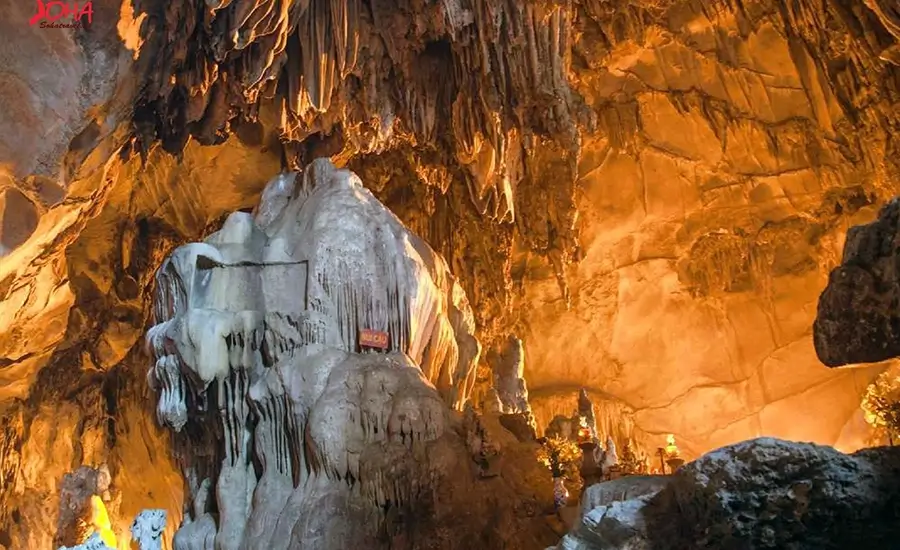
The most impressive of which is the Gao pile, located in the middle, near the entrance. When viewed from the cave entrance, this stalactite resembles a tongue in a dragon’s mouth, sparking excitement among visitors. The cave also has a “path to heaven” and a “path to hell”. The path to heaven is a steep rock slope that gets higher the higher you climb; the path to hell is a slit leading down to a deep underground cave.
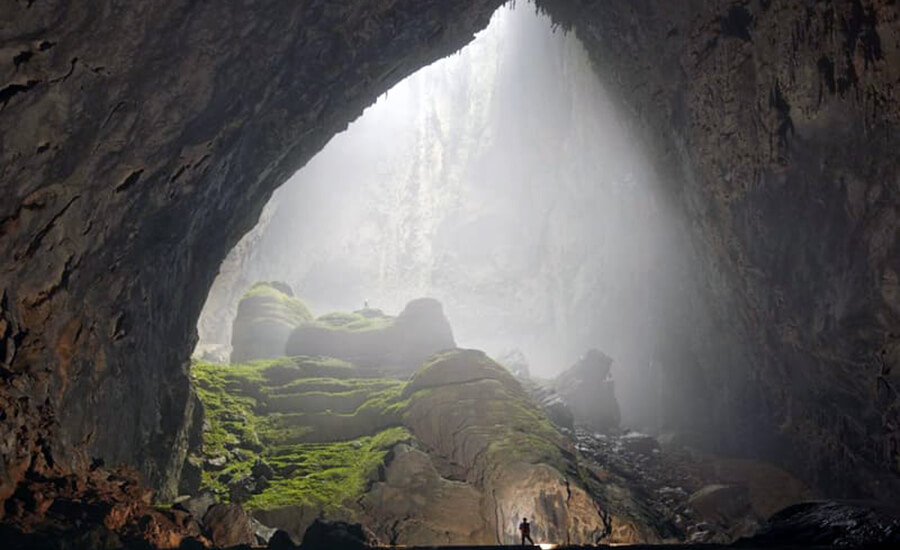
Coming here, you will feel the cool moisture radiating from the bottom of the cave, thanks to the drops of water dripping day and night from the stalactites like mother’s milk. In addition, the poetic scenery of the Yen stream leading from Duc wharf moves visitors when they set foot in the most beautiful cave in the South.
Bich Dong – The second most beautiful cave in Vietnam
Located in the tourist complex of Nam Hoa Lu Ward, Ninh Binh province, Bich Dong is not only a famous place associated with Tam Coc. Bich Dong, meaning “Green Pearl” Cave, was named by Mr. Nguyen Nghiem, father of the great poet Nguyen Du, in 1773.
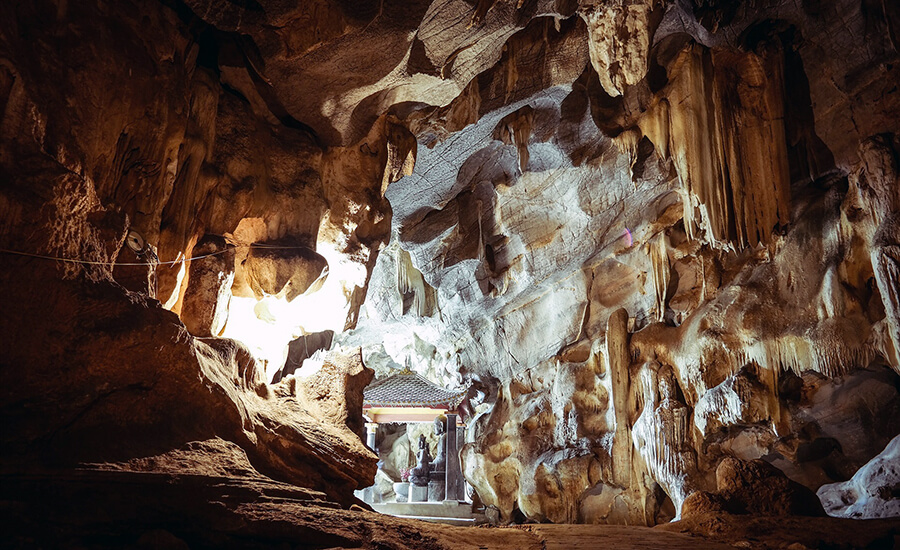
Bich Dong is located 2 km from Tam Coc wharf, in front of which is the Hoang Long River winding along the mountainside. In the lotus-blooming season, Bich Dong is filled with the scent of lotus, while on the other side of the river, golden rice fields create a poetic scene like a painting. Along the length of Bich Dong is Xuyen Thuy Cave, as if nature had arranged large stone slabs into an arch.
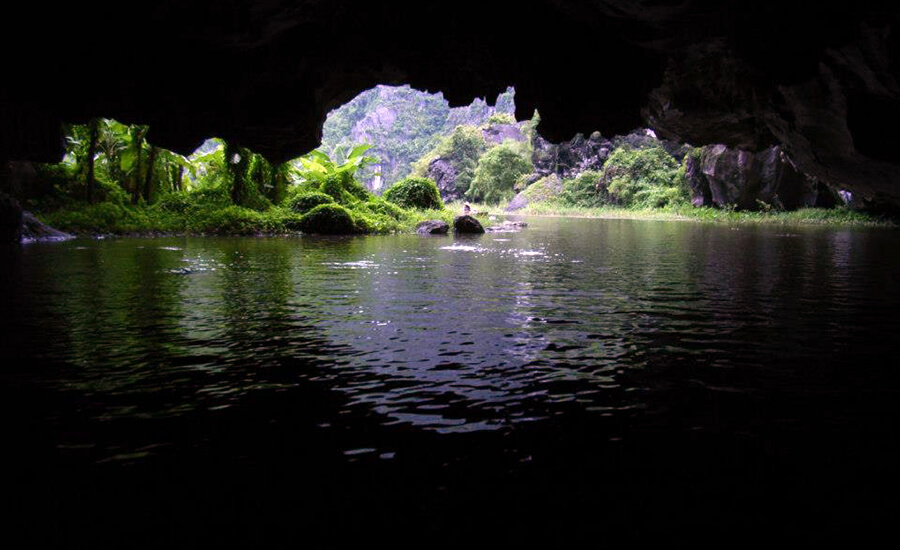
The entrance to Xuyen Thuy Cave is behind the mountain, opposite the entrance to Bich Dong. At the end of the journey through the water cave, visitors can climb the mountain to reach the cave and Bich Dong Pagoda. The attraction of Bich Dong is the harmonious combination of cave, mountain, and pagoda.
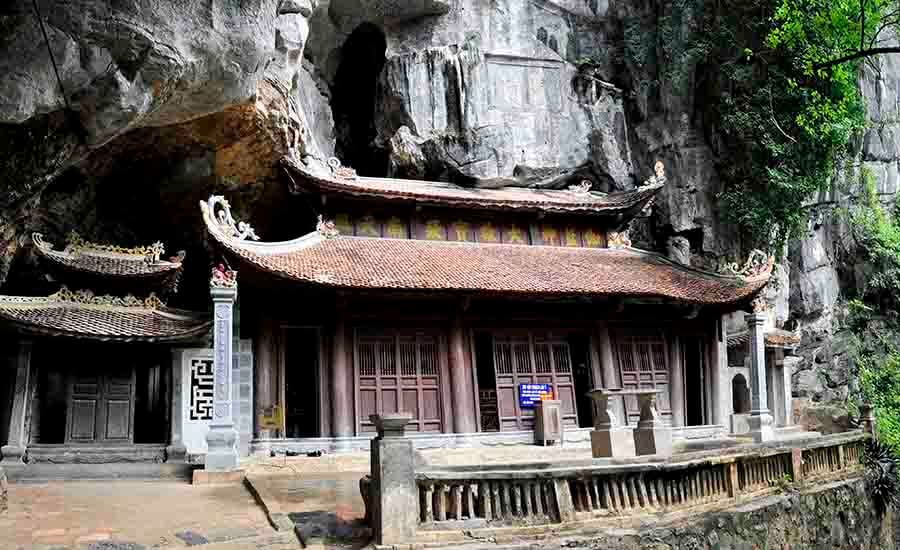
Ha Pagoda was built right at the foot of Bich Dong Mountain, with a Dinh-shaped architecture, a two-story, curved roof, and monolithic stone pillars. After about 80 stone steps up the mountainside, visitors will reach Trung Pagoda, located halfway up the mountain and featuring a semi-roofed exterior. Located on the highest peak is Thuong Pagoda. From here, visitors can admire the panoramic view of Bich Dong, hidden among the giant green trees swaying in the wind.
Dich Long – The Third most beautiful cave
Although less known than Huong Tich and Bich Dong, the beauty of Dich Long is not inferior. After climbing 105 stone steps from Ha Pagoda, visitors will reach the cave entrance. On both sides of the cave entrance are two Dharma Protector statues, and on the 8-meter-high stone cave dome hangs a bell weighing nearly one ton, cast during the Nguyen Dynasty.
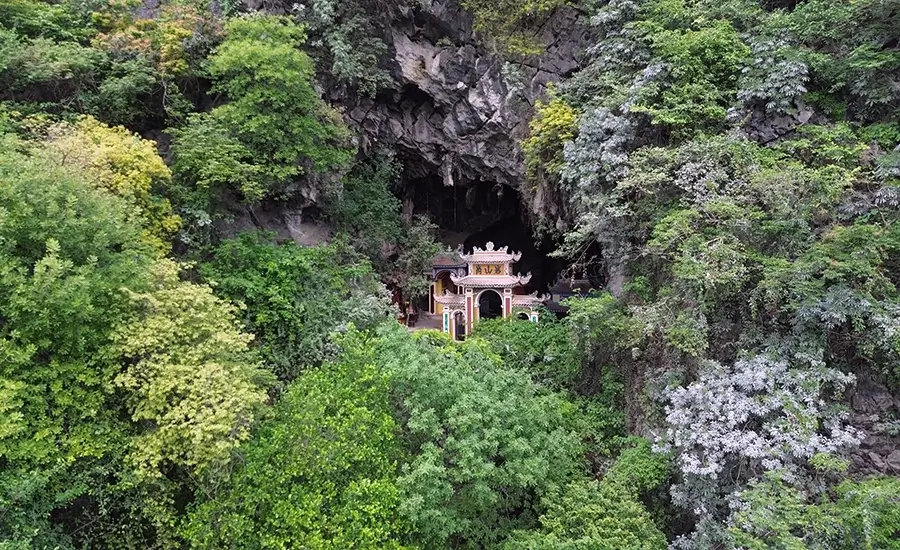
The cave consists of three connected caves. While the outer cave worships Buddha, the Dark and Bright caves are like an artistic space, converging masterpieces of nature’s carvings from stalactites. Not only sparkling like a rainbow, the stalactites here also change color according to the sunlight, and when you knock on a stone, it will make a sound like a bell.
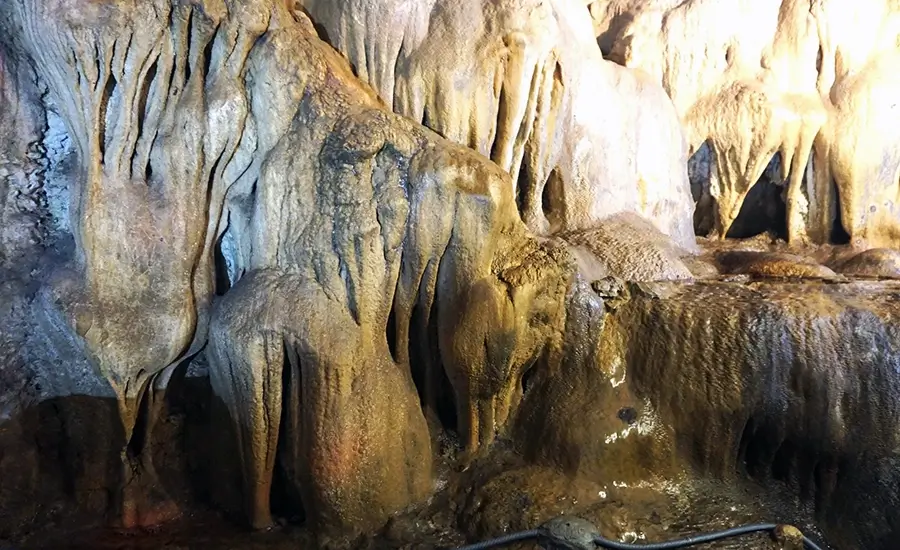
Because the cave entrance is high up and open, it is narrow, so whenever a strong wind blows into the cave, visitors will hear a sound like a flute. Perhaps that is why the cave is named Dich Long (Vietnamese: Địch Lộng), meaning “Địch” is flute, “Lộng” is wind.
Source: collected by An
Follow us for the best deals on Vietnam package tours and visa services!

Comment (0)