
Located in Vu Ban Commune, Phu Day remains are dedicated to Goddess Lieu Hanh, one of the four immortal Gods of Vietnam (the others are God of Tan Vien Mountain, Thanh Giong – a giant who defeated northern invaders, Chu Dong Tu – a sage). Visitors come to Phu Day not only to sightsee, but also with the hope of being blessed with good luck and peace.
Overview of Phu Day Remains
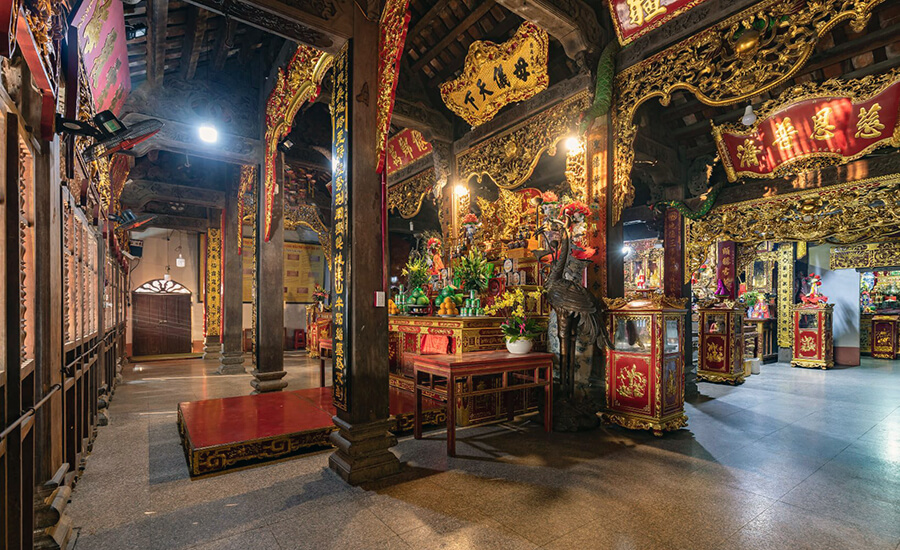
Phu Day site includes three main areas: Thien Huong Residence, Van Cat Residence, and the tomb of Goddess Lieu Hanh. These monuments are highly valued for their architecture dating to the late 19th and early 20th centuries.
Tien Huong Residence
The Tien Huong Residence (also known as the Phu Chinh Day or Phu Chinh) is a beautiful construction built during 1663 – 1671 of the Le Huyen Tong Dynasty and has been renovated many times.
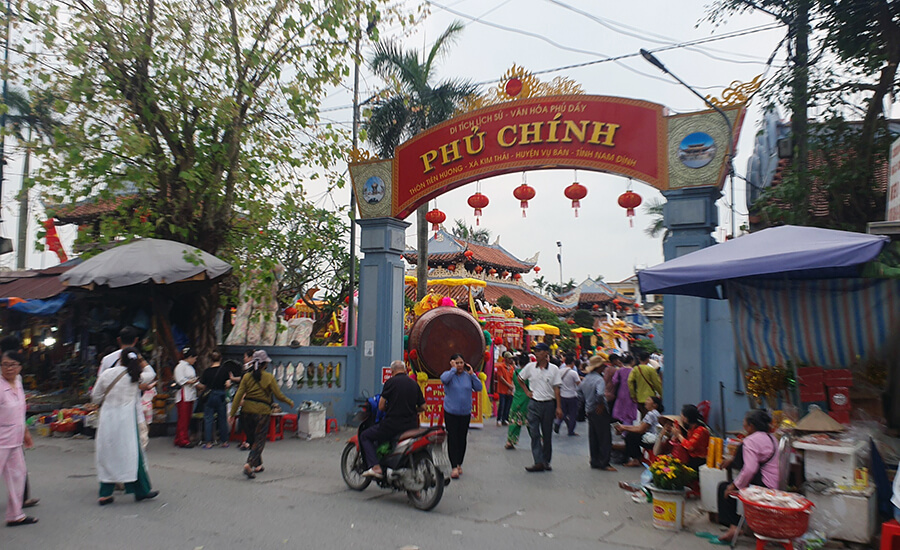
The palace has 19 blocks with 81 large and small chambers, facing the southwest towards the Tien Huong mountain range (formerly An Thai mountain). In front of the residence, there is a lake and a large yard, with three two-story buildings for welcoming pilgrims.
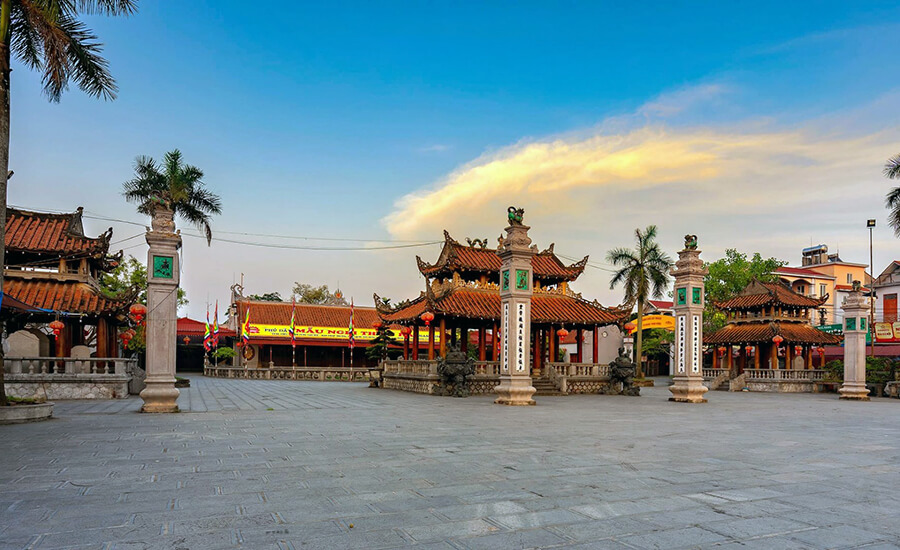
A crescent pond surrounded by low railings, two stone bridges engraved with lively-looking dragons, and four palaces. The palaces present sophisticated engravings. The first and main palace boasts an intricately detailed altar inlaid with pearl shells as well as five statues of high artistic value dating back to the 19th century.
Van Cat Residence
Van Cat Residence was built on an area of nearly 1 hectare, facing northwest, next to Long Van Pagoda and the temple of King Ly Nam De.
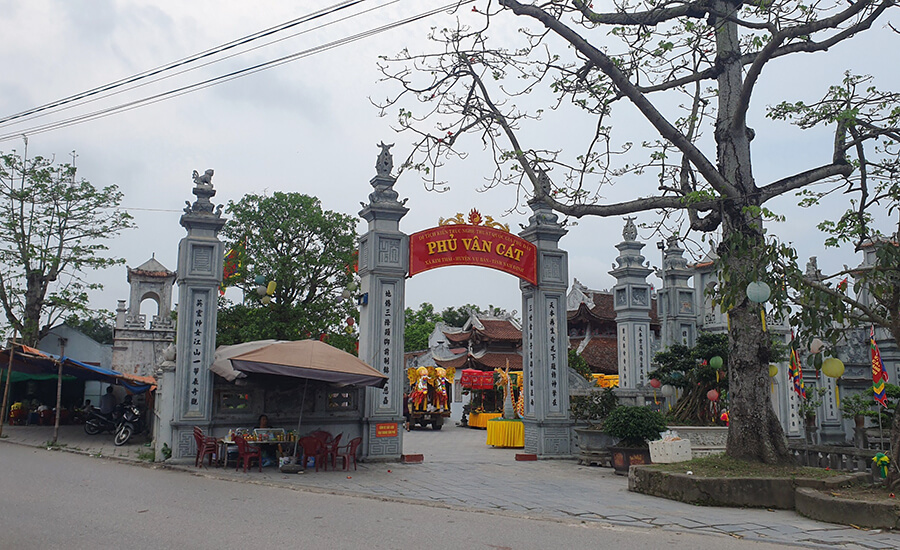
Van Cat Residence now has 7 blocks with 30 large and small chambers. In front is the Ngo Mon system with 5 guard posts; outside the Ngo Mon is a crescent lake, in the center of which stands a floating house with three rooms topped by curved roofs.
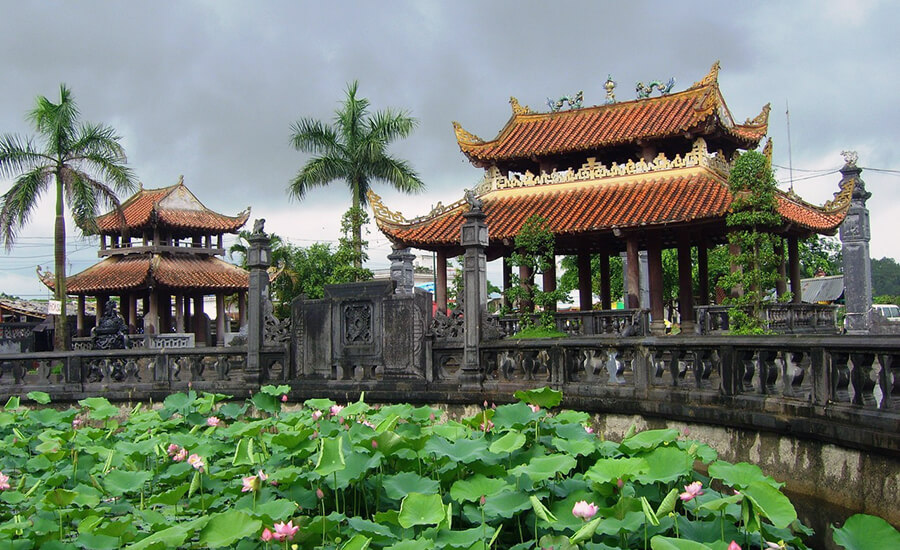
The Van Cat Residence has four palaces similar to those in Tien Huong. Goddess Lieu Hanh is worshiped in the middle palace, left is a pagoda where Buddha is worshiped, and right is a temple dedicated to Ly Nam De.
Tomb of Goddess Lieu Hanh
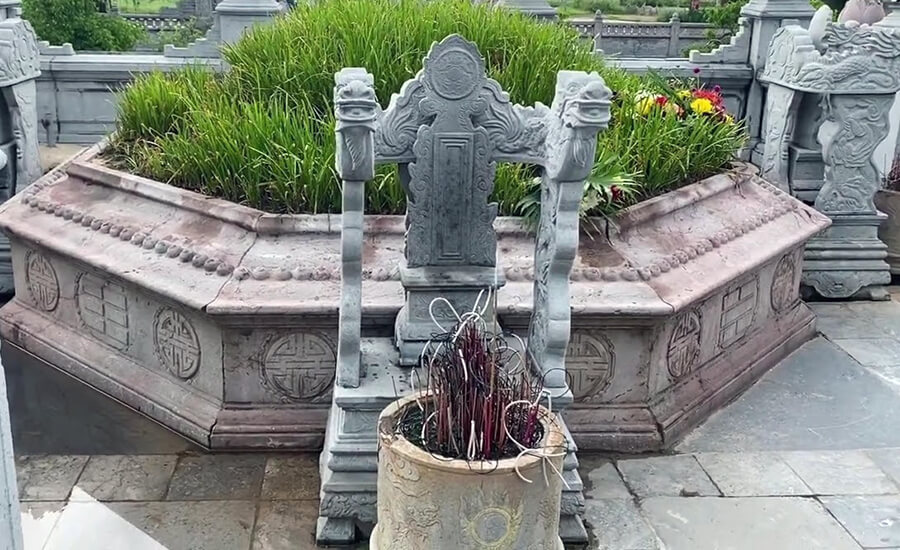
The Tomb of Lieu Hanh was built in 1938 with a beautifully carved grey stone facade, covering an area of 625 m², including east-west and south-north entrances to the tomb. The gates have stone pillars topped with stone lotus flowers. In the middle is an octagonal grave, each side is about 1m. The entire tomb has 60 pink lotus buds that, from afar, look like a dry lotus pond.
The Phu Day Remains have very high architectural and artistic value from the late 19th to early 20th centuries. Coming to Phu Day is both to enjoy the beautiful scenery and to be an opportunity for praying for good things and luck.
Source: collected by An
Follow us for the best deals on Vietnam package tours and visa services!

Comment (0)