
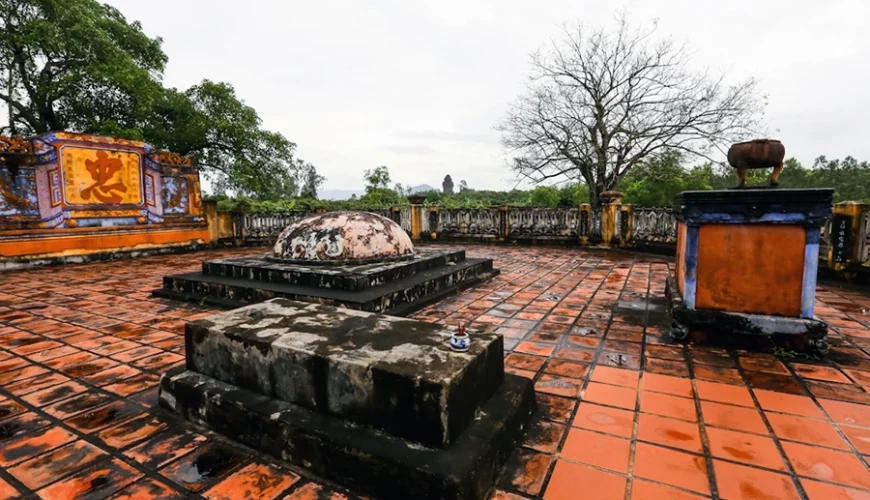
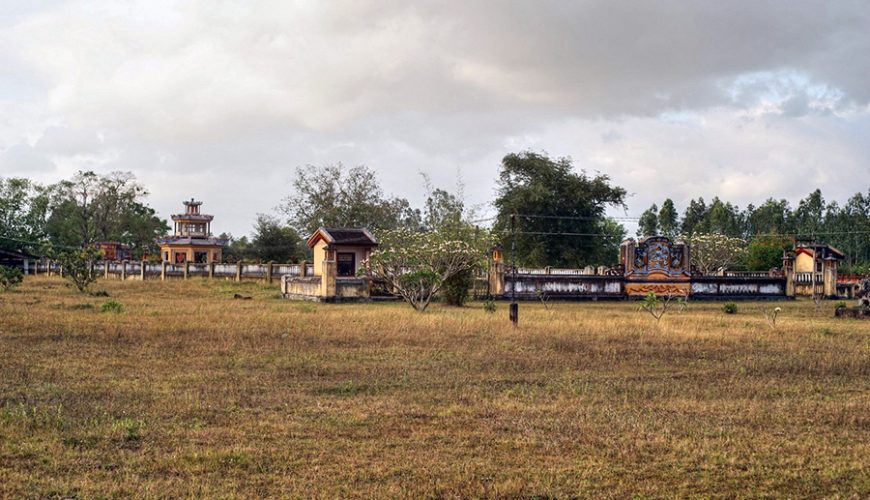
Do Ban Citadel is one of the typical historical relics of Gia Lai, associated with more than a millennium of ups and downs in Central Vietnam. Once the glorious capital of the Champa Kingdom and later the Emperor’s Citadel under the Tay Son Dynasty, this place preserves many precious architectural, military, and cultural vestiges. Today, Do Ban Citadel is an attractive destination for those who love history and heritage discovery.
General information about Do Ban Citadel
Do Ban Citadel (Champa: Vijaya; Vietnamese: Đồ Bàn, also known as Chà Bàn, later Hoàng Đế Citadel) is one of the most important military and political works of Central Vietnam. It is located in the current area of Nhon Hau commune, An Nhon town, Binh Dinh province (now An Nhon Ward, Gia Lai Province). About 2 km from Highway 1, the citadel is situated on high ground relative to the surrounding fields.
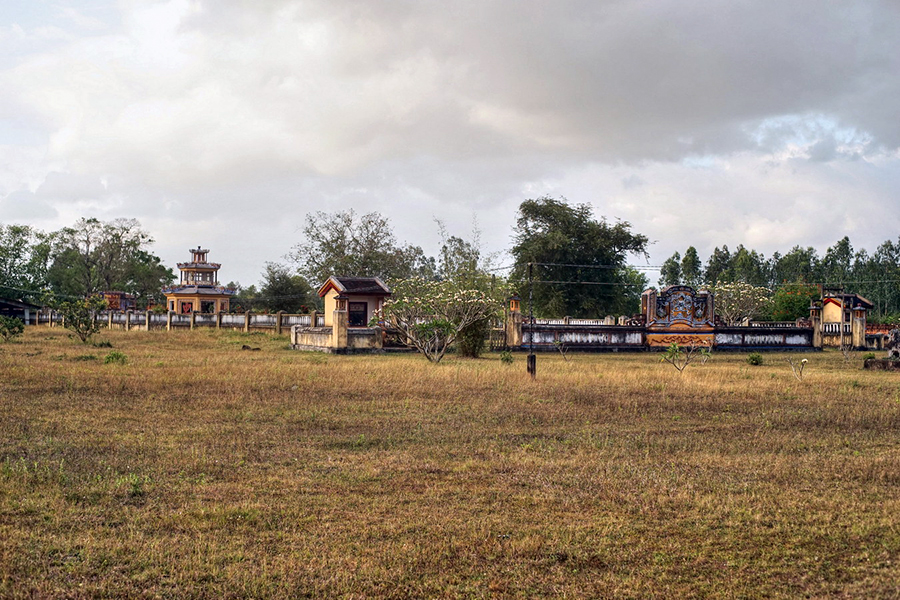
Around the end of the 10th century, after the capital, Indrapura (Dong Duong, Quang Nam, currently a part of Da Nang City), was no longer suitable due to war, the Cham people moved the capital to the Vijaya region, to today’s Do Ban Citadel. From then on, this place became the largest political, military, economic, and cultural center of Champa for many centuries. Vijaya was the capital of Champa for 5 centuries, from 999 to 1471. During this period, the Cham kings built many structures in the capital; now, eight towers remain.
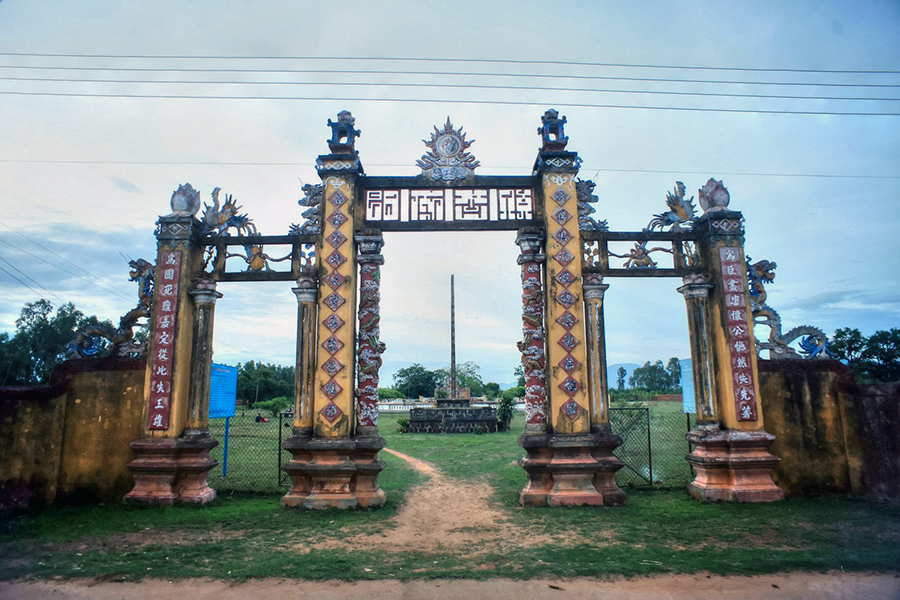
The year 1471 marked a major turning point in the history of Do Ban Citadel. Emperor Le Thanh Tong led his army to attack Champa. After many days of fighting, the Dai Viet army captured Do Ban citadel, ending Vijaya’s role as the capital and seriously weakening the Champa Kingdom. After this event, the citadel was gradually abandoned for more than three centuries.
Although it no longer serves as a political center, the foundations, walls, and stone structures still stand, serving as precious vestiges of a once-flourishing civilization.
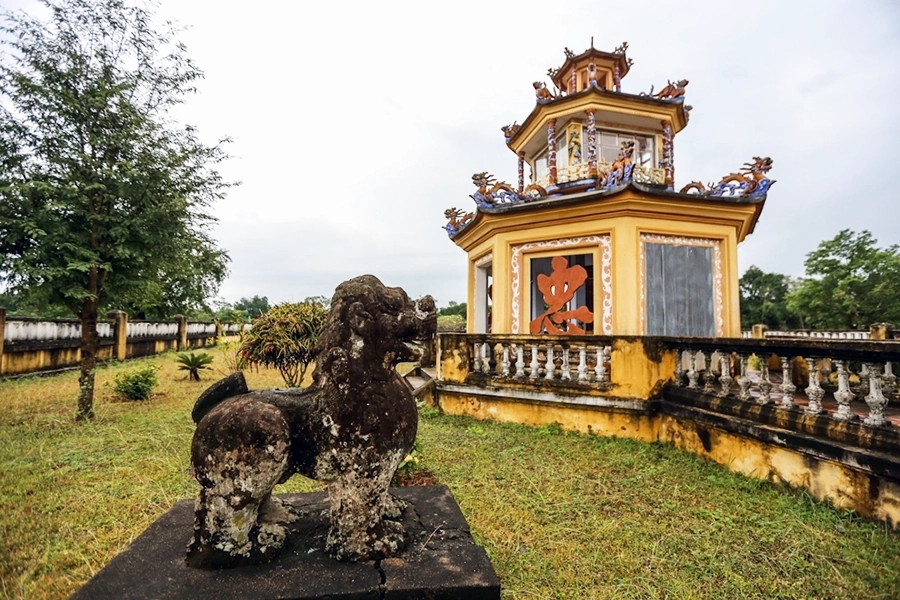
In 1776, Nguyen Nhac chose the old Do Ban citadel as the site of a new capital. He repaired and expanded the citadel system, renaming it Hoang De (Imperial) Citadel. From 1778 to 1793, this place became the headquarters of the Tay Son uprising army and the capital of Emperor Nguyen Nhac. The Hoang De Citadel thus both inherited the Champa foundation and bore the mark of the Tay Son Dynasty’s military architecture.
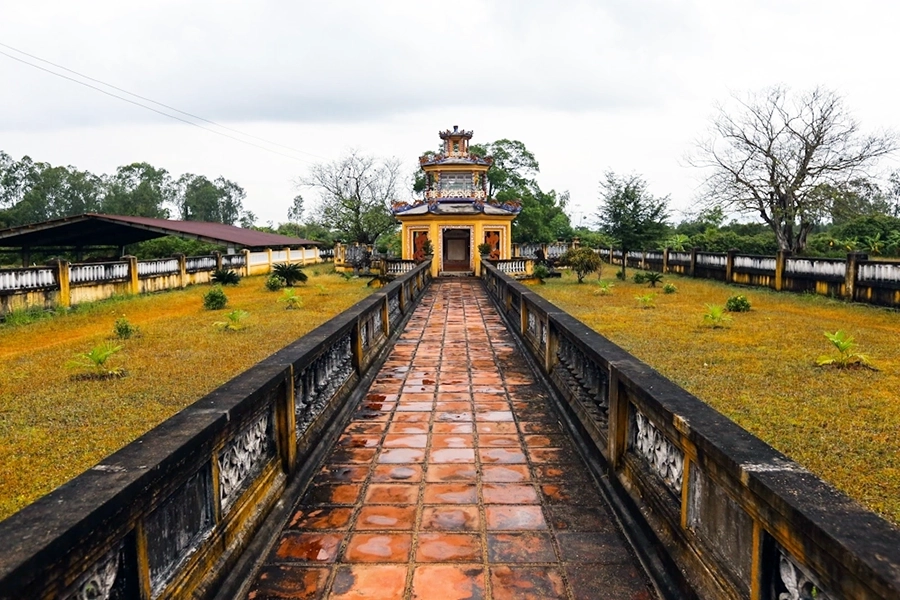
In 1799, Lord Nguyen Anh (who later became Emperor Gia Long) recaptured the Imperial Citadel and renamed it Binh Dinh Citadel. During Gia Long’s reign in 1816, the king demolished the Binh Dinh citadel and moved the capital to Quy Nhon.
Recognizing the special value of the relic, the Ministry of Culture has designated Hoang De Citadel (on the site of Do Ban citadel) as a national historical relic since 1982.
Explore relics of Do Ban Citadel
After more than 1,000 years of history and many wars, especially the Nguyen Dynasty’s partial dismantling of the citadel to obtain materials for building Binh Dinh Citadel in the early 19th century, most of the architecture of Do Ban Citadel (Emperor Citadel) is no longer intact. However, this place still preserves many vestiges of historical and archaeological value, helping visitors visualize the appearance of the ancient capital.
Ancient rampart system
According to archaeological documents, the Emperor Citadel is a rectangular architectural complex, consisting of 3 citadels: the Outer Citadel, the Inner Citadel, and the Forbidden Citadel. Among them, the Outer Citadel has a circumference of 7,400 m. The Inner Citadel, also known as the Imperial Citadel, is rectangular in shape, 430 m long and 370 m wide. Inside the Inner Citadel is the Forbidden Citadel, also rectangular, 174 m long, 126 m wide.
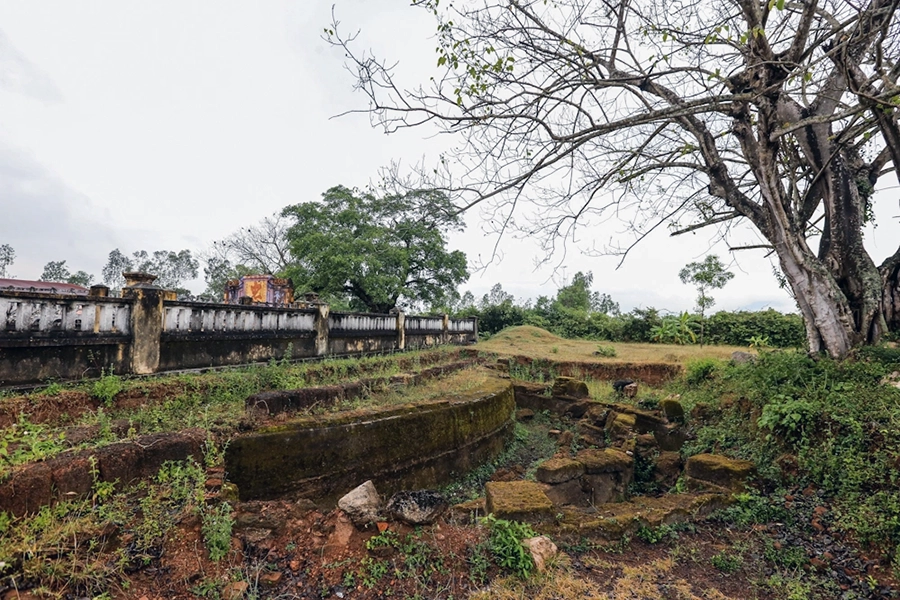
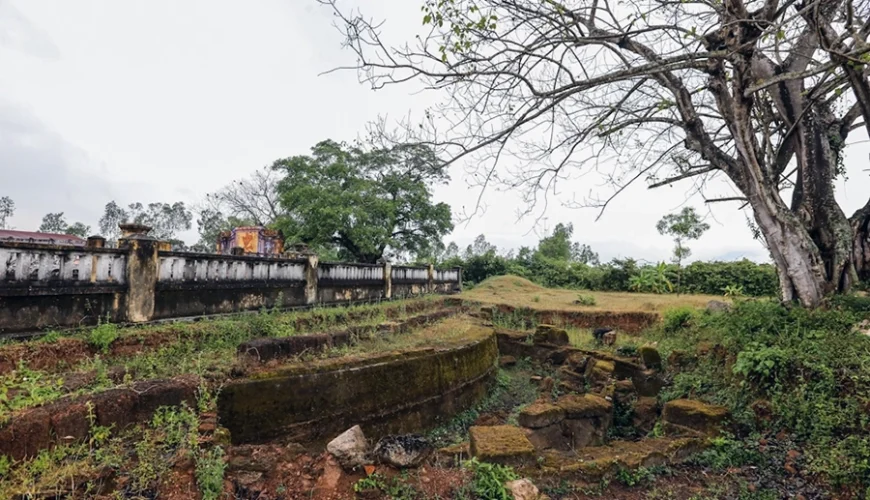
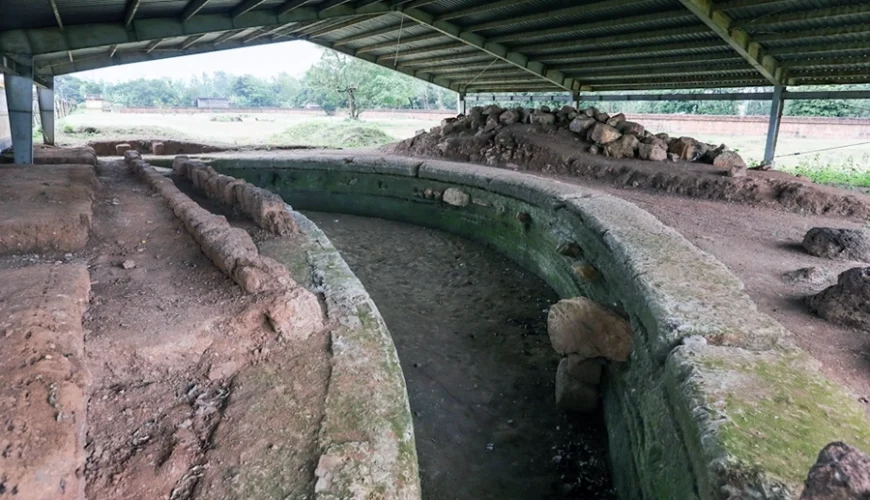
Currently, the remains are clearly visible as three citadel rings. Although many sections have been eroded or buried, visitors can still see laterite and rammed-earth walls stretching for tens of meters.
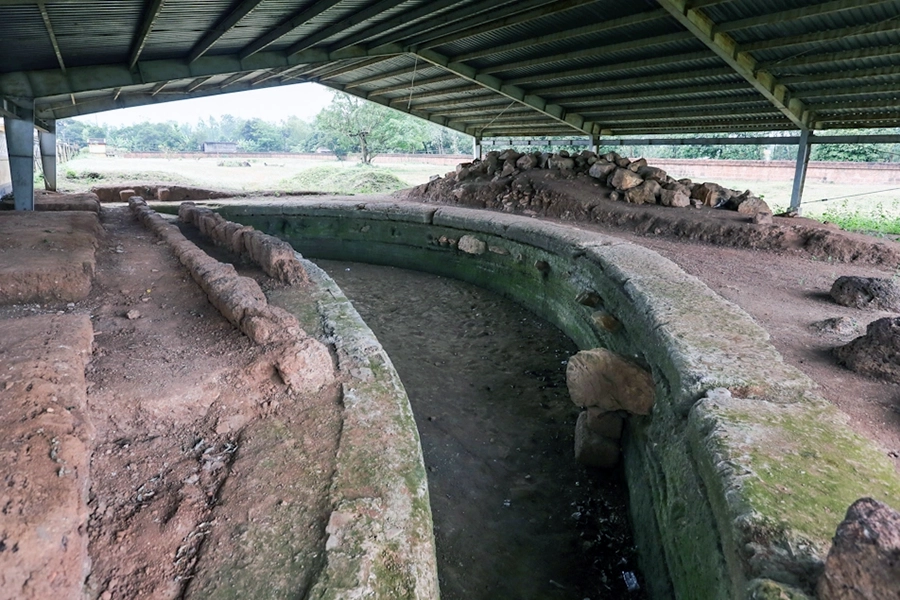
In particular, the remains are still quite extensive, revealing the massive scale of the ancient defense works. In the citadel, there are still marble walkways, a square well, stone elephant statues… Researchers consider this one of the largest military citadel systems in the Central region during the Middle Ages.
Precious artifacts
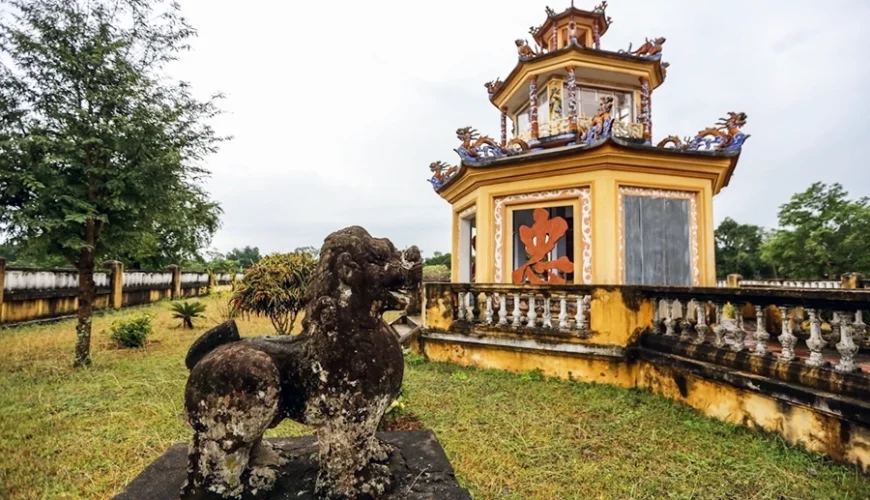
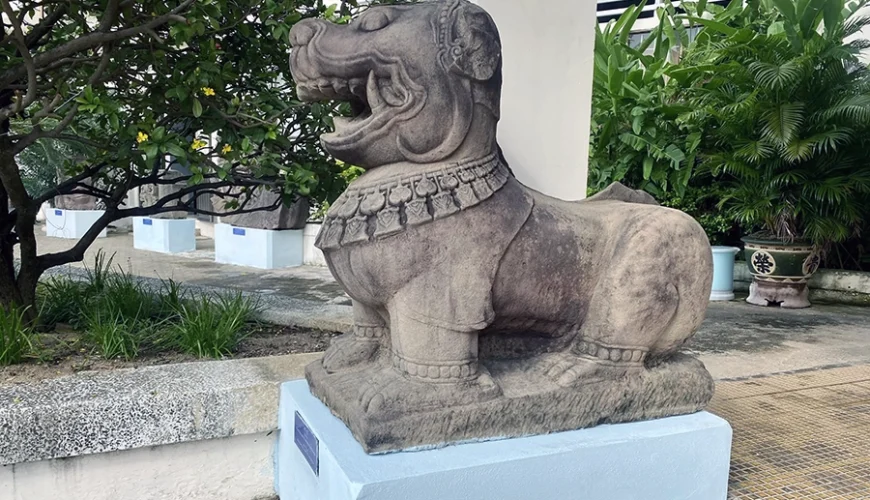
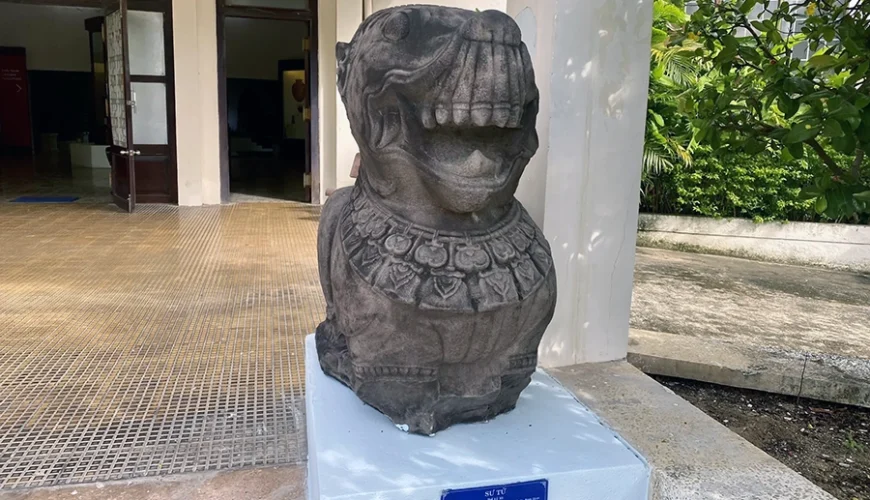
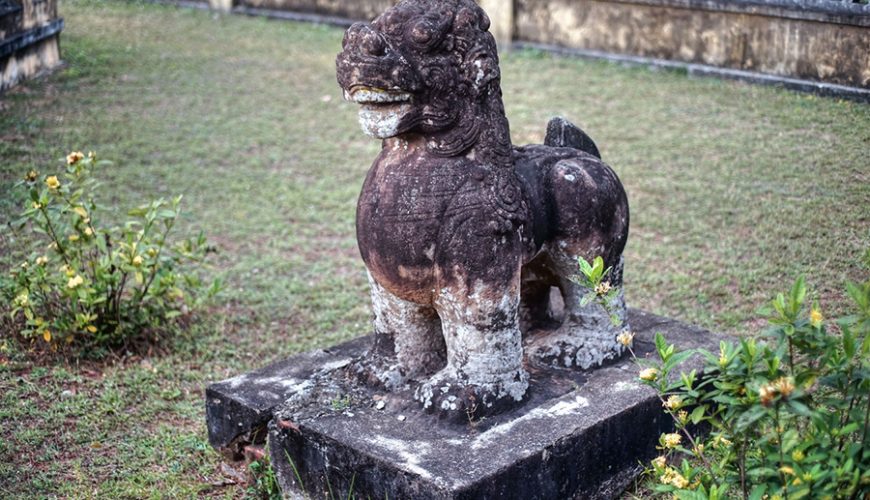
A pair of Champa stone lions is considered the most precious and famous artifact left from Do Ban Citadel. Two lion statues carved from monolithic sandstone, dating from about the 12th to 13th centuries, are 1.05 m high, 1.2 m long, and 0.6 m wide; they represent the male gender with a round statue.
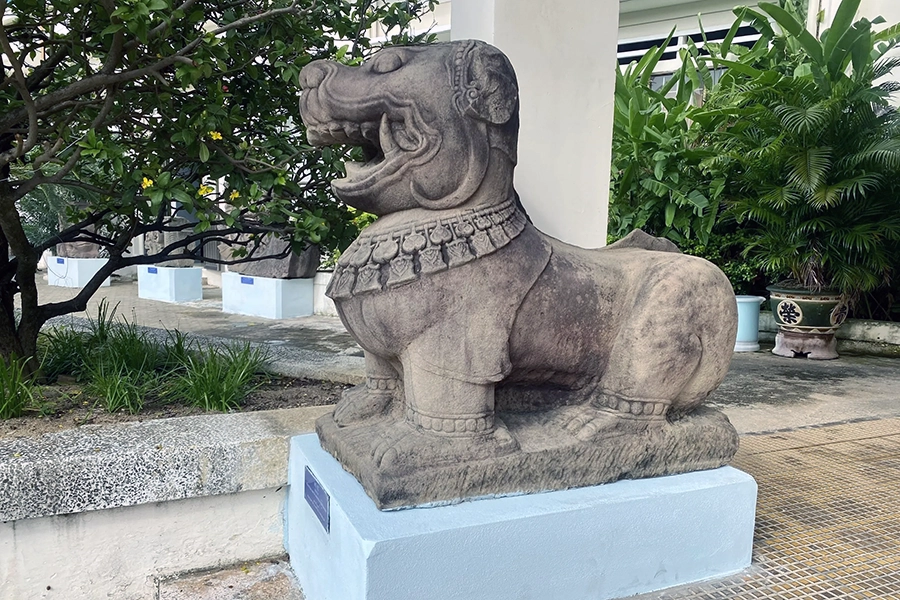
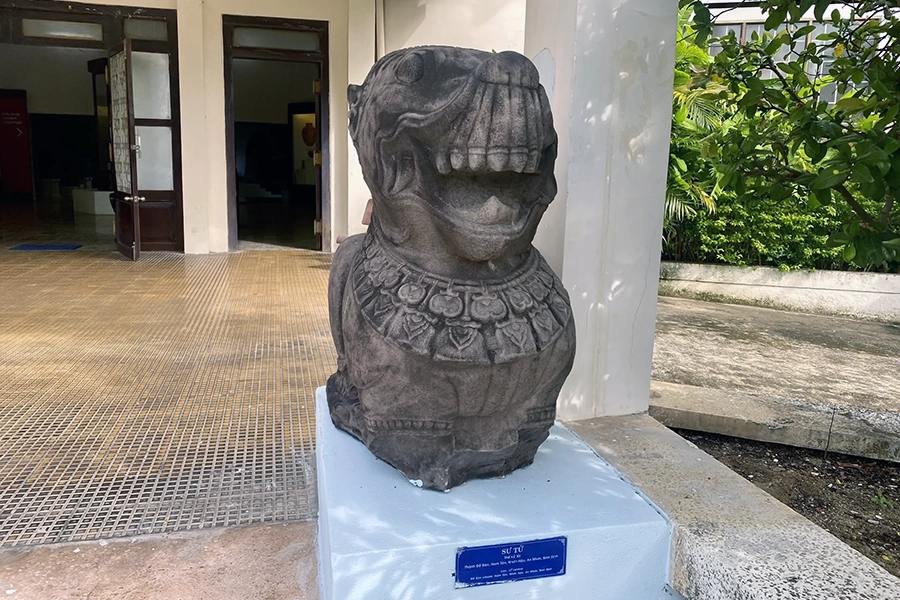
These two stone lion statues were discovered in 1992 in Ba Canh village, An Nhon Ward (near Canh Tien tower in Do Ban citadel area). According to many historical documents, when building the Hoang De Citadel on the old platform of Do Ban Citadel, Nguyen Nhac kept this pair of lions to decorate the Forbidden City area instead of demolishing them. That shows respect for the architectural values of the Cham people. Today, this is the symbolic artifact of the entire relic site.
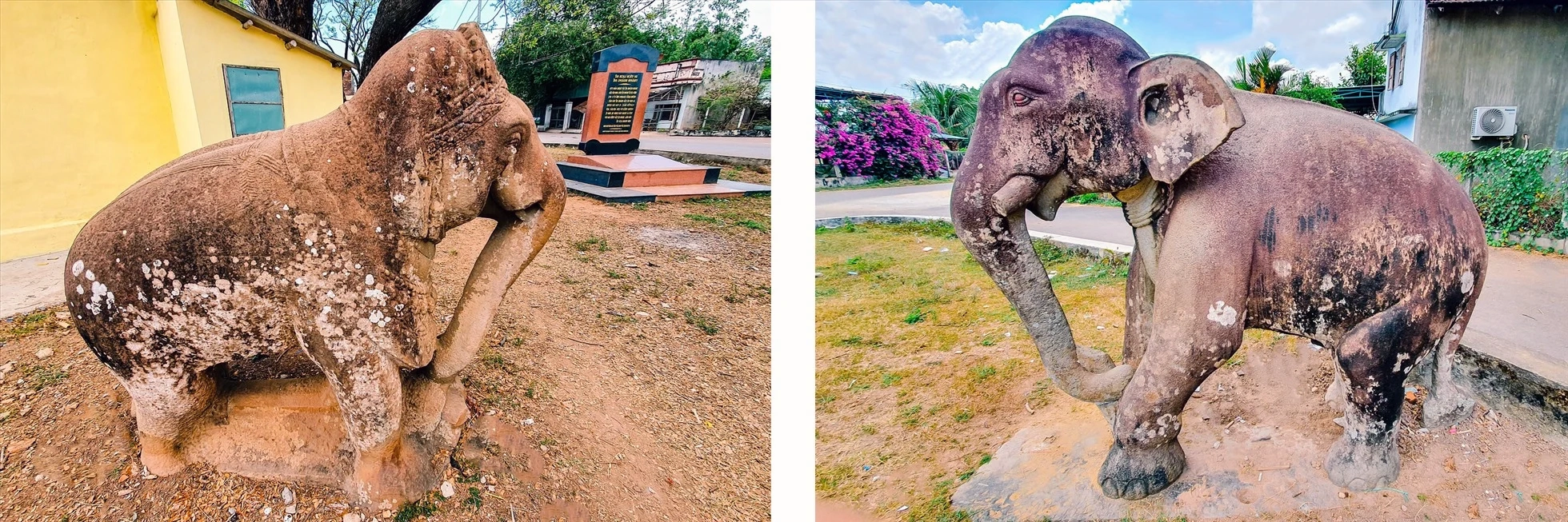
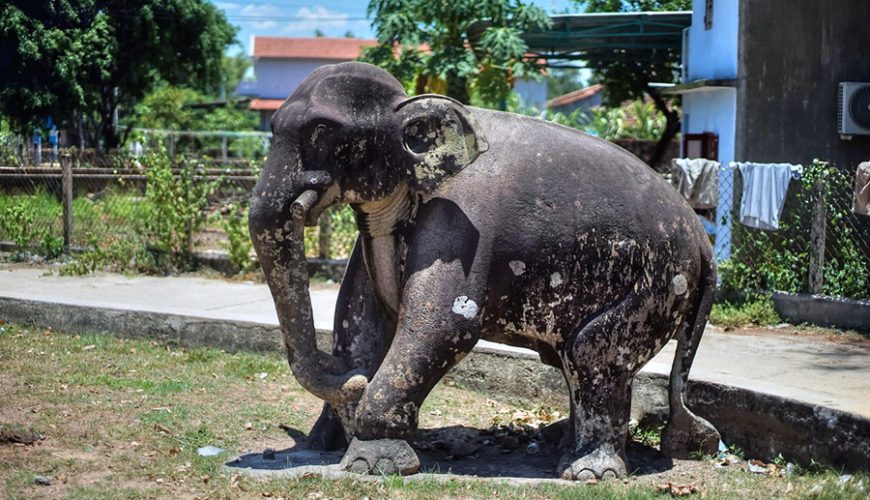
Additionally, on either side of the entrance to the ancient citadel stands a pair of stone elephants, one large and one small. The large elephant is up to 2 meters tall and is considered the largest known Cham elephant statue. The smaller elephant is about 1.7 meters tall, sculpted with many ornaments, and appears to be female.
Canh Tien Tower
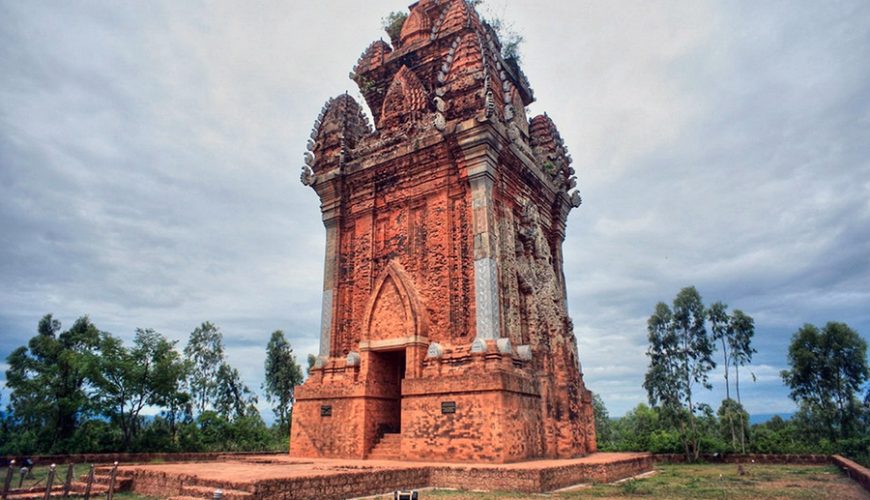
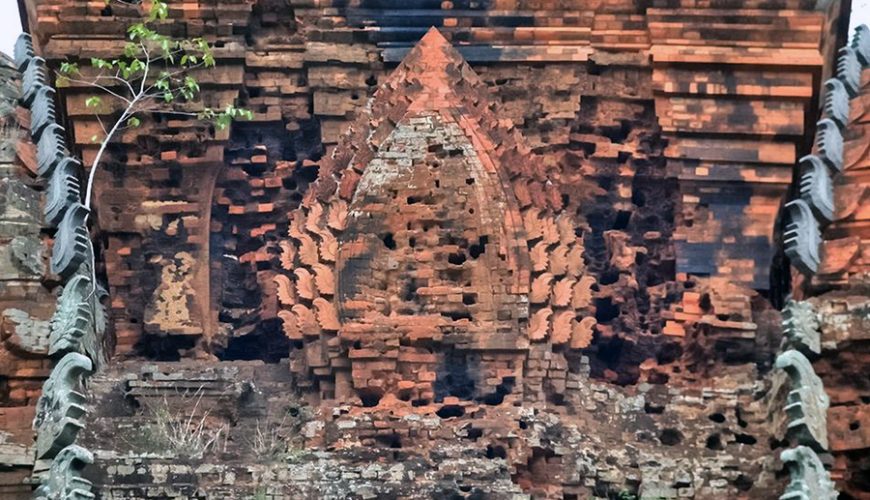
In particular, there is the Canh Tien tower, nearly 20 meters high; at the corner of the tower are snake statues made of white stone, stone elephants, and many monster statues. This tower’s architecture is considered typical of the Binh Dinh style dating from the second half of the 11th century to the early 12th century, during the reign of King Harivarman IV (1074-1081) and Harivarman V (1113-1139).
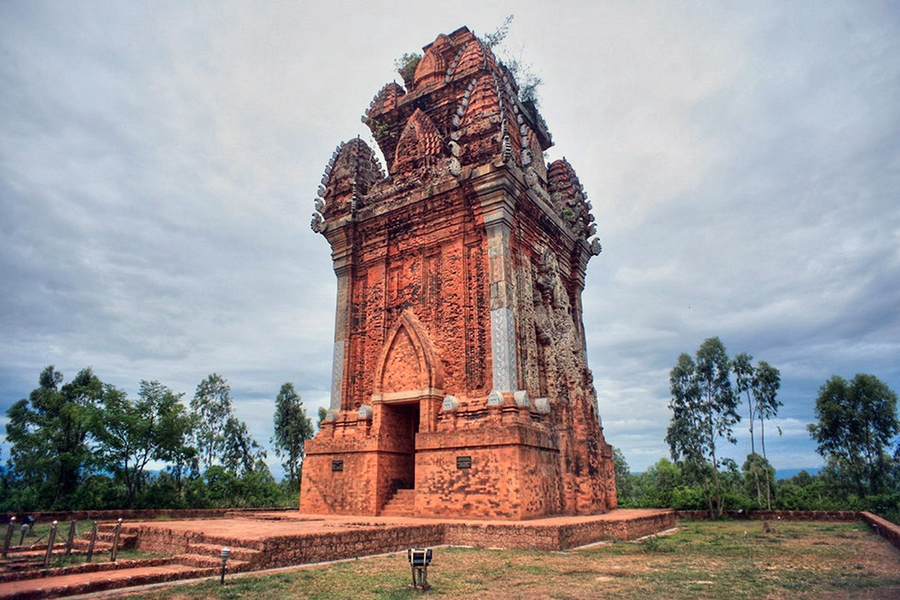
The tower was built on top of a low hill. Among the remaining Champa ancient towers in Binh Dinh province, Canh Tien tower is one of the still quite intact structures
Tombs of Vo Tanh and Ngo Tung Chau
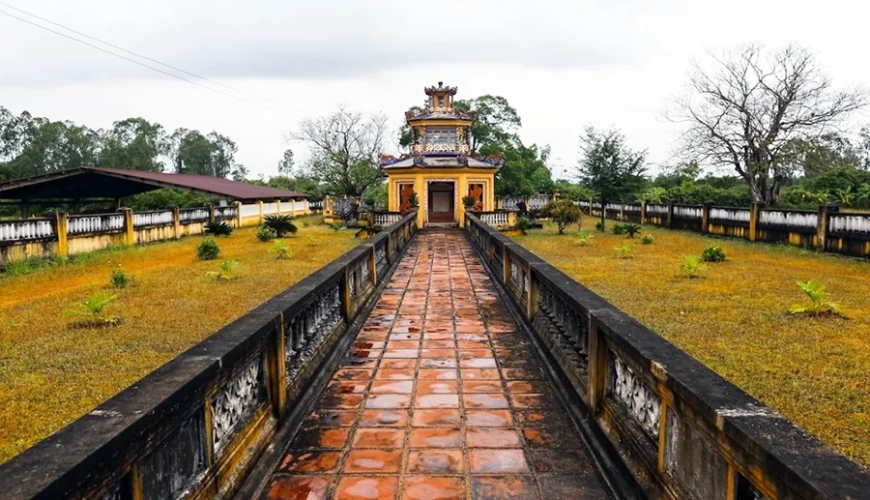
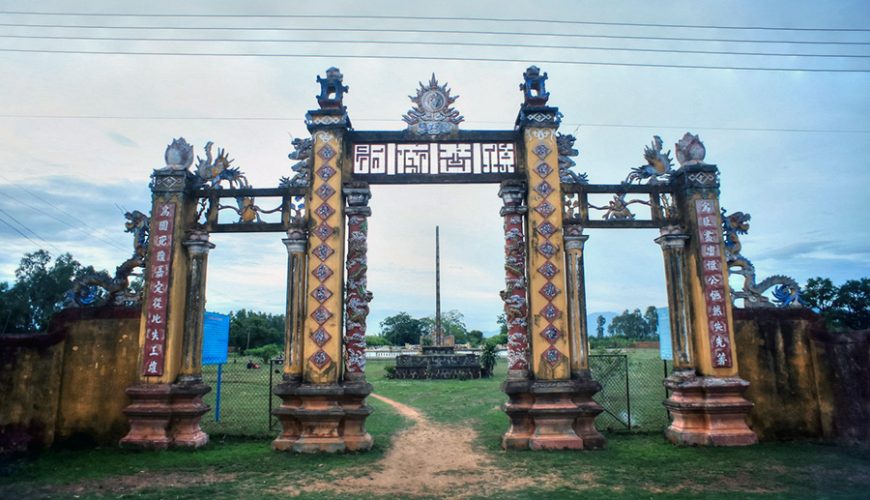
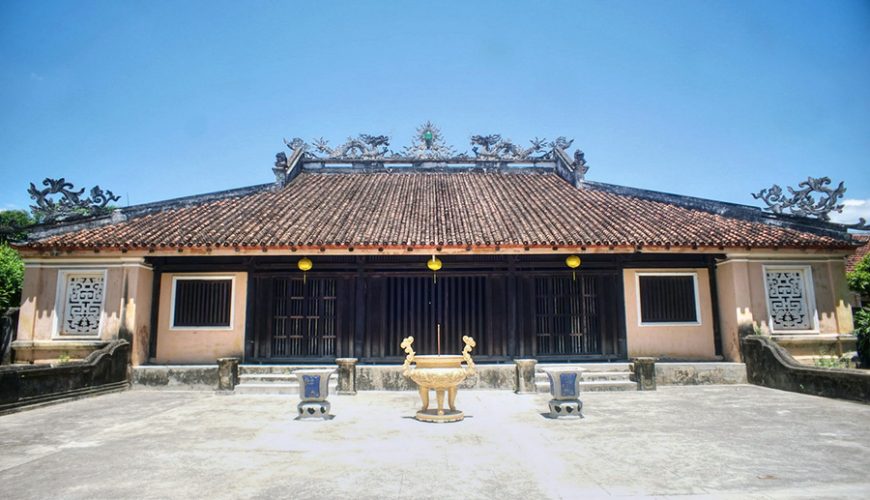
After the fall of the Tay Son Dynasty, the Nguyen Dynasty built a mausoleum to worship two famous generals, Vo Tanh and Ngo Tung Chau, right on the old foundation of the Octagon Palace in the Emperor’s Citadel.
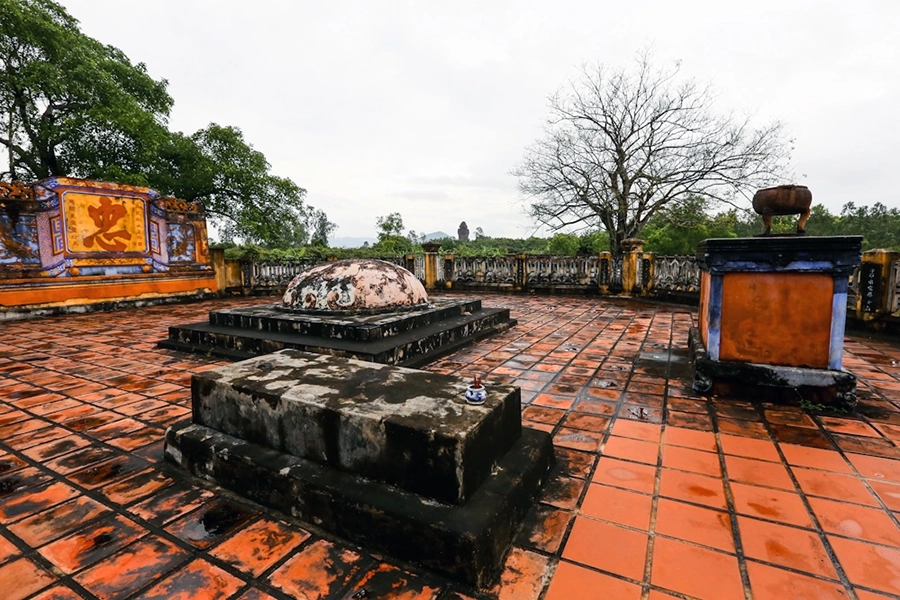
The mausoleum has the architectural style of the Nguyen Dynasty with a three-entrance gate, a screen, a sacrifice yard, and a well-planned tomb area. This is one of the works that remains largely intact within the relic complex and reflects the historical interrelationships among three periods: Champa, Tay Son, and the Nguyen Dynasty.
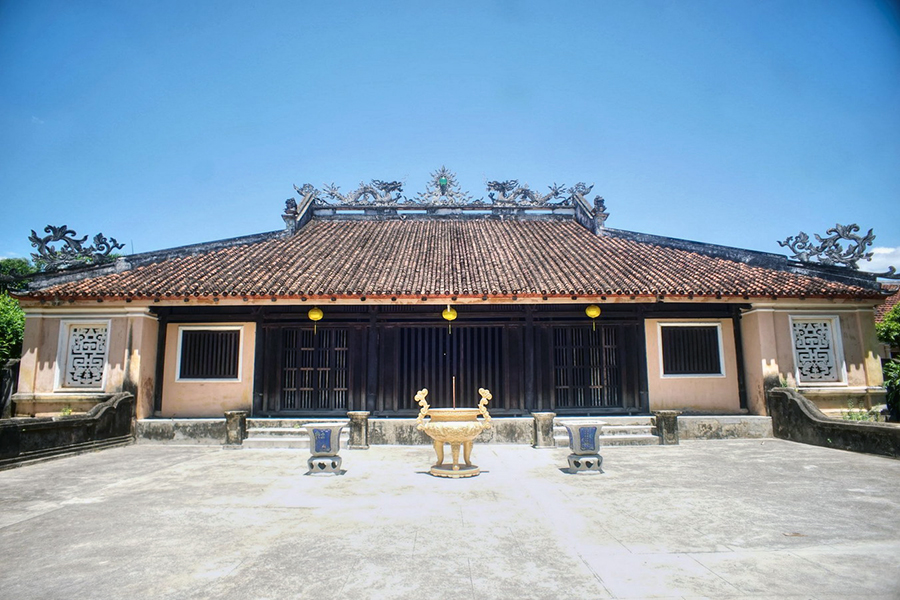
In the mausoleum stands an ancient octagonal building, and within it is a stone stele engraved with the achievements of Ngo Tung Chau and Vo Tanh (in 1800). The stele is made of white stone and has been exposed to a lot of wind and dust over time, so the Chinese characters engraved on it have now worn away.
Ban Do Citadel
- Location: An Nhon Ward, Gia Lai Province.
- Best for: students, solo travelers…
- Tourist spots nearby: Quang Trung Museum, Banh It Tower, Ham Ho Tourist Area…
Source: collected by An
Follow us for the best deals on Vietnam package tours and visa services!
Comment (0)