
Located about 3 km southeast of the center of Quy Nhon, Ghenh Rang is famous for its spectacular rocky headlands and breathtaking coastal scenery. This place impresses with the natural rocks stacked on top of each other, with many unique shapes, blending with the clear blue beach and romantic mountain scenery. Not only possessing rare natural beauty, but Ghenh Rang Scenic Area is also associated with the life of poet Han Mac Tu, creating a destination that is both rich in landscape value and rich in cultural imprints.
Overview of Ghenh Rang Scenic Area
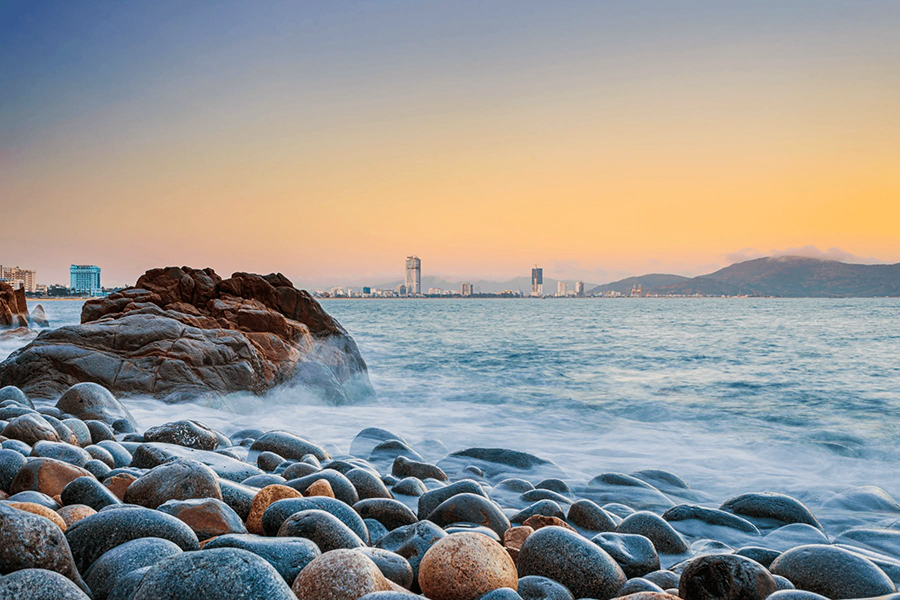
Ghenh Rang is formed from large blocks of granite stretching along the coast, shaped over millions of years by waves, wind, and weather. Large and small rocks are naturally stacked on top of each other, interspersed with golden sand and clear blue sea water, creating a scene that is both majestic and poetic. Looking into the distance from the cliffs, visitors can admire the panoramic view of Quy Nhon Bay with its soft curving coastline, fishing boats bobbing on the water, and green mountains embracing the city.
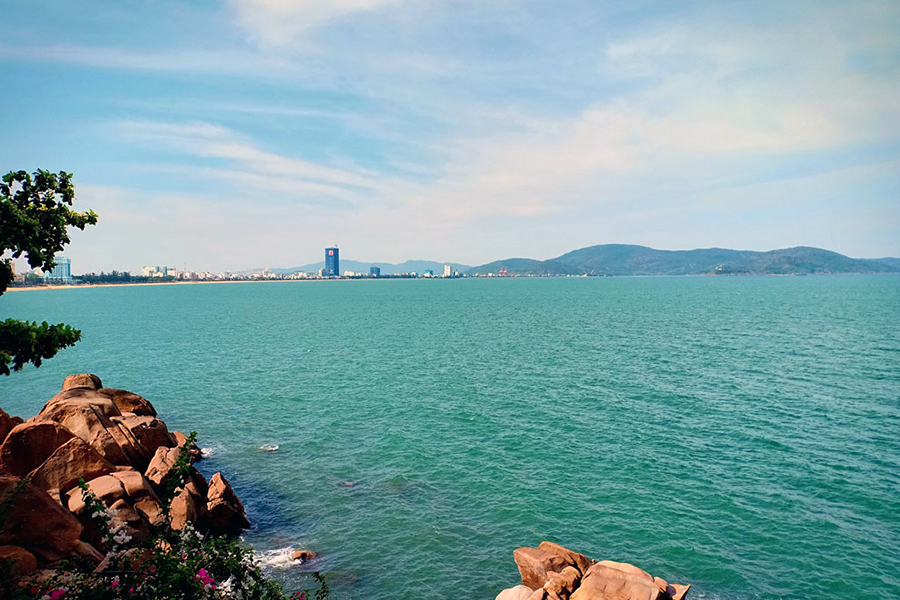
The best time to visit Ghenh Rang is from March to September, when Gia Lai’s weather is dry, the sea is calm, and the sky is clear. This is a favorable condition for sightseeing, taking photos, and exploring coastal rapids. Early morning or late afternoon is the most ideal time, because the soft light makes the scene more poetic, and the weather is also cool and pleasant.
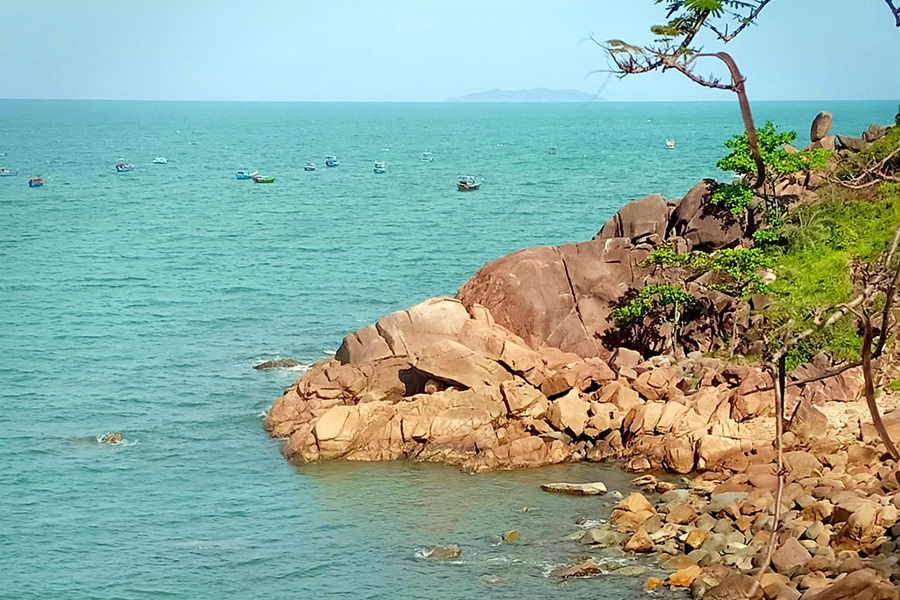
Located near Quy Nhon, Ghenh Rang is also very convenient to combine with visits to many other famous places such as Quy Nhon beach, Doi Tower, Eo Gio, Ky Co, or Long Khanh Pagoda. Thanks to that, visitors can easily build an itinerary to explore Quy Nhon in one or two days while still fully experiencing the natural beauty, culture, and unique cuisine of Gia Lai land.
What makes Ghenh Rang attract many tourists?
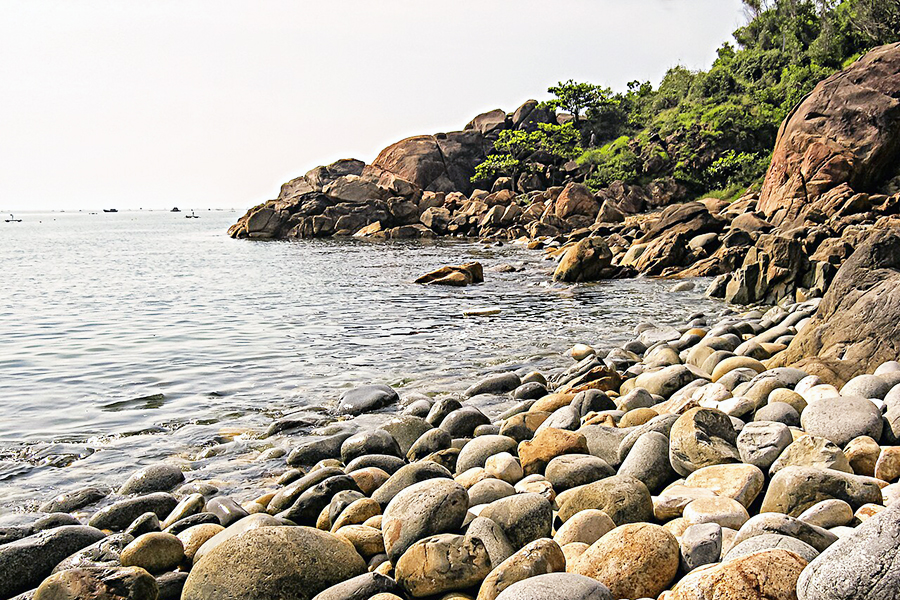
One of the most prominent features of Ghenh Rang is Hoang Hau (Queen) beach, also known as Trung (Egg) Beach. Instead of fine sand like regular beaches, this place is covered with thousands of smooth round pebbles, roughly the size of chicken eggs. The stones are polished over time by ocean waves, creating a smooth surface and many natural colors. When the waves hit the rocky beach, the pleasant sound and clear water create a very special scene, attracting many tourists to visit and take photos.
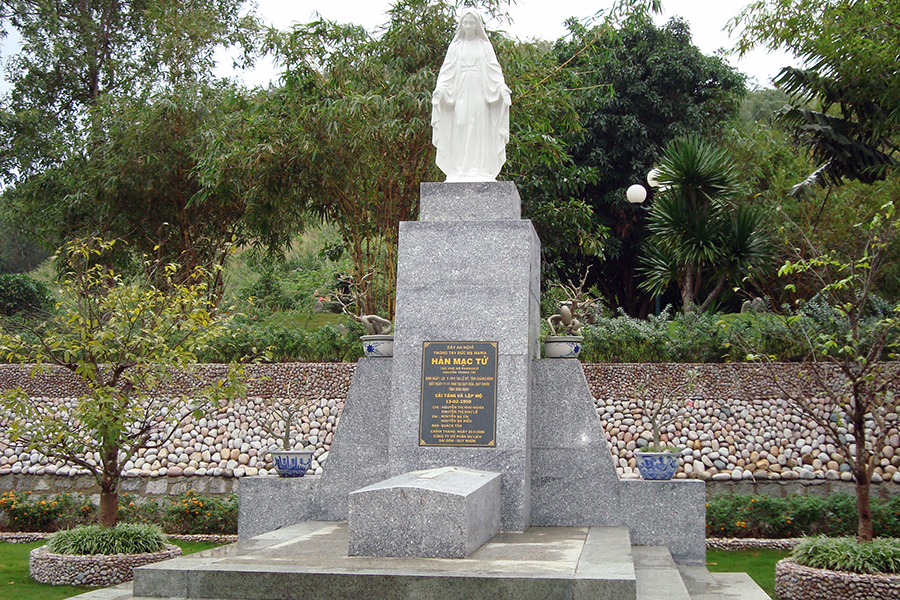
Not only outstanding for its natural beauty, but Ghenh Rang is also the resting place of poet Han Mac Tu – one of the most celebrated Vietnamese Catholic literary figures during the colonial era. The grave site is built on a hillside facing the sea, surrounded by green trees and a quiet space. From here, visitors can see the vast Quy Nhon sea and learn more about the life and career of the talented poet.
Ghenh Rang is also an ideal place to feel the rhythm of life in the Central Coast region. Around the area, there are many cafes and seafood restaurants, where visitors can enjoy famous specialties such as lobster, Huynh De crab, fresh squid, grilled fish, or Binh Dinh jumping shrimp pancakes. Enjoying fresh seafood, looking at the blue sea, and listening to the sound of waves is an experience that many tourists love when coming here.
Not too noisy or modern, Ghenh Rang conquers visitors with the rustic beauty of million-year-old rocky rapids, clear blue sea water, and peaceful space on the shores of Quy Nhon Bay. The harmonious combination of natural landscapes, cultural values, and poetic imprints has turned this place into an unmissable destination for anyone who wants to explore the beauty of the coastal city of Quy Nhon and the land of Gia Lai.
Source: collected by An
Follow us for the best deals on Vietnam package tours and visa services!
Comment (0)