
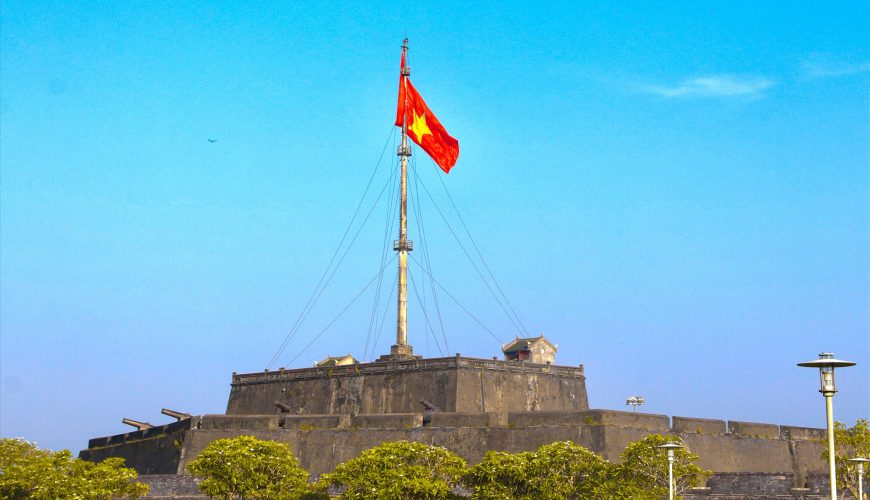
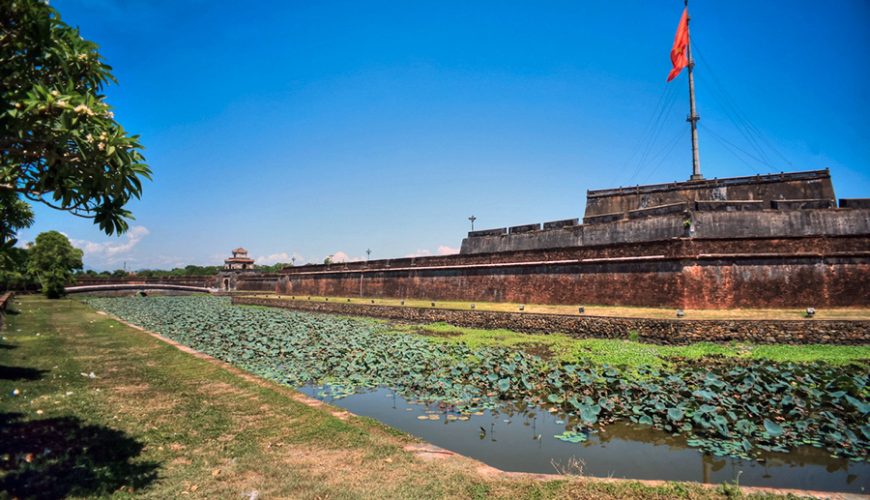
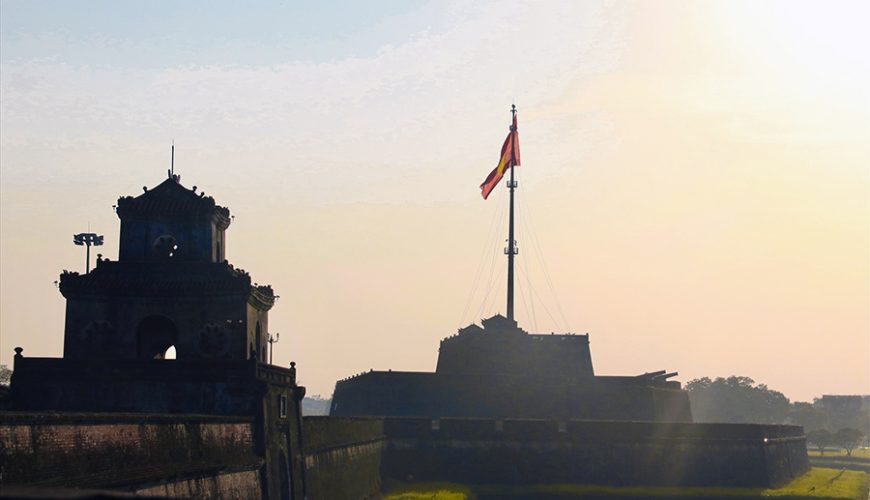
Hue Flag Tower (Vietnamese: Kỳ Đài) is one of the most prominent symbolic architectural works of the Hue Imperial Citadel. Located on the south side of the Citadel, along the main axis in front of Ngo Mon, the tower not only hung the flag of the Nguyen Dynasty but also served as a site for many important events in Vietnamese history. After more than two centuries, Hue Flag Tower still holds a prominent place in the city’s landscape and remains an attractive destination for tourists exploring the Hue Monuments Complex.
What is special about Hue Flag Tower architecture?
The flag tower was built in 1807, when the capital city was founded. During the reign of Minh Mang (1791-1841), Hue Flag Tower was repaired in 1829, 1831, and 1840.
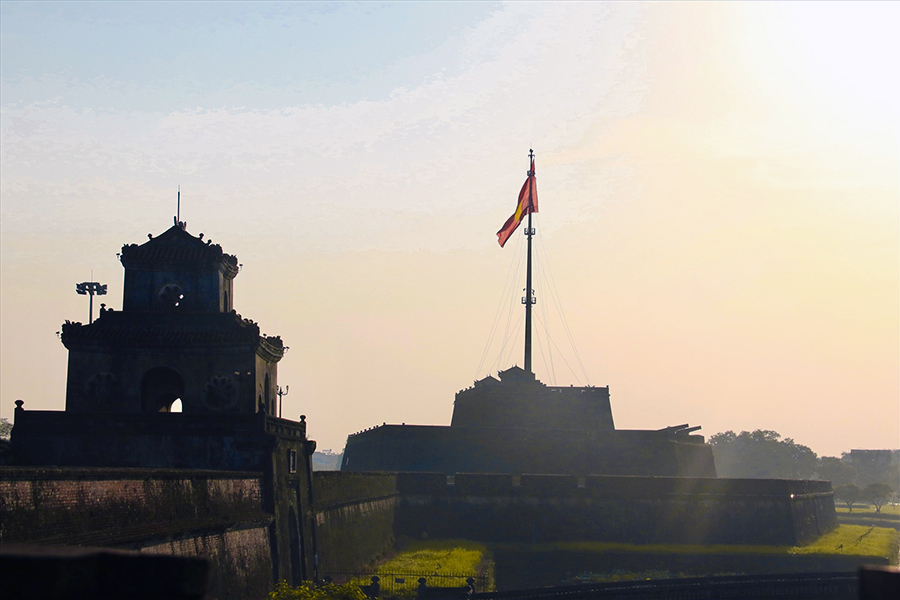
The Hue Flag Tower impresses with its solid structure, balanced shape, and prominent location in the vast space before the Imperial Citadel. The work consists of two main parts: the brick-and-stone monument and the flagpole rising above.
Platform part
The platform is built in three overlapping trapezoidal floors, with a total height of about 17.5 meters. The floors gradually decrease in size from bottom to top, creating a solid and balanced shape.
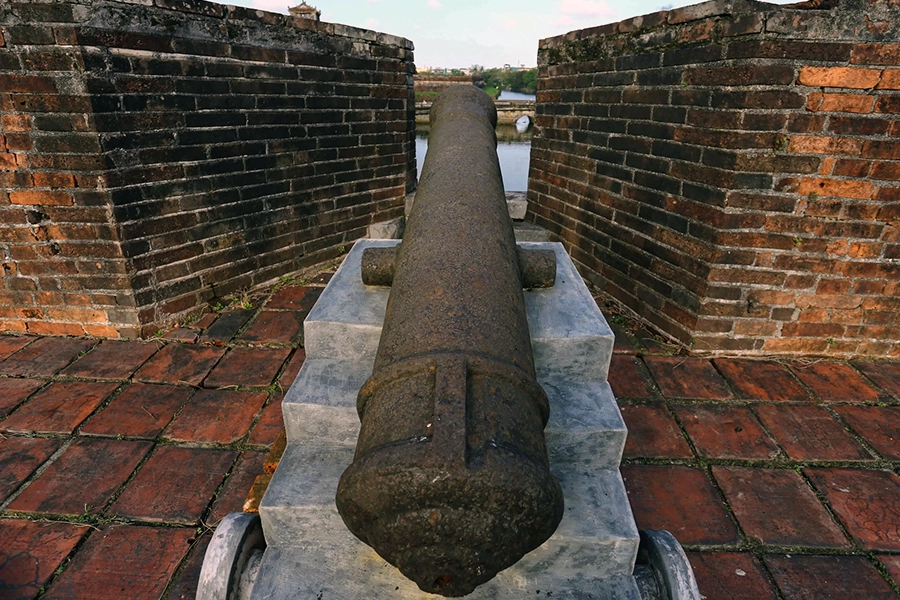
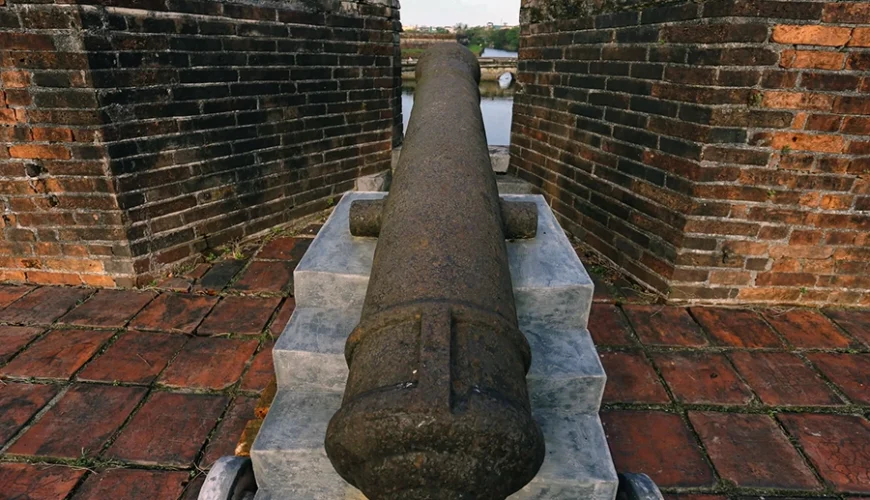
From the ground to the lower floor, a small path runs along the tower’s left side. The lower floor connects to the middle floor through a 4 m-wide arch door; the middle floor connects to the top floor through a 2 m-wide arch door. At the top of each floor, a 1 m-high railing system is decorated with hollow molded flower tiles. The three-story floor is tiled with square tiles and bricks, with a rainwater drainage system below. In the past, the building also had two watchtowers and eight cannons for defense.
Flagpole on top
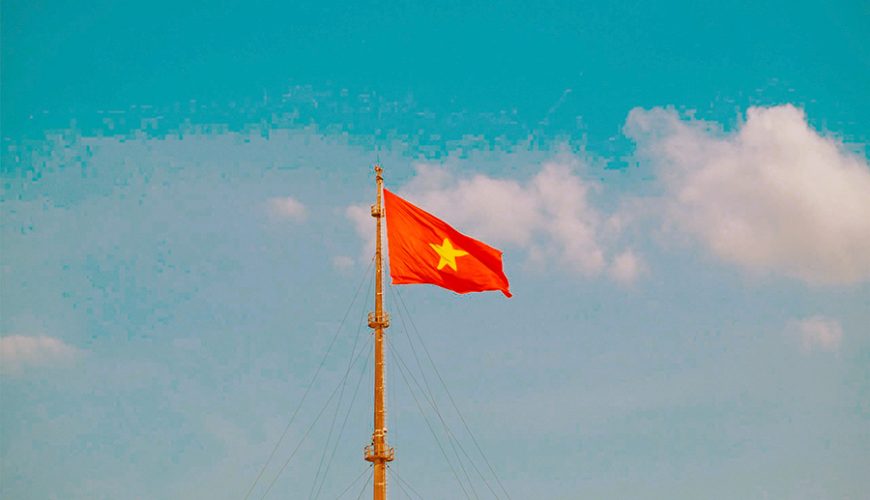
Above the highest floor is the flagpole, a feature that gives the building a distinctive highlight. Historically, flagpoles were made of wood and were replaced many times due to weather, natural disasters, and war. The current flagpole is a modern structure, about 37 meters tall.
Including the podium and flagpole, the Flag Tower reaches more than 50 meters, becoming a prominent highlight in the architectural space south of the Hue Imperial Citadel.
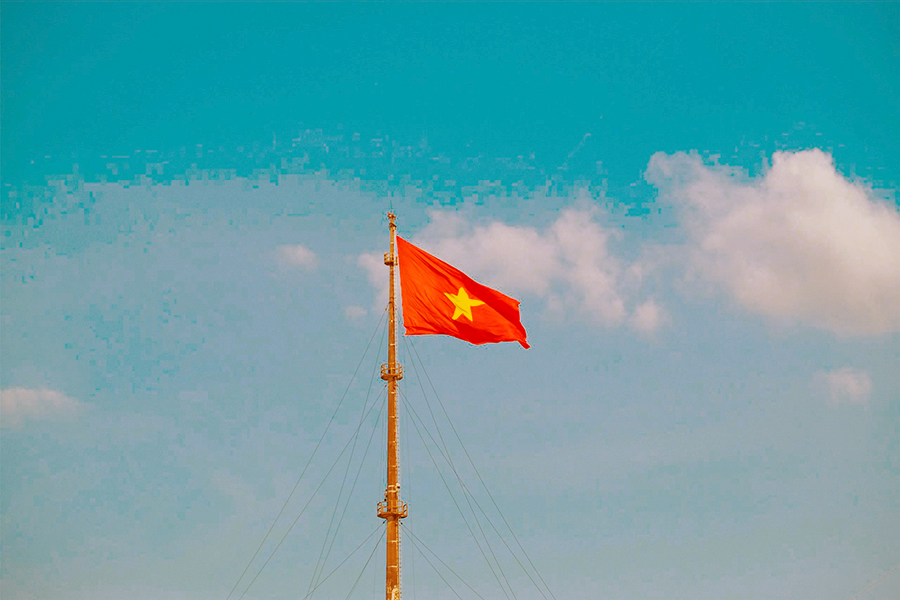
This design helps the flag be seen from many surrounding locations while creating a majestic, easily recognizable image of the capital.
During the Nguyen Dynasty, flags were displayed on all occasions such as ceremonies, celebrations, and newspaper announcements. At the top of the flagpole, there is also an observation station. Occasionally, guards climb to the observation station to use a telescope to watch the coast. On March 26, 1975, after winning the Hue-Da Nang Campaign, the 12 m long, 8 m wide flag of the National Front for the Liberation of South Vietnam was raised again on the Hue Flag Tower.
Source: collected by Thien An
Follow us for the best deals on Vietnam package tours and visa services!
Comment (0)