
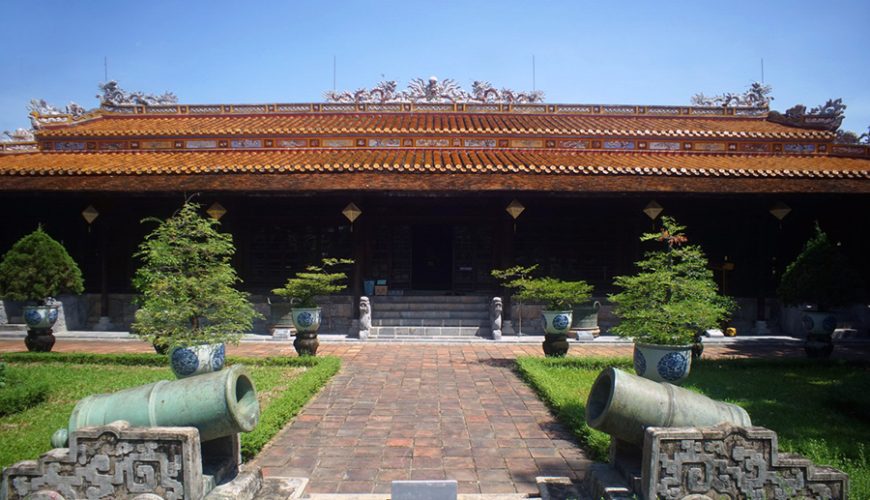
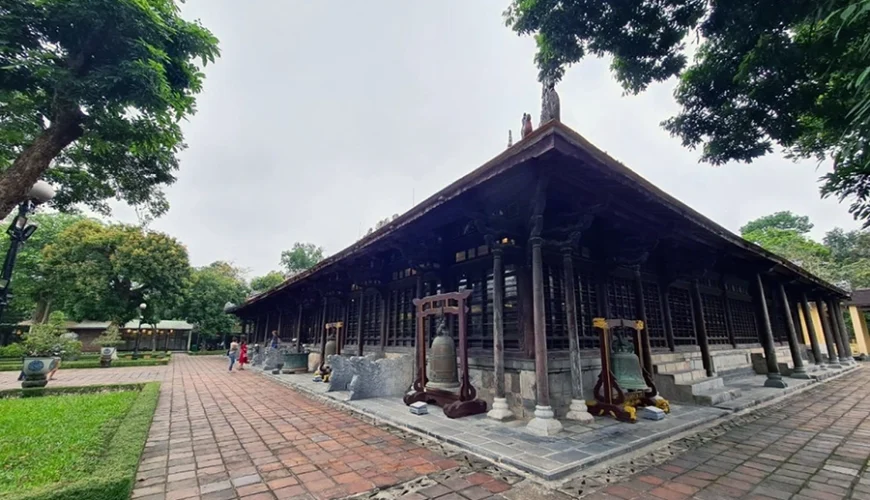
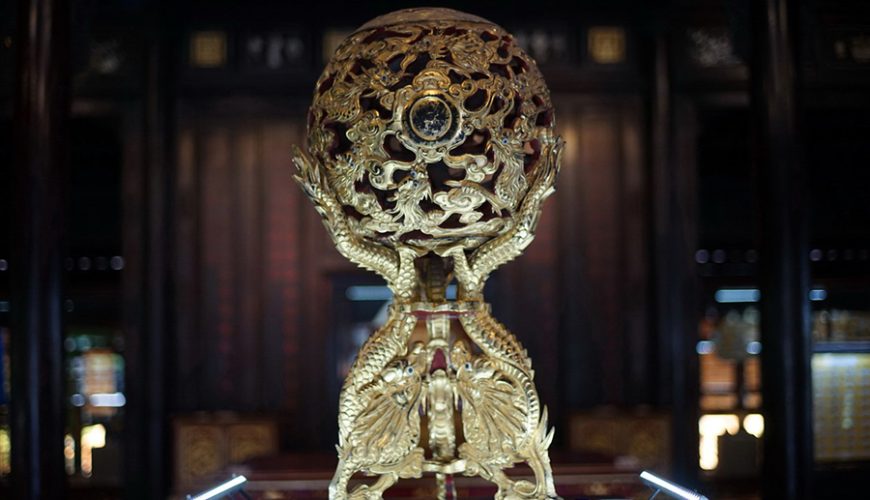
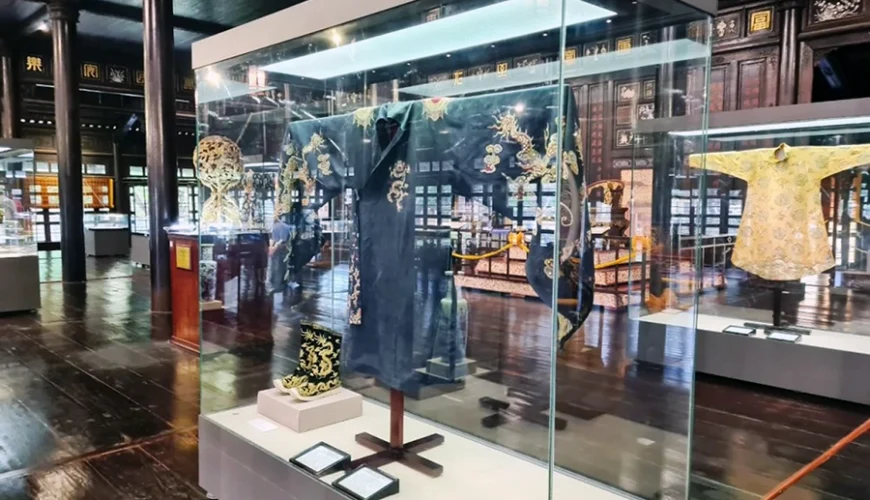
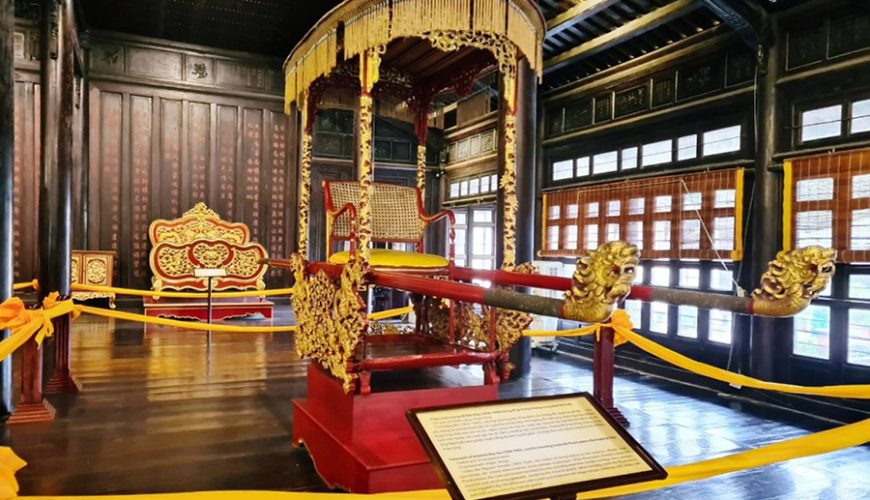
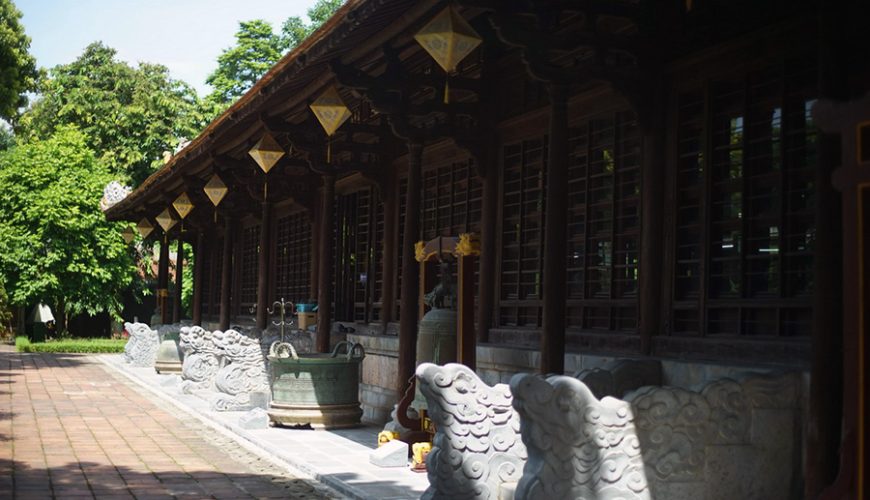
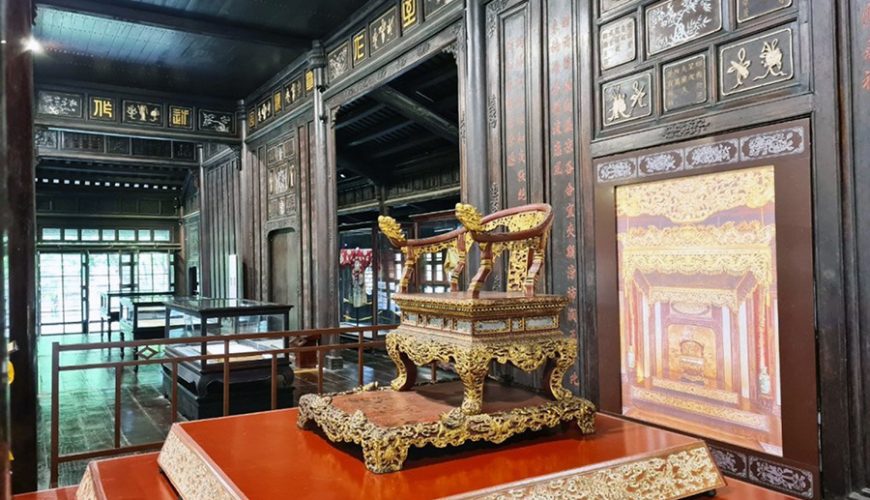
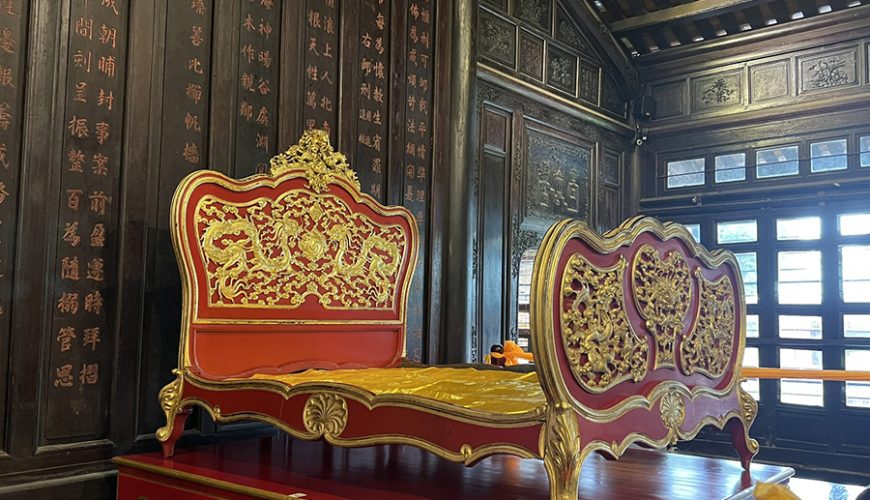
Long An Palace, also known as the Museum of Hue Royal Antiquities, currently houses artifacts from the Hue royal court. The palace is a remarkable example of imperial architecture preserved in the Hue Imperial Citadel, renowned for its exquisite wood carvings and unique decorative inscriptions of poetry and prose. Built during the 19th-century reign of Emperor Thieu Tri, the structure reflects the Nguyen Dynasty’s architectural sophistication and offers insight into the Emperor’s cultural life, aesthetic sensibilities, and literary passions.
The History of Long An Palace
Long An Palace (Vietnamese: Điện Long An) was built in 1845 during the reign of Emperor Thieu Tri (1841–1847). It was originally located within the Bao Dinh Palace complex, near the Ngu Ha River inside the Hue Imperial Citadel. It served as a retreat for the Emperor following the annual Royal Plowing Ceremony held each spring. It was also a favored spot for Emperor Thieu Tri to relax, read, compose poetry, and recite verses. Following the Emperor’s passing in 1847, Long An Palace was used as a place of worship in his honor. Over time, the building changed in both function and location.
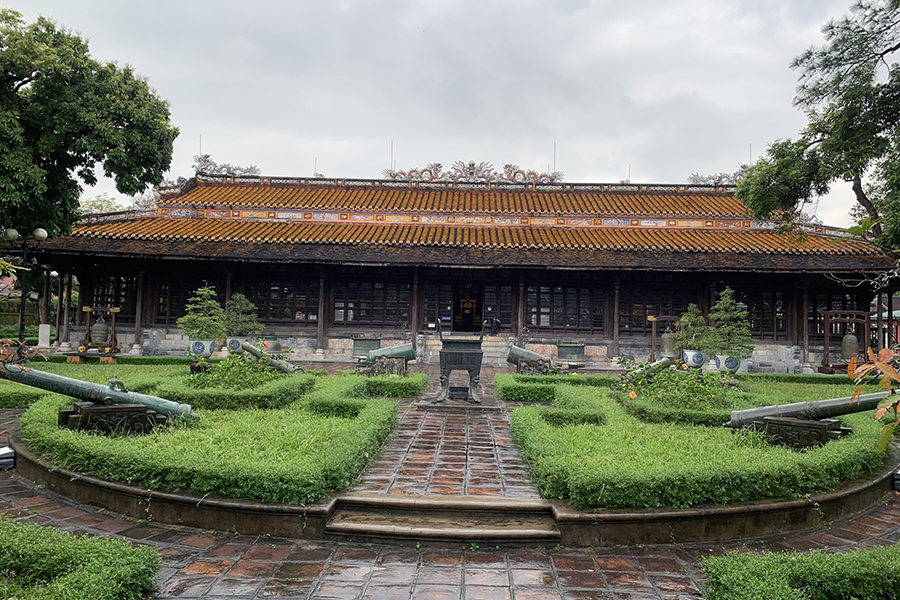
In 1909, during the reign of Emperor Duy Tan, the palace was relocated to its current site. By 1923, it became the exhibition venue for the “Musée Khai Dinh”, one of the earliest museums established in Vietnam and the precursor to the current Hue Museum of Royal Antiquities.
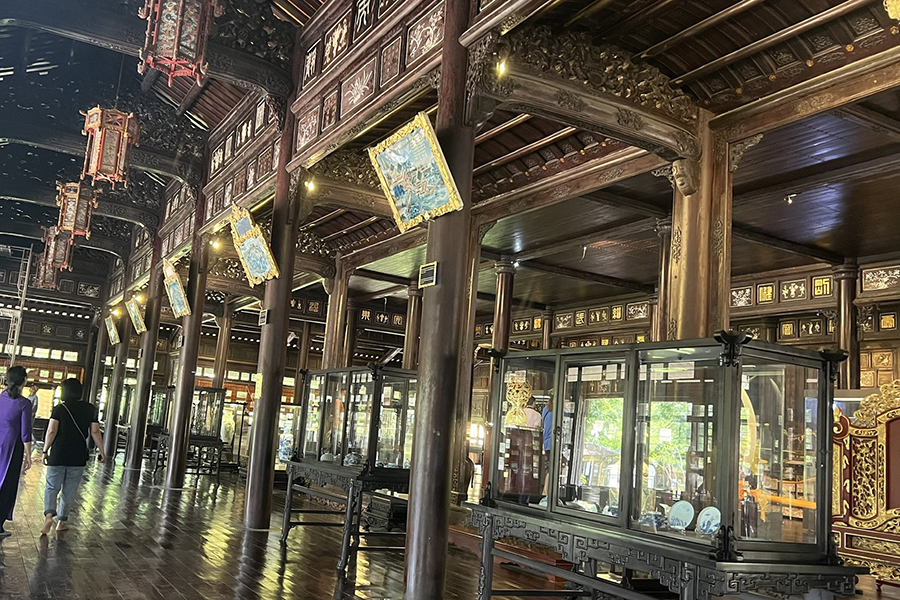
Despite the many historical upheavals it has endured, Long An Palace retains its essential architectural and decorative features, serving as an invaluable resource for the study of Nguyen Dynasty imperial art.
What makes Long An Palace’s architecture so special?
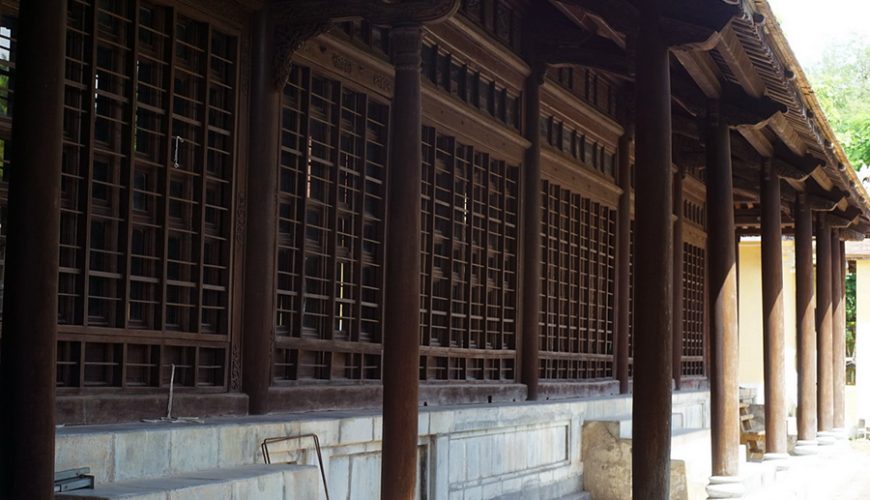
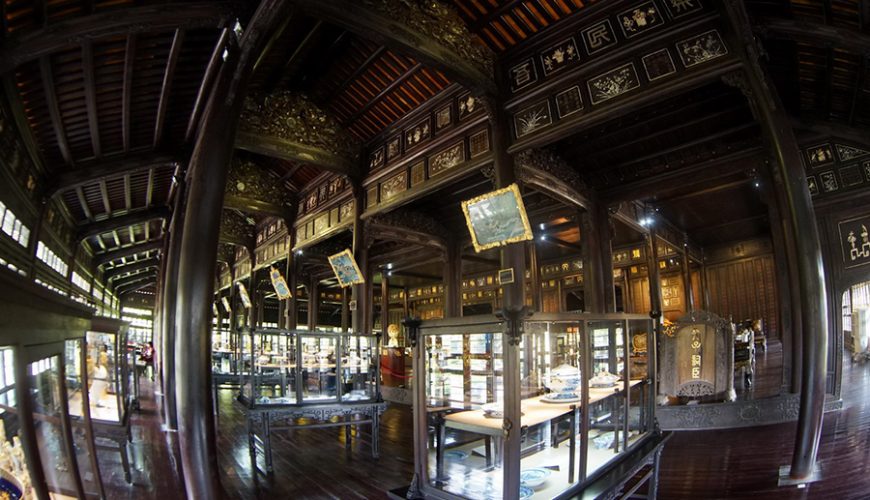
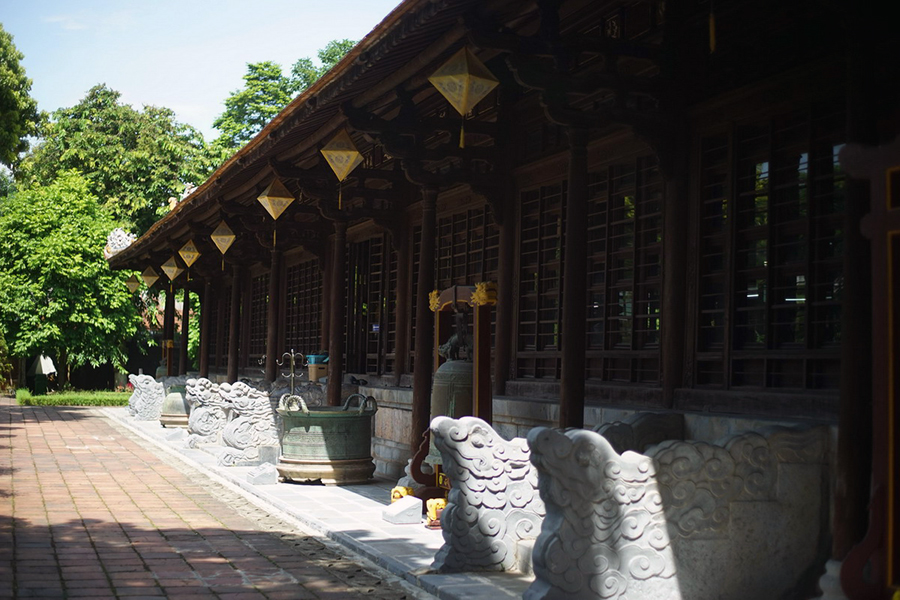
Long An Palace is a rectangular structure measuring 35.70 meters long and 28 meters wide, set on a stone-clad plinth 1.1 meters high. Its roof, covering 1,750 square meters, rests on a framework supported by 128 ironwood columns. The building follows the “double-roof, connected-chamber” architectural style.
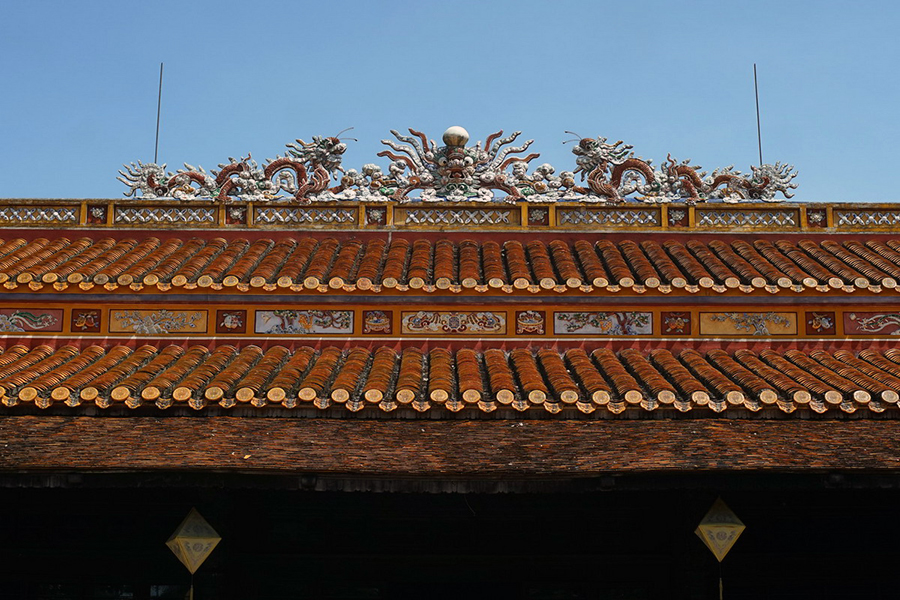
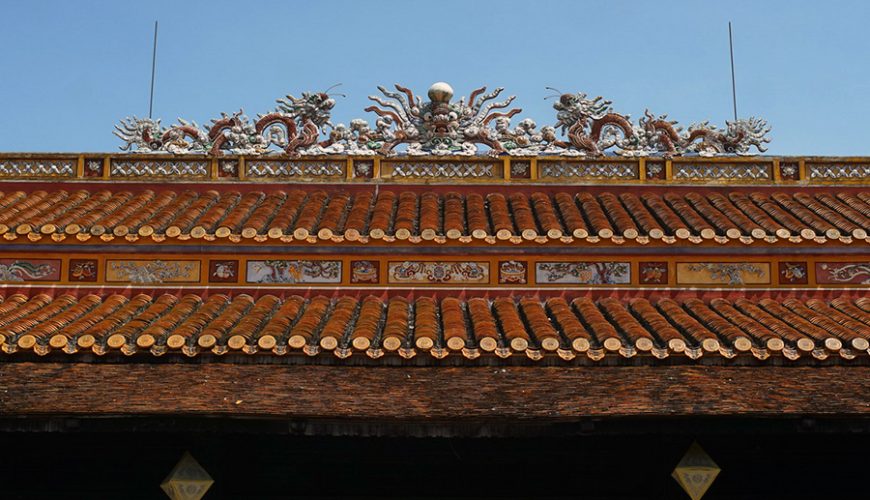
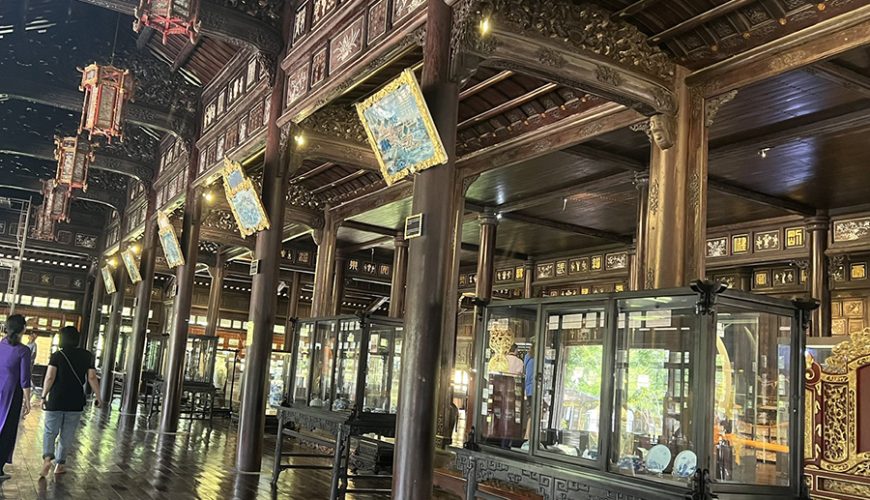
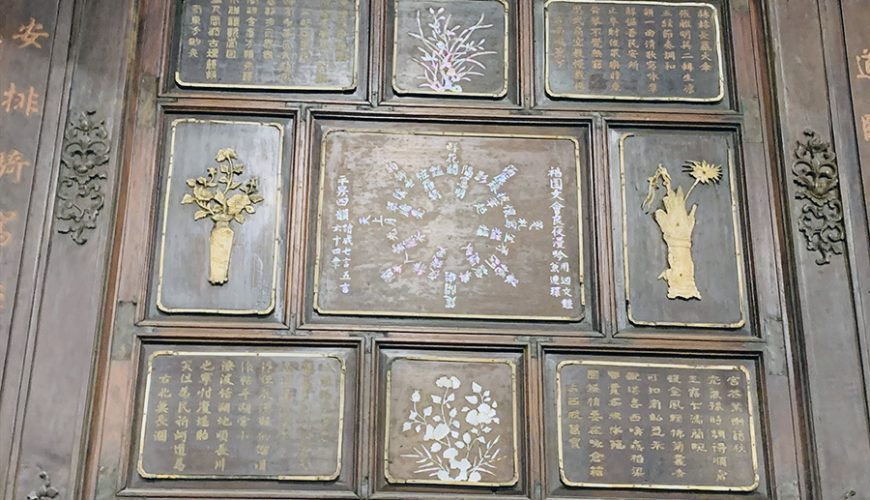
Unlike many other palaces, the wooden elements here are not adorned with red lacquer or gold leaf; instead, they are left in their natural state, embellished with exquisite carvings, such as the “two dragons flanking the moon” motif or depictions of the four mythical creatures: the dragon, unicorn, turtle, and phoenix. Wooden panels and decorative boards throughout the interior are intricately carved with poems composed by Emperor Thieu Tri, arranged harmoniously.
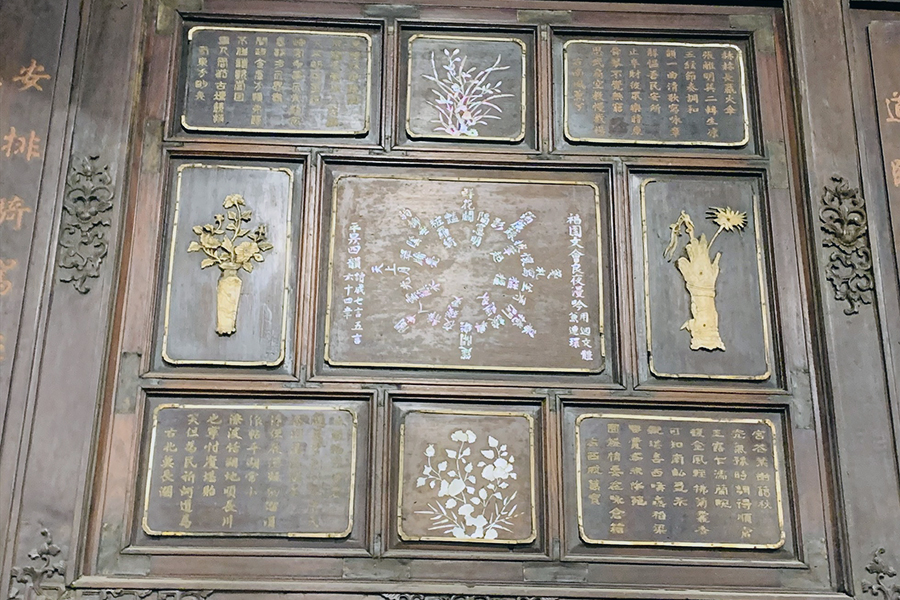
Within the palace, there are two particularly remarkable poems, each consisting of 56 Chinese characters. These can be read in various directions, forwards, backward, and in other patterns, to form 64 distinct poems. To this day, contemporary scholars and poets have yet to fully decipher these complex compositions by the poet-emperor.
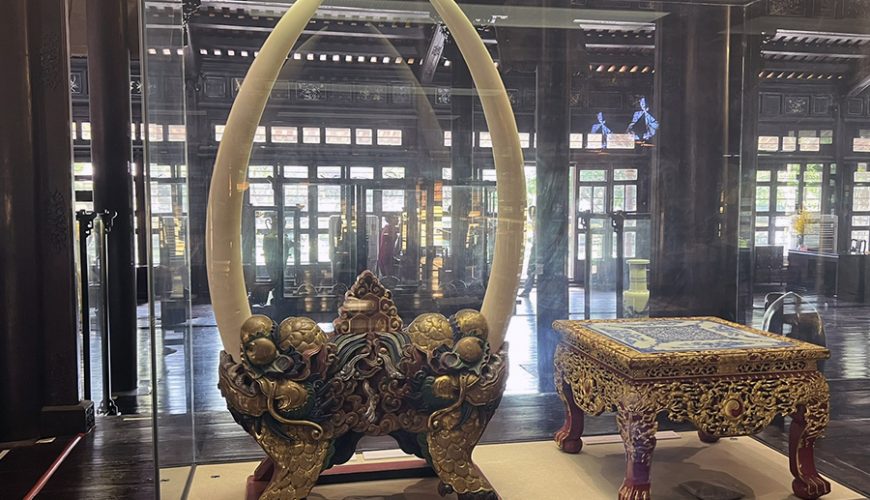
The interior and exterior decorations are rich in artistic value, at once magnificent and elegant, with a masterful balance that highlights key features while subtly downplaying secondary elements. It stands as a unique architectural achievement, deeply imbued with the distinct style of the Nguyen Dynasty. The collections here are rich and diverse, focusing primarily on the fine arts of the Nguyen Dynasty (1802–1945). They include royal attire, porcelain, items used in daily life within the imperial palace, paintings on glass over 150 years old, and musical instruments used during court ceremonies and festivals. This is arguably the only museum in Vietnam to house such an extensive collection of artifacts from the Nguyen Dynasty, the country’s final feudal dynasty.
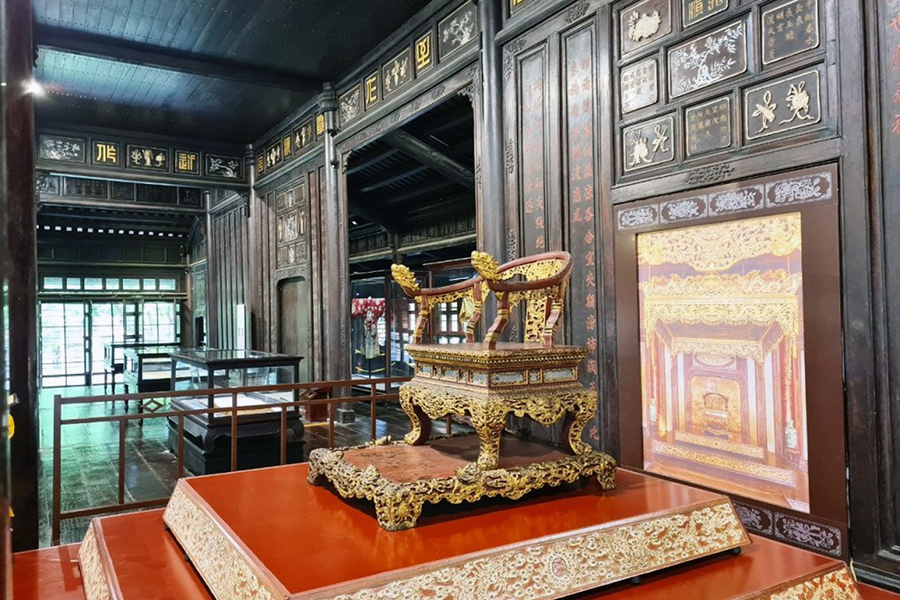
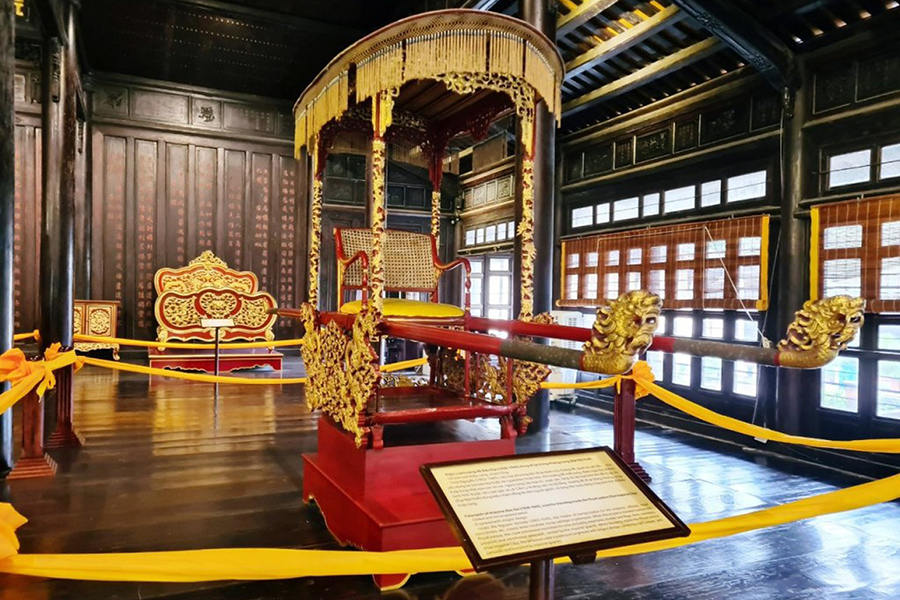
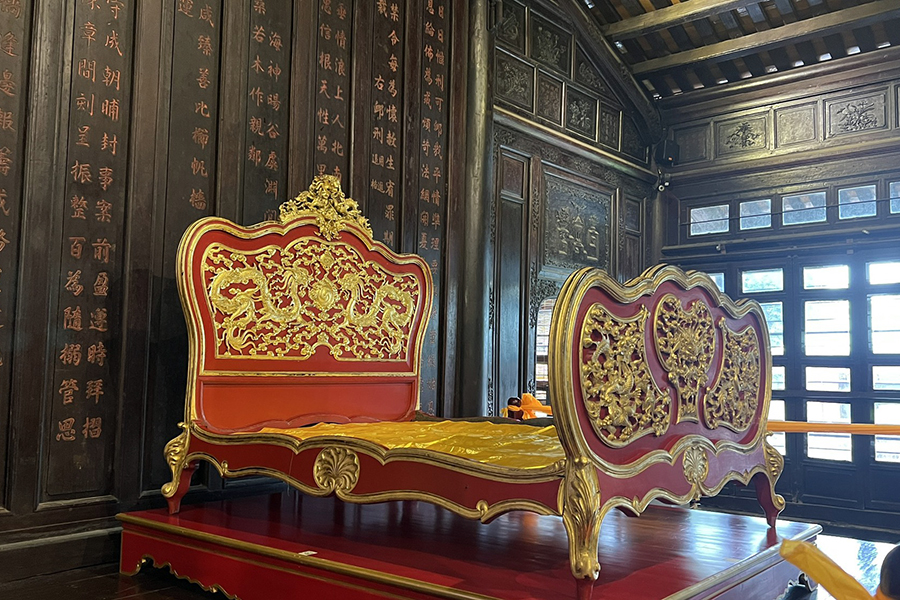
The museum also houses a collection of early Cham sculptures. Most of these exquisite handicrafts were created by master artisans, “golden-handed” craftsmen, commissioned by the imperial court. Others were produced locally, imported from abroad, gifted by diplomatic missions, or offered as tributes to the emperor; many are so rare that no duplicates exist.
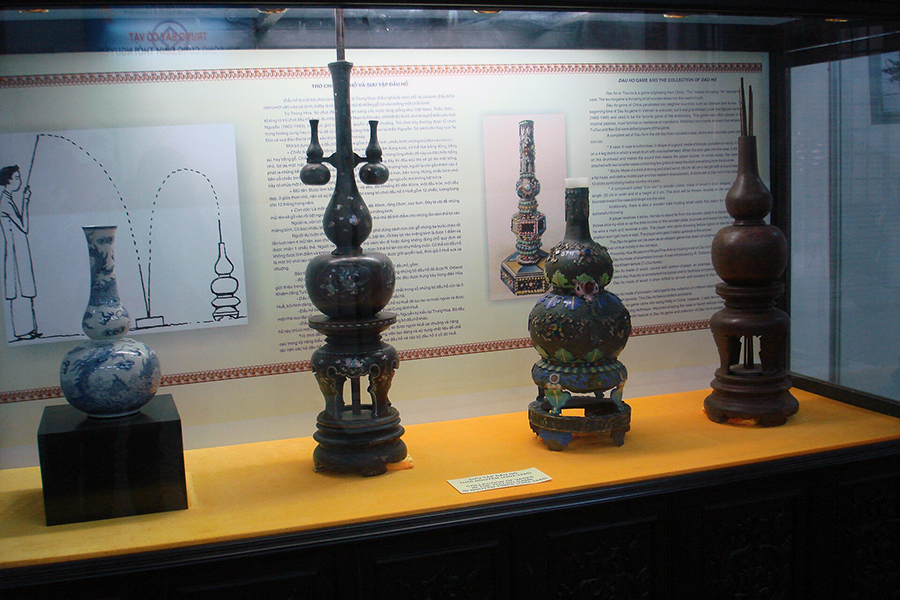
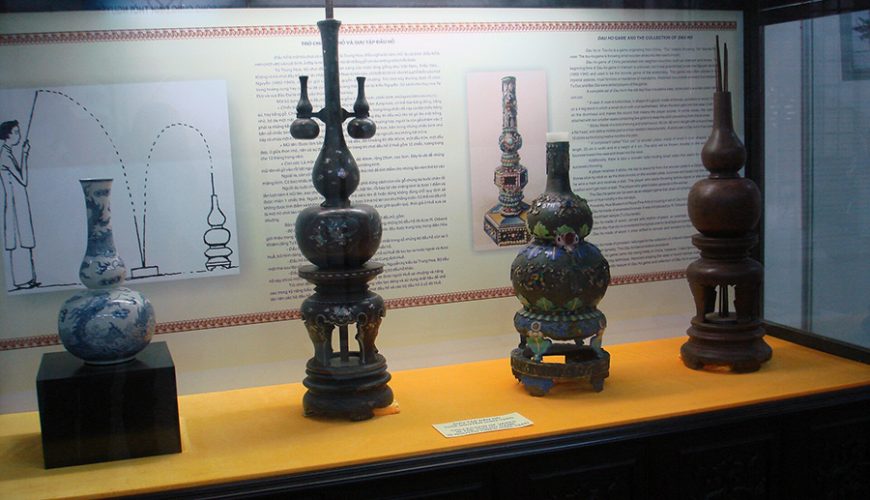
Many of these items are one-of-a-kind. Among the objects currently on display is a Pitch-pot set, a traditional game once played within the palace by the emperor, the royal family, and the aristocracy.
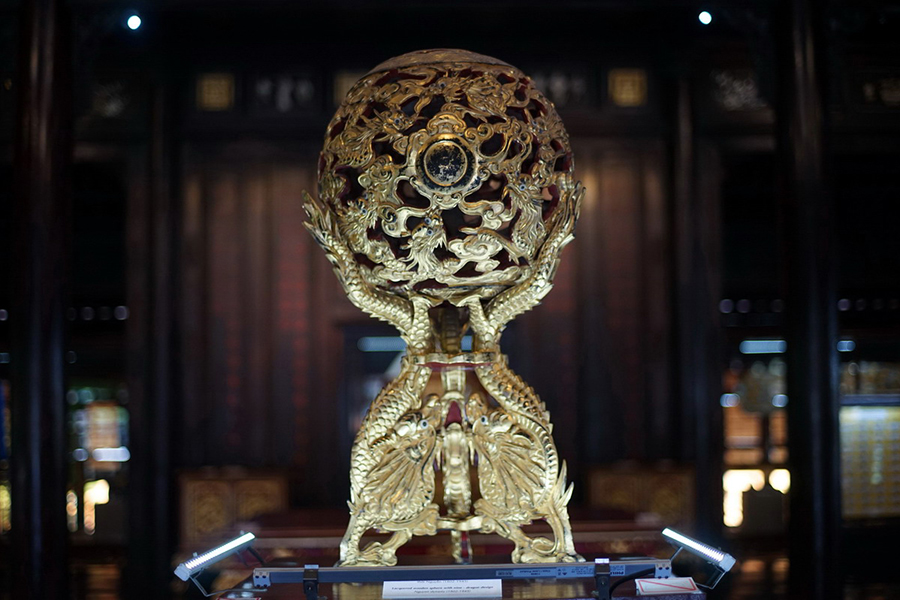
However, due to the nation’s turbulent history (between 1845 and 1975), the ravages of time, the impact of war, and losses driven by human greed, the collection is no longer as complete as it once was. Many artifacts were scattered or stolen during wartime or through the illicit antiquities trade; some are now held in museums in France. Today, the Hue Monuments Conservation Center works diligently to restore, supplement, and preserve these treasures, ensuring they are carefully maintained for visitors.
Source: collected by Thien An
Follow us for the best deals on Vietnam package tours and visa services!
Comment (0)