
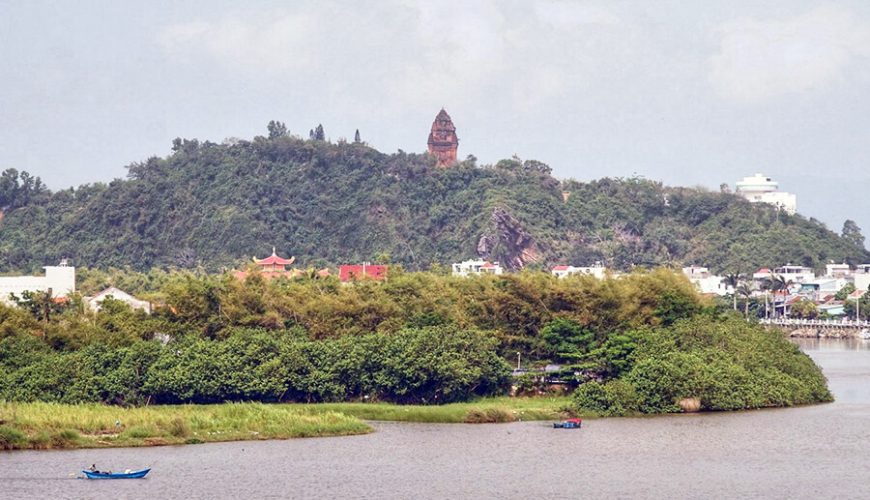
Standing majestically atop Nhan Mountain, in the heart of Tuy Hoa, Nhan Tower has long been a representative cultural and historical symbol of old Phu Yen province (currently Dak Lak Province). More than just an ancient architectural structure, it is also a profound testament to the ancient Cham civilization, deeply intertwined with the spiritual life and cultural identity of the local people over many centuries.
Overview of Nhan Tower
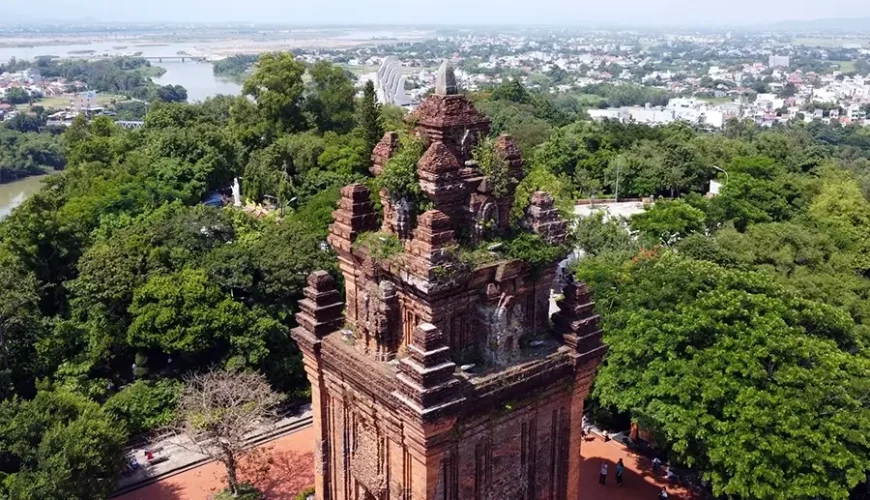
Nhan Tower is located on a small mountain of the same name, approximately 64 meters high, on the northern bank of the Da Rang River. From this vantage point, visitors can enjoy panoramic views of Tuy Hoa, the gently winding river, and the vast plains in the distance.
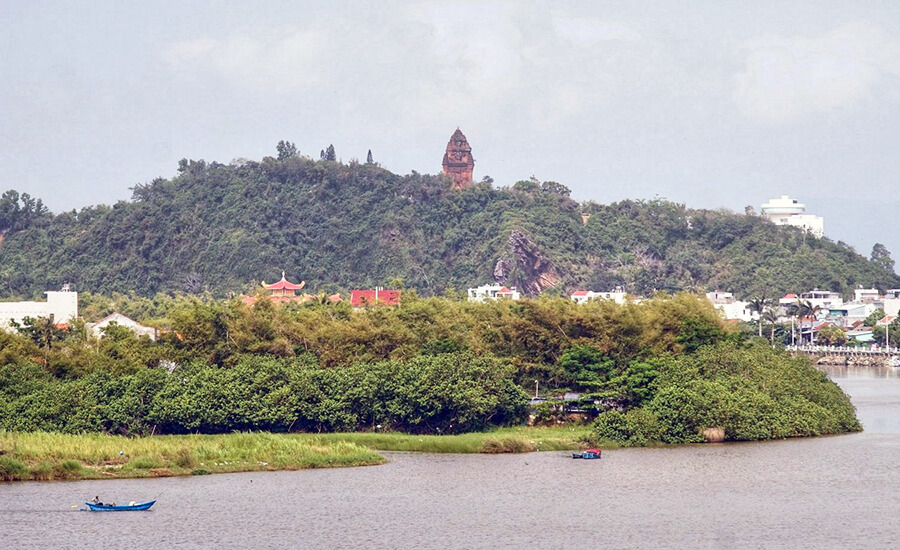
Regarding the name Nhan Tower (Vietnamese: tháp Nhạn, tháp means tower), the people of Phu Yen explained that it was named after the many swallows (Vietnamese: chim Én or Nhạn) that used to live and nest on the tower’s summit. Over time, the tower came to be known by this bird species.
According to numerous research documents, the Nhan Tower was built in the 11th-12th centuries, during the flourishing period of the Champa kingdom. It is one of the typical religious architectural works of the Champa people. Typically, Champa towers enshrine a set of idols including a linga and yoni, with the linga symbolizing the god Shiva.
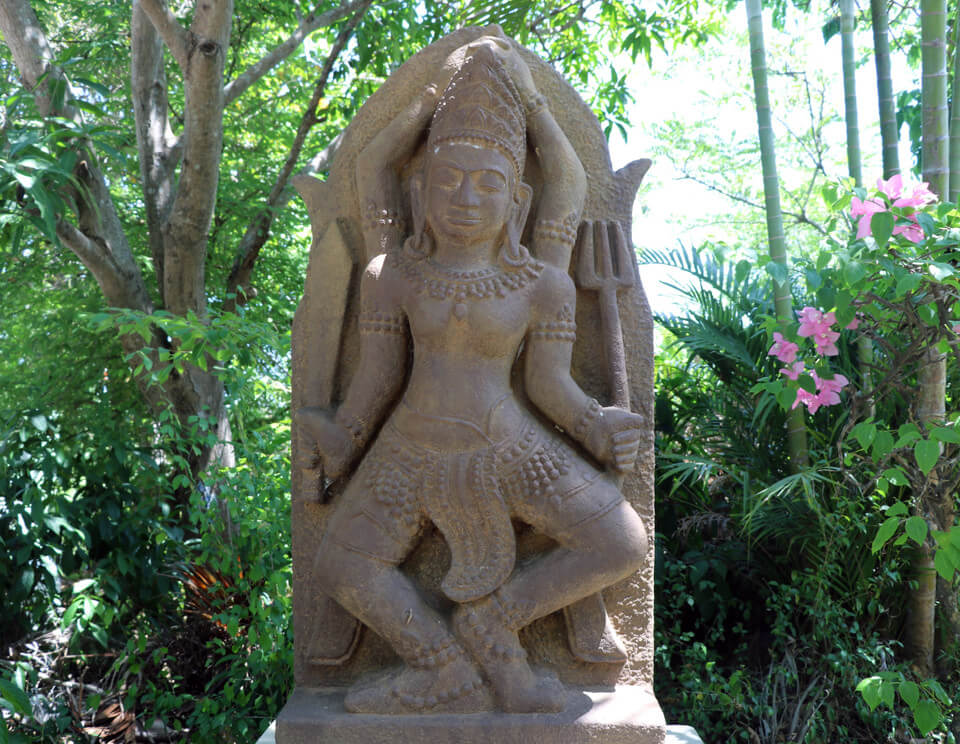
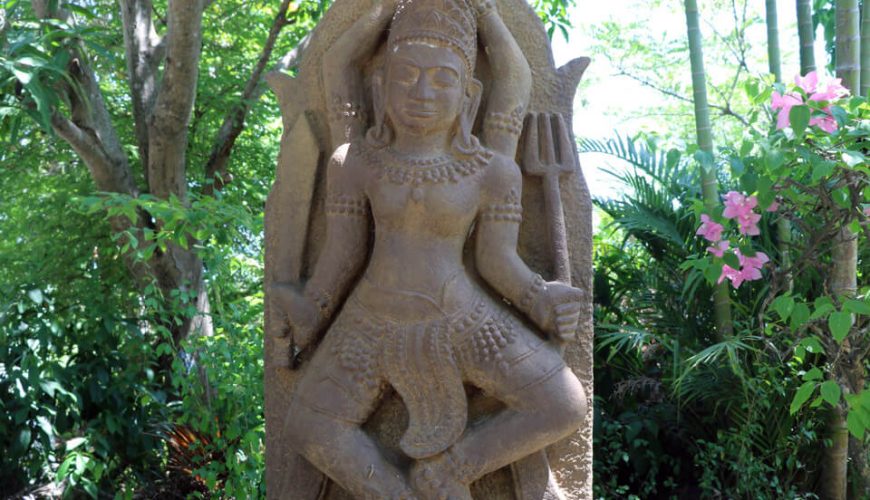
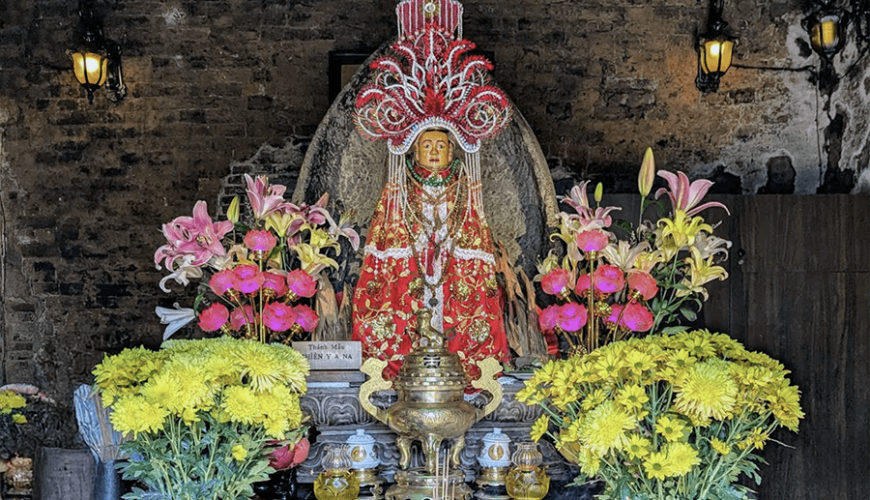
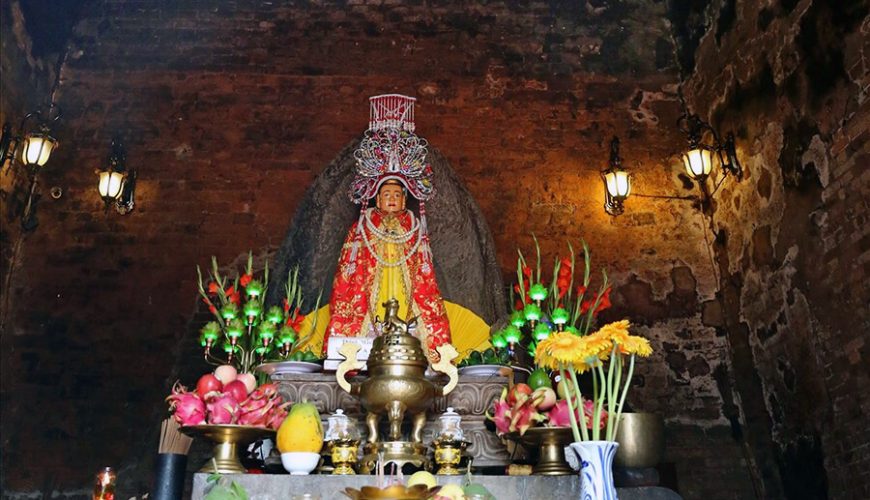
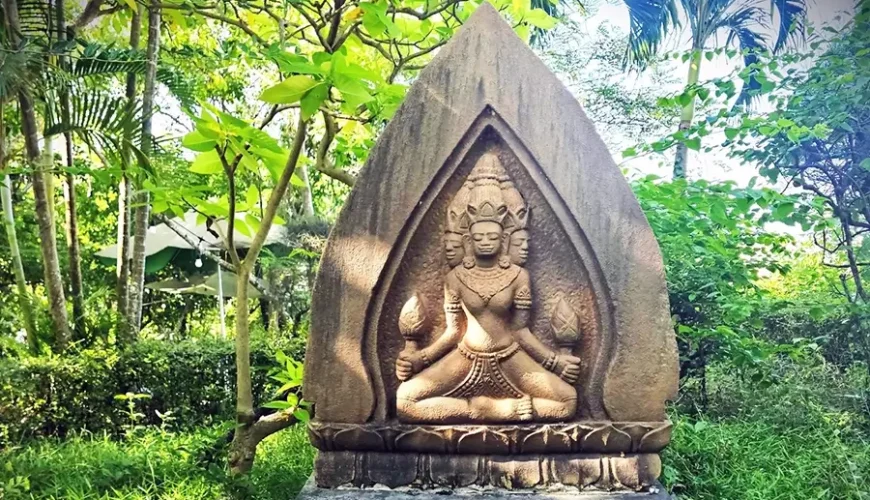
However, some towers also enshrine the goddess Poh Inư Naga (also known as Poh Naga) – a belief held by ancient indigenous peoples. In ancient Champa, Poh means god, Inư means mother, and Naga means land; thus, Poh Inư Naga means Mother of the Land. Poh Inư Naga is a celestial being who governs all the land, forests, mountains, rivers, and seas, descending to earth to help and bring prosperity and happiness to the people. The Nhan Tower is one of the few towers dedicated to Poh Naga.
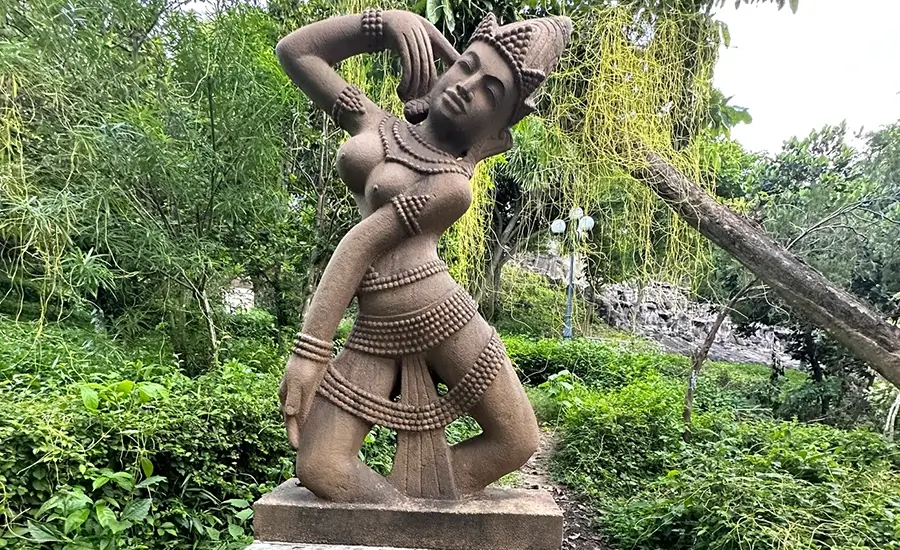
Over the centuries, the Nhạn Tower has witnessed many historical changes, from the flourishing period of Champa to the cultural exchanges between Vietnam and Champa. Despite the effects of time and war, the structure has been relatively well preserved and has undergone numerous restorations to maintain its heritage value.
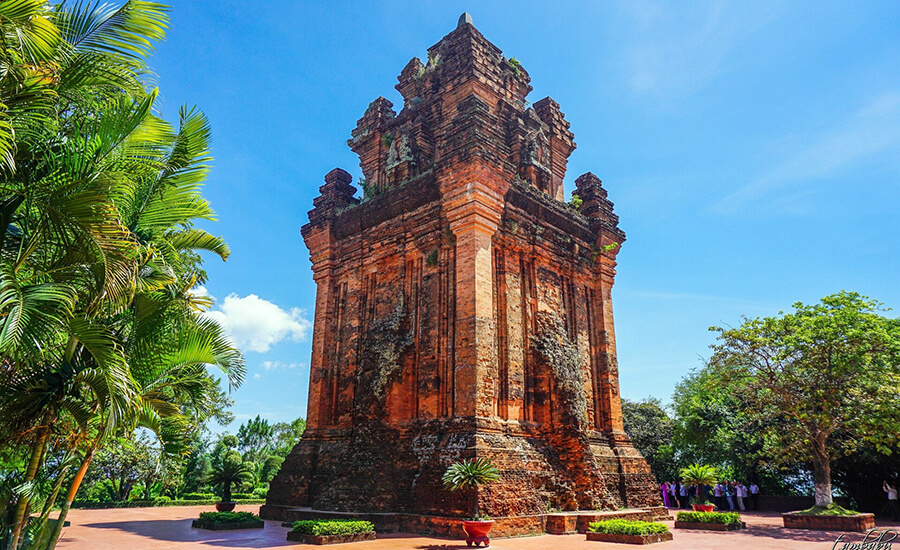
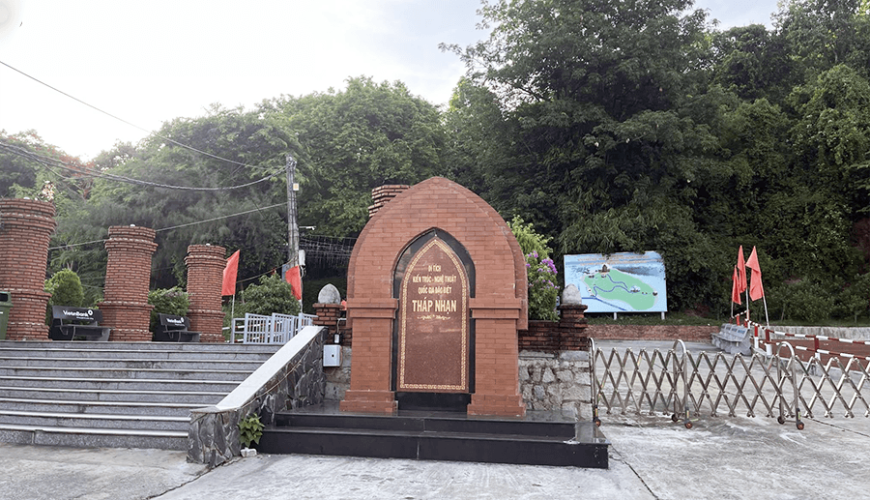
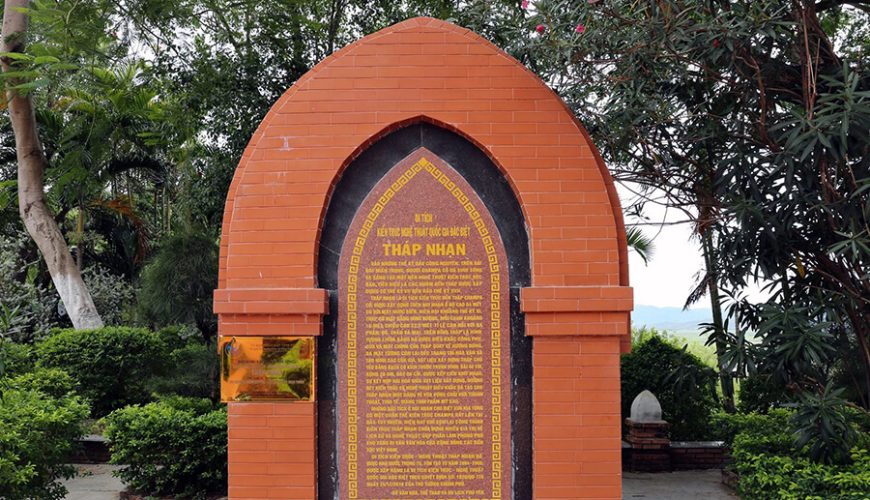
In 1988, the Nhan Tower was recognized as a national architectural and artistic monument by the Ministry of Culture and Information (now the Ministry of Culture, Sports and Tourism).
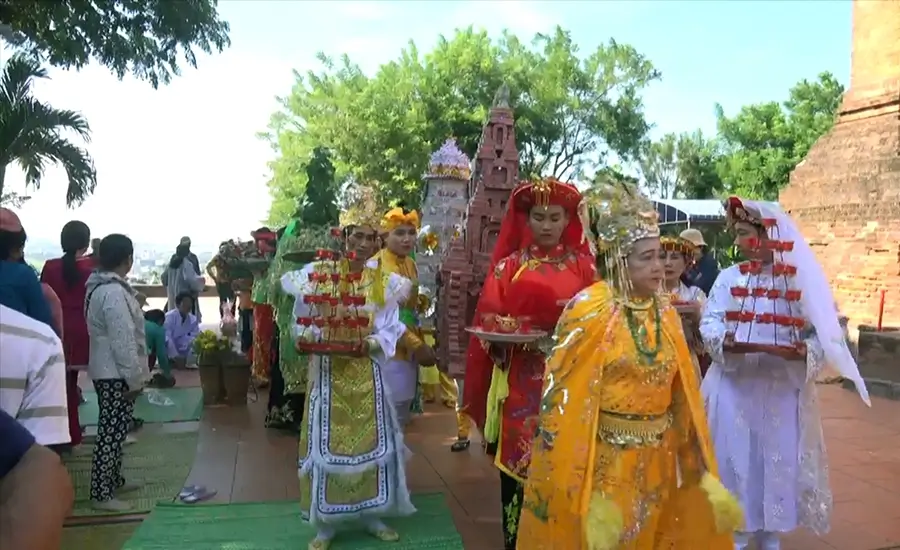
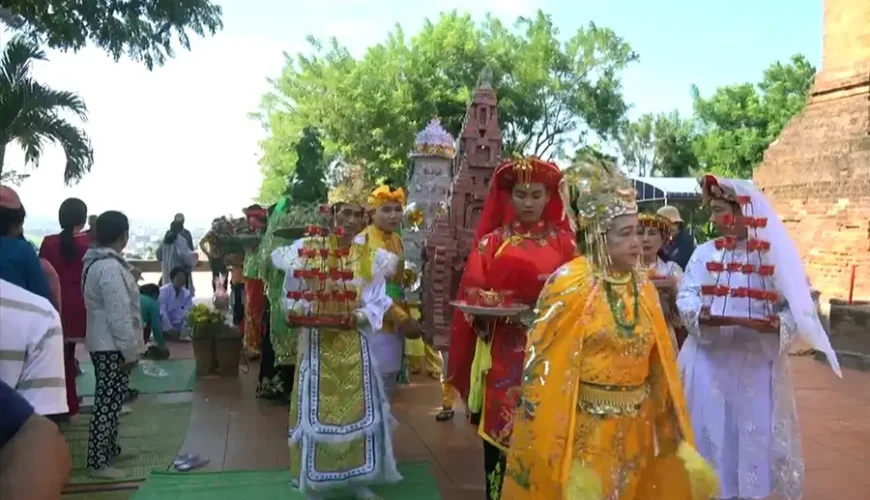
Every year, from the 20th to the 23rd of the third lunar month, the Lady Thien Y Ana Festival is held at the Nhan Tower. The main ceremony takes place on the 21st of the third lunar month. The festival attracts people from local and some neighboring provinces.
Unique Architecture of Nhan Tower
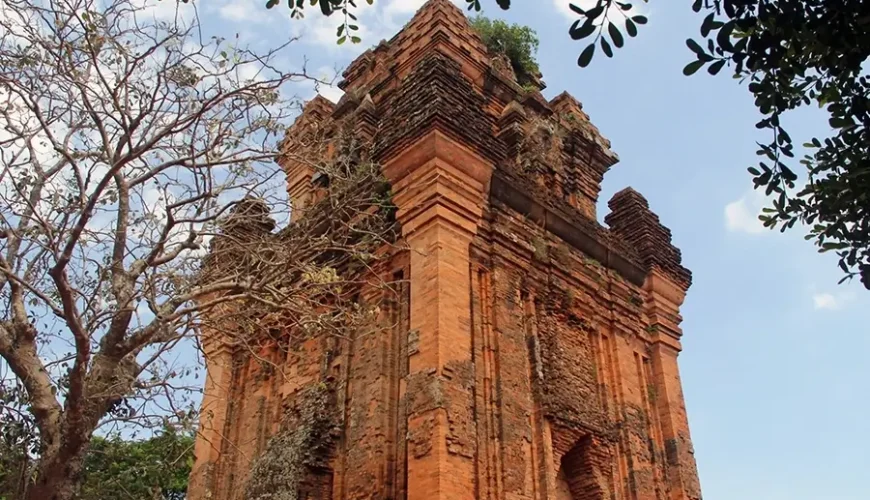
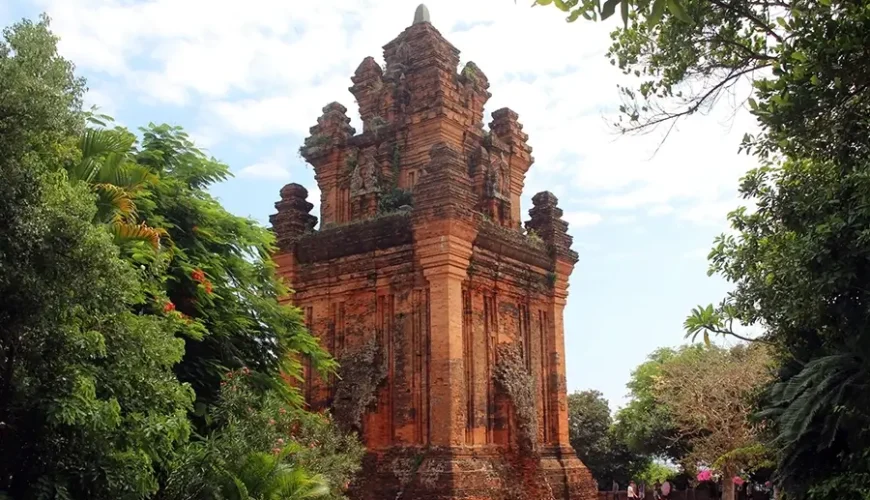
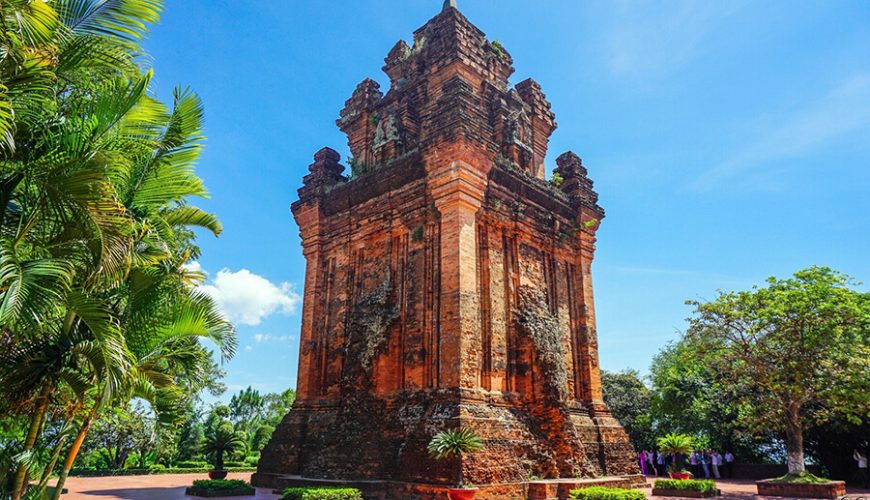
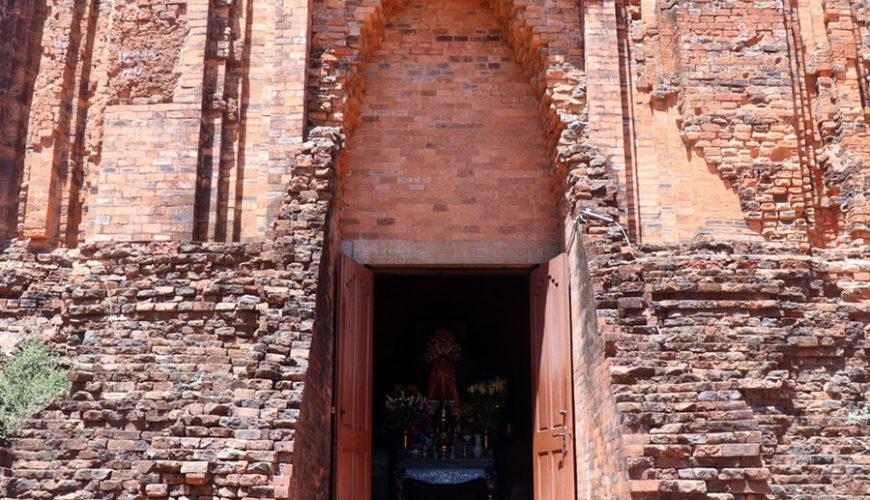
The Nhan Tower’s architecture consists of three parts: the base, the body, and the roof, with a total height of approximately 24 meters. The base and body of the tower are square, symbolizing the earth. The base is designed to be larger than the body, with a height of approximately 3.3 meters. The upper rows of bricks are set back from the rows below in a specific pattern, gradually narrowing to embrace the tower’s body. The base of the tower is a large, solid block deeply embedded in the ground, supporting the body and roof.
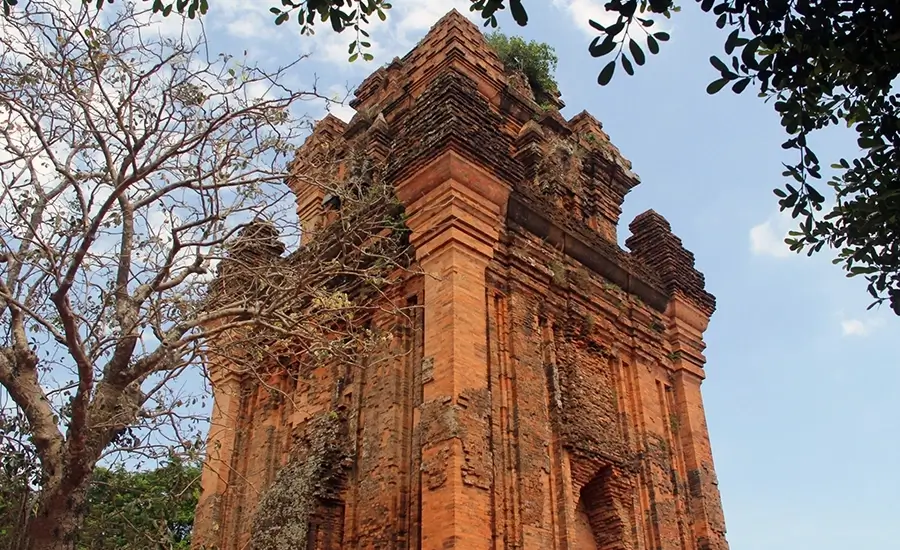
The tower’s body is square, with each side measuring 10.5m, approximately 9.3m high, and walls about 3m thick. The walls are built vertically, reinforced at the four corners, creating protruding and recessed ridges on the two sides and the back. The carved symbols and moldings on the tower’s body are incredibly diverse and rich. They not only express human aspirations and ambitions but also reflect the world of the gods.
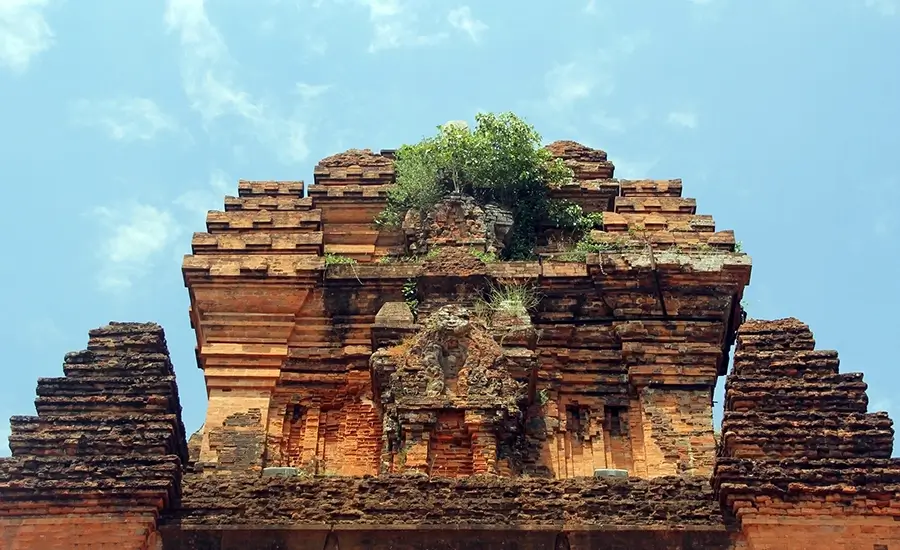
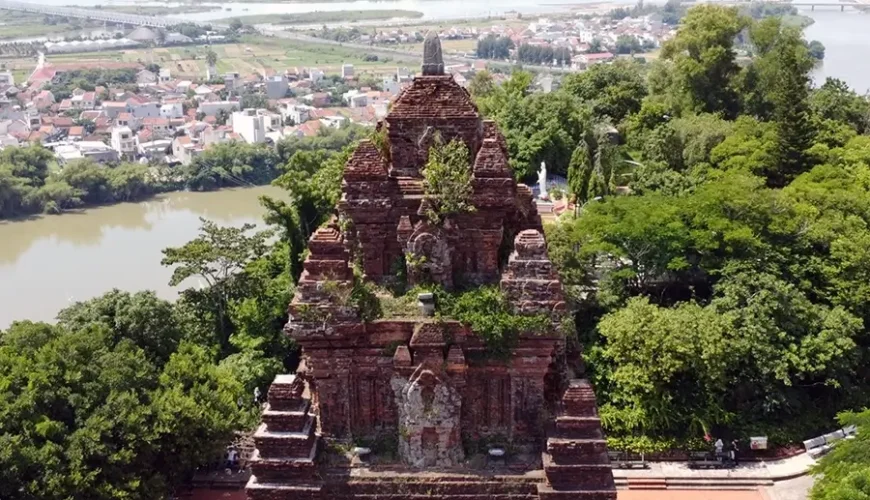
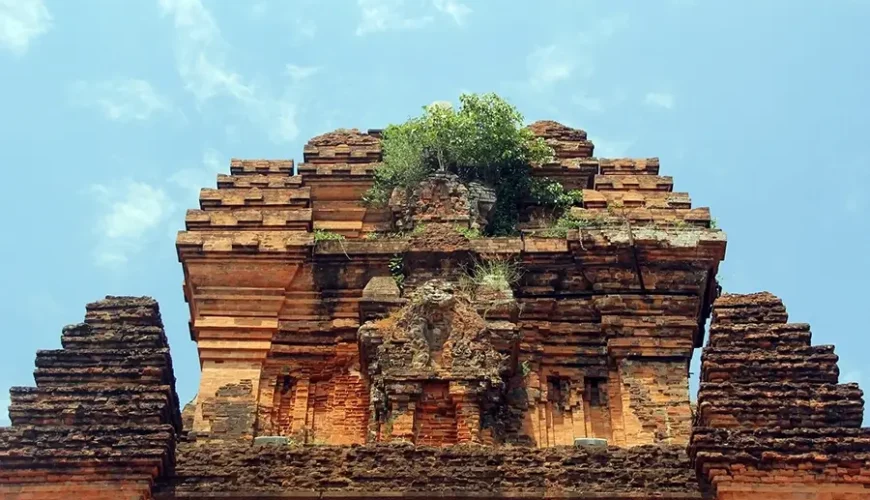
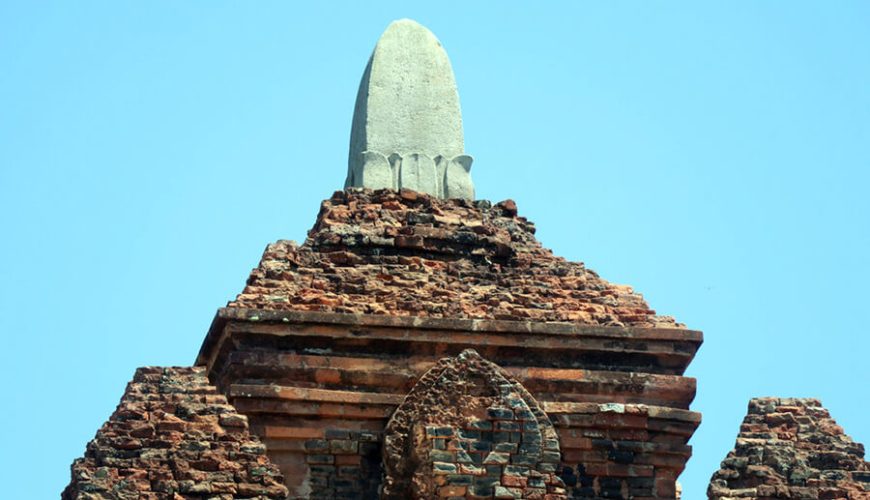
The tower’s roof has four layers, with very unusual shapes and lines, reaching a height of about 8.5m. The bottom layer, with its four large pillars at the four corners, resembles four lotus buds from a distance. The second and third layers each have four lotus buds, which become smaller and more pointed towards the top. The top layer is a large, monolithic stone with a square base, curving evenly and tapering to a point on all four sides, exquisitely carved – this is the symbol of the linga. The linga is the male reproductive organ, symbolizing Shiva, one of the three supreme gods of Hinduism. From a distance, the roof resembles a wildflower, like a fire on a winter night, symbolizing divinity, enlightenment, and the awakening of humanity in spiritual life.
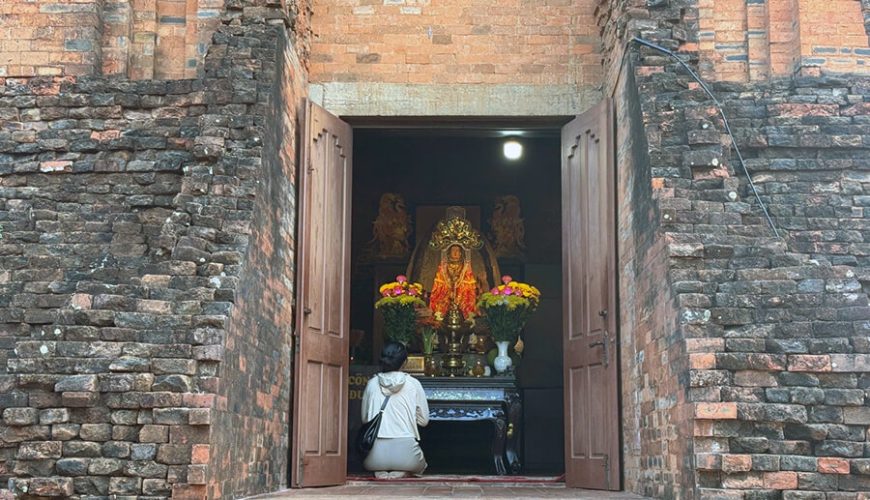
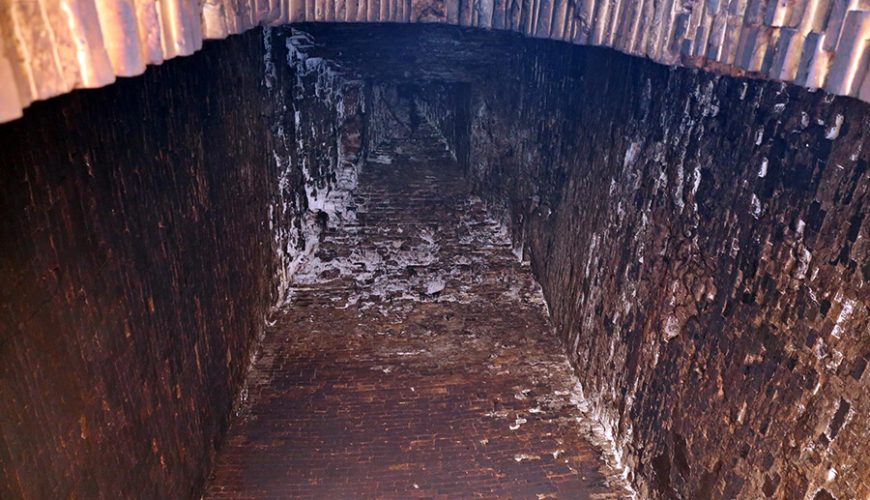
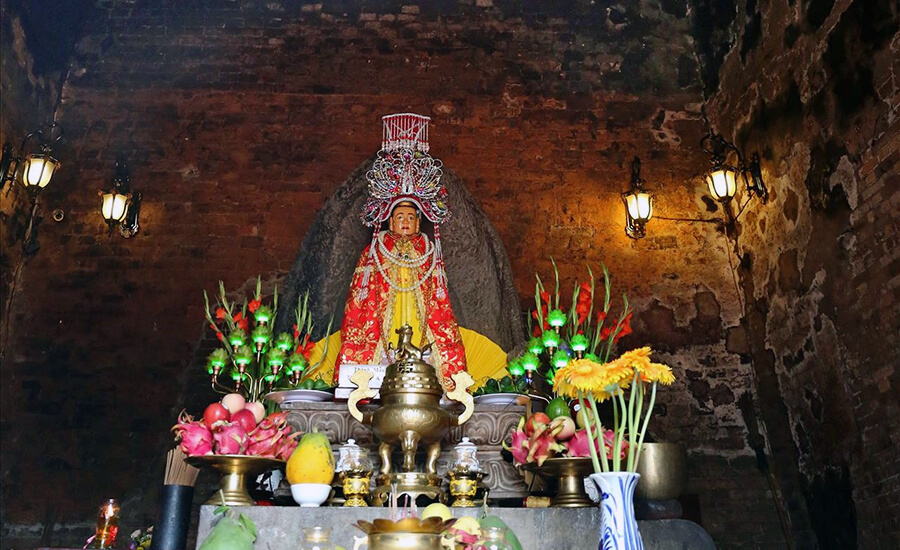
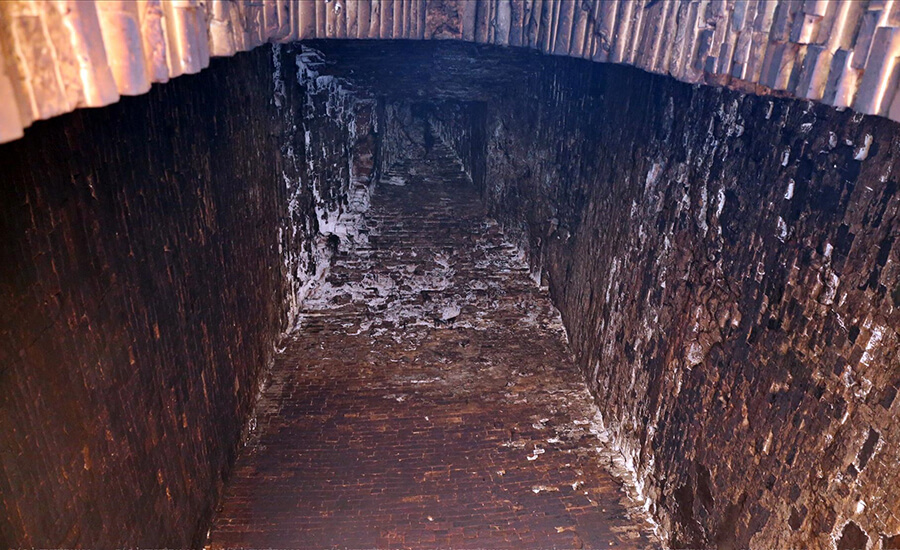
Inside the tower is an open space 4.5 meters long, with the tower’s base 1.8 meters higher than the outside courtyard. The worship arrangement inside is very simple, with only an altar to the celestial maiden Thien Yana facing the door. The entire tower, from the foundation, base, body, and roof, is built of solid brick; only the linga is made of stone.
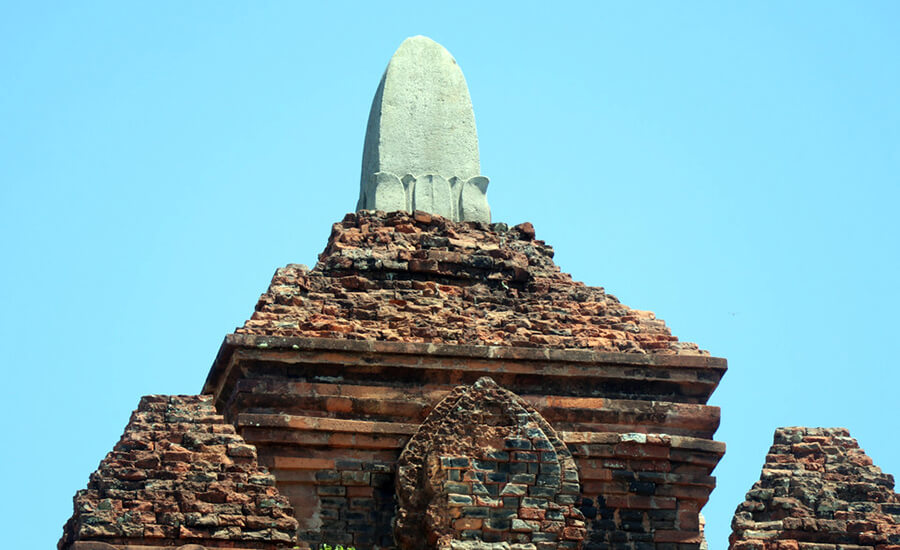
The top of the tower (the spire) is built with a meticulously carved, symmetrical lotus-bud-shaped stone, symbolizing the reproductive organ and the power of creation in Cham culture. Beside the lotus-shaped rock are reliefs that clearly reflect the beliefs and aesthetics of the ancient people. Even more remarkable is that, viewed from above, the top of the tower marks the boundary between the upper and lower parts, as each of its four sides has four windows corresponding to the four directions of “East, West, South, and North” in the Yin-Yang Five Elements.
The entire area around the Nhạn Tower has been neatly planned within a 1000 m² plot, with the ground paved with tiles and the area tidily arranged. The ancient Cham tower rises majestically, standing out against a backdrop of lush greenery and the sky. As night falls, the lights at the base of the tower illuminate the building, brightening a corner of the sky and making the Nhan Tower even more dazzling. This is also a place where traditional dance and music performances are regularly held for tourists on weekends.
Useful information about Nhan Tower
- Location: 72 Le Trung Kien, Tuy Hoa Ward, Dak Lak Province.
- Entrance: Free
- Tourist spots nearby: Long Thuy Beach, Da Dia Reef, Da Bia Mountain, Dai Lanh Cape…
Source: collected by An
Follow us for the best deals on Vietnam package tours and visa services!
Comment (0)