


Crossing the sunny road, with green rice fields on both sides to reach Nom village, in Hung Yen, visitors seem to step into a peaceful, ancient space from several hundred years ago. Upon arriving in Nom village, visitors are immersed in a complex of ancient relics, including the village gate, well, communal house yard, banyan tree, Nom pagoda, and ancient houses typical of Northern villages.
One of the oldest northern villages in Vietnam
About 30 km east of Hanoi, Nom village, an ancient village in Dai Dong Commune, Hung Yen Province, still retains its ancient beauty. The imposing village gate, built more than 200 years ago with four square axes carved with many sophisticated motifs. Behind the gate, Nom village appears exactly as people imagine an ancient Vietnamese village.

In the past, the villagers had a scrap metal business. Local people bought scrap metal to sell to local bronze foundries and neighboring areas. Thanks to their hard work, diligence, and business creativity, Nom village has become increasingly prosperous, creating conditions for cultural activities to flourish. The few remaining red-brick roads and ancient house gates, interspersed with rows of brick walls leading to the village’s alleys, make many people nostalgic.

What impresses Nom village is the rustic, simple, and sincere rural lifestyle. All are still maintained almost intact and are a little affected by the “tornado” of urbanization.

On both sides of the lake, on the way to the village, are straight rows of areca trees in front of ancient houses and family temples, with architectural features reflected on the water’s surface.
Nom Bridge leads to the pagoda of the same name across the Cai River. This is the only remaining stone bridge across the river in Hung Yen. The bridge is about 2m wide, with 9 spans, and the top of the horizontal support column is decorated with cloud patterns, becoming part of the soul of the village.
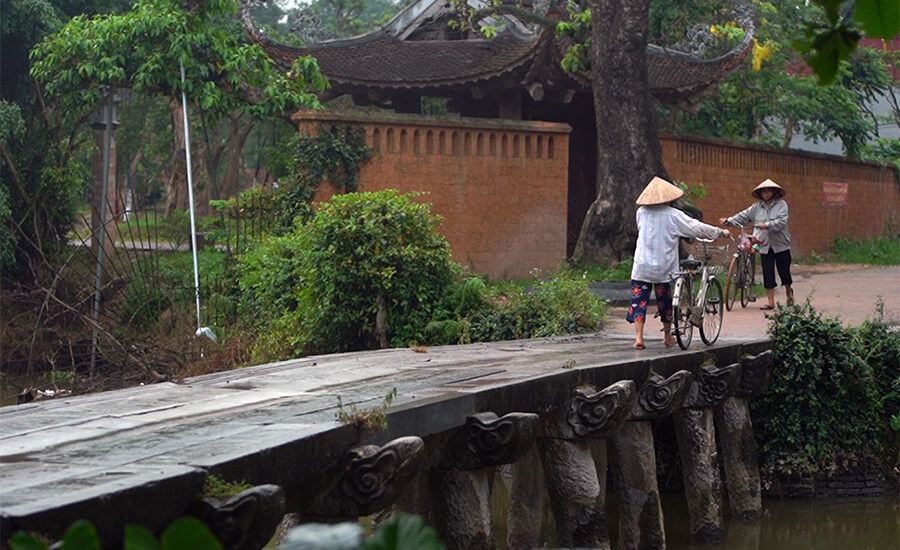
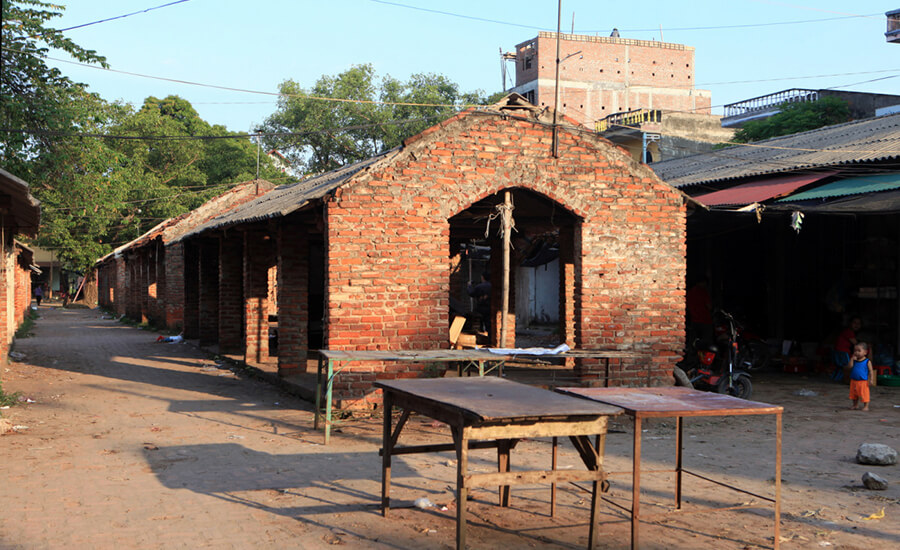
The road leading to Nom market passes through the 9 spans of the stone bridge. The market meets 12 times a month on days ending in 1, 4, 6, and 9. In the past, Nom market was one of the places that regulated the life of the whole village with the famous copper craft. Unlike the market in the city, the Nom market was held inside houses built of unplastered brick. The red-brick color, covered with a yin-yang tiled roof, weathered over time, is very nostalgic.
Nom Pagoda, very famous, is located next to Nom Market. Nom Pagoda belongs to the Lam Te Zen sect. No one knows the exact date of the pagoda’s founding. However, on the two large steles still preserved here, the pagoda was rebuilt in 1680 and restored many times after that. The pagoda was formerly a famous pagoda of Hung Yen. According to legend, Nom Pagoda was built in the middle of an ancient pine forest. Perhaps that is why the pagoda is also called “Linh Thong Co Tu” (Ancient Pagoda in Pine Forest).

Nom Pagoda has a traditional architecture. The most special thing is that the pagoda still preserves more than 100 ancient terracotta statues. Through many historical upheavals and horrible, long-lasting floods, these statues have “survived” the test of time and retained their original beauty.

Typical relics at pagodas and communal houses still preserve many valuable artifacts such as Buddha statues, stone incense trees, stone towers, bronze bells, wooden incense altars, parallel sentences, royal plaques, palanquins, etc.
Through many historical events, the Nom communal house still retains its ancient features with a Tam-shaped design, facing the village pond, with five main worship rooms in the front, followed by three main rooms, with the left and right wings connecting to each other, and finally the back palace – where the tablet of the Saint Tam Giang – the village’s tutelary god is worshiped, with typical interior designs.
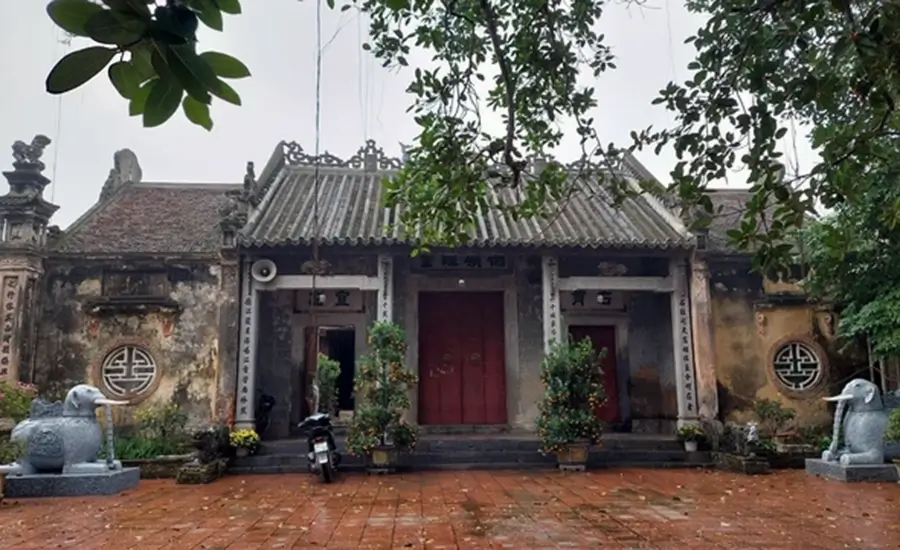
The back of the communal house is only open during the village festival (held from January 10-12, ending at noon on the 12th) or the Tet holiday (Lunar New Year).
Based on the above values, on January 7, 2020, the Ministry of Culture, Sports and Tourism designated the Nom Village Relic Complex, Dai Dong Commune, Hung Yen Province, as a National Historical-Architectural Relic.
Source: collected by An
Follow us for the best deals on Vietnam package tours and visa services!
Comment (0)