
After thousands of years with many ups and downs of time and history, Quynh Lam Pagoda – the pagoda that was once considered the first ancient relic of the country still retains its historical and cultural value.
The first Buddhist Academy in Vietnam
The Quynh Lam Pagoda stands on the hill in the village of Binh Khe Ward, Quang Ninh Province. Before the pagoda is a great lake, while the three remaining sides are surrounded by hills and mountains. The pagoda was built at the end of the Ly Dynasty and has been restored many times. Quynh Lam Pagoda became the main center of Buddhism in the entire country.
In the 14th century, it became an even more important Buddhist center due to the activities of the monk Phap Loa, a second-generation member of the Truc Lam Buddhist sect. The Zen master expanded and built Quynh Lam Pagoda, making it a major Buddhist center of the time, where major national Buddhist events were held in the early 14th century. In 1314, he built 33 Buddhist shrines, a sutra storage tower… It was during this period, on the basis of the old Quynh Lam Pagoda, that in 1316 Phap Loa established “Quynh Lam Institute” – the first Buddhist academy in Vietnam to be born here.
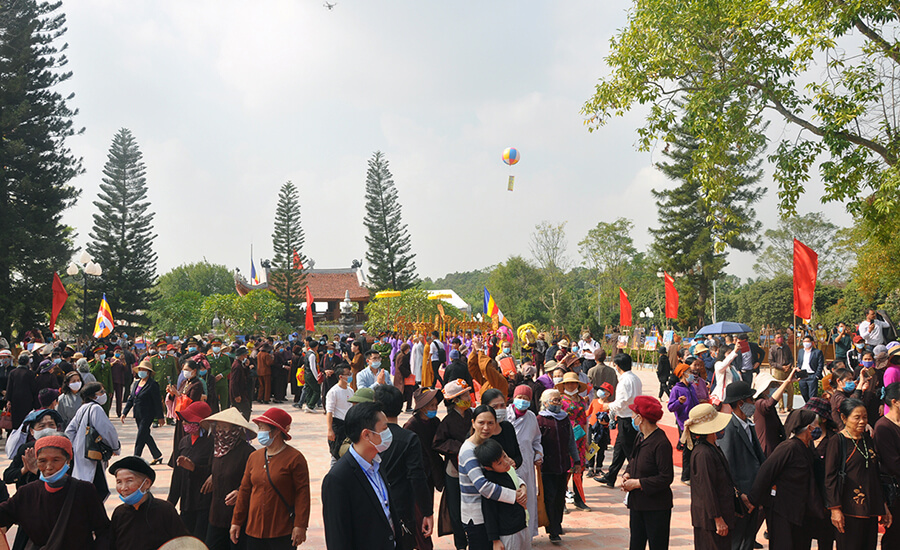
The pagoda was the center for sacred books, preaching Buddhism, and training future pagoda wardens. Many associations famous in Vietnamese literature and history were organized here. Together with the Hoa Yen, Long Dong, and Ngoa Van pagodas, Quynh Lam and the system of satellite pagodas such as Ho Thien, Thanh Mai… made the area the center of Vietnamese Buddhism under the Tran Dynasty.
Quynh Lam Pagoda – A famous spiritual destination in Quang Ninh
Quynh Lam Pagoda was built by Zen master Nguyen Minh Khong (1128 – 1138). He cast a bronze statue of Maitreya Buddha, 20m high. This Buddha statue, along with Bao Thien Tower (Sung Khanh Pagoda, Hanoi), Quy Dien Bell (One Pillar Pagoda, Hanoi), and Pho Minh cauldron (Pho Minh Pagoda, Ninh Binh), is one of the four pinnacles of bronze casting art, ranked in the group of national treasures “4 largest objects of An Nam” of the Vietnamese people in the 12th century. Among them, the Buddha Maitreya statue at Quynh Lam pagoda ranks first.
Zen master Nguyen Minh Khong also erected a large stone stele, 2.5 m high and 1.5 m wide, with soft, curving dragon patterns. This is one of the largest remaining steles of the Ly dynasty. The stele’s forehead is decorated with a pair of dragons playing with fireballs, the border is decorated with dragons following each other in a long strip, and the side is also decorated with dragons curled up in squares with sophisticated lines.
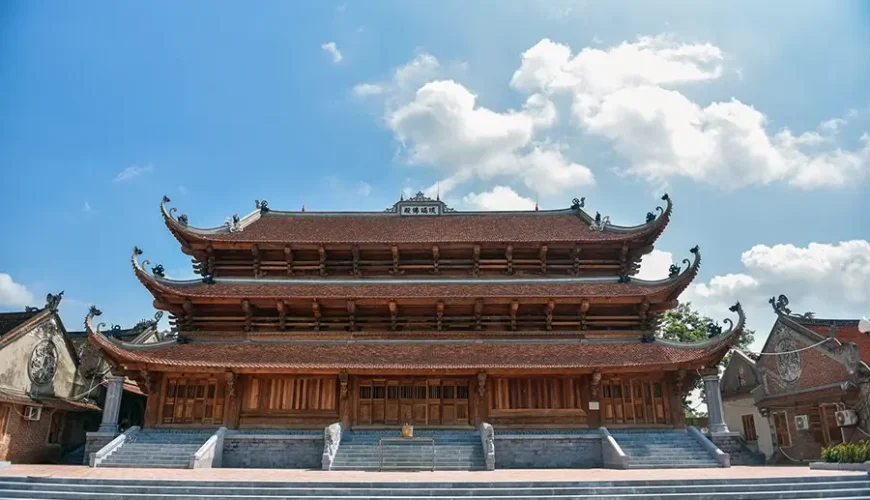
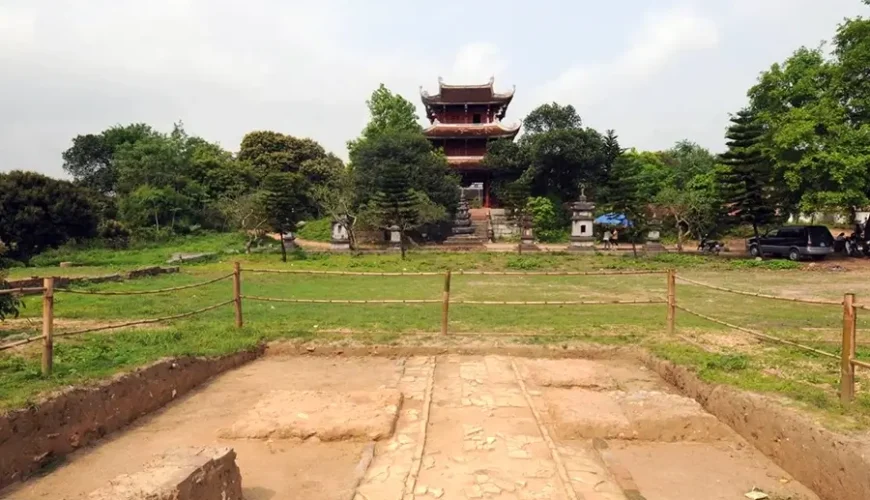
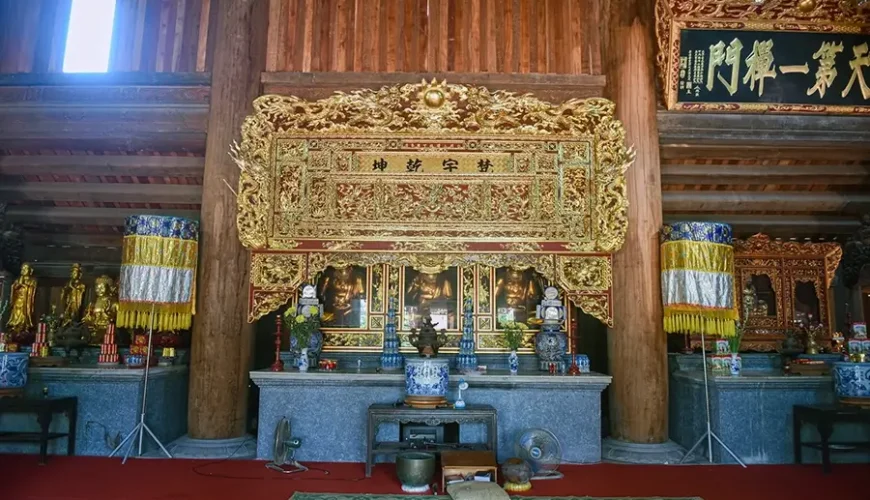
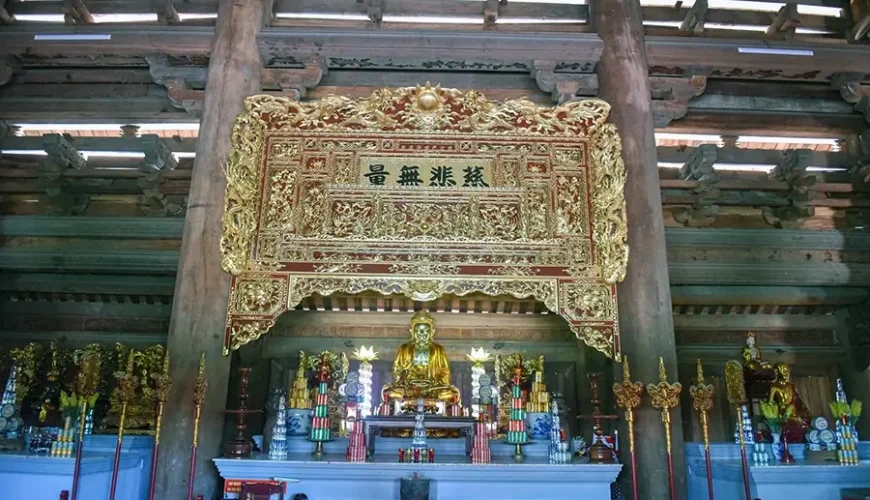
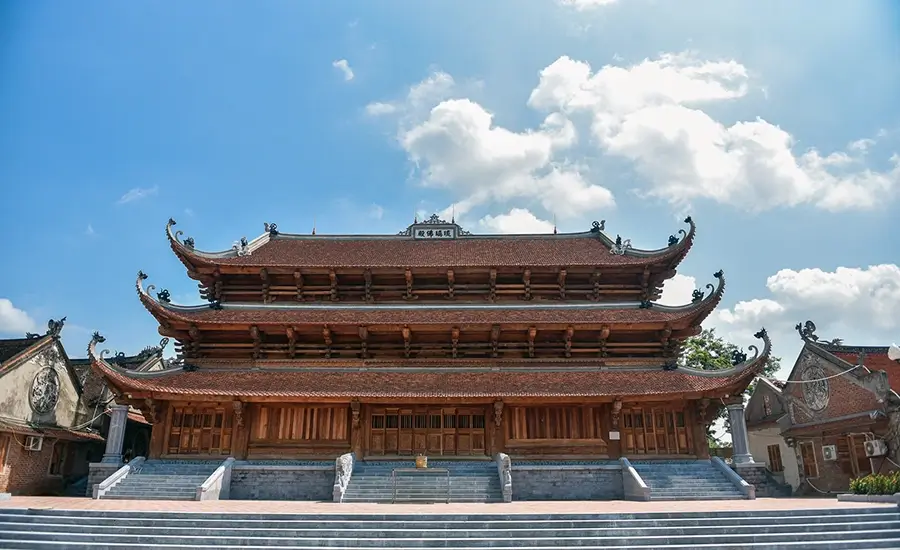
Over time, the pagoda became ruins in the mid-20th century. Today, the pagoda has just been restored again. Currently, the pagoda is one of the largest wooden pagodas in the Northern region, built from more than 1,500 m³ of ironwood and rebuilt on the foundation of the old pagoda, using traditional materials, continuity, and selection.
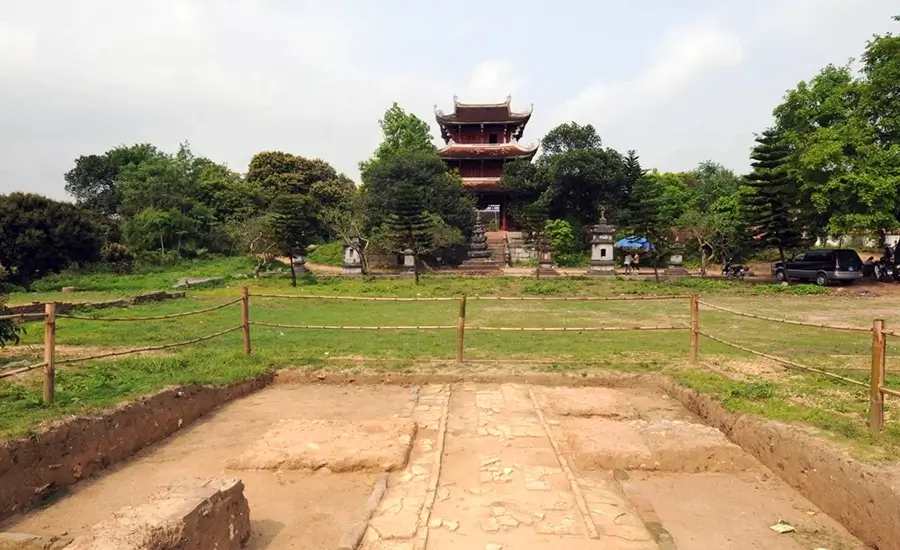
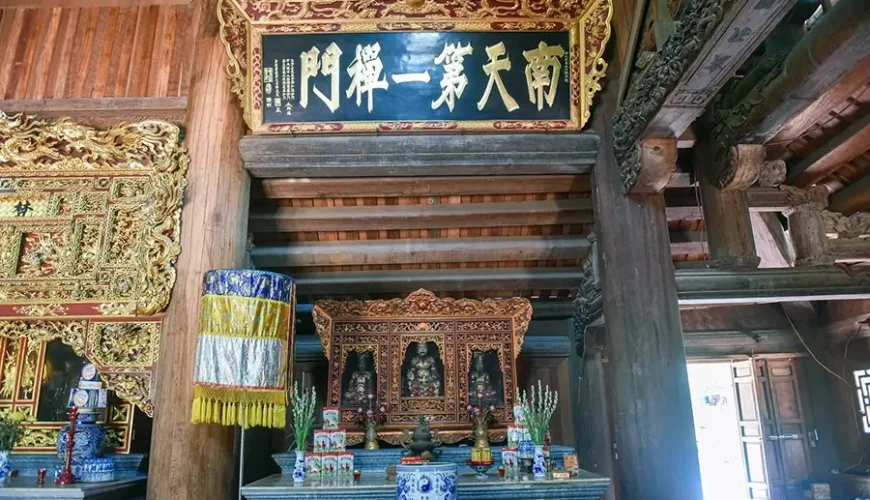
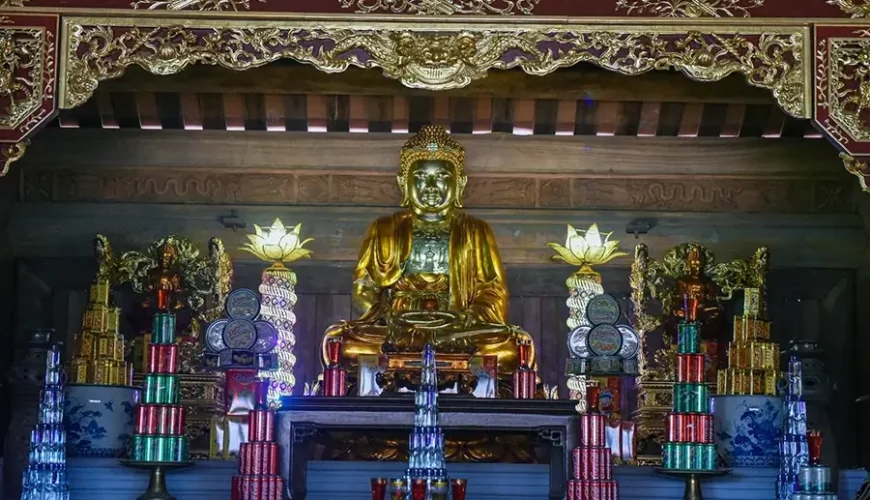
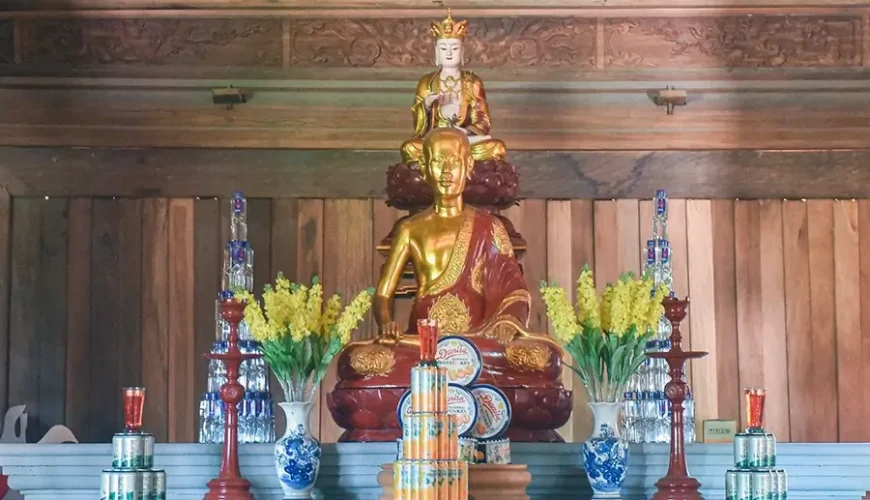
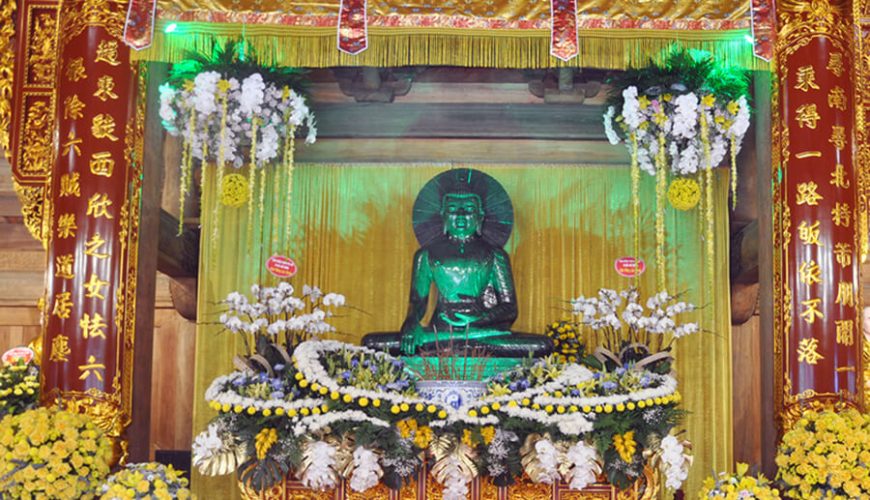
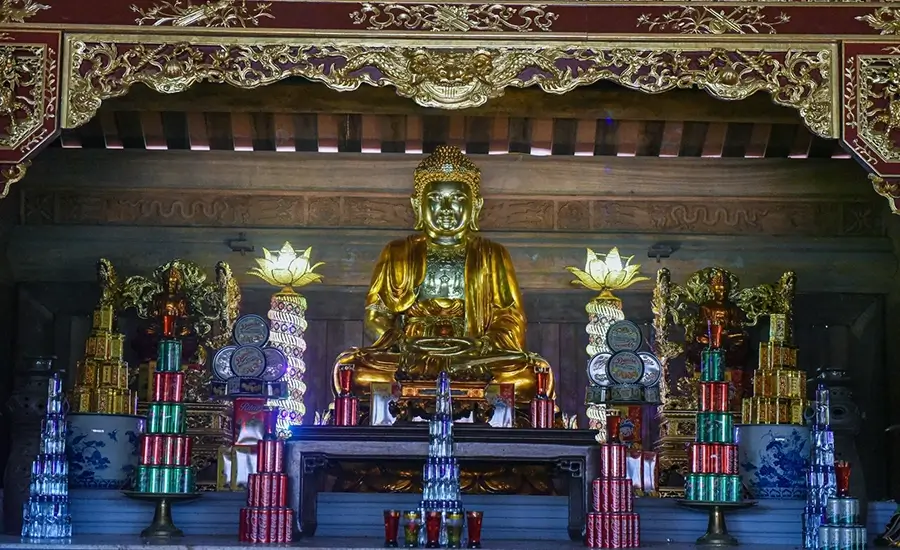
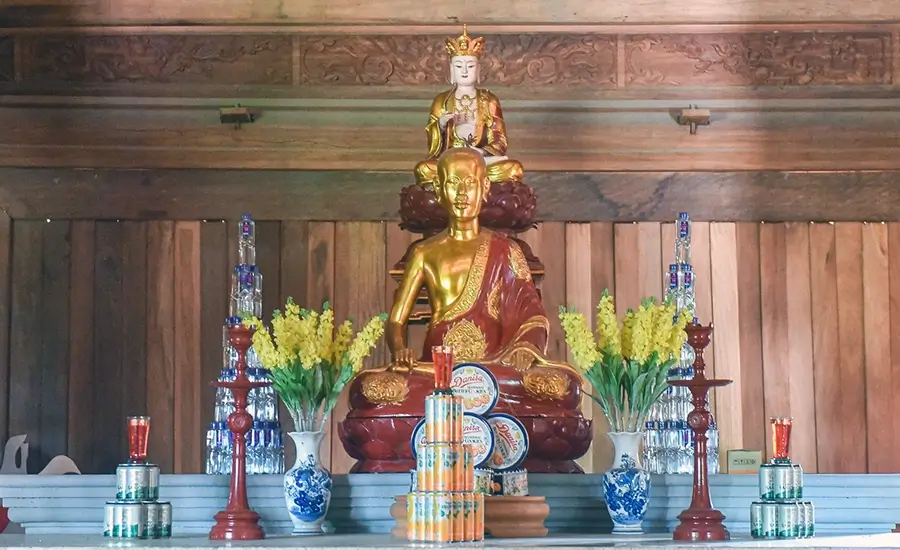
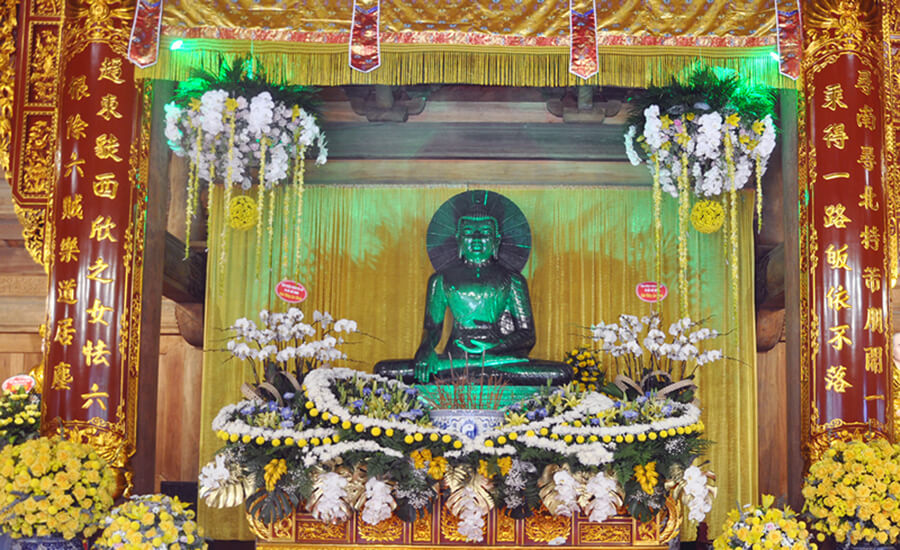
The outermost large hall is the main hall. In addition to many large wooden pillars, there are also two very precious wooden pillars with a diameter of more than 100cm, with a very pleasant natural fragrance. The Maitreya Buddha Hall is located in the middle, where the “Three Buddhas” are worshiped. The Luu Ly Hall is located at the back. The highlight of this hall is the jade Buddha statue of Sakyamuni, weighing about 3.5 tons and standing 2.2m tall, donated by Vingroup Corporation, valued at about 20 billion VND.
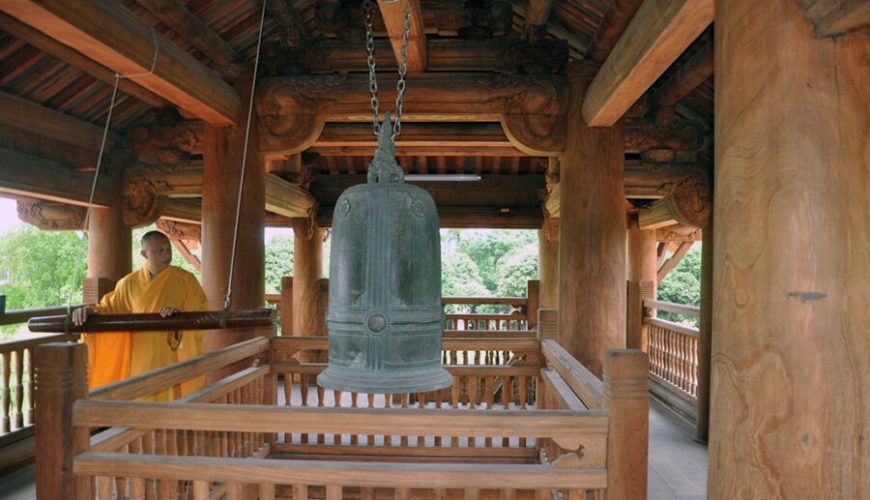
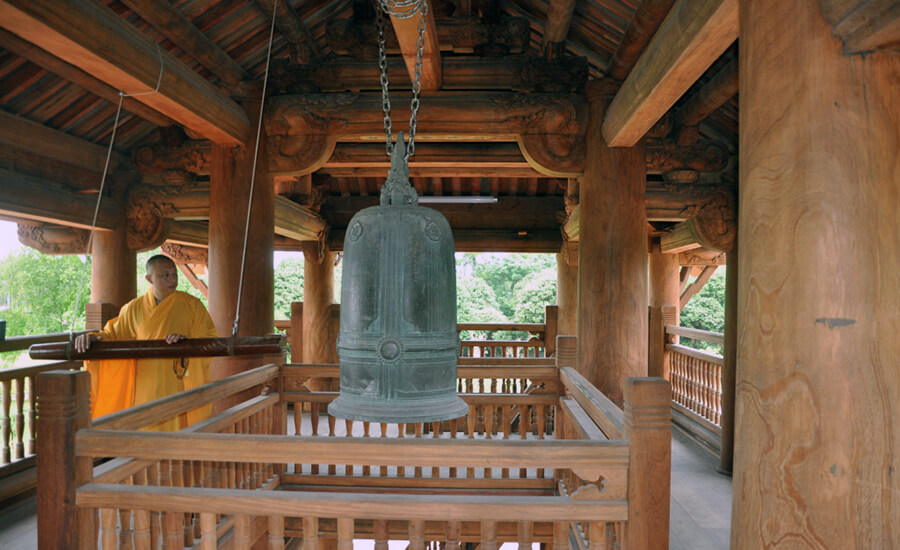
In particular, the large bronze bell hanging here is 200 years old, cast during the pagoda’s restoration and renovation in the Nguyen Dynasty.
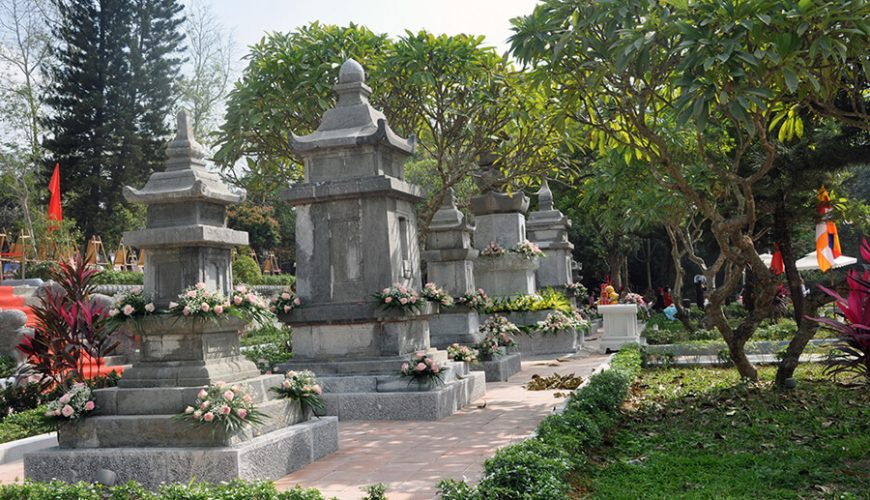
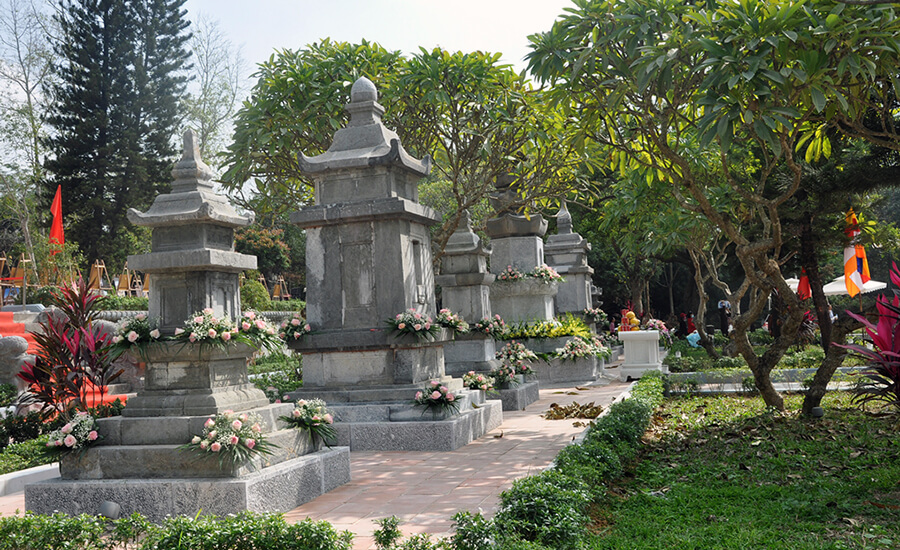
With a long history, Quynh Lam Pagoda preserves the names and merits of many monks through the tomb towers still scattered in the pagoda garden. Notably, there is the ancient tower built by Zen Master Phap Loa to enshrine the relics of Emperor Tran Nhan Tong, who later became a monk, and the tomb tower of Zen Master Chan Nguyen, who made great contributions in the restoration of the pagoda during the Le Trung Hung period. This is also the largest remaining tower in the tower garden.
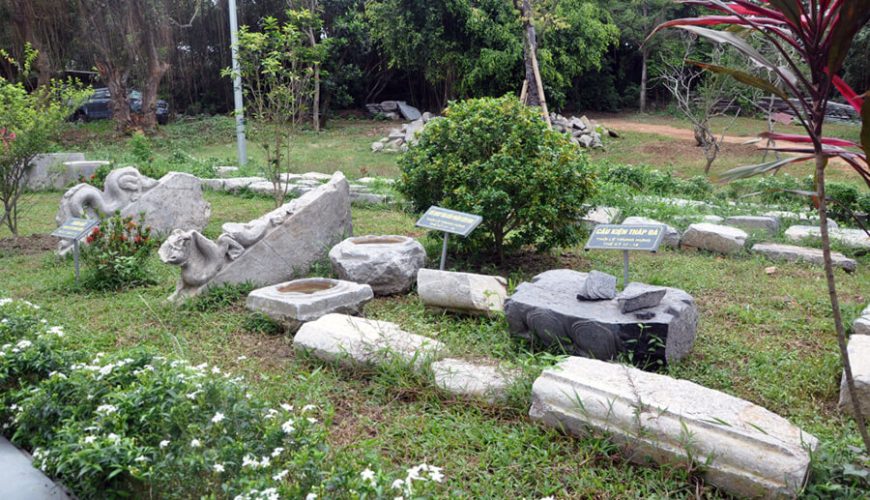
Around the temple garden, visitors can admire the remaining ancient relics of the temple, evoking a range of emotions. Most of the stone bases and steps are from the Ly, Tran, and Le dynasties, including two stone mills that are part of the nine-grade lotus pedestal in Quynh Lam and a very large lotus pedestal from the Le Trung Hung period…
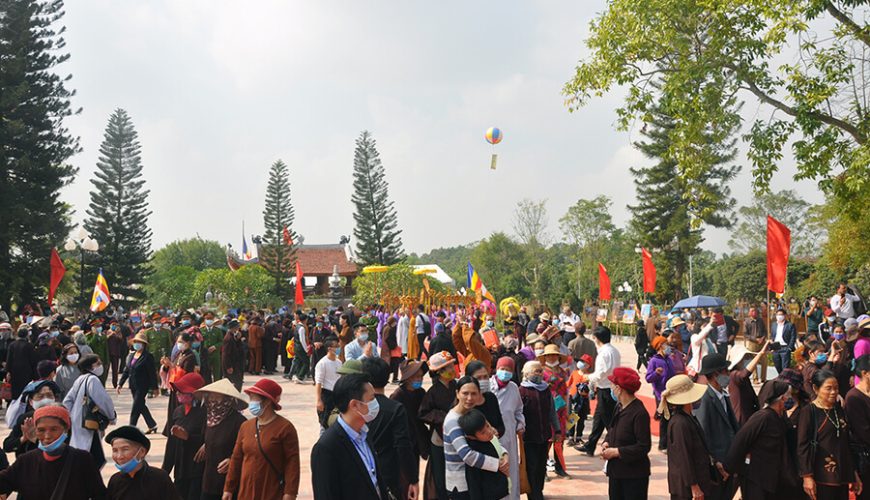
Quynh Lam Pagoda, past and present, remains a famous place in eastern Vietnam, offering a special experience to visitors every time they return.
Source: collected by An
Follow us for the best deals on Vietnam package tours and visa services!
Comment (0)