
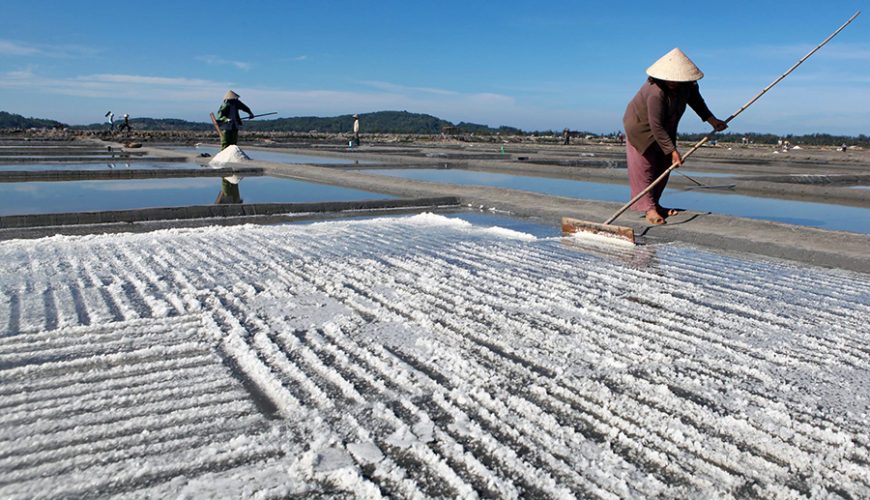
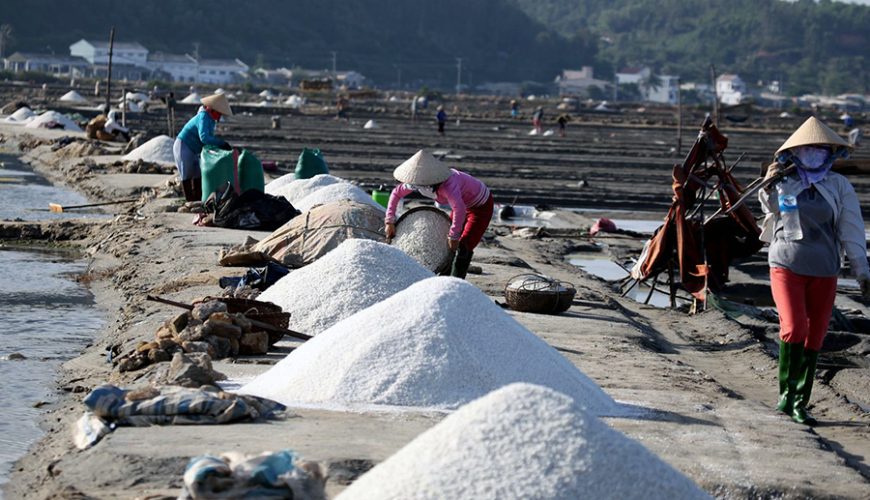
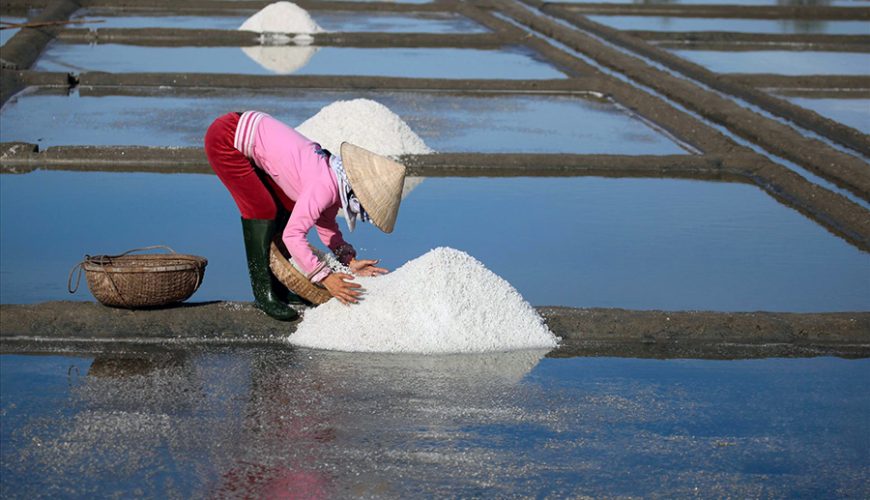
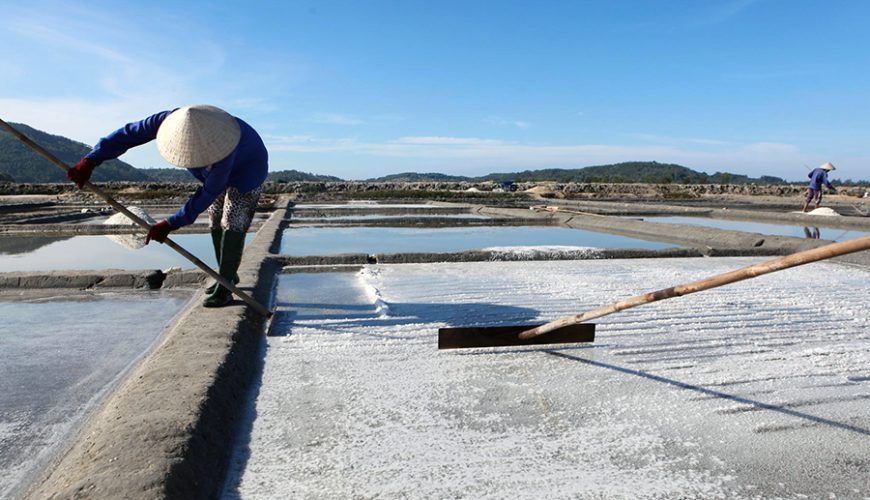
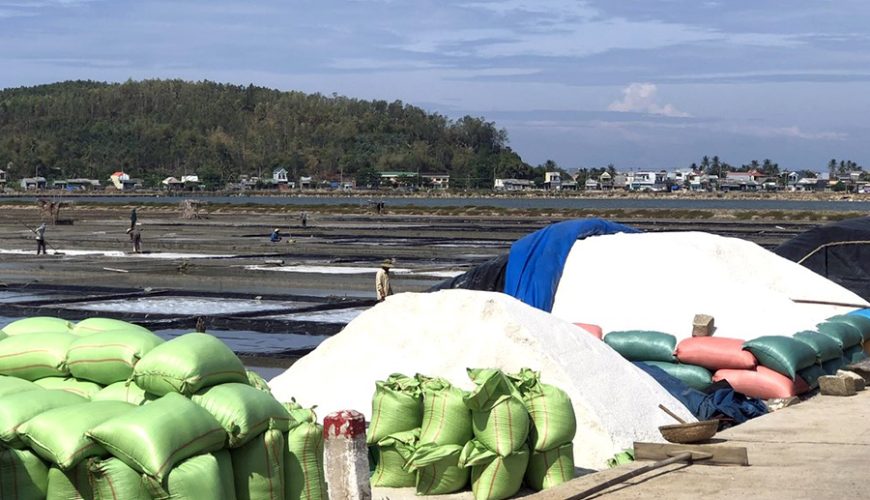
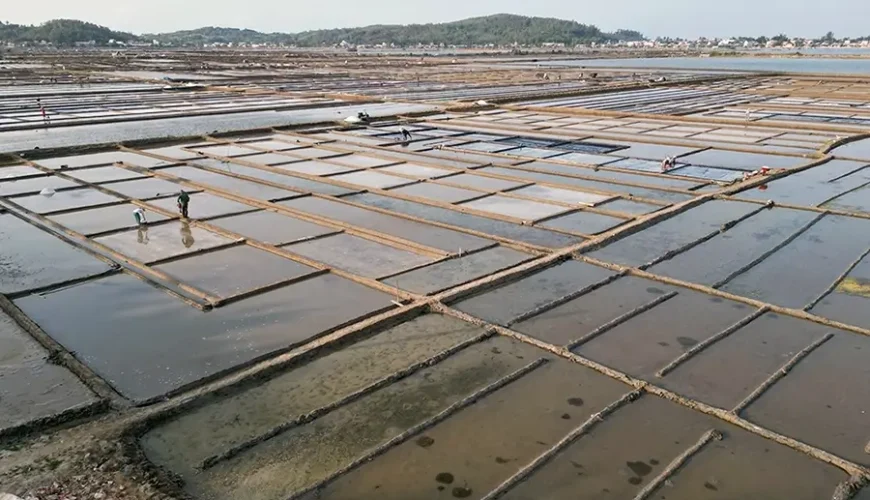
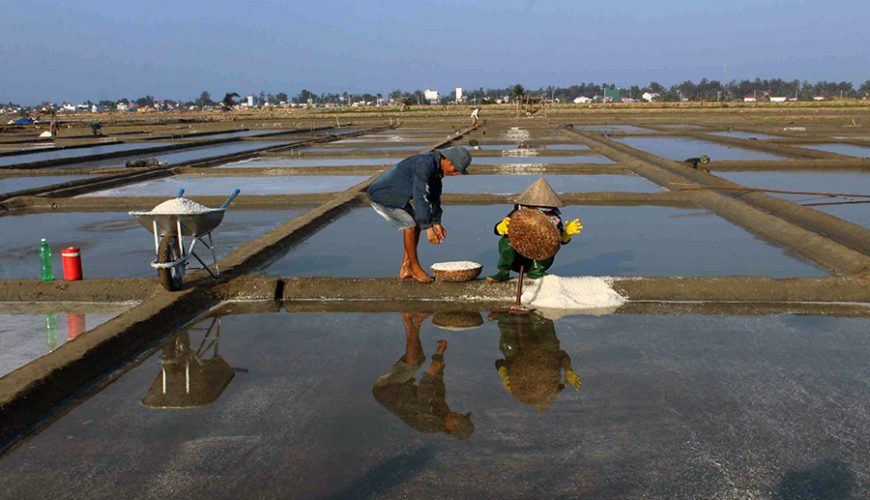
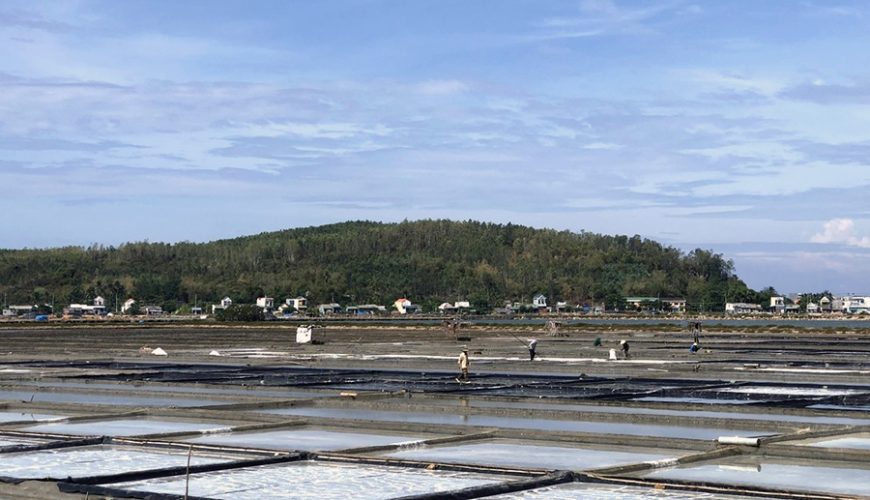
The Sa Huynh salt fields are among Quang Ngai’s renowned traditional salt-producing regions, deeply intertwined with coastal residents’ lives for generations. Vast, white salt pans stretch under the sun, interspersed with narrow paths and diligent salt workers, creating a distinctive landscape in the Sa Huynh coastal area.
Overview of Sa Huynh Salt Fields
The name “Sa Huynh” (Vietnamese: Sa Huỳnh) actually originated from “Sa Hoang,” meaning “golden sand.” Unlike the white sand found elsewhere, the sand here boasts a beautiful, shimmering golden hue. Local people say the spelling changed to “Sa Huynh” because the character “Hoang” matched the name of Lord Nguyen Hoang (1525-1613) of the Nguyen Dynasty.
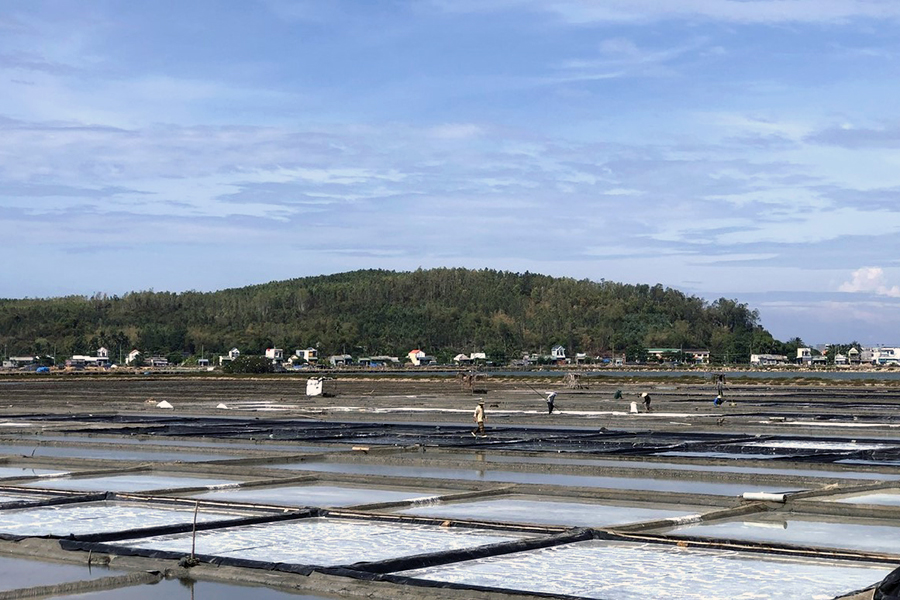
Salt production methods in these fields date back to the Nguyen Dynasty. However, after occupying Vietnam, the French developed the site using salt-making systems modeled after those in France. During the French colonial period, the French strictly regulated Sa Huynh salt production; they transported and distributed the salt by road and rail and exported it as a high-value commodity under a French monopoly. According to archival documents from the École française d’Extrême-Orient (EFEO), the French called Sa Huynh salt “White Gold” of Annam.
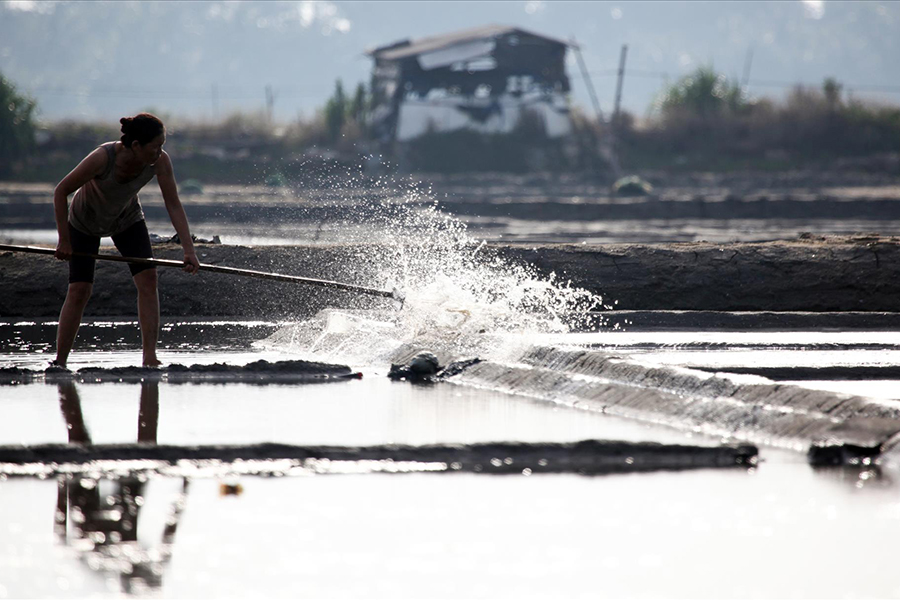
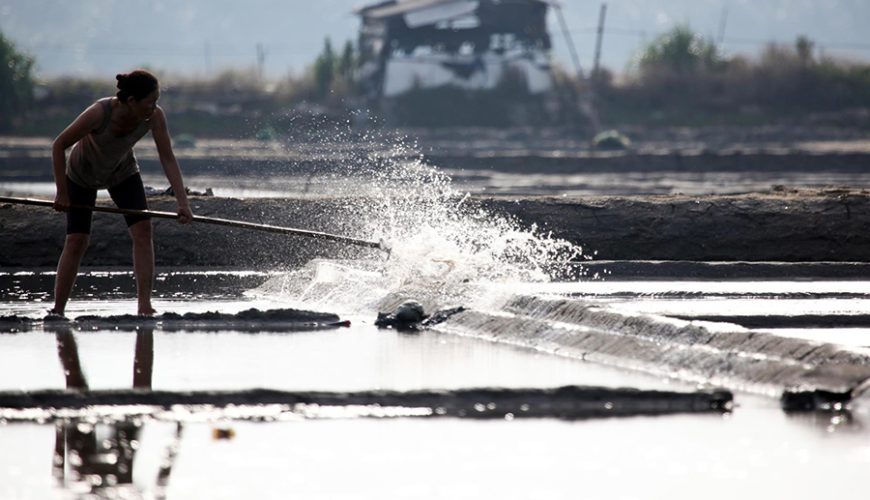
Today, the Sa Huynh salt fields cover an area of over 100 hectares, concentrated primarily along the shores of An Khe Lagoon. Salt production here relies heavily on natural conditions, specifically sunlight, wind, and seawater. The production season typically falls during the dry months, characterized by intense sun and minimal rainfall. Seawater is channeled into the salt pans, where it evaporates naturally. As the water recedes, white salt crystals begin to form on the surface of the fields.
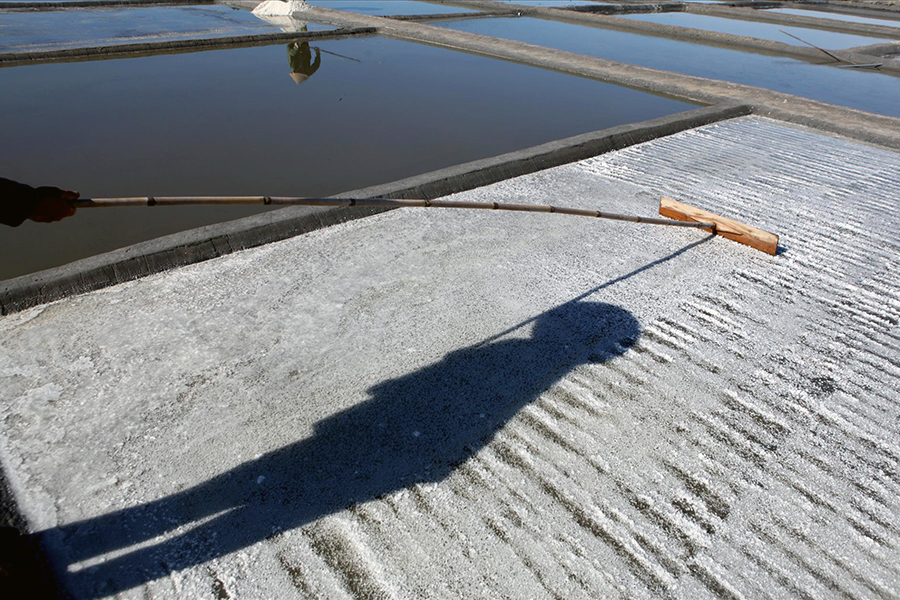
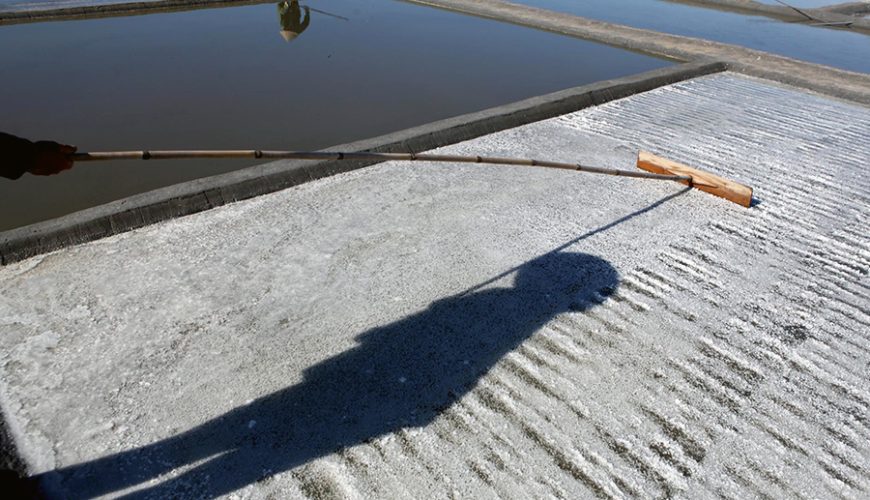
One of the most iconic images of the salt field is that of workers using manual tools to rake the salt into rows before gathering it into small, brilliant white mounds. Workers then gather the salt, transport it from the fields, and prepare it for storage or sale. While the task may appear simple, it demands considerable experience, physical labor, and a keen eye for weather conditions; a single unexpected rain shower can undo days of hard work.
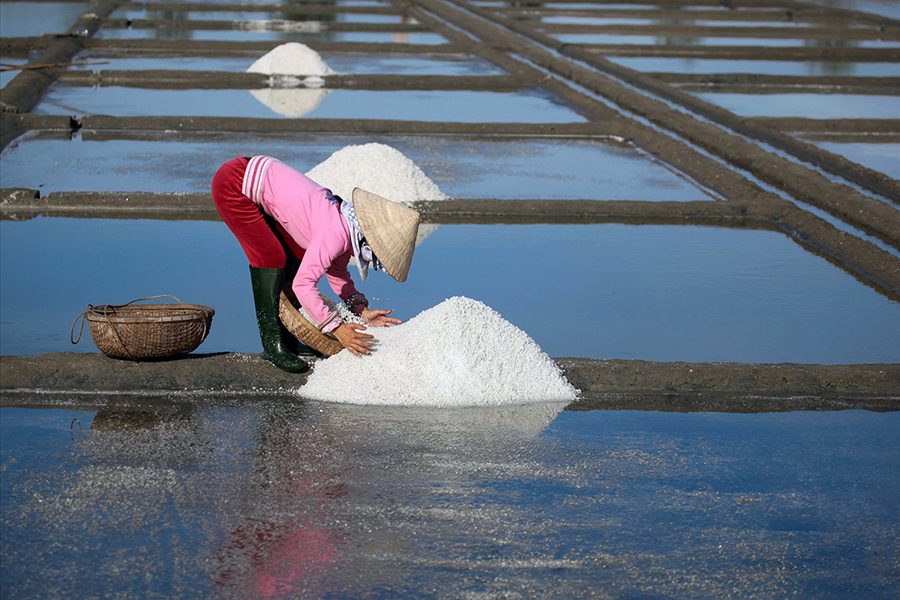
Beyond its economic value, the Sa Huynh salt field embodies a facet of the long-standing labor culture of Quang Ngai’s coastal people. Salt-production techniques, including the timing of water intake, field drying, and harvesting, are passed down through generations. Consequently, the salt fields serve not merely as a production site but as a communal cultural space that preserves the memories and lifestyles of many local families.
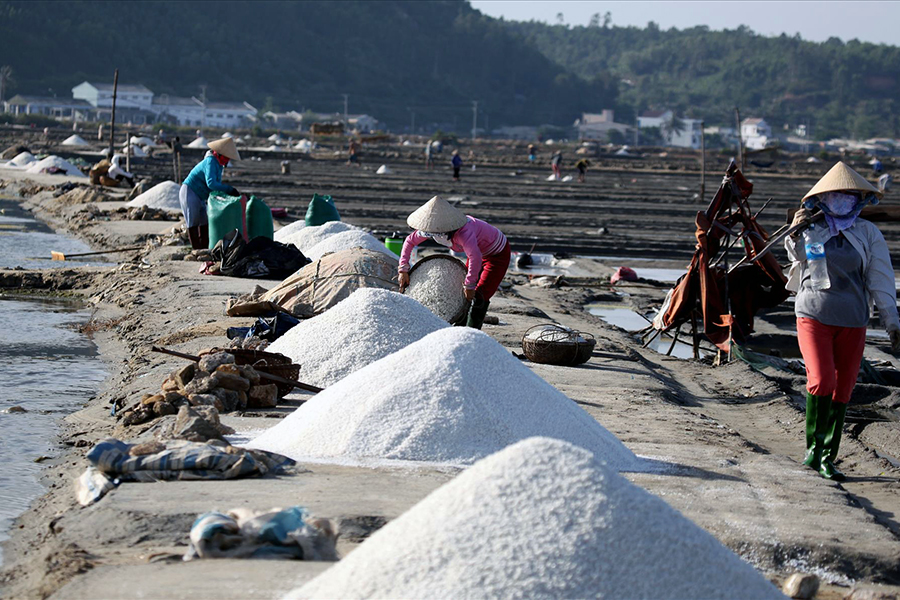
For visitors, Sa Huynh salt fields are most captivating on sunny days during the production season. From early morning, you can see figures across the salt pans as work begins. Bathed in sunlight, the field surfaces gleam like giant mirrors, while mounds of white salt stand out against the fields and the blue sky. It is an ideal time to take photographs and observe the traditional salt-making process firsthand.
Sa Huynh Salt Fields
- Location: located along National Highway 1A, in Sa Huynh Ward, about 60 km south of the center of Quang Ngai.
- Nearby tourist spots: Sa Huynh Beach, Go Co Village, …
Source: collected by An
Follow us for the best deals on Vietnam package tours and visa services!
Comment (0)