
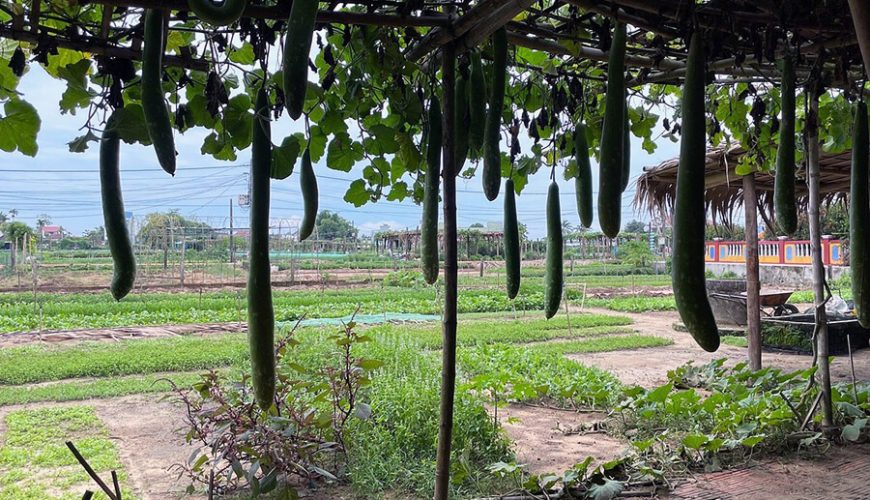
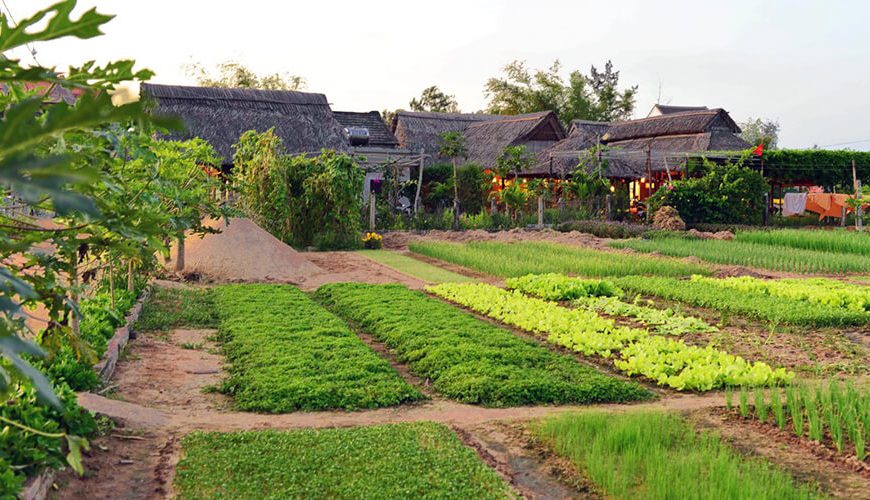
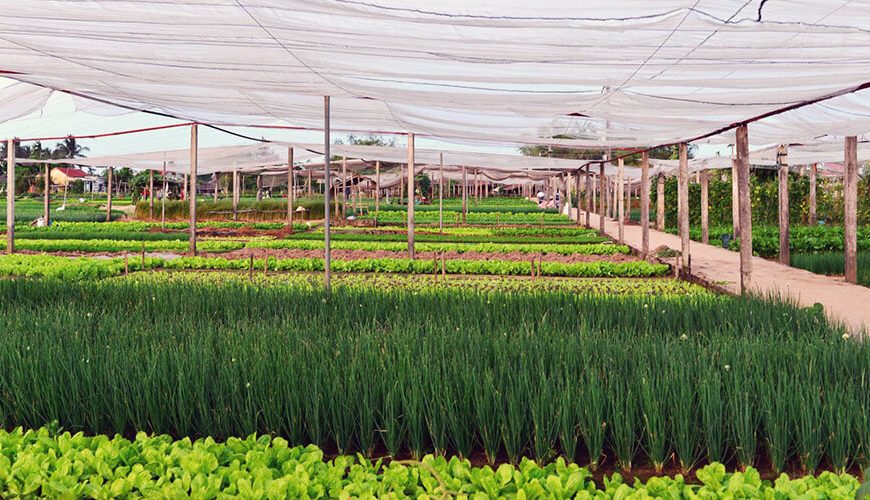
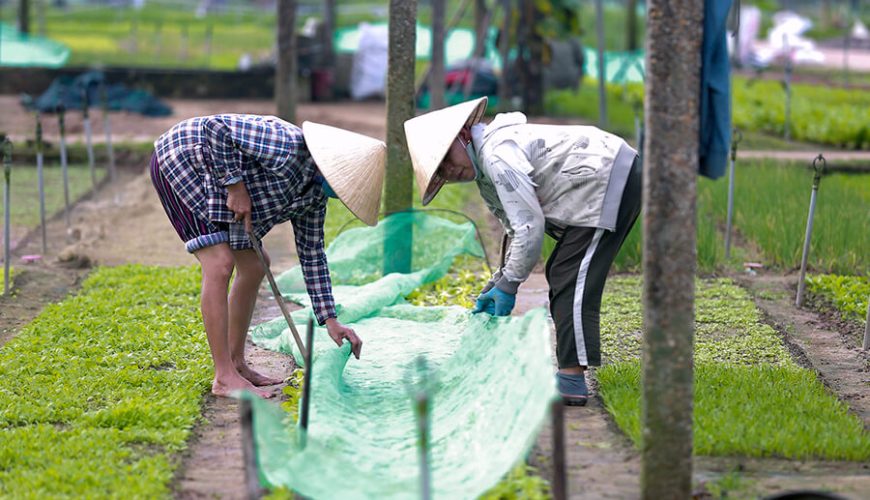
Tra Que Vegetable Village is an ideal tourist destination for those looking for simplicity and rusticity, and it is no less attractive. With a history of more than 400 years, the village is a must-see for tourists who love nature and want to experience authentic village life. Take a day to explore the green space and enjoy the idyllic countryside here!
Overview of Tra Que Vegetable Village
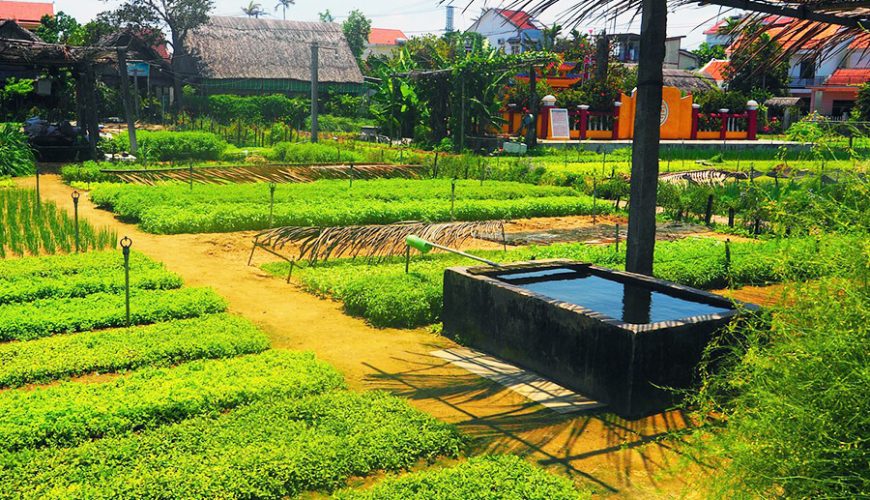
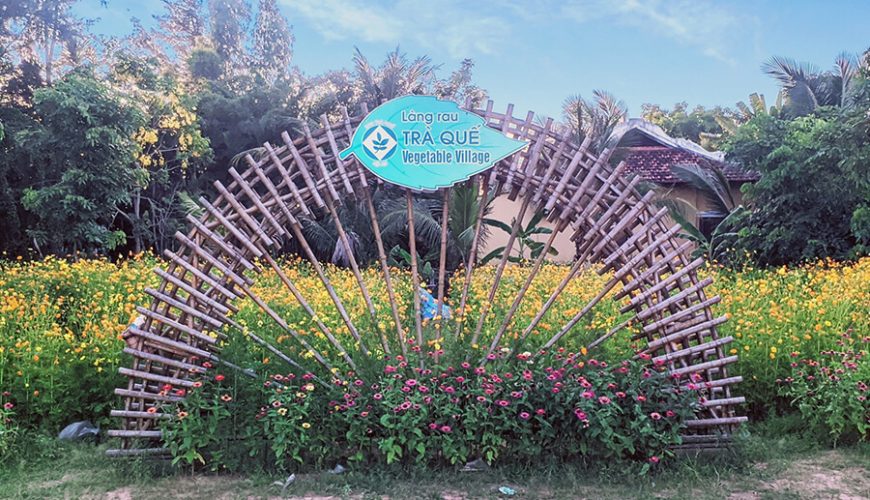
Tra Que Vegetable Village is located in Hoi An Tay Ward and covers over 40 hectares, where households rotate and intercrop more than 40 types of leafy vegetables and spices. Tra Que was first formed in the 16th century by residents from the north of Dai Viet (an old name for Vietnam) who migrated to reclaim land and establish the village.
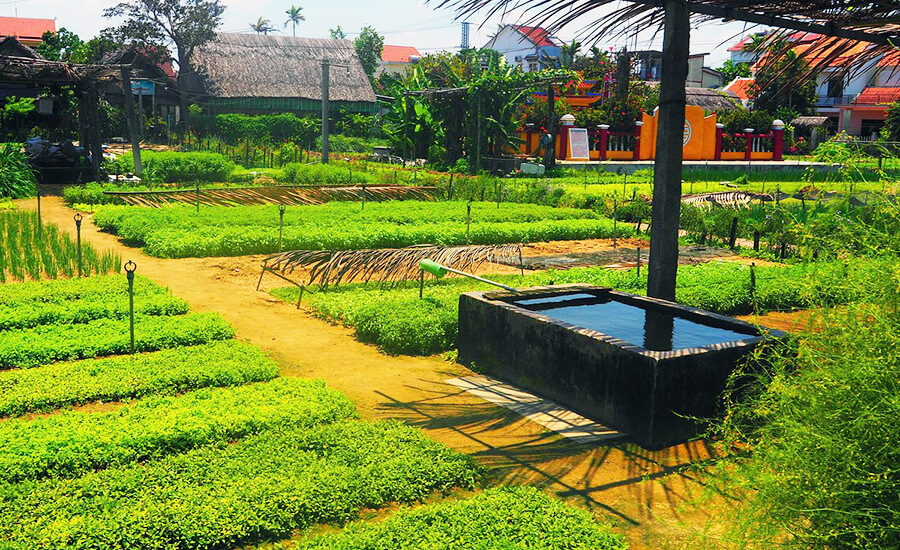
This place is famous for green vegetables grown on the fertile land between Tra Que lagoon and the De Vong River. In addition, people here use algae from the Co Co River to fertilize vegetables, combined with advanced techniques, so the vegetables in Tra Que are always fresh. In particular, there are many types of vegetables that are nowhere near as delicious as basil, perilla…
When mixed together, vegetables will encompass the 5 flavors: spicy, sour, sweet, bitter, and astringent. Thanks to that special flavor, Tra Que vegetables have helped make famous rustic dishes unique to Hoi An and Quang Nam. Furthermore, growing vegetables here produces very clean vegetables that do not affect the environment, benefiting consumers’ health.
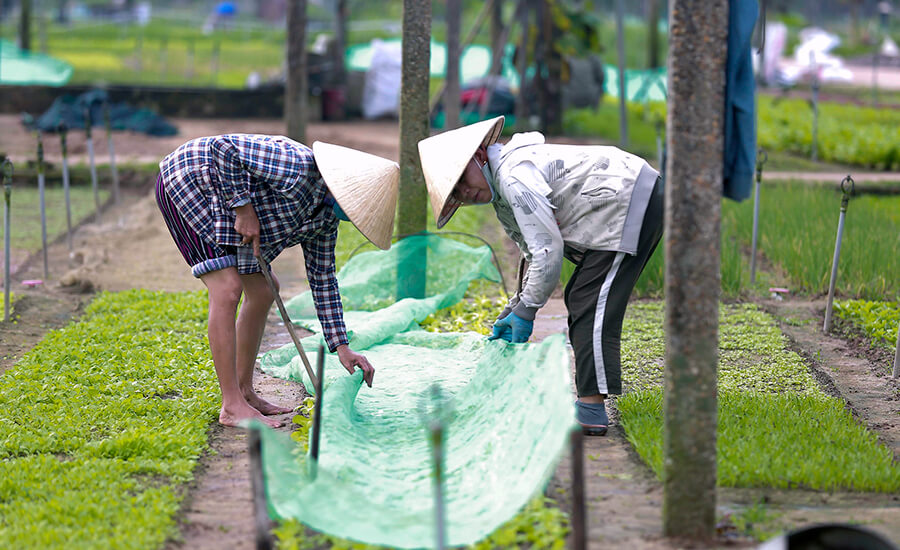
More than a place to grow fresh vegetables, Tra Que is also an ideal destination for tourists who love the village’s freshness and peace while enjoying typical, delicious dishes made with garden vegetables.
On April 4, 2021, the Ministry of Culture, Sports and Tourism issued a decision to include Tra Que vegetable cultivation in Hoi An Tay Ward on the list of national intangible cultural heritage.
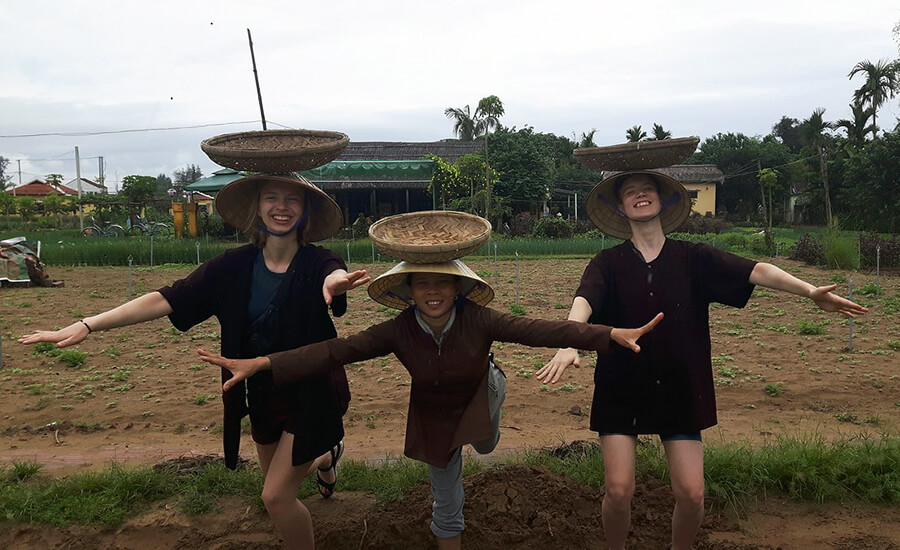
The ticket price to Tra Que Hoi An Vegetable Village is only 35,000 VND/person/day, which includes sightseeing and participation in activities. You can also book a daily tour to Tra Que to better understand the history, culture, daily life, and farming work of local people.
What’s the best time to visit the vegetable village?
Because you’ll mainly be outdoors, visit Tra Que Vegetable Village from February to April and September to December, when the weather is usually dry and cool.
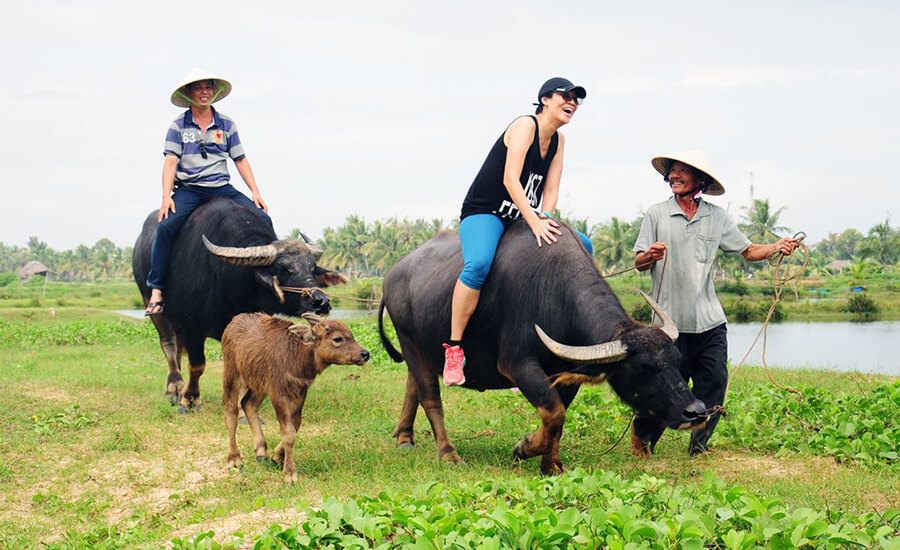
Note that you should come early in the morning or in the afternoon, as the cool weather is also when local people come out to tend the vegetable garden. You can chat and try to experience the work of friendly farmers.
The best way to explore the village
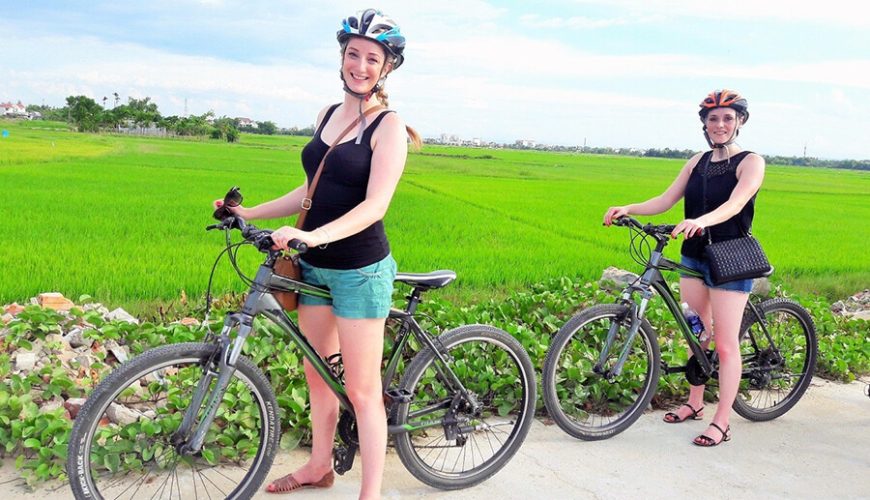
Tra Que Vegetable Village is only about 3km from Hoi An ancient town, so you can easily get there by motorbike or bicycle. If you don’t mind a little exercise and want a more convenient way to visit the vegetable garden, a bicycle is a great choice!
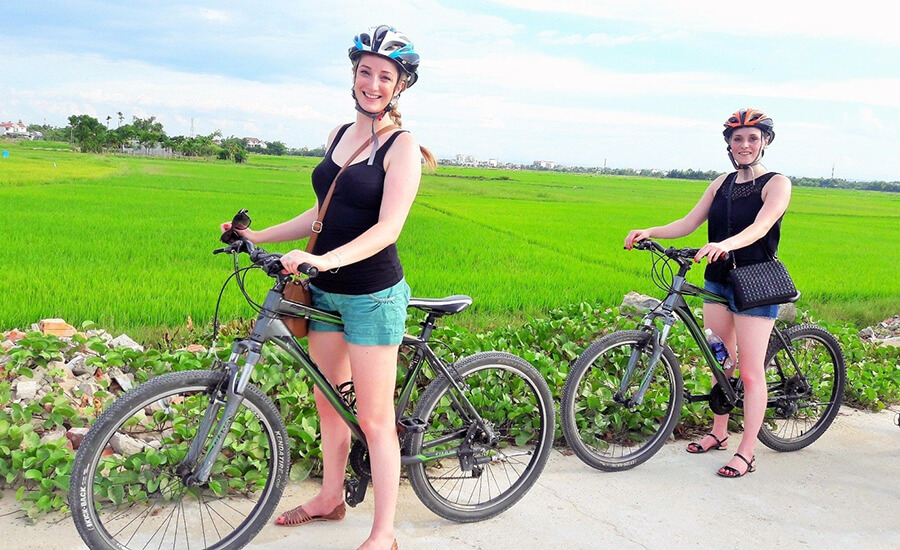
Imagine the feeling of relaxation and peace as you cycle along quiet village roads, surrounded by cool green vegetable fields and a fresh, refreshing atmosphere that helps you unwind and feel the wonderfulness of Tra Que.
What’s interesting about Tra Que Vegetable Village?
Admire the vast vegetable fields with many types of fresh vegetables
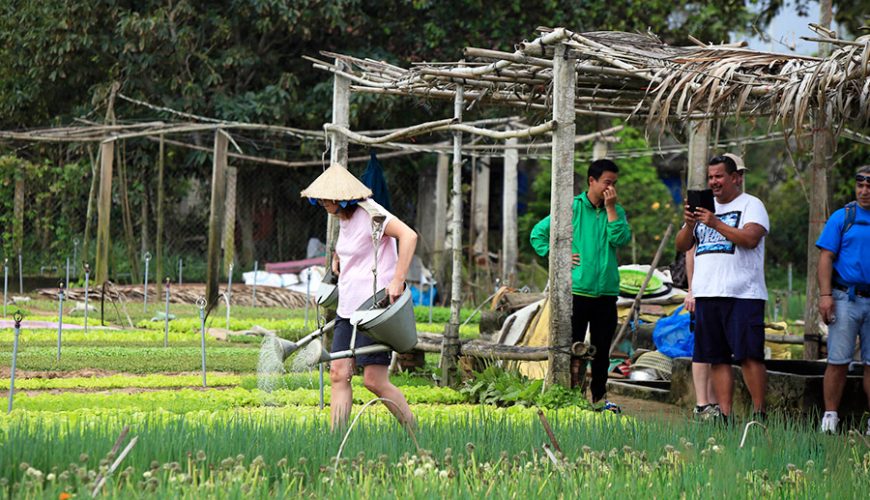
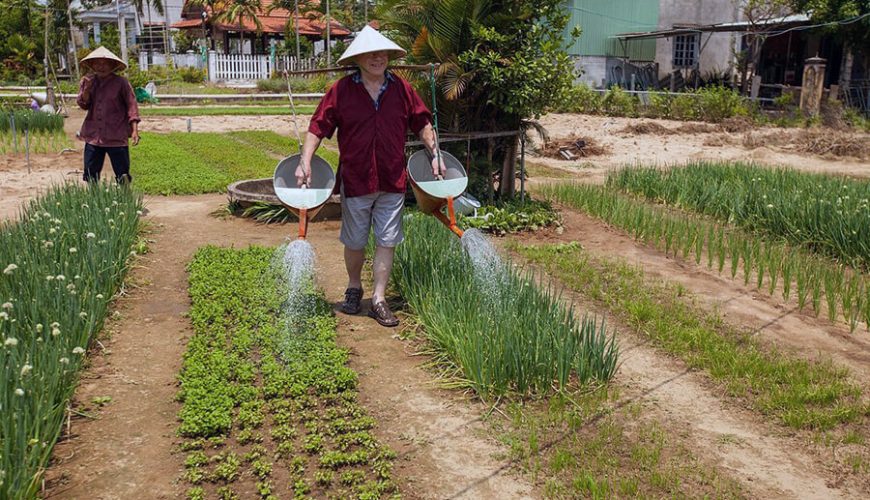
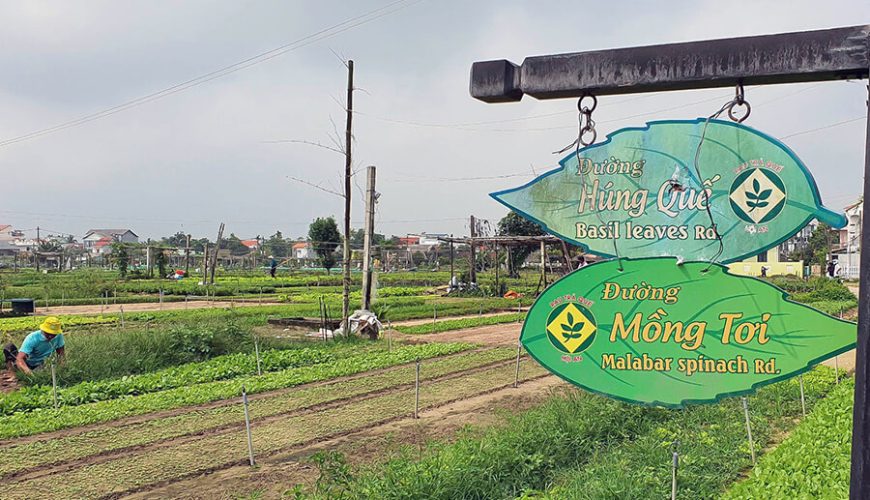
When you arrive at Tra Que Vegetable Village, you will have the chance to admire many types of well-cared-for vegetables.
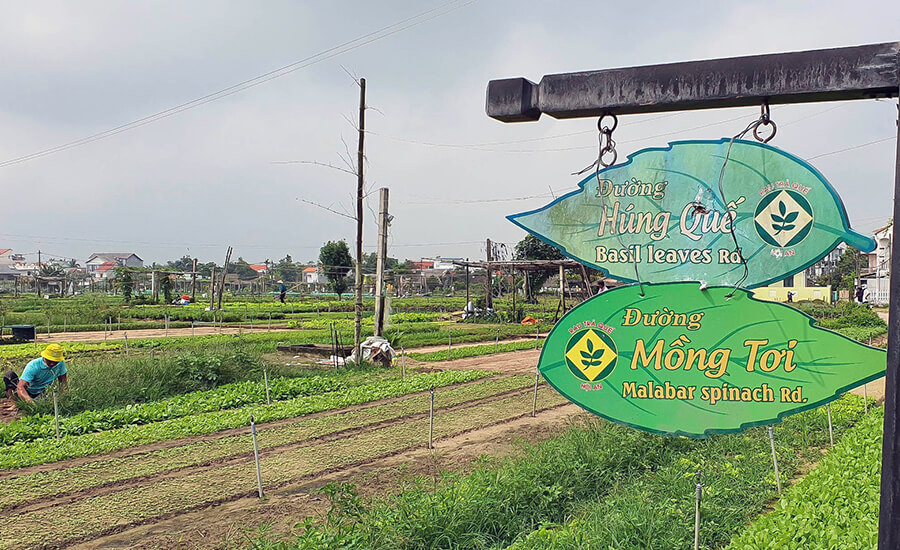
This is a strong result for the people here, who put a lot of effort and time into growing and caring for large vegetable fields to bring delicious, high-quality products and dishes to tourists.
Experience a day as a farmer at Tra Que vegetable village
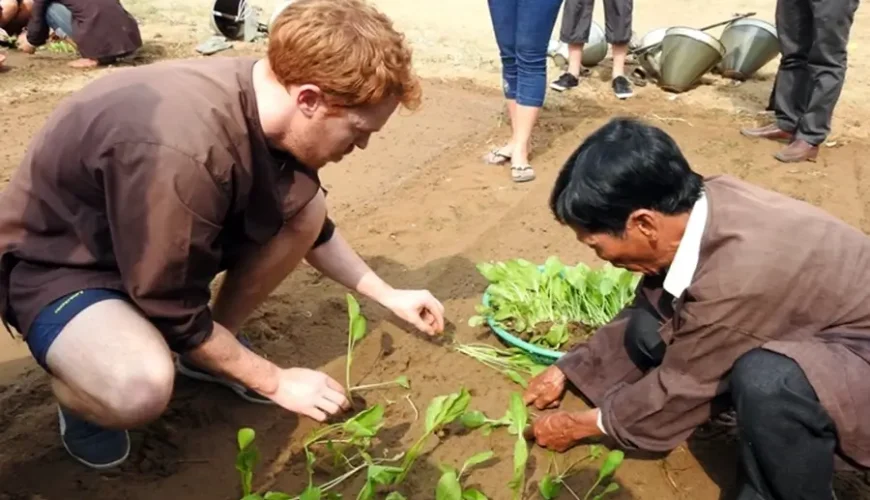
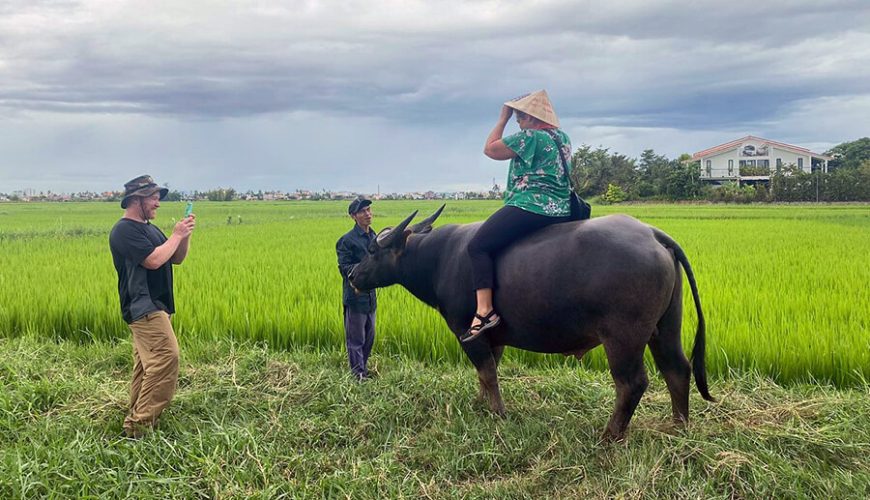
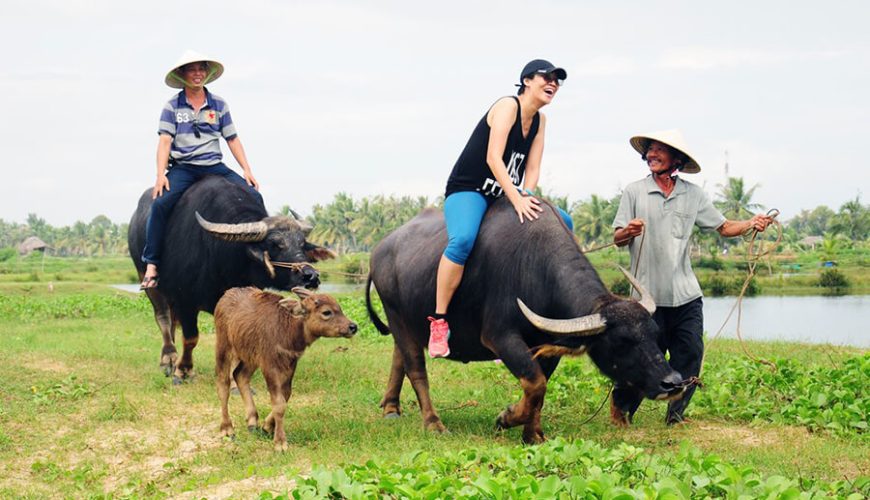
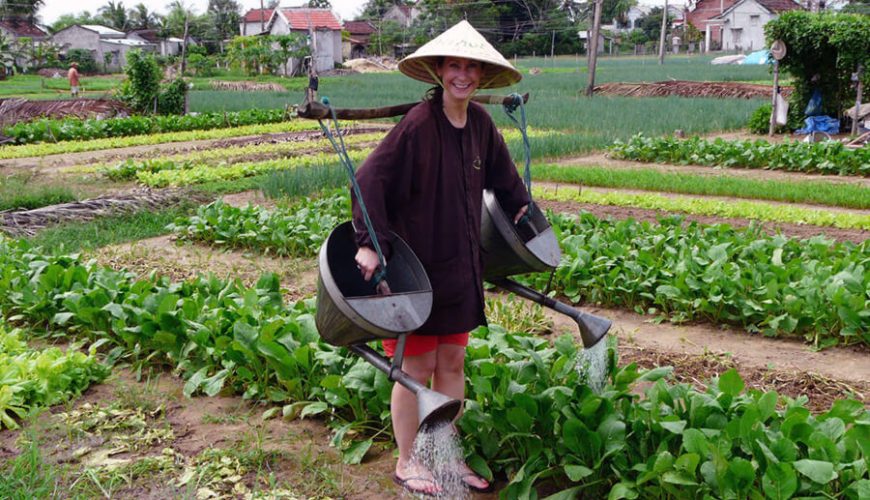
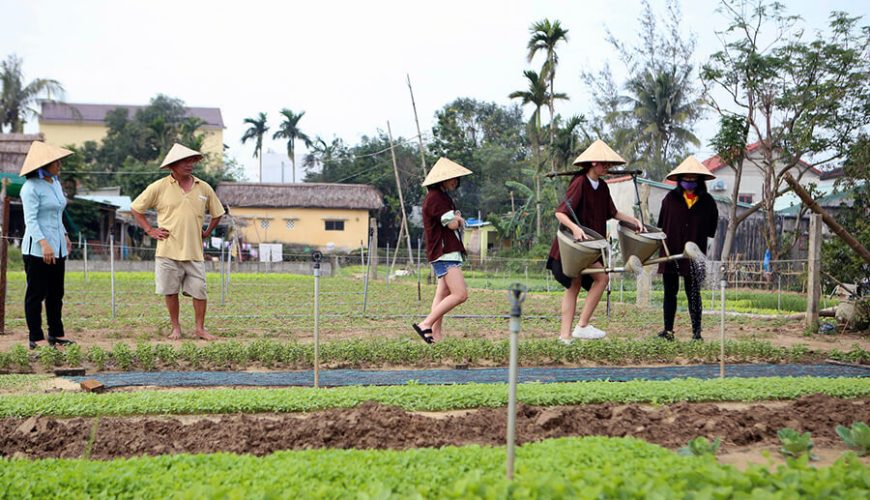
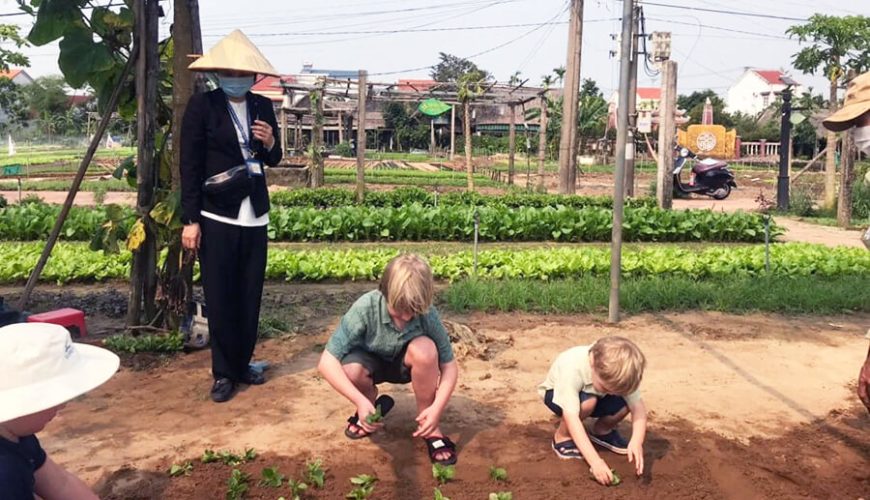
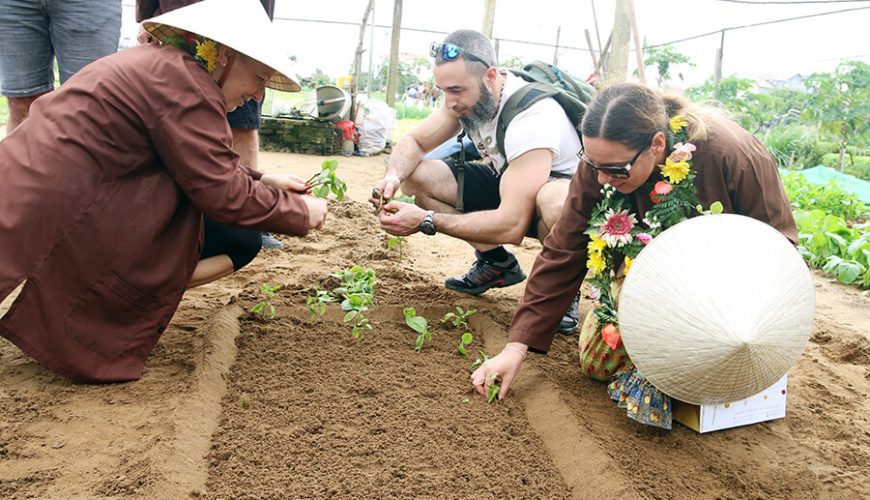
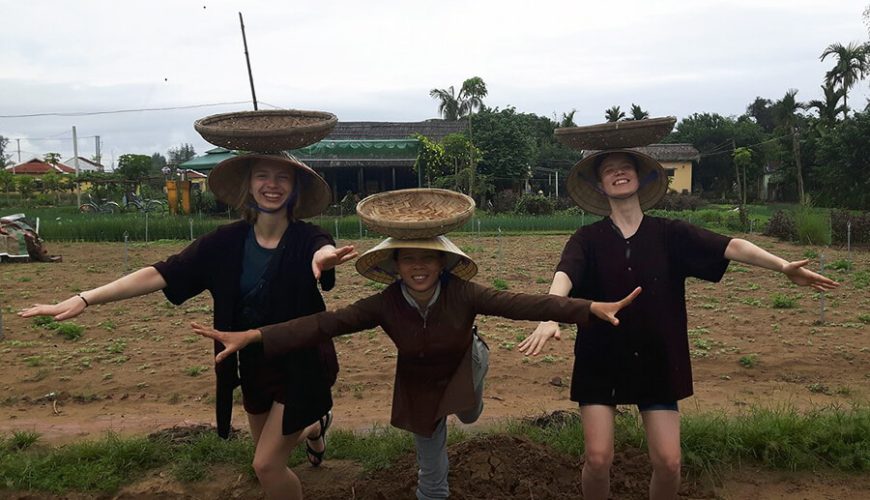
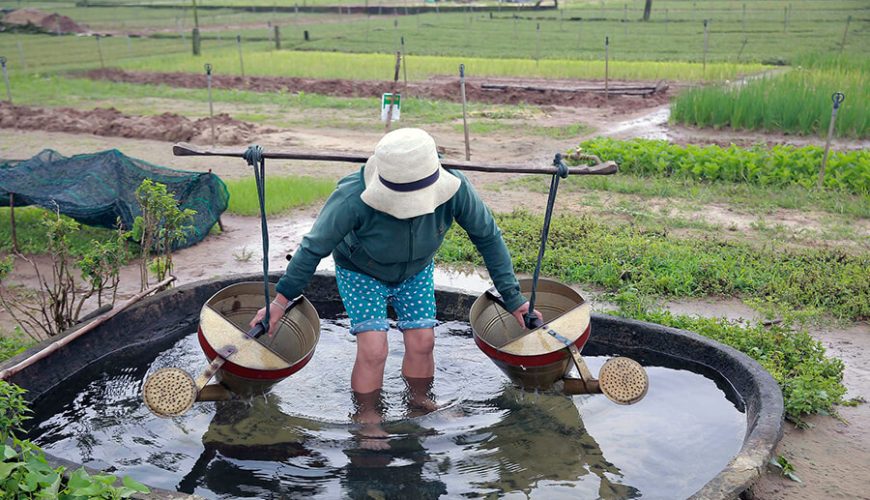
Not only is it attractive for its lush green vegetables, but Tra Que Vegetable Village also leaves an unforgettable impression by giving visitors a real day-long experience as a farmer. Local people will guide you through every step of vegetable production, from tilling the soil to sowing seeds, watering plants, and harvesting.
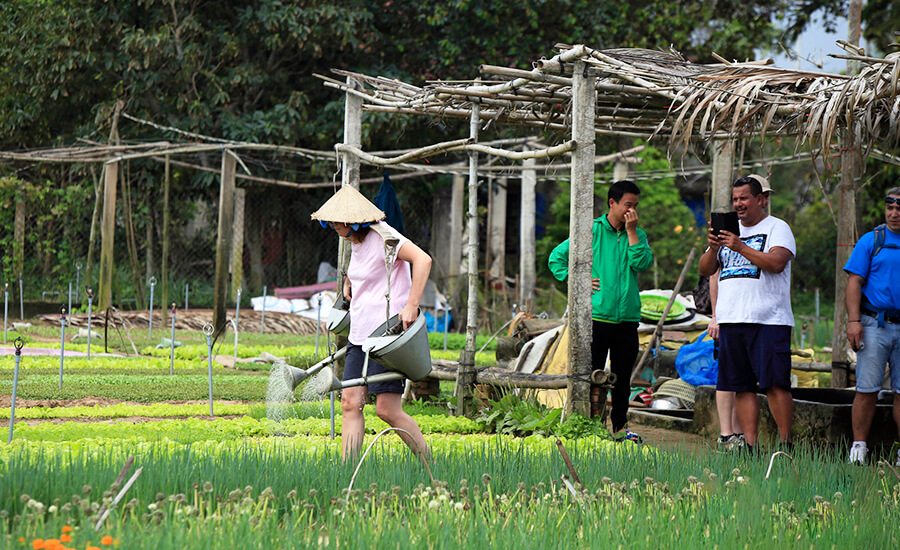
Although it’s a bit tiring, it will help you gain more knowledge and feel immersed in farming life in this peaceful village.
Join a cooking class and enjoy delicious dishes made
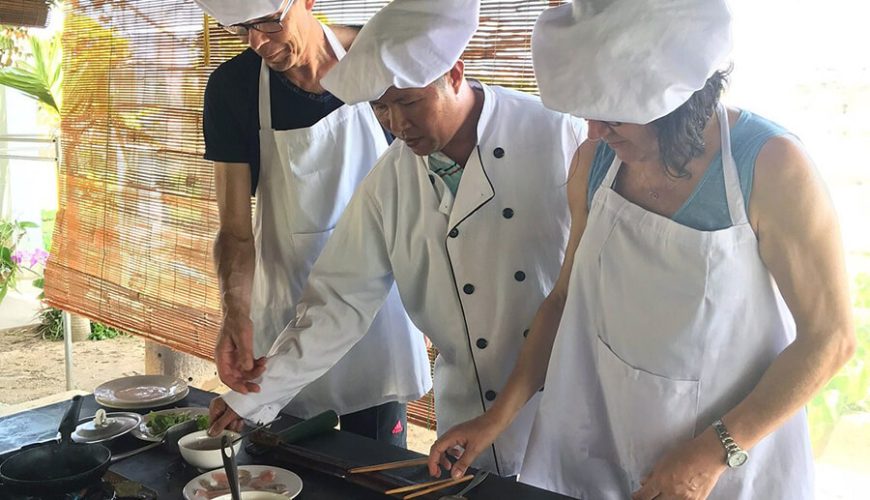
If you are a foodie, join a cooking lesson with locals at thatched houses near the fields. You will be guided on how to pick vegetables, prepare and prepare delicious dishes from vegetables grown in Tra Que Village.
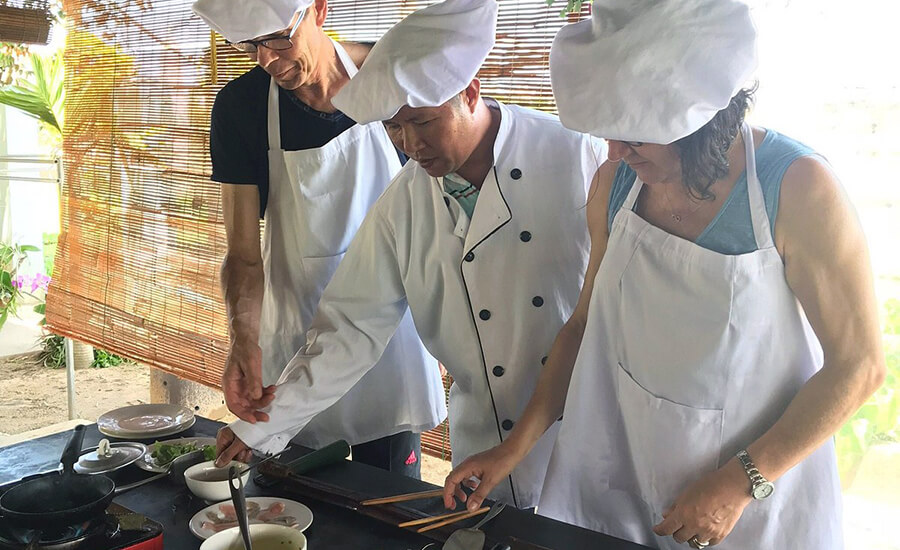
This is another interesting activity. You will be guided by chefs on how to choose ingredients and prepare Hoi An’s specialty dishes such as banh xeo (pancake), Quang noodles, spring rolls, and can enjoy them directly after making them, worth trying for tourists to remember the typical flavors of the Central region.
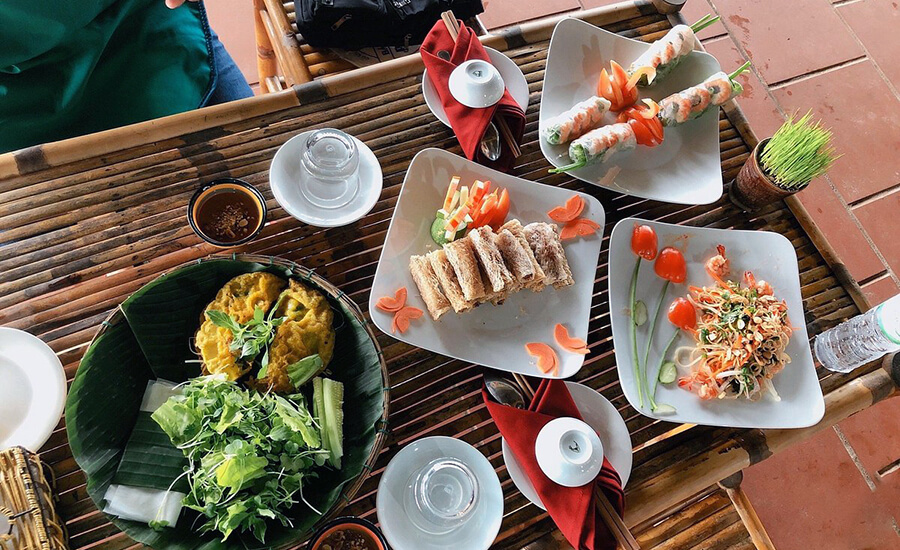
Onions and cilantro are combined with jellyfish salad and sour soup; mustard greens and gooseberries are used to cook hot pot; and laksa leaves, basil, and green onions are used in a favorite mixed mussel dish in Hoi An. As for Quang noodles, you must eat them with Tra Que raw vegetables to experience the delicious combination of nature’s flavors.
Source: collected by An
Follow us for the best deals on Vietnam package tours and visa services!
Comment (0)