
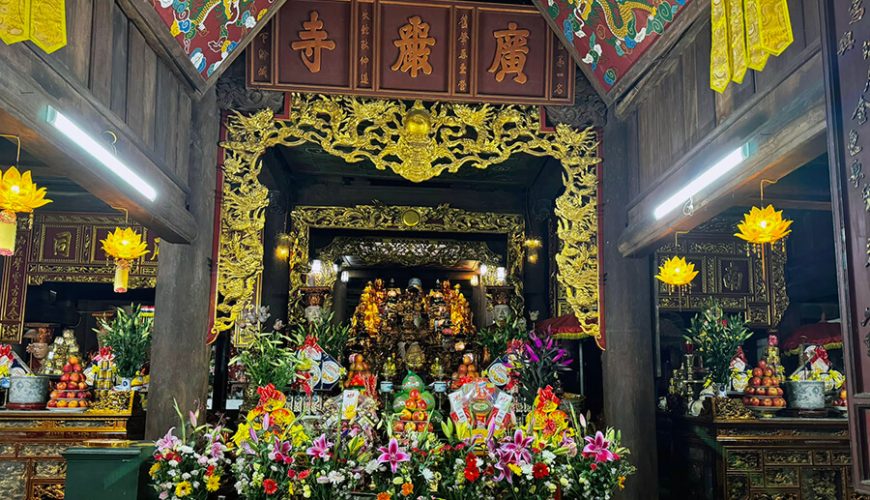
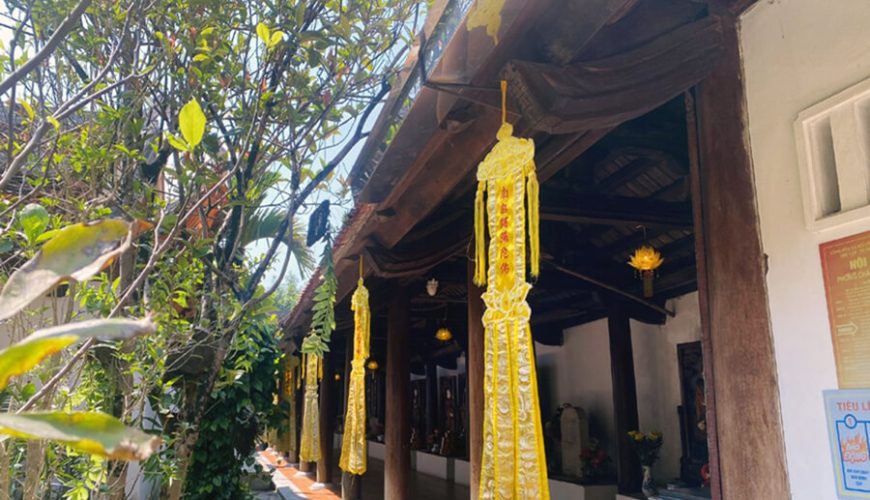
Tram Gian Pagoda, also known as Quang Nghiem Pagoda, is located on a hill about 50m high in Tien Lu village, Chuong My Ward. With unique architectural features and a site that still preserves many precious artifacts of high artistic value, Tram Gian Pagoda is considered one of the four sacred pagodas in the region, along with Tram Pagoda, Thay Pagoda, and Tay Phuong Pagoda.
Unique Buddhist architectural heritage
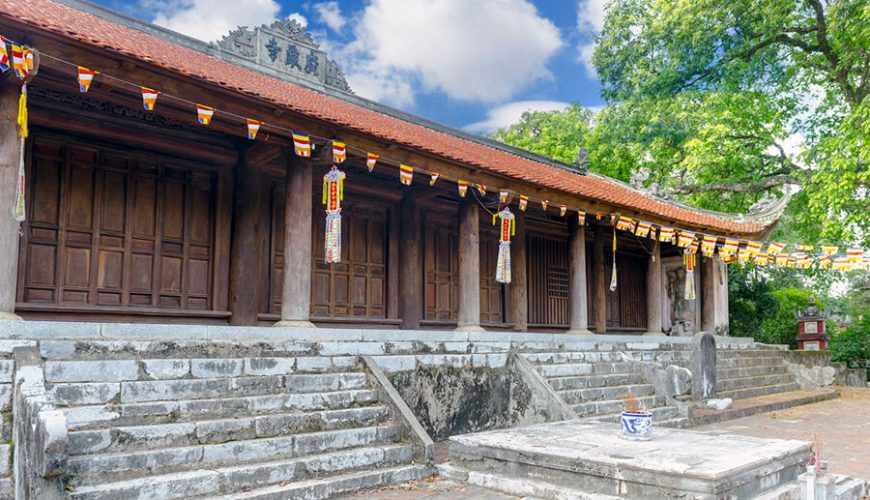
The Tram Gian Pagoda (Vietnamese: Chùa Trăm Gian, Chùa meaning “Pagoda”) is a unique architectural complex. The architectural units of this pagoda comprise 104 sections, divided into three main clusters: the three-entrance gate, the bell tower, and the main pagoda.
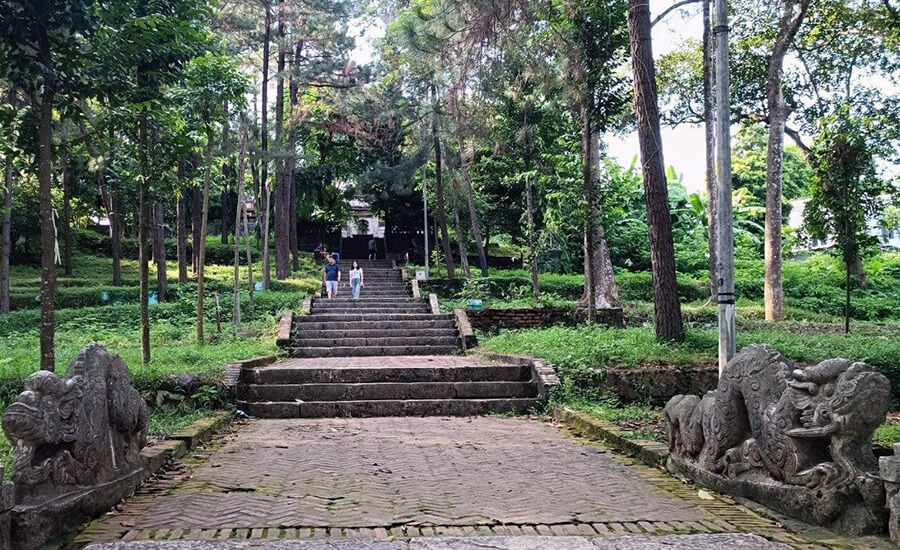
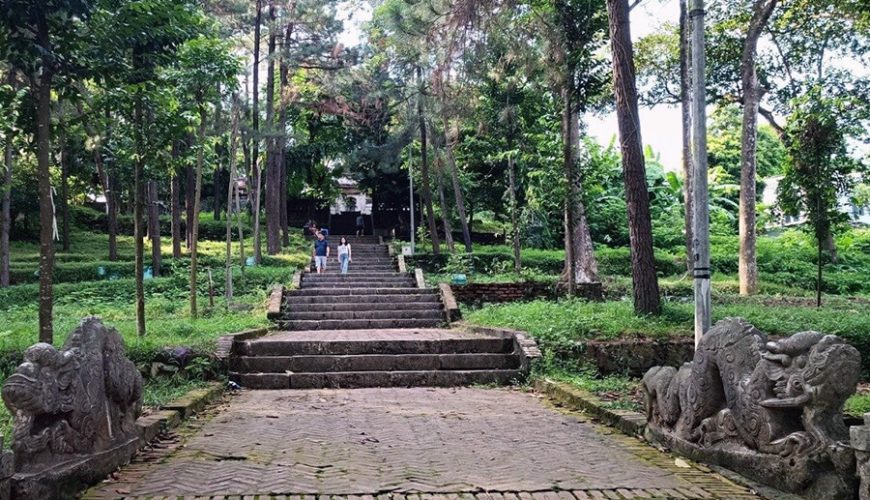
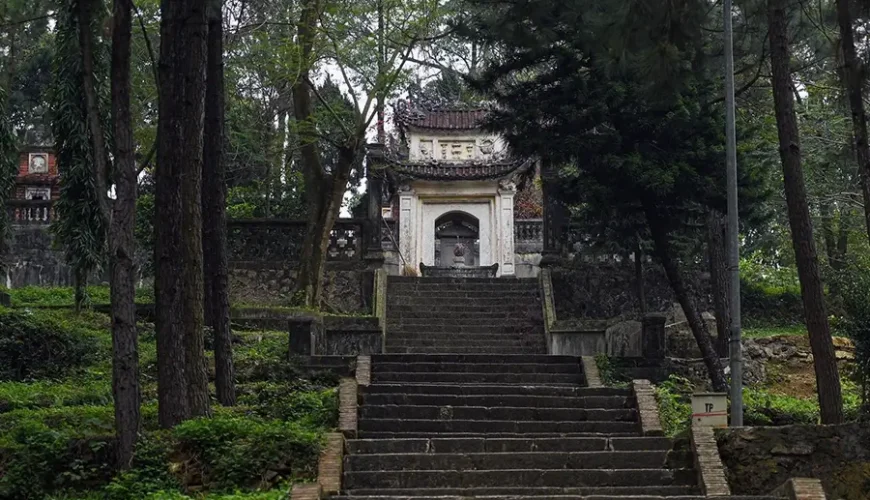
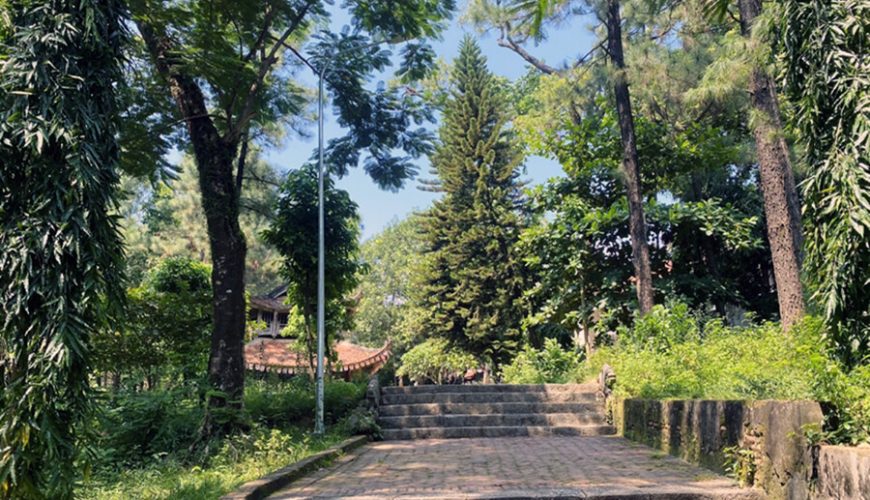
The three-entrance gate has eight roofs standing majestically atop a hundred brick steps. It was built by the ancients with two large pillars creating a path in the middle, and on both sides are two walls connected to two small pillars. Through the three-entrance gate is a brick yard with two corridors on both sides.
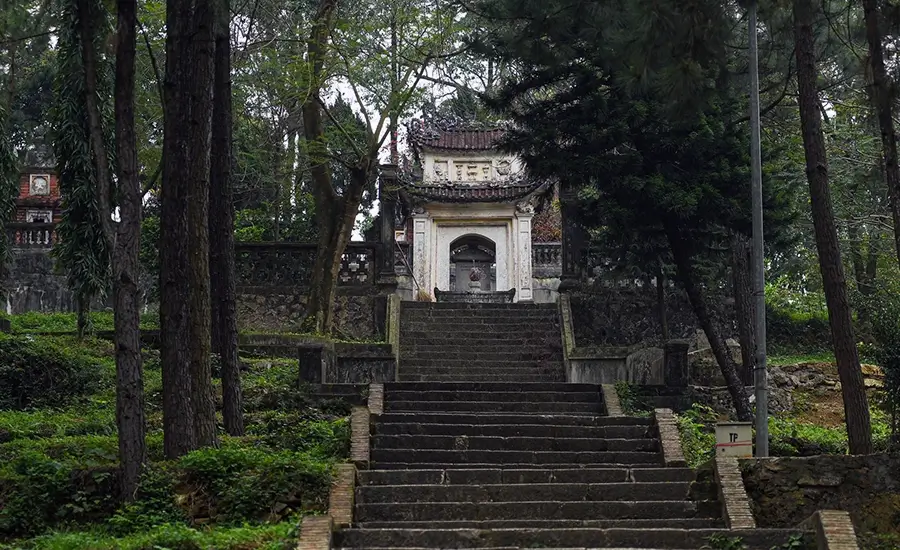
At the end of the yard is a winding road that gradually rises to the top of the hill leading to the pagoda; in the middle of this road is a row of ancient pine trees, creating a solemn landscape.
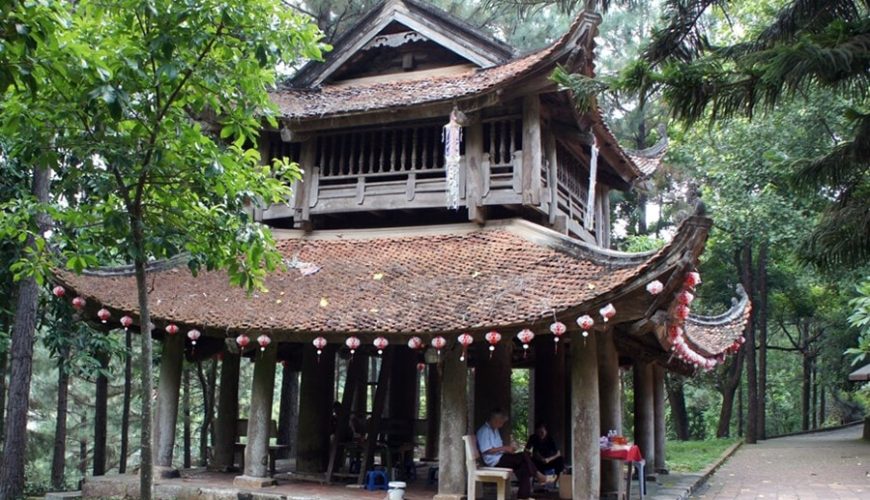
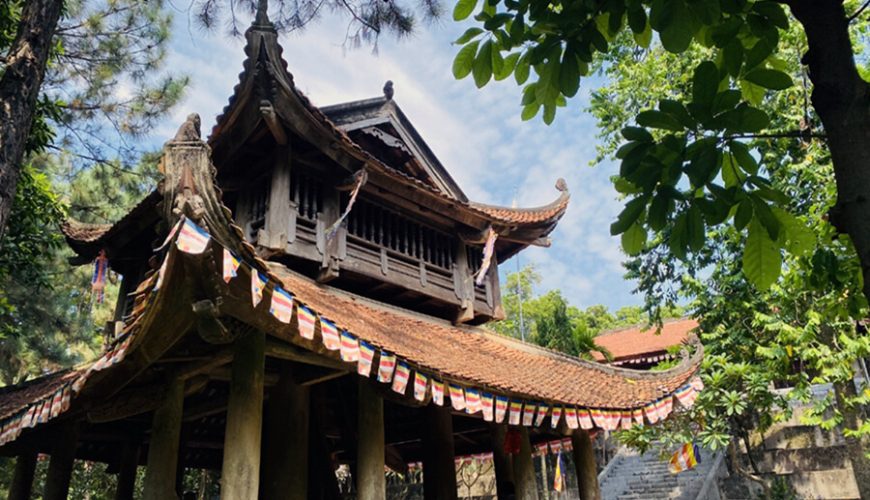
The bell tower, located on the central axis of the Three Jewels area, slightly to the west, is also one of the few oldest bell towers still remaining in Hanoi today. According to legend, the bell tower was built in 1693. The bell tower has an architectural style of four sets, with rafters supported by 16 columns of ironwood, concentrated on four main columns. The square architectural plan, two floors, and eight roofs with many curved motifs create the bell tower like a pure lotus.
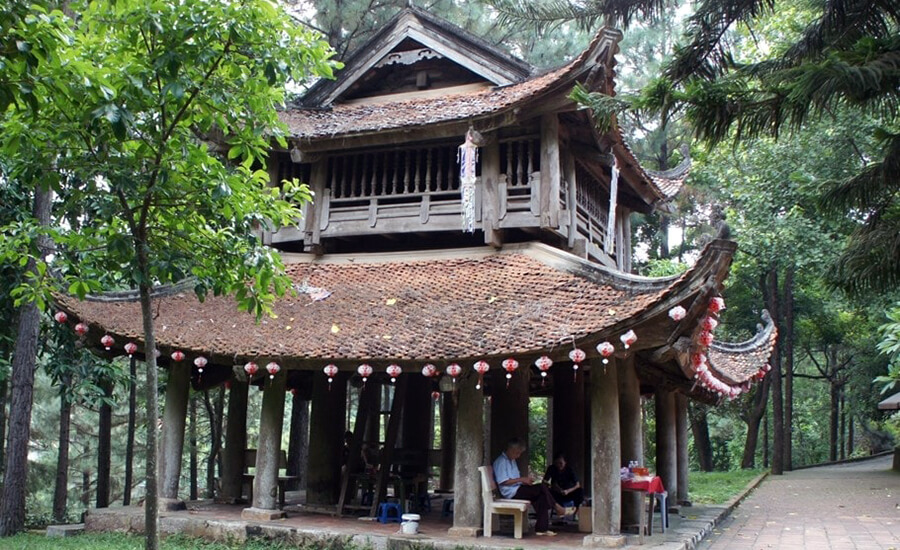
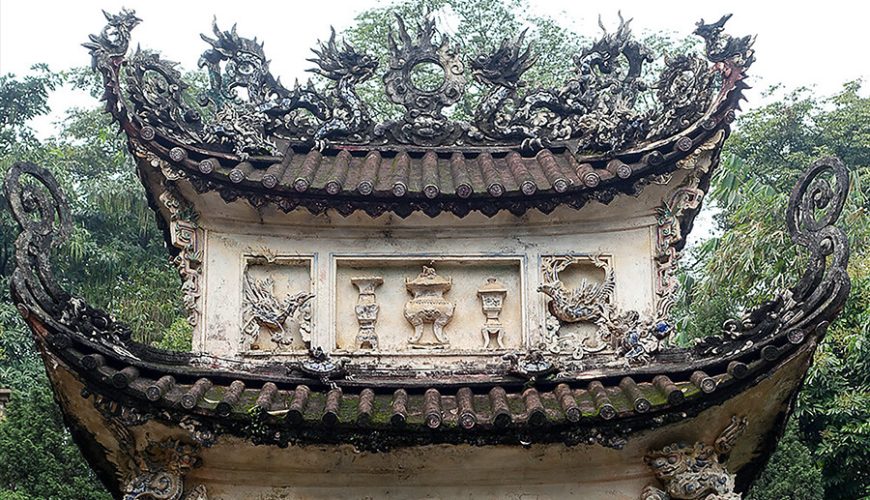
The bell tower is like a valuable work of art, with sophisticated carvings of many dragons and fire clouds in the style of the late 17th and early 18th centuries. Currently, the bell tower still hangs a 1.1m-high bell bearing four Chinese characters meaning “Quang Nghiem Ancient Pagoda,” cast in 1794.
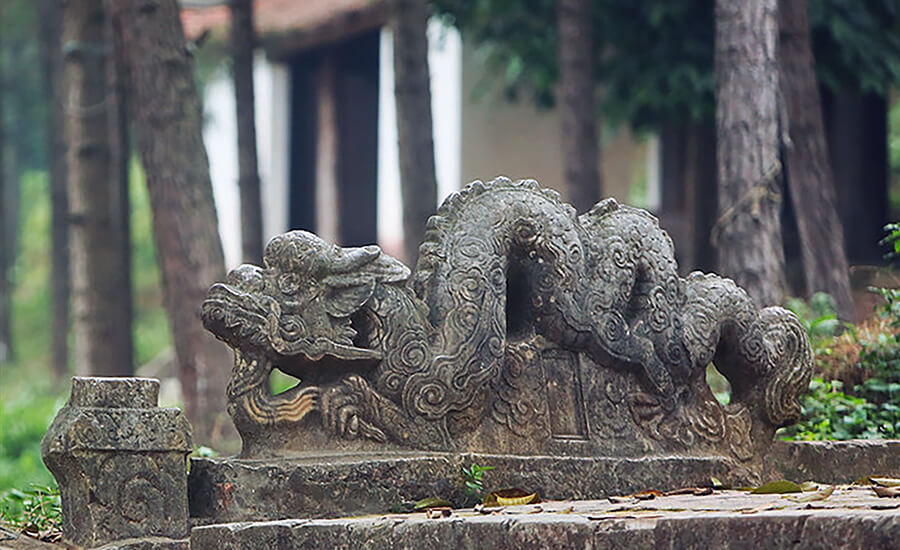
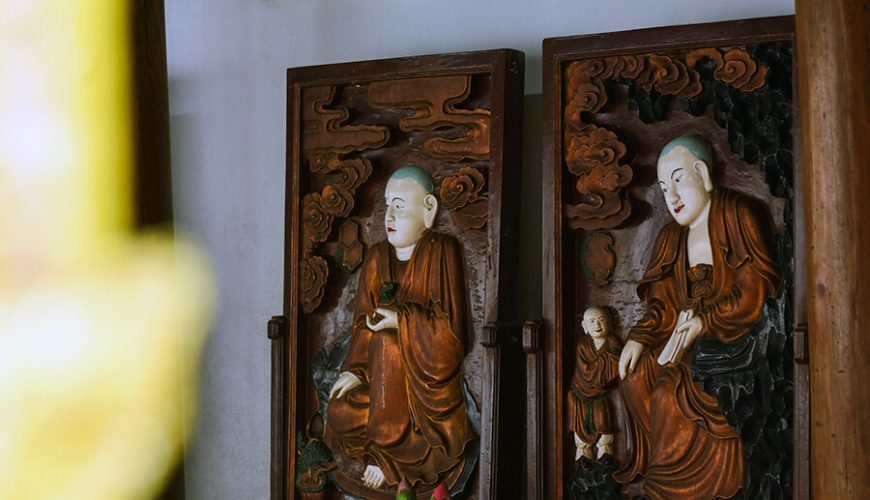
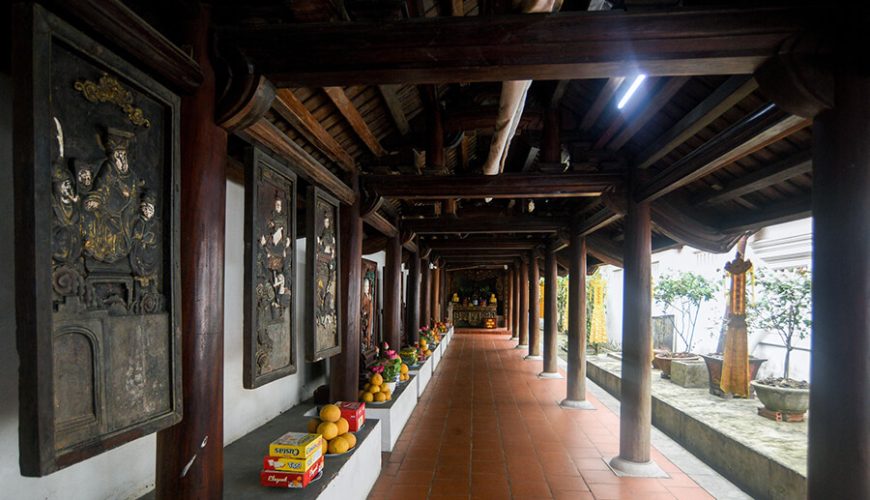
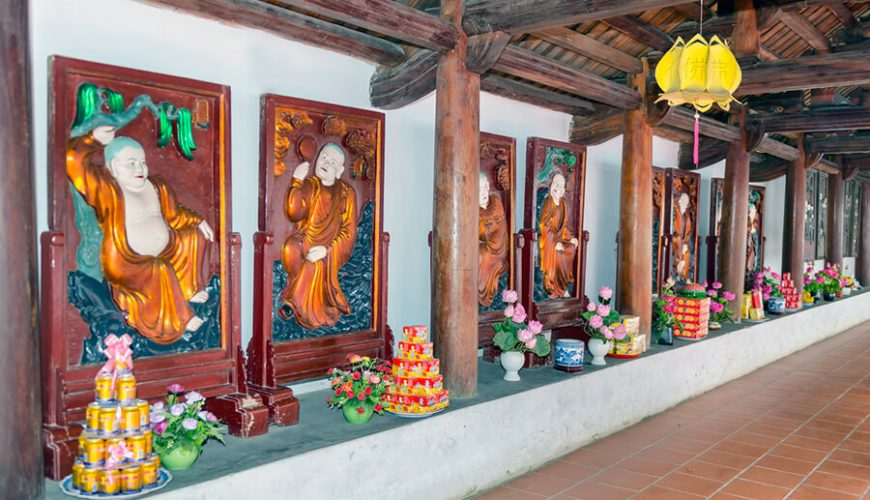
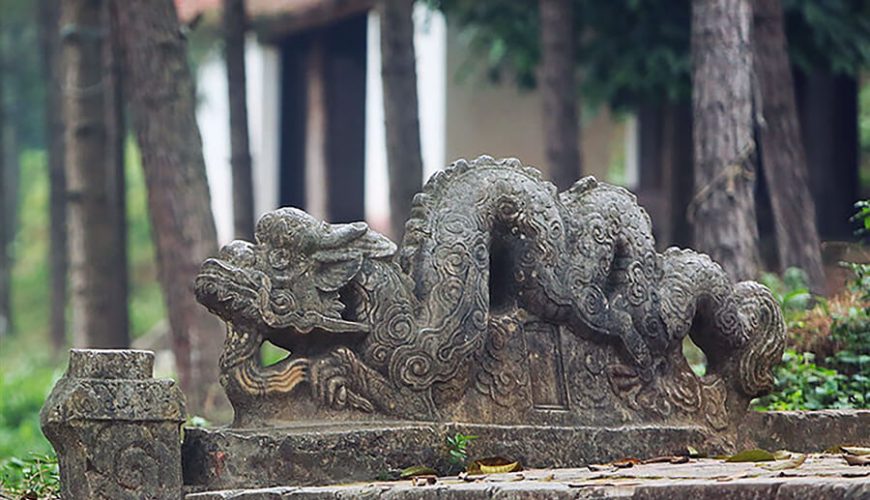
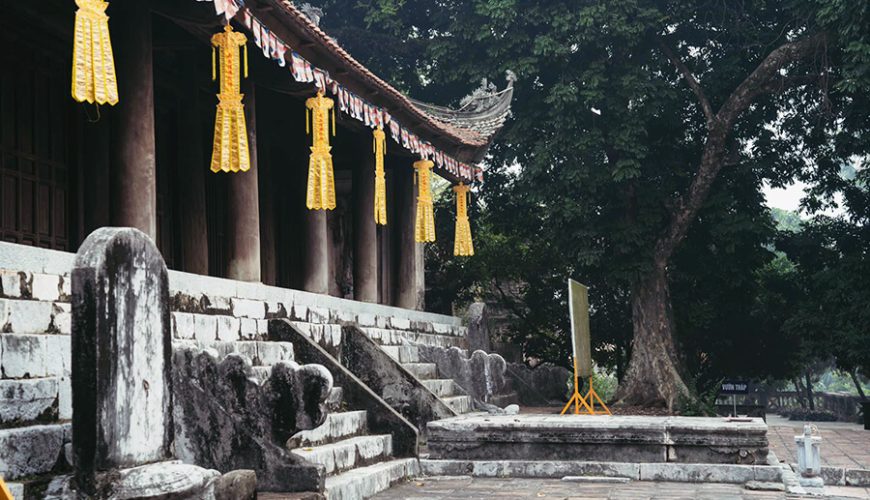
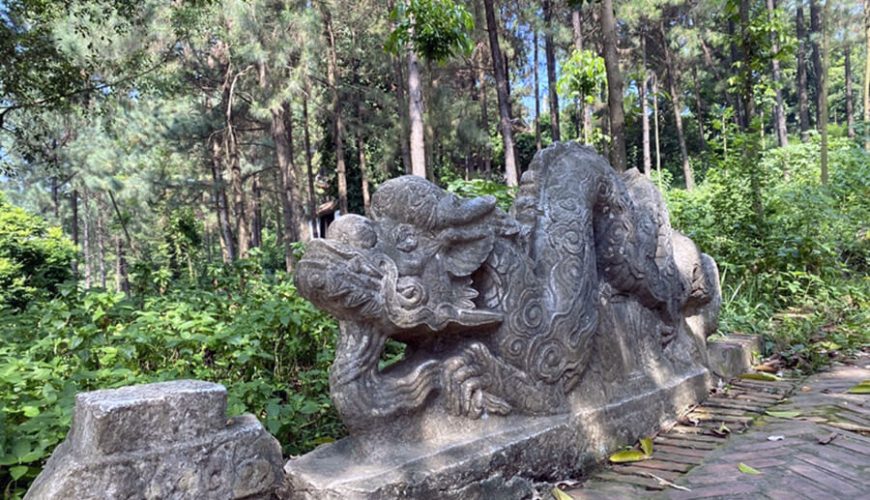
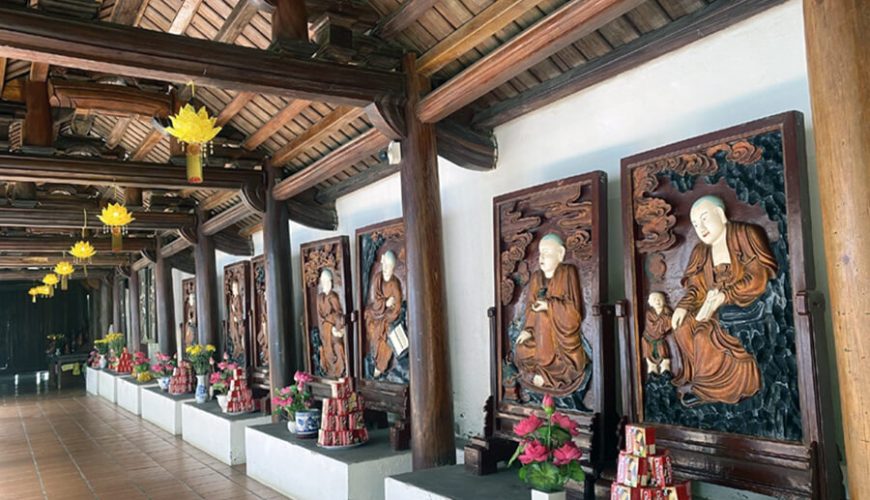
From the bell tower, passing through stone steps with dragon-carved railings, we reach the main pagoda, including the worshiping hall, the incense burning area, and the upper hall. The two corridors on either side of the hall house 18 Arhats; each Arhat, carved in wood, is a unique work of art.
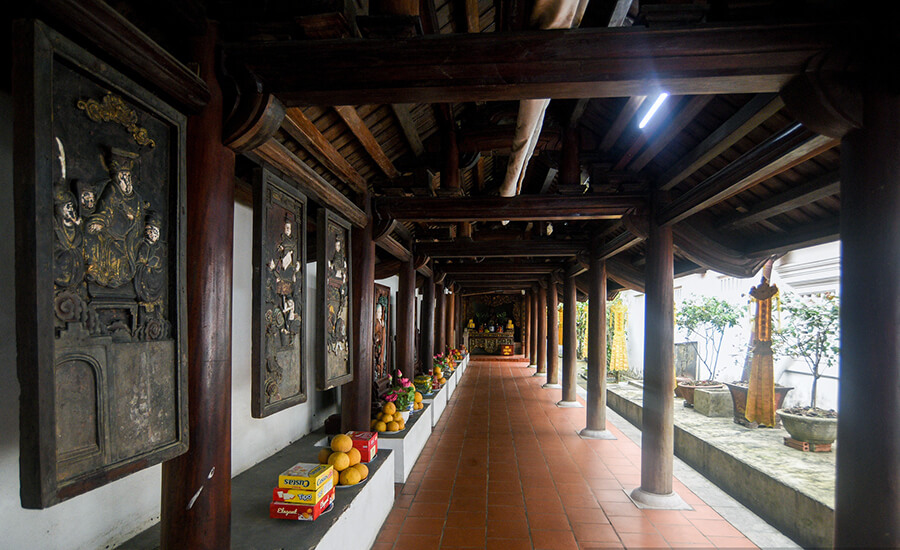
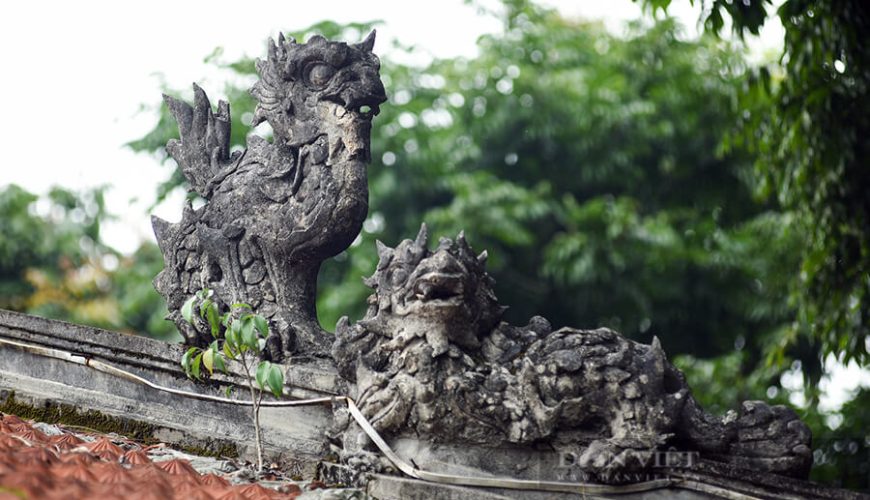
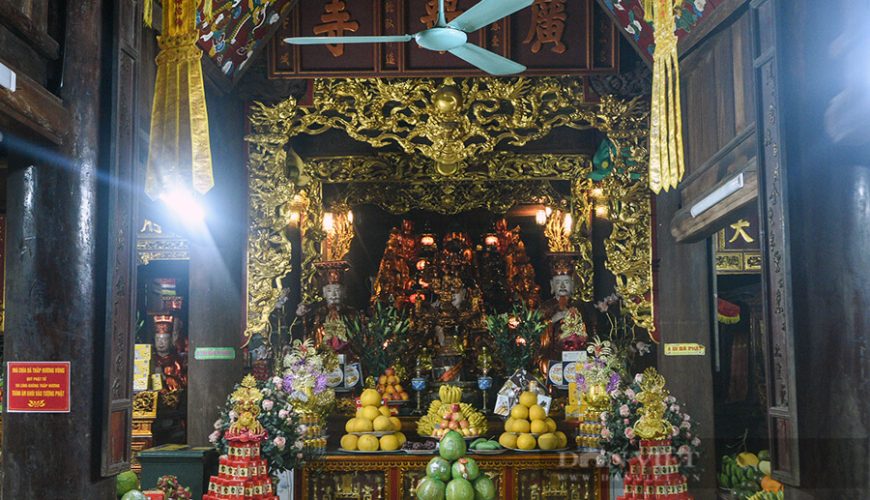
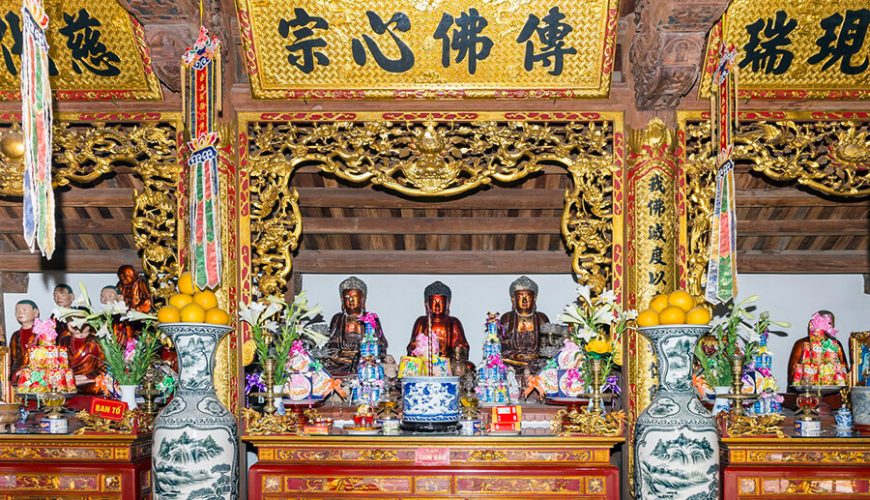
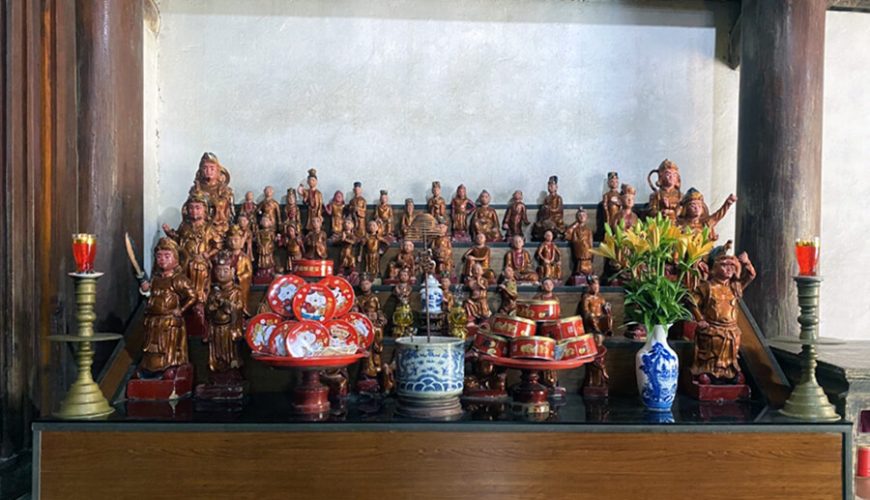
Regarding artifacts, Tram Gian Pagoda still preserves many precious relics, notably a pair of stone dragons from the Tran Dynasty used as railings and steps. At Tram Gian Pagoda, there are 153 statues, mostly made of wood, a few made of terracotta. Especially precious are the statue of Tuyet Son Buddha, carved from black jack tree wood, and the statue of the Bodhisattva Avalokitesvara.
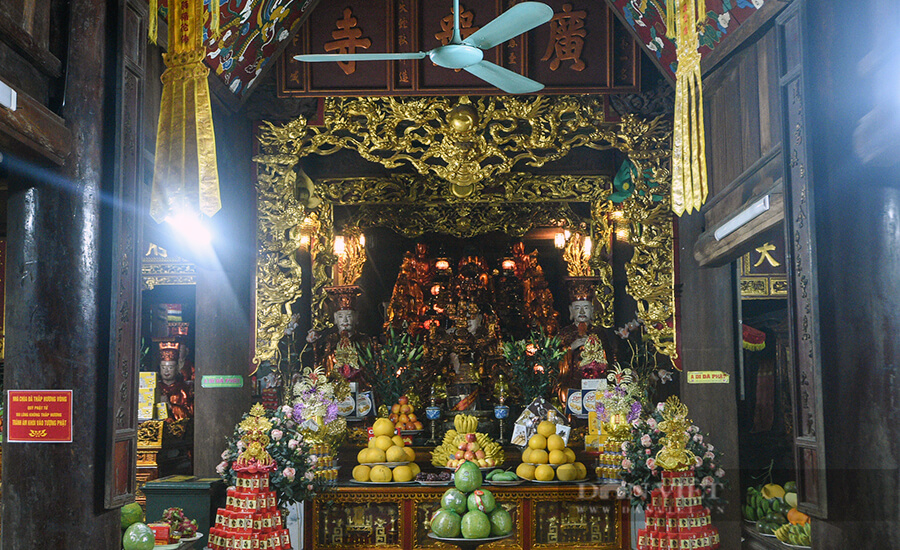
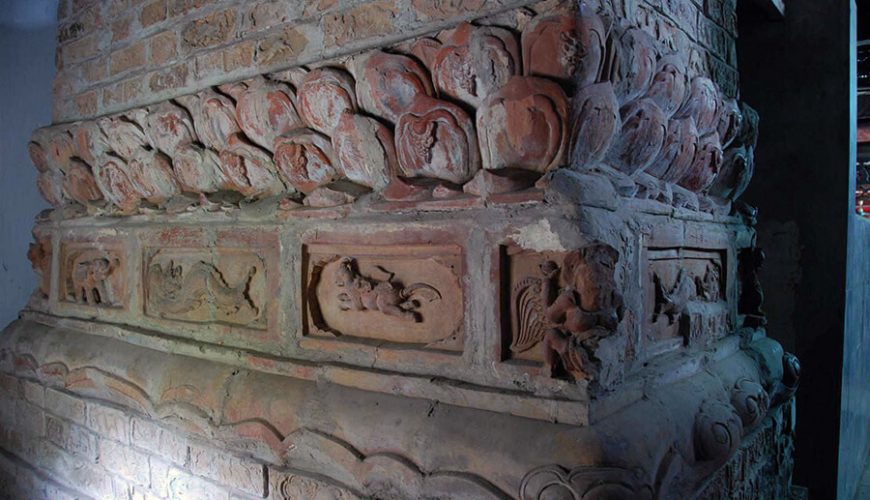
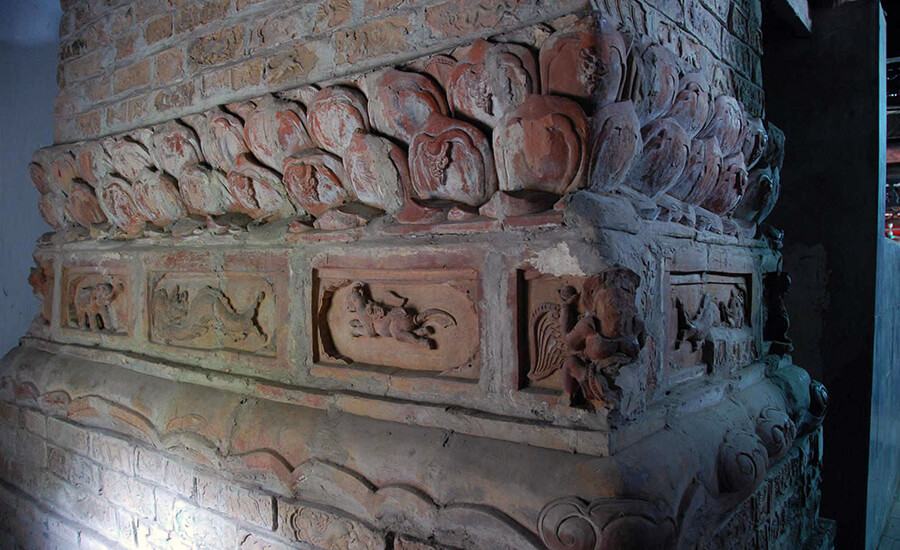
In the middle of the upper hall, there is a rectangular red terracotta pedestal, on which is a lotus platform, surrounded by many animal and flower decorations. On the altar are placed statues of the Buddha.
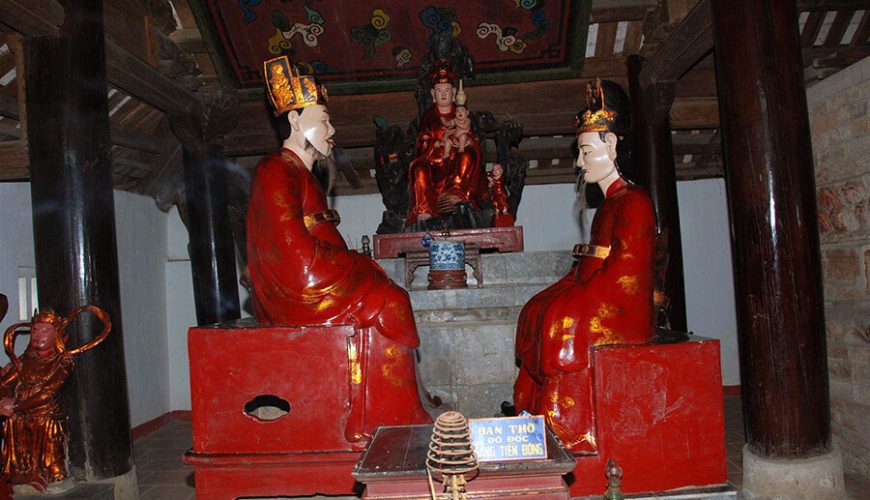
Among the statues in the pagoda is an admiral. Dang Tien Dong, a famous military officer of the Tay Son Dynasty, defeated 290,000 invading Qing troops and liberated Thang Long in 1789.
In addition, Tram Gian Pagoda also has a tower garden – the tombs of the abbots with many old coniferous trees surrounding.
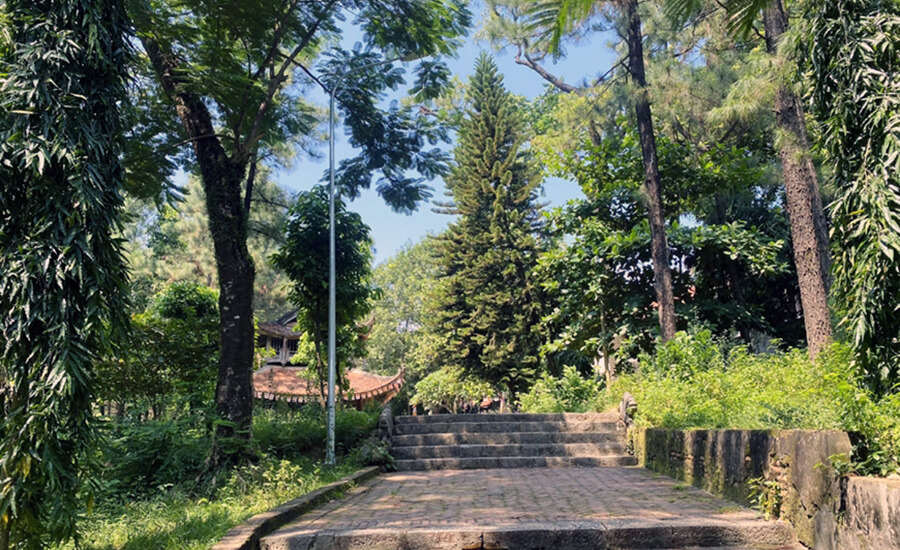
In recent decades, the pagoda has been continuously renovated and embellished, but basically still follows the old style. Because of its outstanding architectural and sculptural values, Tram Gian Pagoda was designated a National Historical-Cultural Relic in 1962 by the Ministry of Culture, Sports and Tourism.
Source: collected by An
Follow us for the best deals on Vietnam package tours and visa services!
Comment (0)