
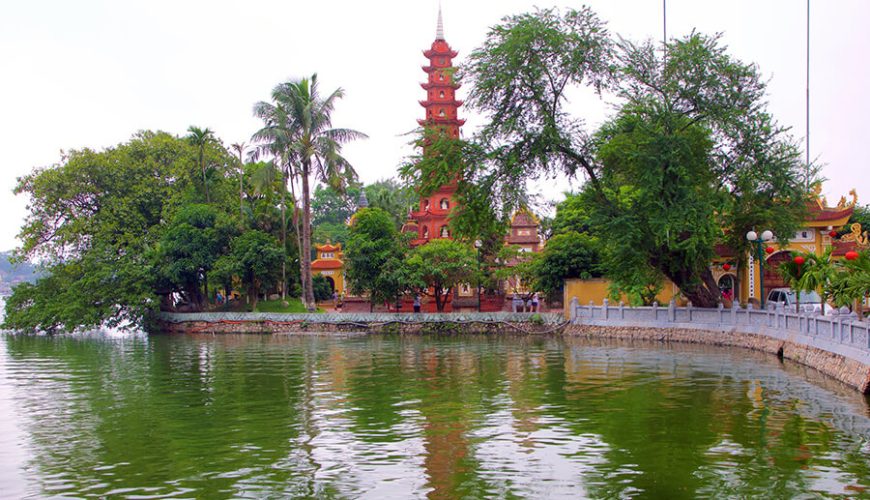
The capital, Hanoi, is often described as a city with rich cultural and historical heritage, famous for its many scenic spots and sacred pagodas, temples, and shrines. Tran Quoc Pagoda is more than 1,000 years old, the oldest pagoda in the capital, renowned for its spiritual, historical, and architectural beauty. This is considered one of Hanoi’s must-visit tourist destinations.
Overview of Tran Quoc Pagoda
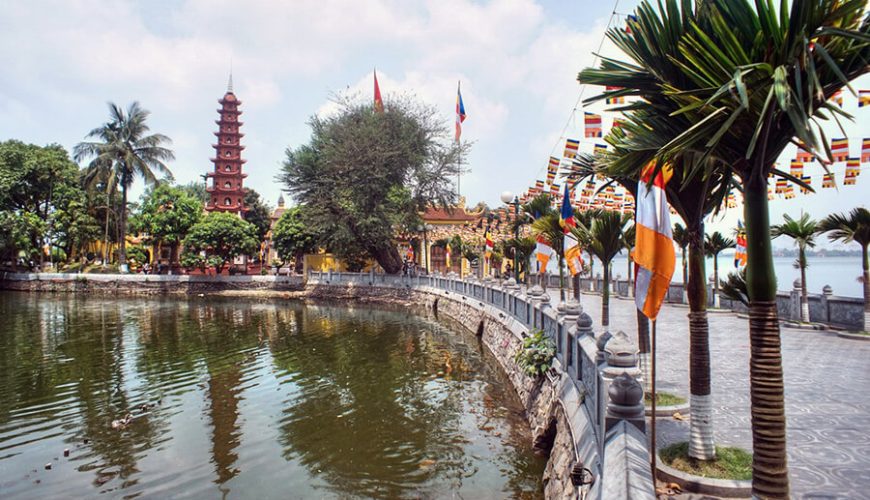
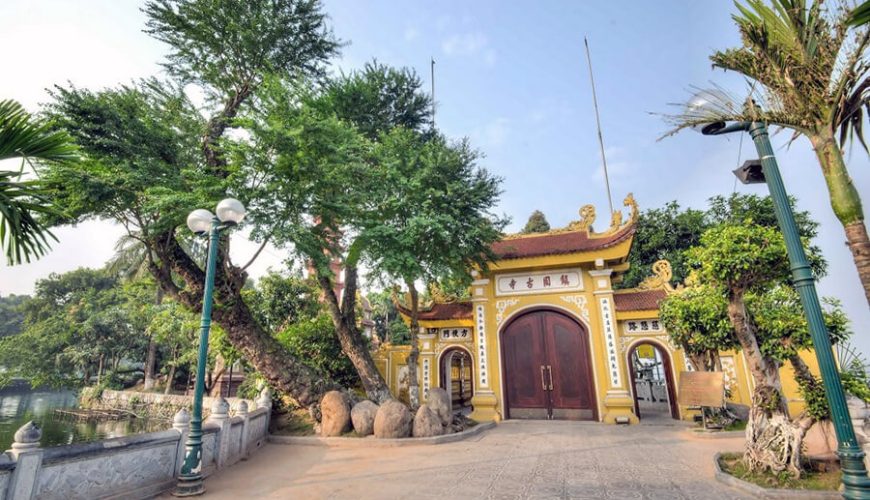
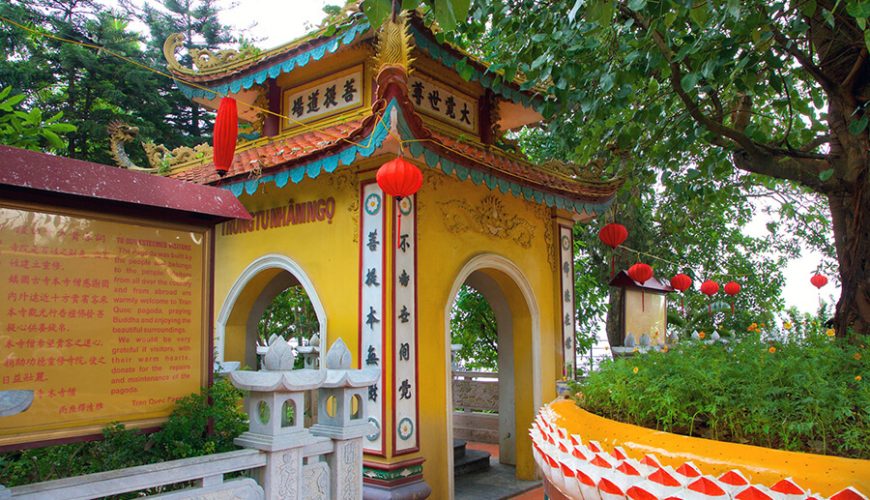
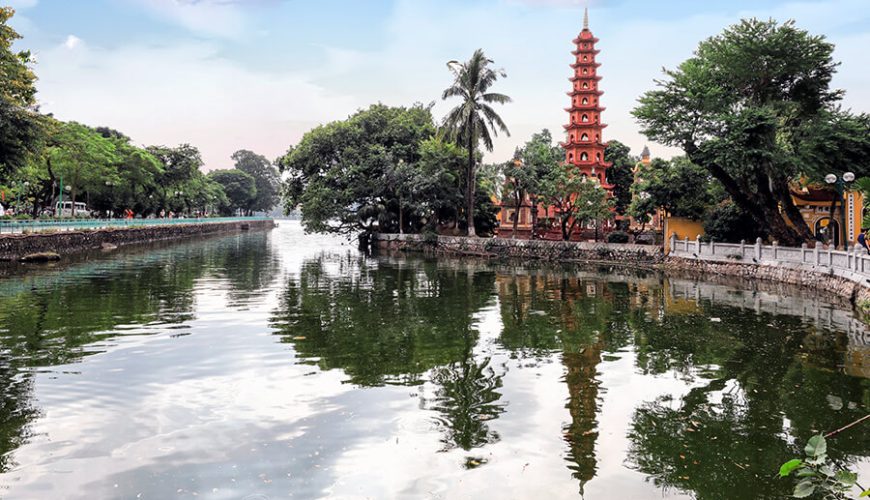
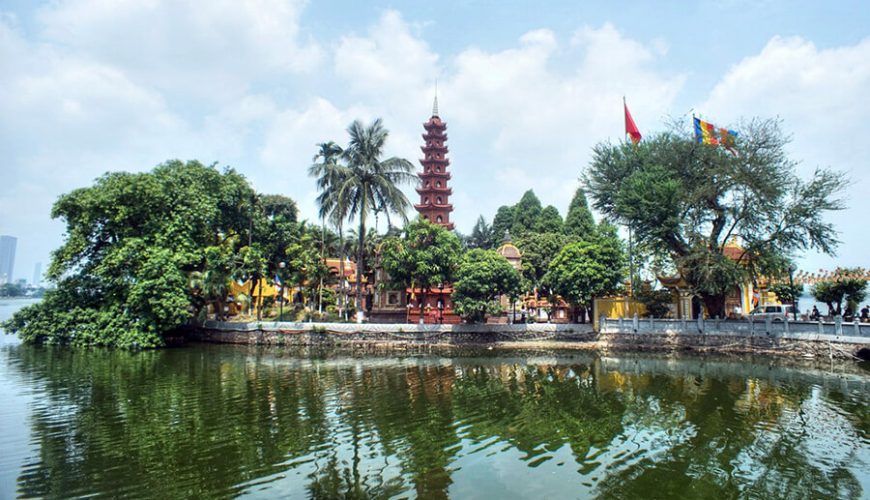
Tran Quoc Pagoda (Vietnamese: Chùa Trấn Quốc; Chùa meaning Pagoda) is an ancient pagoda in Vietnam, located at 46 Thanh Nien, Tay Ho Ward, and is up to 1500 years old. The pagoda is located on a mound, looking from afar like a small island. Surrounding the pagoda is blue water, like a charming landscape painting.
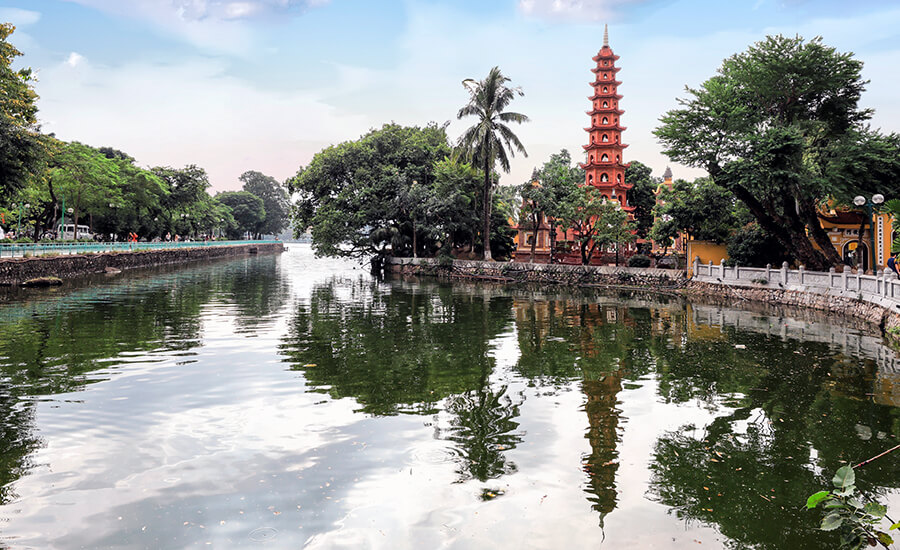
According to historical records, Tran Quoc Pagoda was built during the Pre-Ly Dynasty, in the 6th century. Initially, the pagoda was called Khai Quoc (meaning “National Founding”) and was located on a field in Yen Hoa village, today’s Yen Phu village. In 1440, Emperor Le Thai Tong renamed the pagoda An Quoc, in the hope of a peaceful, long-lasting country.
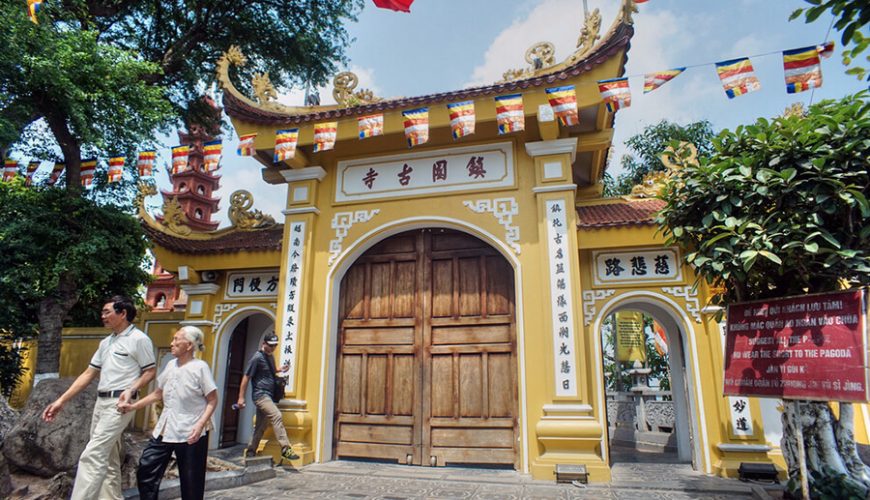
During the reign of Emperor Le Kinh Tong in 1615, the pagoda was moved to the Yen Phu dike area and rebuilt on the old foundations of Thuy Hoa Palace of the Ly Dynasty and Han Nguyen Palace of the Tran Dynasty. In 1639, Lord Trinh repaired the three-entrance gate and built corridors on the left and right sides. The pagoda was named Tran Quoc during the reign of Emperor Le Hy Tong.
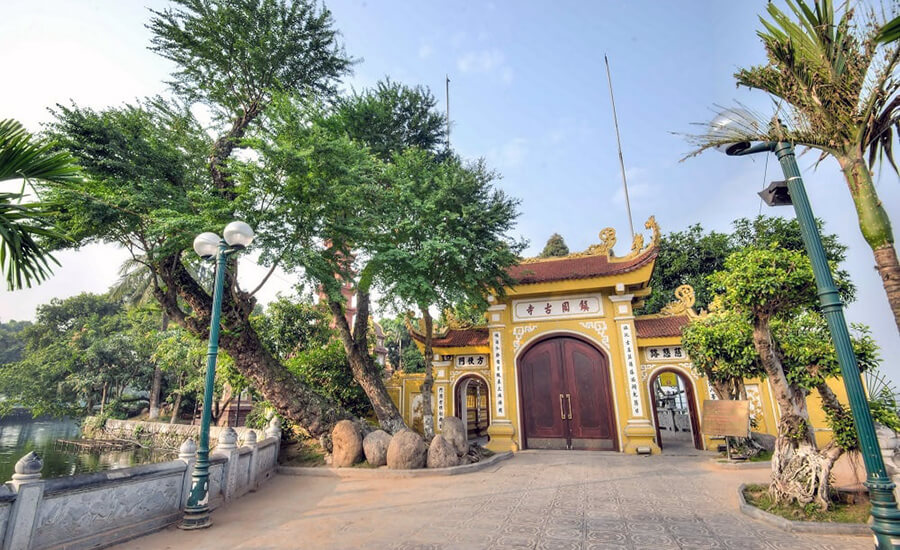
At the beginning of the Nguyen Dynasty, the pagoda was embellished on a grand scale, with expansions, the casting of bells, and the addition of statues. In 1842, Emperor Thieu Tri changed the name of the Tran Quoc Pagoda to Tran Bac. However, people are still accustomed to calling this pagoda Tran Quoc and have kept this name to this day.
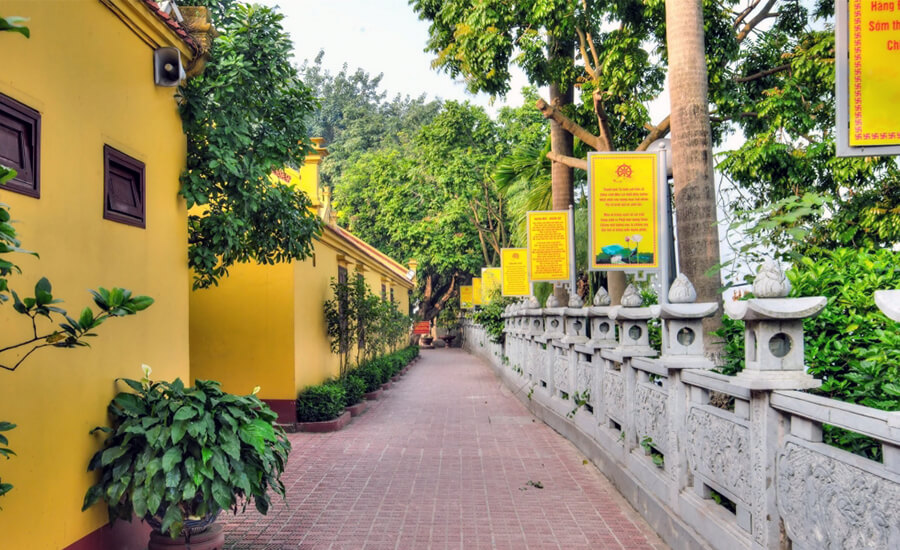
Through many historical upheavals, the pagoda is still protected and embellished, preserving its architectural and cultural beauty. In 1962, Tran Quoc Pagoda was recognized by the Ministry of Culture and Information as a National Historical-Cultural Monument. For Vietnamese Buddhism, Tran Quoc Pagoda is truly a pride, a precious heritage possessing architectural, historical, and cultural beauty. Up to now, this project remains one of the sacred Buddhist sites, a famous spiritual destination in Hanoi, attracting a large number of tourists, monks, nuns, and Buddhists to worship.
Unique architecture of Tran Quoc Pagoda
As one of the most beautiful pagodas in the world, Tran Quoc Pagoda impresses visitors with its extremely unique ancient architecture. Although it has undergone many restorations, this pagoda still retains its pure Buddhist architectural and structural principles.
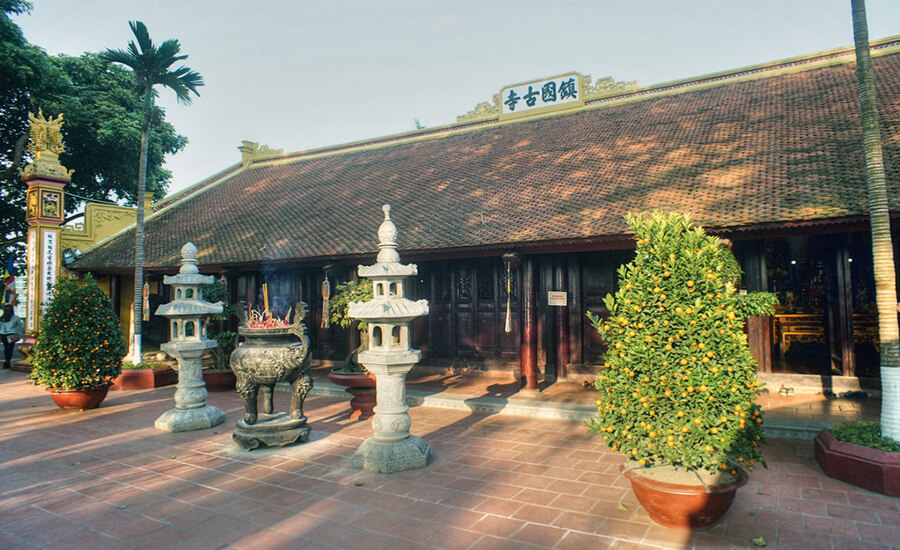
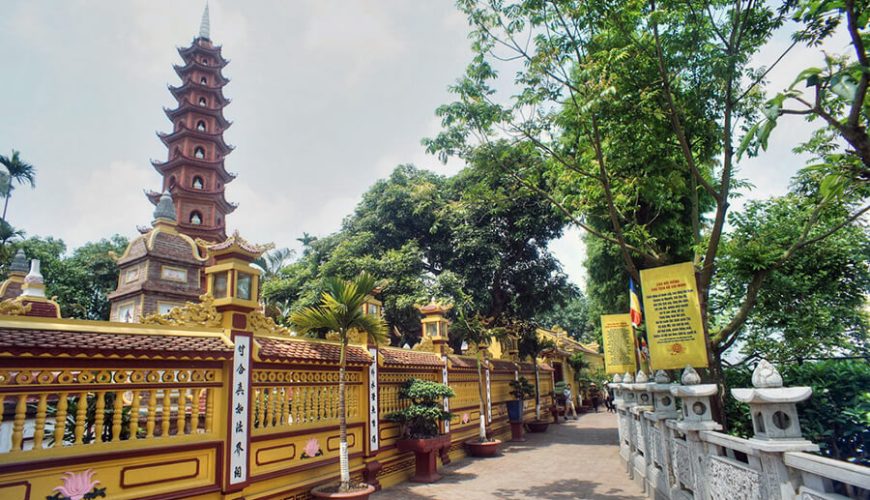
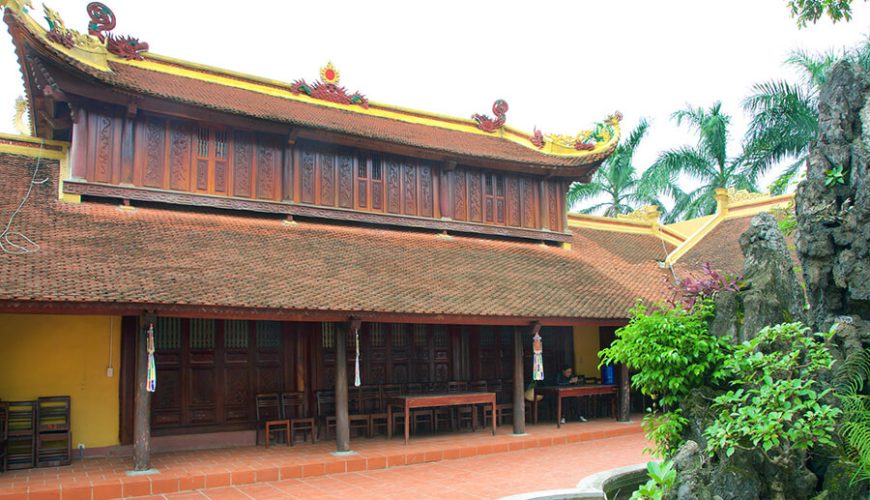
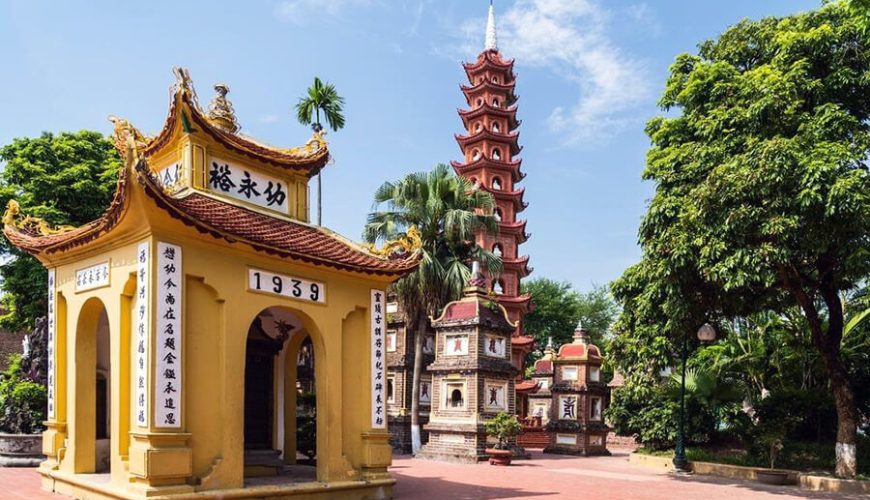
The pagoda has 3 main parts: the main sanctuary, the forecourt hall, and the posterior hall. In addition, the Nine-Rank Lotus Flower, or Stupa, is an interesting highlight of the overall project.
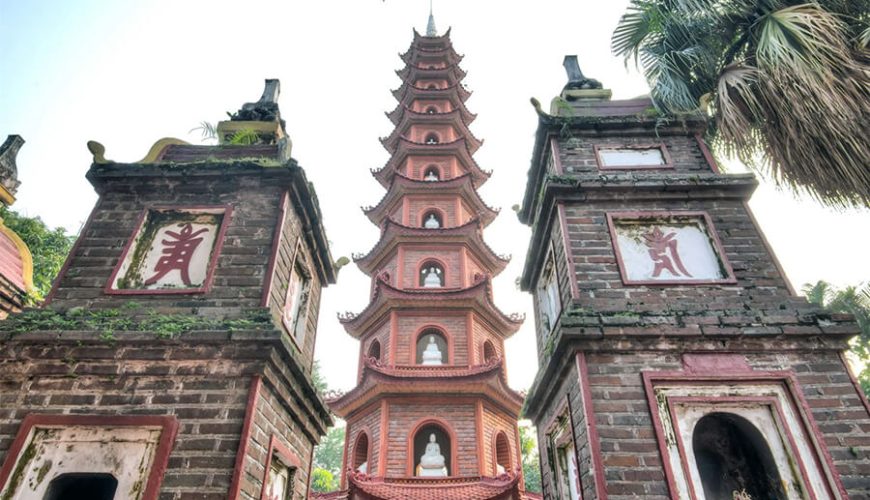
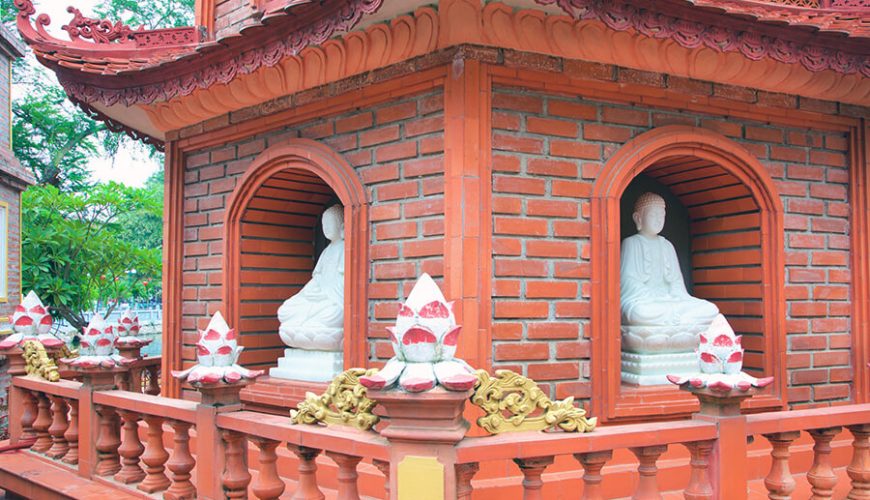
Stupa – Nine-level lotus flower
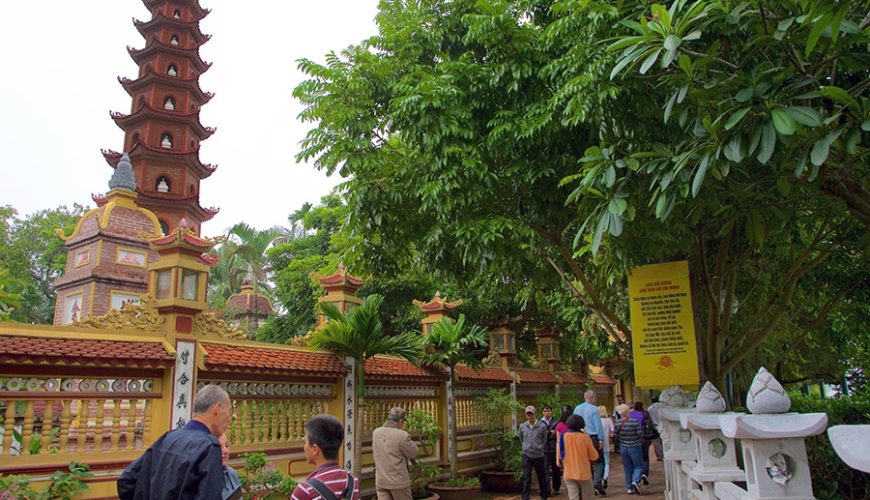
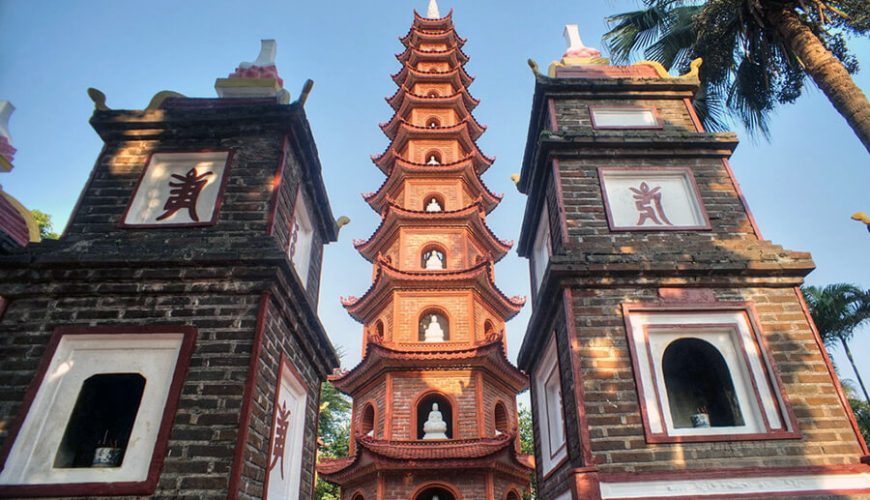
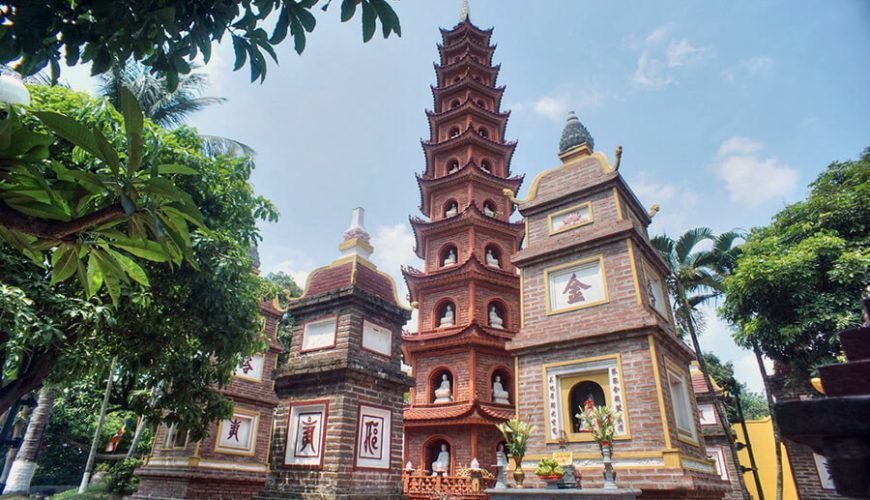
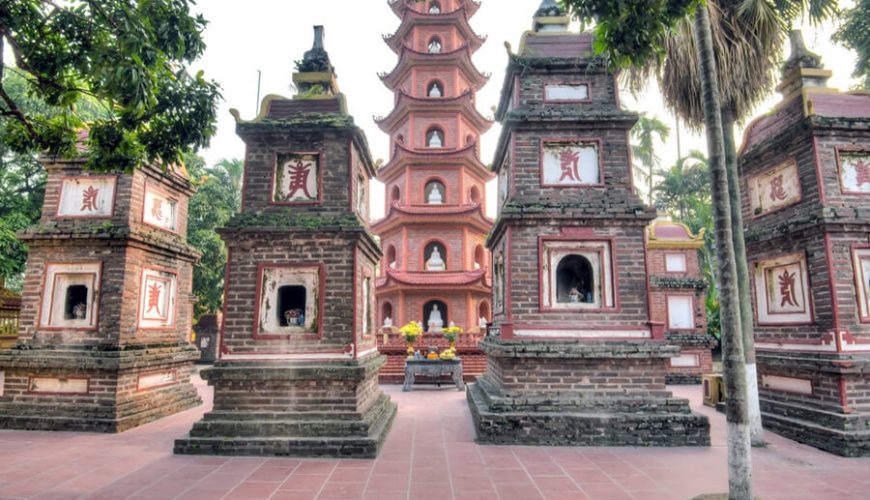
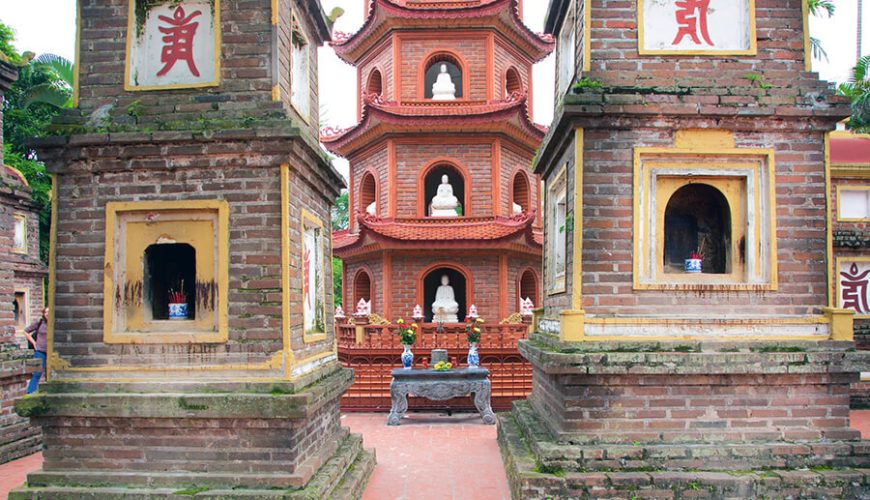
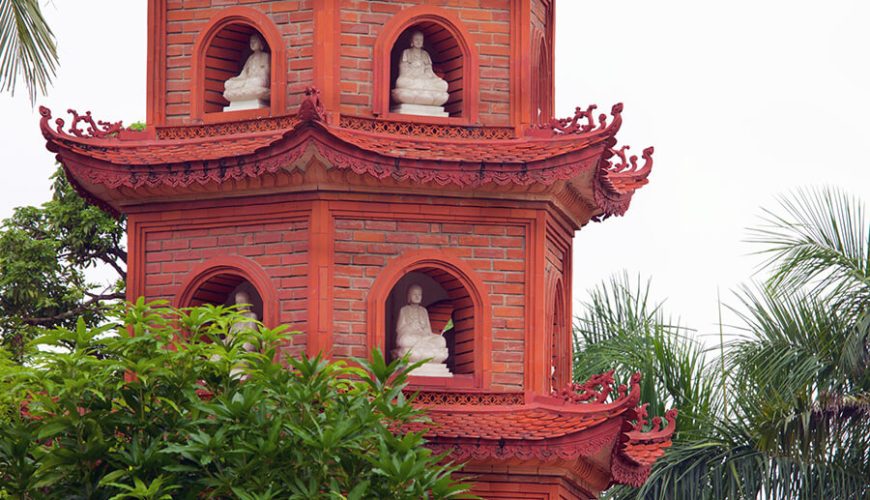
The lotus stupa was built between 1998 and 2003, creating a tower garden for the pagoda. The stupa has a total of 11 floors, an area of about 10.5 m². Inside, there is an Amitabha Buddha statue made of precious stones, along with about 66 other statues.
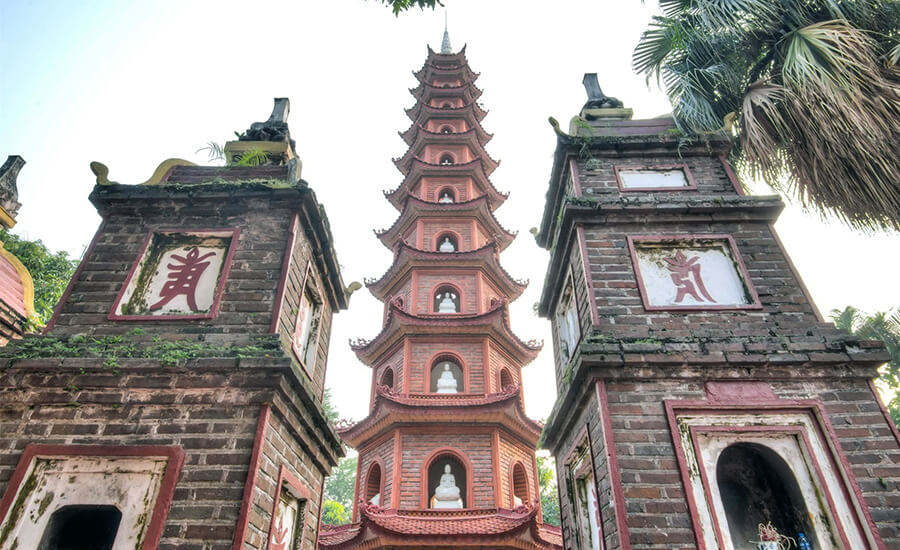
Above the stupa, there is a 9-storey lotus (Nine-grade lotus flower) cast from precious stones. The stupa of Tran Quoc Pagoda is considered a work of bold aesthetics, retaining the softness and flexibility of the overall architecture while adding majesty and splendor.
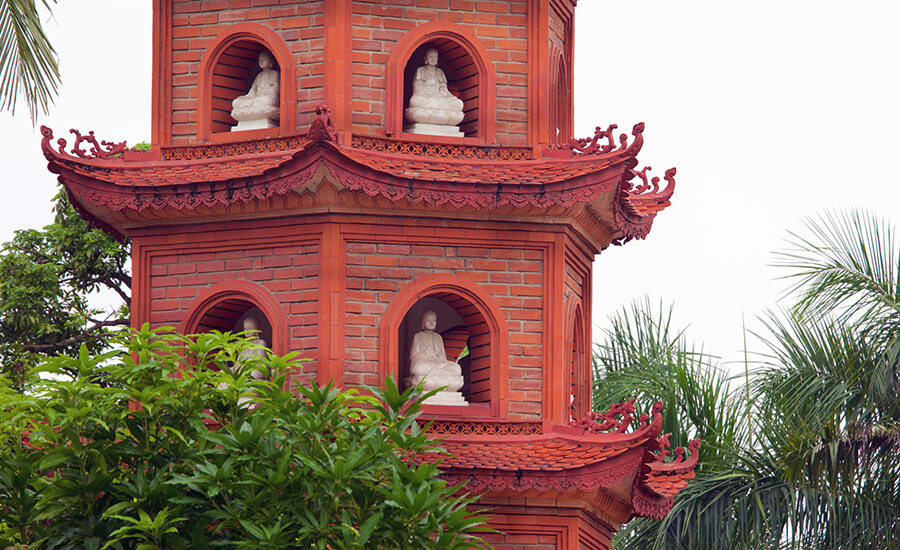
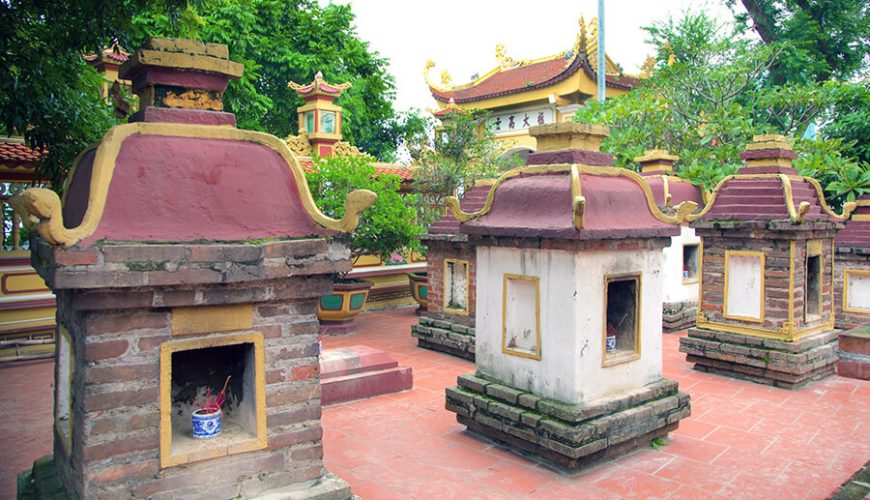
The ancient towers surrounding the stupa (18th century) also have equally sophisticated architecture.
Forecourt hall
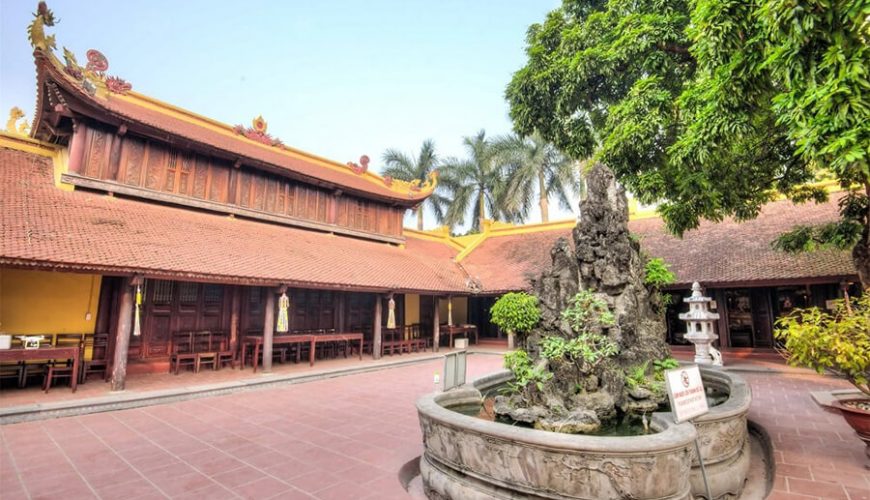
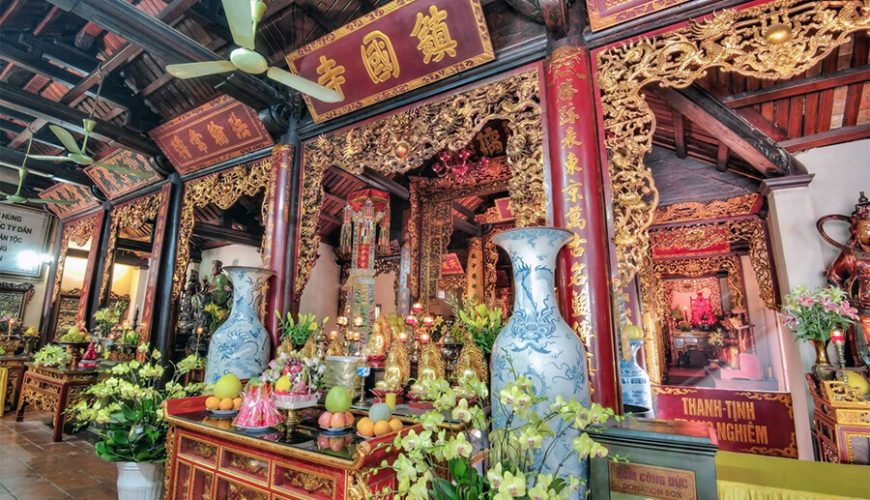
After visiting the stupa, you can stop by to worship Buddha at the forecourt hall. The Forecourt hall of the pagoda was built to the west, with the two corridors on either side being the upper palace and an incense-burning house.
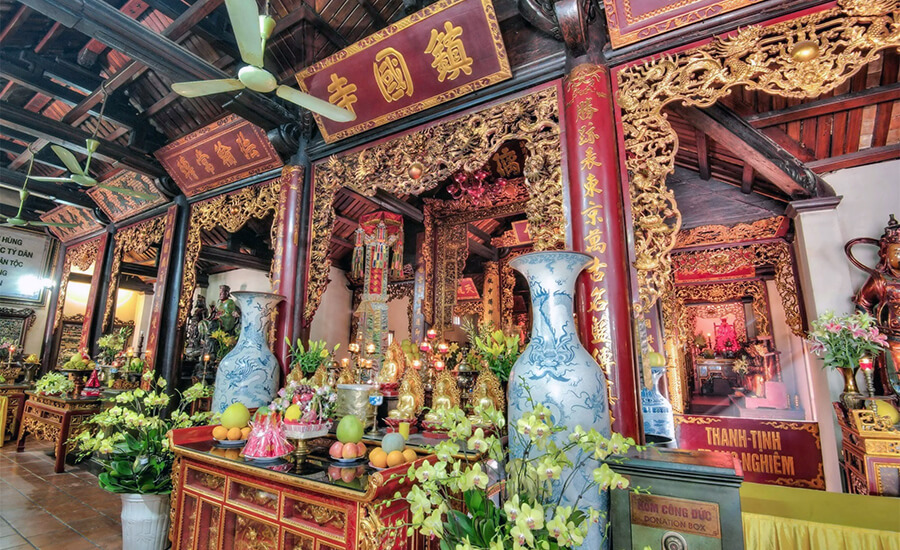
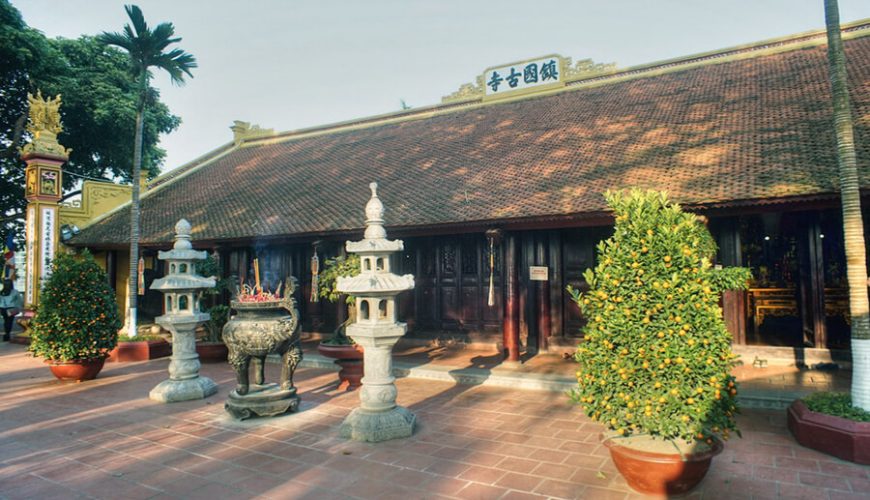
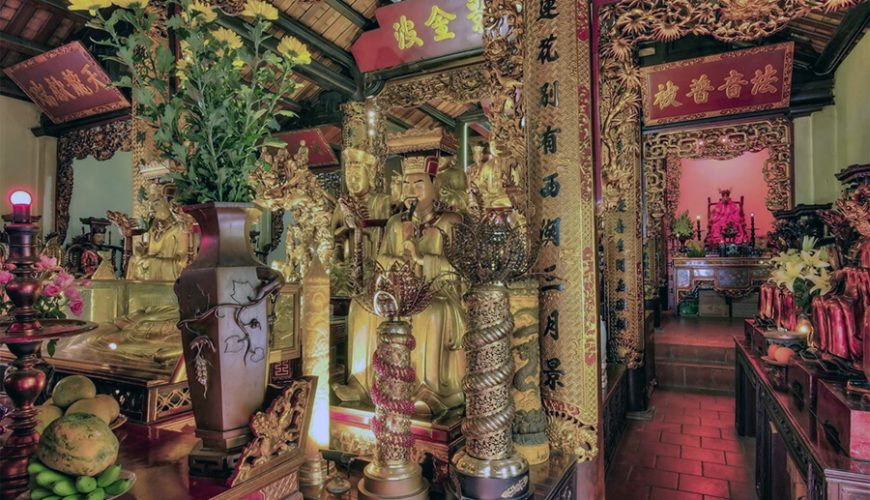
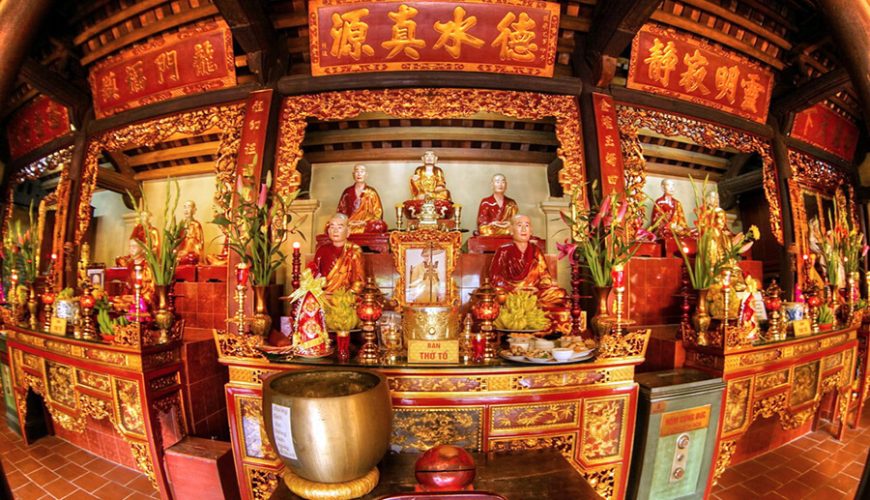
The front hall is where many statues of Buddha and Lord Guan (Guan Yu) are placed. Among them, the most prominent is the wooden statue of Sakyamuni Buddha, painted in red and gilded with gold. This is also the most beautiful Nirvana statue in Vietnam. In addition, the Forecourt hall contains many other precious bronze Buddha statues.
The main shrine
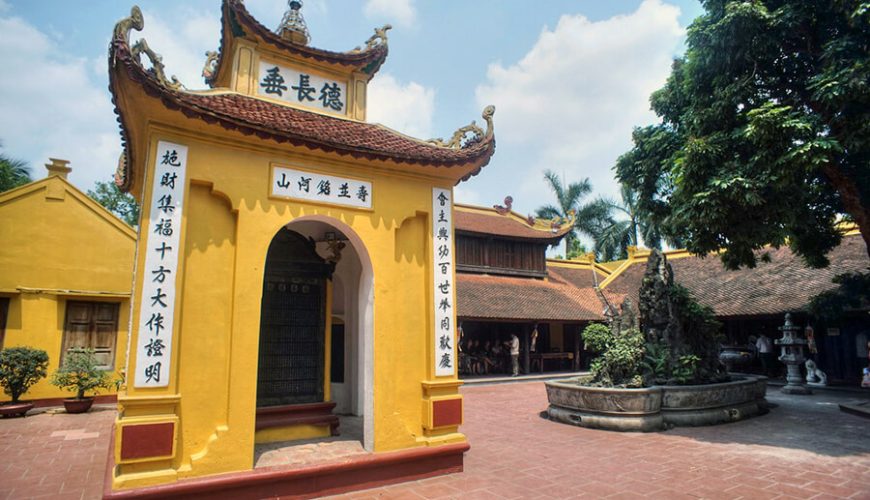
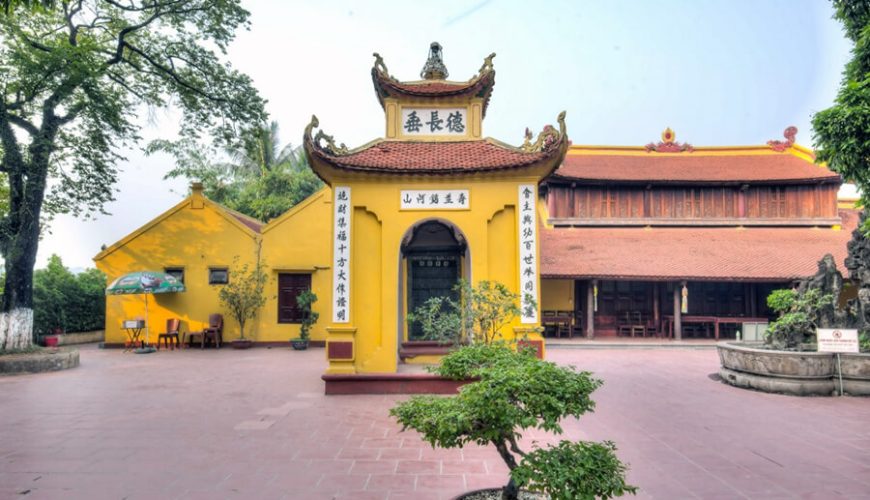
Behind the forecourt hall, there is a bell tower built into a 3-room house, made of wood with a fish-scale red tile roof, giving it an ancient look. To the right of the bell tower is the shrine for the ancestors, and to the left is a place storing steles.
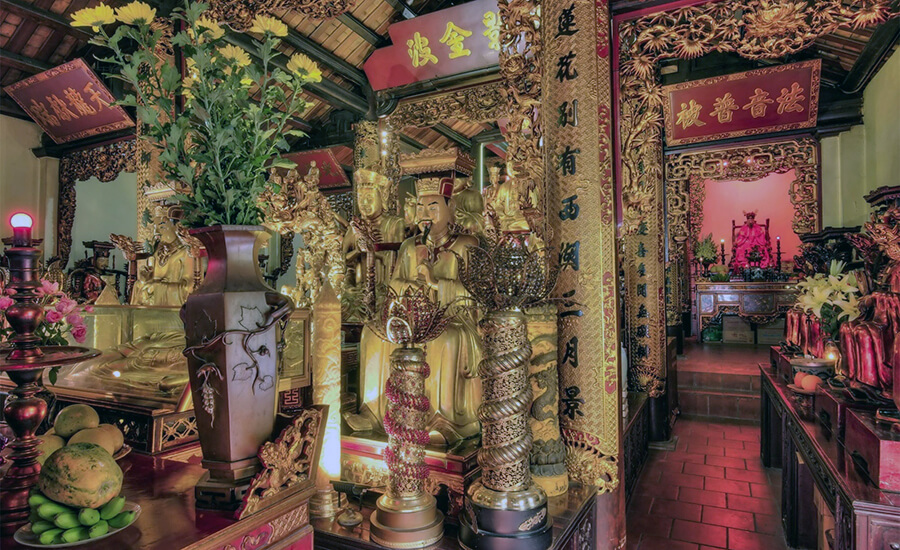
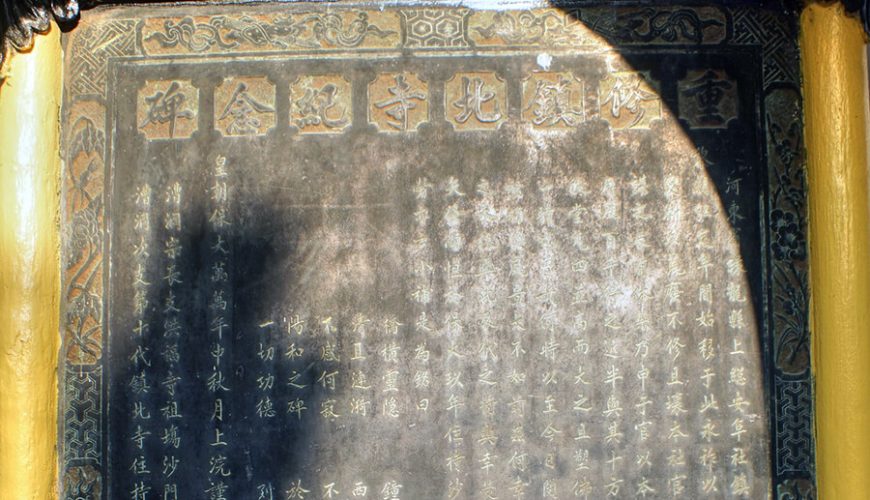
Tran Quoc Pagoda currently still stores 14 steles. These steles are engraved with poems by famous doctors of the time.
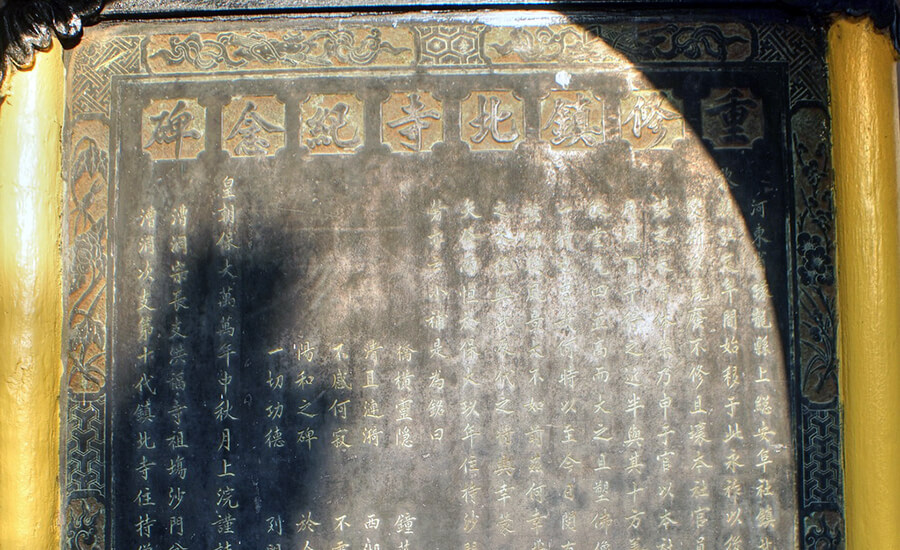
The stele retains the historical mark of the pagoda, carrying the long-standing cultural value of Hanoi.
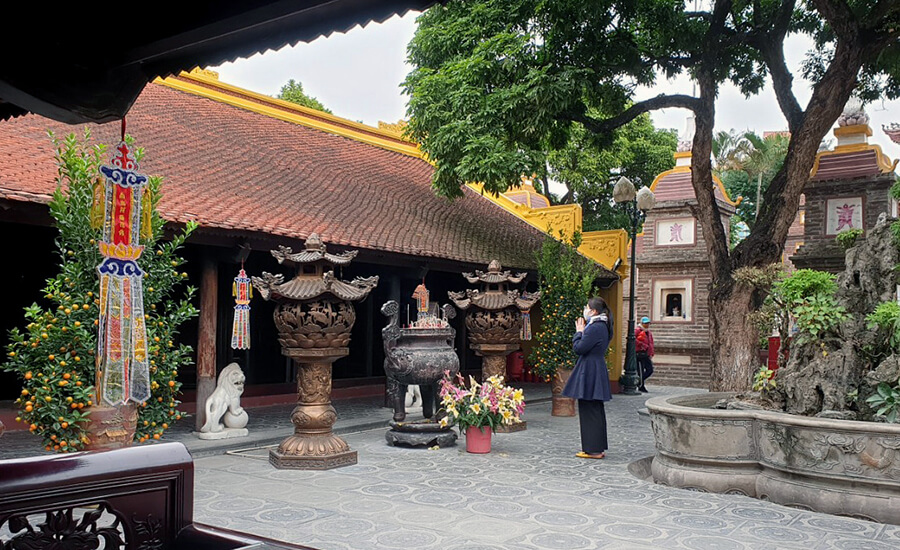
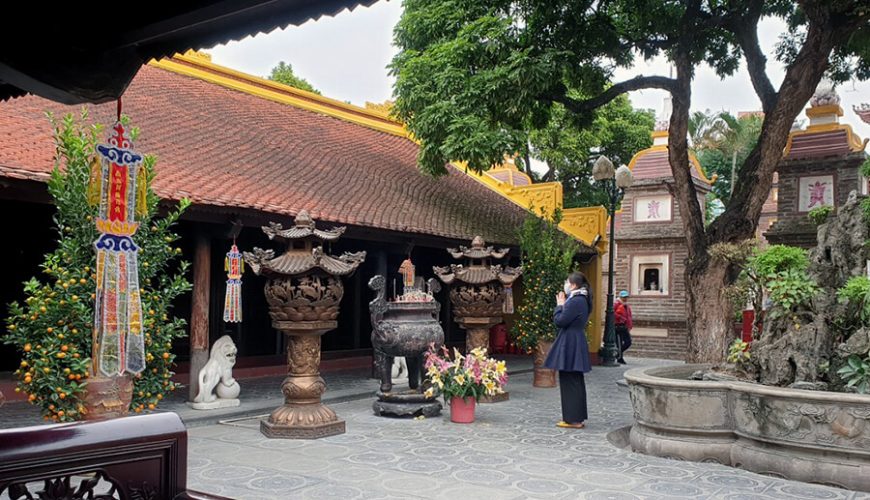
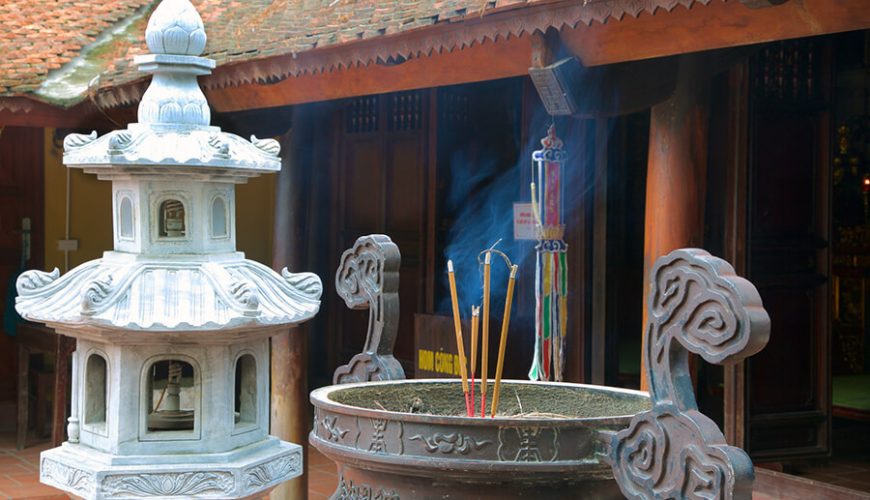
In front of the upper palace of Tran Quoc Pagoda, there is a large incense burner for people to burn incense. Tran Quoc Pagoda is still the most sacred temple for Vietnamese Buddhists to this day.
Bodhi tree
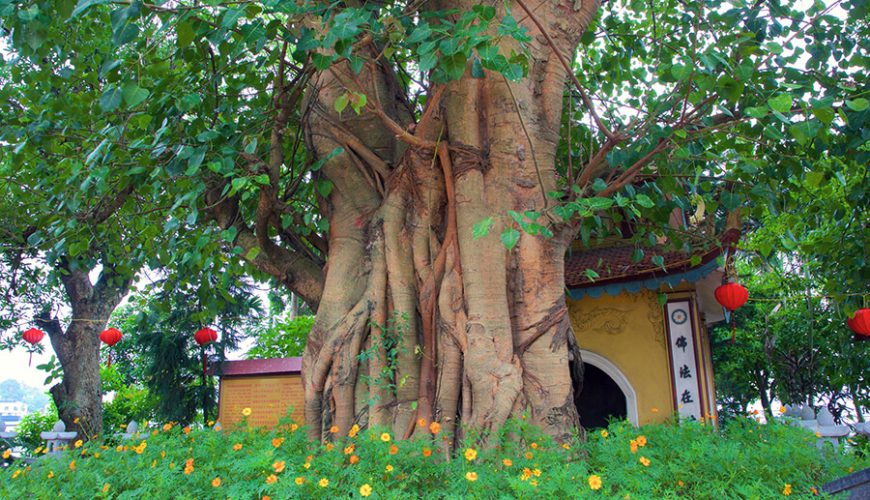
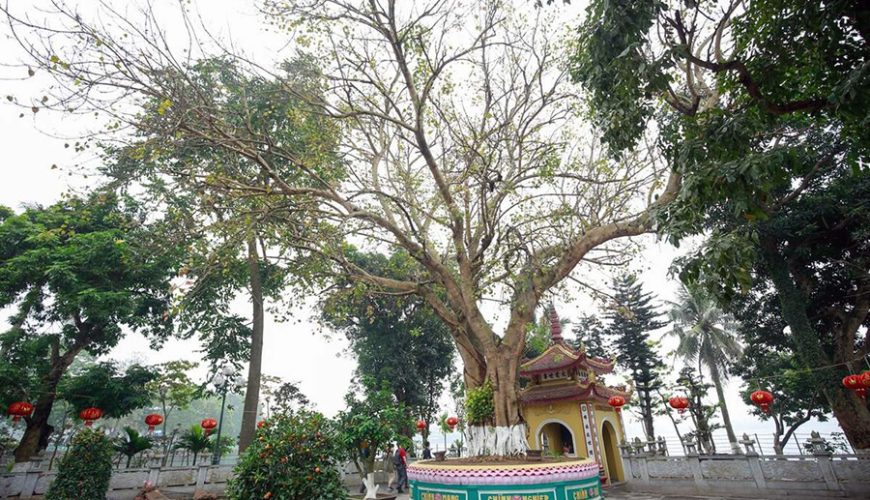
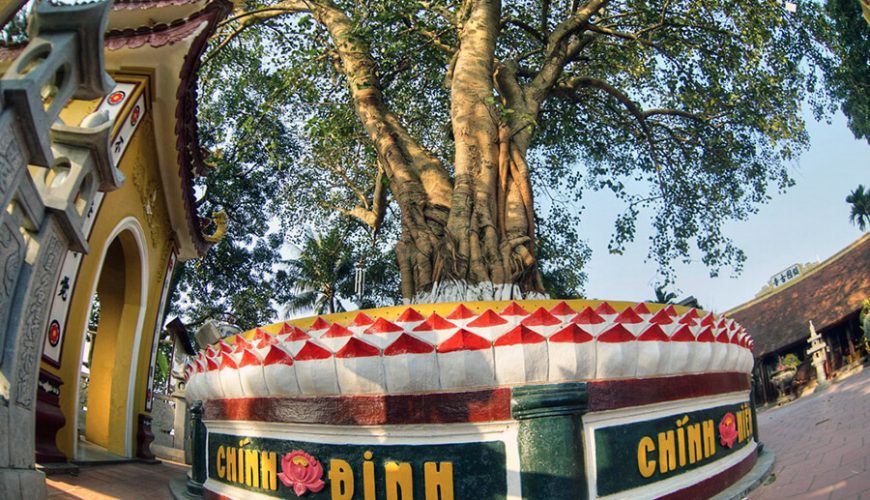
Referring to Tran Quoc Tu, people will immediately remember the large Bodhi tree taken as a cutting of the original tree in Bodh Gaya, India, under which the Buddha sat and achieved enlightenment around 25 centuries ago. The gift was made in 1959, marking the visit of the Indian president Rajendra Prasad.
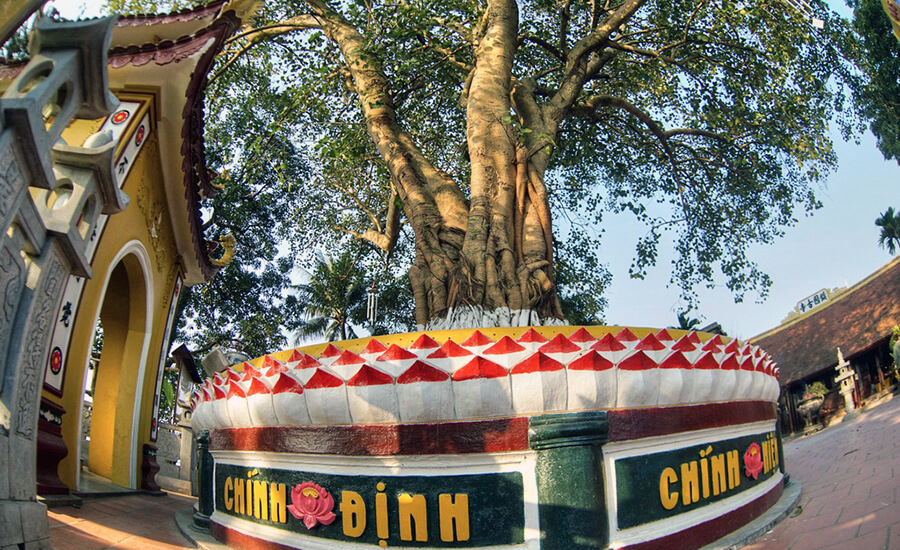
The Bodhi tree of Tran Quoc Pagoda has many spiritual meanings, symbolizing Buddha’s wisdom, his kindness, and altruism towards sentient beings. Every year, many people come to pray and perform ceremonies in front of this precious Bodhi tree. Nearly 60 years after it was given by Mr. Rajendra Prasad, the tree is still lush and provides shade throughout a corner of the temple.
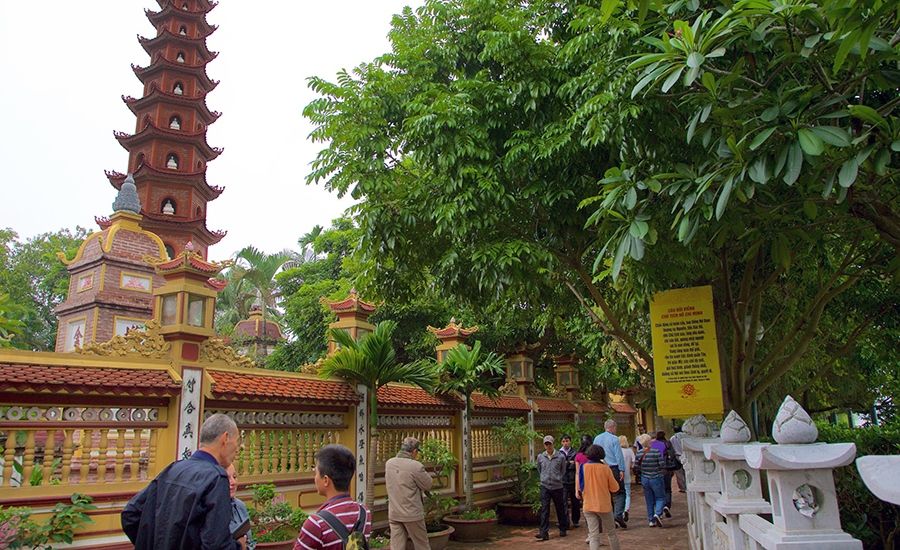
Worshipers who enter the pagoda to pray can do so anytime they want. However, it is especially popular during the 1st month of the Vietnamese calendar. They pray in many small and large shrines all around Tran Quoc Pagoda.
Source: collected by An
Follow us for the best deals on Vietnam package tours and visa services!
Comment (0)