
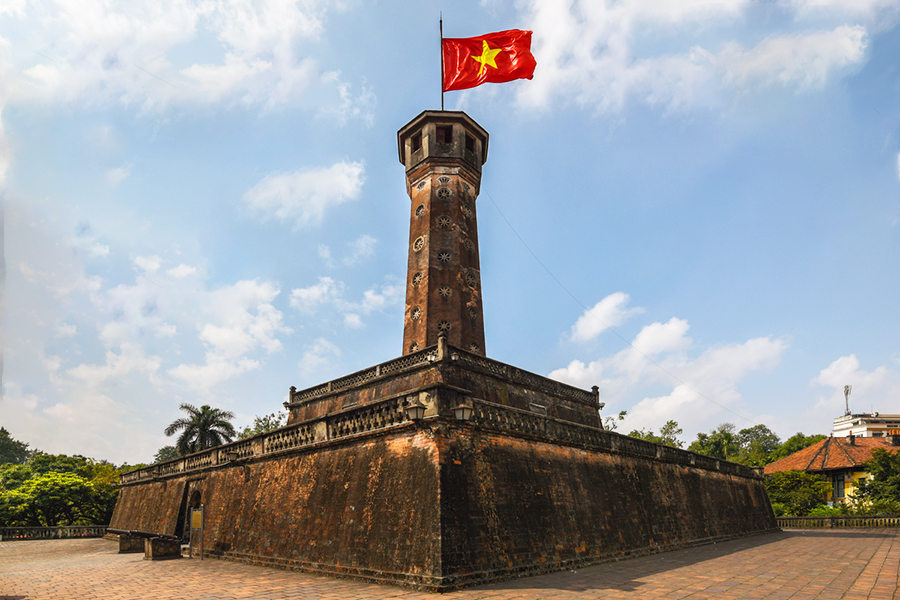
Hanoi (Vietnamese: Hà Nội) is the capital of Vietnam, an incomparable combination of tradition, elegance, and progress. Hanoi means “the hinterland between the rivers”. The portion of the Red River that runs through Hanoi is approximately 30km long. Hanoi contains 18 beautiful lakes, the lungs of the city, surrounded by gardens and trees that provide a vital source of energy.
Besides many building booms, there is a centuries-old quarter that embodies the city’s eternal soul. Most locals and foreigners often call it “Hà Nội – Ba mươi sáu phố phường” (translated as “Ha Noi – 36 districts” or “Hanoi – 36 Old Streets”), or “Phố cổ Hà Nội” (translated as “Hanoi Old Quarter”).
What’s the best time to explore Hanoi City?
Hanoi has a climate divided into 4 distinct seasons. Each time, the capital has its own beauty, so you can explore Hanoi at any time of the year:
Spring: starts from February to April. The weather in the capital is chilly at this time, characterized by sudden drizzle. Hanoi people often call the drizzle at the beginning of the year by the intimate name “spring rain”. Traveling to Hanoi this season, you will be immersed in the vibrant colors of flowers. A spring trip to Nhat Tan peach village, Tay Tuu flower village or Quang Ba flower market could not be a more ideal choice.
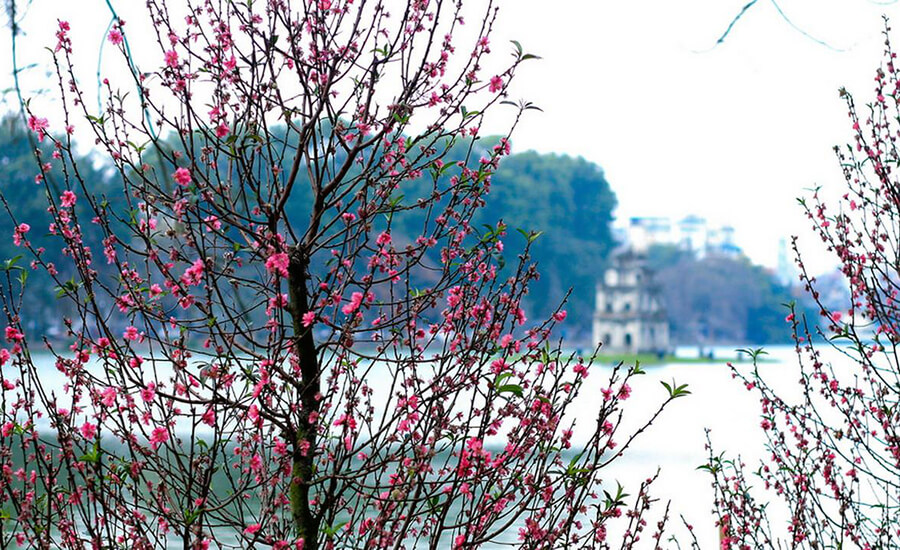
Summer: from May to July, the capital enters summer, marked by sweltering heat. These days, people in Hanoi often sit together at the corner of West Lake and enjoy cool Trang Tien ice cream. Traveling to the capital this season, you can have a picnic at Thong Nhat Park, Yen So Park, or visit shopping centers like Times City, Royal City to have fun and escape the sun.
Autumn: begins in August and lasts until October. This is also the time when the capital is more romantic and dreamy than ever. Autumn in Hanoi is filled with milk flowers and the faint scent of fresh green rice. Coming to the capital this season, don’t forget to wander around Phan Dinh Phung Street filled with yellow leaves, visit West Lake to watch the sunset, and enjoy the specialties of Hanoi’s autumn.
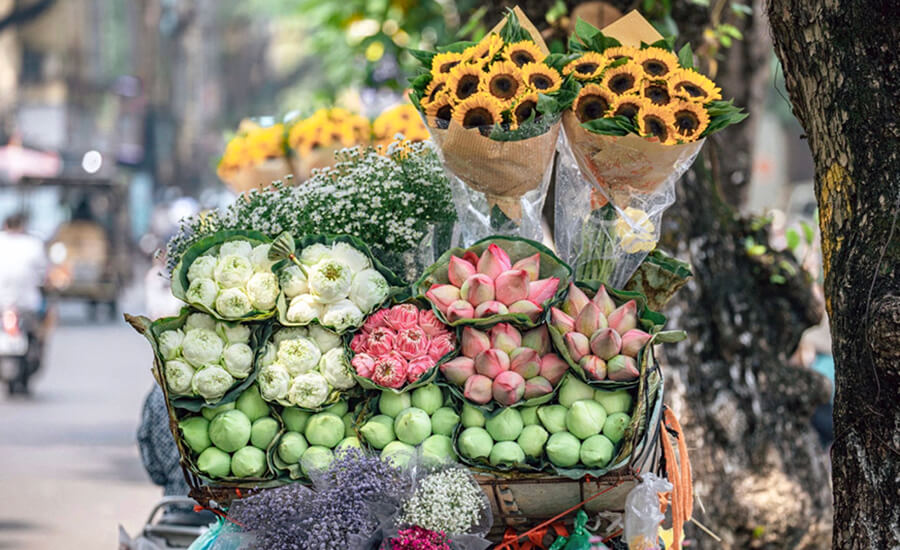
Winter: starts from November and lasts until the end of January of the following year. This season is characterized by a cold that penetrates the skin but still makes many people sob because of its lyrical beauty. If you travel to Hanoi in the early days of winter, you can walk around street corners such as Dinh Le, Phan Dinh Phung… to see street flower baskets filled with white daisies.
Transportation to and around Hanoi
Hanoi is considered the heart of Vietnam, so visitors can travel easily to the capital by plane, train, bus, private car or motorbike from other provinces.
To move around the city, you can go by car, motorbike or bicycle. But the experience will be more poetic if you sit on a cyclo and admire 36 streets, or take a tour on a three-wheeled motorbike or a vintage Vespa. Another suggestion worth considering is a double-decker bus; ticket prices range from 330,000 – 599,000 VND.
Tourist Attractions in Hanoi City
Every single natural sight and historical monument in Hanoi is spectacularly related to a legend. The more you know about the stories of Hanoi, the more fascinating you will feel about its history and culture.
Typical architectural works
The capital Hanoi has many monuments and architectural works dating back thousands of years. Many works are considered symbols of Hanoi, a favorite destination of domestic and foreign tourists.
Temple of Literature
The Temple of Literature was built in 1070 under Emperor Ly Thanh Tong and is a place of worship of Confucius, honoring Viet Nam’s finest intellectuals and men of literary accomplishment. At the time, entrance was granted only to the king’s sons and noble  families, but after 1442, the Temple of Literature accepted children of civilians with excellent academic ability.
The current complex of Van Mieu – Quoc Tu Giam relics is located on a 54331 m² site and includes many small architectural works. The Temple of Literature is divided into 5 distinct areas, each area has separate walls and connecting gates.
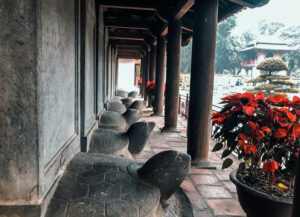
The first area stretches from the main gate to the Dai Trung gate; the two sides have small gates: Thanh Duc and Dat Tai; the second area runs from the Dai Trung gate to Khue Van Cac, which has been recognized as a symbol of Hanoi city. You will find doctors’ names listed on a stele above tortoise backs in the third courtyard. Each stele was made of stone. There are still 82 examination steles from 1442 to 1779, recording the names and origins of 1307 doctors. These are the most precious relics of the monument.
Today, visitors can visit the stone steles and solemn grounds with lotus ponds. The Temple of Literature is a rare peaceful and quiet place in the middle of a bustling city. Visitors will feel the harmony between ancient and modern times as they pass through the thousand-year-old walls.
Address: 58 P. Quoc Tu Giam, Van Mieu – Quoc Tu Giam Ward.
Tran Quoc Pagoda
Tran Quoc Pagoda, located on an island in West Lake, is one of the oldest pagodas in Vietnam, after many relocations and repairs. The Pagoda was constructed in the sixth century during the reign of Emperor Ly Nam De (from 544 until 548). The pagoda features 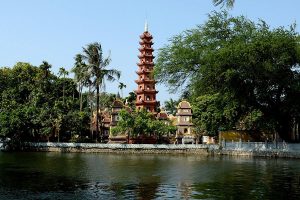 many architectural elements arranged in a harmonious manner, in accordance with the rules of Buddhist architecture.
There are many lotus flower statues located around the pagoda. These symbolize the purity of the mind, body, and speech. The pagoda has a stupa, built in 1998, consisting of 11 floors with a total height of 15 m. Each tower floor has 6 arched doorways; in each space is a statue of Amitabha Buddha made of precious stones.
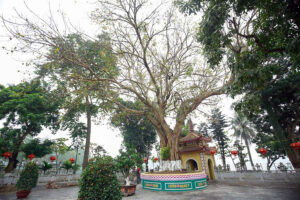 This stupa was symmetrically erected with a large Bodhi tree, a gift from the President of India when he visited Hanoi in 1959, taken from the original tree in Bodh Gaya, India, under which the Buddha sat and achieved enlightenment. Inside, there is a precious statue of Sakyamuni Buddha entering Nirvana, a masterpiece of Vietnamese sculpture. A stela dating to 1639 recounts the history of this pagoda. At the main shrine, visitors are given incense to burn. Visitors to the shrine also make offerings such as food or small amounts of money as a gift to the gods to bring them good luck.
More than 1,500 years old, it became a symbol of Ha Noi architecture. Nowadays, tourists still come here not only for ceremonial offerings but also to visit the site.
Address: 46 Thanh Nien Street, Tay Ho Ward.
President Ho Chi Minh’s Mausoleum
Located at the center of Ba Dinh Square, the Ho Chi Minh Mausoleum is one of the most significant historical sites in Ha Noi. This is where President Ho Chi Minh read the Declaration of Independence of Vietnam and where he is also buried.
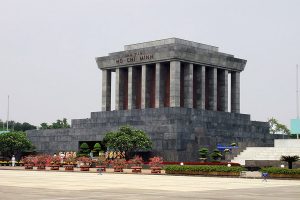 This project was the result of a close collaboration between engineers from the Soviet Union and Vietnam to preserve the remains of President Ho Chi Minh. The mausoleum is divided into 3 floors. The first one is. a terraced stand exclusively used for grand meetings organized at Ba Dinh Square.
The second floor is the center of the mausoleum, where the president’s remains are kept in a chamber accessible through a series of passages and a flight of marble stairs. The upper floors are the roof. The facade of the upper floor bears the inscription “President Ho Chi Minh” in a dark violet precious stone.
For Vietnamese, this is one of the country’s most important attractions. Tourists come to pay their respects to President Ho Chi Minh. Visitors need to keep quiet, wear appropriate clothing, and not take photos in prohibited areas.
The Mausoleum closes on Friday and Monday. Also, it opens from 7:30 – 10:30 on Tuesday, Wednesday, Thursday, and from 7:30 – 11:00 on Saturday and Sunday.
Address: 01 Hung Vuong, Ba Dinh Ward.
Co Loa Citadel
Co Loa Citadel is perhaps the most ancient citadel in Vietnam. It remained an important political center of the Vietnamese people until the 10th century. According to folklore, it was built by An Duong Vuong in the 3rd century BC as the capital of the Au Lac 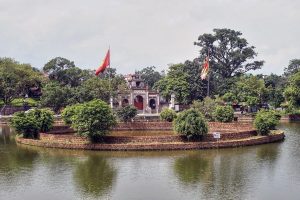 Kingdom (the name of Vietnam at the time). The site was built on a helical design and surrounded by three ramparts and a deep moat.
The remains of the citadel are located on the same site where archaeologists have found tens of thousands of bronze arrowheads, iron axes, and animal bones. Close to the citadel are the remains of Co Loa Communal House, a temple devoted to the cult of Princess My Chau, and An Duong Vuong, a King who loved his daughter with all his heart but, lacking vigilance, left Co Loa and lost both his family and his country.
Location: Chua Village, Dong Anh Commune.
One Pillar Pagoda
The original name of the One Pillar Pagoda was Dien Huu Pagoda, which literally means “long-lasting happiness and good luck”. The pagoda is located in the western part of the city on Ong Ich Khiem St., near Ho Chi Minh’s Mausoleum.
The pagoda was first built in 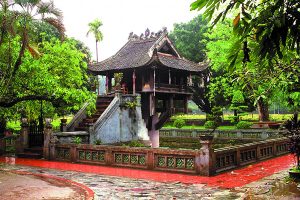 1049, during the reign of Emperor Ly Thai Tong, who had no children, often went to pagodas to pray to Buddha for a son. One night, he dreamed that he was granted a private audience with Buddha. Buddha, seated on a lotus flower in a square-shaped lotus pond on the western side of Thang Long Citadel, gave the king a baby boy.
Months later, when the queen gave birth to a male child, the Emperor ordered the construction of a pagoda with a single pillar to resemble the lotus seat of his dream in honor of the Buddha.
Location: P.Chua Mot Cot, Ba Dinh Ward.
Imperial Citadel of Thang Long
Thang Long Imperial Citadel is a World Cultural Heritage site located in the heart of Hanoi and has a history of more than 1,300 years. This place contains unique relics that demonstrate the history of the Vietnamese people across many eras.
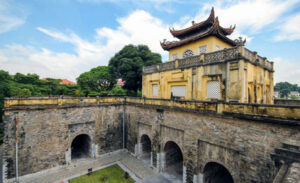 The project stands out with its massive architecture built over many feudal dynasties of Vietnam. Despite many historical ups and downs, most of the original works at the Thang Long Imperial Citadel no longer exist, but the site remains the most attractive tourist destination in Hanoi. The relics are connected to one another, forming a complex yet rich and attractive whole that clearly reflects the relationship between urban planning and architectural space, as well as the continuity between dynasties in the history of building the capital of Thang Long (one of the old names of Ha Noi).
Address: 19C Hoang Dieu, Ba Dinh Ward.
St. Joseph’s Cathedral
The Cathedral is one of the most beautiful churches and is also the Cathedral of the Archdiocese of Hanoi. The church is designed in the European medieval Gothic architectural style, which was very popular in the 12th century. The main construction materials of 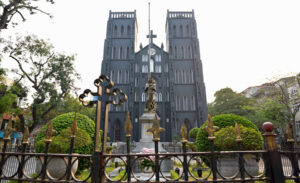 the church were terracotta bricks and walls plastered with paper. The church is 64.5m long and 20.5m wide, with two 31.5m-high bell towers and heavy stone pillars at four corners. At the top is a stone cross. The doors and all windows were designed in the Gothic style, combined with beautiful, harmonious stained-glass paintings of Saints, creating a source of natural light inside the church. The sanctuary and altars are decorated with traditional folk art, carved with unique and sophisticated wooden patterns painted in red lacquer and gilded. In the main hall, there is a terracotta statue of Saint Joseph over 2 meters high.
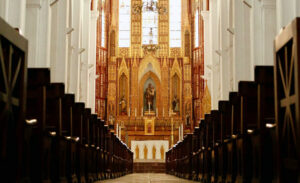
The church also has a set of bells, including four small bells and one large bell. Especially the large clock mounted in the middle of the church facade. The clock has an engraved alarm, time alarm, and an alarm system linked to 5 bells hanging on two towers. In the center of the square in front of the church is a metal statue of the Virgin Mary. Around the church are palanquins, flower beds, and a stone grotto behind.
Currently, this is not only a religious symbol but also a place for entertainment and public exchanges for the people of the capital.
Address: 40 P.Nha Chung, Hoan Kiem Ward.
Long Bien Bridge
Not only does it simply span the two banks of the Red River, but Long Bien Bridge is also a mark connecting the present and the old memories of people who love Hanoi. Long Bien Bridge was built in 1898; it is also called Song Cai Bridge or Bo De Bridge 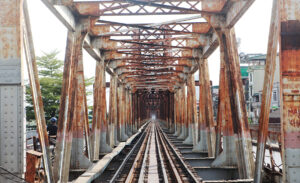 because it spans Bo De wharf in Gia Lam, Hanoi. With a length of 1,682 m and an 896 m-long approach bridge, Long Bien Bridge is divided into 9 frames, each 61 m long. According to the original design, the bridge has 19 steel-beam spans supported on 20 pillars, each over 40 m high. Currently, the bridge has a single railway running down the middle, with two lanes for motor vehicles and pedestrians on both sides. The special thing is that the traffic flow in the bridge’s forward direction is on the left side, not the right side as on other bridges.
The bridge is a witness to many ups and downs in Vietnamese history. This ancient bridge is a cultural, historical, and architectural symbol of the Capital. Coming here, in addition to exploring ancient architecture, you can also freely check in with amazing shooting angles.
Location: Long Bien Bridge, Hoan Kiem Ward.
Hanoi Opera House
Hanoi Opera House is the favorite destination whenever visitors have an opportunity to visit the capital. It was erected by the French colonial administration between 1901 and 1911. It was modeled on the style of the Paris Opera.
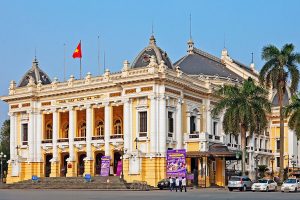 The house is 87m long and 30m wide. The interior consists of a large stage and the main audience room, which holds more than 900 seats. The second floor has many small compartments. The first and second floors have a balcony at the front and two staircases that make it easy for audiences to go upstairs or downstairs.
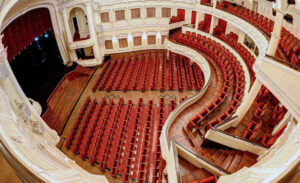
Behind the stage are the management room, 18 make-up rooms, the rehearsal room, and the meeting hall. During the colonial period, the opera house depended on touring artists performing French and Italian repertoire for a mainly French audience. It also hosted many significant historical events associated with the August Revolution and the early years of the Viet Nam Democratic Republic.
After the French departed, the building was used for Vietnamese plays, musicals, art shows, cultural activities, and other international events.
Located at the center of Hanoi, No.1 Trang Tien Street, Cua Nam Ward.
Flag Tower of Hanoi
Hanoi Flag Tower is a national historical and cultural relic, built in 1805 and completed in 1912, on the southern part of Thang Long Imperial Citadel. Through many ups and downs of history, this unique architectural work has become a historical witness, 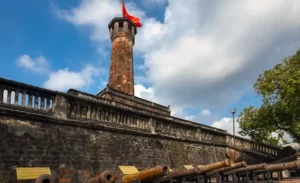 witnessing the nation’s great transformations.
The architecture of the flag tower includes 3 base levels and a column body, over 41m high. Overall, the flag tower consists of stacked prisms that gradually shrink and then increase from bottom to top. That balanced layout creates straight, strong, steady lines, very harmonious and elegant, and doesn’t feel heavy at all. Inside, there is a 54-step staircase that spirals up to the top.
The top of the tower is octagonal, with 8 doors corresponding to its 8 sides. In the middle of the floor is a tall, round pillar on which the flagpole is mounted. Atop the Hanoi Flag Tower is always a red flag with a five-pointed yellow star. This tower symbolizes the nation’s glory and pride and Vietnam’s independence.
Address: 28A Dien Bien Phu, Ba Dinh Ward.
Museums
Each museum is a place to display and preserve ancient documents and artifacts about ethnic groups or historical periods. The museum in Hanoi currently displays documents and artifacts and provides diverse knowledge across many fields of Vietnam’s history, culture, and military.
Hoa Lo Prison
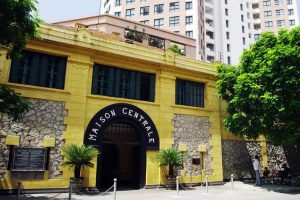 This historical site is located on the street of the same name. Built in 1896, the French colonialists used Hoa Lo to imprison many patriots and communist prisoners. There were many Communists who were kept and tortured there; some of them are very famous, like Nguyen Van Kien or General Secretary Truong Chinh.
After the peace was established in 1954, this site was used by the Vietnamese Government as a jail for criminal prisoners. It was also a place to keep American Pilots during the anti-US war in the North. The museum is open daily, except Monday, from 8 am to 11.30 am and 13.30 pm to 16.30 pm.
Address: 1 P. Hoa Lo, Tran Hung Dao, Hoan Kiem Ward.
Vietnam Women’s Museum
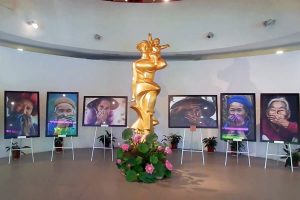 This museum is dedicated to Vietnamese women. It was opened on the 20th of October 1995 on the occasion of the 65th birthday of the Vietnamese Women’s Association. More than 1,000 materials, photos, documents, and objects are displayed and carefully preserved and maintained in the permanent exhibition that shows the role Vietnamese women have played in history and continue to play in the arts and in family life.
Vietnam Women’s Museum is also a place for cultural exchange between Vietnamese and international women with the goal of creating “equality, development, and peace”. This is a great chance for you to explore and understand how gender politics play out in Vietnam through the museum’s exhibits.
Address: 36 P. Ly Thuong Kiet, Cua Nam Ward, near the central Hoan Kiem Lake and the Old Quarter.
Vietnam Museum of Fine Arts
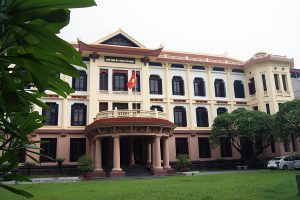 In June 1966, the house No 66 on Nguyen Thai Hoc St. in Ba Dinh Ward was transformed into the Vietnam Museum of Fine Arts, showcasing a range of historical periods and much of the 20th-century art and folk narratives of a nation in defense, the first primary art museum of Viet Nam. The second was the smaller Ho Chi Minh City Museum of Fine Arts.
There are many collections that draw on themes of martyrdom, patriotism, military strategy, and overcoming enemy incursion. A small collection of late 20th and early 21st-century paintings was presented in the museum, including works by artists exploring abstraction and abstract impressionism, giving greater attention to the individualist artist.
Vietnam National Museum of History
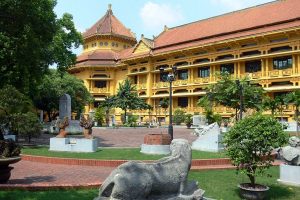 The Vietnam National Museum of History is located at No.01 Trang Tien, right in the heart of Hanoi, next to the Hanoi Opera House. It was founded in September 1958. The museum contains many valuable objects that reflect thousands of years of history, from prehistory to the present day, across its 2,000 m² area. The ground floor covers the period from prehistoric times to the Nguyen Dynasty. The second floor features modern history of Vietnam from 1858 to the present. The museum is a tourist attraction for both Vietnamese and foreign visitors. It is open in the morning from 8:00 – 12:00, and in the afternoon from 13:30 – 17:00.
You will need to buy an entrance ticket for 40.000 VND. It should also be noted that to take photos or film on the premises, you will have to pay between 15.000 and 30.000 VND.
Vietnam Museum of Ethnology
The Vietnamese Museum of Ethnology opened at the end of 1997. Since then, it has attracted the attention of visitors, ethnographers, and researchers from all over the world.
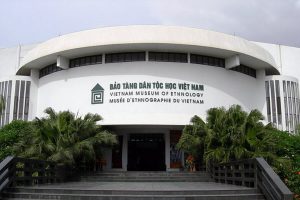 It contains more than 10,000 objects; 15,000 black-and-white photos; and hundreds of videotapes and cassettes that depict all aspects of life, activities, customs, and habits of the 54 ethnic minorities of Vietnam, which are displayed and labeled in Vietnamese, English, and French.
The Ethnological Museum has successfully recreated the daily life, religious rituals, and symbolic festivals of each ethnic group in Vietnam. During certain periods, such as the Vietnamese New Year and the Mid-Autumn Festival, the Museum organizes a series of activities, from traditional games to authentic cultural shows by ethnic groups, and is very crowded.
The museum is located on Nguyen Van Huyen Road in Ngia Do Ward.
Should not miss
In Hanoi, you will experience a bustling, dynamic life from early morning until late at night. Besides famous works, there are many places that attract tourists.
Hoan Kiem Lake
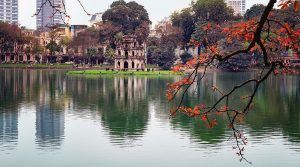 Hoan Kiem is a natural freshwater lake in Hanoi, connecting the streets of Hang Ngang, Hang Dao, Cau Go, Luong Van Can, Lo Su… to the Western Quarter planned by the French more than a century ago. The streets are Bao Khanh, Nha Tho, Trang Thi, Hang Bai, Dinh Tien Hoang, Trang Tien…Next to the lake are architectural works of great spiritual significance to the Vietnamese people, such as the Huc Bridge, Turtle Tower, and Ngoc Son Temple.
When visiting Hoan Kiem Lake, in addition to walking and enjoying the fresh air, visitors can also visit the Old Quarter to check in and enjoy many specialty dishes. Especially on weekends, Hoan Kiem Lake hosts a crowded, bustling walking street. This is the ideal time for you to immerse yourself in the crowd, experience many fun activities, and enjoy many unique performances.
Old Quarter
Located north of Hoan Kiem Lake, this area is one of the most attractive places not only for international visitors but also for domestic. Each street name represents a product or profession that is sold by local people. For example, Hang Duong (Sugar St.), 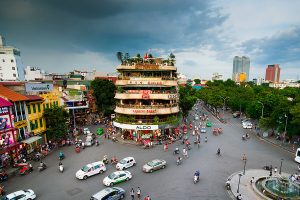 Hang Dao (Peach St.)… especially on weekends, some of the roads in this area are used as pedestrian areas. The interesting thing about Hanoi’s pedestrian street is that there are no modern games or technology services, but it is attractive because of many traditional folk games.
Along the streets, you can easily see groups of performers with different styles and types of music. From lively Latin American music to light music, orchestral music, and traditional art forms. Coming to the Old Quarter today, you can still enjoy the ancient, time-tinged space of low-style houses, tiled roofs, and moss walls. Furthermore, if you’re looking for souvenirs or want to enjoy local street food, the Old Quarter is an area you should not miss.
Bat Trang Pottery Village
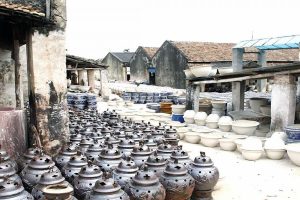 Located in Bat Trang Commune, by the banks of the Red River, Bat Trang Pottery Village is a famous destination in Hanoi. With more than 7 centuries of history, it is a well-known traditional professional handicraft village.
Their products are made from a particular type of white clay. Each family has their own pottery-making techniques. They make a variety of bowls, plates, cups, vases, and incense burners. The decorations and designs on these works are also very special.
Visiting the Bat Trang Pottery village to experience the rural life and the profusion of pottery and ceramic wares.
Duong Lam Ancient Village
Duong Lam ancient village is a great choice when you need to get away from the noise and bustle of the city. Duong Lam ancient village is a small village located in Son Tay district, Hanoi city, just over 40km from the center of the capital.
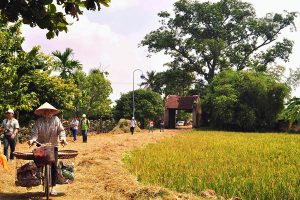 Over hundreds of years, Duong Lam ancient village has preserved ancient architectural works and landscapes such as village gates, banyan trees, wharves, and communal yards. The village is also well known for its many cultural and historical relics, including temples, pagodas, and stone steles.
Duong Lam has more than nine hundred traditional houses with special construction- built from laterite blocks.
Annually, Duong Lam organizes local festivals to honor the national heroes. There are two ideal times of the year to explore this small village: the festive season or the rice harvest season. The festive season in Duong Lam usually falls around January on the lunar calendar. At this time in Duong Lam village, there will be many unique and interesting festival activities. The most famous of which is the Mong Phu village ceremony, held from the 4th to the 10th of January every year.
In addition, the rice harvest season in May and June is when Duong Lam ancient village receives the most tourists. Around this time, Duong Lam village appears with an incredibly peaceful atmosphere.
WHAT TO EAT?
Hanoi not only attracts visitors with famous landmarks but is also known as a “culinary paradise” with countless varieties of affordable, tasty eats and drinks, ranging from soups, noodles, rolls, fries, and sandwiches perfectly paired with plenty of fresh herbs to fresh beer, coffee, and green tea. Compared to other cities in Vietnam, Hanoi food tends to be on the sweeter side; less sour and utilizes freshwater ingredients such as prawns, squids, shrimps, crabs, clams, and mussels. Since a trip to Hanoi won’t be complete without trying its traditional delicacies, here’s a list of dishes that you should try at least once.
Vietnamese Pho
Pho (Vietnamese: Phở) has never been a culinary symbol only in this place but also a national culinary symbol. 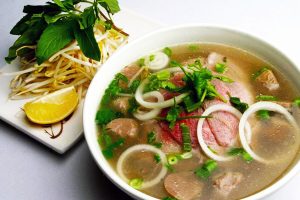 This delicate traditional Vietnamese dish has been associated with Vietnamese people for generations. You can taste it in other cities, but, for sure, it won’t be the same as in Hanoi. Besides the main ingredients (flat rice noodles; the broth is made from long-boiled beef bones and spices; meat, spices, herbs…) Pho Hanoi has its own cooking recipe. The chef adds “ruoi” (Nereididae) to the broth to create a special flavor and selects only fresh, soft cake that is not crushed for customers. Also, you can enjoy it in the form of “pho xao”, which is stir-fried with onions, beef slices, assorted greens, and sometimes with added fried eggs and chili sauce to this simple & satisfying dish.
Some recommended addresses: Pho Gia Truyen (49 Bat Dan, Hoan Kiem Ward); Pho Thin (13 Lo Duc, Hai Ba Trung Ward; Pho Ly Quoc Su (No 10 Ly Quoc Su, Hoan Kiem Ward); Pho Suong (36B Mai Hac De, Hai Ba Trung Ward); Pho Bung (01 Hang Trong, Hoan Kiem Ward)….
Fresh rice vermicelli
Hanoians have many fresh rice vermicelli dishes. The most special ones are Bun Cha (Vietnamese Grilled Pork Meatballs with rice vermicelli), Bun Rieu (Rice Noodles in crab and tomato broth), Bun Thang (Rice Noodle with Chicken, Egg, Pork) and so on.
Bun Cha (Vietnamese Grilled Pork Meatballs with rice vermicelli)
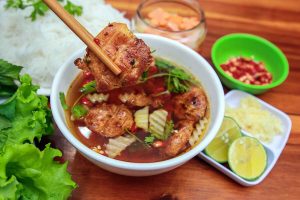
Bun Cha (Vietnamese: Bún Chả) is a classic dish in the North. It’s the dish that Barack Obama and Anthony Bourdain shared on his trip to Vietnam in May 2016. It’s a combination of grilled pork in a cold broth, rice noodles, fresh herbs, and served in a bowl of “nước chấm” – fish sauce mixed with garlic, chili, sugar, and lime juice. You’ll also typically find a few pickled vegetables floating in the bowl as well.
Some recommended addresses: Bun cha Sinh Tu (Cau Giay District); Bun Cha Dac Kim – Hang Manh (Hoan Kiem District); Bun Cha Huong Lien (24 Le Van Huu, Hai Ba Trung District); Bun Cha Nguyen Bieu (23 Nguyen Bieu, Ba Dinh District)…
Bun Rieu (Rice Noodles in crab and tomato broth)
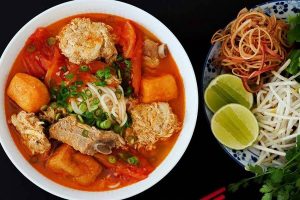 Bun Rieu (Vietnamese: bún riêu) comprises thin rice noodles with shrimp paste, tofu, vegetables, and herbs, served in a rice paddy crab and tomato broth. The delicious taste of crabs, the sourness of tomatoes, and the rich broth cannot be mixed; Bun Rieu has left visitors with a truly unforgettable impression. Some local shops usually serve it with extra pork and shrimp sauce.
Where to eat Bun Rieu in Ha Noi: Bun Rieu Huyen Thu (2F Quang Trung, Hoan Kiem Ward); Bun Rieu Trang (23 Nguyen Sieu, Hoan Kiem Ward); Bun Rieu Thanh Hong (42 Hoa Ma, Hai Ba Trung Ward); Bun Rieu (7B Ly Quoc Su, Hoan Kiem Ward)…
Bun Thang (Rice Noodle with Chicken, Egg, Pork)
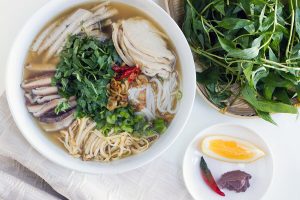 Bun thang (Vietnamese: bún thang) is a special dish because of its broth. It consists of many nutritious ingredients mixed together, including dried shrimp, squid, shrimp paste, spring onion, coriander, ginger, mushrooms, beet, fish sauce, sugar candy, and vinegar, to make the broth. Some local shops add more noodles, chicken, eggs, pork slices, and a dollop of shrimp paste, making bun thang not only delicious but also very nutritious.
Where to eat Bun Thang in Hanoi: Bun Thang Ba Duc (48 Cau Go, Dong Da Ward); Bun Thang Ngoc Tuyen (56 & 58 Dao Tan, Ba Dinh Ward); Bun Thang Thuan Ly (33 Hang Hom, Hoan Kiem Ward); Bun Thang – Quan Cu (31A Phan Dinh Phung, Ba Dinh Ward)…
Xoi xeo (Sticky Rice with Mung Bean Topping)
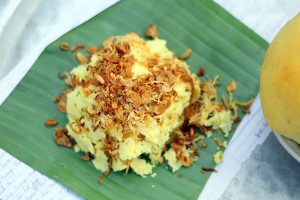 Xoi Xeo (Vietnamese: Xôi Xéo) is a typical breakfast food for local people. It starts with glutinous rice cooked with mung bean and other delicious ingredients. A bright yellow sticky rice is often packaged in lotus leaves, then topped with a drizzle of liquid fat and crispy fried shallots, creating a nondescript yet delectable scent of Xoi Xeo.
Where to eat Xoi Xeo in Hanoi: Xoi Yen (35B Nguyen Huu Huan, Hoan Kiem District); Xoi Suon Cay (628 Truong Chinh, Dong Da Ward); Xoi Sen Minh Long (188 Quan Thanh, Ba Dinh Ward); Xoi Loc (68 Ta Quang Buu, Hai Ba Trung Ward)…
Banh Cuon (steamed rolled cake)
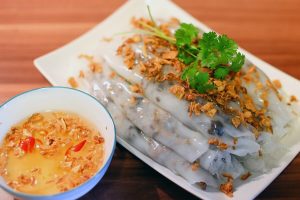 Stuffed with minced meat (normally from chicken, shrimp, or pork), onions, and finely chopped mushrooms, Banh Cuon (Vietnamese: Bánh cuốn) makes a great breakfast or snack. It’s usually served with fish sauce for adding flavor.
You can easily spot roadside vendors selling Banh Cuon all over Hanoi, but Banh Cuon Tay Ho is a good alternative, as sellers serve this dish hot, which helps you get the full flavor.
Where to eat Banh Cuon in Hanoi: Banh Cuon Phuong (16 Dao Duy Tu, Hoan Kiem Ward); Banh Cuon Ba Xuan (16 Doc Hoe Nhai, Ba Dinh Ward); Banh Cuon Ba Hanh (26B Tho Xuong, Hoan Kiem Ward); Banh Cuon Quang An (71 Hang Bo, Hoan Kiem Ward); Banh Cuon Phu Ly (14 Cua Bac, Ba Dinh Ward)…
Cha ca (Grilled fish)
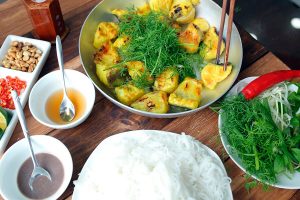 Cha ca (Vietnamese: chả cá) has long been a specialty of Hanoi. Names such as Cha ca La Vong, Cha ca Anh Vu, or Cha ca Lao Ngu… are considered super delicious grilled fish brands.
To make Cha Ca, the fish is deboned, cut into pieces, and mixed with turmeric and other spices. It is then wrapped in banana leaves and grilled over a charcoal fire. It’s usually be served with thin rice noodles, chili peppers, cilantro, peanuts, and a bowl of fish sauce.
Where to eat Cha Ca in Hanoi: Cha Ca La Vong (14 Cha Ca, Hoan Kiem Ward); Cha ca Thang Long (21 Duong Thanh, Hoan Kiem Ward); Cha Ca Anh Vu (120 K1 Giang Vo, Ba Dinh Ward); Cha ca Lao Ngu (171 Thai Ha, Hoan Kiem Ward)…
Bun Dau Mam Tom (Noodle and Tofu with Shrimp Sauce)
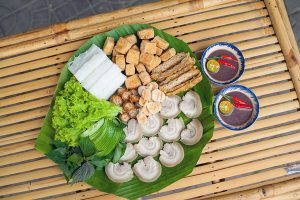 Bún đậu mắm tôm (Vietnamese) is quite simple but very popular in Vietnam. It’s originated from Hanoi. The rice noodles are served with deep-fried tofu, boiled pig gut, herbs, cucumber, and shrimp paste. While the shrimp paste doesn’t necessarily taste bad, the smell is pretty overpowering.
Where to eat Bun Dau Mam Tom in Hanoi: Bun Dau Mam Tom Cay Bang (129 Dai La, Hai Ba Trung District); Bun Dau Pho Co – Thanh Cong (No 111 K7 Thanh Cong, Ba Dinh District); Bun Dau Trung Huong (No 49 Ngo Phat Lo, Hoan Kiem District)…
WHAT TO BUY
Hanoi is the “shopping paradise” in northern Vietnam. From its bustling markets, colonial shophouses, flash boutiques, and shopping malls, you can find every strange, unique thing that cannot be found anywhere else. Escape the afternoon heat to some shopping malls or local shops to bring some of these things back home with you like a small piece of Hanoi. And here is the list of some favorite products:
- Silk and Clothing
- Embroider
- Lacquerware
- Bamboo and Rattan goods
- Jewelry and Silver
- Dried fruit and O Mai (salted or sugared dry fruits)
THINGS TO DO AT NIGHTTIME
Hanoi is a city with so many unique things to do at night, unlike any other vibrant city in Southeast Asia or even the world. And when you don’t want to spend time on rooftops and local bars, there are a multitude of fun and interesting things to see and places to go. Here are some of the best things to try in this capital:
- Stroll around Hoan Kiem Lake: it’s a cool place to walk and snap some pictures at night. In the center of the lake is the Ngoc Son Temple; all the buildings, houses, and bridges sparkle with lights that reflect on the water surface, creating a colorful sight.
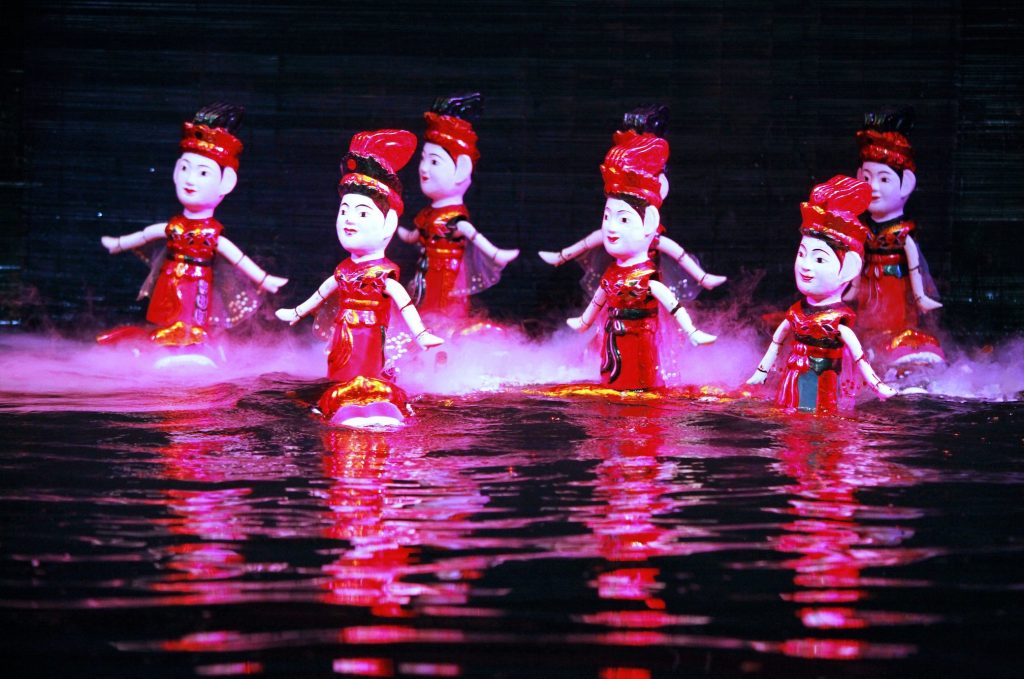
- Water puppet show: featuring live music and water puppets to sketches of the ancient myths and folklore, this art performance has been a favorite among tourists in Vietnam. To join the show, you can book a ticket at Thang Long Water Puppet Theatre in the Hoan Kiem District.
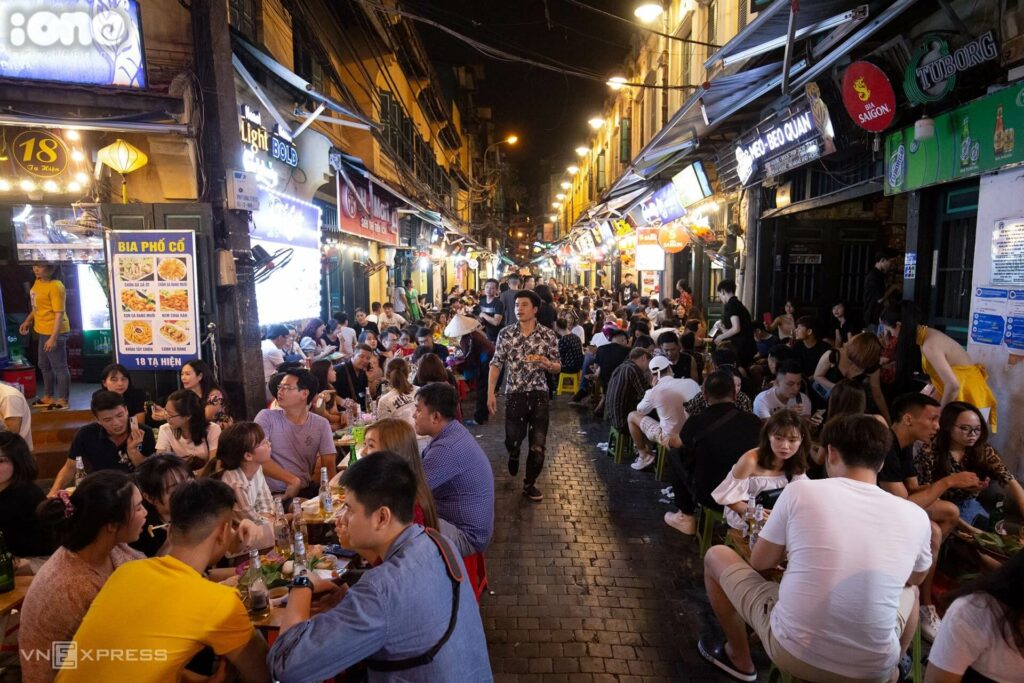
- The Bia Hoi Junction: located in the center of the Old Quarter, it is an absolute classic nighttime activity in Hanoi. There are many shophouses that offer beer, with the most famous being Bia Hoi (Fresh Beer), which costs only 10.000 VND per plastic cup, served on plastic tables and stools, spilling out onto the sidewalk. This is a great place to make friends, as it’s almost always crowded with tourists.
- Strolling around and enjoying the Hanoi Old Quarter street food is the best way to explore this area and savor local cuisine. From shophouses to vendors, they’re offering a variety of unique delicious street foods at super low prices. But you should “understand your stomach,” or at least find a local guide for yourself.
- Dinner at West Lake – also called Hồ Tây in Vietnamese, is the largest lake in this city that has been attracting many foreigners coming to enjoy the fresh and cool air. Around the lake, there are many restaurants and bars that can bring you to a lovely night with a meal while feeling the beauty of the lake under the street lights in the evening.
- Shopping at the Hanoi Night Market: explore the night markets even when you don’t want to do shopping. These are excellent places to immerse yourself in the lively night-time atmosphere of Hanoi, meet people, snap some pictures, and enjoy some delicious street-side snacks. Some of the markets you should visit include Dong Xuan Market, the Quang Ba night flower market, and the Old Quarter night market…
- See Hanoi from above: a rooftop bar, café, or restaurant is a perfect destination when you want to see Hanoi from above. It’s a panoramic view of Hanoi from above. With the open-air view, you will probably feel peaceful and fresh, completely different from the noise and crowds of Hanoi that you see on the road.
Some tourist attractions near Hanoi city are Halong Bay, Sapa, Hoa Lu – Tam Coc in Ninh Binh, and Mai Chau in Hoa Binh…Besides some tours to explore Hanoi City, Viet Dream Travel has designed other daily group and package tours that let you easily choose the best one that fits your time, budget, and needs. Don’t hesitate to contact us.
Source: collected by L.N.H.An
Comment (0)