
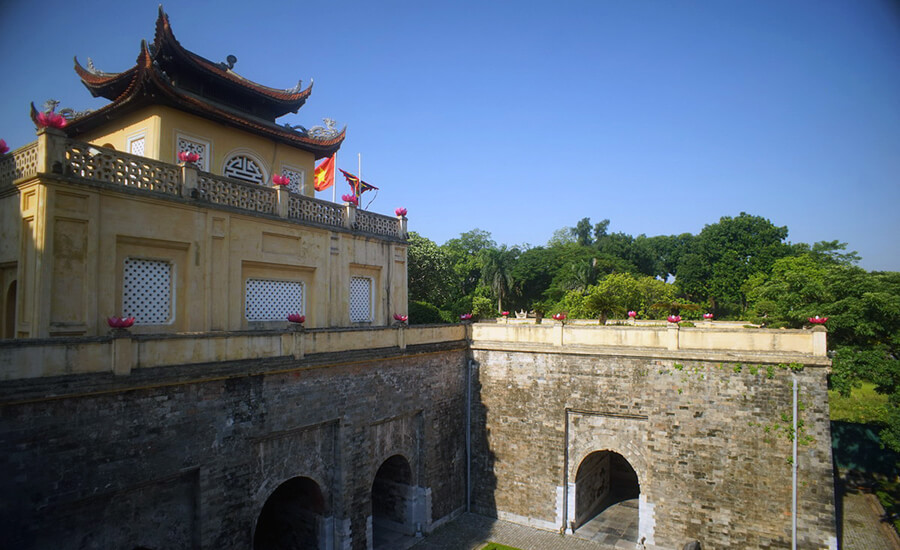
Thang Long Imperial Citadel (Vietnamese: Hoàng thành Thăng Long) is a complex of relics associated with the history of the formation of the capital Thang Long (one of the old names of Hanoi). This is a massive architectural work, built by dynasties over many historical periods, and has become the most important monument in Vietnam’s monument system.
A thousand-year-old citadel
Since the 9th century, the land of Thang Long, previously named Tong Binh, then Dai La, was the capital of An Nam (an old Vietnamese national) name under the domination of the Tang Dynasty in China. In 1010, Emperor Ly Cong Uan, the first Emperor of the Ly dynasty, moved the capital from Hoa Lu (Ninh Binh) to Dai La citadel. Arriving at Dai La land, the Emperor dream an image of a golden dragon flying into the sky, so he decided to name this land Thang Long (Vietnamese: Thăng Long). Thang Long officially became the capital of an independent, unified state. Thang Long citadel was built according to a plan of three sectors arranged in rings.
The innermost citadel surrounds the residence of the Emperor, called the Forbidden Citadel (Vietnamese: Cấm Thành). The middle citadel, which surrounds the area where the Emperor and the court worked, including the entire Forbidden Citadel, is the Imperial City (Vietnamese: Hoàng Thành). The outermost citadel surrounds the entire capital of Thang Long, the urban area of the people, called Dai La city.
Since the Ly – Tran – Le dynasties, Thang Long has become not only a political-administrative-military center but also a major economic-cultural center of the country, with highly scientific, chessboard-style street planning.
During the brief period between the Tran and Le dynasties, the capital of Dai Viet (an old name for Vietnam) was moved to Thanh Hoa by the Ho Dynasty (1400-1407). From the Tay Son dynasty to the end of the Nguyen dynasty, Thang Long was no longer the capital; the capital of Dai Viet was then in Phu Xuan (Hue). At the same time, the remains of Thang Long Imperial Citadel through the brilliant Ly – Tran – Le dynasties were transferred to Phu Xuan to serve the construction of the capital of the new dynasty. Only a few buildings, such as Kinh Thien Palace and Hau Lau, were retained as royal palaces for Emperor Nguyen when he was in the Northern Citadel.
In 1805, the Emperor demolished the Thang Long citadel to build the Bac Citadel in the style of a Vauban citadel, a contemporary Western military citadel, many times smaller in scale than the Thang Long citadel. In 1831, the second Emperor of the Nguyen Dynasty, Minh Mang, changed the name of Thang Long to Hanoi province, and Bac Thanh was named Hanoi citadel.
After Hanoi became a concession granted by the Nguyen Dynasty to France (1888), the French built the city according to modern urban planning and altered much of the citadel’s architecture to serve military purposes.
By 1897, the Hanoi citadel was almost completely destroyed, and only a few buildings remained in the central area. From 1945 to the present, Hanoi (Thang Long) has been the capital of Vietnam.
In 1954, the central area of Hanoi was the headquarters of the Ministry of National Defense. In 1967, to prevent sabotage by the US imperialist air force, the Ministry of National Defense built House D67 and basement D67 behind the Kinh Thien Palace relics as a meeting place for the highest levels of leaders of the Party and State of Vietnam.
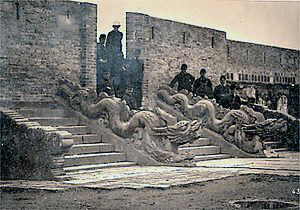
Even though the citadel has been greatly damaged by many wars, the remaining architecture and relics still strongly demonstrate the enduring values of the Thang Long citadel over thousands of years. Also, because of the interference and overlap of architectural and cultural layers, later the name “Hanoi Ancient Citadel” or “Central Imperial Citadel of Thang Long” was understood to refer to the Thang Long Citadel under the Ly-Tran dynasties, and to Le and Thanh Hanoi during the Nguyen Dynasty.
Tourist attractions at Thang Long Imperial Citadel
Thang Long Imperial Citadel covers an area of up to 18,000 hectares, including outstanding structures such as city gates, palaces, and archaeological sites. The following are attractions not to be missed when you visit Hanoi.
Flag tower – legendary Hanoi flagpole
Built in 1812, the monument consists of 3 main parts: the base, the lookout area, and the column body, which is over 18m high. The base floors are shaped like a truncated square pyramid, gradually decreasing in size, overlapping one another, and surrounded by bricks. The first floor is 42.5m long; 3.1m high, with two brick stairs leading up.
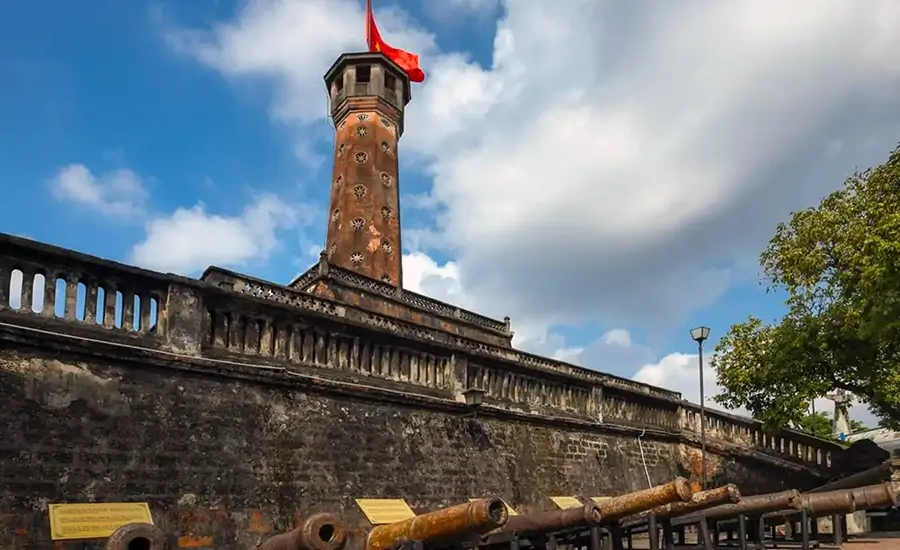
The Hanoi Flag Tower is now the most intact and majestic structure in the Thang Long Imperial Citadel complex. Today, the tower is located on Dien Bien Phu Street, with ancient mother-of-pearl trees growing around it, and at its foot is a luxuriant longan garden.
Main Gate (Đoan Môn)
The Main Gate is the innermost (and last) gate leading directly into the Forbidden City. The Main Gate was built during the Ly Dynasty, but the current architecture of the Main Gate dates to the Le Dynasty. Although it was later renovated again during the Nguyen Dynasty.
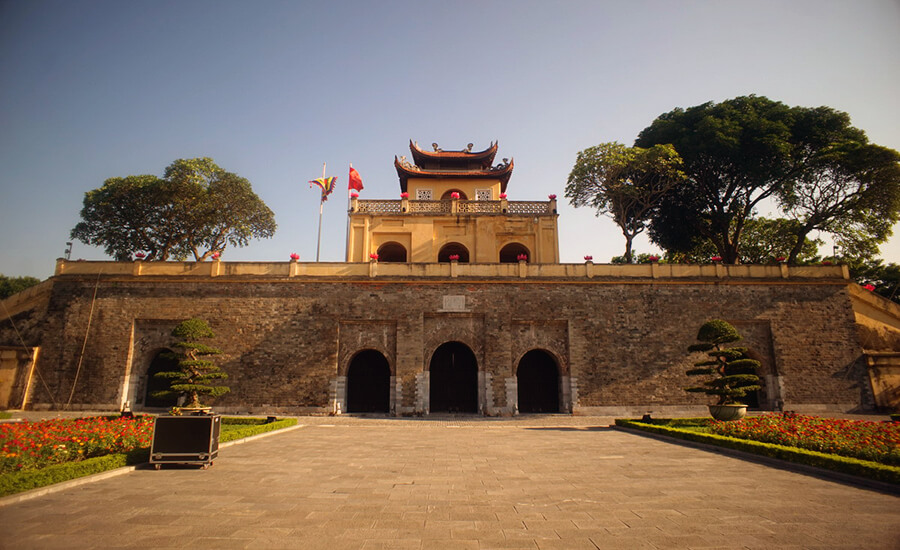
The Main Gate has a U-shaped structure, made of stone, about 46m wide, with 3 arched doors. In particular, the largest door in the middle was the entrance reserved for the Emperor, the two doors on both sides were for the royal family and courtiers to enter and exit the Forbidden Palace. Above the gate was a gazebo used to arrange guards.
Kinh Thien Palace
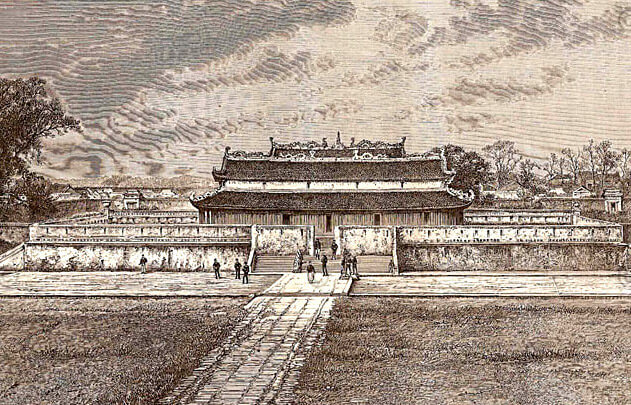
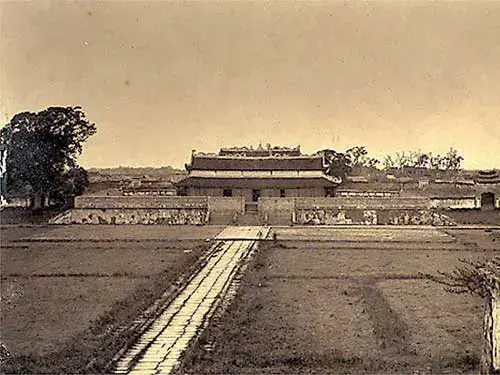
Kinh Thien Palace is the center of the relic site. The palace was built during the Le dynasty on the foundations of the Can Nguyen and Thien An palaces from the Ly-Tran dynasties.
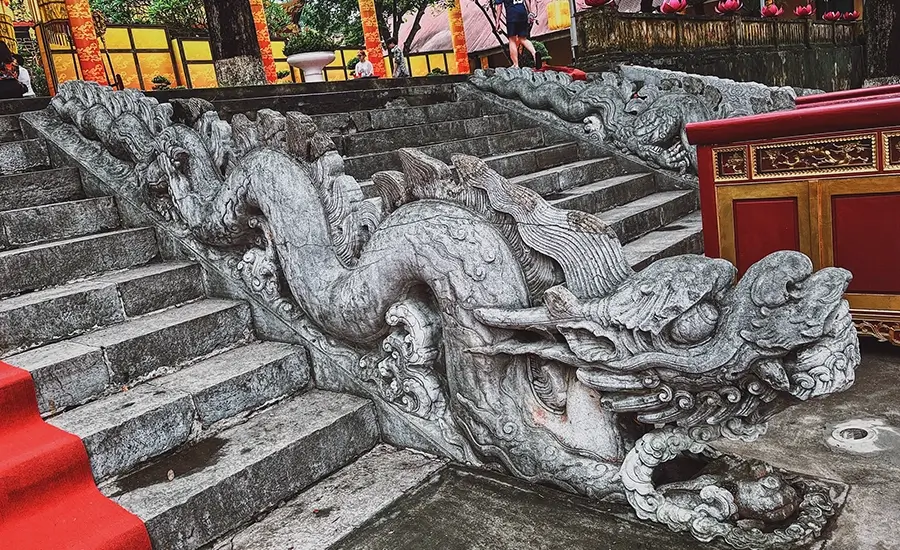
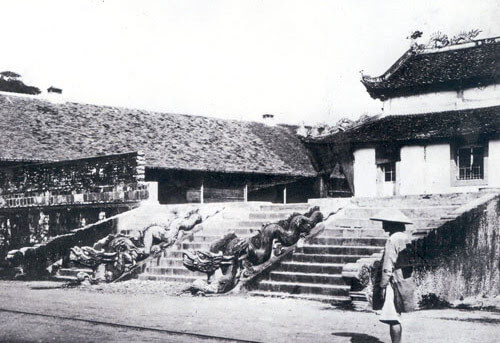
Kinh Thien Palace was destroyed, leaving only the palace steps and a pair of stone dragons, exquisitely carved from green stone, with plump, soft, curving bodies, heads held high, mouths full of jade, and big, round eyes.
Rear Palace
Behind Kinh Thien Palace is Rear Palace (also known as Hau Lau). Many people believe that the presence of this work has a feng shui meaning to preserve peace in the area. There is also another opinion that the Rear Palace was the residence of the concubines in the Emperor’s entourage in the past.
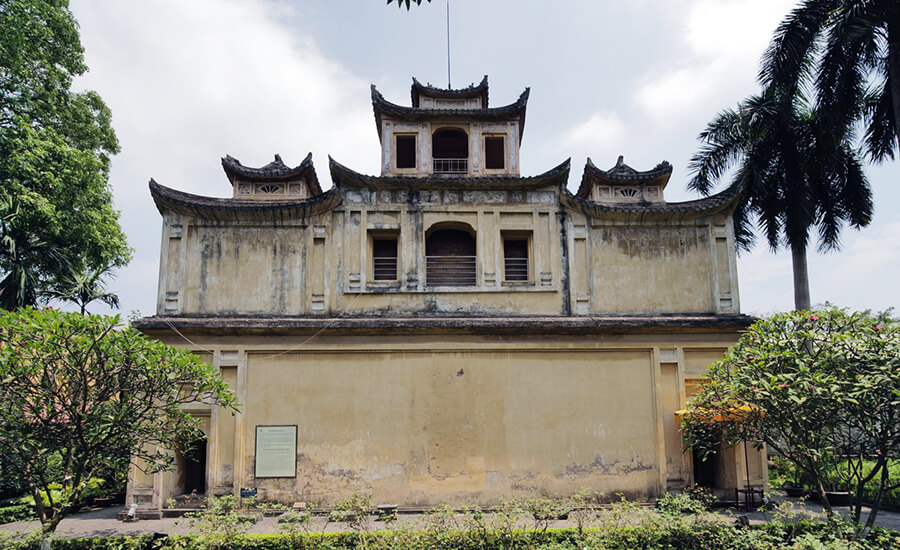
The building is painted yellow, has a tiled roof, and has a total of 3 floors with a very unique combination of East and West architecture. Thanks to being built in the south direction with thick walls, the Rear Palace always remains airy and cool in the summer and warm in the winter. The top floor has large windows, making it easy to observe the surroundings, suitable for sightseeing.
Northern Gate
During the Nguyen Dynasty, a total of 5 city gates were built; one of them that remains today is the North Gate. The Northern Gate of Hanoi Citadel under the Nguyen Dynasty was built on the site of the North Gate of Thang Long Citadel during the Le Dynasty. When the French destroyed the Hanoi citadel, they kept only the North Gate as an observation post, intending to show off their military power by leaving two cannonball holes on the gate during their occupation.
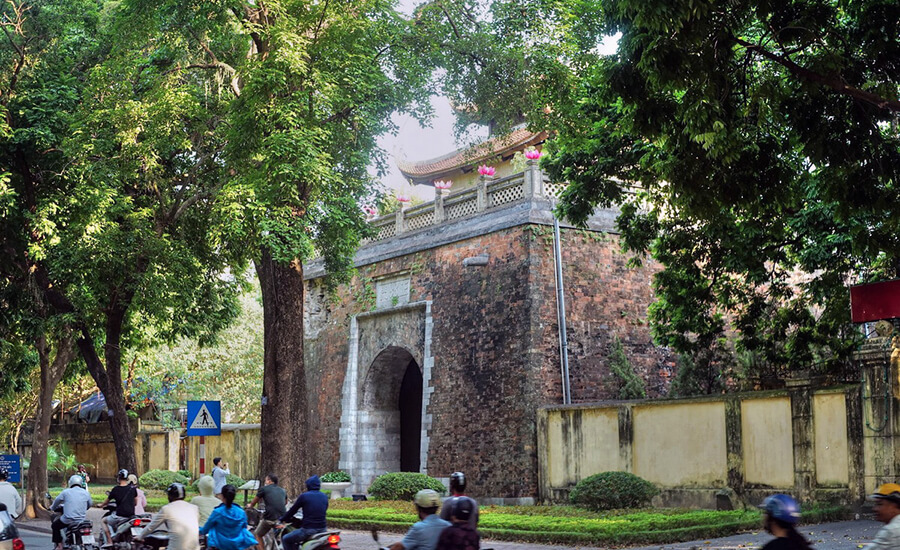
Currently, North Gate is also a place of worship for Hoang Dieu and Nguyen Tri Phuong – two governors of the Nguyen Dynasty who sacrificed their lives to protect the citadel until the last moment.
House D67
Compared with the relics of the Thang Long Imperial Citadel, the House D67 area is the youngest, having been built in 1967. This was once the workplace of General Vo Nguyen Giap and General Van Tien Dung. It was also the place where many important meetings took place during the period of resistance against the US to save the country.
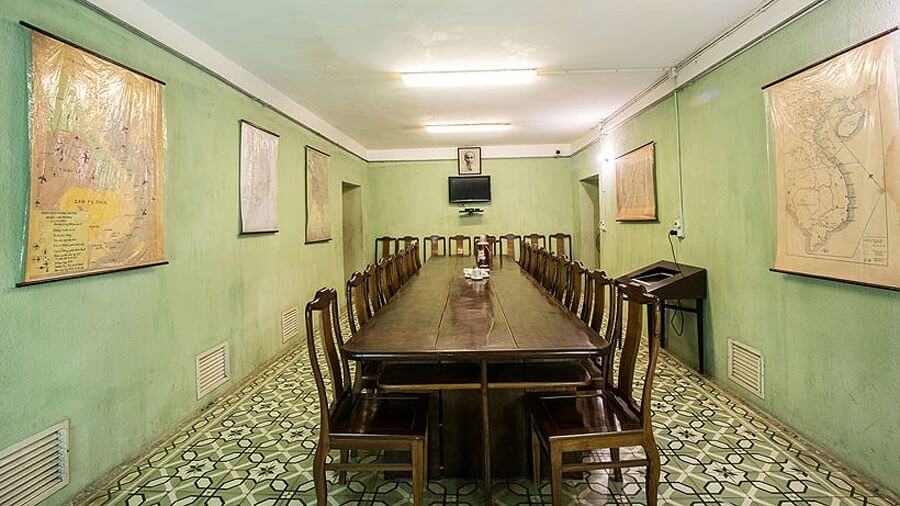
Visiting house D67, you will see familiar items still preserved today, such as maps, tables, and chairs, telephones…nostalgic scenes associated with important historical events.
Archaeological site No. 18 Hoang Dieu
Archaeological site No. 18 Hoang Dieu was discovered during excavations in December 2002, divided into 4 main areas. In these areas, many types of architectural relics have been discovered, dating back to each other, overlapping each other over a period of 1,300 years, starting from the Dai La period (7th – 9th centuries), through the Dinh – Early Le (10th century), Ly (1009 – 1225), Tran (1226 – 1400), Ho (1400 – 1407), Le (1428 – 1527), Mac (1527 – 1592), Le Trung Hung (1592 – 1789) and Nguyen (1802 – 1945).
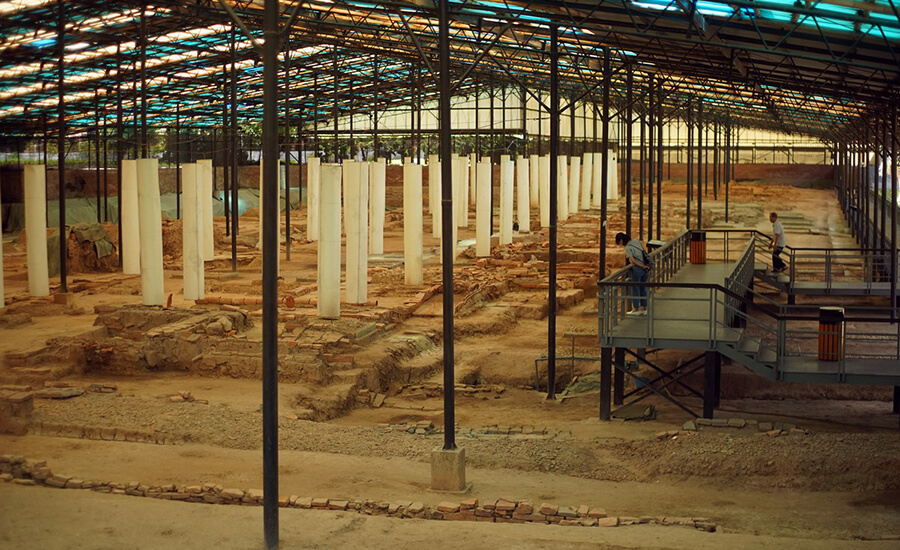
In the world, it is very rare to find a capital city in a country where the ground still preserves a complex of relics and historic sites, with layers of culture overlapping and succeeding one another. quite continuously like that. This is an outstanding feature, contributing to the great value and uniqueness of the relic site and also the Thang Long Imperial Citadel.
Source: collected by An
Follow us for the best deals on Vietnam package tours and visa services!
Comment (0)