
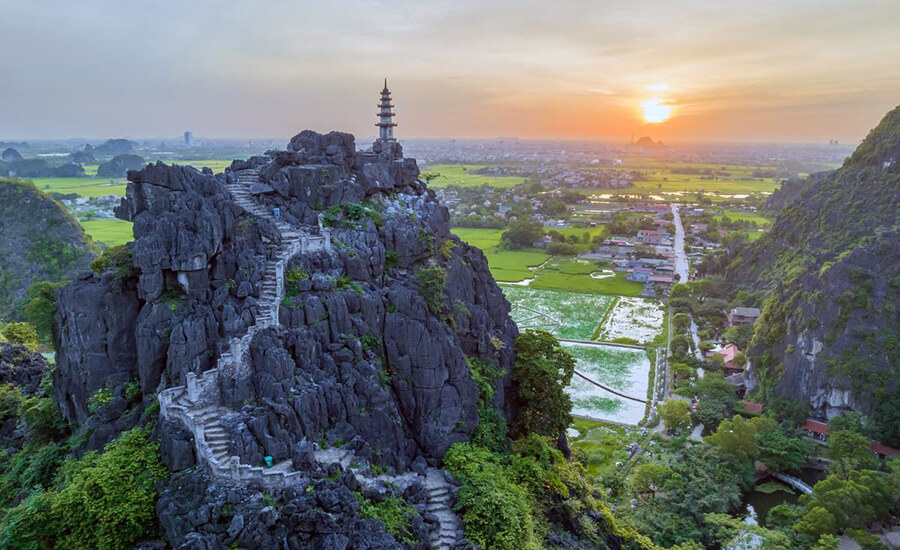
Ninh Binh tourist destinations are blessed by nature with beautiful, majestic, and poetic natural landscapes, along with a long history and culture. Just about 100 km from Hanoi, this is a suitable choice for tourists who do not have much time but want to explore the beautiful nature in North Vietnam. Let’s take a look at the following content with Vietdreamtravel to discover more about some famous places when traveling to Ninh Binh!
General information about Ninh Binh
Ninh Binh is a province located at the southern gateway to the capital, Hanoi, and belongs to the Red River Delta region in Northern Vietnam. After the 2025 merger, Ninh Binh province absorbed Ha Nam and Nam Dinh provinces, forming a single province named Ninh Binh, with an area of about 3,942.62 km².
Ninh Binh has the following geographical location:
- To the East, it borders Hung Yen province by the Red River,
- To the West, it borders Thanh Hoa province, with the boundary being the Tam Diep Mountain Range and the Can River.
- To the South, it borders the East Sea (Gulf of Tonkin) with a coastline of 92 km,
- To the North, it borders the capital Hanoi and Phu Tho province.
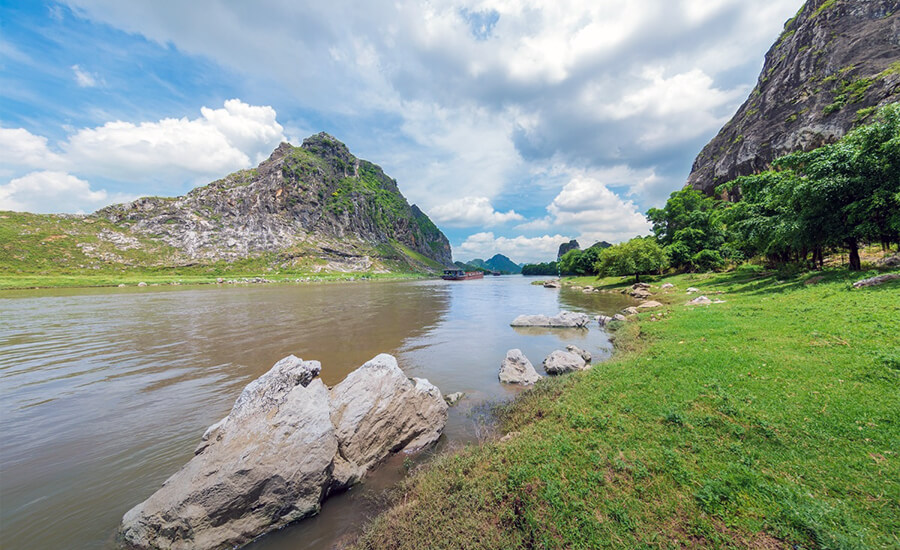
This has also been an important military area throughout history. With a special location in terms of traffic, terrain, cultural history, and possessing the Trang An World Heritage Complex and other titles awarded by UNESCO, such as the Red River Delta Biosphere Reserve, Mother Goddess worship, Cheo art,… Ninh Binh is a tourist center with rich and diverse potential.
What’s the best time to explore Ninh Binh?
Ninh Binh is located in a humid subtropical region with a tropical monsoon climate, averaging 23.5 degrees Celsius. There are four distinct seasons: spring, summer, autumn, and winter, characterized by cold, dry winters and hot, humid summers with lots of rain.
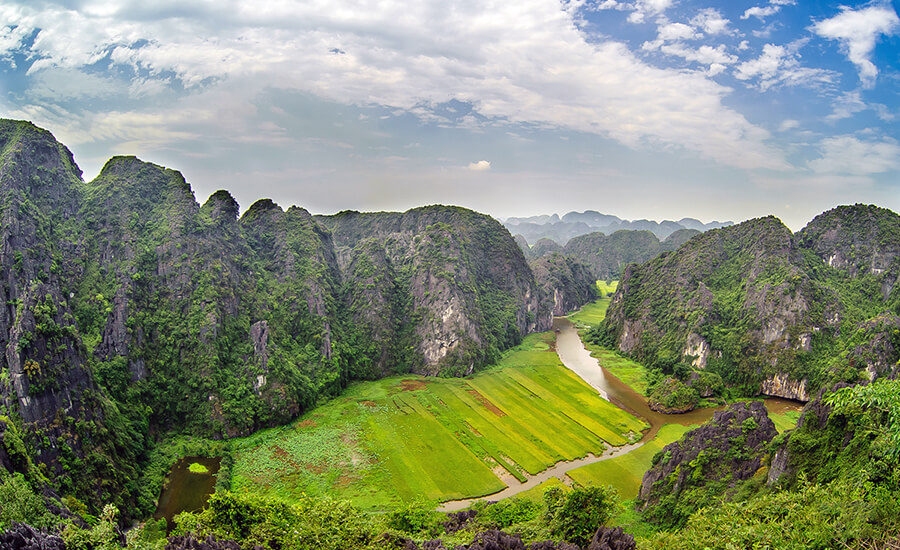
Springtime: From January to March, Ninh Binh attracts visitors with a cool, not-too-cold climate, little rain, and convenient conditions for sightseeing and activities. This time is also ideal for spring travel with spiritual tourism activities such as visiting Bai Dinh Pagoda, Trang An, Tran Royal Temple, and the Phat Diem Cathedral.
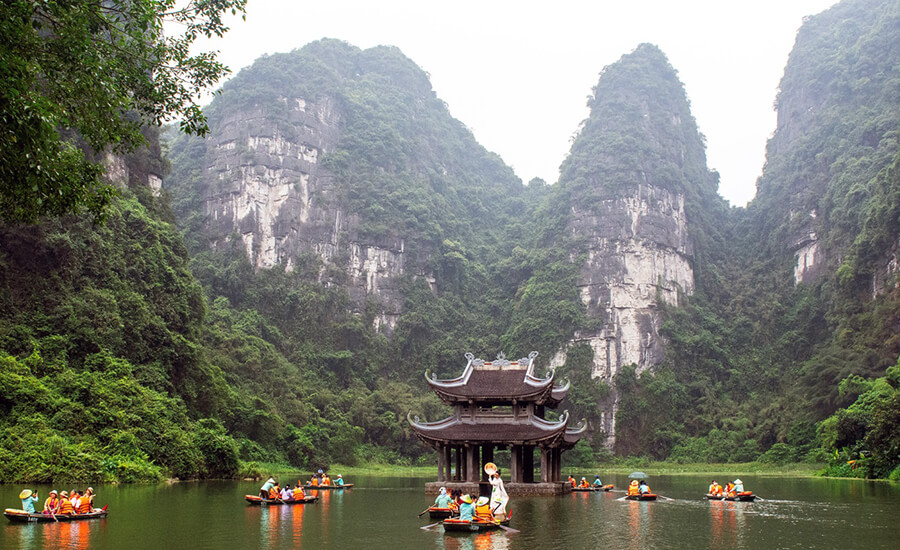
Summer time: From April to June, Ninh Binh’s weather is usually cool and pleasant, neither too cold nor too hot. Summer is the time for open scenery, plants grow well, so you will have the opportunity to admire the beauty of golden rice fields in Tam Coc or the diverse ecosystem of Cuc Phuong forest. With the bright sunlight, you will have an opportunity to take beautiful, artistic photos.
In addition, summer is suitable for swimming. The islets in the Ninh Binh sea area are located very close to the river mouths, including: Lu, Ngan, Xanh, Noi, and Mo.
How to get here?
Ninh Binh is an important traffic junction, with 9 national highways and a convenient highway system. If you’re coming from Hanoi, road transport such as motorbikes, cars, and tourist buses is the best option.
By roadway
If traveling by personal vehicle from Hanoi, visitors follow Giai Phong Street, pass Giap Bat bus station, turn onto the Phap Van – Cau Gie highway, and from there head to Phu Ly, Ninh Binh, in about 2 hours.
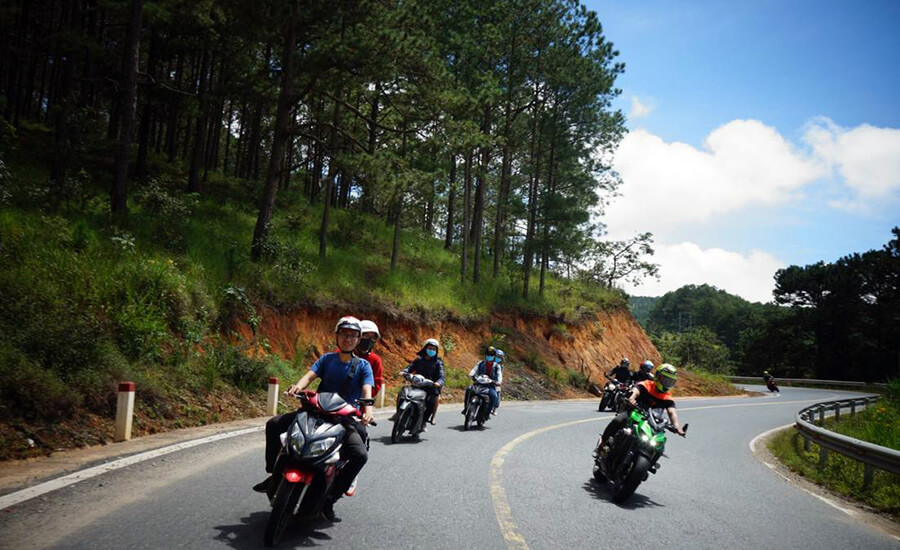
If you want to rest and sightsee, based on the Ninh Binh travel experience, you can choose private cars or a taxi.
For tourist buses, you can buy tickets at the Giap Bat and My Dinh bus stations, with many departure times available. Ticket prices range from 60,000 to 150,000 VND/person.
For limousines and VIP buses with 9 to 11 seats, you can proactively choose your pick-up and drop-off locations with bus companies such as Duy Khang Limousine and Trang An Limousine, which offer many attractive promotions.
By airplane
If departing from Ho Chi Minh City, visitors fly to Hanoi, then take a bus to Ninh Binh using the above options. Vietnamese airlines such as Vietnam Airlines, Vietjet Air, and Bamboo all operate flights from Ho Chi Minh City to Hanoi. Currently, ticket prices range from 1,500,000 to 3,000,000 VND/way.
By railroad
In addition, visitors from other provinces can go to Ninh Binh by train. There are 3 main train stations in Ninh Binh, including: Nam Dinh, Phu Ly, and Ninh Binh. The website of the Railway Corporation (http://dsvn.vn) allows pre-booking tickets or visitors can buy them at the stations.
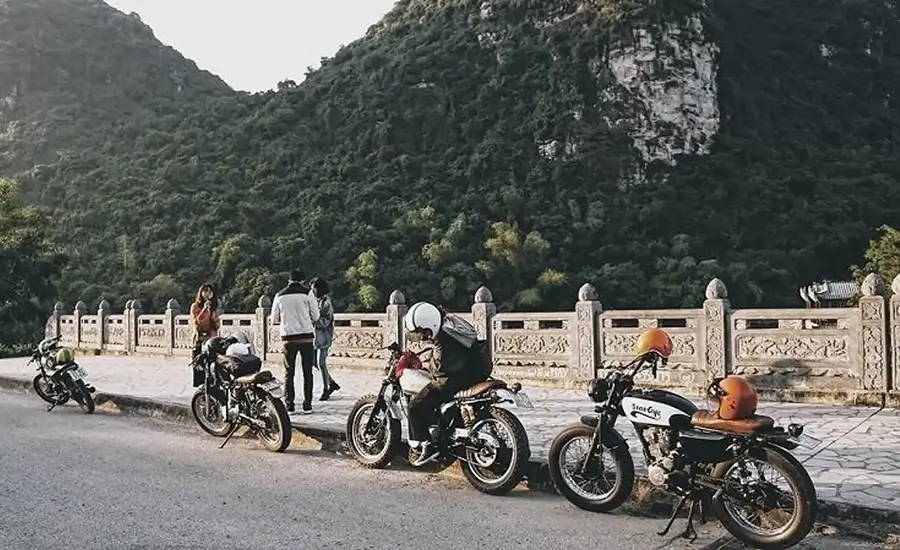
When traveling within the city, visitors should rent a motorbike for 100,000 – 150,000 VND/day to be proactive, as the tourist attractions in Ninh Binh are quite far apart. If traveling in a large group, visitors should call a taxi to save costs.
Accommodation in Ninh Binh
Tourists visiting Ninh Binh, whether as couples, in groups of friends, or alone, can choose to stay at homestays near tourist attractions, with green, peaceful spaces and friendly service. Some popular and conveniently located addresses are: Ninh Binh Friendly Homestay, Hang Mua Ecolodge, Diep’s House, Ninh Binh Palm Homestay, ChezBeo Homestay… With a cost of about 200,000 VND/person/night.
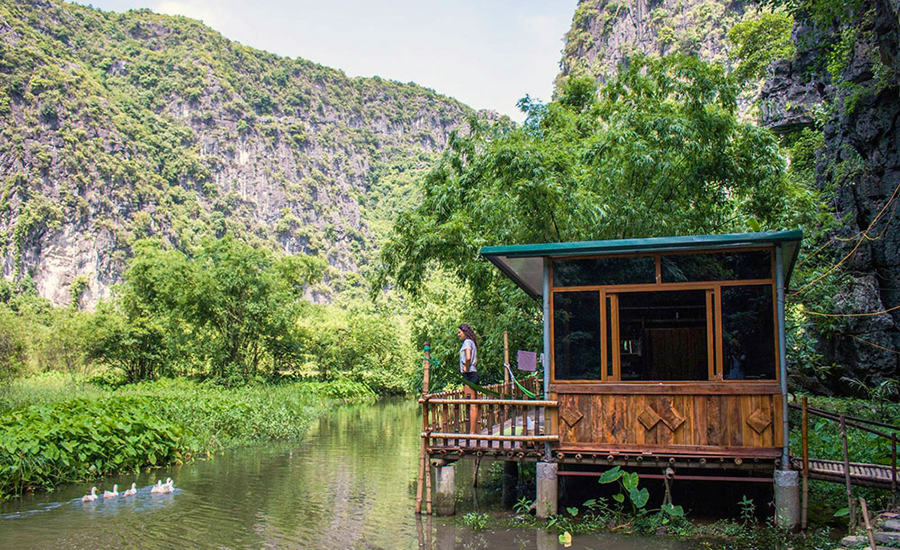
To enjoy more luxurious services and amenities such as swimming pools, spas, gyms, bars, and more, visitors can choose 4-5-star resorts such as Emeralda Resort Ninh Binh, Tam Coc Garden Resort, Ninh Binh Hidden Charm Hotel and Resort, An’s Eco Garden Resort, and Aravinda Resort Ninh Binh. Room rates range from 1.7 – 6 million VND/night.
In the old Nam Dinh area, tourists can stay overnight at hotels in the center, such as Vi Hoang, or in the suburbs, such as Nam Cuong, Ecohost homestay….
Tourist attractions in Ninh Binh
Famous historical and cultural relics
Hoa Lu Ancient Capital
In 968, Dinh Bo Linh ascended to the throne and took the name of King Dinh Tien Hoang. The country was then called Dai Co Viet, and Hoa Lu was its capital for 41 years (968-1009), through 3 dynasties: Dinh, Early Le, and Early Ly. In 1010, Ly Thai To moved the capital from Hoa Lu to Thang Long.
The Hoa Lu Ancient Capital is located in Tay Hoa Lu ward. Tourists visiting Hoa Lu can see two temples located 500m apart on the grounds of the ancient palaces. One is dedicated to King Dinh Tien Hoang and the other to King Le Dai Hanh. On the 10th day of the 3rd lunar month, a great number of pilgrims come to Hoa Lu to pay tribute to Kings Dinh and Le.
The capital is one of the four core areas of the Trang An World Heritage Complex recognized by UNESCO. Visitors should register to listen to the commentary during the tour to better understand this place’s historical significance. The entrance fee is 20,000 VND per person.
Tran Temple
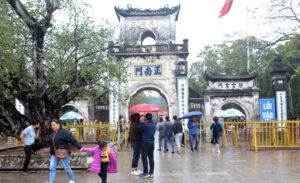 Tran Temple is a temple complex located on Tran Thua Street, Nam Dinh Ward. The Tran Temple relic site was built in 1695. This is a place to worship 14 emperors, their families, and mandarins who contributed to the Tran Dynasty.
The Tran Temple relic site includes 3 main areas: Co Trach Temple, Thien Truong Temple, and Trung Hoa Temple. All three temples have the same architecture and are of equal scale. Each temple consists of a 5-room front hall, a 5-room middle hall, and a 3-room main hall. Connecting the front hall and the middle hall are the altar (incense-burning area) and 2 rooms on the left and right.
 Thien Truong Temple is located right in the center of the temple, where the altars of mandarins who contributed to the country are placed. Co Trach Temple houses the memorial tablet of General Tran Hung Dao, his family, and generals. Trung Hoa Temple was built in the west of the temple. In the temple, there are 14 statues of the Tran Dynasty’s 14 emperors.
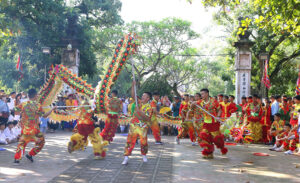
Today, this is a place of worship for pilgrims and tourists from all over the country. At Tran Temple in Nam Dinh, there are two major festivals held every year: the Tran Temple Festival, which usually takes place from the 15th to the 20th of the 8th lunar month, and the Spring Opening Ceremony, which takes place from the 14th to the 15th of the 1st lunar month.
Nam Dinh Textile Museum
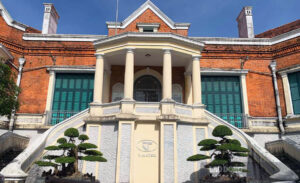 Nam Dinh Textile Museum is located on Hoang Hoa Tham Street, Nam Dinh Ward is also a destination for tourists who love to explore history. This place was built in traditional ancient house architecture and belongs to the Nam Dinh Textile Factory Joint Stock Company. This is where artifacts and traditional values of the textile industry in ancient times are preserved.
Since 1889, Nam Dinh Textile Factory has been one of the largest factories in Vietnam, with 6,000 workers. This is the cradle that helped the working class at that time grow. The Textile Museum covers an area of nearly 1.2 hectares and features a classic French architectural style. Inside, it is divided into many exhibition spaces, each with a different theme. Upon arriving here, you will admire Vietnam’s fabrics and clothing products, but the sewing and weaving machines also contributed to the glory of the country’s textile industry in previous centuries.
Dong Que Museum
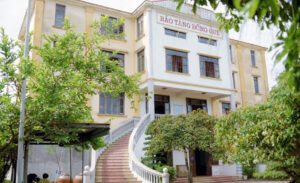 Located in Binh Di village, Giao Ninh Commune, is the first “countryside” Museum in Vietnam. This private museum spans over 5,000 square meters, recreating the image of the working and living lives of people in the Northern Delta from the past to the present.
At the Dong Que Museum, visitors can see ancient house models with tiled roofs and earthen walls, as well as gardens and fish ponds. This is also a place highly appreciated by many tourists, suitable for families with young children. You can order lunch at the museum and enjoy rustic, rural dishes from Nam Dinh, such as gai cake, sticky rice, boiled chicken, and boiled meat with soy sauce. The entrance fee is 5,000 VND per person.
Ecotourism areas and caves
Trang An
 This place attracts tourists with its majestic mountain scenery, winding small rivers, and wild valleys… The entrance fee to Trang An is 250,000 VND for adults and 100,000 VND for children under 1.4 m.
Coming to Trang An, you can choose one of 3 boat tours to visit the caves, temples, and palaces. Each tour lasts from 2 to 3 hours. Thanks to its pristine, watercolor-like beauty, Trang An has been recognized by UNESCO as a natural and cultural heritage site of the world. Notably, this place was chosen by director Jordan Vogt-Roberts as the setting for the blockbuster Kong: Skull Island.
Tam Coc – Bich Dong
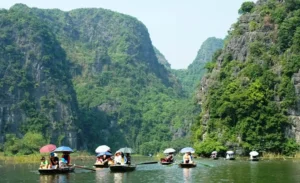
Tam Coc – Bich Dong is a cave complex in Nam Hoa Lu commune, known by the nickname “inland Ha Long Bay,” and is a key national tourist area of Vietnam. The entire area includes a system of limestone caves and historical relics related to the Tran dynasty.
Tam Coc is a scenic complex with three natural caves. All three caves were formed by the Ngo Dong River and go straight through the mountain. If you visit Tam Coc, you will take a boat down the Ngo Dong River, winding through cliffs, water caves, and golden rice fields before stopping at the entrance to the First cave.

Bich Dong is located 2 km from Tam Coc wharf and means “green pearl” cave, a name given by Mr. Nguyen Nghiem, father of the great Vietnamese writer Nguyen Du, in 1773. This is one of the scenic spots in the group called “the second most beautiful cave in Vietnam”.
The special thing is that if you want to visit the system of three caves, you have to travel by boat, and sometimes have to bow your head low if you don’t want to hit the rock ceiling above. The entrance fee is 120,000 VND/person, and the boat fee on the Tam Coc route is 150,000 VND/trip.
Mua cave
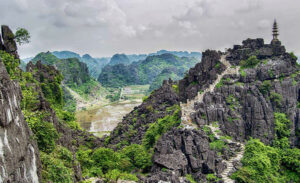
About a 15-minute drive from Trang An, Mua Cave tourist area is located right at the foot of the mountain. The entrance fee is 100,000 VND/adult. This is a place that tourists often check in when visiting Ninh Binh. To reach the top of Mua Cave, visitors will have to climb about 500 stone steps. The weather is quite hot, so remember to bring water.
From the top of Mua Cave, you can see the beautiful panorama of Ninh Binh with winding rivers, rice fields, and majestic mountains. Visitors can spend about 2-3 hours in the tourist area to visit and take photos.
Am Tien Cave
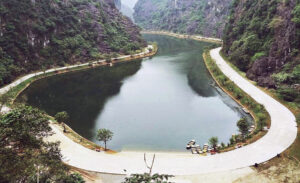
Am Tien Cave, a scenic spot within the Hoa Lu ancient capital national relic complex, is located in Tay Hoa Lu commune, more than 10 km from the center of Ninh Binh city. The area is surrounded by towering limestone mountains like a citadel, and in the middle is a cool blue lake. This place is often described by tourists as having a poetic beauty, mixed with a bit of sadness and mystery. In the past, the only way to get here was to climb the mountain, so Am Tien was named Tuyet Tinh Coc (meaning “End of love” cave). Today, visitors can go through a tunnel, then climb the mountain to visit the temple, burn incense, and admire the cave with magical stalactites. Entrance fee 20,000 VND/person.
Van Long Lagoon
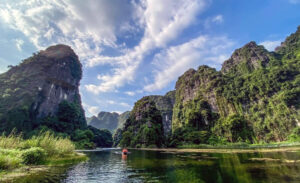
Van Long Lagoon is an artificial lagoon and also the largest wetland nature reserve in the Northern region. Surrounding the lagoon are majestic limestone mountains and many unexplored caves. To visit the pristine natural scenery of Van Long Lagoon, you will sit on a boat, look at the clear water, and admire the vast rice fields.
The water is not as blue as the sea, but clear, revealing layers of moss underneath. This is also the place that holds 2 records in the Vietnam Record Book Center in 2010: the largest living area of white-cheeked langurs and the largest natural picture. Entrance fee: 20,000 VND/person; boat ticket: 60,000 VND/2 people.
Van Trinh Grotto
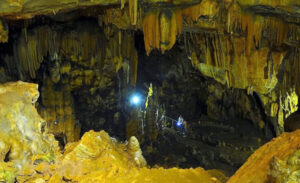
Van Trinh is one of the dozen grottoes in the easily flooded area of Van Long, a beautiful natural site in Thanh Son commune. The grotto is deep inside a 100-meter-high mountain. The entrance of the grotto is approximately 40m from the foot. A narrow path leads to the main grotto, which is as magnificent as a castle, with numerous stone sculptures in various shapes and sizes. natural statues of monks, animals, flowers on the cliffs, the ceiling, and the floor look so lively. They seemed to be petrified by magic. In addition, wells with clean, clear water in the grotto also give visitors pleasant feelings.
Deep inside the grotto is a small hold with beautiful stalagmites that look like bald cypresses. Sunlight streams through an opening in the ceiling, creating a fanciful scene.
Cuc Phuong National Park
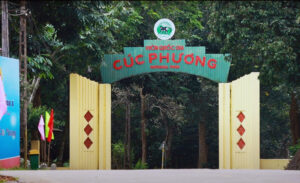 The national park lies along the borders of the three provinces of Ninh Binh, Hoa Binh, and Thanh Hoa. This is the first national forest in Vietnam, covering about 22,000 hectares, attracting a large number of tourists with diverse forms of tourism, from eco-tourism and research to adventure…
Visitors to Cuc Phuong can explore the primeval forest and caves with strange shapes, including ancient cultural and historical relics such as Trang Khuyet cave, Chua cave, Thuy Tien cave, and Nguoi Xua cave. Cuc Phuong National Park also has hot springs, rich flora and fauna, and ancient trees thousands of years old…
Thung Nham Bird Garden
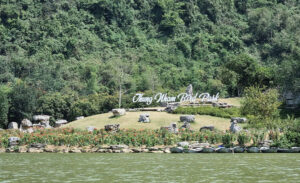
Thung Nham Bird Garden is located in Nam Hoa Lu, home to about 40 species and more than 50,000 birds. The best time to see flocks of birds returning from foraging is around 5 pm.
Coming to Thung Nham, you will admire flocks of birds in flight and the wild, peaceful natural beauty. Besides, you can also admire the beautiful scenery of the moving banyan tree, the thousand-year-old Duoi tree, Vai Gioi cave, But cave, Tien Ca cave, Thuy Cung cave, Ba Co cave…
The entrance fee is 100,000 VND/person, and the boat ticket to visit the Bird Garden is 20,000 VND/person.
Dich Long Cave
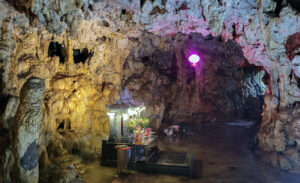
Dich Long cave was found in 1739 in Gia Tran Commune. There is a stone inside that resembles a Buddha statue. A Buddhist altar was then built, and in 1740, the cave became a Buddhist pagoda. It shelters statues of the Buddha, arhats, and a guardian colossus, all standing on stone pedestals. In particular, there are two beautiful statues carved from one block of blue stone. The grotto has three sub-caves linked together: the caves of Buddha, Darkness, and Brightness.
The cave gives visitors the feeling of being lost in a stone world of stalactites in various shapes, such as a drinking elephant, a kneeling elephant, a reclining tiger, a dancing phoenix, a drinking dragon, and so on. The colors of the cave’s stalactites change with the brightness of the sun. Early in the morning, they are pink, turn into a twinkling crystal at midday, and then become red at sunset. It is as if there were ways to heaven and to hell from the cave. Emperor Minh Mang called it “ The third most beautiful cave in Vietnam.”
Kenh Ga Hot Water Stream
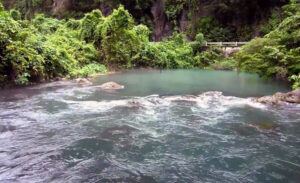 The Kenh Ga Hot Water Stream is in Kenh Ga Village, Gia Van Commune. A boat takes the visitors up to the stream among the mountains and the rice fields. Although the fragrant stream has existed for a long time, it was first studied and exploited by the French in 1940. The mineral water here is extremely high quality and contains sodium chloride, potassium chloride, calcium, and magnesium chloride.
The water is clear and has a stable temperature of 53 degrees Celsius with a source capacity of 5,000 cubic meters per hour. Ninh Binh is lucky to have this natural hot water stream used for relaxation and self-treatment.
Xuan Thuy National Park
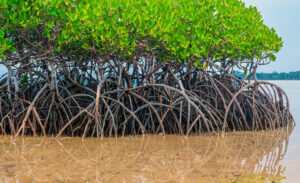 Giao Minh commune is the ideal location to observe a submerged land environment. This area between Lu and Ngan islets at the mouth of the Red River is the product of a millennial alluvial process.
Vietnam has chosen the Lu-Ngan islets to be inscribed on the list of international ecological zones to be protected and preserved, and they have become the Xuan Thuy Ramsar Reserve. The alluvial plain of the Lu-Ngan islets has also been designated by the Vietnamese Government for inclusion in the National Natural Conservancy Zone list.
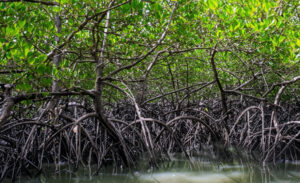
 Recently, Xuan Thuy Ramsar Reserve has become a National Park. The park covers an area of 15,000ha, of which 7,100ha is strictly preserved. Forest covers about 90% of the 7,100 ha site, which comprises 4,000 ha of wetland, home to a rich flora and fauna, including 57 breeds and 111 known species of aquatic plants.
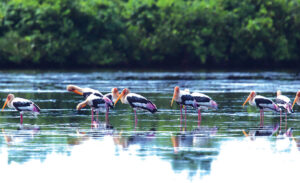
 Xuan Thuy National Park is known for its many bird varieties. There are 215 species, including 160 types of migrating birds and 50 types of water birds, according to the latest survey carried out by International Bird Life. Nine of these species, including the black-faced spoonbill and the northern white egret, are listed in the world’s Red Book of rare animals. The black-faced spoonbills found in the reserve account for one-fifth of the world’s bird community.
Benthos is also plentiful in Xuan Thuy Ramsar. Fish, shrimp, and crabs provide the main source of income for the local community. From November to April, it is a meeting place for tens of thousands of birds migrating from the north.
Kem Trong
 Kem Trong is a national scenic spot recognized in 1962. Kem Trong is where the Day River flows through two mountains: on the left are Rua Mountain and Co Dong Mountain in Ha Nam Province; on the right are Bai Tho Mountain and Bat Gia Mountain in Ninh Binh Province. The natural landscape here is not as vast and majestic as many others. Kem Trong is a scenic spot that includes rivers and mountains, fields and trees, the scenery of the earth and sky, and human creations, all merged into a cohesive whole.
In addition, when visiting Kem Trong, you can visit beautiful places such as Bong Mountain, Vong Mountain, and Dragon Mountain on the right bank. On the other side of the Day River, there are Rua Mountain, Co Dong Mountain, Trinh Tiet Mountain… On Trinh Tiet Mountain, there is an ancient pagoda. The people here believe that the pagoda gathers the spiritual energy of heaven and earth.
Sacred temples and pagodas
Bai Dinh Pagoda
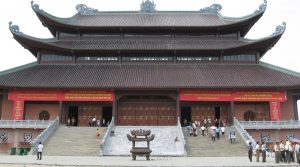
The Bai Dinh Pagoda complex was built in 2003 and covers an area of over 500 hectares, surrounded by majestic limestone mountain ranges. The pagoda is divided into 2 areas: Tan Tu and Co Tu. Here, visitors can walk around or travel by electric car (price 30,000 VND/person/trip). Some of the shrines visitors often visit here are Phap Chu (consisting of 5 rooms, with a 10m-high, 100-ton Buddha statue in the middle room) and Tam The shrine… You can also go up the bell tower to admire the Great Bell, weighing 36 tons.
Not only is it an impressive architectural work, but Bai Dinh Pagoda is also a pilgrimage site to the land of Buddha and a sacred place where many people come to pray for peace and worship Buddha.
Phat Diem Cathedral
The 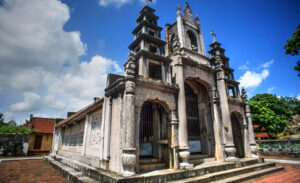 Phat Diem Cathedral complex is located in Phat Diem commune, 130 km south of Hanoi and 30 km from Hoa Lu ward. It was built between 1875 and 1899 by Father Tran Luc. It’s an ensemble of construction in the Oriental architectural style. They are divided into 2 sections: the worship section and the section for residence and teaching of religious doctrines.
The complex area includes ponds, monuments, the Phuong Dinh (bell tower), the Square Hall, chapels, artificial caves, and more. The highlight of the architecture of the Phat Diem Stone Cathedral is the harmonious blend of Eastern and Western styles. Phat Diem Cathedral complex includes a large church and 5 small churches. One of them is built entirely of natural stone, called the stone church, Phuong dinh (bell tower), a pond, and 3 artificial grottoes. In 1988, the architectural complex of Phat Diem Cathedral was ranked as a National Historical and Cultural Relic.
Pho Minh Pagoda
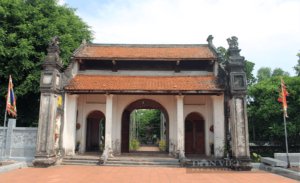 Pho Minh Pagoda is the only surviving architectural work of the ancient Thien Truong Palace, still almost intact to this day. According to the Department of Culture, Sports and Tourism of Nam Dinh, the pagoda dates back to the Ly Dynasty, was expanded in 1262, and served the Buddhist worship needs of the emperor and the noble princes of the Tran Dynasty. In addition to worshiping Buddha, the pagoda has a statue of Emperor Tran Nhan Tong, Huyen Quang, and Pho Loa – the founders of the Truc Lam Yen Tu sect.
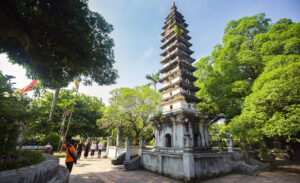 In the pagoda grounds stands Pho Minh Tower, built in 1305. This is one of the oldest towers in Vietnam, with an architecture consisting of 14 floors, up to 20m high, and looking like a three-level lotus flower. The pedestal and the first level are constructed of engraved grey stone, while the other levels are built of brick. On top of the conical tower is a stone shaped like a pen. Although the tower weighs some 700 tons, it has surprisingly stood steady on sunken land for over seven centuries.
Of the 100 original statues in the pagoda, only 50 remain, but they still convey the impressive original artistic style.
Phu Day remains
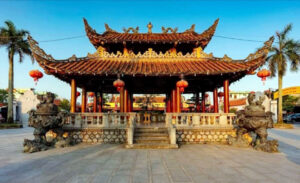 Located in Vu Ban Commune, Phu Day remains are dedicated to Goddess Lieu Hanh, one of the four immortal Gods of Vietnam (the others are Van Vien, Dong, and Chu Dong Tu). Visitors come to Phu Day not only to sightsee but also to seek good luck and peace.
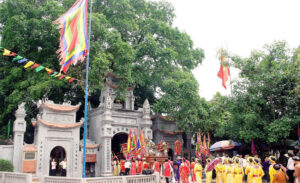 The Phu Day site includes three main areas: Tien Huong Residence, Van Cat Residence, and the tomb of Goddess Lieu. These monuments are highly valued for their architecture, dating to the late 19th and early 20th centuries.
Every year, the Phu Day Festival is held on the 3rd day of the 3rd lunar month to express gratitude to Goddess Lieu Hanh, attracting a large number of people and visitors from all over the country.
Co Le Pagoda
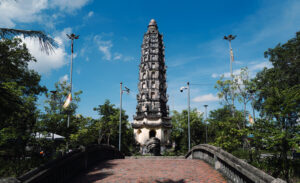 Co Le Pagoda, located in Co Le commune, is one of the famous scenic spots, a special national historical and cultural relic of the Red River Delta. The pagoda was built during the Ly Than Ton period (12th century) on a square plot of land nearly 36,000 m² in area, with a beautiful landscape, surrounded by small rivers and lakes. Co Le Pagoda is a fusion of traditional Vietnamese and European Gothic architectural elements. This is a Buddhist pagoda, but it resembles a Catholic cathedral.
The Cuu Pham Lien Hoa Tower, placed on the back of a giant turtle, 32m high, made up of 9 lotus floors, built in 1927, is a prominent highlight of the pagoda. In the lake in front of the main hall, there is currently a special “treasure”: the Dai Hong Chung bell, weighing 9 tons. This bell was cast in 1936, 4.2m high, 2.2m in diameter.
With its typical features, Co Le Pagoda was designated an architectural and artistic relic by the Ministry of Culture, Sports and Tourism in 1988.
Hung Nghia Church
Hung Nghia Church is located in Hai Hung Commune and was built in 1927. This is one of the most beautiful churches in Vietnam, with ancient Spanish and French Gothic architecture. This is a must-visit check-in spot in the Nam Dinh tourist area.
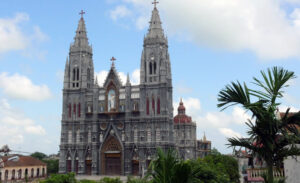 The most striking feature of Hung Nghia Church is its harmonious blend of European Gothic architecture with Baroque details, creating a majestic and magnificent appearance. The building is approximately 76 meters long, 33 meters wide, and 24 meters high, with two bell towers rising to about 60 meters, giving the impression of a fairy-tale castle in the Northern Vietnamese countryside. The vaulted ceilings, stained glass windows, intricate carvings, and muted colors further enhance the sacred and ancient atmosphere of the church.
Today, Hung Nghia Church is not only a center of religious activity for thousands of parishioners but also a unique architectural symbol of old Nam Dinh, contributing to the region’s rich cultural, historical, and tourism value.
Ba Danh Pagoda
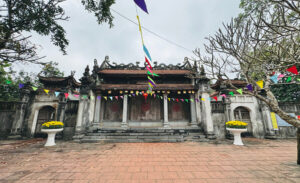 Ba Danh Pagoda, also known as Bao Son Tu, is located next to the poetic Ngoc Mountain, in Kim Bang ward. It is situated on the bank of the Day River in a large, peaceful area away from any urban settlement. To reach the pagoda, take a small boat across the river.
At first, Ba Danh Pagoda was just a small temple dedicated to Saint Tu Phap. Then, during the reign of Emperor Le Huy Tong (1675-1705), the pagoda was renovated and embellished. Later, locals tore down the temple, brought a statue of Buddha to the site, and built the Ba Danh Pagoda. After offering incense at the pagoda, visitor scan continue on to Ngoc Mountain and its lush green forests.
Tran Thuong Temple
 The temple is located on the banks of the Red River, in Tran Thuong commune. From Hoa Lu ward, the center of Ninh Binh province, to Tran Thuong temple is 50 km. Tran Thuong Temple is a temple dedicated to Tran Hung Dao, built on the site he used as a granary to support the resistance against the Yuan-Mongol army during the second war (1285).
The temple has a unique architecture in the ancient art style of the Vietnamese people, decorated with elaborately carved motifs that combine many ancient techniques.
 Tran Thuong Temple was built on a large, isolated plot of land. The temple’s space is limited by a system of walls built of solid bricks plastered with mortar, along with canals and lakes. Tran Thuong Temple currently preserves more than 200 beautiful relics, antiques, and worship objects of high artistic value, rich in genres, and diverse in materials.
Tran Thuong Temple Festival is held on the 15th day of the first lunar month and the 20th day of the eighth lunar month every year. It is one of the three largest regional festivals in Ninh Binh province.
Tam Chuc Pagoda
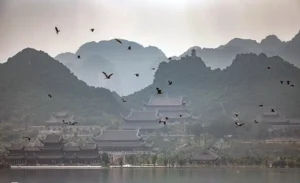 Tam Chuc is the largest pagoda in Vietnam, located in Ba Sao town and Tam Chuc commune. The pagoda is about 60 km from the center of Hanoi and is one of the most attractive spiritual tourist destinations in the country, linking the Huong Pagoda and Bai Dinh tourist areas with the Van Long nature reserve. The Sutra Pillar Garden is a restored Sutra Pillar similar to the national treasure Sutra Pillar of Nhat Tru Pagoda, the ancient capital of Hoa Lu, Ninh Binh. There are currently 32 Sutra Pillars, each about 13.5 m high, 2 m wide, and weighing about 200 tons.
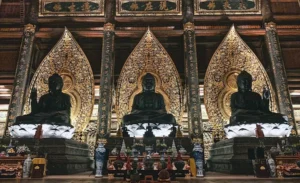 Tam The Palace is 39 m high, with a floor area of 5,400 m², enough to accommodate 5,000 Buddhists worshiping at the same time. In the palace are placed 3 bronze Buddha statues symbolizing “Past, present, future”. Each statue weighs more than 200 tons; behind each statue is a gilded Bodhi leaf.
The Jade Pagoda atop That Tinh Mountain is made entirely of red granite; inside is a statue of Buddha made of ruby weighing 4,000 kg. To reach the pagoda, visitors must climb 299 stone steps. From here, you can see the whole view of Tam Chuc Pagoda. In addition, visitors can visit the Quan The Am Bodhisattva Palace, home to a 100-ton bronze Buddha statue, or the Phap Chu Palace, with a 150-ton bronze statue. Other attractions are the Tam Chuc communal house and the Luc Nhac lake area.
Craft villages
Bach Long Salt Field
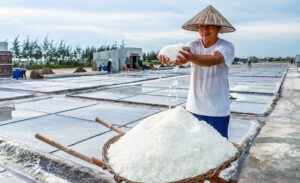 From March to August every year, if you travel to Nam Dinh, don’t forget to visit Bach Long salt field to admire the beauty of this place during the salt-making season! Salt-making is a hard, traditional profession in Nam Dinh ward. To have pure white salt grains, farmers have to wake up early in the morning. Salt is only delicious and white when dried under the harsh sunlight.
For many professions, strong sunlight is the cruelty of nature, but for the salt industry, strong sunlight is a precious gift from heaven and earth, because the stronger the sunlight, the easier it is for the salt to crystallize, making the salt harvest season more bountiful. Coming to Bach Long salt fields, you will see vast salt fields, but the mounds of pure white finished salt, and boats carrying salt back to the warehouse in the sunset with a little sunlight.
Doi Tam Drum- Making village
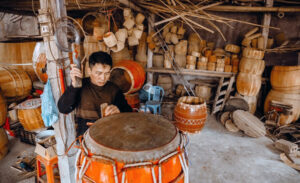 This craft village is located at the foot of Doi Mountain in Tien Son ward. Legend has it that the founder of this craft was Nguyen Duc Nang. In the 10th century, he and his brother chose this place to settle and passed down the drum-making craft to their villagers. After Nguyen Duc Nang died, the villagers buried him at the foot of the mountain and honored him “Trang Sam” (Master of Thunder) in his memory. On the occasions of the Vietnamese Lunar New Year and traditional festivals.
Doi Tem residents come to visit the founder’s grave and burn incense to pay homage to him. The drum of Doi Tem Village has been well known throughout the country. These drums look simple but produce very beautiful sounds that seem to express the makers’ feelings of happiness and sadness. Visiting the village, you will have opportunities to study the secret of this craft.
Vu Dai Village Braised Fish
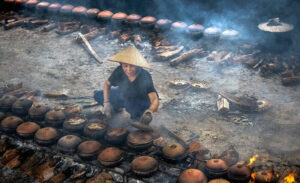 Vu Dai Braised Fish is known as the most famous specialty of Ha Nam (now Ninh Binh province) because of the quality of its raw materials and the elaborate processing steps. A pot of braised fish must be boiled continuously for 14 hours. When it is dry, add water, and do not let the heat get too high; the fish will burn. The fish chosen for drying are black carp weighing 4 to 6 kg or more, raised naturally or purchased for braised fish.
In addition to fresh salted fish, the braised pot also contains pork belly and other typical country spices. A standard pot of fish has firm meat, soft bones, spices mixed into each piece of fish, and when eaten, it has a rich, spicy, and sweet taste, not salty.
Ninh Binh specialties
When you come to Ninh Binh, you cannot miss the specialties: burnt rice, raw goat meat with lemon, stir-fried goat, grilled goat, crab fried with betel leaves, eel salad…
Goat meat dishes
 Goat meat dishes are quite famous and are ones you should not miss when traveling to Ninh Binh. Goat meat is a dish many tourists love when they come here. Goat in Ninh Binh is raised on rocky mountains, so the meat is firm and chewy. Fresh and delicious Ninh Binh goat meat is prepared using many different recipes, making the dishes here quite special and tastier than in other places.
To find reputable restaurants serving standard mountain goat, diners should go to mountainous areas such as Hoa Lu, the Trang An eco-tourism area, and Tam Coc. Each portion of goat meat costs 100,000 – 250,000 VND, depending on the preparation method.
Fish salad
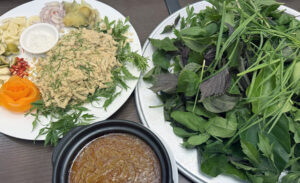 Fish salad is a special dish from Ninh Binh, prepared with great care and featuring a rich blend of spices. Although made from fish, the salad does not have a fishy smell, stimulates the taste buds, and leaves diners wanting more.
This is a catfish, legless and finless. At first glance, they look quite similar to eels but are larger, with slippery skin and a light brown back and belly.
In the past, locals often squeezed them with lime juice, then squeezed dry and mixed well with rice bran to make salad. Later, fish salad was mixed with spices, with finely ground galangal, thinly sliced lemongrass, and rice bran added separately.
In addition to the dipping sauce, the ingredients served with eel salad are elaborately prepared, including dozens of aromatic leaves. Depending on personal taste and regional culture, people can eat salads with leaves such as fig leaves, guava leaves, Indian laurel leaves, perilla leaves, basil, coriander, ginseng, pennywort, mint, green banana, …
Stir-fried field crab with betel leaves
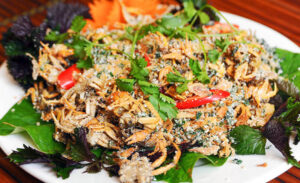 Stir-fried field crabs with betel leaves, a rustic and popular dish in Ninh Binh, has a strong countryside flavor that visitors should try when visiting the ancient capital. The field crabs are carefully prepared, the betel leaves are washed and sliced, and the two main ingredients are then stir-fried together according to a specific recipe.
Because it does not use farmed crabs, this dish evokes many unexpected feelings in diners. It is the crunchy taste of field crabs combined with the characteristic aroma of betel leaves. This dish is best when combined with hot rice.
Mountain snails
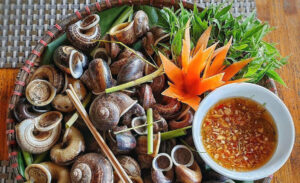 Mountain snails are a famous specialty in Ninh Binh for their natural sweetness and rich flavor, as they eat leaves, grass, and some precious medicinal herbs. Therefore, mountain snails are prepared in many ways, such as grilled, stir-fried with tamarind, or stir-fried with garlic, but the most popular is still boiled mountain snails.
After being caught, mountain snails are washed and boiled with lemongrass. It’s just that simple, but this rustic delicacy attracts many people. Diners can eat them on their own to savor the snails’ natural sweetness, or dip them in fish sauce with lemon and chili.
Pho
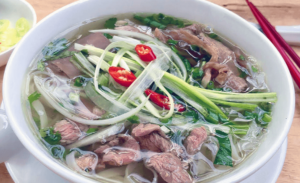 Mentioning Nam Dinh (currently Ninh Binh Province) is mentioning the famous noodle soup – pho. “Pho Hometown” is located in Giao Cu village, Nam Dong commune, 14 km from Nam Dinh ward. This is a long-standing village known for pho noodle-making.
The raw material is the previous crop’s rice, which is ground with a stone mill and then spread thinly on a pot of water fanned by charcoal. The pho noodles here are white, chewy, and fragrant. The pho broth is simmered with beef bones, delicious fish sauce, sea worms, and dried onions…
Pho Xiu
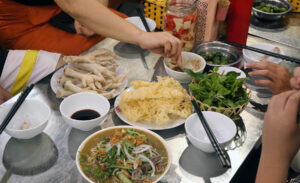 Pho xiu is also a suggestion worth trying. Xiu is a shortened way of reading “char siu” in Chinese cuisine. The pork has a thin layer of fat around it, is marinated with basil, five-spice powder, local wine, annatto oil, and then fried. Char siu is cockroach-brown; the fat is yellow and fragrant with basil. When sliced, the tenderloin inside is light pink, and the meat is soft and sweet.
The pho xiu broth is also simmered with beef bones and pork bones in a certain ratio. The pork is cut into large pieces, like cooked beef. At first glance, if you don’t pay attention to the red color of the pork, many people will think this is a bowl of beef pho.
Xiu Pao Cake
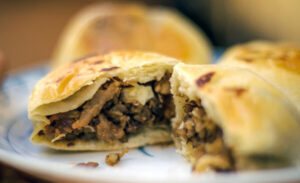 Xiu Pao cake has followed the Chinese to Nam Dinh for a long time. These small, round buns fit comfortably in the palm of your hand. The outer crust is baked to a golden crisp, creating a light crunch while maintaining a soft, fluffy texture. The crust is made from flour, butter, sugar, and other ingredients, kneaded and baked at the appropriate temperature to create a uniquely appealing aroma. When held, the bun emits a light, rich aroma of baked flour blended with the savory filling inside.
The special appeal of the xiu pao lies in its filling. The filling typically consists of carefully marinated char siu pork, combined with quail eggs or salted eggs, wood ear mushrooms, and dried onions, creating a harmonious balance of salty, sweet, and rich flavors. When enjoyed, the soft, fragrant crust blends perfectly with the rich filling, creating a delicious and unforgettable experience.
Hai Hau longan cake
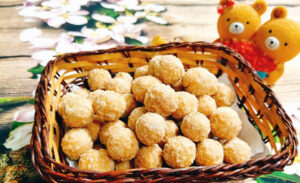 Hai Hau longan cake often leads people to mistakenly think it is made from longan fruit, but it is not. Because of its round shape and delicious yellow color like longan, local people creatively named it that way. A popular snack, longan cake is made from sticky rice flour, chicken eggs, sugar, and lard.
After mixing the sticky rice flour with chicken eggs, the mixture is rolled into balls and fried in hot oil. Melt the white sugar, then add the fried dough to coat the outside. The cake’s deliciousness and sweetness depend largely on this layer of sugar.
Phu Ly Rice Rolls
 Phu Ly Rice Rolls are the most famous specialty of old Ha Nam. Rice rolls here are made with delicious, high-quality Tam Xoan rice. After being soaked in water for 3-4 hours, Tam Xoan rice is ground into a watery powder and then spread on a steamer. The rice rolls are spread to a moderate thickness, are crispy, and are vegetarian, without meat or wood ear mushrooms. Standing out on the white cake are layers of golden, fragrant fried onions, with a few drops of fat to enhance the cake’s richness.
Diners eat it with sweet-and-sour fish sauce, pickles made from kohlrabi and carrots, and grilled meat seasoned to taste. The grilled meat is neither too dry nor too fatty, but fragrant, soft, and sweet. Many tourists think that Phu Ly rice rolls are a combination of Thanh Tri rice rolls and Hanoi vermicelli with grilled pork. The dish has a unique flavor, setting it apart from other rice rolls in the country.
Voc Long wine
The winemakers in the village of Voc are always loyal to a recipe for distilling wine. That is, they cook it with a delicious specialty rice and ferment it with Vietnamese yeast made from 36 traditional Chinese herbs. During fermentation, they have to wait 2 to 3 days for the yeast to rise before opening it. The rice wine is also cooked just right, not too dry or too mushy, beaten and cooled before sprinkling yeast, then put in a ceramic jar to ferment for 48 hours. When it is plump, add water; after 2 nights, cook it in wine. A jar costs from 120,000 VND.
Hopefully,the Vietdreamtravel guide provided above will be useful suggestions for your trip to explore Ninh Binh!
Source: collected by An
Follow us for the best deals on Vietnam package tours and visa services!
Comment (0)