
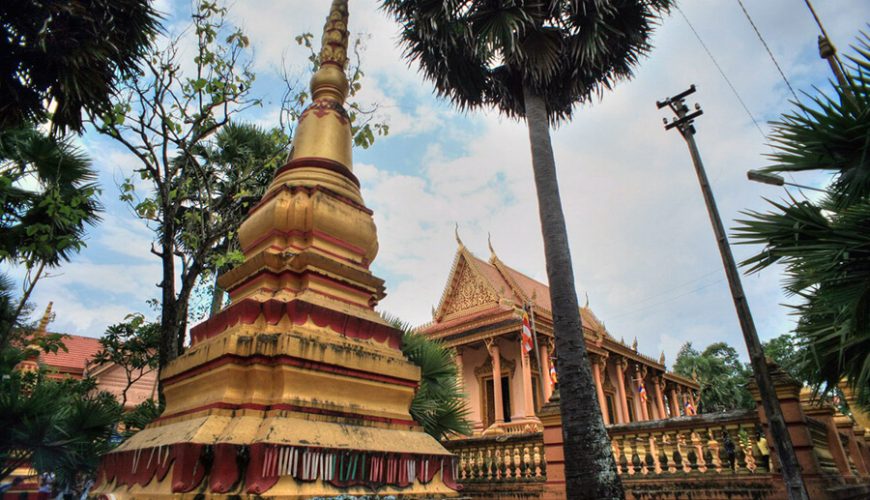
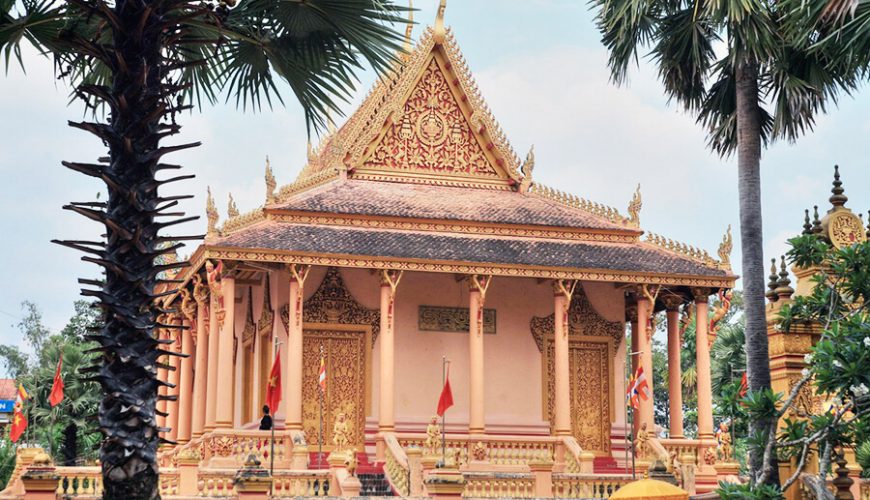
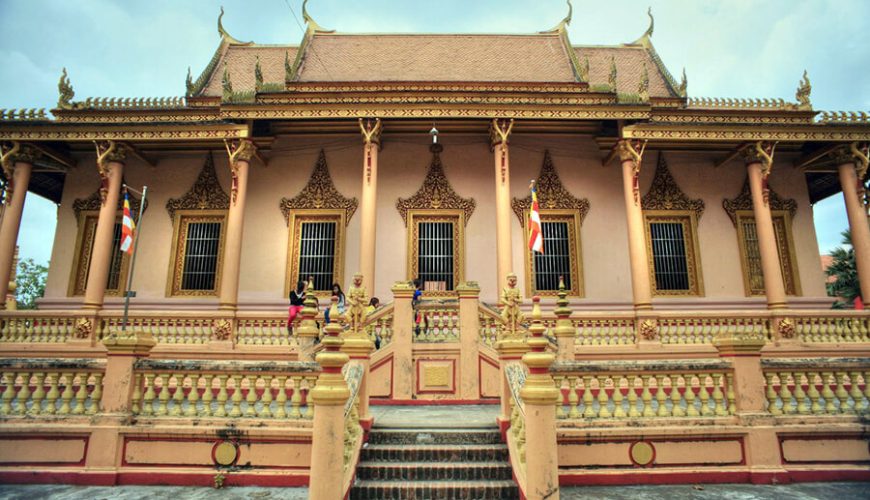
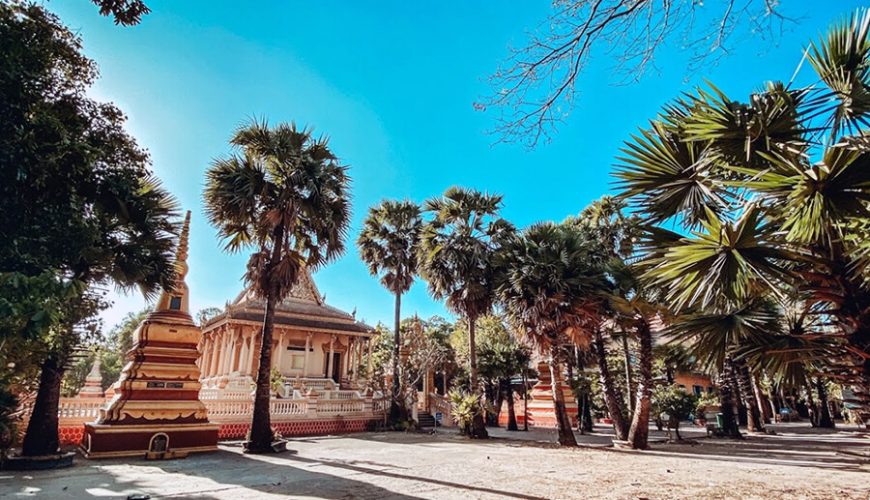
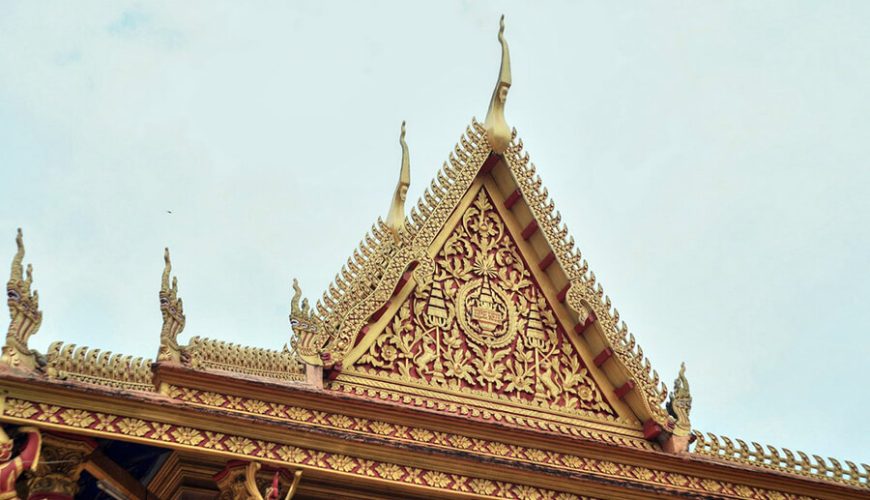
Kh’leang Pagoda is an ancient Khmer pagoda in the Mekong Delta. The space here is very ancient, tinged with time. The pagoda is also a place for cultural and religious activities of many local people. Therefore, this will be one of the destinations you should not miss when traveling to Can Tho.
General information about Kh’Leang Pagoda
Kh’Leang Pagoda is located on Ton Duc Thang Street, Group 5, Soc Trang Ward. According to documents still stored at the pagoda, in the early 16th century, the King of Chenla, Ang Chan, organized a trip through this remote territory. The king was a devout Buddhist, so when he came to this land and saw no pagoda. Then he had ordered the construction of a pagoda here.
As a result, in 1532, local people contributed to building a Buddhist pagoda, and named it Khléang Pagoda (the name of this land at that time). There is no trace of the first pagoda remaining today. The main hall and sala (Buddhist meeting place) were built of brick and tile in the 19th century.
On April 27, 1990, the Ministry of Culture and Information recognized Kh’Leang Pagoda as a National Artistic Architectural Monument.
Classical architecture of the pagoda
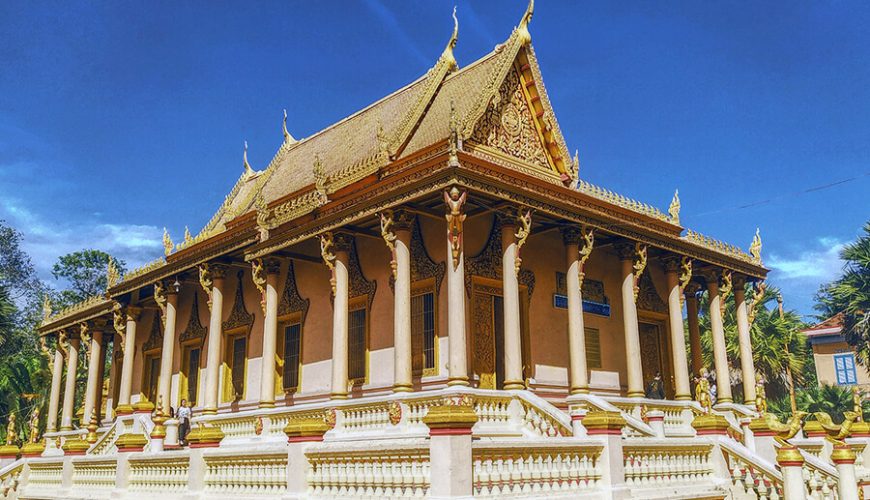
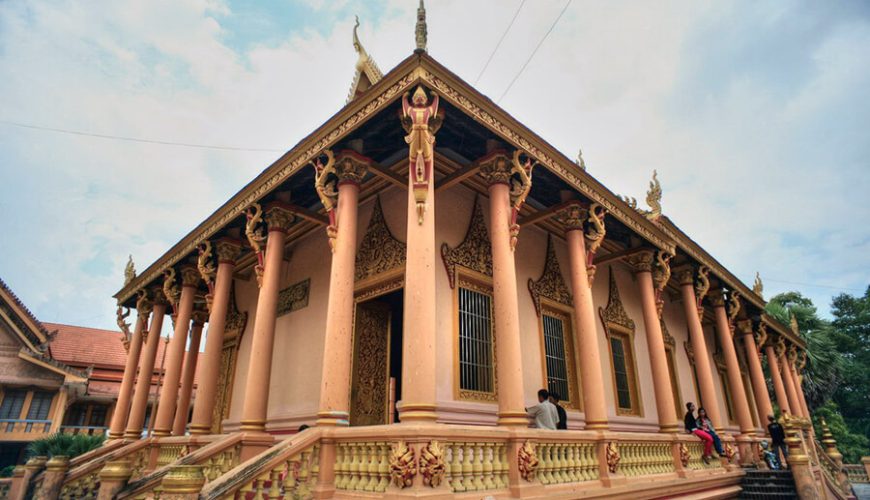
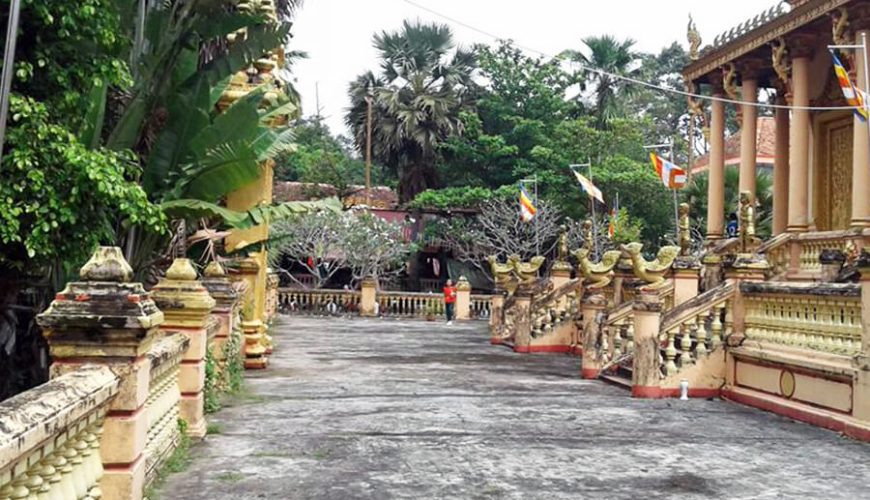
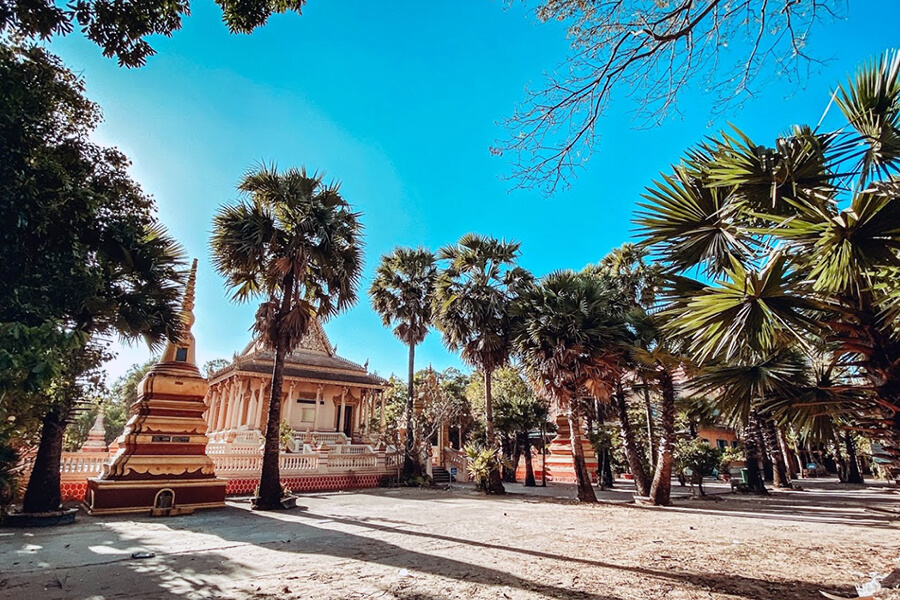
The current pagoda architecture, including the main hall and Sala, was built in 1918. The pagoda has an architecture similar to that of Theravada Buddhist pagodas in Thailand and Cambodia, and is decorated with intricate patterns, motifs, and brilliant colors. The pagoda grounds are surrounded by a fence and have many palm trees.
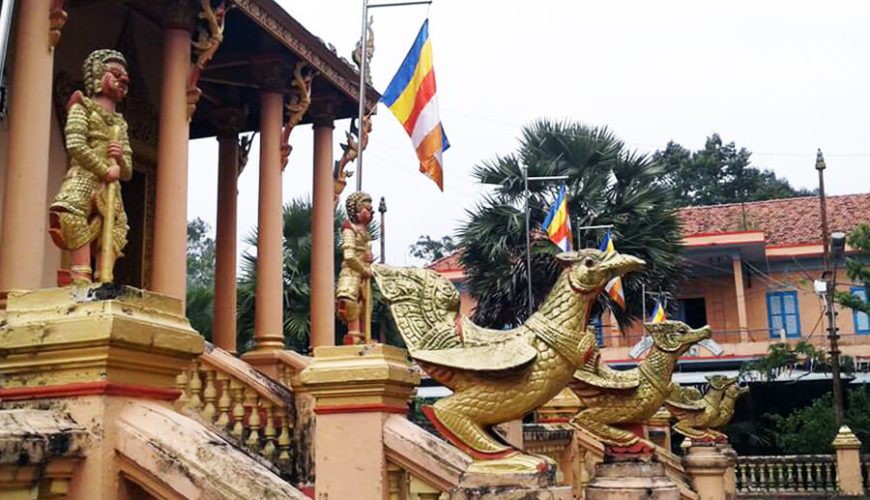
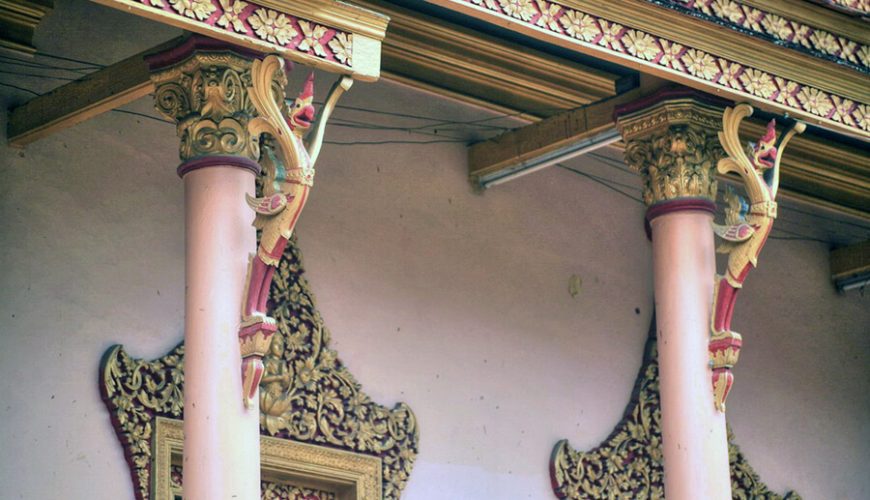
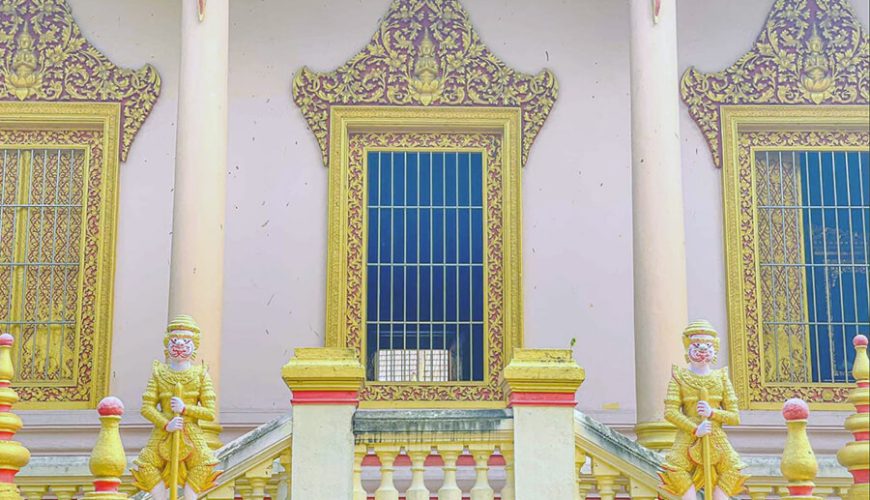
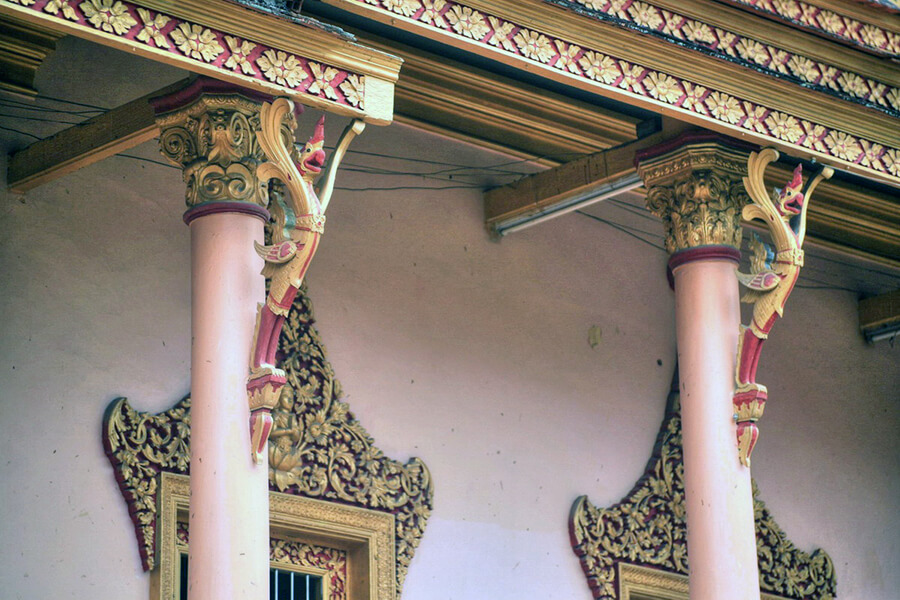
The main gate faces East and is decorated with elaborate patterns and vibrant colors. On the front of each column is a statue of a Ken naarr dancer with her arms supporting the roof, and on the roof are three small towers.
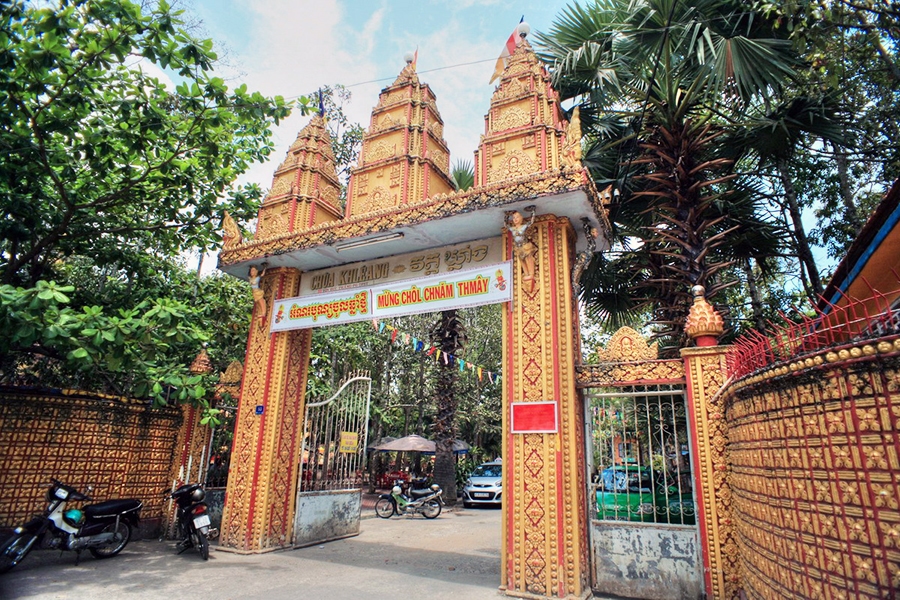
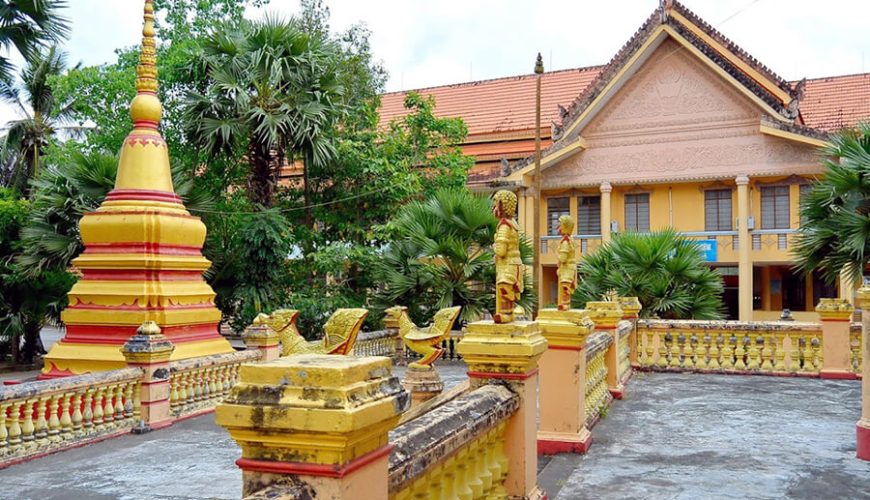
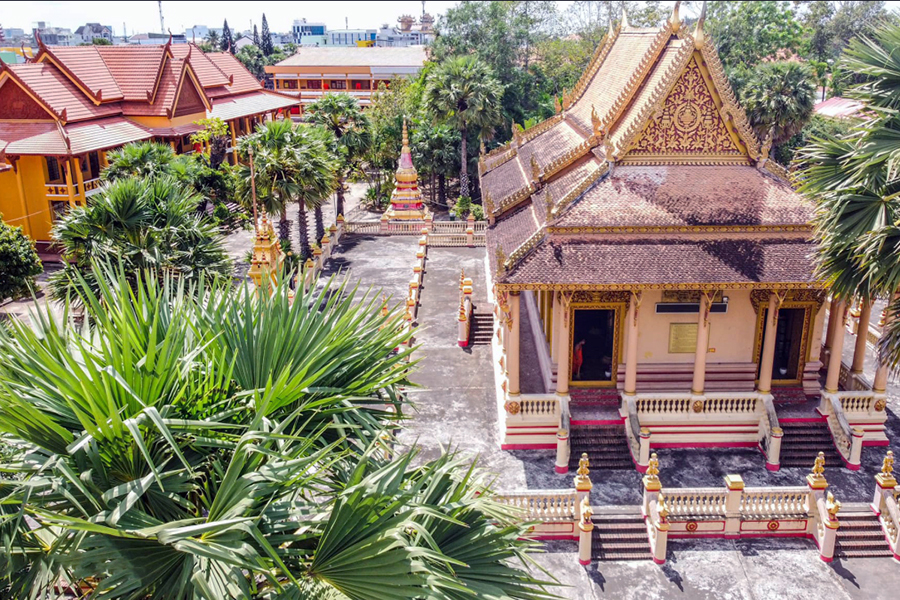
The architectural complex of Khleang Pagoda includes the main hall, sala, monk’s house, and ash storage towers, arranged harmoniously on high ground. Most of these works at Kh’leang Pagoda are built in the traditional stilt-house style of the ancient Khmer people in the Mekong Delta; each work was sculpted and carved with intricate patterns and exquisite details.
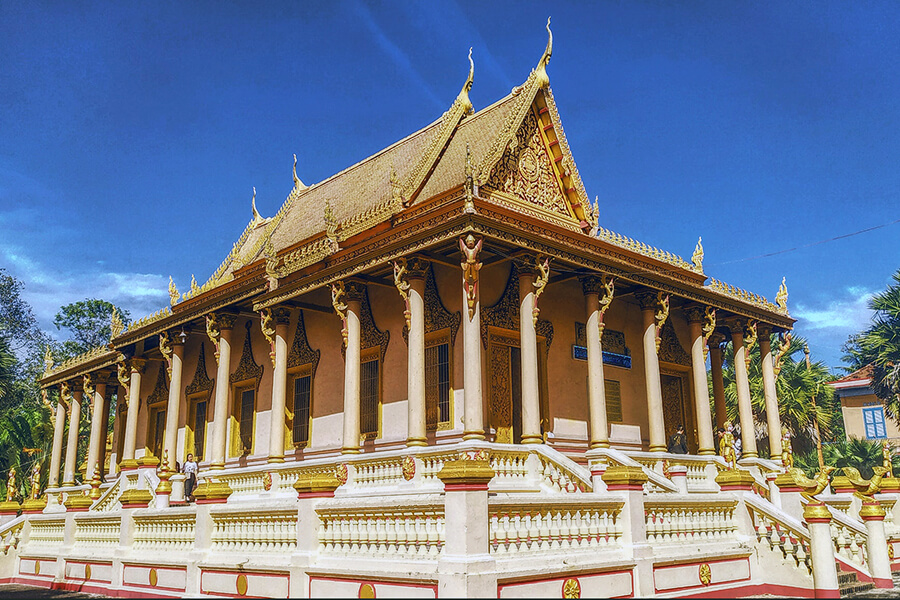
The main hall, with a total area of about 200 m², is located in the center and is divided into three levels, each about 1 m high, and is surrounded by a fence.
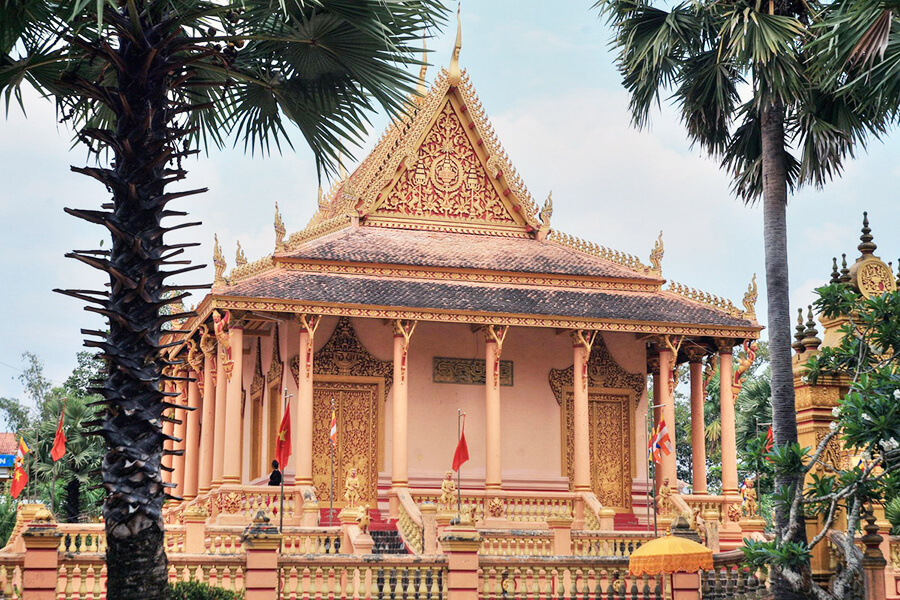
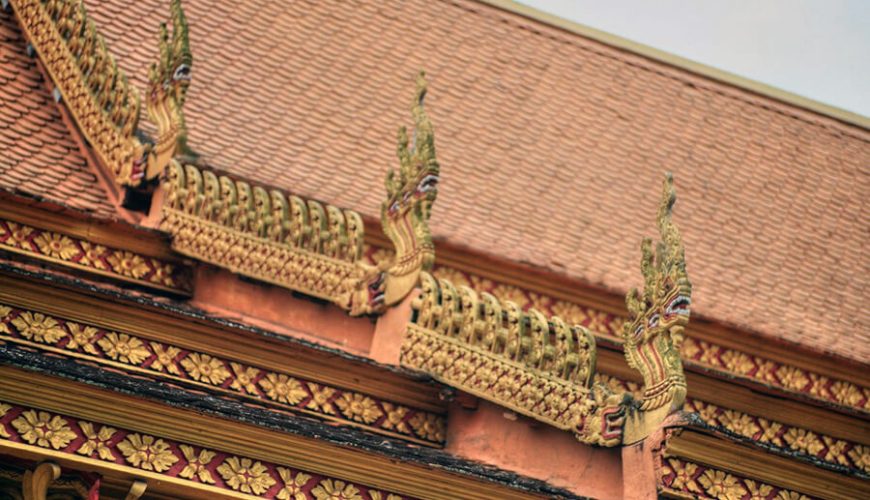
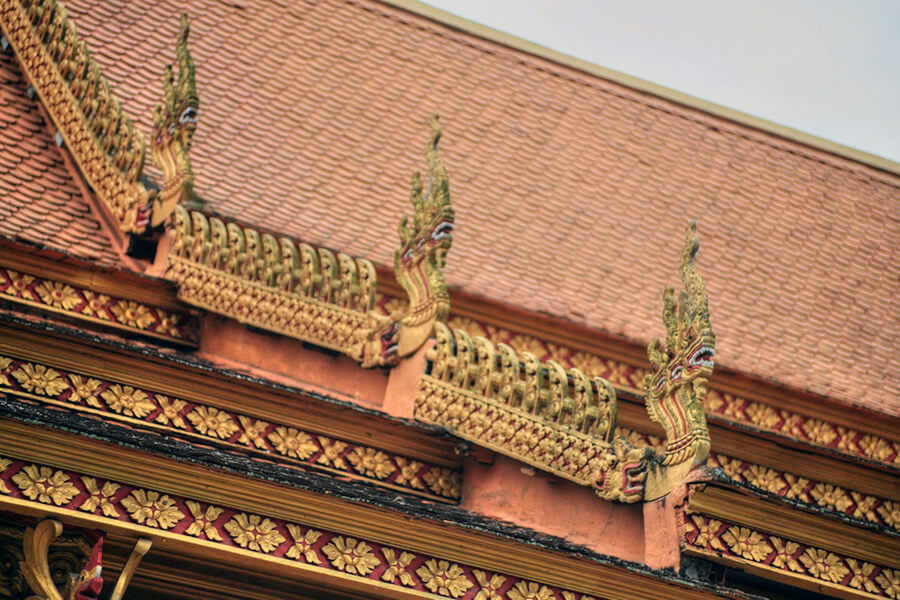
The main hall’s roof is also built in a three-level format, with 3 folds per level. The edge of the roof has a dragon statue with a curving body, head spreading out into a fan shape, tail curved up, and interacting with other dragon tails.
On the tops of the columns in the corridor surrounding the main hall, there are statues of Krud extending his arms to support.
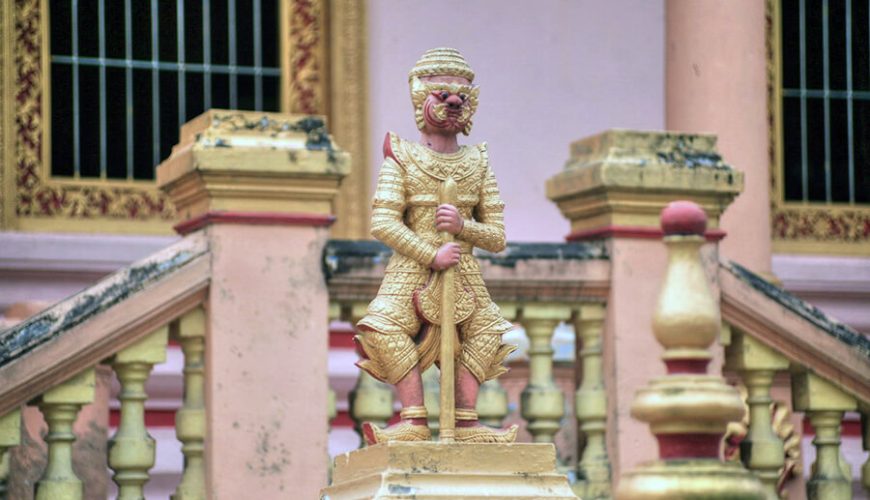
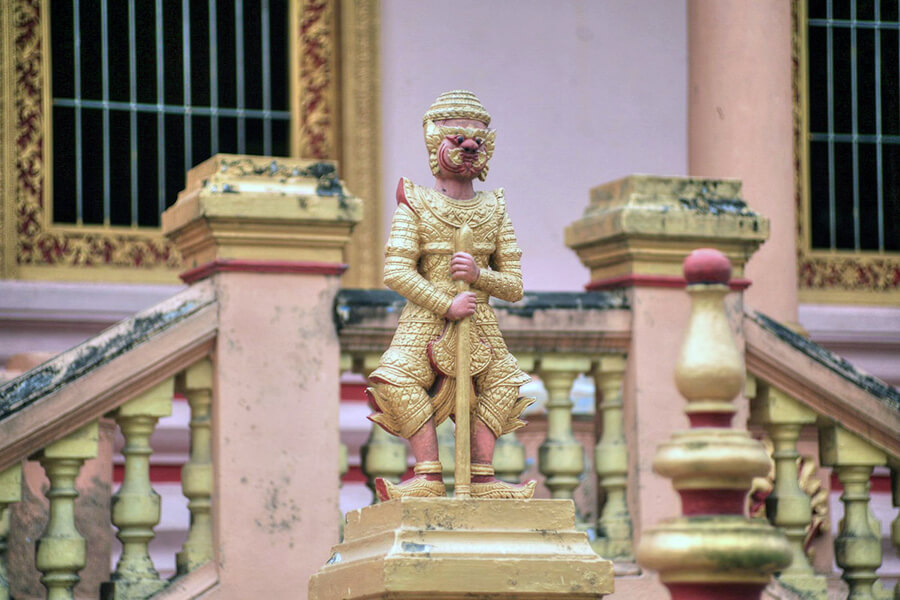
In addition, around the main hall, there are decorated statues of the gods Teahu and Yeak.
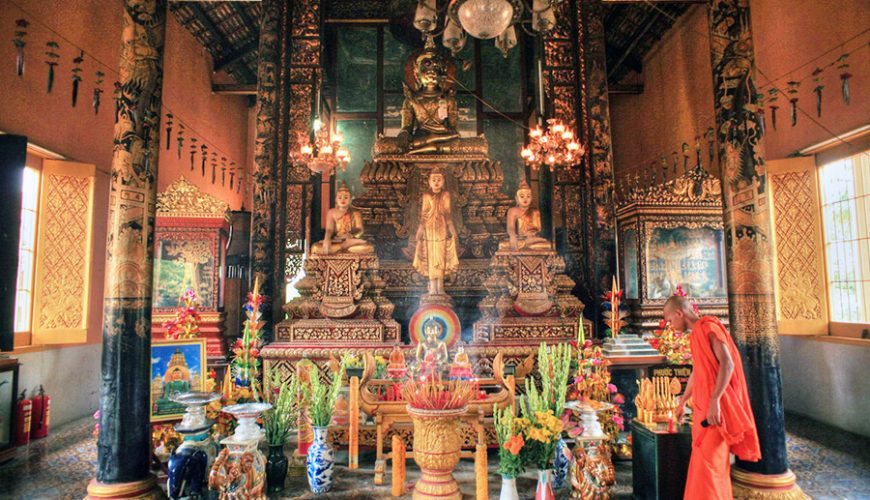
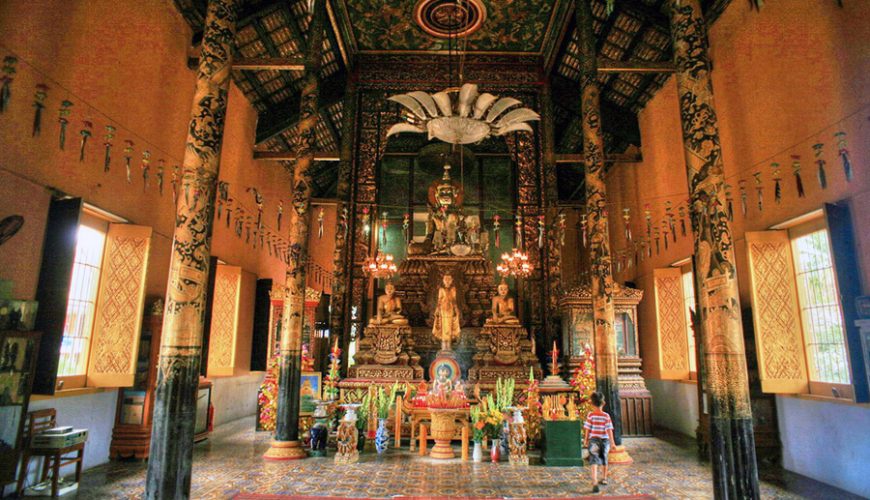
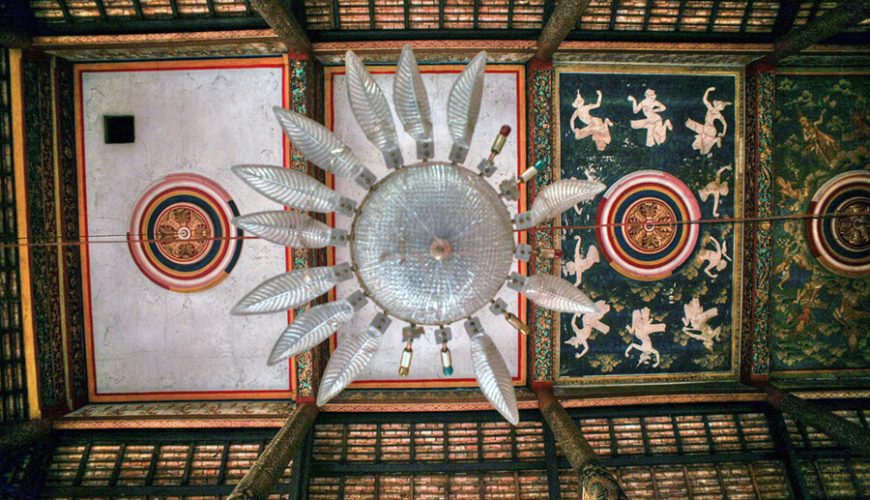
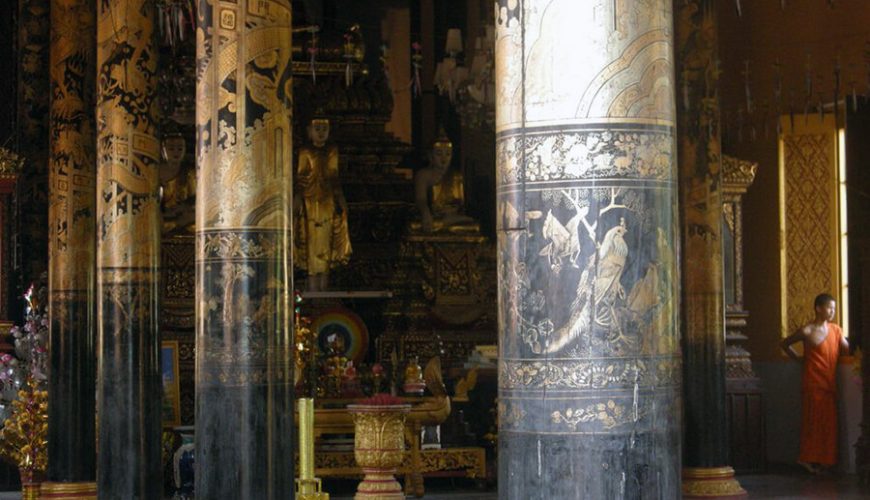
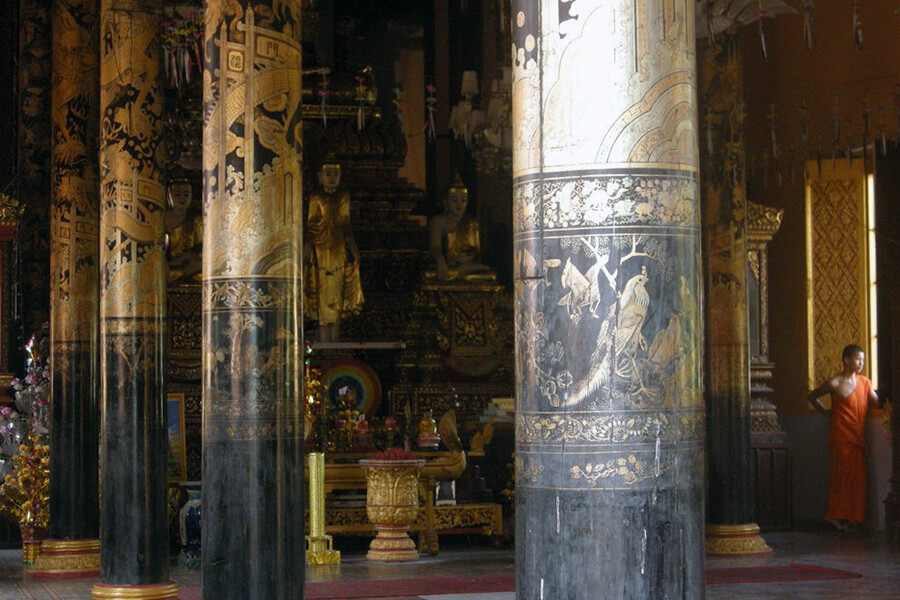
Inside the main hall, the roof frame is supported by 12 large pillars (circumference of 1.10 m), built in the Greek Corinthien style, covered with glossy black paint and painted with dragons; gorgeous yellow curvy fish shape.
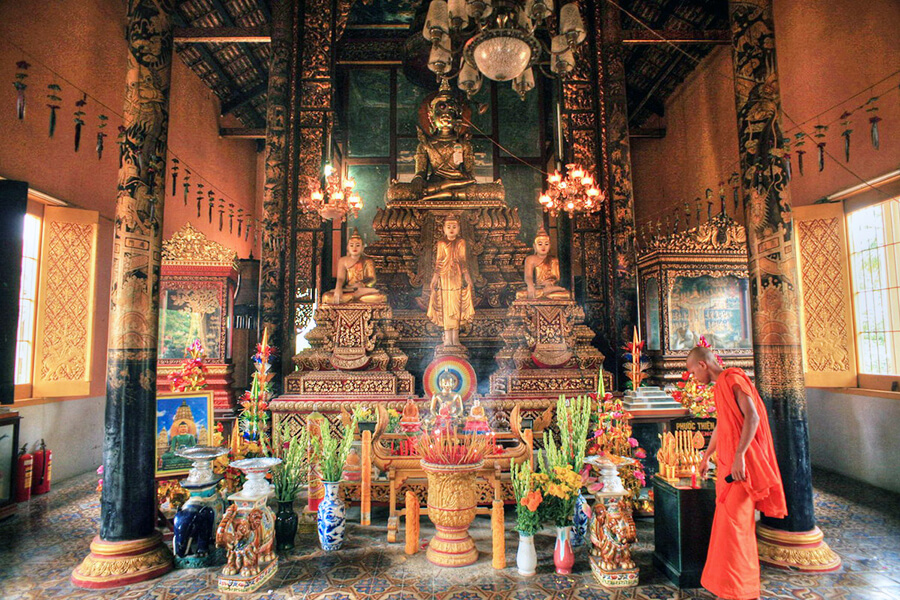
The main hall has a 6.8 m high statue of Shakyamuni Buddha, the 2.7 m high body of the statue was cast in 1916, and on the wall is a fresco depicting the Buddha’s life from birth to enlightenment.
The doors of the main hall are made of wood, engraved with a battle scene between a fairy and a Yeak, set in a frame decorated with intricate patterns.
Useful information about Kh’Leang Pagoda in Can Tho
- Best for: solo, student, pilgrims, family
- Entrance: Free
- Tourist spots nearby: Four Faces pagoda; Bat Pagoda; Chen Kieu Pagoda; Tan Long Stork Garden, Ong Bon temple, La Han Pagoda…
- Many traditional rituals: Chol Chnam Thmay (New Year Ceremony), Sene Dol Ta (Grandparent Worship Ceremony), Ok Om Bok (Moon Worship Ceremony).
Source: collected by An
Follow us for the best deals on Vietnam package tours and visa advice!
Comment (0)