
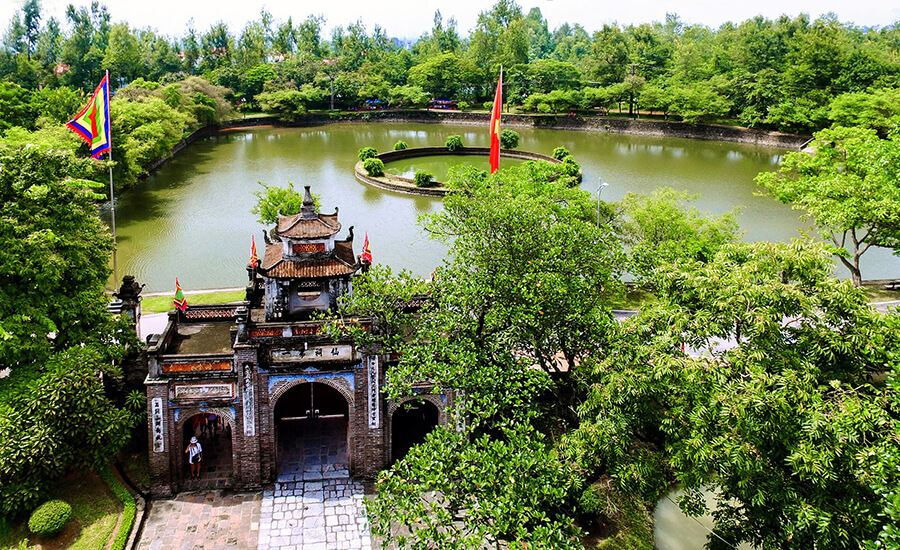
Co Loa Citadel is not only a cultural heritage site but also a testament to the creativity, technical skill, and culture of the ancient Vietnamese people. Currently, this place has long been a tourist destination imbued with historical significance and associated with many legends of Vietnam.
General information about Co Loa Citadel
Co Loa Citadel (Vietnamese: Thành Cổ Loa, literally “ancient spiral”), also known as Loa Citadel, is an ancient citadel associated with the legend of An Duong Vuong building it and the story of My Chau – Trong Thuy. This citadel, built in the 3rd century BC, was the capital of the Au Lac country.
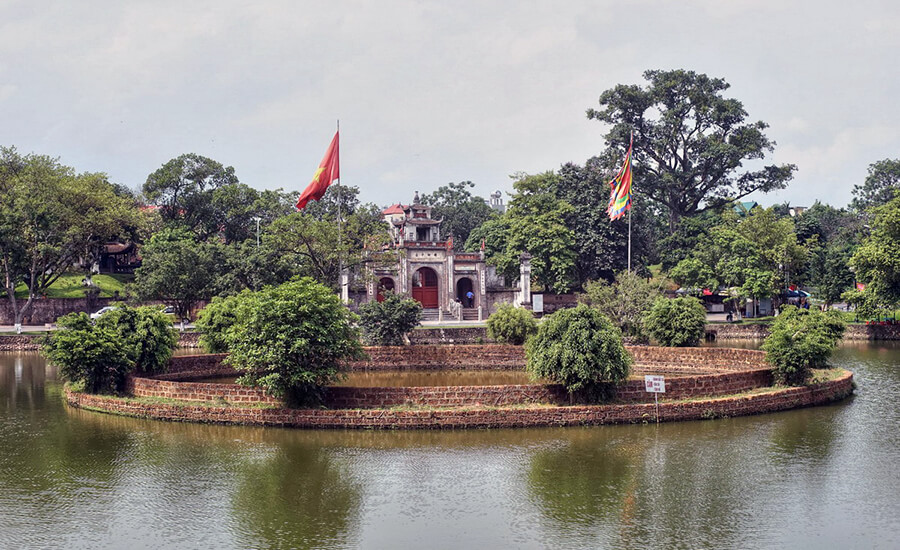
Archaeologists have identified this as the oldest, largest citadel, and the place with the most distinctive structure in the history of citadel construction by the Ancient Vietnamese people. Co Loa Citadel is associated with the legend of “The Magic Crossbow” when King An Duong Vuong built the citadel (III century BC).
In the relic area, there are currently about 60 ancient relics, of which 7 are nationally ranked. Besides, the area is also preserving a system of intangible cultural heritage, including unique folk customs, festivals, traditional craft villages, and typical culinary culture.
Address: Co Loa commune, Dong Anh Commune, Hanoi capital
Opening hours: 6:30 – 18:00 daily
Reference price: 10,000 VND/person
Architecture of Co Loa Citadel
The architecture of Co Loa Citadel has an extremely characteristic “spiral shape”; the name Loa Citadel also derives from this shape. According to records, the citadel has 9 spiral circles, resembling a snail, reflecting its multi-layered structure with concentric ramparts and moats. Today, there are only 3 remaining. The citadel is divided into 3 areas: the inner, middle, and outer ramparts, with many distinctive architectural features.
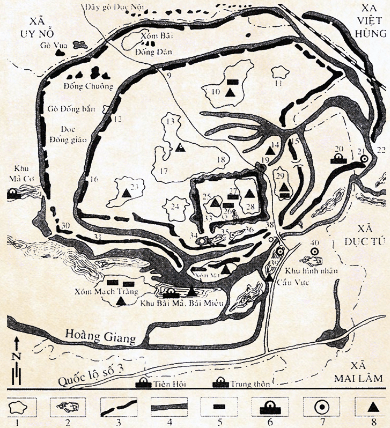
The outer rampart was a naturally closed polygon made by excavating and connecting a system of pre-existing mounds, piles, and high promontories. This rampart is about 8,000m long, about 3-4m high, about 6m wide on the surface, and about 12-20m wide at the base.
The middle rampart was also a natural closed polygon and was made similarly to the outer. This rampart is about 6,500m long and about 5m high.
The inner rampart, the innermost citadel, is rectangular, with a circumference of about 1,850m, about 5m high, about 6-12m wide on the surface, and 20-30m wide at the base. It was the residence of the King, mandarins, and their family members. Today, the inner citadel is used as a place to worship An Duong Vuong and Princess My Chau. Many architectural works belonging to the relics are also gathered in this citadel.
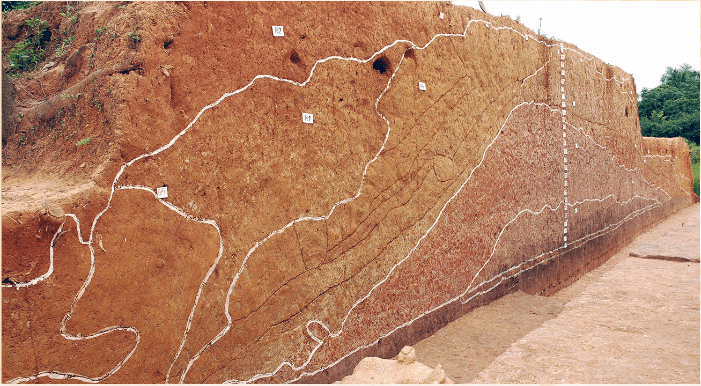
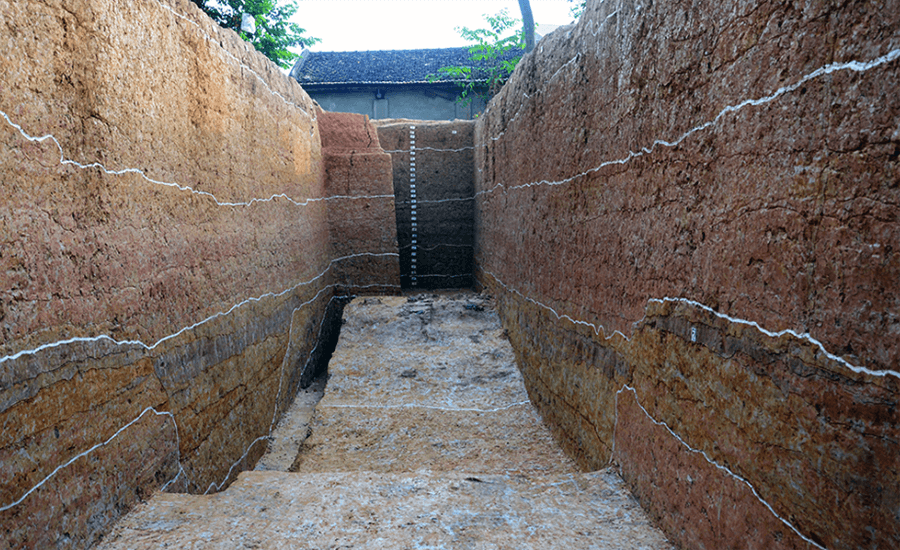
In addition to the earthen ramparts, there are defensive emplacements. Outside the city rings, there were moats connecting to the Hoang Giang River, facilitating movement and trade between areas within the rampart and farther to the Red River. The results of digging and cutting the trench in the middle rampart area show that the trench is 6.5m from the rampart, the trench surface is 10m wide, the trench bottom is 1.0m wide and 4.5m deep.
Outstanding tourist spots in Co Loa Citadel
As one of the ancient citadels with the most unique scale and architecture in Vietnam, the Co Loa relic site has many attractive attractions waiting for you to explore.
An Duong Vuong Temple
An Duong Vuong Temple, also known as Thuong Temple, is located on the mound, where legend says that there was a palace of King Thuc Phan (reign 257–179 BC), surrounded by two forests, and two round holes below. Right in front of Thuong Temple is a large lake, inside there is Jade well – The place where Trong Thuy committed suicide in the legendary story.
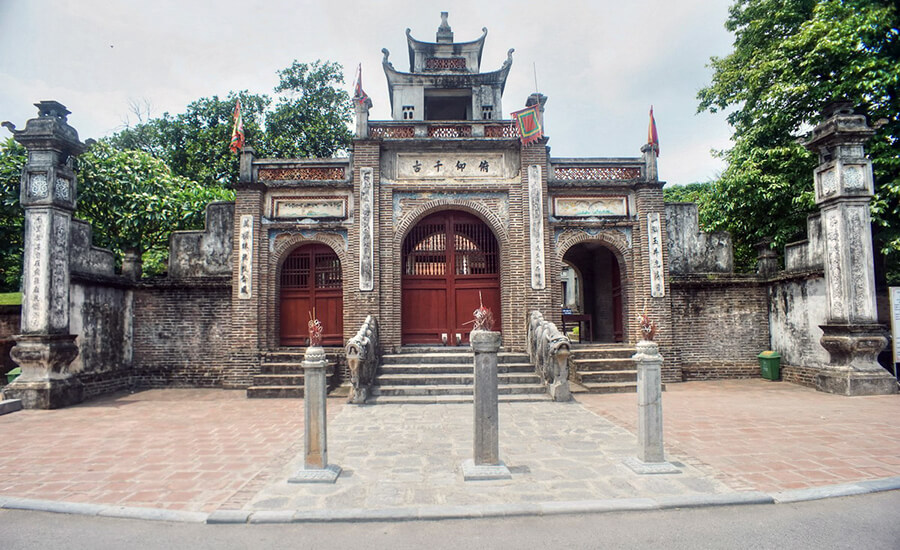
The temple still retains a number of relics such as a bronze statue of An Duong Vuong, horse statues, items made of bronze, porcelain, wood, and fabric… In front of the gate are two stone dragons with curving bodies. The beard is carved with extreme delicacy, bearing the architectural style of the Le Dynasty.
My Chau Shrine
Located right behind a thousand-year-old banyan tree that shades a large yard, the tree splits into an archway leading to My Chau Shrine, also known as My Chau Temple or Ba Chua Temple. The shrine area is an architectural structure consisting of 2 main parts. The forecourt is a house built of wood with 3 compartments, and the roof is covered.
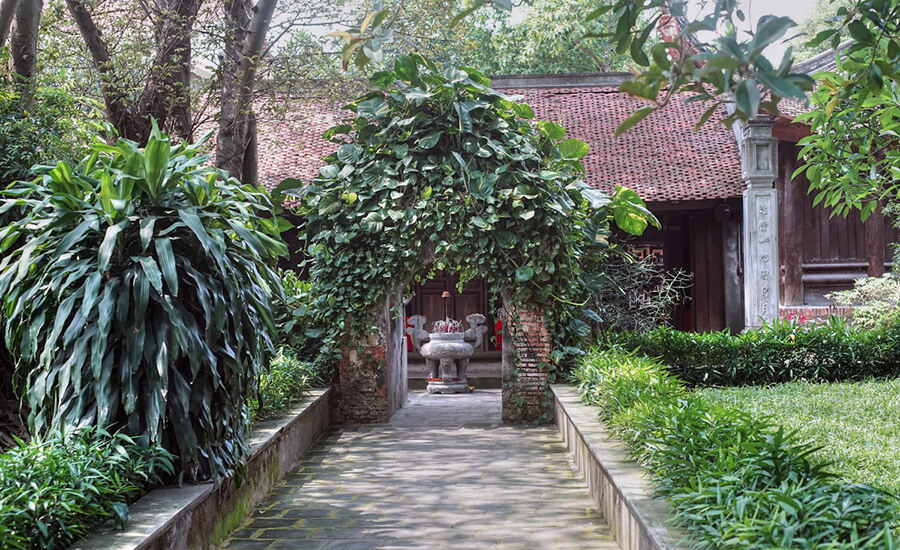
Inside, there are many parallel sentences and tureens on explain about My Chau’s life. The sanctuary is where the altar to worship My Chau is placed. There is a statue called My Chau statue here – a natural rock shaped like a headless person, so the villagers call it My Chau’s tomb.
Cao Lo Temple
Cao Lo Temple is also a place that many people visit when visiting Co Loa Citadel. Cao Lo was a talented general under King Thuc Phan, the creator of the Lien Chau crossbow, which could fire multiple arrows at once and helped the king build the citadel.
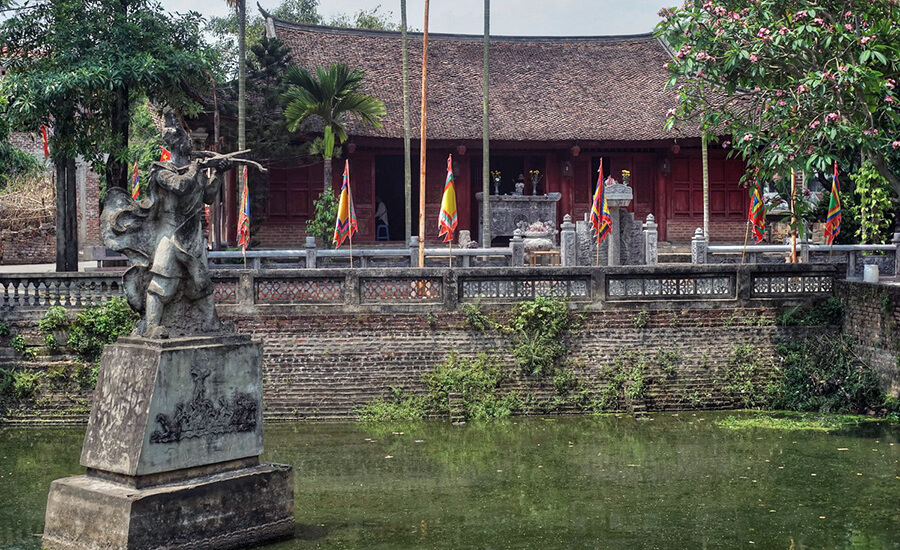
To commemorate his gratitude, people cast statues and built temples. Cao Lo Temple is small in scale. In the middle of the pond in front of the temple is a statue of Cao Lo holding a crossbow. In the temple, there are still many bronze arrows that archaeologists have unearthed.
Jade Well
Jade Well is located in the middle of Crescent Lake (Ban Nguyet Lake) and right at the door of King An Duong Vuong’s temple. According to ancient legend, this is the place where Trong Thuy once threw himself down in regret and grief for My Chau.
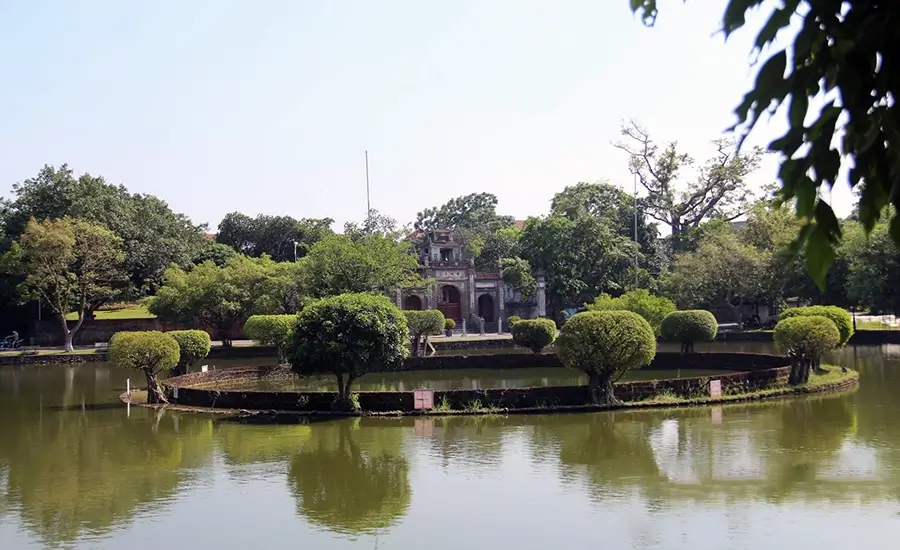
The water in Jade Well, viewed from a distance, will appear slightly red, standing out against the clear blue lake water and cool trees.
Co Loa Communal House
Co Loa Communal House, also called Ngu Trieu Di Quy, is located on the site of the old imperial palace, which was relocated from elsewhere and rebuilt at the end of the 18th century. The communal house has the most solid and majestic architecture in Co Loa citadel.
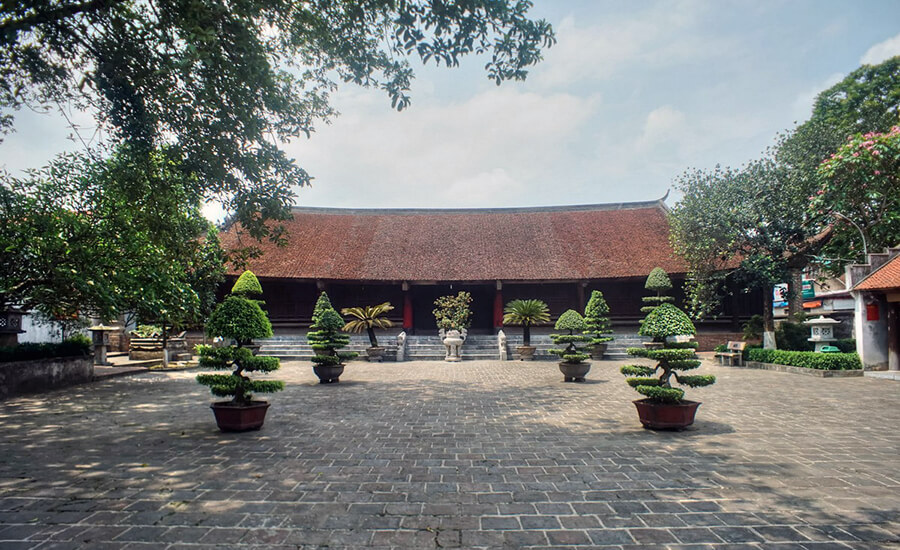
Currently, the communal house is also the place to worship An Duong Vuong wearing the royal robe, below is worshiping General Cao Lo, the person who invented the “Magic Crossbow”.
Area displaying archaeological artifacts in Co Loa
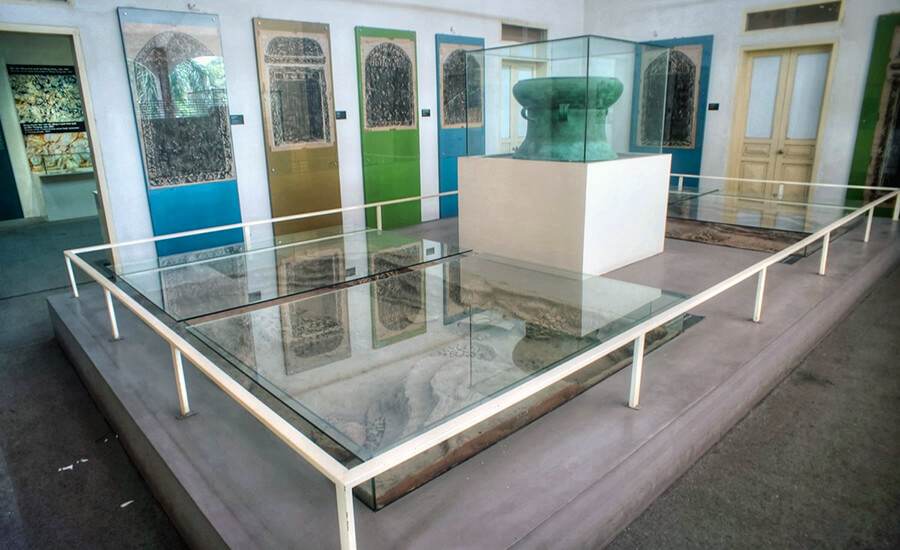
The gallery is a place to exhibit ancient artifacts excavated within the Co Loa relic grounds. Here, visitors will be able to see firsthand the map of Co Loa Citadel with 9 rampart rings, and many precious artifacts dating back thousands of years, such as: Co Loa bronze arrows, Co Loa crossbow bolts, Lien Chau magic crossbows, Co Loa bronze drums, spear blades, bronze axes, bronze plowshare collection, mold collection, and Co Loa casting.
Enjoy specialties at Co Loa
When coming to Co Loa citadel, you should not miss the opportunity to enjoy Mach Trang rice vermicelli – a familiar folk dish of Co Loa people. Compared to the rice vermicelli of many other countryside, Mach Trang rice vermicelli are not as white and eye-catching as the others, but are typically ivory.
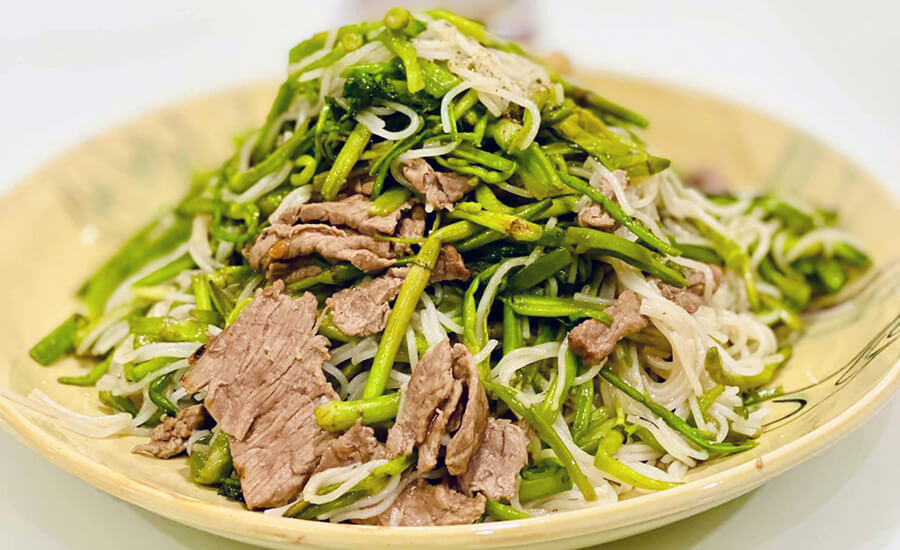
Mach Trang vermicelli products can be eaten directly with many other foods to create dishes such as fish sauce vermicelli, kebabs, and tofu, and can also be used to stir-fry with celery. Stir-fried vermicelli with celery has long become a traditional dish of Co Loa.
Explore the Co Loa festival
Co Loa Festival is solemnly held every year, from January 5th and 6th January (Lunar Calendar) to honor and commemorate the merits of King An Duong Vuong, who founded the state of Au Lac and built the capital Co Loa. The festival atmosphere is solemn and respectful, with many traditional rituals such as offerings to the king, offerings to the An Duong Vuong temple, a palanquin procession around the semicircular lake through the Co Loa communal house, and the My Chau shrine.
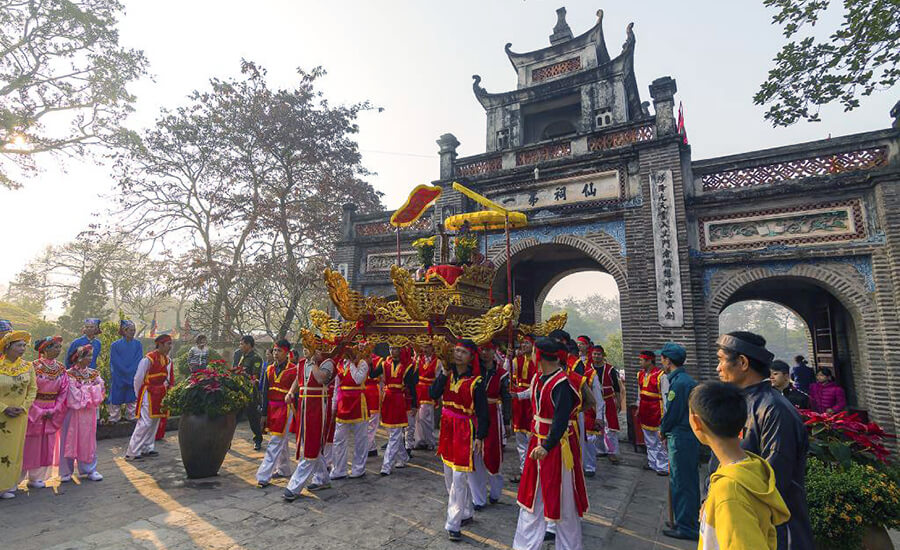
In addition, the festival features many exciting activities, with the participation and response of a large number of people and tourists, such as classical Vietnamese opera performances, water puppetry, and other traditional games: crossbow shooting, human chess, wrestling, cockfighting, and clay pot smashing…
Source: collected by An
Follow us for the best deals on Vietnam package tours and visa services!
Comment (0)