
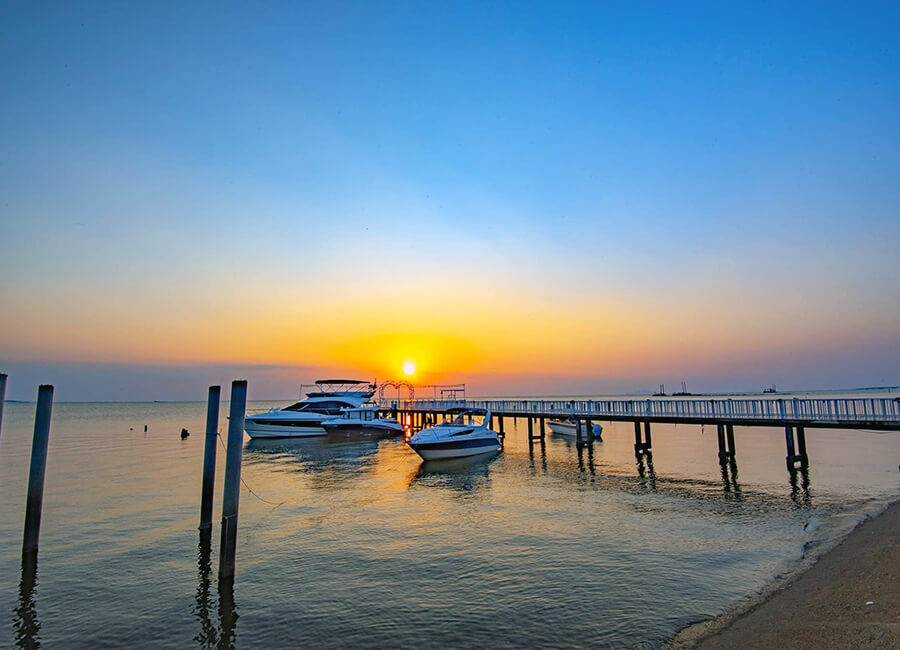
Explore Kien Giang (currently merged into An Giang Province) is a journey of discovery that many tourists love. The province not only has beautiful natural landscapes and a rich, diverse cuisine, but also unique cultural festivals and entertainment activities.
Overview of Kien Giang
Kien Giang, part of the Mekong Delta, was the largest province in the Southwest region and the second-largest in the South. It borders Kampot province of Cambodia to the north, with a 56 km long border; borders Ca Mau to the south, the Gulf of Thailand to the west, with a 200 km long coastline; and borders An Giang, Hau Giang, Bac Lieu and Can Tho city to the east and southeast.
Kien Giang has all types of terrain, from plains and mountains to forests and islands. In which, the mainland terrain is quite flat.
What’s the best time to visit Kien Giang?
A great feature of this province is that you can travel here at any time of the year. Moreover, with two distinct rainy and sunny seasons, it is rarely affected by storms. Good timing will help you fully enjoy the beauty of this place. Depending on your preferences, you can choose the right time.
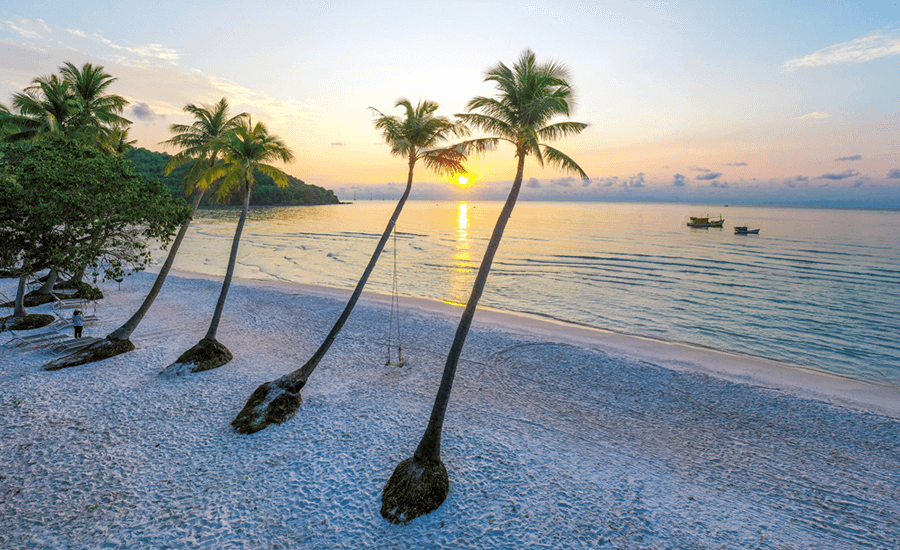
According to experience, the time from November to April is ideal. This is the dry season with cool weather and warm sunshine. There is little rain during this season, which is very favorable for outdoor activities.
How to get here?
By road
Road is the main form of transportation to Kien Giang. From Ho Chi Minh City, visitors often depart from Mien Tay (Western Bus) bus station. One-way fares range from 200,000 VND to 350,000 VND depending on the bus company, vehicle quality, and destination. Recommended bus companies: Kumho Samco, Phuong Trang (Futa), Thien Thanh limousine, Hue Nghia, Tuan Nga, Tu Tien, Hien Van, Hoang Minh…
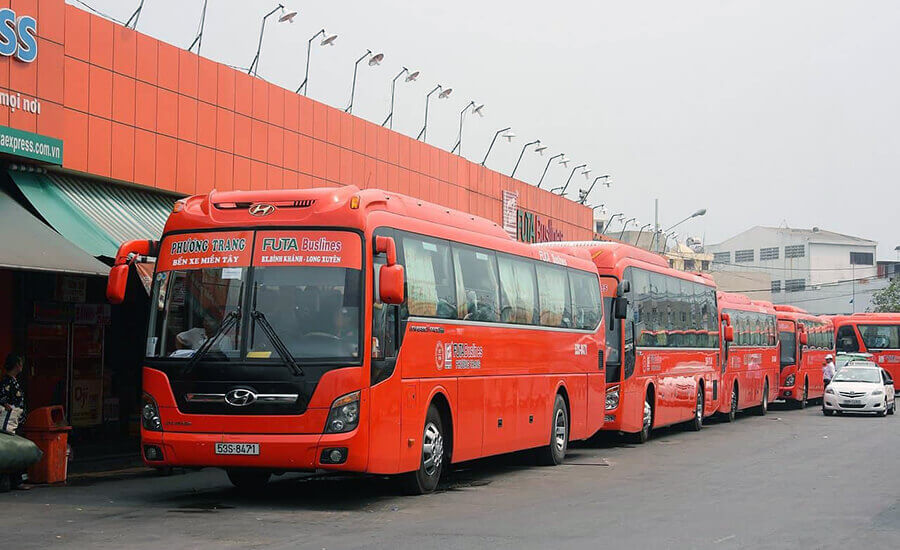
Travel time to Rach Gia or Ha Tien ranges from 4.5 to 6.5 hours. Usually, visitors will choose night buses to save time.
By air
Kien Giang has Phu Quoc International Airport, which receives all types of aircraft. There are dozens of flights to and from Phu Quoc Airport every day. Domestic round-trip airfare to Phu Quoc ranges from 2 million VND to 8 million VND, depending on the time, airline and departure location.
By sea
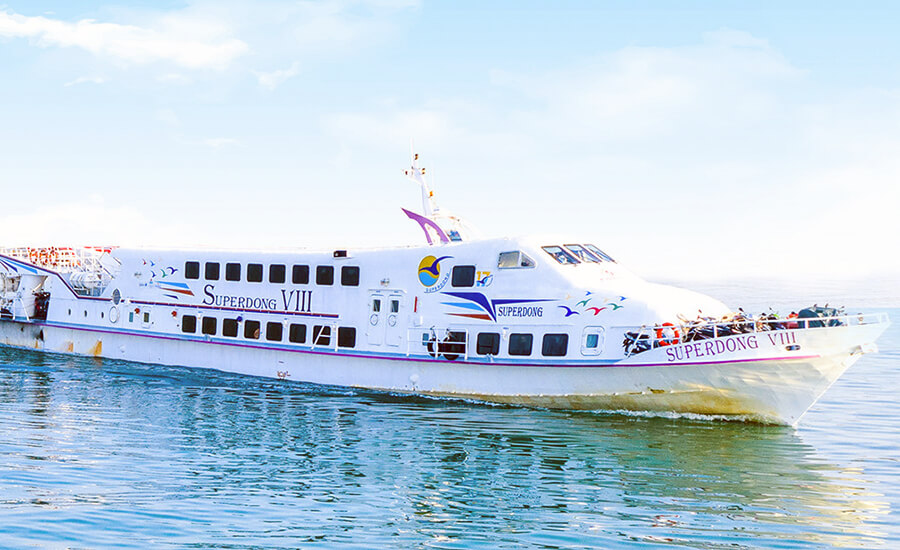
To visit islands such as Phu Quoc and Nam Du, visitors can take a speedboat from Rach Gia or Ha Tien. Reputable shipping companies include Superdong and Phu Quoc Express, with ticket prices ranging from 100,000 to 400,000 VND.
Accommodation in Kien Giang
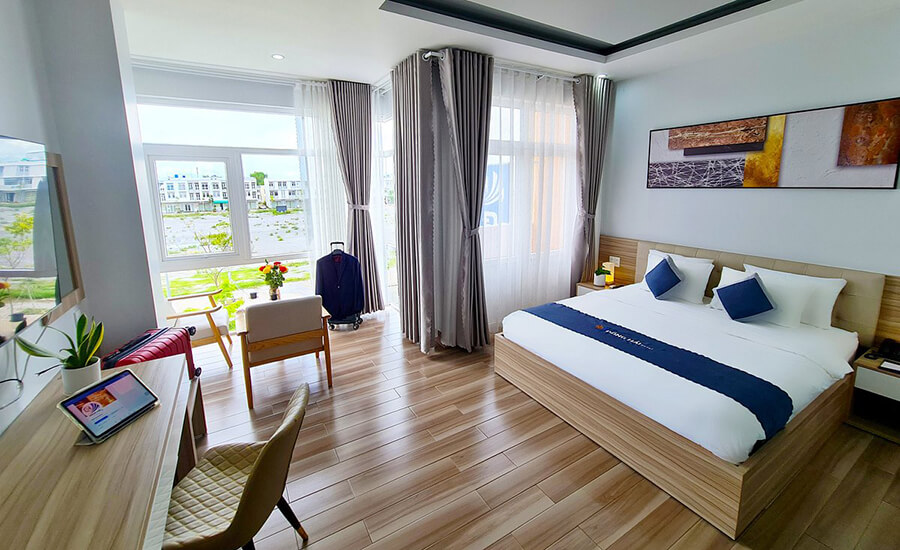
Hotels and resorts in Kien Giang are concentrated in major cities such as Ha Tien, Rach Gia and Phu Quoc. There are many different types of accommodation. High-end hotels with room rates ranging from 1-1.2 million VND per night; 2-3 star hotels with room rates from 400,000 VND to 700,000 VND and budget accommodation costs less than 300,000 VND.
Tourist attractions in Kien Giang
Rach Gia
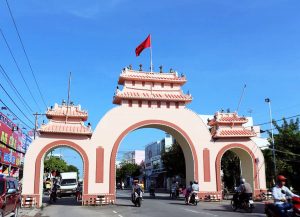 Rach Gia is the administrative center of oldKien Giang province. One of Rach Gia’s highlights is its modern reclaimed land urban area with wide roads, lush green coastal parks, and stunning sunset views. Visitors can stroll along the beach, enjoy the cool breeze from the West Sea, and observe the peaceful pace of local life. This area is also an ideal spot for taking photos and relaxing with family and friends.
The bustling coastal area has a beautiful natural landscape and many valuable cultural and historical relics, as well as unique architectural works that harmoniously combine the three ethnic groups of Kinh, Chinese, and Khmer.
Some impressive Rach Gia tourist attractions include Rach Gia pier, Nguyen Trung Truc Temple, Tam Bao Pagoda, Tam Quan gate, An Hoa cultural park, and Rach Gia market.
Phu Quoc Island
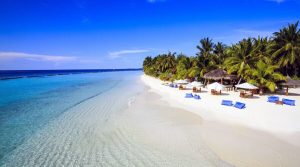 Referring to Kien Giang, people immediately think of Phu Quoc. This is the largest island in Vietnam, famous for its beautiful beaches, primeval forests, and precious historical relics. Phu Quoc is blessed with a harmonious landscape, a pleasant year-round climate, and fresh seafood. Therefore, it not only attracts a large number of domestic tourists but also foreigners.
Phu Quoc has many beautiful beaches stretching from north to south, such as Bai Truong, Bai Sao, Bai Khem, Bai Dai… In the North, you can visit Mong Tay islet, Doi Moi island, Ban island, Thay Boi island … In the South, there are 12 islands in the An Thoi archipelago… There are many interesting activities for Phu Quoc tourists, such as fishing and diving to see coral… Phu Quoc not only has the sea but is also a place to learn about historical and cultural relics, customs, and islanders’ habits, as well as traditional craft villages, or to explore the joyful life in local fishing villages.
Nam Du Islands
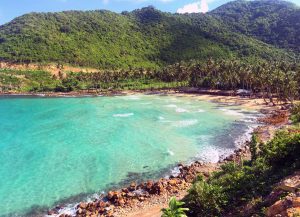 The Nam Du Islands are located southeast of Phu Quoc Island in An Giang province. Nam Du Archipelago consists of 21 islands, large and small, creating a wonderful landscape in the middle of the Gulf of Thailand. The picturesque beauty, along with the clear blue water and the peaceful, dreamy scenery, has made many people fall in love with every opportunity to travel to Kien Giang.
The first thing that travelers think about this island is immersing themselves in the crystal clear blue water. There are many beautiful and famous beaches here, such as Me beach, Dat Do beach… on Hon Lon Island, with curved coconut trees shading the white sand and clear seawater. In addition to the wonderful beauty of nature, Nam Du Island offers a variety of local products, along with very fresh and inexpensive seafood.
Coming to Nam Du, tourists enjoy the quiet space, dive and swim, learn about cage fishing at sea, and experience the life of a true fisherman in this archipelago, which offers many amazing things.
Son Island
Son Island is located between Nam Du Island and Hon Tre Island. This island is considered one of the most pristine and charming 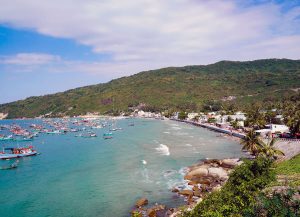 islands in the An Giang sea. Covered by immense coconut palms running along the coast with a wild look, there is no trace of development. When traveling to Son Island, you can relax at the beaches: Bang beach, Nha beach, Thien Tue beach, and Bac beach.
You can also snorkel on the coral reef between Da Bang and Doc Ba Tang. With romantic scenery, this island is ideal for those who like to get up early to watch the sunrise or admire the sunset in the late afternoon. Son island also has Than Lai Son communal house, Ba Chu temple, Cao Dai shrine, Hai Son pagoda,… all located in Bai Nha, which is quite convenient for sightseeing and taking pictures.
Ha Tien
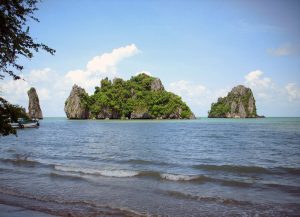 Ha Tien is located in the Northwest of An Giang province. The North borders Cambodia for 13.7 km; the East and South border Kien Luong district; the West borders the Gulf of Thailand, with a coastline of 22 km. Although Ha Tien is just a small city in Kien Giang, it is favored by nature with countless beautiful scenes.
Traveling to Ha Tien, in addition to having fun swimming in Mui Nai, you can also discover caves, erect rocky mountains, Mac Cuu mausoleum, Dong Ho lagoon, Tam Bao Pagoda, Xa Xia pagoda, and enjoy specialty dishes at the night market near Giang Thanh River.
Hai Tac Island
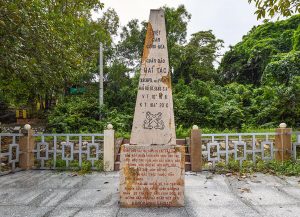
Hai Tac (Pirate) Archipelago belongs to Tien Hai Commune, An Giang Province, and is located nearly 28 km off the mainland. At the end of the 17th century and into the early 18th century, the Ha Tien archipelago was located on an important trade route for many countries. With the dangerous terrain, this area became an ideal place for pirates to hide, ambush, and attack passing merchant ships.
Although not as famous as Phu Quoc and Nam Du, Hai Tac Island is loved by tourists for its wild scenery and the chance to experience fishing village life. Hai Tac Island does not have many wide beaches, smooth white sand like Phu Quoc, but the beach here is very clean and pristine. Dua Beach on Hai Tac Island is the most famous beach, a destination loved by locals and tourists alike. You can comfortably swim, roam, or rent sea glasses to go snorkeling, catch crabs, and snails around the cliffs.
Phu Tu (Father and Child) Islet
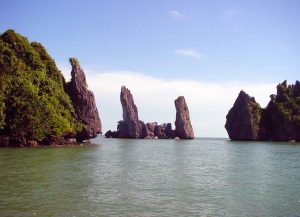 Phu Tu scenic area has poetic scenery and is an attractive destination for tourists everywhere. Located on the west coast, more than 35km from Ha Tien city and 70km from Rach Gia city, Phu Tu islet is a natural complex including caves, rocky mountains, and beaches like Ha Long Bay in South Vietnam.
Tourists visit this destination not only for its charming youthful beauty but also to give their children, or themselves, a few minutes to reflect on the noble and beautiful father-son love through the legend of Phu Tu islet. Before “crossing” to the sea to visit Phu Tu islet, a tourist destination that cannot be missed is Hang Pagoda. This particular temple is located mostly in a mountain cave, has a narrow entrance, and must be entered through a narrow opening in the cliff. When going deep inside, visitors are drawn to the jelly blocks, ribbed rock, and unique shapes…
Hang Pagoda
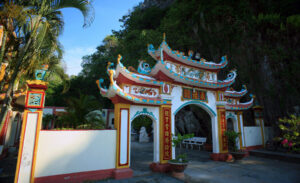 Hang Pagoda, also known as Hai Son Pagoda, is located at the foot of An Hai Son Mountain in Kien Luong Commune, An Giang Province and is an ancient and sacred pagoda. The special thing about Hang Pagoda is its unique location, deep inside a natural cave, creating a pure and mysterious space.
Entering the temple, visitors will feel peace; their souls are purified by the fresh, cool air from nature. This is a spiritual destination that attracts many visitors to burn incense, pray, and admire the mountains’ beautiful scenery.
Ba Lua archipelago
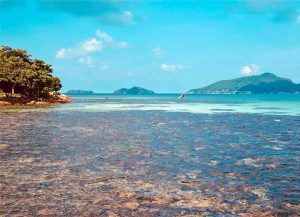
Located in the waters of Kien Giang, which is home to many beautiful and famous islands and beaches, the Ba Lua archipelago fascinates visitors with its rustic, simple, and interesting features. When traveling to Ba Lua Island, most visitors come to Lon (Large) Island, Duong Island, and Gieng Island, which together form the famous Ba Hon Dam cluster.
The sea here is shallow and gentle, so visitors can walk from one island to another when the water level is low to explore the scenery and the simple life of the fishermen. This is an interesting experience, both creating a sense of curiosity and mixing with an intriguing thrill that visitors may not have experienced in any other tourist destination. Under the immense sea, visitors can relax, have fun with friends, soak in cool water, or experience the pleasure of hunting seafood with clams, snails,… like fishermen exactly.
Tre Island
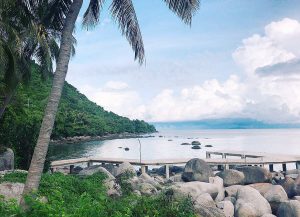 Compared to other popular islands, Tre (Bamboo) Island is somewhat less popular, but that does not mean the island is not beautiful. On the contrary, those who like to admire the beautiful, unspoiled scenery, admire many vertical rocks, extremely clear blue sea water … must come to this island at least once.
Tre island commune is the administrative center of Kien Hai and is closest to the shore among the islands of Nam Du and Son. With a relatively modest total area of less than 500 km², it possesses a variety of beauty, including forests, mountains, sea islands, … and many kinds of fresh seafood, which will keep visitors coming to the island. The coast around the island is winding, with many stretches of natural rock. In particular, the fruits grown here are much better than on the mainland.
U Minh Thuong National Park
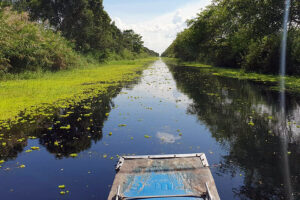 U Minh Thuong National Park is located in U Minh Thuong district, Kien Giang province, about 65km southwest of Rach Gia city. Formed and concentrated in the western part of the Ca Mau peninsula, bordered by mangrove forests along the Gulf of Thailand. U Minh Thuong is a typical type of wetland forest in South Vietnam. And even recognized on the list of the world’s unique and rare forests.
After weaving through the small canals by motorboat, visitors will have the opportunity to explore the bird sanctuary and visit Mang Doi from the high vantage point of the watchtower.
Tho Chu Island
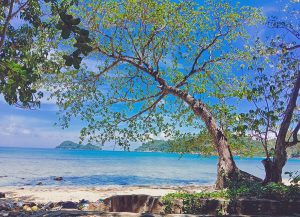 Tho Chu Archipelago is a frontier island bordering the southwest sea of the country in Phu Quoc district, Kien Giang province, where not everyone knows it. But because of little attention, this island still retains the wild features of nature. Tho Chu Island is 100km from Phu Quoc and 220km southwest of Rach Gia city, so coming to Tho Chu Island is quite difficult. Tho Chu Island plays an important role in the military and is strictly managed by the border forces; visitors must comply with the regulations.
The beautiful scenery of the Tho Chu archipelago is truly unmatched: white sandy beaches, clear blue waters, charming coconut trees, colorful coral reefs, and rich seafood… Although the journey to Tho Chu is still quite hard, the island will surely bring many surprises.
An Thoi archipelago
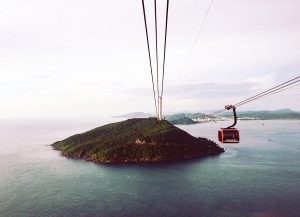 An Thoi is an archipelago south of Phu Quoc Pearl Island in the Gulf of Thailand. It is about 38 km from the central town and includes 15 islands that make up a population, of which only 3 islands are inhabited. They are Thom, Ray, and May Rut islands. However, the residents here are not too crowded either. Thanks to that, the Thoi An archipelago of Phu Quoc still retains its rare and wild beauty.
This archipelago consists of a chain of small islands lying adjacent to one another. Because there is not much human influence, it still has a very natural and beautiful landscape. With the turquoise-like blue sea, the long white sand glittering in the sunlight, creating a poetic, lyrical, and extremely peaceful scene.
Here, the green pearls of Phu Quoc, Thoi An archipelago, Phu Quoc, become an irresistible destination for tourists from near and far. Not only known as a paradise on earth. Visitors will experience many new forms of entertainment. For example, you can enjoy activities such as scuba diving, coral watching, cable car rides, and night squid fishing…
Thach Dong Thon Van
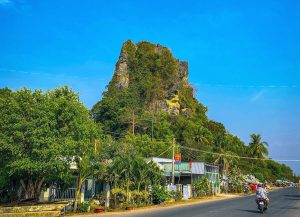 Thach Dong Thon Van, also known as Van Son, is located in Ha Tien Ward, An Giang province. It is a giant remnant of Pecmi limestone, standing tall with an altitude of about 90 meters above sea level and a foot diameter of only about 45 meters.
It is called Thach Dong Thon Van because every early morning, white clouds that fly over the top of the mountain are trapped in front of the cave and slowly fly in like a cave swallowing clouds. Located on Highway 80, about 3.5 km from Ha Tien town, on the way from Ha Tien to the Xa Xia border gate, this small mountain has the shape of a hat and is a geological heritage site. Inside the stone tower are many stalactites with fancy shapes.
Da Dung Mountain
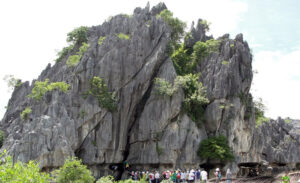 Those who have researched Ha Tien must have heard of Mount Rock, a beautiful, majestic, and magnificent symbol of Ha Tien. The rocky mountain, also known as Chau Nham mountain, is located near the Vietnam-Cambodia border. The rocky mountain is about 100m high, shaped like a trapezoid.
From a distance, Da Dung Mountain appears square, as if carved by a skillful hand, covered with immense green trees that create a giant, beautiful canopy. Inside the mountain, there are 14 small and large caves. Each cave has its own unique beauty: Doi (Bat) Cave has gourd-shaped stalactite; Than Kim Quy cave has a blue and flat rock like a magic turtle; Bong Lai (Elysium) cave conquered by the fresh air like a fanciful scene; Kho Qua (bitter melon) Cave owns stalactites in shape of giant bitter melons … all making it an attractive place for you to explore.
Mac Cuu Tomb
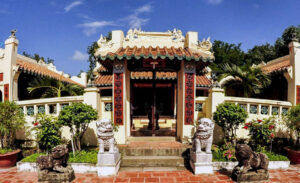 Mac Cuu Tomb is located on Binh San Mountain, the resting place of Mac Cuu and his family, who contributed to the development of ancient Ha Tien. This is an important historical site in Kien Giang province, attracting many tourists to visit and learn about the history of the land’s formation and development.
The tomb was elaborately built, including temples and mausoleums of the Mac family. Coming here, you can not only admire the ancient architecture but also deeply feel a part of the heroic history of the land of Ha Tien.
Nguyen Trung Truc Temple
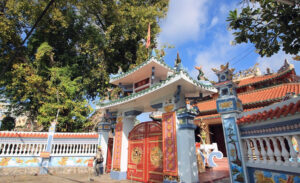 Located in the center of Rach Gia, Nguyen Trung Truc Temple is a must-see when visiting Kien Giang. This is the largest temple of the nine temples of Nguyen Trung Truc, the hero who led the resistance war against the French in the South.
Every year, in the 8th lunar month, the big festival at the temple attracts thousands of visitors from all over to attend, immerse themselves in the cultural space, and honor the national hero. The temple is open daily from 7 am to 5 pm, offering a solemn space rich in historical significance.
Kien Giang Museum
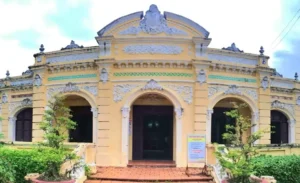 If you want to learn more about Kien Giang’s culture and history, the Kien Giang Museum in Rach Gia is an ideal stop. With ancient French architecture combined with traditional Southern features, the museum preserves many valuable artifacts and introduces the history, people, and culture of this land through 6 exhibition themes.
With only a 15,000 VND entrance fee, you can spend the whole day exploring this space and learning about the glorious past of Kien Giang. This is not only a place to preserve heritage but also a place where visitors can better understand the local cultural identity.
Kien Giang Cuisine
Herring Salad
This is a specialty of Phu Quoc, a dish that visitors should not miss when coming to this island. Herring salad is sold in all restaurants and eateries, from high-end to popular.
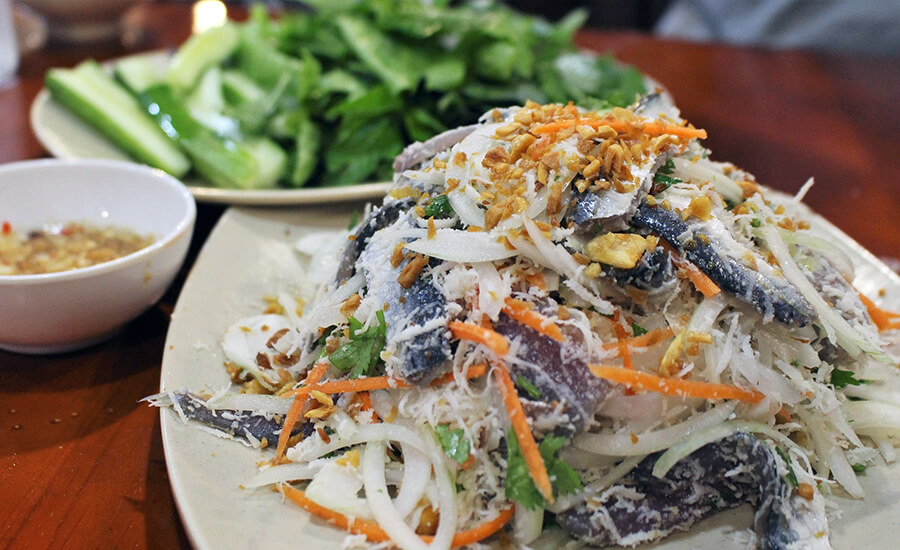
The herring is pre-processed, rolled with vegetables and rice paper, and dipped in fish sauce that has absolutely no fishy smell. The special thing about herring salad is that it is eaten with fresh melon, which makes it delicious and sweet. Visitors can also buy herring to bring back to the mainland as gifts.
Ham Ninh Crab
Crabs in Ham Ninh fishing village are famous for their freshness and sweet, firm meat. According to suggestions from travel sites, Ham Ninh crab is in the top 3 seafood dishes that tourists “cannot miss” when enjoying the cuisine of the pearl island.
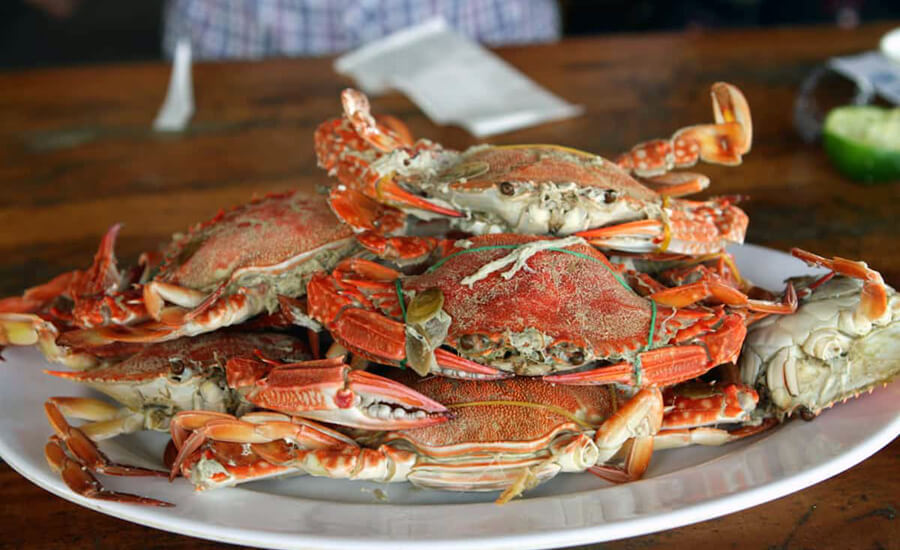
Keywords related to Ham Ninh crab often increase during the summer tourist season – when crabs are in season, and many customers look for delicious crab restaurants.
Sea Urchin
Grilled sea urchin with scallion oil or porridge is also a unique dish that many people hunt for. This seafood specialty is sought after at Phu Quoc’s night food markets.
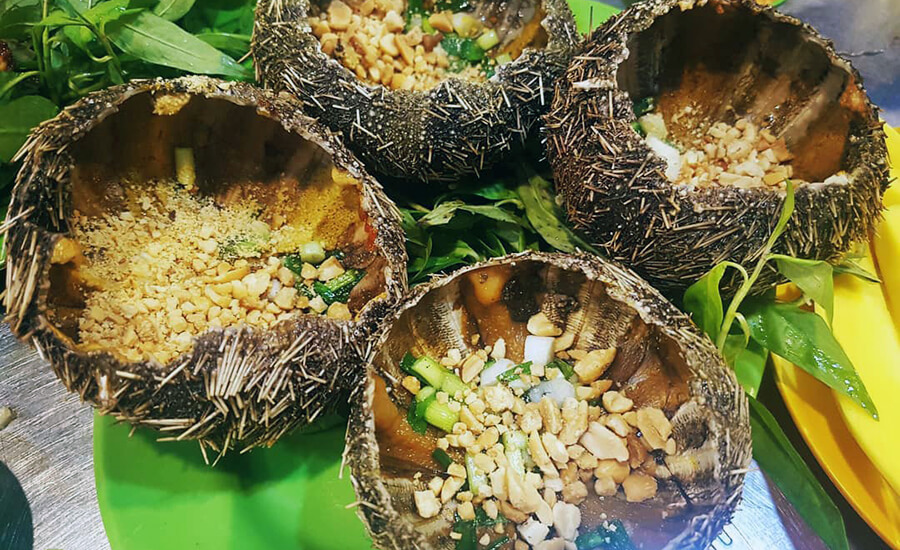
The fatty, grilled sea urchin dish often attracts curious tourists, causing searches for “sea urchin” to increase whenever a review or experience vlog goes viral.
Ken noodle
Ken noodle is a Khmer dish with the main ingredients being typical fish of the Western region, which are carefully processed, skinned, and deboned. The dish has a thick, red broth made from coconut milk.
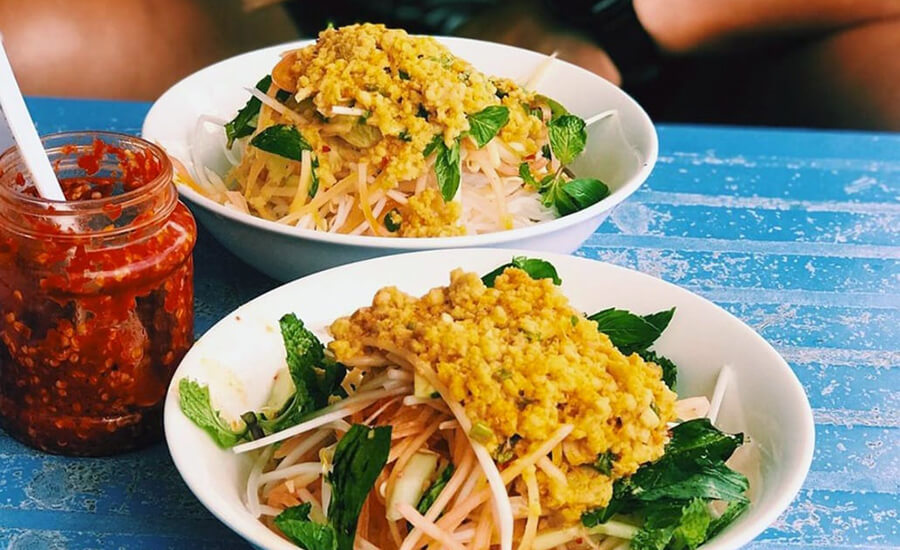
To have a perfect bowl of Ken noodle, just add a little mango, raw vegetables, crushed dried shrimp, and then pour in the broth. When eating, diners will feel the fatty taste of coconut milk and the sweet taste of fish.
Phu Quoc fish sauce
Phu Quoc fish sauce is a famous specialty of Phu Quoc Island, produced from fresh anchovies and sea salt using traditional methods.
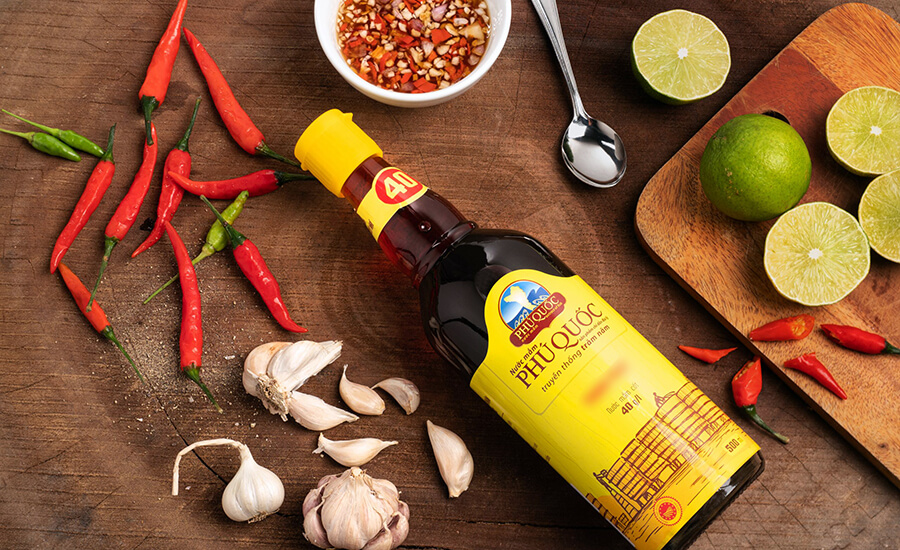
The fermentation process lasts from 6 to 12 months in large wooden barrels, creating a rich flavor and characteristic amber color. Phu Quoc fish sauce is not only a quintessential ingredient in Vietnamese cuisine but also a meaningful gift when traveling to Phu Quoc.
Vietdreamtravel also offers package tours and car/bus rental services, so you can come and explore Kien Giang. Do not hesitate to contact us for any booking.
Best regards,
Comment (0)