
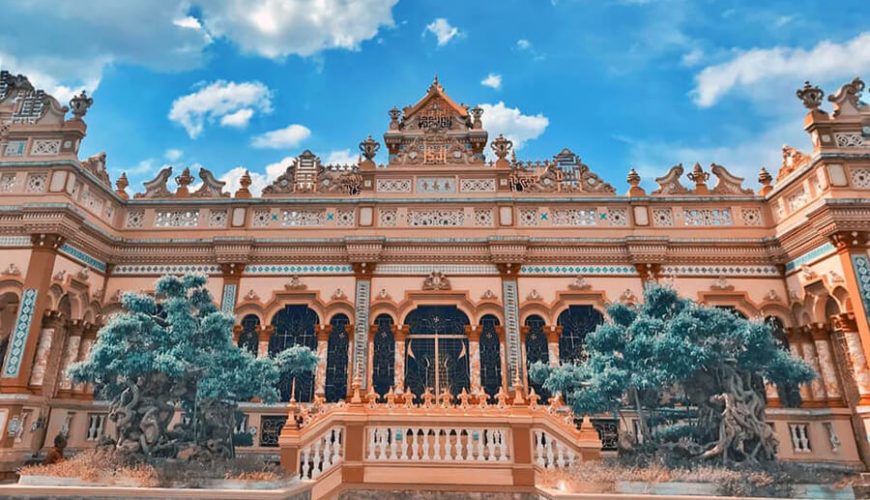
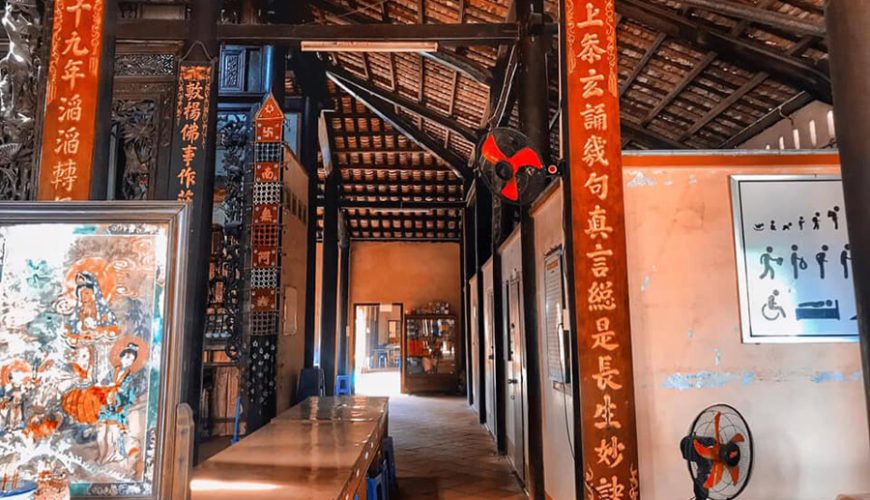
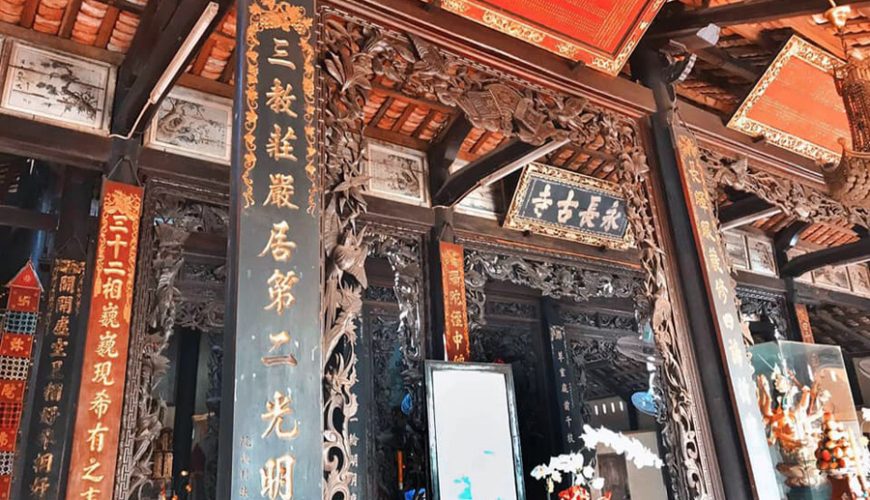
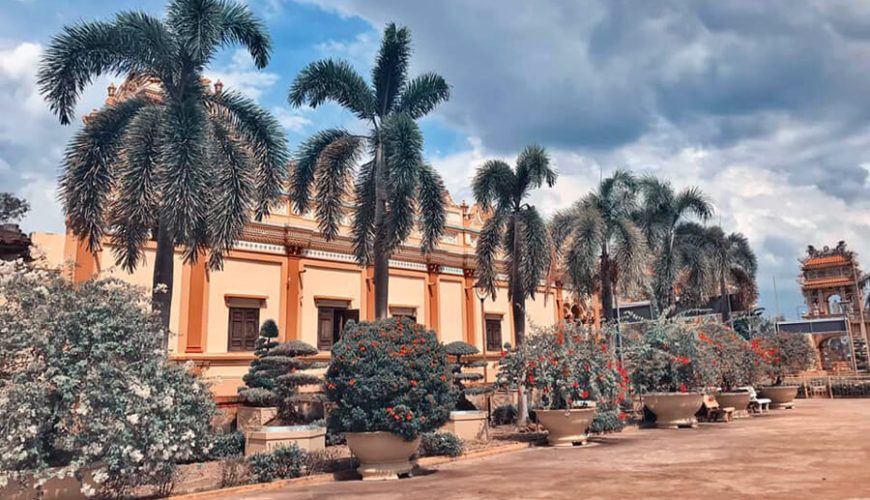
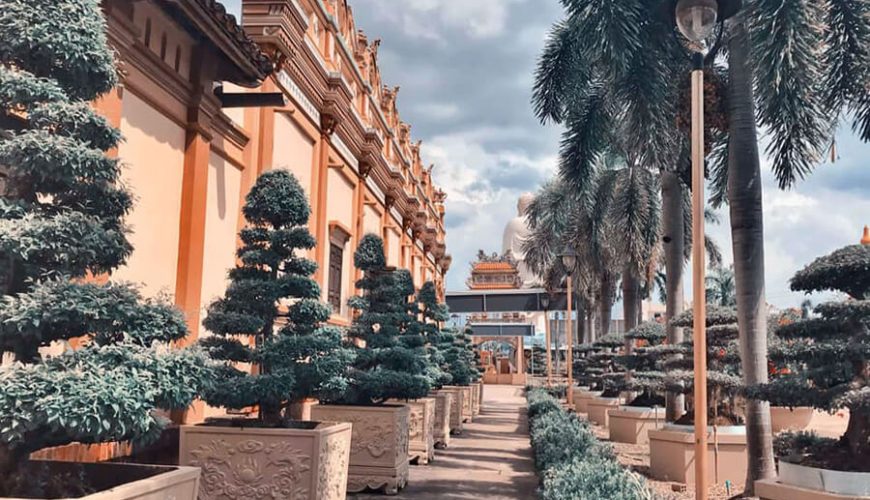
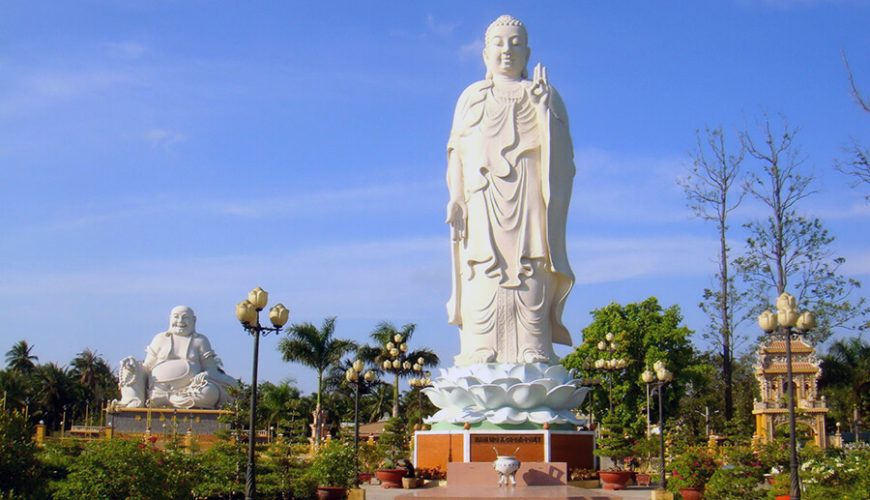
Vinh Trang Pagoda (Vietnamese: chùa Vĩnh Tràng, chùa means “pagoda”) is a renowned ancient pagoda and a unique architectural work, located in My Tho ward, Dong Thap Province. The pagoda’s beauty is evident not only in the visual arts but also in its reflection of the region’s art history. Therefore, if you are interested in religion and truly want to enjoy the unique architecture, you should not miss this pagoda.
History and architecture of Vinh Trang Pagoda
Vinh Trang is the best-known Buddhist pagoda in the Mekong Delta. The pagoda was built in the early 19th century by the endeavors of Mr. and Mrs. Bùi Công Đạt. At first, the pagoda was only a simple cottage.
In 1894, monk Thich Hue Dang from Giac Lam Pagoda (in old Gia Dinh, now Ho Chi Minh City) returned to the abbot to organize the construction of a large pagoda. To date, the pagoda has been restored multiple times by various monks, especially in 1907 and 1930, including the main hall, the three-arched entrances, and the patriarch hall.
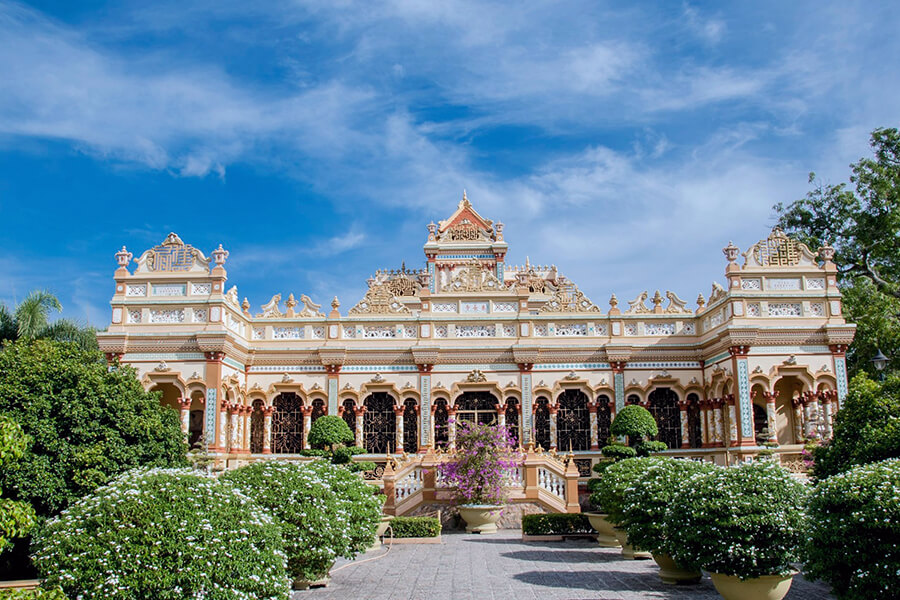
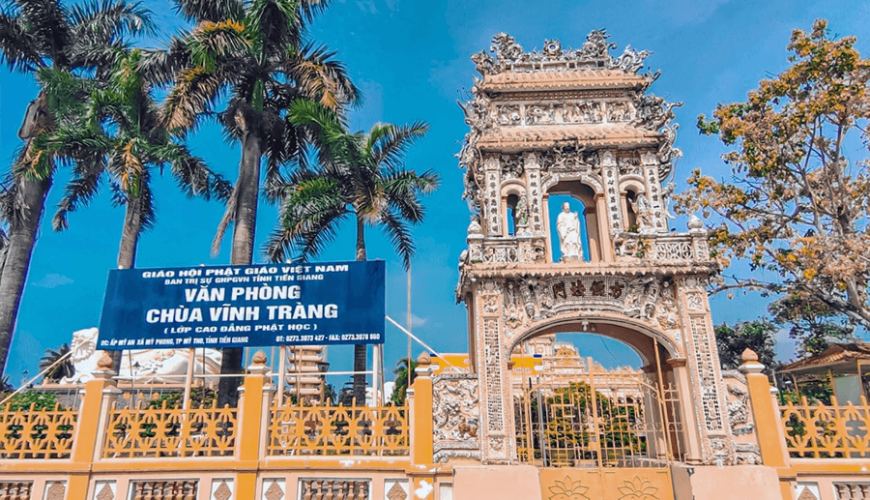
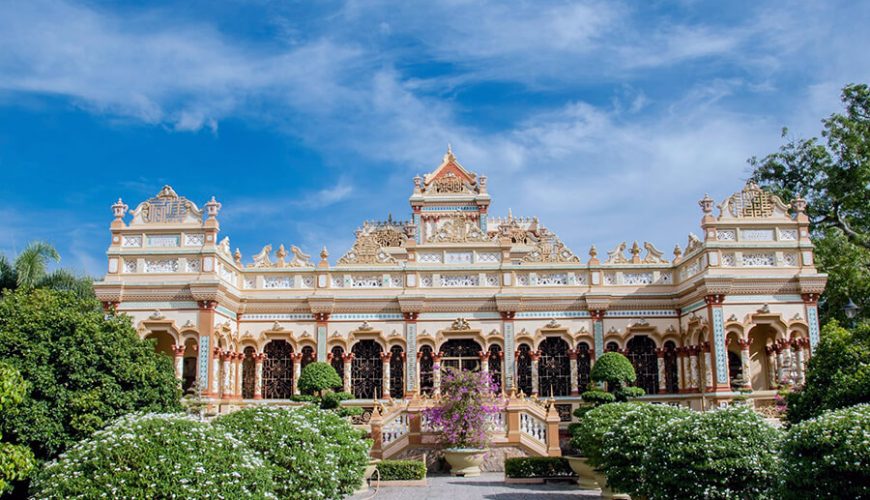
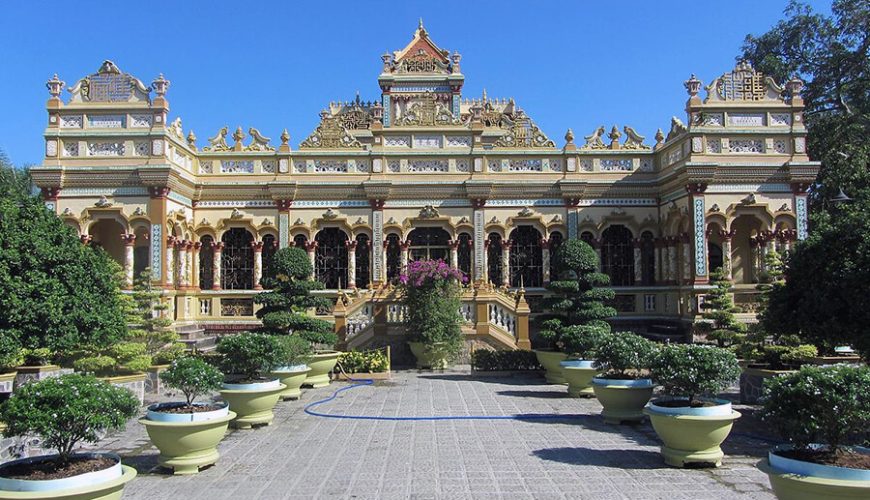
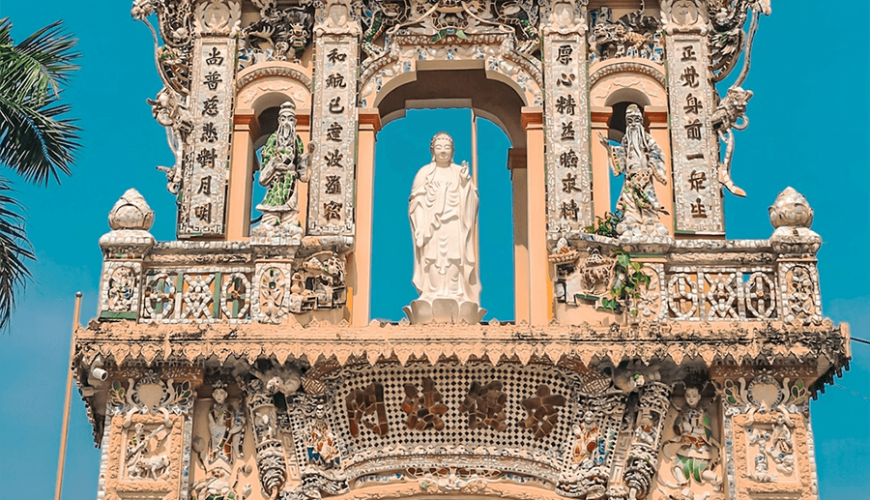
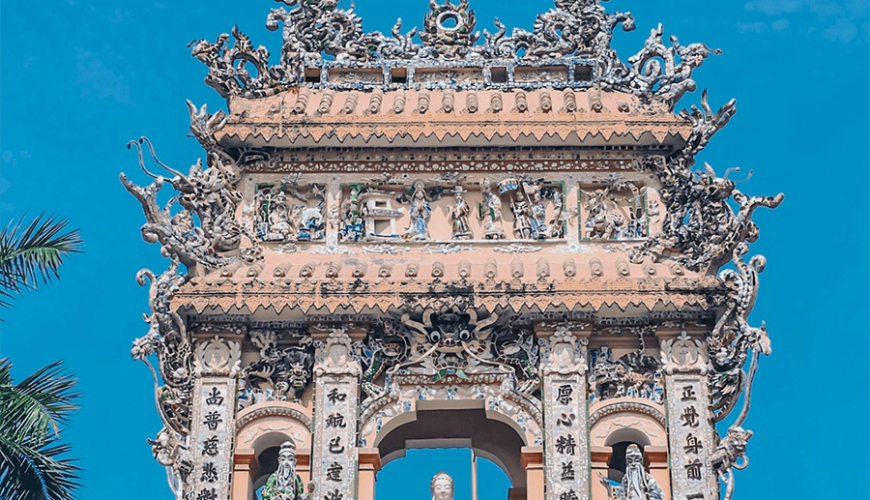
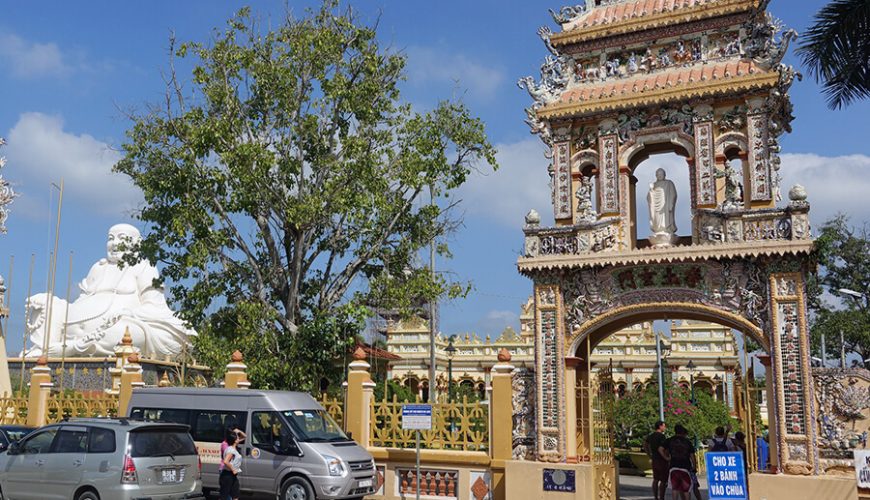
The pagoda measures 14,000m², 70m long, 20m wide, built of cement and precious wood, 1m high, with a cast foundation, and surrounded by solid walls. The highlight of Vinh Trang Pagoda is the three-arched entrance gate with the art of joining pieces of crockery and porcelain.
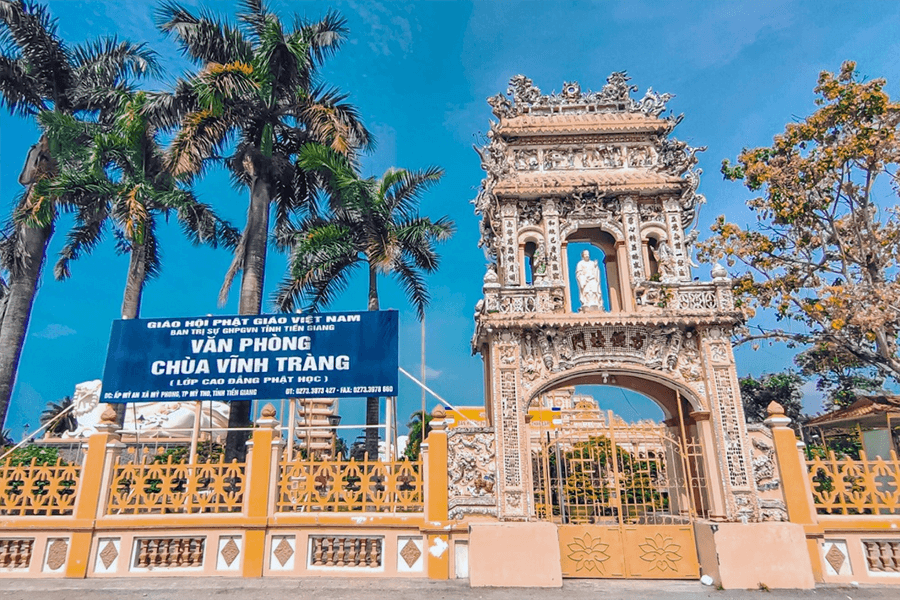
From the colors of various types of crockery, the ancient artisans have skillfully arranged many paintings illustrating the Buddha’s stories, folk tales, themes of the four supernatural creatures, flowers, leaves, clouds… with great color like a picture.
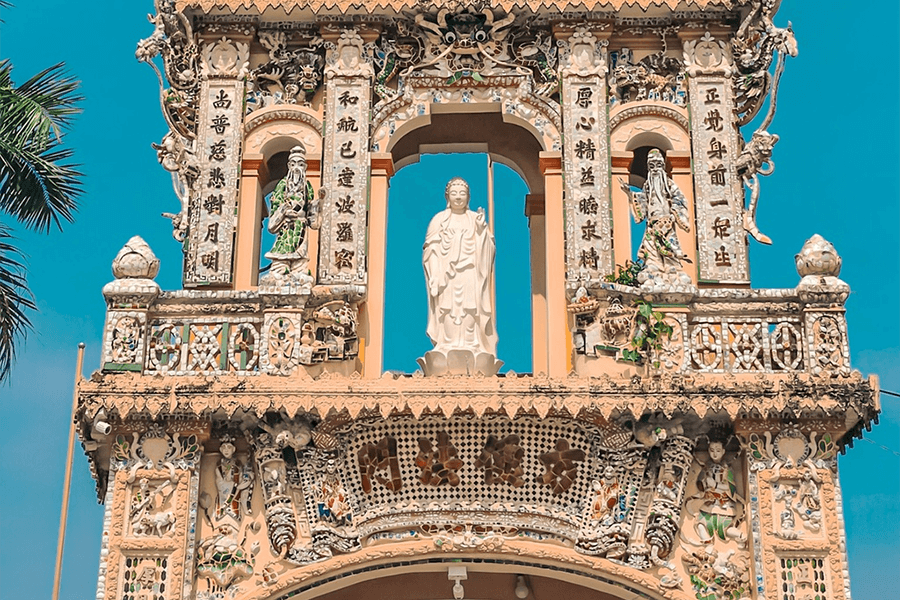
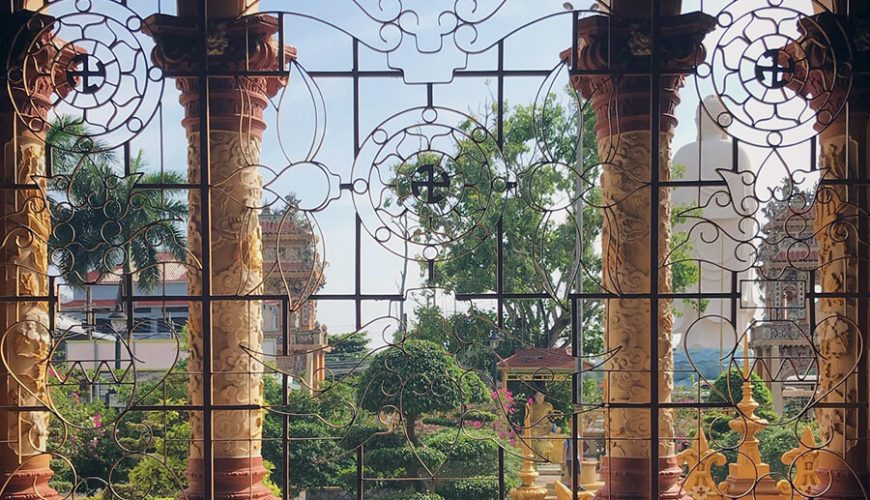
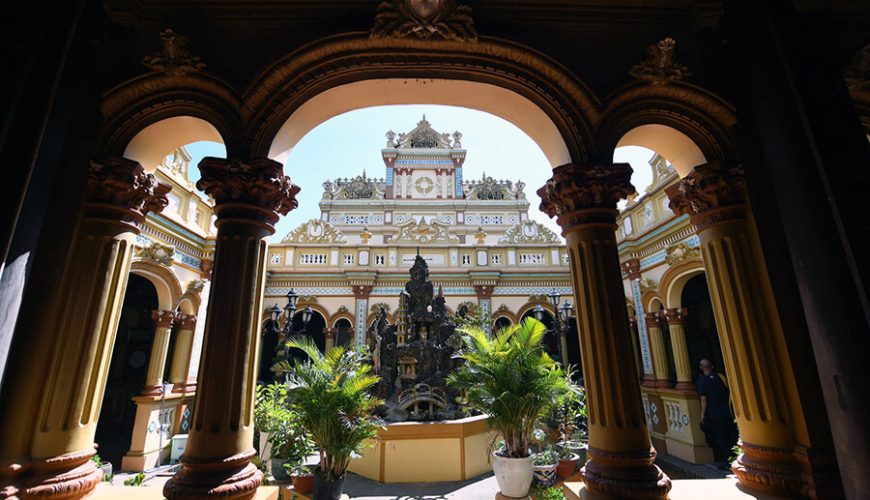
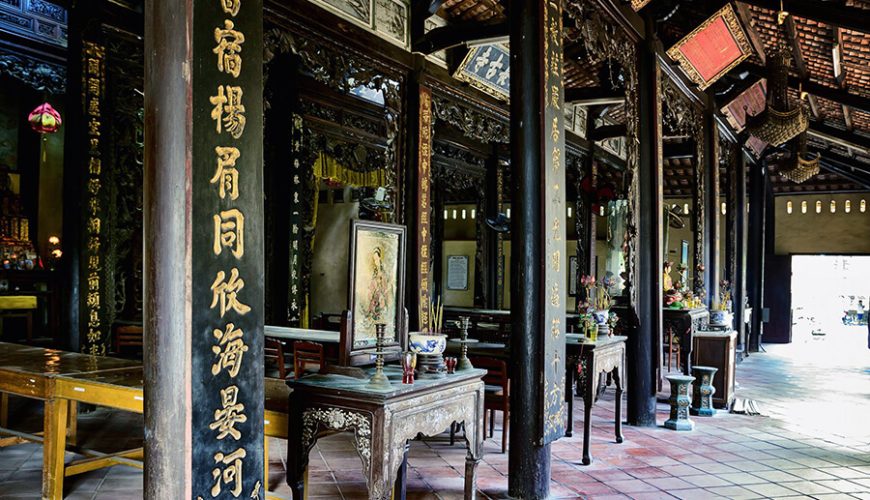
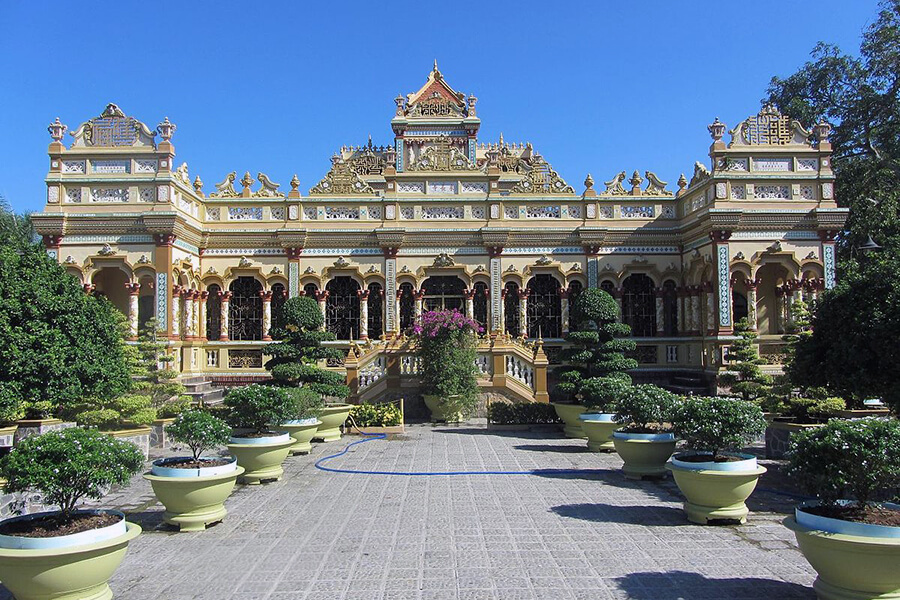
In particular, the pagoda’s façade is decorated in a harmonious European-Asian architectural style, featuring slender columns, curved arches, reliefs of the eight fairy-riding animals from the Renaissance, Roman-style arches, French ironwork, and Japanese ceramic tiles. Inside the main hall and the ancestral house, the architecture is boldly Vietnamese with wooden statues skillfully and delicately carved.
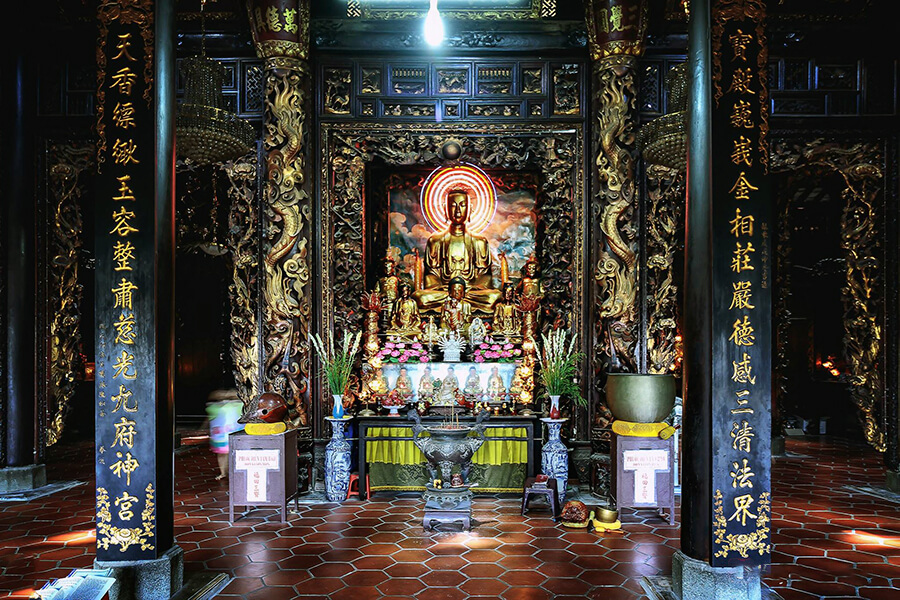
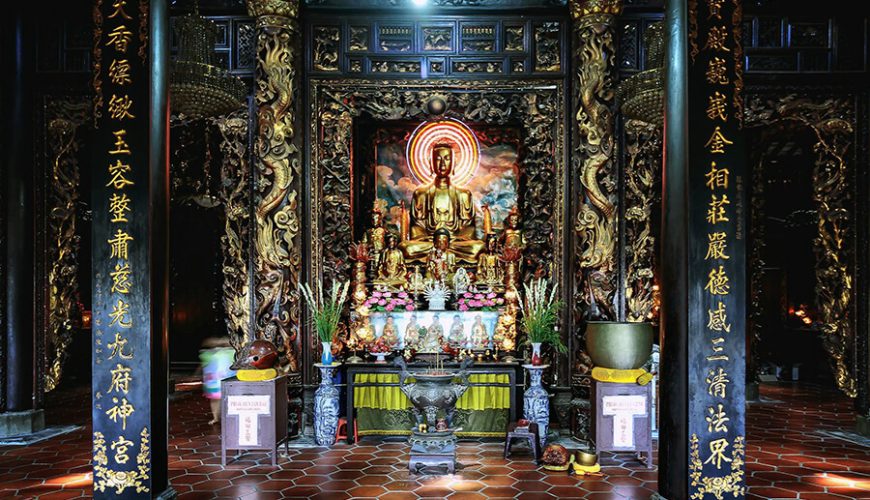
The pagoda houses many fine artworks created by generations of artisans throughout Vietnam. For example, in the middle of the main column is a set of eight fairies, made around 1907 – 1908, by local artisans. The two main pillars, carved with the four Holy Beasts, were donated by Mrs. Le Thi Ngoi in Ba Tri (Ben Tre, now Vinh Long Province) in 1909.
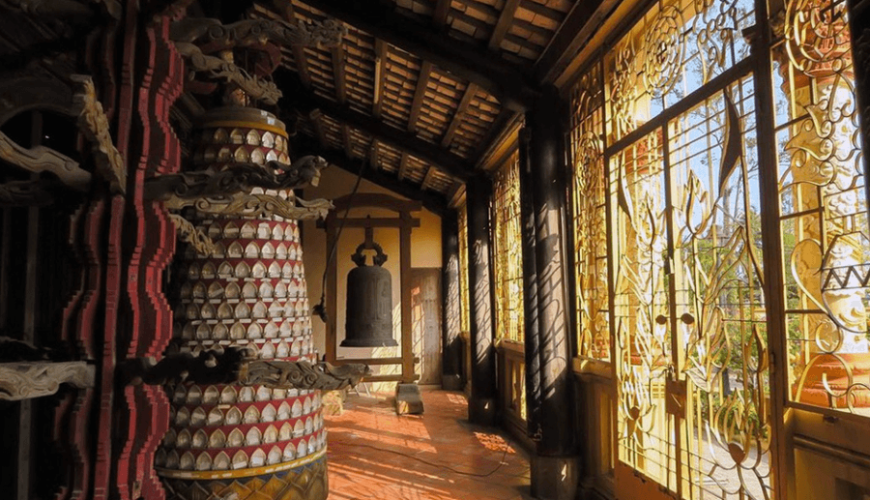
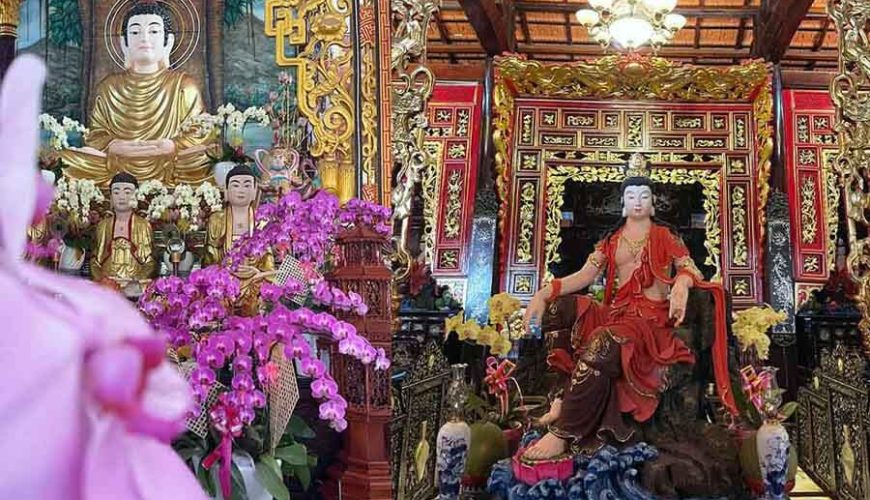
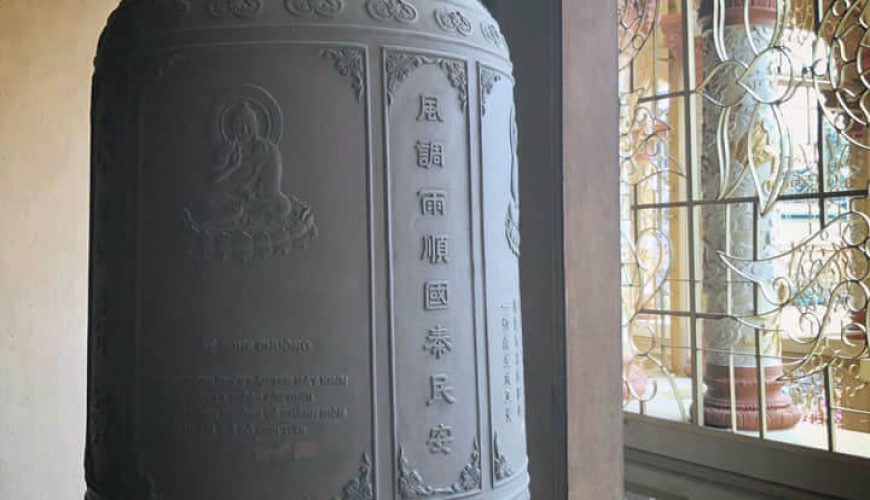
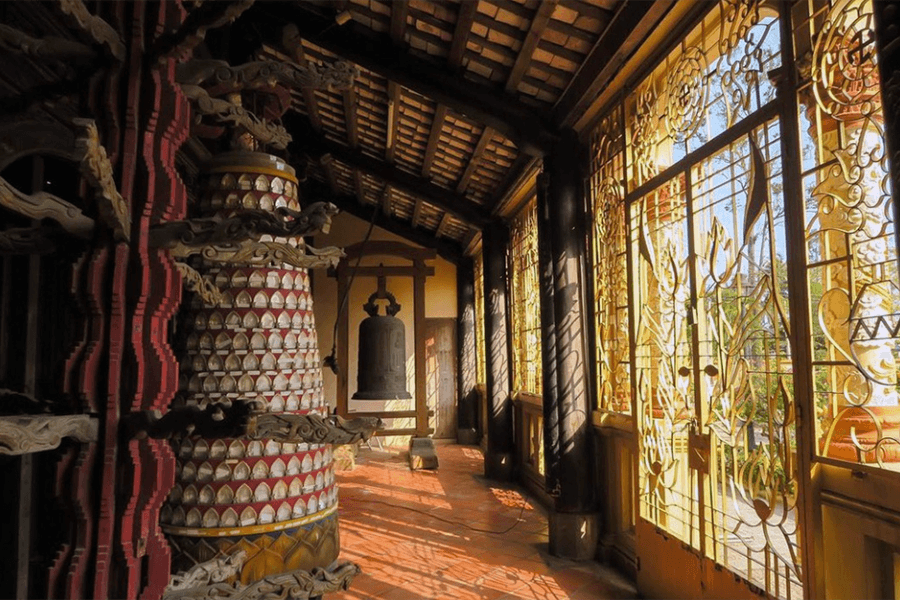
In the pagoda, there are also 3 large Buddha statues: Amitabha, 98 cm high; Guanyin and Mahasthamaprapta, 93 cm high; and a large bronze bell, 1.2 m high, weighing about 150 kg with the word “Vinh Truong Tu” engraved on its body, cast in 1854.
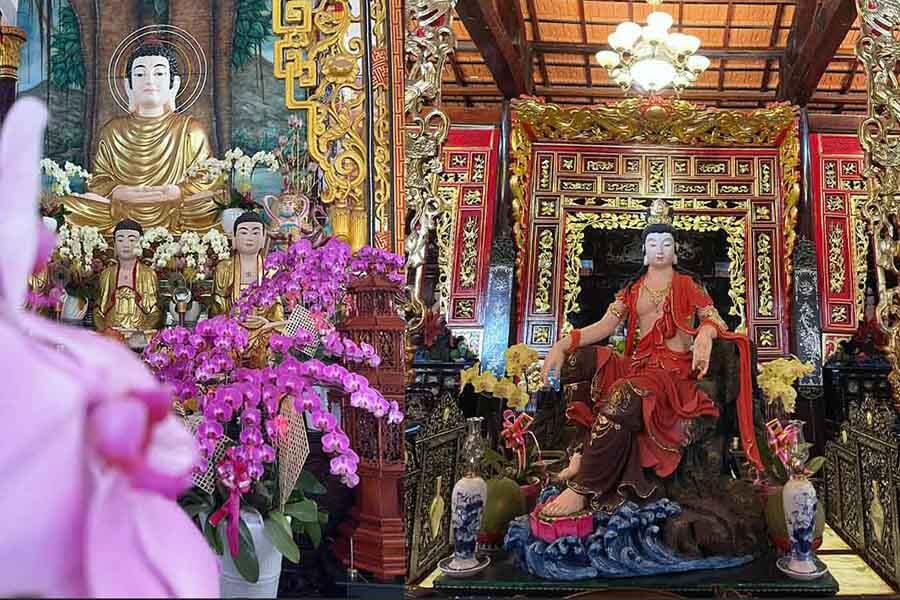
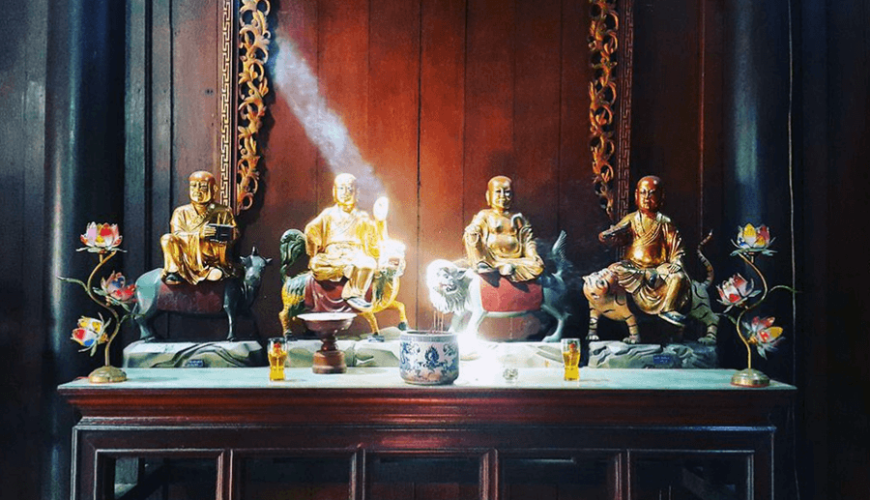
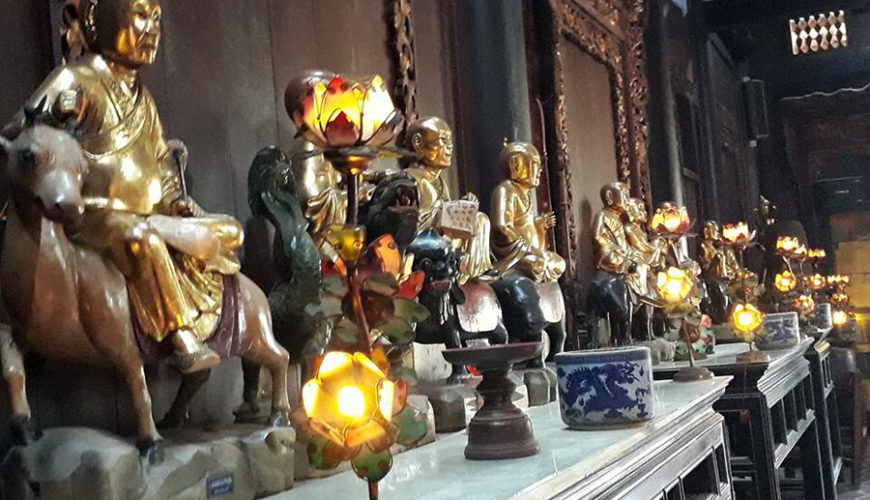
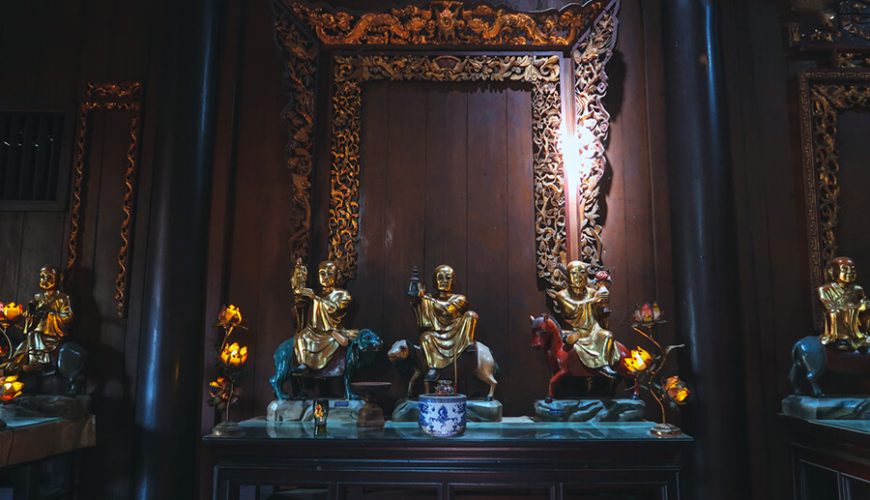
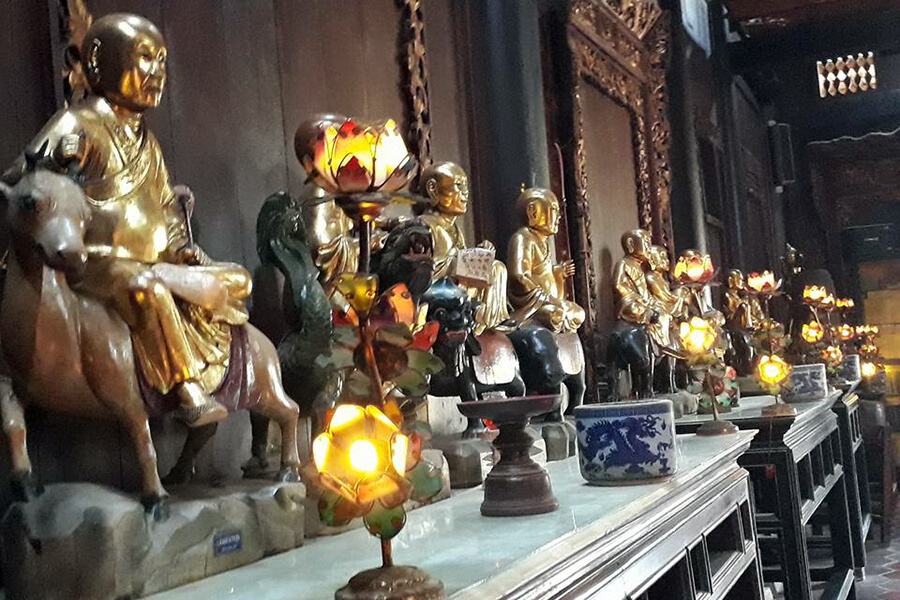
In particular, at the temple, there are eighteen Arhat statues. These 18 statues are located on both sides of the main hall wall, carved from jackfruit wood; each is about 0.8m high and 0.58m in width. The Arhats all rode animals, holding treasures in their hands.
Particularly at the front, outside the main hall, visitors will see Renaissance-style patterns or Roman-style arches. This is French iron wool, which is Japanese ceramic tiles. You will also see familiar features, such as Chinese characters in ancient seal script and national languages in Gothic script.
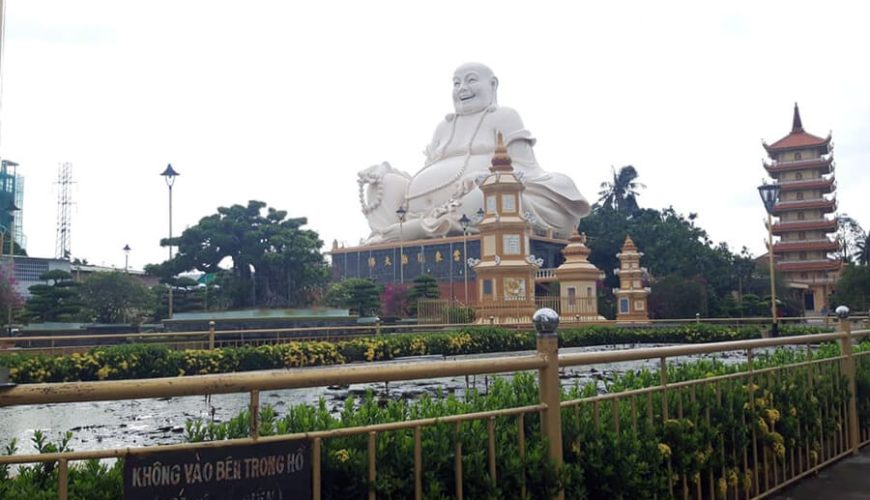
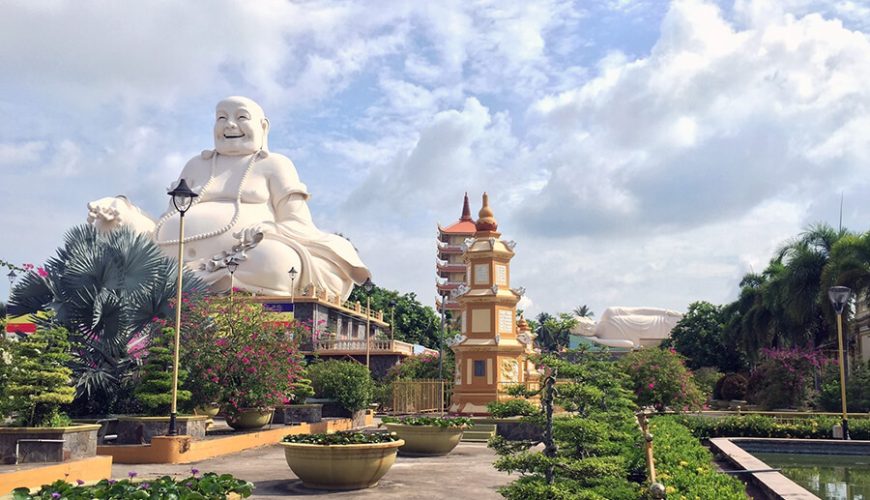
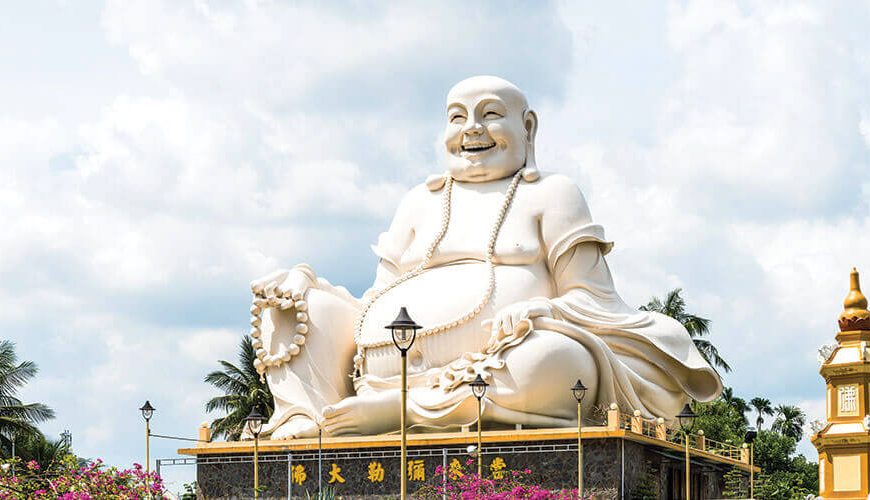
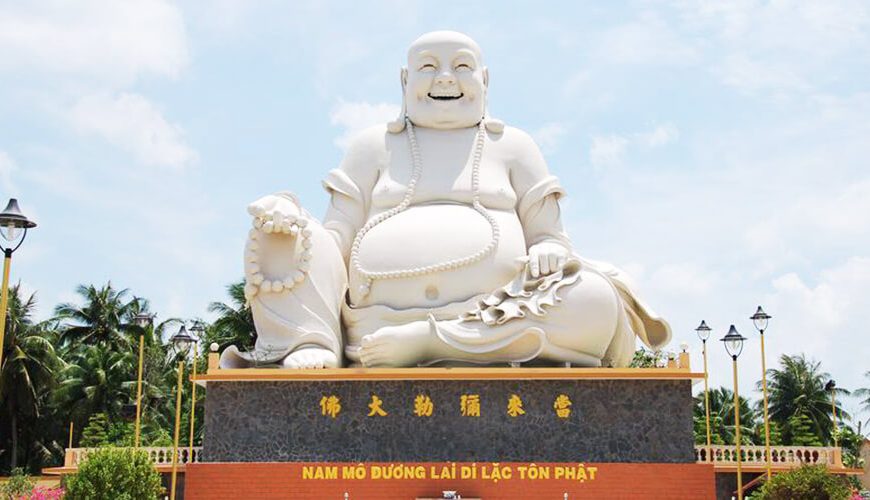
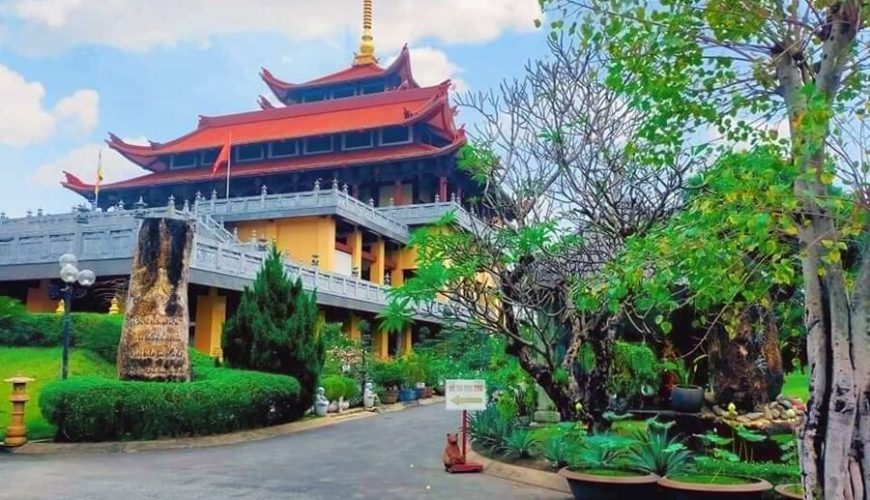
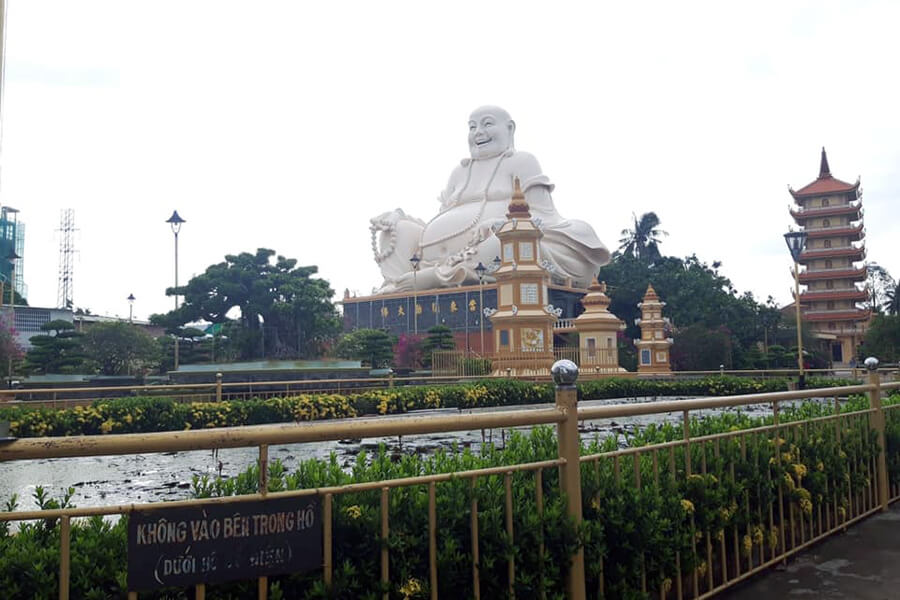
Around the pagoda are ornamental gardens planted with a variety of fragrant flowers and unusual herbs, and ancient trees provide shade, creating a harmonious balance between the natural scenery and the architectural space, making the pagoda more ancient and profound. Prominent in the middle of the park is a Maitreya Buddha statue in a sitting position, measuring 27m in length, 18m in width, and 20m in height. This Buddha statue is considered the symbol of the pagoda.
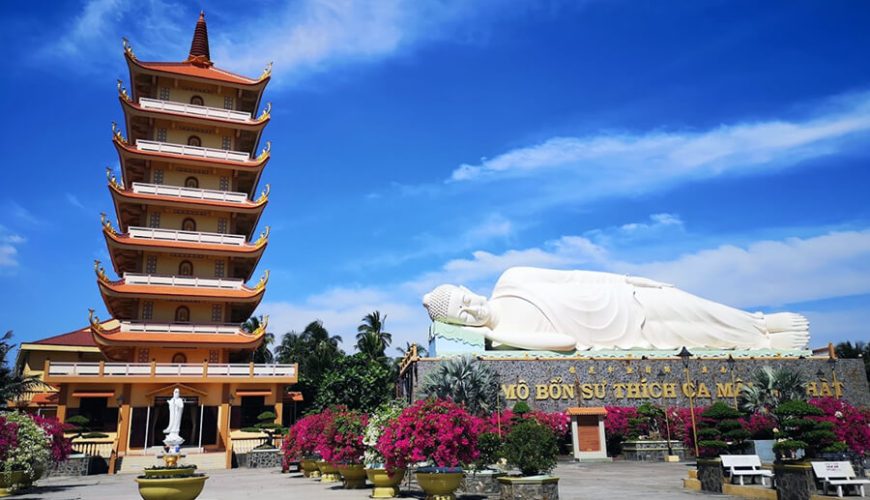
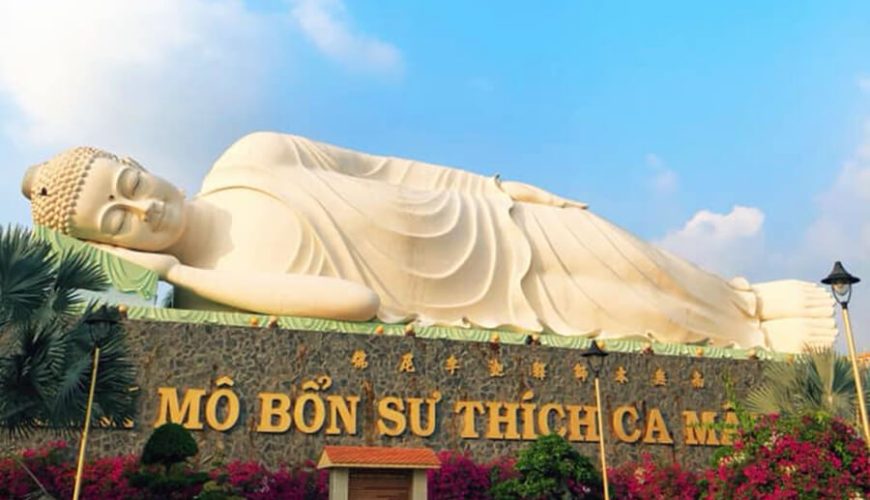
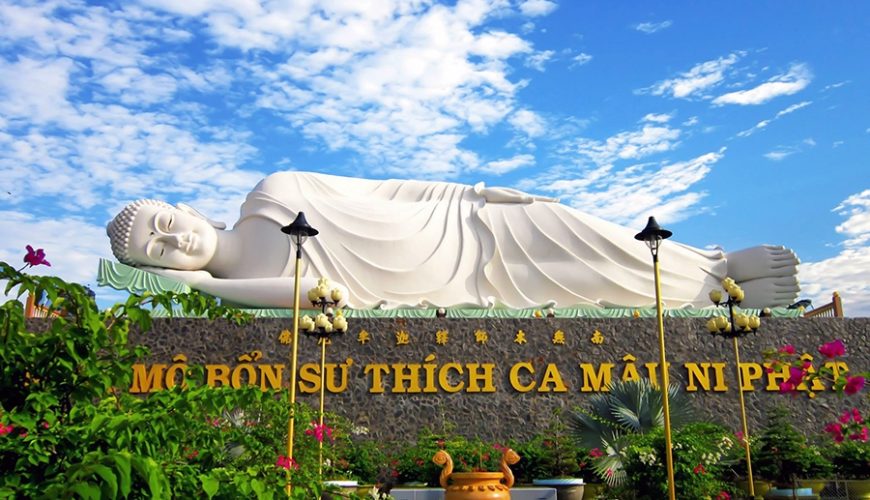
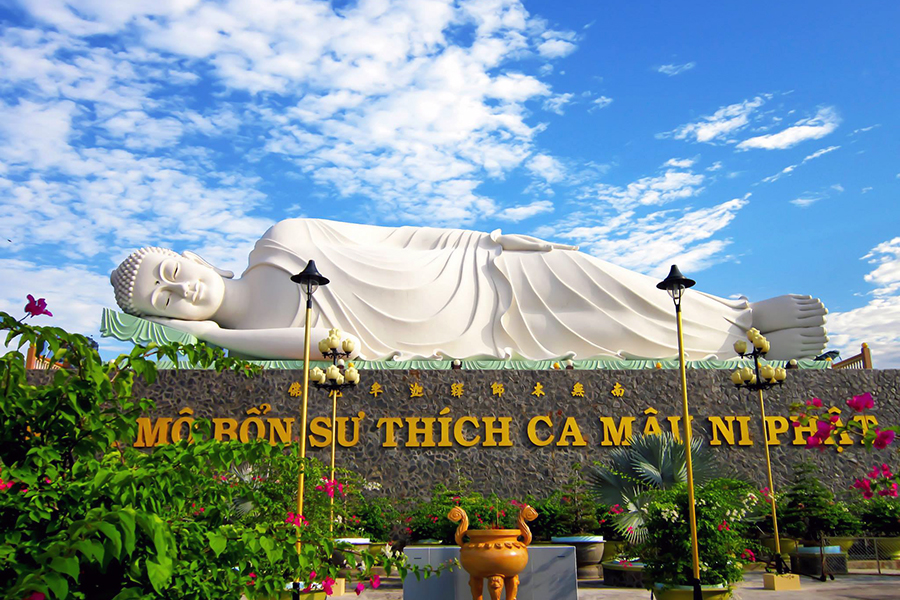
The statue of Shakyamuni Buddha entering Nirvana was started on February 15, 2012, completed on February 15, 2013, and inaugurated on March 26, 2013. The statue is designed to lie in an auspicious position, 32 m long, 10 m high, weighing about 250 tons, with a very gentle and peaceful facial expression that makes all pilgrims feel relaxed.
Outside the pagoda is a campus with many ornamental trees, many tall old trees, a shady orchard, and a beautiful lake. With great historical value and unique architecture, Vinh Trang Pagoda was recognized as a national historical and cultural relic in 1984, becoming a tourist destination in Dong Thap that attracts many visitors from all over to visit and admire.
Join our Mekong Delta tour to visit Vinh Trang Pagoda and Thoi Son Islet for 1 day.
Useful information about Vinh Trang Pagoda
- Location: My An hamlet, My Phong Ward, Dong Thap province.
- Best for: Family, couples, solo travelers, pilgrims…
- Entrance: Free
- Walk lightly, don’t laugh or speak loudly in a respectful place. This is also the monks’ living space and place of activity, so you need to respect their privacy and not disturb the temple’s daily routine. Wear polite clothes when entering the pagoda.
- Opening Hours: Daily 06:30 – 18:30
- Tourist spots nearby: Thoi Son Islet, Sac Tu Linh Thuu Pagoda, Mr Kiet Ancient House, Cai Be Floating Market, Đồng Tâm Snake Farm, Tan Phong Islet...
Source: collected by An
Follow us for the best deals on Vietnam package tours and visa services!
Comment (0)