
Hoi An was a city in Quang Nam Province (now part of Da Nang City) and is consistently ranked among the most attractive places in Vietnam; not only domestic tourists but also international tourists are very impressed by the beauty of the old town and the cultural influences of many nations worldwide. In addition to cultural values reflected in diverse architecture, the town also preserves countless intangible cultural foundations. Coming to explore Hoi An, tourists can admire the daily life of residents with customs, religious activities, folk art, cultural festivals …all being well preserved, making Hoi An more and more attractive.
What is the best time to explore Hoi An?
Hoi An’s climate is a mix of the South and the North, characterized by a tropical monsoon with high humidity, divided into two distinct rainy and dry seasons. Each season, the old town has its own beauty.
The first three months of the year are the most ideal time to roam in Hoi An when the sun is not too harsh, the weather is cool, and there is occasional light rain.
From April to June is the harsh period of the dry season, but Hoi An’s weather is quite pleasant, due to its location in the south of the Truong Son range. This is also the peak tourist season.
July is still the dry season. August and September are the season change time. The weather is still sunny, with sporadic rain, and it will be chilly at night.
The last three months of the year are the rainy season in Hoi An; it is rarely sunny, it rains heavily, and sometimes there are floods. Tourists from the South coming to Hoi An during the cold season should prepare appropriate clothing to avoid health issues.
How to get here?
Not only domestic airlines such as Vietnam Airlines, Vietjet Air, Bamboo Airlines… but also international airlines operate flights to Da Nang. Arriving at Da Nang airport, you can choose to take a shuttle bus from the airport, or take a local bus, taxi, or private car to Hoi An center.
For travelers inside Vietnam, besides planes, there are quite a variety of means of transport to Hoi An. You can choose the following transportation methods:
- Train: to explore Hoi An by train departing from Ho Chi Minh City/Hanoi and stopping at Da Nang or Tra Kieu station. Travel time is about 15-20 hours, with ticket prices ranging from 700,000-1,200,000 VND/way, depending on the itinerary and seat type.
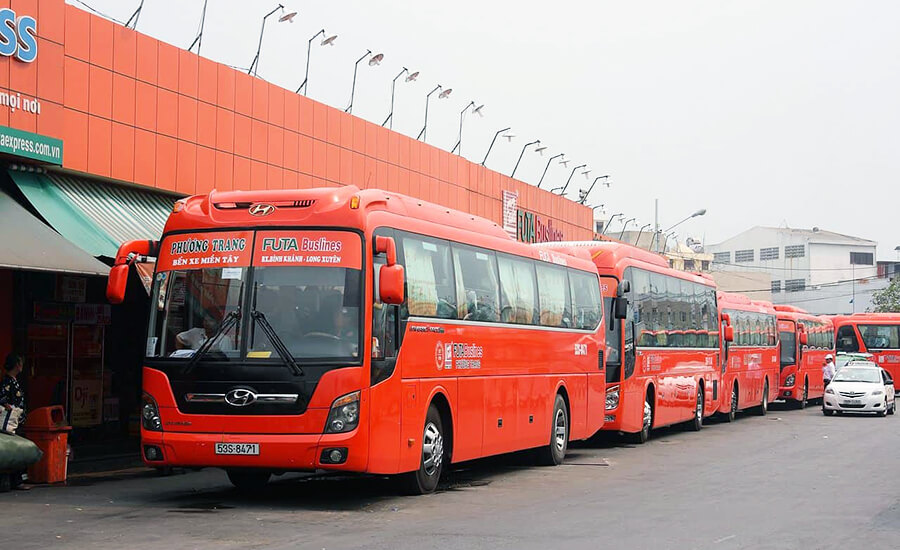
- Tourist bus: you can go to Hoi An by buses running from Ho Chi Minh City to Hoi An and from Hanoi to Hoi An, with ticket prices from 500,000 to 800,000 VND/way.
- Self-driving is also an interesting option if you are a genuine backpacker or live in provinces neighboring Hoi An, such as Da Nang, Quang Ngai, etc.
Tourist attractions in Hoi An
Hoi An has many beautiful, famous tourist attractions both inside and outside the old town. Each destination has its own charm that you should not miss. In this article, I will introduce in detail the most beautiful and outstanding places in Hoi An, some of which are quite new but still really attractive.
Tan Ky ancient house
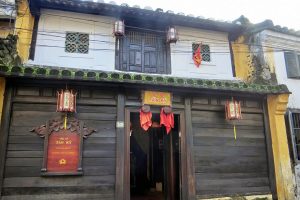 Built in 1741, this is the oldest house in Hoi An. It was named “Tan Ky” after the second generation of the house, the residence of the Le family, hoping that it would bring them wealth. Until now, the house remains fully preserved, with its unique architectural features and the ancient beauty of its time. Some of the special architectural works include two vertical panels which are inscribed with parallel sentences; many ancient artifacts and sailboats – the symbol of Hoi An Port many centuries ago; unique horizontal lacquered boards…
Furthermore, coming to visit Tan Ky ancient house, tourists will have the opportunity to ascertain much more about typical architecture, which is a convergence of 3 cultural regions of Vietnam – Japan – China, with unique and rare motifs.
Address: 101 Nguyen Thai Hoc, Hoi An Ward.
Phung Hung ancient house
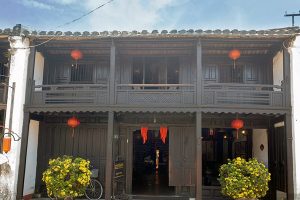 The Phung Hung ancient house, Hoi An was built in the year 1780. This is the house of a Vietnamese merchant in Hoi An. He named the house “Phung Hung”, meaning “Flourish” with the desire to be always successful.
Phung Hung ancient house was modeled on a popular merchant house from the early 19th century, blending Vietnamese, Japanese, and Chinese architectural styles. The materials are mainly rare woods that still retain their original beauty today.
The house was built amid lively trade integration and is one of the signs of the prosperous period of Hoi An’s trading port. Phung Hung was ranked as a “National Historical and Cultural Site” in 1993.
Address: 04 Nguyen Thi Minh Khai, Hoi An Ward.
Japanese Covered Bridge
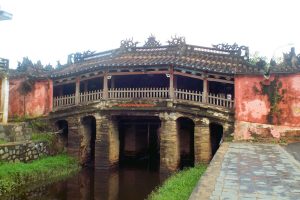 The Japanese Covered Bridge, also called the Pagoda Bridge, was built in the 16th century and remains incredibly well preserved. The pagoda and bridge are made of lacquered wood with elaborate carvings. On the northern side of the bridge is a Japanese pagoda dedicated to the God of weather to protect sailors. There are statues of two dogs located at the western end of the bridge and two monkeys at the eastern end. Although it is called a pagoda, there is no Buddha image inside. The middle part is worshiped a wooden statue of Bac De Tran Vo – the guardian deity of the country, giving people joy and happiness.
The Japanese Covered Bridge has been restored many times but still retains its architectural and cultural imprints. And today, the bridge stands as a symbol of the old town.
Assembly Hall of Fujian Chinese
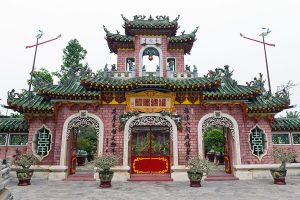 The Assembly Hall of Fujian Chinese was built in 1697 by members of the local Fujian community. It was constructed according to the Chinese character. The main hall is dedicated to the sea Goddess Thien Hau. Alongside her are Thuan Phong Nhi, who has ears to hear the wind, and Thien Ly Nhan, who has eyes to see for thousands of miles. Many ancient objects still remain inside, including statues, bronze drums, bronze bells, and a horizontal lacquered board engraved with Chinese characters.
In addition to its architecture, many events and activities take place on January 15, February 2, February 16, and March 23, following the lunar calendar, attracting many domestic and foreign tourists.
Address: 46 Tran Phu Street, Hoi An Dong Ward.
Quan Cong Temple
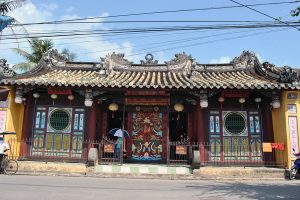 The Quan Cong temple was built in 1653 and dedicated to Guan Yu (also known as Lord Guan), a general in the Three Kingdoms period of ancient China who was a model of loyalty to the king and dutifulness to his parents. Quan Cong Temple was constructed in the Chaozhou-China style, with many houses linked together by rafters. The roof is covered with colorful glazed pip-shaped tiles. They are also decorated with colorful porcelain flowers of lemon trees, dragons, and small lions.
The main hall has a statue of Guan Yu wearing a dragon-embroidered robe, with a dignified face and sharp, bright eyes ahead. Besides, there are two statues of Guan Ping and Zhou Cang – the loyal and sacrificial guardian and servant of General Guan Yu. On two sides of the main altar are two horses: the white horse on the left and the Red Hare on the right – which had accompanied Guan Yu in many life-and-death battles.
Address: 24 Tran Phu, Hoi An Dong Ward.
Cua Dai Beach
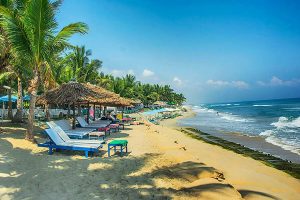 Cua Dai Beach is not far from Hoi An center (about 5 km). The beach has gentle, charming white sand, clear blue water, moderate slopes, and small waves, making it ideal for relaxing and enjoying recreational activities. Another impressive sight in Cua Dai is the rows of coconut trees stretching out, swaying in the sea breeze.
Although this beauty has been somewhat reduced with white sandbags blocking the waves, this place is still suitable for walking and enjoying the cool air in the late afternoons.
Cham Islet
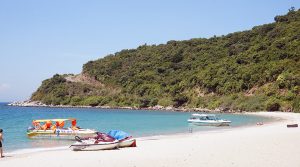 The Cham islet, approximately 20 km from Hoi An center, is in the East Sea. Covering an area of 15 km², this archipelago includes 8 islets: Hon Lao (also known as Cu Lao island, the largest), Kho Me, Kho Con, La, Dai, Mo, Tai, or Ong Islet. The population on these islets is about 3,000 people. The islets have preserved many architectural structures belonging to the Sa Huynh, Cham Pa, and Dai Viet cultures, dating back several hundred years. The islets are also tourist destinations with a cool year-round climate and rich flora and fauna.
With their wild beauty, the islands quickly became an attractive destination, offering many activities such as fishing, camping, scuba diving, and canoeing trips to nearby islets.
My Son Holy Land
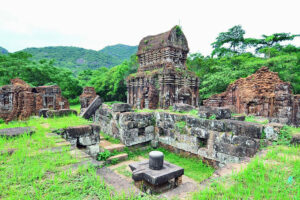 My Son Holy Land is located in Thu Bon Commune, Da Nang City, about 40 km away from the ancient town of Hoi An, in a valley about 2 km in diameter, surrounded by hills. The temples were constructed between the 4th and the 14th centuries by the Kings of Champa. Besides the ceremonial function, My Son was also the cultural and religious center of the Champa dynasties and the burial place of many kings, Cham royalty, and national heroes. The sanctuary was a complex structure, comprising many temples and numerous steles in various architectural styles.

According to French research, there were 70 temples here. Now, only 20 temples remain almost intact. The rest have been destroyed and reduced to ruins by war and time. However, it remains the most important sanctuary of the Cham people and holds a significant position in the art and culture of Southeast Asia.
In 1999, My Son Holy Land was recognized as a World Cultural Heritage Site by UNESCO for being a typical example of cultural heritage. cultural change and is the only evidence of an Asian civilization that has disappeared.
Thanh Ha Pottery Village
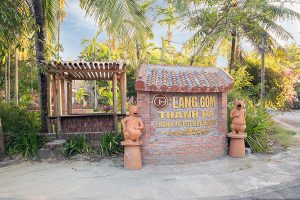 Thanh Ha pottery village dates back to the late 15th century and is located about 3 km west of Hoi An ancient town, right next to the Thu Bon River. The area is a pretty small but extremely peaceful village.
This pottery village specializes in manufacturing popular everyday products, such as cups, bowls, vases, pots, bricks, tiles, and dishes, as well as unique souvenirs crafted by skilled hands and decorated with attractive colors.
Over the past five centuries, local potters have kept their traditional method of making pottery- handmade and wheel-thrown- which attracts many people to visit and practice.
An Bang Beach
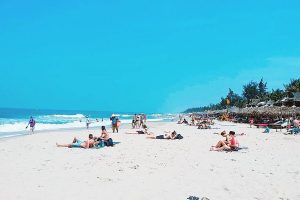 An Bang Beach is located in Cam An ward, where it still retains its pristine and pure beauty, in stark contrast to the vibrant and bustling Cua Dai Beach. Although the beach is a new tourist spot, many people, including locals and tourists, have flocked here since the recent erosion at Cua Dai Beach. The beach at An Bang is pretty well managed, very clean, and spacious. It’s not only a good place to relax, sunbathe, swim, or fish, but you can also find jet skis and parasailing on offer.
Furthermore, many people prefer to cycle along the beach to visit Tra Que village or take a boat to explore Cham islet from An Bang beach.
Museum of Trade Ceramics
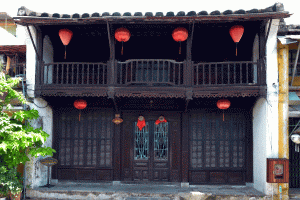 The museum was formerly a house built in the 19th century. The Museum of Trade Ceramics has over 430 ceramic artifacts, such as dishes, wine cups, vases, and teapots, dating from the 8th to the 18th centuries. Most of the artifacts are trading ceramics originating from the Middle East, India, China, Japan, Thailand, and Vietnam, which show that international cultural and economic exchange was active in Hoi An.
In addition, many samples of parts from the old trading ships that brought merchants from around the world to this seaport are preserved intact. In particular, numerous handicraft items from traditional villages are sold here.
Address: 80 Tran Phu, Hoi An Ward.
Bay Mau nipa palm forest
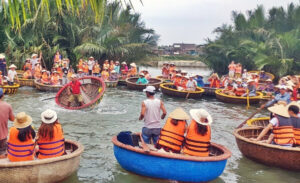
From the center of Hoi An ancient town, along the Hoai River bank for more than 3 km lies the Bay Mau nipa palm forest, more than 10 hectares, in Hoi An Dong Ward.
The basket boat rowing service for transporting passengers to visit the coconut forest has emerged in Hoi An Dong in recent years and has gradually become an indispensable “specialty” of Hoi An tourism. Each boat is only allowed to carry a maximum of two people.
 To visit the nipa palm forest, each guest pays 200,000 VND to sit in a basket boat, weaving through the creeks, flanked by green coconut forests for about an hour.
In addition to riding the basket boat, visitors can also watch boat dance performances and learn how to make beautiful small toys from nipa palm leaves, such as flowers, locusts, bracelets, glasses, rings, or hats… as souvenirs. If you come to Bay Mau in the 8th lunar month, you will enjoy ripe water coconuts with sweet, crisp pulp.
Tra Que Vegetable Village
 Tra Que Vegetable Village is located in Hoi An Tay Ward, about 3km northwest of the center with an area of over 40 hectares, with households here rotating and intercropping more than 20 types of leafy vegetables and spices, with a tradition of nearly 400 years.
Tra Que has more than 40 types of vegetables, with herbs being prominent. It’s still onions, laksa leaves, perilla, basil, and coriander, but Tra Que vegetables are fragrant and have a unique, unmistakable flavor.
It is worth mentioning that coming to Tra Que is not only about admiring the scenery and watching people grow vegetables, but also about interacting with farmers to experience how to care for, water, and harvest vegetables… In addition, guests can cycle through the surrounding roads of this vegetable village to enjoy the cool, joyful atmosphere in this 18-hectare vegetable field.
Things to do in Hoi An
Cycling in Hoi An
Biking is the perfect way to explore Hoi An. The excursions will give you the chance to really get up close to the locals and see how they live. The best sights and experiences are often found down obscure side streets, alleyways, cycling through rice paddies and traditional villages or river views.

Currently, many tour agents offer half-day to full-day cycling trips to some of the best places, such as Cam Kim Island, Tra Que Vegetable Village, An Bang Beach, and My Son Sanctuary.
Boating along the river
Cruising along a river is one of the most popular activities in Hoi An. A trip would help you indulge in the beautiful surrounding landscape and witness rural life, where local people live along the river, growing corn and peanuts or raising ducks, and using bamboo boats as their main mode of transportation.
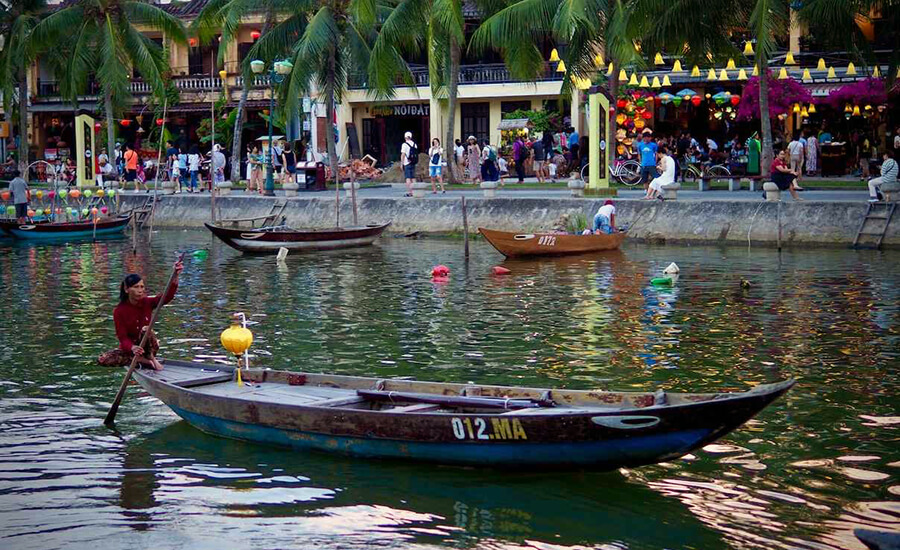
It would be so much fun to see local fishermen rowing a boat with a fishing net to catch fish. This is also an ideal way to visit handicraft villages and observe local people’s daily activities during the excursion.
Cooking Classes
Cooking classes in Hoi An do not just give you the idea of how to cook some Vietnamese dishes. The most basic experiences will guide you to visit the local market, choosing and then buying ingredients, learning about their special food from your host, choosing some dishes and cooking them.
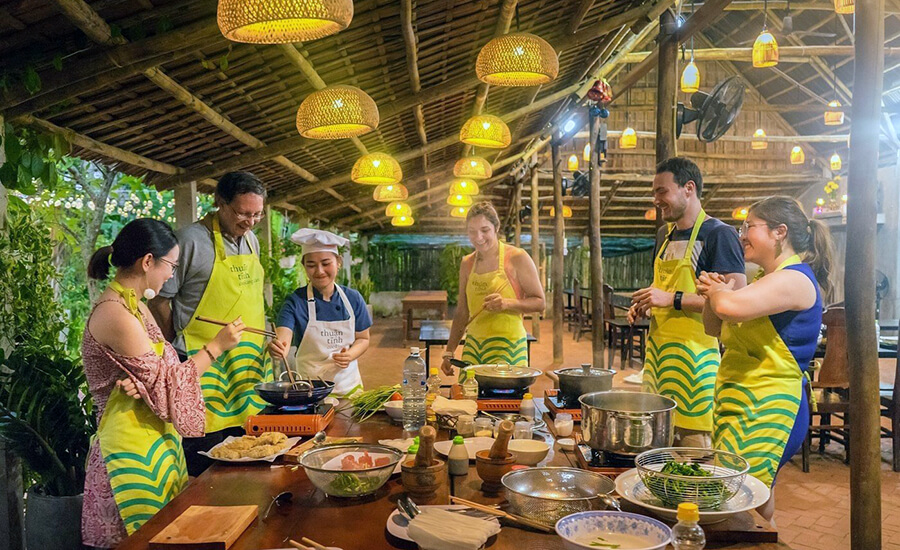
Of course, you also enjoy the results of your endeavors. However, some of the cooking classes in Hoi An will still include the above, but there are also experiences to visit a local farm, select fresh ingredients there, and use them later to cook. Even more, you also have a chance to practice what the farmers do daily on their land, such as fertilizing, preparing the soil, planting the herbs, watering, and hoeing the vegetable beds… with simple tools or by hand.
Visit night market
The night markets in Hoi An are not as famous or as crowded as other markets in Da Lat, Dam Market in Nha Trang, Ben Thanh Market in Ho Chi Minh, or Old Quarter Market in Ha Noi, but they have many unique features. The markets offer many types of souvenirs, clothes, jewelry, and especially lanterns with all shapes, sizes, and hues.
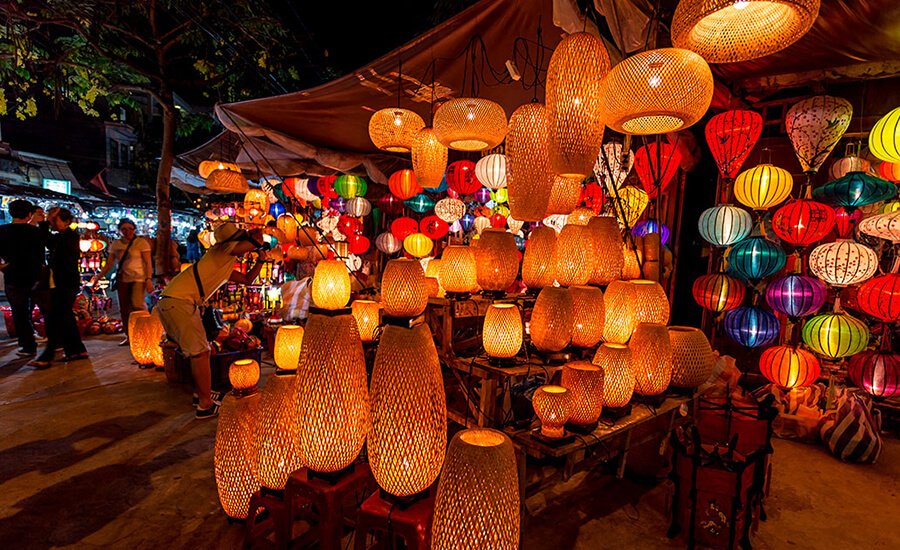
Although it is a market, this place is not only for trading activities, but also an attractive spot for many people to visit, enjoy the rustic dishes, and various folk games – one of the indispensable experiences at these markets.
What to eat in Hoi An?
Not only does Hoi An attract tourists with its ancient and peaceful beauty, but Its specialties are also highlights that visitors should not miss when coming here.
Cao Lau
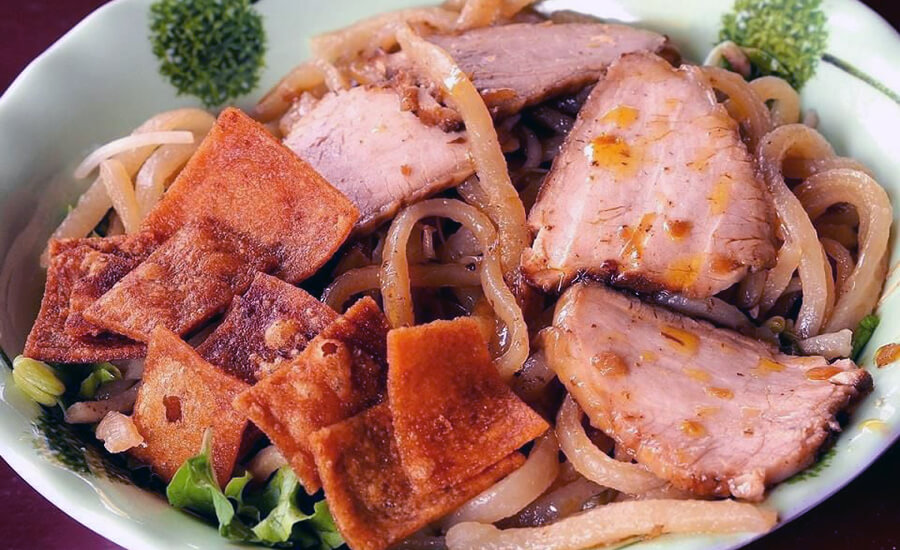
Cao Lau Hoi An is an extremely attractive specialty dish. This dish looks quite similar to Quang noodles, but the fibers are chewier, and the sauce is also unique, rich, and full of flavor.
Hoi An chicken rice
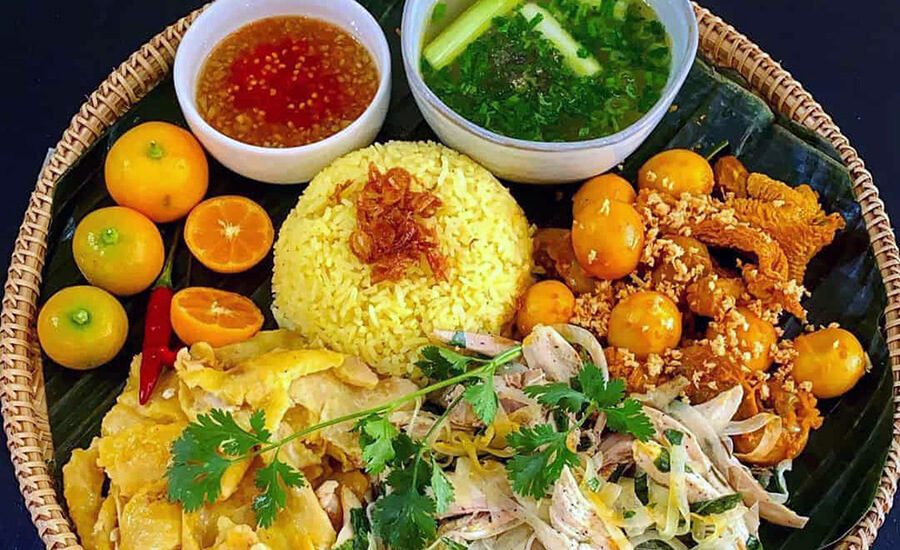
According to gourmet tourists’ experiences in Hoi An, chicken rice is a dish you must try when visiting Hoi An. Because the Hoi An chicken rice recipe is very different, the rice is soft and fragrant, the chicken is firm and chewy, eaten with extremely “flattering” black pepper sauce.
Sweet soup
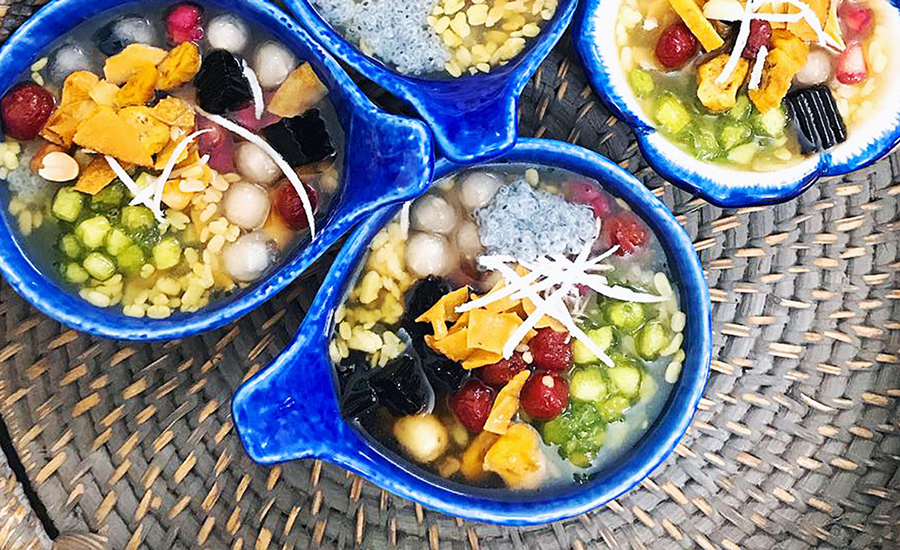
What to eat in Hoi An? You definitely won’t want to miss the sweet soup dishes. The sweet soup has the typical flavor of Quang with many types such as: corn sweet soup, black sesame sweet soup, black bean sweet soup, royal bean sweet soup, long bean sweet soup, floating sweet soup, etc. You can choose to eat each type separately or ask the lady to sell it. Sweet soup is sold for 1 mixed cup with all types.
What to buy as a gift?
Lanterns are a gift associated with Hoi An. You should look to buy at large stores that both make and sell, to have a variety of choices in styles, sizes, and materials.
Bronze statues are sold everywhere in the old town, priced from 130,000 to 350,000 VND depending on size. These are all products of the famous Phuoc Kieu bronze casting village in Hoi An.
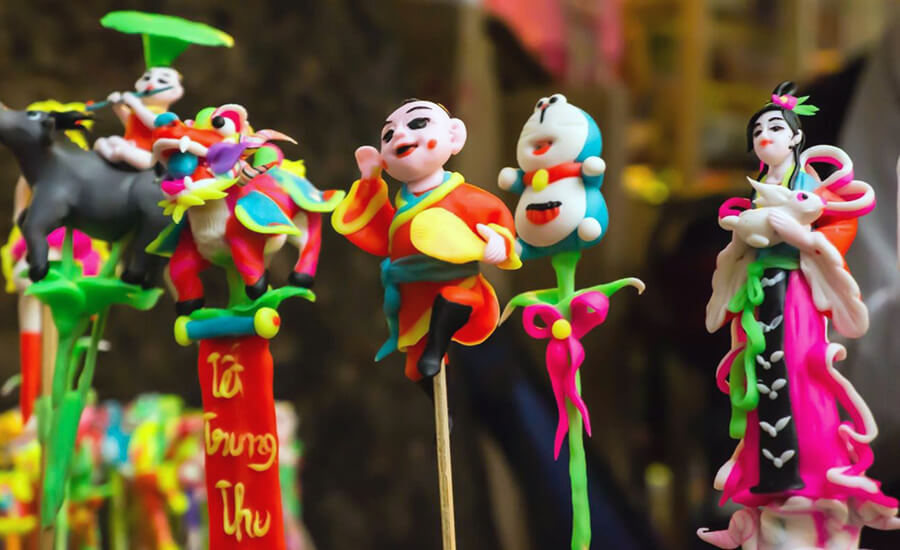
To He (Vietnamese: Tò He) is a product of Thanh Ha pottery village, Hoi An. There are no diverse designs, but this is still a popular souvenir because of its cheap price, about 5,000 VND.
Hoi An craft village is also famous for its wood carvings. The artisans all come from Kim Bong carpentry village; some of them open workshops directly in the old town. The price of an item ranges from 120,000 to 300,000 VND.
Hoi An silk is airy, light, and soft. In addition to available clothes, bags, and towels, you can order a super-fast tailor with your own design and receive it back in just one day. The average price of a silk scarf is 150,000 VND.
Source: collected by An
Comment (0)