
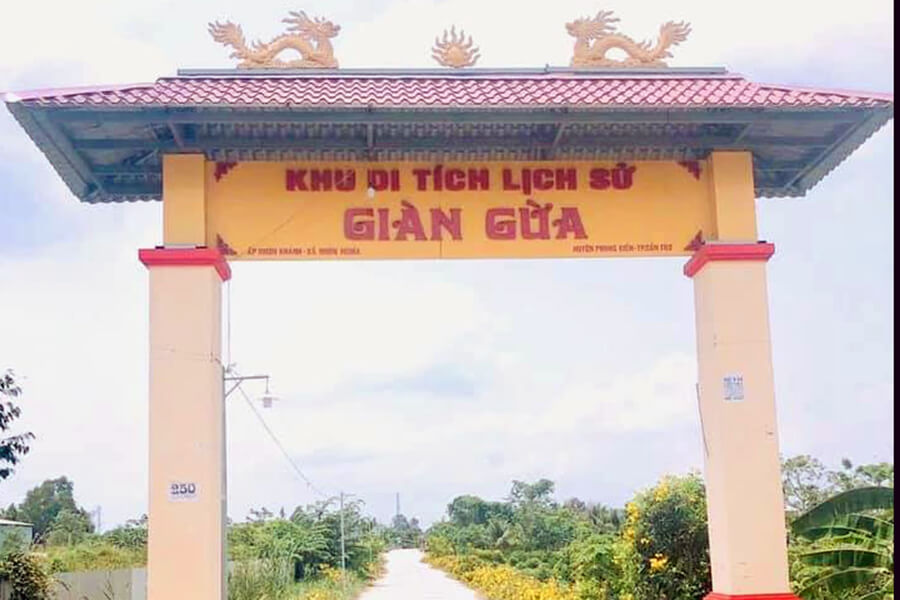
Returning to the land of Tây Đô (Old name of Can Tho city), it is impossible not to mention a historical site that is said to have been formed a long time ago, from the time of reclamation to establish the hamlet until now, which is the Gian Gua historiccal relic site. Gian Gua (Vietnamese: Giàn Gừa) is a beautiful landscape associated with the history of the formation of Phong Dien land, the cradle of revolution, and the tradition of the heroic, resilient struggle of the local people. This is also a place where cultural and religious activities, such as prayers for peace, good weather, and prosperous business, are held.
General information about Gian Gua
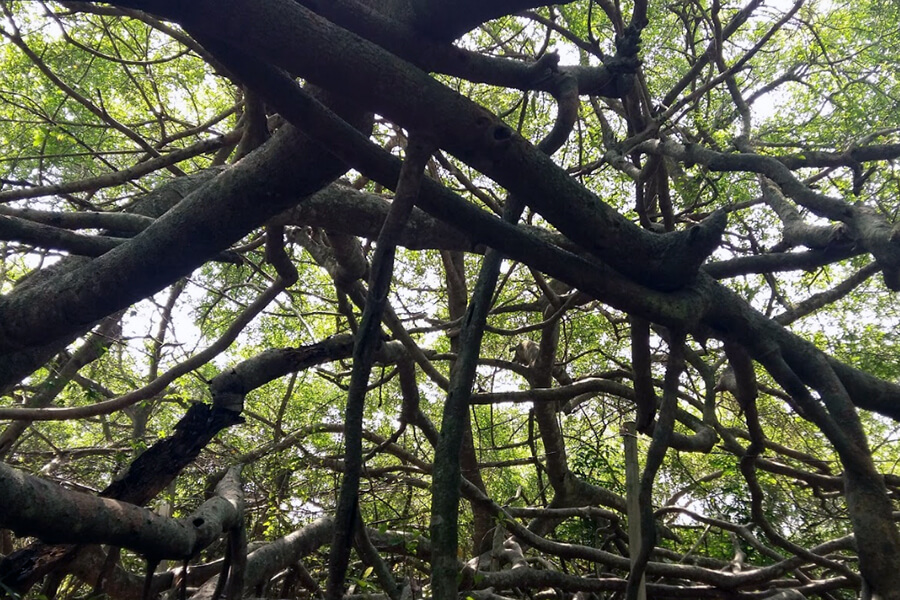
Gian Gua historical relic site is located in Nhon Khanh hamlet, Nhon Ai commune. The relic area has trees over 150 years old with large, wide-spreading trunks and branches interwoven to form a giant, tangled trellis.
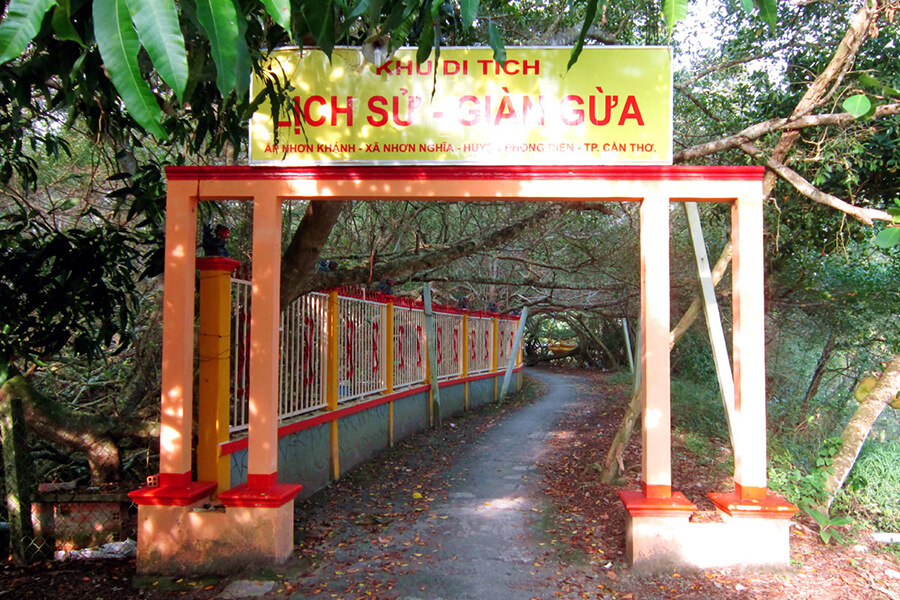
The main trees in here are a type of ficus microcarpa – a native to tropical Asia and other regions, associated with the history of reclamation and struggle against foreign invasion (resistance against the French and Americans) of Phong Dien, and also is a typical natural ecological area in Can Tho city. In the early years of the resistance war against the French, revolutionary soldiers came to Gian Gua to establish bases and operate in various capacities.
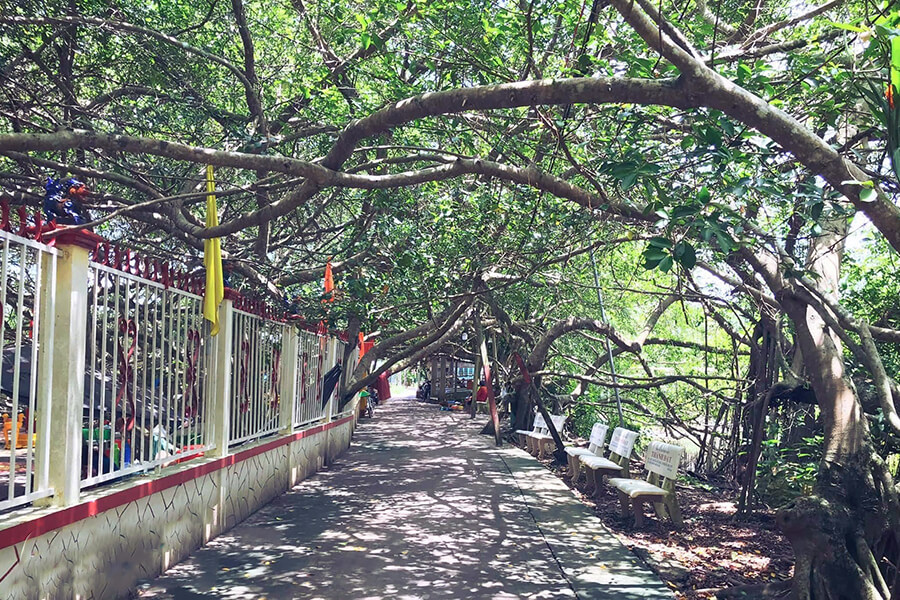
The Gian Gua has a very large area, but due to war damage and environmental impacts, it is now only about 2,700 m². Coming to the Gian Gua relic, visitors feel surprised and overwhelmed by a solid primeval trellis, with many trees and branches interwoven, tightly intertwined like a giant net, so sometimes they don’t know where to go, where is the root, where are the branches?
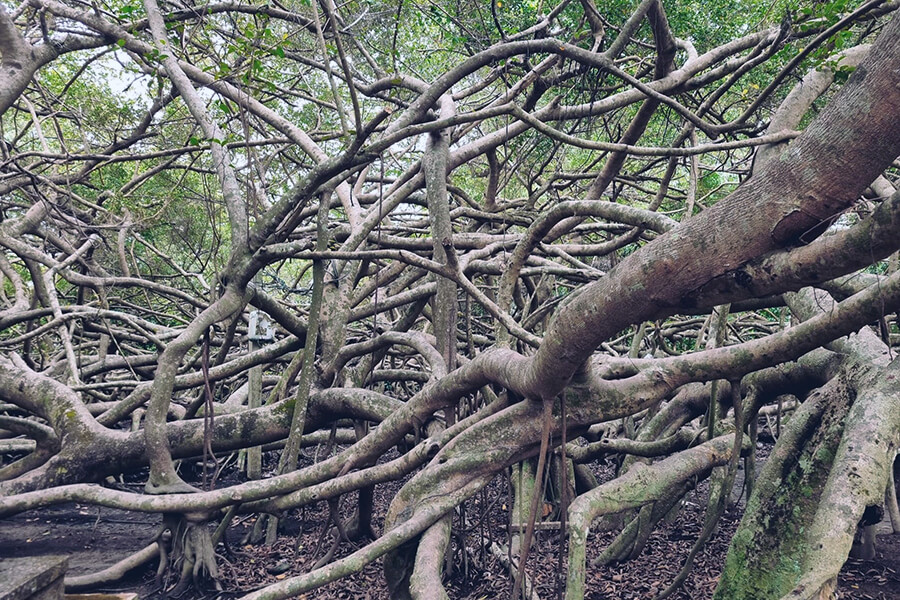
There are branches that still bear traces of war with cuts and spots caused by bombs and bullets. However, with strong vitality, those branches still sprout and spread their shade. This is probably a unique Gian Gua in Vietnam. Under the wide, shady trees, people feel comfortable and at peace because the air is very cool and fresh.
In particular, this place was also the site of revolutionary activities during the two periods of resistance against the French colonialists and the American imperialists. During the anti-American period, many meetings took place here. In 1961 – 1965, Gian Gua was also a secret facility that offered training courses for special forces teams in Can Tho, where weapons and ammunition were hidden, contributing to the armed forces and the people in defeating the US imperialists’ war strategies and liberating Can Tho in 1975.
Festival at the Gian Gua historical relic site
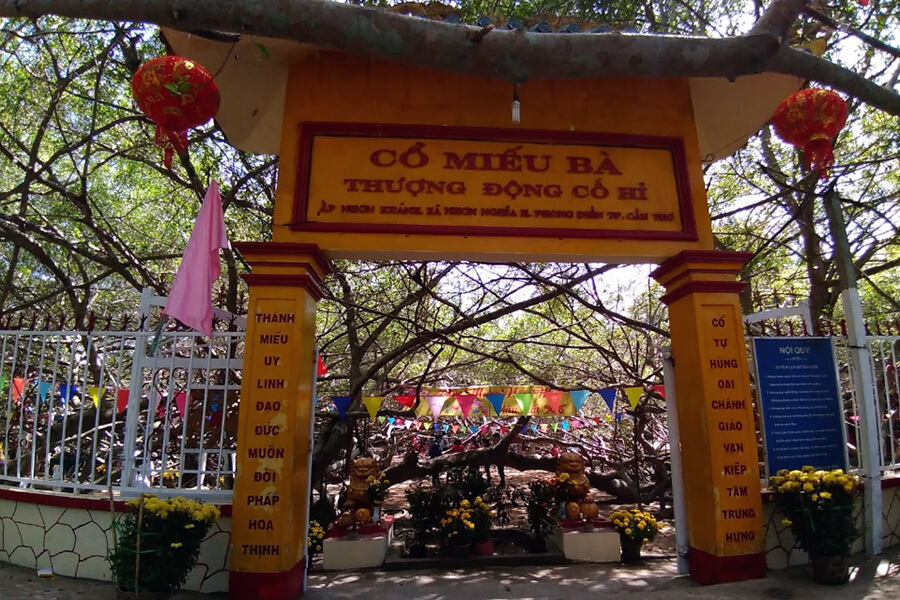
Besides its wild beauty, Gian Gua Historical Relic Site is also a place rich in legends, associated with the history of the Nguyen Dynasty’s reclamation and expansion and the local people’s struggle against foreign invaders. Inside the relic, there is a temple dedicated to Uncle Ho, and observing the War Invalids and Martyrs’ Day on July 27.
On the 22nd and 28th days of the second lunar month every year, there is a celebration of Ms. Co Hi, and many people come to pray for peace, good weather, and good harvests.
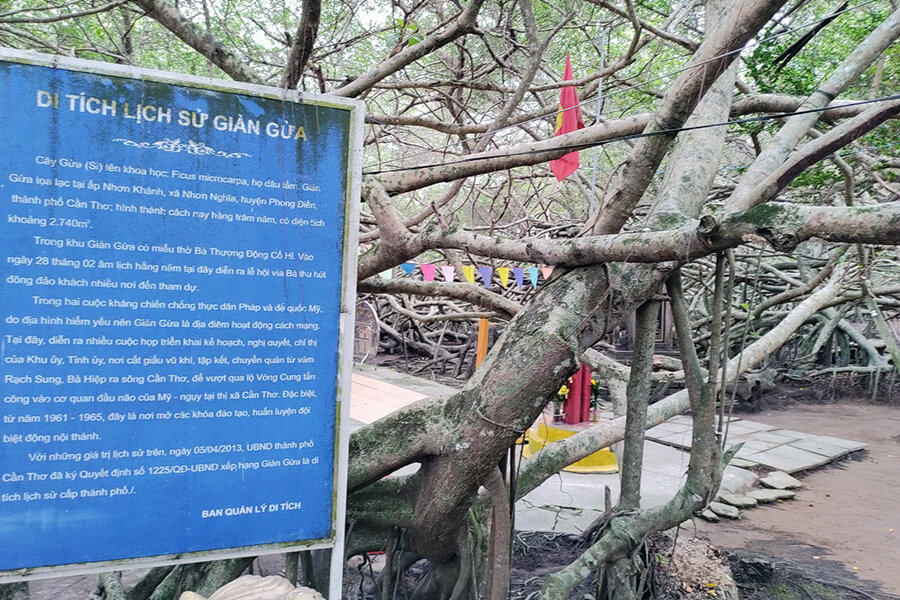
Based on the above values, on April 5, 2013, the Can Tho City People’s Committee issued Decision No. 1225/QD-UBND, classifying Gian Gua as a city-level historical relic.
Coming to Can Tho, besides exploring the historic site of Gian Gua, visitors can also visit many other famous destinations of the land of “white rice, clear water,” such as Cai Rang floating market, Bang Lang Stork sanctuary, Con Son tourist area, …
In particular, visitors should not miss the opportunity to enjoy Can Tho specialties such as fish sauce hotpot, goby hotpot, and grilled snakehead fish, all of which embody the quintessence of the local area.
Source: collected by An
Follow us for the best deals on Vietnam package tours and visa services!
Comment (0)