
Besides Ong Bon Pagoda and Lady Thien Hau Temple in My Xuyen, Can Tho also has other beautiful and famous Chinese pagodas. Among them, the most prominent is La Han Pagoda. This Chinese pagoda has an ancient, majestic beauty, like a massive castle on the banks of the Mekong Delta, where indigenous people often come to make pilgrimages and pray for peace, luck, and fortune.
Overview of La Han Pagoda
La Han (Vietnamese: La Hán; English: Arhat) Pagoda is located at 131 Dien Bien Phu Street, Cau Den Hamlet, Soc Trang Ward. This is one of the pagodas in old Soc Trang (currently merged to Can Tho City) that possesses an extremely unique architecture with spacious space and green grounds, very suitable for people to visit and make pilgrimages on full moon occasions, major holidays or festivals.
This pagoda was built by the Chinese community living in old Soc Trang to provide a sacred place for indigenous residents as well as Buddhists to visit and pray for luck, peace, favorable weather and happy life.
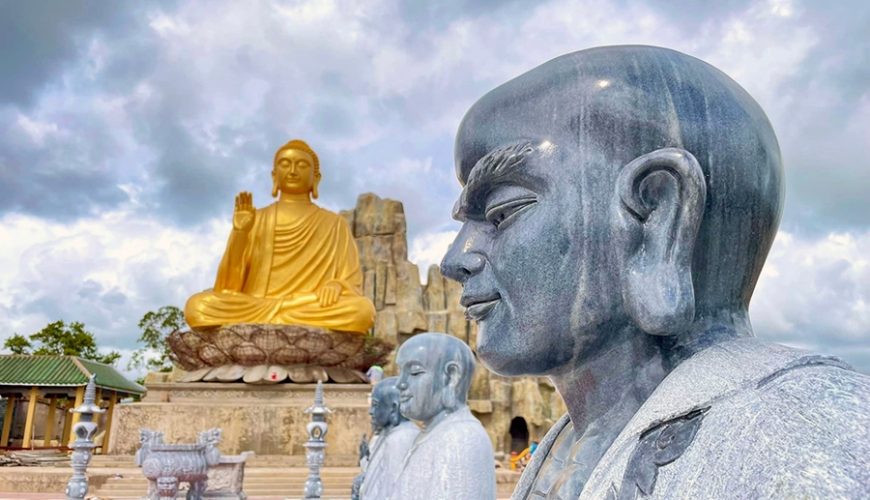
According to remaining records, La Han Pagoda was built in 1952 and managed by Chinese people in Chaozhou region. Initially, this place was just a simple thatched house with paneled walls to worship Buddhas, the most prominent of which were the images of 18 Arhats. For that reason, gradually, the pagoda was often called by people in the area after the Buddha statues, so it got its current name.
Around 1956, La Han Pagoda was severely damaged by a storm. After that, local people contributed their efforts to rebuild the pagoda with wood and bricks. By 1990, La Han Pagoda was completely built, becoming much more spacious and solid thanks to the contributions of Buddhists and people everywhere.
What’s unique at La Han Pagoda?
Equally famous as Ong Bon Temple and Lady Thien Hau Temple, the ancient La Han Pagoda features beautiful, harmonious architecture and pure, elegant scenery amid a spacious, cool setting.
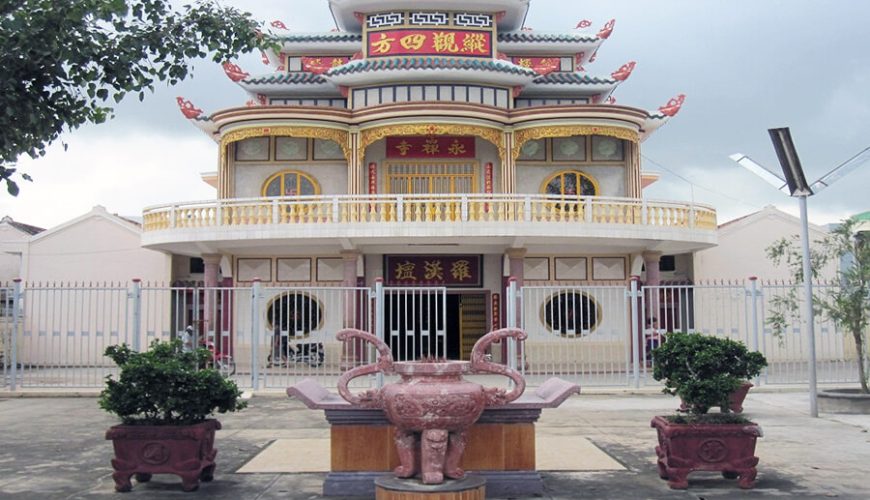
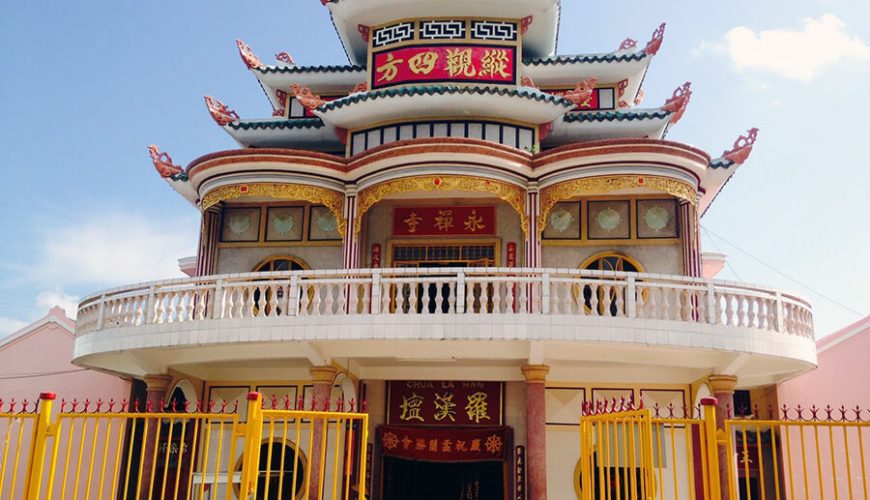
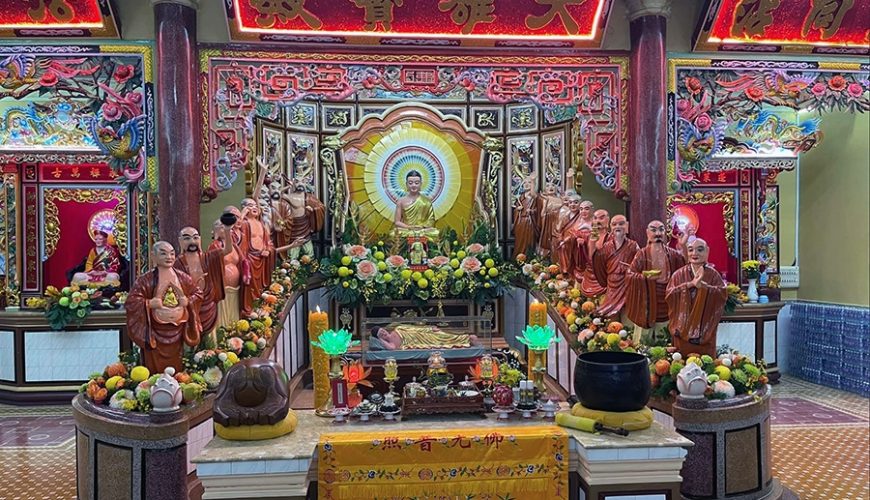
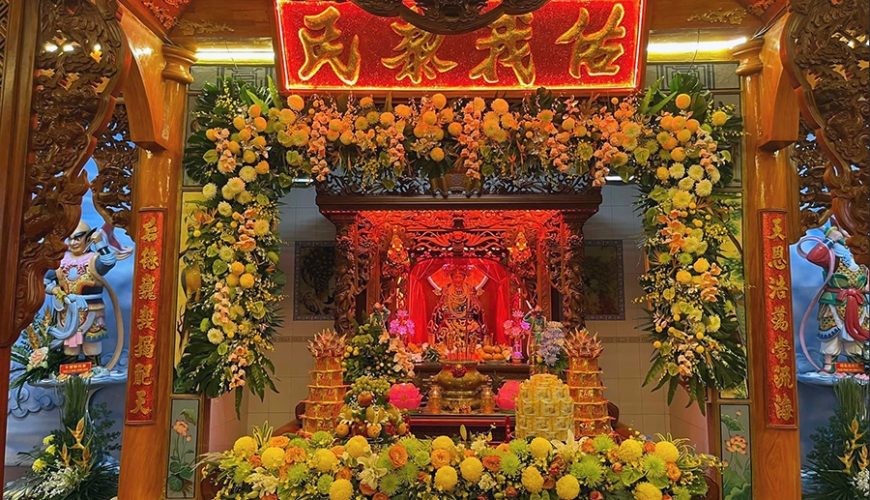
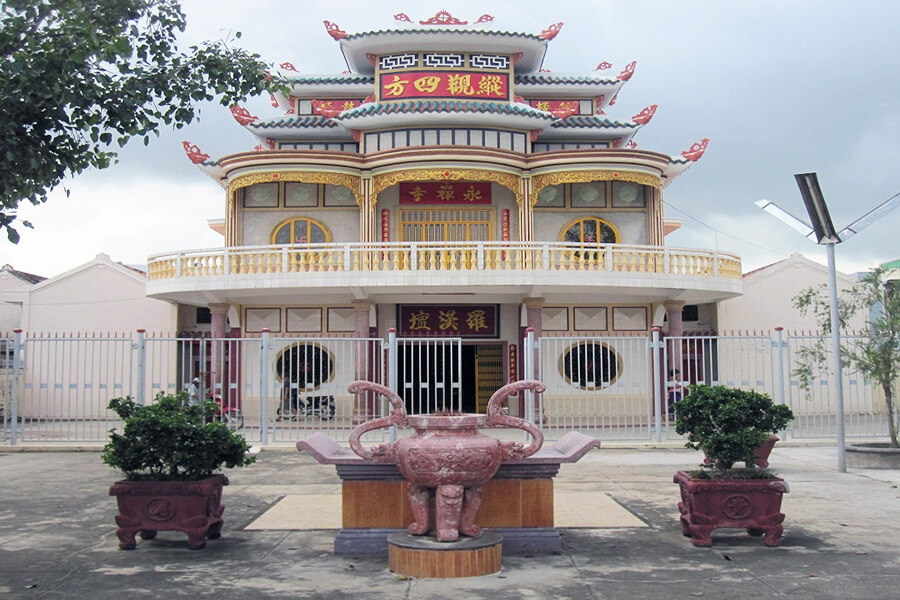
Overall, the pagoda is built into 2 separate floors with 4 overlapping roof systems. Especially at each corner of the roof, there are decorative patterns in keeping with the traditional architectural art of the Chinese people. The upper floor worships Shakyamuni Buddha, Eighteen Arhats, Daode Tianzun, and Bodhisattvas.
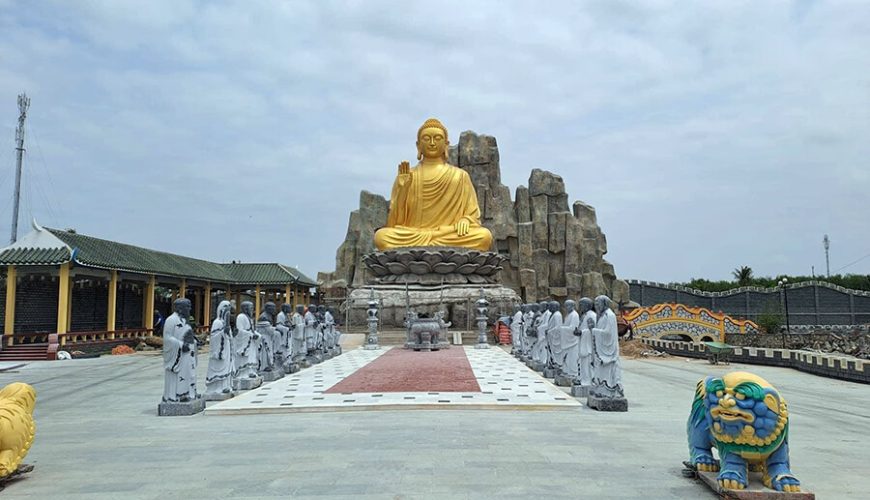
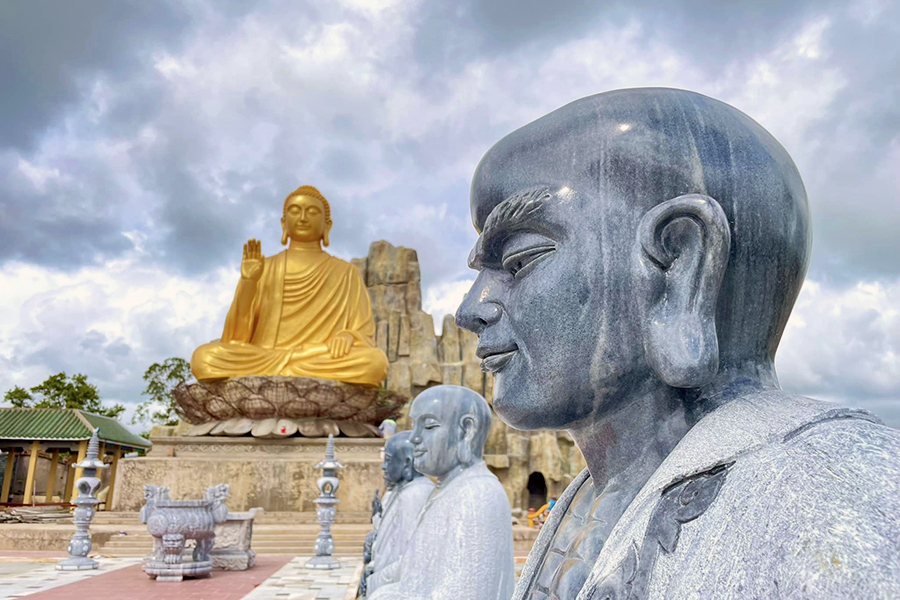
The main worship space of the pagoda is the front room of the upper floor. In the most solemn position is the “Dai Hung treasure hall” worshiping Shakyamuni Buddha and 18 Arhats standing on both sides.
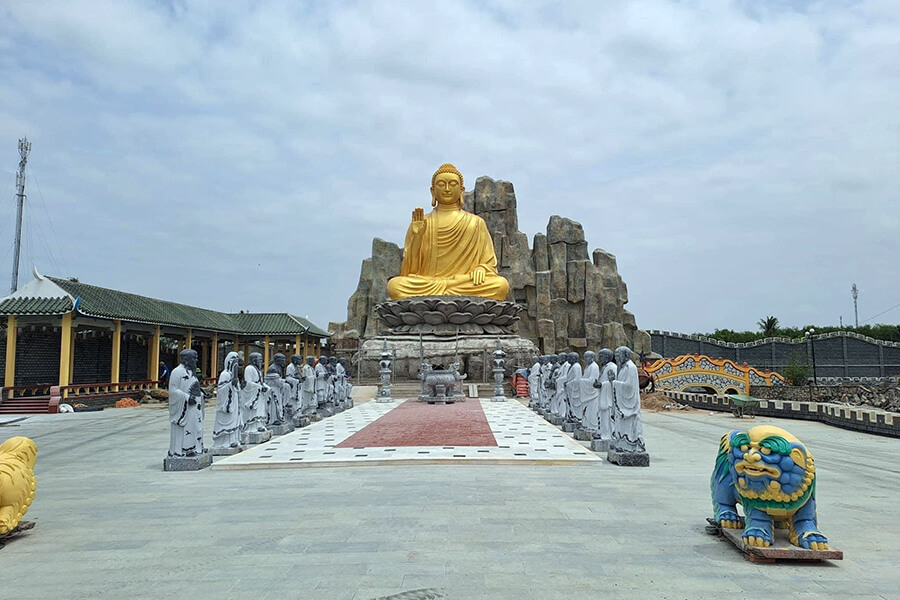
The Buddha statues here are carefully arranged, exuding the majestic beauty of the place of practice and meditation. The downstairs area worships Mazu; some other gods and fairies solemnly decorate it, making anyone who admires it feel the solemnity and sacredness inside the ground.
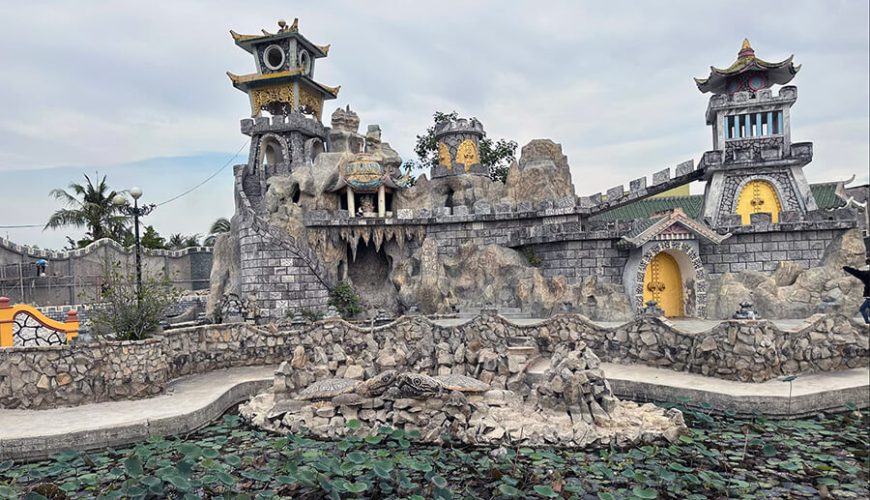
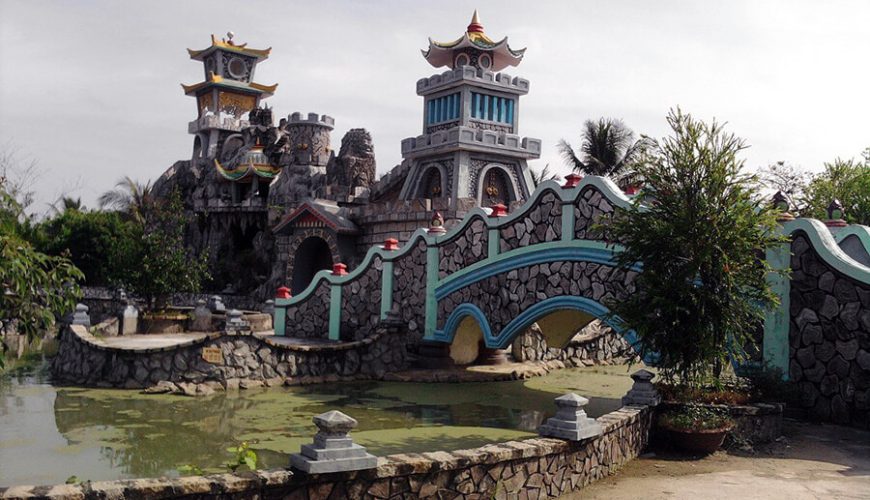
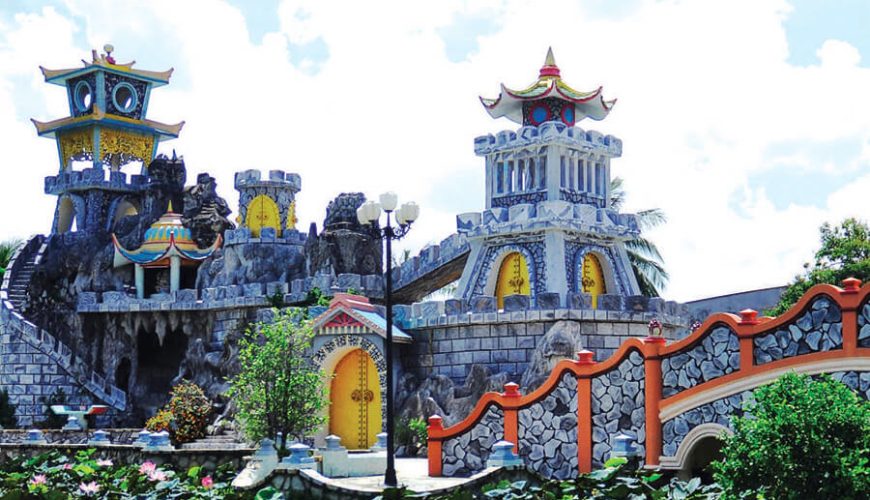
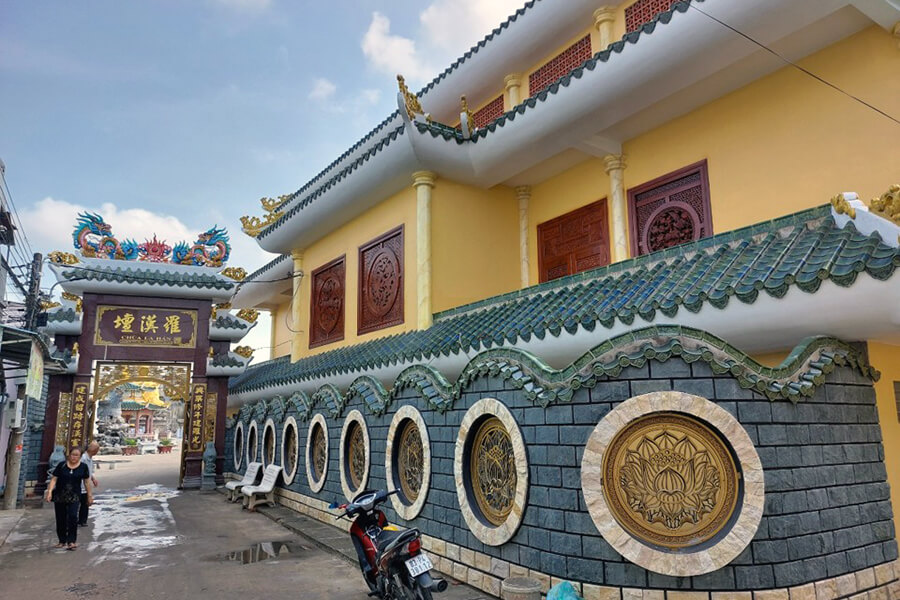
And yet, the ancient La Han Pagoda in Can Tho also has a distinctive feature in its wall design. This area is not painted in the traditional yellow color, but is built of stone, which gives the impression of solidity and grandeur. That’s why, if viewed from afar, the pagoda looks exactly like a fairy-tale castle set in the middle of the peaceful and prosperous.
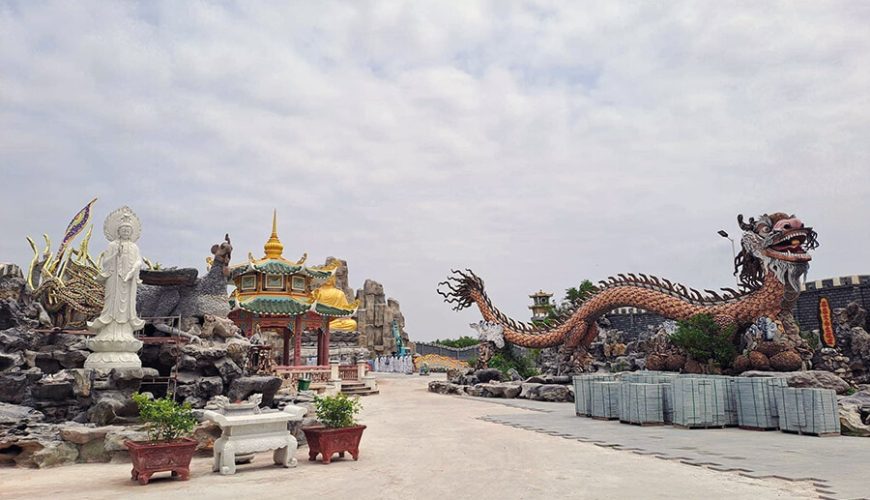
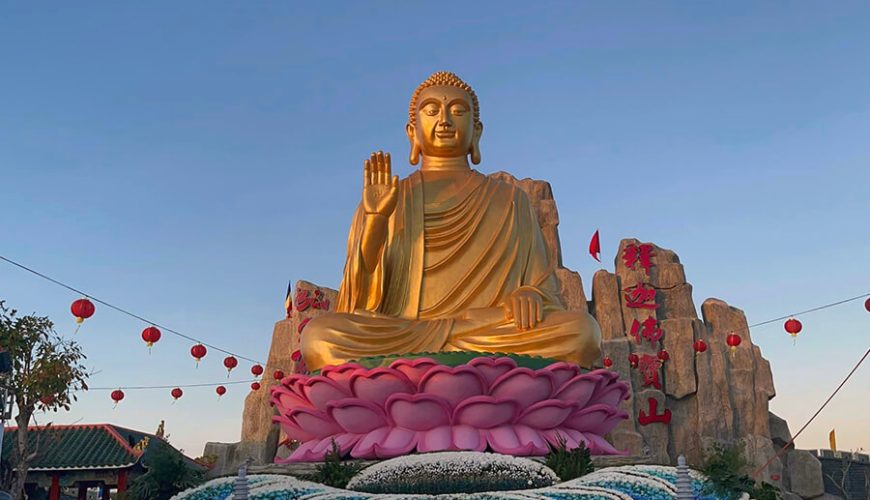
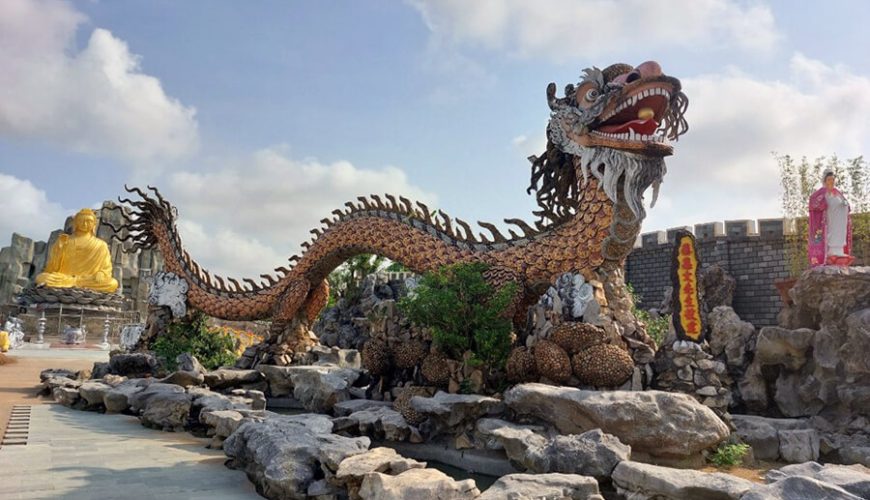
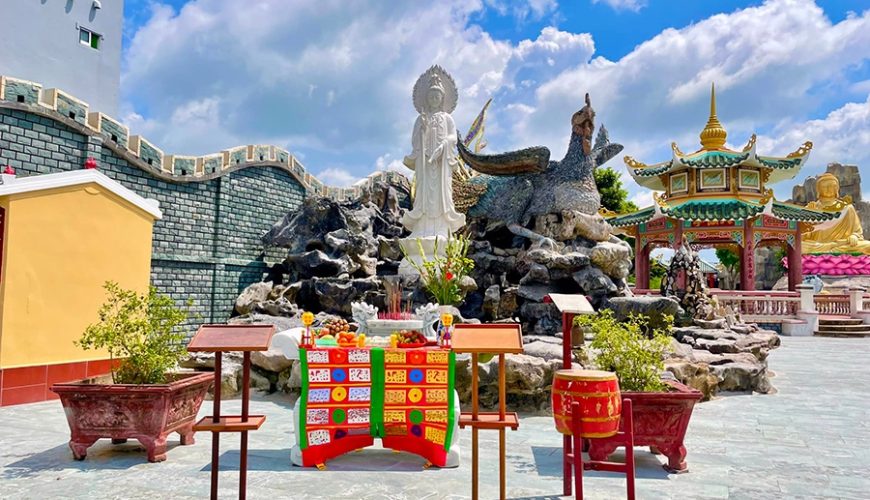
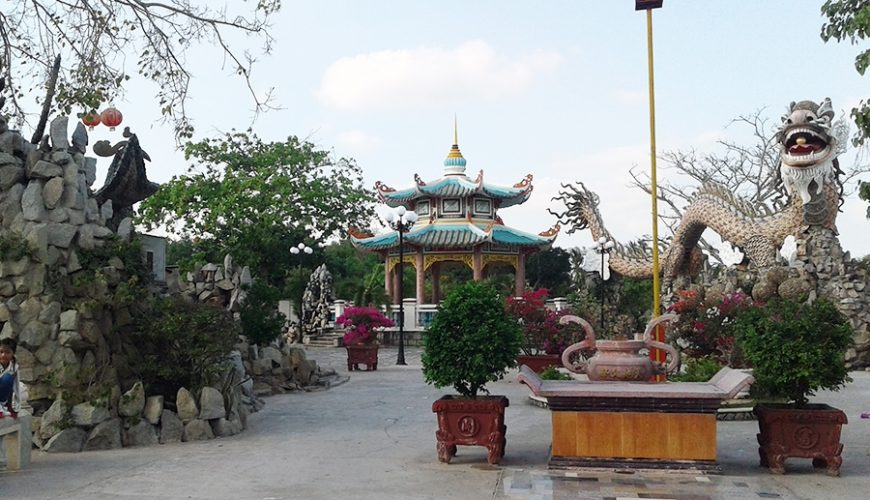
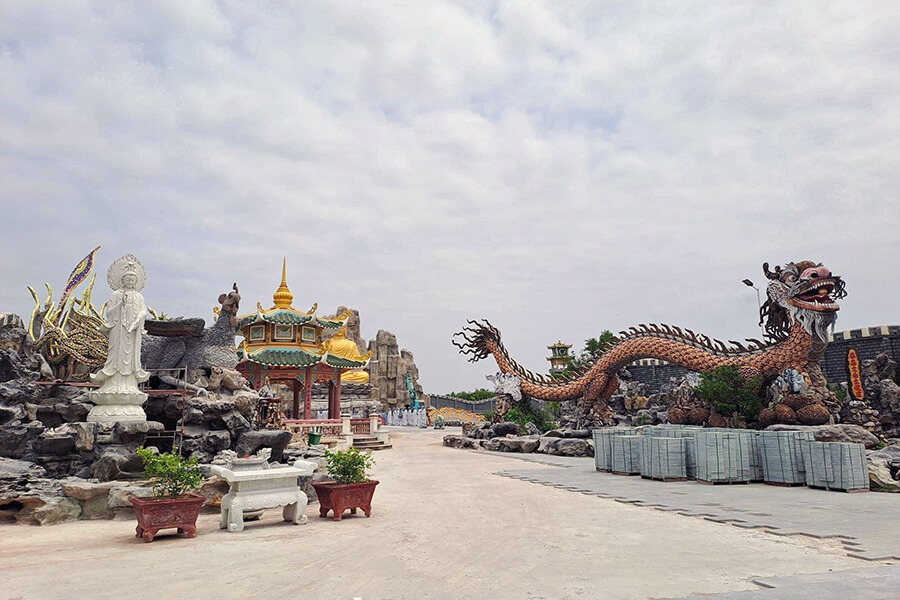
In particular, the front yard of the pagoda features a statue of Guanyin Buddha. There are also scenes and decorations that enhance the pagoda’s poetic beauty, such as the lotus pond, the mountain, the turtle lake, and the communal house. Besides, the system of details and items such as precious bowl lamps, a pair of unicorn pearls, and statues of flying dragons and dancing phoenixes. Specifically, in the pagoda grounds, on the left side is a phoenix bird composed of natural and colored stones; its tail is made of colored stones that spread out to form a stone niche for the worship of Bodhisattva Avalokiteshvara.
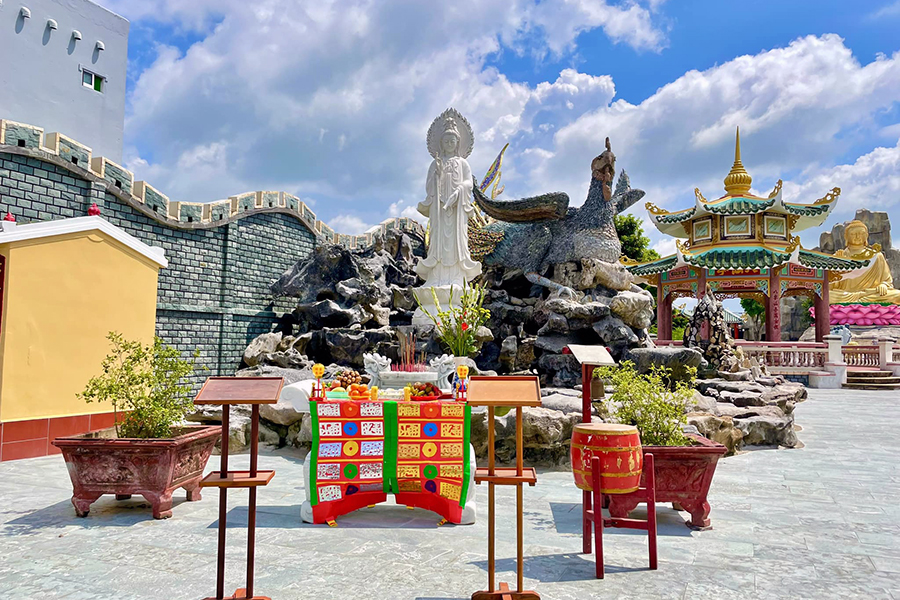
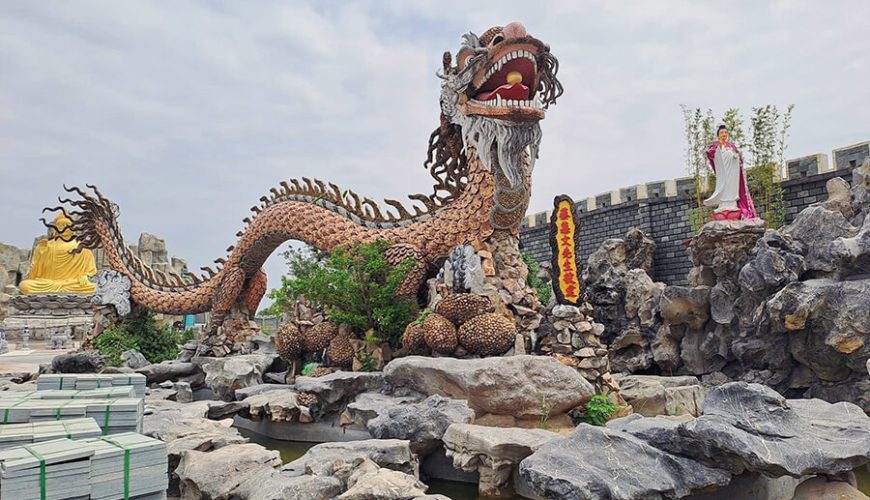
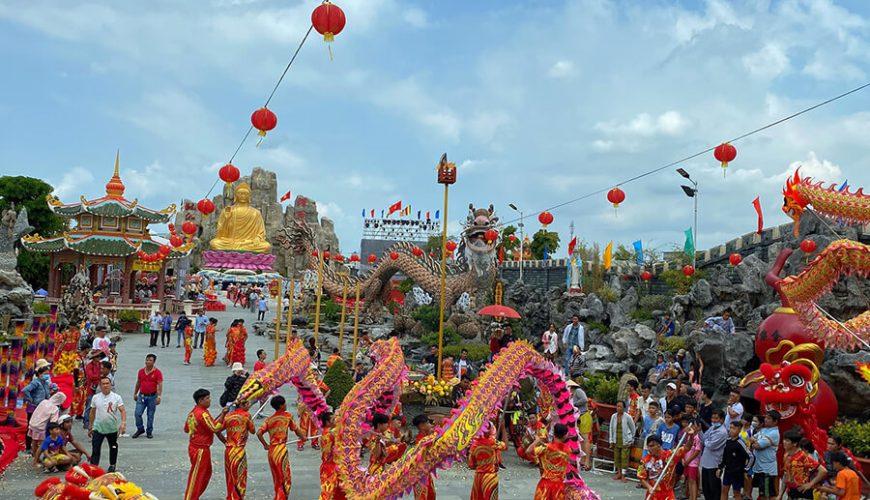
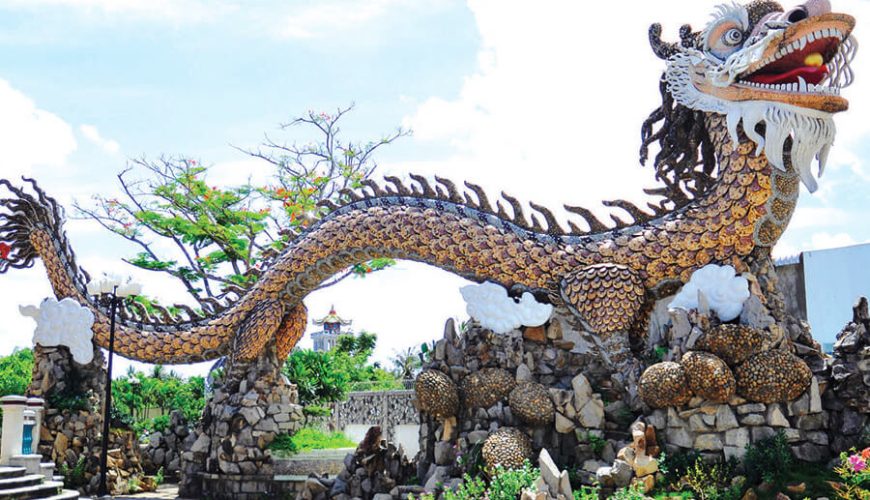
Above are engraved the words “Putuo Mountain” – one of the four sacred mountains in Chinese Buddhism. On the right is a giant dragon-shaped structure made of reinforced concrete, decorated with unique and sophisticated stone pieces.
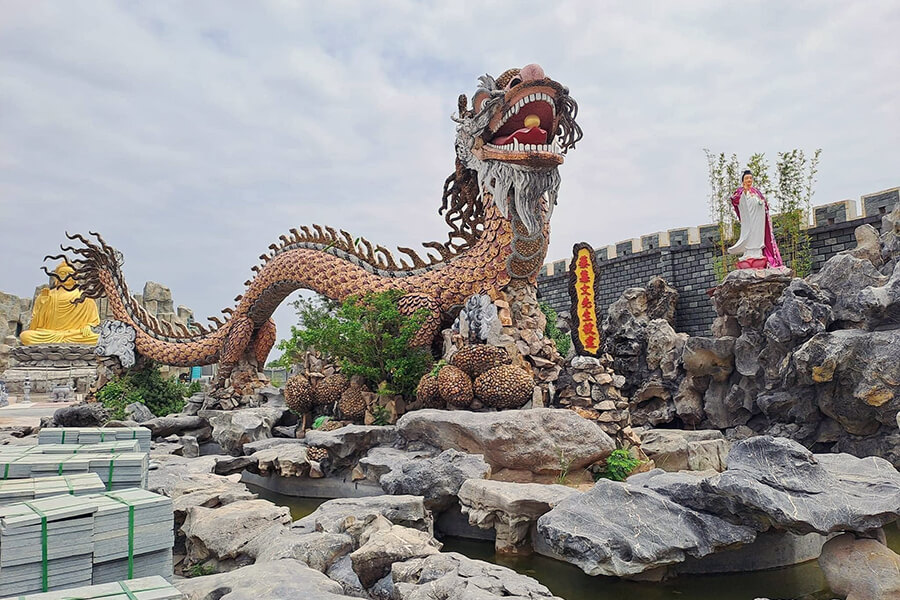
Next to it is a pavilion with an eight-sided model that the ancient Chinese built for passers to stop by…
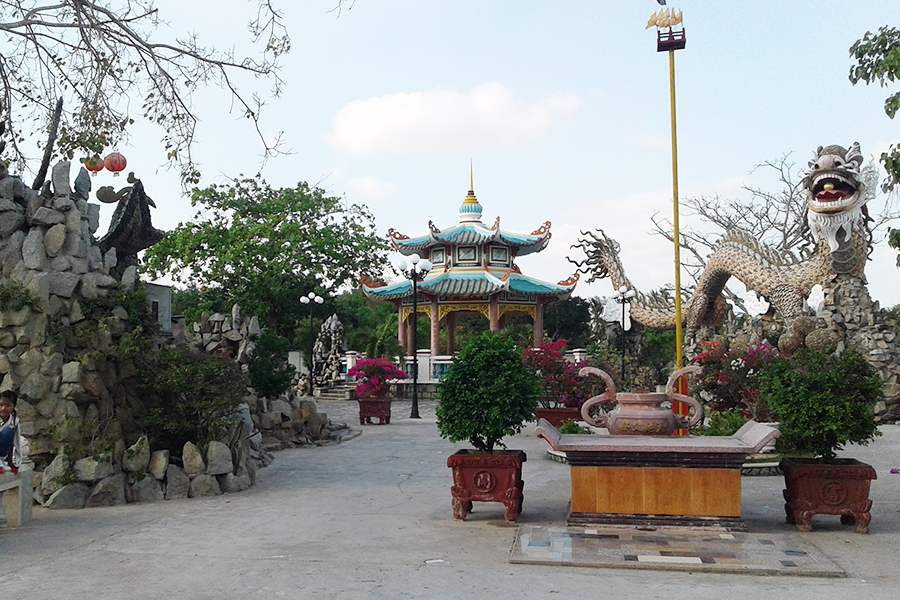
All contribute to creating one of Can Tho’s famous landscapes. The pagoda has a large campus, with many unique architectural styles, especially the image of the “Dragon, Unicorn, Turtle, Phoenix” shown next to a mountain tower.
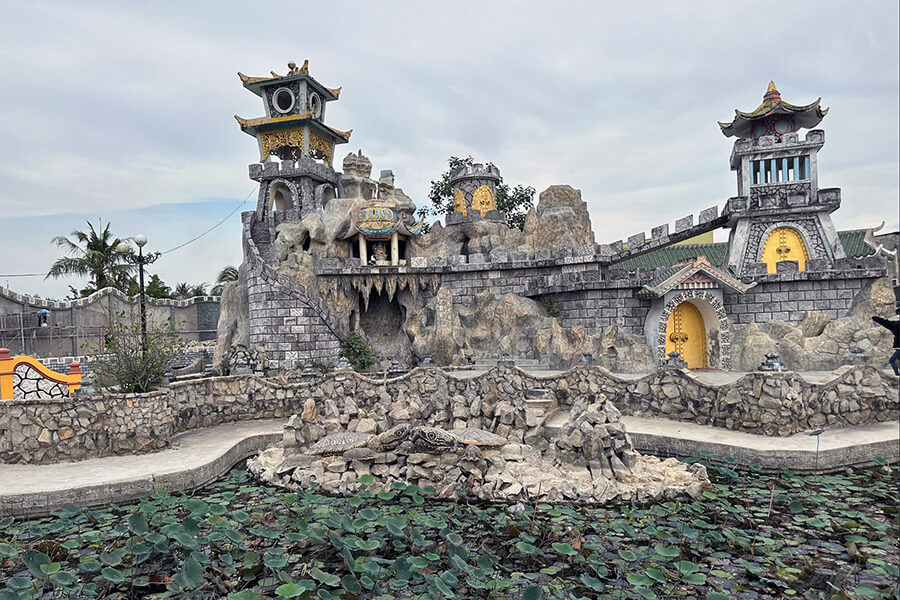
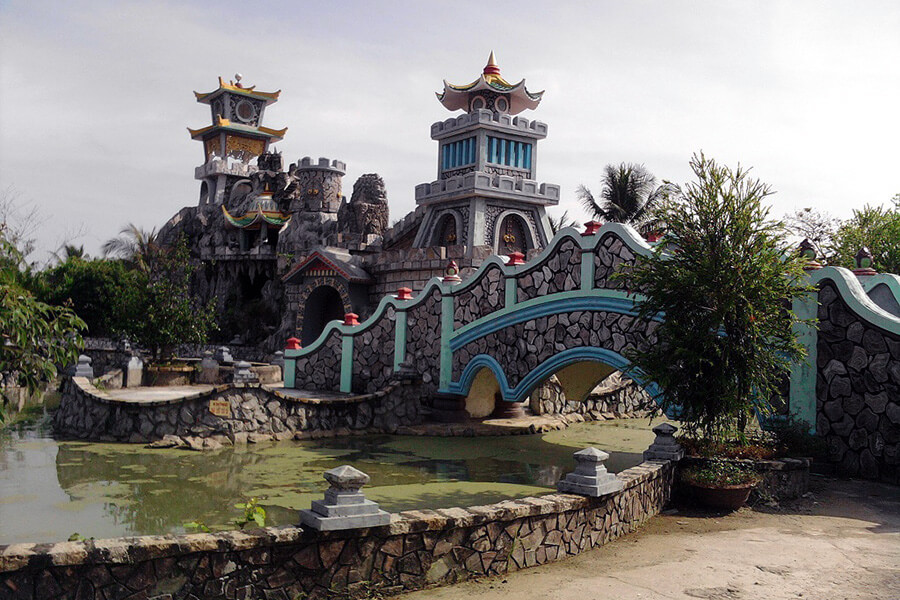
In the pagoda grounds, there is also an architectural work simulating the Great Wall that has beautified the campus, making it more beautiful and majestic, along with lakes planted with many lotus flowers…
It can be said that the pagoda space is very airy, thanks to the large grounds. When traveling to Can Tho and visiting La Han pagoda, remember to walk around the courtyard and then enter the main hall to pray for peace and good fortune. This is truly a great place for tourists from all over to visit and make pilgrimages during the Spring Festival holidays.
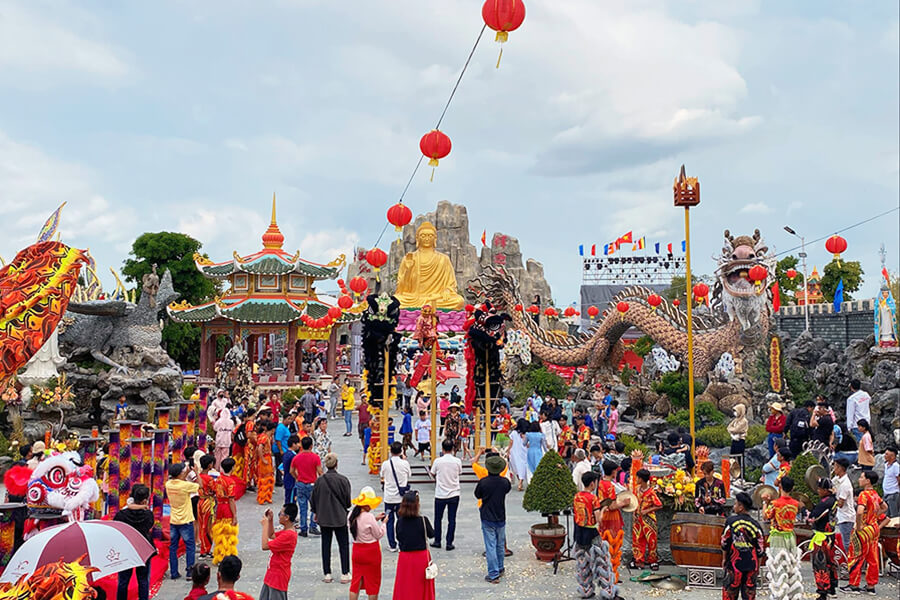
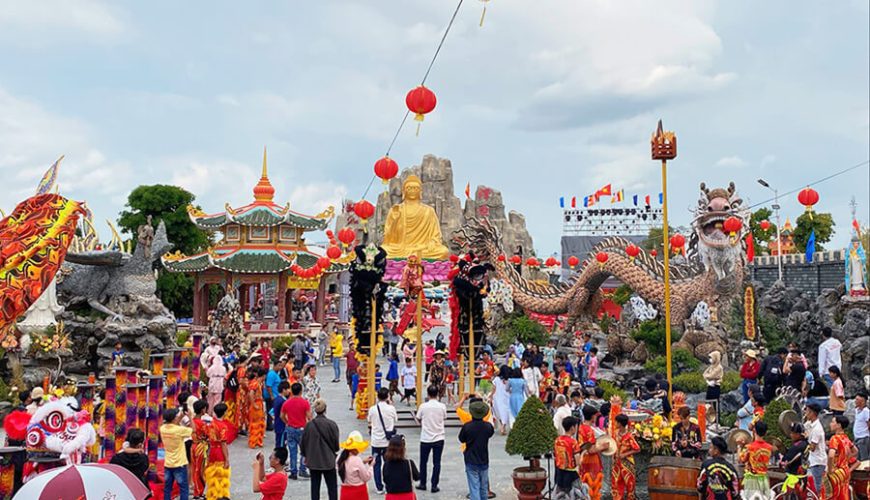
Especially on the occasion of the Lunar New Year, the pagoda often hosts a procession featuring lanterns, treasure towers, and blessed cakes, symbolizing good fortune for every home and encouraging the spirit of hard work throughout the year. And on the Ghost Festival (7th lunar month), the pagoda also organizes distribution to poor local households.
La Han Pagoda
- Best for: solo travelers, families, students, pilgrims…
- Entrance: Free
- Tourist spots nearby: Four Faces Pagoda, Bat Pagoda, Kh’Leang Pagoda, Chen Kieu Pagoda, Nga Nam Floating Market, Khmer Museum, Clay Pagoda, Som Rong Pagoda, Ong Bon temple…
Source: collected by An
Follow us for the best deals on Vietnam package tours and visa advice!
Comment (0)