
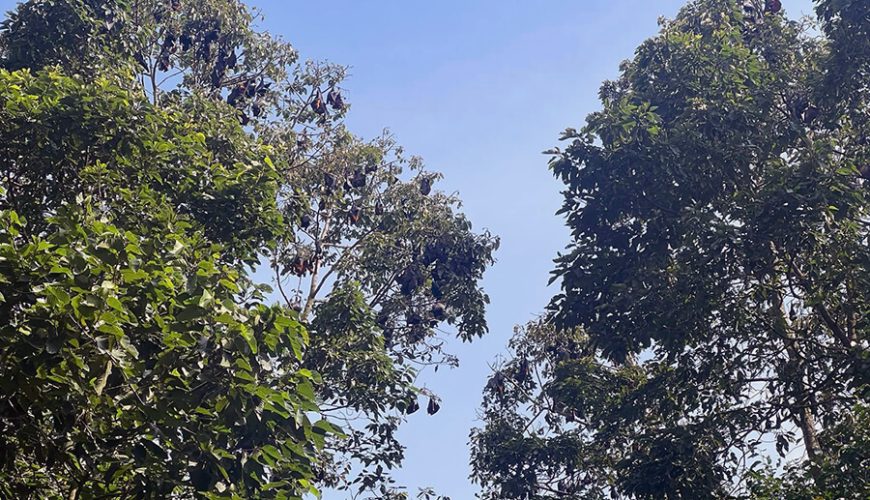
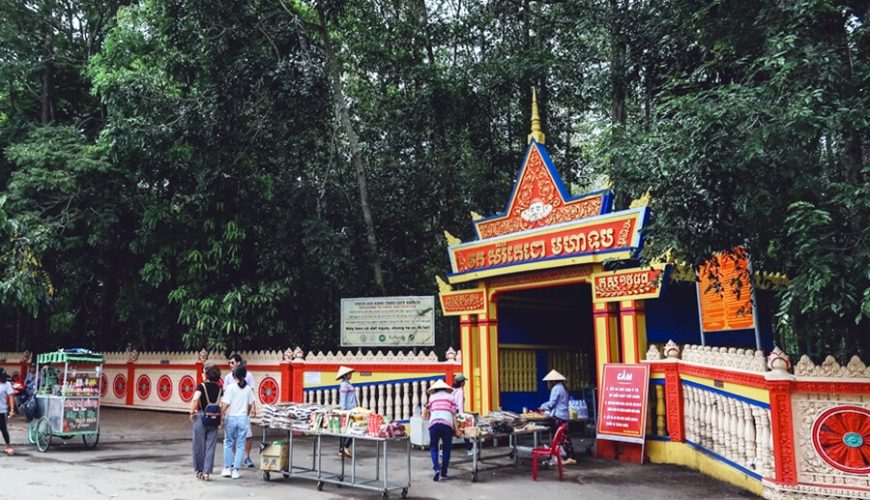
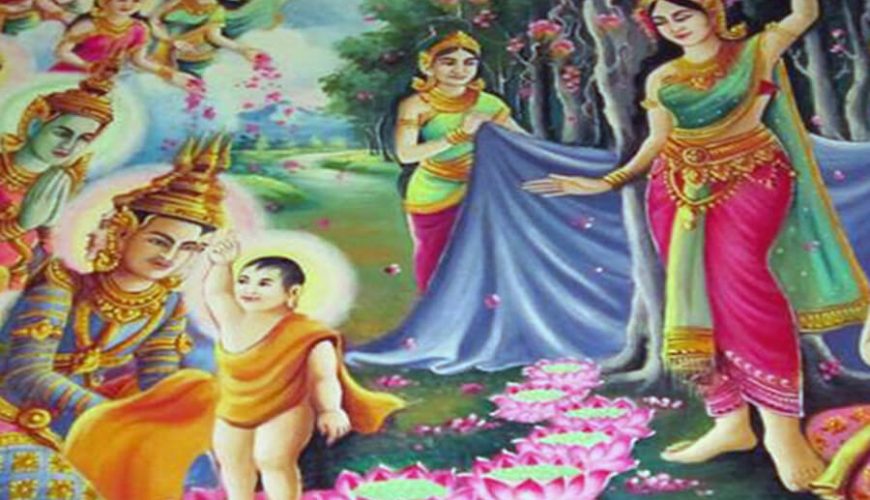
Bat Pagoda (Vietnamese: chùa Dơi), also known as Ma Toc Pagoda, is more than 400 years old and is associated with the religious beliefs of local people. In addition, this place also circulates interesting stories, promising to bring you many new experiences in your Soc Trang travel journey.
Overview of Bat Pagoda
Bat Pagoda is also known as Ma Toc Pagoda or Mahatup Pagoda, located on Van Ngoc Chinh Street in Phu Loi Ward. It takes around 4 hours to drive from Ho Chi Minh City, so the best way to get here is to book a private car to Soc Trang or Phu Loi Ward with a driver, so you can enjoy the comfort of the car and admire the beautiful scenery along the way.
The architectural complex here represents the cultural and religious beliefs of the Khmer ethnic community and was recognized as a National Artistic Monument in 1999. Currently, Bat Pagoda is not only a place for operating cultural and traditional activities, it’s also a tourist attraction of the city.
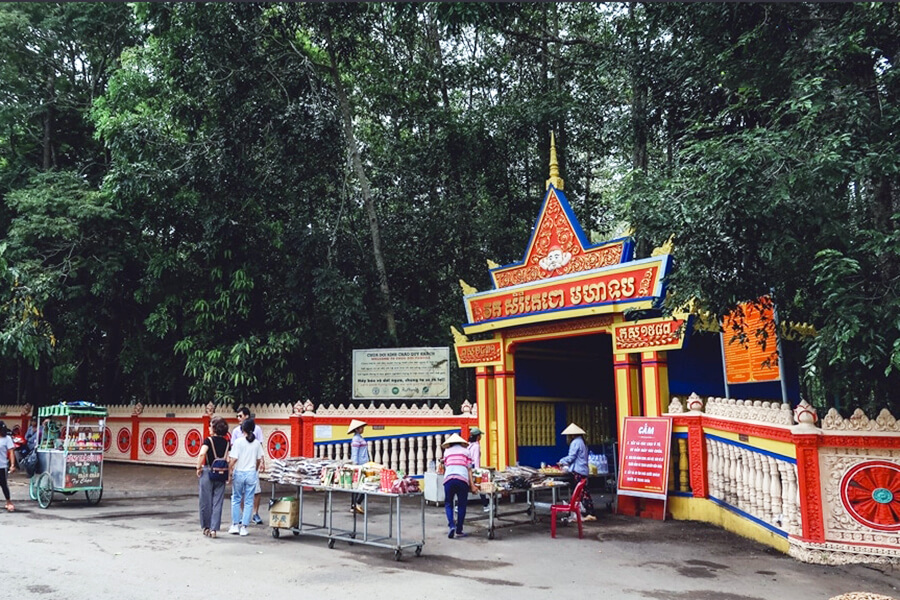
According to records in ancient bibliographies, the construction of the Bat Pagoda in Phu Loi began in 1569, more than 450 years ago. The long history of Bat Pagoda is second only to Kos Tung Pagoda. Initially, this was just a small temple with the main hall built of bamboo leaves. Later, the local people donated to rebuild with bricks and tiled roofs. And in 1960, the Bat Pagoda was repaired on a large scale, changing almost the entire architecture with typical Khmer features.
In 2008, an unfortunate incident happened: the temple burned down almost the entire main hall area. By April 2009, with the attention of the departments and people’s contributions, the pagoda had been restored to its original state.
In 2013, the Bat Pagoda tourist area was officially opened. Although the budget is not enough to give this place a completely new look with a brilliant appearance like other famous pagodas, amenities including spacious parking, restaurants, trams… have also been provided to serve visitors from all over to visit and worship.
Origin of the name Bat Pagoda
The Bat Pagoda was originally named the Mahatup Pagoda in Khmer. However, with the appearance of thousands of bats across the campus, the locals named the pagoda Dơi (English: Bat). According to the monks, in the past, the pagoda had many tall trees, which attracted bats to live there. However, the monks and people here are not afraid of bats. On the contrary, they consider this a good omen, bringing them food and protection.
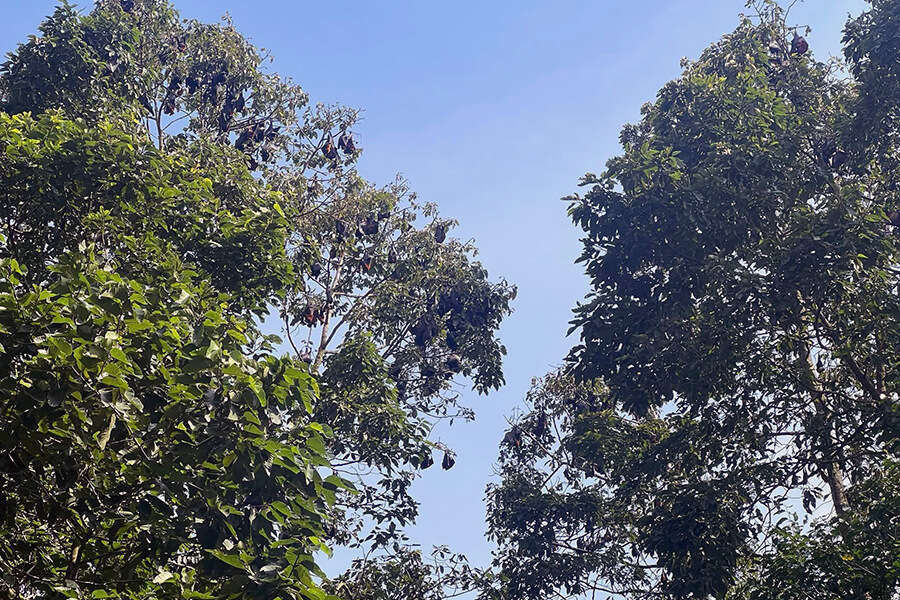
The bats at the temple are mainly rare crow bats, weighing 1-1.5 kg and having a wingspan of up to 1.5 m. They live in lush fruit gardens, but they never eat fruit in the pagodas; they often fly far away to find food.
Therefore, when dusk falls, the scene at the pagoda is strangely bustling, with the noisy sound of bats flapping their wings, calling to search for food at night. Strangely, they fly in a line and circle a few times in the sky over the pagoda area, but never fly directly over the roof of the main hall.
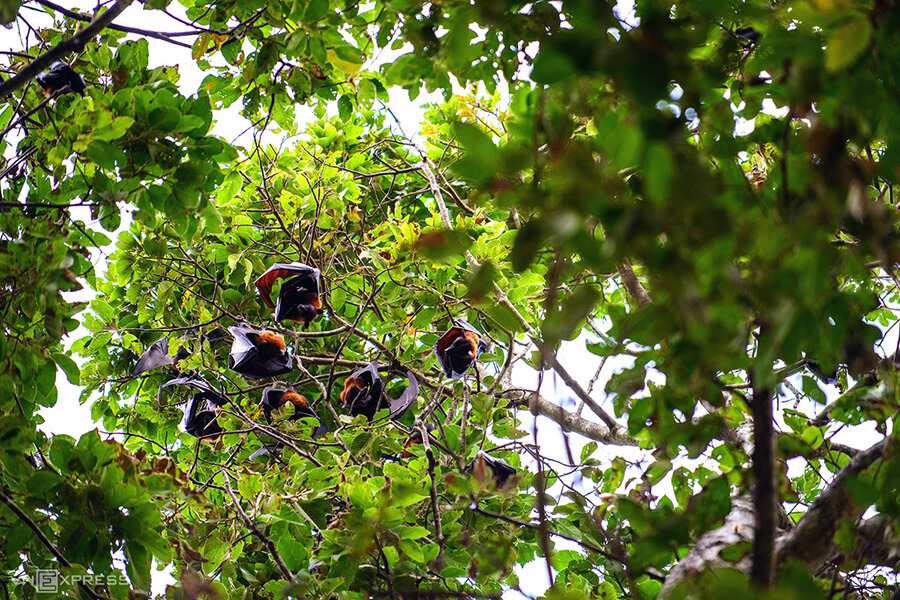
The bats’ popularity is so great that many people come here just to see them with their own eyes. Not only that, in addition to offerings, guests also prepare fruit to feed the bats.
Unique architecture of Bat Pagoda
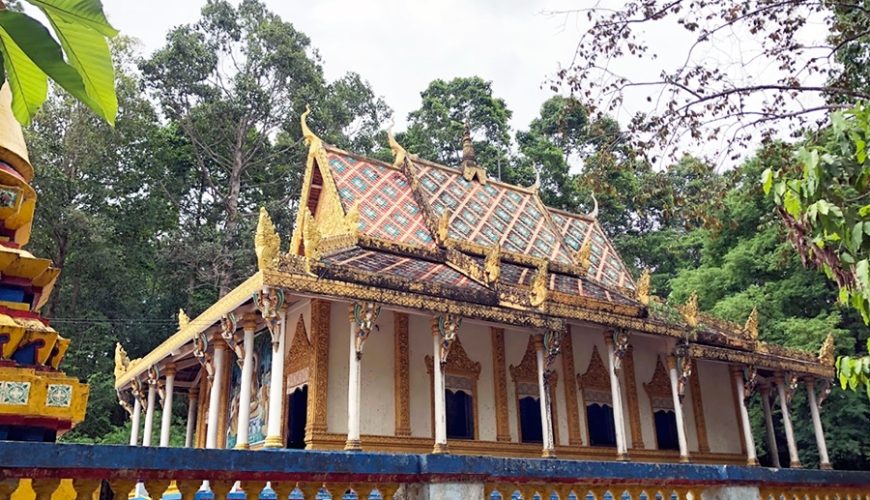
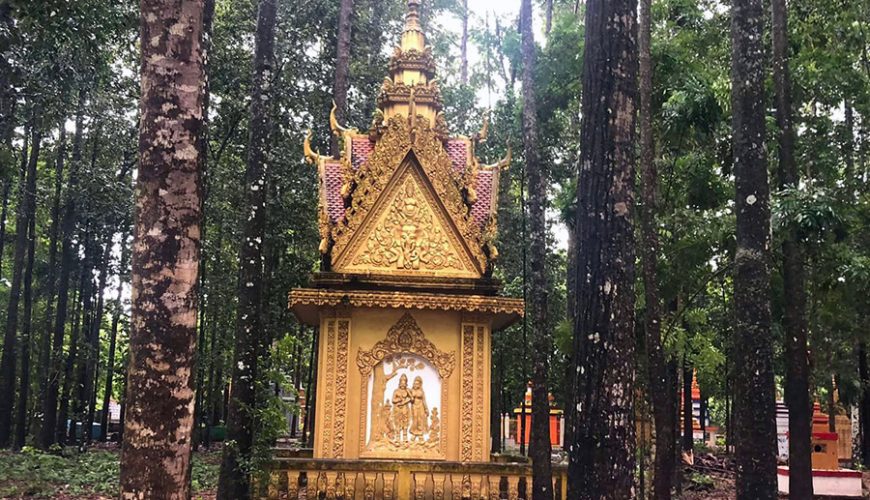
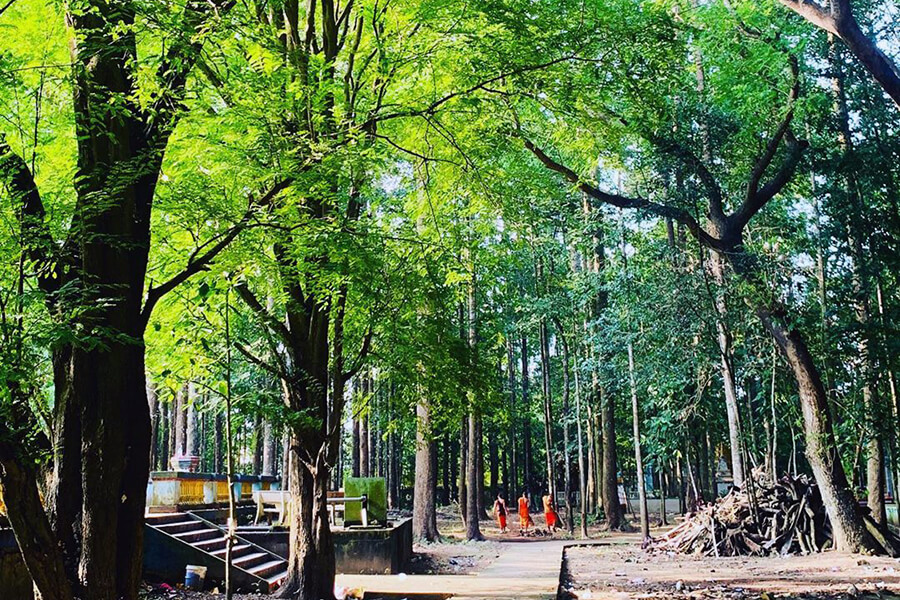
The campus of Bat Pagoda is designed with the following areas: Main hall, Sala, festival room, monks’ and abbot’s rooms, towers worshiping the ashes of the deceased, and reception rooms. In addition, the campus also grows many ornamental trees.
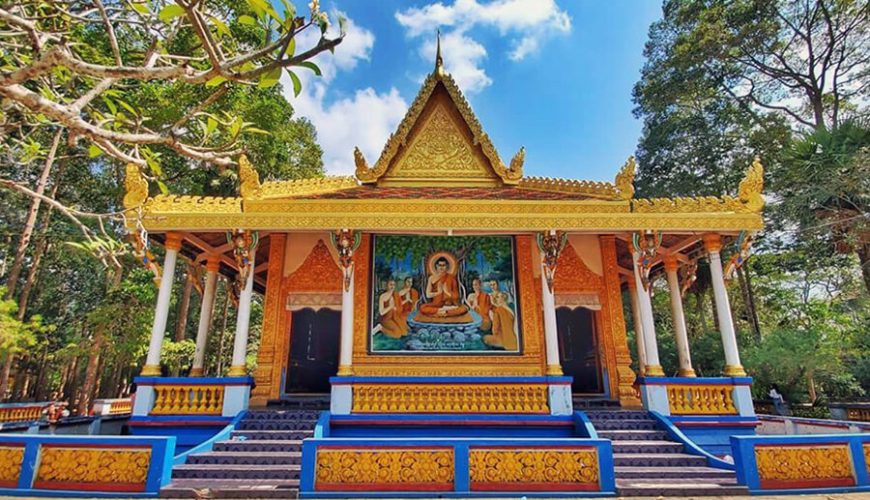
Right from the entrance gate, visitors cannot help but be overwhelmed by the bright yellow color that covers almost the entire Bat Pagoda. If the main gate is simply decorated, then the side gate guarding both sides features a giant 5-headed snake, its eyes wide open as if waiting to bite.
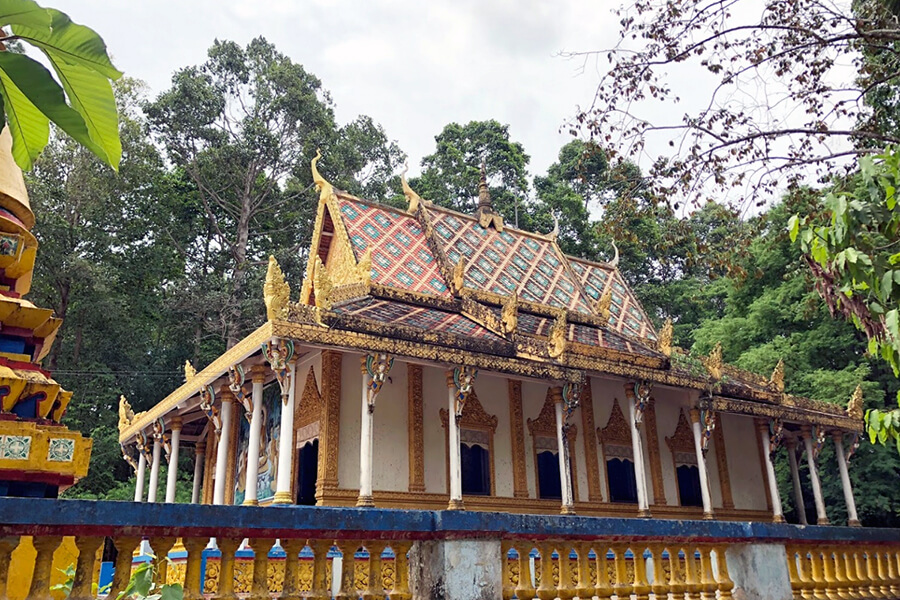
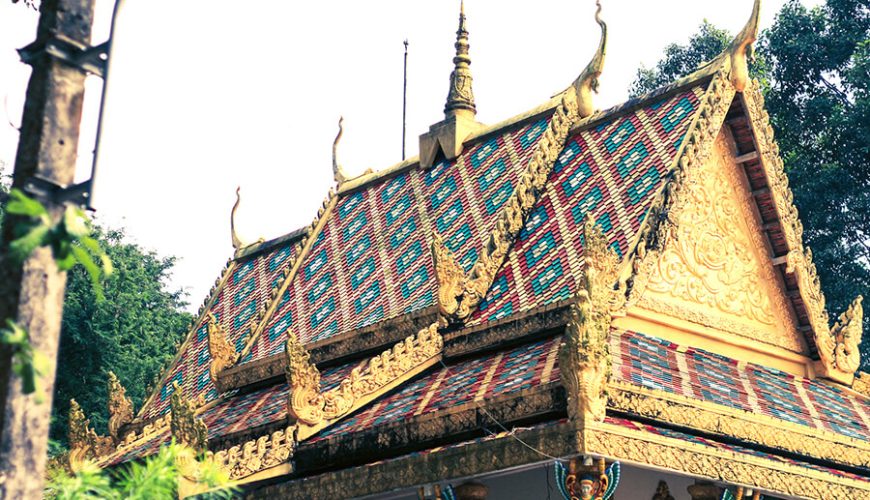
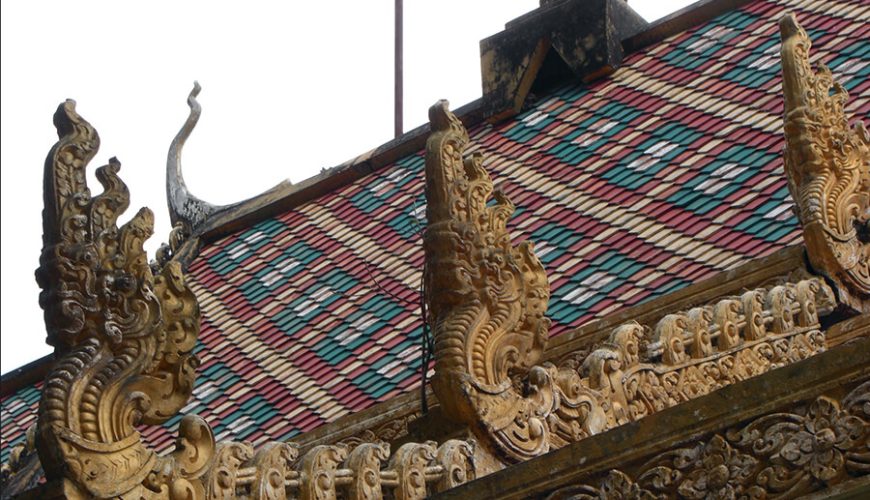
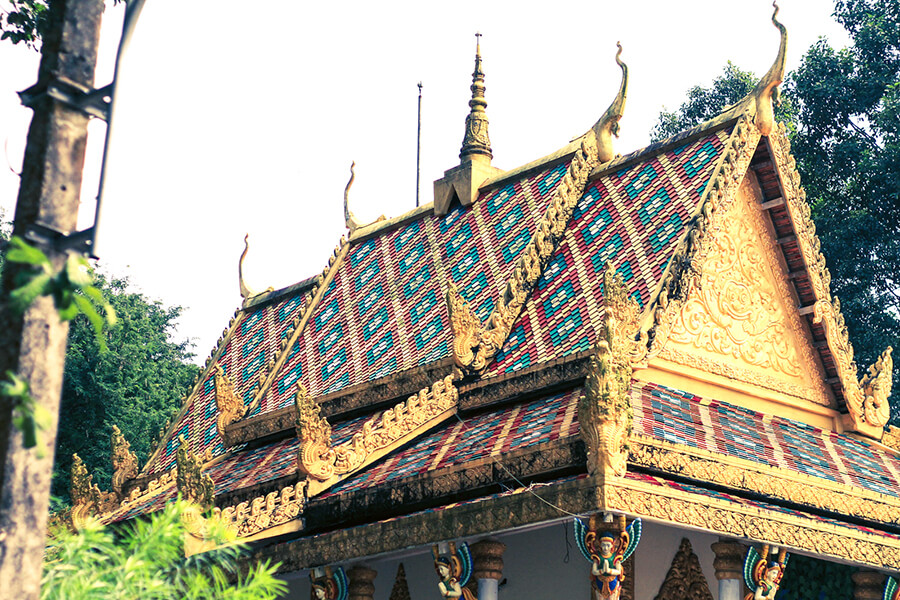
The main hall is built on a foundation higher than the natural ground level, surrounded by cement stone. You will also see here typical motifs in Khmer architecture with many small towers on the pagoda roof, and the gable end is carved with a delicately winding Naga snake. The entire roof of the pagoda is a great architectural work expressing the concept and philosophy of Buddha and the Heaven of the Khmer people.
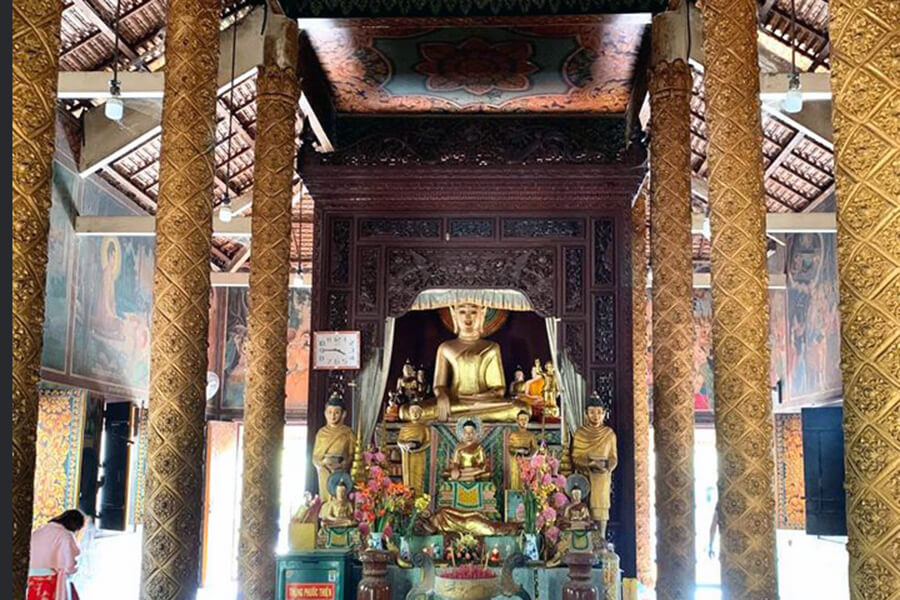
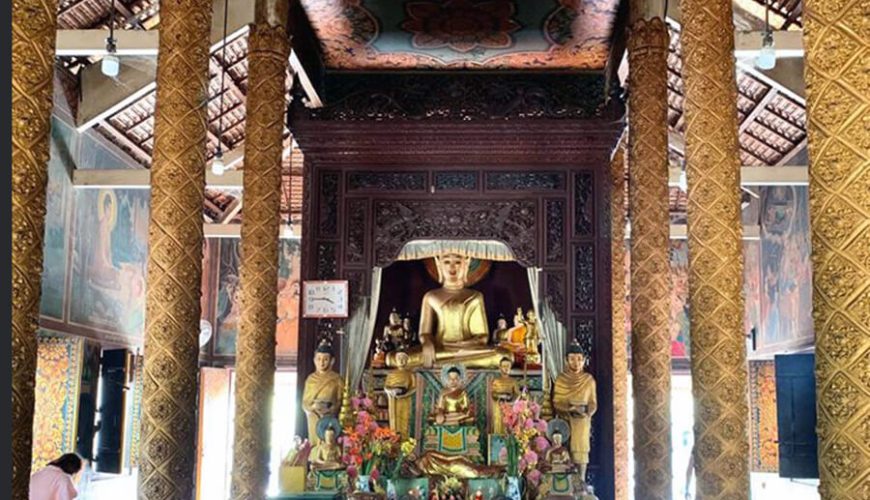
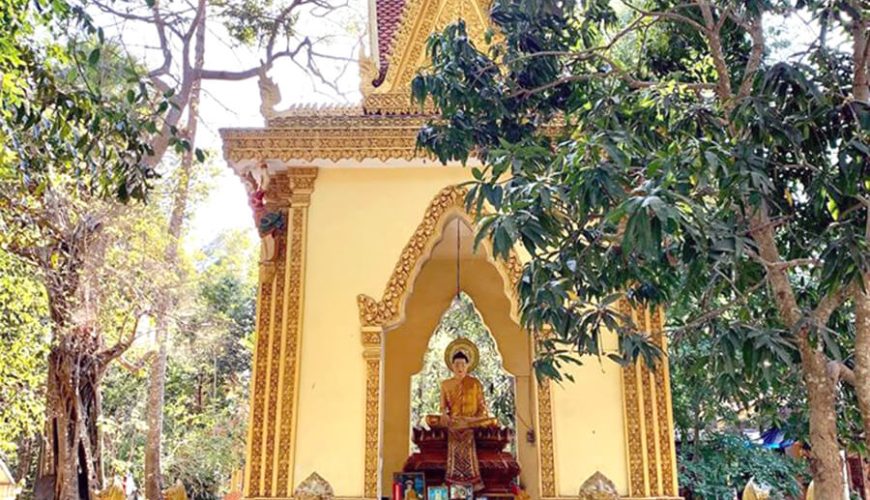
Steeping inside the main hall, visitors will have the opportunity to directly admire and discover more about the unique traditional culture of Southern Khmer with countless large and small Buddha statues and a statue of Shakyamuni Buddha is painted in red and gold, about 2 meters high, decorated on a one and a half meter high altar with overall motifs of lotus petals, birds, and flowers.
At Bat Pagoda, there are also scriptures inscribed on leaves, artifacts, and history books, which are extremely rare and hold unique cultural values of the people of the Mekong Delta that need to be preserved.
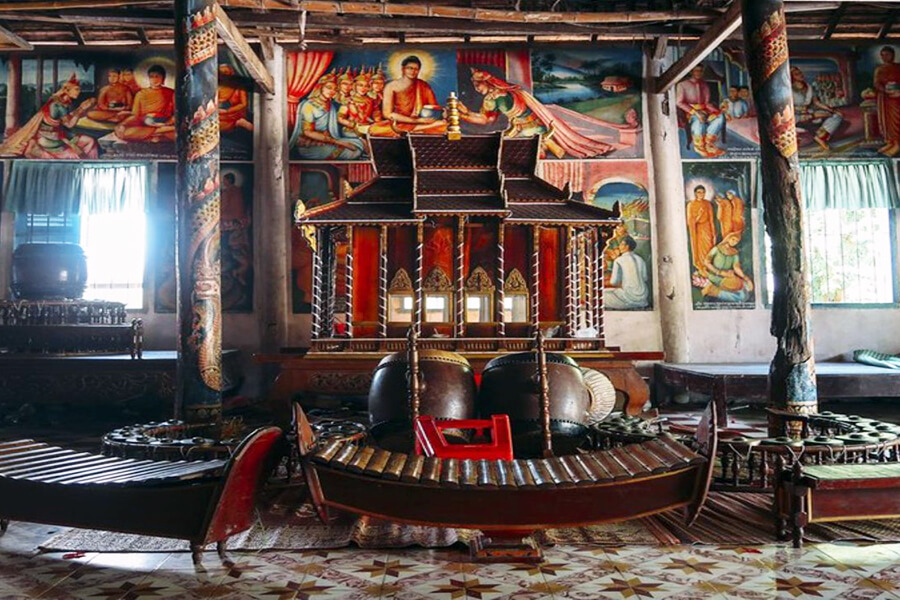
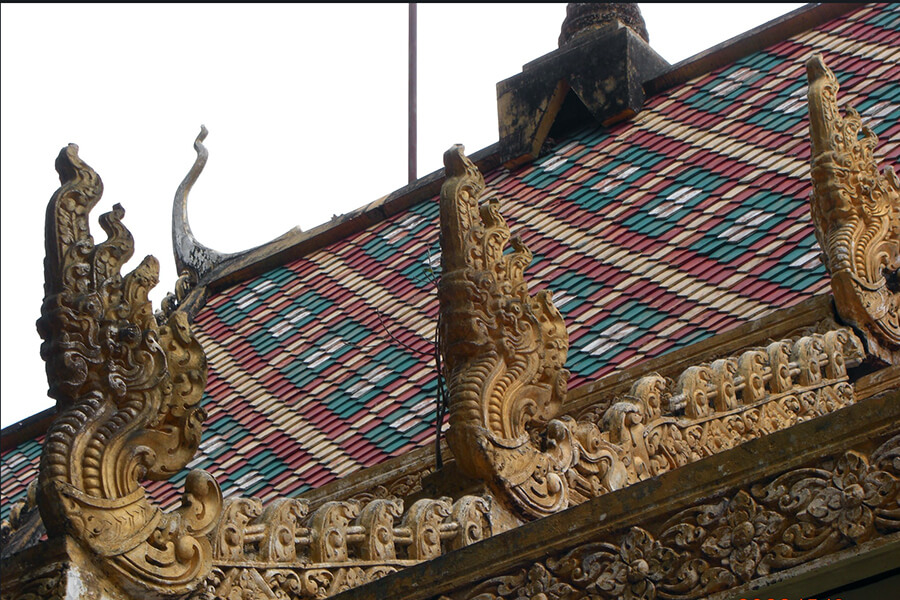
The pagoda is dedicated to Shakyamuni Buddha, but its architecture is still strongly influenced by Khmer culture. The pagoda’s roof is covered with tiles, and the four ends are curved, forming soaring, carved lines depicting the Naga snake. Surrounding the main hall are rows of supporting columns, each column also engraved a Kemnar goddess with their hands put in front of her chest.
Located quite deep inside the sanctuary is a monolithic stone statue of Shakyamuni Buddha on a lotus flower about 2 meters high. Nearby is another statue of Buddha riding the sacred snake, Muchalinda, which is portrayed with great skill.
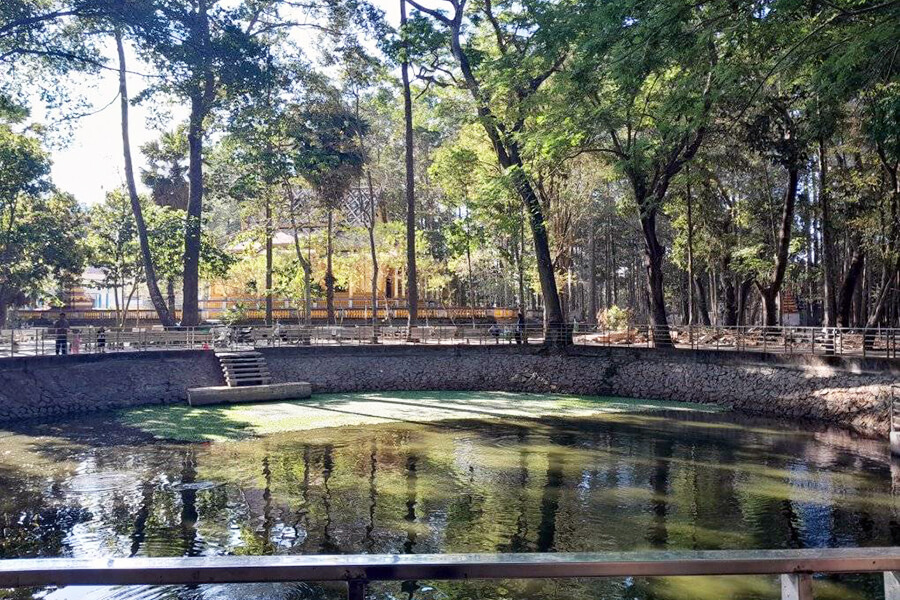
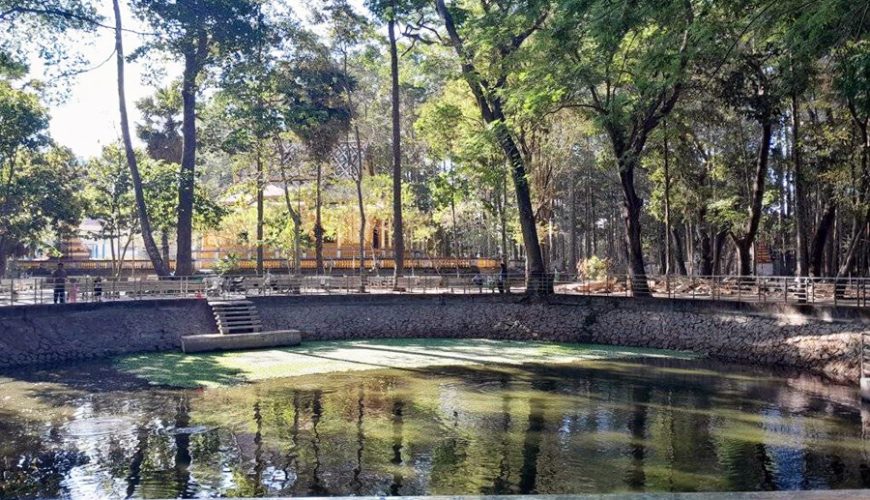
After visiting the Bat Pagoda, you can rest in the row of chairs placed under the shade of a large old tree in front of the main hall. There are also many miniature landscapes here for you to freely check in and “live virtually” beautifully.
Useful information about Bat Pagoda
- Location: Van Ngoc Chinh Street, Phu Loi Ward, Can Tho City.
- Best for: solo, family, student.
- Entrance: Free
- Tourist spots nearby: La Han Pagoda, Khmer Museum, Four Faces Pagoda, Kh’Leang Pagoda, Chen Kieu Pagoda, Nga Nam Floating Market, Khmer Museum, Clay Pagoda, Som Rong Pagoda…
Source: collected by An
Follow us for the best deals on Vietnam package tours and visa advice!
Comment (0)