
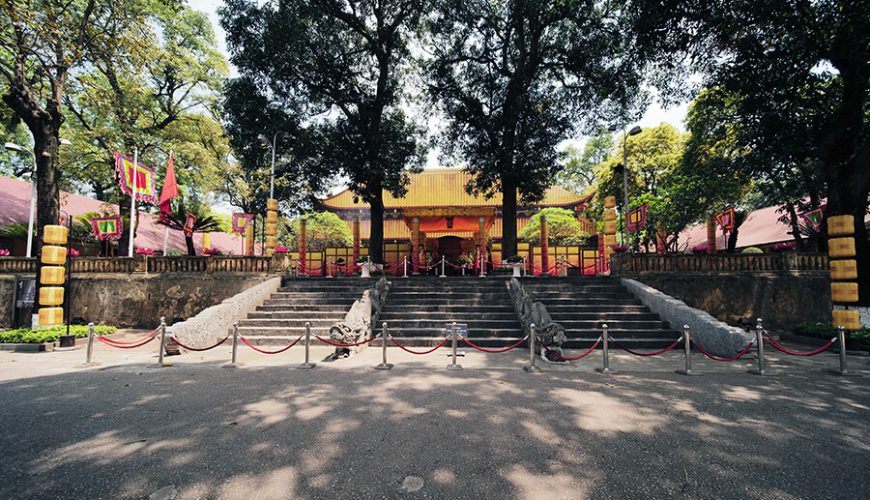
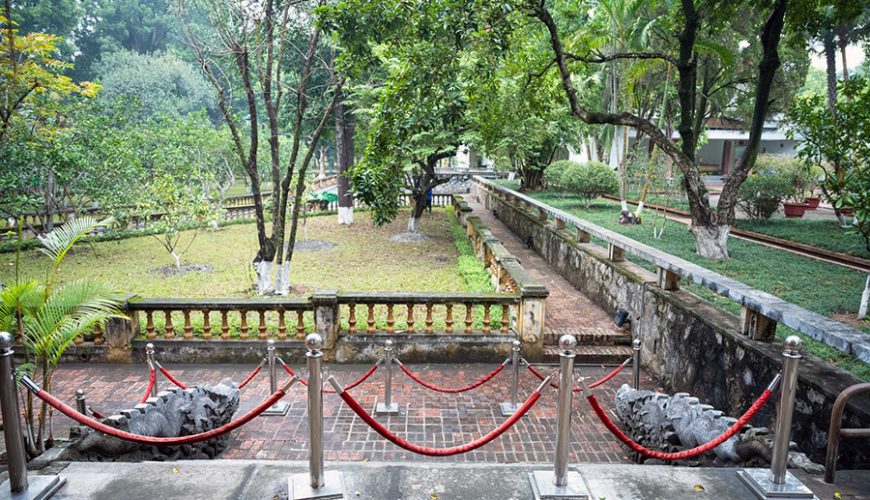
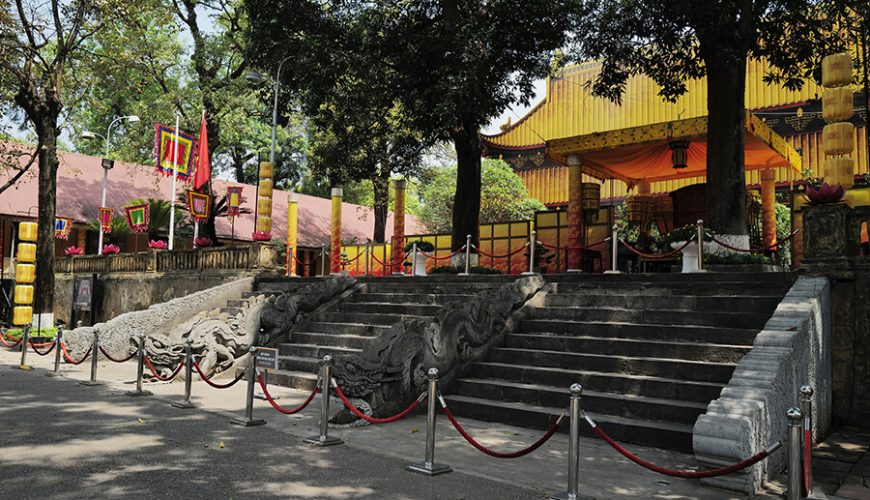
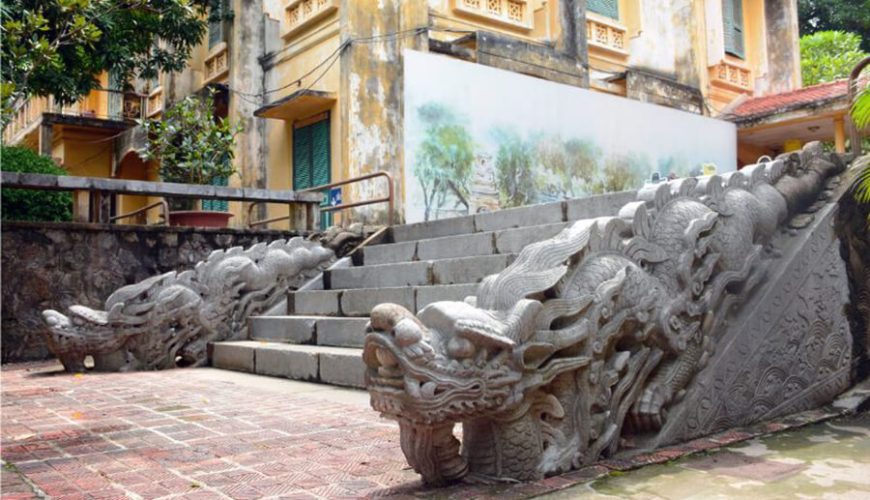
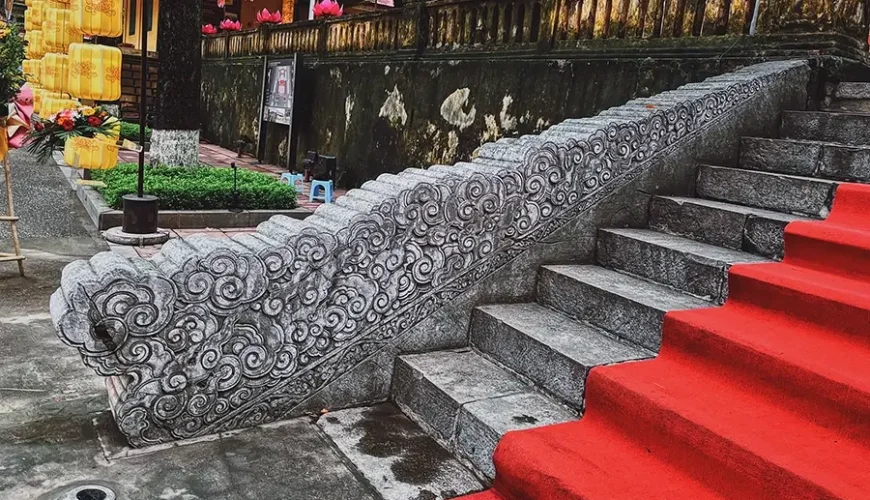
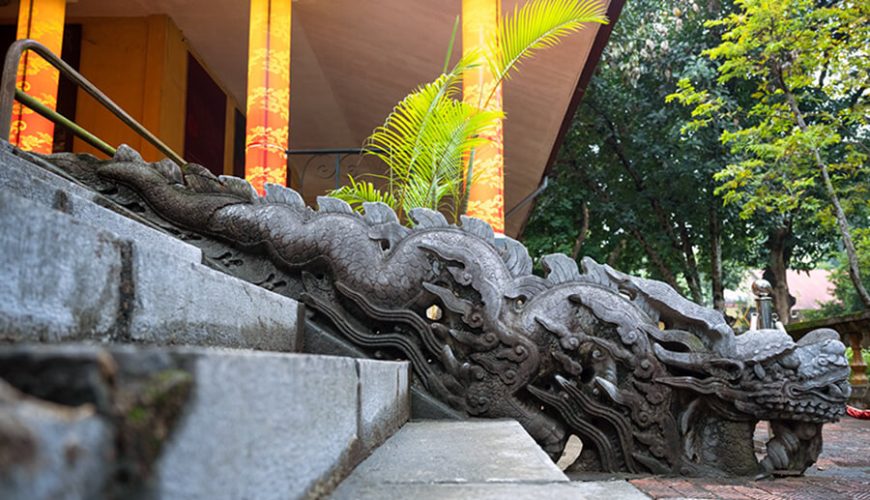
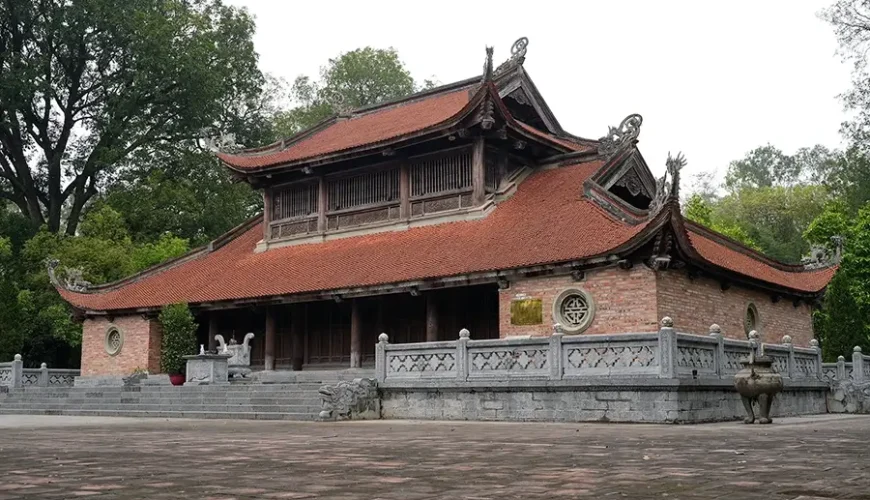
Kinh Thien Palace (Vietnamese: Điện Kính Thiên) is the central relic of the Imperial Citadel of Thang Long – Hanoi, bearing the mark of peak architecture during the early Le Dynasty. After 600 years of change, although only the palace foundation and dragon shelf remain here, the palace’s artistic value is still intact as it was in the beginning.
General information about Kinh Thien Palace
Kinh Thien Palace was built in the early Le dynasty and is located at the center of the Imperial Citadel of Thang Long. This is the place where Emperor Le Thai To was crowned in 1428, and was also the palace where solemn royal ceremonies were held, foreign envoys were received, and court meetings were held to discuss important matters.
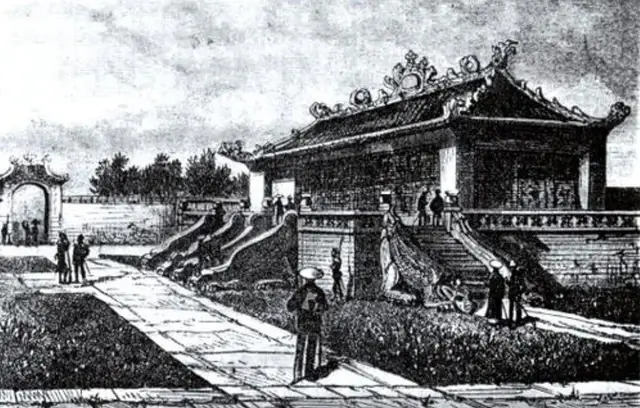
From the Revival Le dynasty (1533–1789), Kinh Thien Palace was chosen as a place to hold court. The main hall of Kinh Thien Palace also always plays an important role. When Emperor Gia Long demolished the Thang Long citadel and built a new one in the Vauban style, the Kinh Thien Palace of the Le Dynasty remained in its old position and became the center of the Nguyen Dynasty’s palace area, though on a smaller scale than before. In 1841, the Nguyen Dynasty changed the name to Long Thien Palace. In 1886, after capturing the Hanoi citadel, the French demolished Kinh Thien palace and built the Artillery Command building. Later known as Dragon House, the workplace of the General Staff of the Vietnam People’s Army’s Ministry of National Defense.
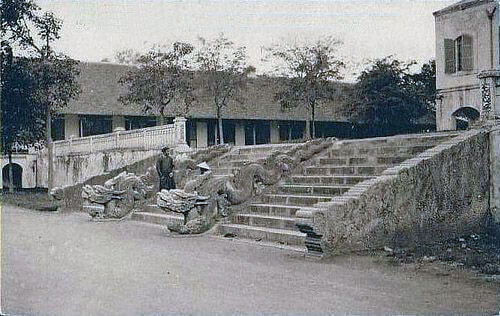
At present, this work is preserved as a relic in the Thang Long Imperial Citadel, and only the steps and the palace foundation, with cultural and historical value, remain. In 2020, on the 10th anniversary of the Central Citadel of Thang Long being recognized by UNESCO as a World Cultural Heritage site, Kinh Thien Palace is planned for research and restoration. This is not only the place that symbolizes the highest power of Dai Viet (one of the old names of Vietnam) from the 15th to 18th centuries, but also carries the core value of the Imperial Citadel heritage of Thang Long – Hanoi.
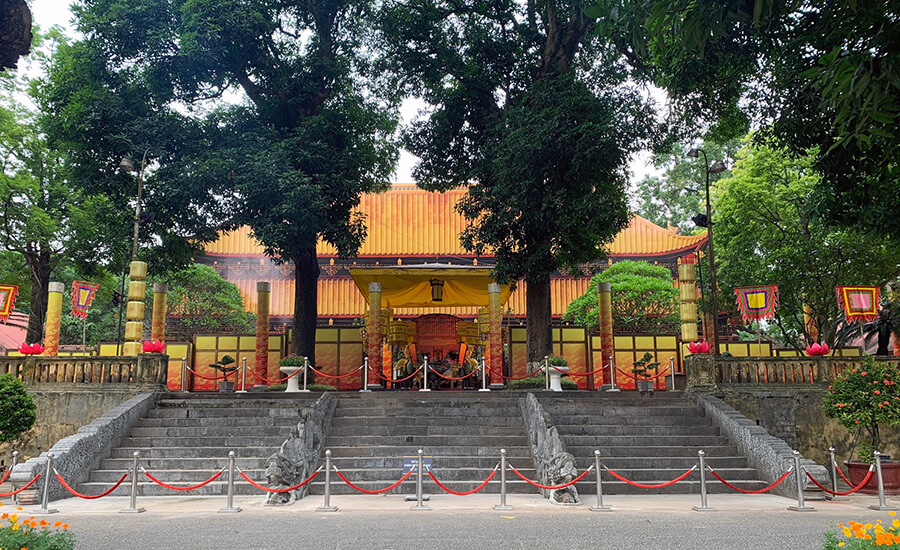
Address: 19C Hoang Dieu, Ba Dinh Ward.
Opening hours: 8:00 a.m. – 17:00 p.m
A unique Dragon Shelf artifact
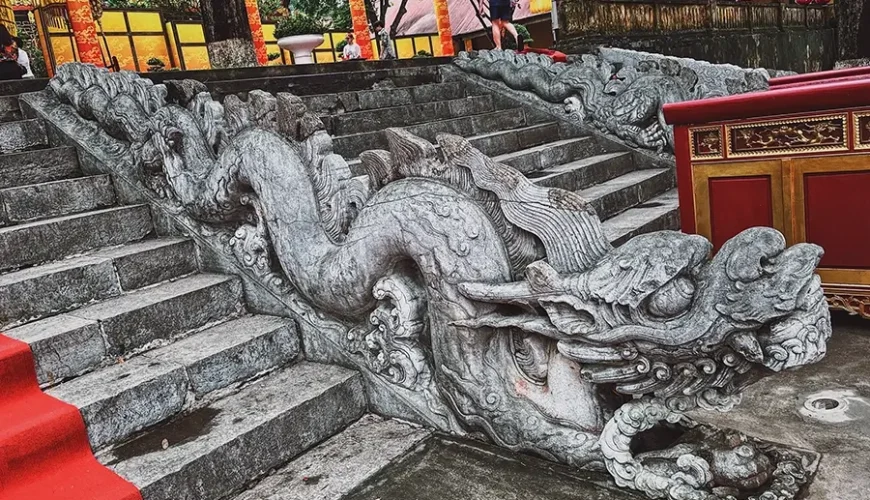
Although the main hall has been destroyed, the remaining traces of the dragon shelf allow us to partly portray the magnificence of Kinh Thien Palace in its glory.
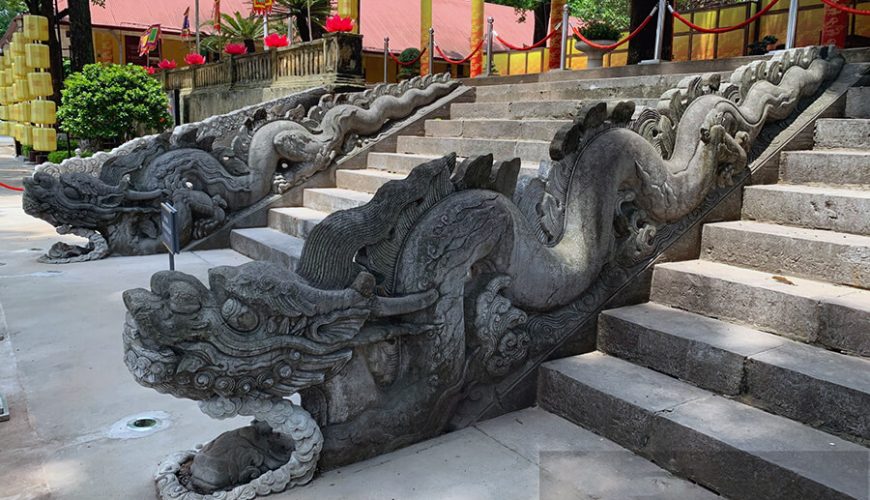
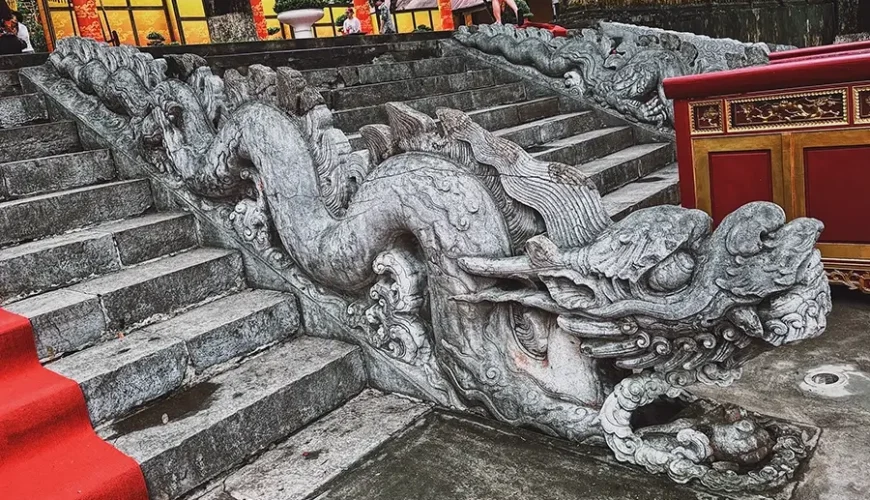
The dragon shelf of Kinh Thien Palace was created in 1467, consisting of 9 stone steps (excluding the underground steps), each 20 cm high and 40 cm wide, with a total length of 13 m from East to West, forming 3 up-and-down paths. The middle was for the emperor, the two sides were for the courtiers.
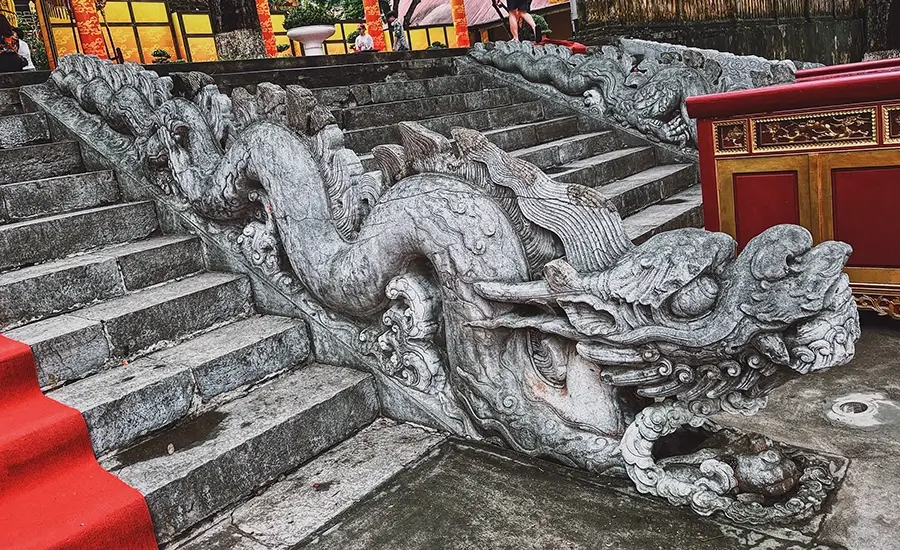
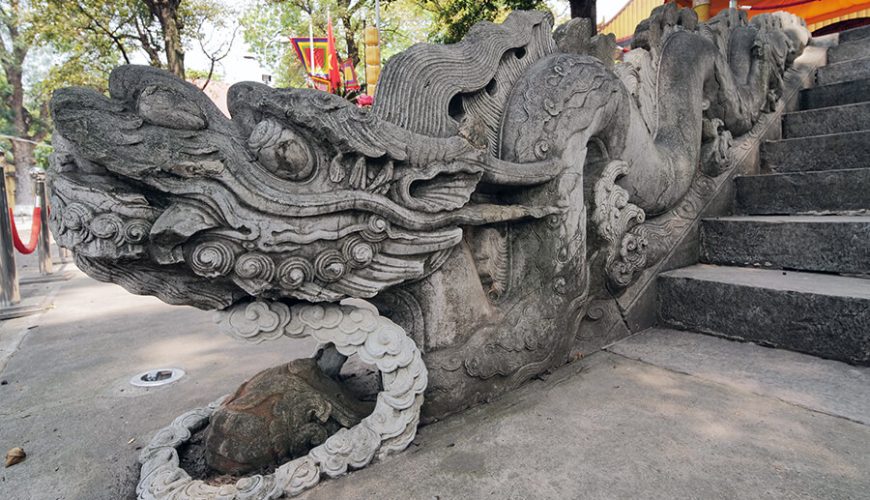
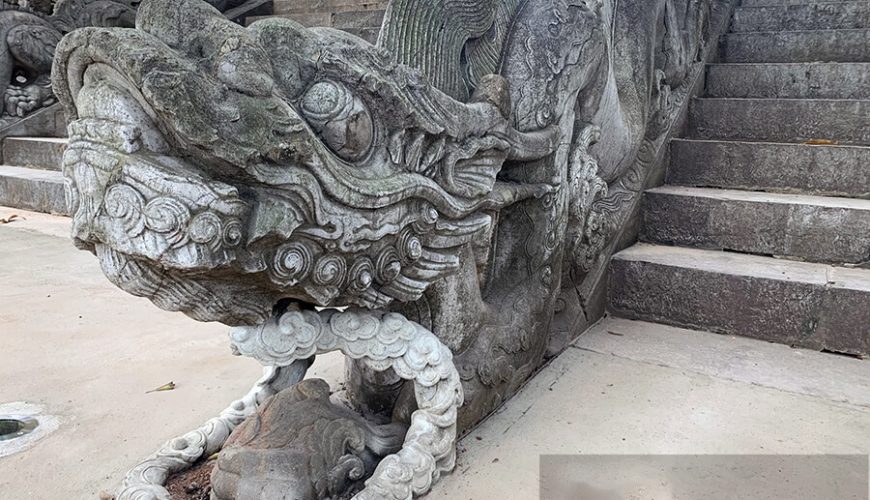
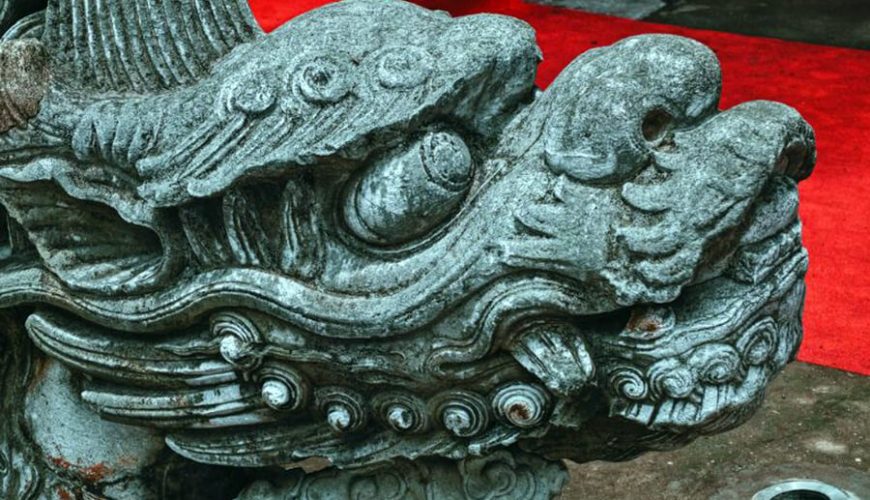
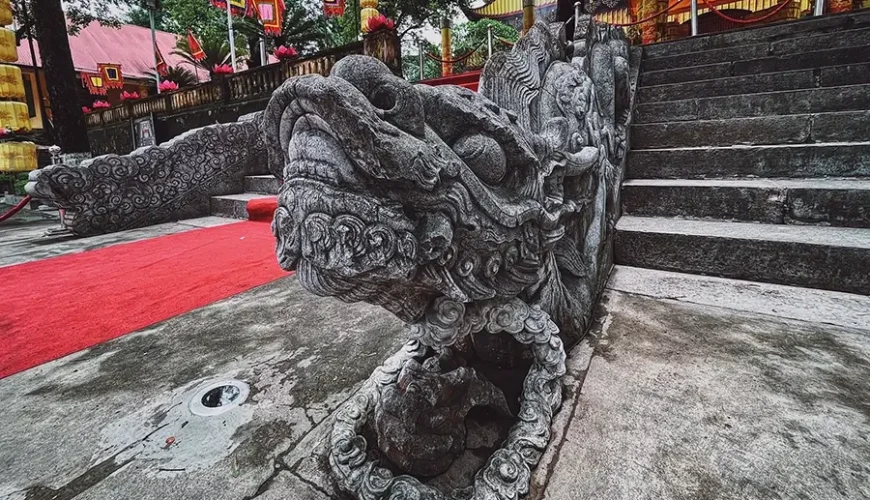
The pair of dragons in the middle is crafted in a realistic style from monolithic stone. The dragon is 5.3m long, bends 7 times, and has 5 claws – symbolizing the power of emperors. On both sides are a pair of cloud-shaped dragons, stylized dragons with cloud patterns – symbols of the universe and heaven and earth.
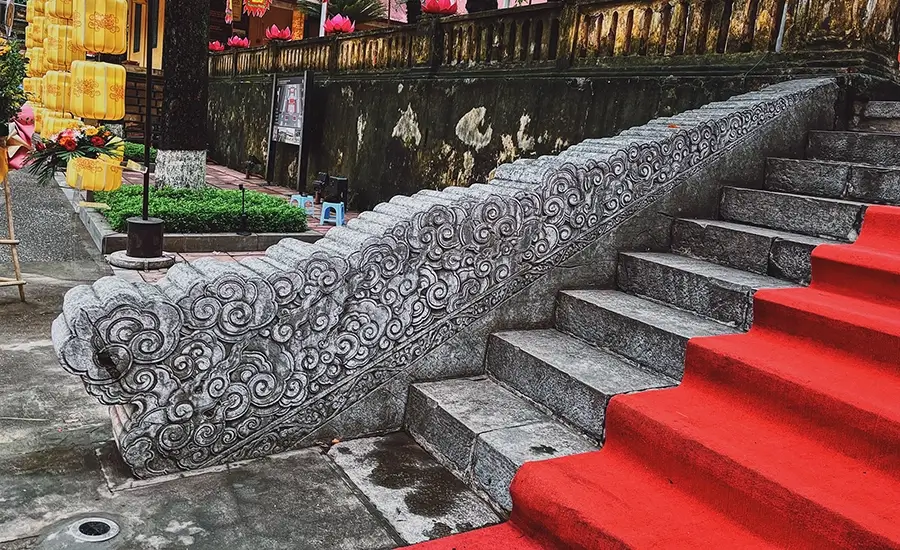
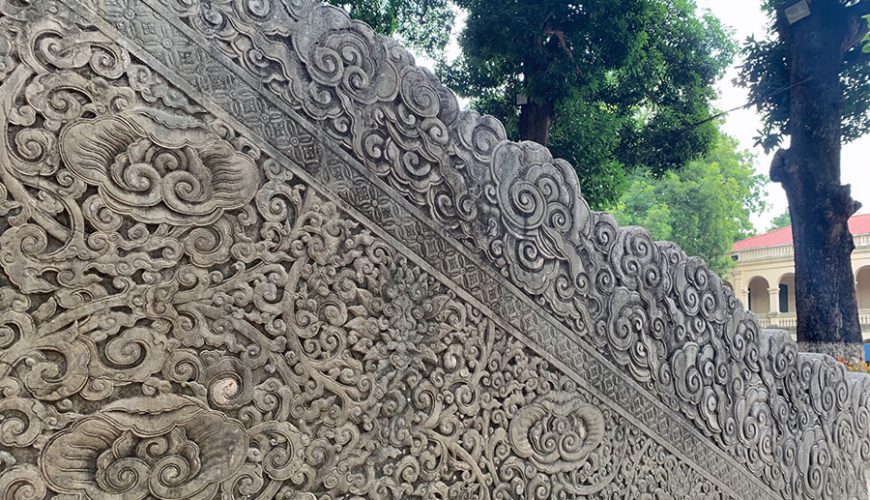
The dragon shelf located behind was created around the late 17th and early 18th centuries. The dragon’s body is 3.4 meters long. Both sides of the railing are decorated with lotus flowers, lovebirds, water waves, cloud patterns, fire swords, and fish that turn into dragons, all very elaborate and sophisticated.
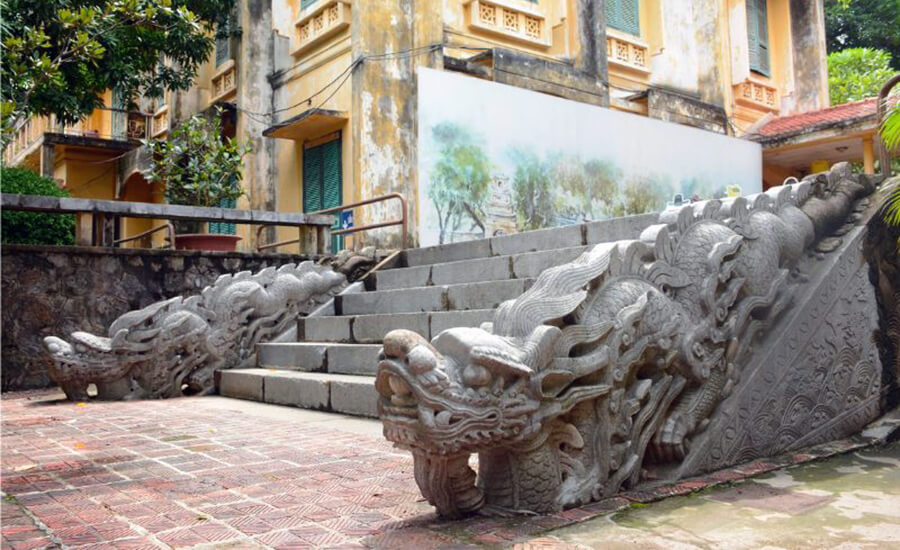
In addition to its artistic and historical values, the dragon steps of Kinh Thien Palace also embody the ideology of anti-assimilation from the North; this is shown by the change in the pattern of the steps to the shape of the pair of dragon statues. The continuity of Ly-Tran culture is very clear.
Source: collected by An
Follow us for the best deals on Vietnam package tours and visa services!
Comment (0)