
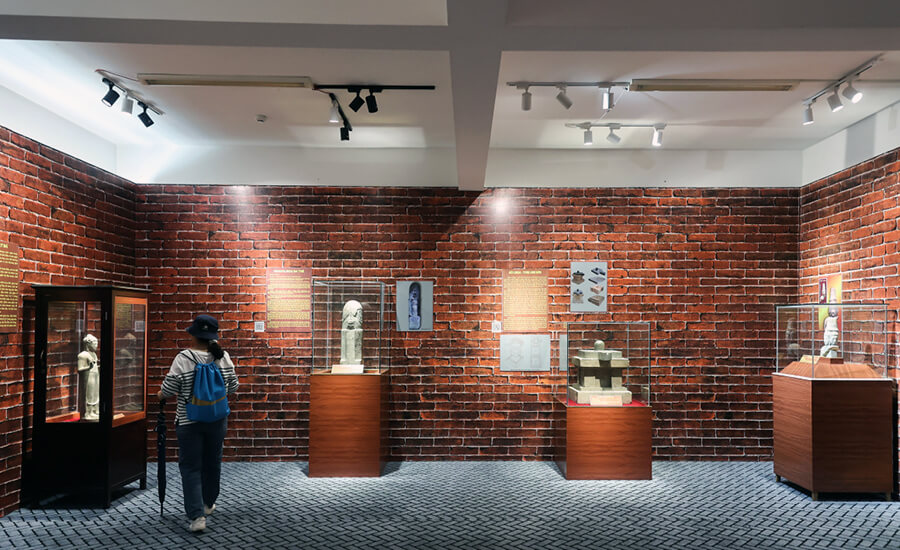
The Oc Eo culture belongs to the Funan Kingdom, an ancient country among the earliest in Southeast Asia, dating from the 1st to 7th centuries AD. The first relics were discovered and excavated by Mr. Louis Malleret, a French archaeologist at Oc Eo mound (Vong The commune, Thoai Son district, An Giang province) in 1944.
The discovered artifacts of the Oc Eo Culture contain important cultural, historical, religious, architectural, and artistic meanings, contributing to clarifying the process of expanding and exploring the Southern region of the people.
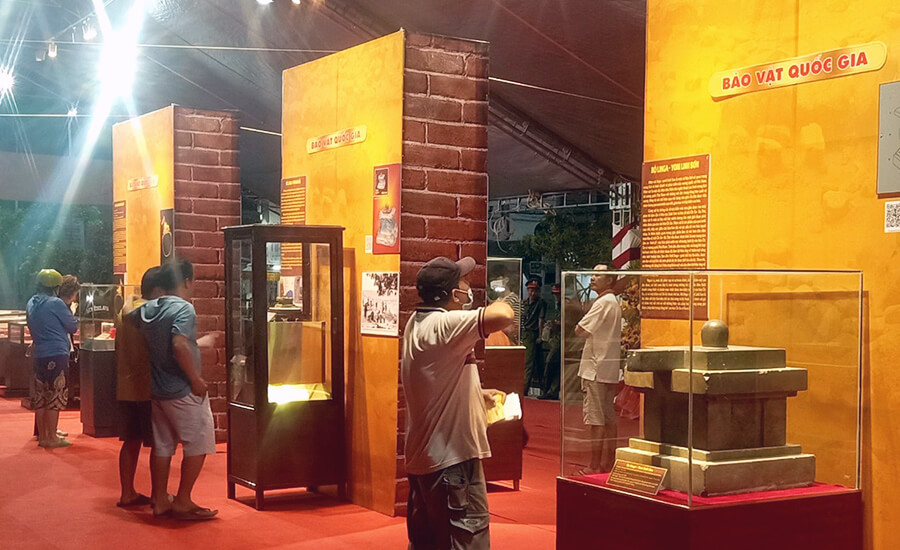
The 8 national treasures in An Giang of Oc Eo Culture include: Linga – Yoni set, set of Linga – Yoni in Linh Son, Buddha Bas-relief of Linh Son Bac, Khanh Binh stone Buddha statue, Giong Xoai wooden Buddha statue, Giong Xoai Brahma statue, Nandin Giong Cat golden ring, and statue of Mukhalinga Ba The.
The linga – yoni set
The linga-yoni set (symbolizing male and female genitals) made of gold and brass was discovered at the Da Noi relic site in Thoai Son district in 1985. Most linga-yoni sets are made of stone; however, this is a rare artifact crafted from gold and brass fused into a single block.
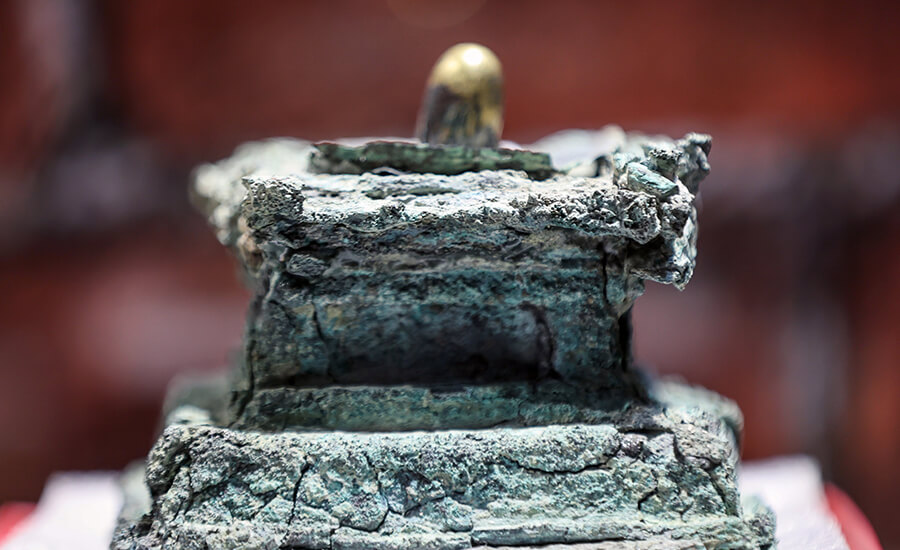
The artifact is 10 cm high, 12.2 cm wide, and weighs about 2.6 kg. This is a linga-yoni set with a three-part structure: the linga, the yoni, and the pedestal block, with the yoni’s symbolic metal plate attached. The linga is made of gold metal, the yoni and the pedestal are cast in brass. Below is a three-tiered pedestal also made of brass.
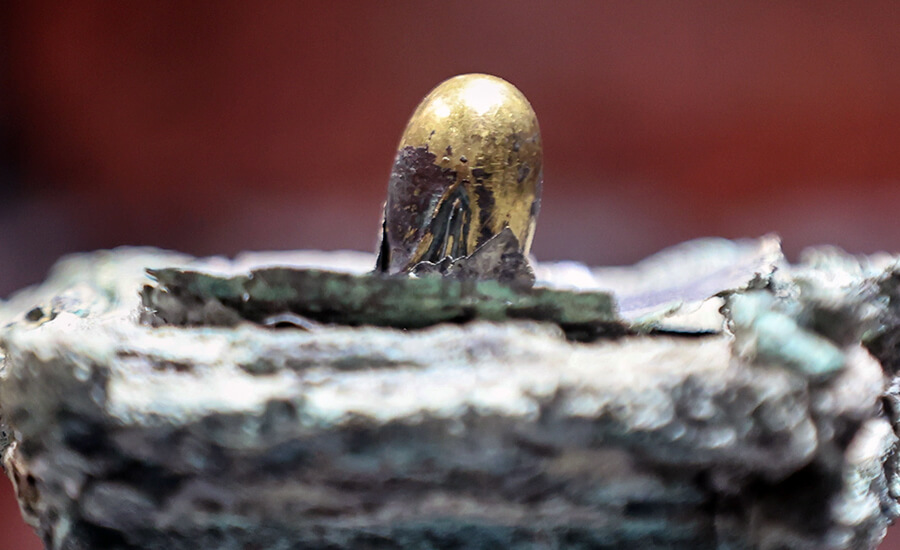
The way the linga penetrates the yoni is highly symbolic and vivid, boldly expressing Hindu religious content and the craftsman’s creativity. The artifact represents the mark of Indian culture introduced in the Southern region and Southeast Asia, and was recognized as a national treasure in 2018.
Linh Son linga – yoni set
The Linh Son linga-yoni set was discovered in 1985 in the Linh Son pagoda area in Thoai Son and dates back to the 7th century. The artifact is made of sandstone, measuring 63 cm long and 53 cm wide, and consists of four parts assembled into a unified block.
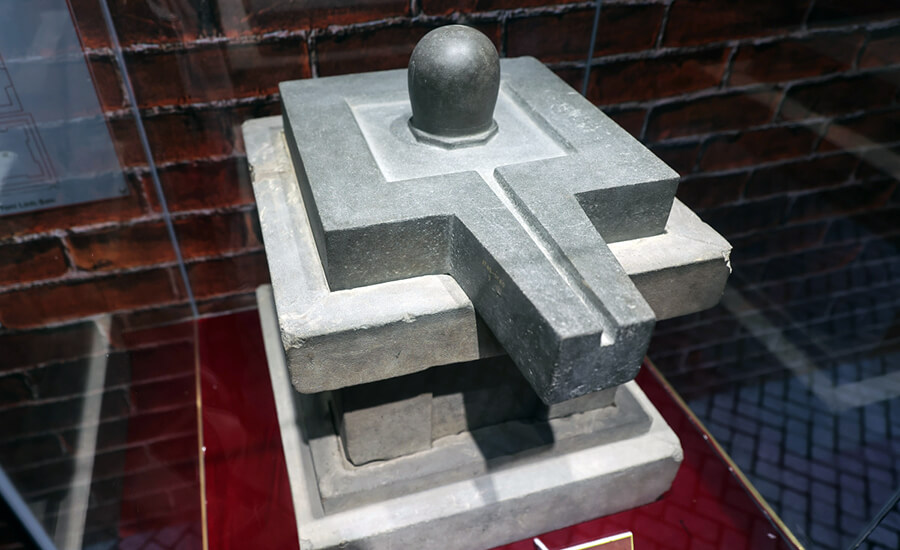
This is a rare, complete linga-yoni set that still has all the attached parts. The artifact uniquely combines two types of stone materials with different colors. Stone used for linga-yoni blocks is rarely used in religious sculptures of the Oc Eo culture in the South. The artifact was recognized as a national treasure in 2020.
Mukhalinga Ba The
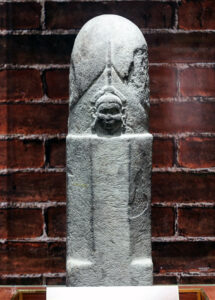
The statue of Mukhalinga Ba The is the latest artifact of An Giang province to be recognized as a national treasure in 2023. The artifact was crafted in the 6th century, with the main material being fine-grained sandstone, weighing 90 kg, with a body size of 91 cm high and 20-22 cm wide.
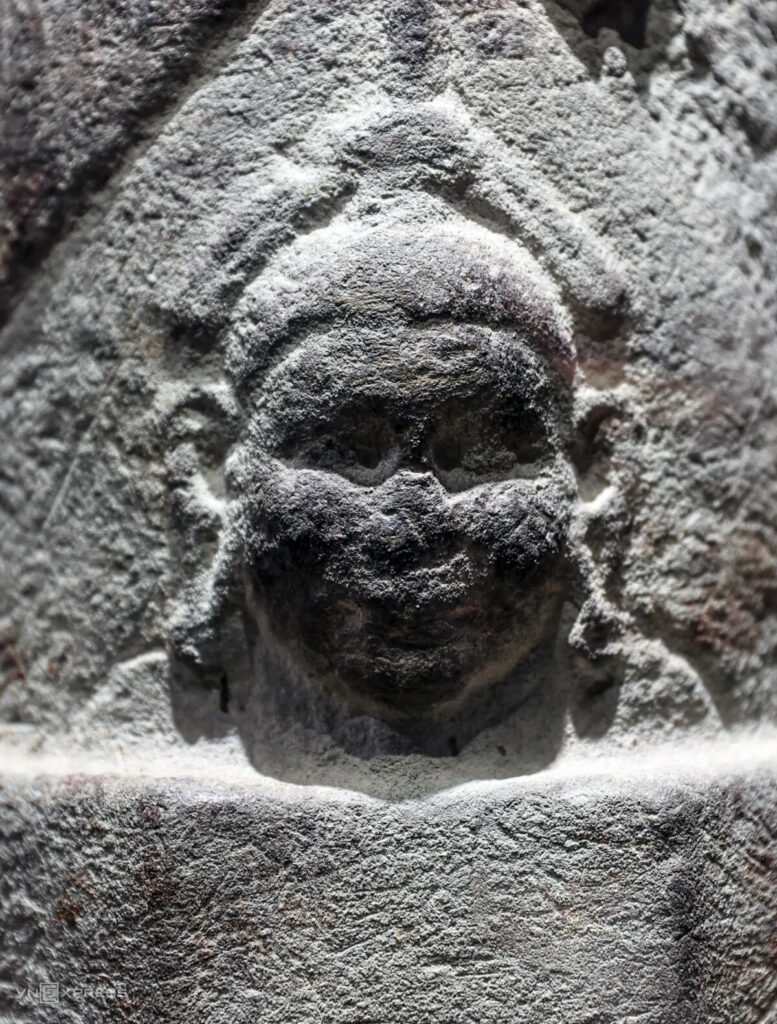
Mukha in Sanskrit means the face. Mukhalinga is a three-part linga with a face. The head of the artifact has the elongated, cylindrical shape of a realistic penis. In the middle is a relief showing the head of the god Shiva. The bottom part is a square cylinder with flat, balanced surfaces.
The relief shows the head of Shiva with a bun of hair arranged in two folds that radiate evenly to both sides. The god’s face is round and plump, with clear details of the eyes, nose, and mouth, and long ears with large earrings.
According to national treasure records, 15 Mukhalinga artifacts from the Oc Eo culture have been discovered in the provinces of An Giang, Dong Thap, and Tay Ninh. Among these, there are 14 artifacts with three equal parts; only Mukhalinga Ba The is different and uneven.
Khanh Binh stone Buddha statue
The Khanh Binh stone Buddha statue is crafted from a large block of sandstone, stands 71 cm tall, weighs 33 kg, and dates from the 6th – 7th centuries. It is a rare intact Buddha statue of the Oc Eo culture.
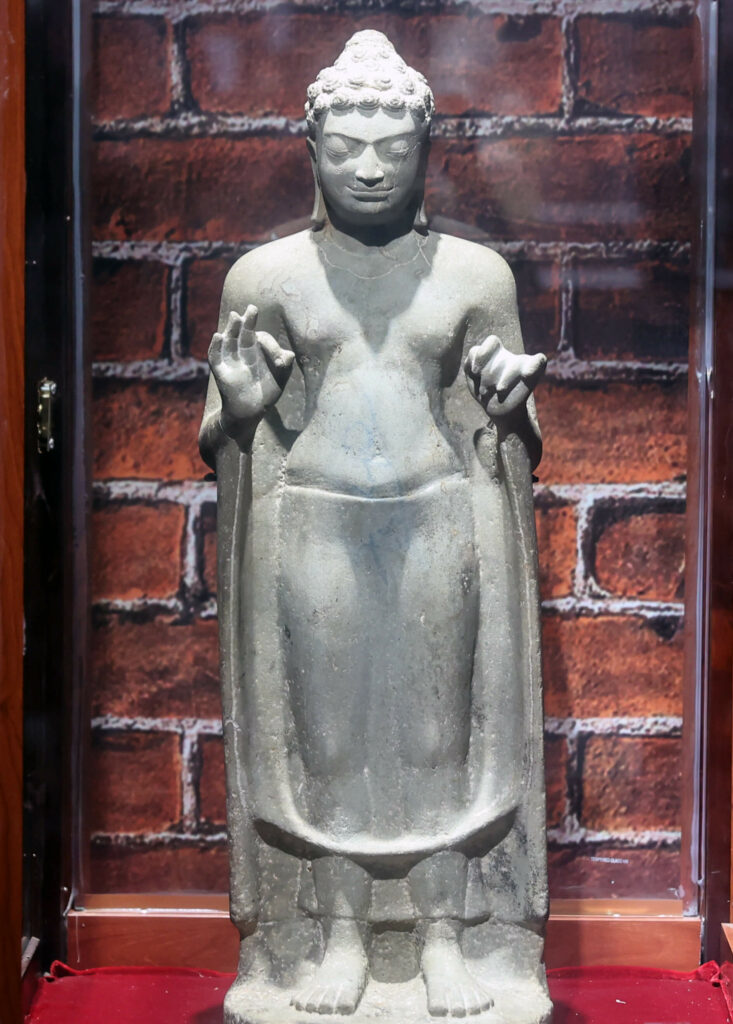
The statue represents the Buddha in an upright, balanced posture (abhanga), on a pedestal with a simple round border. The head is round, and on top, it clearly shows a large, spherical umbo mass covered with spirally curly hair. The body is plump with a slim waist, wearing a robe. The right hand forms the teaching mudra (or preaching mudra, Vitarka mudra), while the left hand gently grasps the end of the shirt.
The statue of Brahma Giong Xoai
The statue of Brahma Giong Xoai was found in 1983, dates from the 6th-7th centuries, is made of sandstone, and is 45 cm high. The statue has four faces, clear eyebrows, diamond-shaped eyes, a straight nose bridge, a slightly closed mouth, thick lips, and curved mustaches on both sides of the lips.
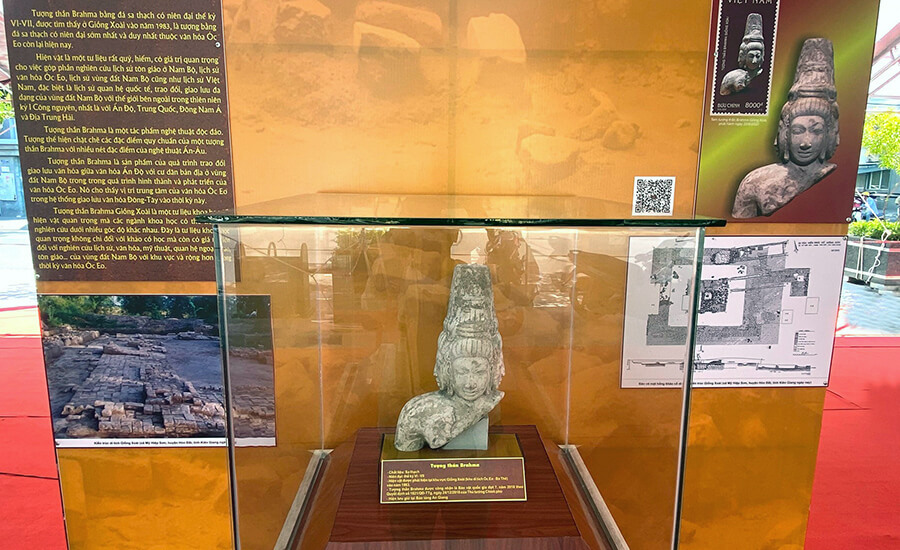
Very few stone Brahma statue artifacts are found in the Oc Eo culture. The stone statue of Brahma is dated to an early age, thereby reflecting the clear influence of Indian culture and religion in the Southern region.
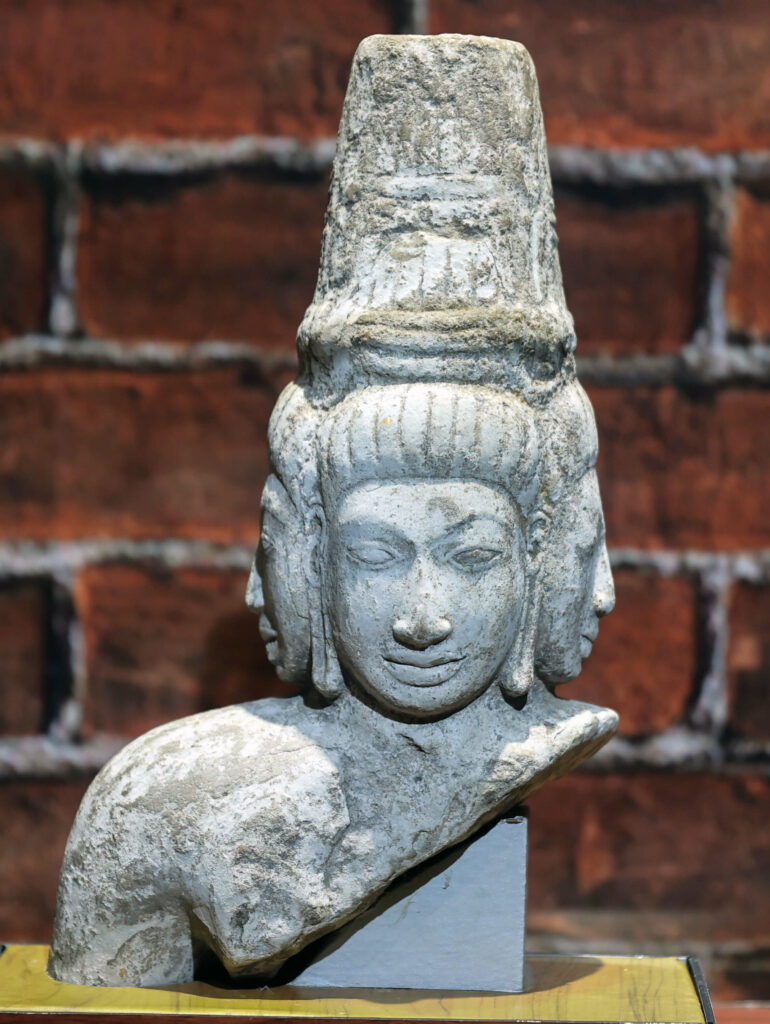
At the same time, the statue also shows the central position of Oc Eo culture in the East-West cultural exchange system during this period.
Giong Xoai wooden Buddha statue
The Giong Xoai Buddha statue dates back to the 4th and 6th centuries, is made of solid wood, is 2.7m high, weighs 94kg, and was recognized as a national treasure in 2019.
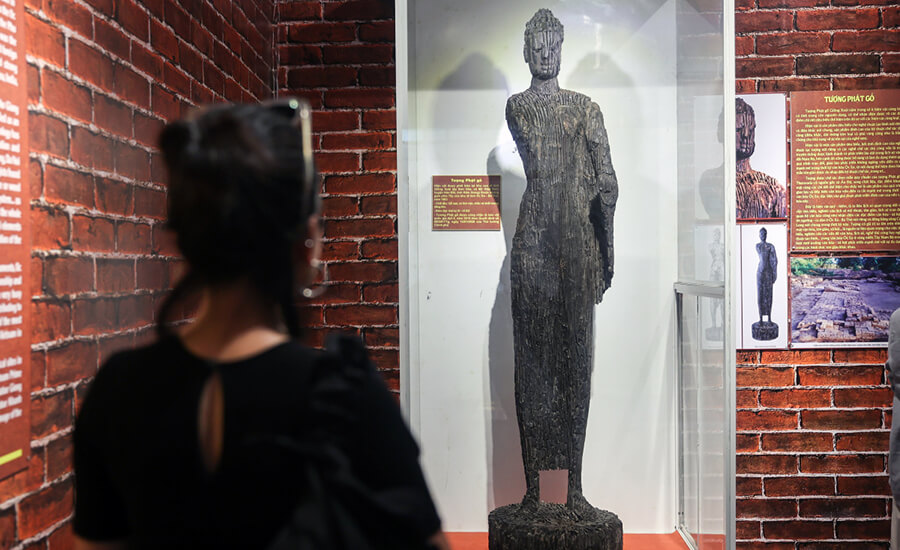
In the Mekong Delta region, wooden Buddha statues are common, but the Giong Xoai statue stands out for its large size. These are a few statues of the same type that are still almost intact.
The statue was carved in a standing position on a circular cylindrical pedestal, the right hand was broken up to the shoulder, the left hand was broken as well. The Buddha was wearing a robe, but it was so broken that he could not see it clearly; only part of the hem remained.
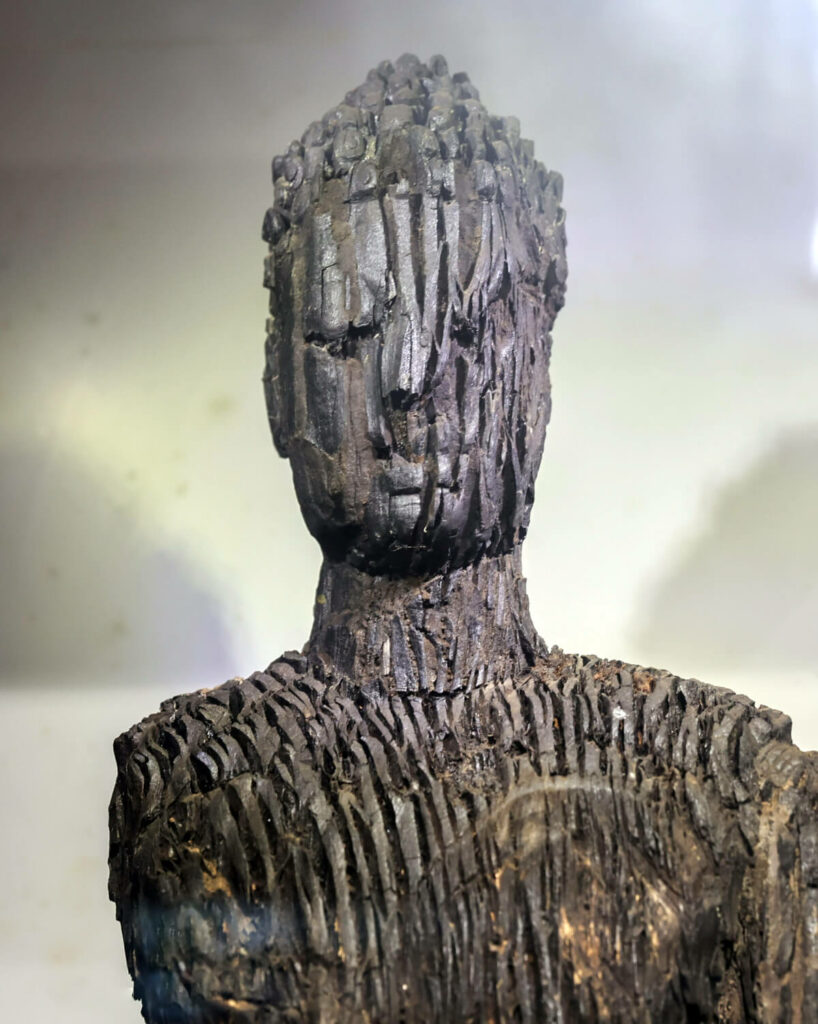
The face is square, with a strong, broad chin and curly hair tied in a high bun. The artifact is crafted in the style of Theravada Buddhist statues originating in India. However, the materials and facial features show that cultural exchange was particularly strong during the Oc Eo period.
Nandin Giong Cat golden ring
The Nandin Giong Cat golden ring, a smooth, round gold ring, was excavated at the Giong Cat relic in 2018. This is a gold ring with a monolithic cast of a sacred cow, dating from the 5th century (AD).
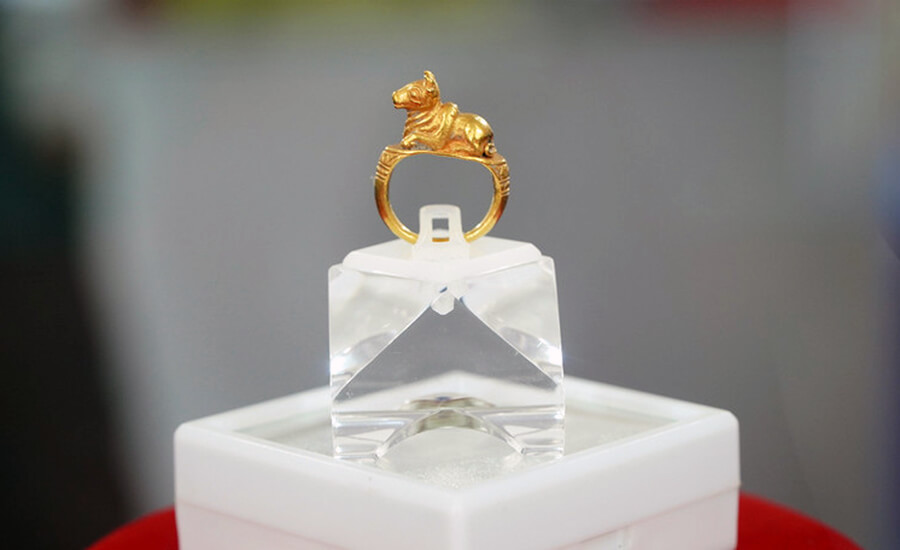
The face of the ring is the image of the sacred bull – the Nandin (sacred animal to ride of Shiva), cast in a cross-legged position. The cow’s head is raised high, the horns are curved upward, the ears are wide open, the eyes are large, the bib folds into many folds under the neck, very lively and healthy…
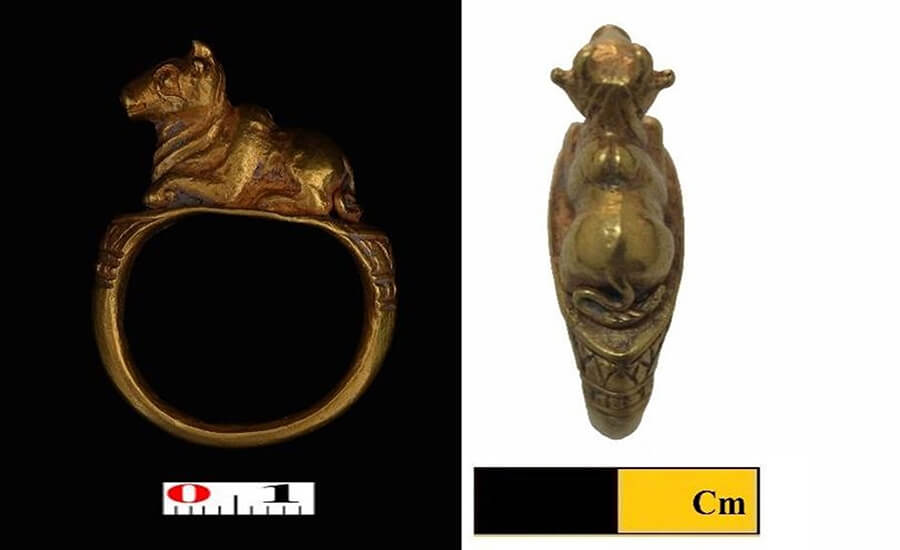
Characteristics of the overall shape and structure of the ring show that this is the most beautiful artifact among Oc Eo’s golden artifacts.
Buddha Bas-relief of Linh Son Bac
The Buddha Bas-relief (dating from the III – IV centuries) was excavated at the Linh Son Bac relic in 2019. Up to now, this remains a unique artifact from the early stage of the Oc Eo culture. The relief depicts a Buddha image on the flat surface of a large block of granite.
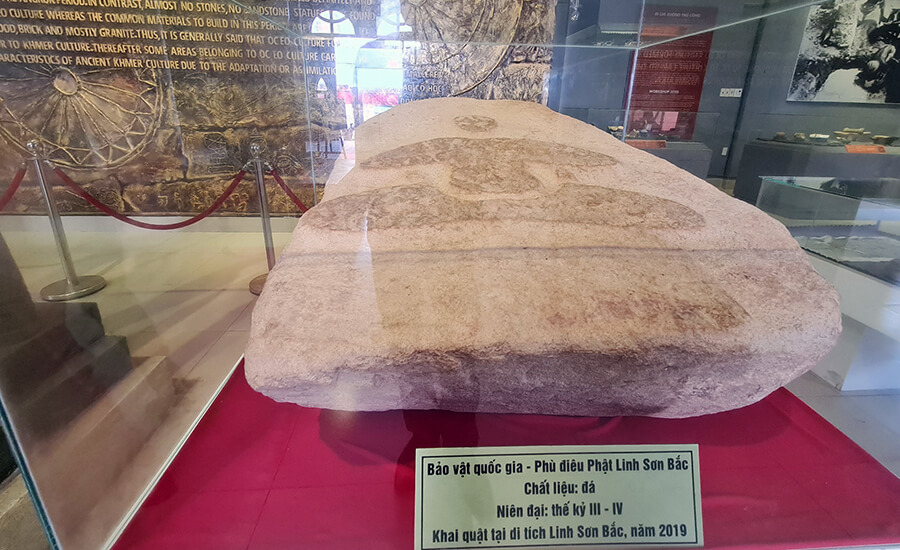
The relief clearly depicts Buddha meditating, while other details are carved simply, with the standout feature being large, wide, deep-set eyes. Details of hair, face, and clothing are unclear. The Buddha was carved while meditating, his hands clasped in front of his chest in the fearless mudra position. In this mudra, the hands with the fingers extended face forward, at shoulder level.
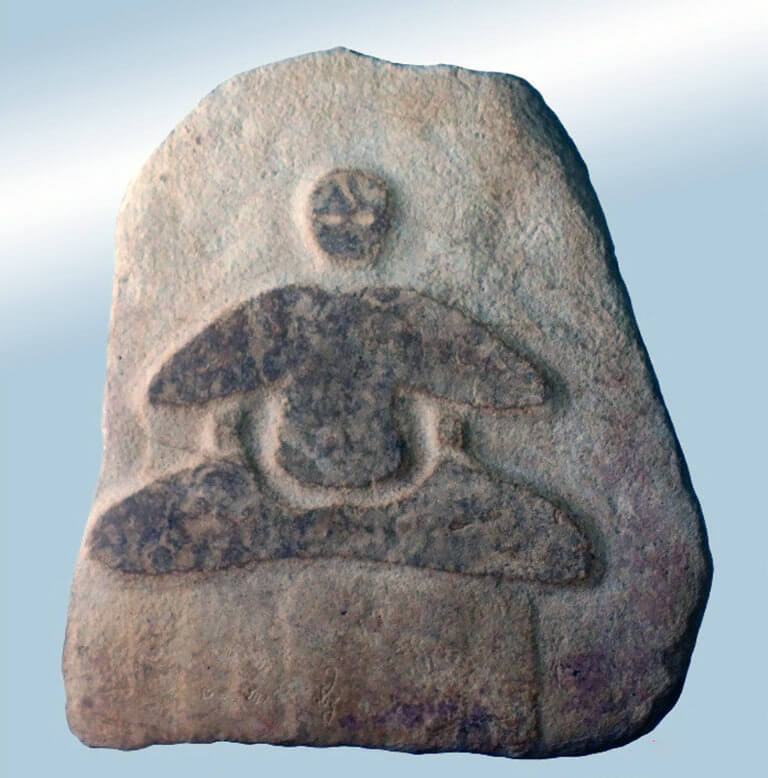
This is the mudra that Shakyamuni Buddha used immediately after attaining enlightenment. The Buddha’s two legs are carved in a half-lotus meditation position on a pedestal, the right leg resting on the left calf. The base of the Buddha statue bears three Sanskrit letters engraved in the Brahmi script of South India.
The rough, simple, rustic, realistic, and visually vivid carving of indigenous materials is the starting point for the brilliant development of Funan’s stone sculpture.
Protect and preserve national treasures
The entire province currently has 8 national treasures, of which two are stored at the Oc Eo Cultural Exhibition House in Thoai Son district: the Buddha Bas-relief of Linh Son Bac and the Nandin Giong Cat golden ring. The remaining 6 national treasures are kept and displayed at the An Giang Museum.
In addition to visiting and admiring the national treasures, visitors to Long Xuyen can go to other places in the city, such as the floating market, President Ton Duc Thang’s memorial house, Ong Ho islet (Tiger islet), and enjoy typical dishes such as broken rice, pancake with wild vegetables, and fish sauce hot pot.
Source: collected by An
Follow us for the best deals on Vietnam package tours and visa services!
Comment (0)