
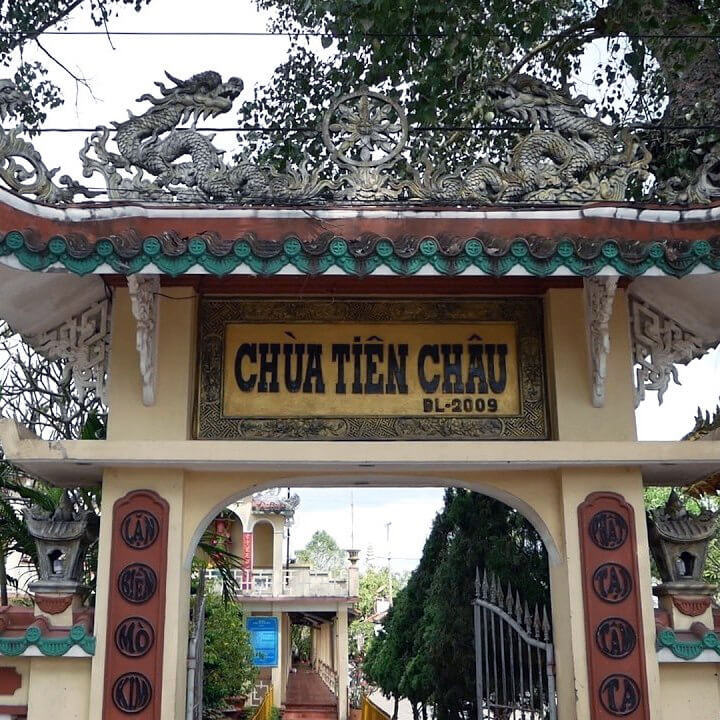
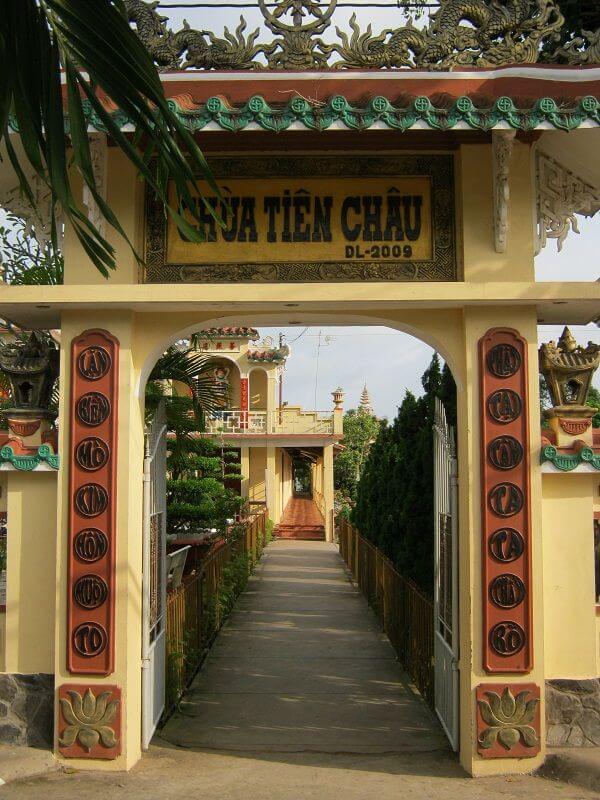
Tien Chau Pagoda is one of the ancient pagodas in Vinh Long province, with a history of about 250 years. This pagoda is not only famous for its sacredness but also a unique ancient architectural work for visitors to admire. During trips to explore An Binh islet, many tourists spend time worshiping and sightseeing at Tien Chau pagoda. Join Viet Dream Travel to learn about Tien Chau Pagoda through the article shared below.
History and origin of the name of the Tien Chau Pagoda
Tien Chau Pagoda (Vietnamese: Chùa Tiên Châu; Chùa means “Pagoda”) is also known as Di Da (Di Đà) Pagoda. The pagoda was built around 1750. Also, this year, monk Giac Nguyen from Hue City came here and saw the elegant and magical landscape, so he built a small bamboo hermitage with leaf walls to worship Amitabha Buddha and named it Bai Tien. In 1801, after Venerable Giac Nguyen passed away, nun Dieu Thien came to take care of Bai Tien hermitage. Coming here, the nun encouraged followers and visitors to donate money, rebuilt the pagoda, and changed its name to Bai Tien.
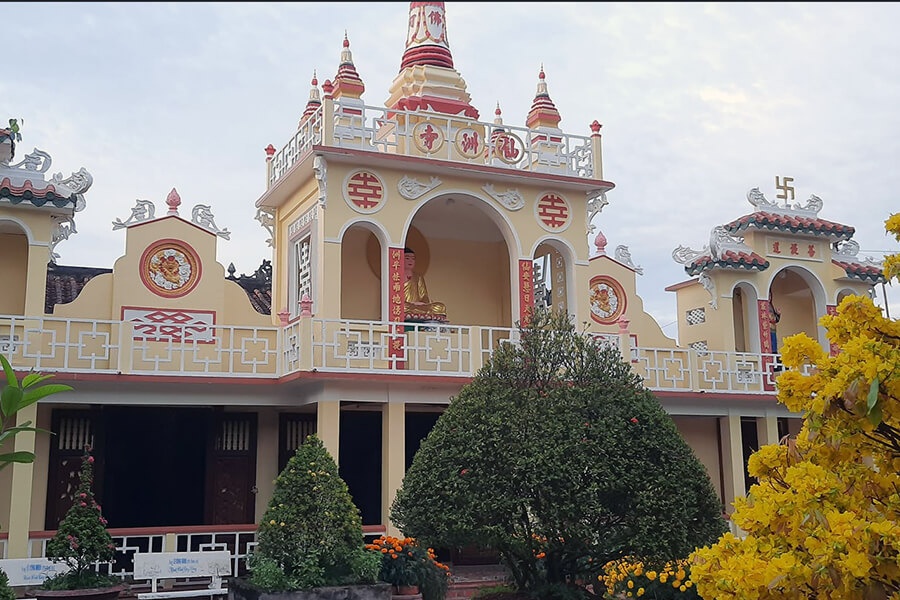
Later, the pagoda was rebuilt in wood (thanks to wood merchants from Cambodia who sold at the Vinh Long market), and was then renamed Tien Chau Di Da Pagoda.
In 1899, the monks of Vinh Trang Pagoda (in Dong Thap Province) went to Tien Chau Di Da Pagoda to practice Buddhism independently. At that time, the temple was in decline, so believers gathered money to restore it. From then on, this ancient pagoda was called the Tien Chau Pagoda, and the name Tien Chau Di Da has been forgotten.
Architectural style of Tien Chau Pagoda
In 1968, the pagoda was rebuilt but kept the scale of the 1899 structure. Tien Chau Pagoda has the shape of a “triangle”, consisting of three interconnected spaces: the main hall, the middle hall, and the rear hall. These areas are built in a four-pillar style, expanded horizontally, made of precious wood, and covered with a yin-yang tiled roof…
The pagoda is 20 meters wide, 46 meters long. On the roof of the main hall, there are 5 towers; the middle tower is the tallest, as we see today. The five towers on the roof of the pagoda are also an architectural style similar to Vinh Trang pagoda.
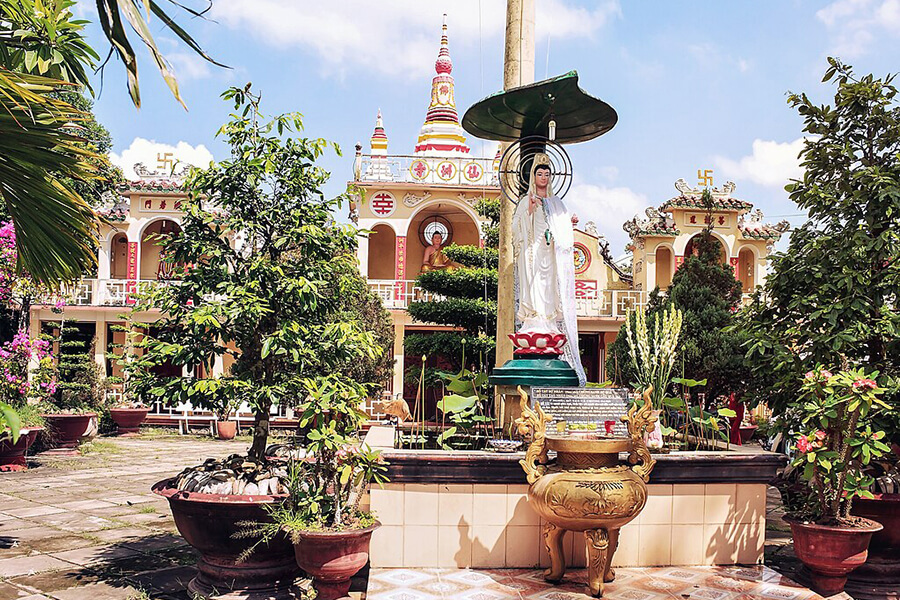
The pagoda has a total of 96 round wooden columns; the rafters, cross-sections, and trim are skillfully carved by the hands of local artisans, especially talented workers from the capital, Hue. All construction wood is made from famous wood rafted here from Phnom Penh, Cambodia.
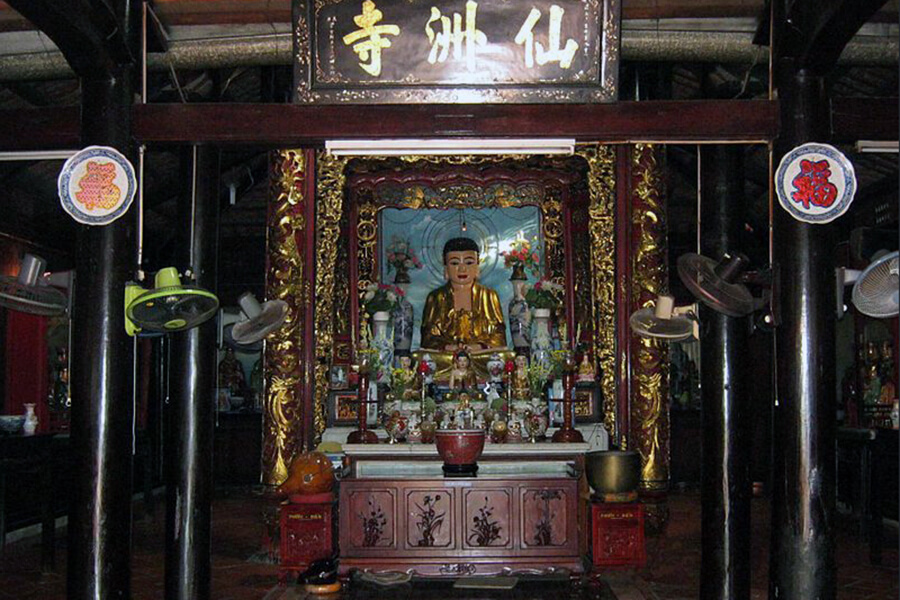
The main hall is an ancient space with sophisticated architecture, featuring many artifacts and antiques such as sofas, ancient vases, horizontal plates, statues of Bodhisattvas and Arhats, tables, chairs, and porcelain teapots… Currently, the pagoda still preserves many artifacts of high cultural and artistic value, such as the statue of Maitreya Buddha, a set of bamboo panels carved with the Eighteen Arhats, and many delicately carved paintings dating from the 19th century, such as the “Four sacred animals”…
After hundreds of years of formation and development, Tien Chau Pagoda was recognized as a national historical-cultural relic in December 12, 1994.
Useful information about Tien Chau Pagoda
- Address: Binh Luong hamlet, An Binh Commune, Vinh Long.
- Best for: solo travelers, families, students, and pilgrims.
- Entrance: Free
- Tourist spots nearby: Vinh Long Ancient House Ecological Area, May Islet, Vinh Long Ceramic Brick, Vinh Long Museum, Phu Ly Pagoda, An Binh Islet, Phuoc Hau Pagoda…
Source: collected by An
Follow us for the best deals on Vietnam visa package tours and visa services!
Comment (0)