
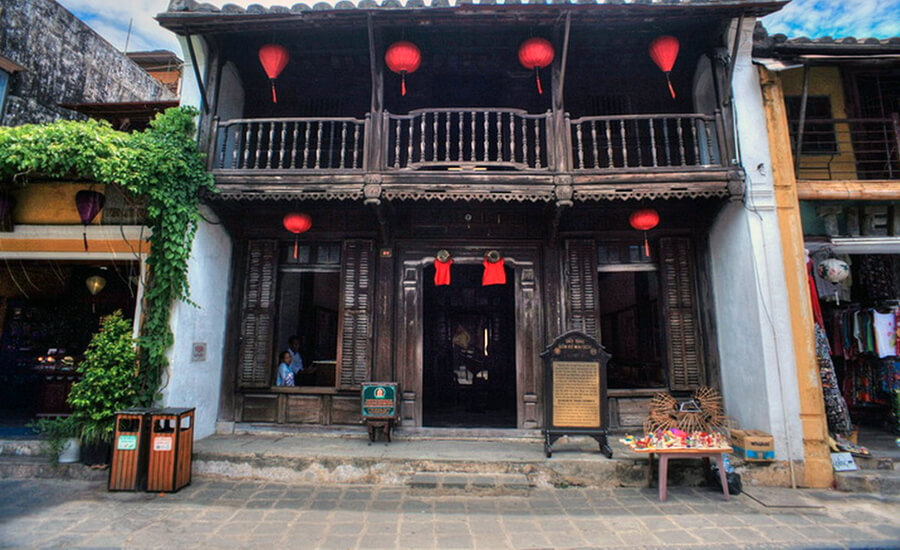
Museum of Trade Ceramics is an ancient house that was put into use as a museum to display and serve tourists. You will explore the spacious museum, with clearly defined sections displaying unique ancient ceramics with long-standing historical beauty.
General information about the Museum of Trade Ceramics
During prosperous times, especially in the first half of the 17th century, Hoi An was the largest trading center of Dang Trong and the whole country of Dai Viet (an old name of Vietnam), and one of the busiest trading ports in Southeast Asia. Ships from China, Japan, Southeast Asian and South Asian coastal countries such as Thailand, Philippines, Indonesia, Malaysia, India,… and some European countries such as Portugal, Spain, and the Netherlands, Italy, England, France… every year visit the port to open fairs for 4 to 6 consecutive months. Many foreign nationals, especially Chinese and Japanese, were allowed by the Nguyen Lords to stay and establish towns, open shops, and live according to their own customs.
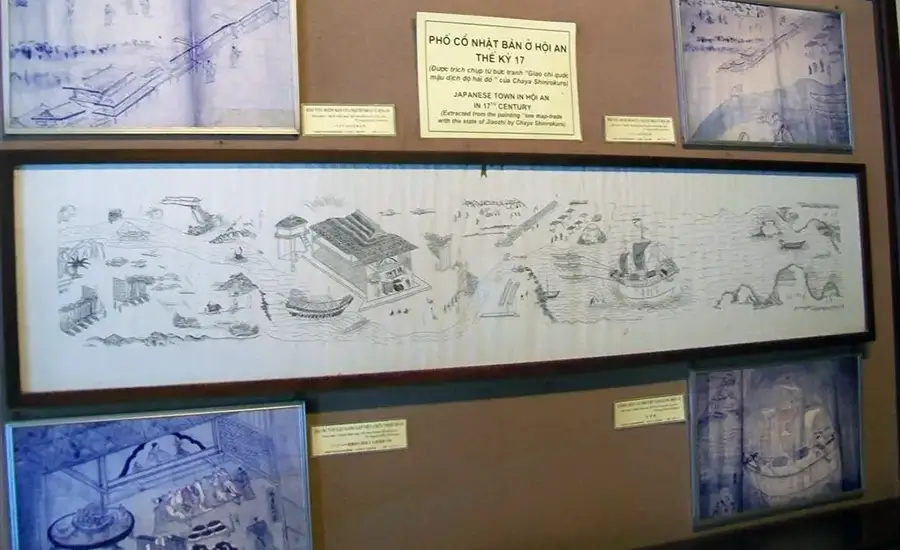
In the 19th century, due to many internal and external factors, including changes in river topography, Hoi An’s economic activities and role gradually declined, ending its period as a sailing-trade port and giving way to the development of the Da Nang motorboat trading port (from the late 19th century onward). But thanks to that and a historical chance, Hoi An was able to avoid the deformations of a modern city and preserve, to this day, a relatively intact ancient urban and commercial port complex.
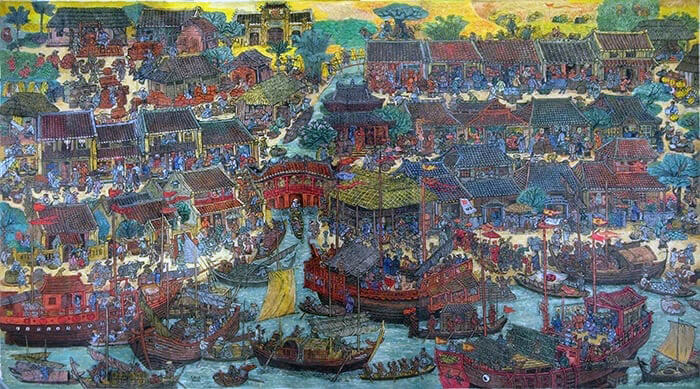
Previously, the ceramics museum was a house built in 1920 with a spacious area. The house is designed and divided into many areas, each with a different purpose. After a period of restoration in 1994, it was opened as a museum in 1995 to display historical artifacts from the flourishing period of Hoi An harbor.
- Address: 80 Tran Phu Street, Hoi An Ward, Da Nang City
- Opening time: 7:00 until 21:00
- Ticket price for domestic visitors: 80,000/person/trip
- Ticket price for international visitors: 120,000/person/trip
This ticket price includes entrance fees to 1,360 sites in Hoi An, including ancient houses, ancient wells, temples, and communal houses. Therefore, visitors only need to buy a ticket once and keep it to use during their journey of discovery at other relics. Ticket prices are valid within 24 hours, and a free preferential guide service is available for groups of 8 people or more.
The museum will be closed on the 15th of every month to carry out professional repair work to preserve and renovate the museum.
What to discover at the Museum of Trade Ceramics?
The museum is a two-story wooden house built around the 19th century. The house is divided into 3 parts, following the typical architectural style of Hoi An’s ancient houses: the front room, the back room, and the bridge. The terrace is located between the front and back houses, with the kitchen and bathroom at the back.
A place to help you understand more about trade ceramics
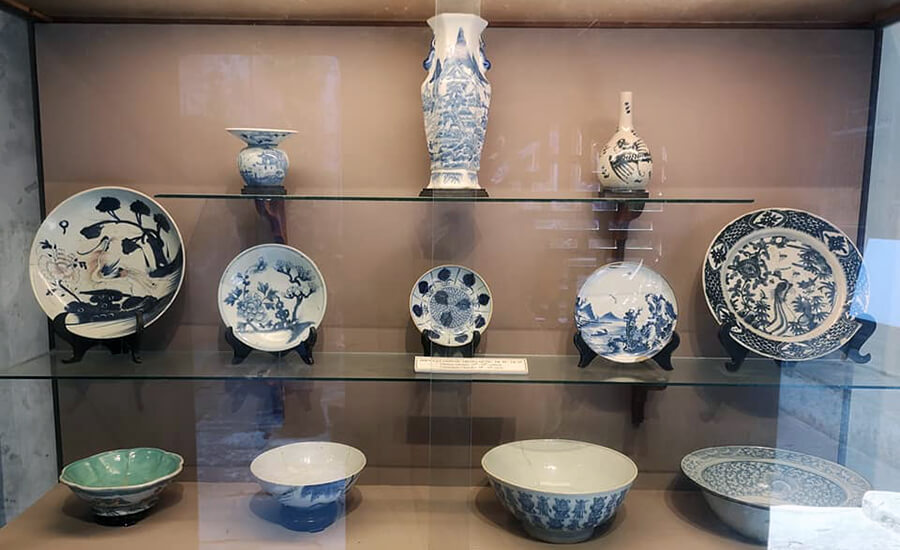
If you are passionate about antiques, like to learn about the history of formation, and understand more about the meaning of pottery, then come to the Museum of Trade Ceramics! You will have an overview of pottery. Until now, the museum has been storing and displaying more than 450 ceramic artifacts dating from the 8th to the 18th centuries. The specimens here mostly come from China, the Middle East, India, Japan, Thailand, and, of course, Vietnam.
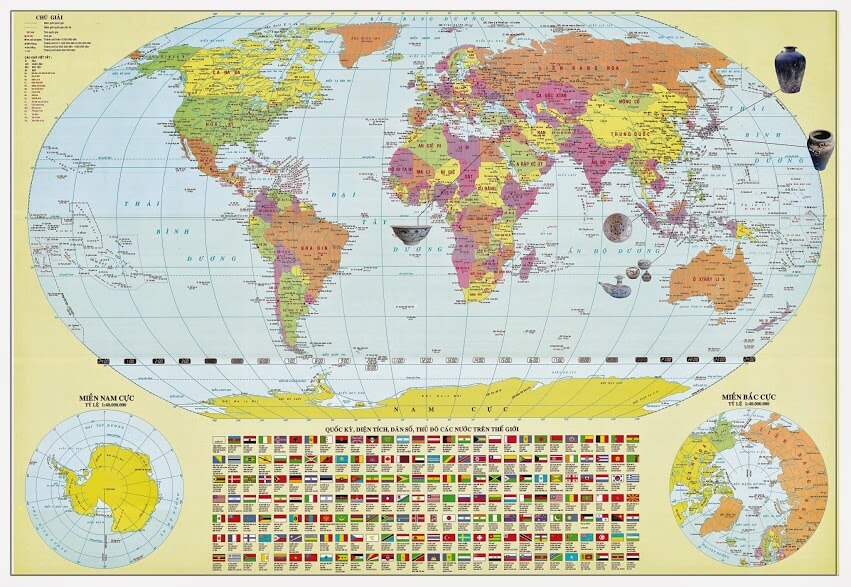
The front of the museum displays a map of the World’s Maritime Ceramics Route, which shows the routes and stops that merchant ships carrying ceramics passed through. On the ceramic road across the East Sea, there is a stop at Hoi An and a number of other trading ports in the region. This is an intermediary location for receiving and shipping goods between the East and West regions of the world.
Besides, there is a map of some pottery kilns discovered in Vietnam and an overview of the history of the Vietnamese ceramic trade. It affirms that, beginning in the 14th century, Vietnamese ceramics entered the commercial market and flourished most brilliantly in the 15th and 16th centuries. Ceramics at that time were produced at kilns such as Chu Dau, Bat Trang, Hop Le in the North, and Go Sanh, Go Truong Cuu, Go Hoi, Go Cay Me in the South, yielding many high-quality ceramic products. such as celadon ceramics, brown-glazed ceramics, brown-floral ceramics, white-glazed ceramics, blue-painted ceramics…
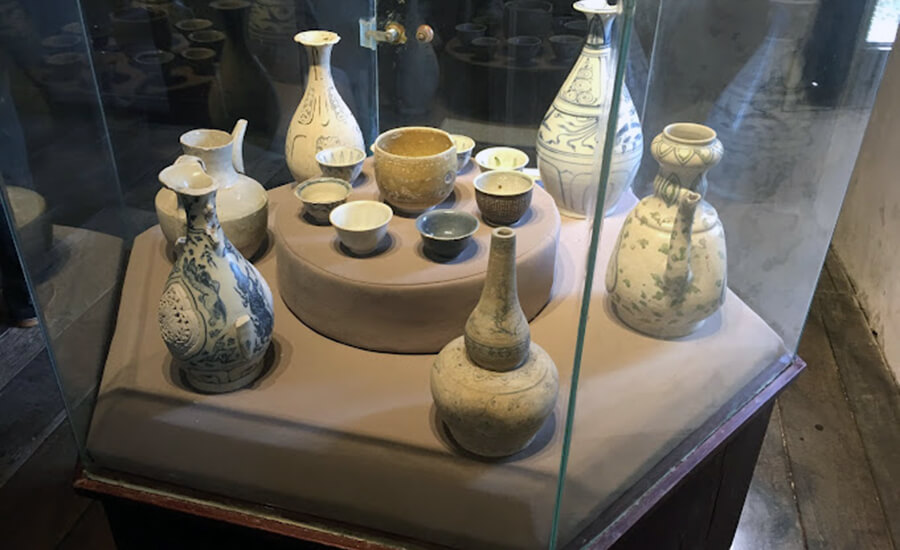
Particularly in the Central region, only earthenware is produced; there are no kilns for glazed ceramics, so porcelain must be imported from elsewhere. other in the country. Entering the 18th century, Vietnamese commercial ceramics suddenly disappeared from the world market. Over the past four centuries, Vietnamese commercial ceramics have contributed significantly to promoting economic and cultural exchanges between peoples.
Display unique ceramic artifacts
The documents, artifacts, and other materials displayed here are all precious assets, some of which were discovered at archaeological sites in Hoi An. Much of what is on display here concerns ceramics, as well as the trade ceramics that are prominent here. You will be surprised by the long-standing ceramic collections with simple, eye-catching designs on attractive color backgrounds, creating a delicate and unique beauty.
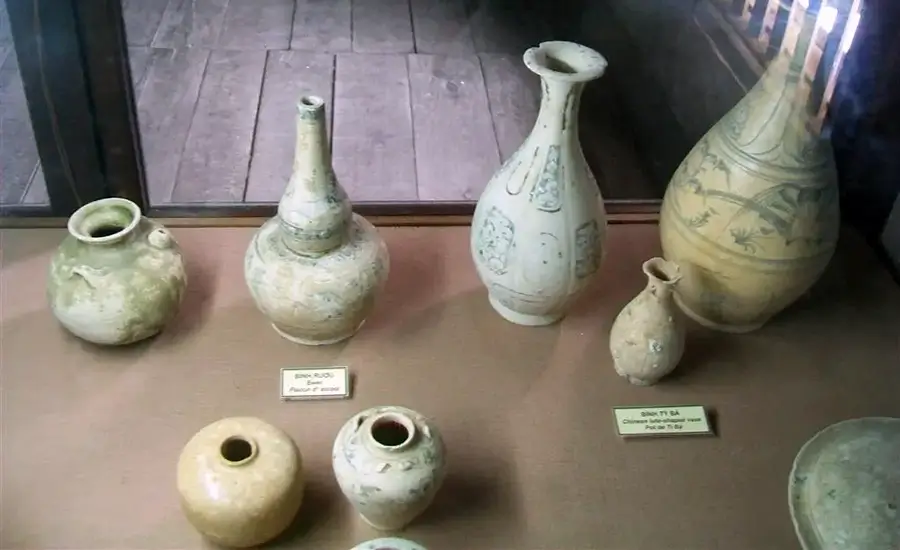
This is also one of the “living witnesses” recording the talent and ingenuity of the Vietnamese people 2000 years ago. Because of that uniqueness, this quintessence has been learned and applied by some Japanese people in ceramic production thanks to Vietnamese ceramic glaze instead of using Japanese ceramic glaze.
With today’s rapid technological development, the museum uses headset interpretation services to meet the flexible and proactive needs of visitors. With this service, you no longer have to rely on the tour guides’ explanations. The rental price is quite cheap for one turn, about 20,000 VND/turn, and has a time limit.
Storing relics from the sea
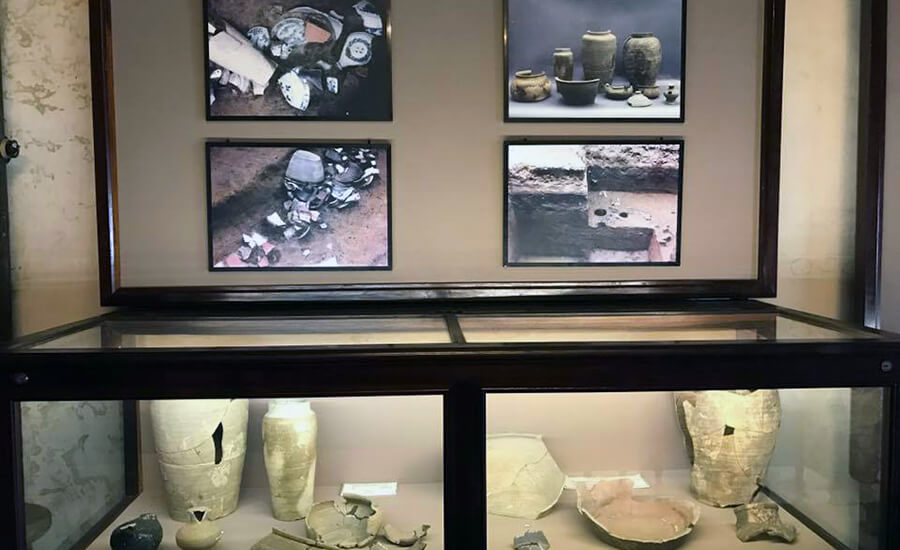
Most notably, the Museum of Trade Ceramics displays a collection of ceramics salvaged from an ancient shipwreck in the waters around Cham Islet. According to statistics, about 240,000 relics have been excavated, of which some are items and utensils made of different materials. Most of the salvaged artifacts are household ceramics from the 15th-16th centuries, originating from the Chu Dau – My Xa kilns in Hai Duong province.
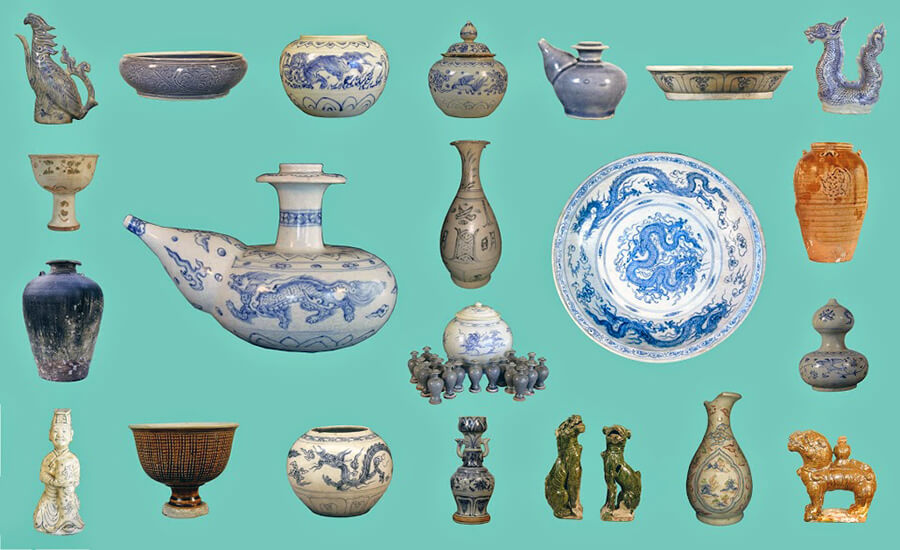
Ceramic artifacts include many ceramic lines with many rich and attractive types, patterns and decorative themes. This shipwreck and a number of shipwrecks from the 15th to 16th centuries in the waters of the Philippines, Indonesia, the Gulf of Thailand and scattered throughout the southern East Sea are evidence of a vibrant trade and production in the East Sea region, including Vietnam.
Source: collected by An
Follow us for the best deal with Vietnam package tours and visa services!
Comment (0)