
Ca Mau is the southernmost province of Vietnam, located in the Mekong Delta region. The land at the end of the country has three sides bordering the sea: the East Sea to the east, the Gulf of Thailand to the west and south, and An Giang and Can Tho to the north. Coming to Ca Mau, visitors will hear folktales, enjoy traditional music, cruise the rivers, and savor forest specialties, sea crabs, etc.
What’s the best time to explore Ca Mau?
The climate is quite pleasant year-round, but the best time to explore Ca Mau is during the dry season, from December to April of the following year. The rainy season lasts from May to November. If you go around the 7th-8th lunar month, visitors will enjoy many specialties.
How to get there?
As a province formed by the merger of Ca Mau and Bac Lieu, it is also the name of the 2 most attractive tourist destinations. Ca Mau is more than 300 km from Ho Chi Minh City and more than 1,900 km from Hanoi.
From the northern provinces, the most convenient way to travel is by air. Visitors choose flights to Can Tho by Vietnam Airlines, Vietjet Air, and Bamboo Airways, with round-trip fares from 3 to 4 million VND. Then, from Can Tho airport, visitors travel to Ca Mau or Bac Lieu by many types of vehicles, the most comfortable of which is a sleeper bus. Ticket prices range from 200,000 to 300,000 VND.
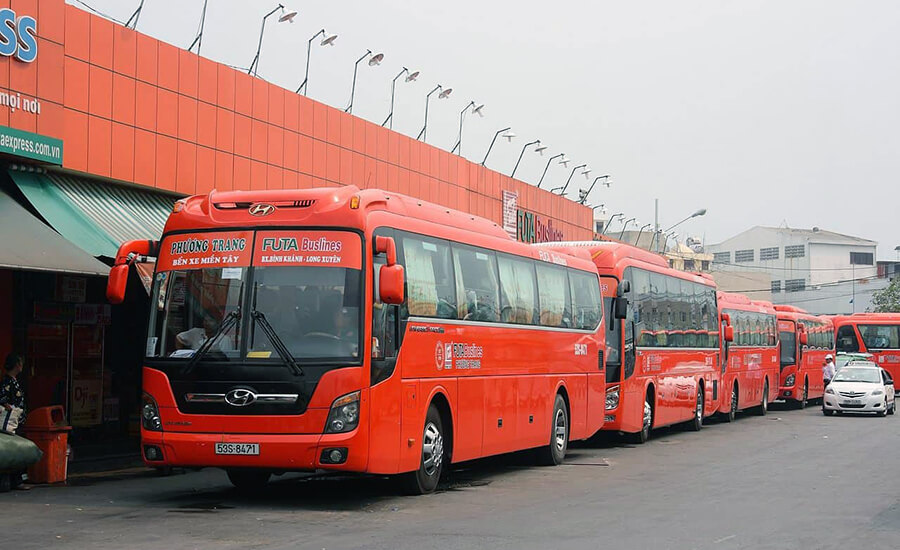
From Ho Chi Minh City, visitors can buy bus tickets or drive themselves. Buses usually depart in the evening and stop in the center of Ca Mau or Bac Lieu after 5 hours of driving. Some good-quality bus companies, such as Phuong Trang, Giap Diep, Mai Linh, Anh Tuan, Ngoc Anh, Tuan Hiep, and Tuan Hung, have ticket prices for the Ho Chi Minh City – Ca Mau route of about 200,000 – 300,000 VND one way.
Rent a private car from Ho Chi Minh City to Ca Mau, with a journey of about 5 hours, depending on traffic time. The road is quite nice, but there are many rivers and canals.
In addition, the best means of transport for exploring Ca Mau city is a motorbike, and the second-best is a car for long distances. Third is a ship, a boat, a motorboat – a very popular means of transport because Ca Mau has a dense system of rivers and canals.
Accommodation in Ca Mau areas
You should stay in the city center for convenient eating and entertainment. Ca Mau hotels are not diverse on online booking platforms. You should contact us directly when booking a room. Prices range from 200,000 to 600,000 VND depending on the quality.
In the Bac Lieu area, the price of a motel per night is from 180,000 to 300,000 VND. The rooms are clean, fully equipped, and close to the city center. To experience the feeling at Bac Lieu Prince’s house, you should book a room early; prices range from 500,000 to 1,200,000 VND. High-end accommodation in the city includes the four-star Muong Thanh Luxury hotel at around VND1,400,000 per night; the three-star Anh Nguyet hotel at around VND 900,000 per night.
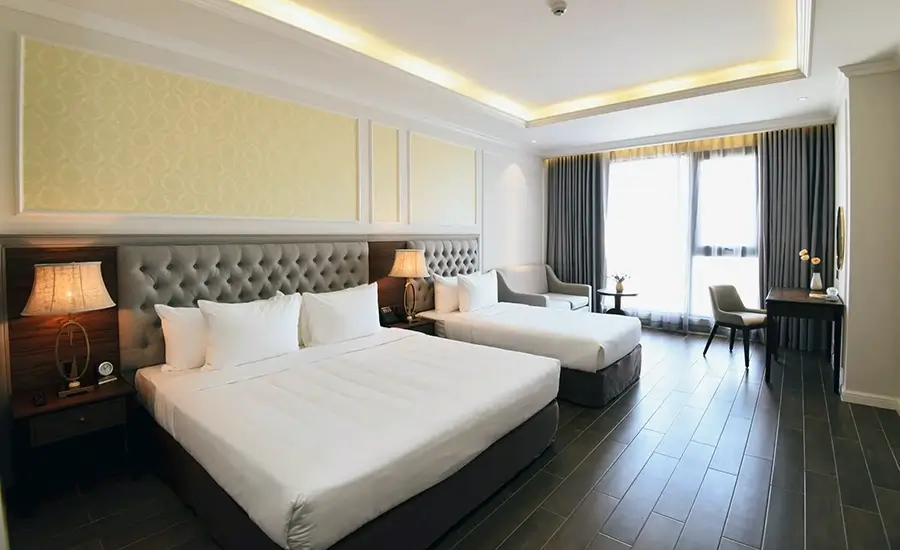
If you want to relax in the natural beauty of Ca Mau, visitors have many options in eco-tourism areas and homestays such as Rung Duoc, Huong Dat Mui, Dan Ba Khia, Ba Su, Tu Nhuan, Nam Huong… Prices start at around VND 150,000 per person per night.
Where to go in Ca Mau?
Nature and wildlife areas
Ca Mau Cape

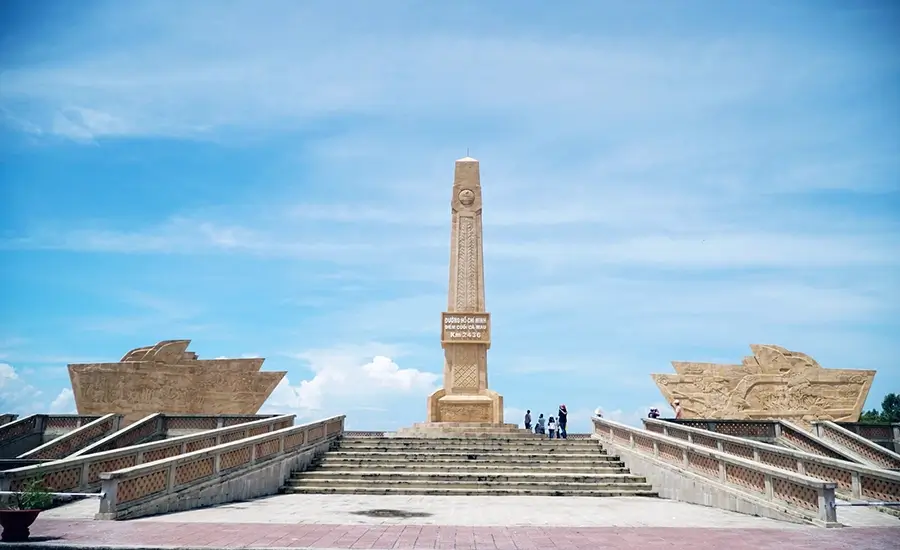
Ca Mau Cape is where the GPS coordinate marker 0001 (kilometer 0) is located. This marker is shaped like a ship filled with wind, stretching out to sea. Ca Mau Cape is where you can observe the sun rising from the eastern sea in the morning and setting in the western sea in the afternoon.
The cape, in Dat Mui commune, is also the final point of the Ho Chi Minh road. Km 2436 of the Ho Chi Minh road belongs to the Ca Mau Cape National Tourist Area. The road starts from Pac Bo – Cao Bang, passes through many provinces and cities, and ends at the southernmost point of the country.
Forestry and Fishery Field 184
 Forestry and Fishery Field 184 is a biodiversity conservation area located in the middle of the Nam Can mangrove forest in Cha La hamlet, Tam Giang commune. It covers about 252 hectares, including a strict conservation area and a buffer zone. This attraction has a wild beauty, typical of the Ca Mau mangrove ecosystem.
At the 184 Forestry and Fishery Field, there are up to 44 species of plants, of which 32 species are typical of the mangrove ecosystem. This place is home to many rare species, such as mangroves, parrots, and white toads… Moreover, the 184 Forestry and Fishery Field also has 6 bird species, 5 animal species, 2 reptile species, and 2 amphibian species. In the middle of that vast forest, many bird species live, including storks, herons, painted storks, and lesser adjutants. In particular, the 184 Forestry and Fishery Field is also home to many reptile species. Thanks to its diverse flora and fauna, this place plays an important role in scientists’ research and development. Upon arrival, visitors can row a boat deep into the mangrove forest, watching monkeys play in the trees.
Ca Mau Cape World Biosphere Reserve
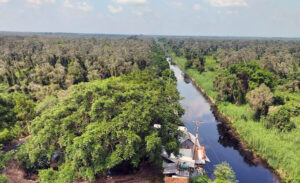 The Ca Mau Cape World Biosphere Reserve is a natural mangrove ecosystem recognized by UNESCO, including Ca Mau Cape National Park, U Minh Ha National Park and the West Coast protection forest area.
In addition to the strict scientific research area, the National Park welcomes visitors to the wild animal breeding area, enjoy entertainment, and participate in many other interesting activities.
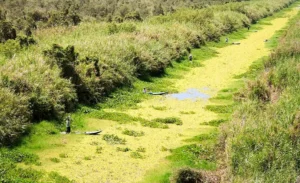
An experience not to be missed is sitting on small boats to explore the cajuput forest, catch fish and small snails clinging to the tree roots, and enjoy the fresh, salty air that is very typical of this place.
In particular, you can also enjoy many Ca Mau specialties here, with rich, appealing flavors. In addition, U Minh Ha National Park is known for a special type of natural forest honey with a golden color and a pleasant, sweet taste, which is loved by many people.
Ngoc Hien Bird Sanctuary
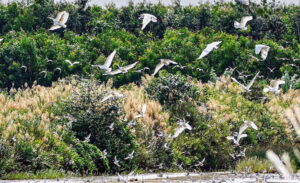 Ngoc Hien Bird Sanctuary in Ca Mau is one of the largest natural bird sanctuaries in Vietnam, with a total area of 130ha. Located next to the Bay Hap River, Ngoc Hien Bird Sanctuary has an abundant supply of shrimp and fish, along with rich green vegetation year-round, creating conditions for many bird species to regularly visit and live there. This is an area for the conservation and breeding of many rare bird species, the most common of which are silver-cheeked birds, white storks, lesser adjutant, gray herons, and many other amphibians and reptiles. In addition, Ngoc Hien Bird Sanctuary has a number of rare bird species, such as red-crowned cranes, cuckoos, and herons, that regularly visit to forage.
Visitors can visit early in the morning to watch thousands of birds foraging, or at sunset to see them fly across the sky as they find their way back to their nests.
Trem River Eco-tourism Area
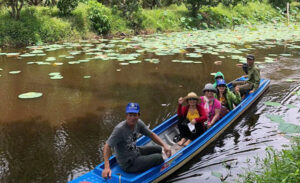 There is an ecotourism area in the Trem River basin. The forest system here has nearly 300 species of plants and animals. When visiting the flora and fauna collection garden, visitors can admire the poetic natural scenery and observe nearly 130 plant species belonging to 62 families, which are protected and cultivated across an area of 100 hectares. This garden collection is like a primeval forest untouched by human hands. Upon arriving at the Trem River Eco-tourism Area, visitors will also encounter many species of birds and animals, as well as familiar freshwater fish.
The Trem River flora and fauna collection garden has also introduced many new species from other ecosystems to domesticate and develop alongside native species, to attract and serve tourists, and to conduct scientific research. Currently, the garden has many new members, including wild deer, crocodiles, gibbons, bears, and ostriches.
Thi Tuong lagoon
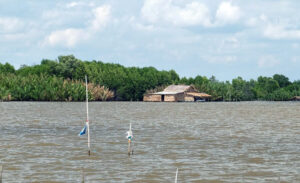 Thi Tuong lagoon is known as “a lake in the middle of the plain”. This is also the largest lagoon in the Mekong Delta, measuring 12 km in length, with a maximum width of 2 km and a maximum depth of 1.5 m. Thi Tuong lagoon consists of three main lagoons: Upper lagoon, Middle lagoon, and Lower lagoon, of which Middle lagoon is the largest.
Sitting on a motorboat gliding on the lagoon, visitors can enjoy the beautiful nature, observe the lives of local fishermen, or experience fishing with nets… In addition, enjoy fresh fish, clams, shrimp, crabs… specialties.
Lam Vien 19/5 Bird Sanctuary
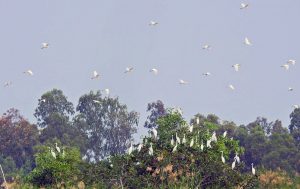 Lam Vien 19/5, also known as Cultural Park, is two km west of the city center. It covers an area of 18.2 hectares and features entertainment and cultural structures, including statues, gardens, a fishpond, and a stilt house.
This park is home to typical mangrove creatures, including crocodiles, snakes, iguanas, pythons, and tortoises. In particular, a bird sanctuary covering six hectares is most attractive to visitors. For many years, many species of birds and animals have been living in this park. Every morning, thousands of birds fly to seek food and return in the afternoon. This sanctuary includes a lake, large trees, and groves by the lake, all surrounded by fences.
Bac Lieu Bird Reserve
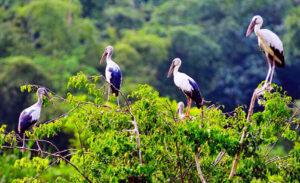 Located 4km east of Bac Lieu ward, the bird reserve is notable for its 50 species of birds, including a large population of graceful white herons. Visitors to Bac Lieu Bird Reserve can observe birds at different stages of life, from egg-laying to nest-building.
Bac Lieu bird reserve is a remnant of the coastal mangrove forest that has gradually shifted away from the East Sea due to natural sedimentation. Bac Lieu Bird Reserve covers 130 hectares and is home to more than 100 bird and stork species, with a total population of more than 60,000 birds, including many rare species listed in the Vietnam and World Red Books. To explore Bac Lieu Bird Reserve, tourists will take a three-leaf boat, pass through a few curved bridges, then follow the canal into the garden to enjoy the scenery.
Spiritual destination
Nam Hai Bodhisattva
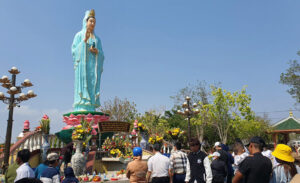 Nam Hai Bodhisattva was built in 1973 in Hiep Thanh Ward. This is an outstanding architectural, cultural, and spiritual work. The feature that attracts tourists is the 11 m-high Buddha statue, built in 1973, facing the East Sea to bless and protect fishermen who make a living at sea.
The statue of the Bodhisattva serves the religious needs of many people, including those working at sea in the area, and serves as a lighthouse for offshore fishing boats. In the lives of the people here, especially the fishermen who make a living by going to sea, Nam Hai Bodhisattva is the one who always listens to the uncertainties and sufferings and protects them from all the storms of life, whether on land or at sea. The respect and admiration of the local people and Buddhists near and far are increasingly permeated in all living conditions, and that is a firm, sacred belief in their lives.
On the 22nd, 23rd, and 24th of the third lunar month every year, this place often holds the Nam Hai Bodhisattva festival. This is one of the largest Buddhist festivals in the province, with unique cultural values and spiritual activities; it is considered a key highlight of Ca Mau tourism.
Xiem Can Pagoda
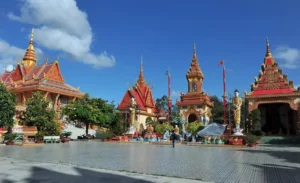
Xiem Can Pagoda is a typical Khmer pagoda in Ca Mau, built in the 19th century on a campus of up to 50,000 m².
The pagoda has a 4-hectare campus and is the largest religious architectural complex in the Mekong Delta region. The pagoda’s complex faces east and is built in the style of the Southern Buddhist school. The common construction colors of the pagoda, like those of many other Khmer pagodas, are yellow and red-yellow. The architecture has many reliefs.
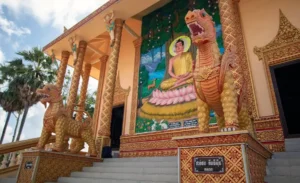
Xiem Can Pagoda is a place for spiritual and cultural activities, where the Khmer people hold their annual festivals. The pagoda is also a place for cultural and artistic activities of the Khmer people, serving local people and visitors from near and far with Apsara dances, Rom vong, Sarawan, sa sam drums, and gao dances imbued with the Khmer national identity.
The pagoda is also a place for monks to study. The teaching content is Khmer script, math, Vietnamese, and Khmer Buddhist doctrine.
Tac Say Church
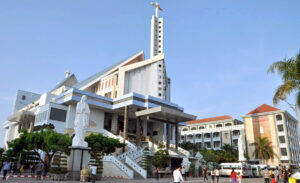 Tac Say Church is located in Hamlet 2, Phong Thanh Commune, more than 40 km from the city center along National Highway 1A towards Ca Mau center. The church is located on the main traffic axis and is designed with three roofs in the East Asian architectural style. Inside, there are 3 main floors. The 1st floor is a place for guests to rest. The 2nd and 3rd floors of the church are where Mass is held, especially the 2nd-floor area, which has a very spacious lobby.
Inside the church grounds, there is also the tomb area of Priest Truong Buu Diep. The tomb design has three roofs, with the middle roof higher than the other two, and a large clock mounted on top to stand out. Next to the tomb is also a 2.5m-high wooden statue of Huu Thao, carved with great delicacy. The church is the resting place of priest Truong Buu Diep, who is admired and trusted by many people. March 11 to 12th marks the anniversary of his death, so many people visit.
Quan De Temple
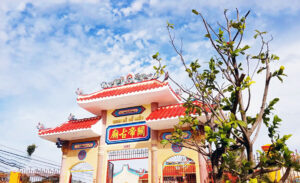 Quan De Temple, also known as Ong Pagoda, where Guan Yu was worshiped, is located on Nguyen Thi Minh Khai Street in Bac Lieu Ward. The temple was built in 1835 by the owner of the Chau Quai salt mine, who mobilized contributions. Quan De Temple is currently the oldest temple in Bac Lieu City.
This place still preserves many large horizontal lacquered boards, some of which were carved from 1865 to 1897. In addition, Quan De Temple also has a valuable altar that has been passed down through many generations.
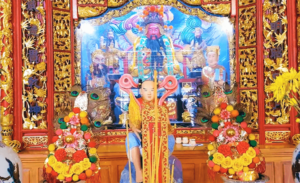
Guan Yu was originally canonized by the people as a symbol of the four virtues of loyalty, filial piety, chastity, and righteousness, so for the Chinese, worshiping Guan Yu is also a way for them to respect their reputation. Therefore, Quan De Temple has become a place of prayer and a place for business transactions with them.
Every year, Quan De Pagoda holds a worship ceremony on the 24th day of the 6th lunar month, which is also its most important. Today, Quan De Pagoda is not only for the Chinese community, but also for many Vietnamese people. It is considered a spiritual destination, often coming to Bac Lieu Ward on pilgrimage, praying for favorable business, career, health, happiness, etc.
Ghositaram Pagoda of the Khmer
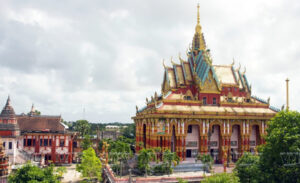 Ghositaram Pagoda, located in Bac Lieu ward, is a religious spiritual structure built in 1860. With a design imbued with the Khmer architectural style. This is considered one of the most beautiful Southern Buddhist temples of the Khmer people. The temple consists of many typical areas, such as the main hall, monks’ quarters, lecture hall, stupa, school, and an annex. Over time, the pagoda fell into disrepair, so the main hall was rebuilt and completed in 2010.
Next to the temple, there is a prominent main hall that stands out with a characteristic red-yellow color scheme, measuring over 427 m² and over 36 m high. When you come here, you will have a super sparkling check-in and a virtual living place.
Historical sites and ancient architecture
Vinh Hung Ancient Tower
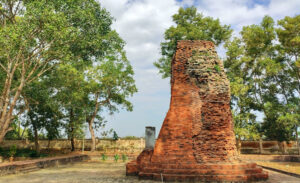
The tower is situated in Chau Thoi Commune. The tower is the only Angkor-style Khmer structure preserved in the Mekong Delta.
Vinh Hung Tower, also known as Luc Hien Tower or Bhah Dhat Tower, was built in 1911 and is listed as one of the historical sites in the south. In the 20th century, archeologists found a stele engraved with Sanskrit in a pagoda next to the tower.
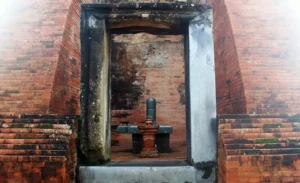
The tower is built of bricks that are so tightly packed that we cannot see mortar between them. It is 8.9 meters high. Its base is rectangular, with sides of 5.6 meters and 6.9 meters. There are a handful of bronze deities, a lower part of a bronze statue, a stone statue of a goddess, a Buddha head, and many worship objects.
Monks in the tower pagoda chant twice a day at 4 am and 16 pm. Every year, local residents organize an anniversary on the 15th day of the first lunar month at the tower. A large number of Buddhists, both inside and outside the province, pilgrimage to the pagoda to pray for good things.
Hong Anh Thu Quan Relic
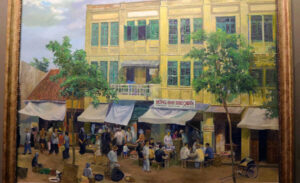 Ca Mau, the southernmost land of the country, has a very valuable revolutionary historical relic, Hong Anh Thu Quan, located at 43 Pham Van Ky Street, An Xuyen Ward, Ca Mau. After a long period of fierce war, the relic still retains the house’s original architecture, which has been restored, embellished, and preserved.
In January 1929, the Vietnam Revolutionary Youth Association of Ca Mau town was established, with the important task of propagating Marxism-Leninism, educating revolutionary consciousness among farmers, workers, students, and intellectuals, and leading the masses in fighting for people’s rights and democracy.
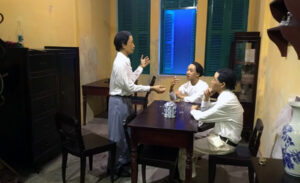 During that struggle, the Association opened the bookstore “Hong Anh Thu Quan” to sell progressive books and newspapers published in Saigon at the time. In fact, this is a front for the democratic movement, a meeting place for many patriots, a place for the activities of the Vietnam Revolutionary Youth Association of Ca Mau Town – a political organization with the mission of enlightening patriotic youth, propagating and educating Marxist-Leninist ideology.
As the pioneering flag of the revolutionary movement in Ca Mau, Hong Anh Thu Quan was designated a national historical relic on August 4, 1992. Building on traditional elements, the ground floor of the relic was restored as Tam Dong Coffee Shop, serving as a social space that displays many antiques and artifacts.
Bac Lieu Prince’s House
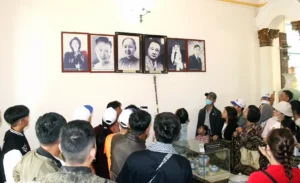
The Bac Lieu Prince’s House is located at 31 Dien Bien Phu Street, Bac Lieu Ward. The house stands out in the region with its grandeur, bearing a timeless Western architectural style. This is also a cultural site, associated with many legends and stories passed down through generations about the life of the richest prince in the Western province.
The house was built in the French architectural style in 1919, with all materials brought from France. The house consists of a ground floor, a first floor with 4 rooms and 4 halls, a spacious corridor, so the house is always cool and airy.
Currently, this place is the Restaurant-Hotel of the Bac Lieu Prince’s House. Visitors also have the opportunity to hear about his life. The ticket price is 15,000 VND.
The memorial area of musician Cao Van Lau
 The memorial area of musician Cao Van Lau is located in Bac Lieu Ward. This is the final resting place of the author of the famous Southern song “Da Co Hoai Lang”. Here, visitors will be introduced to his life, career, and the development of art from songs.
Visitors also have the opportunity to admire valuable documents about the art of amateur music or see images of typical artists and artisans in Ca Mau. The exhibition area is a place that visitors should not miss. The stage costumes of many famous artists, the wax reconstructions of Don Ca Tai Tu, or the ancient musical instruments of the artisans are all present… In 1997, the memorial site was recognized as a provincial historical site.
Beaches and islands
Hon Khoai
 Hon Khoai is a small archipelago located about 14 kilometers from the mainland, southwest of the small town of Nam Can. There are five islands in extremely close proximity to one another, including Hon Khoai, Hon Sao, Hon Doi Moi, Hon Da Le, and Hon Tuong, with a total area of 4 sq km.
In addition to its wild beauty, Hon Khoai is also a famous revolutionary achievement. Here, on December 13, 1940, Phan Ngoc Hien commanded the rebel army to occupy Hon Khoai, marking a brilliant milestone in the history of the struggle against foreign 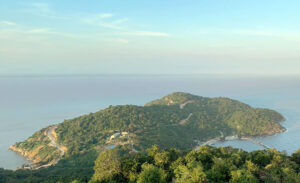 invaders of the army and people of the southernmost land of Vietnam. In 1990, Hon Khoai Island was recognized as a National Historical-Cultural Relic.
In Hon Khoai, tourists have an opportunity to enjoy the beautiful landscape, swim, climb a mountain, and walk in the forest. Atop Hon Khoai Island, a lighthouse built by the French at the end of the 19th century still stands. From this place, tourists can see the panoramic view of Doi Moi Island and Ca Mau Cape through a telescope. Hon Khoai attracts tourists with its primitive natural landscape and pristine beach.
Da Bac Island
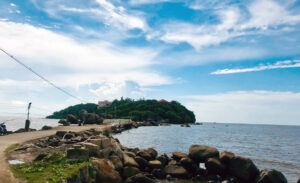 Da Bac Island is situated in Khanh Binh Tay Commune, Tran Van Thoi, 700m from Kinh Hon Estuary. From a distance as far as Da Bac B hamlet, one can see the magnificent sight of Da Bac Island. Da Bac comprises three islets named Ong Ngo, Troi, and Da.
The Bac covers 6.34 hectares. Its highest point above sea level is 50m. Different granite layers form strange forms with exotic names such as San Tien (Fairy Yard), Gieng Tien (Fairy Well), Ban Chan Tien (Fairy Foot), or Ban Tay Nam Ngon (Give-fingered Hand). In San Tien stand the stele and statue of victory. Atop the opposite rock is the temple dedicated to the cult of the whale. Inside the temple, there is a large whale skeleton. On the 23rd day of the 5th lunar month, the local people hold the festival of whale procession in Da Bac Island.
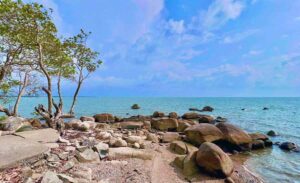 The Bac Island still preserves its primitive forests and vegetal cover. It is no wonder that, upon arriving here, tourists may hear the rustling of leaves all year round. Atop Da Bac Island, tourists can figure out the fishermen amid rugged rocks from afar. This rustic landscape is attracting more and more people to this island.
After a busy day of sightseeing, tourists can enjoy marine specialties, including shrimp, crab, and oysters, which are cheap yet delicious. The service is not yet well-developed, but tourists can still feel comfortable. Da Bac is now a well-known eco-tourist attraction in Ca Mau. Visitors come there to relax after exhausting working days.
Khai Long Beach
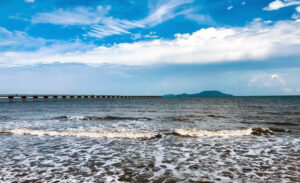
Khai Long Beach is situated to the north of Ca Mau Cape, surrounded by beautiful mountain and sea landscapes. Tour operators have put this new tourist attraction in their itineraries. Covering 150 hectares, Khai Long lies in a location of special significance. Tourists should go to the seaside to see the sunset and sunrise. Khai Long has a vast sandy beach, spanning over 3km, which advances to the sea every year. It seems that whenever you go to the beach, you will notice that the distance from there to Hon Khoai Island is shortened.
Khai Long Beach still retains its pristine and original beauty. The mangrove forest ecosystem here is second to none in terms of diversity. Khai Long is also proud of the many popular trees along the seaside, which whistle night and day.
Craft villages
Bac Lieu salt fields
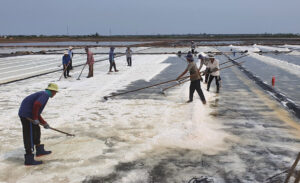 Bac Lieu (currently merged into Ca Mau Province) is considered the capital of Vietnam’s salt fields because it is one of the regions with the largest salt production area in the country. With more than 100 years of formation and development, salt farmers have accumulated unique and exclusive practical skills and passed them on to the salt-making profession.
Bac Lieu salt has been certified for protection under the geographical indication as a national brand. In particular, on September 30, 2020, the Ministry of Culture, Sports and Tourism issued Decision No. 2746 to include the salt-making profession in Bac Lieu on the List of national intangible cultural heritages.
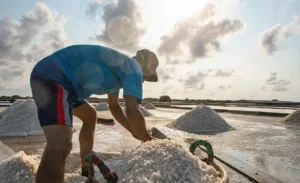 Bac Lieu salt is not only a culinary specialty but also contains many cultural features of the coastal people in Ca Mau. Not only that, but the immense salt fields, covered in pure white, create a beautiful scene that attracts a large number of tourists to the province every year.
For those who love and want to experience sunny, windy, coastal areas, this Hoa Binh – Dong Hai area will probably be an interesting place. The first impression when coming here is the poetic, fresh scenery: the vast, immense salt fields are covered in pure white, tiny salt grains. When the sun shines, Bac Lieu salt fields become shimmering, sparkling, and incredibly beautiful.
Specialties of Ca Mau
Ca Mau crab
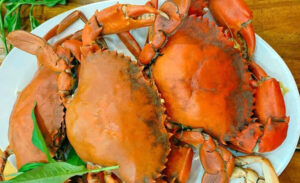 Ca Mau crab is famous for their deliciousness. Gourmets often buy wild crabs because the meat is much more delicious and sweeter than that of farmed crabs. Crabs at Ca Mau are always fresh and reasonably priced. The price of Ca Mau crab meat ranges from 150,000 – 300,000 VND per kg, and crab roe from 300,000 – 500,000 VND per kg.
Many restaurants prepare crabs into many different dishes, from simple ones such as boiled, steamed, grilled, to more elaborate ones such as tamarind stir-fried, hot pot, crab noodle soup…
Ba khia
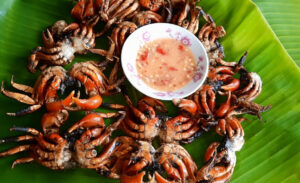 Ba khia is a small crab in the family Sesarmidae, considered the most typical and famous of this land. Ba khia is made into salad and eaten with sticky rice, boiled or stir-fried with tamarind and dipped in salt, pepper, and lemon. This dish has a characteristic, irresistible aroma.
Ba khia sweet and sour: soak in boiling water for about 15 minutes to kill bacteria and reduce saltiness, then cut into small pieces for easy eating and quick absorption of spices. Mix the crab with minced garlic and chili, then add lemon, sugar, and MSG to taste.
Grilled snakehead fish
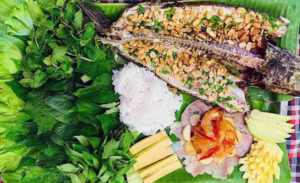 The main ingredient of this dish is wild snakehead fish caught in the local rivers and canals, and it must weigh at least 400 grams. The fish is at its most delicious during the rainy season, from June to October in the lunar calendar. At this time, the water rises, and there is plenty of food, so the fish are fat and firm. This is also the breeding season, so there are eggs, the part that many tourists love. Grilled snakehead fish is a dish with a sweet, elegant taste, the aroma of alluvial water, and the salty taste of the homeland sea. The fish does not need to be marinated, but will still be fragrant and sweet.
You can hold the whole fish and grill it to eat in the true countryside style, or put it on banana leaves, wrap it in rice paper with vegetables, star fruit, cucumber… and dip it in sweet and sour fish sauce.
Bee pupae salad
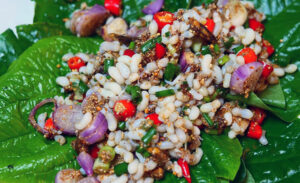 Bee pupae salad is considered the most attractive in Ca Mau. Bee pupae wax is often collected by workers in the forest, then processed into dishes such as porridge, stir-fried bee pupae, or, best of all, salads.
Bee sauce is a specialty that not everyone dares to try. People in the Cape often eat honey sauce with white rice. In some restaurants, people often use pork belly wrapped with vegetables such as green banana, cucumber, star fruit leaves, ginger, chili, or coriander, dipped in honey sauce.
Hotpot
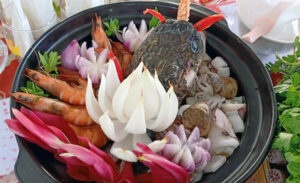 Not only is it extremely familiar in local cuisine, but the rustic hotpot also helps create countless unique and delicious dishes, including the famous U Minh hotpot. This is the dish that brings the culinary brand of the southernmost land far and wide on the tourist map and is also included in the “Top 100 Vietnamese specialties” by the record institute.
Hotpot is usually made with fish sauce, fresh coconut water, lemongrass, and fragrant fried garlic. Hotpot is served with pork belly, snakehead fish, basa fish, celery, water spinach, malabar spinach, purple cabbage, lotus root, and water hyacinth.
Sour pickled bon bon
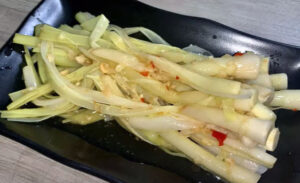 Sour pickled bon bon is a popular dish of the Ca Mau people. Clean the young roots of water fern, blanch them in boiling water, and soak them in a jar with a mixture of rice-washing water and salt for 3 to 5 days to make a delicious pickled dish.
Water fern bon bon has a sour, crunchy taste, so it is used to dip in soy sauce, braised fish sauce, shrimp paste, mixed shrimp and meat salad… Water fern is also used in other dishes, such as stir-fried shrimp, stir-fried meat, and sour soup with snakehead fish and perch. The price per kg of pickles is 40,000-50,000 VND.
Radish cake
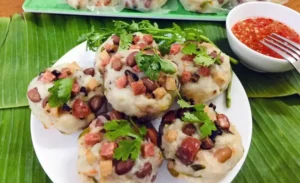 The outside of the cake is made from a flour-and-white radish powder mixture, rolled into small, bite-sized pieces. The filling is made from shrimp, lightly crushed shrimp, and lean pork mixed with green beans, marinated with suitable spices, then stir-fried.
The steamed cake has a milky white color covering the pink-red filling. The dipping sauce also has a characteristic sweet-and-sour taste. Pick up a piece of radish cake and dip it into the sweet-and-sour dipping sauce, its fragrant minced garlic scent filling the air. You will feel the sweet aroma of shrimp and meat mingling in the rich cake dough, and the radish’s richness and spiciness, creating a unique flavor you will never get bored of. Visitors can enjoy this cake at Cho Lon area, Bac Lieu ward.
Vermicelli nuoc leo
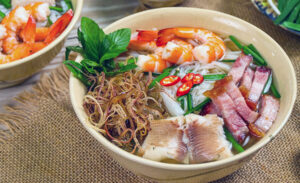 Vermicelli nuoc leo is sold everywhere in Bac Lieu, from street vendors to famous traditional restaurants. Delicious broth must be cooked in a clay pot to retain the sweetness of shrimp, fish, coconut water, and the aroma of fish sauce. Vermicelli nuoc leo is served with thinly sliced banana stem, bean sprouts, basil…, you can add fresh squid, roast pork, spring rolls, rice cakes…
Reference addresses are Ms. Diep’s vermicelli broth at Xom Moi market on Vo Thi Sau street, ward 3; Nam Hon on Tran Phu street, Bac Lieu Ward.
What to buy as gifts?
Visitors can buy fresh, cheap seafood of the day such as sea crabs, ba khia; or famous dried products such as: dried fishes; or shrimp paste, freshwater fish paste. Most special is pure honey from U Minh cajuput forest. Bon bon melon is also often bought by tourists as gifts when explore Ca Mau regions.
Source: collected by An
Follow us for the best deal with Vietnam package tours and visa services!
Comment (0)