
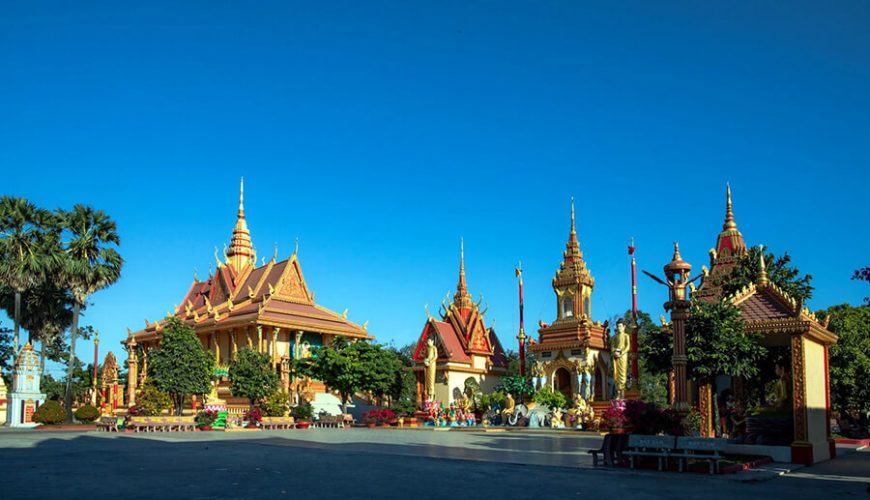
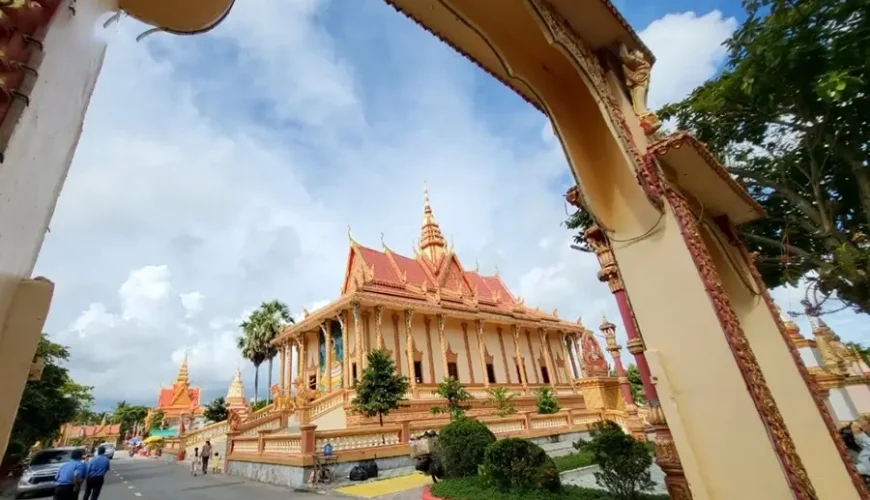
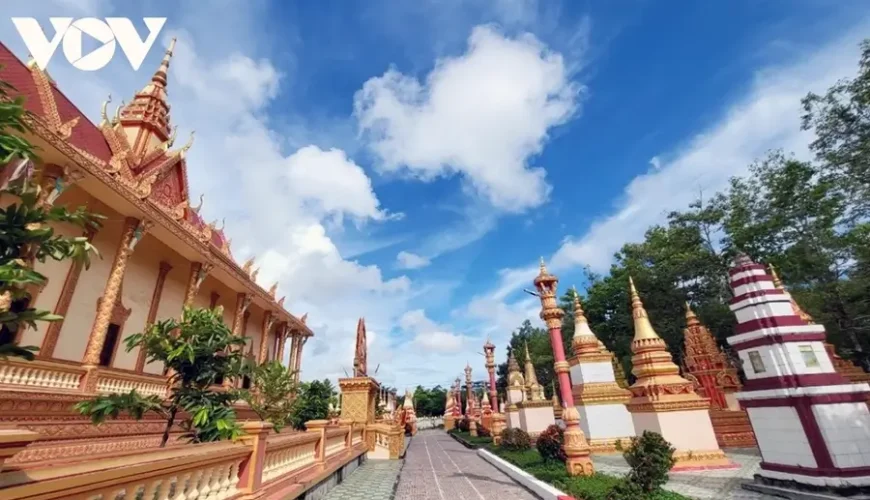
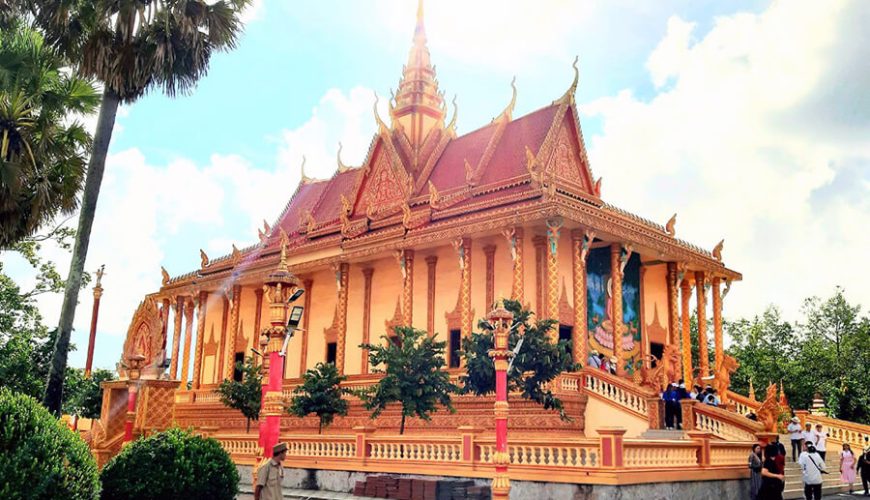
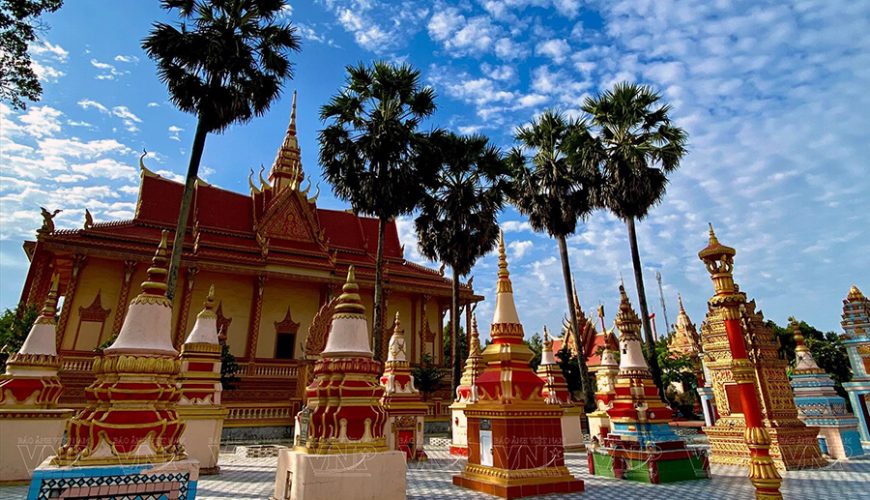
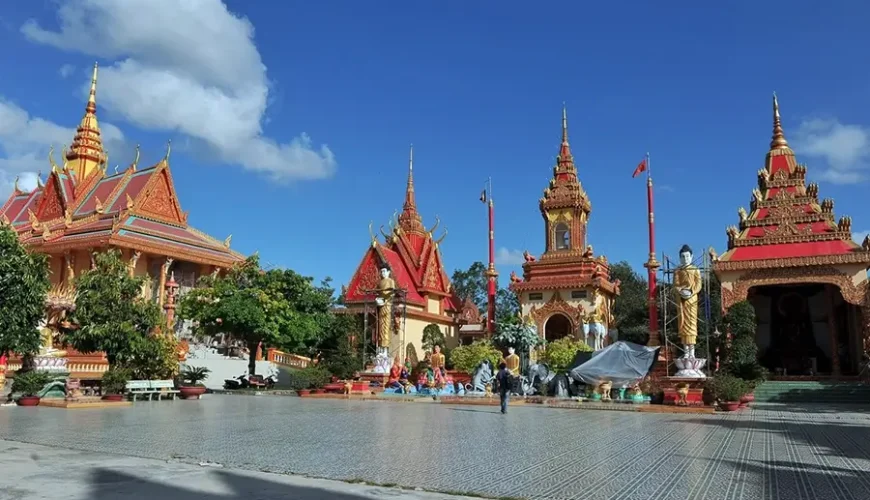
Xiem Can Pagoda is known as an ancient pagoda and the largest religious center of the Khmer people in Ca Mau, in particular, and the Southwest region in general. It has been around for more than a century but is still preserved, majestic and splendid, a destination for Buddhist followers. This place has distinctive architecture, with highly sophisticated decorative patterns that create a hallmark of traditional Khmer culture.
Overview of Xiem Can Pagoda
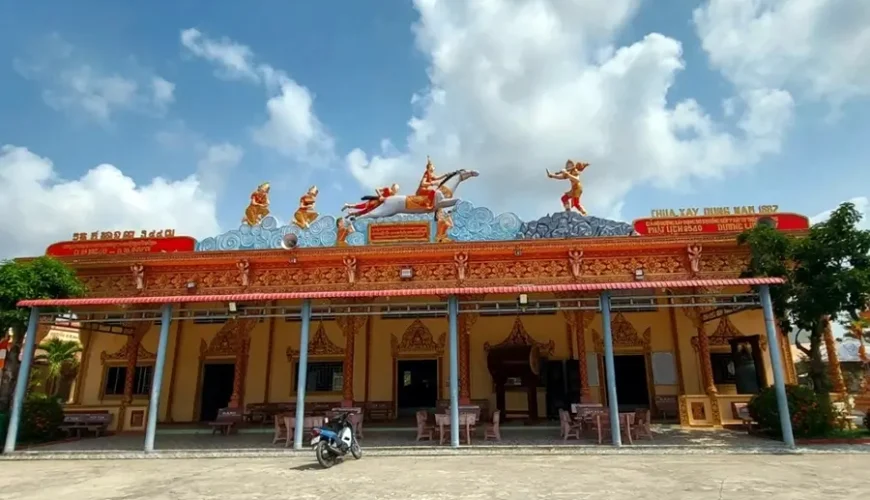
Xiem Can Pagoda is an architectural work dating back to 1887. The pagoda was built with the generous contribution of a wealthy couple in the area (Mr. Nen & Mrs. Nget), who had great faith in Buddhism, as well as the contributions of more than 30 other households, who cleared trees and land to build the pagoda. In the beginning, the pagoda was named Komp Hisako, which in Khmer means erudition, wisdom, and depth of Buddhism.
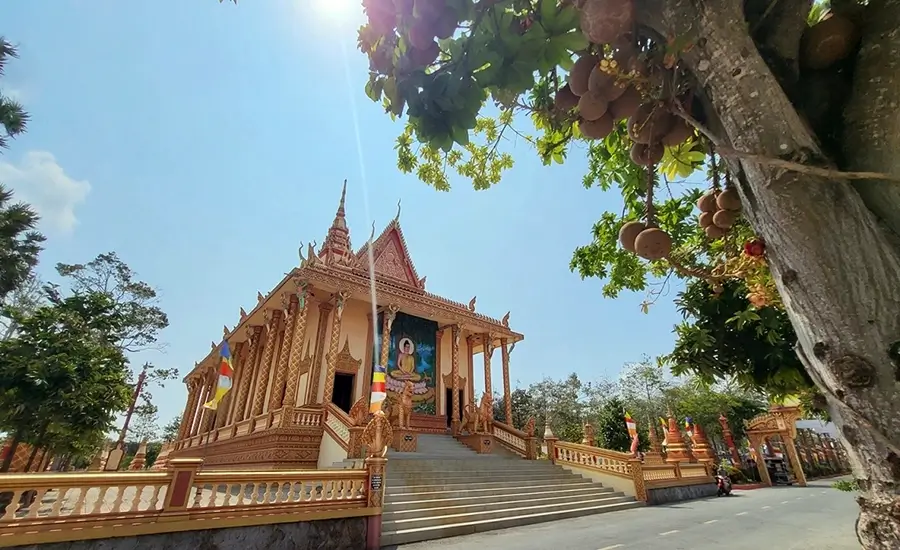
Over time, the pagoda was renamed Xiem Can. This name originates from the Teochew language, the language of the Chinese people of Chaozhou origin who currently live quite a lot in Ca Mau. Xiem Can means “Waterside”; the name originated from the area’s previous terrain, which lay next to the coastal alluvial plain, but due to alluvial deposition, the pagoda is now about 5km from the sea.
The best time to visit Xiem Can Pagoda
The Southwest has quite pleasant weather, with 2 distinct rainy and sunny seasons. The sunny season starts from December to April and the rainy season is from May to November. Both the rainy season and the sunny season here have their own characteristics, so when traveling to the Southwest, you can choose any season of the year.
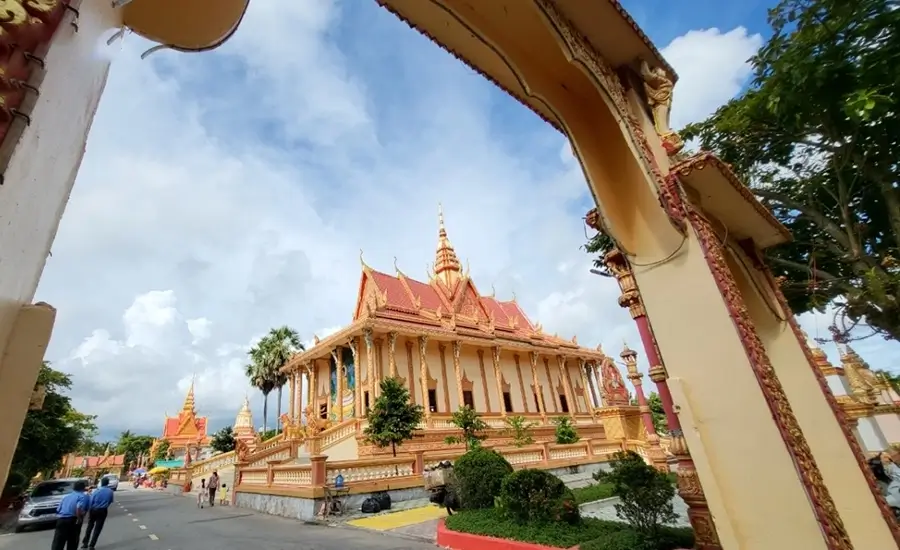
As for Xiem Can Pagoda, it is a place where many monks practice, and also where Khmer people gather to learn to read, dance, sing, or learn a trade. Every year, many traditional Khmer festivals take place, attracting many Khmer people. If you come during the festival, you can immerse yourself in the bustling atmosphere and learn more about Khmer traditional culture. The festivals that often take place during the year are:
- New Year – Chol Chnam Thmay takes place on 3 days, April 14, 15, 16 of the solar calendar.
- Ancestor worship ceremony – Sen dolta takes place on 3 days, October 8, 9, 10 of the solar calendar.
- The Kathanhna robe-offering ceremony takes place from September 16 to October 15 in the lunar calendar.
If you have the opportunity to travel to Ca Mau and visit Xiem Can Pagoda, you can choose holidays to participate in and learn more about the traditional culture of the Khmer people.
The architecture of Xiem Can Pagoda
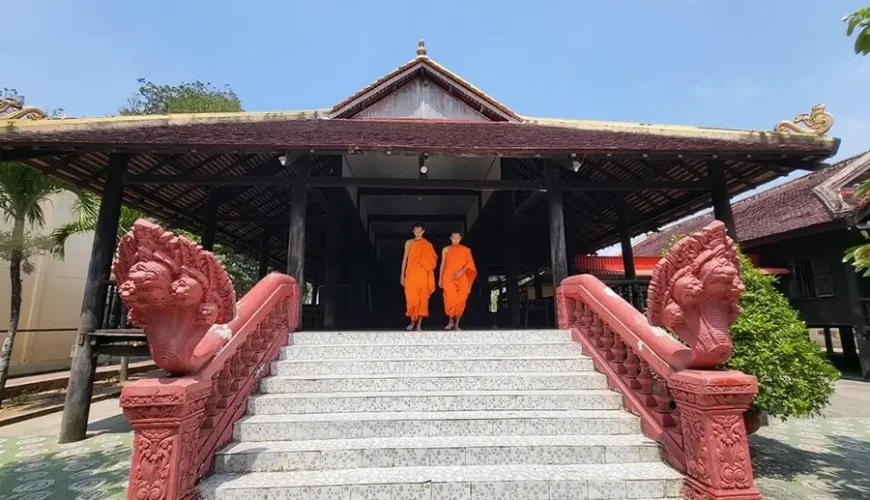
The difference of Xiem Can Pagoda is the sophistication and meticulousness in every detail, whether it is the walls, roofs, and pillars, all are elaborately decorated and colorful. Besides, the pagoda has up to 115 statues, a stone stele, and a bell from 1887. These structures are hundreds of meters apart, interspersed with courtyards and rows of cool green trees; the space exudes a peaceful and solemn atmosphere.
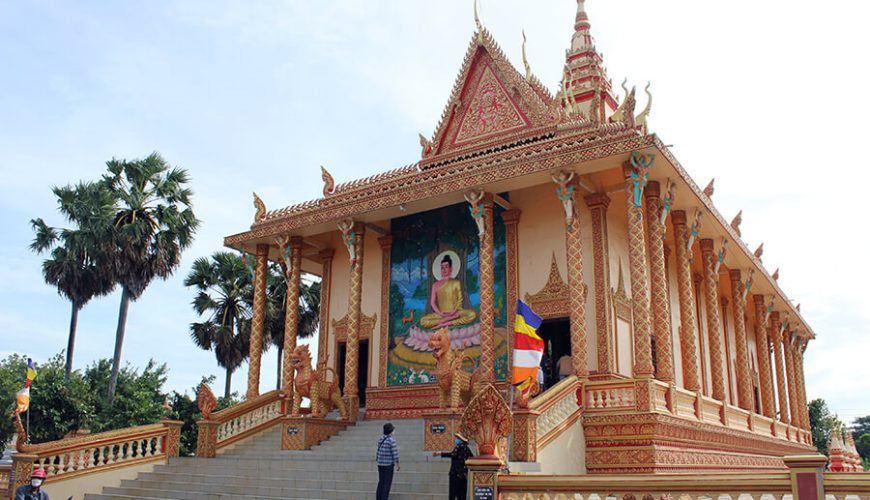
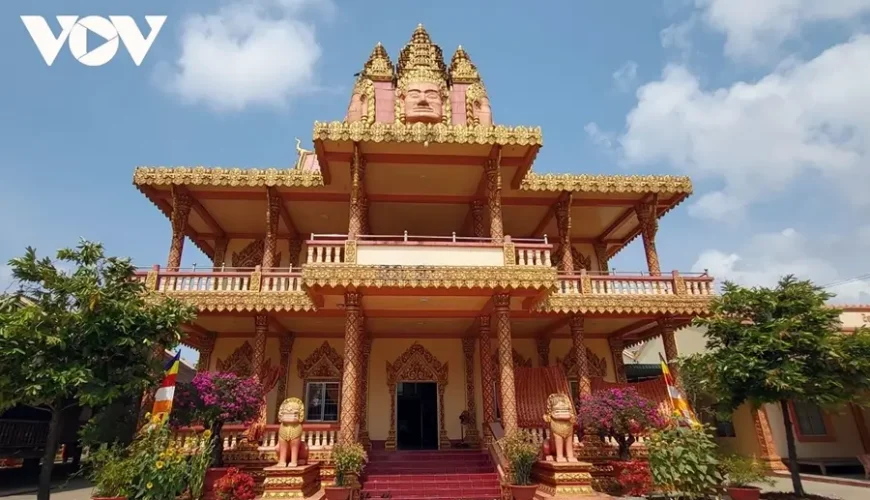
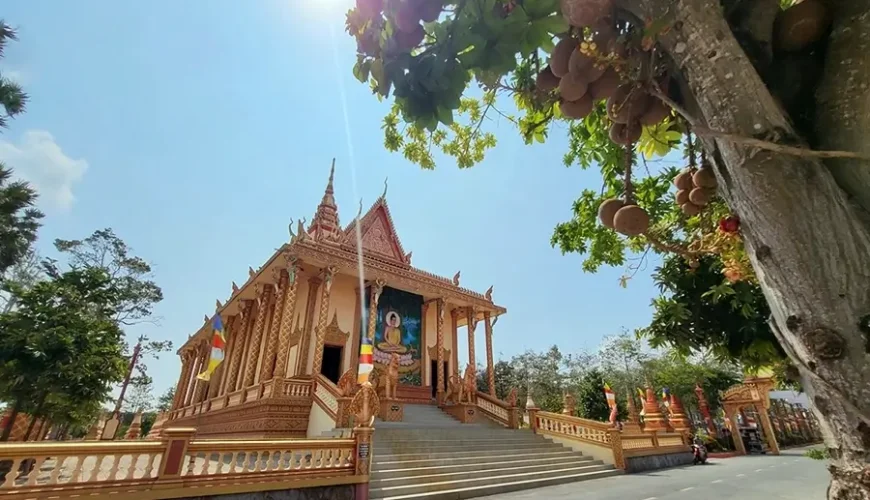
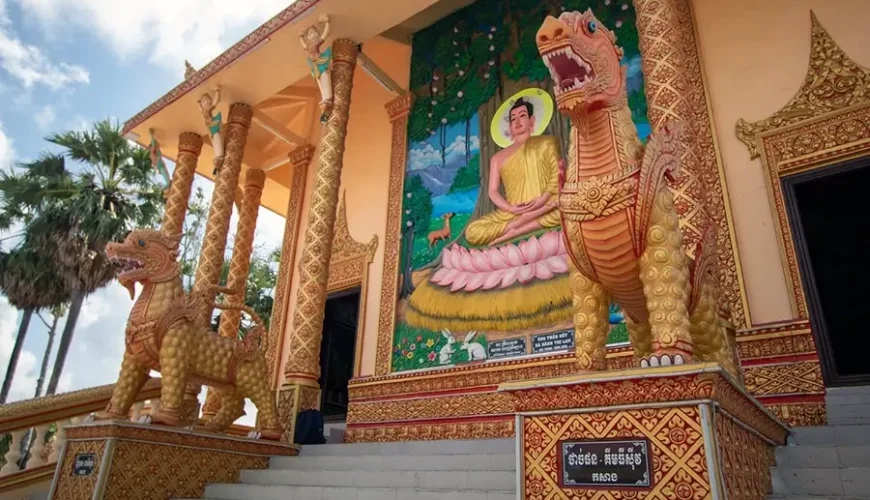
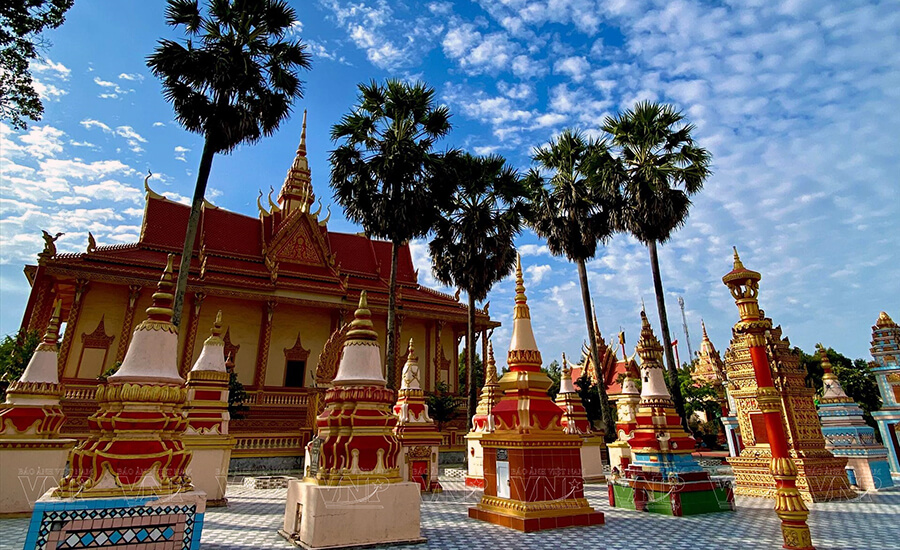
The architectural complex of Xiem Can Pagoda comprises many elements facing East, built in the typical Southern Buddhist style but bearing the mark of Angkor-Cambodian architecture. The most prominent is the main hall of the pagoda. The main hall is rectangular, measuring 18m wide and 36m long, with the main front facing East. The entrance to the main hall has 18 steps to go up; above is a statue of Buddha Shakyamuni.
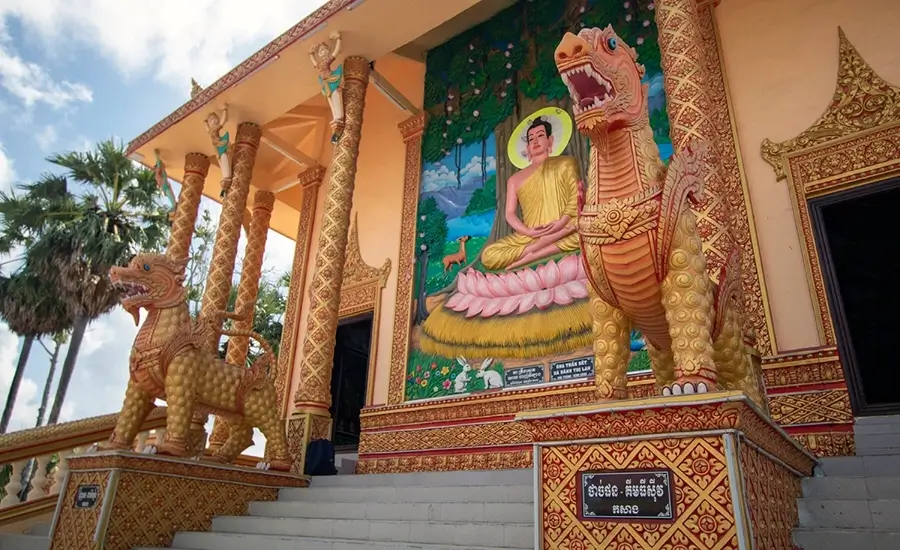
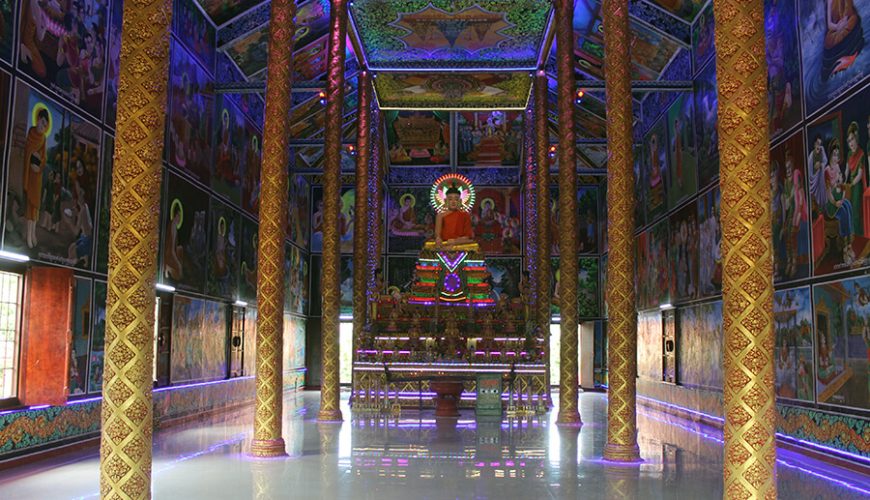
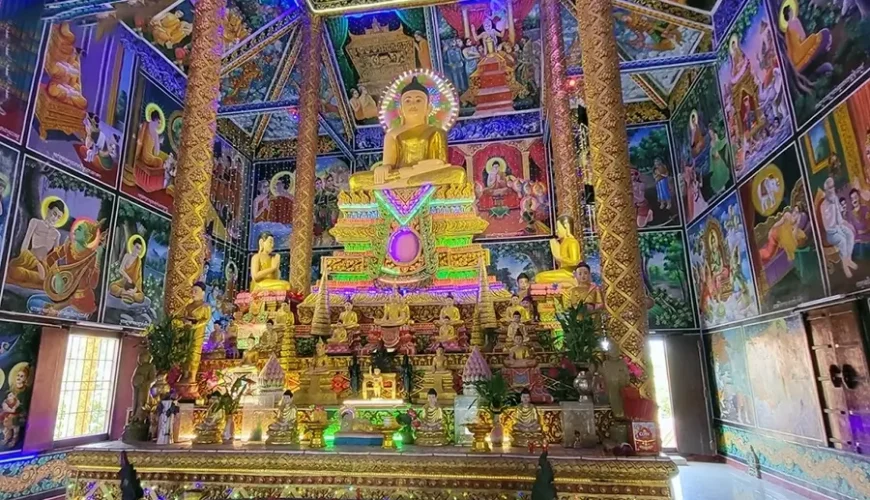
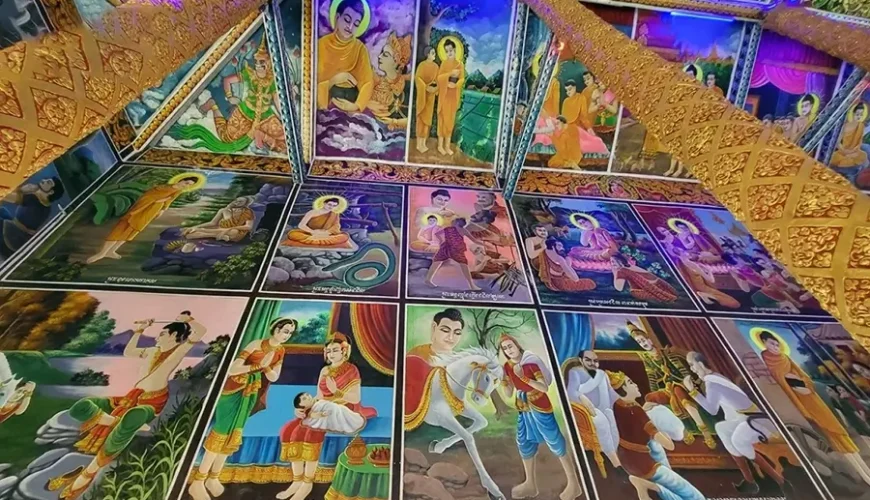
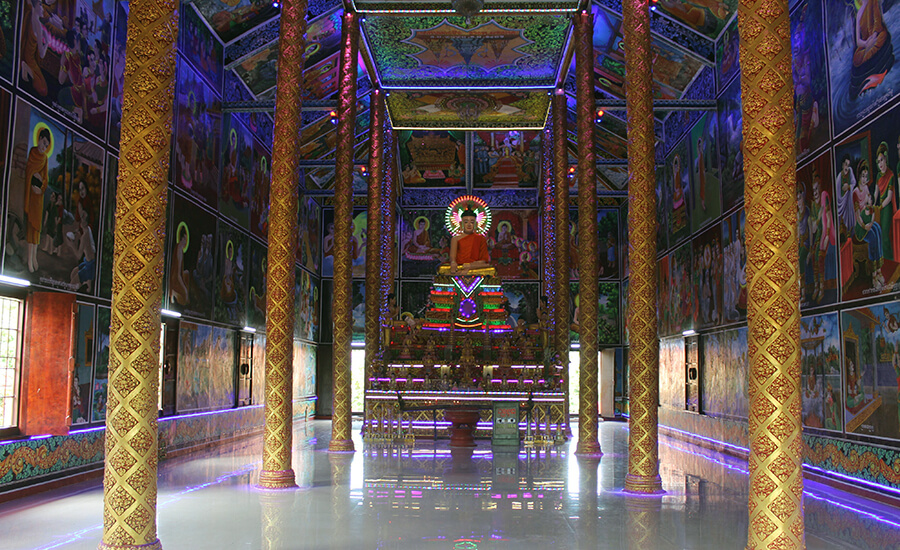
The walls, ceilings, and pillars of the main hall are decorated with elaborate and colorful frescoes. The highlight is the large-scale frescoes that tell the story of Buddha’s life, from his birth to his practice to attain enlightenment. The corner of each roof is decorated with a long, soft, curved snake tail, delicately carved and sculpted with intricate patterns, … a masterpiece that captivates many people.
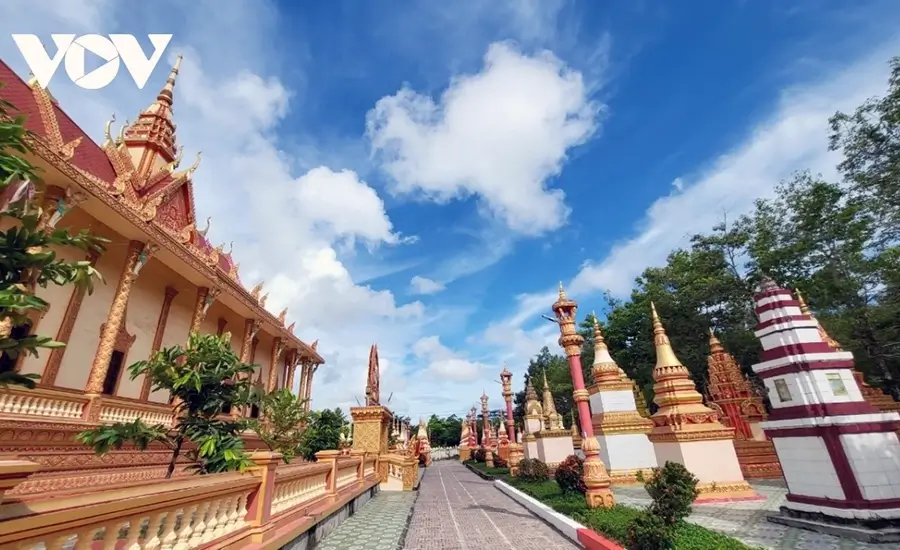
From afar, the image of the pagoda appears in your eyes, its striking yellow. Surrounding the pagoda is a solid fence with many impressive patterns. On the campus, there are many trees planted in straight rows.
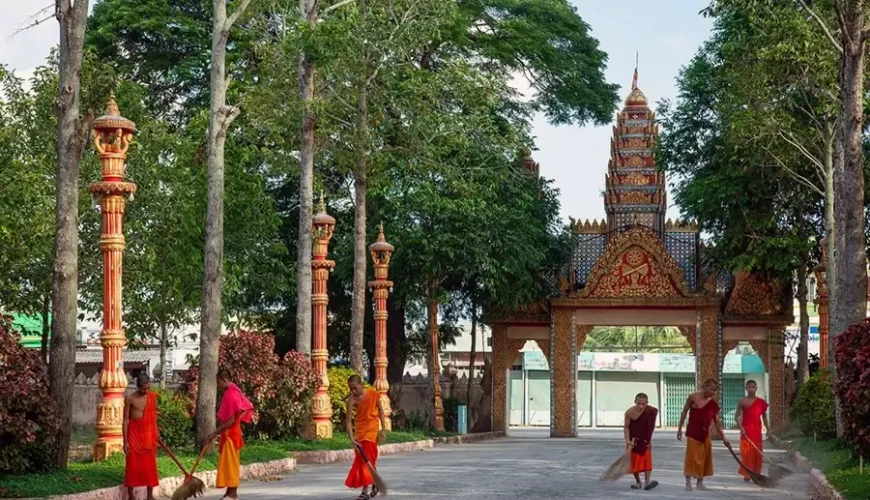
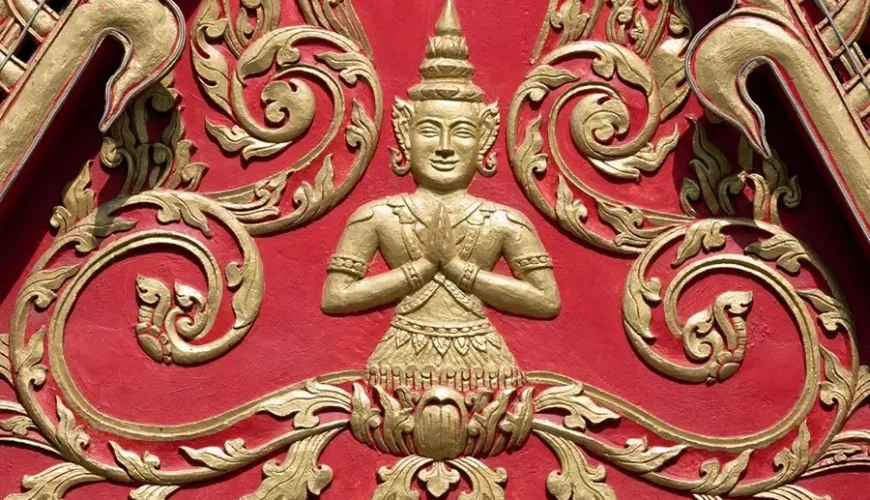
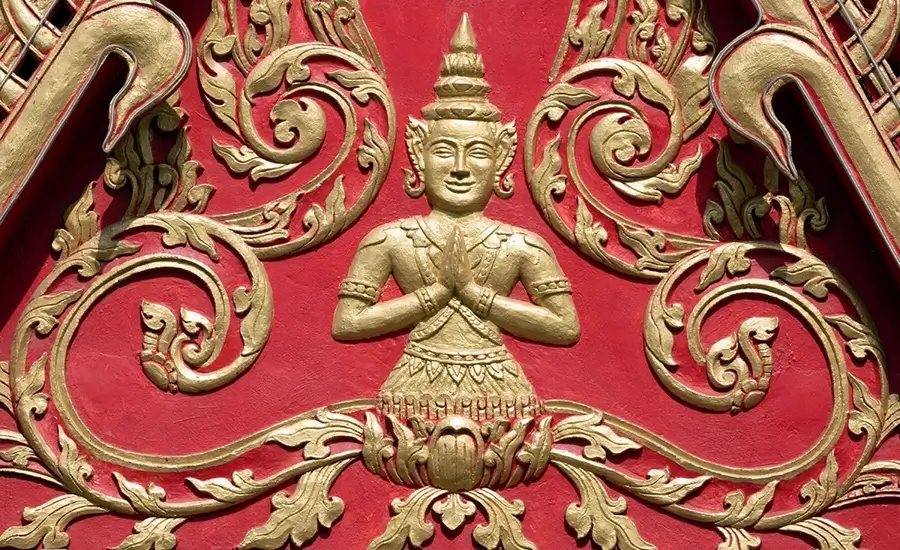
The gate of the Xiem Can pagoda is embossed with many meticulous, prominent patterns, with strong Khmer nuances. The gate nameplate is designed in the style of a pointed tower, typical of Angkorian architecture, with an image of a Buddha statue sitting majestically in the middle.
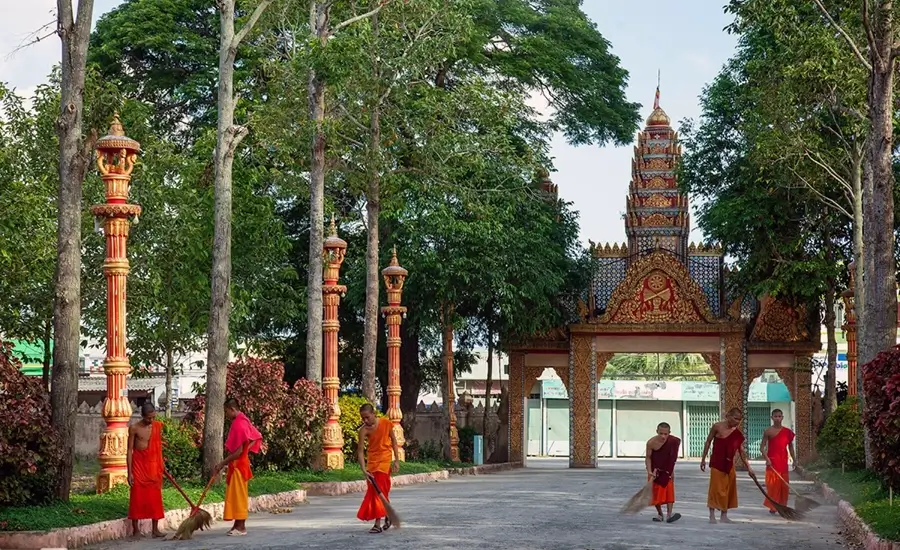
In addition, below the gate nameplate are two Krut birds and two five-headed snakes wriggling. Printed against the blue sky is the roof structure in many overlapping layers, creating a soaring space that blends with the pointed top like a tower. On the roof, the folds are adorned with Khmer dragon statues, with double dragon heads, spread dragon bodies, and dragon tails that curve upward like flames. The roof system is designed in harmony with the typical architectural style of Angkor temples. If you look closely, you will be surprised by the carvings on the roof and columns, which are like works of art, decorated with images of Khmer dragons, Nagar snakes, Krud birds, etc., rendered with extreme vividness.
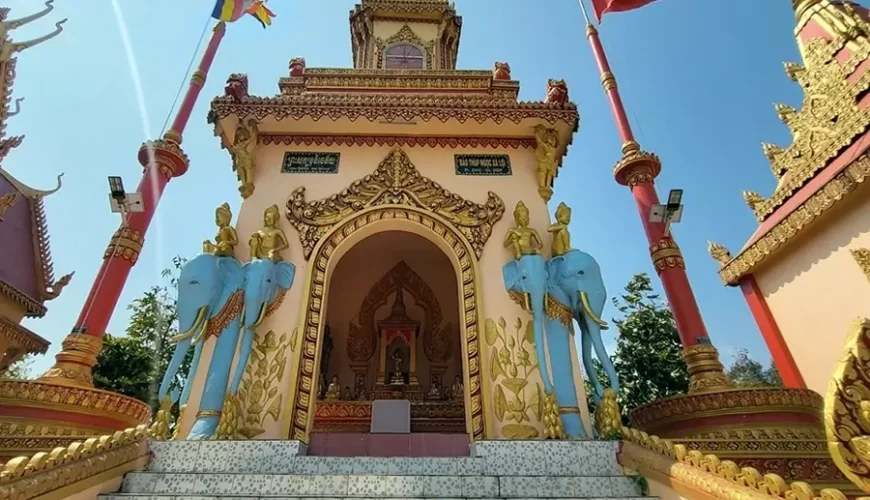
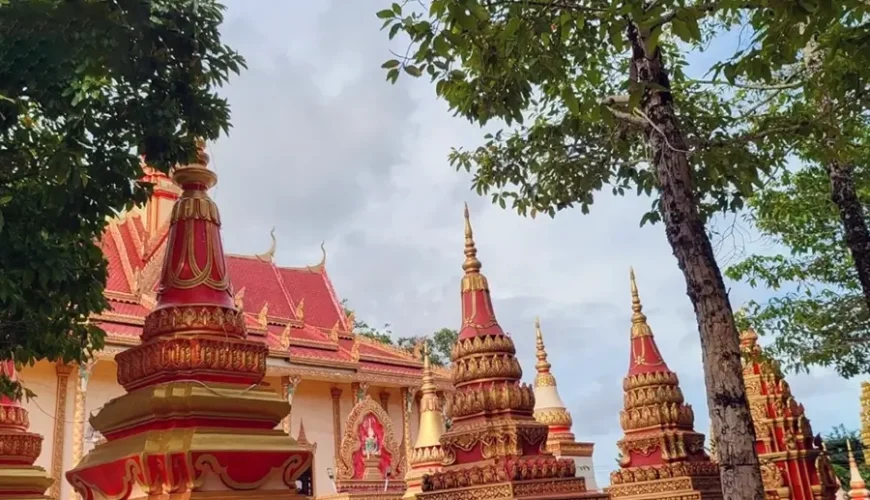
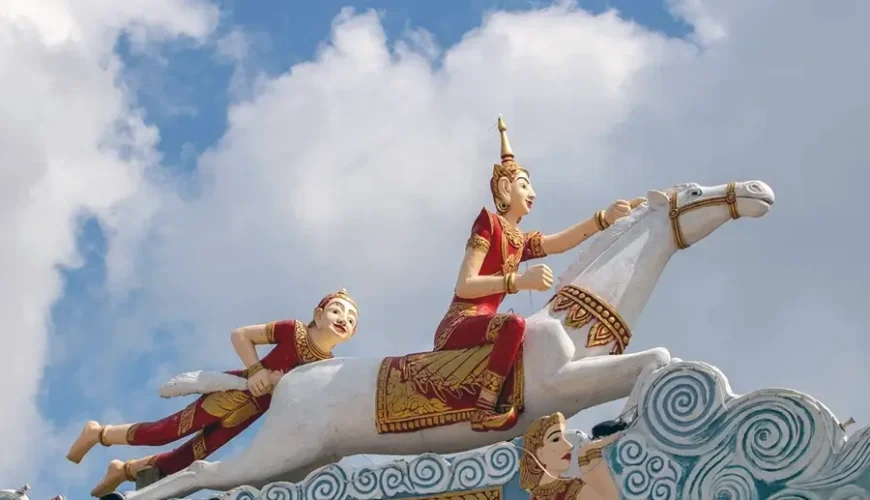
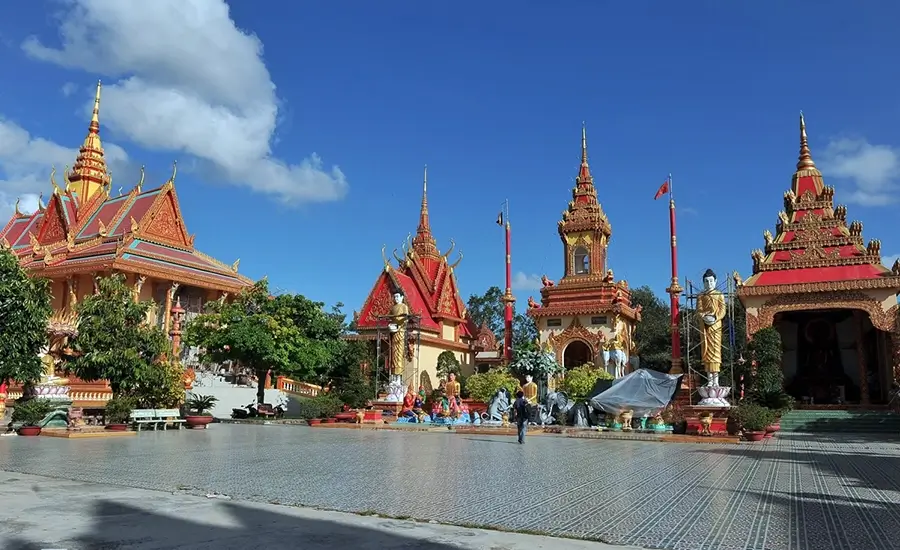
Opposite the main hall and the tomb tower area is the tower-statue complex, which includes 3 main towers and Buddha statues in different meditation postures. Some statues are built according to Buddhist legends. This is the space connecting the main hall, the tomb tower area, and the sala area, etc. These structures all have a dominant yellow color combined with a system of colorful patterns that highlight the traditional Khmer architectural style.
Not only is the pagoda famous for its unique art and architecture, but Xiem Can is also known as a place that preserves and fosters many beautiful cultural features of the Khmer people’s spiritual life. The pagoda also preserves a set of ancient Khmer books written on leaves up to 70 pages thick, or an ancient lecture hall with old folk tales from ancient times.
Xiem Can Pagoda is an outstanding architectural work, symbolizing the spiritual culture of the Khmer ethnic community, a famous destination in the Mekong Delta./.
Source: collected by An
Follow us for the best deals on Vietnam package tours and visa services!
Comment (0)