
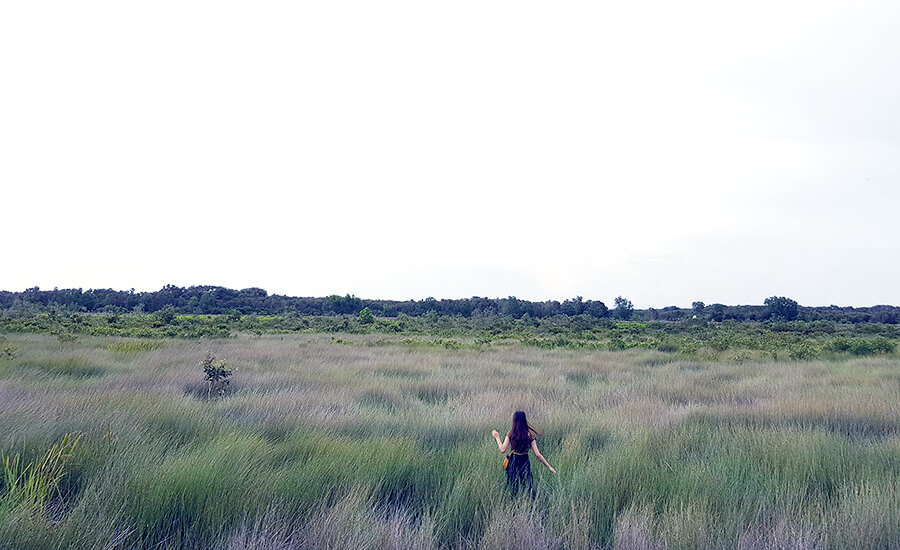
Long An is a former province in the Southern Key Economic Zone and serves as a gateway connecting the Southeast to the Mekong Delta. Long An is also considered one of the provinces with rich and diverse tourism potential, offering visitors many memorable experiences.
General information about Long An
Long An (currently merged into Tay Ninh Province) is in the Mekong Delta, bordering Ho Chi Minh City to the east, Dong Thap to the west and the south, the Cambodian provinces of Svay Rieng and Prey Veng, and Dong Nai to the north.
Long An is located in the transitional area between the East and the Southwest, and is the only province in the Southwest that does not have the Mekong River flowing through it. However, the old Long An has two rivers, the Dong and Tay Vam Co rivers, which are closely associated with the life, culture, and history of the people.
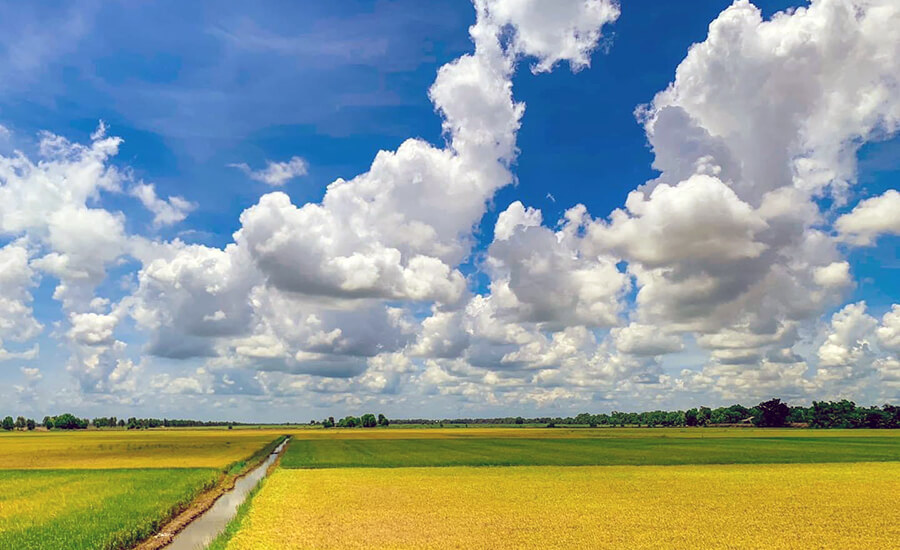
Long An is also an attractive tourist destination because of the diverse and rich Dong Thap Muoi ecosystem, flora and fauna, historical and cultural relics, architectural works, festivals, traditional craft villages, and rural specialties.
When is the best time to explore Long An?
Long An has a typical equatorial tropical monsoon climate, with two distinct rainy and dry seasons, of which the rainy season usually lasts from May to October and accounts for over 70% of the total annual rainfall. Average temperature 27 degrees Celsius. Dry season from November to April, with northeast wind, average temperature 23 to 38 degrees Celsius, dry, low humidity, fresh air. With a favorable climate and cool weather, Long An is accessible year-round.
Transportation to and in Long An
Long An is just about 60 km from Ho Chi Minh City. National highways from Ho Chi Minh City through Long An to other provinces in the region include QL1, 50, 61, N1, and N2. Travel time is from one and a half to two and a half hours, depending on traffic conditions, means of transport, and destination in the province.
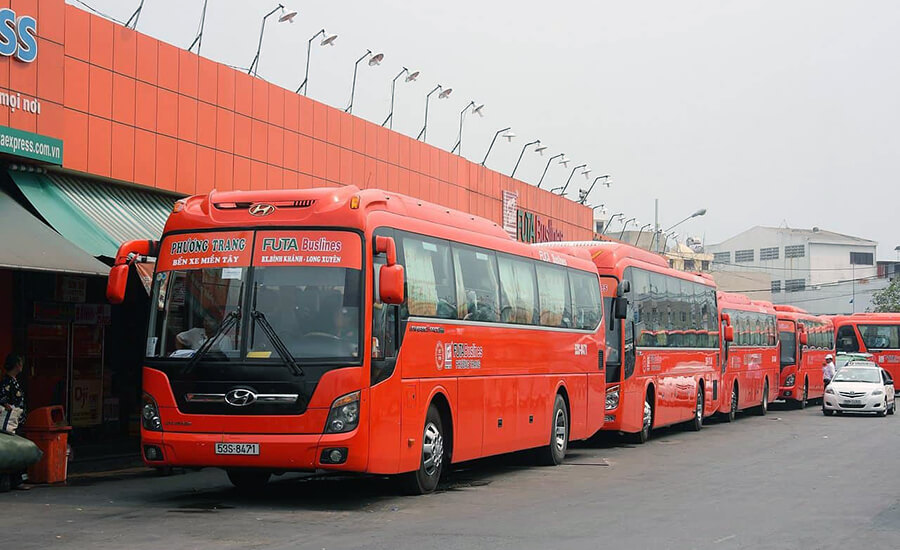
The nearest airport to Tan An Ward is Tan Son Nhat Airport in Ho Chi Minh City. Travel time is 1.5 to 2 hours, depending on traffic conditions. With a location not too far from the center of Ho Chi Minh City, visitors have many options for using or renting transportation.
Accommodation in Long An
Long An is located near Ho Chi Minh City, making it suitable for day trips or short 2-3-day trips. If staying overnight in Long An, visitors should choose eco-tourism areas. The accommodation area in Tan Lap floating village offers rooms priced from 450,000 VND to 1.1 million VND per night.
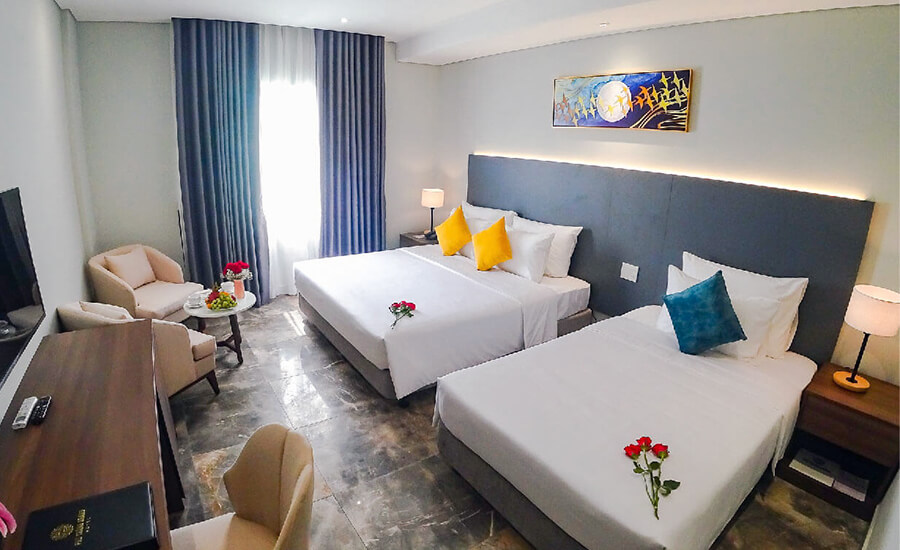
In the center of Tan An Ward, visitors can choose 2-or 3-star hotels priced from 200,000 VND to 600,000 VND per night.
Tourist attractions in Long An
Tan Lap Floating Village
Tan Lap Floating Village Eco-tourism Area is located in Moc Hoa Commune and offers peaceful river scenery. The nature here is highlighted by ancient cajuput forests, lotus ponds, water lily lakes, and hundreds of species of birds, fish, and amphibians. Visitors will sit on a boat in the middle of the forest. There is also an observation deck for visitors to enjoy the panoramic view. Visitors can also walk on the route to explore the cajuput forest.
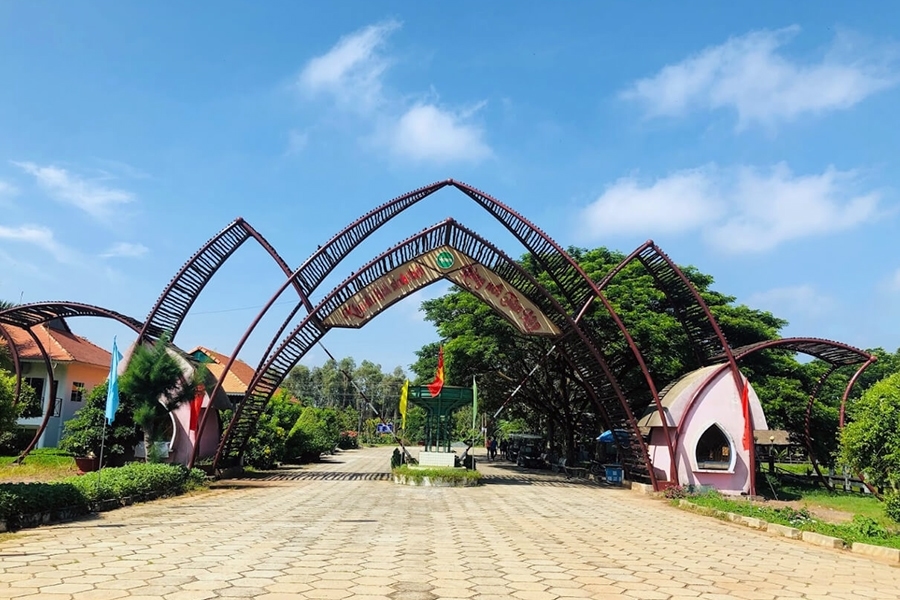
In addition, visitors can also enjoy specialties of the Mekong region such as chicken hotpot with giang leaves, sour hotpot with snakehead fish, crispy fried linh fish, braised fish in a clay pot, and stir-fried eel with turmeric…. The cultural identity of local residents through traditional crafts such as wood carving, boat building, and listening to traditional music is also experienced here.
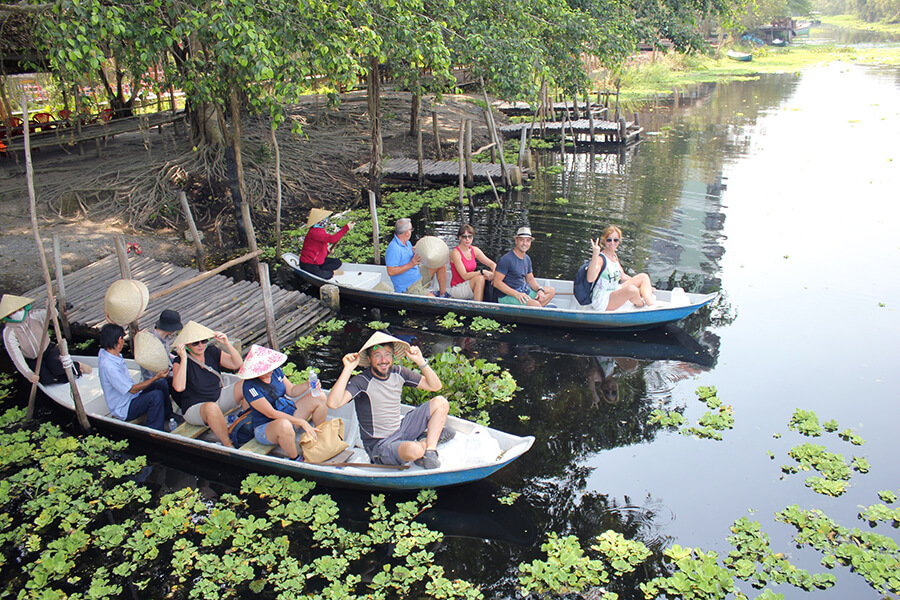
The tourist area is open from 7 am to 17 pm, with an entrance fee of 70,000 VND. In addition, there are prices for other services such as rowing, electric cars, fishing, and cycling.
Dong Thap Muoi Eco-tourist site
Dong Thap Muoi Eco-tourist site located in Vinh Loi Commune, Tay Ninh Province. This is a wetland area of the Mekong Delta, covering over 6,000 hectares, a place that attracts tourists with its vast cajuput forests, over 800 hectares in total. Dong Thap Muoi Ecotourism Area has nearly 120 species of birds and 150 species of animals, including rare species such as herons, red-headed cranes, turtles, snakes and many more.
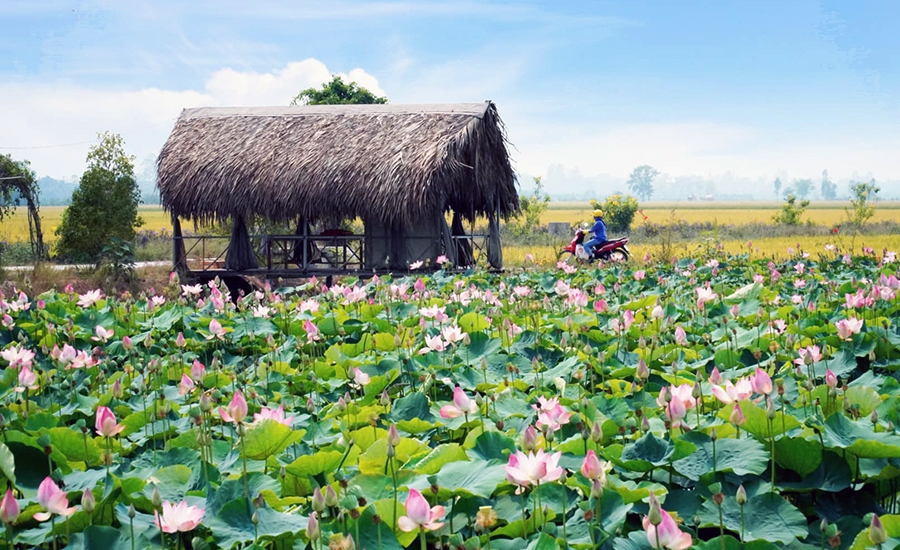
When coming here, visitors will be able to see cajuput forests and lotus ponds with their own eyes. If you visit the tourist area during the flood season (from September to November every year), you will have the opportunity to see lotus flowers blooming.
House with Hundred Columns
An ancient house with Hue architecture with 120 precious wooden pillars, has existed for more than 100 years in Long An. The house with Hundred Columns is located on the bank of the Vam Co Dong River, in Long Huu Commune.
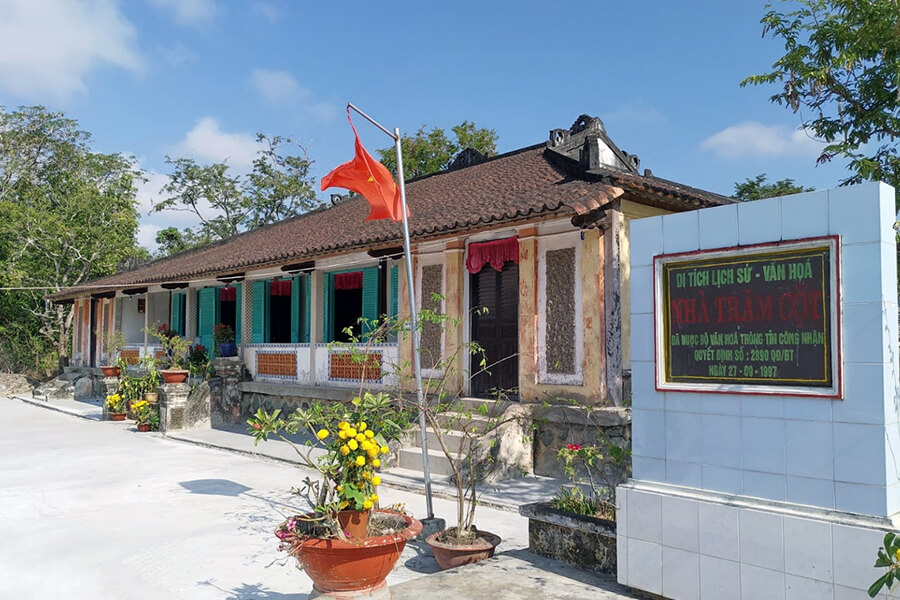
Bearing a clear mark of Hue style yet made according to the owner’s order in the context of the Southern region during the French colonial period, the house features many changes in its decorative theme, creating harmony between Central and Southern architecture.
MyQ Safari – My Quynh Zoo
Located in Hau Nghia Commune, My Quynh Zoo has a large space and is divided into many sub-areas such as a water park, a resort, a dining area, a koi pond, a bonsai garden, a semi-wild and wild zoo.
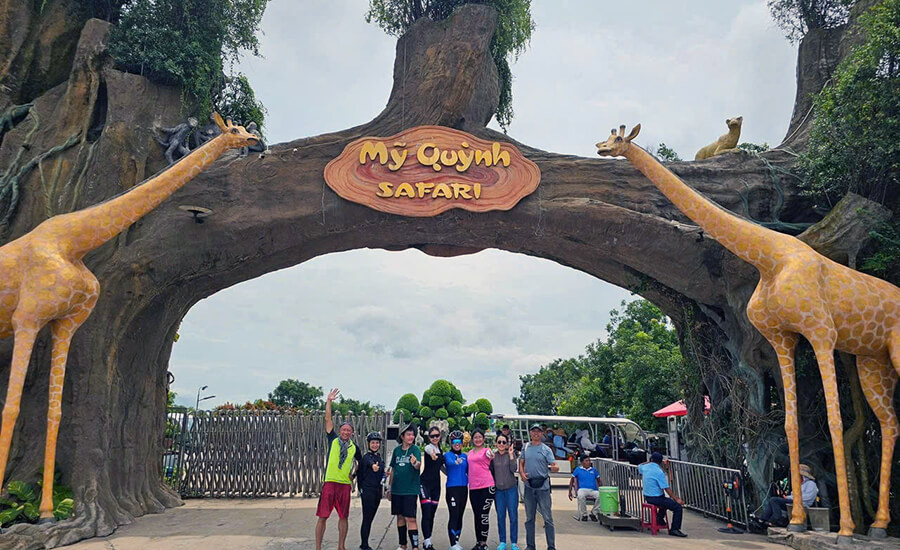
In particular, My Quynh Zoo has more than 30 hectares of area dedicated to building habitats for more than 100 species of wild animals in Vietnam. At My Quynh, like many other zoos, you will be able to see the lives of large animals such as deer, tigers, lions, hippos, …
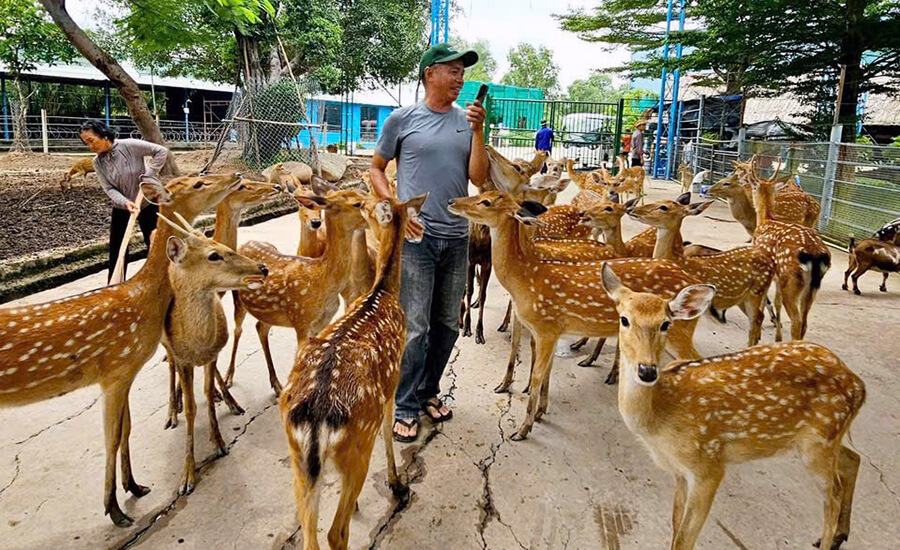
However, at My Quynh Zoo, you do not come into contact with animals in cages; the animals are released freely in the zoo. For strong animals, visitors will take a bus around the zoo to see them; for friendlier animals, visitors will be encouraged to have direct contact, such as stroking tickets or feeding (depending on the species).
Ticket price: Adults: 100,000 VND; Children 1m – 1.4m: 60,000 VND; Children under 1m: Free
Rach Cat Fort
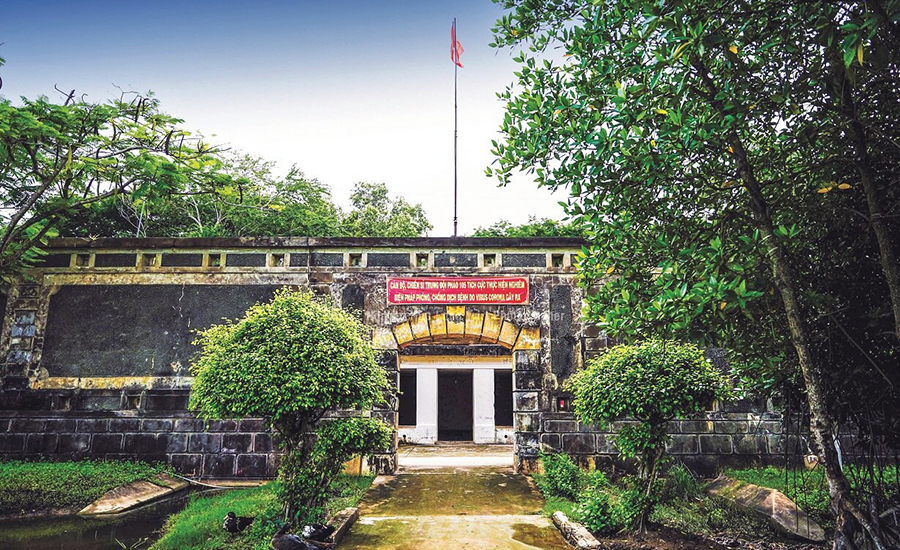
Rach Cat Fort was built in 1903 and is one of the greatest forts in Vietnam. It is 300m long and 100 wide. It has five floors, three of which are underground. Standing near the cannons on the roof, you will get a view of the beautiful landscapes of the Go Cong River Area.
Ton Thanh Pagoda
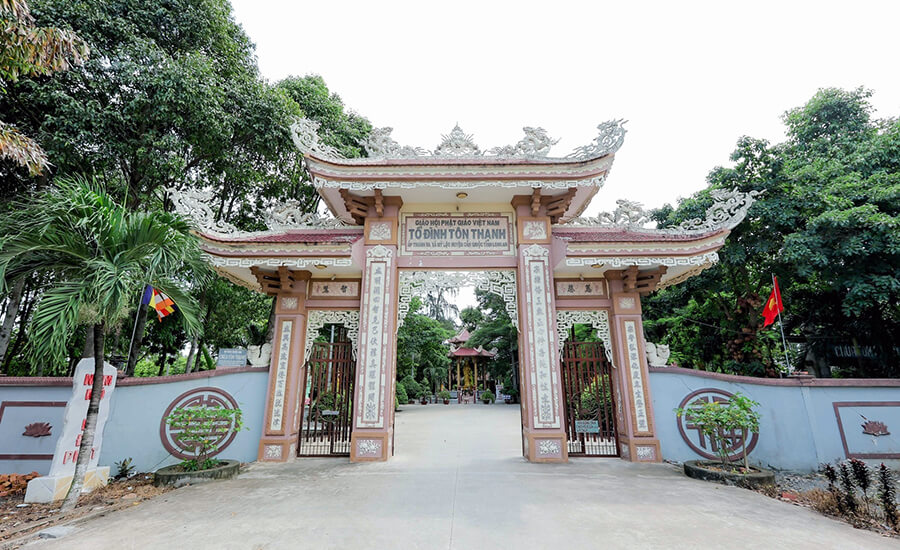
Ton Thanh Pagoda is located in the Thanh Ba quarter of My Loc Commune. Built in 1808 by northern emigrants, Ton Thanh Pagoda is the oldest pagoda in Long An. Several valuable ancient statues, dating to the 19th century, still remain in the pagoda. Vietnamese poet Nguyen Dinh Chieu lived in the pagoda from 1859 to 1861.
Long An specialty
Not only known as a province with bustling development, the economic locomotive of the Mekong Delta, Long An, also has a very special culinary culture, a highlight that attracts the Long An tourism industry and the Southern region in general.
Xiem Lo noodle soup
Originating from Cambodia, Xiem Lo noodle soup is popular in Moc Hoa and some neighboring localities. The original dish only has broth made from snakehead fish, vermicelli, and chili salt. People in the South have adapted it to local tastes, adding fish meat.

After being processed, the head of the snakehead fish is used to simmer the broth, and the meat is used to make fish cakes. Snakehead fish cakes can be shaped into squares or round balls. To give the broth a beautiful color, the cook adds finely chopped turmeric and other spices, such as salt and fish sauce, to taste.
Sour fish soup
The fish is a type of catfish, the largest of which reaches about one kilogram, found in local rivers and canals. The fish can be cooked into many dishes, such as braised in a clay pot, braised with lemongrass and chili, fried with salt, or fried fresh, but the best is still sour soup.

Although the fish is small and has little meat, the meat is delicious, the bones are soft, and during the breeding season, there are many eggs. Whether the sour fish soup is delicious depends largely on the choice of young tamarind leaves and other ingredients, such as okra and tomatoes. Sour fish soup has the sweet taste of tamarind leaves and the fatty taste of the fish.
Can Duoc fresh sausage
Can Duoc sausage is associated with the place name Rach Kien, an ancient district of Long An, where many Chinese people used to live. They learned from their ancestors how to stuff minced meat into pig intestines and let it ferment naturally.

The ingredients for making sausage are selected from the most flavorful cuts of meat, usually the thigh, without tendons. The second ingredient is thick, crispy pork fat that does not leak water. Meat and fat have their own ratios to ensure they are neither dry nor fatty. Can Duoc traditional fresh sausage is the only Long An representative included among the top dishes of 2022 selected by the Vietnam Culinary Culture Association.
Go Den rice wine
This is a type of wine made from rice, or sticky rice, according to the traditional method, produced in Go Den, Ben Luc, Long An. Go Den is a type of rice wine with a very high alcohol concentration, up to 50 degrees, a specialty of Long An in particular and the Mekong Delta provinces in general.

Like many famous local wines around the world, Go Den rice wine emphasizes the soil, so to produce a delicious product, it must be brewed in the Go Den area.
Fish sauce hotpot
Tourists traveling to Long An who don’t try the fish sauce hotpot are considered to have never been to this land. Fish sauce hotpot is a dish with a typical flavor of Long An culture and people. With a delicious broth rich in fish sauce, combined with spicy and sweet flavors, it creates a rustic hotpot dish that is extremely appealing. After being cooked, the hotpot will be eaten with vegetables such as lotus, dien dien, banana flower, and other herbs, …

There is nothing better than eating a little bit of hot, fragrant hotpot broth, which will definitely warm your heart and make you miss it forever.
Grilled snakehead fish
Grilled snakehead fish is a rustic dish familiar to the people of Long An. After being caught fresh, the snakehead fish will be processed and grilled directly on hot coals. The mouth of the fish will be inserted with a stick to hold when grilling.

This is also the reason why this dish is called grilled snakehead fish. Right from the moment you see the dish, you will be impressed by the fish’s natural aroma. When eating, you will feel the fish’s sweetness and fattiness. If combined with vermicelli, rice paper, raw vegetables, sour star fruit, and a little bit of spicy-sour sauce, it will be hard for you to resist this dish.
Source: collected by An
Follow us for the best deals on Vietnam package tours and visa services!
Comment (0)