
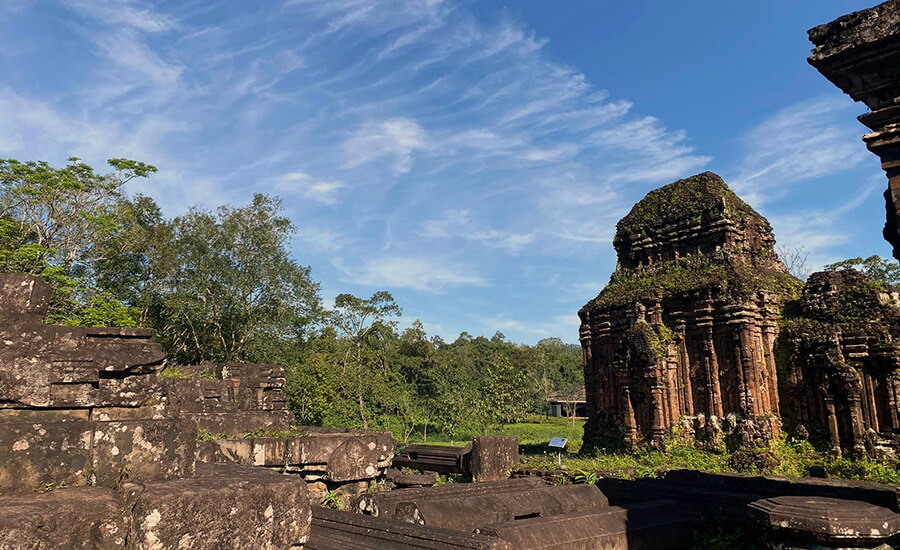
Existing for more than 1,500 years amid the devastation of war and the passage of time, My Son Holy Land still retains its uniqueness, making the relic mysterious and sacred, with distinctive features and interesting aspects that not everyone knows.
Who discovered My Son Sanctuary?
In 1885, My Son Holy Land was discovered by a group of French soldiers. In 1898 – 1899, two researchers from French Telecommunication, L. Finot and L. de Lajonquière, and the architect and archaeologist H. Parmentier came to My Son to study epitaphs and the art of architecture and sculpture, as well as the carving of the Cham.
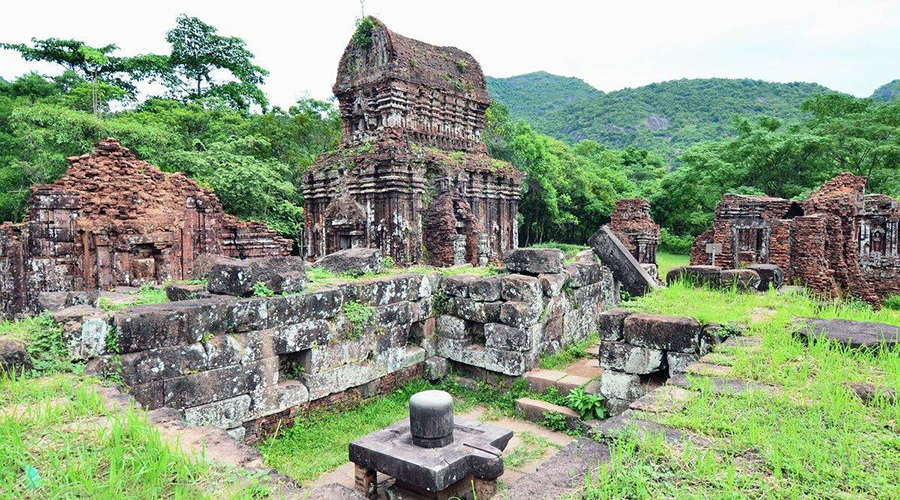
Until 1903-1904, the most basic documents on the My Son inscriptions and architectural art were officially published by L. Finot.
The only evidence of an Asian civilization has disappeared
In December 1999, at the 23rd session of the World Heritage Committee held in Marrakesh (Morocco), My Son Temple Complex was selected by UNESCO as one of the World Cultural Heritages according to “standard 2” as a prime example of cultural exchange and according to “standard 3” as the only evidence of a vanished Asian civilization.
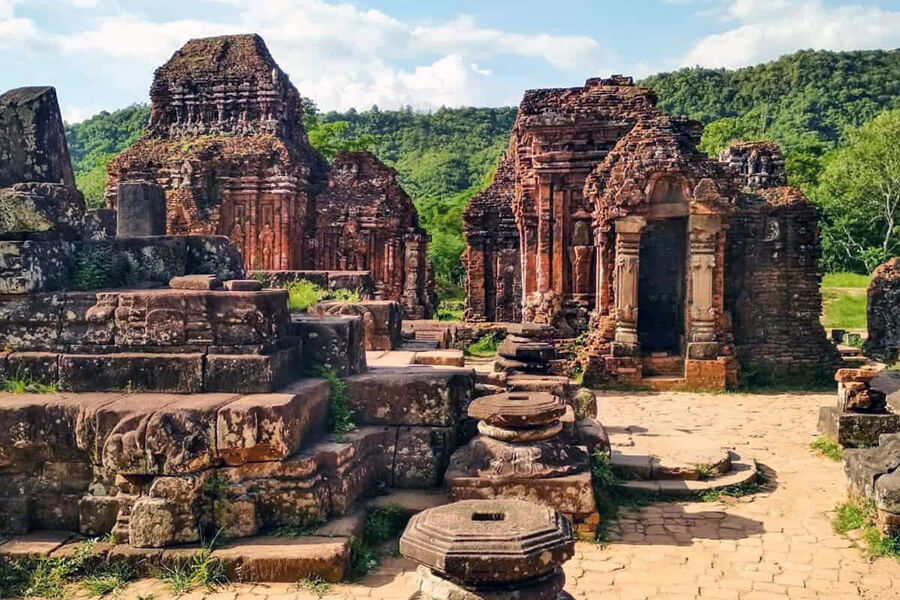
Place of the Baptism Ceremony of the Champa kings
My Son is in the Hindu holy land of the Champa Kingdom. Every king, after ascending the throne, went to My Son to perform a cleansing ceremony, offer offerings, and build a temple.
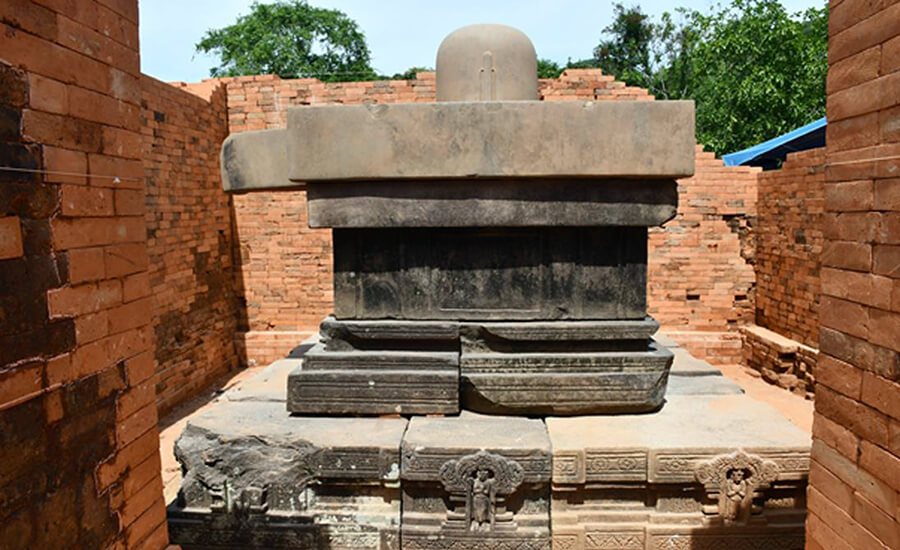
In addition to its ceremonial function, helping the dynasties reach the Gods, My Son was also the cultural and religious center of the Champa dynasties and the burial place of powerful kings.
The only place that has been continuously renovated for nearly 7 centuries
In the early 7th century, King Sambhuvarman built the temple with very durable materials that still exist today. Subsequent kings repaired old temples and towers and built new ones to offer to their gods.
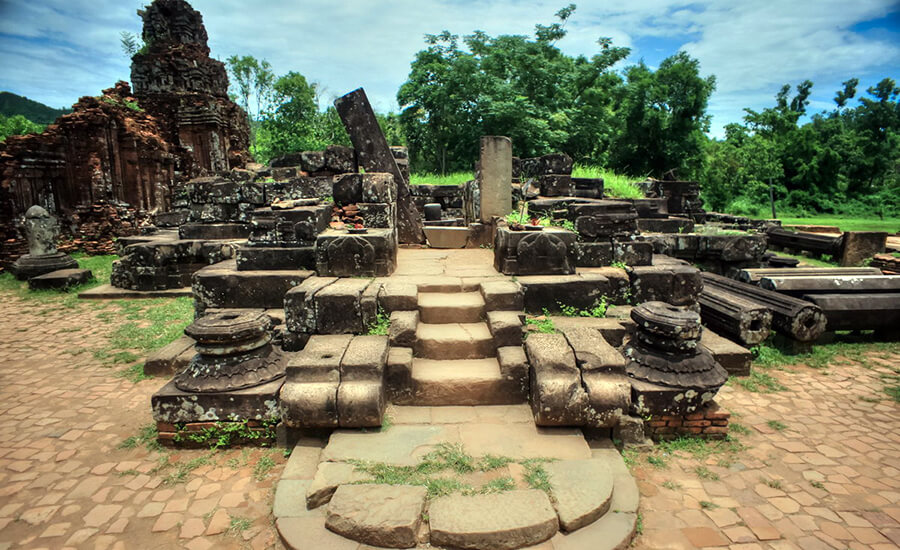
The god worshiped is BHADRESVARA
The main temples in My Son worship a Linga set or image of the god Siva, the protector of the Champa kings.
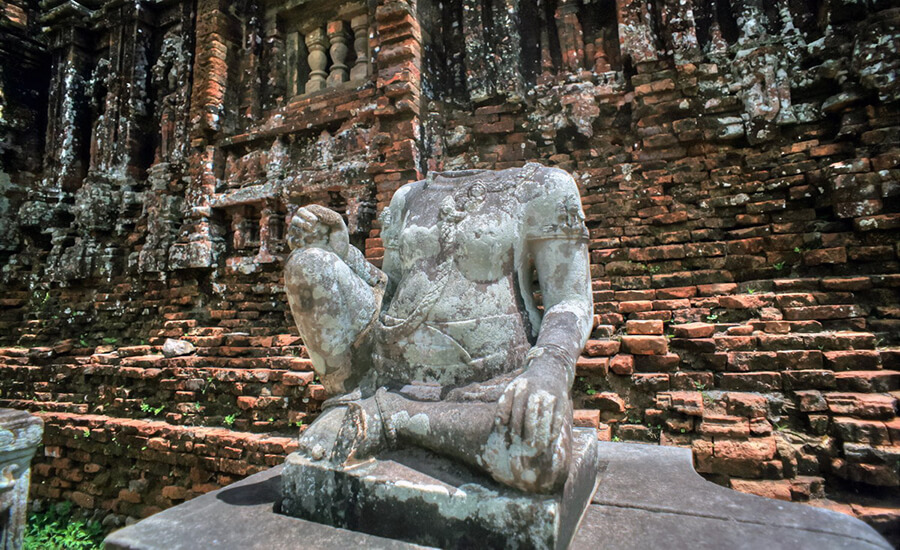
The god worshiped in My Son is Bhadresvara – the king who founded the first royal line of the Amaravati region at the end of the 4th century, combined with the name Siva, becoming the main religion worshiping the god-king and royal ancestors.
Unique architectural style
My Son Holy Land is a complex of quadrangular temples and towers. Architectural art with strong Indian influences features many clusters of towers. Each cluster has a main tower in the middle and many lower sub-towers located around. The tower gate faces the sun, the East. The tower’s roof is composed of many overlapping levels, solid on top and hollow at the bottom.
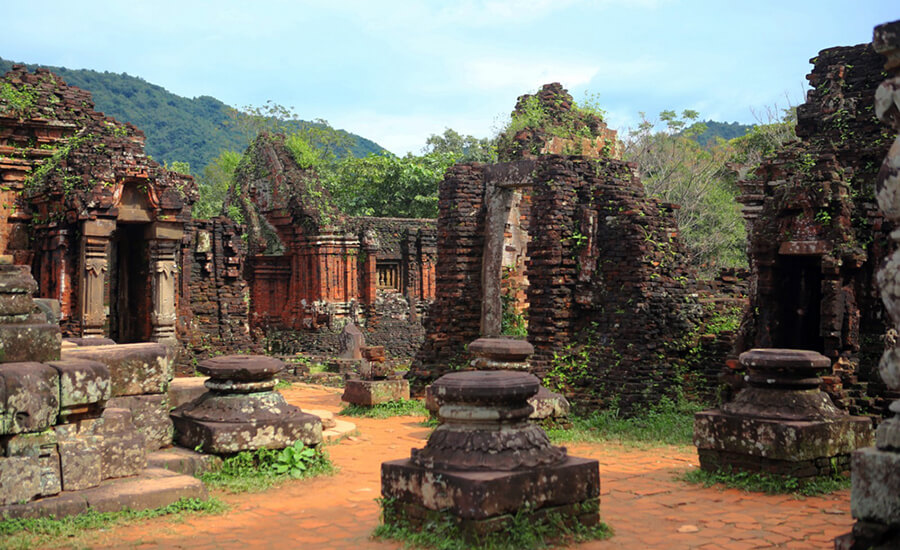
The higher it goes, the smaller it becomes, creating a towering shape. The outside of the towers’ doors is sculptured and decorated with many beautiful patterns carved into each other, such as floral motifs, animals, Kala – Makara images, Apsara dancers, musicians… all are very lively and vibrant.
The clusters of towers in My Son are rotated clockwise
According to research, there seems to be a mandatory rule when building Champa temples and towers: no matter where they are, on top of a hill or on flat land, the main door of the temple or tower must face the east – the main direction to catch the morning sun. Because the sun is a symbol of vitality, of the source of life that Siva brings.
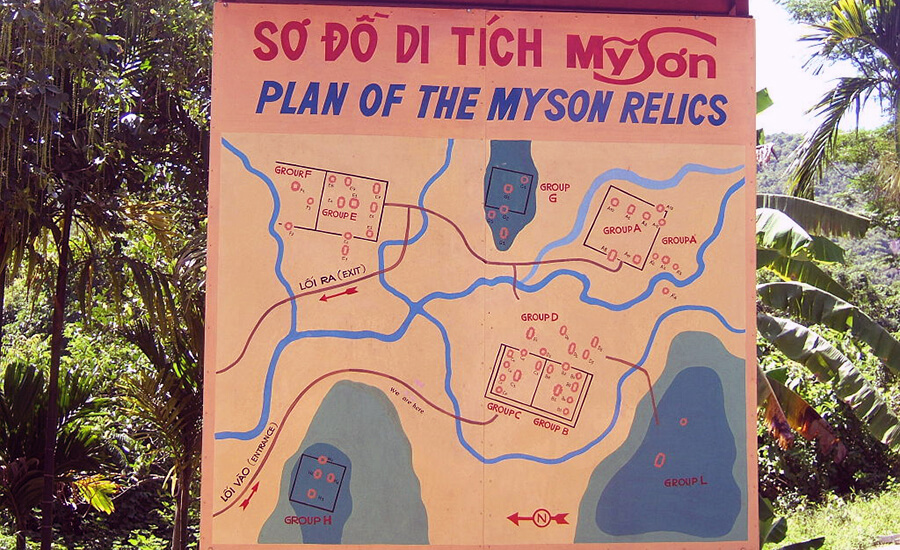
However, in My Son Holy Land, there are up to 5 clusters of towers with the main door skewed to the southeast: cluster H; clusters E, F; cluster G; clusters A, A’ and clusters B, C, D.
Source: collected by An
Follow us for the best deals on Vietnam package tours and visa services!

Comment (0)