
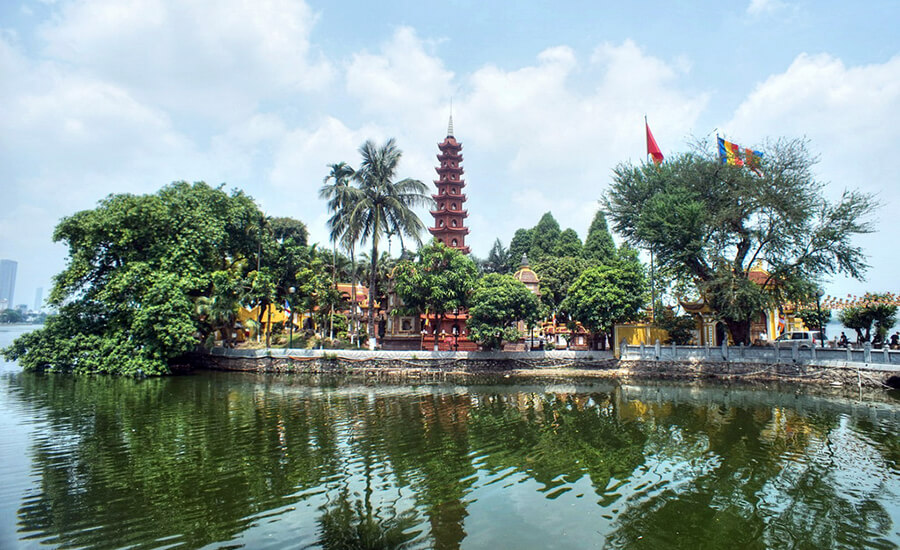
Throughout its history, Tran Quoc Pagoda has been a famous scenic spot in the ancient capital Thang Long and in today’s capital, Hanoi.
Located on an island east of West Lake in Tay Ho Ward, Hanoi, Tran Quoc Pagoda has a history of 1,500 years and is considered the oldest pagoda in the capital.
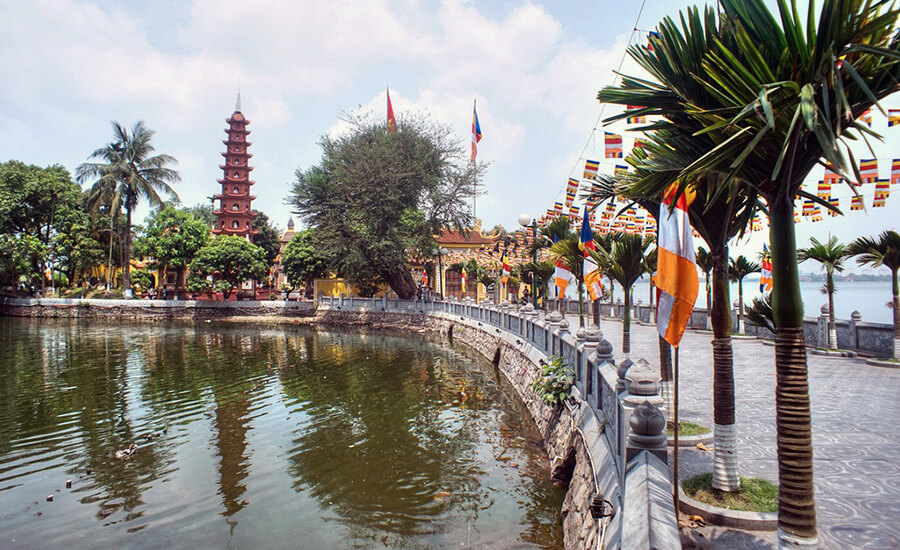
According to historical records, the pagoda was built during the reign of King Ly Nam De (541 – 547), and was named Khai Quoc (meaning “National Founding”). The pagoda was built in Yen Hoa village (later changed to Yen Phu) on a plot of land next to the Red River. During the Ly and Tran dynasties, the pagoda was the Buddhist center of Thang Long capital (the old name of Hanoi).
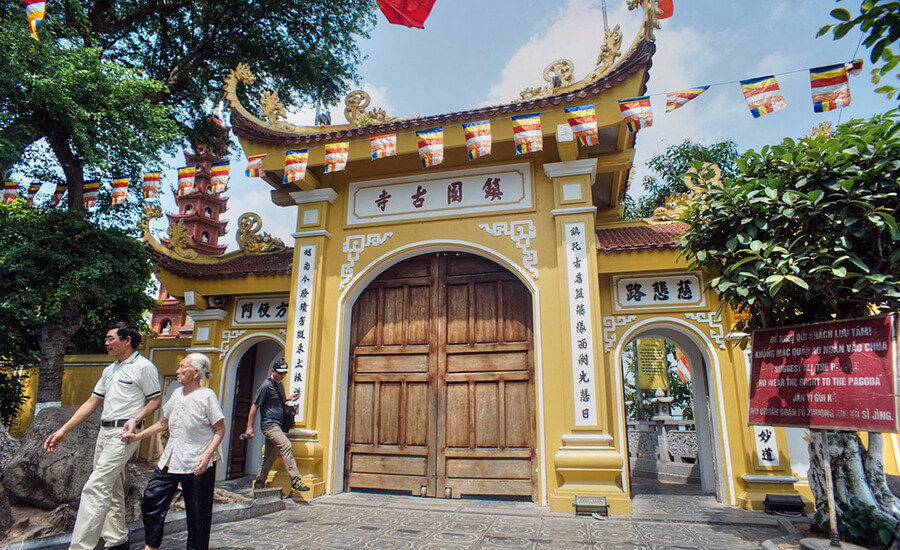
At the beginning of the Nguyen Dynasty, the pagoda was restored, bells were cast, and statues were built. In 1842, Emperor Thieu Tri visited the pagoda, donated money, and renamed it Tran Bac. But the name Tran Quoc Pagoda is still known by people to this day.
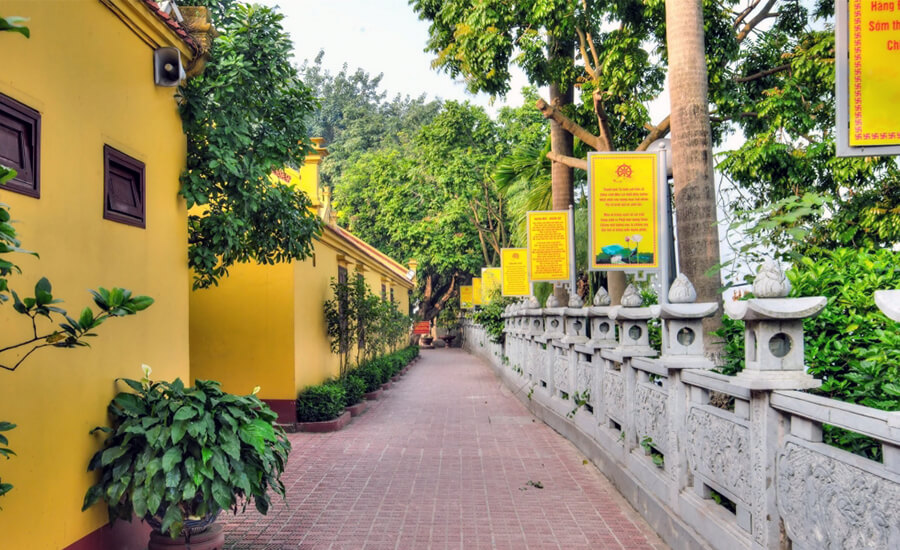
Because it has undergone many restorations and repairs, the pagoda’s architecture has inevitably been a mix of styles from different periods, with the Nguyen Dynasty’s architecture dominant. The most recent restoration of the pagoda was in 2010 on the occasion of the 1000th Anniversary of Thang Long – Hanoi and the 6th World Buddhist Summit held in Vietnam.
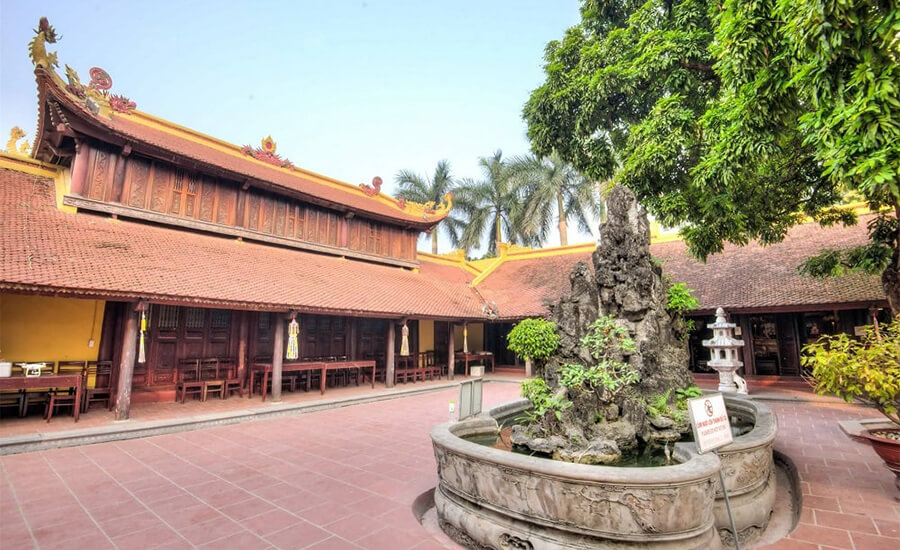
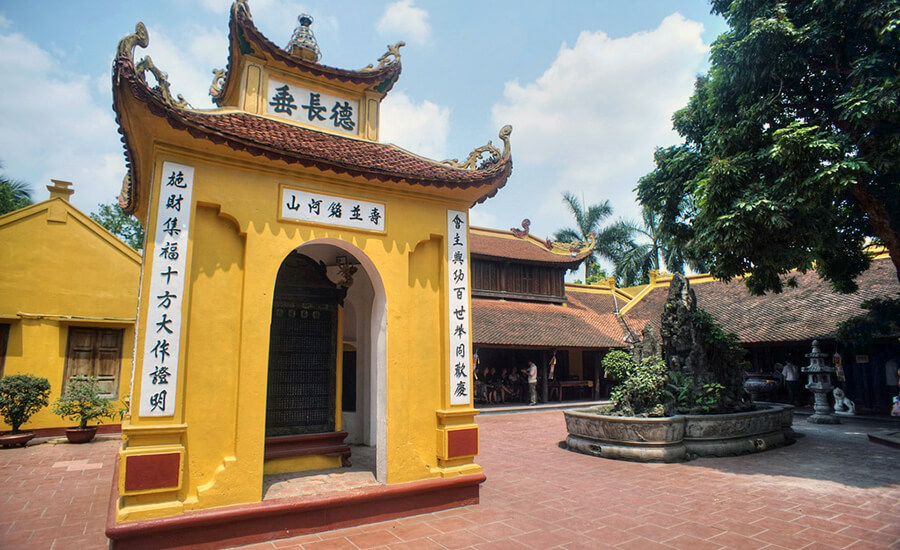
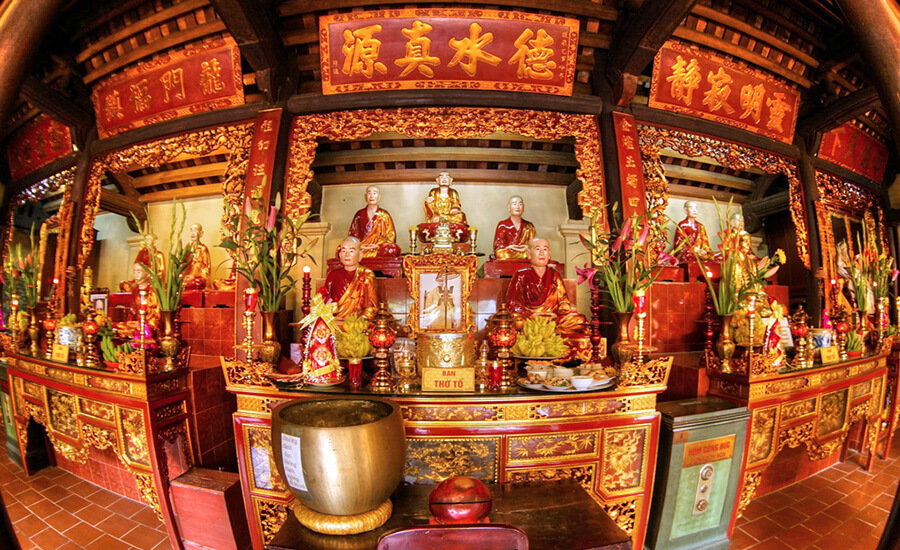
Similar to other ancient pagodas in Northern Vietnam, the structure and interior of Tran Quoc Pagoda are arranged sequentially and in accordance with strict Buddhist principles. The pagoda consists of many layers of buildings with three main ones: the main sanctuary, the forecourt hall , and the posterior hall.
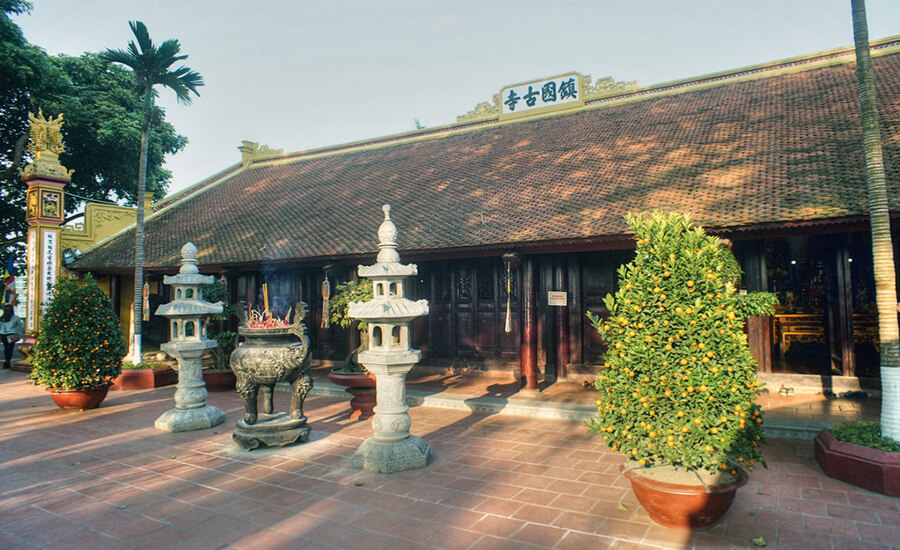
The forecourt court faces west. On both sides of the incense-burning house and the main sanctuary are two corridors. Behind the main sanctuary is the bell tower. On the right is the shrine for the ancestors, and on the left is the stele house.
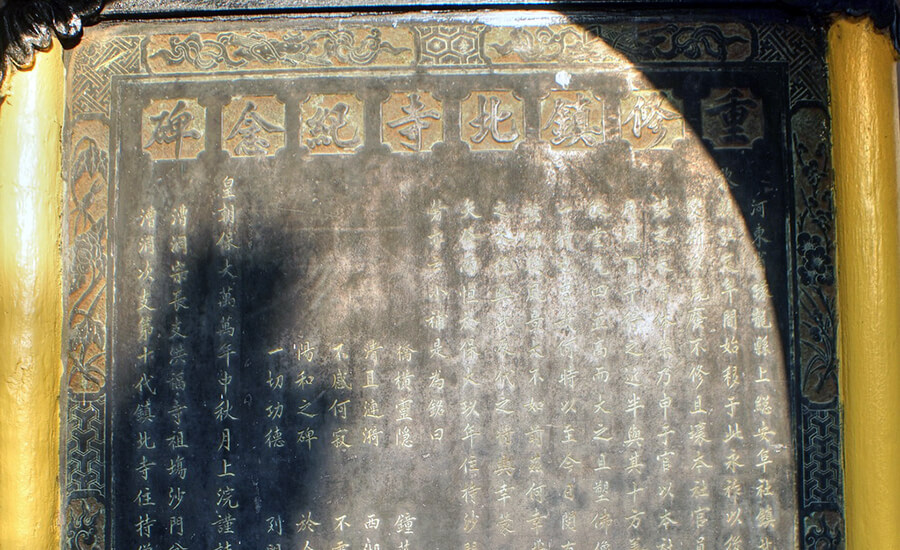
In the temple, there are currently 14 steles kept. On the stele engraved in 1815, there is an essay by Dr. Pham Quy Thich recording the repair of the pagoda after a long period of ruin. This work began in 1813 and ended in 1815.
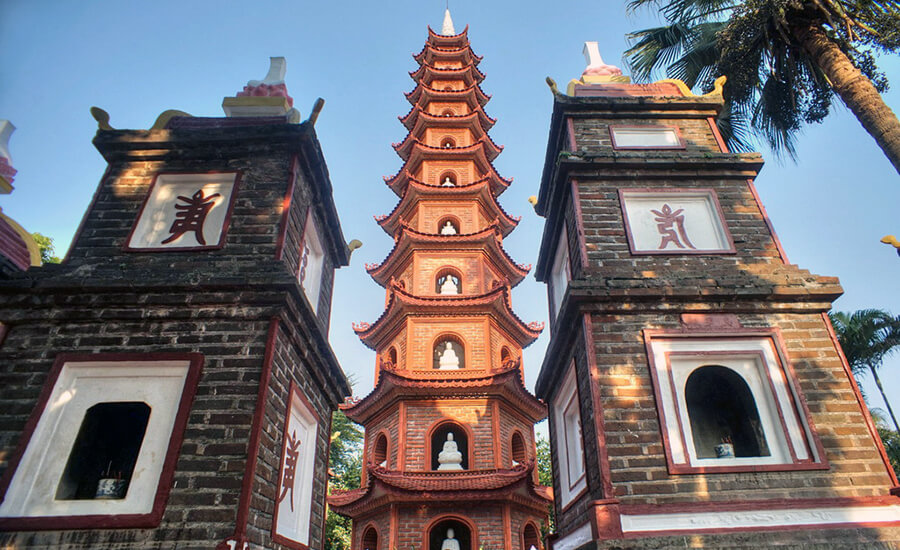
The pagoda’s highlight architectural work is the Luc Do lotus stupa, built in 1998.
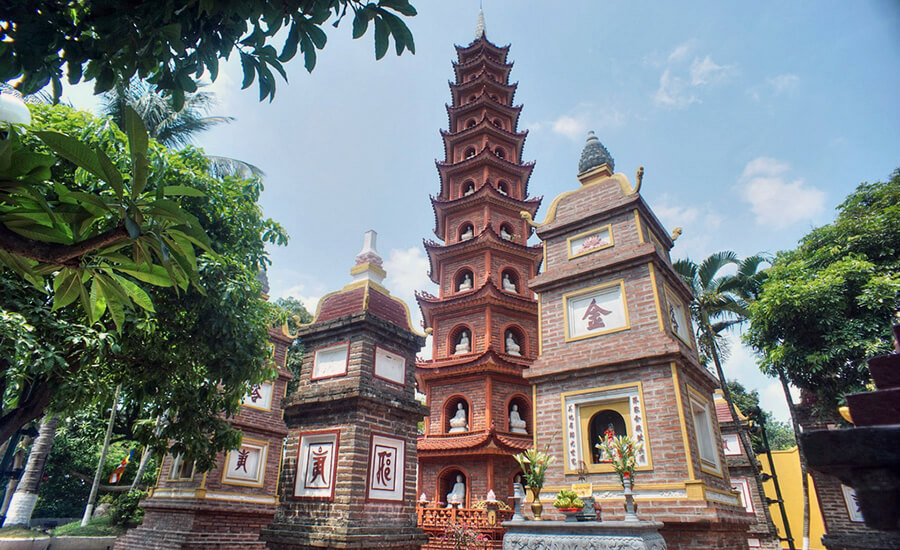
The large stupa has 11 floors and is 15m high. Each floor of the tower has 6 arched doorways, in each of which a precious stone statue of Amitabha Buddha is placed.
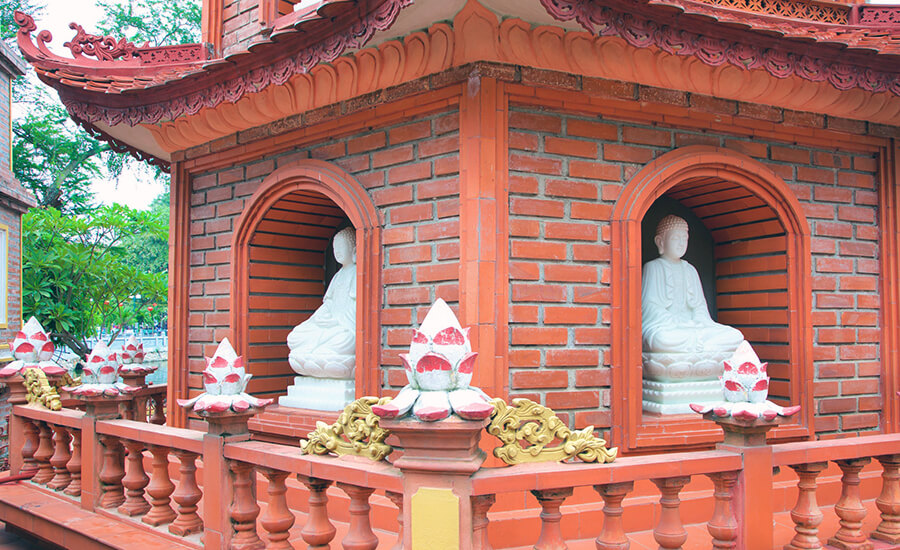
At the top of the tower, there is a nine-story lotus platform (called Nine-grade lotus flower), also made of precious stones.
The pagoda has welcomed many heads of state from major countries, including the President of India Rajendra Prasad on March 24, 1959, the President of India Pratibha Patil on November 28, 2008, and the President of the Russian Federation Dmitry Medvedev on October 31, 2010.
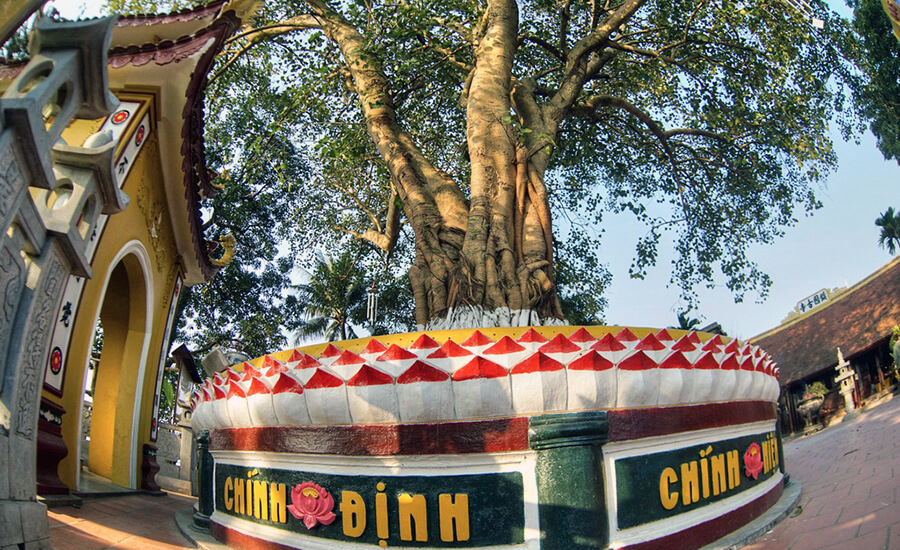
Today, the Bodhi tree given by Indian President Rajendra Prasad when he visited Tran Quoc pagoda in 1959 still grows green as a symbol of friendship between Vietnam and India, the country of origin of Buddhism.
Source: collected by An
Follow us for the best deals on Vietnam package tours and visa services!

Comment (0)