
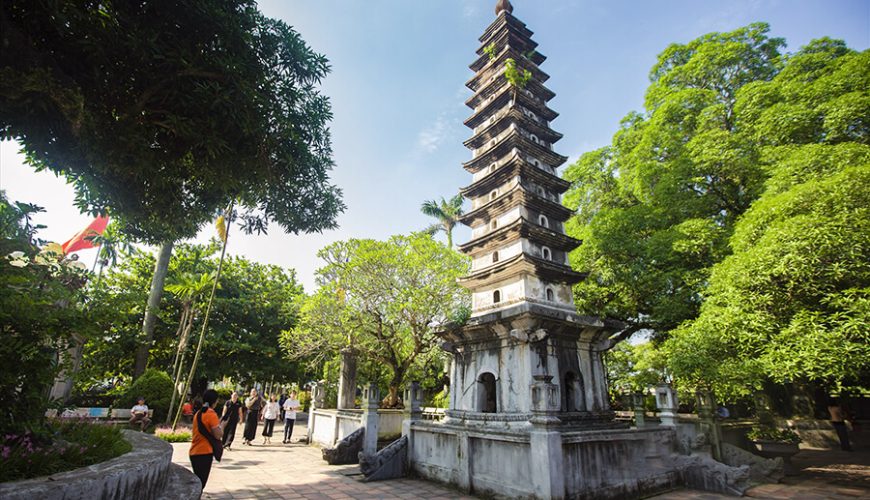
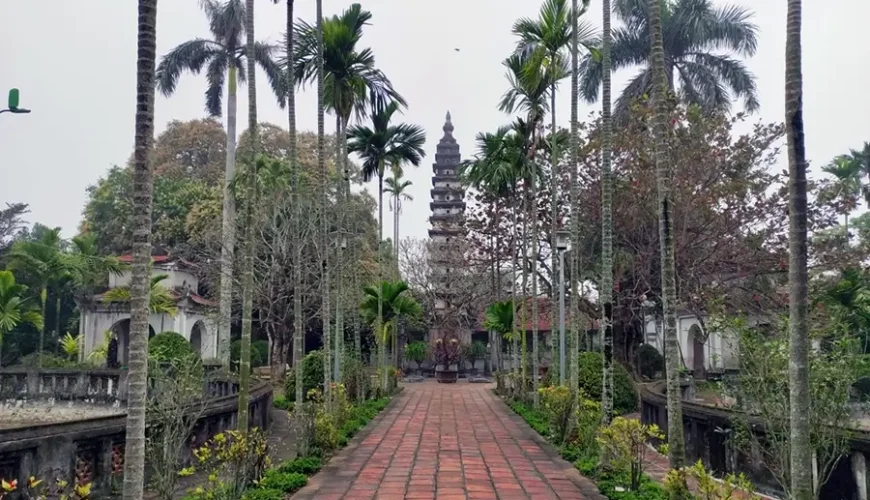
Pho Minh Tower is one of the oldest structures in Vietnam. Despite countless ups and downs throughout history, Pho Minh Tower has surprisingly stood steady on sunken land for over seven centuries. If you have the opportunity to explore Nam Dinh, don’t miss out on admiring this unique tower.
Where is Pho Minh Tower?
Pho Minh Tower was built within the grounds of Pho Minh Pagoda, located in Tuc Mac village, Nam Dinh Ward, Ninh Binh Province. According to historical records, in 1305, Emperor Tran Nhan Tong passed away at the Ngoa Van hermitage on Tu Phong-Yen Tu Mountain. After that, his son, Emperor Tran Anh Tong, placed 7 of the 21 relics on a stone palanquin and then built Pho Minh Tower atop it.
In 2012, Pho Minh Pagoda was ranked as a special National Monument. Currently, this is an attractive tourist destination in Ninh Binh, because the tower is located near the famous Tran Royal Temple relic site, with a large yard and lush old trees.
Impressive original artistic style of the Tran Dynasty
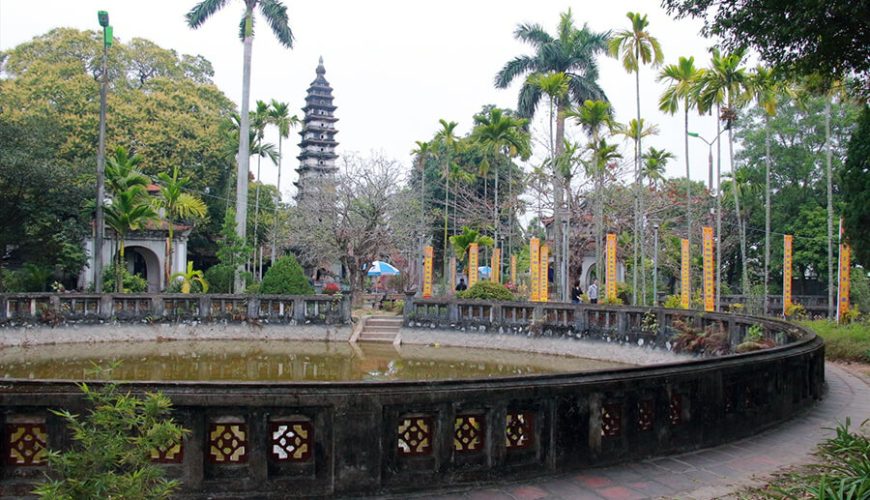
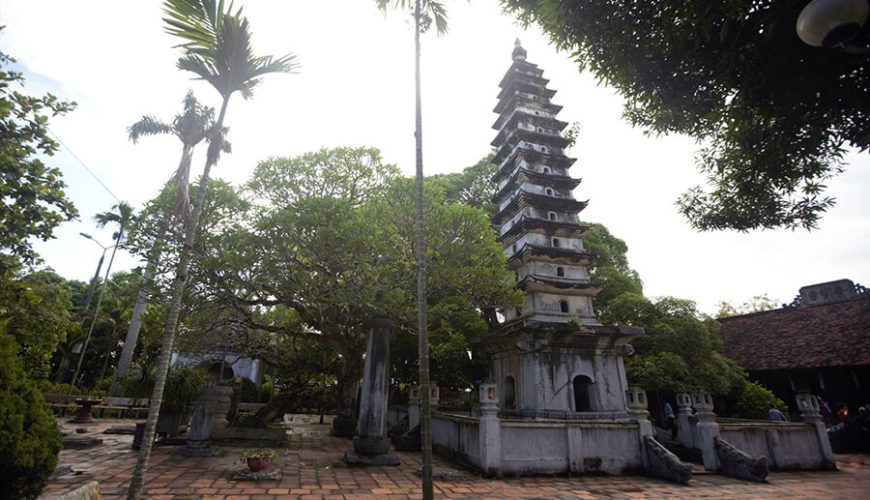
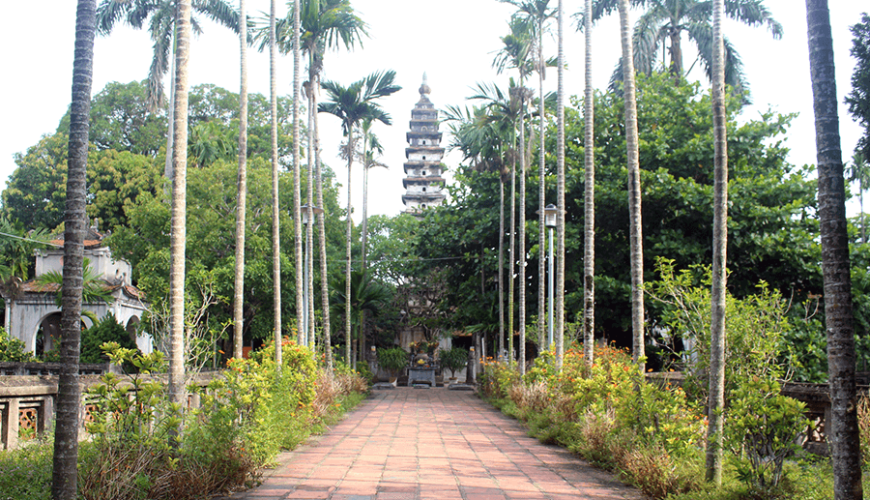
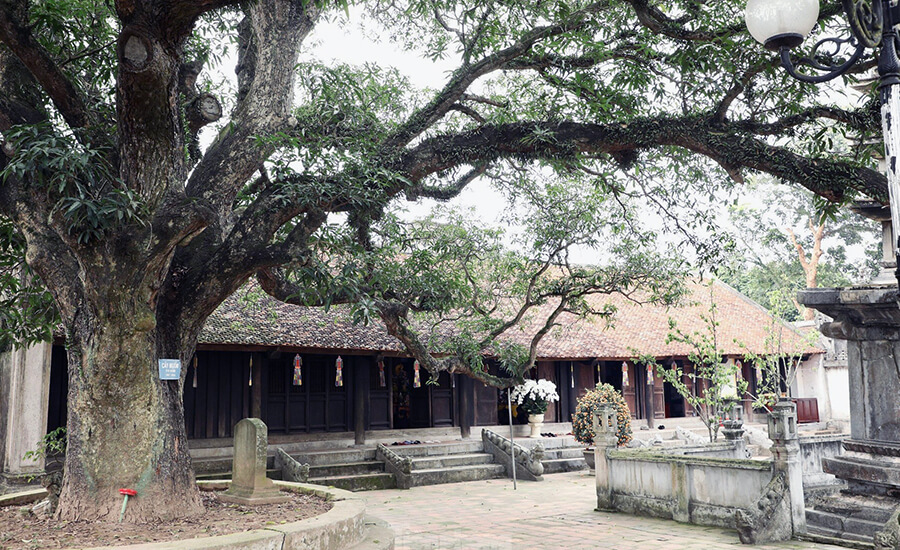
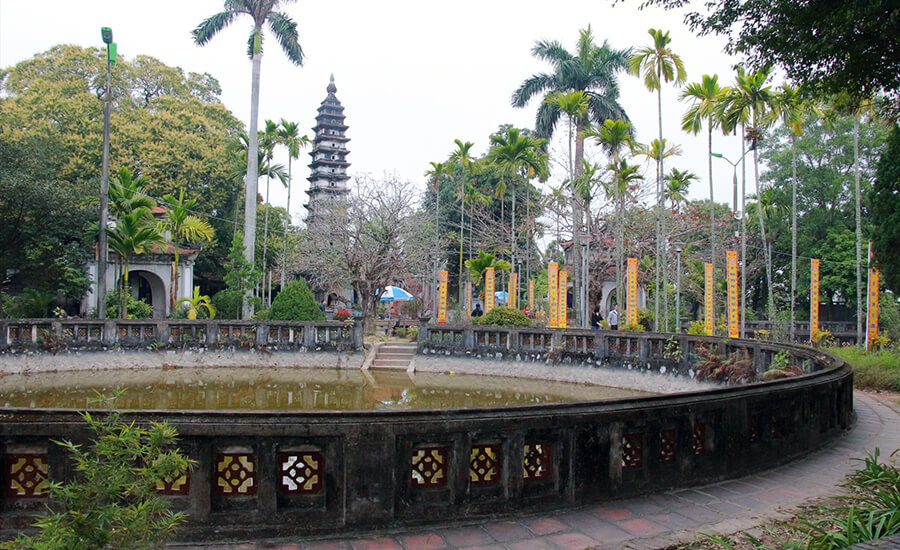
The most notable highlight in the yard of Pho Minh Pagoda is Pho Minh Tower and 2 stone steles. Of which, Pho Minh Tower is located in the middle of the pagoda yard, in front of the temple’s front hall; the other 2 stone steles are located on both sides of the tower, about 4m apart.
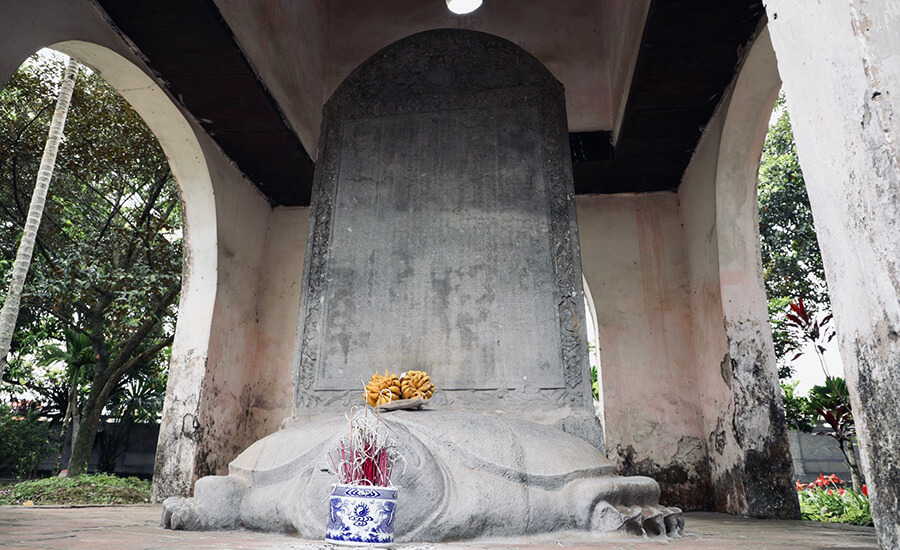
The stone stele on the right is the Pho Minh Zen Temple stele, engraved in 1668, talking about the construction and restoration of the pagoda. The stone stele on the left was engraved in 1916 and describes Pho Minh Tower. Both stone steles are placed on the back of a stone turtle.
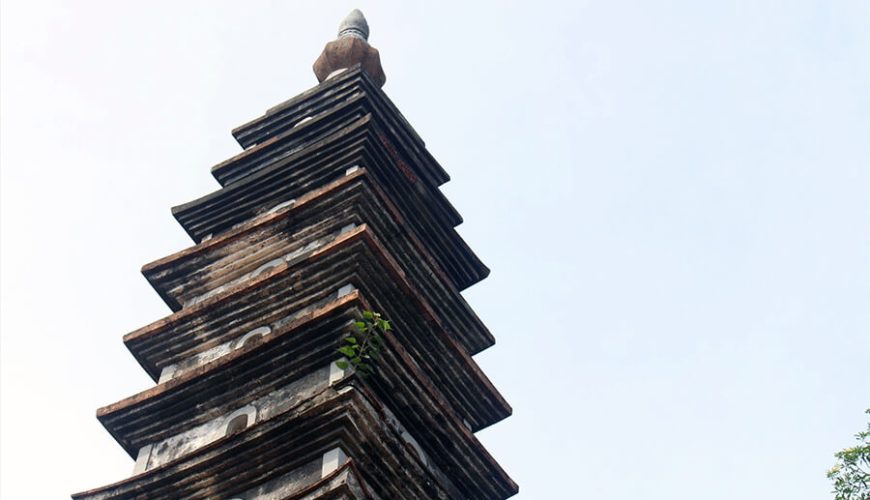
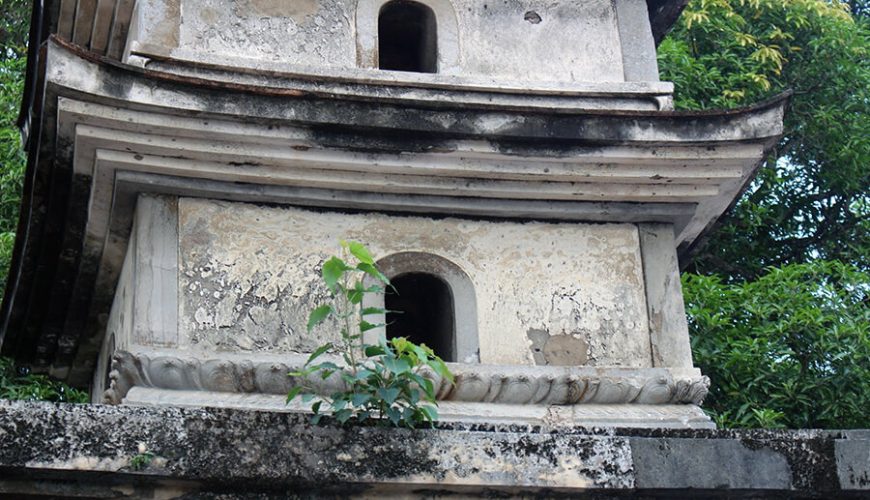
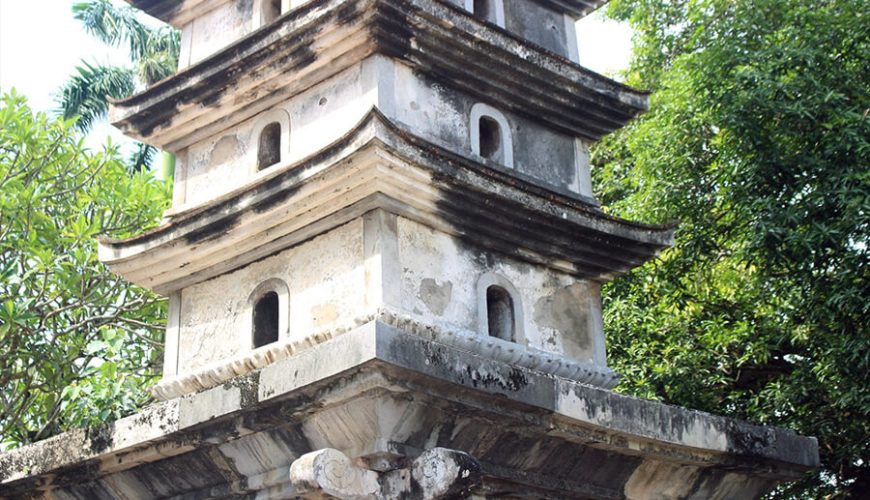
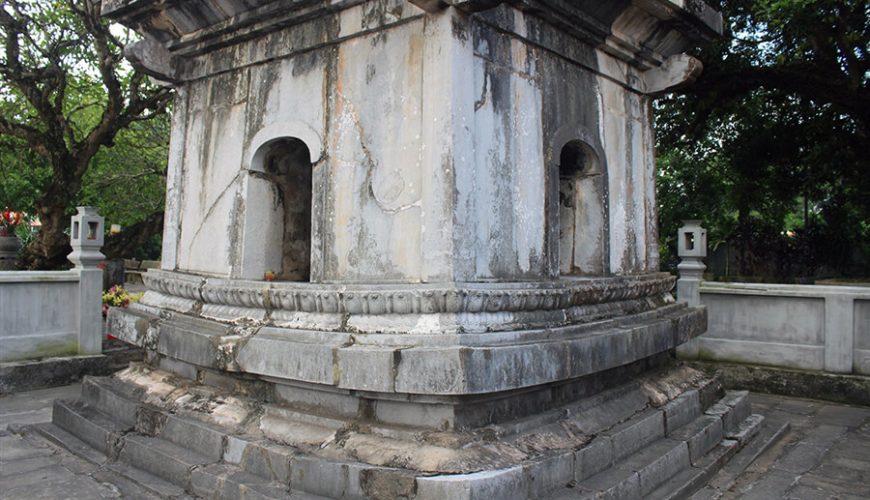
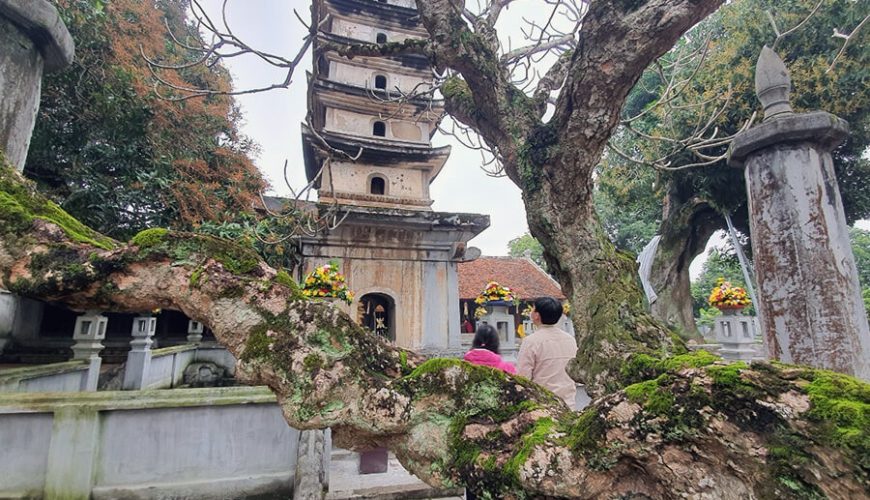
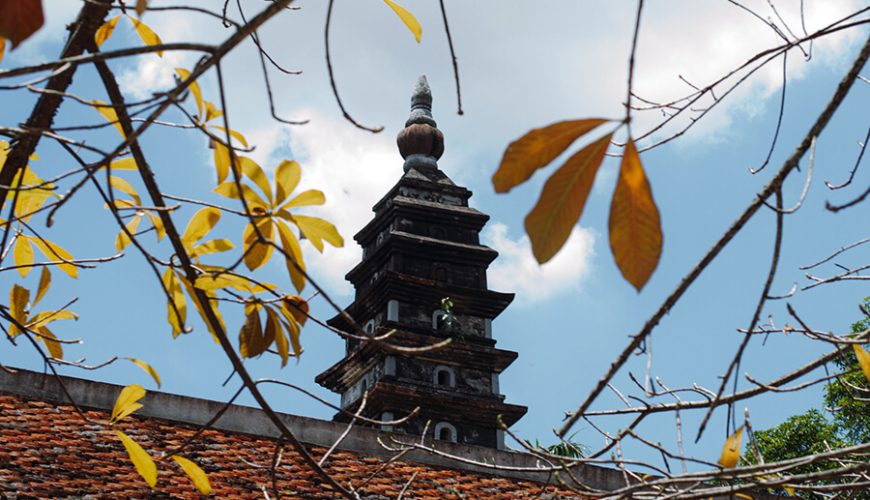
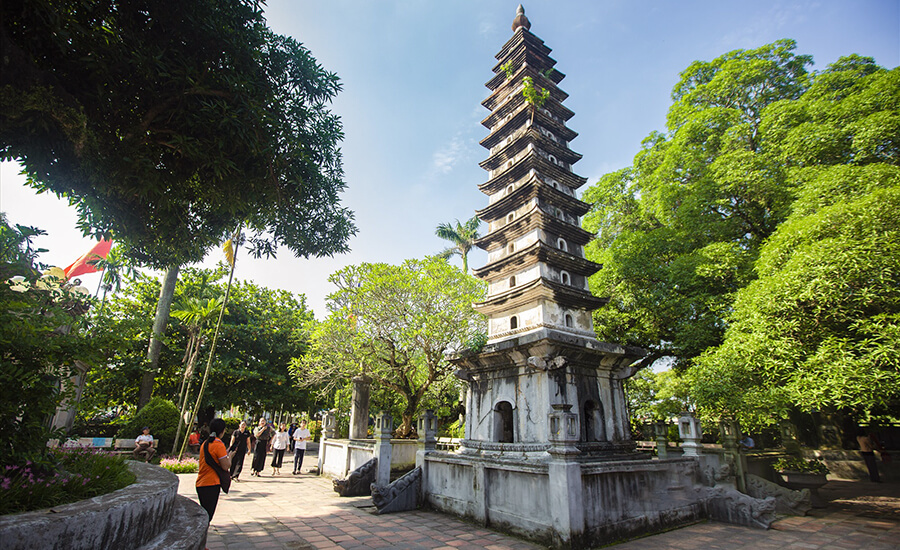
According to historical records, Pho Minh Tower was built in 1308 in the traditional style popular during the Tran Dynasty, with a square shape and 14 floors, standing 19.5m high. Each floor has 4 arched doors, and the roof ridge runs between the floors.
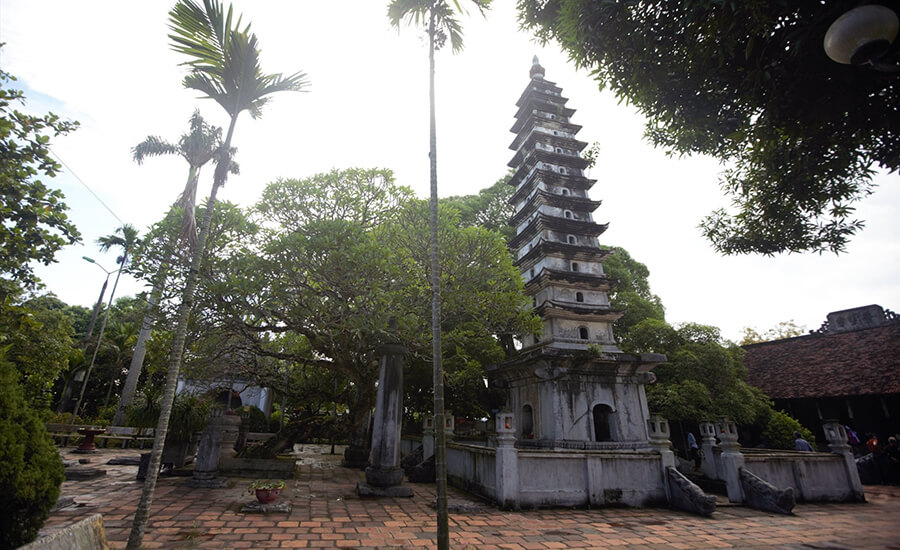
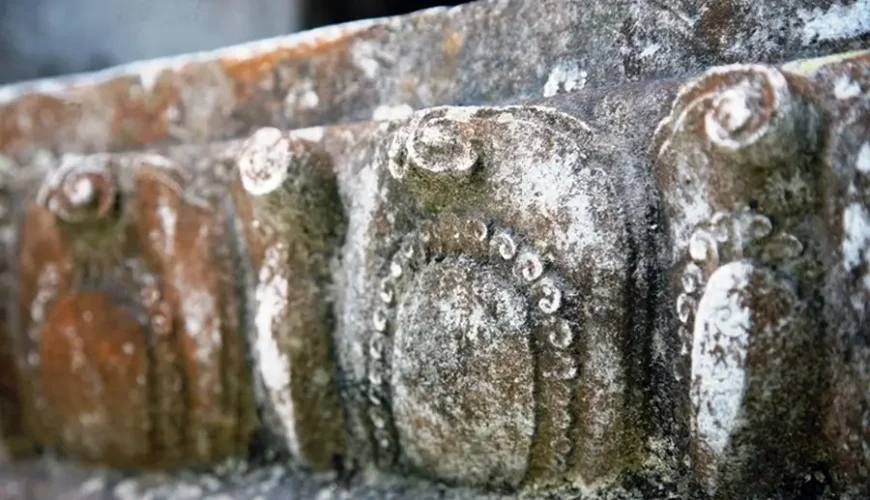
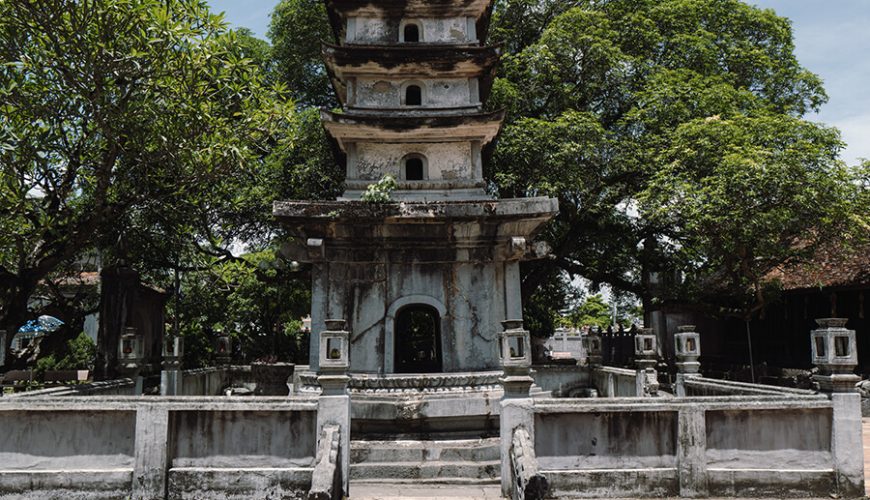
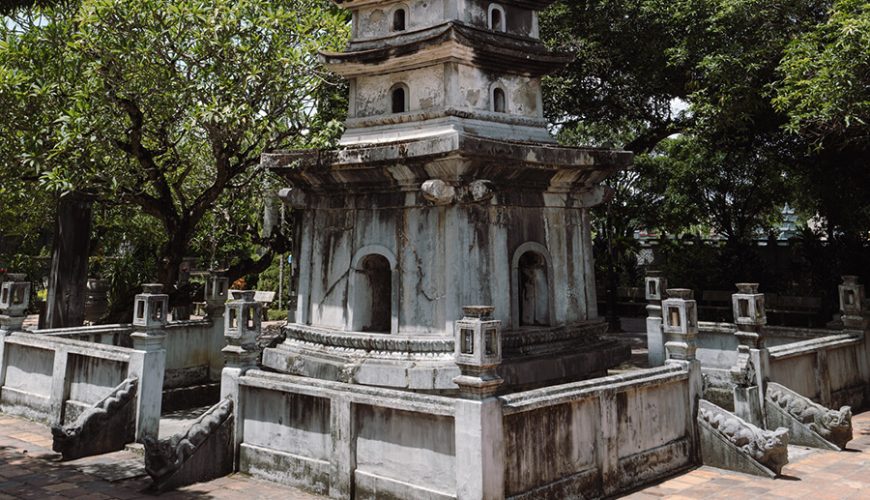
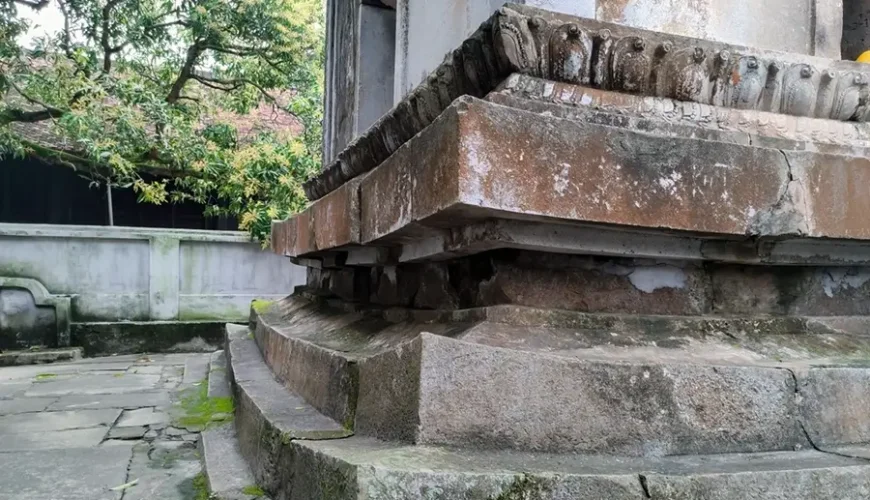
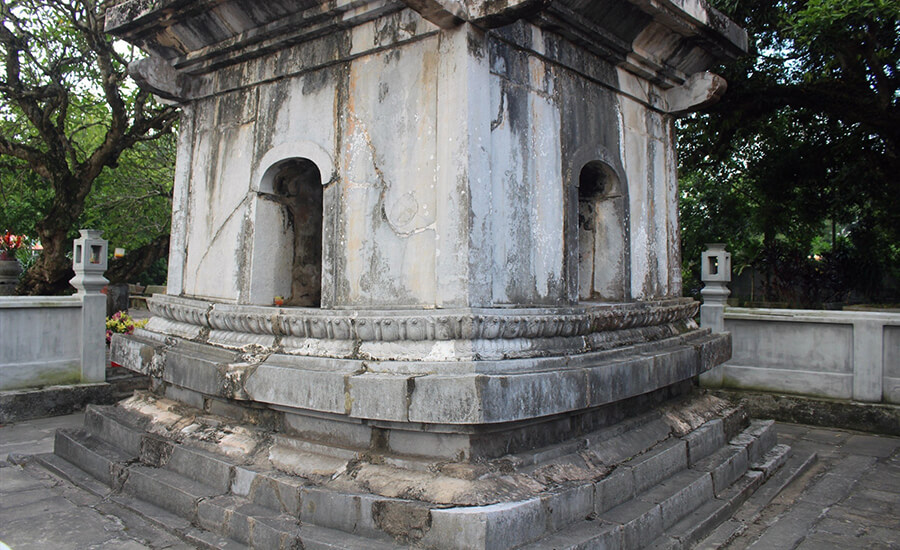
Pho Minh Tower consists of 3 main components: the pedestal, the body, and the top. In which the pedestal of Pho Minh tower is made entirely of stone, the stone blocks vary in size, are carved with lotus petals and water wave patterns, and the entire pedestal bears the image of a palanquin.
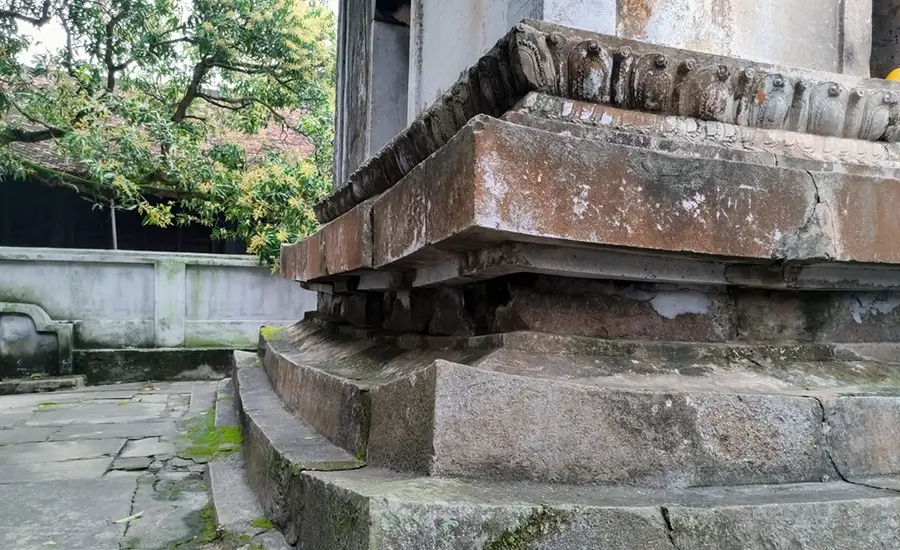
The tower has 14 floors; the floors share a common appearance, but some details differ. The first level is built entirely of green stone; from the second level up, it is built of bricks and plastered tightly. Each end of the brick has an inscription and depicts a dragon in relief, dating to the Tran Dynasty.
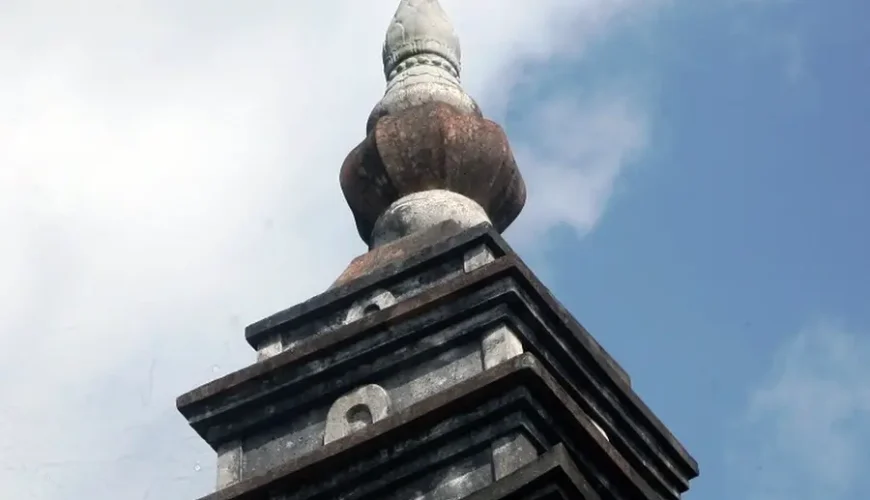
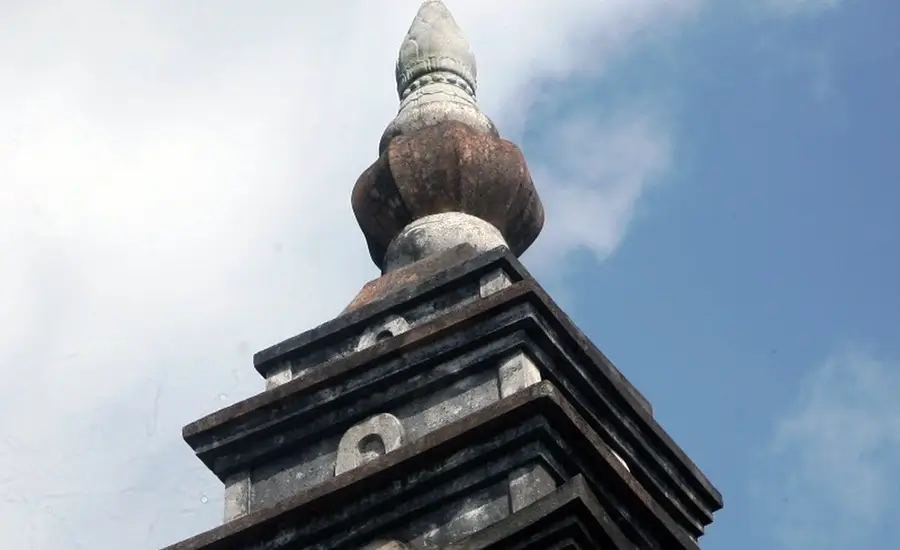
The top of the tower is a block of stone shaped like a lotus flower, including many different layers such as: the top of the lotus bud is thick and tapered, including 5 layers of lotus petals facing up and closing, in which the last layer has a double border and a raised ridge in the middle. The entire lotus bud is placed on a block of terracotta, tapered and bulging with two red layers.
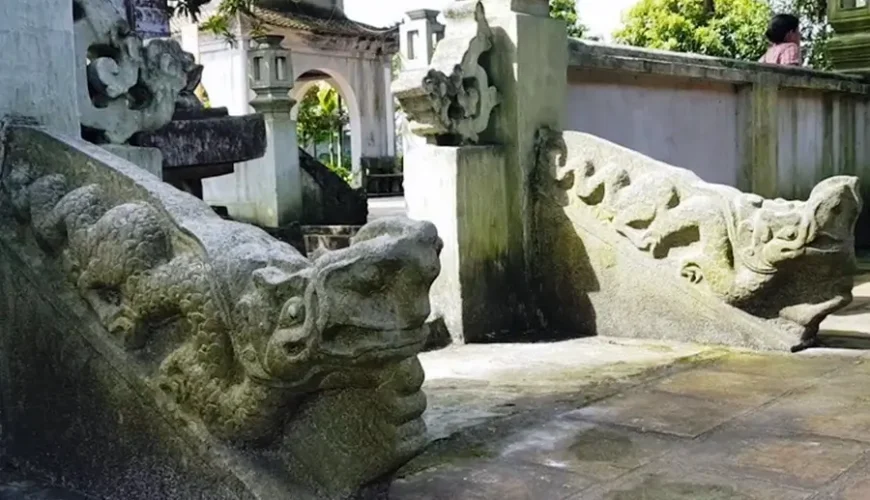
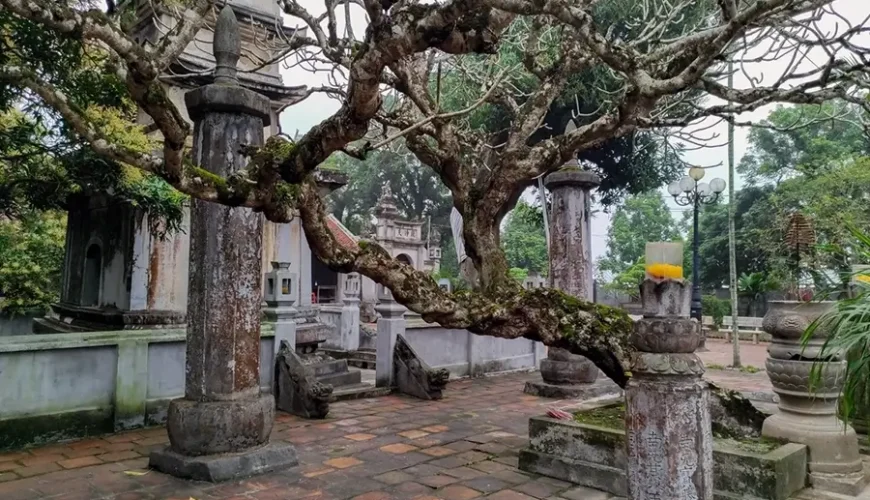
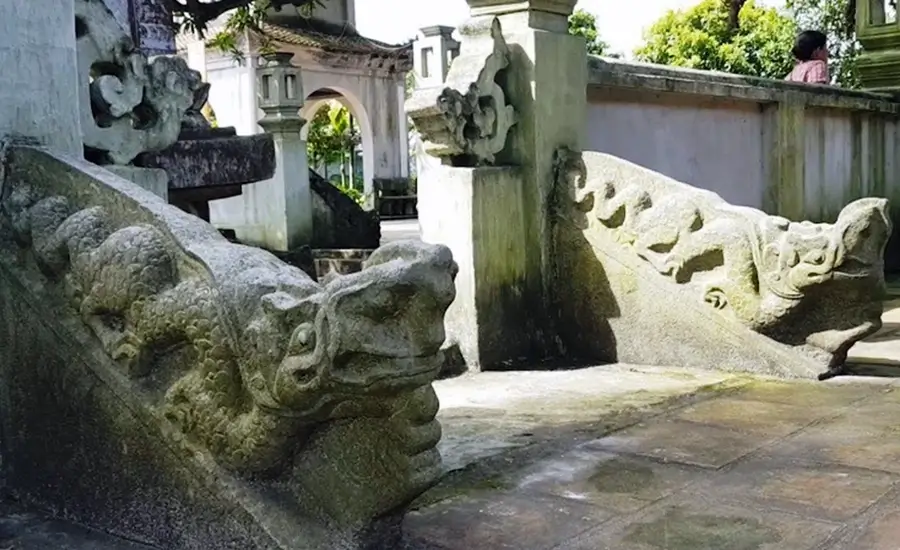
The tower is surrounded by walls, and lanterns are on the pillars. In the middle of the walls are 4 entrances to the tower, and in front, there are pairs of stone dragons.
At the foot of Pho Minh Tower are two large stone incense sticks (also known as sutra pillars) crafted in the 17th century. In front of the two large sutra pillars are two smaller sutra pillars, exquisitely crafted in the shape of lotus flowers; on top are carved lotus petals, and inside is an image of Buddha sitting on a lotus throne.
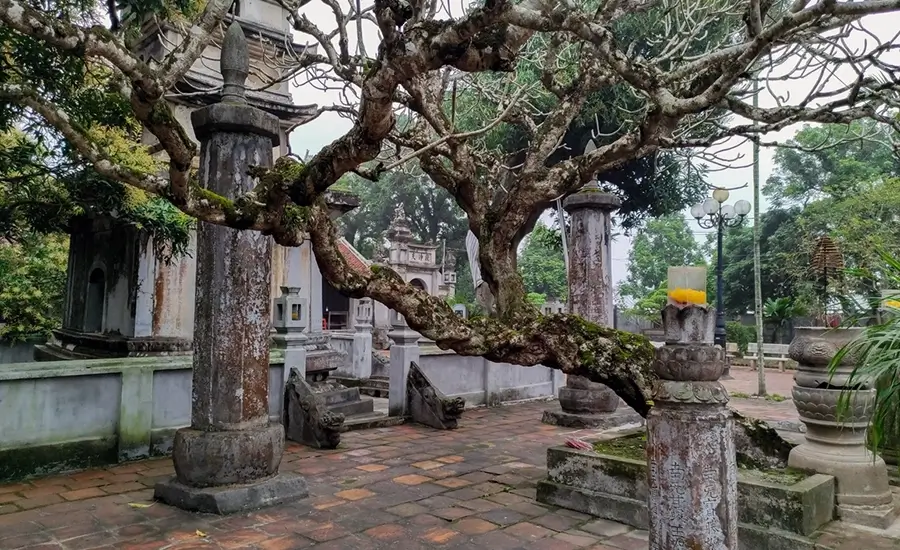
Notably, around the sutra pillars and incense bowls are 12 stone pedestals shaped like lotus petals, all similar in size. In 1991, the State Bank of Vietnam featured the image of the Pho Minh Tower on the 100-dong banknote.
Source: collected by An
Follow us for the best deals on Vietnam package tours and visa services!

Comment (0)