

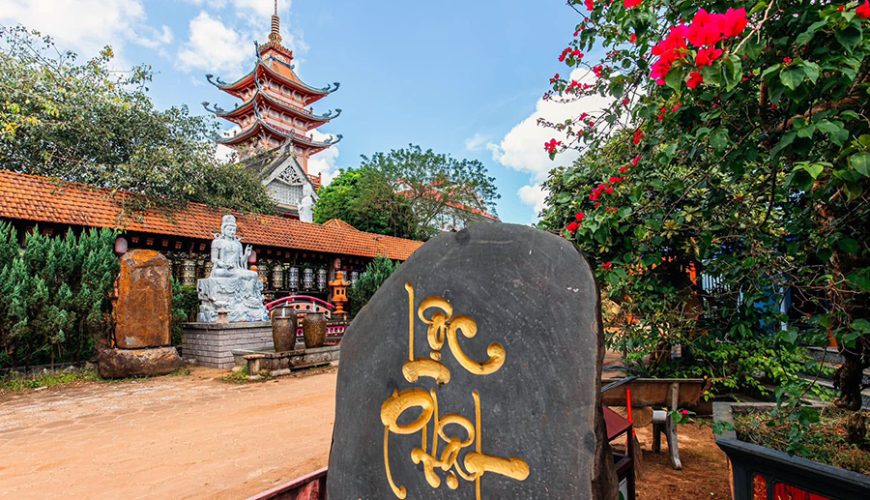
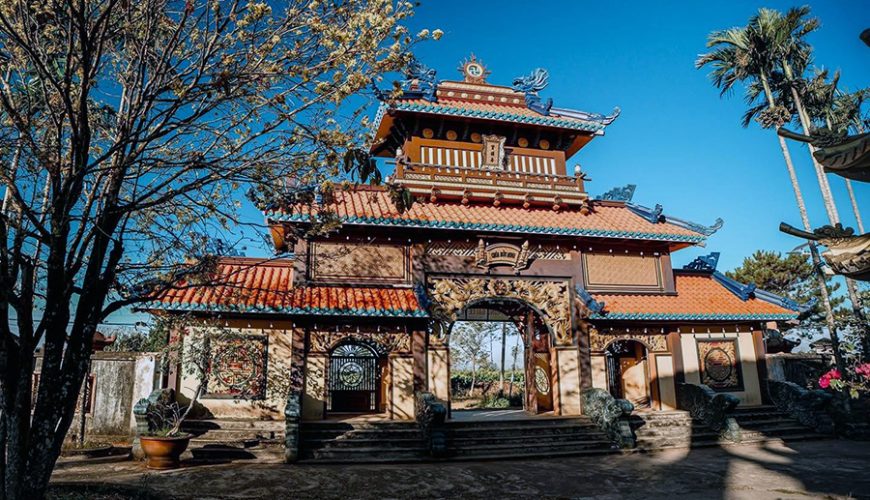
Nestled amidst the lush greenery of Gia Lai, Buu Minh Pagoda is a spiritual destination frequently visited by travelers exploring Pleiku and the surrounding areas. The pagoda impresses visitors with its dignified architecture, serene atmosphere, and a natural landscape that embodies the essence of the Central Highlands. Notably, its proximity to T’nung Lake (Bien Ho) and vast, verdant tea plantations makes Buu Minh Pagoda an ideal stop for a journey that combines sightseeing with an exploration of the local culture and spiritual life of the Gia Lai people.
A historic pagoda in the heart of the highlands
Buu Minh Pagoda is located in northern Pleiku, near T’nung Lake, within one of Gia Lai’s renowned tea-growing regions. The pagoda’s history is intertwined with the establishment of tea plantations and the growth of local communities in the Pleiku highlands. In the early 20th century, settlers from the coastal plains arrived in the area and founded a village named “Co May”. Amidst a landscape once considered a wild and perilous frontier, the residents built “Son Hai” Temple, the precursor to Buu Minh Pagoda, a place of worship on the shores of T’nung Lake.
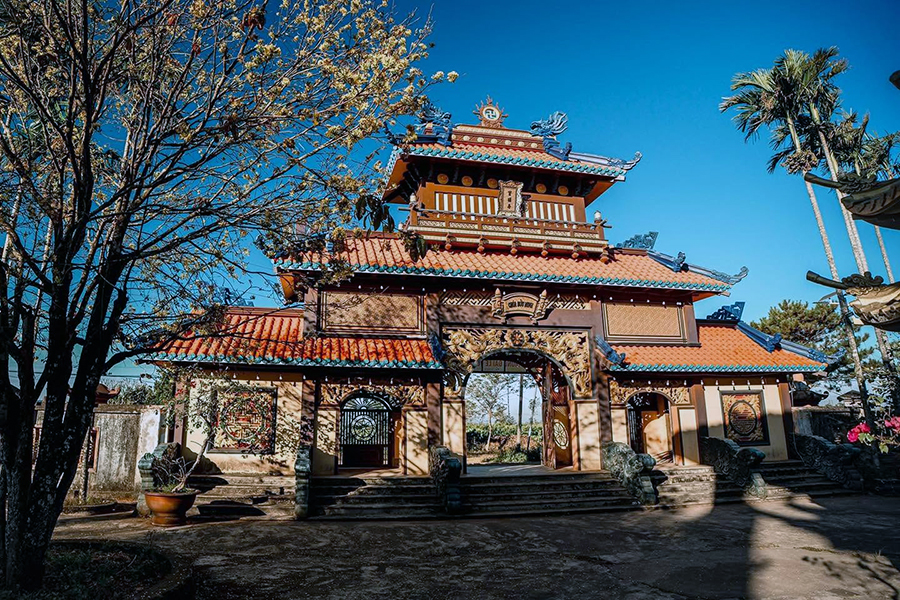
The pagoda was first constructed in 1936 under the name “Phat Hoc Pagoda” (Buddhist Studies Pagoda); it subsequently underwent renovations and was officially renamed Buu Minh in 1961. While few of the original tea plantation workers’ cottages remain today, the core structure of the old pagoda endures, and the grounds still preserve tea bushes that are nearly a century old.

Over the course of its history, the pagoda has undergone renovations and reconstruction to achieve its current, stately appearance. Despite its imposing stature, the pagoda retains the inherent serenity characteristic of a Buddhist sanctuary. The atmosphere here offers a sense of seclusion from the city’s hustle and bustle, making it an ideal spot for visitors to rest and find inner peace after exploring Pleiku.
Striking and Majestic Architecture of Buu Minh Pagoda
Buu Minh Pagoda stands out amidst the tea plantations north of Pleiku thanks to its grand scale; its facade faces west, overlooking T’nung Lake, also known as Pleiku’s “Sea Lake” (Bien Ho) or Ea Nueng Lake.
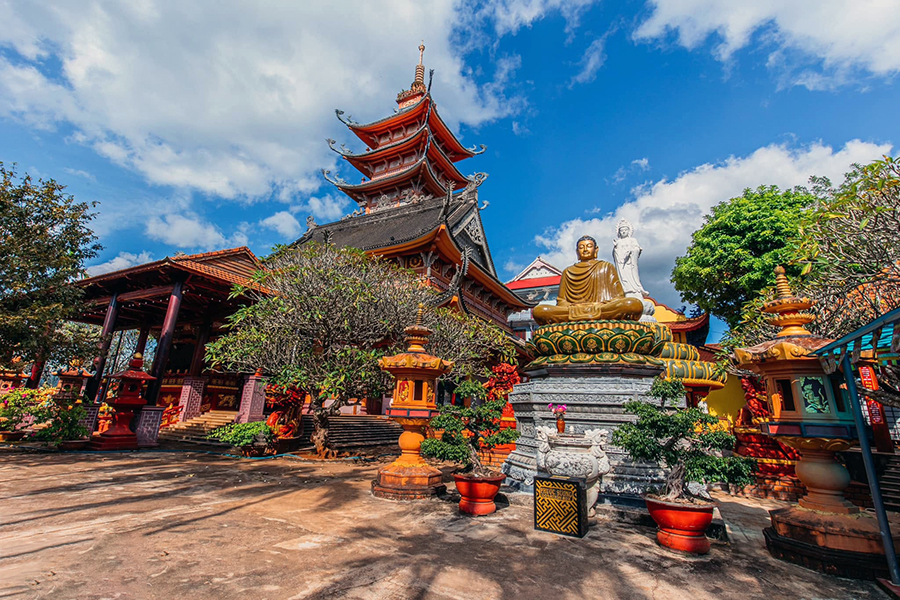
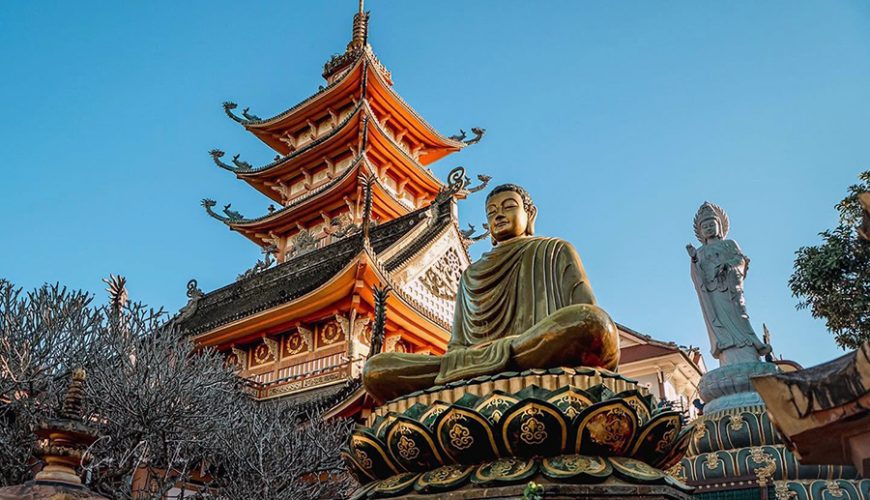
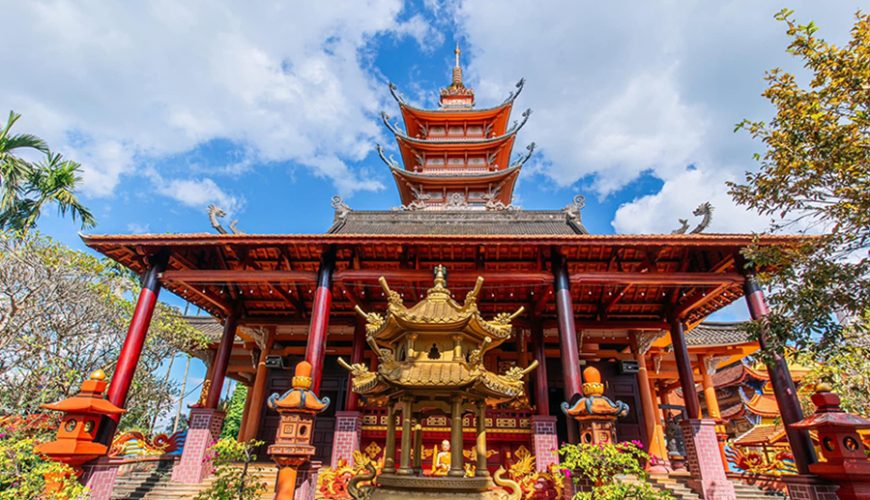
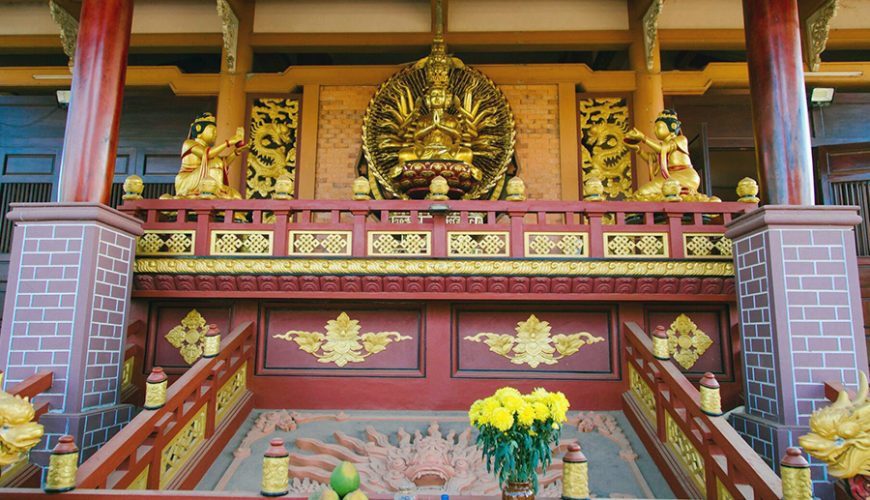
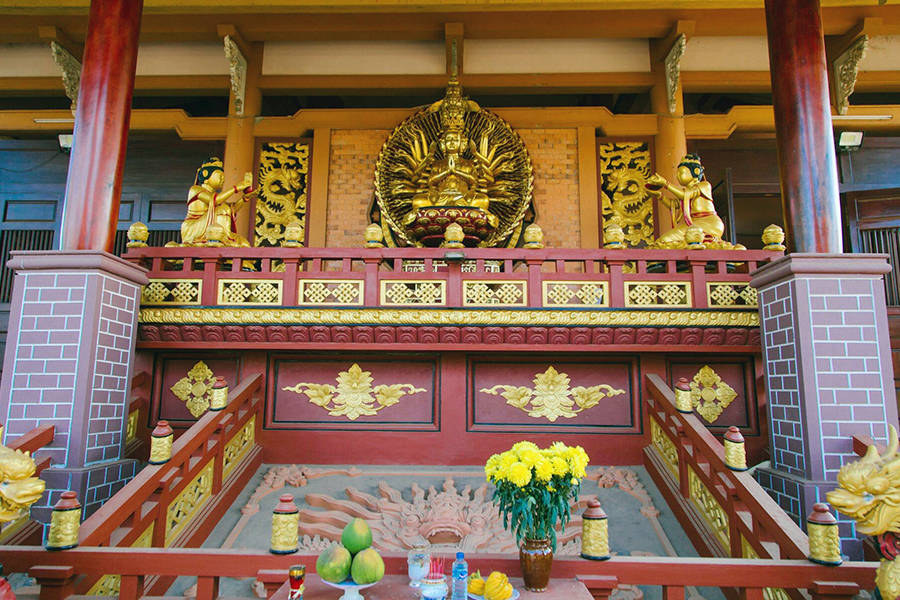
The most impressive feature is the main hall, covering an area of approximately 520 m²; the harmonious color scheme of the floors and walls creates an atmosphere that is both cozy and solemn for worshipers. At the very center of the hall sits a 3-meter-tall white stone statue of Shakyamuni Buddha.
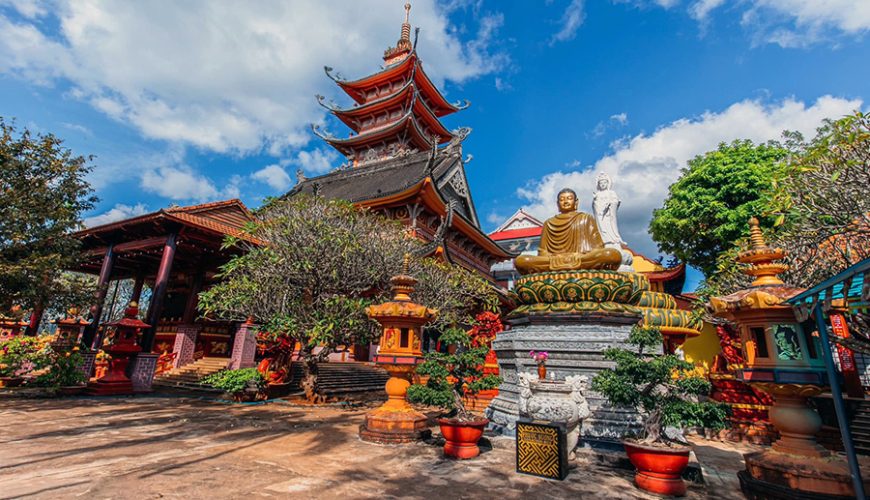
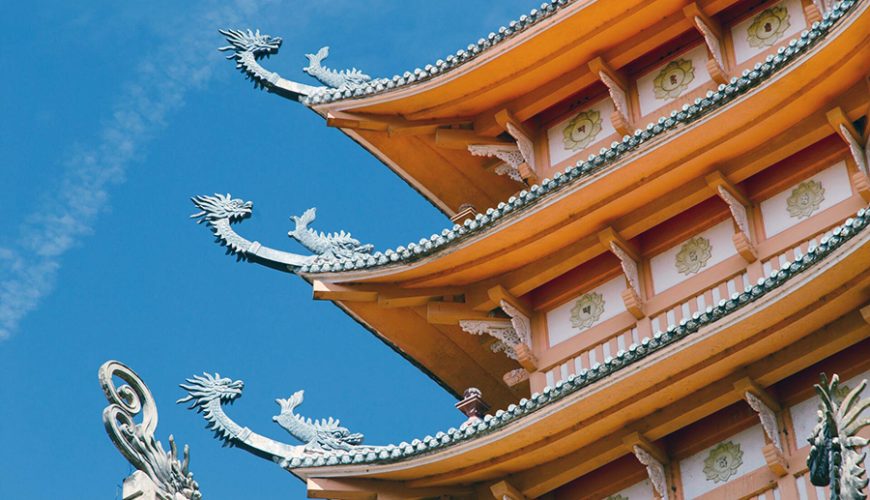
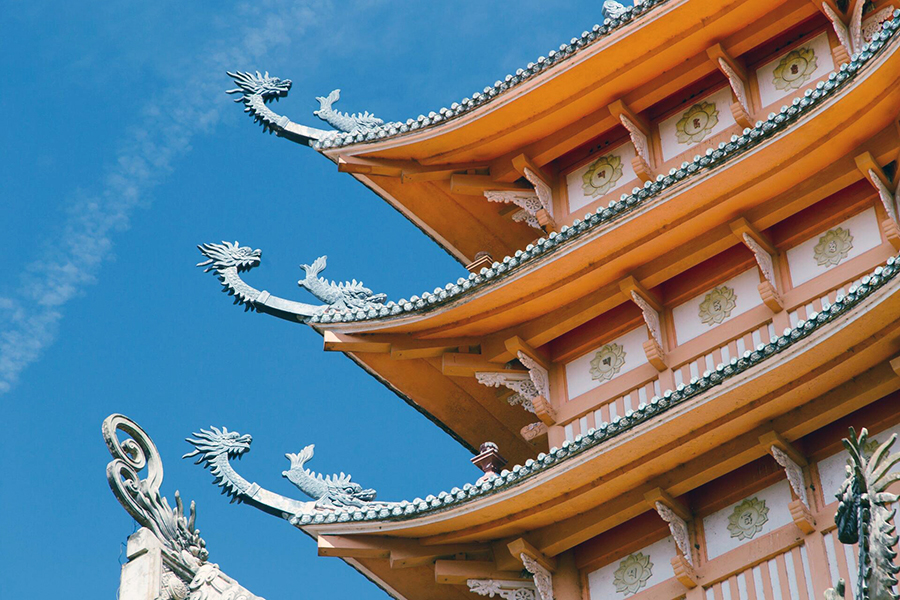
Rising over 47 meters from the floor to the tower’s peak, it is considered one of the few pagodas in Vietnam to feature such a towering roof structure. The corners of the three-tiered roof are adorned with exquisitely crafted dragons. The curved eaves extend more than 3 meters outward, featuring dragon-fish motifs inspired by the One Pillar Pagoda and dragon-head designs modeled after Tay Phuong Pagoda in Hanoi.
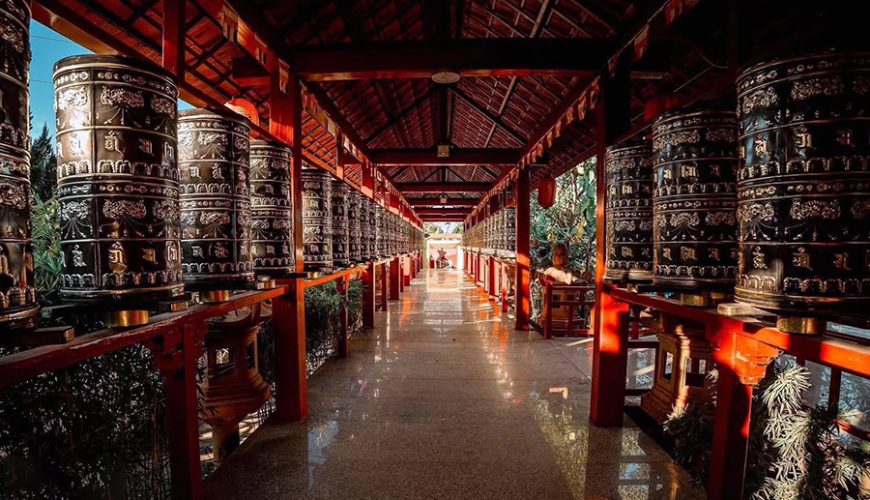
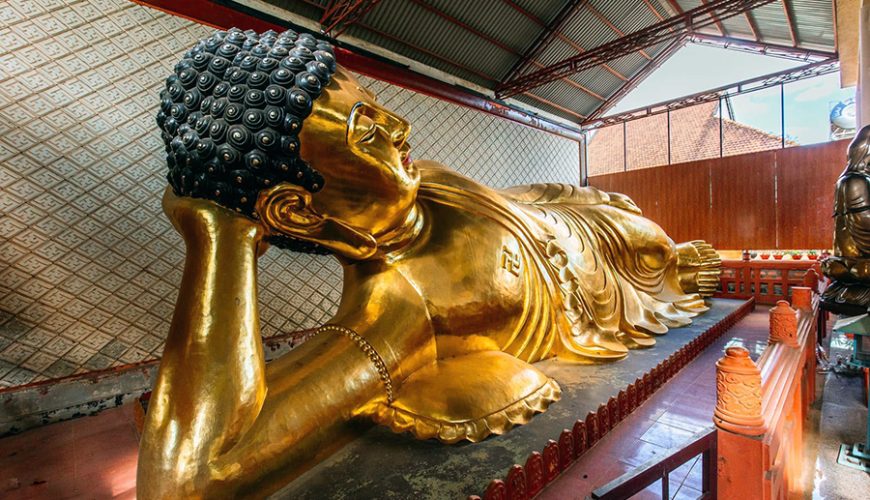
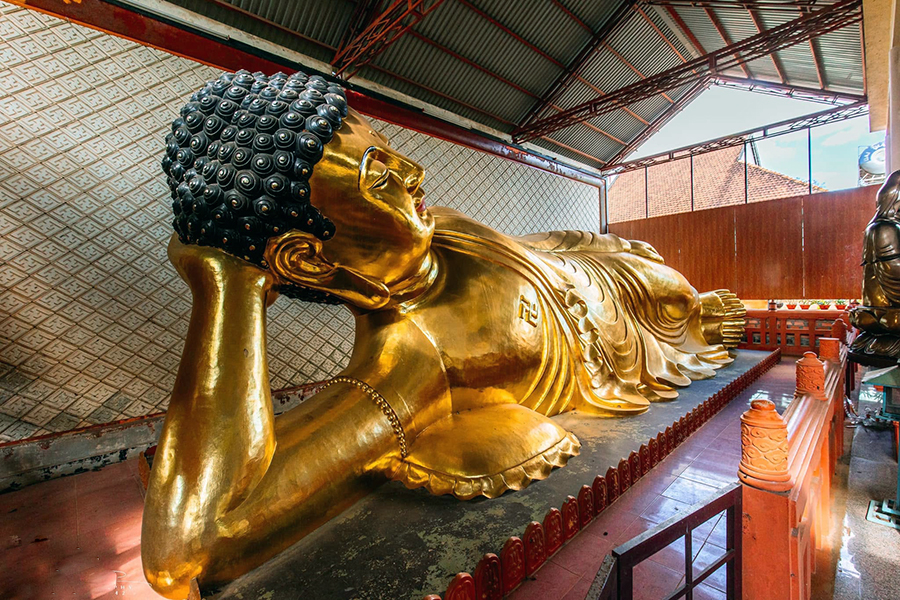
The pagoda houses several precious artifacts, including a sandstone Cham Buddha statue and numerous other statues of great artistic and historical value. Of particular note are three significant sculptural ensembles representing contemporary Vietnamese Buddhist art: a Reclining Buddha, an outdoor Seated Buddha, and ten outdoor statues of the infant Buddha, alongside a massive bronze bell and other valuable ritual instruments.
Buu Minh Pagoda
- Location: Bien Ho Commune, Gia Lai Province.
- Best for: pilgrims, solo travelers
- Tourist spots nearby: Chư Dang Ya Volcano, T’nung Lake (Bien Ho)…
Source: collected by An
Follow us for the best deals on Vietnam package tours and visa services!
Comment (0)