
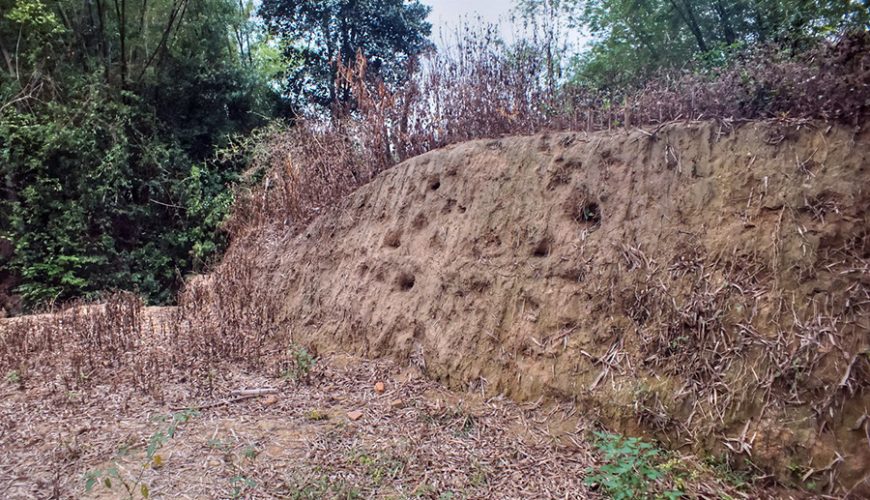
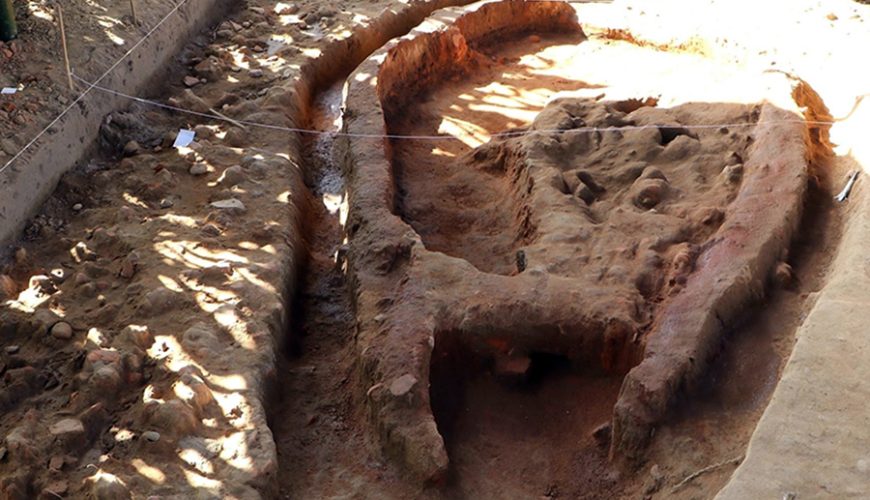
Located in Quang Ngai Province, Central Vietnam, Chau Sa Citadel, or Amaravati, is one of the most significant remaining relics of the Champa civilization, a kingdom that flourished along Vietnam’s central coast for centuries. Unlike the red-brick towers of My Son or the Cham tower clusters in Gia Lai, Chau Sa impresses visitors with its earthen ramparts, ancient atmosphere, and archaeological traces that evoke a political and military center of regional importance.
Overview Chau Sa Citadel
Across Vietnam, this is the only earthen citadel whose traces clearly reveal its location, scale, layout, and role within the southern territory of the Amaravati region of the Champa Kingdom.
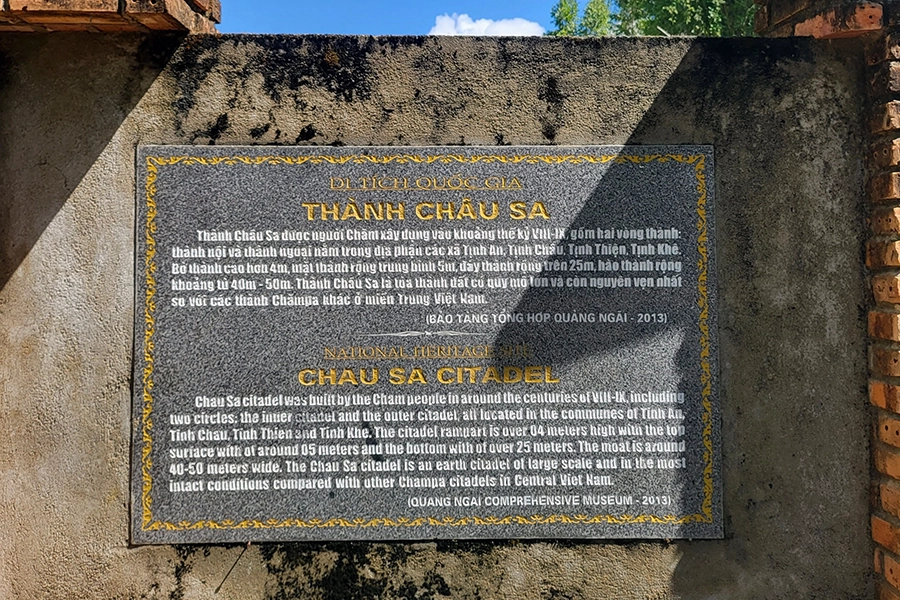
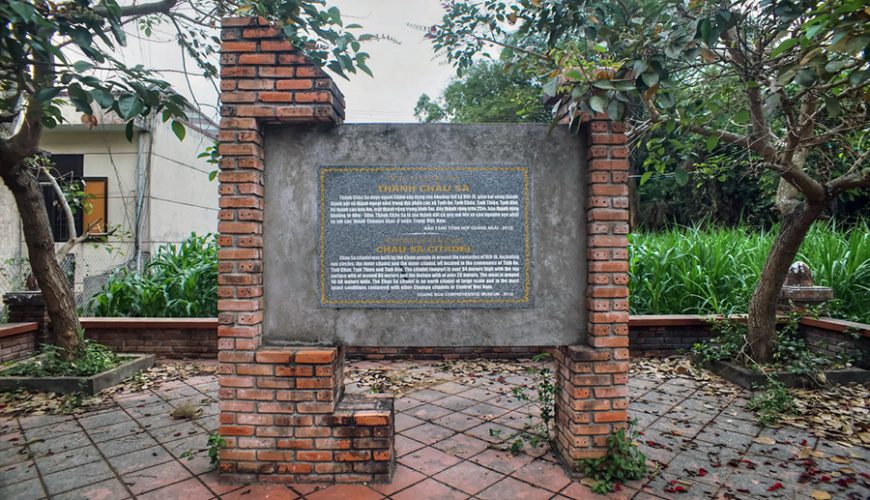
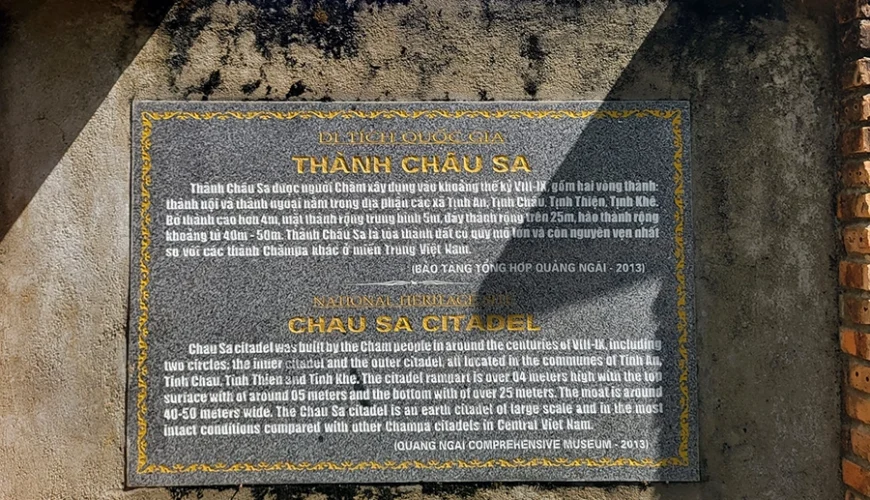
Chau Sa Citadel consists of two layers: an inner citadel and an outer citadel. The inner citadel is rectangular, approaching a square shape (580 m x 540 m), with its long sides aligned north-south. The ramparts currently measure 4–6 meters in height, with a base width of 20–25 meters and a top width of 5–8 meters. A moat, 20–25 meters wide, encircles the citadel. The inner citadel features five gates: east, west, south, north, and southwest. The east, south, and southwest gates all feature elevated brick structures, likely watchtowers. Observations of the south gate, which shows more elaborate construction and reinforcement than the others, particularly in relation to the citadel complex and surrounding terrain, suggest it served as the main entrance to Chau Sa Citadel.
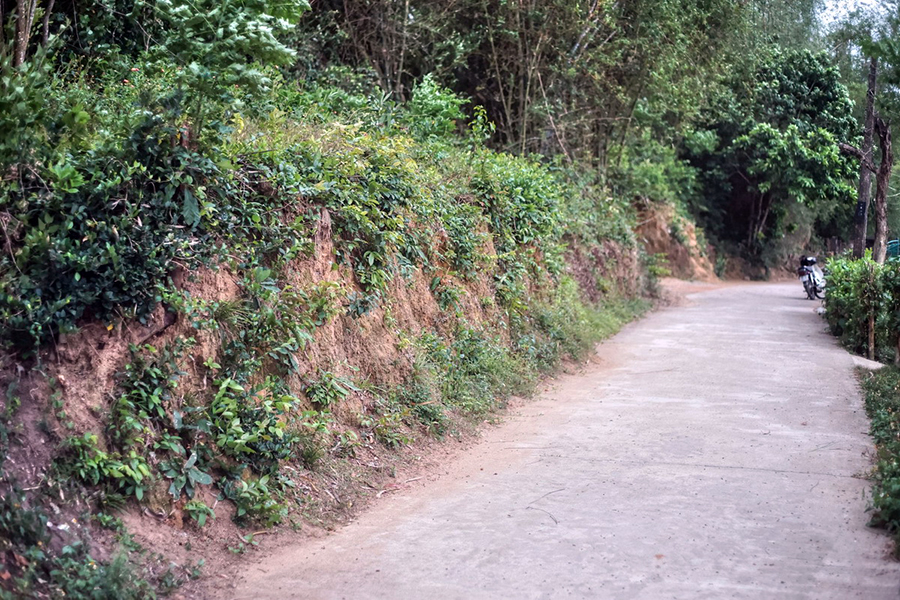
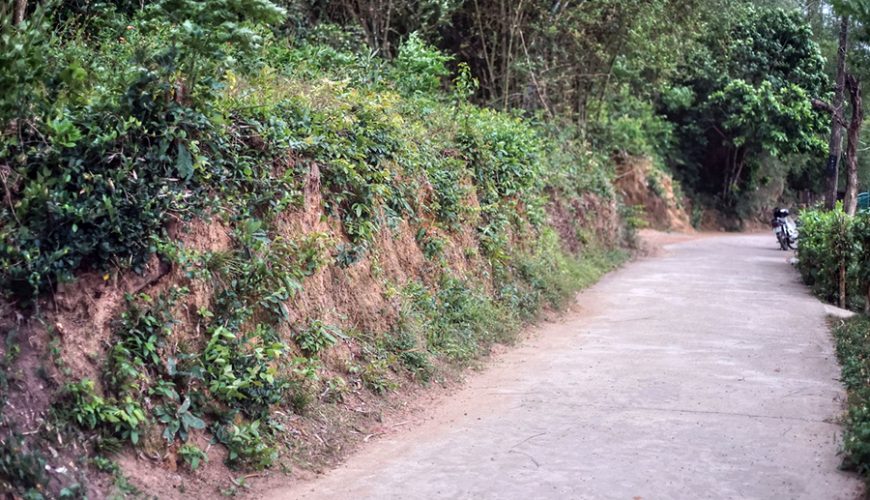
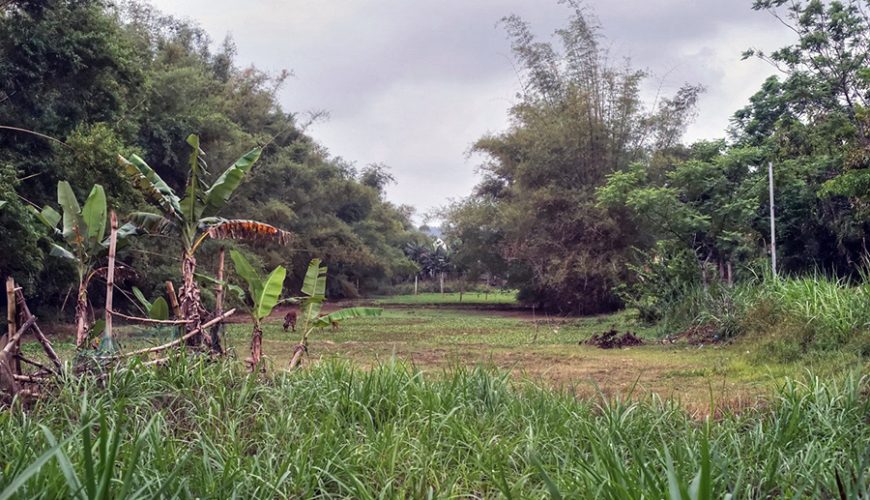
The outer citadel combines man-made earthworks with the natural landscape, skillfully incorporating the area’s low hills, small rivers, streams, and ponds. The outer ramparts were constructed on only three sides, west, east, and north, with the western and eastern sections built sturdily, while the northern section relied primarily on the natural terrain of the mountains. The southern side, facing the Tra Khuc River, lacked a defensive wall.
A distinctive feature of the Chau Sa Citadel is the presence of two symmetrical “crab-claw” shaped rampart extensions located between the inner and outer citadels on the southern side. The western extension begins at the southwest corner of the inner citadel and stretches nearly 700 meters, while the eastern extension starts at the southeast corner and runs for approximately 500 meters.
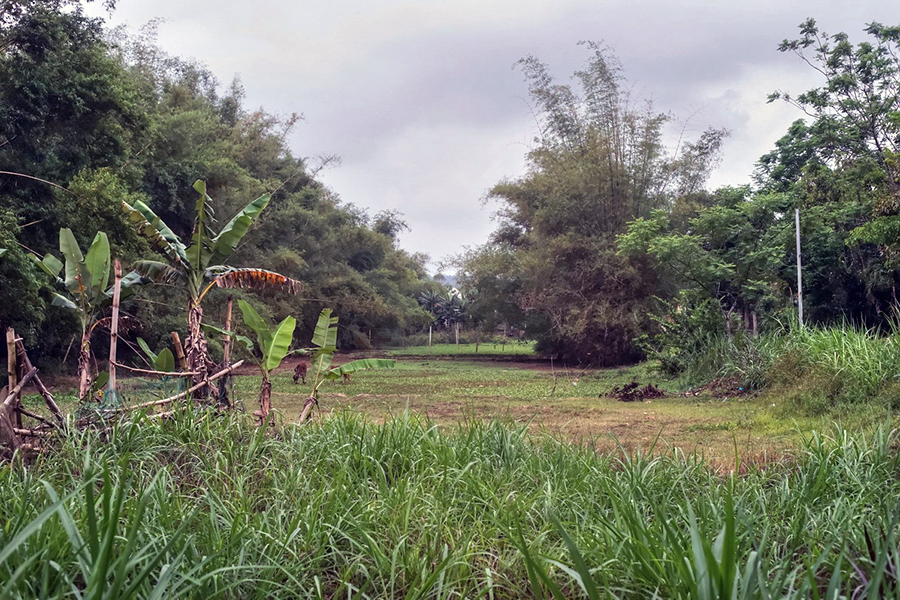
Although constructed of earth, the Chau Sa Citadel was substantial in scale and occupied a strategic position in the southern region of the Amaravati. Archaeological findings show a concentrated population within the citadel, and the citadel’s moats connected to natural waterways created a water transport network. This naturally facilitated local trade and the exchange of goods and produce with the outside world via the Tra Khuc River and the Dai Co Luy Estuary.
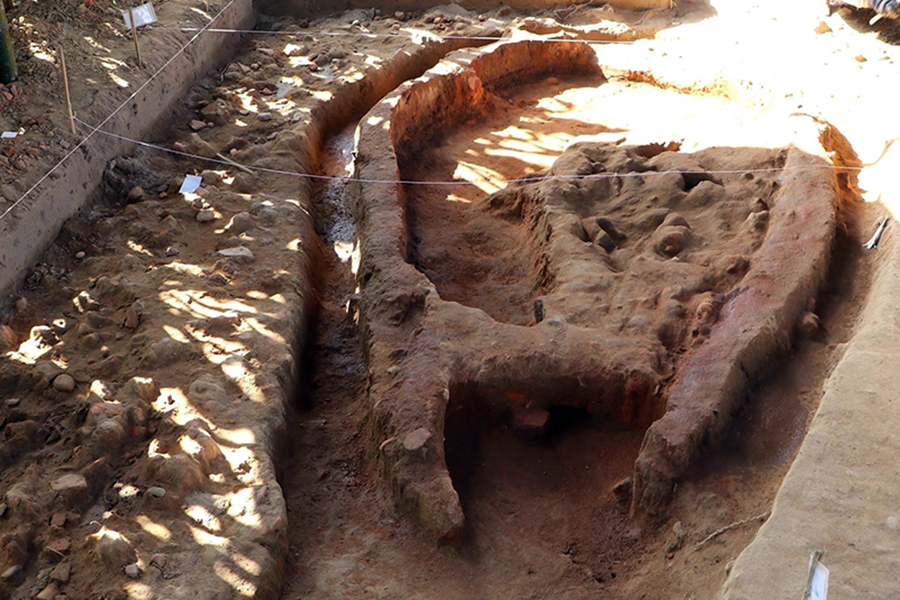
After various historical upheavals, from the second half of the 15th century, the Dai Viet (the official name of multiple Vietnamese monarchies) controlled this area, which served as an administrative headquarters for what is now Quang Ngai Province. The Ministry of Culture, Sports and Tourism designated the site a National Historical-Cultural Relic in 1994.
A destination for history enthusiasts
Today, Chau Sa is neither a bustling tourist hub nor a fully reconstructed monument. Its appeal lies in its authenticity, tranquil atmosphere, and historical depth. Visitors can walk around the citadel grounds, observe the remaining sections of ancient ramparts, and envision the Champa center that existed here over a millennium ago. This site pairs well with other historical and cultural landmarks in Quang Ngai; Thien An Pagoda, a renowned local attraction, is located just five kilometers from the Chau Sa area.
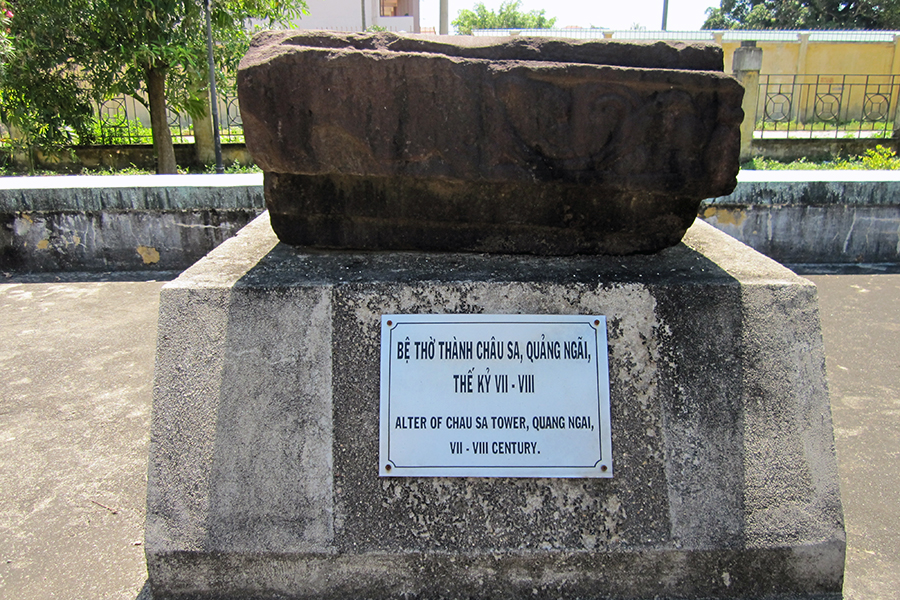
For international travelers looking to explore Vietnam beyond the well-trodden tourist paths, the Chau Sa Citadel offers a window into ancient Champa. Neither massive nor ostentatious, the earthen ramparts standing amidst the rural landscape tell a quiet story spanning more than a thousand years, a story of the cultures that helped shape the rich history of Central Vietnam.
Chau Sa Citadel
- Location: Tinh Khe Commune, Quang Ngai Province.
- Tourist spots nearby: Thien An Mountain, Son My Memorial Site, My Khe Beach…
Source: collected by An
Follow us for the best deals on Vietnam package tours and visa services!
Comment (0)