
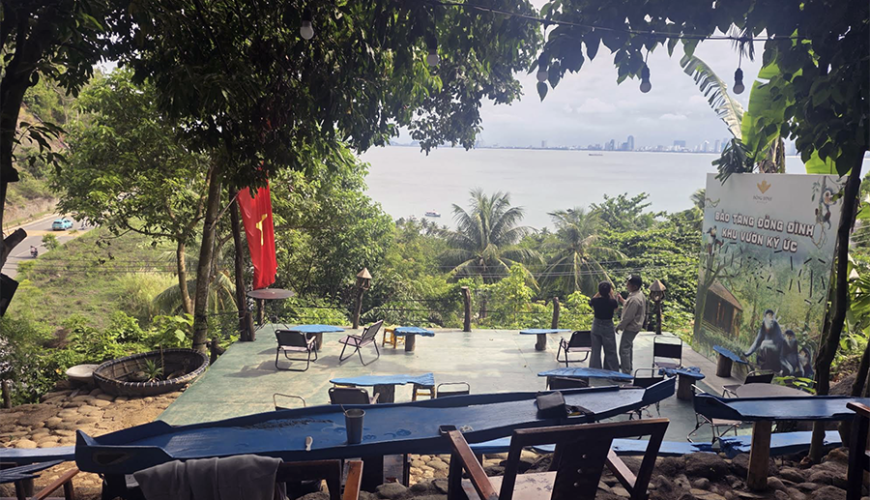
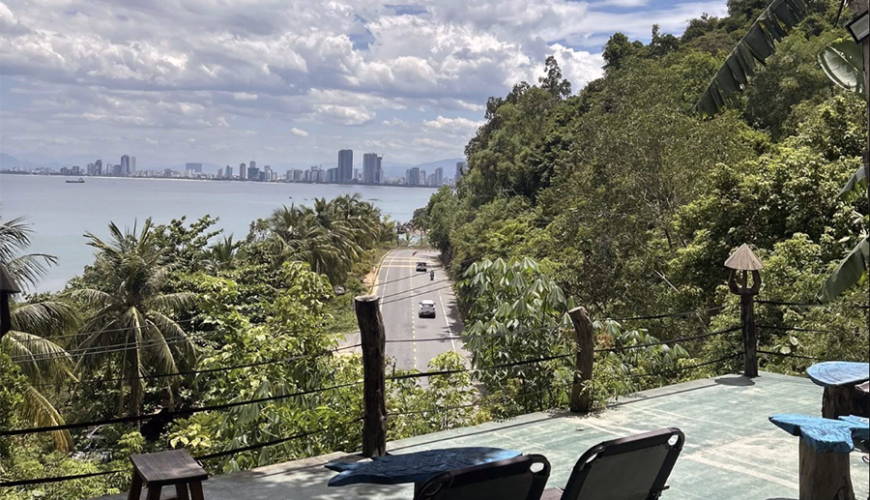
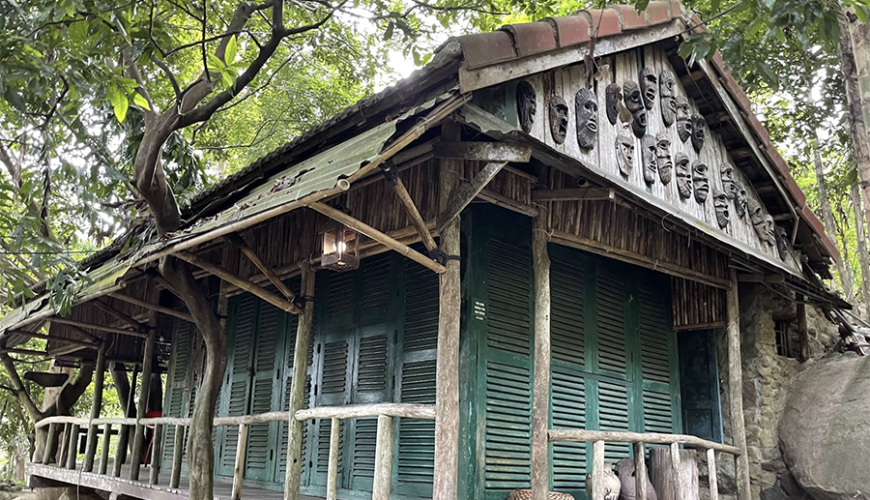
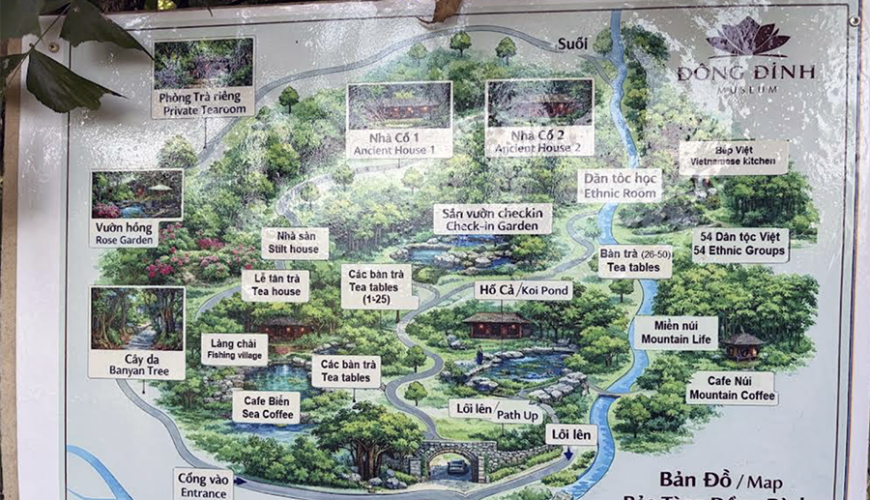
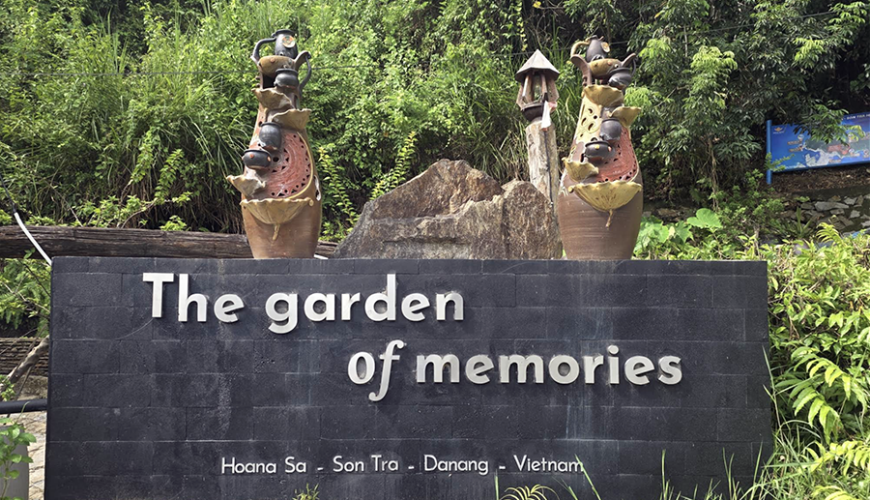
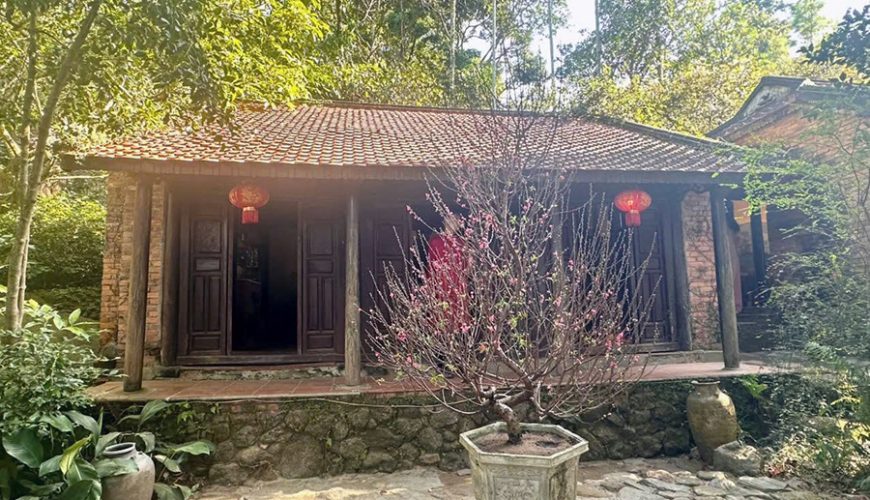
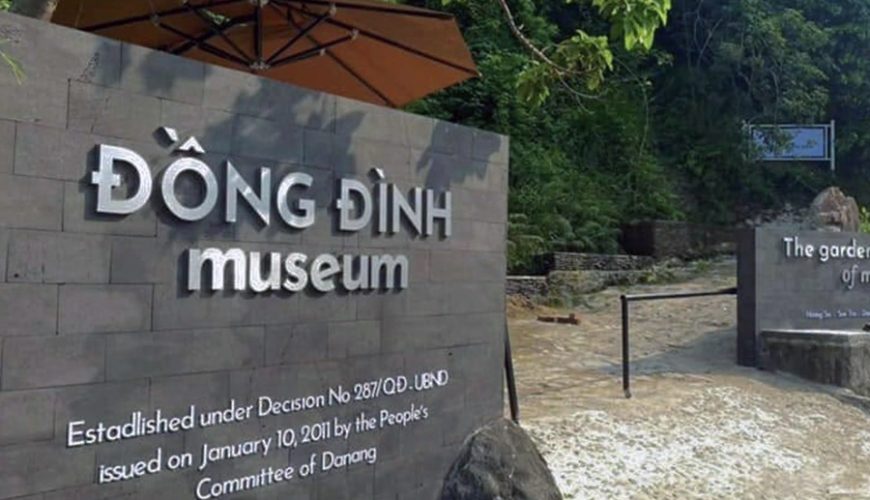
Nestled amidst the lush green canopy of the Son Tra Peninsula, the Dong Dinh Museum offers an experience distinct from the familiar image of Da Nang, with its blue seas, modern bridges, and coastal resorts. It is not a sprawling museum filled with crowded galleries; rather, it resembles a cultural garden set in nature, where history, art, and traditional architecture coexist in a tranquil space.
Overview of Dong Dinh Museum
The name “Dong Dinh” (Vietnamese: Đồng Đình) is derived from a local palm species that grows in the area. The museum is the brainchild of researcher and artist Doan Huy Giao, who dedicated years to collecting cultural artifacts and artworks. Mr. Huy Giao designed the museum to harmonize with the natural terrain, shaping the exhibition spaces around the existing landscape rather than disrupting it.
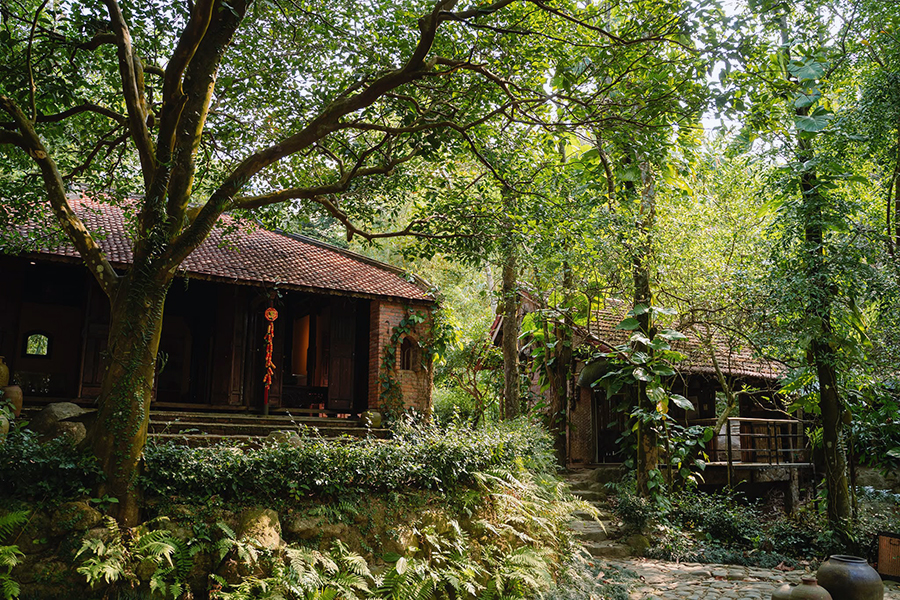
The museum’s grounds blend the style of the “Quang” region’s midland garden houses, featuring rows of areca palms, jackfruit trees, and fruit trees, with the garden style of the Central Highlands’ ethnic minority communities, preserving the natural vegetation while integrating the structures.
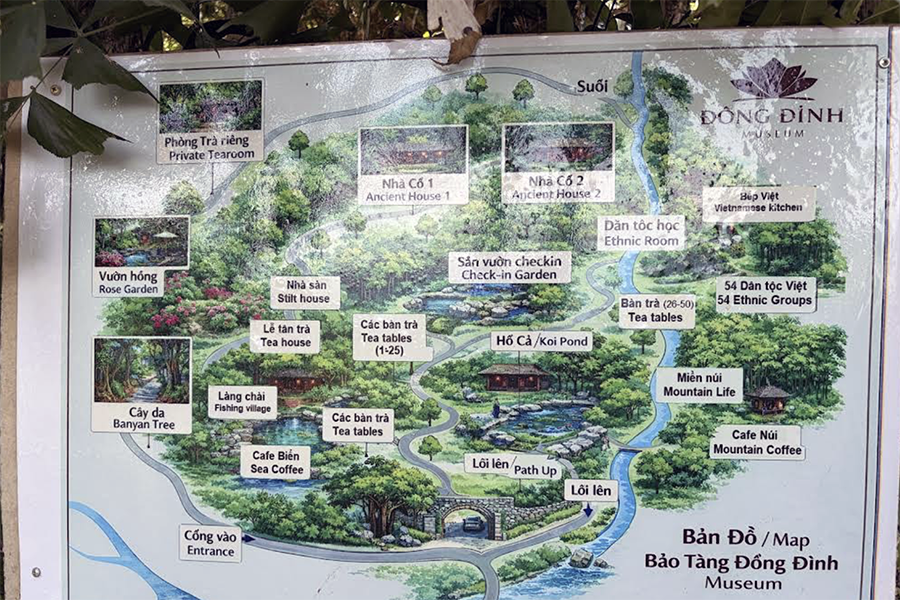
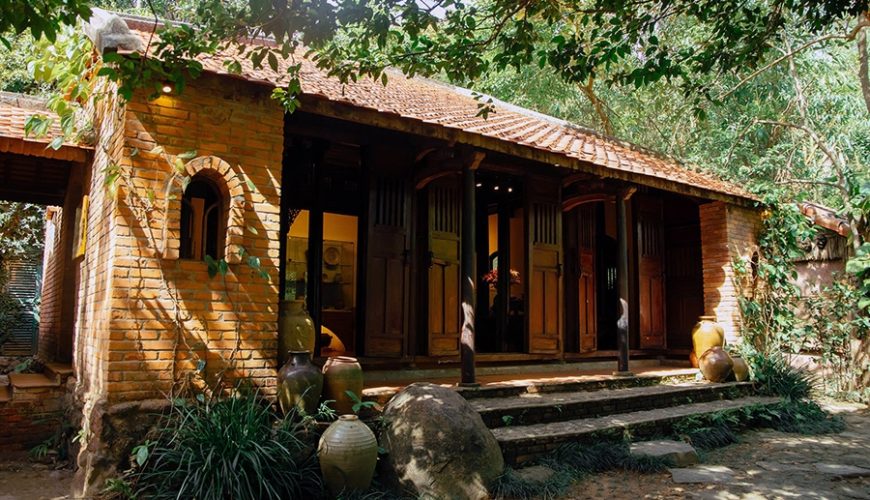
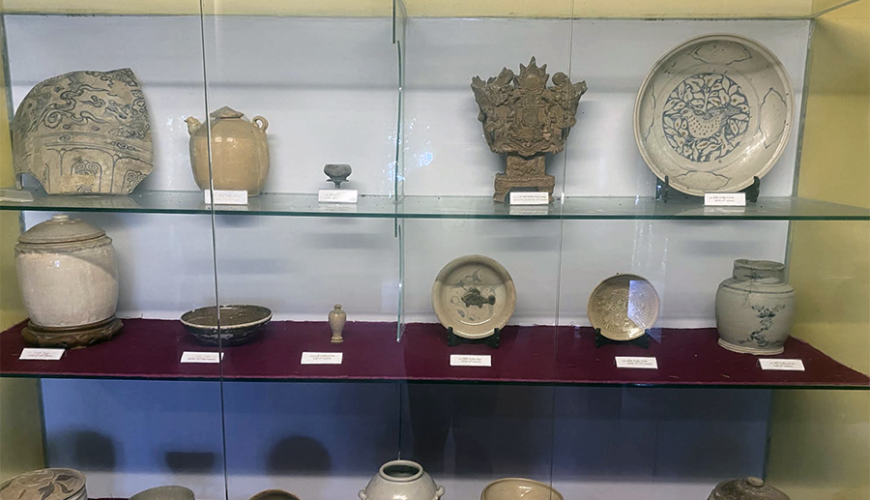
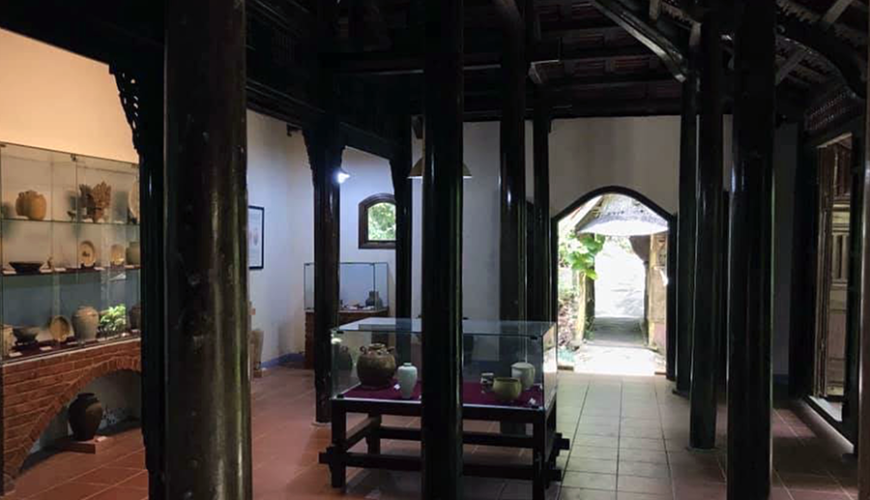
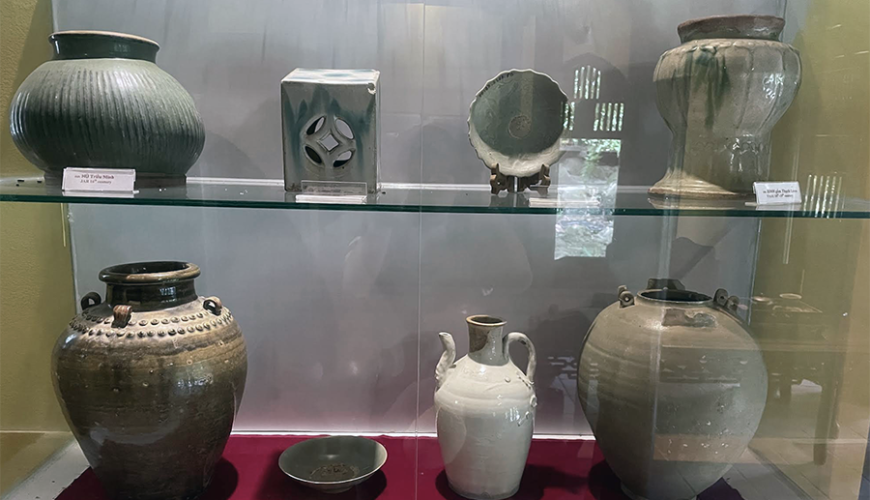
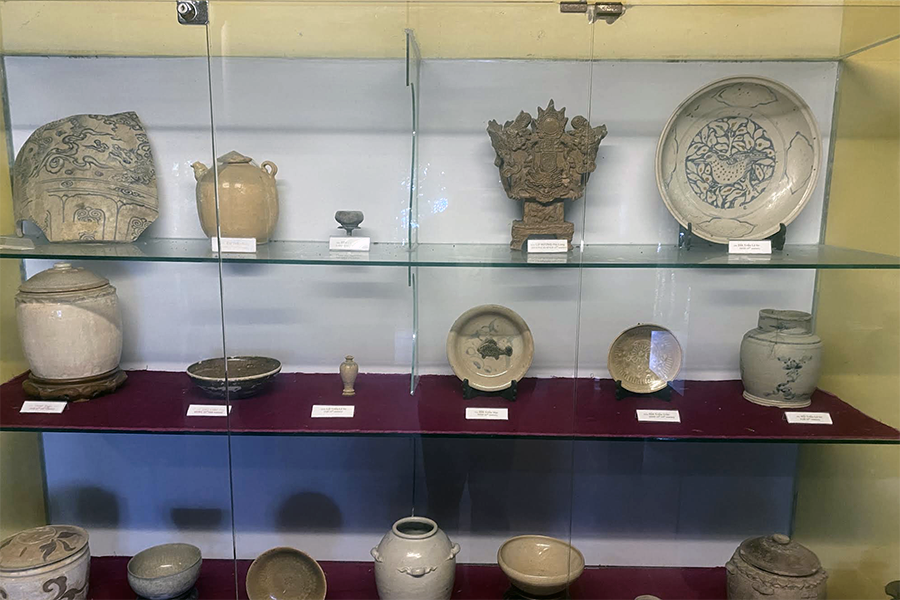
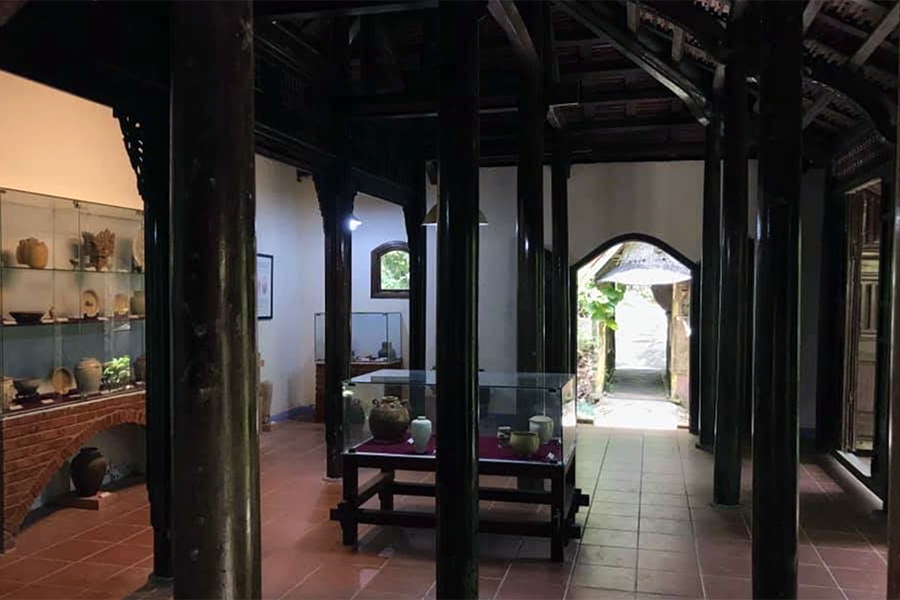
At the heart of the complex stand two antique houses, traditional wooden-frame houses from the Quang region, positioned amidst fruit orchards, mirroring the layout of traditional midland garden homes. Inside, the museum displays a collection of indigenous ancient ceramics spanning the Sa Huynh, Oc Eo, and Champa cultures, as well as pieces from Vietnam’s feudal dynasties; these are complemented by Chinese ceramics from the Han, Tang, Song, Ming, and Qing dynasties. This collection draws particular interest from scholars specializing in history and architecture.
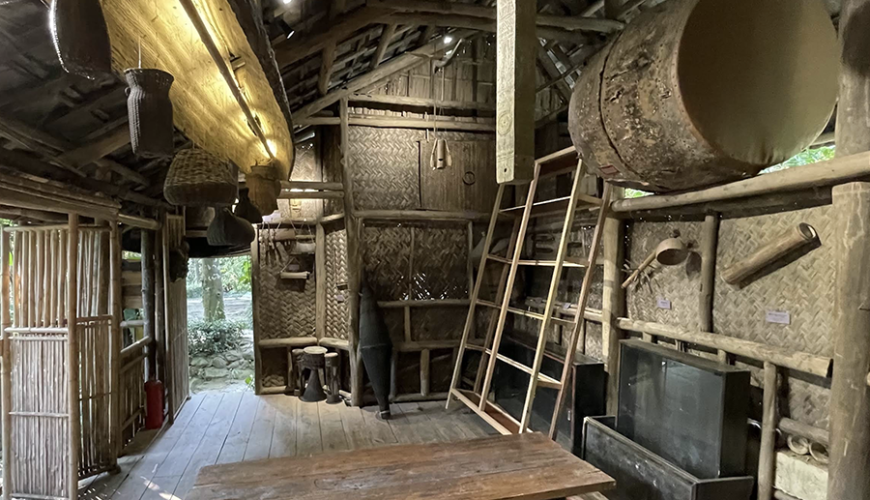
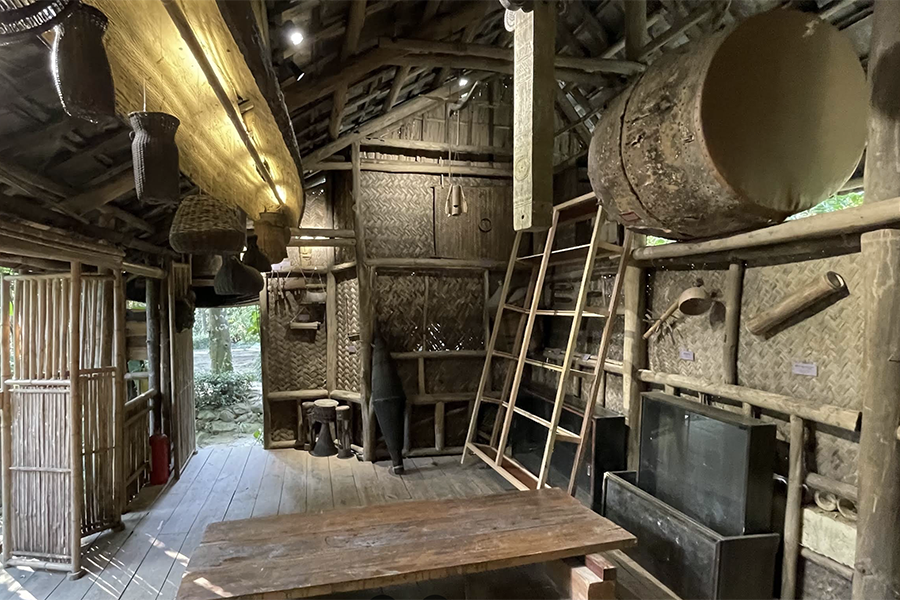
To the right of the antiquities house stands the Ethnology House, which preserves artifacts from the ethnic minority groups of the Central Highlands. The collection ranges from musical instruments, such as the Chapi and Goong, to everyday tools like billhooks, sickles, crossbows, and traditional carrying baskets.
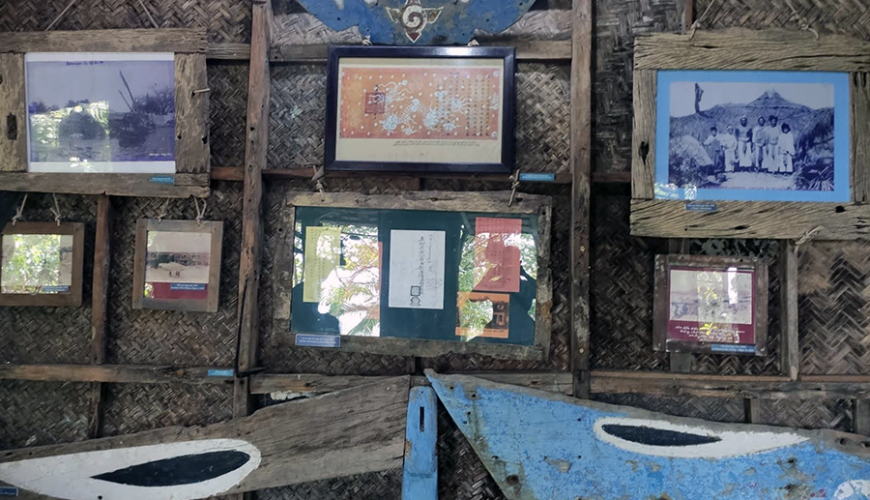
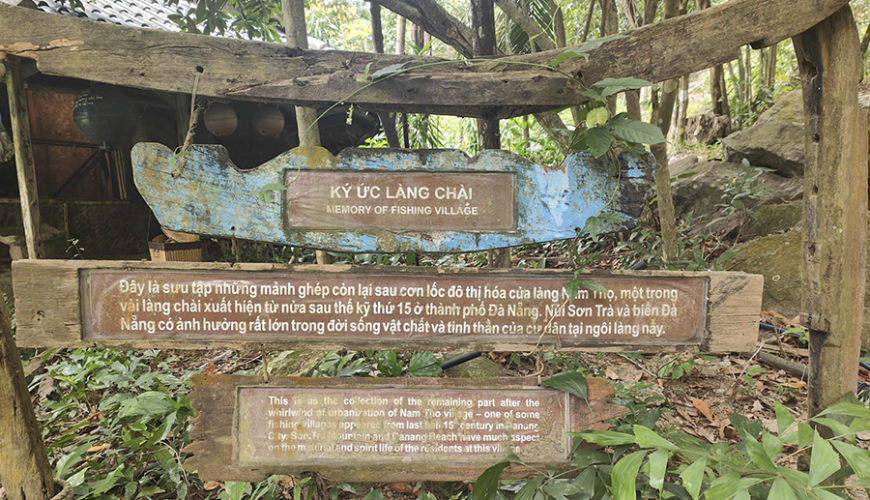
The museum’s left wing houses the Fishing Village Memories House. Stretching along Da Nang’s coastline are various fishing villages such as Nam O, Thanh Khe, and Nai Hien. Among them, Nam Tho, nestled against Son Tra Mountain where the river meets the sea, inspired Mr. Doan Huy Giao to create this exhibition space. The entire structure is crafted from salvaged parts of wooden ships, bamboo boats, and round basket boats. Everything from offshore fishing gear to the humble tools of daily village life has been carefully preserved.
Beyond its historical focus, Dong Dinh also dedicates space to Vietnamese fine art. Paintings and artworks are displayed in small houses nestled amidst the greenery; this unpretentious layout makes the art feel like a natural part of the garden.
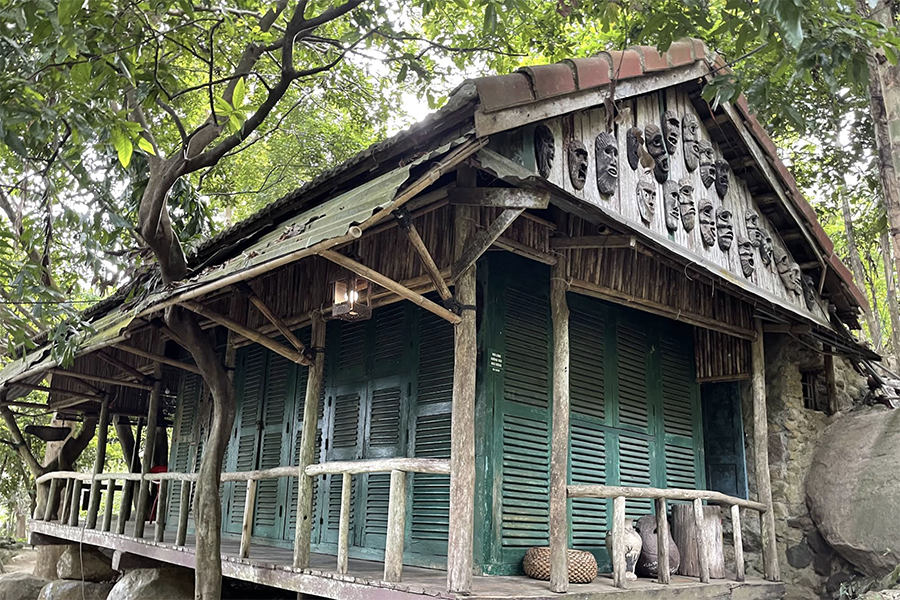
The architecture and landscape give the museum its unique appeal. Traditional-style structures with tiled roofs, wood, brick walls, and stone-paved paths are interspersed among the trees. Although the space is compact, each corner evokes a distinct atmosphere. Visitors can step out of an exhibition room, walk beneath the tree canopy, and continue exploring another collection just a few steps away.
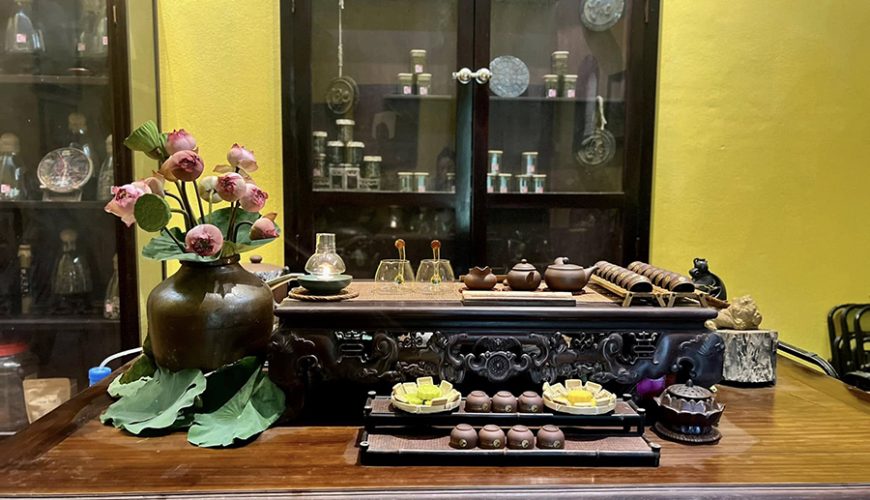
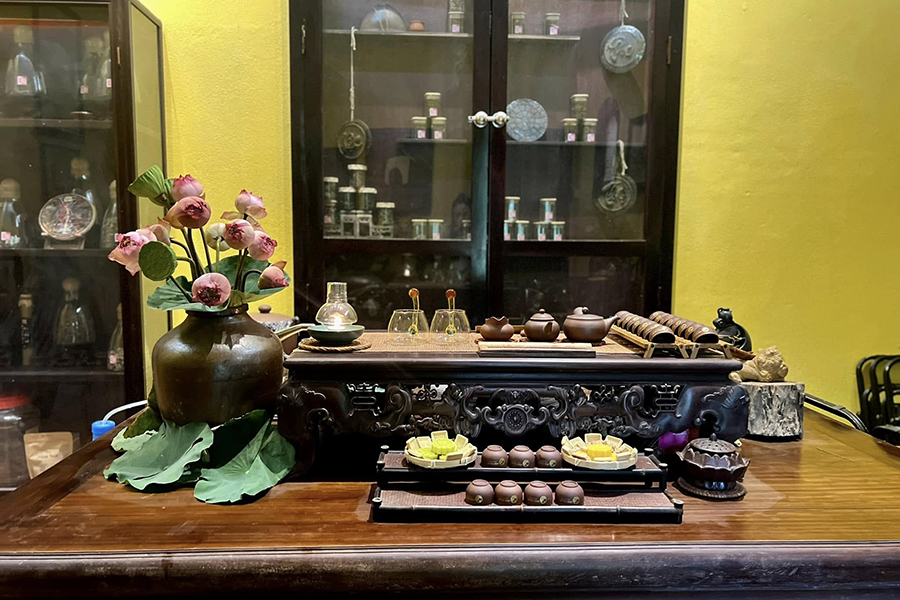
Dong Dinh Museum is not merely a repository of cultural and historical value; it is also an ideal destination for enjoying tea in a tranquil setting, immersing oneself in both nature and art. Each tea space here possesses a unique character, reflecting the philosophy of the tea ceremony and the connection between humanity and the natural world.
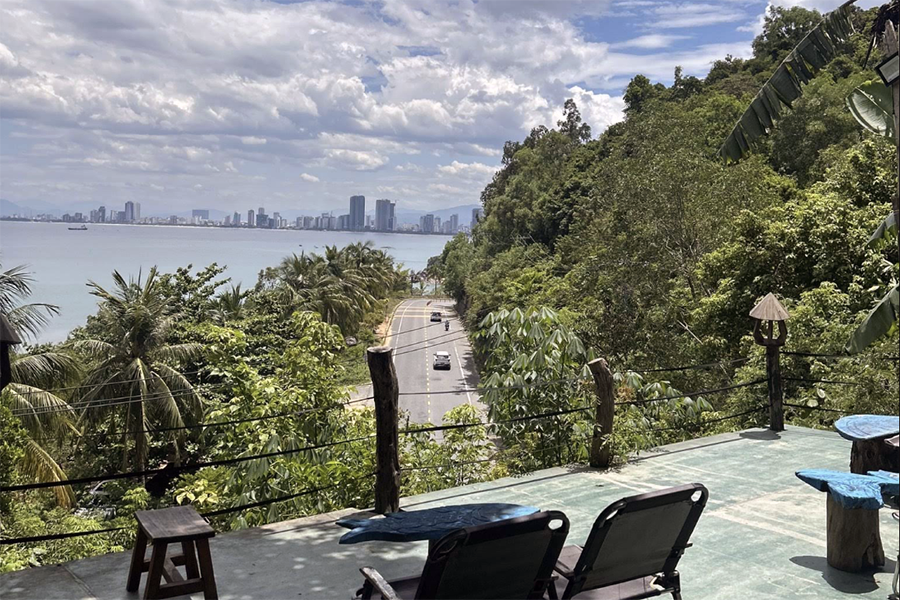
The museum’s location makes it a convenient stop during a day of exploring the Son Tra Peninsula. Visitors can drop by Dong Dinh before or after visiting Linh Ung Pagoda (Bai But), then continue along the peninsula’s scenic routes to admire the mountains, forests, and the sea of Da Nang.
Dong Dinh Museum
- Location: Located on Hoang Sa Road, Son Tra Ward, Da Nang City (next to Linh Ung Pagoda).
- Opening hours: Daily from 8:00 AM to 5:00 PM; Ticket price: 35,000 VND per person
- Nearby Tourist Spots: Linh Ung Pagoda, But Beach, Rang Beach…
Source: collected by An
Follow us for the best deals on Vietnam package tours and visa services!
Comment (0)