


Dong Pagoda is the most famous tourist spot in the Yen Tu scenic relic complex, a destination for monks, Buddhists, and tourists from all over the world on pilgrimage to the sacred land of Yen Tu.
Ideal time to visit Dong Pagoda
Located in the Yen Tu Mountain Range, this is an ideal destination for those who love to explore the beauty of nature and Buddhist culture. You can visit the pagoda whenever you want because the air here is always fresh and cool. However, if you want to participate in Yen Tu festival, you should visit the pagoda from the 10th of January to the end of the third lunar month.
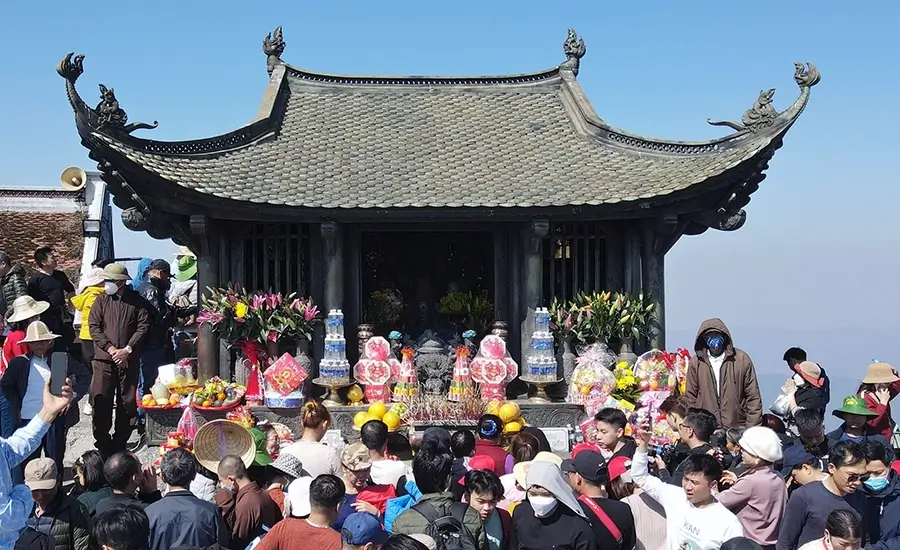
It should be noted that many people come to the pagoda during this period, so you may have difficulty traveling and staying. Therefore, plan and prepare your trip, and choose a place to eat and stay in advance to make your journey of discovery more convenient.
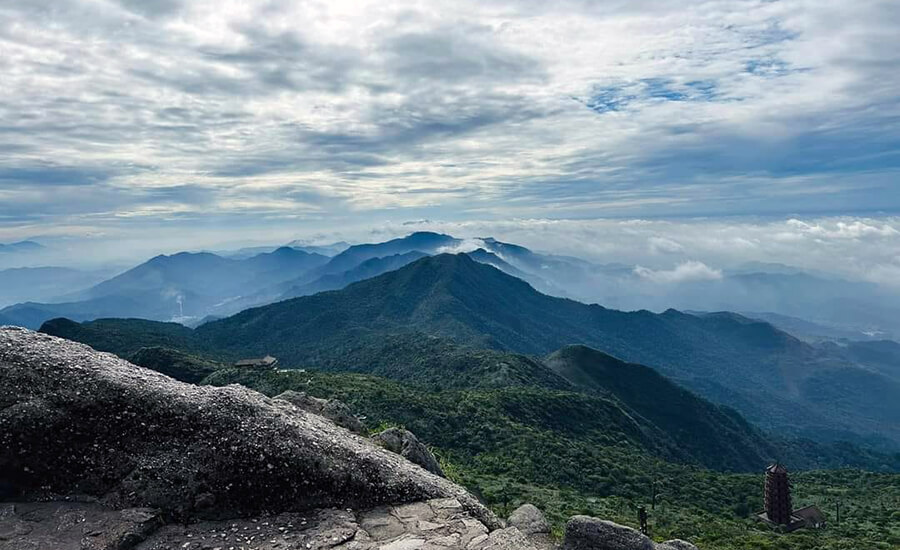
In addition, the pagoda is located at the highest peak of the Yen Tu mountain range. To reach the top, it takes about 4 hours by cable car and hiking, or about 6 hours if you choose to walk from the foot of the mountain.
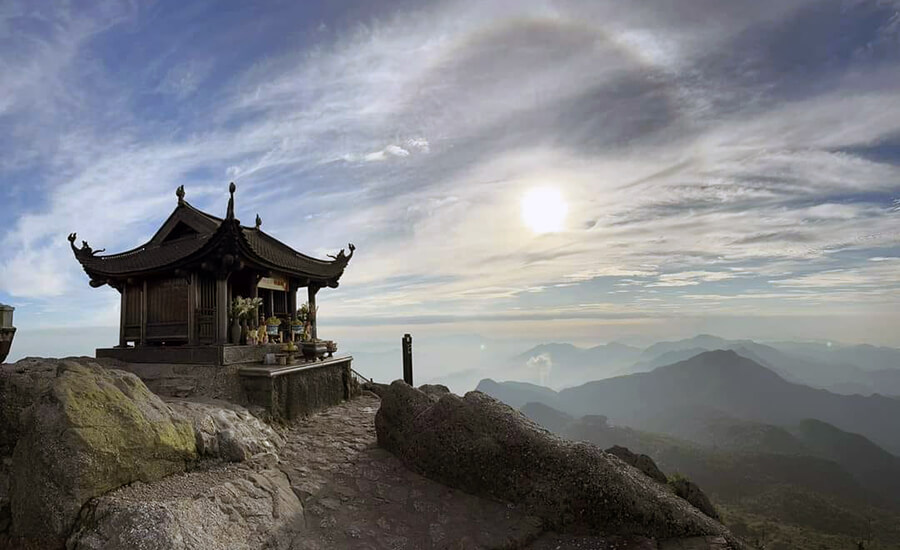
If you want to watch the sunrise or hunt for clouds, you should leave early in the morning!
The unique architecture of the Dong Pagoda
Dong Pagoda (Vietnamese: Chùa Đồng; Đồng means bronze – the main and the only material used to build this pagoda, chùa means pagoda) is located at the highest peak of the Yen Tu mountain range, at an altitude of 1,068m above sea level. This is the largest bronze pagoda in Asia on the mountain top.
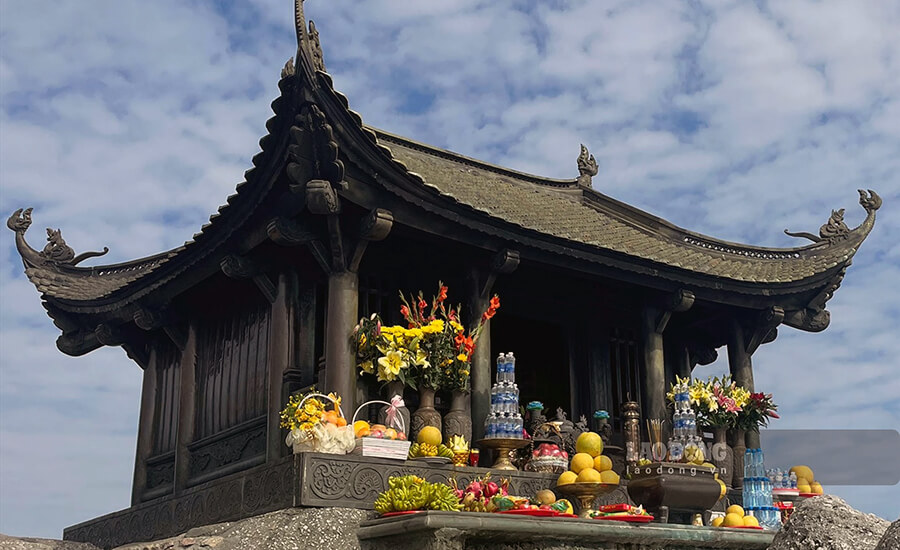
At first, Dong Pagoda was built by a concubine of Lord Trinh in the Later Le Dynasty (17th century). The pagoda was cast in bronze, unlike the ironwood used in other pagodas in Vietnam at the time. In this initial stage, the pagoda was just a small shrine to worship Buddha.
The pagoda has been restored and embellished many times. On June 3, 2006, the Venerable Thich Thanh Quyet and the Dong Pagoda Project Management Board, with the support of domestic and foreign tourists and Buddhists, held the ceremony to cast the new Dong Pagoda, designed by architect Tran Quoc Tuan of the Institute of Monument Conservation.

Accordingly, the pagoda was made by renowned bronze-casting artisans in Y Yen, Ninh Binh province, following the prototype of the Dau Keo Pagoda (Thuan Thanh, Bac Ninh province).
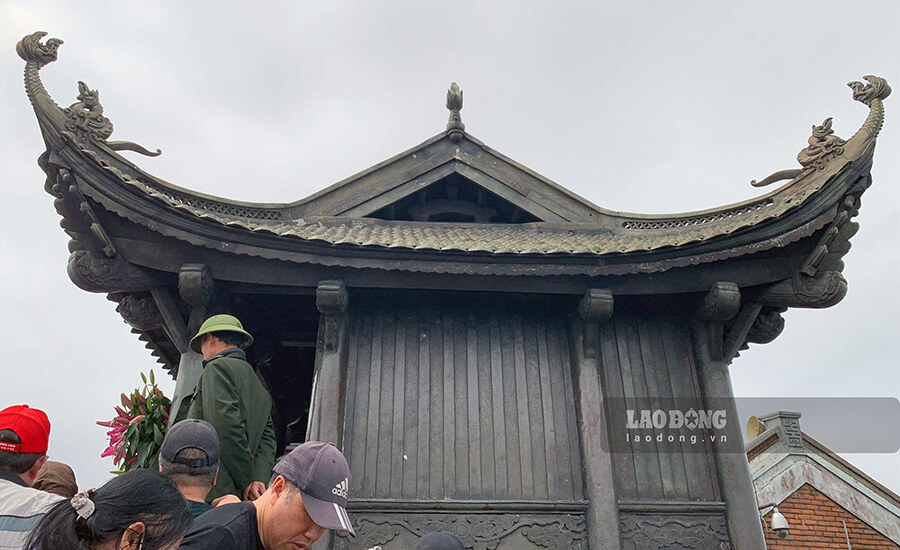
The area of Dong Yen Tu Pagoda is nearly 20 square meters, weighs 70 tons, is 4.6 meters long, 3.6 meters wide, and the height from the base to the roof is 3.35 meters. In which each tile weighs about 4 kg, each of the 4 pagoda pillars weighs 1 ton.
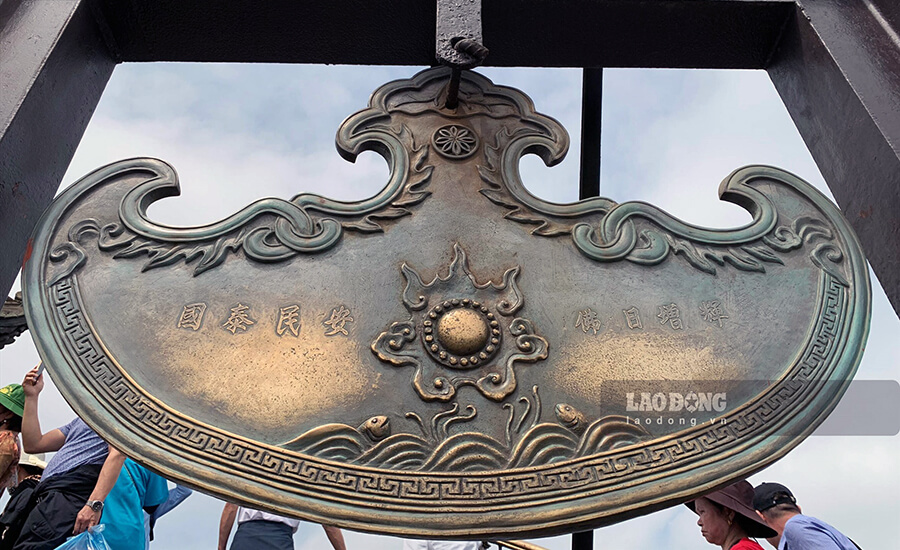
The bell and bronze gong weigh over 250 kg. The pagoda has a square plan, its roof has a fish-tail tile shape, and the two ends of the ridge and the four ends of the roof are dragon heads in the style of the Tran Dynasty.
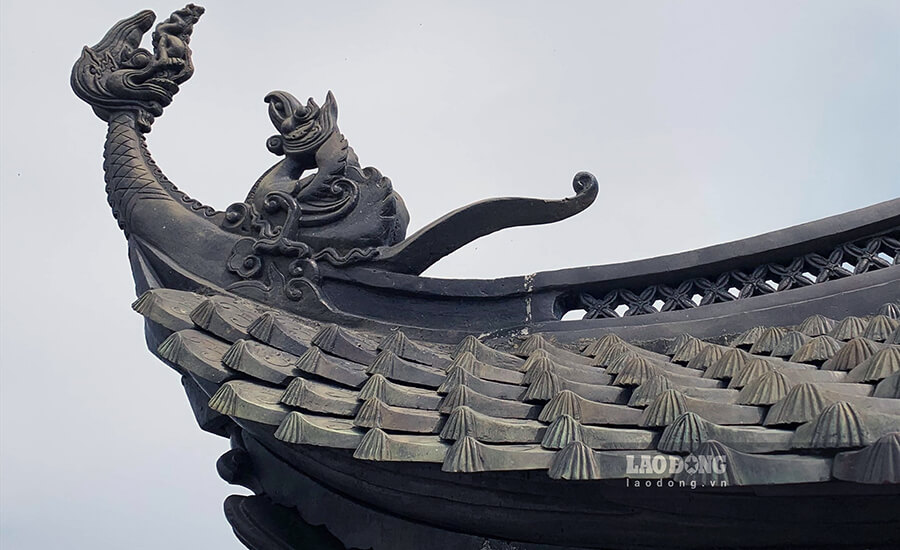
The roof of the pagoda extends in four directions to form a porch. The three sides of the pagoda are bronze panels fitted together to form a wall. The lower part of the wall is decorated with a strip of leaf-shaped patterns. The front of the pagoda’s porch has a corridor, and the railing is made of bamboo-shaped bars.

The system of Buddha statues in the pagoda includes 1 statue of Buddha Shakyamuni and 3 statues of the Three First Ancestors of Truc Lam. The statue is on average 0.45 – 0.87m high and sits on a lotus pedestal.
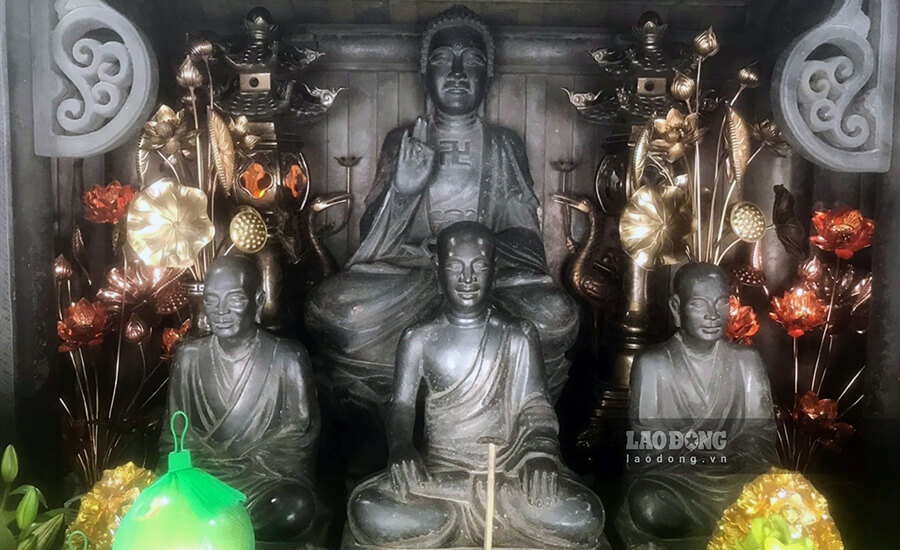
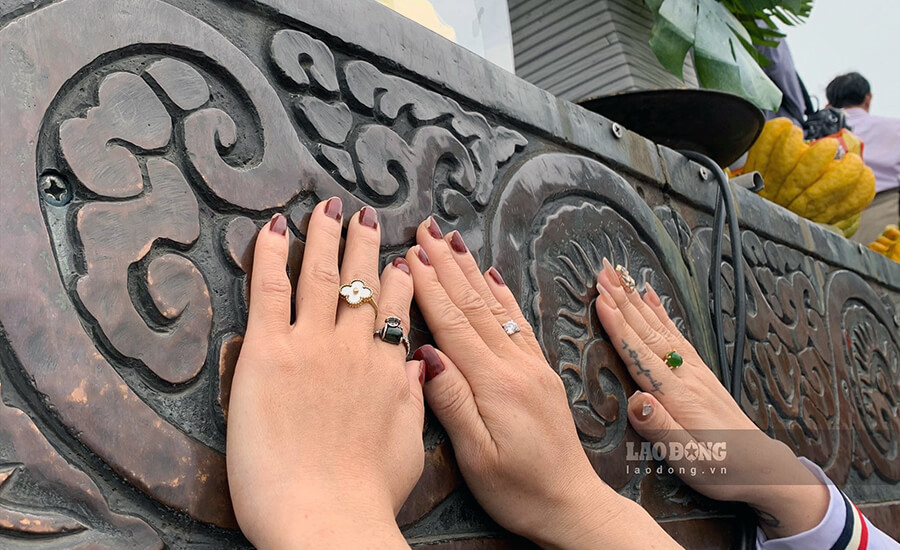
Many visitors to the Dong Pagoda jostle to touch it for luck.
Previously, the only way to reach Dong Pagoda was on foot, requiring thousands of stone steps and mountain forest paths over a distance of about 6km. But in recent years, the Yen Tu Scenic Area Management Board has put into use a cable car to help visitors from all over easily conquer Dong Pagoda.
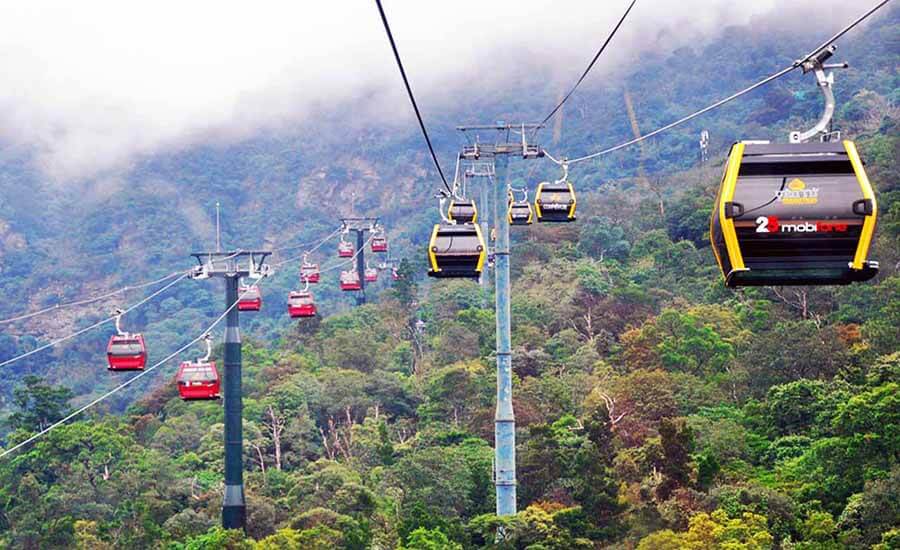
Sitting on the cable car, visitors can admire Yen Tu Mountain from above, then continue walking to conquer the sacred mountain.
Source: collected by An
Follow us for the best deals on Vietnam package tours and visa services!
Comment (0)