
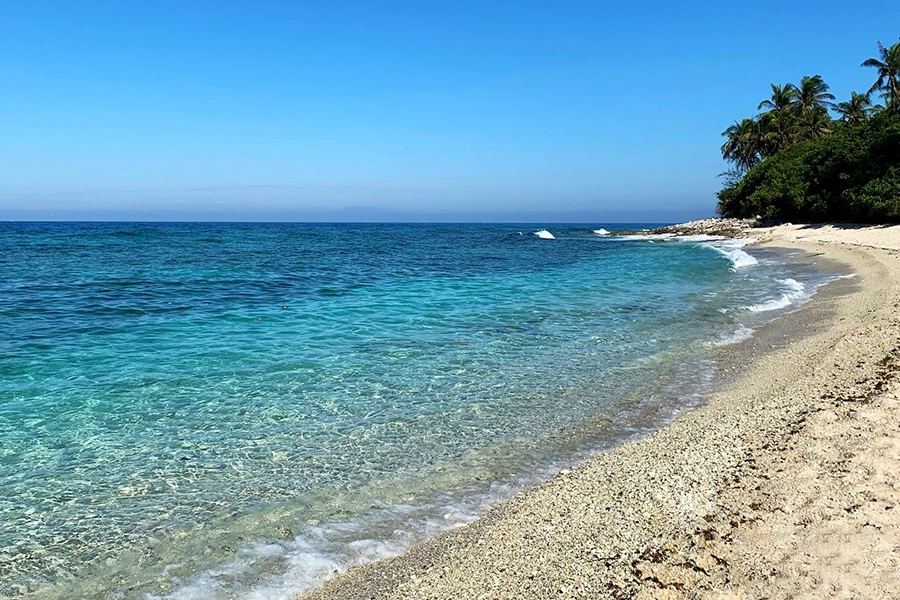
Ly Son is an island in Quang Ngai Province comprising three islands: Lao Re (Big Island), An Binh (Small Island), and Mu Cu Islet, located approximately 30 km from the mainland. Thanks to its pristine scenery and affordable travel costs, Ly Son Island has become a popular destination for many tourists in recent years.
Overview of Ly Son Island
Currently, Ly Son is a special zone in Quang Ngai province, Vietnam. The island is the remains of a volcano with 5 craters, formed about 25-30 million years ago. The 5 mountains are the sources of the island’s main underground water, which provides water for all people on the island.
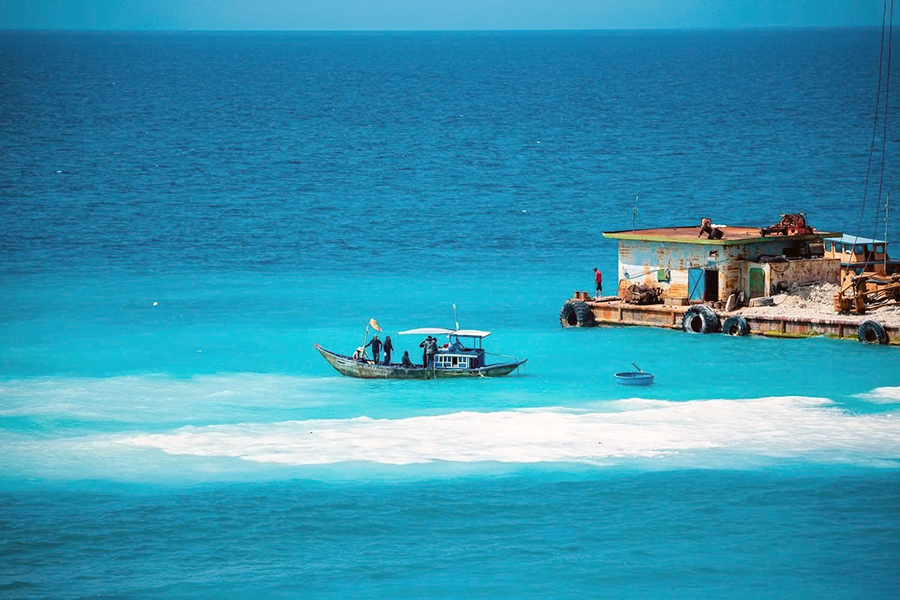
With a natural area of more than 10 km² and a population of nearly 19,000 people, Ly Son holds an important strategic position in economic, social, security, and defense matters, and is the center of sea and island tourism in Quang Ngai province and across Vietnam’s seas and islands.
What’s the best time to visit?
With distinct rainy and dry seasons, the best time to visit Ly Son is between April and August. During this period, the weather is stable, sunny, and relatively dry. However, you might want to avoid the peak season (April to June) to escape the crowds. The rainy season, characterized by storms and rough seas, runs from September to December. The period from late December to April is when green moss blankets the island’s rocky coastal areas.
Note: Be sure to check the weather forecast before departing to avoid getting stranded on the island for several days due to rough seas or strong monsoon winds.
How to get there?
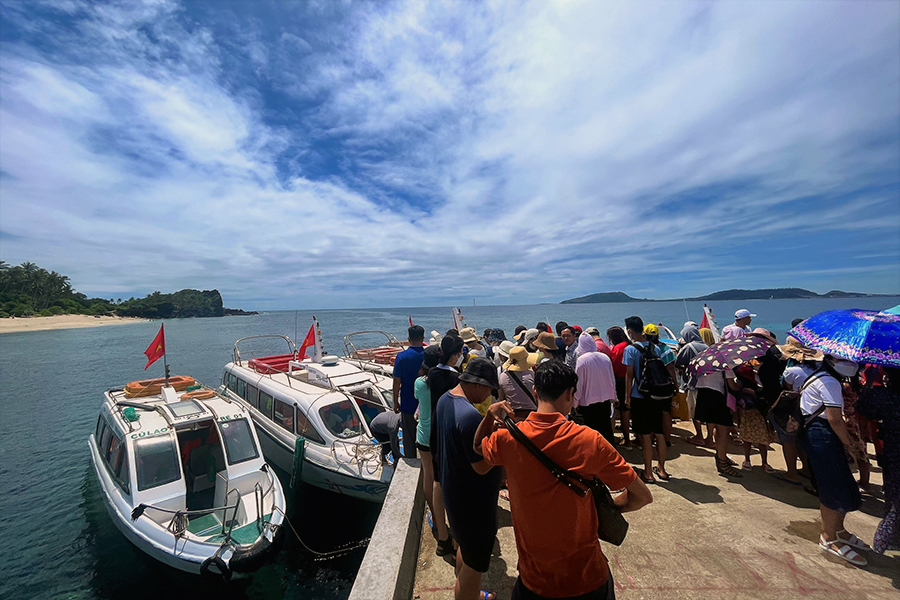
The primary mode of transport is the boat from Sa Ky Port. Several high-speed boat operators serve the route to Ly Son Island, with round-trip tickets costing approximately 300,000–340,000 VND. Remember to bring your ID card or driver’s license to purchase tickets. The boat ride from the port to the island takes about 35 minutes.
Travelers from Hanoi or Ho Chi Minh City can book flights to Chu Lai Airport; one-way tickets cost around 1,200,000 VND, and the flight takes approximately 1 hour and 30 minutes. The airport is about 42 km from Sa Ky Port. You can take a taxi (approximately 350,000 VND one-way) or a bus that stops in Quang Ngai City to save on costs. Alternatively, travelers can fly to Da Nang and then take a taxi or train to Quang Ngai City; a round-trip train ticket costs 180,000 VND. The port is located 20 km from the city center.
Accommodation
Ly Son offers a variety of guesthouses, hotels, and homestays, with rates averaging between 200,000 and 400,000 VND per night. Travelers seeking a youthful, modern vibe might consider Bep’s House, Be Ecolodge, or DHT Hang Cau Guesthouse. Visitors might also consider the Ly Son Pearl Hotel & Resort, which offers sea views.
Travelers can also experience an overnight stay on Be Island. Recommended homestays include Ly Son Bungalow (featuring colorful wooden cabins), XaLaBin (offering elevated rooms with sea views), and Gio Bien.
Things to do in Ly Son
Nestled in the East Sea, Ly Son has been richly endowed by nature with diverse landscapes and numerous famous attractions, including volcanic craters both on the island and submerged a few nautical miles offshore; the land-based and underwater To Vo Arches; Ban Co Peak; Cau Cave; Be Island; Mu Cu; and a rich coral ecosystem.
Lao Re (Big Island)
Visitors can rent an electric car for 300,000 VND per trip to tour the island. Alternatively, motorbikes are available for rent at 150,000 VND per day for sightseeing.
Thoi Loi Peak
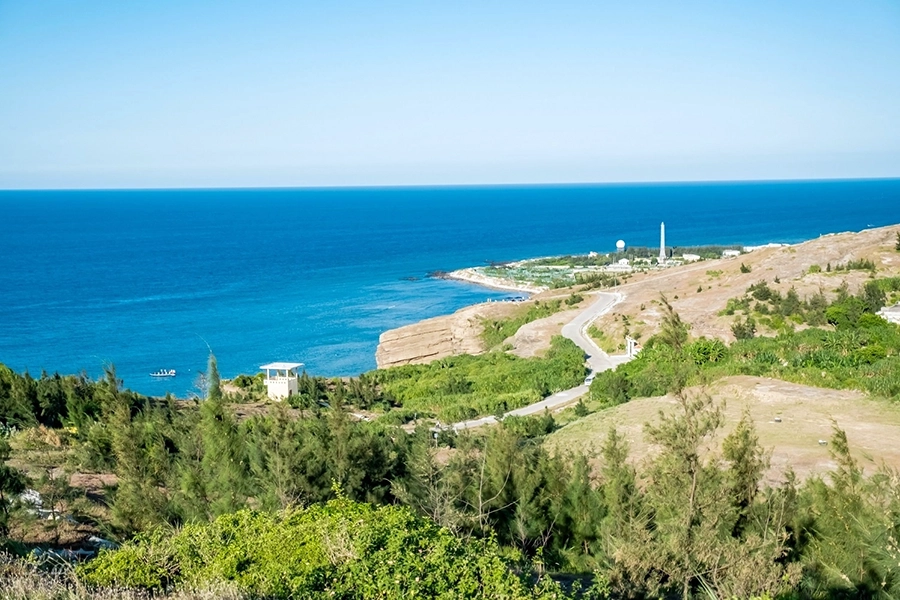 This is one of five inactive volcanoes in the island district, with a rocky outcrop overlooking the sea. From the top, visitors can enjoy a panoramic view of the blue sea, onion and garlic fields, and coastal residential areas.
One of the special features of Thoi Loi is its ancient volcanic crater, shaped like a wide basin. Today, this area has become an important freshwater reservoir that supports daily life and agricultural production on the island. Surrounding the peak are high cliffs, unique volcanic terrain, and expansive views of sky and sea.
The road to the top of Thoi Loi is quite convenient, suitable for sightseeing, sightseeing and taking photos. Especially in the early morning or late afternoon, this is the ideal place to watch the sunrise and sunset and feel the majestic beauty of Ly Son Island from above.
Hang Cau
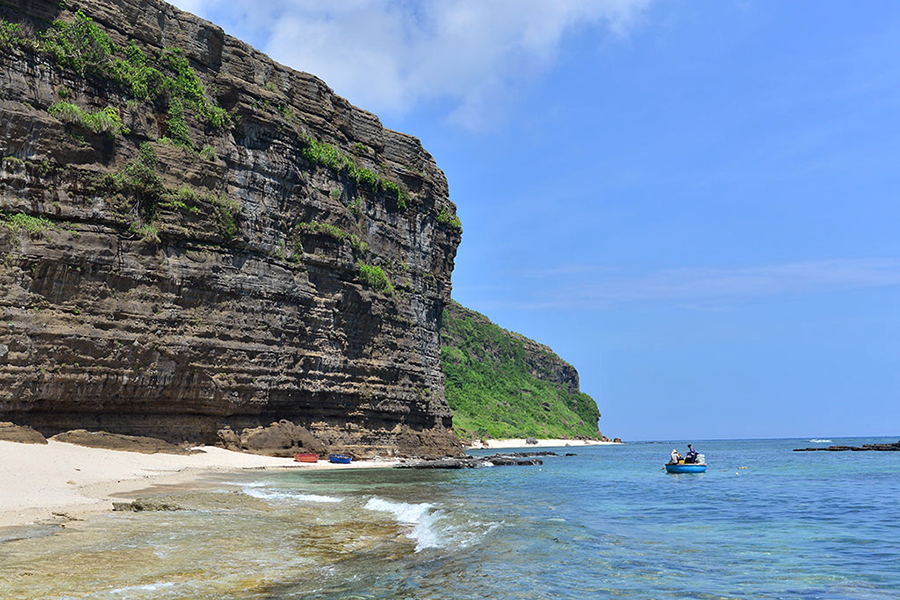 The most striking feature of Hang Cau is its towering cliff, formed by volcanic activity and the long-term effects of weathering and wave erosion. Wind and seawater have continuously worn away the rock layers, creating unique natural contours, grooves, and deep recesses. At the base of the cliff lies a stretch of sand right by the water’s edge, creating a beautiful contrast between the dark rock, the light sand, and the clear blue sea.
Visitors to Hang Cau can swim, sightsee, take photos, or simply relax by the shore. On days when the sea is calm, the water is exceptionally clear, making it ideal for exploring the coastal area.
Flanked by the majestic Thoi Loi Mountain on one side and the vast open sea on the other, Hang Cau possesses a beauty that is both rugged and poetic.
To Vo Arch
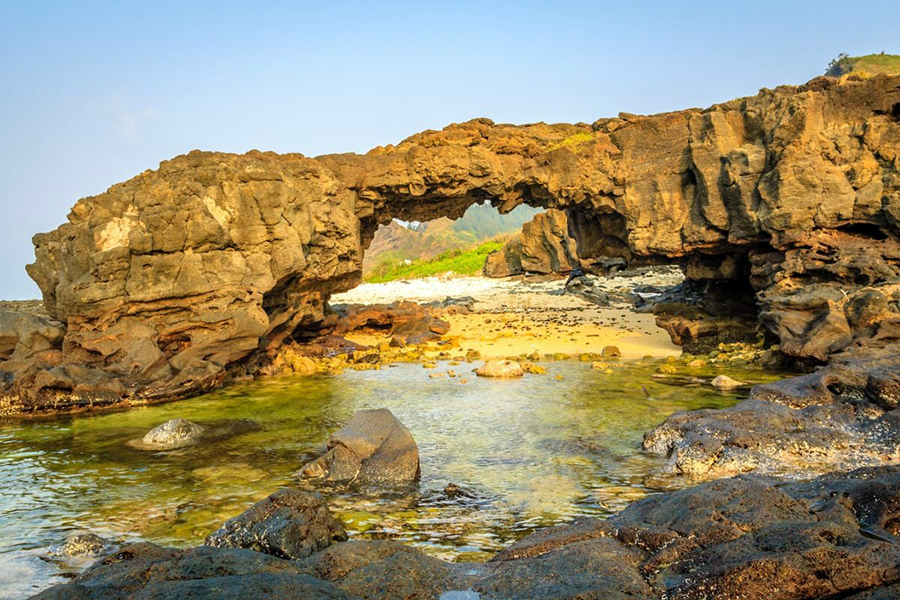 To Vo Arch is one of the famous landmarks and a tourism symbol of Ly Son Island, Quang Ngai Province. Located near Duc Pagoda on the western side of the island, it attracts visitors with its unique natural stone arch, set right by the coast and standing out against the vast expanse of sea and sky.
To Vo Arch was formed from volcanic rock through geological processes and the long-term impact of waves and wind. The arch stands approximately 2.5 meters tall and resembles a gateway facing directly out to sea. It is surrounded by lava rock formations of various shapes, creating a landscape that is both rugged and pristine. At low tide, the coastal rock layers become more visible, allowing visitors to easily observe the distinctive geological features of this volcanic island.
To Vo Arch is particularly beautiful at sunrise and sunset, with late afternoon being the most popular time for visitors. As the sun dips below the horizon, golden-orange light streams through the arch and reflects off the water, creating a stunning scene. It is also one of the island’s favorite spots for photography.
Hang Pagoda
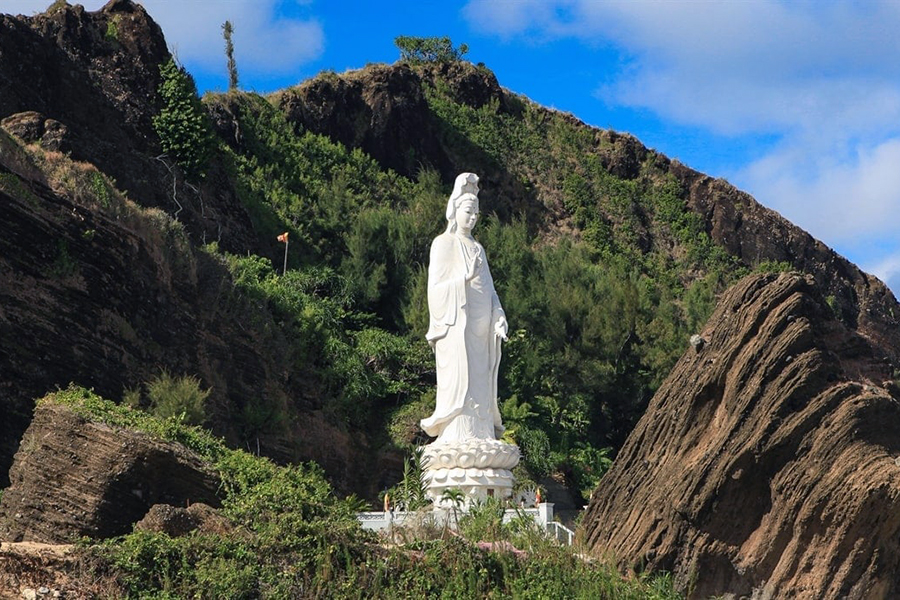 Hang Pagoda, also known as Thien Khong Thach Tu, is a pagoda over 400 years old, located at the foot of Thoi Loi Mountain close to To Vo Arch, outstanding for its special architecture, as it is not built in the traditional pagoda style but takes advantage of a natural stone cave in the cliff as a place of worship.
The cave was formed by volcanic activity and natural erosion over thousands of years. The interior is quite large, deep, and cool, creating a quiet, sacred feeling. The pagoda honors the Buddha and the sages who were instrumental in the construction and destruction of Ly Son Island.
Inside the pagoda are altars carved on natural stalactites and Champa relics. In front of the cave entrance is a large yard facing the sea, surrounded by green trees and cliffs bearing the island’s typical geological features.
Am Linh Pagoda
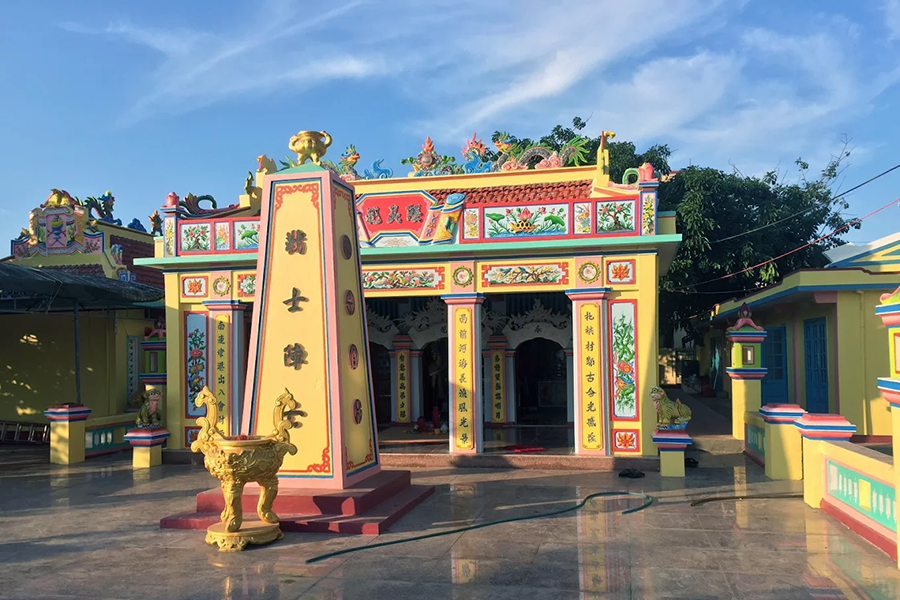 Located approximately 500 meters west of Ly Son Port, this temple honors the early Vietnamese pioneers who settled the island and the soldiers of the Paracel Flotilla (Hoang Sa) who sacrificed their lives in the past. Many valuable documents concerning the ancient marine corps, as well as artifacts related to the history of Ly Son Island’s formation, are reverently preserved here.
The temple features relatively simple architecture, characteristic of traditional religious structures in Central Vietnam. Its solemn interior preserves many traces of the islanders’ cultural and spiritual life. Adjacent to the temple lies a large sandy beach, a perfect spot to pause, gaze at the blue sea, and enjoy the refreshing breeze.
The temple hosts several important ceremonies, most notably the “Commemoration and Offering Ceremony for the Paracel Soldiers” in the third lunar month.
Mu Cu and An Binh (Small Island)
An Binh Island
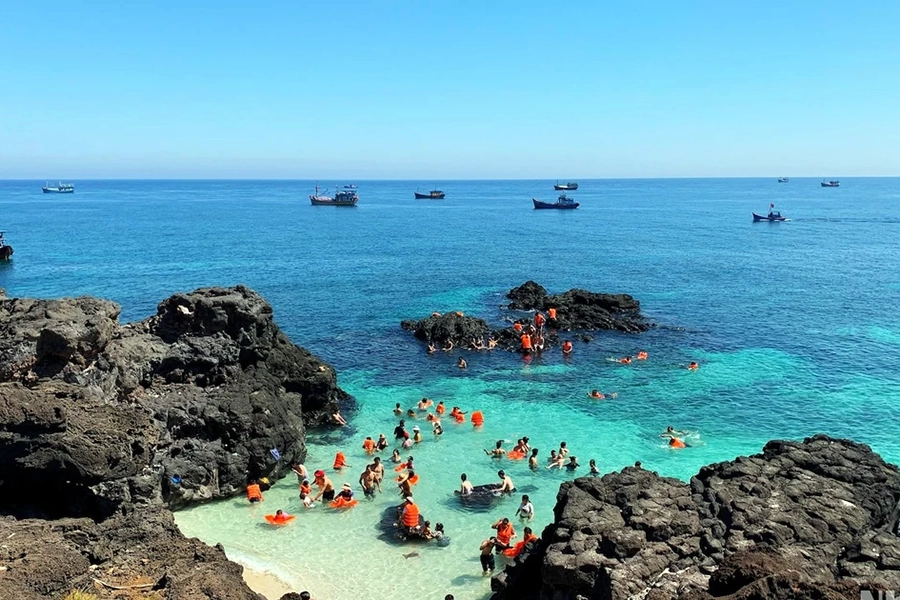 The island is also called Be (Small) Island, with a small area but beautiful scenery and seawater that is no less than that of Lon Island. Big Island is about 3 nautical miles from Little Island. If you go by wooden boat, it takes more than 30 minutes, but by speedboat it only takes about 10 minutes. To go to Be Island, you can rent an entire canoe for 2,500,000 VND, or go individually for 80,000 VND per person. Round-trip ticket price on the same day.
The train from Ly Son port to Be Island departs at 7 am; the last trip of the day is at 11:20 am. Boats from Be Island depart for Lao Re (Big) Island starting at 10:00 a.m. to 2:20 p.m. Trips are 20 minutes apart. If you buy individual tickets at the port, regulations allow each person to buy only 2 tickets. You must have ID cards or passports of the buyer and the person on whose behalf you are buying. Tickets are sold starting at 6 am.
Coming to Be Island, you feel like you have stepped into a new paradise with only blue sea and golden sunshine. This place is also ideal for catching the sunset.
Mu Cu Islet
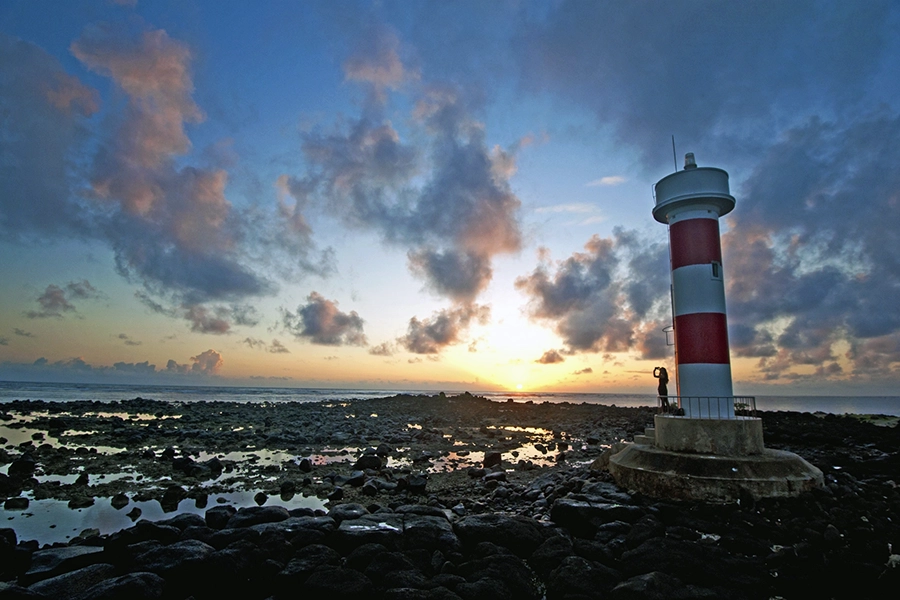 Mu Cu Island is a prominent attraction located on the eastern side of Ly Son Island. Situated right next to the main island (Dao Lon) and connected to the port area by a breakwater causeway, it is easily accessible for visitors.
Uninhabited by locals, Mu Cu retains a quiet, open atmosphere and the distinctive natural beauty of an island landscape. The scenery at Mu Cu is defined by stretches of black volcanic rock along the coast. Shaped over time by wind and waves, these rock formations take on diverse forms, creating a rugged, pristine aesthetic. A familiar landmark here is the Mu Cu Lighthouse, standing amid the sea and sky; it serves as a visual highlight and a favorite spot for photographers.
The round-trip ticket price from Big Island to Little Island is 80,000-100,000 VND. If you’re traveling with a large group, you can rent a private boat for 800,000 VND. After arriving on the island, visitors can choose an electric car, a tuk-tuk, or a motorbike taxi for 50,000 VND per trip.
Ngang Beach
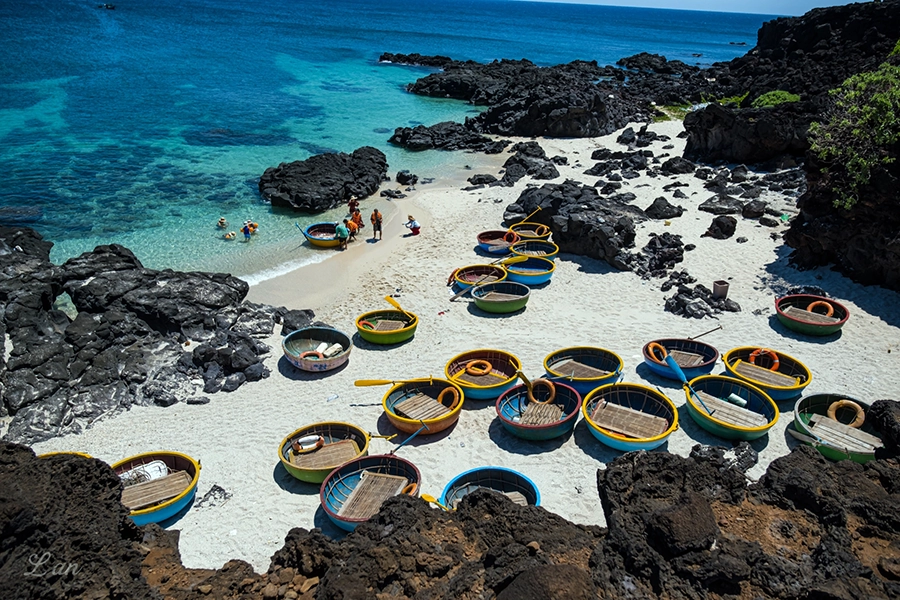 Ngang Beach in Ly Son is renowned for its serene and pristine beauty. Far from the hustle and bustle, it captivates visitors with its crystal-clear blue waters, natural rock formations, and expansive sea views. It is an ideal spot for those wishing to immerse themselves in nature and experience the island’s unhurried pace of life.
A highlight of Bãi Ngang is its clear water, which shifts in hue from turquoise to deep blue depending on the lighting and weather conditions. Volcanic rock formations of various shapes line the shore, creating a landscape distinctive to Ly Son. At low tide, rocky stretches and shallow pools emerge, revealing patches of seaweed and small coastal marine life.
Visitors to Ngang Beach can enjoy leisurely walks, admire the sea, take photos, and gain insight into local life. Snorkeling to view the coral reefs is an experience not to be missed when visiting the beach. The cost for renting snorkeling gear and using freshwater shower facilities is 110,000 VND per person.
Specialties of Ly Son Island
Ly Son garlic is perhaps the most renowned specialty. Grown in a blend of volcanic soil and sea sand, the garlic bulbs are small and aromatic, boasting a distinctive spicy kick. Among the varieties, the solo garlic, consisting of a single clove, is a popular choice for tourists to buy as a gift. Beyond the garlic itself, solo garlic salad is a unique dish, typically prepared by tossing young garlic stalks with peanuts, fresh herbs, and a sweet-and-sour fish sauce dressing.
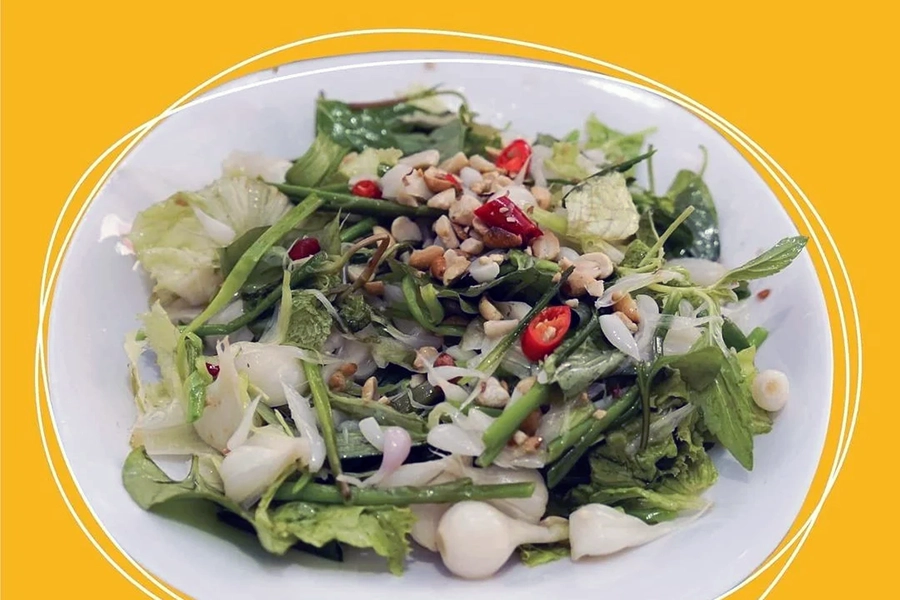
Ly Son’s cuisine also entices visitors with a variety of seafood, such as ranina ranina (red frog crab), moon snails, sea urchins, and squid. Seafood is often prepared simply, steamed, grilled, or served as a salad—to preserve its natural sweetness. Seaweed salad is another dish worth trying; it offers a refreshing, crisp texture and the distinctive flavor of the ocean.
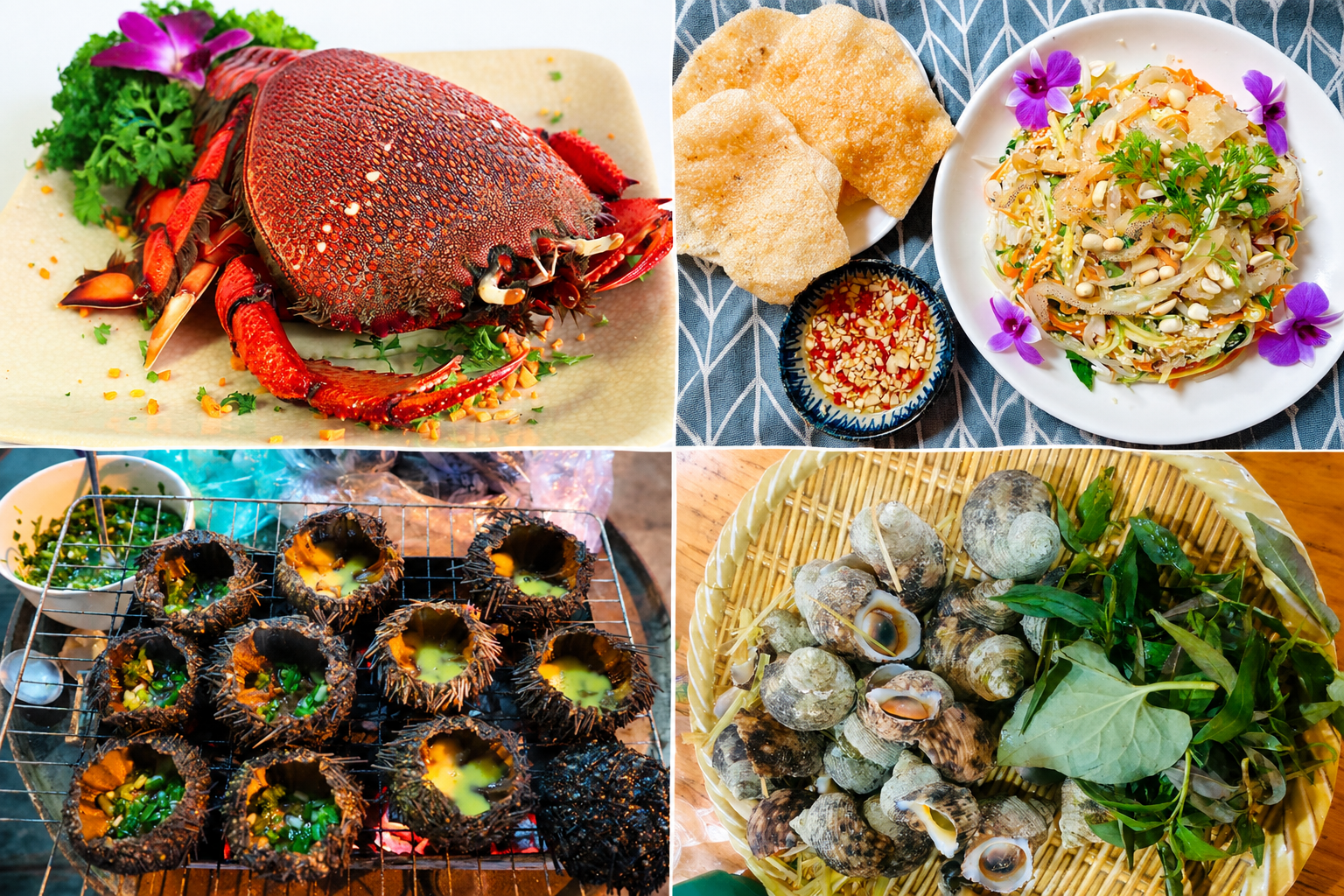
Additionally, visitors can enjoy sea urchin porridge, fried fish paste rolls, “banh it la gai” (ramie leaf sticky rice cakes), and various other rustic local dishes. Eschewing elaborate preparation methods, Ly Son’s specialties captivate diners through their fresh ingredients and authentic, unpretentious flavors. These culinary experiences also offer an engaging way for visitors to gain insight into the lives and culture of the island’s inhabitants.
Source: collected by An
Follow us for the best deals on Vietnam package tours and visa services!
Comment (0)