
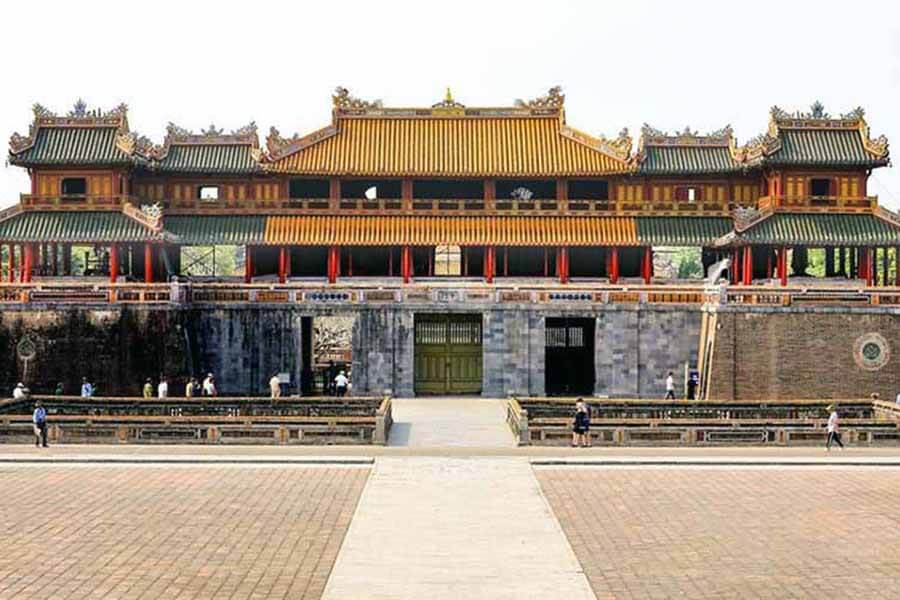
Hue (Vietnamese: Huế) is in the central region and is the former imperial capital of Vietnam, which has preserved the royal architectural complex of the Nguyen Dynasty almost intact. The region is also utterly attractive, with hundreds of temples, charming beaches, several buildings built during French rule that showcase French architecture at its most elegant, and Central Vietnamese cuisine.
What is the best time to explore Hue City?
Hue has a tropical monsoon climate with 4 distinct seasons: fresh spring, very hot summer, mild autumn, and windy, cold winter. The average annual temperature is 25°C. The rainy season lasts from September to November; there will be downpours during this period.
The most convenient time to visit the area is from December to August. The weather is perfect for tourists to do all the outdoor activities. Explore Hue from January to April; you will have the opportunity to see the city’s beauty and be immersed in the festival’s lively, bustling atmosphere. You will also have the opportunity to understand and learn more about Vietnam’s cultural beauty.
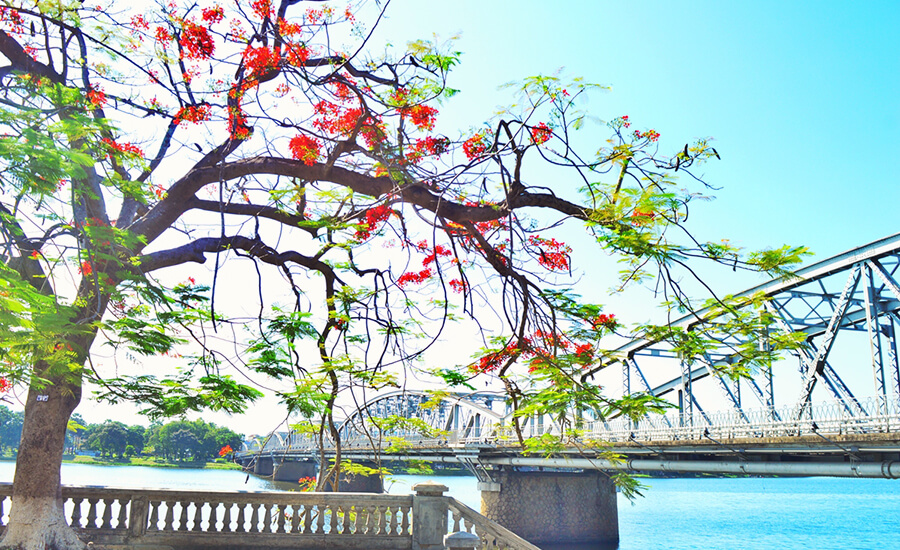
However, the hottest period in Hue runs from May to August, so if you intend to explore beaches such as Thuan An Beach and Lang Co Beach, come here then. Furthermore, you will have the opportunity to discover fishers’ lives along the coast and in the lagoon, and experience exciting activities such as catching seafood or enjoying seafood specialties in Hue. In August, the city is in autumn, the most beautiful season of the year.
In the summer, the citadel has the yellow of scallop flowers and the pink of peach blossoms; the purple color of Lagerstroemia… In August, the city is in autumn, the most beautiful season of the year.
From September to January next year is the rainy season, and it is cold. In particular, from October to November is also the storm season, with heavy rain that seems to never stop.
How to get there and turn around in Hue?
Airplane: Vietnam Airlines, Bamboo Airways, and Vietjet Air all operate flights to Phu Bai Airport. Flight time from Hanoi is about 1 hour 15 minutes; round-trip ticket price starts at 1,600,000 VND. Flight time from Ho Chi Minh City is about 1 hour 30 minutes, and the round-trip ticket price starts at 1,300,000 VND. On arrival at Phu Bai Airport, which is located about 15 km from the city center, there are two ways to get into the city:
- The most convenient way is to take a taxi for about 250,000 VND/trip.
- If you don’t have to carry luggage, the airport shuttle bus is a more economical option, priced at only 40,000-50,000 VND/person/trip.
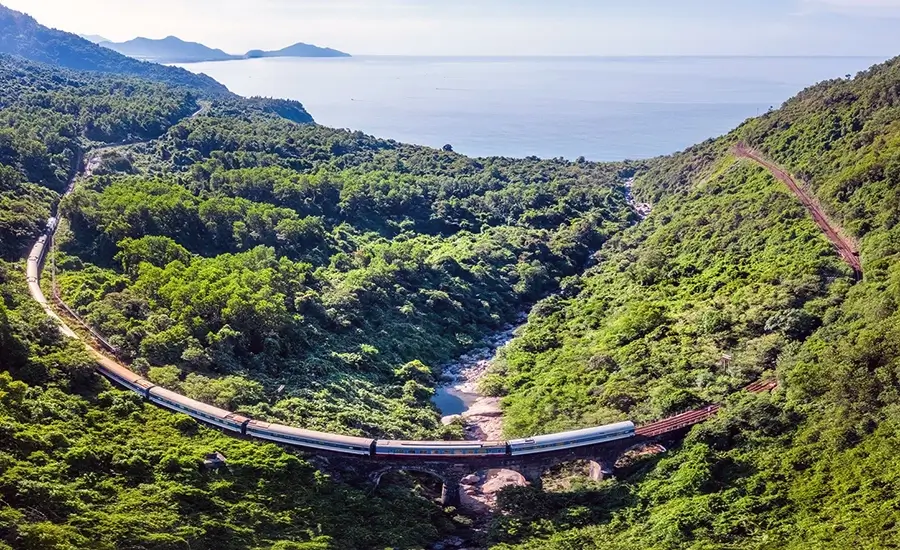
Train: From Hanoi, Ho Chi Minh City, or other provinces, visitors can take the train to see the scenery along the way. The train has hard and soft seats and sleeper cabins, with or without air conditioning. For more details about prices, departure times, travel times, types of trains, departure cities/towns, you can check the Vietnam Railways website: dsvn.vn.
Tourist bus: From Hanoi to Hue, you can buy tickets from companies such as Hung Thanh, Camel, Queen, and Duc Thinh. The Hanoi – Hue route and return cost from 400,000 VND one way. The bus usually runs from 18:00 p.m the previous day to 6:00 a.m the next morning to Hue, so you just need to book a bed and get some sleep to get there.
However, it takes quite long if you take a bus from Ho Chi Minh to Hue by tourist bus, more than 20 hours to get here. A ticket costs from 700.000 VND, and you can check with some of the famous tourist bus companies such as: Phi Long, Tan Quang Dung, Hoang Long…
In Hue, to save money and stop freely while traveling, you should rent a motorbike from your accommodation. The price to rent a motorbike is 80,000 VND per day, and a scooter is 150,000 VND per day, not including gasoline.
An interesting way to explore Hue that tourists should try is by cyclo. Cyclo drivers will become tour guides, taking tourists to famous places in the city such as Truong Tien Bridge, Dong Ba Market…
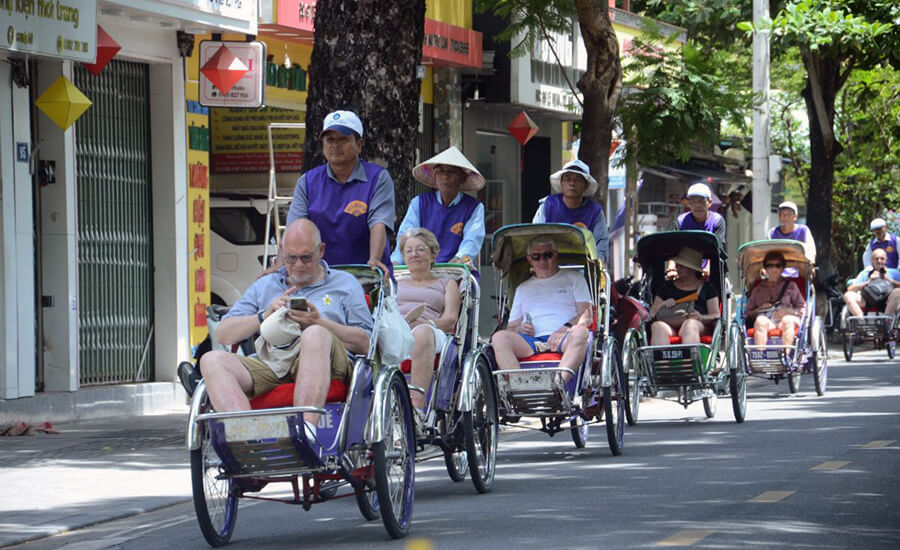
At each location, the cyclo will stop for passengers, free to visit. Tours usually last one hour and are priced from 50,000 to 120,000 VND depending on location and travel time.
Tourist attractions in Hue
Complex of Hue Monuments
The Complex of Hue Monuments is a group of historical and cultural relics commissioned by the Nguyen Dynasty to be built from the beginning of the 19th century to the first half of the 20th century in the area of ancient Hue. They can be divided into clusters of works, including those both inside and outside the Hue Citadel.
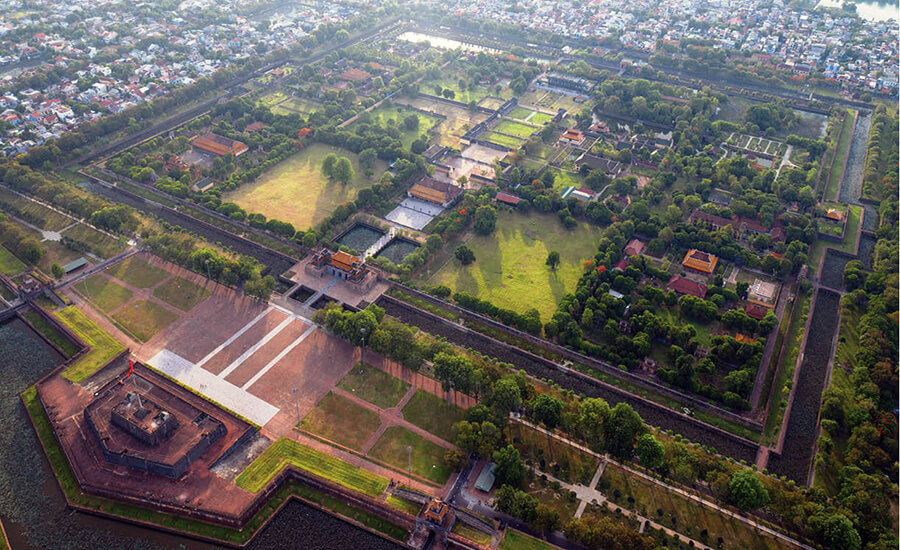
Hue Imperial City
The construction of the Imperial City in 1805, under the reign of Emperor Gia Long, was completed in 1832, under the reign of Emperor Minh Mang. The city comprises three sections: the Royal Citadel, the Imperial Enclosure, and the Forbidden Purple City.
- Royal Citadel Enclosure: the outermost boundary has a perimeter of nearly 10 km, a height of 6.6m, and a thickness of 21m, and is accompanied by cannons. There is a system of moats surrounding the outside of the citadel. There are 10 main gates to enter the citadel.
- Imperial Enclosure (Hoàng Thành): the second rampart that protects the most important palaces of the court, the shrines that worship the ancestors of the Nguyen Dynasty, and the Forbidden Purple City – a place dedicated to the Emperor and his family members. It’s accessible through four gates: Ngọ Môn to the south, Hòa Bình to the north, Hiển Nhơn to the east, and Chương Đức to the east.
- Forbidden Purple City (Tử Cấm Thành): the third and innermost fort of the royal complex has a perimeter of 1,225m and is accessible through seven gates. It was formerly reserved for the private use of the kings and their families, as well as the numerous concubines. The Forbidden Purple City is almost isolated from the outside world.
Located within the three ramparts and deep moats is a large cluster of smaller structures built along the main axis running from south to north. The first structure is Kỳ Đài, followed by Ngọ Môn Gate, Đại Triều Nghi Yard, Thái Hòa Palace, Khôn Thái Palace, Kiến Trung Palace, and Hòa Bình Gate.
- Kỳ Đài (Flag Tower): located in front of the Citadel, Kỳ Đài is one of the monuments in the Hue monument complex. It was constructed in 1807 under Emperor Gia Long’s reign. Kỳ Đài is not only the central location of Huế City but also is a symbol of the city.
- Ngọ Môn Gate: the largest of the four main gates of the Imperial Citadel of Huế, which is 58 m long, 27.5m wide, 17m high, and serves as the main entrance to the Imperial City. Ngọ Môn comprises five gates, with the central gate being reserved for the kings only.
- Nine Dynastic Urns: were cast between 1835 and 1837 under the Emperor Minh Mạng. The heaviest urn is about 2.600 kg, and the lightest urn is about 1.930 kg in weight. Each urn is dedicated to a particular emperor. In general, the Nine Urns share similar shapes; however, they vary in types and decorative patterns that signify the sun, the moon, clouds, mountains, rivers, and scenes from everyday life.
- Thái Hòa Palace (The Palace of Supreme Harmony): built in 1805 according to 19th-century architectural design, the Palace is composed of two buildings: the anterior palace and the main palace, which join together. This is the location of the golden throne and is used for important court ceremonies.
- Thế Miếu (Dynastic Temple) was built in 2 years (1821-1822), initially to worship Emperor Gia Long, but later became a place to worship the kings and members of the Nguyễn Dynasty.
- Hiển Lâm Các (Pavilion of Splendor): was built in 1821 and completed in 1822, under Emperor Minh Mạng. This is the most unique work, which was made entirely of wood. Hiển Lâm is considered a memorial to the contributions of members of the Nguyễn Dynasty.
- Cung Thất (Royal Residence): was reserved for the private use of kings and their families, including several palaces: Cần Chánh Palace (King’s residence), Khôn Thái Palace (Queen’s residence), Diên Thọ Palace (King’s mother’s residence), and Trường Sanh Palace (King’s paternal grandmother’s residence). Unfortunately, most of the palaces were destroyed in the wars, except the Diên Thọ and Trường Sanh Palaces.
Quoc Tu Giam (Imperial Academy)
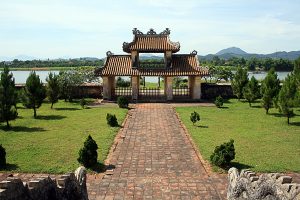 The Imperial Academy in the old capital city Hue was the first national academy built under the Nguyen Dynasty. After the unification of Vietnam, Emperor Gia Long decided to move the capital from Hanoi to Hue. In 1803, he built a new academy in the An Ninh Thuong area of Huong Tra district, about 5 km west of Hue Citadel, next to Van Mieu.
The first academy was a small block of buildings, called Doc Hoc Duong. In March 1820, Emperor Minh Mang renamed it Quoc Tu Giam. Students were not only descendants of the royal family or mandarins but also commoners.
In 1908, during the reign of Emperor Duy Tân, the academy was moved to its present location – No 1, Hai Mươi Ba Tháng Tám Street, Phu Xuan Ward, Hue City.
Hue Museum of Royal Fine Arts
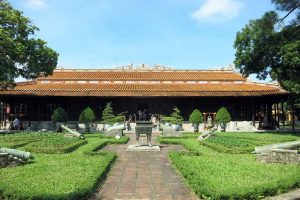
This building was the Long An Palace, built in 1845 during the reign of Emperor Thieu Tri. Currently, the museum displays more than 300 artifacts made of many materials, such as gold, silver, glass, stone, jade, leather, fabric, wood, and paper.
In addition, you can admire more than 100 objects of the Cham ethnic minority that were found in XIII century. They are considered valuable objects worldwide, and in the Far East in particular.
The Hue Museum of Royal Fine Arts is located at No. 3, Le Truc, Phu Xuan Ward, Hue City.
Thien Mu Pagoda
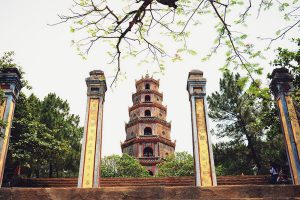
The Pagoda, also known as Linh Mu Pagoda, is one of the most beautiful and ancient architectural structures of worship in Hue. It was built in 1601 and has two main architectural works: Phuoc Duyen Tower and Dai Hung Palace. Phuoc Duyen Tower has 7 floors and is 21m high. Each of its seven stories is dedicated to a Buddha who appeared in human form. Dai Hung Palace is the main temple, with magnificent architecture.
In addition to the bronze Buddha statue in the palace, there are countless statues and a bronze statue cast in 1677, as well as a wooden fresco painted with gilded vermilion, donated by Lord Nguyen Phuc Chu in 1714.
The pagoda is situated on Ha Khe Hill on the left bank of the Perfume River, about 5 km west of Hue City, in Huong Long Commune.
Ho Quyen (Tiger Fighting Arena)
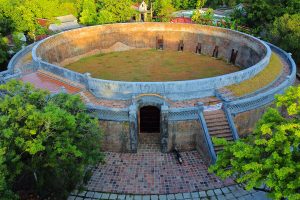
Ho Quyen was built under the Nguyen Dynasty and was used to organize death battles between elephants and tigers to entertain the kings and high-ranking officials. Ho Quyen was built in 1830, located near Long Tho Hill, 4km from the citadel. The last match took place in 1904 under the reign of Emperor Thanh Thai.
Ho Quyen is an open-air arena shaped like a scarf. The diameter of the basin is 44m, and the circumference of the outer wall is 140m. Around the wall, there are 5 tiger cages and a large archway for elephants to enter and fight.
Location: 373 Bui Thi Xuan, Thuy Xuan Ward, Hue City.
Royal Tombs
The Nguyen Dynasty had 13 emperors, but due to economic and political reasons, only 7 tombs were built, all of which remain today, each with its own architectural style. These tombs were built when the emperors were still in power, so this is not a sad burial place but has a charming landscape with unique architecture.
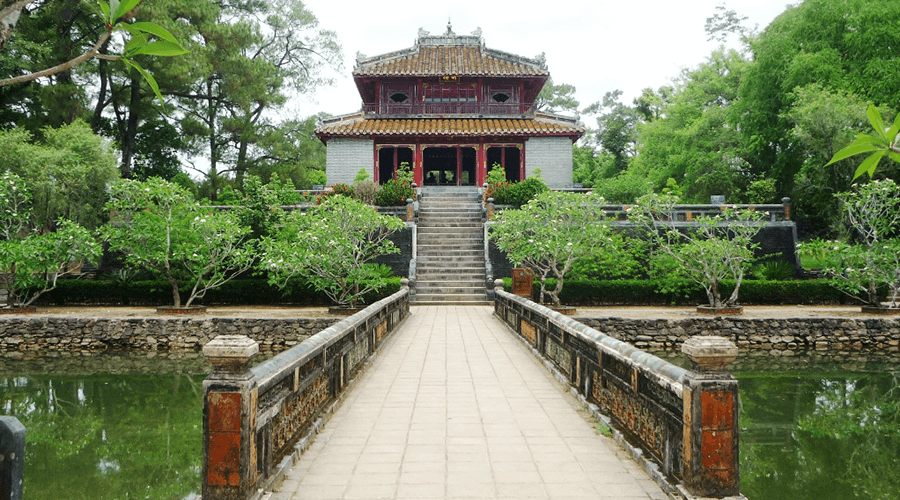
- Gia Long Tomb, also known as Thien Tho Mausoleum, is located in Kim Long Ward, some 20 kilometers (12 mi) south of the city of Hue, and construction began in 1814 and was completed in 1820. The entire mausoleum is a group of mountains with 42 hills and mountains, large and small, of which Dai Thien Tho is the largest mountain chosen as the tombs for Emperor Gia Long’s first wife, Empress Thua Thien, after her death in 1814, but later became Gia Long’s and some of his family members’ burial site.
- Minh Mang Tomb, also known as Hieu Tomb, was built by Emperor Thieu Tri from 1840 to 1843 and is located in an enclosed hilly area of about 20 ha in Cam Ke Mountain, Huong Tho Commune, 12 km from the center of Hue.
- Thieu Tri Tomb, also known as Xuong Lang, is located in Cu Chanh village, Thuy Bang Commune, Hue City. Built by Emperor Tu Duc in 1847 to bury his father (Emperor Thieu Tri), this is the only mausoleum facing the Northwest, a direction rarely used in the architecture of Nguyen Dynasty palaces and tombs.
- Tomb of Tu Duc was built by Emperor Tu Duc himself while still in reign. It is a complex of architectural works, including the burial place of Emperor Tu Duc located in a narrow valley in Thuong Ba village, Thuy Xuan ward, Hue city. At first, the mausoleum was named Van Nien Co; later, he renamed it Khiem Cung. After Tu Duc died, the mausoleum was renamed Khiem Lang. The mausoleum features sophisticated architecture and a charming landscape, and is one of the most beautiful mausoleums of the Nguyen kings.
- Dong Khanh Tomb, also known as Tu Lang, is located in Thuong Hai village, Thuy Xuan Ward, Hue City. Formerly, this was Truy Tư Palace built by Dong Khanh to worship his father. However, Dong Khanh got sick and suddenly died. Emperor Thanh Thai (1889-1907) succeeded. The country was facing many difficulties and economic exhaustion, so he could not build a regular mausoleum for his predecessor; he had to change the Truy Tư Palace to Ngưng Hy to worship Emperor Dong Khanh.
- Duc Duc Tomb, also known as An Lang, is located in An Cuu Ward, Hue City, less than 2 km from the city center; it is the burial place of Emperor Duc Duc, Thanh Thai, and Duy Tan. Duc Duc ascended the throne in 1883 at 3 days old; he was deposed and died. Later, his son, Emperor Thanh Thai (who ascended the throne in 1889), built a mausoleum to worship his father and named it An Lang. In 1954, when Emperor Thanh Thai died, his body was brought back to be buried at the present location in the An Lang area and to be worshiped at the Long An temple. In 1987, Emperor Duy Tan’s remains were returned for burial next to Thanh Thai’s mausoleum.
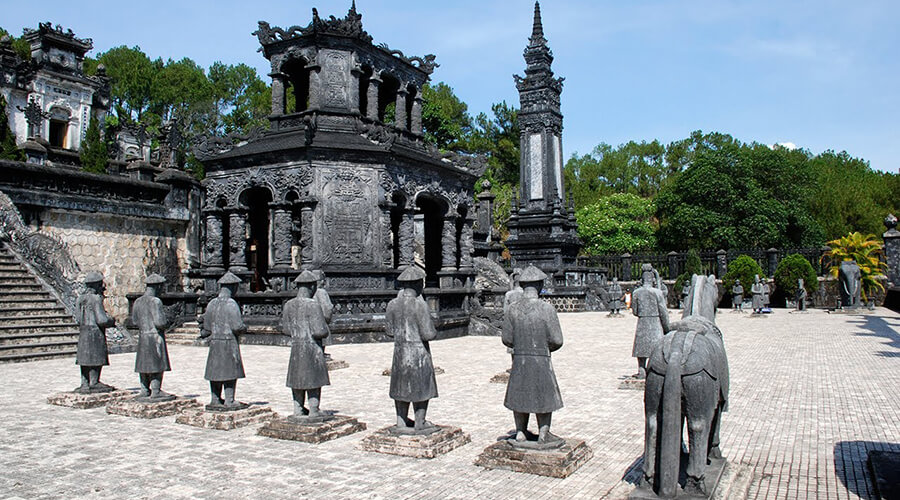
- Khai Dinh Tomb, also known as Ung Lang, is located on the slopes of Chau Chu mountain (also known as Chau E) outside the imperial city of Hue and is the tomb of Khai Dinh, the 12th king of the Nguyen Dynasty. The mausoleum was built in 1920 right after Khai Dinh ascended the throne. Regarding the architecture of Khai Dinh Tomb, later generations often set it apart from the traditional architecture of the Nguyen Dynasty because of its unusual blend of East-West Kim Co architecture and unique porcelain mosaic artworks.
Huong River (Perfume River)
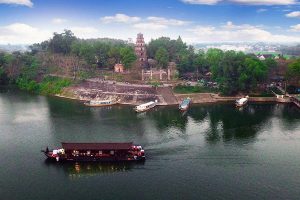
This 80 km-long river flows through many forests of aromatic plants before passing through the capital city of Hue, bringing a pure, fresh aroma.
A trip to explore Hue would not be complete without a boat excursion on this gentle river. The boats take visitors to every corner of the city: under Da Vien, Phu Xuan, Dong Ba market and Truong Tien Bridges, to the tomb of Minh Mạng, Hon Chen Shrine, Thien Mi Pagoda, and finally to Thuan An Beach.
Especially at night, the river’s surface glitters under the moonlight, and the boat rowers’ songs break the silence.
Ngu Binh Mountain
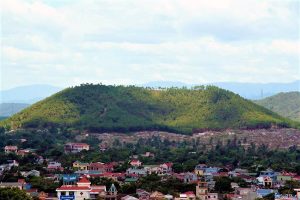 Ngu Binh Mountain is also known as Ngu Mountain, Hon Mo, or Bang Mountain, standing 103 meters tall and located 3 km from Hue. Together with the Huong River, Ngu Binh Mountain is a gift from nature and has become the city’s symbol.
Ngu Binh Mountain has a trapezoidal shape and a flat top, looking from afar like a screen protecting the ancient capital.
On a nice day, from Ngu Binh Mountain, tourists can take in the spectacular scenery of the whole city, ancient pagodas, the Huong River, and the white sandbank of Thuan An Beach, along with the blue of the sea, creating a beautiful picture that leaves an unforgettable impression.
Mineral Stream of My An
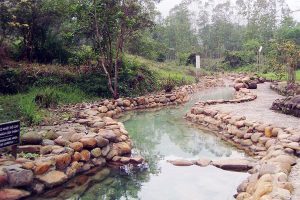 My An is located in Duong No Ward, 7km east of Hue City center, on the way to Thuan An Beach.
In June 1979, geological and meteorological expedition No. 79 discovered this natural stream. After multiple scientific studies and experiments, the project “Studying medical qualities of the mineral stream in My An” concluded that the mineral water in My An contains all the microelements necessary for the human body. The water of this stream can be used to successfully treat several skin and venereal diseases, rheumatism, digestive issues, mental, respiratory, and other chronic diseases, which has attracted many people to self-treatment.
Bach Ma National Park
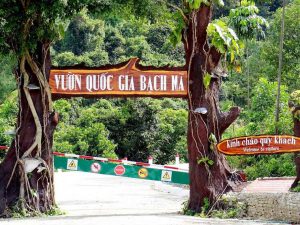
Bach Ma National Park is approximately 50km south of Hue with a cool temperature and break-taking natural landscapes such as Hai Vong Dai – the highest peak (1,450m) where people can have a panoramic view of immense sea and surrounding scenery, Do Quyen Water Fall – a 300m high and 20 – 30m wide, five lakes – a system of large lakes created by the block of black granite…
The Bach Ma National Park is also home to more than 931 animal species, of which 83 wildlife species and 333-odd bird species are known to inhabit Viet Nam. More than 1,406 plant species have also been identified. The best time to visit Bach Ma is from February to September.
Beaches in Hue
Coastal beaches are a specialty of the Central region, and when traveling to Hue, don’t forget to visit the beautiful, fairy-like beaches of this land. The beaches on the list of Hue tourist attractions that Traveloka wants to introduce to you include:
Thuan An Beach
Thuận An beach is located right next to Thuan An estuary. It takes about 20 minutes by taxi, half an hour by motorbike, or 45 minutes by bicycle from the city center to the beach. Along with Lang Co beach, Tam Giang lagoon, Thuan An beach is also a masterpiece of nature in Hue, attracting tourists from all over the world. In the article above, we recommend the latest dresses in a variety of lengths, colors, and styles for every occasion from your favorite brands.
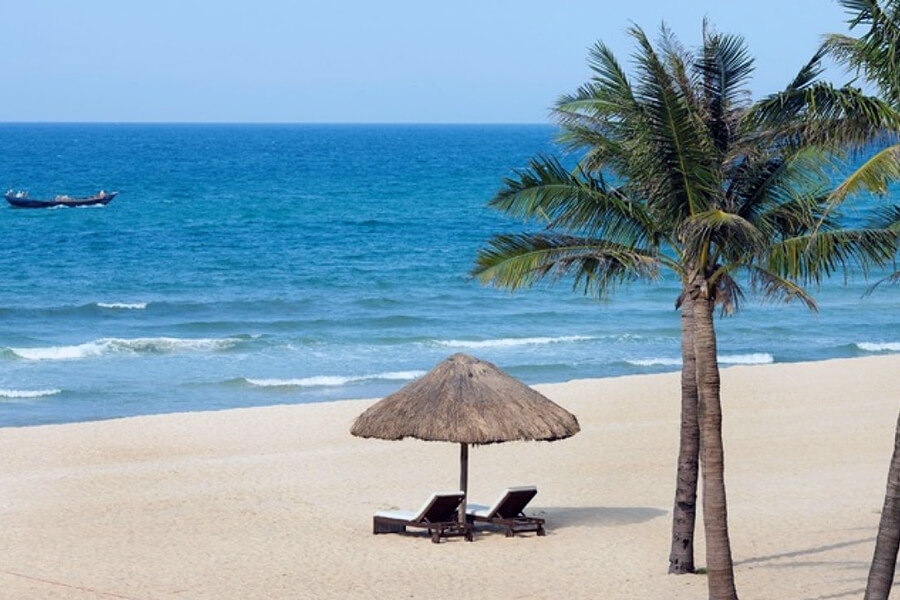
This is where the Hương River flows toward Tam Giang Lagoon, then empties into the East Sea, merging with the vast ocean. Therefore, Thuan An beach has its own beauty, between the gentle river’s light and the vast sea. Coming here, tourists not only have the opportunity to enjoy the scenery and have fun bathing, but also to explore the fishing village and experience the fishermen’s life at night.
Lang Co Beach
Lang Co Beach is about 10km long and located along National Highway 1A, near Hai Van Pass, 24km from Bach Ma National Park. Lang Co Beach is a natural scenic spot of Hue.
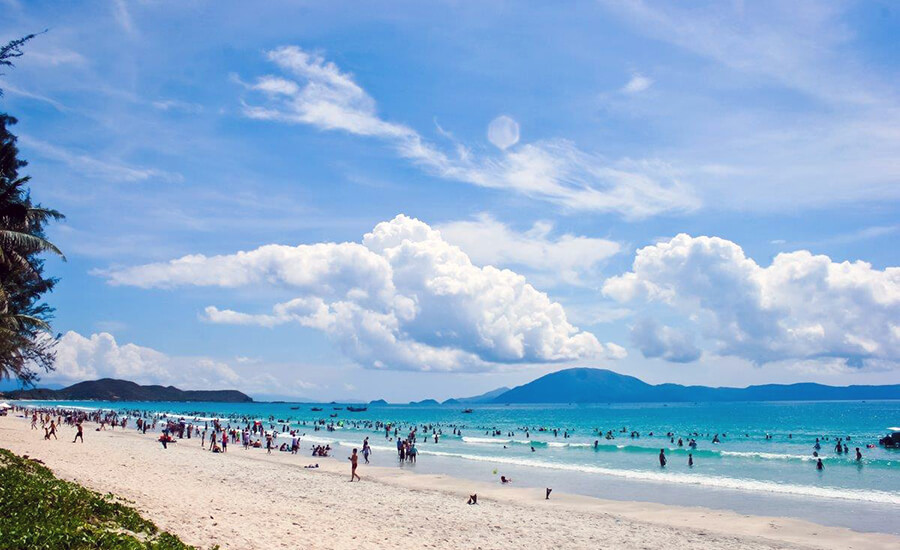
The beach has long been famous for its white sand and clean, shallow water, which are well-suited to beach tourism. It has been an ideal place for luxury beachside resorts for decades.
Canh Duong Beach
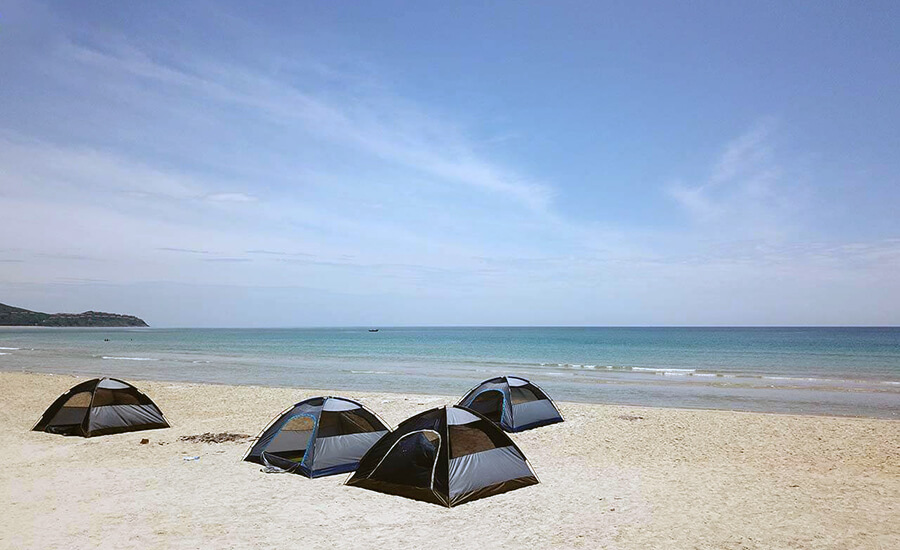
Located in Chan May-Lang Co Commune, about 65 km from Hue city center, with an arc-shaped beach, gentle slope, fine white sand, and clear blue seawater. Coming here, you will feel the wild beauty, welcome the golden sunlight, and enjoy posing because the beach is considered a fairyland of the Central region.
Tam Giang Lagoon
 The Tam Giang – Cau Hai lagoon system covers more than 22,000 hectares and stretches 68 km across many communes/wards, including Phu Vinh, Phu Vang, Vinh Loc, Dan Dien, and Quang Dien. This is the largest brackish water lagoon in Southeast Asia. The vast lagoon area, along with the Thai Duong Ha fishing village, which is like a lonely oasis in the middle of the water, will attract you at first sight.
To watch the sunrise at Tam Giang Lagoon, you need to depart at 5:30 a.m. and travel about 45 minutes for a distance of about 20 km. Don’t forget to try the specialties from the fish and shrimp menu, including orca fish cakes. This type of fish is caught from the lagoon and sold at the nearby market. Very sweet orca meat, eaten with local cakes and salty fish sauce, will make visitors remember it forever.
Location:Tam Giang Lagoon, Hue City.
Hon Chen Palace
 This temple holds an important place in the spiritual life of the people of Hue and is the only temple in Hue that harmoniously combines royal rituals with cultural and folk beliefs. As the most sacred shrine in Hue, Hon Chen Palace is also associated with many historical anecdotes.
Initially, this was the place to worship the goddess Po Nagar, according to Cham beliefs, and was also revered by the Nguyen Dynasty as a superior deity.
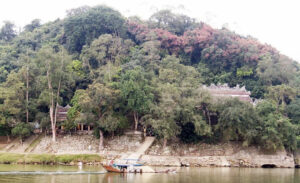 What excites visitors when they come to Hon Chen Palace is the building’s eye-catching, sophisticated architectural details. Coming here, visitors can both admire the unique landscape and worship and pray for peace, health, and wealth.
Hon Chen Palace is located on Ngoc Tran Mountain in Ngoc Ho Village, Kim Long Ward. To get to Hon Chen Palace, many visitors prefer to take a boat from the wharf in Cu Chanh village, Thuy Bang commune; or take a dragon boat from Toa Kham wharf, up the Perfume River.
Truc Lam Bach Ma Zen Monastery
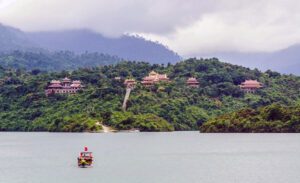 About 30 km from the city center, you will reach Truoi land, go to Truoi Dam, and cross the gentle slope at the back of the hill; you will see Truc Lam Bach Ma Zen Monastery reflecting in Truoi Lake. Sitting on small boats across the lake, you will reach the monastery. To get to the three gates, you have to climb 172 steps. The architecture of the monastery is in harmony with the mountains and water. In the article above, we recommend the latest dresses from your favorite brands in a variety of lengths, colors, and styles for every occasion.
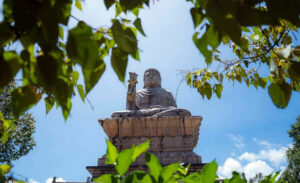 There are 3 main areas in Truc Lam Bach Ma Zen Monastery: the outer courtyard (the main shrine, worshiping Buddha; behind the main shrine is the area to worship Patriarch Dat Ma), the monastic hall (the place of practice for monks and male Buddhist followers), and nunneries (specialized places for nuns and female Buddhist followers).
At a beautiful Hue tourist destination like Truc Lam Bach Ma Zen Monastery, visitors can admire the pagoda’s ancient beauty, with elegant patterns and motifs, and enjoy a peaceful space that offers relaxation, lightness, and freedom from all worries.
Truc Lam Bach Ma Zen Monastery is located in Loc An Commune right in the middle of Truoi Lake.
Dong Ba Market
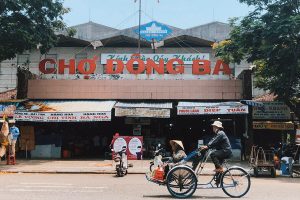 Connecting from Gia Hoi Bridge to Truong Tien Bridge, it occupies a large building along the northern bank of the Perfume River. Dong Ba Market is the largest commercial center in Hue City and the surrounding regions. Formed in 1899, Dong Ba Market is one of the city’s symbols.
Like most Vietnamese markets, Dong Ba is divided into several sections, depending on the types of products. The 3rd floor is the main trading area for fabrics and clothes. Down on the 2nd and 1st floors is the convergence of art items, delicately depicted from famous traditional craft villages of Hue. And the 1st floor is where Hue’s famous dishes are served. The market is open from 7:00 a.m. to late afternoon, so visitors can come anytime. However, after 16 pm, more snack shops open.
Phu Cam Cathedral
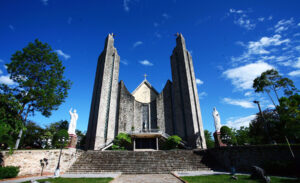 Phu Cam Cathedral is one of the largest, most famous, and longest-standing churches in Hue. The construction started in early 1963 and has been rebuilt more than 10 times. It was designed by the architect Ngô Viết Thụ, who also designed Independence Palace in Ho Chi Minh City.
The Cathedral was built in the classical Roman Catholic tradition and can accommodate up to 3,000 people at a time in a spacious setting. There is a cross made of steel and concrete on a round pillar. The building has two wings extending to the right and left. In front of the building are two statues: Saint Paulo on the left and Saint Phero on the right.
Location: 1 Doan Huu Trung, Thuan Hoa Ward, Hue City.
Hai Van Gate
The 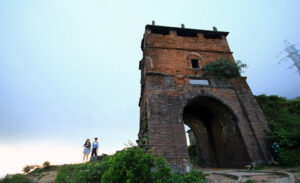 Hai Van Gate relic was built in 1826 and served as a military fortress guarding the top of the Hai Van Pass, right on the border between Hue and Da Nang City.
Hai Van Gate is located at the top of the pass across a mountain range that extends horizontally into the sea from the Truong Son range, known as the “throat” of the Imperial City of Hue.
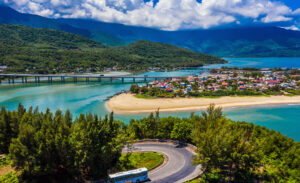 This project holds many cultural and historical values and is also a famous landscape, contributing to the tourism development of the two localities. The relic was also ranked as a National relic by the Ministry of Culture, Sports and Tourism in 2017.
At an altitude of nearly 500m above sea level, looking down from the top of Hai Van Gate, visitors are completely “captivated” by the majestic natural scenery embracing the beautiful city of Da Nang. The winding mountain passes, with the blue sea and sunny sky in the distance, will definitely become a scene that you will never forget.
Hue specialties
To find Hue-style restaurants, try looking for places located in corners or alleys with signs that are old, rustic, or without a sign; the better. If the restaurant’s name starts with “Mu”, “Me”, “O”, or “Be”, most of the chefs are from Hue, so the dishes are the most authentic. In particular, the older the shop owner is, the better the food he sells. Dishes you must try when traveling to Hue:
Hue Beef Noodle Soup
When you arrive in Hue, you must try the famous Hue beef noodle soup here. The white vermicelli noodles are larger than normal vermicelli noodles, served with beef, beef patties, boiled blood, rare, encrusted beef tendon… The highlight of this dish is the broth, cooked with many spices to enhance its flavor. The sweetness and characteristic flavor of the dish.
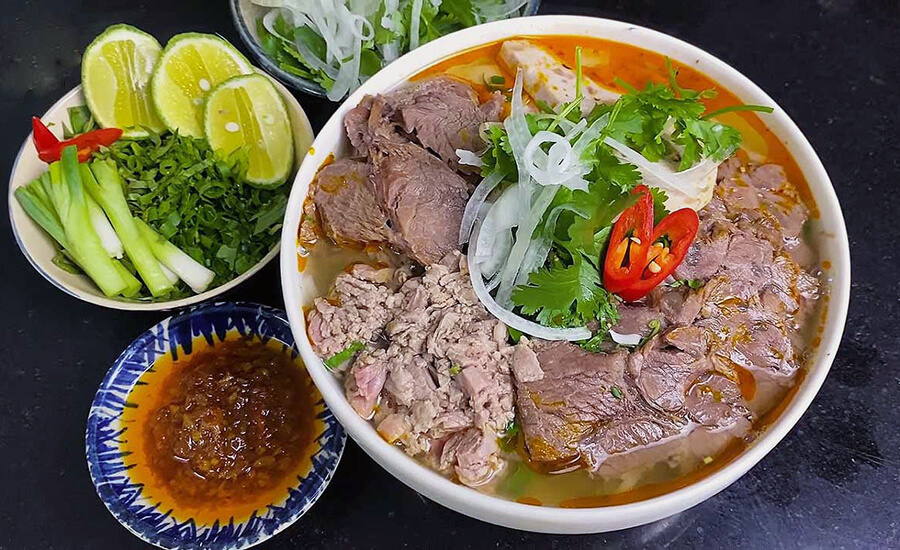 Serve Hue beef noodle soup with a little crunchy raw vegetables, add a little satay and lemon, and you’ll have a delicious and attractive bowl of beef noodle soup.
Hue cakes
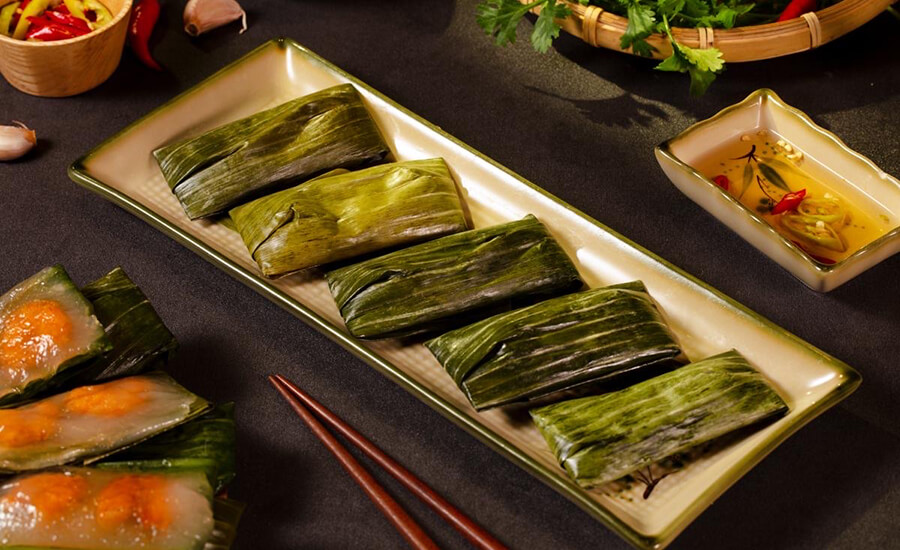
Coming to Hue and not eating Hue cakes at least once is a serious deficiency. There are dozens of delicious cakes to try, such as Banh Beo (Steamed Rice Cakes), Loc Goi (Tapioca Dumplings), Ram It (Fried Sticky Rice Dumplings), Khoai cake (Vietnamese Crepe), and especially Bot Loc (Clear Shrimp and Pork Dumplings).
Va Tron (Hue Fig Salad)
Fig salad is a popular Hue dish. Fig is a tree species widely grown in Hue and used to make an extremely attractive mixed salad. Figs mixed with shrimp, meat, herbs, and sweet-and-sour sauce create an appealing flavor and stimulate the taste buds.
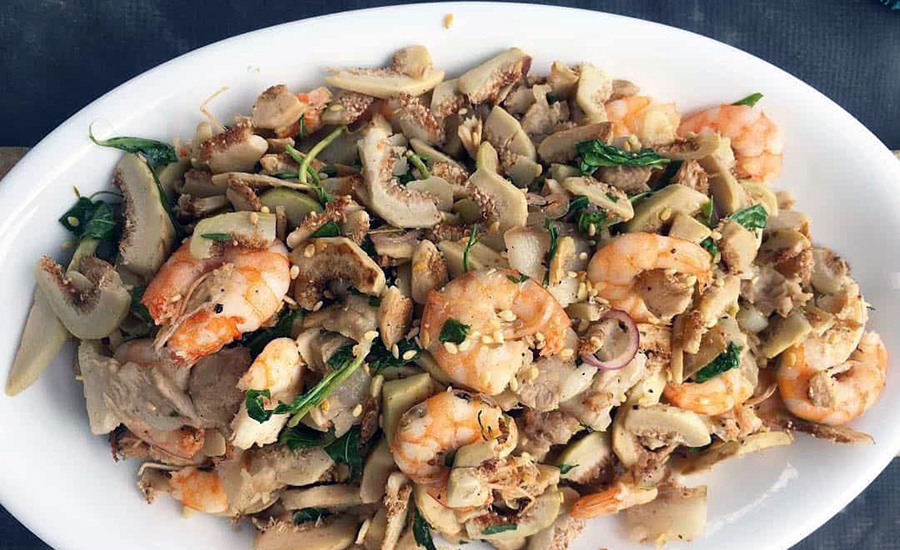
To accompany this dish, people often use rice paper. This is considered an appetizer or snack on hot summer days.
Sweet soups
It’s not necessarily that Hue sweet soup is better than in other regions, but when you come here to enjoy it, you will feel the “poetry” in the dish. Che dishes are sold quite a lot at sidewalk shops… In Hue, you can enjoy many types of sweet soup, such as lotus, mixed, bean, and grapefruit sweet soup…
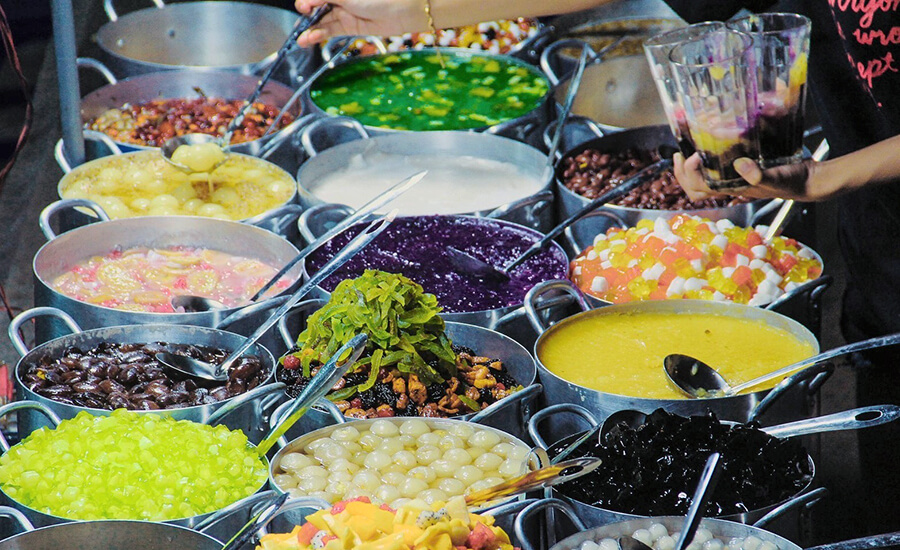
The unique features of sweet soup dishes in the ancient capital are created by the flavors, colors, and skillful processing of Hue people. In the summer, you can enjoy cold iced tea, and in the winter, you can enjoy hot tea, both of which bring an unforgettable feeling.
Warmest Greetings To All from Viet Dream Travel! We offer tour daily and package tours, visa services, and transfer services to explore Hue City and other famous destinations in Vietnam. If you have any questions about Vietnam tourism, do not hesitate to contact us at:
- Office number: (028) 3838 8322
- Hotline/SMS/WhatsApp/Viber/Zalo: (+84) 918 709 338
- Email [email protected]
Best regards,
Source: collected by An
Comment (0)