
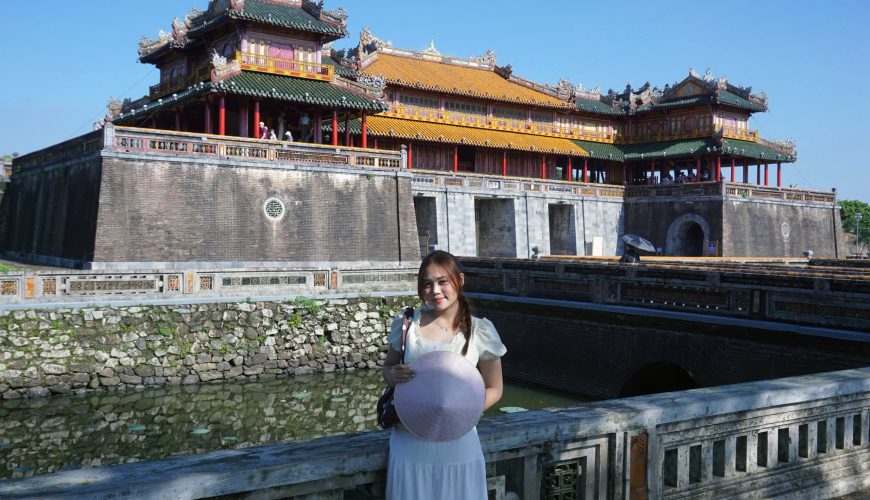
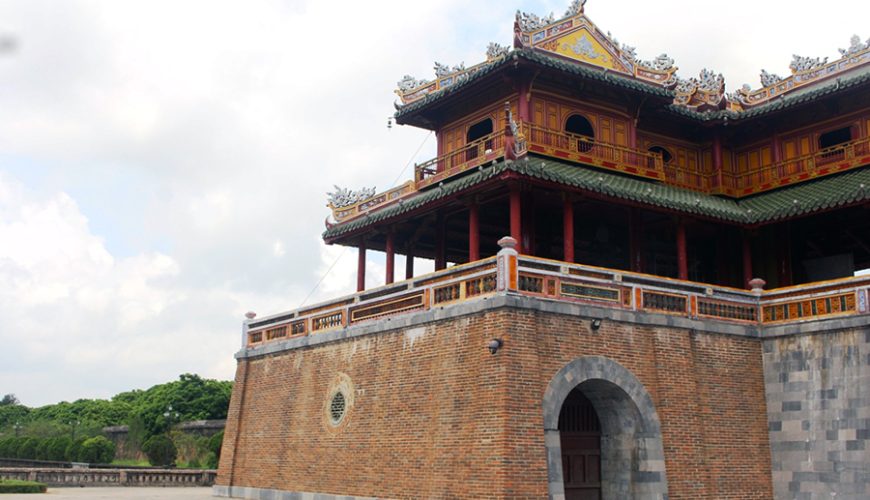
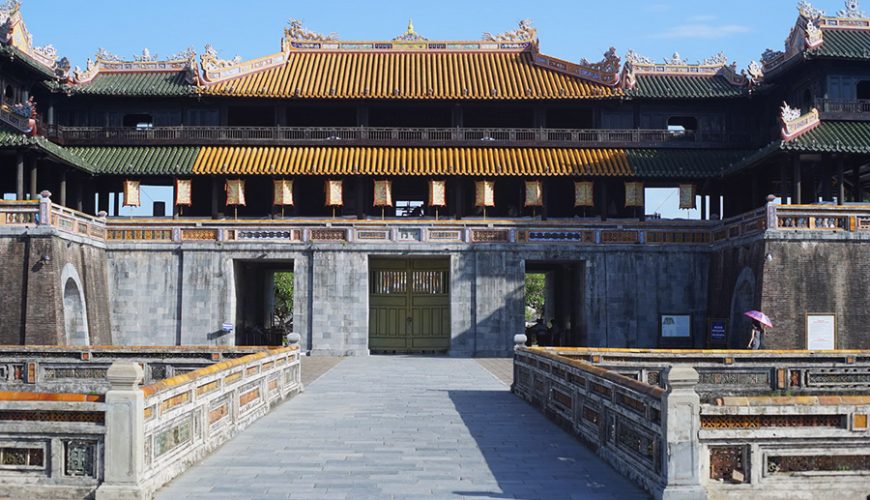
Meridian Gate (Vietnamese: Ngọ Môn) is inextricably linked to the ancient capital of Hue; it is, quite simply, its defining image. This remarkable architectural structure holds immense value in many ways. Alongside the Truong Tien Bridge, the Flag Tower, and the pagoda tower of Thien Mu, Meridian Gate stands as one of the most iconic symbols of Hue city and the Complex of Hue Monuments, a UNESCO World Heritage Site.
An Architectural Masterpiece of Meridian Gate, Hue
Meridian Gate serves as the primary southern gateway to the Imperial City, acting as the symbolic “face” of both the Citadel and the feudal dynasty. It was constructed during the reign of Emperor Minh Mang, the second monarch of the Nguyen Dynasty.
In 1833, as part of a comprehensive master plan to develop and upgrade the Nguyen Dynasty’s Imperial Palace, Emperor Minh Mang commissioned the construction of Meridian Gate as the main southern entrance to the Imperial Citadel. This site was previously occupied by a structure known as the Nam Khuyet Dai (Southern Watchtower), built during the reign of Emperor Gia Long. Atop this tower stood the Can Nguyen Palace, flanked by two gates: the Ta Doan Mon (Left Gate) and the Huu Doan Mon (Right Gate). These earlier structures were dismantled to make way for the construction of Meridian Gate.
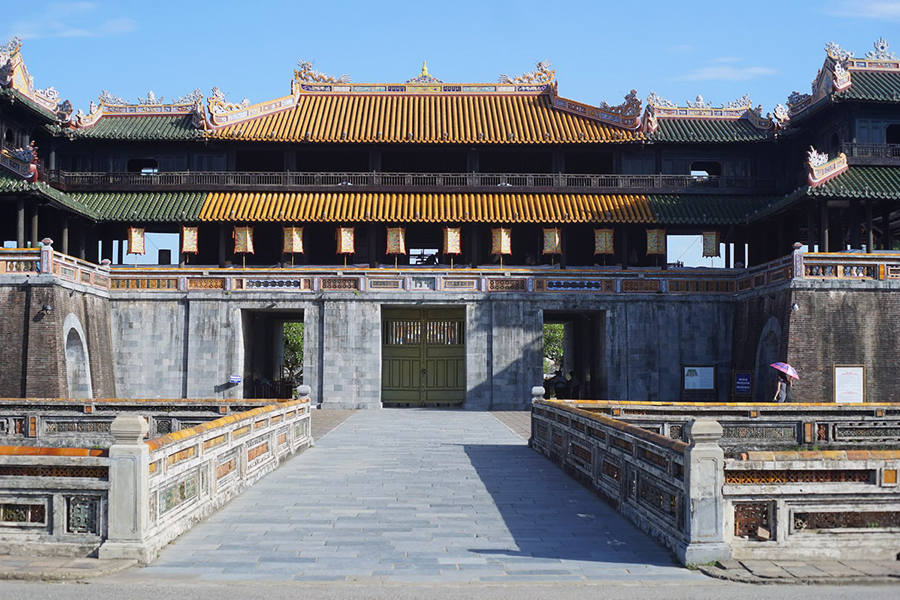
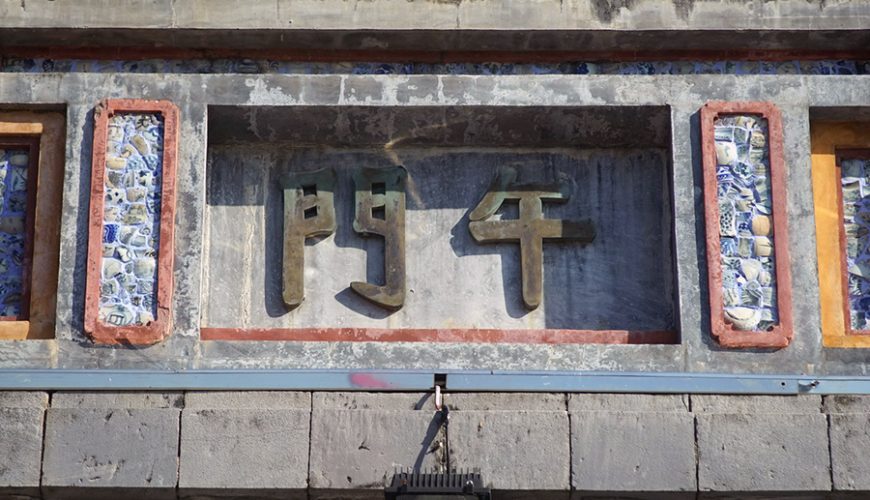
According to the “I Ching” (Book of Changes), the south is the direction reserved for the emperor to “listen to the world and rule wisely”. Consequently, the entire Imperial Citadel and the Imperial City were planned and laid out according to the principle of “sitting in the northwest, facing the southeast.” Meridian Gate is the largest of the Imperial City’s four gates. The name “Ngo Mon” refers to spatial orientation rather than time.
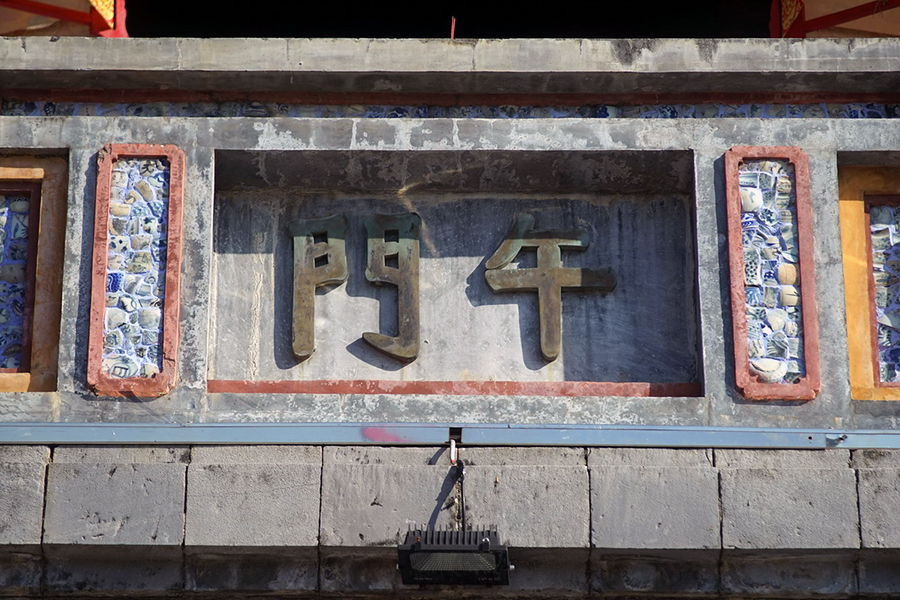
Although it is the main gateway, Meridian Gate was rarely used for daily passage, as it served a primarily ceremonial function. The gate was typically opened only on special occasions, such as when the Emperor entered or exited the Imperial City as part of a royal procession, or when the Imperial Court received high-ranking foreign envoys.
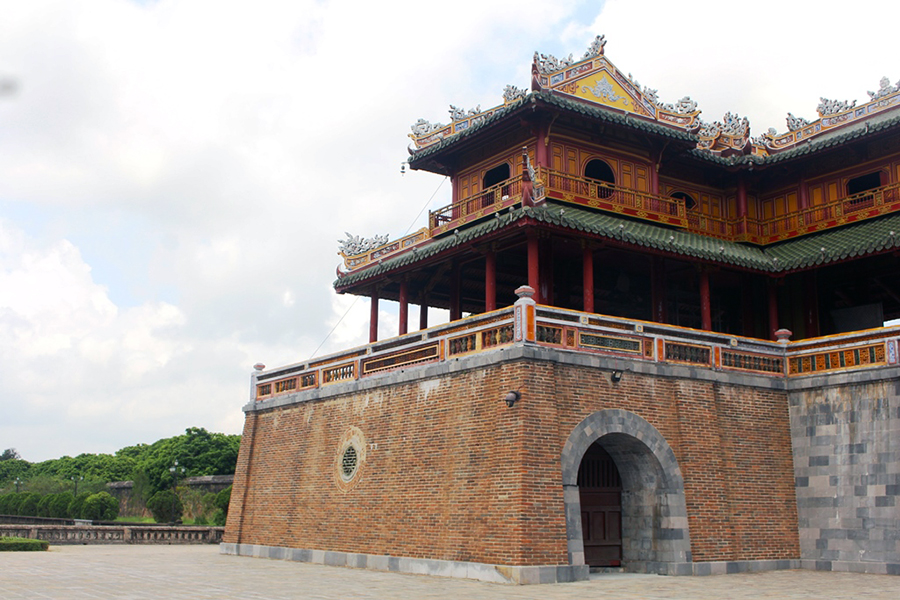
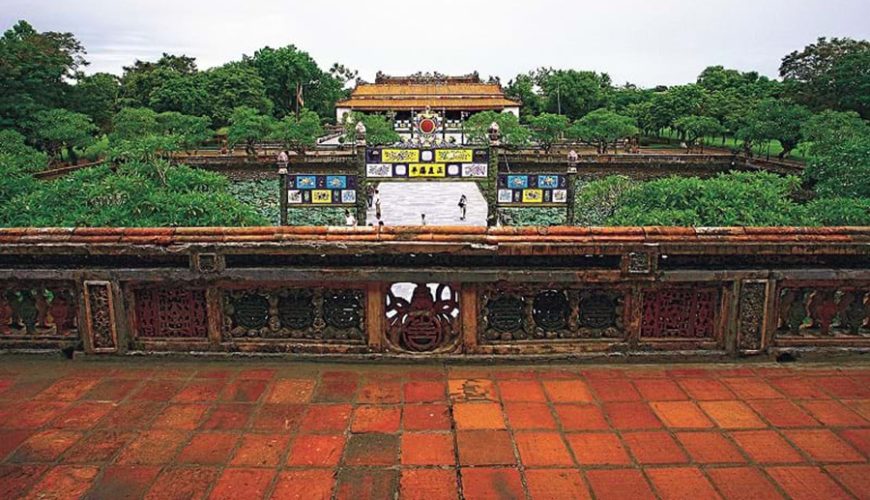
Functionally, the Meridian Gate served not merely as an entrance to the Imperial Citadel, but also as a ceremonial platform overlooking a vast plaza stretching between the walls of the Imperial City and the outer Citadel. Along this same axis stands another significant structure: the Flag Tower, situated within the walls of the outer Citadel. This platform and the plaza hosted major imperial ceremonies, including the Truyen Lo (the proclamation of successful candidates in the doctoral examinations), the Ban Soc (the official promulgation of the imperial calendar), and grand military reviews. The Ngo Mon is also historically significant: on August 30, 1945, Emperor Bao Dai, the final monarch of Vietnam’s feudal dynasties, formally abdicated here.
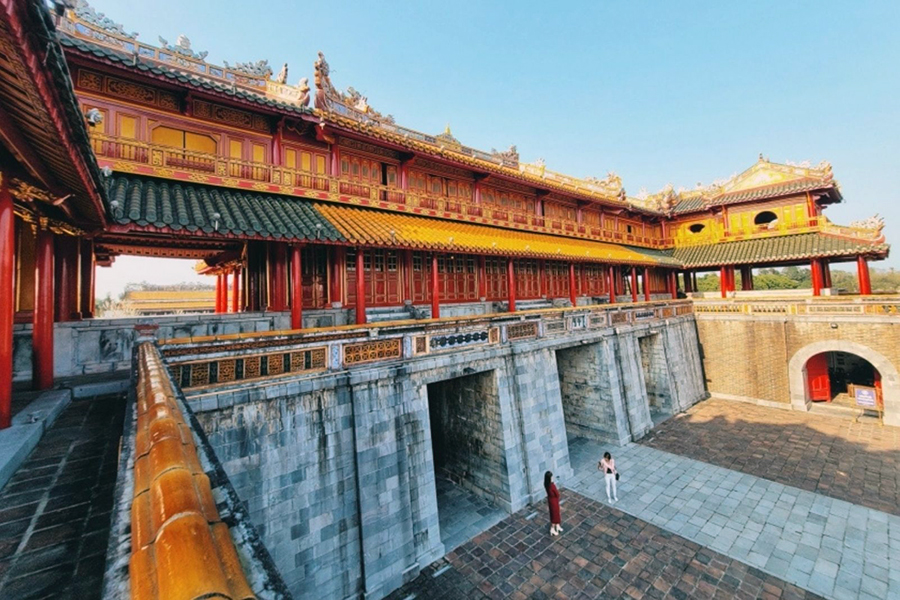
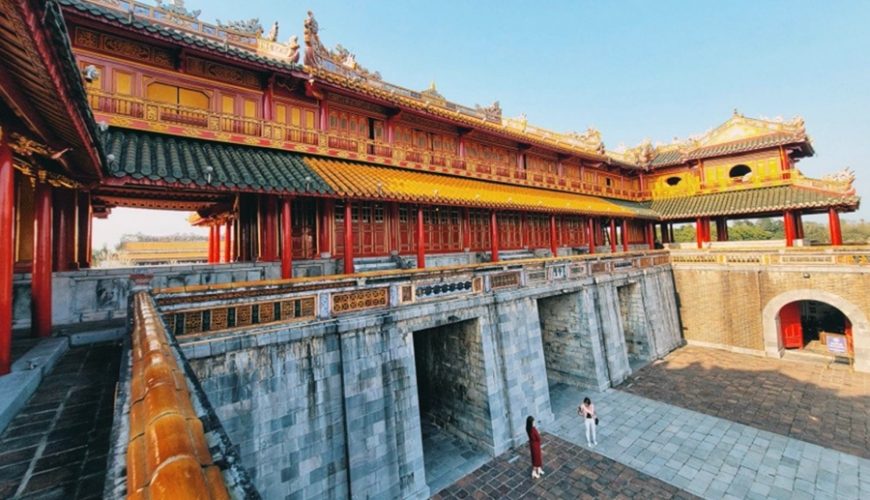
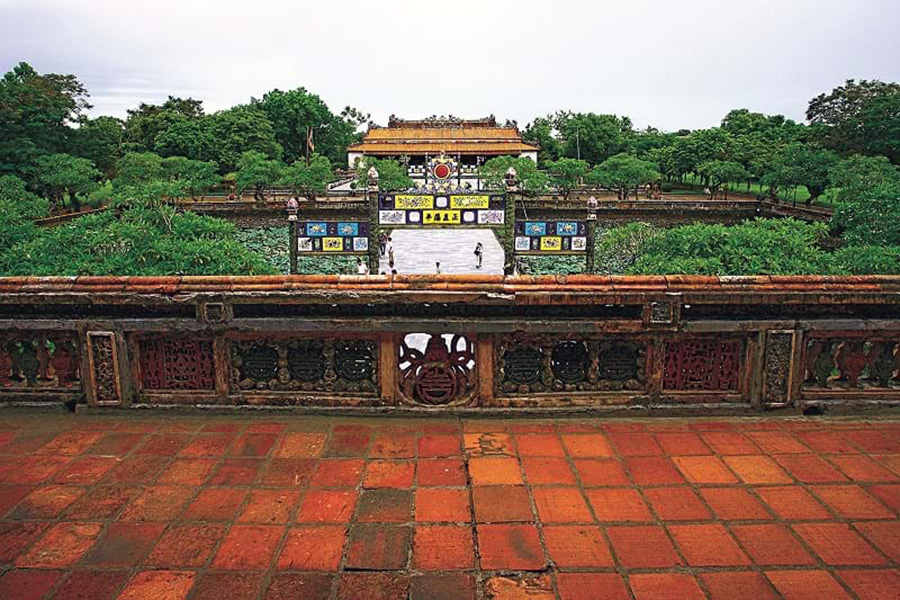
The architecture of the Meridian Gate is a complex, comprising two primary components: the base platform below and the Ngu Phung (Five Phoenixes) Pavilion above. Although they differ in their nature and construction materials, these two elements are designed to integrate harmoniously, forming a unified whole.
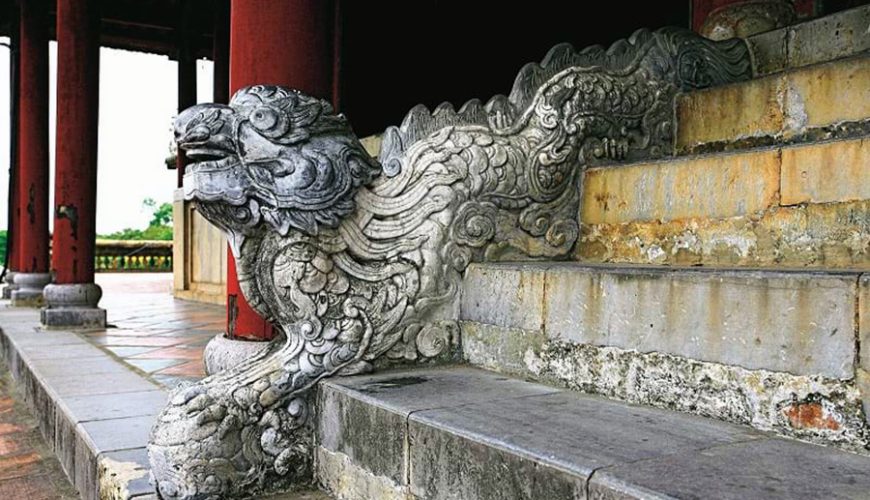
The Meridian Gate platform is constructed from stone, bronze, and brick, forming a fortress-like base structure. It is U-shaped, with its open side facing outward from the Imperial City. At the center of the base are three parallel gateways: the central Meridian Gate, reserved for the Emperor, and two flanking gates for civil and military officials accompanying the royal procession. This section is built of stone. Within each arm of the U-shape is a tunnel-like passageway; the entrances and exits are oriented perpendicular to the central axis (the main royal thoroughfare). While the Left and Right Gates feature arched, vaulted structures, the three central gates are designed with straight, rectangular lines. Inside the Meridian Gate (inside the Imperial City), open-air staircases on either side lead up to the terrace. The perimeter of this terrace is enclosed by a balustrade decorated with openwork, multi-colored glazed ceramic tiles.
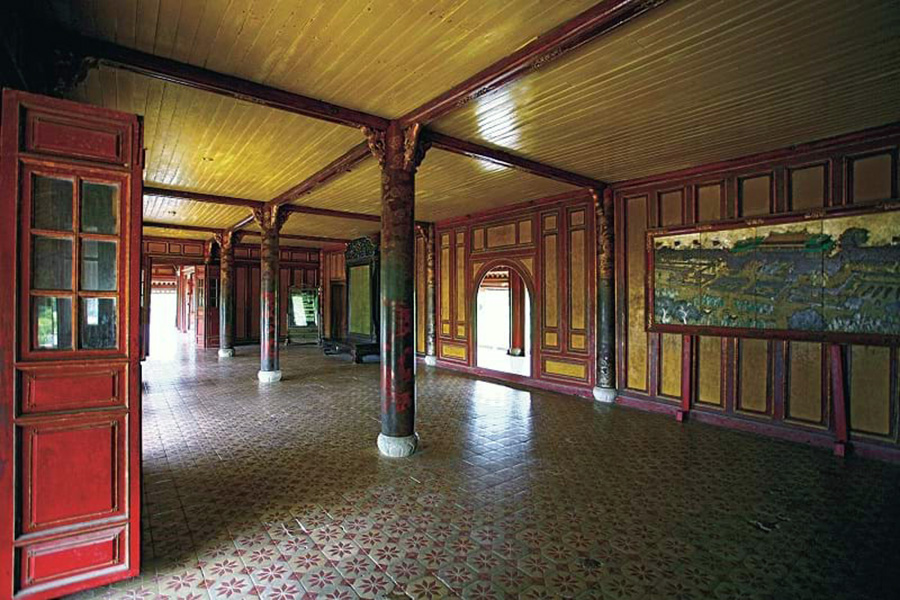
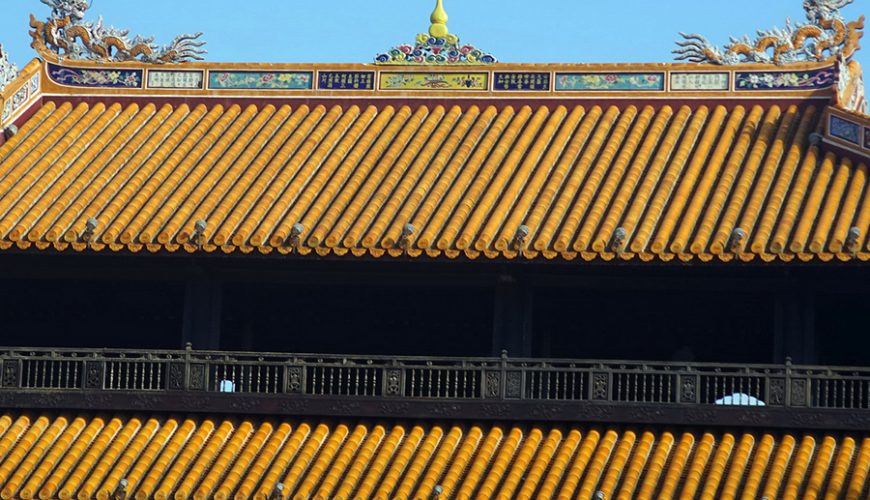
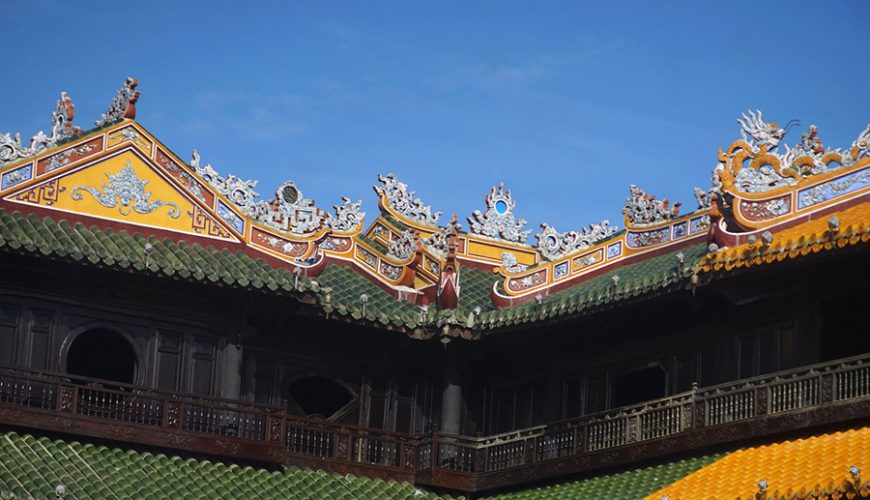
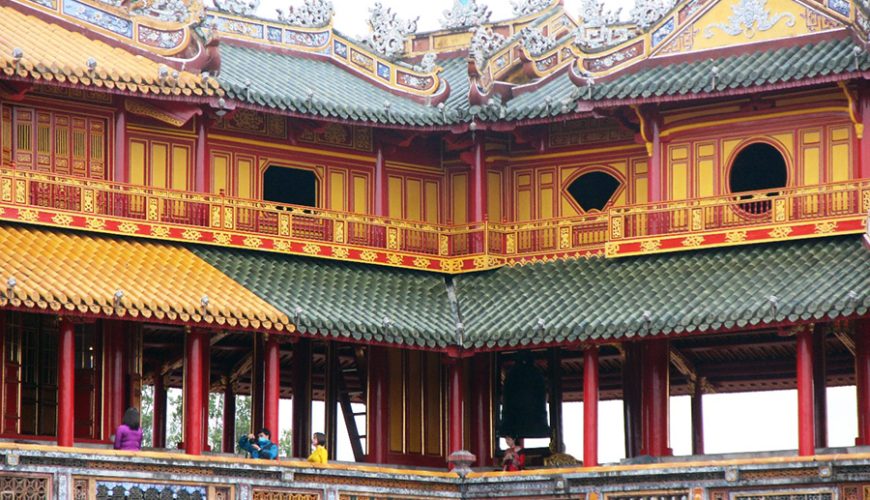
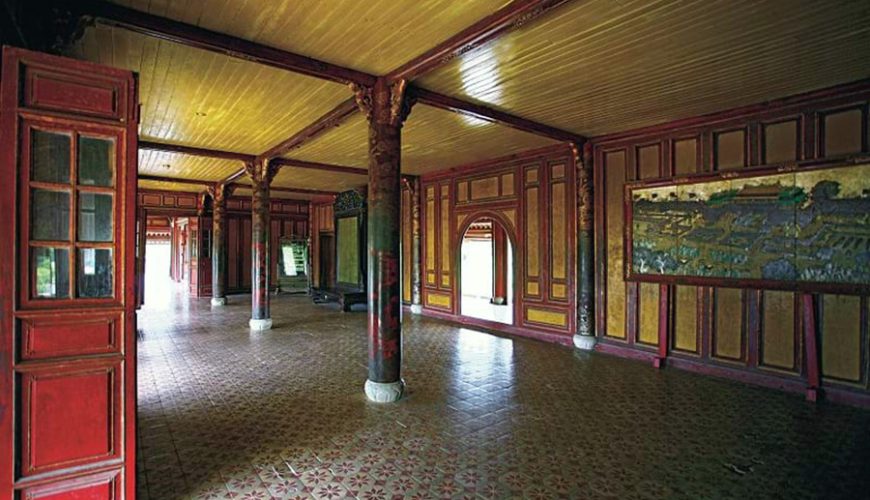
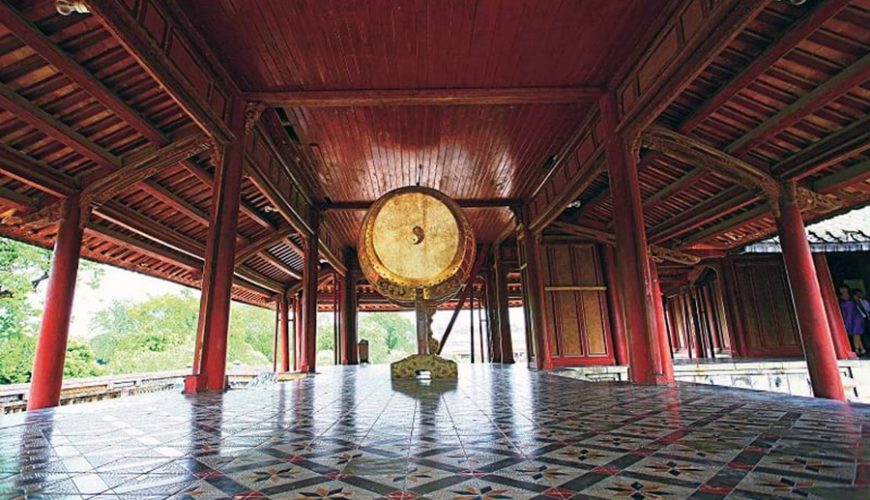
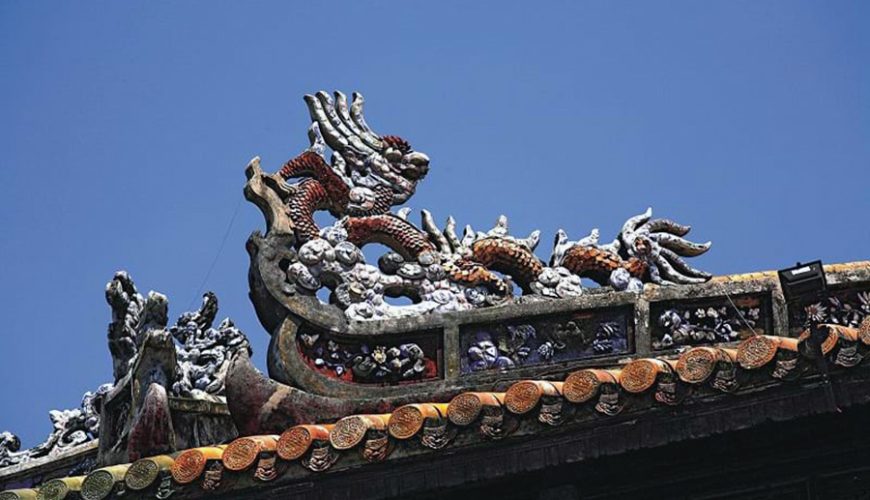
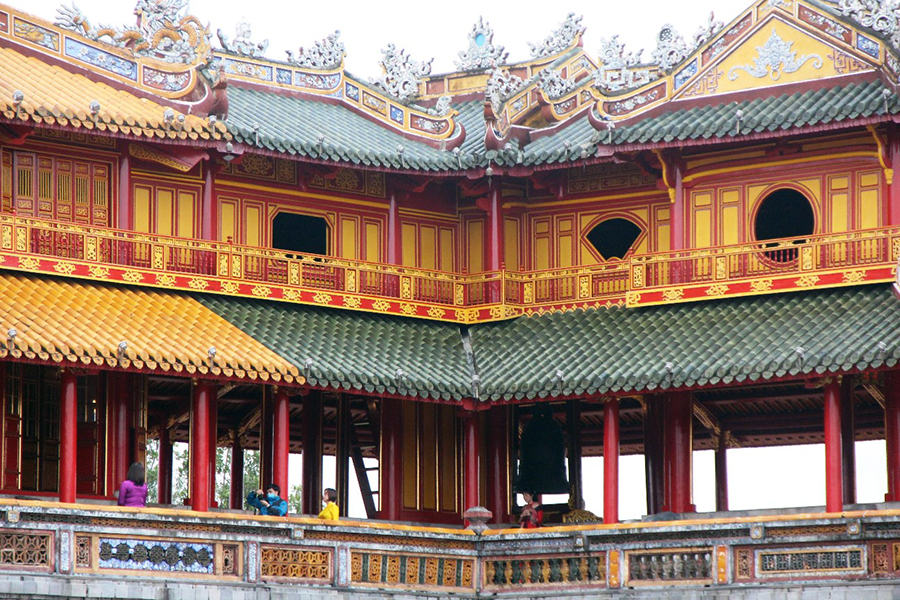
The Five Phoenixes Pavilion is a wooden structure built atop the terrace. Its U-shaped floor plan mirrors that of the terrace below; it has two levels and two roof tiers, all elevated on a 1.14-meter-high base. The lower roof tier wraps around the entire structure, providing shelter from the elements for the surrounding corridors. The upper roof system is more complex, divided into nine distinct sections, with the central section rising higher than the others. The central roof, along with the corresponding section of the lower roof, is covered in yellow glazed tiles, marking the area reserved for the Emperor; the remaining roof sections are covered in blue-green glazed tiles. The roof ridges, corners, and gables are adorned with intricate, delicate patterns. The central pavilion, topped with yellow tiles, features wooden-framed glass doors at the front, while the other sides are enclosed by wooden walls. This served as the Emperor’s seat during formal ceremonies.
On December 19, 2003, the Hue city administration unveiled the city’s emblem, which features an image of the Ngu Phung Pavilion roof combined with the Truong Tien Bridge.
Meridian Gate (Hue)
- Location: Ngo Mon Square (southern area of the Imperial City), on the north bank of the Perfume River, Hue city.
- Nearby Tourist Spots: Thai Hoa Palace, Hien Lam Pavilion, The To Temple, Dien Tho Palace, Kien Trung Palace, Thai Binh Palace, Co Ha Garden, Flag Tower, The Nine Holy Cannons…
Source: collected by Thien An
Follow us for the best deals on Vietnam package tours and visa services!
Comment (0)