
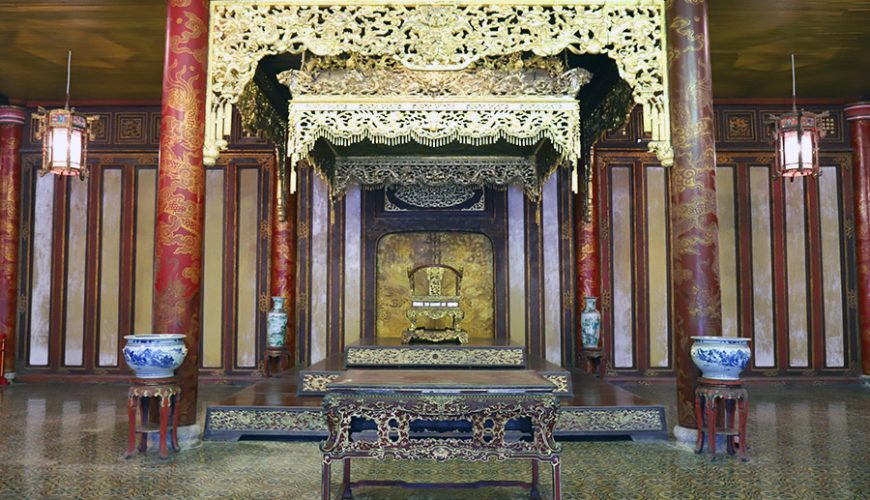
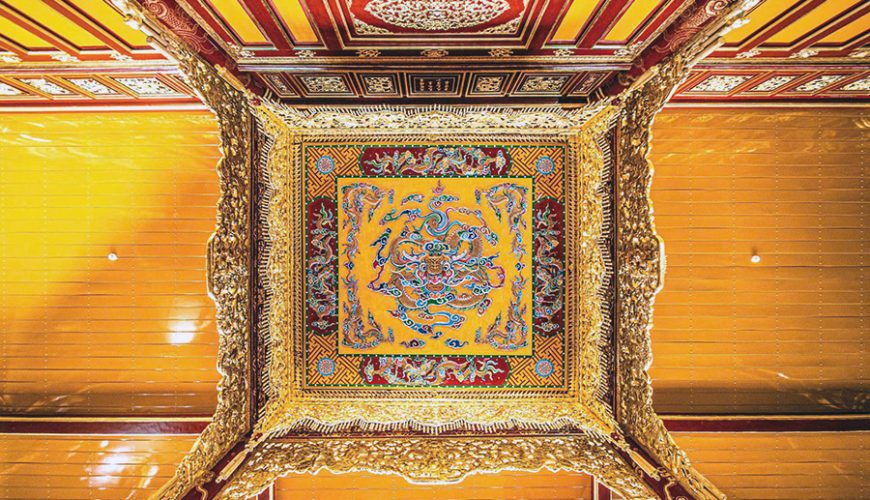
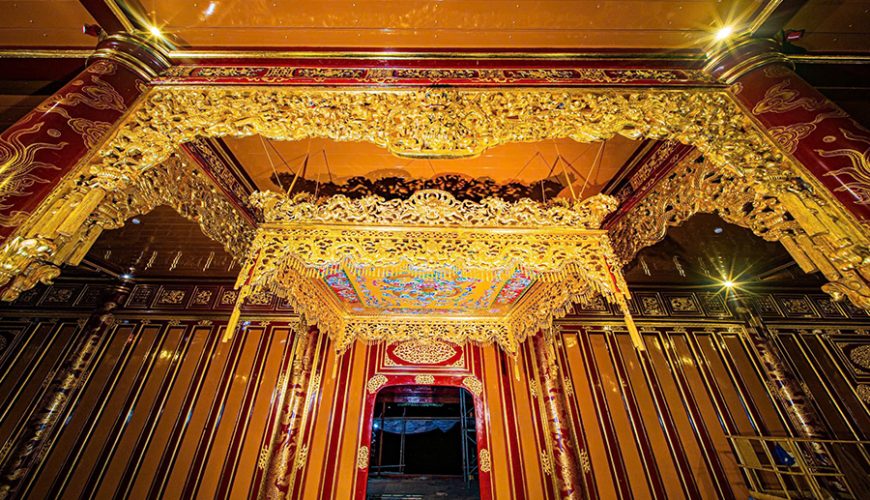
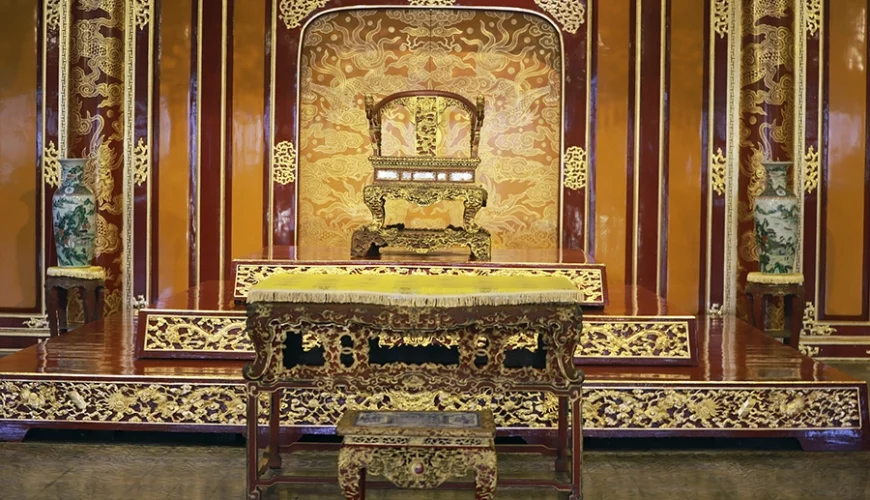
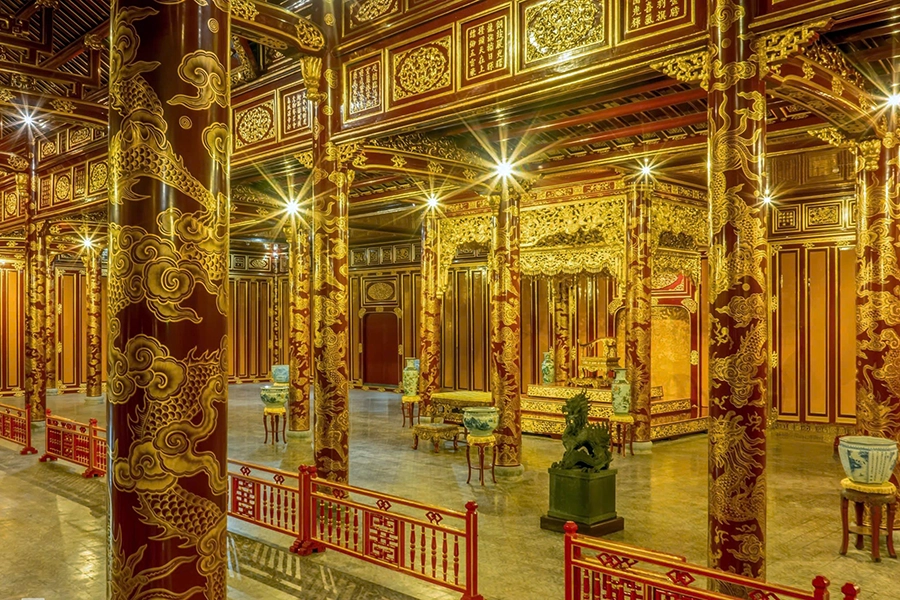
Among the dozens of palaces within the Imperial City, the Thai Hoa Palace stands out as the largest, most magnificent, and most prominently situated. It is considered the “heart” of the Imperial City, not merely because of its location or architecture, but because it houses the Emperor’s throne, the ultimate symbol of power in the feudal dynasty.
Overview of Thai Hoa Palace
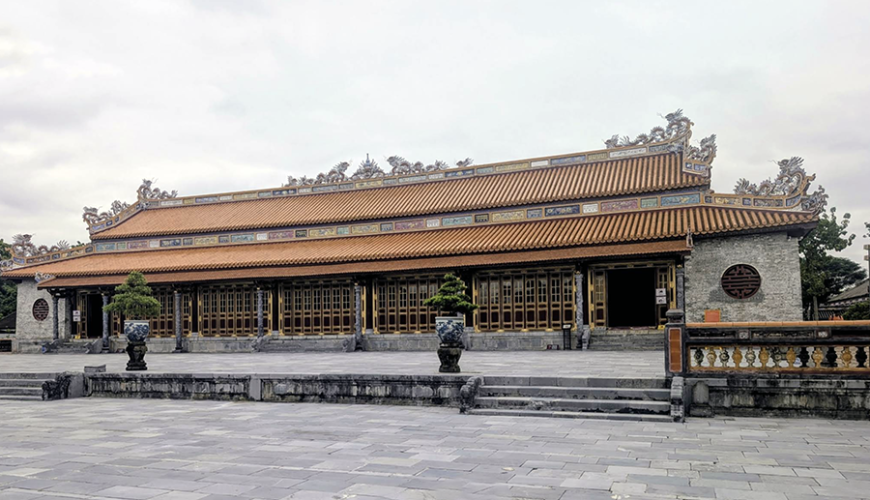
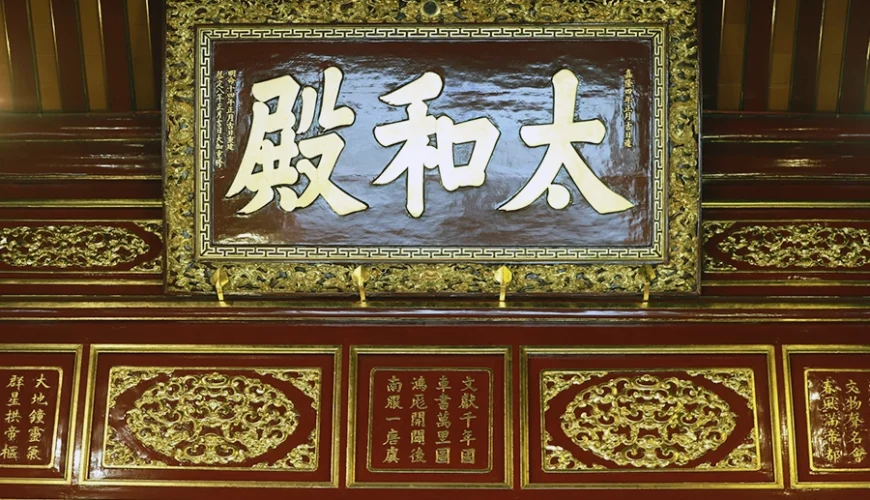
The Thai Hoa (Vietnamese: Thái Hòa) Palace is the principal ceremonial hall of the Nguyen dynasty emperors. Its name translates in Sino-Vietnamese to “Great peace and harmony”, an auspicious name used across East Asia for royal halls or settlements. The palace was strategically positioned at the center of the Imperial City by the Nguyen Dynasty’s planners and designers, dating back to the initial construction of the Phu Xuan (Hue) capital in the early 19th century. It remains one of the oldest architectural structures in the ancient capital of Hue.
Construction of the Hue Citadel began in 1805 under Emperor Gia Long, founder of the Nguyen Dynasty, and was largely completed by 1832, during the reign of Emperor Minh Mang. While various structures within the Citadel and the Imperial City were built over the reigns of successive emperors, the Thai Hoa Palace, given its vital role, function, and significance, was constructed very early on, concurrently with the founding of the Hue Citadel itself.
In the fifth year of Emperor Gia Long’s reign (1806)—four years after he ascended the throne- the Emperor held his formal coronation ceremony after the Thai Hoa Palace was completed. From then until the final reign of the Nguyen Dynasty, Thai Hoa Palace served as the site for the coronations of subsequent emperors. It also functioned as the venue for imperial court sessions and major ceremonies, including the Emperor’s birthday celebrations and national commemorative events. Furthermore, the palace served as a setting for diplomatic rituals and the reception of foreign envoys. Most significant events of the dynasty and the nation originated in this palace.
Thai Hoa Palace is situated along the central ceremonial axis of the Imperial City, directly behind the Meridian Gate. From this gate, the main southern entrance to the Imperial City is the Trung Dao Bridge, which spans the Thai Dich Lake and traverses three tiers of the Dai Trieu Nghi (Great Ceremonial Courtyard) to reach Thai Hoa Palace. Over its more than 200-year history, the structure has undergone numerous restorations under various emperors, yet it has preserved its original architecture and form, particularly its structural framework and decorative artistry.
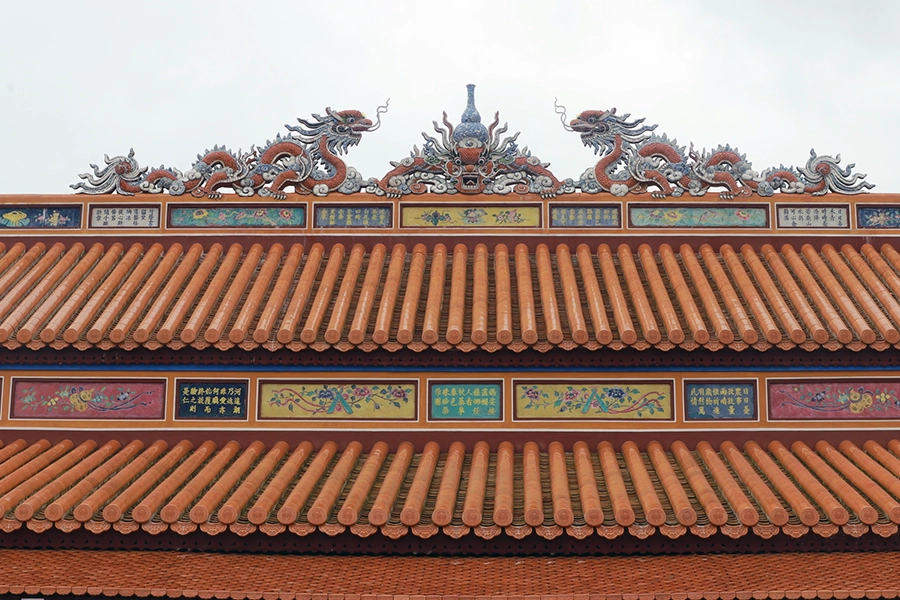
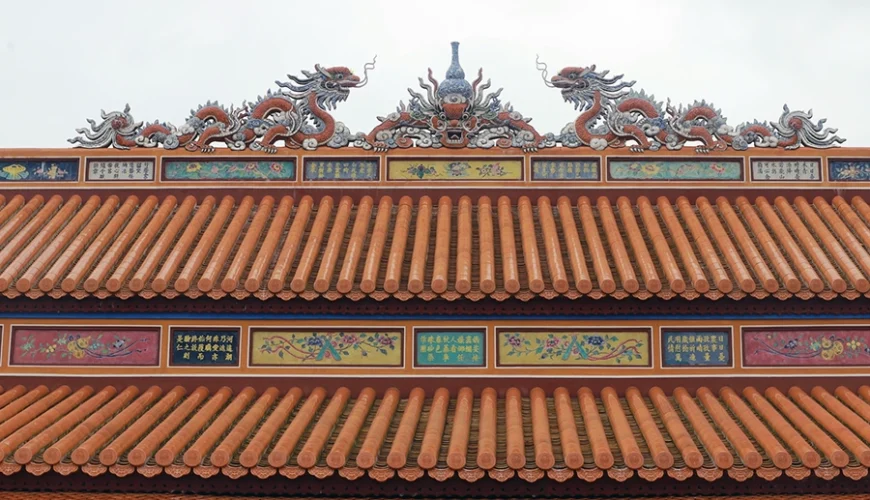
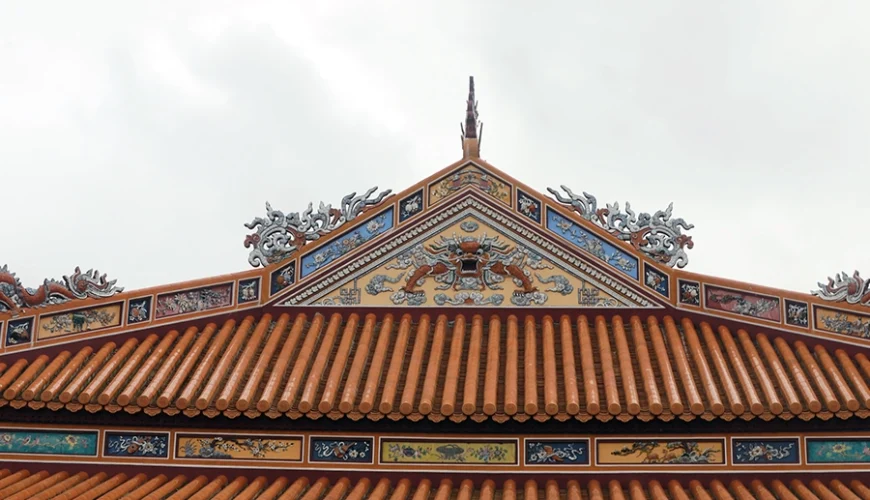
Thai Hoa Palace features a “double-roof, interconnected-hall” architectural style, a design prevalent during the Nguyen Dynasty, consisting of a front hall and a main hall joined together. Spanning 1,440 square meters, the facade comprises seven rooms and two side wings, with a timber-and-brick structural framework. The roof is covered in yellow-glazed tiles and divided into three tiers; between the middle and upper tiers is a decorative frieze, or clerestory-like section, partitioned into numerous panels, each adorned with paintings or poetry. These panels follow a unique “one poem, one painting” decorative arrangement.
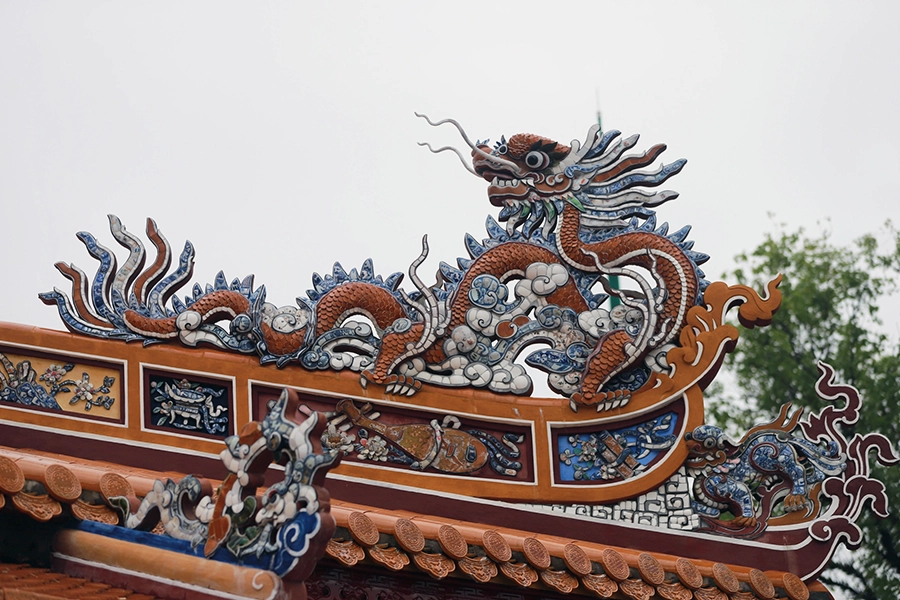
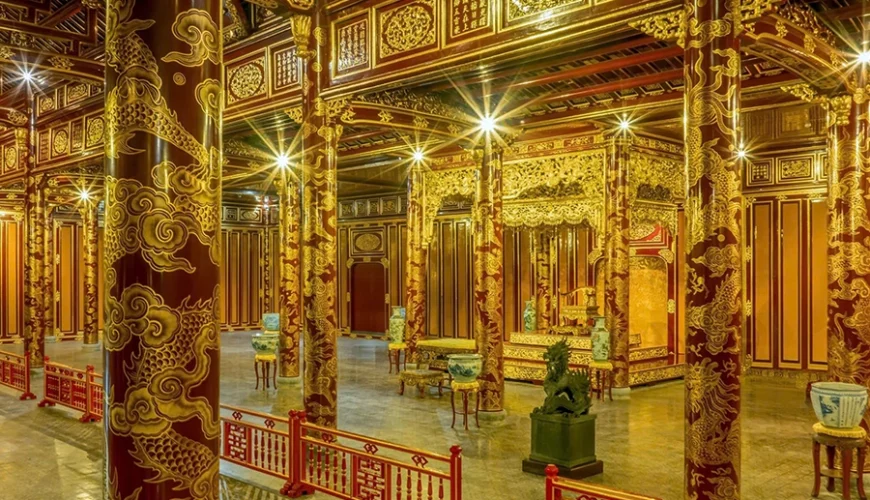
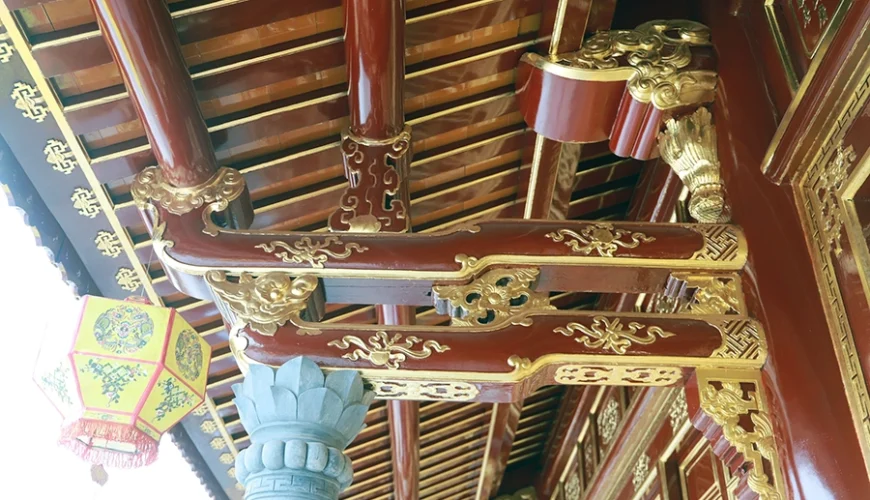
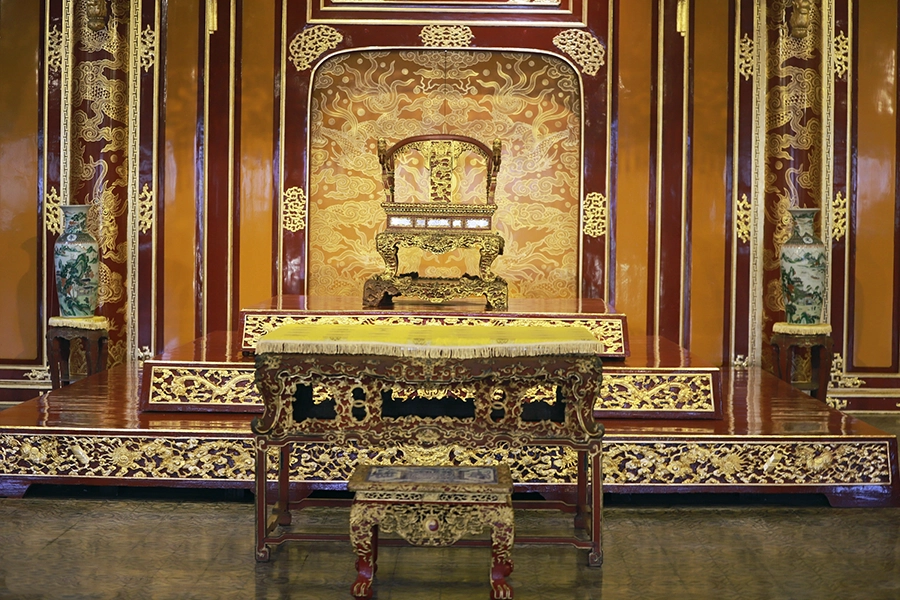
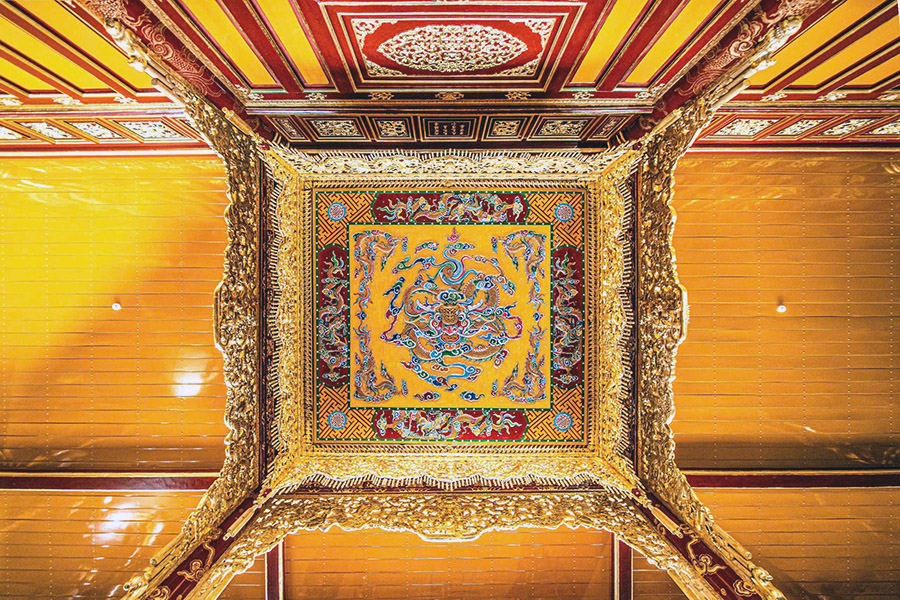
The entire interior is finished in red lacquer and gold leaf, exuding a magnificent splendor. The Emperor’s throne rests upon a three-tiered wooden dais located at the very center of the palace. Behind the throne stands a partition system, featuring doorways in the center and on either side.
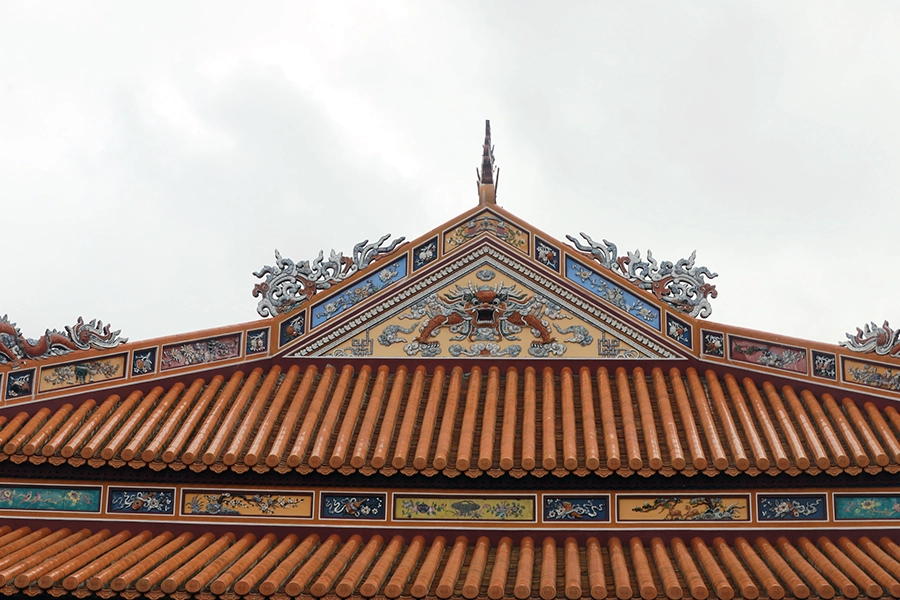
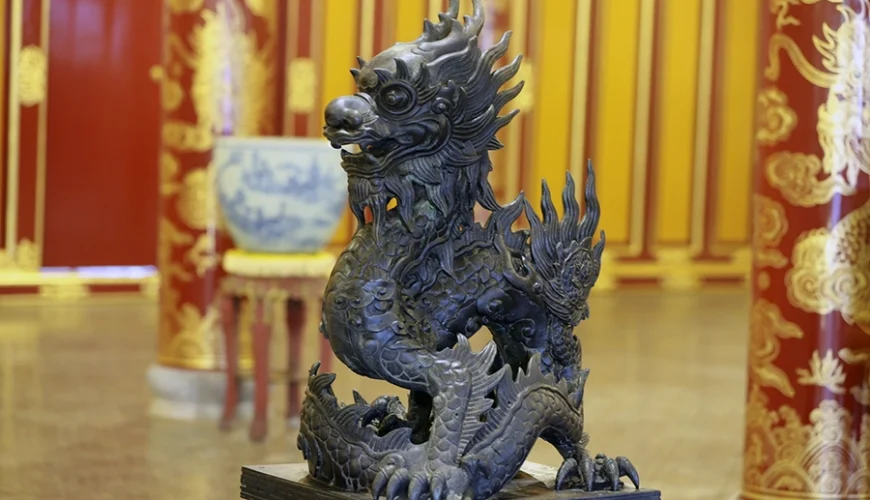
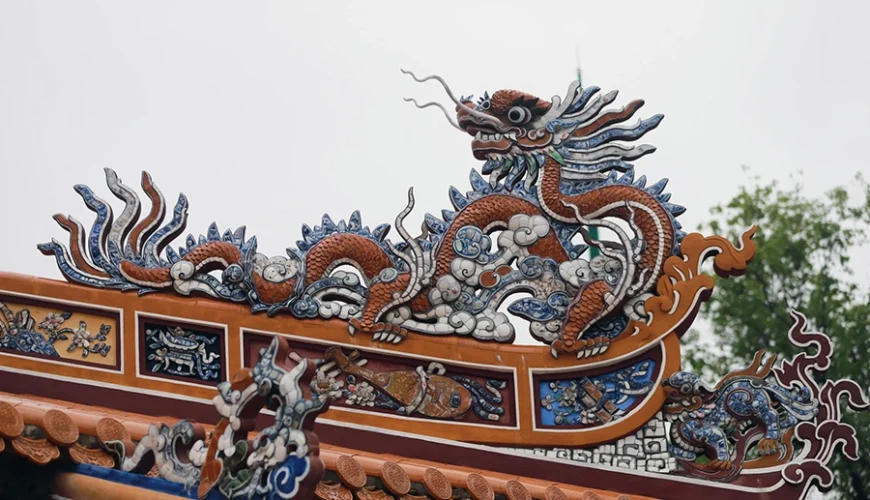
Beyond its vast scale, magnificent architecture, and exquisite ornamentation, a defining feature of the Thai Hoa Palace is the dragon motif, a symbol of the monarch and the palace’s central theme. Dragons appear in numerous locations and various forms: adorning the roof, staircases, and columns, or intricately carved into wooden structural elements and the royal throne. It could be said that the Thai Hoa Palace is a place where dragons soar, a pinnacle of Hue’s imperial architectural art.
Thai Hoa Palace
- Location: 23/8 Street, Phu Xuan Ward, Hue City (located within the Imperial City).
- Nearby Tourist Spots: Hien Lam Pavilion, The To Temple, Kien Trung Palace, Dien Tho Palace, Thai Binh Pavilion…
Source: collected by Thien An
Follow us for the best deals on Vietnam package tours and visa services!
Comment (0)